Author: Alistair Nunn

Rollerball (1975)

Rollerball (1975)

Violent science-fiction dystopia satire ends up making blunt, uncertain points

Director: Norman Jewison

Cast: James Caan (Jonathan E.), John Houseman (Mr. Bartholomew), Maud Adams (Ella), John Beck (‘Moonpie’), Moses Gunn (Cletus), Ralph Richardson (The Librarian), Pamela Hensley (Mackie), Barbara Trentham (Daphne), Shane Rimmer (Rusty), Richard LeParmentier (Bartholomew’s Aide)

It’s the future, but it might as well be Ancient Rome. The world is ruled by Corporate Caesars, holding supreme power, controlling information and plucking anyone they want for anything, be it for a job or as a partner in bed. The masses are kept pliant and happy by being fed Bread and Circuses. Namely Rollerball, the world’s most popular sport, a hyper-violent mix of American football and ice hockey played in a velodrome, with teams competing to score by thrusting a metal ball into their opponent’s goal, with rules to prevent only the most egregiously violent acts. It’s a game designed by with a simple message: the individual is powerless, the system is all.

Problem is, like any game, some players are better at it than others. And the best player there has ever been Jonathan E (James Caan) is a living legend for Houston, tougher and more passionate about the game than anyone else alive. He’s a living contradiction of the secret principle of the game: an individual can make a difference. Naturally the Corporation want him gone, offering him a generous package to retire. Problem is Jonathan doesn’t want to retire. What else is there to do, but to remove the few rules Rollerball has, and establish how futile individual effort is by killing Jonathan in the game. But Rollerball’s greatest ever player isn’t that easy to kill.

All of which makes Rollerball sound both cleverer and more exciting than it actually is. Because Rollerball is a deeply sombre, rather self-important film that makes obscure, slightly fumbled points about the war between the system and the individual, within a coldly Kubrickian framework that suggests Jewison and co misunderstood what made 2001 a sensation (it wasn’t just clean surfaces and classical music). It’s actually quite a problem that the only time Rollerball even remotely comes to exciting life for the viewer is during the game sequences: and seeing as the film is criticising our love of gladiatorial blood sports, that can hardly be what it’s aiming for.

Rollerball is shockingly po-faced and lacks even a hint of humour at any point (except perhaps a reliably eccentric cameo from Ralph Richardson as an only half-sane custodian of an all-seeing computer). There is little satirical spice that might provide a bit of lighter insight into the ruthless, business-driven world the film is set in, or that might demonstrate how concepts we are familiar with (sports and television) have been tweaked to manipulate and pander to the masses. Combined with that, every character in the film is sullen, serious and (whisper it) dull and hard to relate to.

This is best captured in Jonathan himself, played with a lack of an uneasy stoic quality by James Caan. Caan later commented he found the character lifeless and lacking depth, and you can see this in his performance. Caan never seems sure what angle to take: is Jonathan a defiant individualist or a guy utterly at sea in the system who can’t understand why he is being told to stop playing the game he loves? Rollerball wants to settle for both: it doesn’t really work. Jonathan spends his time outside the ring, moping and staring into the middle-distance. He holds a candle for the wife taken from him by an executive, but this is never channelled into a motivating grief or ever used as way to make the scales fall from his eyes about the nature of the system he’s working in.

In fact, Jonathan remains pretty much oblivious to the brutality and cruelty of the sport he’s playing – which, by the end of the film, regularly clocks up impressive body counts in every match. He’s still perfectly capable of throwing an opponent under the wheels of a motorbike, thrust a goal home and then bellow “I love this game!”. Never once does he, or the film, question this love. Not even an on-pitch assault on his best friend (which leaves him in a vegetative state) or watching his teammates being crushed, incinerated, battered and smashed seems to register with him intellectually or emotionally.

Rollerball needed a character with enough hinterland to grow into that or could denounce on some level (even privately) the violent spectacle he’s wrapped in, capable of a moral journey or making an imaginative leap. We don’t get either. Instead, Jonathan E feels like a care-free jock who wants to carry on doing his thing, because he has a good-old-fashioned dislike of being told what to do. In the end it fudges the whole film: Jonathan E is neither sympathetic or interesting enough to be a vehicle for the sort of satirical or political points the film wants to make.

Not that these ideas are really that interesting anyway, essentially boiling down to a mix of familiar “Big Business Bad” and “the proles will take any loss of freedom lying down, so long as they get some juicy violent action to watch”. None of this hasn’t been explored with more wit and wisdom elsewhere. Never-the-less Rollerball lets its points practically play trumpets to herald their arrival as they stumble towards the screen. There is nothing here Orwell didn’t cover better in a few paragraphs of 1984.

Norman Jewison does a decent job staging this though, in particular the violence of the Rollerball games, with bodies crushed, maimed and thrown-around. There is a fine performance of heartless corporate chill from John Houseman. But, when the film makes its points, I’m not sure what on earth it’s trying to say. Is it a tribute to the strength of one man’s character? Does it matter if Jonathan E acts out of a stubborn lack of knowledge or understanding? As the crowd watches a deadly match in stunned silence, have they finally had enough? As they praise Jonathan E rapturously is Rollerball suggesting we are just naturally inclined to love strong-men dictators? I’ve no idea what is happening here – and I’m not sure that Rollerball does either.

The Insider (1999)

The Insider (1999)

Mann’s finest film is a chilling breakdown of the insidious strength of corporations

Director: Michael Mann

Cast: Al Pacino (Lowell Bergman), Russell Crowe (Dr Jeffrey Wigand), Christopher Plummer (Mike Wallace), Diane Venora (Liane Wigand), Philip Baker Hall (Don Hewitt), Lindsay Crouse (Sharon Tiller), Debi Mazar (Debbie De Luca), Stephen Tobolowsky (Eric Kluster), Colm Feore (Richard Scruggs), Bruce McGill (Ron Motley), Gina Gershon (Helen Caperelli), Michael Gambon (Thomas Sandefur), Rip Torn (John Scanlon), Cliff Curtis (Sheikh Fadlallah)

For decades we persuaded ourselves smoking was problem-free. Then, when we finally decided sucking tar into your lungs several times a day probably didn’t go hand-in-hand with good health, Big Tobacco bent over backwards to argue they didn’t believe for one minute nicotine was actually addictive. This lie – they were improving the hit to increase the customer base – was blown upon by corporate whistle blower, and former B&W employee, Dr Jeffrey Wigand (Russell Crowe).

But the battle over the reporting of the story also exposed the fault-lines in corporate-owned media companies, as Wigand’s 60 Minutes interview was canned by a CBS network terrified of legal action imperilling a corporate sale, much to the fury of crusading producer Lowell Bergman (Al Pacino) who spent months bringing Wigand in only to see him brushed aside. The Insider charts these two stories merging into each other: the deadly campaign of intimidation and smears against Wigand, segueing into the caving of CBS in the face of legal threats with Bergman left furious, betrayed and turning his campaigning fire against his own employers.

This all comes grippingly to life in Michael Mann’s superb slice of All the President’s Men inspired-reportage, turning this 1996 TV-and-business scandal into a sleek, intelligent thriller that takes a chilling look at how corporate America rigs the game in its own favour with impunity. The Insider is as rightfully furious at the dirty-tricks and menace of the tobacco companies, as it is at the subtly insidious way corporate interests pollutes news reporting. It does this while also presenting its two heroes as flawed men with more in common than they might think: competitive alpha males, both prone to taking rash, destructive actions in fits of head-strong self-righteousness, caring about their own moral code over the needs of others.

The Insider splits into two clear acts: the agonising decision of Wigand to blow the whistle on corporate malfeasance, in the face of immense personal and professional pressure and Bergman’s subsequent struggle to deliver on his word and get Wigand’s confession on air. The first half offers the more traditional heroics – and the more overt hero-and-villain structure, but increasingly I find the second half, of news shows being dictated to by their paymasters more-and-more unsettlingly prescient, becoming increasingly relevant the older the film gets.

But that first half makes for a compellingly tense pressure-cooker view. It’s powered by an excellent performance by Russell Crowe (effortlessly convincing as someone twenty years older, and collecting his first Oscar nomination). Crowe makes Wigand principled but prickly, brave but confrontational and at times frustratingly self-righteous. His moral qualms are finally sharpened into action his fury at the blunt-intimidation from B&W’s sinisterly avuncular CEO (a masterful cameo from Michael Gambon – one of the great single-scene performances in movies) and its implication that he cannot trusted to stick to his NDA. Wigand barely involves his wife (a tightly-wound Diane Venora) in his decisions, only mentioning his dismissal in passing and deciding to appear on 60 minutes (a decision that will shatter their lives) unilaterally.

But Wigand also has higher motives. He wants to be able to look his daughters in the eye, having sold-out to burnish the dirty-deeds of B&W with his scientific skills. He’s rightly affronted by the lies Big Tobacco has sold the public and undergoes enormous sacrifices (financial, marital, professional, legal, death threats and a public smear campaign) to see things through. Mann’s cool mix of starkness and shadows, full of drained out colours and greys, is perfect for a world where Wigand is shadowed by strangers at a driving range, receives bullets in his mailbox and searches late at night for who has left footprints in his garden. Crowe superbly conveys a man acting out of an increasing sense of moral imperative, struggling desperately to hold himself together under immense pressure.

This section of the film – especially with its clear antagonist – plays as a superb personal and political thriller, Mann expertly conveying lurking menace. In 1999 the second half of the film, the struggle to actually broadcast Wigand’s interview, was often seen as slightly underwhelming. But actually it shows a different type of danger: less overt and heavy-handed corporate power with its legal injunctions and bullying FBI guys hoping for a cushy retirement job with the corporation, more how these corporate masters assert control in quiet, less direct ways to decide what we hear or see.

Our journalists have no fear when confronting criminals or terrorists – The Insider’s prologue establishes this with Bergman and host Mike Wallace not flinching in the face of gun-toting Hezbollah fighters guarding the Sheikh they have arranged to interview. But they face far greater threats to their integrity when confronted with lawyers and corporate directors (effectively embodied by Gina Gershon and Stephen Tobolowsky as uncaring suits) whose threats are indirect and insidious. Wigand’s interview could imperil the sale of CBS and the bonus of the corporate suits, and in that scenario journalist principles can go hang. Christopher Plummer is, by the way, superb as the charismatic Wallace, who caves to pressure then convinces himself he hasn’t, a super-star of the airwaves who loses part of his wider integrity trying to protect his position.

And doesn’t the idea that corporations can squeeze the life out of journalistic stories feel even more chilling today? After all, virtually every single news outlet out there is owned by a major business, all with their own agendas. Can we really believe they’ve not all made calls on gets reported, based on what their shareholders might think? Mann’s film skilfully – and rather chillingly – shows how quickly they can re-work the agenda. It leaves Lowell Bergman raging (as only Al Pacino can) against the betrayal of trust he’s being forced to make towards Wigand.

Crowe’s pressure-cooker performance stole many of the headlines on release but The Insider also benefits from an excellent Pacino performance. Utterly committed to his principles and – just like Wigand – utterly unwilling to compromise them even an inch, no matter the cost, Bergman will pick up the windmill-tilting banner, and charge with it at his own paymasters. No one can rip through speeches quite like Pacino, but he gives Bergman a real genuineness, grounded in a fundamental decency, whose righteous anger is underpinned with world-weary disbelief that it’s come to this.

It grounds an excellently studied breakdown of a journalistic turf war. The Insider plays like All the President’s Men, if Woodward and Bernstein had been spiked after they nailed the story. Mann demonstrates the influence in The Insider’s crisply immersive photography that employs depth of frame and gyroscopic deep-focus, as well as in the crisp editing and the film’s mesmerising emersion in the complex details of building a story. Combine that with a gripping conspiracy thriller on the machinations of ruthless corporations and The Insider makes for a compelling film.

Jesus Christ Superstar (1973)

Jesus Christ Superstar (1973)

Some odd clashes of style but still a distinctive and unique musical, if not a triumph

Director: Norman Jewison

Cast: Ted Neeley (Jesus Christ), Carl Anderson (Judas Iscariot), Yvonne Elliman (Mary Magdalene), Barry Dennen (Pontius Pilate), Bob Bingham (Caiaphas), Larry Marshall (Simon Zealotes), Josh Mostel (King Herod), Kurt Yaghjian (Annas), Philip Toubus (Peter)

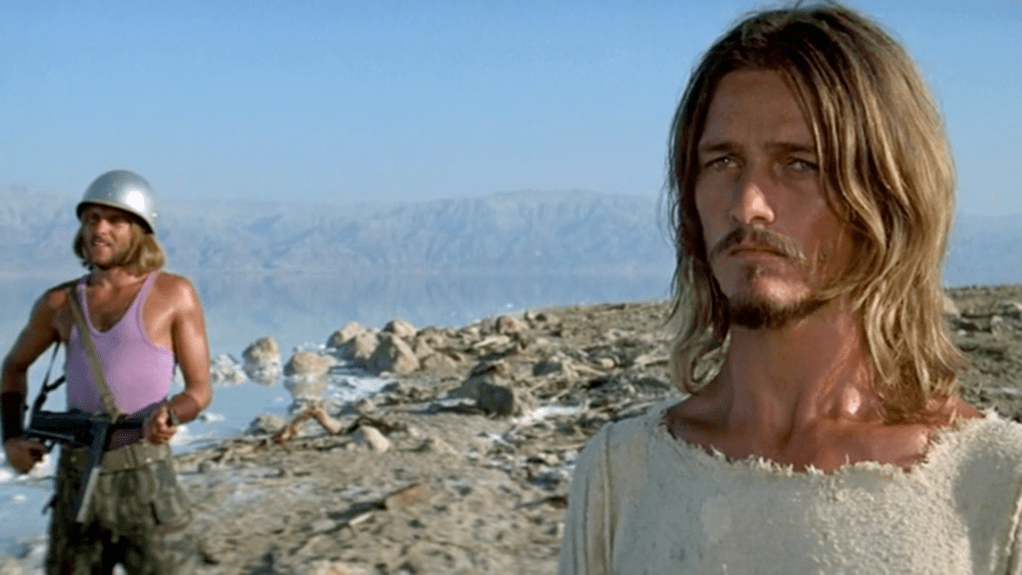
A bus rolls up in the West Bank and a bunch of excited, hippie actors and singers bundle out. What else are they going to do but replay the final days of Jesus Christ – with songs! Thus begins Norman Jewison’s adaptation of Andrew Lloyd Weber and Tim Rice’s rock opera musical, a hodge-podge of interesting ideas, stylistic nonsense and touches of the bizarre. Some of it works, some of its doesn’t – but at least it’s having a stab at doing something different.

I’ll assume you are familiar with the final days of Jesus Christ (Ted Neeley) as Jesus Christ Superstar ticks off the arrival in Jerusalem, the money lenders in the temple, the last supper, Gethsemane, Pilate washing his hands and the crucifixion (but not, pointedly, the resurrection). Jesus is at the centre of this but, as is so often the case in films, is an enigmatic, unreadable figure. The real lead is Judas (Carl Anderson), worried that the Messiah is running the risk of provoking a brutal smack-down from the Romans and letting the worship of his follower’s rush to his head. Perhaps he should do something about it?

First the good stuff. Douglas Slocombe’s photography, on location in a sun-soaked Middle East (the cast must have been grateful their flowing, hippie robes translated into such light clothing) looks gorgeous (the final shot of the cross at dusk – with a shepherd and sheep just visible in the corona of the sun’s glare, a happy on-the-day accident – is sublime). The locations are bravely selected to stress the sweeping vastness of desert: Pilate’s home is a rocky mountain, the apostles dance among abandoned Roman pillars, Gethsemane is the only splash of green we see. A cave with a circular hole in its roof, casts a striking shard of light over Jesus with his disciples. There is gorgeous stuff here.

It’s mixed in with some successful modern touches. Turning the money lender’s stalls into a trashy marketplace, rife with everything from tourist tat to heavy weaponry works as a striking image of commercial corruption. Jesus’ final vision of Judas takes place in a Roman amphitheatre decked out like a concert carries a nice dream-like quality. The idea of having the priest’s temple being a piece of bare-bones scaffolding is a nice visual image of their ambition. At the centre of the film is a very striking, excellently sung performance by Carl Anderson as Judas. Pretty much dominating the film, he brings the part just the right amount of spark, frustration, anger and self-pity and best manages to invest the songs with character.

Unfortunately, Jesus Christ Superstar mixes this with plenty of modern touches that either land flatly or whose intention becomes almost hard to work out. When Judas is chased through the desert by tanks or buzzed by fighter planes, is this a sign of the conflict that would come, the sense of destiny forcing him into his assigned role, or just an excuse to see the budget put into effect on some military hardware? Moments like this feel they are trying too hard against the more subtle modern touches.

There’s also the rather mixed bag of inexperienced performers Jewison fills the film out with. Ted Neeley can certainly hold a note, but he’s no actor, turning Jesus into a blank void who frequently feels like he’s watching the action around him while waiting for his cue. Yvonne Elliman similarly is an excellent singer but doesn’t really manage to convey the complex feelings of love and worship in Mary Magdalene. The rest of the cast give it an enthusiastic go, ranging from the decent (Barry Dennon) to the over-emphatic (Philip Toubas – who later became a hugely successful porn star, not exactly the expected career path of St Peter).

The mix of hippie-ish costumes also only works in places. While Jesus is of course dressed pretty much as any Hollywood film had ever dressed him (white-flowing robes), others wear a mixture of that, flower-power garbs or the sort of in-between strangeness (I’m looking at you Roman soldiers) that makes it look like they have wandered in from an episode of Star Trek. The brightly coloured costumes do however stand out extremely well in the vast blankness of the desert.

Jesus Christ Superstar’s main problem is its lack of narrative drive. Co-scripting with Melvyn Bragg (surely the easiest paycheque ever for one of the UK’s leading public intellectuals), Jewison doesn’t really provide any dramatic meat or force between the songs. There isn’t really a sense of moral and narrative development, with the film instead feeling rather like the concert album it’s based on, a series of songs staged one after-the-other without really linking together in a full narrative arc.

Saying that, Jewison’s effectiveness with the camera comes across well. “Hosanna” is crammed with a full-blown, very well-shot Busby-Berkely style number where Jewison rather effectively uses freeze-frames to punctuate the beats. “The Temple” sees Jesus disappear under a swarm of lepers like a zombie victim. A shot of the Judas’ purse of thirty pieces of silver dominates the frame at one point like it’s drawing him in. Some of the frantic tracking shots of Judas through the desert have a real elemental force to them.

But there isn’t quite enough of that to bring Jesus Christ Superstar to make it a triumph. Its episodic song structure, it’s odd mix of styles and the wildly varying quality of its performances never quite gel together. However, it’s perfect for turning this into a sort of camp spectacular, a cult oddness that stands out as quite unlike any other musical or film Jewison made.

Awakenings (1990)

Awakenings (1990)

Decent performances from the leads can’t save a shamelessly manipulative, saccharine movie

Director: Penny Marshall

Cast: Robert De Niro (Leonard Lowe), Robin Williams (Dr Malcolm Sayer), Julie Kavner (Eleanor Costello), John Heard (Dr Kaufman), Penelope Ann Miller (Paula), Max von Sydow (Dr Peter Ingham), Ruth Nelson (Mrs Lowe), Alice Drummond (Lucy), Judith Malina (Rose), George Martin (Frank), Dexter Gordon (Rolando), Keith Diamond (Anthony), Anna Meare (Miriam), Mary Alice (Margaret)

There can be few things more terrifying than being trapped inside your own body, unable to engage with the world, but to be in a sort of waking coma for years. Imagine how wonderful – and how terrible – it might be if you briefly woke to normality, only to return to your catatonic shell? This actually happened to patients of Dr Oliver Sacks – here re-imagined as Dr Malcolm Sayer (Robin Williams) – in a Bronx hospital in 1969. Looking after catatonic survivors of the encephalitis lethargica epidemic of 1919-30, Sayer discovered they responded to certain stimuli: their name, music, catching balls etc. With an experimental drug he discovers he can restore the patients to ‘life’ – foremost among them Leonard Lowe (Robert De Niro), just a boy when afflicted – only to discover the effects won’t last and they are doomed to return to their coma-like state.

It’s such a terrible thing to think about that it even gives genuine emotional force to Awakenings an otherwise hopelessly manipulative, sentimental film that plays like a TV-Movie weepie. It certainly didn’t need the naked emotional manipulation that washes over the whole thing like a wave, with Randy Newman’s sentimental, tear-jerking score swells with every single heart-string tucking moment. Awakenings is so determined to make you feel every single moment it eventually starts to make the story less affecting than it really is. A simpler, less strenuous film would have been more moving rather than this film almost genetically engineered into ‘life-affirming’.

Everything in Awakenings feels like it is always trying too hard. Every moment is laid on for maximum emotional impact. Adapted from Oliver Sacks’ book chronicling individual cases, it presents a stereotypical Hollywood ‘feelings’ film, with lessons for all. Worse, there is a tedious ‘seize the day’ message that keeps ringing out of the film. The awakening is, of course, not only literal but metaphorical – the patients (and their doctors) ‘awoke’ to appreciate life and living more. It’s hard not to think at times there is something rather patronising about partially using Leonard’s brief experience as a lesson for Dr Sayer to stop being so damn timid and ask a nurse out on a date. As traumatic as it is for Leonard to return to his coma, at least Dr Sayer learned to live a little!

It’s a very fake attempt at a hopeful ending to an otherwise down beat true-story. Dr Sayer is a retro-fitted version of Oliver Sacks, sharing many of his characteristics – but not his sexuality or decades long celibacy – and the film presents him, as Hollywood loves to with geniuses, as a shy, awkward type who no-one of course could expect anything of. He combines this with quiet maverick tendencies, putting the patients first against the ‘numbers-first-risk-free’ obstructionist bureaucrats (represented, of course, by John Heard, though he does thaw a little) who run the hospital and poo-poo his ideas.

Awakenings is full of sickly moments of heavy-handed sentimentality – its opening shot of Leonard as a boy carving his name in a bench under the Brooklyn Bridge tells you immediately one of the first places he’ll go as an adult for a wistful smile – that keep trying to do the work for you. (Of course, all the nurses and cleaning staff offer up cheques to help pay for the patients drugs!) The story doesn’t need it. Just seeing the facts of these vibrant adults emerge for a brief time in the sun is moving enough. Leonard quietly, but with dignity, asking the hospital board for permission to go outside alone is more moving than watching him forcibly dragged from the door by porters or seeing him rant on the mental ward he’s been consigned to as a punishment. We don’t need Sayer to literally tell us some things are too sad for him to film, when we can see it on Williams’ face.

The leads are not always immune to the try hard nature of the film, but they do some decent work. De Niro (Oscar-nominated) brings a touching sweetness to Leonard, essentially a boy who wakes in the body of an adult. There is a genuine wonder in his eyes at the world around him – wonder that transforms into frustration at the continued restrictions placed on his freedom. There is something slightly studied about the physical effects (especially in the film’s final act) but De Niro understands that underplaying and quiet honesty is more moving than when the film pushes him towards grandstanding.

Williams is also very good – if at times a little mannered – as the quiet, awkward Sayer. With the less flashy – but potentially more complex role – he again shows how close humour is to pathos. It’s a performance with several little eccentric comic touches, but wrapped up in a humanitarian shell of earnestness that is quite affecting. It’s a shame that the film constantly undermines his restraint by using every conceivable trick of framing, scoring and composition to wring sentiment from him.

But then that’s Awakenings all over. You can imagine the script covered with annotations along the lines of ‘make them cry here’. And it worked with a great many people, the mechanical nature of the film working overtime to tickle the tear ducts. But the film’s utterly unnatural sense of artifice constantly prevents you from really feeling it. You are always aware of Marshall nudging you to remind you of the unbearable emotion and the tragedy of lives not lived. All easily washed down in a narrative structure as old as the hills – Sayer is an outsider who proves himself, he and Leonard fall out then come back together stronger than ever etc. etc. – that continually reminds you of its functional, manipulative nature.

A Generation (1955)

A Generation (1955)

Wajda’s striking debut is full of politically-enforced lies but is masterful film-making

Director: Andrzej Wajda

Cast: Tadeusz Łomnicki (Stach Mazur), Urszula Modrzyńska (Dorota), Tadeusz Janczar (Jasio Krone), Janusz Paluszkiewicz (Sekuła), Ryszard Kotys (Jacek), Roman Polanski (Mundek)

Few European countries felt the brunt of the Second World War more than Poland. Invaded by the Nazis and the USSR (it’s often forgot Britain and France went to war in 1939 to defend Polish, something even we seem to have forgotten by 1945 when we allowed the country to be smothered in the Soviet embrace), it faced atrocities from both dictatorships which left lasting scars on the nation. It’s events (and legacy) was the subject of the first three films by legendary Polish director Andrzej Wajda, the title A Generation capturing the impact it had on the entire country.

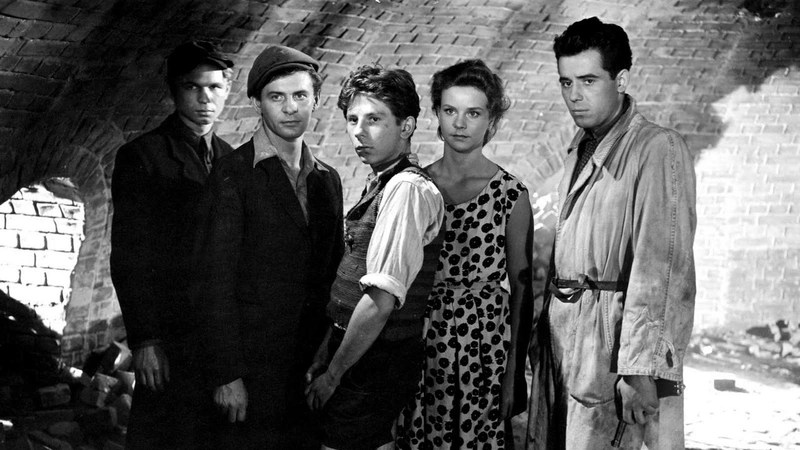
A Generation follows a group of young men drawn into the resistance movement against the German occupying forces. They include the increasingly political Stach (Tadeusz Łomnicki) and the hesitant, anxious Jasio (Tadeusz Janczar), both of whom are inducted into a resistance cell by the impassioned Dorota (Urszula Modrzyńska). As Warsaw burns during the Jewish Ghetto Uprising of 1943, the newly minted fighters take to the streets in solidarity – and at cost.

It’s a simple summary, but that only tells half the story. There are subtleties to A Generation that can be hard to pick-up on for those not born Polish. When Wajda made A Generation, Poland was in the grip of Stalinism. It’s a film not made under artistic freedom, but by an artist pushing against the boundaries of what censorship would allow him to say. Among a great deal of truth in A Generation there are also thumping great lies. Lies that surely must have hurt Wajda, whose father was murdered (along with thousands others) by the Soviets at Katyn (a war crime A Generation, by necessity, pins on the Germans).

Stalinist thinking dictated very clear lines. The resistance heroes in the film are The People’s Guard. This was a pro-Soviet force, that believed only the Soviet Union could save Poland from the Germans. The Home Army (the largest resistance group, loyal to the Polish government-in-exile in Britain) are portrayed as bourgeoisie, reactionary, scared to fight and only marginally better than collaborators. (In real life, Stalin allowed the Home Army to be massacred by the Germans in the Warsaw Uprising of 1944 – Soviet tanks effectively sat outside the city and watched – then shipped thousands of survivors to death in the gulags).

Stalinist thinking also permeates the films characterisation and opinions. Many of the characters frequently feel functional and under-developed, quietly placing the movement ahead of themselves – classic Stalinist thinking, where the individual only serves as a cog in a greater machine. Stach’s work-place mentor waxes lyrical about a wise, kind old man with a beard – Karl Marx of course – while outlining how their Home Army supporting factory boss is ruthlessly exploiting the working classes for profit. Comments about the holocaust are kept to a minimum – Stalin hardly being known for his tolerance either – with Wajda going as far as he can by praising the Jews bravery as fighters. Arguably the most developed character in the film – Tadeusz Janczar’s twitchy Jasio – is only allowed to be a more complex hero because, all his doubts, fears, bravado and individual pride, eventually lead him to the ultimate sacrifice (in the film’s most iconic moment).

If A Generation is so politically compromised, why watch it today? Because it is also a superbly striking debut from a master film-maker – and it’s important to remember, that even with its lies and political obfuscations, the Polish authorities were hardly happy with it at the time anyway. Inspired by Italian neo-realism, Wajda gives the film a lived-in, on-the-streets quality that helped revolutionise Polish cinema. Quite simply, no Polish film had ever looked like this before – it was the first to break free from its hermetically sealed studio bubble. From its opening tracking shot through the poverty-stricken streets of Warsaw’s Wola district, to its extensive location shooting in run-down factories and cobble-lined streets, A Generation embraces realism, employing several non-actors.

Mud, rain and ill-lit locations fill out the frame in a grim, sharply realist view of war. Wajda frequently shows bodies hanging from lamp-posts, while gun battles between Germans and partisans have a frighteningly random intensity to them (perhaps helped by the fact that budgetary issues meant it was cheaper to fire real ammunition on set). The film pioneered the use of squibs for gunshots (condoms filled with fake blood, then burst). Warsaw burns in the background of shots that foreground everyday life, such as fun-fares and solidly proletarian workers working happily.

The partisans huddle in sewers, drink in shanty late-night bars and work in dirty, noisy factories. Wajda’s film fully embraces the style de Sica and others introduced (and fascinatingly was doing this in parallel with Satyajit Ray’s Pather Panchali and Aparajito thousands of miles away). A Generation might keep many of its characters lightly sketched – Stach and Dorota are invested with youthful fire by Tadeusz Łomnicki and Urszula Modrzyńska which goes a long way to round-out their essentially blandly communist personalities, Donata in particular fervent and stoic in her socialism – but it makes the stakes for their struggle with Fascism grippingly real and dangerously immediate.

Wajda also, successfully, gambled that if he made the two leads reasonably acceptable symbols of Stalinist thinking he would be allowed greater scope with the third. Tadeusz Janczar’s performance as Jasio is fabulous – a fighter disgusted by killing, who kills a German with a panicked firing of an entire clip then brags how much he let him have it, whose escape from the Germans during the Uprising could be interpreted either as a noble distraction to allow others to escape or a blind panic that ends fatally. Either way, Jasio is a fascinatingly rich, contradictory character.

Wajda’s film is a powerful mission statement of his dynamism with the camera and his ability to walk a fine-line between political demands and genuine drama (though his later films would be made under a marginally more liberal government). While it must never be forgotten while watching it that it presents a slanted, false version of history, it still captures an essential truth of its haphazard chaos and savage violence. When Stach weeps when seeing teenagers not much younger than him preparing to join the People’s Guard, it hits a deeper truth about the horrors of the twentieth century on Poland that blasts through any political compromise Wajda was forced to make.

Ratatouille (2007)

Ratatouille (2007)

Delightful and heart-warming cooking comedy with added rats – a Pixar gem

Director: Brad Bird

Cast: Patton Oswalt (Remy), Lou Romano (Alfredo Linguini), Ian Holm (Skinner), Brian Dennehy (Django), Peter Sohn (Émile), Peter O’Toole (Anton Ego), Brad Garrett (Auguste Gusteau), Janeane Garofalo (Colette Tatou), Will Arnett (Horst), Julius Callahan (Lalo), James Remar (Larousse), John Ratzenberger (Mustafa), Teddy Newton (Talon Labarthe)

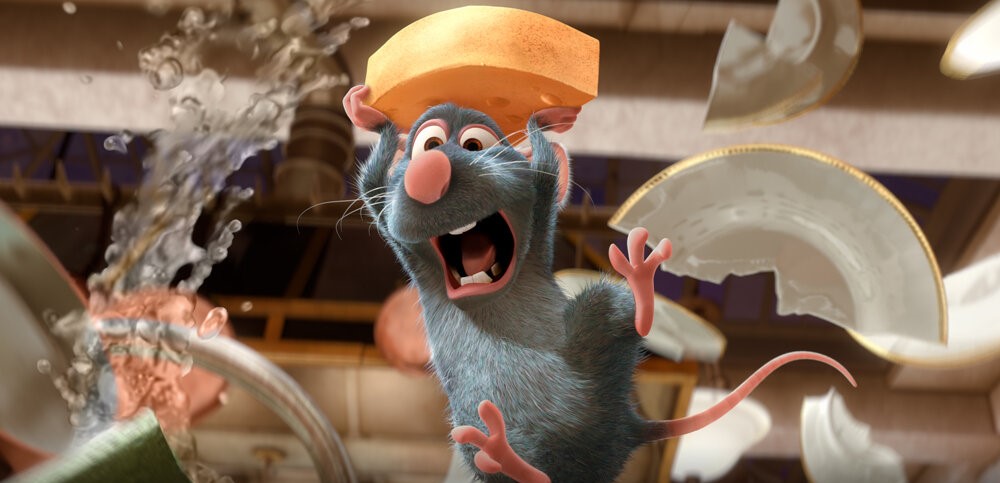
They say anyone can cook – but surely they don’t mean a rat can cook? But in Ratatouille that’s what we get: the greatest chef in Paris is a rat. Remy (Patton Oswalt) has a sense of taste and smell that’s light years ahead of his fellow rats. While they happily munch on rotten food, Remy longs for food that’s actually good. Separated from his family, Remy finds himself in the Parisian restaurant of legendary late chef Auguste Gusteau (Brad Garrett). There Remy’s natural instincts make him the secret brains behind the growing success of young Alfredo Linguini (Lou Romano), who overnight moves from dish cleaner to chef. His secret? Remy of course. Can they keep their secret in the face of the suspicion of head chef Skinner (Ian Holm), Linguini’s growing romance with fellow chef Colette (Janeane Garofalo), and the threat of a damning review by feared critic Anton Ego (Peter O’Toole)?

All this comes together in Brad Bird’s delightful confection, a superb dish where every flavour is perfectly balanced and all ingredients are seasoned to perfection. (I promise this won’t all be full of cooking puns.) It’s absolutely wonderful good fun and on top of that, it’s a real heart-string tugging treat. Ratatouille takes a fantastical set-up (a cooking rat manipulates a talentless chef’s body through precise hair pulling) and then throws in ounces of carefully judged comedy with real emotional pathos. Ratatouille never fails to make you laugh but then hit you with tear-inducing sincerity. The film is a total delight.

What Ratatouille is really about is truth. Being true to yourself, embracing the things you love, and the struggle to find acceptance for that, be it from family or the world around you. It’s the subtext behind Gusteau’s message that anyone can cook. This is not about anyone being able to crack an egg into a pan: it’s about good food coming from a person loving what they do and wanting to share that love with someone else. Remy – an utterly delightful voice performance by Patton Oswalt – wants to experience good food, but as a rat the home of good food is always the place he’s most likely to find himself skewered by a trap.  

Remy loves food in a way that the rest of his rat family – lead by his tough-as-nails father Django (Brian Dennehy) – can’t even begin to understand. They see food as just fuel. Who cares which flavours complement each other or even if its fresh? To them Remy’s extraordinary sense of smell is only useful for his ability to detect poison before it hits their mouths. And they can’t even begin to understand Remy might want more. But the very idea of heading to a kitchen – or interacting with humans who, to the other rats, get their kicks from slaughtering rats in their thousands – they can’t even begin to get their head round. Why can’t Remy be happy snuffling in the gutter?

Linguini (a very sweet, nervy Lou Romano) also has burdens of expectations that he can make a career in the kitchen. Anyone can cook – except for Linguini, who has no interest in (let alone flair for) flavours. The relationship between man and rat is beautifully done– even though neither can speak the other’s language. (In a neat touch, while we hear the rats talk – every human in the film just hears them squeak.) To Linguini, it doesn’t matter that Remy is squeaky vermin, what matters to him is that Remy is a master at what he does. But, Ratatouille gently asks: can hiding your true self make you happy in the long term?

Linguini’s success shows another side of being true: as fame goes to Linguini’s head, he starts to forget he’s the muscle not the brains of the operation. What will eventually alienate his growing relationship with fellow chef Colette (a wonderful Janene Garofalo) is not that he’s working with vermin to make the food, but that he’s lied to her about his skills. Something particularly tough since, like Remy, she has had to fight tooth and nail to live her dream in a male-dominated industry.

Accepting your true self and being happy in your own skin are themes our two villains also juggle with. Head chef Skinner (hilariously voiced with impotent rage by Ian Holm) has lost any love he once had for cooking, marketing his former mentor Gusteau as the face of a brand of cheap ready-meals (“with dignity” he absent-mindedly requests, as Gusteau is drawn as a burrito for the latest packaging) and his interest is only in turning a profit. The face of mass-produced, soulless fare, he’s the perfect antagonist of a film that praises lovingly crafted individualism.

And our other villain? Played with a beautifully plummy relish by Peter O’Toole, Anton Ego – drawn with a grey-faced, sepulchral chill – despairs that any food can meet his standards and seems to have forgotten somewhere along the line that excellence comes from love. Unlike Skinner though, Ego is (at heart) an idealist who may no longer quite remember what he is searching for – but will embrace it when he finds it at last. Ratatouille’s finest moment – always brings a tear to my eye for sure – is Ego’s being reminded at last what made him fall in love with his passion in the first place, perhaps one of the finest moments in Pixar’s long history.

Ratatouille’s emotional content and its themes of truth and acceptance are at the heart of its success, complemented always by the superb score from Michael Giacchini, crammed with Parisian inspiration. There is more life in this animated marvel than in hundreds of live-action films. And the animation is breath-taking: from the kitchen a marvel of pristine, gold and steel surfaces, via the sewers bringing back memories of The Third Man, to the visual imagination of Ego’s coffin-shaped office or the cobbled together rat colony (made from various bits of rubbish). Brad Bird’s flair (and Ratatouille is a wonderfully directed film) also carries across to his electric chase scenes through the streets and rivers of Paris, and the undeniable tension of watching Remy maneuverer his way around a kitchen without being detected.

Bird’s film though really succeeds because it has a warm-hearted love for all its characters and a heartfelt and appealing message for us to be the people we want to be, not what those around expect us to be. And who can’t relate to that? Throw in the sort of unexplained comic magic of watching a naïve young man having his body moved about by a cuddly rat sitting under his chef’s hat and with Ratatouille you onto an absolute winner. Bon appetit!

Champion (1949)

Champion (1949)

Kirk Douglas is a boxing heel in this noirish melodrama full of excellent moments

Director: Mark Robson

Cast: Kirk Douglas (Midge Kelly), Marilyn Maxwell (Grace), Arthur Kennedy (Connie Kelly), Paul Stewart (Tommy Haley), Ruth Roman (Emma), Lola Albright (Palmer), Luis van Rooten (Harris), Harry Shannon (Lew), John Day (Dunne), Ralph Sanford (Hammond), Esther Howard (Mrs Kelly)

What does it take to get to the top? Skill, luck, ambition, determination – and sometimes just being a ruthless bastard. Midge Kelly (Kirk Douglas) as all five of those skills in spades, flying from bum to champ in just a few short years, burning every single bridge along the way. Champion tells the ruthless story of how Kelly alienated his devoted lame brother Connie (Arthur Kennedy), dropped the trainer (Paul Stewart) who discovered him in a heartbeat and used and tossed aside a host of women: dutiful wife Emma (Ruth Roman), would-be femme fatale Grace (Marilyn Maxwell), artistic, sensitive Palmer (Lola Albright) wife to his new manager. As he enters the ring to defend his title against old rival Johnny Dunne (John Day), will all these chickens come home to roost?

Champion is deliciously shot by Franz Planer with a real film noir beauty, in particular the vast pools of overhead light that fill spots of the backstage areas of the various venues Midge fights in. Its boxing is skilfully (and Oscar-winningly) edited into bouts of frenetic, enthusiastic energy – although you can tell immediately that no one in this would last more than 90 seconds in a real ring – and it manages to throw just enough twists and turns into its familiar morality tale set-up to keep you on your toes and entertained. In fact Champion is a gloriously entertaining fists-and-villainy film, full of well-structured melodrama and decently drawn moral lessons. It’s the sort of high-level B-movie Studio Hollywood excelled at making.

For a large part it works because Douglas commits himself so whole-heartedly to playing such an absolute heel, the kind of guy who knows he’s a selfish rat but just doesn’t give a damn. Douglas was given a choice of a big budget studio pic or playing the lead in this low-budget affair, chose Champion – and his choice was proof he knew where his strengths lay as an actor. Midge Kelly is the first in a parade of charismatic, ruthless exploiters that Douglas would play from Ace in the Hole to The Bad and the Beautiful. Kelly is all grinning good nature until the second things don’t go his own way: and then you immediately see the surly aggression in him.

Its why boxing is a good fit for him. He doesn’t quit a fight – pride won’t let him. It’s the quality that Tommy sees in him, after Midge is literally pulled in off the street to pad up the under-card at a challenger’s fight night. Clueless as he is about boxing technique, he refuses to stay down and picks a fight with the promoter on the way out when cheated out of his fee. Champion shows how, for resentful people like Kelly, pugilism is a great way of getting your own back when you feel life has screwed you in some way. Perhaps that’s why he goes for his opponents with such vicious, relentless energy and why he takes such a cocky delight in beating the hell out of them. In fact, Champion could really be a satire on the ruthless, put-yourself-first nature of much of Hollywood, with both Connie and Tommy commenting that the fists-and-showbiz world is a cutthroat one.

What Champion makes clear though is that Kelly isn’t corrupted by fame. For all Douglas’ charming smile, there is a cold-eyed sociopathy in him from the start. Kelly performs loyalty, but it’s always a one-way street. He’ll assaults those who call his weak-willed, more cynical, crutch-carrying brother Connie ‘a gimp’, but he has no real sense of loyalty. He doesn’t even pause for a second when seducing Emma (daughter of the diner the brothers end up working at on arriving in LA) for a quick fumble despite knowing Connie’s feelings for her. Later, criticised by Connie, he’ll just as angrily lash out at Connie, mocking his disabilities, the second his brother starts to make decisions of his own.

Kelly’s ruthlessness towards women is also clearly something innate. He’ll whine like a mule when forced (virtually at gunpoint) to marry Emma, who he’ll immediately leave behind with no interest of hearing from again (until she finally develops some feelings for Connie of course, at which case he seduces her as a point of pride). His sexual fascination for the manipulative Grace – a purring Marilyn Maxwell – quickly burns out, again not pausing for a second in chucking her aside, all but flinging dollar bills on a table as he goes. Even more heartlessly, after showing some flashes of genuine courtliness in his romantic interest in Palmer (a very sweet Lola Albright), he happily takes a cheque from her husband (right in front of her) to never see her again. None of this comes from fame: it’s the sort of guy Kelly is.

And, as Douglas’ smart, self-absorbed performance makes clear, it’s because deep down Kelly always thinks he is the victim and the world owes him a living. There is a strong streak of self-pity in Douglas’ performance, bubbling just below the surface combined with a narcissistic need to be loved by strangers even while he’s reviled by everyone who knows him. There is an escape from inadequacy for Midge in fighting: something he keeps coming back to time-and-again in complaints about the unjust treatment the world has given him in the past, used to justify any number of lousy actions.

Champion unfolds as an interesting study of a deeply flawed, increasingly unsympathetic character with a huge drive to destroy other people, either by words or fists. An excellent performance by Douglas is counter-poised by a host of other strong turns, especially from Arthur Kennedy, whose Connie effectively trapped in an abusive relationship and Paul Stewart’s unromantically realistic trainer who knows the score long before anyone else. Handsomely shot and directed with a melodramatic flair by Mark Robson, it can enter the ring with any number of other boxing films.

Napoleon (1927)

Napoleon (1927)

Gance’s monumental film takes the breath away, packed with innovation, invention and drama

Director: Abel Gance

Cast: Albert Dieudonné (Napoléon Bonaparte), Edmond Van Daële (Maximilien Robespierre), Alexandre Koubitzky (Georges Danton), Antonin Artaud (Jean-Paul Marat), Abel Gance (Louis de Saint-Just), Gina Manès (Joséphine de Beauharnais), Vladimir Roudenko (Young Napoléon), Marguerite Gance (Charlotte Corday), Yvette Dieudonné (Élisa Bonaparte), Philippe Hériat (Antoine Saliceti), Max Maxudian (Barras), Annabella (Violine Fleuri), Nicolas Koline (Tristan Fleuri)

There is a marvellous quote from Victor Hugo when he wrote about the young life of the most famous Frenchmen who ever lived: Déjà Napoléon perçait sous Bonaparte. Which roughly translates as ‘already Napoleon was bursting through Bonaparte’ – or to put it another way, the man was already being consumed by the legend. That idea dominates Abel Gance’s extraordinary, epic, retelling of the Young Napoleon’s life, an origins story that sees a young man become increasingly distant and legendary before our eyes. Gance’s film may be resolutely old-fashioned in its historiographical approach, but is revelatory in its cinematic flair and invention, with almost every scene demonstrating Gance pushing the medium in new directions.

Napoleon was planned as only the first of no-less-than six films that would cover the cradle-to-grave story of the man who defined his whole era. Such was Gance’s ambition through, that even across five hours he felt he had only scratched the surface of the first 27 years of Napoleon’s (Albert Dieudonné) life from his childhood education (snowball fights and all) at Brienne – where he is seen as a Brutish Corsican outsider – via the French revolution, his failed attempt at revolution in Corsica, his successful siege of Toulon and promotion to General at 24, nearly losing his life in The Terror, Thermidor and his crushing of the Vendemaire uprising, marriage to Josephine (Gina Manès) and the beginning of his campaign in Italy.

Gance unfolds this in a film brimming with cinematic verve and invention. Much like its lead character, it is a seismic and larger-than-life (literally so in its most famous innovation, the three frame wide-screen effect achieved for its final twenty minutes). Napoleon practically defines the notion of historical epic, reproducing many at historical events at a 1:1 ratio. At its centre is a magnetically hypnotic (almost literally) performance from Albert Dieudonné (so enamoured with the role, he was buried in his costume) juggling the impossible by suggesting some of the many shades of this fascinating figure, part revolutionary, part tyrant, part romantic, part war-monger.

There is something truly striking and original in every frame of Napoleon. Gance presents a picture of the famous general more than touched with an old-fashioned Great Man theory of history, but still suggests he is almost two men in one. He is Bonaparte, the slightly-chippy, awkward young man who clumsily woos Josephine (barely sure where to do with hands, tugging shyly at his sash), struggles to get noticed in a map-making office and finds it challenging to make friends, either at school (where he is a painfully serious outsider) or as an adult. But he is also Napoleon, the totem of history who Gance frequently frames as almost communing with a historical version of himself.

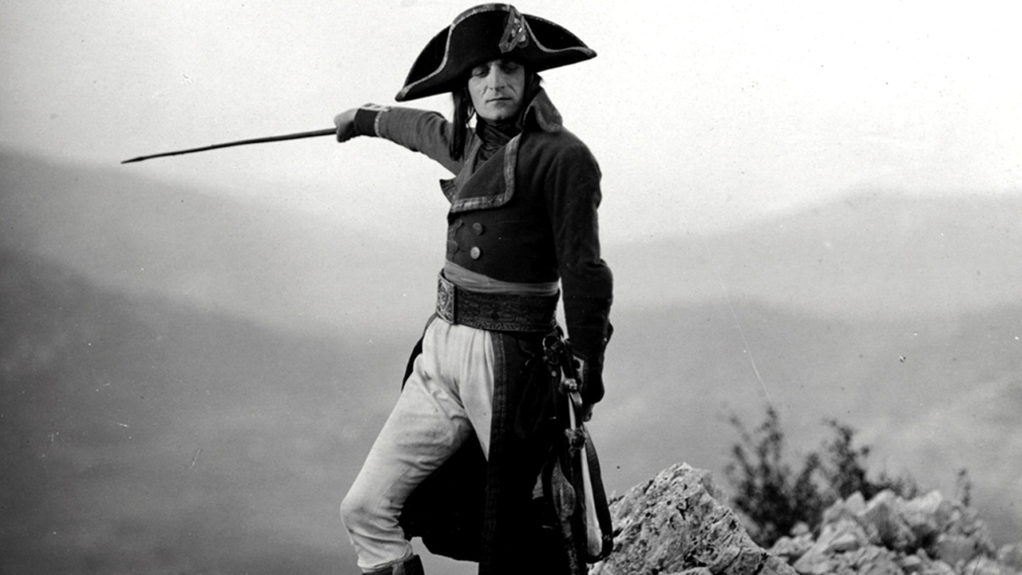
This Napoleon bursts from the awkward Corsican shell of Bonaparte. Gance frequently frames him almost confronting the camera, light shimmering around him to form halos, with a piercing stare that freezes people into place. He comes to identify himself with the flag and the revolution. So much so that, in his escape from Corsica, he will be borne across the seas by a tricolour jerry-rigged into a sail and visualise himself being hailed by the executed ghosts of the revolution as its natural heir. Indeed, the film ends with Napoleon atop a mountain starring into a montage of his future achievements, as if he was bending history around him.

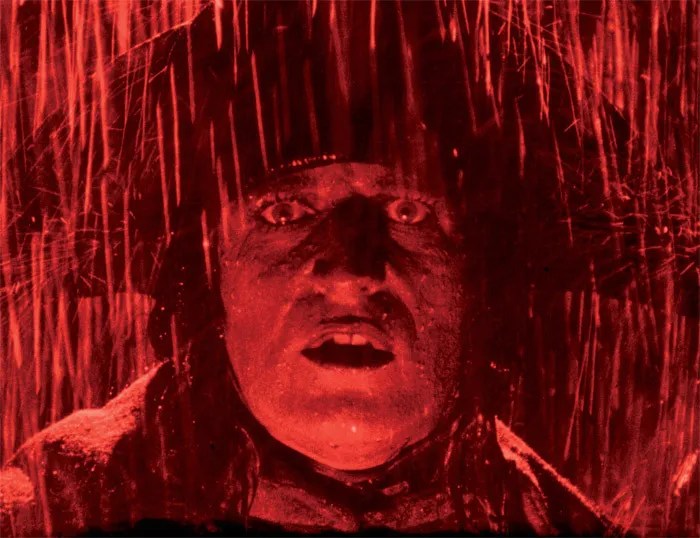
Which isn’t to say Gance sees him as a constantly sympathetic figure. While there is no question he is a force of nature – he controls the frame, frequently centred and when the camera moves (such as the careering gallop that takes him to Italy) he is always at the eye of its propulsive tracking shots – he is also an imposing, even scary figure, distant and cold. In dyed red frames, he looks positively demonic, such as when he looms forward out of the rain in Toulon, his face filling the frame to demand relentless attack. His self-identification with the revolution becomes monomaniacal.

Gance re-enforces his distance from normal human reaction by returning constantly to the Fleuri’s, a working-class family who shadow the Great Man (Violine loves him hopelessly and her father and brother worship him) but whom he never notices. It’s part of him being crafted into marble before us – with all the terrifying lack of human understanding that suggests. Throughout he’s shadowed by an eagle, a visual representation of his mystical, greater-than-human nature, a bird of destiny that drives him relentlessly on. He’s contrasted constantly with other would-be leaders: the itchy Marat, the empty windbag Danton and (most noticeably) the curiously ineffectual Robespierre, an uncharismatic man who can’t control a crowd, is lost behind darkened glasses, follows the orders of others and is comically dwarfed by an eagle statue not elevated by it.

Gance’s history has a slight school-book Victorianism to it. He’s very proud of “historical” facts – quotes and events are frequently branded with the on-screen phrase “(Historical)” so we can see his behind-the-scenes research – and has more than a little love for irony. Of course, the final island covered in school-boy Napoleon’s geography class is “St Helena”! Of course, the English sailor who spots him escaping from Corsica (and is refused a request to sink his ship) is Nelson! The film is littered with cameo appearances from later Napoleon rivals and allies. There is also a darker irony playing here: we know that when Napoleon is praised by the ghosts of the revolution that, far from protecting it, he will in fact become its final destroyer.

But what really singles out Napoleon is it’s intense, cinematic inventiveness. It’s an explosion of unique, fascinating images packaged into a single film. Gance reinvented the wheel multiple times on this one, not least on his of ghostly images and cross-fades. To achieve this – such as the ghostly appearance of the Great Revolutionaries in an otherwise empty Assembly Hall, he re-exposed the same film multiple times (sometimes as many as twenty) to achieve the effect. The same for Napoleon’s schoolyard fights, a single sequence with the screen split into nine squares each showing a different moment in time achieved by covering different parts of the frame for each exposure.

Gance’s camera is strikingly mobile, his editing frequently thrilling and thought-provoking. The famous sequence of Napoleon’s escape from Corsica is superbly intercut with the clash in the Assembly that will lead to the execution of the Gironists. The swaying of the ship is increasingly echoed by the swaying and eventually full-blown swinging of the camera in the Assembly room. Both events merge together through cross-fades. The camera whips through some scenes with real pace and aggression – witness the fast-paced tracking shots that follow Napoleon to Italy.

That’s matched as well with imaginative scenes of quiet beauty. The young Napoleon quietly communing with his pet eagle. The marvellous “shadow marriage” Violine conducts with a cardboard doll of Napoleon, positioned to cast a full-length shadow on the wall. There are moments of black humour – the coffin Robespierre and Saint-Just keep the death sentences they’ve passed in – and moments of soaring, lyrical inspiration such as the first singing of the Marseilles which takes on a mystical quality. To achieve this, Gance pushed the camera places it had never been before, patenting new techniques and devices to achieve frames, angles and cross-fades never seen before.

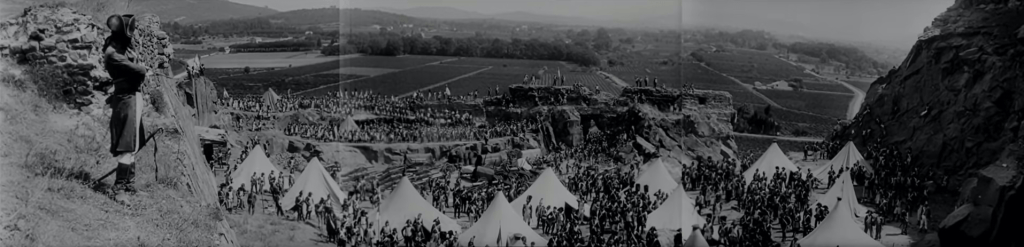
The most stand-out being the astonishing three-frame wide-screen effect. Perfectly mapped, with the small distortion in the joins almost adding to the power, this creates Panavision decades before Hollywood had even coined it. It creates awe-inspiring vistas of Napoleon’s Italian army – although the battle scenes Gance shoots are often cruel and dirty, with bodies twisted and crushed by the violence of war – but it also allows Gance to present three different images side-by-side, something he exploits to maximum effect in the closing moments that presents a giddyingly cut (it’s Eistensein-influence is clear) montage of past moments in the film that have led up to the Napoleon we see standing on a mountain before us starring into the future.

For Gance through, it is a future that wouldn’t come. Napoleon was not a success – perhaps people couldn’t quite process the scale of it, perhaps the money-men were terrified that Gance had spent the budget of six films on one and still hadn’t got round to Austerlitz, Borodino and Waterloo. The film was butchered and tinkered with for decades before it was reborn. And what a relief, because this is a stunning epic, which (for all its narrative simplicity) has something to wonder at in every frame. An extraordinary film, which everyone should see at least once.

Sexy Beast (2001)

Sexy Beast (2001)

Superb acting motors a gangster film that’s also a nightmare house-guest comedy

Director: Jonathan Glazer

Cast: Ray Winstone (Gal Dove), Ben Kingsley (Don Logan), Ian McShane (Teddy Bass), Amanda Redman (DeeDee Gove), James Fox (Harry), Cavan Kendall (Aitch), Julianne White (Jackie), Álvaro Monje (Enrique)

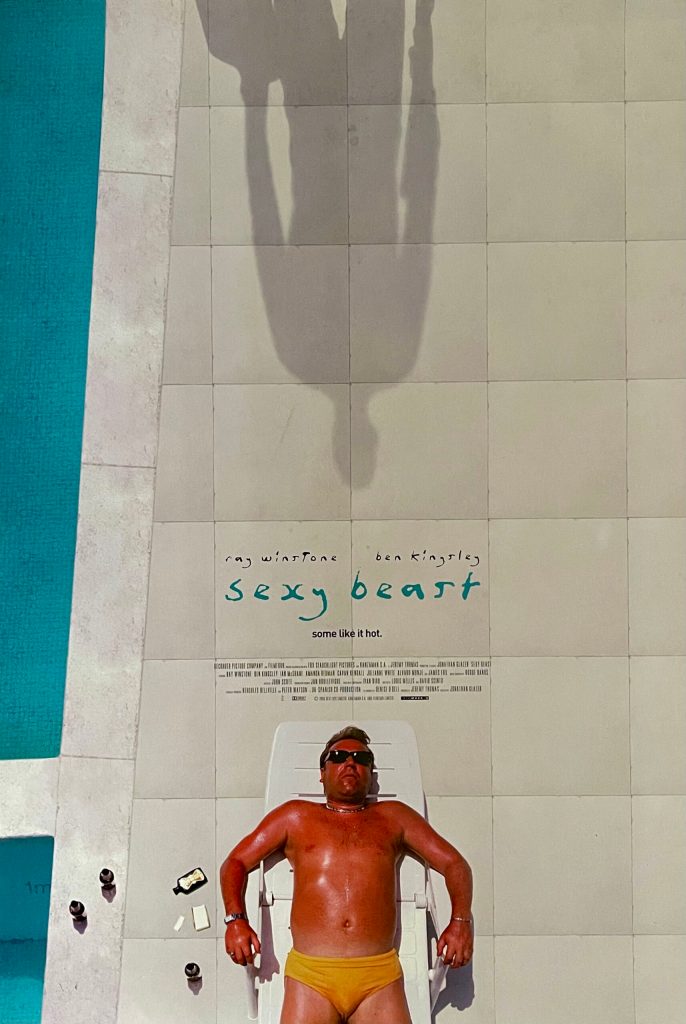
Gal Dove (Ray Winstone) has got it made. He’s baked bronze by the pool in his home on the Costa del Sol, earned after a life as a top safe cracker in London, alongside wife DeeDee (Amanda Redman), best friend (and fellow ex-crook) Aitch (Cavan Kendall) and glamourous Jackie (Julianne White). All that changes when an unexpected visitor turns up: Don Logan (Ben Kingsley). A tightly-wound, terrifyingly unpredictable sociopath, Logan has a job offer to which the only acceptable answer is yes: joining a team to break into a top London bank for crime king-pin Teddy Bass (Ian McShane). How’s Gal going to get himself out of this one?

Sexy Beast seems at points it might settle for being a standard British gangster drama. But Glazer’s becomes a hugely enjoyable mix of that and bizarre black comedy. A houseguest from hell comedy, like a psychotically foul-mouthed The Man Who Came to Dinner, with the added sprinkle of playful psychological theory and touches of darkly sexual content (James Fox brings back memories of The Servant and Performance). There is even an element of Greek drama: Gal really should be paying attention to the parade of ill-events preceding Don’s arrival, not least the boulder that tumbles down a mountain into his swimming pool nearly squashing Gal en route.

That boulder is, it turns out, far less of a danger than Don. If there is one thing that dominates perceptions of Sexy Beast, it’s the intimidating, witty danger of Ben Kingsley. For an actor best known at the time as Gandhi, to say this was a change of pace was an understatement. Kingsley arguably changed his whole career here with this stunningly intense, hilarious, performance. Shirt tucked in, head shaved, Logan might look physically unassuming but the pulsing vein in his head is a sign of him being a tightly wound ball of unprocessed anger and fury. Kingsley makes him superbly unpredictable – snapping on a sixpence from quiet to rabid fury with a terrifying capacity for sudden violence.

Glazer throws him into Gal’s Spanish heaven like a ticking timebomb. There is a great deal of wit in how Glazer shoots Logan, often sitting or standing in a domineering position in rooms while the other characters awkwardly shuffle, uncertain of where to look, hugging the margins. This comedy carries across into Logan’s utter disregard for social rules or niceties – all captured in his blackly hilarious calm refusal to extinguish his cigarette on a plane, followed by his ranting ejection (“I hope this crashes!”) – which sparks shocked laughs. It’s not funny for those around him as Logan sprays matter-of-fact slurs about his hosts, deliberately urinates on their bathroom floor and calmly discusses the time he had sex with Jackie in front of her husband.

There is a strange immaturity about Don, like a maladjusted child who has never grown up, superbly contrasted with Gal’s calm, contented mellowness. Don lacks any emotional maturity and sounds like a sulky teenager. He’s the sort of playschool bully who psyches himself up in the mirror and parrots word-for-word the instructions he’s received about the planned heist from the ‘bigger boys’. He seems to have no friends and a teenage romantic obsession with Jackie (who I would bet money was his only ever sexual experience). This is all captured superbly by Kingsley’s surprisingly complex performance full of terrifying childish unpredictability alongside its dark humour.

The dominance of Kingsley makes it easy to overlook Winstone’s equally fine performance. Any doubts about the power of Kingsley to intimidate is squashed by Winstone’s subtle terror at the former Gandhi. Winstone plays up his more loveable aspects, as an honest man (despite his profession), keen to make the lives of those around him better. He’s completely unsuited now for the life of violence and crime he has left behind. Mumbling, downward looking, Winstone gives Gal some nice hints of the submissive surrender of a life-long victim to his bully.

Glazer skilfully presents these characters as two sides of the same psychological coin. While Don is certainly real, viewers can have fun tying themselves into knots on theories where he is Gal’s terrifying id, an embodiment of the hardened, dangerous criminal he possibly used to be. This makes Don’s intimidating take-over of Gal’s home a visual representation of the repressed violence in Gal. It’s a feeling added to by Gal’s dreams of a satanic satyr figure (who sort of resembles Don). Sexy Beast uses this vibe to subtly suggest the real danger might be Gal’s deeply suppressed criminal psychology. It makes for a neat suggestive undertone, which Glazer carefully never overplays.

Sexy Beast makes an impressive calling card for Glazer’s skill. It’s smartly edited – a Logan monologue explaining the heist’s background is skilfully intercut both with Logan being told of the scheme and Teddy formulating the plan. Glazer mixes interesting camera angles – there are some neat shots where cameras appear to be attached to doors in particular a revolving bank door – and impressive simplicity, not least a quietly staged scene that uses a single shot to track Logan going from calm to berserk in Gal’s kitchen. It’s a sign of the flair and imagination of a consummate visual stylist.

He also stages the heist – masterminded by a dead-eyed and chillingly calm Ian McShane – with an impressive confidence. While Kingsley’s character so dominates the film that it’s hard to get as interested in the crime itself, it offers visual panache and – in the blundering of several of the criminals in a flooded bank vault and their clumsy celebrations afterwards – further sly commentary of the immature dumbness of criminals. The sexually fluid upper class orgy where the crime is born is also staged with a refreshing lack of salaciousness and the bursts of violence, when they come, carry a matter-of-fact brutality that’s much worse than all-out gore.

If Sexy Beast has a major fault, it is that the power and fascination of Kingsley’s character unbalances the film in his favour. Its final act feels like an anti-climax – probably the only time gun-laden, underwater antics have been less exciting than a classically-trained actor spraying f-bombs and the c-word like there’s no tomorrow – but that’s also a tribute to its early power. The first two acts speak to us because, beneath all the gangster shenanigans, we’ve all had to deal with the nightmare of an uninvited house guest from your past and we can all sort of relate to the dark humour of egg-shell tip-toeing the rest of the characters do around the simmering Kingsley-volcano.

It’s why Sexy Beast works best as a black-comedy confined play (a theatrical adaptation, not a TV prequel series, is what it really needs). When it focuses on the superb interplay of Winstone and Kingsley, the film flies. It’s also proof that Glazer, even at the start of his career, could turn familiar tropes into something strikingly different, original and unique in tone. A gangster film like few others.

Scoop (2024)

Scoop (2024)

Interview dramatisation which mostly fails to turn news into drama, making empty points

Director: Philip Martin

Cast: Gillian Anderson (Emily Maitlis), Keeley Hawes (Amanda Thirsk), Billie Piper (Sam McAlister), Rufus Sewell (Prince Andrew), Romola Garai (Esme Wren), Richard Goulding (Stewart MacLean), Amanda Redman (Netta McAlister), Connor Swindells (Jae Donnelly), Lia Williams (Fran Unsworth), Charity Wakefield (Princess Beatrice)

It was one of those interviews that shook the world – largely because it was such car-crash TV. Prince Andrew (played, under layers of effective make-up, by Rufus Sewell) desperately wanted to distance himself from the Jeffrey Epstein scandal and BBC’s Newsnight was seen as the most appropriate outlet for a reputation-restoring chat with a proper journalist, Emily Maitlis (Gillian Anderson). The interview was booked by producer Sam McAlister (Billie Piper) – whose book Scoops inspired this – and advocated for by Andrew’s senior advisor Amanda Thirsk (Keeley Hawes). The revelation of Andrew’s priceless mix of out-of-touch privilege and shallow dimness, combined with his inability to understand the impact on anyone but himself, consigned him to royal oblivion.

Scoop tries its best to turn the behind-the-scenes story into drama – but, to be honest, it comes across as a hugely underwhelming Frost/Nixon-lite. It’s hard not to feel an episode of Netflix’s The Crown would have dealt with this with more depth and interest than this manages. Scoop commits the cardinal sin of any “plucked-from-the-TV-headlines” biopic: all its most interesting parts are pitch-perfect recreations of an interview you can watch at your leisure on YouTube. Once you’ve got over how well Anderson and Sewell have captured their subjects, that’s basically it.

That’s Scoop all over. It’s a film that’s all flash and no substance. Martin and screenwriter Peter Moffat work overtime to suggest that this interview was a seismic piece of journalism, a sort of David-v-Goliath reveal. It ends with the Newsnight team giving themselves a self-congratulatory round-of-applause for “having given a voice to the victims” – a bit rich considering neither the interview or this film gives them much more than a second or two. Maitlis and co are shown to be trembling with nerves before interviewing this Royal Spare who no-one ever took particularly seriously (as McAlister bluntly tells him at one point), something which feels a bit odd since we are repeatedly told Maitlis has quizzed Bill Clinton among a score of other names.

There is a Spotlight-ish attempt to show the Newsnight team verifying some facts before the interview takes place – Scoop is one of the few films you’ll see where a paparazzi photographer, played as a cheeky wideboy by Connor Swindells, presented as a noble crusader for the truth – but it never rings true. No real facts about the Andrew-Epstein case were either unknown, in dispute or revealed during the interview. Andrew wasn’t even undone because of “gotcha” questions: it was because he performed so catastrophically badly, painting himself as the “real victim” and revealing he existed in a reality no ordinary person could begin to recognise.

There is very little drama in Scoop. Based on McAlister’s book, Scoop is duty-bound to place her as centrally as possible. Problem is the slogging hard-work of building trust over time to land big interviews is quite undramatic. Instead, the film boils McAlister’s work down into a chance email, a pub chat and a bit of Hollywoodish-straight-talking from McAlister during a meeting with the prince. This sells her skills short. In fact, unlike Frost/Nixon which got chunks of drama out of the will-they-won’t-they dance to set-up the interview, Scoop gives the impression everyone wanted it to happen. In fact, it makes it look so straight-forward, you end up thinking McAllister’s bitter colleague might be right – how highly skilled is her job?

The desire to centralise McAllister creates further problems: their nominal lead’s key involvement ends before the stuff the film is really interested in (the interview) even begins prepping. Scoop falls back on plucky outsider to keep her involved, retrofitting McAllister (a producer with nine year’s experience with world leaders) into a working-class outsider, who needs to force herself into “the room where it happens”. Problem is as soon as she’s in the room, McAlister has nothing to say or do (one suspects the whispered legal battles connected with a rival mini-series on the same subject stopped the writing of any McAllister-ish insight here, for fear it would be promptly denied by the Maitlis-backed rival production).

McAlister becomes a side-bar, a largely silent background character in her own story. Not quite the message that the film wants to promote on female empowerment (even if her bosses are all women). There are similar odd notes in here. Amanda Thisk’s colleague, an aggressive male we are clearly not meant to sympathise with, resigns when the interview is agreed saying it’s a terrible idea. Scoop paints him as a chauvinist bully, furious at being over-ruled by a woman – problem is he’s right. The most effective moment on this subject is arguably more about privilege in general, as Andrew demeans a female cleaner for incorrectly sorting his teddy bear collection. As mentioned the actual victims remain voiceless and nameless on the margins, barely meriting even a post-credits mention.

Perhaps the real problem with Scoop is it wants to be an All the President’s Men style journalism film but the interview was really a soapish showbiz story. There is not investigation, no wrongs bought to light. There is no gladiatorial duel (compare to Frost/Nixon). Andrew essentially commits reputational suicide in front of his stunned opponents, when confronted with fairly routine, fact-based questions. It’s not like toppling someone really important – and the film is so careful about legal implications it avoids putting any stance on what Andrew may or may not have done, knowingly or otherwise.

What the film doesn’t want to say is that Newsnight landed a big hit by giving us exactly the sort of easy-to-digest, car-crash, celeb news it’s staff start the film scorning. Now a film embracing that would be interesting! In the film McAlister says they need to rejuvenate the programme, to stop talking in an echo-chamber to the Metropolitan elite on subjects like Brexit but focus on the things people really care about and challenge its viewers with positions that differ from their own. Was this story about Prince Andrew in any way at all an answer to that challenge? No. Did it change the world? No. Did it really deserve a film – and that rival three-part series? Scoop never suggests it does.