Author: Alistair Nunn

Andrei Rublev (1966)

Andrei Rublev (1966)

Tarkovsky’s masterpiece is one of the greatest films ever made about art and creativity

Director: Andrei Tarkovsky

Cast: Anatoly Solonitsyn (Andrei Rublev), Ivan Lapikov (Kirill), Nikolai Grinko (Danlil Chyorny), Nikolai Sergeyev (Theopanes the Greek), Irma Raush (Durochka), Nikolai Burlyayev (Boriska), Yuriy Nazarov (Prince Yury/Grand Duke Vasily I), Rolan Bykov (Jester), Mikhail Kononov (Foma)

I’ve always been a Tarkovsky sceptic. But Andrei Rublev is a masterpiece. Perhaps only Tarkovsky could have made a film about an artist and never once show a paintbrush in action or design a film about creativity that drips with shocking violence. Andrei Rublev avoids the cliches of cradle-to-grave biography – helped by the fact we know almost nothing about this medieval icon painter – presenting instead a series of vignettes suggesting possible influences on the work of an artist. It makes for an intriguing, fascinating film, challenging but infinitely rewarding.

Tarkovsky’s film roughly chronicles 24 years (1400-1424) in the life of Andrei Rublev (Anatoly Solonitsyn). But this is far from a straight-forward narrative, and the episodes themselves often seem only loosely linked and the movement of time and location often feels hazy. In many of these scenes Rublev is often a quiet observer or a man searching for depth and meaning, uncertain of his own views, aspirations and how he wishes to express his faith.

Over the course of the film, he observes a travelling Jester (Rolan Bykov) punished for mocking the social order, debates theology with his mentor Theopanes the Greek (Nikolai Sergeyev), is tempted by a pagan orgy in the forest and witnesses shocking acts of violence (including taking a life himself) in a civil war between two feuding noble brothers. Eventually taking a vow of silence, it is his witnessing of the rapturous reception of the successful casting of a giant bell – and the relieved shock of the teenage bell-master (Nikolai Burlyayev) that confirms to him the spiritual importance of providing consolation and joy to others through religious art.

Shot in a luscious black-and-white, Tarkovsky’s film presents a series of beautifully composed images that constantly invites us to re-interpret and re-imagine what we are seeing. This is not history as picture-book or progressive story. This is Tarkovsky at his best, a sprawling dream that never tries to clumsily link events to artistic outcomes or obvious motivations, but to suggest how the atmosphere of the world can form an artist’s spirit.

This is a medieval world that feels immersive, grimy and real – but also hums with a gorgeous sense of possibility. Tarkovsky frequently shoots horses, his camera lingering on these free-spirited animals that represent the freedom nature can give us. A close connection with the natural world draws the characters in time and again: Theopanes sits contentedly and allows ants to swarm over his legs, the bell is born in a dug-out crater in the earth itself. Water recurs as a symbol of possibility and temptation: Rublev’s pupil Foma daydreams of flying while washing brushes in water and later meets his death in a river; Andrei spies the naked pagan celebration in the river, then averts his eyes when rowing past their inevitable arrest. In the film’s prologue an early balloonist flies across a river, while at its conclusion Rublev and Boriska crouch and comfort each other in a water-logged field. Nature is elemental, bringing characters closer to an understanding of themselves and others.

In contrast, Tarkovsky’s film is striking for presenting what a destructive, violent and brutal force the ambitions of man can be. A yearning for power and recognition time and again develops into of violence. The jester is consigned to beating and years of imprisonment due to the close-minded resentment of intelligent-but-uninspired monk Kirill (Ivan Lapikov). A group of stonemasons are brutally blinded in the forest (violence even corrupts nature) by the Grand Duke’s men for standing by their rights. Most strikingly, Andrei witnesses a brutal massacre (vividly shot with hellish detail by, the entire sequence echoing the Eastern Front in World War II) in the city of Vladimir, where the Grand Duke’s brother’s forces indiscriminately rape and slaughter the population (including a horde of survivors searching for sanctuary in the church Rublev has just decorated with icons) and brutally torture and murder a monk (culminating in feeding him a melted golden cross). Even the bell-makers labour under the threat of instant death should their work fail and the bell crack.

Tarkovsky perhaps suggests the possibility of beauty and violence goes hand-in-hand for all of us. I feel that is the message of his fascinating – but never clearly explained – prologue. Set in an unspecified time and place, a medieval balloonist takes to the skies while, on the ground, panicked villagers (seeing the flight as witchcraft) attack his assistants. The balloonist flies with joy over the river – then crashes to the ground (and probably his death). This Icarus fable is, perhaps, about the difficulties of reaching for the sublime when the world constantly wants to pull us down. There is little place for invention and creativity in an existence that places a premium on earthly concerns, where art is just another tool for maintaining the power of the elites and the masses fear change.

It’s what Rublev is straining to rebel against. He lives in a world – and it’s hard to resist the idea Tarkovsky was suggesting Soviet Russia was little different – where art is a tool of control, feathering the glory of the powerful. He struggles to paint a Last Judgement because, as he argues with fellow artist Danlil (Nikolai Grinko) he doesn’t want to create an image designed to terrify the masses into faith. The Duke’s motivation for painting his Church is to make it grander than his brother’s. The bell is cast as a show for foreign dignitaries. The jester’s performance is punished for its satire.

Andrei is contrasted with the more overtly intellectual – but uninspired and untalented – Kirill, played with surely resentment and self-loathing by Ivan Lapikov. Judgemental and arrogant, Kirill dreams of having his genius recognised (approached by Theopanes to work with him, he is more interested in having the offer repeated publicly than the work itself) and lashes out at both the jester and his own dog for having the sort of freedom he can never find in himself.

Temptation and vanity also stands in the way of achievement. Shot in a style reminiscent of Christ in the wilderness, Andrei is fascinated by  the pagan orgy he witnesses. He is similarly drawn, for reasons he seems not quite to understand, towards the beautiful holy fool Durochka (Irma Raush), who he will brutally defend from rape in Vladimir. A vow of silence – and a Sisyphean labour moving heated rocks around a snow-bound monastery – is his self-appointed punishment for both his dreams of glory and his yearnings for romantic couplings. Art can be challenging.

But its results can be beautiful and inspire higher feelings. In the aftermath of the massacre of Vladimir, Andrei imagines a discussion with the long-dead Theopanes (Tarkovsky skilfully shoots this sequence with Theopanes appearing at every turn Andrei makes) who scorns Andrei’s grief and guilt over his burned church icons (and the false clash their beauty makes with the brutal world around them) and proclaims their beauty is a purpose in themselves. It’s a feeling Andrei only understands when seeing the people react with joy to the casting of the bell.

The final bell sequence – which brings all characters together to witness – would in itself make a masterful short movie and is certainly the finest extended sequence Tarkovsky ever made and a wonder in its own right. Immersed in the detail – and offering a fine portrait of bullish determination and artistic dictatorialness from Nikolai Burlyayev’s laser-focused Boriska – shot with a striking series of long shots and edits (some of the birds-eye shots are extraordinary) Tarkovsky creates a sequence of inspiration and tension. The careful, omnious, build-up to see if the bell will ring creates the same joyful relief in the audience as it does the watching crowds. It’s also perhaps the finest example on screen of the strangely empty, nervous release the culmination of creativity can bring.

Andrei Rublev is a fascinating, challenging and deeply engrossing art-house picture that alone cements Tarkovsky’s position among the greats. Finding colour only at the end with a series of awe-inspiring studies of the details in Rublev’s paintings, it reaches a finer understanding of the struggles in the soul of the artist than hundreds of more traditional biopics. Solonitsyn is superb as the enigmatic Rublev, the film a brilliant pageant of events (much like the medieval passion play Rublev remembers witnessing) that uses incidents to give us a final picture of understanding. It becomes one of the most oblique but constantly thought-provoking explorations of artists ever made – and a film where hours of thinking only scratches the surface of its possibilities.

Hardcore (1979)

Hardcore (1979)

Familiar ideas from better films are mixed together in this revenge thriller

Director: Paul Schrader

Cast: George C Scott (Jake van Dorn), Peter Boyle (Andy Mast), Season Hubley (Niki), Dick Sargent (Wes De Jong), Leonard Gaines (Bill Ramada), Dave Nichols (Kurt), Gary Graham (Tod), Larry Block (Detective Burrows), Ilah Davies (Kristen van Dorn), Marc Alaimo (Rattan)

A man prowls the urban streets, his face fixed with disgust at their degeneration, looking for a soul to save, the whiff of potential violence strong on him. He hunts for a lost family member, in an obsessive quest where it’s not even sure he will want to take her back even if he finds her. If that makes Hardcore sound like a remix of Taxi Driver and The Searchers… well that’s because it is. Schrader’s film is a well-made, initially well-executed riff on familiar themes that eventually tries to settle for something far easier to digest, with an ending that stinks of a shallow Chinatown.

Jake van Dorn (George C Scott) is a devoutly Calvinist businessman in Michigan. A single father, whose wife has left him, his beloved daughter Kristen (Ilah Davies) disappears one day after a church-sponsored visit to California. Van Dorn leaves no stone unturned to investigate, eventually hiring sleazy PI Andy Mast (Peter Boyle), who discovers an 8mm porno film starring Kristen. Was she kidnapped? Is she in danger? Van Dorn will find her, throwing himself into the seedy world of porn in an obsessive quest where no line will be uncrossed until he brings his daughter home.

There are many things to admire in Hardcore. Shot by Taxi Driver veteran Michael Chapman, it’s immersive seedy view of the underbelly of California is extremely striking. Schrader also quite neatly counterpoints this with the picket-fence conservatism of van Dorn’s stomping grounds at home. Van Dorn starts as a man who expresses hesitation that a shade of blue in his office might be too garish, and ends donning fake wig and moustache alongside loud shirt to pass as a porn baron.

What’s interesting about Hardcore is that, even though its actually Schrader’s second film, it feels like an over-anxious debut. It’s blatant stylistic and thematic call-backs to Taxi Driver­ – hammered home as we watch van Dorn cruise the streets of California, the porn shops and theatres neon signs reflected in his windows – makes you feel Schrader wished he had held on to the rights to direct that film himself. It’s extremely on-the-nose pinching of most of the structure of The Searchers feels like a loving tribute from a director yet to find his own voice.

Schrader however does an excellent job with much of the film’s first half. The oppressive tension build-up from the moment Mast arrives (Boyle’s casting, of course, being another eerie reminder of Taxi Driver) really grips. Scott’s stunned, shattered and increasingly appalled, primal reaction to watching his daughter in a porno is delivered with the sort of gusto and commitment that only a great actor can pull off. His increasingly-obsessive, won’t-take-no-for-an-answer delve into the world of porn – from knocking shops to porn film sets – has just the right sense of van Dorn slowly developing into a time bomb that could go off, while never losing our sympathy.

Hardcore is contemptuous of porn. Sharing van Dorn’s perspective of the industry, the film cements the industry as being based in a Danteish circle of hell, with violence, exploitation and misery round every corner. Schrader also enjoys poking fun at the porn industry and the film industry (a flashy porn director trained at UCLA, much like Schrader’s contemporaries). Searching for witnesses, van Dorn sets up fake auditions for a new porn movie, attended by a series of optimistic, hopeful guys with show reels and CVs. The money-first producers look and sound like any other Hollywood executive – it’s just they openly trade in skin.

The problem is Hardcore can’t settle for this: as if worried that poking some fun at the seedy industry might get in the way of us relating to the gut-punch horror van Dorn feels. In the second half, Schrader sets up (out of the blue) a snuff film premise, with an anonymous big bad behind it all (a figure so undeveloped that the most interesting thing about him is he’s played by Marc Alaimo who played Deep Space Nine’s villain Gul Dukat) just so we can have someone so obviously unspeakable that we have no mixed feelings at all when the violence kicks off.

Which is a shame because Hardcore looks, for a moment, like it is about to go somewhere more interesting. Van Dorn is broken from his obsessive focus only by meeting with Niki (played with just enough ballsy cuteness by Season Hubley), a girl on the margins of the industry dreaming of an escape. The two of them are drawn together in unexpected ways: she respects his religion in a way no-one else does, while van Dorn becomes the only man who doesn’t see her as a sex object, treating her with a fatherly gentleness you suspect he never showed his actual daughter. The film’s ruthless jettisoning of this plotline strives for hard-nosed reality, but ends up feeling like a too obvious attempt at pathos.

Despite all this Hardcore has its moments, not least thanks to George C Scott’s fire-cracker performance in the lead. Scott may have hated Schrader (allegedly begging him to never direct a film again), but he breathes life into this Ethan Edwards-Travis Bickle clone, making van Dorn just the right mix of pained, aggrieved and dangerous. Unfortunately, the film settles for something far more conventional, a revenge thriller with an obvious and inarguably horrible character created solely to make us feel good when he is dispatched.

All the President’s Men (1976)

All the President’s Men (1976)

The greatest film about journalism ever made? This dense, detailed conspiracy thriller is a marvel.

Director: Alan J Pakula

Cast: Robert Redford (Bob Woodward), Dustin Hoffman (Carl Bernstein), Jason Robards (Ben Bradlee), Jack Warden (Harry M Rosenfeld), Martin Balsam (Howard Simons), Hal Holbrook (“Deep Throat”), Jane Alexander (The Bookkeeper), Stephen Collins (Hugh W Sloan Jnr), Ned Beatty (Martin Dardis), Meredith Baxter (Deborah Murrah Sloan), Penny Fuller (Sally Aiken)

If anything, even remotely, dodgy happens in politics than, quick as a flash, you can bet the suffix “gate” is added to it. It all stems from Watergate, the Washington building that was the location of the most disastrous attempted burglary in political history. Agents from the Committee to Re-Elect the President (CREEP to you and me) broke into the Democratic office on a dirty tricks mission. They got caught, Nixon and his cronies decided to cover it up and obstruct justice – and when the story broke, it broke Nixon and his Presidency as well.

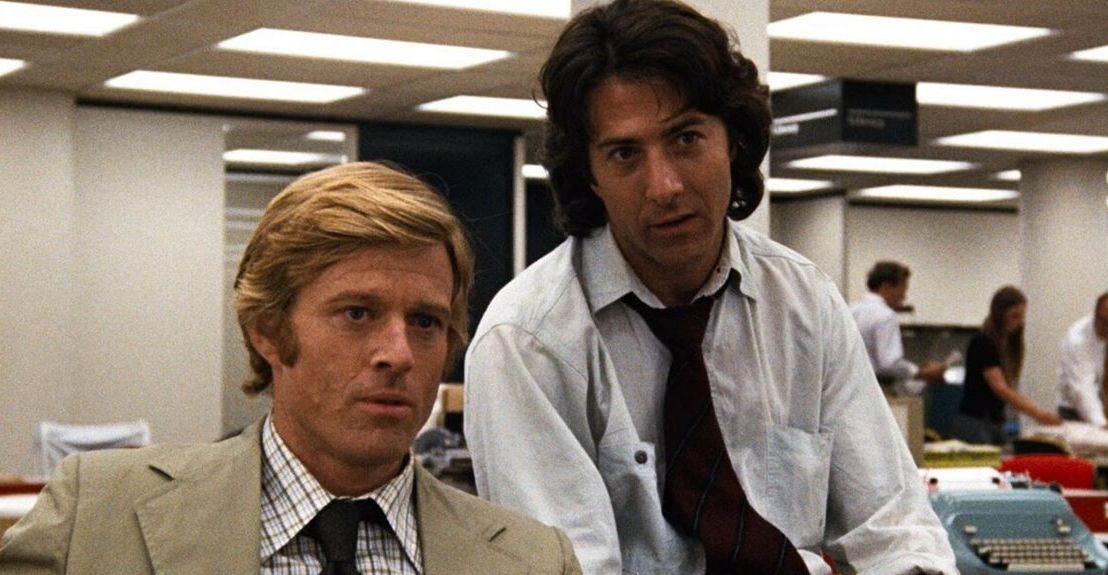
All the President’s Men covers the early days of how that story was broken by two junior reporters on the Washington Post: Bob Woodward (Robert Redford) and Carl Bernstein (Dustin Hoffman). Involved in the case from the night of the break-in, the film (adapted from the book by ‘Wood-stein’) covers their pain-staking investigation to work out what lies behind this burglary and, if there is a conspiracy of silence, how far up the chain of the Presidency it reaches. As well as winning the trust of sources, they must also persuade editor Ben Bradlee (Jason Robards) their reporting is rigorous and worth placing the full might of the paper behind them.

Produced by Redford, All the President’s Men is grounded in realism and the painstaking, methodical series of telephone calls, knocked doors, flicked reference books and sleepless sorting of facts and theories that lies behind investigative reporting. While never once slacking on the patience-defying, unglamourous, exhausting work, All the President’s Men may just have inspired more journalists to choose their career than any other film. This is journalism in all its freedom-of-speech, speaking-truth-to-power might and with Woodward and Bernstein already the most famous journalists alive, their glamour could only be doubled by being played by Redford and Hoffman.

The main obstacle All the President’s Men faced during its development was, how do you make the most famous political scandal in history suspenseful? After all (particularly in 1976) everyone watching the film knew more than the characters at every single step. The solution was fascinating. Not only does the film only focus on the second half of Woodward and Bernstein’s book – culminating in one of their biggest blunders – but the film would try and match the same confusion the journalists felt. All the President’s Men takes an already dense conspiracy – with a plethora of names and uncertain links – and works hard to make it more obtuse and obscure at every turn. Just like the journalists, mist surrounds us. Leads peter out. The focus shifts from scene-to-scene, from people to money. Nothing has been simplified or stream-lined. Instead, the film brilliantly captures the confusion the reports felt, making each revelation a beam of light.

It should, therefore, make the film disengaging and alienating. It’s quite the opposite. Alan J Pakula was already a master of 1970s American paranoia noir, and All the President’s Men is awash of the tension of questions answered and threats and dangers left hanging. There are shadowy implications throughout of dark forces at work, blocking our heroes. Potential witnesses seem terrified – in particular a CREEP book-keeper (a superb, Oscar-nominated, cameo of suppressed fear and nervy strength of purpose by Jane Alexander) who sits rigidly still, willing herself to share revelations.

Pakula’s film is tightly paced and frequently jumps over what could be otherwise clumsy narrative structures – the journalists frequently jump from A to C with the film avoiding functional scenes showing how they passed through B. With its quiet air of looming, indefinable menace – Gordon Willis’ photography makes for a superb mix of light and shade – All the President’s Men makes the unspooling of this conspiracy into pre-tension filled cinema.

It’s also a triumph of sound-mixing and editing. Sound levels drop in and out on key conversations – sometimes phrases are deliberately missed, at other times background sound drops out to sharply narrow our focus. The office of the Washington Post is a hive of background noise. Bernstein talks to a source and literally has to shout over a passing plane. The film sets its sound stall out with an opening eighteen seconds of grayish silent screen – until a crash like a gunshot reveals we have been starring at paper in a typewriter, the keys hammering letters in with earth-shattering impact.

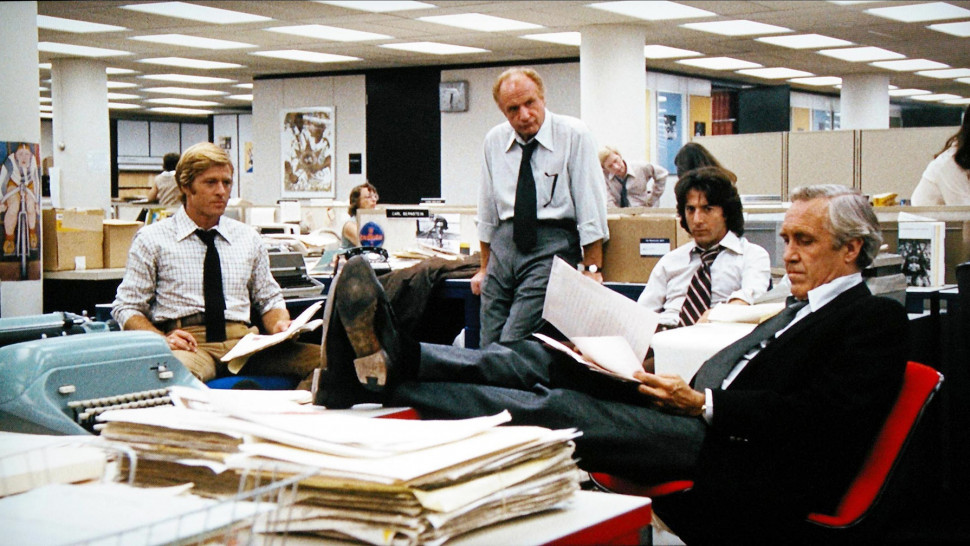
It’s attention to journalistic detail is stunning. The offices of the Washington Post were recreated in detail, shot by Gordon Willis with a low-ceilinged brightness that contrasts completely with almost every other location in the film (in particular the car park, laid out with pillars that echo the office, where Woodward meets with shady informer “Deep Throat” it’s darkness where secrets are hid the polar opposite of a newsroom where secrets are revealed). In gripping single-takes, we watch Woodward conduct phone calls juggling sources (Redford even flubs a line at one point but works it seamlessly into the take) or Bernstein desperately track down sources for last-minute confirmations.

Willis uses a split dopter to brilliant effect. Effectively, this splits the lens in two – one half becomes a close-up, the other long-distance focus. It makes the screen a deeply unsettling mix of blur and crystal-clear clarity. So, while Woodward sits at his desk, we see blurred distance immediately around him – but on the other side of the screen far away other journalists clearly. Not only does this brilliantly create a sense of the endless bustle of the newsroom (also helped by the sound designs superb mix of typewriters and office noise) but also adds a visual metaphor of misty confusion that literally envelops our heroes.

All the President’s Men is a resolutely unflashy film for all of this. Its brilliance is all in its mastery of small details. It means more attention-grabbing shots – like the aerial shot of a circular library – carry even greater impact. The lack of flash also carries across to its stars, who have arguably never been better. Initially presented in two-shot exchanges (particularly in their first encounter over Bernstein rewriting Woodward’s text without his agreement), the two increasingly share the frame. Redford and Hoffman even learned each other’s lines so they could complete each other’s sentences – they almost become one character (‘Woodstein’).

The two actors were also wonderful contrasts, reflecting the two men they played. Redford, who worked hard to keep the project grounded, has a WASPY boy-scout decency and a relaxed unfussy star delivery, Hoffman the twitchy fiddling of the working-class reporter made good. Both actors have rarely been better. Equally good is the Oscar winning Robards who perfectly captures Bradlee’s avuncular professionalism while Holbrook is superbly enigmatic as the shadowy ‘Deep Throat’.

All the President’s Men demands attention like few other films – but it’s deliberately dense plot exactly matches the mystifying journey of the journalists themselves. It also turns journalism itself into a cause for typewriter knights (you could argue the downside of its legacy is journalism focused on ‘gotcha’ rather than informing). Pakula’s marvel is crammed with stunning sound and visual design and a lingering sense of paranoic fear. The film wants us to be as uncertain about what is happening as the characters – but in doing so it makes the greatest argument in favour of the power of journalism ever made by cinema.

Con Air (1997)

Con Air (1997)

Big bangs and silly action abounds in Nicolas Cage’s enjoyable action epic

Director: Simon West

Cast: Nicolas Cage (Cameron Poe), John Cusack (US Marshal Vince Larkin), John Malkovich (Cyrus ‘The Virus’ Grissom), Steve Buscemi (Garland ‘The Marietta Mangler’ Greene), Ving Rhames (Nathan ‘Diamond Dog’ Jones), Colm Meaney (DEA Agent Duncan Malloy), Mykelti Williamson (Mike ‘Baby-O’ O’Dell), Rachel Ticotin (Guard Sally Bishop), Monica Potter (Tricia Poe), Dave Chappelle (Joe ‘Pinball’ Parker), MC Gainey (‘Swamp Thing’), Danny Trejo (‘Johnny 23’)

A rickety plane full of the worst of the worst and very low security. Battles to the death over the fate of a cuddly bunny. A car dragged after a flying plane. On any other day, that might all be considered strange. In Con Air it’s just grist to the mill. Made in the heart of Cage’s post-Oscar swerve from off-the-wall indie star to pumped-up, eccentric action star, Con Air is loud, brash, makes very little sense, feels like it was all made up on the spur of the moment and is rather good fun.

Cameron Poe (Nicholas Cage) is an Army Ranger who ends up in jail after he is forced to protect himself and his wife (Monica Potter), with deadly consequences, in an unprovoked bar brawl. Seven years later he is finally about to be released from prison to meet his young daughter for the first time. To get him to his release though, he’ll need to hitch a ride on a prison transfer plane that is shuttling the ‘worst of the worst’ to a high security prison. With criminal genius Cyrus ‘The Virus’ Grissom (John Malkovich) and his number two ‘Diamond Dog’ (Ving Rhames) on board, what could go wrong? Needless to say, the criminals seize the plane – can Cameron, with help on the ground from US Marshal Vince Larkin (John Cusack) protect the hostages and save the day?

There isn’t really any way of getting around this. Con Air is a very silly film. Nothing in it really bears thinking about logically. To the tune of a soft rock score and Leann Rimes (actually, How Do I Live is a damn good song, and I won’t hear a word otherwise), Simon West shoots the entire thing like it was a primary-coloured advert for action movies. It’s the sort of film that feels like the action set-pieces were written first – “The plane will crash on the in Las Vegas! Right, how do we get the plane to Las Vegas and out of fuel?” – and where the actors thrash around trying to make a plot that feels made-up on the spot full of try-hard dialogue work.

But despite this, Con Air seems to work. Whether it’s because of its brash confidence in its own ridiculousness or because it hired enough scribes to pen one-liners and character quirks to just about give the film a sense of wit and character (Poe’s ongoing effort to protect the cuddly bunny he intends to give his daughter is just one of a decent set of running gags – “Put the bunny. Back. In the box.”). You suspect watching it that there was the intention somewhere along the line to make something darker and more violent – the criminals’ seizure of the plane is surprisingly bloody – that just got forgotten about when it was decided it worked best as a dumb end-of-term panto.

A large part of its success stems from Cage’s droll performance. Turning himself into a sort of every-day action hero with just the odd trace of his famed grand guignol eccentricity here and there, Cage’s Cameron Poe makes for an intriguing lead for a balls-to-the-wall action film. Poe is softly-spoken, invariably polite, sweetly excited about seeing his daughter and pretty much encounters every unlikely event he sees with a laconic dead-pan (“On any other day that might be considered strange” he murmurs when witnessing the plane drag a sports car behind it through the air).

Cage of course looks ridiculously pumped up and spends most of the film in an obligatory Die Hard style vest. He hands out ruthless beatings of ne’er-do-wells – although only Cage could impale a serial killer on a pipe and sadly intone “Why couldn’t you just put the bunny back in the box”. Only Cage would take a part clearly intended as a Bruce Willis smirker and turn it into a sort of kick-boxing Paddington Bear. His stubborn refusal to take the film seriously means he cancels out Simon West’s ridiculously macho aesthetic that otherwise infects almost every frame. While everything else is loud, sharply cut and features actors spouting try-hard tough dialogue, the film’s central character spends the opening of the film learning Spanish and exchanging surprisingly sweet letters with his daughter and strolls around earnestly trying to do the right thing.

John Cusack similarly runs counter to the tone. Clearly counting the minutes until he can cash his cheque, Cusack turns his US Marshal into a laid-back, sandal-wearing boy scout, quietly exasperated about the wildness around him. I suspect half of Cusack’s drily low-key dialogue was written by him just to keep himself interested. Malkovich is cursed with the film’s worst try-hard tough-guy dialogue, but even he enjoys downplaying the role into softly spoken comedy. The three leads leave the blow-hard silliness to their foils Colm Meaney (as a permanently angry DEA agent) and Ving Rhames (as a violent would-be revolutionary).

With most of the people in it not taking it seriously, it generally means the ridiculousness of the plot – an aimless capture of a plane built around a series of set-pieces – and flashes of violence get watered down in favour of comic nonsense that of course ends with a rammed slot machine hitting a jackpot and the villain being stabbed, launched, electrocuted and crushed in a super-display of overkill. Whether this is what West intended who can say? But it’s certainly a lot better this way.

After all who cares if the villain’s masterplan depends on the sudden appearance of a sandstorm or that no war hero would ever go to jail for protecting his wife in a bar (Poe must have the worst lawyer in the world). It’s all about the jokes (a body at one point has a message scrawled on it and is literally posted into thin air), the bangs and, above all, the weary, half-smirking performances of the leads who can’t believe the nonsense they are sitting in the middle of.

Babel (2006)

Babel (2006)

Iñárritu’s grandiose film aims for a big statement about humanity, but settles for something simpler

Director: Alejandro González Iñárritu

Cast: Brad Pitt (Richard Jones), Cate Blanchett (Susan Jones), Gael Garcia Bernal (Santiago), Rinko Kikuchi (Chieko Wataya), Adriana Barraza (Amelia Hernandez), Kōji Yakusho (Yasujio Wataya), Boubker Ait El Caid (Yussef), Said Tarchani (Ahmed), Mustapha Rachidi (Abdullah), Elle Fanning (Debbie Jones), Nathan Gamble (Mike Jones), Clifton Collins Jnr (Border police officer), Peter Wight (Tom), Harriet Walter (Lily), Michael Maloney (James), Satoshi Nikaido (Detective Kenji Mamiya)

“Only connect” was the epigraph of Forster’s Howards End. It’s an idea Alejandro González Iñárritu attempts to bring to the screen in Babel. Across three countries, he shows how small events in one plotline have drastic impacts in others. It makes for an undeniably beautiful film-making experience – but also a film straining for import, that hectors and belabours obvious points and relies far more on random events occurring due to foolishness and stupidity than the vagaries of fate or humanity.

In Morocco, Abdullah (Mustapha Rachidi) buys a rifle from a neighbour to protect his goats. His young sons practice with it by taking pot-shots at a tourist bus. They hit Susan (Cate Blanchett), whose husband Richard (Brad Pitt) is left desperately trying to get her medical help in a remote Moroccan village. The incident means their nanny, Amelia (Adriana Barraza) with whom they have left with their children in the US, has to take them with her to Mexico for her son’s wedding, where events at the border spiral out of control. Meanwhile, in Tokyo, the original owner of the rifle Yasujio Wataya (Kōji Yakusho) struggles as a single father with his deaf teenage daughter Chieko (Rinko Kikuchi), who is dealing with grief and her burgeoning, frustrated sexuality.

I often find Iñárritu’s films a mixed bag. Babel is no different. There is a lot to admire here. There’s also just as much to be frustrated about. First the good. Iñárritu does an excellent job intercutting a film which moves from location to location and (it becomes clear) timeline to timeline, without ever confusing the audience or revealing plot details in one timeline until it becomes vital in another. We discover one entire storyline of the film takes place not in tandem but after the events of another plotline (which concludes where the other begins). The film is beautifully shot by Rodrigo Prieto, with Morocco unexpectantly filmed with a perfectly fitting dusty blue hue, Mexico in warmer tints that become oppressive and Tokyo with a sort of neon-noir.

The film’s first half does an excellent job of world and relationship building. Abdullah’s two young sons are head-strong, rash children entrusted with a weapon they lack the maturity to handle. The family’s desperation to hide their responsibility for the tragedy they have inflicted on Richard and Susan becomes terrifyingly engrossing – not least when we see the slap-and-trigger happy casual-brutality of the investigating forces. Similarly, Brad Pitt does a sterling job as a husband driven to ever-increasing desperation, impotent rage and grief as a husband powerless to help his dying wife in a remote village with poor communication and innumerable cultural barriers.

Iñárritu turns an intriguing eye on Mexico as a land met with looks of both wonder and terror by the Amelia two young charges. Young Mike is enthralled by the sights and sounds then sickened into tears when a game of ‘catch the chicken’ ends in a brutal decapitation. Amelia’s family is warm, friendly but also prone to thoughtless impulsiveness, made worse by a justifiable feeling of persecution from their wealthy neighbours across the border. The wedding though, for all the flashes of cultural confusion, is a vibrant and joyful event shot with a lyrical beauty.

The same poetic beauty extends to the Tokyo plotline, which is a sort of pilgrim’s progress for Chieko (excellently played in a superb mix of vulnerable and resentful by an Oscar-nominated Rinko Kikuchi) through a long few days in Tokyo. From feuding, aggressively, with referees at a volleyball, to clumsy attempts to seduce boys (alienated by her deafness) and, in one staggeringly awkward scene, a very much-older (and horrified) dentist, Iñárritu follow’s Chieko stumbling attempt to discover herself, leaving the revelation of the causes of her ennui for a final, near wordless sequence. Iñárritu experiments with sound, putting us into Chieko’s deaf isolation by draining sound in and out (noticeably in a late-night disco).

Communication and language are barriers for all the characters – hence the film’s grandiose title. Grandiose feels the word, as Babel makes a big swing making a relatively simplistic statement: the world would be a better place if we all listened to each other. Unfortunately, the script repeatedly falls back on tropes and narrative contrivances to make this message work. Two of the storylines – Mexico and the Moroccan family – hinge on aggressive, macho cops as disrupters. In a series of character developments I just don’t buy, Richard’s bleeding-out wife is treated as a tedious inconvenience by a busload of Brit tourists who essentially demand Richard leaves his wife to die so they can back to their hotel for dinner (I literally cannot imagine an entire busload of people behaving like this – god knows how the world responds to them when Susan’s bleeding out in a Moroccan village inexplicably becomes a major world news story).

There is also a half-hearted attempt to suggest guns are destructive forces. While it’s true a rifle purchase is the instigating factor – and Iñárritu makes a lot of one of the kids smashing up the rifle in a scene of heavy-handed import – it doesn’t really fly. Honestly, the main message I started to take out was that immature or stressed people make stupid, impulsive decisions in stressful situations. The kids shooting live ammunition at a tourist bus is an appalling act of immaturity. Santiago – a character set up as a time bomb from the start in an edgy performance by Gael Garcia Bernal – has a disastrous, impulsive meltdown bred out of booze and bravado at the Mexican border, that ruins the lives of everyone around him. Stranded in the desert, Amelia will make an equally disastrously poor decision with terrible consequences she can never turn back.

Eventually, Babel starts to feel like a film full of contrivances that mistakes ambitious range and variety of locations for actual depth. Essentially it has very little to say about the human condition other than looking for a little love or understanding. The four plot lines are fairly tenuously linked together, and impact each other only in the sense of each instigates the events of another. The film fails to create a tapestry of cause and effect and fails to weave its events back together for a conclusion. For all there are moments of effective tension and drama, and great deal of visual and visceral beauty, everything feels a little too forced, a little too on-the-nose.

That’s not to say there aren’t great performances or moments of great flair from Iñárritu. Adriana Barraza is fabulous as a proud mother and caring nanny, driven to her absolute limits. But it’s not as complex, revelatory or revealing as it thinks it is. It makes for a film that looks and feels like epic but carries only a simple and reassuring message.

The Piano (1993)

The Piano (1993)

Searing emotion, passions and fascinating enigmas abound in Campion’s brilliant landmark masterpiece

Director: Jane Campion

Cast: Holly Hunter (Ada McGrath), Harvey Keitel (George Baines), Sam Neill (Alisdair Stewart), Anna Paquin (Flora McGrath), Kerry Walker (Aunt Morag), Genevieve Lemon (Nessie), Tungia Baker (Hira), Ian Mune (Reverend), Peter Dennett (Head seaman), Cliff Curtis (Mana)

What’s really striking about The Piano is how literary it feels, despite the fact it’s an entirely original cinematic work. Every moment of Campion’s intelligent, beautifully constructed, often enigmatic and unreadable film feels like it has been plucked from the pages of a lost Booker Prize winner. Juggling themes of feminism and sexual awakening alongside colonial and masculine thinking, it’s a richly beautiful film awash with superb performances and a heightened, literary reality buried inside a film grounded in the mud and squalor of reality. It remains Campion’s finest achievement.

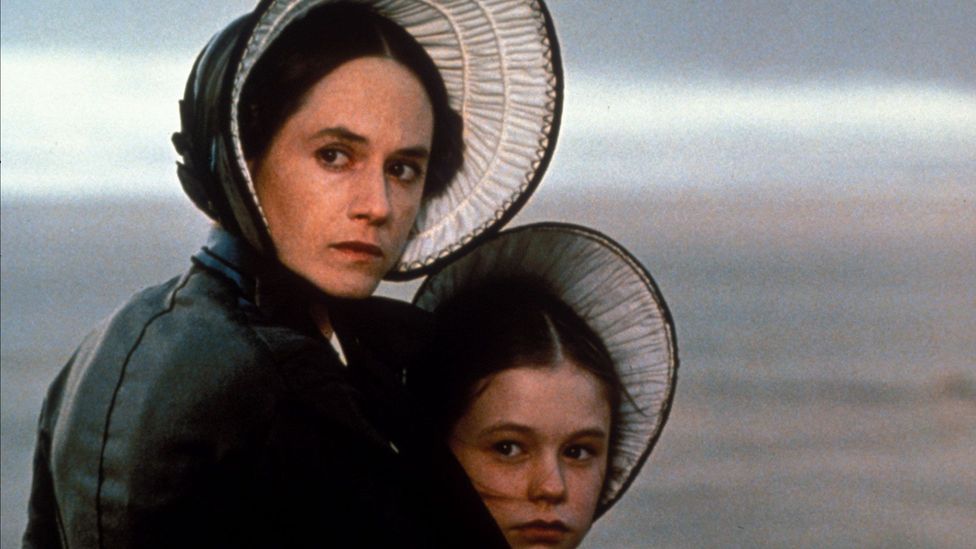
Ada McGrath (Holly Hunter) and her nine-year-old daughter Flora (Anna Paquin) arrive on the coast of nineteenth-century New Zealand. Having refused to speak since the age of six, Ada communicates through sign language and the precocious Flora. Silent in person, her treasured piano gives her a voice and allows her to express passions she otherwise keeps carefully controlled. Ada is to marry landowner Alisdair Stewart (Sam Neill), but he baulks at carrying the huge piano from the shore to his home through the forest. Instead, it falls into the possession of neighbour George Baines (Harvey Keitel). George, besotted with Ada, offers her the chance to earn it back one key at a time, in return for allowing him to “do things” while she plays it in his house. The arrangement leads to a complex, sexual love triangle between Ada, George and Alisdair that will see passions explode.

I wonder sometimes if The Piano is a bit of a problem for some campaigners today. You can discover plenty of retrospective reviews that find it hard to mask their disappointment that the film doesn’t offer a more pointed condemnation of its two male characters. Many want The Piano to show Ada rejecting Alisdair as a repressed potential rapist and George as a manipulative sexual predator. But Campion is telling a far more nuanced, feminist story than this easy-to-swallow structure. The Piano is not about pigeon-holing people into easily definable roles. Rather it looks at how unexpected bonds can rise and how darker, deeper passions can flair in unexpected ways.

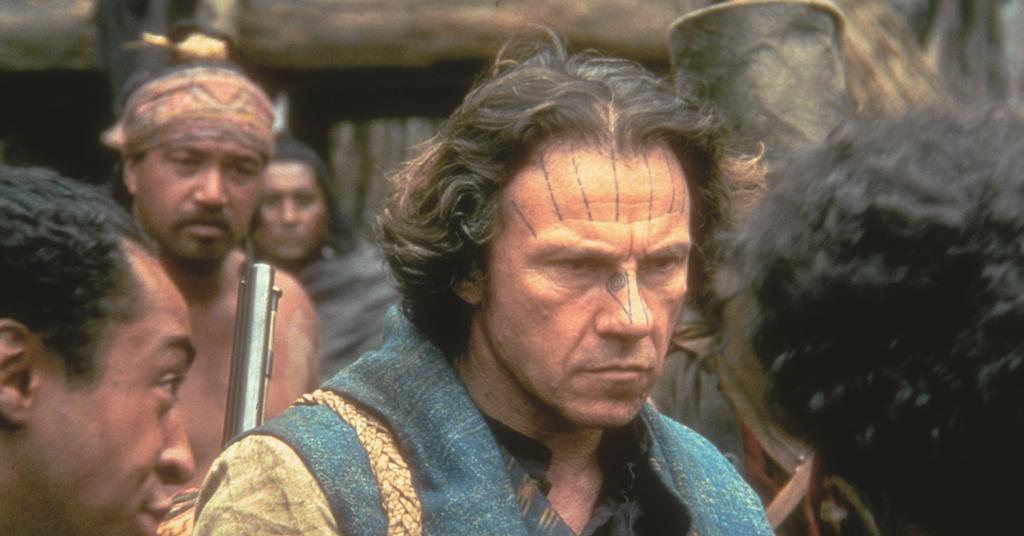
Because George’s at-first manipulative, outrageous offer actually awakens something unexpected in Ada. George is perfectly played by Keitel as outwardly a lump of inarticulate, labouring flesh but inwardly far more sensitive and strangely poetic – and his desire is based as much on a curious romantic longing and a sensitive fear of rejection. His requests are often based around the briefest of physical touches, the desire to see Ada’s shoulders and legs. He’s timid, shy and becomes increasingly open about his feelings for her.

Even more strikingly, Ada discovers that (after initial shock) she enjoys the bartering negotiation of the arrangement (offering more in-depth contact for a higher number of keys) and finds her ability to provoke desire in George both sexually liberating and exciting. So much so that, when George ends the arrangement (recognising that he cannot get what he really wants – Ada’s love – as long as it stands), her reaction is one of anger, more like a spurned lover, then a relieved victim.

This simmering desire is at the heart of Campion’s passionate work. Rewatching it’s striking how vital touch is in the film, how much it is linked to emotional and sexual connection. Campion focuses in extreme close-up on George stroking Ada’s skin through a tiny hole in her stockings – to her initial shock and increased pleasure. The slightest contact of hands between these two carries an emotional and sensual charge. It’s exactly the lack of this that becomes impossible not to notice in the relationship between Ada and Alisdair. Contact between them is minimal and when it occurs it carries darker meanings: most obviously the impotent, frustration Alisdair half-heartedly uses with Ada, then in the rain-soaked fury he will unleash when her betrayal is revealed.

Ada increasingly uses touch to control. She caresses and strokes Alisdair’s naked body at night – never allowing him to touch her in return – both to manipulate him but also, partly, to satisfy her own newly-discovered itch for sexual power, just as she grew to give herself over totally to the hold she had over George. Dressed in restrictive black, that covers almost her whole body, The Piano is about a flowering of a newly confident and sexually awakened woman from a repressed shell.

The language of the body ties into this. Campion reverses the expectations of nudity. Instead, it’s the male form of George we first – and almost predominantly – see. It turns this physically imposing man into someone vulnerable and sensitive. Like a romantic lover, he cleans the piano naked. He will reveal his body to Ada with shyness. When they first make love, he focuses on her pleasure rather than his own. He contrasts with the stiff-backed Alisdair, trapped in his formal clothes (compared to George’s indigenous tattoos and garments) who, even when Ada seduces him, uncomfortably tries to pull his trousers up over his bare buttocks.

Alisdair – superbly played by Sam Neill in a challenging role – is not a bad man, just a deeply unimaginative, repressed and self-satisfied one. He sees a woman’s duty as wife and nothing else. Just as he can only see the Māori on the land around them as simple savages, clinging to naïve superstitions (he cannot understand why they do not wish to sell or farm the land their ancestors are buried on), so he can find no common ground with Ada. He’s even subconsciously aware the piano is a means of emotional expression she refuses to share with him, causing him to do everything he can to remove it from his house with the same loathing he would have for a rival. But he’s also a timid, needy soul – witnessing George and Ada coupling, he watches from his concealment with a curious mix of envy, longing and sadness at something he will never have.

The Piano places Ada at the centre of this complex junction of feelings and emotions. Played with awards-laden brilliance (including the Oscar) by Holly Hunter, this is a woman who never speaks but whose complex emotional journey is always clear. Stubborn, difficult and demanding, we learn this is defence mechanism against a world she has so cut herself off from, so much so she has literally refused to speak for decades. Her piano is the only outlet she allows herself in a world with strict rules for women. Finding something alternative to this is a frightening and alluring prospect.

It’s one not necessarily understood by her daughter Flora (a brilliant Oscar-winning performance by Anna Paquin) who is so precocious in some ways – forcefully communicating her mother’s wishes – and so young in others. Flora understands little – with fateful consequences – of the emotional and sexual tangles around her and, like a child, often accepts the path of least resistance. She also sees the strong bond between mother and daughter as threatened by the presence of George – in a way she cannot comprehend, even after spying their intimacy together.

Campion’s film superbly ties these literary themes into a film of complex enigma and aching beauty (it’s beautifully filmed by Andrew McAlpine). The film is aided enormously in its emotional charge by the radiantly lyrical score by Michael Nyman (his distinctive sound makes the film sound like the finest film Peter Greenaway never made). The Piano offers challenging, thought-provoking and intriguing scenes at every turn, powered by a brilliant script and wonderful performances. Avoiding the obvious, it’s power and reputation has rightly only grown in the decades since its filming.

Four Weddings and a Funeral (1994)

Four Weddings and a Funeral (1994)

The phenomenon of the 90s, this charming comedy still (rightly) lies in many people’s soft spot

Director: Mike Newell

Cast: Hugh Grant (Charles), Andie MacDowell (Carrie), Simon Callow (Gareth), Anna Chancellor (Henrietta), Charlotte Coleman (Scarlett), James Fleet (Tom), John Hannah (Matthew), Kristin Scott-Thomas (Fiona), David Bower (David), Rowan Atkinson (Father Gerald), David Haig (Bernard), Sophie Thompson (Lydia), Corin Redgrave (Hamish Banks), Simon Kunz (John), Rupert Vansittart (George)

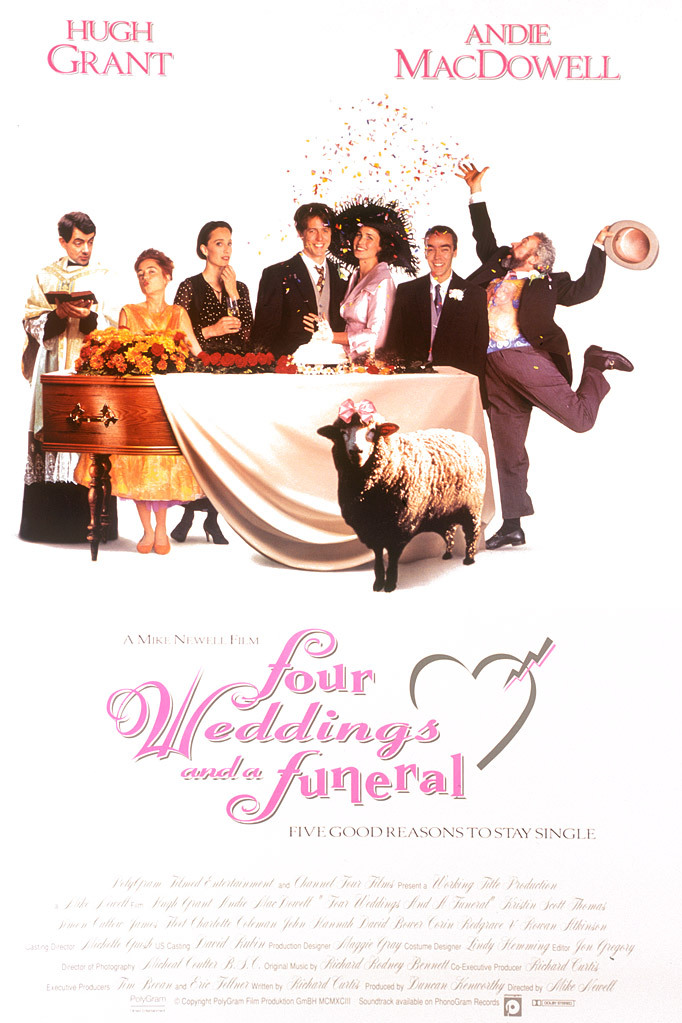
It’s 1994 and love really is all around. It certainly felt like it in the UK, as Four Weddings and a Funeral went from small Brit rom-com to national phenomenon. It was number one at the box office for ten weeks and Wet Wet Wet’s Love is All Around felt like it was number one for the whole year. The film was a huge international hit, the sort of once-in-a-lifetime movie for everyone involved, culminating in an Oscar nomination for Best Picture. For anyone who went to the movies in the 90s, it feels like an old, familiar friend. And, leaving aside the inevitable backlash, it’s still witty, charming and fun today.

Based on writer Richard Curtis’ experience of attending a never-ending parade of weddings one year (we’ve all been there), we follow Charles (Hugh Grant) through a series of disastrously different weddings (and, of course, one moving funeral) while he tries to deal with the fact he’s fallen in love with American Carrie (Andie MacDowell) – and one of the weddings he attends is hers. Around him float a phalanx of loyal friends: gregarious Gareth (Simon Callow) and his loyal, utterly reliable partner Matthew (John Hannah), dimly posh Tom (James Fleet) and his arch sister Fiona (Kristin Scott-Thomas) and zany Scarlett (Charlotte Coleman). But, when the time comes for Charles to head down the aisle, who will he find waiting for him at the end?

Four Weddings works because it’s blessed with a series of talents at the peak of their powers. Richard Curtis has never written a film script that balances so perfectly excellent one-liners, sharply sketched, engaging characters and a perfect mix of pathos and belly-laughs. Mike Newell balances the comedy with just the right touch of drama, never allowing events to tip into sitcom territory. The cast are all pretty much selected perfectly. And above all, it turned out Hugh Grant was placed on earth to play the lead roles in Curtis comedies.

Before Four Weddings, Hugh Grant was almost completely unknown: a Merchant Ivory supporting player at best. After it, he would be almost indistinguishable in the public’s eye from Charles (he’d effectively play the same role three times again for Curtis). What Grant does in this film is simply phenomenal. Curtis’ dialogue and rhythm fits his style like a glove: not since Rowan Atkinson (who delivers a Peter Sellars like performance as a nervous and shy vicar at the other end of the comic spectrum from Grant’s mix of comedy and pained earnestness) had an actor clicked so much with Curtis. There is, perhaps, no skill harder than light comedy, but Grant is a master at it.

He turns socially awkward comedy into a thing of beauty (trapped at a table with a series of ex-girlfriends, he lets the smallest inflections telegraph his desire for the earth to swallow him). He has the subtlety to not overplay pratfalls or physical gags (look at the minimalist simplicity which he plays being trapped, hiding, in a cupboard while a recently married couple have noisy sex in the same room, his face a mix of pained embarrassment and longing for escape). Grant captures better than almost any actor alive a peculiar, self-deprecating British sense of humour, the quiet rabbit-in-the-headlight horror of saying the wrong thing. He even makes you love Charles (who, in many ways, is a self-obsessed git) because Grant is so effortlessly likeable, emitting rays of little-boy lost charm.

It also works because the film crams into it a hinterland of friendship and warmth. The chemistry between the company is pretty much spot-on – you never for one moment doubt these people are lifelong friends, despite the fact we learn nearly nothing about any of them over the course of the film (even Charles – what other film would not even tell us his job?). Each of the actors seizes their role with relish. Simon Callow got to explode with red-faced bonhomie and shaggy-faced camp in a way you suspect he had been dying to do his whole career. Kristin Scott-Thomas’ arch dryness and icy posture was leavened with just the right touch of romantic yearning and wit.

In fact, the whole cast were so perfectly cast they almost became destined to spend their whole lives struggling to break out of the moulds Four Weddings placed them in. James Fleet was so skilled at nice-but-dim sweeties like Tom, he had to grow a huge beard to get serious roles. John Hannah (extremely good, with the films much touching WH Auden inspired moment) took on playing a posh twit in The Mummy. Anna Chancellor was so born to play the strangely needy ‘Duckface’, Charles’ ex-girlfriend she jokes the first line of her obituary will be “Duckface dies”. Callow and Scott-Thomas would play versions of these roles several times over – and even being arrested for picking up a sex worker wouldn’t break the public perception of Grant being Charles.

Which is all a round-about way of saying everything works here, the magic alchemy of everyone being in the right place at the right time, and every single risk paying off. You can be slightly churlish and say Andie MacDowell lacks some of the charisma and comic skill the role of Carrie needs (it’s a Meg Ryan role), but her innocent Southern exterior is needed to make the scene of her recounting her serial shagging to Charles over a restaurant table land with as much comic force as it does.

That’s one of many comic set-pieces that just plain work. From the “fuck!”-filled opening montage, which sees Charles hare, late, to a wedding where he is the best man, via the film’s many social faux pas (“She is now my wife” has never been funnier), Atkinson’s malapropism-stuffed wedding service to the film’s final comic denouement at Charles’ wedding, it’s packed with laugh-out-loud moments. But, because the characters are so well-drawn, with just the right amount of reality, we also care as well. The funeral carries real emotional impact – not least due to Hannah’s beautiful delivery of the eulogy (and let’s not forget, few other mainstream movies were as open to homosexuality at the time as this one). And every character has moments of depth: even dim Tom has flashes of real emotional insight.

You can mock it in retrospect for moments like “is it raining, I hadn’t noticed” – but films like this don’t stumble into becoming cultural phenomena. They get there because, for one glorious moment, everything comes together the way it was meant to be. A great script got just the right approach, from a series of actors perfectly cast and marshalled by a director towards warm, genuine comedy. That’s why people continue to watch – and quote it – thirty years later and it still feels like love is all around it.

Wilson (1944)

Wilson (1944)

Well-meaning if slightly dry hagiography that struggles to turn history into drama

Director: Henry King

Cast: Alexander Knox (Woodrow Wilson), Charles Coburn (Professor Henry Holmes), Geraldine Fitzgerald (Edith Wilson), Thomas Mitchell (Joseph Tumulty), Ruth Nelson (Ellen Wilson), Cedric Hardwicke (Senator Henry Cabot Lodge), Vincent Price (William G McAdoo), William Eythe (George Felton), Mary Anderson (Eleanor Wilson), Ruth Ford (Margaret Wilson), Sidney Blackmer (Josephus Daniels), Madeline Forbes (Jessie Wilson), Katherine Locke (Helen Bones)

Darryl F Zanuck had a passion project: a biopic of the 28th President Woodrow Wilson. It would be both a tribute to a man, he felt, was overlooked and also a homage to current President Roosevelt – and a warning for the future. Like FDR, Wilson had introduced a raft of reforms and led the country in wars – and Zanuck was worried America would fudge the peace, just as Wilson had failed to get the Senate to endorse the League of Nations, leaving it a toothless lion.

Zanuck’s no-expense spared approach gives us a laudatory biopic that lavishes Wilson in euphoric praise, smooths off all his edges and presents him as a visionary and a near-flawless leader. The money was thrown into building elaborate sets and costumes – vast swathes of the White House and the Palace of Versailles were re-built on the sound stages of 20th Century Fox – and the script repackaged a series of major events interspersed with Wilsonian speeches. It was launched to a fanfare, was nominated (largely due to Zanuck’s influence) for ten Oscars (winning five) and was a box-office failure.

But is it a good movie? In truth, not quite. Despite the lavish production values, this is a dry, unimaginative and stately progression through its subject’s life. Henry King marshals events with the professionalism of an accomplished journeyman, but little inspiration. There is nothing striking, original or brave in a single minute of Wilson, but everything is perfectly framed and (considering its immense length) well-paced. King uses a series of low-angle shots to hammer home the magnificent detail of the sets and Alfred Newman’s score remixes a series of patriotic scores and heavenly-sounding choirs to build the impression of Wilson as secular saint.

But Wilson remains a largely undramatic movie, with an (Oscar-winning) script by Lamar Trotti that fails to inject drama or skilfully convey information. The warning signs are there in the film’s opening, with a group of New Jersey Democrats arrive to recruit Princeton head Wilson to run for Governor and clumsily give each other a potted precis of his CV and academic achievements while they wait for him to join them. Dialogue frequently info dumps historical research in our ears. Newspapers bluntly tell us in crude headlines what’s happening. Poor Thomas Mitchell’s entire role seems to be made up of running into rooms clutching telegrams announcing major events.

In amongst all this research though, we get very little idea of what Wilson actually stood for. There is virtually no time spent on his Governorship of New Jersey, other than a two-scene disagreement with the Democratic bosses whose power he breaks. On becoming President, his major legislative reforms are covered in a less-than-a-minute montage of signed bills. He consults his cabinet once or twice and, when war comes, walks a fine line between preserving American strength and not rushing into war. The final act of the film covers his failed battle for the League of Nations, the only policy the film invests any time into explaining.

For much of the rest of the time, this hagiography concerns itself with down-playing or skating over anything in Wilson that could be perceived as a flaw. Wilson here talks a good game of reform, equality and rights for all. In real life, he was a dyed-in-the-wool segregationist, sceptical about women’s suffrage as well as being an intellectually arrogant elitist who, later in his Presidency, began to see himself as a sort of vessel for God’s policies. While he was undoubtedly a highly effective moderniser and legislator, none of his faults make it to the screen.

Other areas are also carefully removed. Wilson was often accused of being heavily under the influence of advisors like “Colonel” House – House gets a one-scene cameo here. He ran for re-election in 1916 promising to keep America out of the war – this unfortunate broken promise is repackaged as Wilson sitting in the White House deeply regretting the campaign the party is running for him but stating there’s nothing he can do about it. His controversial re-marriage in 1915 to the much-younger Edith Galt (only two years after his wife died) is excused by his wife informing his daughters on her death bed that Wilson must marry again as he needs a wife. Wilson’s incapacity after a stroke in 1920 is down-played, while Edith (who effectively took over running the country for her husband in a constitutional scandal that would never stand today) states “I never made a decision without your knowledge and consent” while sitting with a sturdy Wilson.

All of this is played out in parallel with making Wilson’s rivals in the Senate mustachio-stroking schemers. None more so than Henry Cabot Lodge (well played by Cedric Hardwicke) who begins a career of animosity against the President after being made to wait for a meeting at the White House. In real life, Wilson refused any compromise offered by Lodge to get the League approved by the Senate, but here Wilson is a noble crusader foiled by political pygmies.

Saying that, the film benefits hugely from a very strong performance from Alexander Knox as Wilson, who not only looks and sounds exactly like the President, but perfectly captures his mannerisms. It makes you regret though the film is so little interested in Wilson’s personality or in building any picture of the humanity behind this leader. The rest of the cast have little to do other than state historical facts or stand to listen to Knox masterfully delivering Wilsonian speeches.

Wilson has a historical interest for Presidential buffs and, while it downplays the negatives around Wilson, it makes a very effective case for the President as a visionary leader (he was undoubtedly right about the League of Nations – even if his stance here is restructured into an FDRish self-determination for all nations). But this is a dry, stately film that never manages to turn the march of time into the thrust of drama. The Oscar-winning sets and photography look impressive, but its simplistic and hagiographic presentation of events eventually shakes your interest.

Manhunter (1986)

Manhunter (1986)

Mann’s visually striking thriller doesn’t have quite the dark subversiveness it needs but is an unsettling thriller

Director: Michael Mann

Cast: William Petersen (Will Graham), Kim Griest (Molly Graham), Dennis Farina (Jack Crawford), Brian Cox (Dr Hannival Lecktor), Joan Allen (Reba McClane), Tom Noonan (Francis Dollarhyde), Stephen Lang (Freddy Lounds)

Before The Silence of the Lambs, there was an earlier attempt to bring the twisted world of Thomas Harris’ gothic thrillers to the screen. Michael Mann’s Manhunter has grown in reputation since its release, along with an increased regard for the visually stylised and cold modernism of Mann’s work. Truthfully, Manhunter lacks the Hitchcockian dark wit, and is far less effective at exploring the dark links between investigator and psychopath, than Silence of the Lambs. But it remains an intriguing – and often disturbing – curiosity.

FBI profiler Will Graham (William Petersen) is called out from extended leave by Agent Jack Crawford (Dennis Farina) to investigate chilling serial killer, the Tooth Fairy. The killer breaks into family homes and brutally murders the occupants, leaving bite marks and broken mirrors behind. Graham has an empathetic gift for understanding the mindset of killers, something he used to capture cannibalistic serial killer Hannibal Lecktor (Brian Cox), now imprisoned in a mental institute. Graham’s quest to catch the Tooth Fairy leads to him becoming ever more obsessive, including reconnecting with Lecktor to help profile the killer. Meanwhile the Tooth Fairy, Francis Dollarhyde (Tom Noonan), a lonely photo developer obsessed with William Blake’s Red Dragon and desperate to ‘become’ something greater begins his first meaningful relationship with blind colleague, Reba (Joan Allen).

Manhunter is set in a crisp, modernist world of clean, soulless buildings, glass fronted houses and offices and precise, featureless rooms. Mann and cinematographer Dante Spinnotti film everything with a series of tinges – strong, cool blues, drained out and striking whites, murky greens. All is designed to give the film a deliberately forensic feeling, like we watching something play out in a crime lab. It fits with a film that is fascinated with the procedures of investigating and profiling and delights in the intuitive, deductive leaps Graham makes.

Mann’s film attempts to draw parallels between Graham and Dollarhyde, both men uncomfortably in touch with their darkest, twisted impulses. As Hannibal Lecktor observes, Graham can so completely inhabit the interior world of killers, because he secretly longs for the buzz of killing himself. That’s easy to see in William Petersen’s focused, intense performance. Reluctantly dragged back in, Graham is noticeably unphased by the horrific crime scenes he witnesses (however much he is furious at the loss of life) and becomes ever more fixed and lean as the hunt continues, increasingly more-and-more like the obsessive prey-hunting psychopath he is investigating.

In doing so he sidelines his family – even putting them in danger – and increasingly cuts off human connections to feed his laser-focused quest. This contrasts him with Dollarhyde, a damaged, isolated and self-loathing man who flirts with the last vestiges of humanity. A man who sees nothing in himself that anyone could love, Dollarhyde becomes as giddy as a schoolboy when Reba sees him as a kind, attractive and decent man. Behind his eyes, Tom Noonan shows a quiet struggle between the obsessive monster, driven to destroy, and a man considering changing his path. This intriguing contrast between the family-man who leaves tem to hunt killers and the killer who flirts with settling down is a thread you wish the film had more patience to explore among its neon-lit, filtered style.

But Mann doesn’t quite have the patience to draw these threads together. Perhaps not helped by, skilled and intelligent as Noonan’s performance is, always presented Dollarhyde as an imposing, Frankenstein-monster style heavy rather than someone we invited to feel the sort of twisted empathy for that the film needs. We should be feeling something of what Graham says when he talks about feeling pity for the abused child and disgust for the twisted killer that child grew up to be. We never truly do.

Perhaps that’s partly because Dollarhyde is a character the film can never build up the same interest in, as it does with the looming shadow of Hannibal Lecktor (the spelling was unique to this film). Appearing only in three scenes, Lecktor dominates the film. Basing his performance on Scottish serial killer Peter Manuel, Cox brings the part a chillingly studied delight at his own intelligence with an air of quiet politeness which only vaguely masks his malice and cruelty. A ghost of a smile is behind every cruel, hurtful word and action he carries out and his every action is motivated only by a desire to harm. It’s a mesmerically terrifying, low-key performance that overwhelms the film.

It contributes to the film’s second half never really matching the first. As Lecktor recedes and Graham focuses on the Tooth Fairy, the lack of personal connection between hunter and hunted (and the film’s unease to draw too distinctive a comparison between them) makes the final hunt less compelling ironically than when the Tooth Fairy was an unknown, unseen adversary. Noonan’s most effective scene is his terrifyingly soft-spoken interrogation of smart-aleck reporter Freddy Lounds (a braggart Stephen Lang), but the film isn’t brave enough to give him enough potential humanity to make the character really interesting – or the Satanic charisma that Lecktor has.

Manhunter culminates in a disappointingly run-of-the-mill shootout (edited with a curiously ham-fisted jaggedness) and an unsatisfactory Graham family reunion that feels like it hasn’t got the energy or desire to explore any of the lasting impact the darkness we’ve discovered in our lead character would surely have. Manhunter not only changes the title of Harris’ book (there was fear that Red Dragon was too easy to mistake as a martial arts film), but it also benches the emotional and psychological obsession of Dollarhyde (even the character’s famous tattoos don’t appear in the film). It becomes a strikingly shot, intriguingly fast-paced thriller which doesn’t manage to make the psychological complexities its striving for either as fascinating or unsettling as it should. It has plenty to haunt you – its creepy POV home-invasion opening is nightmare-inducing – but Harris was better served by Lambs mix of playful dark-horror and focus on acute psychological insight.

Macbeth (1948)

Macbeth (1948)

Welles first Shakespeare film is a bizarre mix of inspiration and amateurishness

Director: Orson Welles

Cast: Orson Welles (Macbeth), Jeanette Nolan (Lady Macbeth), Dan O’Herlihy (Macduff), Roddy McDowell (Malcolm), Edgar Barrier (Banquo), Alan Napier (Holy Father), Erskine Sanford (Duncan), John Dierkes (Ross), Keene Curtis (Lennox), Peggy Weber (Lady Macduff), Lionel Braham (Siward)

Macbeth was Welles’ last hurrah in Hollywood before decades of self-imposed banishment and exile. He arrived at Republic Pictures – proud creator of B-movie Westerns, although also the home of a few John Ford classics most notably The Quiet Man – who were delighted to sign up a deal for a literary classic directed by America’s leading man of the theatre. What they ended up with was a film that’s such a bizarre mish-mash of brilliance, originality and amateurishness nonsense, that they were basically befuddled.

Welles shot the film, as contracted, within 23 days on old Westerns sets, with a budget od spit and boot polish. Welles was focused, more than any other film he’d worked on to that point, on visual imagery and total control of sound and audio. So much so he wasn’t fussed about recording any sound on set. All the actors pre-recorded their dialogue, under Welles’ strict instructions, and then silently lip synched while shooting the scenes. This gave Welles the freedom for a host of expressionistic, shadow-filled shots where the actors faces and mouths were frequently unseen – or longer shots where it was impossible to clearly see lips moving. It also made some truly rigid, uncomfortable performances (Jeannette Nolan was granted permission to record her sleepwalking scene ‘live’ so she could perform it with some semblance of conviction).

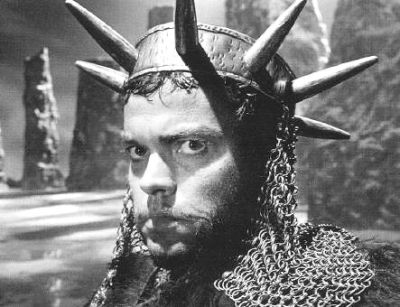
Macbeth was set in a Scotland somewhere between a fiercely traditional high-school production and a hodge-podge of influences from Celtic wizardry to Mongolian hordes. It’s shot on a dust-lined, cavern-filled panorama that frequently looks like a giant theatrical set or an empty multi-purpose wall-lined amphitheatre, with only a few scenes exchanging this for mist-filled heaths or low-ceilinged caves. The costuming and design is an eclectic mix: the murderers look like cavemen, some thanes wear kilts, Malcolm and his soldiers dress in medieval armour, Macbeth and Banquo look like fur-coated renegades from Genghis Khan. Welles himself would regret a bizarre crown which made him look like the Statue of Liberty.

There is a feeling that every idea was grabbed and thrown at the wall, in the expectation (hope?) that some of them would stick and lead to cinematic magic. There is a vague attempt to suggest Scotland is at war between Christianity and Paganism. A composite character, the ‘Holy Father’ parades around – chasing away witches, leading prayers for Duncan, taking dictation for Macbeth, warning Lady Macduff, rousing Malcolm – but with very little real sense that this ever adds up to anything logical or thematically clear. Welles merrily re-writes and transposes dialogue. Some works well – Banquo here seems far more of a potential partner than usual – others less so (Lady Macbeth turns up at the murder of the Macduffs for no clear reason).

But the stuff that works really works – and most of it is visual. The witches are shadowy figures, whose voices alter in cadence and pattern from scene to scenes (Welles had mixed male and female voices together to create an unsettling rhythm), their faces never seen. Inspired by his famous “Voodoo Macbeth” stage production, they craft muddy statues of Macbeth which they crown with a crude coronet. In one of the encounters with Macbeth, the camera pulls away to isolate Macbeth, lit in misty isolation. More Voodoo touches are seen in the hammering drum beats that greet Duncan to Macbeth’s castle.

Mist and expressionistic images dominate. Malcolm’s army urges from among the fog, carrying their branches from Birnam wood. The final battle is a series of isolated shots of characters, often the camera craning up to them or seeing them march towards it. Macbeth is frequently shot from below, to heighten his sense of being almost an ogre. When first seen as king, he sits, isolated and drunk at the top of a flight of stairs, making him seem less imposing and more weak from the start of his reign. He is haunted not only by Banquo’s ghost, but Duncan’s as well, Welles camera cutting to reveal his cavern dining room empty of everyone but the Macbeth and the ghosts of murdered friends, the camera tracking the shadow of his fingers along the wall to reveal the bleeding Banquo.

The entire production becomes like a drug-induced fantasy, something a near-catatonic Macbeth might just be imagining as his dreams are crushed by the cruel fate he feels destined to follow. Welles establishes a now popular idea of the play being a huge cycle: at this death, the witches announce “Peace, the charm’s wound up” the camera catching a sight of Fleance who seems destined to repeat the chaos. (“The charm’s wound up” not indicating an end, as often mis-interpretated, but a readiness to be enacted.)

The camera, freed of the need to capture dialogue on set, flies around roams around or moves with swiftness. Characters walk into shadows. Sequences – such as the murder of the Macduffs – are met with a parade of fast cuts and actors charging towards the camera. Music cues are carefully repeated, and lines carry across transitions. There are plenty of striking images, from a mass crowd praying for Duncan to a low-angle camera tracking a worried Macbeth in the aftermath of the murder.

But yet… this is also a curious dog’s dinner of a film. For every great idea, others (like the Holy Father) either don’t land or make no sense. Macbeth’s seduction of the murderers, interestingly shot over his shoulder at an imposing distance from his servants, is followed by a laughably badly acted and staged murder of Banquo. The actors all perform in, pretty much across the board, dreadful cliched Scottish accents. This accentuates the problem of lip synching on set, which renders nearly everyone in the film flat and strangely lifeless, stuck to replicating a performance from days ago.

This includes Welles himself. Macbeth is, by some distance, his least interesting film Shakespeare performance. His Thane is all surface and no depth and Welles’ decision to play him as a slave to destiny, frequently renders him catatonic, reading the lines with a Scottish lilt that travels by way of Dublin, with plenty of pace but no depth. Jeannette Nolan struggles slightly with Lady Macbeth, a decent match with Welles but lacking presence. There is barely a performance of merit among the rest of the cast: McDowell is dreadful, O’Herlihy all at sea, Barrier out of his depth. The bulk of the cast look and sound – in their traditional costumes and awkward, unconvincing accents – like high school students staging “the Scottish play” in the most “Scottish” way possible.

Welles, naturally, having shot the film promptly disappeared to Europe leaving notes and memos from a distance about how it should be assembled, some of which were promptly ignored by a supportive studio turn exasperated. Those in Europe were more respecting of the results, praising Welles for re-imagining the text and its expressionistic, fluid shooting style. In America, these elements were condemned a mess. Macbeth is a bit of both: good ideas sitting alongside amateurishness and nonsense. It’s most interesting by far as a silent film: there are images here that linger, from the witches mud statue to Lady Macbeth’s plumet to death. But as an overall package Welles would dwarf it with Othello and Chimes at Midnight, which combined good Shakespeare and good film-making. Macbeth is a struggle to marry expressionist film-making and literary grace that doesn’t always succeed.

Further reading: