Tag: Charles Coburn

The More the Merrier (1943)

The More the Merrier (1943)

Very funny farce, excellently acted with some near pin-perfect farce.

Director: George Stevens

Cast: Jean Arthur (Constance Milligan), Joel McCrea (Joe Carter), Charles Coburn (Benjamin Dingle), Richard Gaines (Charles J Pendergast), Bruce Bennett (FBI Agent Evans), Frank Sully (FBI Agent Pike), Don Douglas (FBI Agent Hardy)

Wartime in Washington and housing space is at a premium, with the city full to bursting. Here to solve this housing problem is millionaire Benjamin Dingle (Charles Coburn), who is ironically unable to find a place himself to lay his head. Luckily, through charm and bull-headed perseverance, he persuades young statistician Constance Milligan (Jean Arthur) to sub-let her apartment to him. Taking a shine to the buttoned-up Constance, Dingle sub-lets half of his half to army engineer Sergeant Joe Carter (Joel McCrea), planning to play Cupid. Something he commits to even more after meeting Constance’s stuffy pen-pushing fiancée Pendergast (Richard Gaines). As the Farragut-loving Dingle says: Full steam ahead and damn the torpedoes!

This zany set-up is delivered to the screen with plenty of bounce and zing by George Stevens. Especially its first half, a near master-class in pin-perfect, near-miss, door-opening-and-closing farce that would have made Chaplin or Keaton proud. The More the Merrier is a funny, surprisingly sexy film boosted by not taking itself too seriously and powered by three lead actors having a whale of a time. If its final resolution feels a little too forced – and Dingle’s manipulations at points verges towards the sinister – that doesn’t change the fact there are so many laugh-out-loud moments along the way.

The More the Merrier starts with a dry, witty sense of tongue-in-cheek parody as a sonorous news-reel voiceover introduces us to Washington where “living is pleasant and leisurely”, singing the praises of the city’s hospitality, fine dining and gentility while a montage of shots shows us it’s a whirligig of frantic movement, food grabbed on the street and “no vacancy” signs turned towards us with a slap. It’s a sign of the film’s wry wit and the fun it will have at the nonsense just behind the way we talk about everyday life. It’s also a sign that Stevens understands gags land best with a straight bat and a sly wink – a subtlety that serves the film well.

It’s first act, as Dingle and then Carter move into the home of the reluctant Constance, sees all three actors playing wonderfully into the straight-faced farce. An obsessive control-freak, running her life to a tight timetable, Constance hands a detailed minute-by-minute itinerary of the day’s first half hour to Dingle, that’s hilarious in its minutiae. Jean Arthur deserved an Oscar nomination for this scene alone, a perfect minute of ludicrously detailed instructions on everything from newspaper collecting to bathroom door closing to coffee brewing – with Coburn’s earnest bafflement equally fine. The inevitable disintegration of this plan the next day (a parade of the two locking each other out of the apartment, knocking into furniture, getting sprayed by an errant shower and losing a pair of trousers) is such a masterclass in farcical underplaying – in particular from Coburn – that it’s guaranteed to bring the house down.

But perhaps even better is the next morning, the first after Carter has been smuggled into the house without Constance’s knowledge. With only Dingle aware of the situation – and wanting to keep it secret as long as possible – Stevens positions the camera in the hall and delights us with a five-0minute sequence of perfectly timed door comedy, as McCrea and Arthur continuously just miss each other, culminating in a perfectly timed corridor cross where both actors only narrowly miss walking smack into each other. This is choreographed comedy at its finest.

The More the Merrier seems ripe for fast-paced screwball from there, but Stevens shifts gears into a romance that’s both natural and surprisingly sensual. He’s helped by the huge chemistry between Arthur and hand-picked co-star McCrea, who with minimal fuss and no grand-standing manage to communicate beautifully two people surprised to be absolutely besotted with each other. Their playing of Carter’s gifting of a travel case to Constance simmers with sexual tension, as McCrea quietly but intensely leans in to extol the virtues of every feature while Arthur breathlessly agrees – never before has excitement about a suitcase been such a clear stand-in for something else.

Their spark only grows, lingering glances and an intense desire to be left without the interference of Pendergast (Richard Gaines doing exactly what’s required as a tedious bore and obstacle to happiness). They have a late-night walking scene culminating in them sitting on their apartment stairs that feels like one of the raciest scenes in screwball. Stevens leans into this with his shooting of their bedrooms. Shot from the exterior, their windows subtly blur the rooms together (at one shot, the dividing wall is just a blurry line making the two appear to be in bed together) culminating in a final sequence that gets the slow-build to a final wall punchline spot on.

All of this works as well as it does thanks to the excellence of the three stars. Jean Arthur is very funny as a control-freak growing increasingly flustered as her well-organised life spins out of control (even if her final act wailing becomes a little wearing). McCrea perfectly mixes dry, low-key wit with a quiet sexuality. Coburn won an Oscar for possibly his finest ‘cheeky old uncle’ performance, a gruff mischief maker with a twinkle in his eye. All three of the actors spark of each other in any combination, right down to Coburn and McCrea throwing themselves into reading cartoons out loud with childish glee.

But the final act doesn’t quite deliver. A forced resolution involving the FBI never quite feels like it matches with what’s come before. The manipulations of Coburn’s character at times become a little too forceful – and it’s hard not to feel more than a little uncomfortable when he takes Constance’s accidentally abandoned diary and reads it out loud, an invasion of privacy the film never holds him to account for. If there is one point where the chemistry between Arthur and McCrea doesn’t land, its ironically in many of the final scenes, not helped by those continual frantic wails from Arthur. You get the sense Stevens had a great set-up but not quite a clear idea on how to finish it. But what gets us there is witty, fast-paced and very funny – and that’s just more than enough.

Heaven Can Wait (1943)

Heaven Can Wait (1943)

Lubitsch brings his touch to death and infidelity all flown under the wire of the Hays Code

Director: Ernst Lubitsch

Cast: Gene Tierney (Martha), Don Ameche (Henry Van Cleve), Charles Coburn (Hugo Van Cleve), Marjorie Main (Mrs Strable), Laird Cregar (His Excellency), Spring Byrington (Bertha Van Cleve), Allyn Joslyn (Albert Van Cleve), Eugene Pallette (EF Strable), Signe Hasso (Mademoiselle), Louis Calhern (Randolph Van Cleve), Helen Reynolds (Peggy Nash), Clarence Muse (Jasper), Tod Andrews (Jack Van Cleve)

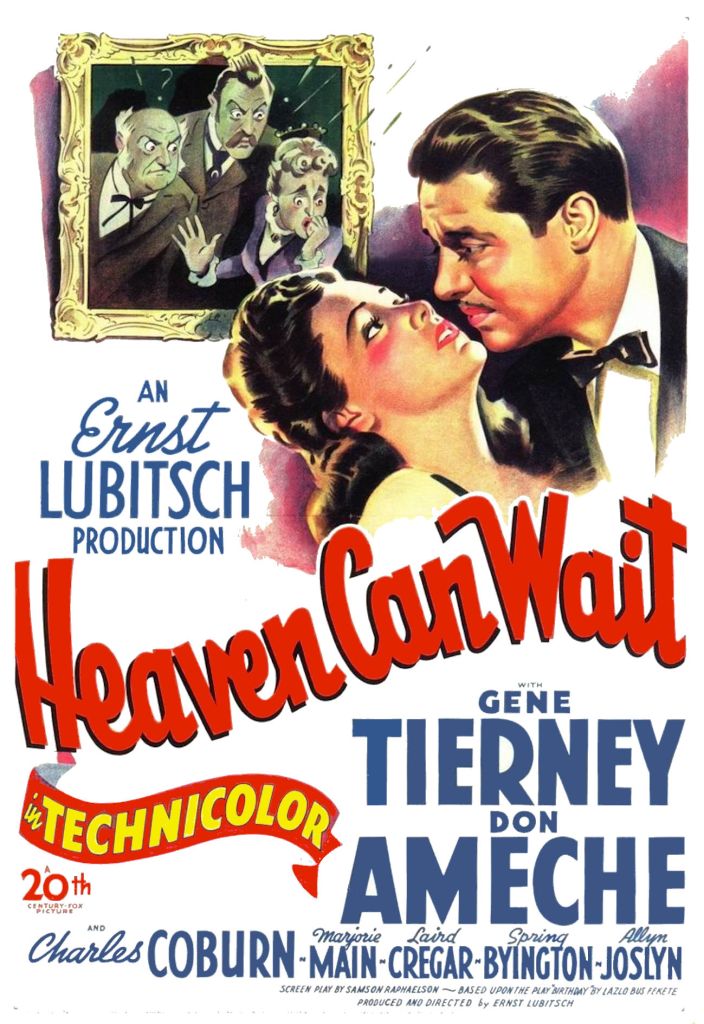
If you are going to start a film in Hell, it helps if you have the Lubitsch touch. Heaven Can Wait tells the life story of the late Henry Van Cleve (Don Ameche), a charming old roué being interviewed by ‘His Excellency’ (Laird Cregar) at the entrance of a place ‘where innumerable people had so often told him to go’. Van Cleve’s life is one of general well-meaning romance, from his boyhood discovery that kissing a girl doesn’t mean you have to marry her, through to his elopement with Martha (Gene Tierney), the intended of his stuffy cousin, his winning her back after his (implied) good-natured faithlessness, and their happy decades of marriage and his roguishly flirtatious final years.

Perhaps only Lubitsch had the wit – and cheek – to sneak the story of a shameless Casanova under the Hays Code wire as a sort of heart-warmingly decent fable. Because, in many ways, Henry Van Cleve is exactly the sort of person the Code had doubts about – and of course Lubitsch loved: a debonair, classy man of means, who appreciates fine art and beautiful woman, would die of shock at the idea of a hard day’s work and never repents his choices for a second. Played with a bashful smile and wide-eyed honesty (even innocence) by Ameche, this is the sort of seducer the Hays Code could get behind (especially as Lubitsch subtly blurs the reality of his many conquests).

But than you also can’t imagine any other director presenting Satan like this. He’s embodied by Laird Cregar as a sort of genial bank manager – in a Hell that looks like a hotel lobby – whose hilarious dropping (Bond-villain like) of a loud-mouthed society Grande Dame down a trap door mid-conversation only makes us like him more. Our framing device runs us through a series of Henry’s crucial birthdays (the original play was even titled ‘Birthday’ – Heaven Can Wait is a much better title), many of them making a hilarious mini-film themselves, with sharp-edged dialogue perfectly captured by Lubitsch’s smooth and witty camera, that knows just how long to hold a shot.

Heaven Can Wait is full of just-under-the-wire sexual energy, disguised but very apparent today. What else are we to make of new Van Cleve maid ‘Mademoiselle’ (a very funny Signo Hasso) announcing her two years working for a duke were what he called “the happiest of his life”? Not to mention the life advice – kissing don’t mean marriage – she gives the Van Cleve (who learned, as a boy, when wooing an impressed girl with his insect pets that it pays to have ‘lots of beetles’). Or the clear implication Henry and Mademoiselle spend a wild night sharing far more than just a bottle of champagne.

Lubitsch hints at this with mutual hiccups. Throughout Heaven Can Wait coughs, sneezes and hiccups serve as a code for very different bodily outbursts (that of course couldn’t be shown). Wooing Martha in his tedious cousin’s (a very funny role of pedantic tedium for Allyn Joslyn) library during a terrible private concert, Martha’s sneezing fit is a clear substitute for her real feelings. Perhaps only Lubitsch could have disguised this mutual wild sexual elopement as something reassuringly pure. There is something very sweet about Ameche passing himself off as a book-store clerk to spark conversation with Tierney as she searches for How to please your husband (a title ripe for inevitable innuendo).

As with Ameche, Lubitsch gets a light, underplayed performance by Tierney that makes these two feel like a perfect pair. Heaven Can Wait’s fourth movement sees Martha flying the marriage home after suspecting Henry of an affair. Henry reassures her it is a misunderstanding – but with such ease, and such heavy breathing fluster on Martha’s part – it feels pretty clear Lubitsch is inviting us to understand perhaps Martha thinks fidelity is an optional extra with someone she has such hots for. It’s all conveyed with such lightness – and Ameche plays Henry with such innocent earnestness, never once tipping the wink – it’s extremely funny.

As you’d expect with Lubitsch, the film is full of marvellous comic touches. Charles Coburn is excellent as Henry’s worldly-wise grandfather, who might love his family but only really likes Henry. Coburn’s wry amusement at Henry’s antics is consistently hilarious, Lubitsch gifting him two perfectly timed wonderful sight gags (one with a glass of water, the other seeing him emerge suddenly from a crowd). Even better though is the wonderful set-piece of Martha’s feuding parents (played with perfect passive aggressive bluster by Eugene Pallette and Marjorie Main), sitting at opposite ends of a long table, communicating only through long-suffering servant Jasper (a very refreshing role for Clarence Muse, where the Black man is smartest in the room). Lubitsch films this in a single take, gliding from table end to end which only magnifies the humour.

The first 70 minutes of Heaven Can Wait are so good – sharp, cheeky, funny – that when the Van Cleves effectively elope again, it perhaps would be better the film ends. Sadly, the final half hour dials up the sentiment (as Henry tries to steer his son away from a life of debauchery, an older Martha nobly resigns herself to cancer and Henry meets his end) and the energy drains out. Even Satan gets a moralistic, happy-ever-after closing speech! This closing act is duller, considerably less snappy and very easy to drift off in. You feel Lubitsch exhausted his interest and filmed the final act by contractual obligation.

But until then, this is a sharp, witty, delightful comedy, crammed with great performances. It balances naughty charm with surprisingly dark undertones (with each movement forward, more and more characters die off, a dark reminder this film opened in the afterlife) and has more than enough laughs in its first 70 minutes for you to sit through the closing 25. Perhaps second-tier Lubitsch, but his second tier his others first.

Wilson (1944)

Wilson (1944)

Well-meaning if slightly dry hagiography that struggles to turn history into drama

Director: Henry King

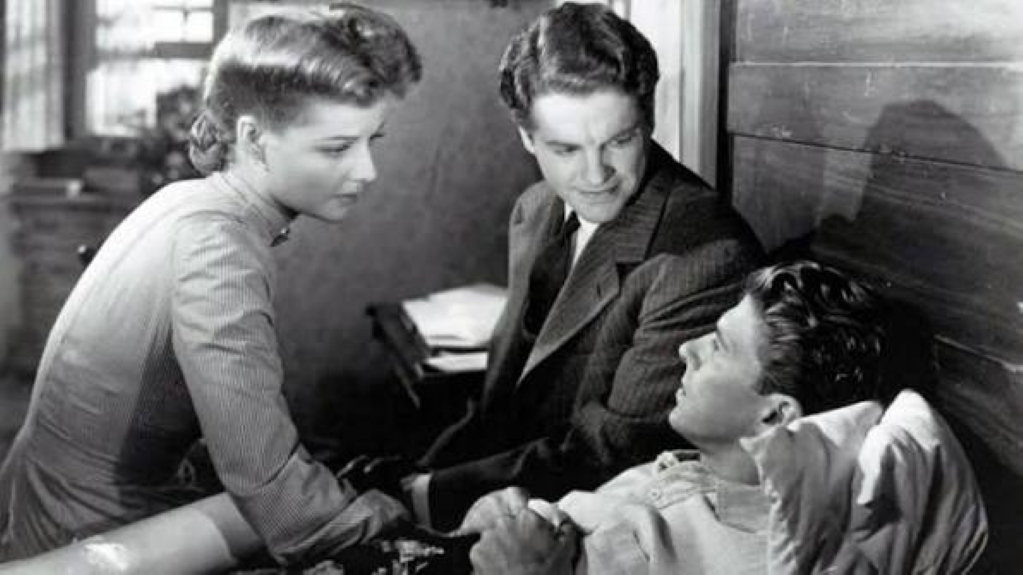
Cast: Alexander Knox (Woodrow Wilson), Charles Coburn (Professor Henry Holmes), Geraldine Fitzgerald (Edith Wilson), Thomas Mitchell (Joseph Tumulty), Ruth Nelson (Ellen Wilson), Cedric Hardwicke (Senator Henry Cabot Lodge), Vincent Price (William G McAdoo), William Eythe (George Felton), Mary Anderson (Eleanor Wilson), Ruth Ford (Margaret Wilson), Sidney Blackmer (Josephus Daniels), Madeline Forbes (Jessie Wilson), Katherine Locke (Helen Bones)

Darryl F Zanuck had a passion project: a biopic of the 28th President Woodrow Wilson. It would be both a tribute to a man, he felt, was overlooked and also a homage to current President Roosevelt – and a warning for the future. Like FDR, Wilson had introduced a raft of reforms and led the country in wars – and Zanuck was worried America would fudge the peace, just as Wilson had failed to get the Senate to endorse the League of Nations, leaving it a toothless lion.

Zanuck’s no-expense spared approach gives us a laudatory biopic that lavishes Wilson in euphoric praise, smooths off all his edges and presents him as a visionary and a near-flawless leader. The money was thrown into building elaborate sets and costumes – vast swathes of the White House and the Palace of Versailles were re-built on the sound stages of 20th Century Fox – and the script repackaged a series of major events interspersed with Wilsonian speeches. It was launched to a fanfare, was nominated (largely due to Zanuck’s influence) for ten Oscars (winning five) and was a box-office failure.

But is it a good movie? In truth, not quite. Despite the lavish production values, this is a dry, unimaginative and stately progression through its subject’s life. Henry King marshals events with the professionalism of an accomplished journeyman, but little inspiration. There is nothing striking, original or brave in a single minute of Wilson, but everything is perfectly framed and (considering its immense length) well-paced. King uses a series of low-angle shots to hammer home the magnificent detail of the sets and Alfred Newman’s score remixes a series of patriotic scores and heavenly-sounding choirs to build the impression of Wilson as secular saint.

But Wilson remains a largely undramatic movie, with an (Oscar-winning) script by Lamar Trotti that fails to inject drama or skilfully convey information. The warning signs are there in the film’s opening, with a group of New Jersey Democrats arrive to recruit Princeton head Wilson to run for Governor and clumsily give each other a potted precis of his CV and academic achievements while they wait for him to join them. Dialogue frequently info dumps historical research in our ears. Newspapers bluntly tell us in crude headlines what’s happening. Poor Thomas Mitchell’s entire role seems to be made up of running into rooms clutching telegrams announcing major events.

In amongst all this research though, we get very little idea of what Wilson actually stood for. There is virtually no time spent on his Governorship of New Jersey, other than a two-scene disagreement with the Democratic bosses whose power he breaks. On becoming President, his major legislative reforms are covered in a less-than-a-minute montage of signed bills. He consults his cabinet once or twice and, when war comes, walks a fine line between preserving American strength and not rushing into war. The final act of the film covers his failed battle for the League of Nations, the only policy the film invests any time into explaining.

For much of the rest of the time, this hagiography concerns itself with down-playing or skating over anything in Wilson that could be perceived as a flaw. Wilson here talks a good game of reform, equality and rights for all. In real life, he was a dyed-in-the-wool segregationist, sceptical about women’s suffrage as well as being an intellectually arrogant elitist who, later in his Presidency, began to see himself as a sort of vessel for God’s policies. While he was undoubtedly a highly effective moderniser and legislator, none of his faults make it to the screen.

Other areas are also carefully removed. Wilson was often accused of being heavily under the influence of advisors like “Colonel” House – House gets a one-scene cameo here. He ran for re-election in 1916 promising to keep America out of the war – this unfortunate broken promise is repackaged as Wilson sitting in the White House deeply regretting the campaign the party is running for him but stating there’s nothing he can do about it. His controversial re-marriage in 1915 to the much-younger Edith Galt (only two years after his wife died) is excused by his wife informing his daughters on her death bed that Wilson must marry again as he needs a wife. Wilson’s incapacity after a stroke in 1920 is down-played, while Edith (who effectively took over running the country for her husband in a constitutional scandal that would never stand today) states “I never made a decision without your knowledge and consent” while sitting with a sturdy Wilson.

All of this is played out in parallel with making Wilson’s rivals in the Senate mustachio-stroking schemers. None more so than Henry Cabot Lodge (well played by Cedric Hardwicke) who begins a career of animosity against the President after being made to wait for a meeting at the White House. In real life, Wilson refused any compromise offered by Lodge to get the League approved by the Senate, but here Wilson is a noble crusader foiled by political pygmies.

Saying that, the film benefits hugely from a very strong performance from Alexander Knox as Wilson, who not only looks and sounds exactly like the President, but perfectly captures his mannerisms. It makes you regret though the film is so little interested in Wilson’s personality or in building any picture of the humanity behind this leader. The rest of the cast have little to do other than state historical facts or stand to listen to Knox masterfully delivering Wilsonian speeches.

Wilson has a historical interest for Presidential buffs and, while it downplays the negatives around Wilson, it makes a very effective case for the President as a visionary leader (he was undoubtedly right about the League of Nations – even if his stance here is restructured into an FDRish self-determination for all nations). But this is a dry, stately film that never manages to turn the march of time into the thrust of drama. The Oscar-winning sets and photography look impressive, but its simplistic and hagiographic presentation of events eventually shakes your interest.

Around the World in Eighty Days (1956)

Around the world header
David Niven and Cantinflas head Around the World in Eight Days in this Oscar-winning epic

Director: Michael Anderson

Cast: David Niven (Phileas Fogg), Cantinflas (Passepartout), Shirley MacLaine (Princess Aouda), Robert Newton (Inspector Fix), Charles Boyer (Monsieur Gasse), Joe E. Brown (Stationmaster), John Carradine (Colonel Proctor), Charles Coburn (Steamship clerk), Ronald Colman (Railway official), Melville Cooper (Mr Talley), Noel Coward (Roland Hesketh-Baggott), Finlay Currie (Andrew Stuart), Marlene Dietrich (Hostess), Fernandel (Paris coachman), Hermione Gingold (Sporting lady #1), Cedric Hardwicke (Sir Francis Cromarty), John Gielgud (Foster), Trevor Howard (Denis Fallentin), Glynis Johns (Sporting lady #2), Evelyn Keyes (Paris flirt), Buster Keaton (Train conductor), Beatrice Lille (Revivalist), Peter Lorre (Steward), Victor McLaglen (SS Henrietta helmsman), John Mills (London coachman), Robert Morley (Gauthier Ralph), Jack Oakie (SS Henrietta captain), George Raft (Bouncer), Frank Sinatra (Piano player), Red Skelton (Drunk), Harcourt Williams (Hinshaw)

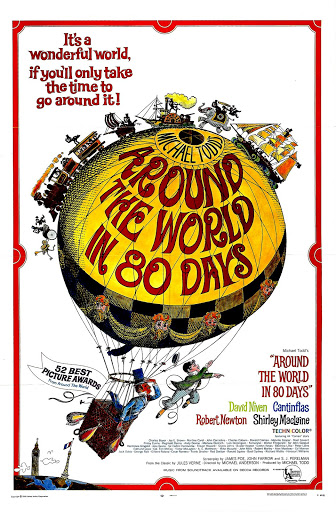
In the 1950s, cinema struggled to encourage people to come out of their homes and leave that picture box in the corner behind. Big technicolour panoramas and famous faces was what the movies could offer that TV couldn’t. This led to a trend in filmmaking that perhaps culminated in 1956 with Around the World in Eighty Days triumphing among one of the weakest Best Picture slates ever seen at the Oscars. Around the World had everything cinema knew it could do well: big, screen-filling shots of exotic locations filmed in gorgeous colour; and in almost every frame some sort of famous name the audience could have fun spotting. It’s perhaps more of a coffee table book mixed with a red carpet rather than a narrative film: entertaining, but overlong.

Faithfully following Jules Verne’s original novel (with added balloon trips), Phileas Fogg (David Niven) is a punctilious and precise Englishman of the old school, whose life is run like clockwork and whose only passion is whist. Nevertheless he accepts a challenge from his fellow members of the Reform Club (among them Trevor Howard, Robert Morley and Finlay Currie) to circumnavigate the globe in 80 days or less. Setting off with his manservant – the recently hired, accident prone Passeportout (Cantinflas) – Fogg races around the world, from Paris to Cairo to India to Hong Kong to Japan to San Francisco. Along the way he rescues Princess Aouda (Shirley Maclaine) from death by human sacrifice in India and has to confront the suspicions of Inspector Fix (Robert Newton) who is convinced that Fogg is responsible for a huge theft at the Bank of England. Can Fogg make it back to the Reform Club hall on time to win his bet?

Around the World was the brain-child of its producer Michael Todd. A noted Broadway producer, Todd had been looking to make a similar splash in the movies. Perhaps it’s no surprise that he decided the finest way to do this (after the mixed success of a movie version of Oklahoma) was to produce something that‘s pretty much akin to a massive Broadway variety show. Around the World – as you would expect – is an incredibly episodic film, seemingly designed to be broken down into a number of small sequences either to showcase the scene’s guest star or to provide comic opportunities for Cantinflas to display his Chaplinesque physical comedy.

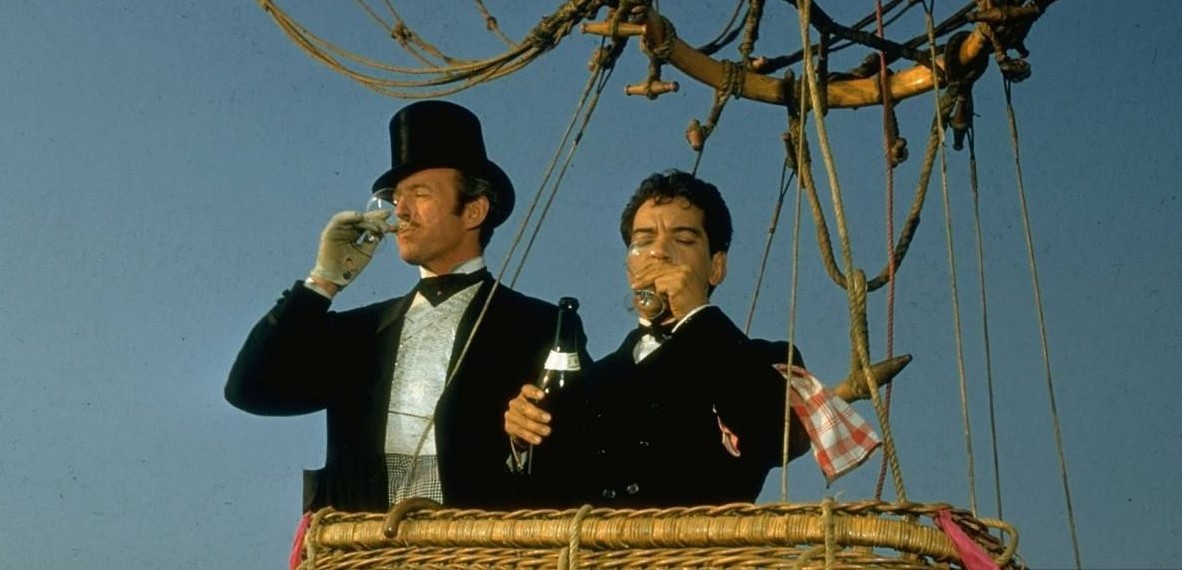
That and lots of opportunities for some lovely scenic photography. Nearly every major sequence is bridged with luscious photography capturing some exotic part of the world – from the coast of Asia to the Great American Plains. It’s pretty clear this is a major attraction of the film: come to the movies and see those parts of the world you’ve always dreamed of, just for the price of a movie ticket! Surely introduction of a hot air balloon to allow Fogg and Cantinflas to travel from Paris to Spain was purely to allow lovely aerial shots of the French countryside and chateaux. It’s the sort of film that proudly trumpeted in its publicity the number of locations (112 in 13 countries!), the vast number of extras (68,894!) and even the number of animals (15 elephants! 17 fighting bulls! 3,800 sheep!). It’s all about the scale.

That scale also carries across to the guest cameos. Between enjoying the scenic photography, viewers can have fun spotting cameos. Can that really be Noel Coward running that employment agency! The chap who owns the balloon, I’d swear that’s Charles Boyer! Wait that steward: that’s Peter Lorre! Good lord that’s Charles Coburn selling Fogg tickets for the steamer! Oh my, Buster Keaton is helping them to their seats on the train! Marlene Dietrich is running that saloon – and good grief that’s Frank Sinatra playing the piano! Most of the stars enter into the spirit of the thing, even if they frequently start their shots with backs to the camera, before turning to reveal their star-studded magnificence. Sadly time has faded some of the face recognition here, not helped by David Niven (perfectly cast as the urbane and profoundly English Fogg, so precise that his idea of romantic talk is to recount past games of whist) probably today being one of the most famous people in it.

Todd marshals all this with consummate showman skill. It’s handsome, very well mounted and generally entertaining – even if it is painfully long (it’s not quite told in real time, but can feel like it at points). The film is nominally directed by Michael Anderson. However, I think it’s pretty clear his job was effectively to point the camera at the things Michael Todd had lined up (be they location or stars) – Todd had already dismissed the original director, John Farrow, after a day’s shooting for not being sufficiently ”co-operative”. To be honest it’s fine as this is an entertainment bereft of personality, instead focused on being “more is more”.

Part of its extended runtime is due to the long comedic sequences given to Cantinflas. A charming performer – and possibly the most famous comedian in Latin-America at the time – Cantinflas can be seen doing everything from bicycle riding, to bull fighting (for a prolonged time), to gymnastics to horseback riding. (Far different from the unflappable and spotless English gentleman Niven is playing.) Your enjoyment of this may depend on how far your patience lasts. I’m not sure mine quite managed to last the course. Sadly one of Cantinflas’ greatest comedic weapons, his Spanish wordplay, was completely lost in translation.

There are some decent sections. The iconic balloon flight is well mounted and gives the most impressive images (the famously vertigo-suffering Niven was replaced by a double for much of this). Others, like the bullfight or an interminable parade in San Francisco go on forever. The casting of Shirley MacLaine as an Indian princess is an uncomfortable misstep (even at the time MacLaine felt she was painfully miscast), made worse by an offensive “human sacrifice” storyline – that got cut when the film was screened in India. Robert Newton though is very good value as the misguided but officious Inspector Fix.

Around the World in Eighty Days is grand, handsomely mounted entertainment. But to consider it as a Best Picture winner feels very strange. It’s not a lot more than an entertaining variety show, its plot impossibly slight (made to feel even more so by its vastly over-extended run time). While you can enjoy it in pieces, it finally goes on too long for its own good. Entertainingly slight as it is, it’s still one of the weakest Best Picture winners ever.

The Lady Eve (1941)

Henry Fonda is bamboozled by Barbara Stanwyck in the delightful The Lady Eve

Director: Preston Sturges

Cast: Barbara Stanwyck (Jean Harrington), Henry Fonda (Charles Poncefort Pike), Charles Coburn (“Colonel” Harrington), Eugene Pallette (Horace Pike), William Demarest (Muggsy), Eric Blore (Sir Alfred McGlennan Keith), Melville Cooper (Gerald), Janet Beecher (Janet Pike)

In the 1940s, Preston Sturges hit a rich vein of form that led to him making some of the finest comedies in Hollywood history. Perhaps the greatest of that run of hits was the hilariously heartfelt The Lady Eve, a comedy that is as much a rich, twisted romance as it is a fast-paced screwball comedy of long cons and deception. Played to the hilt by a perfectly selected cast, Sturges’ dialogue zings in every scene, making this timeless entertainment.

Charles Poncefort Pike (Henry Fonda) is the young heir to a brewery fortune (the most famous brand being “The Ale That Won for Yale”). Naïve and shy, Charles is a passionate ophiologist (that’s snake-expert to you and me) who is just returning from a year-long expedition in the Amazon. On the cruise ship taking him back home, Charles is the target of every single woman on the boat – and also for a pair of expert con artists, Jean (Barbara Stanwyck) and her father “Colonel” Harrington (Charles Coburn). At first it’s his money they want, but Jean surprises herself by falling hard for Charles on the voyage – only to be stung when Charles coldly rejects her after learning the truth about her. So Jean decides on revenge, disguising herself as ex-pat aristocrat “Lady Eve” and proceeding to win over Charles’ upper-class New York family, and seduce Charles all over again.

Not a single opportunity for comedy is missed in Sturges fast-paced, beautifully done film. As well as some truly wonderful word-play and verbal comedy, the film is crammed with vintage sight gags (Charles’ struggles with an overly affectionate horse is a hilarious highlight) and keeps up a series of perfectly judged running gags (one of the best of which falls to William Demarest’s befuddled bruiser-turned-valet Muggsy). But the comedy works because it’s invested in characters who feel real – despite all the absurdity – and demonstrate real emotions alongside all the comic invention. It has a story that you care deeply about it, all while you are laughing your head off.

Because deep down this is a romance between two very unlikely people. Barbara Stanwyck radiates wit, intelligence and incredible sex appeal as Jean, a role that seems all surface but actually contains a huge amount of depth and shade. She may well be a sort of con-woman with a heart, but the creeping onset of love surprises (and almost confuses) her as much as it might throw off an audience. Not that that ever stops her from being (usually) two steps ahead of everyone around her, a nature that suits perfectly for her revenge act in the second half, where she aims to teach Charles a little humility. Stanwyck’s comic timing is perfect, but it’s the human heart she gives the character that works, and makes us warm to her.

It also makes a superb contrast with Henry Fonda as Charles. Riffing on his screen-image for upright purity (he’s Honest Abe for goodness sake!), Fonda creates a man who is sweet, honest, naïve – but also has an inverted sense of snobbery that comes from being convinced you are usually right. For all his innocence, Charles is surprisingly abrupt when he dismisses his romance from Jean, and his slightly priggish self-satisfaction is evident when he proudly presents his (feeble) card tricks to the card sharps he finds himself on board with. Fonda also proves himself a surprisingly deft physical comedian, a key running gag being Charles’ continual prat falls (a neat metaphor for him both figuratively and literally falling in love with Jean).

Together these two power a lightening-fast series of comic masterpiece scenes from Sturges. But the director is also confident enough to throw in other beats: a stationary single shot of Jean cradling Charles for several minutes (after a semi-pretend shock at discovering his pet snake) sizzles with sexuality. Later Stanwyck delivers Jean’s joy at finding love a heartfelt wonder, which she neatly inverts to heartbreak on her rejection. Her father, played with a delightful wryness by Charles Coburn, has no problem with fleecing people (although of course “Let us be crooked, but never common”) and delights in his ingenuity (cheating) with the cards, but he also has the humanity to warn his daughter about the sometimes unforgiving purity of decent folk.

And those decent folk are quite snobby. The second half of the film gets a gleeful energy from throwing the knowing Jean in amongst a group of upper-class rich snobs, who will believe anything that comes out of someone’s mouth with a British accent. It’s certainly been working for years for “Sir Alfred”, a conman sponger played with twinkling glee by Eric Blore. Jean’s almost deliberately ludicrous story (arrival on a submarine and a hilariously convoluted backstory) gets lapped up – and of course seduces Charles all over again. No wonder he keeps falling over.

The final act – with a deliciously funny final line that deserves to be more famous than it is – makes for a superb cap to what is a marvellously sparkling comedy. It also manages to avoid sentimentality or mawkishness – not a sudden surprise, considering it’s stuffed with people pretending to be what they are not. Sturges’ direction is sharp – even if visually he isn’t the most imaginative director in the world – but the main thing that gives this such zip is the dialogue and the acting. Stanwyck is simply sensational, Fonda just about perfect, and the whole thing is a delight. Surely one of the greatest classic Hollywood comedies of all time.