Tag: Maria Ouspenskaya

Kings Row (1942)

Kings Row (1942)

Soapy melodrama on the surface, viciously biting satire underneath – making it as two-faced as the town it’s about

Director: Sam Wood

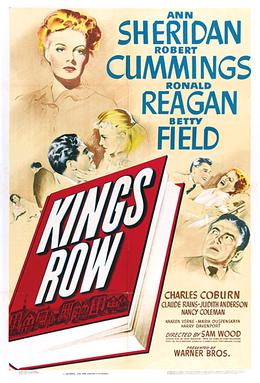
Cast: Ann Sheridan (Randy Monaghan), Robert Cummings (Parris Mitchell), Ronald Reagan (Drake McHugh), Betty Field (Cassie Tower), Charles Coburn (Dr Henry Gordon), Claude Rains (Dr Alexander Tower), Judith Anderson (Harriet Gordon), Nancy Coleman (Louise Gordon), Kaaren Verne (Elise Sandor), Maria Ouspenskaya (Madame von Eln), Harry Davenport (Colonel Skeffington)
There are few things more idealised than the decent American small-town, where everybody knows your name and people leave their doors unlocked safe with their trusted neighbours. That ideal is comprehensively dismantled by Kings Row. Like some sort of proto-Twin Peaks, it presents a small-town that is all picket fences and porch swings on the surface, but a seething morass of petty jealousies, hypocrisies, lies, cruelties and sadism underneath. Kings Row was adapted from a best-seller by Henry Bellerman many considered unfilmable (among the things it features that are obscured in the film are incest and assisted suicide) and is a searingly successful melodrama.

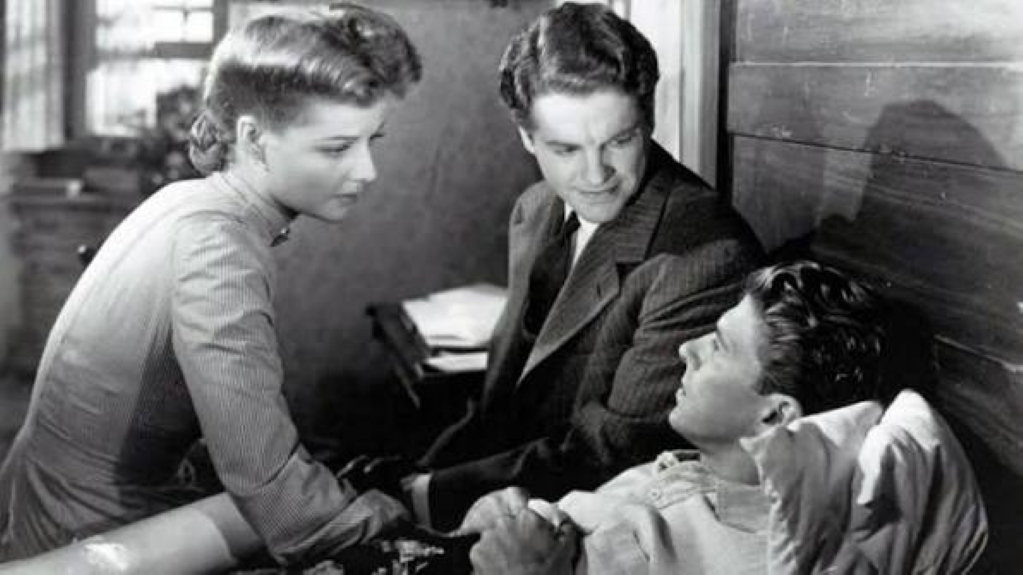
Covering the 1890s to the 1910s, Kings Row follows the lives of four young people, all suffering from the older generation’s pettiness and wickedness. Parris Mitchell (Robert Cummings) is a young man, training to be a doctor, in love with his austere mentor Dr Tower’s (Claude Rains) sensitive daughter Cassie (Betty Field). His best friend Drake McHugh (Ronald Reagan) is an amiable lothario, denied engagement to Louise (Nancy Coleman), daughter of the snobby Dr Gordon (Charles Coburn) and his wife (Judith Anderson). After personal disasters and tragedies for both men, Parris travels to Venice to train as a psychiatrist and McHugh finds true love with daughter-of-the-railroad Randy (Ann Sheridan). But the dark forces of Kings Row demand a price from Drake.

Kings Row is a sensational plot-boiler, bought to life with great care and a delicious sense of the tender and salacious by Sam Wood. Working closely (again) with William Cameron Menzies on the design and tone, this must have been a glorious change of pace for the pair after the worthy (but flawed) Our Town, which treated similar ideas with reverence. There is none of that in Kings Row, with its frequent recourses to moody skies and Gothic storms via James Wong Howe’s Oscar-nominated expressionistic lighting of its imposing local buildings. This is not a town of homespun values and decency, but lean, mean cruelty and possessiveness, with dark secrets behind every door.

You get that sense from the start, as our characters bound around the town as children. As a young girl, Cassie Tower’s birthday party competes with the announcement Louise Gordon will hold hers on the same day. Sure enough, Parris alone attends Cassie’s – the humiliated torment of this girl at the head of a large empty table, loaded with food, is agonising – while the rest of the town piles into the Gordon’s party. This is a town that plays favourites, and the Gordons are at the top of the social tree. But then, the Towers are not pure as the driven snow. Rains gives a horrific air of quiet, suggestive menace to Tower’s controlling iciness, a grim ogre at the heart of his Gothic pile. Glimpses of Tower’s wife are seen upstairs, confined in isolation like Jane Eyre’s Bertha. His control extends over every inch of Cassie’s life, keeping her isolated and firmly in place.

This continues well into her adulthood – there is a lovely transition here, with a close up of young Parris’ foot stepping over a style with a distinctive brush of the surface, and his adult foot (with the same brush) crossing back over in the same shot – a control that has helped turn her into a flustered, anxious, neurotic, played with intensity by Betty Field. She still attracts the love of Robert Cummings – who does well in a rather thankless role as our quietly, stoic centre – but its doomed by her father’s possessive assumption that he knows what’s best for both her and Parris. The shockingly brutal action Tower takes – and the, on reflection, under-the-carpet brushing of this deed the powers that be carry out – is a clear sign this midwestern town is in fact a ghastly place.
Perhaps the only decent person of the older generation is Maria Ouspenskaya, very heartfelt as Parris’s Russian grandmother. As her health deteriorates, it’s commented by the town’s higher ups that with her passes an era of decent values: an inadvertent satirical comment in itself, since this representative of American values is a Russian accented immigrant. Real Kings Row values are controlled by the Gordon’s: Harriet (played by Judith Anderson in sub-Danvers form) is a bitter snob, while Charles Coburn’s Dr Gordon is the must unsettling character he ever played, a sadistic quack who refuses anaesthetic (and worse) to patients he deems morally inferior and treats the town’s working classes as his personal societal petri dish.

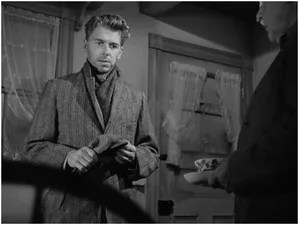
Perhaps it shouldn’t be a surprise that the one guy everyone in the town thinks is a nailed on cad, is the most decent guy there. Ronald Reagan never had a better role than Drake McHugh (his most famous line “Where’s the rest of me!” became the title of his first autobiography). Reagan makes Drake warm, likeable, refreshingly loyal and honest, a ladies man but also a man of his word, treating everyone around him with respect. Kings Row is, in many ways, a parade of events to crush his decency, losing the chance to forge his own business, his trust fund filched, his body mutilated by a sadist doctor.

The dramatic and emotional force ends up being our wish that Drake survives everything the town throws at him. He has the support of best friend Parris, a horrified witness to the evils around him, and Randy played with a charisma and charm by Ann Sheridan that makes an instant impact, despite only making her first appearance an hour into the film. Randy becomes the force of good and hope in the film: alongside her working-class family bastions of true decency, in a town where everyone else seems two-faced, wicked or willing to shove their heads in the ground pretending everything is fine.
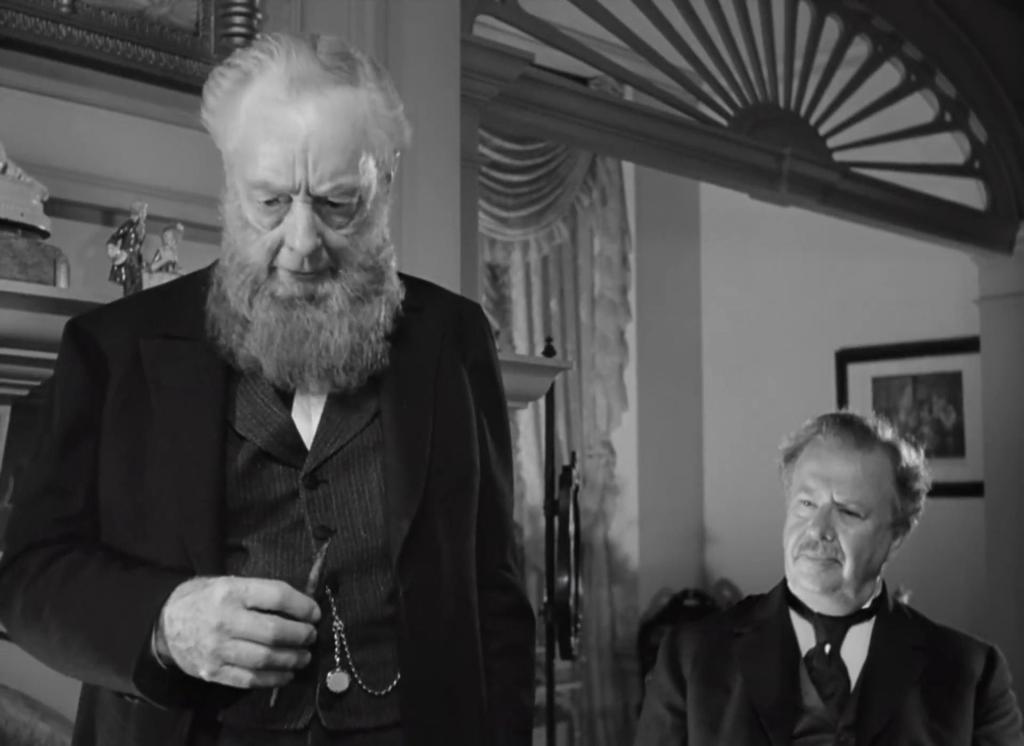
After all, nothing can be allowed to rock the boat in Kings Row. You could argue Harry Davenport’s Colonel Skeffington, who good-naturedly wants to keep everything ticking over, is even the real villain. There seems to be nothing he won’t hush up: fraud, murder-suicide, an epidemic of surgical maiming… Nothing can challenge the idea Kings Row presents on a sign at the town’s boundary: it is “A Good Town. A Good, Clean Town. A Good Town to Live In and a Good Place to Raise Your Children”. Doth the town protest too much?

With this darkness and clear-eyed vision, Kings Row may frequently feel soapish, but it’s a vicious satire exploding a particular all-American ideal and exposing it as rotting garbage, a fountain of lies where the decent and vulnerable (like Drake and Cassie) suffer the most. It makes Kings Row, in its own way, one of the most consequential films of its kind, the sort of denunciation (dressed up as reassuring melodrama) that Hollywood would wait decades before daring to repeat.

Dodsworth (1936)

Dodsworth (1936)

A marriage disintegrates in this richly mature, non-judgemental film one of the best of the decade

Director: William Wyler

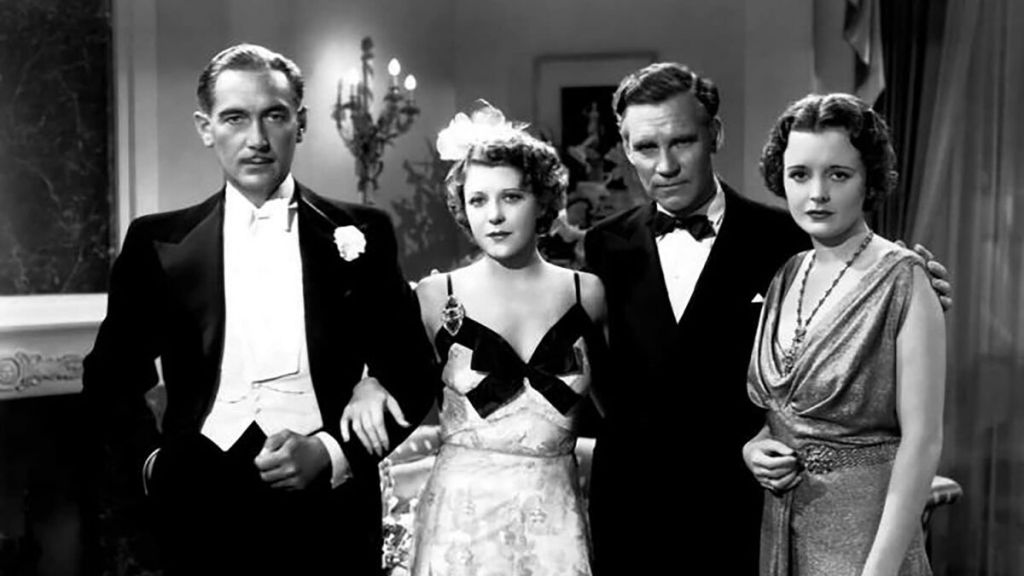
Cast: Walter Huston (Sam Dodsworth), Ruth Chatterton (Fran Dodsworth), Paul Lukas (Arnold Iselin), Mary Astor (Edith Cortright), David Niven (Captain Lockert), Gregory Gaye (Kurt von Obersdorf), Maria Ouspenskaya (Baroness von Oversdorf), Odette Myrtil (Renée de Penable), Spring Byrington (Matey Pearson), Harlan Briggs (Tubby Pearson), Kathryn Marlowe (Emily), John Payne (Harry)

Marriage is tricky. In the hustle and bustle of everyday life, bringing up a family, running a business and rushing between social events, what if you don’t notice you don’t have much left in common? That’s the theme of Dodsworth, one of the most strikingly modern of 1930s films, that tackles the breakdown of a marriage in a surprising subtle way, avoiding the sort of moral punishment and condemnation you’d expect from the production code. Combined with sharp writing, fine acting and some fluidly creative direction from William Wyler, and you have an overlooked classic.

Dodsworth kicks off with the retirement of car entrepreneur Sam Dodsworth (Walter Huston). Having sold his successful independent factory to a major business, Sam is now effectively retired and suggests that he and his wife Fran (Ruth Chatterton) take that trip to Europe they’d always discussed but never had time to do. The trip, however, starts to reveal fractures in their relationship. Fran isn’t ready to ‘rush towards old age’ like she feels Sam, with his touristy longings and interest in engineering mechanics is. She wants to be part of society and feel the excitement of flirtations (and more) with rakeish European types (from David Niven to Paul Lukas to Gregory Gaye), while Sam ticks off the sites and sits in cafés. Sam, it turns out, has far more in common with Naples-ex-pat Edith (Mary Astor) – but feels duty bound to do whatever he can to preserve his marriage with Fran.

It’s all adapted from Sinclair Lewis’ doorstop novel, skilfully boiled down into a clear dramatic journey by Sidney Howard, from his own theatre adaptation (which also starred Huston). It becomes both slightly sad, watching two people drift apart, while also offering rich vestiges of hope of what the future can hold if you dare to take a chance. It mixes this with dry wit, scenes of compelling narrative interest and an insightful look at two people effectively going through different types of life crisis during a ‘once in a lifetime’ journey. Because nothing can disrupt your thinking about your own life more than changing nearly everything about it in one swift barrage of events.

It’s assembled into a richly involving whole by William Wyler, who lands the film just the right side of melodrama. From the opening shot, tracking towards Sam’s back as he leans against a window looking out over the factory which gave his life meaning, there is a quiet air of its characters living in denial of their own melancholy. Part of Sam is already wondering what on earth he’s going to do without his factory – its why he immerses himself in the most banal details of the sights they will see in Europe, or the engineering of their cruise ship.

Sam feels his journey will give him new opportunities, but it often sees him uncertain and slightly adrift, from not knowing how to tip waiters to finding his mid-Western mindset unable to compute the sexually liberal rules of European high society. Fran claims the journey abroad will mean leaving behind the oppressive parade of the over familiar social scene in their small town. It quickly turns out, she’s only be bored of their small circle not the glamour of social events.

Sam is played with real skill and under-played grace by Walter Huston in one of his finest performances. He’s an overwhelmingly decent man, self-made, confident but hesitant and uncertain out of his element. There’s a fuddy-duddy quality to him you can understand Fran finding grating, but he’s also capable of genuine, unfiltered enthusiasm (watch his joyful spotting of a famous lighthouse during their journey – which hilariously he nearly misses while checking his watch – and the eagerness which he tries to share this with an irritated Fran and a politely bored Niven). What’s superb about Huston’s performance is the awkwardness, shyness and even timidity he brings to a successful man, the quiet air of confused anxiety behind Sam as his certainties melt away.

Both Sam and Fran are convinced everything between them is fine, constantly speaking (increasingly dutifully) about their love, as if trying to convince each other even as it starts to fall apart. Their home already feels invaded by their daughter and her husband, who absent-mindedly serves himself drinks from Sam’s cabinet. They’re in completely different mindsets. Fran is constantly embarrassed by her husband’s tendency to hickness. Sam feels Fran’s upper-class ‘friends’ wouldn’t look twice at her without the cash she can flash. Fran is horrified by Sam’s whimsical statement that they will soon ‘be a couple of old Grandparents’. She’s young at heart, being wooed and won’t give that up.

From a ship-bound flirtation with David Niven’s suave playboy where she seems shocked at his implication that they can take things further (Sam doesn’t help by telling her she only has herself to blame), she swiftly begins an all-but-open affair with Paul Lukas’ smooth gentleman (with Sam turning an embarrassed third-wheel blind eye) even sending Sam home to extend her holiday privately, while he fields awkward questions from their family and re-directs his inner fury at his public cuckolding into grumpy rants about other’s scrabble games covering his desk and fussily reaching for his Encyclopaedia to prove trivial discussion points.

By the time Ruth has convinced herself divorce will lead, inevitably, to a glorious new marriage with much younger aristocrat Gregory Gaye, she’s at the centre of an increasingly delusional mid-life crisis, full of false claims about her age and built on fantasies. Ruth Chatterton is very good, neatly bringing to life a woman who can’t face the idea of becoming old. The film (while siding with Sam) never fully condemns her for her behaviour – even if it maintains an American suspicion of her wealthy European upper classes. In fact, it’s very hard not to feel sorry for Fran when her lover’s mother (played by an imperiously shrewd Oscar-nominated Maria Ouspenskaya) punctures her delusions about the likely future of a relationship with her feckless son.

It’s all beautifully framed by Wyler. How can you not admire the lingering shot of Fran reading a telegram from Sam and letting Lukas’ Iselin set fire to it, the camera following the paper as the wind blows it across the balcony floor to disintegrate like the Dodsworth marriage? Dodsworth is full of such beautifully subtle moments, its imagery (and Oscar winning sets) wonderfully establishing a world in transit as much as the Dodsworths. Wyler also evens the score at points: Sam remains largely sympathetic, but its possible to be irritated by his naïve dullness, just while the frequently infuriating Fran is relatable in tragic fear that her life is behind her.

It’s this mature view of people drifting apart, making mistakes and not always being condemned that makes Dodsworth such a richly intelligent film. Sam would certainly by more happy with Edith (a very moving performance from Mary Astor), just as Fran would be better off without Sam. Dodsworth is largely refreshingly free of the sort of Puritan punishments other films dealing with similar themes would use under the Production Code. Instead Dodsworth is a superbly acted, directed and written melodrama with a serious tone that remains richly rewarding viewing.

Love Affair (1939)

Love Affair (1939)

Two people in love, separated by circumstance, in this film of two halves: one comedy, one sentimental

Director: Leo McCarey

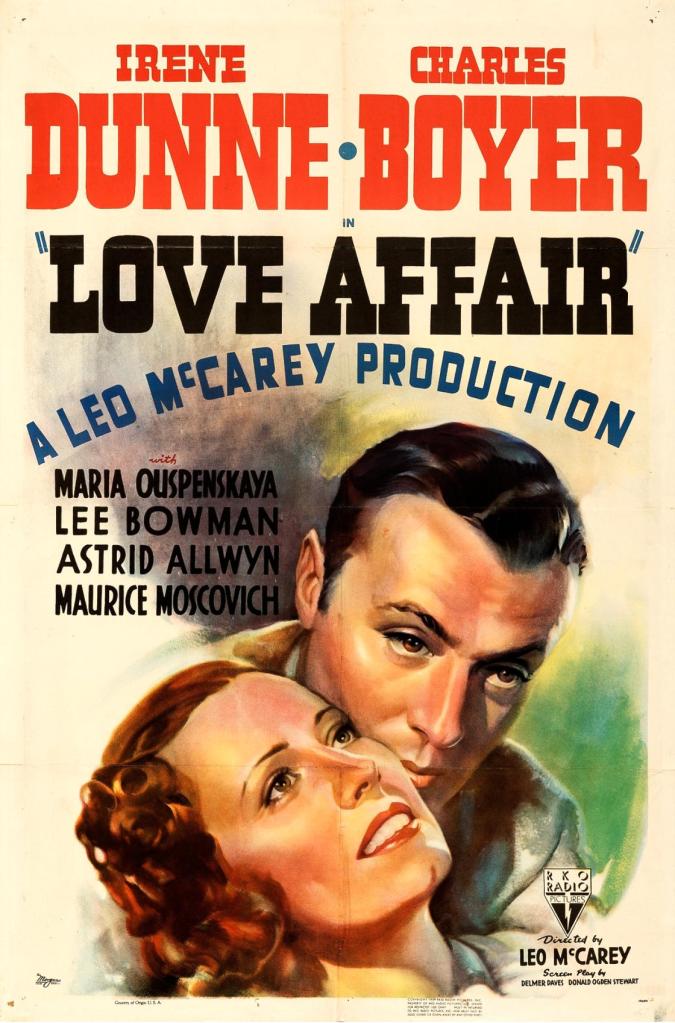
Cast: Irene Dunne (Terry McKay), Charles Boyer (Michel Marnay), Maria Ouspenskaya (Michel’s Grandmother), Lee Bowman (Kenneth Bradley), Astrid Allwyn (Lois Clark), Maurice Moscovich (Maurice Cobert)

In many ways you could say Love Affair was the turning point in Leo McCarey’s career. For years in silent films and the early talkies he had been one of Hollywood’s leading comedy directors, the quick-witted master of the improvisational pun. But there was a second McCarey: the devout Catholic, concerned about social issues. The McCarey who light-heartedly complained when was given an Oscar for The Awful Truth rather than his heartfelt critique of elderly care, Make Way For Tomorrow. This McCarey increasingly leaned into well-meaning, sentimental dramas.

So why is Love Affair a turning point? Because the first half is a charming, funny, sexy meet-cute: and the second a well-meaning but sentimental love story that pulls two people apart. Those meet-cuters are famous Parisian playboy (he’s basically a gigolo) Michel Marney (Charles Boyer) and nightclub singer Terry McKay (Irene Dunne). They meet on a trans-Atlantic liner and fall in love. Problem is they are both engaged to others (both of them rich), waiting for them in New York. Should they decide to chuck it in and be together, they arrange to meet six months later at the top of the Empire State Building. Come the day, Michel waits – but on the way there, Terry is hit by a car and possibly left paralysed. She doesn’t want to tell him. He thinks she never planned to show up. Will they ever be together?

That car crash is the pivot in a film that feels like two genres surprisingly successfully wedded together. Love Affair is a great idea (so good in fact that McCarey remade it about 20 years later as An Affair to Remember), a romantic story with all the joy and vibrancy of a couple finding each other and falling in love, then the painful sting of tragic circumstances pulling them apart. It manages to be sweetly funny and then more or less manages to land just the right side of sentimental (though, lord, it skates near to the edge).

You go with that more overtly manipulative conclusion though, since the subtle comedic and romantic manipulation of the first half is so well done. McCarey encouraged his actors to improvise: filming started with McCarey sitting at a piano, plinking keys, waiting for inspiration to jazz up the script. It’s an approach many actors found challenging (Cary Grant nearly had a meltdown at first on The Awful Truth). But he found the perfect pairing with Boyer and Dunne.

Of course, Irene Dunne was a veteran. An actress far too overlooked today, Dunne flourished under McCarey’s style. Here she’s gloriously warm, sexy and charming. Terry McKay has a very dry (at times almost slightly smutty) wit; she’s absolutely no fool, but also kind, caring and considerate. Dunne sparkles every time she steps in front of the camera, displaying the sort of comic timing you can’t buy (her teasing glances at Michel during their first meeting, when she accidentally reads a telegram all about his sexual exploits at Lake Como, are to die for). But her face also lights up with a genuine radiance as she finds herself falling in love.

She also sparks wonderfully with Charles Boyer. Another overlooked star of 1930s Hollywood, Boyer was desperate to work with McCarey. He found the improvisational style awakened a relaxed, playful element in his acting that helped make Michel exactly the sort of dreamboat you could imagine falling in love with on a cruise. Boyer was also a superb reactor, his face able to communicate anything from growing interest, to delight and also piety, pain and disappointment. Boyer’s comic timing, like Dunne’s is faultless. Like her, he also effortlessly shifts to drama in the second half, expertly demonstrating the maturity of a playboy into someone generous and understanding.

With these two actors, McCarey couldn’t go too far wrong. Their natural ease with each other makes for wonderful chemistry. They are two people who progress naturally from teasing, to enjoying each other’s company, to realising they enjoy each other’s company way too much. Today, Love Affair can look a little tame – they don’t even kiss (although one shot of crashing waves, cutting to them opening a door on the boat to walk along the deck together, is rather suggestive). But the point is that this is love not an affair (or an affair about love). The feelings they develop for each are genuine and, bless them, they don’t want to corrupt it with behaviour that could compromise them.

Tellingly their love is cemented during a stop off in Madeira, where they visit Michel’s aunt (played by an archly eccentric Maria Ouspenskaya). She welcomes them into her home, bonds with Terry, and Michel shows Terry a far different side to himself than his playboy persona: a thoughtful artist. McCarey even shoots them together (in a beautifully lit scene by photographer Rudolph Maté) in a chapel, kneeling side-by-side at the altar. Could McCarey make the endorsement of their love more clear?

Perhaps he felt he needed to, since the screenplay was controversial. The Hays Code had no intention of allowing a film showing two engaged people walking out on their partners. Perhaps that’s why they needed to be “punished” with that sudden car crash. The second half is less successful: maybe because I find the “I can’t ruin his life by making him look after me in a wheelchair” a little too on the nose. Boyer and Dunne play the hell out of it: Dunne is quietly crushed under a surface of charm and what-will-be-will-be. Boyer tries his best to hide his pain, but still searches for some of what he’s lost in his new career as an artist.

Of course, the truth will out – and it will end happily. But there’s a little too much sentiment in the second half, after the heartfelt romancing of the first. A little too much put-a-brave-face-on-the-pain, a few too many contrivances to maintain the illusion (of course they go to the same play on Christmas Eve!). There are too many sickly sweet scenes of Dunne singing with the kids at the orphanage she’s recuperating at (a ghastly advance warning of McCarey’s tedious Going My Way). But it just about works, because we really care about Terry and Michel. We want them to be together, come what may.

Love Affair can be a mixed bag, but it’s got two wonderful performances for Boyer and Dunne (she was nominated, he was robbed) and McCarey manages to juggle comedy, romance, sweetness and a little touch of sadness. It’s a luscious romantic film, even while you see it manipulating you – and for that, it will always give you a great deal of pleasure.