Tag: Spring Byrington

Jezebel (1938)

Jezebel (1938)

A star turn helps to lift this bonkers melodrama into the realm of delicious entertainment

Director: William Wyler

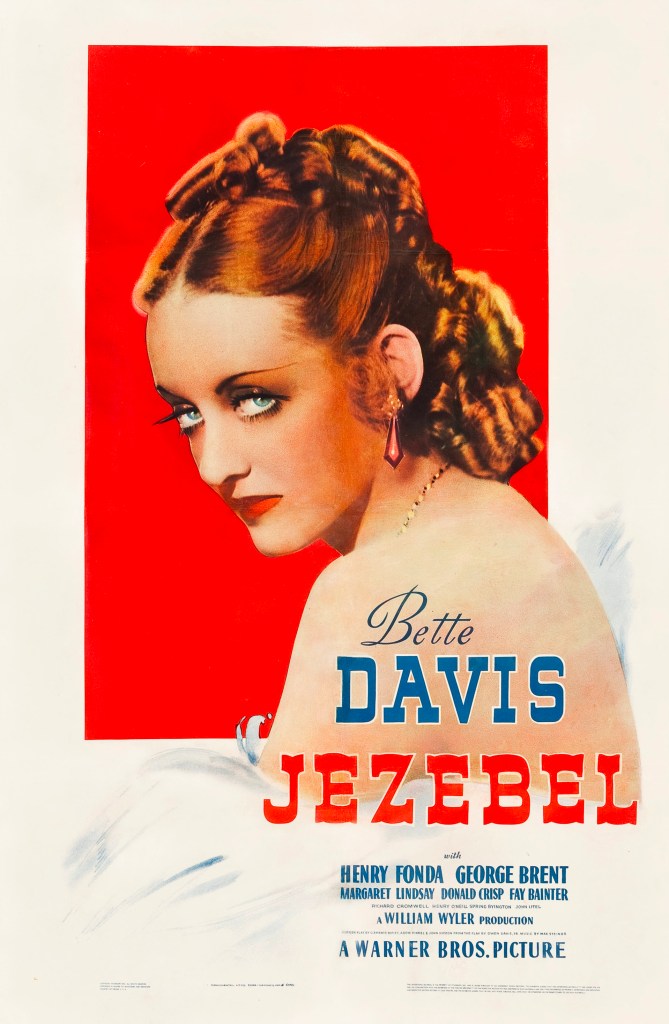
Cast: Bette Davis (Julie Marsden), Henry Fonda (Preston Dillard), George Brent (Buck Cantrell), Donald Crisp (Dr Livingstone), Fay Bainter (Aunt Belle Massey), Margaret Lindsay (Amy Bradford Dillard), Richard Cromwell (Ted Dillard), Henry O’Neil (General Theophilius Bogardus), Spring Byrington (Mrs Kendrick), John Litel (Jean la Cour)

It’s pretty much the first line in any review about Jezebel so let’s start with it: rumour claims it largely exists as a consolation prize for Bette Davis after missing out on Scarlett O’Hara. It makes sense: Julie Marsden is a Southern Belle so similar to Scarlett they could almost be sisters. And Bette Davis is so wonderfully, passionately, brilliant playing her that, if it wasn’t for Vivien Leigh’s landmark performance, Jezebel could make you deeply regret Davis never got that role. But there is more to Jezebel than that, a handsomely filmed adaptation of a hit play by Owen Davis Snr, which predated Margaret Mitchell putting pen to paper. This is delicious, old-school, scandal-tinged Hollywood melodrama, with a star actor in a custom-made star role.

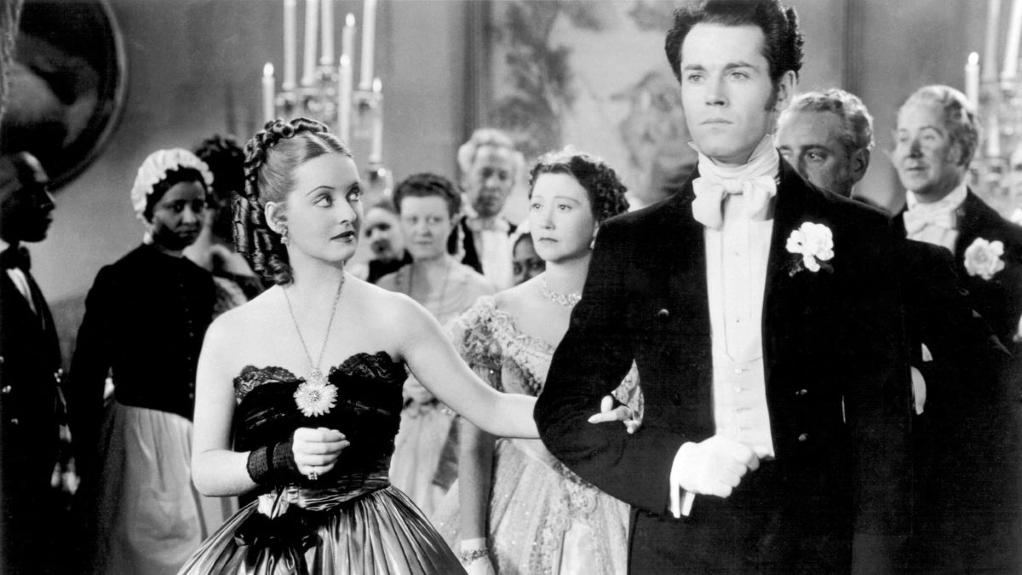
Julie Marsden is a fiery, independent-minded woman in 1850s New Orleans, convinced she can bend the world around her (and the wills of men) to her own whims. She’s engaged to strait-laced Pres Dillard (Henry Fonda), but flirts with playboy Buck Cantrell (George Brent) and won’t play by societies rules. So much so, she plans to attend the high-society Olympus Ball in a dress not of virgin white but Jezebel red. This goes down like a lead balloon; Pres effectively drops her in disgust at her wilful selfishness and a year later returns married to someone else. At which point Julie, a woman spurned, plans revenge even as yellow fever rips through the city.

Jezebel is a great big, melodramatic soap with a celluloid-burning turn by Davis (who won her second Oscar) at its heart. Davis dominates the film, a boundless force of charisma from the moment she sashays (late!) into her own party, whipping her dress up behind with a riding crop to when she departs the film, eyes full of genuine remorse, nursing a fever cart. She plays the role full of sinful flirtatiousness and playful certainty. No one will tell her what to do and where to go – from charging through a bank (captured in a beautiful tracking shot from Wyler) to drag Pres out for the day, to headstrongly ignoring all pleas to not wear her dress of choice, to holding court a year later in her own home planning revenge with burning, destructive glee.

It’s a portrait of bull-headed, feminine, self-destructive foolishness and pride that Davis would make her own, a marvellous star-turn that helps lift this otherwise rather silly melodrama with an inevitable message (this bull-headed floozy will learn the error of her head-strong ways) into something quite magic. That and the superlative richness of Wyler’s direction (and Gregg Toland’s sumptuous camera work), full of dynamic images, as well as a series of top-drawer performances from a strong cast.

Obviously, it’s hard not to spot that Jezebel lacks the scale and colour of Gone with the Wind (has any black-and-white film ever so openly revolved around colour as a source of drama?). But it has a lot of its dramatic energy, despite the fact you can sense its theatrical roots (it splits rather neatly into four acts, each set in a distinct location). Jezebel juggles its balls remarkably well, balancing a focus on Julie’s desire for attention and control with a fine portrait of two different men. George Brent, with a sly, self-satisfied grin as a Don Juan and Henry Fonda, prissy and stuffed-of-shirt (mouthing, at points, an awkward Southern accent) successfully making Pres profoundly wise, surprisingly weak despite his certainty, rigid and unpersuasive.

The pivotal ball-room sequence, and its build-up, works particularly marvellously. Despite Julie’s determination, its clear everyone around her feels it to be a terrible idea. Pres concedes to it with a grudging irritation and, once it becomes clear even to Julie it’s an appalling idea, forces Julie to be swallowed up in her public humiliation. After watching a parade of genteel ladies and gentlemen scurry away from her, as if in fear of catching her loose morals, Pres drags her to the dance floor (despite her pleas). Tracking back, Wyler shows the dance floor clear in moments, leaving just these two dancing alone (Pres even insists the band continues playing), cementing her humiliation. He’s made his point and, even though she slaps him later, even she knows he was right. Not that this will help either of them in the long run.

It’s part of the moral of the story, that sometimes women need a firm hand. (Sometimes literally so, as Donald Crisp’s grouchy Dr Livingston tells Pres). There has to be a punishment for Julie’s willingness to scheme, her constant placing of her own whims above everyone else and her inability to even consider that there might be dangerous consequences to her actions. It doesn’t wear us down though, because Davis is such a dynamic and forceful presence it’s hard not to rather like her. And then, of course, you sort of sympathise with her (even though she is awful and selfish) as a conga-like of damage and guilt leave her reeling before converting her into an ideal self-sacrificing woman.

Of course you watch Jezebel today and can hardly fail to notice that the greatest wickedness all these Southern gents and dames can possibly imagine is turning up at a ball in the wrong dress. Certainly not the slavery all around them. There is a parade of “yasum” slaves in Jezebel, all of them (like old retainer Cato) perfectly content in their lives of servitude. Pres may get a few loose critiques off about the South, but even those are focused on its economic and political short-sightedness: like everyone he’s paternally fond of his naïve property but wouldn’t imagine giving any of them freedom.

It’s another echo perhaps of Gone with the Wind and not a welcome one. Jezebel settles down for another genteel, Birth of a Nation myth of a sublime South doomed for being too noble. Not even the terror of yellow fever – and, at one point, the shooting of an infected man for fleeing his island ghetto – can get in the way of that feeling, that this way of life is not the problem, even if it does allow the odd bad apple like Julie to pop up.

That’s a more awkward political point, but it’s hard to imagine it crossing the mind of many at the time. And it doesn’t stop an enjoyment of Jezebel as a masterfully executed soap. Wyler’s direction is excellent, the filming wonderful and the actors firing on all cylinders. (Fay Bainter also won an Oscar for her fine performance as Julie’s horrified Aunt). Davis of course reigns supreme in the cinematic equivalent of an airport novel, a big, steamy, sex-fuelled melodrama with a handwringing ending of moral enlightenment delivered with such earnest, underplayed sensitivity by Davis and Wyler that it convinces. A big, brash, hugely enjoyable entertainment.

Dodsworth (1936)

Dodsworth (1936)

A marriage disintegrates in this richly mature, non-judgemental film one of the best of the decade

Director: William Wyler

Cast: Walter Huston (Sam Dodsworth), Ruth Chatterton (Fran Dodsworth), Paul Lukas (Arnold Iselin), Mary Astor (Edith Cortright), David Niven (Captain Lockert), Gregory Gaye (Kurt von Obersdorf), Maria Ouspenskaya (Baroness von Oversdorf), Odette Myrtil (Renée de Penable), Spring Byrington (Matey Pearson), Harlan Briggs (Tubby Pearson), Kathryn Marlowe (Emily), John Payne (Harry)

Marriage is tricky. In the hustle and bustle of everyday life, bringing up a family, running a business and rushing between social events, what if you don’t notice you don’t have much left in common? That’s the theme of Dodsworth, one of the most strikingly modern of 1930s films, that tackles the breakdown of a marriage in a surprising subtle way, avoiding the sort of moral punishment and condemnation you’d expect from the production code. Combined with sharp writing, fine acting and some fluidly creative direction from William Wyler, and you have an overlooked classic.

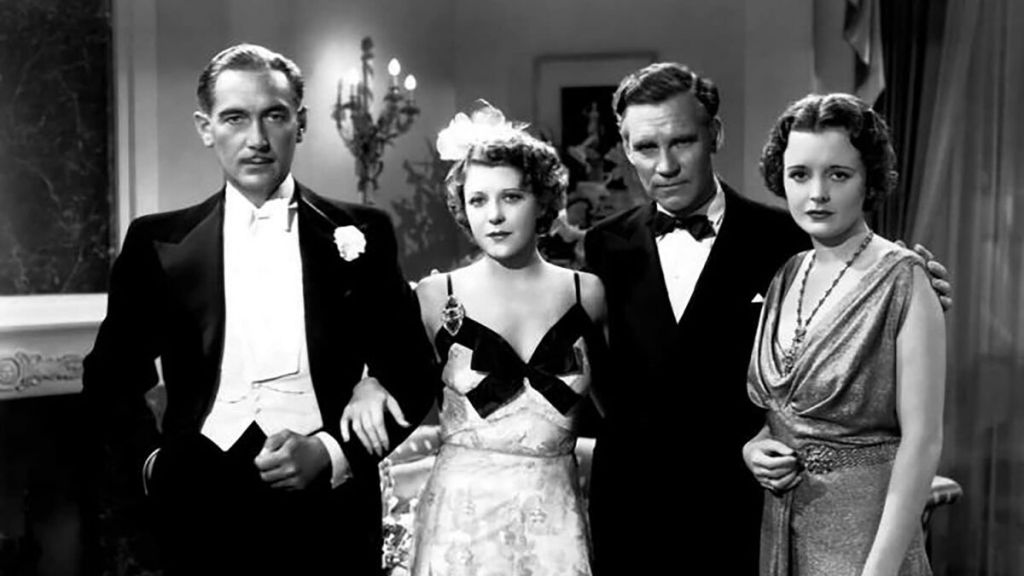
Dodsworth kicks off with the retirement of car entrepreneur Sam Dodsworth (Walter Huston). Having sold his successful independent factory to a major business, Sam is now effectively retired and suggests that he and his wife Fran (Ruth Chatterton) take that trip to Europe they’d always discussed but never had time to do. The trip, however, starts to reveal fractures in their relationship. Fran isn’t ready to ‘rush towards old age’ like she feels Sam, with his touristy longings and interest in engineering mechanics is. She wants to be part of society and feel the excitement of flirtations (and more) with rakeish European types (from David Niven to Paul Lukas to Gregory Gaye), while Sam ticks off the sites and sits in cafés. Sam, it turns out, has far more in common with Naples-ex-pat Edith (Mary Astor) – but feels duty bound to do whatever he can to preserve his marriage with Fran.

It’s all adapted from Sinclair Lewis’ doorstop novel, skilfully boiled down into a clear dramatic journey by Sidney Howard, from his own theatre adaptation (which also starred Huston). It becomes both slightly sad, watching two people drift apart, while also offering rich vestiges of hope of what the future can hold if you dare to take a chance. It mixes this with dry wit, scenes of compelling narrative interest and an insightful look at two people effectively going through different types of life crisis during a ‘once in a lifetime’ journey. Because nothing can disrupt your thinking about your own life more than changing nearly everything about it in one swift barrage of events.

It’s assembled into a richly involving whole by William Wyler, who lands the film just the right side of melodrama. From the opening shot, tracking towards Sam’s back as he leans against a window looking out over the factory which gave his life meaning, there is a quiet air of its characters living in denial of their own melancholy. Part of Sam is already wondering what on earth he’s going to do without his factory – its why he immerses himself in the most banal details of the sights they will see in Europe, or the engineering of their cruise ship.

Sam feels his journey will give him new opportunities, but it often sees him uncertain and slightly adrift, from not knowing how to tip waiters to finding his mid-Western mindset unable to compute the sexually liberal rules of European high society. Fran claims the journey abroad will mean leaving behind the oppressive parade of the over familiar social scene in their small town. It quickly turns out, she’s only be bored of their small circle not the glamour of social events.

Sam is played with real skill and under-played grace by Walter Huston in one of his finest performances. He’s an overwhelmingly decent man, self-made, confident but hesitant and uncertain out of his element. There’s a fuddy-duddy quality to him you can understand Fran finding grating, but he’s also capable of genuine, unfiltered enthusiasm (watch his joyful spotting of a famous lighthouse during their journey – which hilariously he nearly misses while checking his watch – and the eagerness which he tries to share this with an irritated Fran and a politely bored Niven). What’s superb about Huston’s performance is the awkwardness, shyness and even timidity he brings to a successful man, the quiet air of confused anxiety behind Sam as his certainties melt away.

Both Sam and Fran are convinced everything between them is fine, constantly speaking (increasingly dutifully) about their love, as if trying to convince each other even as it starts to fall apart. Their home already feels invaded by their daughter and her husband, who absent-mindedly serves himself drinks from Sam’s cabinet. They’re in completely different mindsets. Fran is constantly embarrassed by her husband’s tendency to hickness. Sam feels Fran’s upper-class ‘friends’ wouldn’t look twice at her without the cash she can flash. Fran is horrified by Sam’s whimsical statement that they will soon ‘be a couple of old Grandparents’. She’s young at heart, being wooed and won’t give that up.

From a ship-bound flirtation with David Niven’s suave playboy where she seems shocked at his implication that they can take things further (Sam doesn’t help by telling her she only has herself to blame), she swiftly begins an all-but-open affair with Paul Lukas’ smooth gentleman (with Sam turning an embarrassed third-wheel blind eye) even sending Sam home to extend her holiday privately, while he fields awkward questions from their family and re-directs his inner fury at his public cuckolding into grumpy rants about other’s scrabble games covering his desk and fussily reaching for his Encyclopaedia to prove trivial discussion points.

By the time Ruth has convinced herself divorce will lead, inevitably, to a glorious new marriage with much younger aristocrat Gregory Gaye, she’s at the centre of an increasingly delusional mid-life crisis, full of false claims about her age and built on fantasies. Ruth Chatterton is very good, neatly bringing to life a woman who can’t face the idea of becoming old. The film (while siding with Sam) never fully condemns her for her behaviour – even if it maintains an American suspicion of her wealthy European upper classes. In fact, it’s very hard not to feel sorry for Fran when her lover’s mother (played by an imperiously shrewd Oscar-nominated Maria Ouspenskaya) punctures her delusions about the likely future of a relationship with her feckless son.

It’s all beautifully framed by Wyler. How can you not admire the lingering shot of Fran reading a telegram from Sam and letting Lukas’ Iselin set fire to it, the camera following the paper as the wind blows it across the balcony floor to disintegrate like the Dodsworth marriage? Dodsworth is full of such beautifully subtle moments, its imagery (and Oscar winning sets) wonderfully establishing a world in transit as much as the Dodsworths. Wyler also evens the score at points: Sam remains largely sympathetic, but its possible to be irritated by his naïve dullness, just while the frequently infuriating Fran is relatable in tragic fear that her life is behind her.

It’s this mature view of people drifting apart, making mistakes and not always being condemned that makes Dodsworth such a richly intelligent film. Sam would certainly by more happy with Edith (a very moving performance from Mary Astor), just as Fran would be better off without Sam. Dodsworth is largely refreshingly free of the sort of Puritan punishments other films dealing with similar themes would use under the Production Code. Instead Dodsworth is a superbly acted, directed and written melodrama with a serious tone that remains richly rewarding viewing.

Mutiny on the Bounty (1935)

Laughton and Gable go head to head in Mutiny on the Bounty

Director: Frank Lloyd

Cast: Charles Laughton (Captain Bligh), Clark Gable (Lt Fletcher Christian), Franchot Tone (Roger Byam), Herbert Mundin (Smith), Eddie Quillan (Ellison), Dudley Digges (Bacchus), Donald Crisp (Burkitt), Henry Stephenson (Sir Joseph Banks), Francis Lister (Captain Nelson), Spring Byington (Mrs Byam), Movita Castaneda (Tehani), Mamo Clark (Maimiti), Byron Russell (Quintal), David Torrance (Lord Hood)

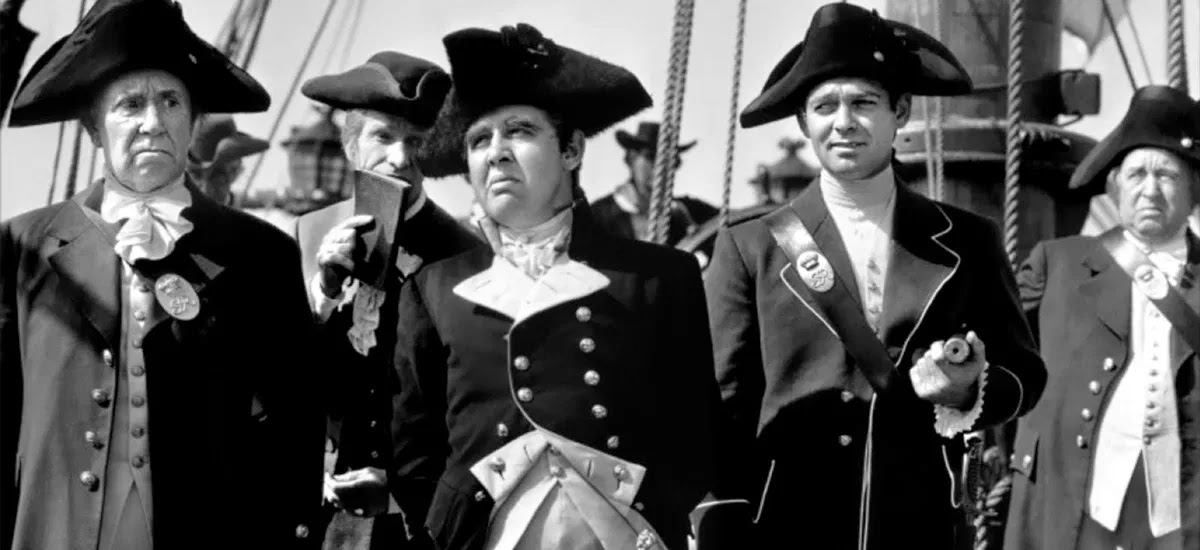
“They respect but one law – the law of fear…”. So hisses Charles Laughton as the definitively monsterish Captain Bligh in this Oscar-winning version of the most famous mutiny ever. It’s the quintessential adventure on the high-seas motion picture (never mind that the actual ship used could only get a few miles off the coast), but it’s also a feast of good acting and Hollywood class: the only picture to get three nominations for Best Actor, as well as the last Best Picture winner to only win one Oscar. It cemented the ideas around Bligh and Fletcher for generations.

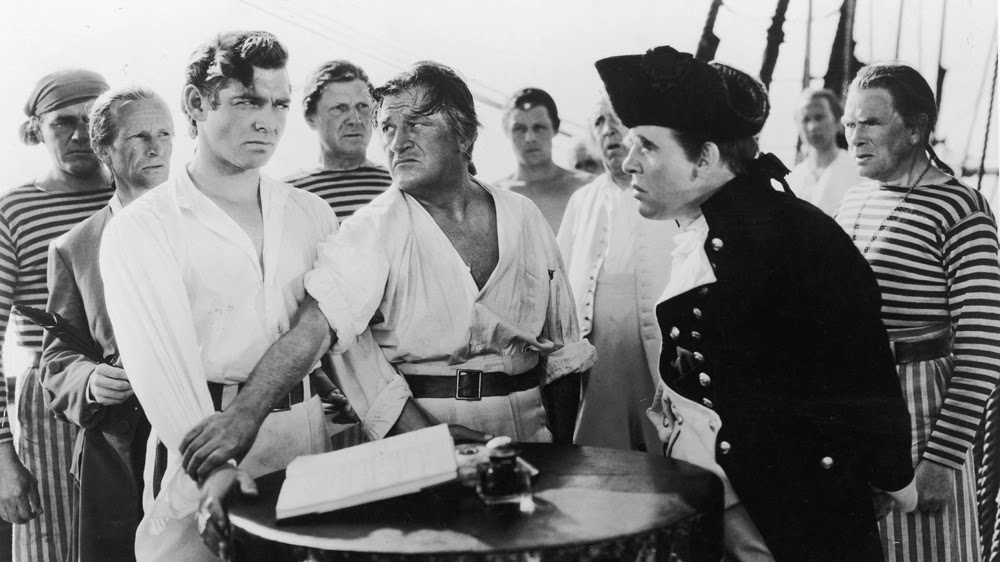
Heading out on a two-year voyage in 1787 to transport breadfruit from Tahiti to the West Indies, the Bounty sets sail from Portsmouth with several members of the crew freshly press-ganged. In command is self-made man Captain William Bligh (Charles Laughton), while his second-in-command is gentleman Fletcher Christian (Clark Gable). A pair of fine sailors, the two of them are separated only by their methods. Fletcher is a man of the people, a motivator with a firm hand. Bligh is a man with just a firm hand, who never uses a dozen lashes of the crew when two dozen will do. Fletcher becomes more and more alienated by Bligh’s ruthless methods.

Frank Lloyd bought the rights to a novel that fictionalised the mutiny (introducing Roger Byam, a fictional version of Peter Heywood who later become a Post-Captain in the navy) with the intention of directing and playing Bligh himself. Fortunately he was persuaded to step aside on the acting front for Laughton, who is seized the part with relish.  Shoulders scrunched and neck jutting his head forward, with his lip curled, this is a Bligh constantly on the look-out for offence, a martinet whose anger stems from a self-loathing within. A chippy middle-class boy made good, he’s determined to enforce the letter of the law, and while a bully with no empathy he’s not exactly a bad man, just a bad captain. Laughton’s performance simmers with bitterness and a relish for being obeyed.

He makes a neat contrast with Clark Gable at his matinee idol finest. Worried about taking the role because it demanded the shaving of his lucky moustache (no facial hair in the navy), Gable gifts Laughton the flashier role to play the decent hero with only the best for his fellow man at heart. Gable’s Christian is decent, understanding, a natural leader who has a firm eye for justice. Not even bothering with the British accent, but settling for a mid-Atlantic ease, Gable is the Hollywood superstar to his core, his Christian the quintessential romantic ideal.

Between the two of them runs Franchot Tone’s Midshipman Roger Byam. Tone is the often forgotten third nominee for Best Actor, but he has in many ways the trickier part, which he handles with aplomb: the naïve young man who wants to serve his captain and his country, but also understands that his captain is not a man of justice. Tone gets the film’s highlight, a final speech to the court martial that helps make everything turn out alright, but his tortured pleading for justice and moral righteousness is delivered with a humble and effective forthrightness.

Lloyd has these fine performances (plus some great work from Mundin, Crisp, Digges, Quillan and others as assorted ship’s crew) and sets them all out perfectly on a film that captures the heart of the epic. The ship is brilliantly constructed and assembled, and Lloyd’s film reconstructs everything from day-to-day travails on sea to the impact of storms. The mutiny when it comes is shot with an Eisensteinesque immediacy, while he also manages to shoot Tahiti with a dreamlike paradise sheen. He paces perfectly the growing sense of tension and unresolvable fury between Bligh and Christian. 

And he certainly gets a brilliant sense of the cruelty and sustained violence of Bligh’s rule on the boat, as floggings come thundering down on the backs the sailors – often for the very meanest of reasons. A keelhauling (despite one moment of laughably bad model work) is brutal in its harshness. Bligh’s first act on boat is to flog a dead man (after all death doesn’t wipe out the need for punishment) and he goes from there. The film does give time to admire Bligh’s seamanship – and reconstructs surprisingly well his awe-inspiring open boat trip over 4,000 miles to take him and loyalists back to a safe port. Meanwhile Christian heads for the safety of Tahiti, a blissful series of images of our decent sailors enjoying homespun pleasures and hot Tahitian wives.

Of course it’s not actually what happened really. Bligh was a difficult, priggish and rather cold person with low personal skills but he wasn’t the monster he seems here. Christian had a certain aristocratic pull over the men, but he was also probably far more twitchy, young and stupid than the assured, experienced sailor he is here. Bligh’s ship wasn’t the bastion of cruelty it is here (punishments seemed in line with the rest of the navy, or even a little less according to the log), but Bligh’s lack of understanding of how men work and his endless drive, matched with his sailors’ seduction by the charms of an easy life on Tahiti perhaps led to the outbreak. Either way Bligh definitely didn’t command the HMS Pandorato hunt the sailors down, nor did the investigation into the matter end with him being snubbed as a wrong ‘un by Lord Hood.

But hey, if you know that this is legend printed as fact it’s fine. Because Lloyd’s film is still superbly entertaining, has three excellent performances among a fine ensemble cast and while its version of Bligh may be a monster made up, Laughton invests him with enough humanity and self-loathing you’ll despair at his poor choices as much as you’ll hate his cruelty. Prime Hollywood entertainment, perfect for any time.