Tag: Fay Bainter

Jezebel (1938)

Jezebel (1938)

A star turn helps to lift this bonkers melodrama into the realm of delicious entertainment

Director: William Wyler

Cast: Bette Davis (Julie Marsden), Henry Fonda (Preston Dillard), George Brent (Buck Cantrell), Donald Crisp (Dr Livingstone), Fay Bainter (Aunt Belle Massey), Margaret Lindsay (Amy Bradford Dillard), Richard Cromwell (Ted Dillard), Henry O’Neil (General Theophilius Bogardus), Spring Byrington (Mrs Kendrick), John Litel (Jean la Cour)

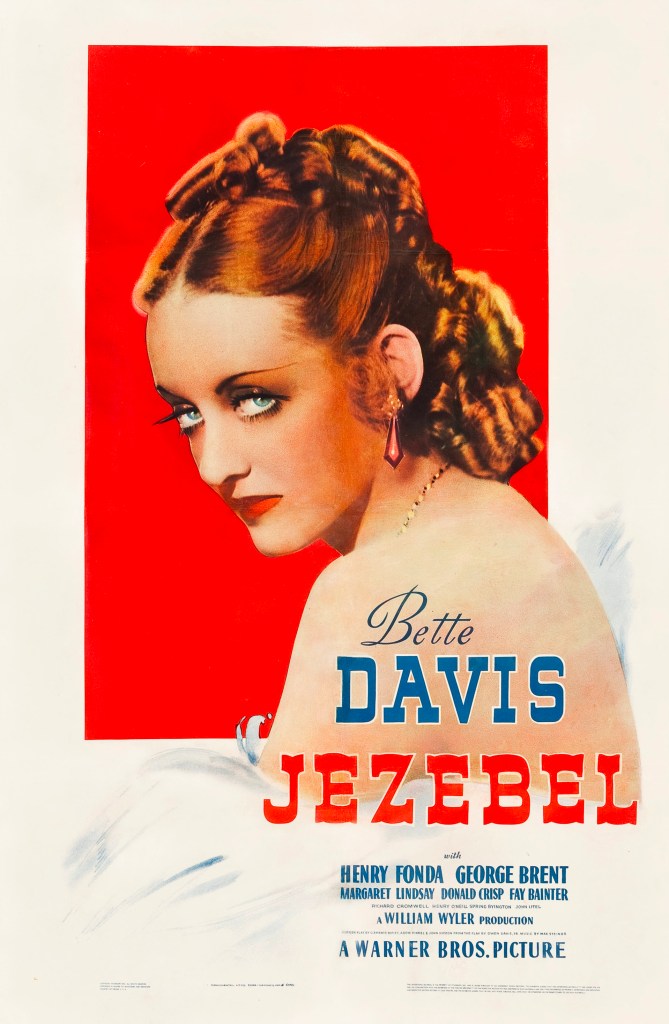
It’s pretty much the first line in any review about Jezebel so let’s start with it: rumour claims it largely exists as a consolation prize for Bette Davis after missing out on Scarlett O’Hara. It makes sense: Julie Marsden is a Southern Belle so similar to Scarlett they could almost be sisters. And Bette Davis is so wonderfully, passionately, brilliant playing her that, if it wasn’t for Vivien Leigh’s landmark performance, Jezebel could make you deeply regret Davis never got that role. But there is more to Jezebel than that, a handsomely filmed adaptation of a hit play by Owen Davis Snr, which predated Margaret Mitchell putting pen to paper. This is delicious, old-school, scandal-tinged Hollywood melodrama, with a star actor in a custom-made star role.

Julie Marsden is a fiery, independent-minded woman in 1850s New Orleans, convinced she can bend the world around her (and the wills of men) to her own whims. She’s engaged to strait-laced Pres Dillard (Henry Fonda), but flirts with playboy Buck Cantrell (George Brent) and won’t play by societies rules. So much so, she plans to attend the high-society Olympus Ball in a dress not of virgin white but Jezebel red. This goes down like a lead balloon; Pres effectively drops her in disgust at her wilful selfishness and a year later returns married to someone else. At which point Julie, a woman spurned, plans revenge even as yellow fever rips through the city.

Jezebel is a great big, melodramatic soap with a celluloid-burning turn by Davis (who won her second Oscar) at its heart. Davis dominates the film, a boundless force of charisma from the moment she sashays (late!) into her own party, whipping her dress up behind with a riding crop to when she departs the film, eyes full of genuine remorse, nursing a fever cart. She plays the role full of sinful flirtatiousness and playful certainty. No one will tell her what to do and where to go – from charging through a bank (captured in a beautiful tracking shot from Wyler) to drag Pres out for the day, to headstrongly ignoring all pleas to not wear her dress of choice, to holding court a year later in her own home planning revenge with burning, destructive glee.

It’s a portrait of bull-headed, feminine, self-destructive foolishness and pride that Davis would make her own, a marvellous star-turn that helps lift this otherwise rather silly melodrama with an inevitable message (this bull-headed floozy will learn the error of her head-strong ways) into something quite magic. That and the superlative richness of Wyler’s direction (and Gregg Toland’s sumptuous camera work), full of dynamic images, as well as a series of top-drawer performances from a strong cast.

Obviously, it’s hard not to spot that Jezebel lacks the scale and colour of Gone with the Wind (has any black-and-white film ever so openly revolved around colour as a source of drama?). But it has a lot of its dramatic energy, despite the fact you can sense its theatrical roots (it splits rather neatly into four acts, each set in a distinct location). Jezebel juggles its balls remarkably well, balancing a focus on Julie’s desire for attention and control with a fine portrait of two different men. George Brent, with a sly, self-satisfied grin as a Don Juan and Henry Fonda, prissy and stuffed-of-shirt (mouthing, at points, an awkward Southern accent) successfully making Pres profoundly wise, surprisingly weak despite his certainty, rigid and unpersuasive.

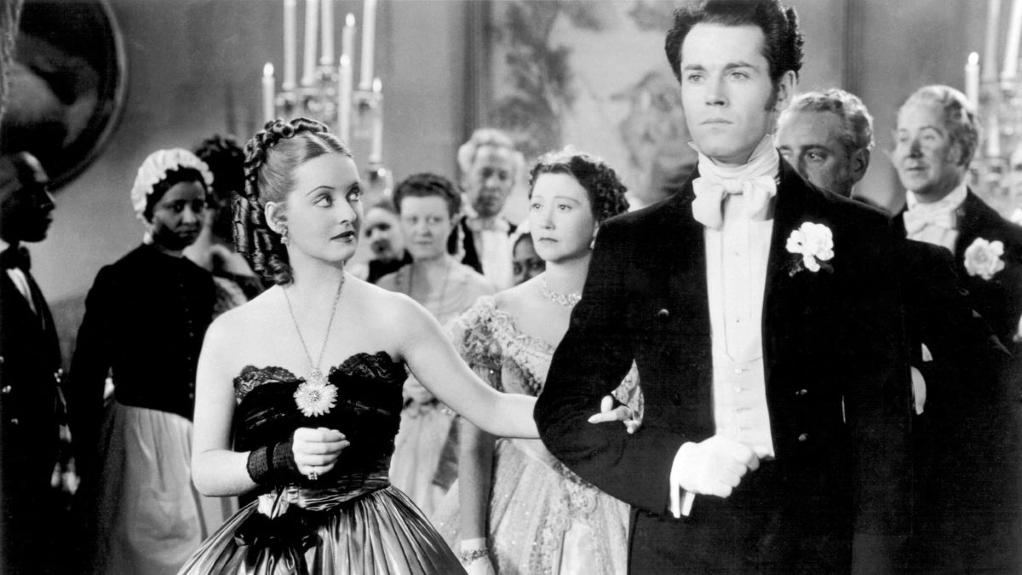
The pivotal ball-room sequence, and its build-up, works particularly marvellously. Despite Julie’s determination, its clear everyone around her feels it to be a terrible idea. Pres concedes to it with a grudging irritation and, once it becomes clear even to Julie it’s an appalling idea, forces Julie to be swallowed up in her public humiliation. After watching a parade of genteel ladies and gentlemen scurry away from her, as if in fear of catching her loose morals, Pres drags her to the dance floor (despite her pleas). Tracking back, Wyler shows the dance floor clear in moments, leaving just these two dancing alone (Pres even insists the band continues playing), cementing her humiliation. He’s made his point and, even though she slaps him later, even she knows he was right. Not that this will help either of them in the long run.

It’s part of the moral of the story, that sometimes women need a firm hand. (Sometimes literally so, as Donald Crisp’s grouchy Dr Livingston tells Pres). There has to be a punishment for Julie’s willingness to scheme, her constant placing of her own whims above everyone else and her inability to even consider that there might be dangerous consequences to her actions. It doesn’t wear us down though, because Davis is such a dynamic and forceful presence it’s hard not to rather like her. And then, of course, you sort of sympathise with her (even though she is awful and selfish) as a conga-like of damage and guilt leave her reeling before converting her into an ideal self-sacrificing woman.

Of course you watch Jezebel today and can hardly fail to notice that the greatest wickedness all these Southern gents and dames can possibly imagine is turning up at a ball in the wrong dress. Certainly not the slavery all around them. There is a parade of “yasum” slaves in Jezebel, all of them (like old retainer Cato) perfectly content in their lives of servitude. Pres may get a few loose critiques off about the South, but even those are focused on its economic and political short-sightedness: like everyone he’s paternally fond of his naïve property but wouldn’t imagine giving any of them freedom.

It’s another echo perhaps of Gone with the Wind and not a welcome one. Jezebel settles down for another genteel, Birth of a Nation myth of a sublime South doomed for being too noble. Not even the terror of yellow fever – and, at one point, the shooting of an infected man for fleeing his island ghetto – can get in the way of that feeling, that this way of life is not the problem, even if it does allow the odd bad apple like Julie to pop up.

That’s a more awkward political point, but it’s hard to imagine it crossing the mind of many at the time. And it doesn’t stop an enjoyment of Jezebel as a masterfully executed soap. Wyler’s direction is excellent, the filming wonderful and the actors firing on all cylinders. (Fay Bainter also won an Oscar for her fine performance as Julie’s horrified Aunt). Davis of course reigns supreme in the cinematic equivalent of an airport novel, a big, steamy, sex-fuelled melodrama with a handwringing ending of moral enlightenment delivered with such earnest, underplayed sensitivity by Davis and Wyler that it convinces. A big, brash, hugely enjoyable entertainment.

The Children's Hour (1961)

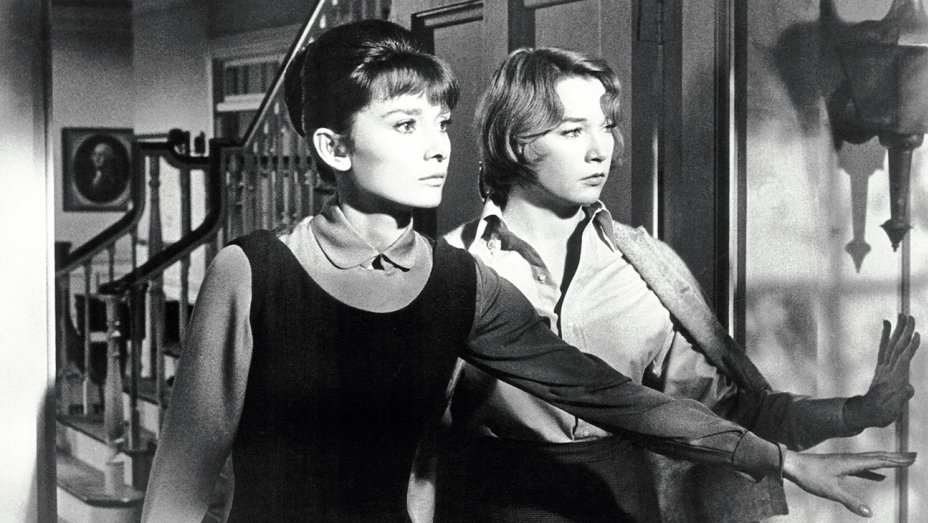
Audrey Hepburn and Shirley MacLaine are victims of scurrilous rumours in The Children’s Hour

Director: William Wyler

Cast: Shirley MacLaine (Martha Dobie), Audrey Hepburn (Karen Wright), James Garner (Dr Joe Cardin), Miriam Hopkins (Lily Mortar), Fay Bainter (Mrs Amelia Tilford), Karen Balkin (Mary Tilford), Veronica Cartwright (Rosalie Wells), Mimi Gibson (Evelyn), William Mims (Mr Burton)

The Children’s Hour was William Wyler’s second stab at directing an adaptation of Lilian Hellman’s play of the same name: a story about  two young teachers at a private girls’ school, and the destruction wreaked on their lives when a malicious pupil spreads rumours the two are in a secret lesbian relationship. His first attempt from 1936, These Three, kept as many of the themes as possible but carefully deleted every single reference to homosexuality in the script. This second film version restores this core theme in a carefully structured, well directed, respectful film adaptation that, with its careful analysis of the danger of rumours and snap judgements, still feels relevant today. 

Martha Dobie (Shirley MacLaine) and Karen Wright (Audrey Hepburn) run a private girls’ school. Karen is engaged to Dr Joe Cardin (James Garner), and this prolonged engagement is part of the arsenal used by a bitter, bullying student Mary (Karen Balkin) when she decides to start spreading innuendo about a scandalous relationship between the teachers, painting Martha as consumed by sexual envy. Mary’s story is believed whole-heartedly by her grandmother, doyen of the social scene and Joe’s aunt, Amelia Tilford (Fay Bainter). Thoughtless words from Martha’s aunt Lily Mortar (Miriam Hopkins) make things worse. In no time, the school is ruined, the children all gone and Martha and Karen face a desperate battle to prove that there is nothing to this but gossip.

Wyler’s film is a strange mixture at times, in part a commentary on prejudice, and also a scorching condemnation of jumping to judgements. The film plays out all this with calmness and a general careful avoidance of histrionics and lecturing. The removal of the children from the school is brutal and cowardly – with none of the parents having the guts to say why they are doing what they are doing until finally confronted by Karen. Amelia Tilford goes about her campaign of moral righteousness with a holier-than-thou superiority while constantly stressing that she takes no pleasure in this. In the latter half of the film, the abandoned school seems to be constantly surrounded by smirking men.

The film carefully outlines that this sort of moral judgement is inherently wrong, and it brings out some true moral judgement on many of the people involved. It draws out a brilliant Crucible-like indignation at the rigidity and hypocrisy of how those who are judged to be different are treated. The film’s finest sequence is at the centre of the film, where Martha and Karen make a (failed) attempt to nip the scandal in the bud by confronting Mary at her grandmother’s house. The scene zings with a burning sense of injustice, as Mary’s lies are believed, doubled down on and then confirmed by a blackmailed fellow student, all while the audience knows that everything that is being spun is florid, innuendo-filled rubbish.

Mary is a bitter, twisted, angry little girl whose face seems permanently screwed into a furious frown. She also has the sharpness and ruthlessness of the natural bully, successfully blackmailing a sensitive, kleptomaniac student to endorse all her lies at every turn. Wyler carefully demonstrates that she has a natural manipulator’s deviance and that half-facts and muttered comments carry more conviction and force than carefully stated arguments ever would.

But Mary’s actions partly stem from Karen’s own forceful treatment of her – and Karen’s moral inflexibility and personal certainty is just one of the many character flaws that this lie brings closer and closer to the surface. Well played by Audrey Hepburn, using her occasional slight imperiousness to great effect, Karen’s lack of compromise, her domineering personality and her own moral superiority help to make her both an unsympathetic victim to many, and a person who manages to drive wedges (inadvertently) between herself and her two closest friends, Joe and Martha.

That wedge spins out from the fact that the more sensitive Martha (a sensitively delicate performance from Shirley Maclaine) does have romantic and sexual feelings for Karen, feelings that she has carefully suppressed (or perhaps not even understood) and confesses to late on in a wave of guilt and shame, mixed with an almost unspoken hope that Karen might respond to this confession with more than silence and a quiet assurance that it won’t change anything. Neither of which is what Martha wants (or needs) to hear. 

MacLaine was critical of Wyler for removing from the film scenes that showed Martha’s love and affection for Karen in a romantic light. Perhaps Wyler was still slightly squeamish about the likelihood of America accepting a lesbian character presented honestly and sensitively. –But MacLaine has a point for, while the film does suggest it is reprehensible to  make judgements about other people’s private lives, it falls well short of suggesting that a lesbian relationship is as normal and valid as a straight one, or that Martha’s feelings for Karen are the equal of Karen’s for Joe. Karen will let the idea slide, but she is hardly thrilled by it, meanwhile Martha is made the more passive and hysterical of the two women, and her feelings for Karen are a source of tragedy in the story. While it’s of its time, the film still shies away from the idea that a lesbian relationship could ever be without a tinge of scandal. Unlike, say, Dirk Bogarde’s gay barrister in Victim, there is always something “not quite right even if we shouldn’t judge” about homosexuality in the film.

It’s why the film is at its strongest when showcasing its outrage for the many selfish and self-appointed moral guardians who ruin lives with sanctimonious self-regard. Miriam Hopkins is eminently smackable as Martha’s appalling aunt, whose love of gossip pours fuel on the fire. Fay Bainter is very good (and Oscar nominated) as Amelia, whose reluctance and unease about her self-appointed role as the moral police, only partly tempers her rigidity and inflexibility. Words of support and encouragement from others are noticeable by their absence, and even the long-standing loyalty of Joe (a rather charming James Garner) is eventually tinged (forever for Karen) by a moment of doubt. 

Rumours and innuendo are dangerous and cause real and lasting damage to people’s lives. It’s a fact the film enforces strongly – and it’s an idea that perhaps is even more relevant today at a time when social media sends moral judgements that ruin lives around the world even faster than Amelia Tilford’s phone can. A well-made film with moral force, that could have gone further, but still went further than many others dared at the time.