Tag: Richard Cromwell

Jezebel (1938)

Jezebel (1938)

A star turn helps to lift this bonkers melodrama into the realm of delicious entertainment

Director: William Wyler

Cast: Bette Davis (Julie Marsden), Henry Fonda (Preston Dillard), George Brent (Buck Cantrell), Donald Crisp (Dr Livingstone), Fay Bainter (Aunt Belle Massey), Margaret Lindsay (Amy Bradford Dillard), Richard Cromwell (Ted Dillard), Henry O’Neil (General Theophilius Bogardus), Spring Byrington (Mrs Kendrick), John Litel (Jean la Cour)
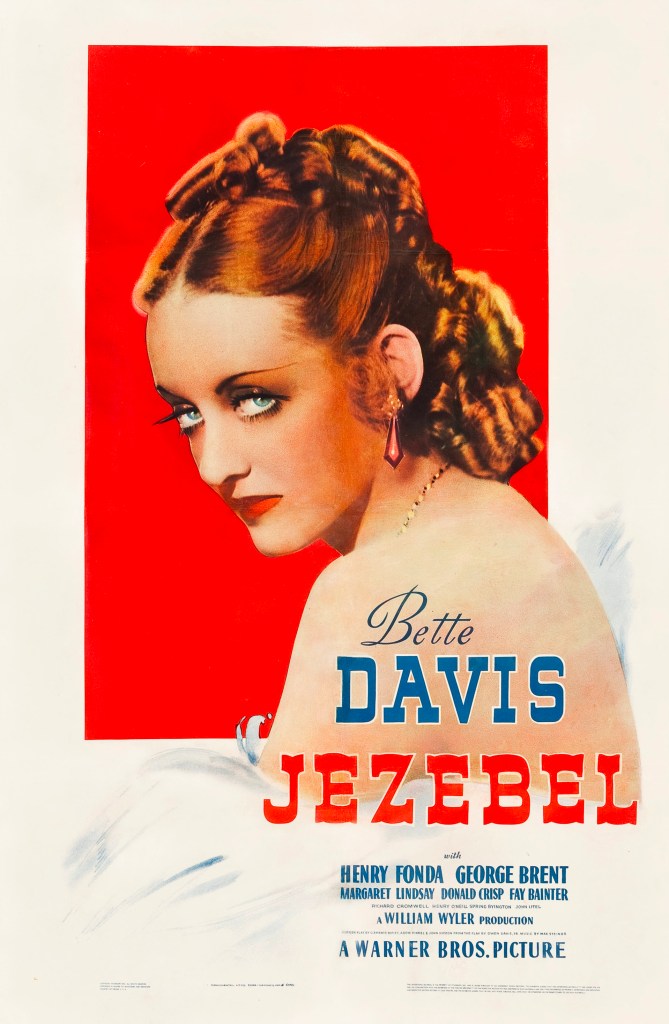
It’s pretty much the first line in any review about Jezebel so let’s start with it: rumour claims it largely exists as a consolation prize for Bette Davis after missing out on Scarlett O’Hara. It makes sense: Julie Marsden is a Southern Belle so similar to Scarlett they could almost be sisters. And Bette Davis is so wonderfully, passionately, brilliant playing her that, if it wasn’t for Vivien Leigh’s landmark performance, Jezebel could make you deeply regret Davis never got that role. But there is more to Jezebel than that, a handsomely filmed adaptation of a hit play by Owen Davis Snr, which predated Margaret Mitchell putting pen to paper. This is delicious, old-school, scandal-tinged Hollywood melodrama, with a star actor in a custom-made star role.

Julie Marsden is a fiery, independent-minded woman in 1850s New Orleans, convinced she can bend the world around her (and the wills of men) to her own whims. She’s engaged to strait-laced Pres Dillard (Henry Fonda), but flirts with playboy Buck Cantrell (George Brent) and won’t play by societies rules. So much so, she plans to attend the high-society Olympus Ball in a dress not of virgin white but Jezebel red. This goes down like a lead balloon; Pres effectively drops her in disgust at her wilful selfishness and a year later returns married to someone else. At which point Julie, a woman spurned, plans revenge even as yellow fever rips through the city.

Jezebel is a great big, melodramatic soap with a celluloid-burning turn by Davis (who won her second Oscar) at its heart. Davis dominates the film, a boundless force of charisma from the moment she sashays (late!) into her own party, whipping her dress up behind with a riding crop to when she departs the film, eyes full of genuine remorse, nursing a fever cart. She plays the role full of sinful flirtatiousness and playful certainty. No one will tell her what to do and where to go – from charging through a bank (captured in a beautiful tracking shot from Wyler) to drag Pres out for the day, to headstrongly ignoring all pleas to not wear her dress of choice, to holding court a year later in her own home planning revenge with burning, destructive glee.

It’s a portrait of bull-headed, feminine, self-destructive foolishness and pride that Davis would make her own, a marvellous star-turn that helps lift this otherwise rather silly melodrama with an inevitable message (this bull-headed floozy will learn the error of her head-strong ways) into something quite magic. That and the superlative richness of Wyler’s direction (and Gregg Toland’s sumptuous camera work), full of dynamic images, as well as a series of top-drawer performances from a strong cast.

Obviously, it’s hard not to spot that Jezebel lacks the scale and colour of Gone with the Wind (has any black-and-white film ever so openly revolved around colour as a source of drama?). But it has a lot of its dramatic energy, despite the fact you can sense its theatrical roots (it splits rather neatly into four acts, each set in a distinct location). Jezebel juggles its balls remarkably well, balancing a focus on Julie’s desire for attention and control with a fine portrait of two different men. George Brent, with a sly, self-satisfied grin as a Don Juan and Henry Fonda, prissy and stuffed-of-shirt (mouthing, at points, an awkward Southern accent) successfully making Pres profoundly wise, surprisingly weak despite his certainty, rigid and unpersuasive.

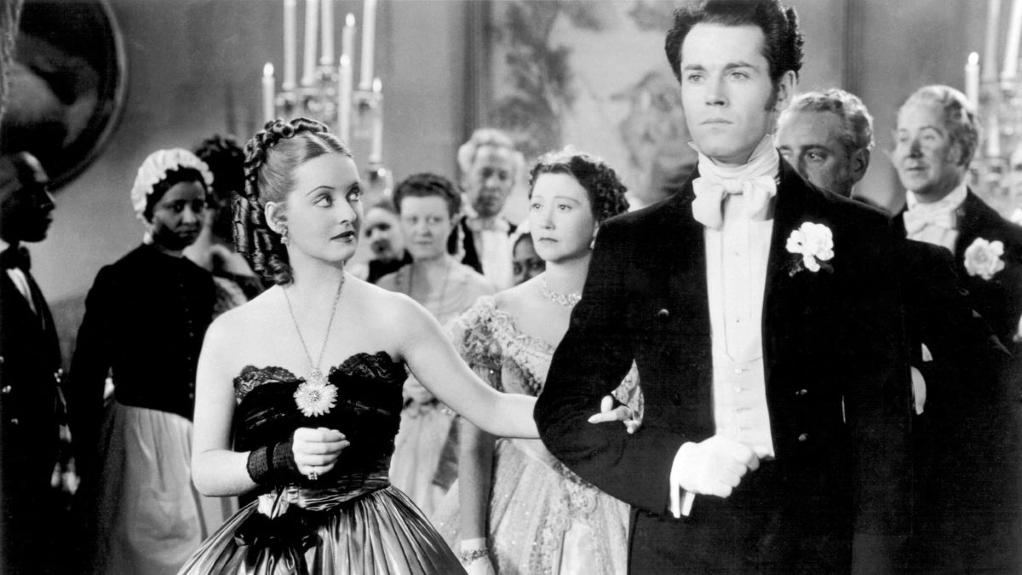
The pivotal ball-room sequence, and its build-up, works particularly marvellously. Despite Julie’s determination, its clear everyone around her feels it to be a terrible idea. Pres concedes to it with a grudging irritation and, once it becomes clear even to Julie it’s an appalling idea, forces Julie to be swallowed up in her public humiliation. After watching a parade of genteel ladies and gentlemen scurry away from her, as if in fear of catching her loose morals, Pres drags her to the dance floor (despite her pleas). Tracking back, Wyler shows the dance floor clear in moments, leaving just these two dancing alone (Pres even insists the band continues playing), cementing her humiliation. He’s made his point and, even though she slaps him later, even she knows he was right. Not that this will help either of them in the long run.

It’s part of the moral of the story, that sometimes women need a firm hand. (Sometimes literally so, as Donald Crisp’s grouchy Dr Livingston tells Pres). There has to be a punishment for Julie’s willingness to scheme, her constant placing of her own whims above everyone else and her inability to even consider that there might be dangerous consequences to her actions. It doesn’t wear us down though, because Davis is such a dynamic and forceful presence it’s hard not to rather like her. And then, of course, you sort of sympathise with her (even though she is awful and selfish) as a conga-like of damage and guilt leave her reeling before converting her into an ideal self-sacrificing woman.

Of course you watch Jezebel today and can hardly fail to notice that the greatest wickedness all these Southern gents and dames can possibly imagine is turning up at a ball in the wrong dress. Certainly not the slavery all around them. There is a parade of “yasum” slaves in Jezebel, all of them (like old retainer Cato) perfectly content in their lives of servitude. Pres may get a few loose critiques off about the South, but even those are focused on its economic and political short-sightedness: like everyone he’s paternally fond of his naïve property but wouldn’t imagine giving any of them freedom.

It’s another echo perhaps of Gone with the Wind and not a welcome one. Jezebel settles down for another genteel, Birth of a Nation myth of a sublime South doomed for being too noble. Not even the terror of yellow fever – and, at one point, the shooting of an infected man for fleeing his island ghetto – can get in the way of that feeling, that this way of life is not the problem, even if it does allow the odd bad apple like Julie to pop up.

That’s a more awkward political point, but it’s hard to imagine it crossing the mind of many at the time. And it doesn’t stop an enjoyment of Jezebel as a masterfully executed soap. Wyler’s direction is excellent, the filming wonderful and the actors firing on all cylinders. (Fay Bainter also won an Oscar for her fine performance as Julie’s horrified Aunt). Davis of course reigns supreme in the cinematic equivalent of an airport novel, a big, steamy, sex-fuelled melodrama with a handwringing ending of moral enlightenment delivered with such earnest, underplayed sensitivity by Davis and Wyler that it convinces. A big, brash, hugely enjoyable entertainment.

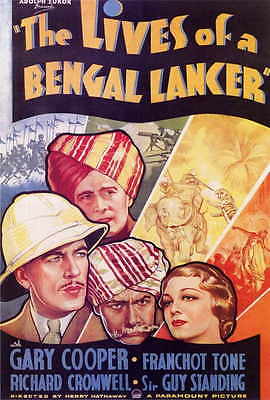
The Lives of a Bengal Lancer (1935)

The Lives of a Bengal Lancer (1935)

Old-school adventure mixes with some slightly dated Imperial attitudes in a film that’s still good fun

Director: Henry Hathaway

Cast: Gary Cooper (Lt McGregor), Franchot Tone (Lt Forsythe), Richard Cromwell (Lt Stone), Guy Standing (Colonel Stone), C. Aubrey Smith (Major Hamilton), Douglass Dumbrille (Mohammed Khan), Monte Blue (Hamzulla Khan), Kathleen Burke (Tania Volkanskaya), Colin Tapley (Lt Barrett), Akim Tamiroff (Emir), J Carroll Naish (Grand Vizier)

Tales of adventure and derring-do in the British Empire were meat and drink for generations of schoolboys. Few adventures were as well known as The Lives of a Bengal Lancer, a stirring tale of three lieutenants in the Bengal Lancers who become fast friends while defending Queen and country. We’ve got decent, impulsive but luckless McGregor (Gary Cooper), upper-class joker Forsythe (Franchot Tone) and eager-to-please Stone (Richard Cromwell), whose also the son of commanding officer Colonel Stone (Guy Standing). They go up against Oxford-educated Mohammed Khan (Douglass Drumbille), who schemes to seize an ammunition shipment. Can our heroes face down dastardly natives, exotic tortures and desperate escapes? All in a day’s work for a Bengal Lancer.

The Lives of a Bengal Lancer was a big hit on release, despite sharing nothing except the title, location and general theme with the semi-autobiographical novel from former-lancer Francis Yeats-Brown. It’s rollicking adventure and the boys-own mateyness of its leads, sparked a wave of spiritual follow-ups set everywhere from the Canadian mountains to the deserts of Africa. It scooped seven Oscar nominations and was celebrated as one of the greatest adventures on screen. Unfortunately, it’s not as fondly remembered now with its uncritical celebration of colonial India, spiritual links to Kipling’s White Man’s Burden and the fact Hitler of all people named it his one of his favourite film, loving its celebration of how a few white men could ‘protect’ (control) millions of natives.

It’s fair to say you have to close your eyes to some of this stuff when watching The Lives of a Bengal Lancer today. Otherwise you might flinch at our heroes threats to various squirming, cowardly Islamic rebels that if they don’t confess they’ll be sown inside a pig skin (even in 1935, outraged questions were raised about this in Parliament). You need to roll with Douglass Drumbille blacking-up as the well-spoken Mohammed Khan (not just him: nearly all the Indian characters are men-in-face-paint and for good measure our heroes also black-up to disguise themselves). There isn’t a second’s questioning about the morality of Empire and the implicit suggestion runs throughout that the Indian people should be grateful the British were there to run their country for them.

But put all that to one side, and The Lives of a Bengal Lancer is still rather fun. One of the factors making it easier to bench your misgivings is that, really, this film isn’t really interested in India or the themes of Empire anyway. For starters, all three of our heroes are played by Americans making no effort to hide their transatlantic accents (McGregor is suggested as being ‘Scotch Canadian’, but a few words of Cooper’s awful Scottish accent makes you relieved he didn’t bother to keep it up). Any insight into British-Indian relationships is extremely brief. The film is clearly shot in California, in locations identical to the sort of Westerns Hollywood was churning out. And a Western is what Bengal Lancer really is.

Our three heroes do feel more like cowboys shooting the breeze for large chunks of the film rather than army officers. Although there have been criticisms of the leads – Cooper in particular, probably because an actor so iconically American feels strange as an oddly accented Brit – all three of give entertaining, complementary, performances. Cooper is strongly charismatic, rather charming in his earnest attempts to do the right thing and his luckless incompetence at anything that isn’t soldiering (a running joke sees him building up increasing tab in a series of ill-considered bets with the good-at-everything Forsythe). But when action comes calling, McGregor is courageous, quick thinking and selfless. It’s immediately clear why Cooper essentially replayed versions of this relatable role several times. Franchot Tone is equally fine as the witty, smooth Forsythe who never takes anything seriously until things are really serious. Cromwell does sterling work as the naïve Stone.

Most of the film works because we end up liking these three characters – just as well since most of the first half is essentially watching them go about their daily tasks: riding, cleaning horses, heading out on patrol, shooting the breeze in the barracks. There is a small character-led crisis over whether the ram-rod Colonel Stone (a suitably dry Guy Standing) will accept his puppy of a son, but the biggest action drama in the first half is a wild boar hunt that nearly goes terribly wrong. If we didn’t enjoy Forsythe and McGregor deliberately rubbing each other up the wrong way, between teasing and taking a big-brother interest in Stone, we’d struggle to enjoy the rest of the film.

The second half is where the real action kicks in. During a dinner where our heroes dress up in native garb to make nice with a local Emir, Bengal Lancer throws in a bizarre Mata Hari figure, in the mysterious Russian Tania (Kathleen Burke). It’s not a remote surprise she ends up being no-good, or that the disillusioned Stone is swiftly honey-trapped into imprisonment by Dumbrille’s vaguely-motivated smooth-talking villain (it’s hilariously ironic that the villain is the most cut-glass Brit in the film). McGregor and Forsythe don Indian disguise – against orders naturally – to do what men do, which is stand by their friends.

A parade of exciting set-pieces follow thick-and fast, culminating in an impressively staged battle with towers toppling in explosives, machine gun fire spattering left-right-and-centre and our heroes literally coming to blows over who gets to make a heroic sacrifice. We get there via dastardly torture – Bengal Lancer coined the famous “We have ways of making men talk line” – as Mohammed Khan employs bamboo sticks under the fingernails (thankfully shown largely in shadow and Cooper’s stoic grimaces) to get information from our heroes. It’s all part of these men being forged by fire into exactly the sort of hardened men-of-combat we need to protect a frontier.

The Bengal Lancers ride in towards the end like the cavalry, and the air of a Western in Red Coats sticks with Lives of a Bengal Lancer throughout. Sure, it combines this with the stench of White Man’s Burden and an attitude of edgy distrust of foreigners, but The Lives of a Bengal Lancer is also riotous, old-fashioned fun, well shot and charismatically played. It might be a rather slight action-adventure fable, and sure its politics have not aged well, but it is still fun.

Young Mr Lincoln (1939)

Henry Fonda excels in the origins story as the Young Mr Lincoln

Director: John Ford

Cast: Henry Fonda (Abraham Lincoln), Alice Brady (Abigail Clay), Marjorie Weaver (Mary Todd), Arleen Weaver (Sarah Clay), Eddie Collins (Efe Turner), Pauline Moore (Ann Rutledge), Richard Cromwell (Matt Clay), Donald Meek (Prosecutor John Felder), Eddie Quillan (Adam Clay), Spencer Charters (Judge Herbert A Bell), Ward Bond (John Palmer Cass), Milburn Stone (Stephen A Douglas)

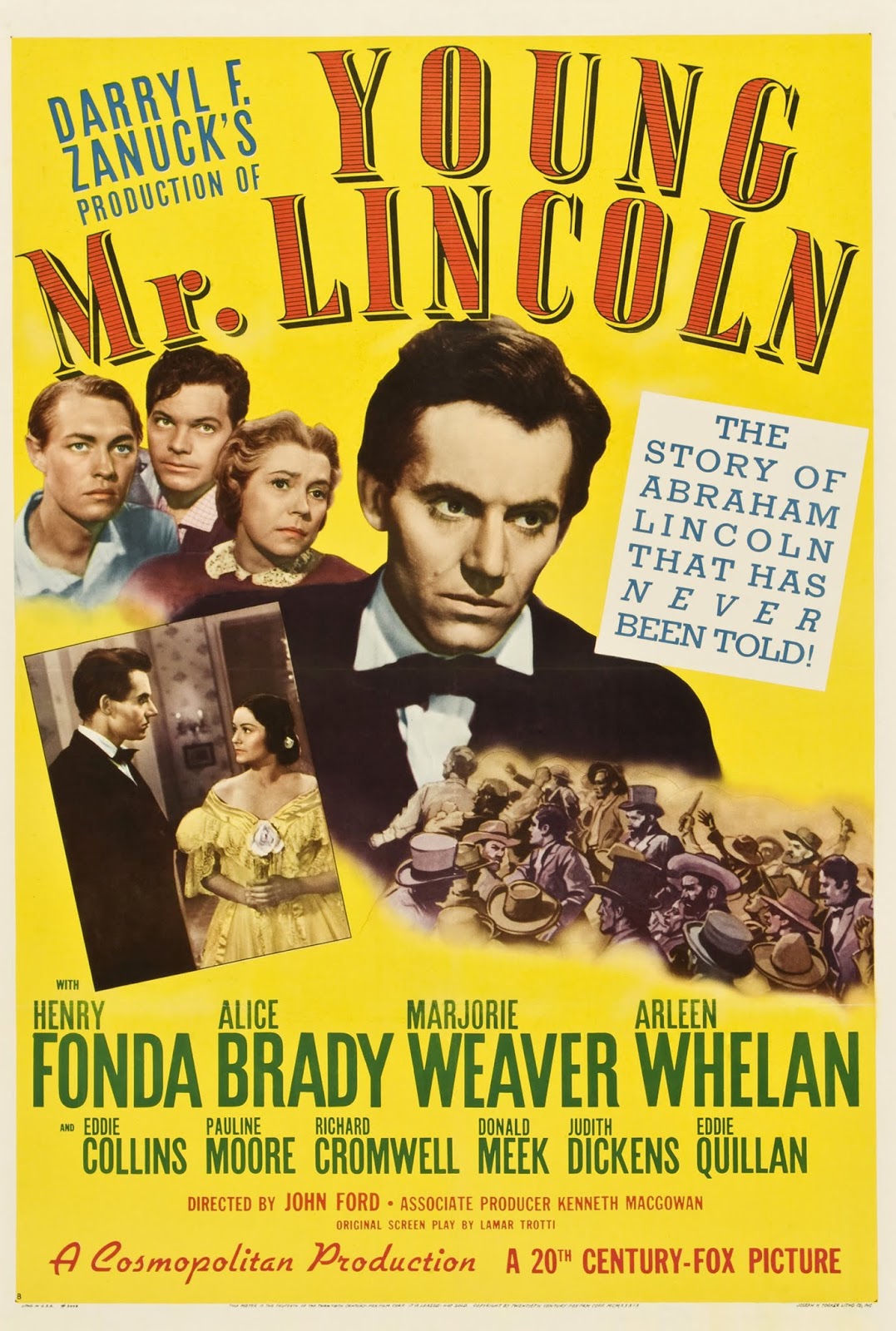
John Ford is often called the mythmaker of America, the director who perhaps contributed more than any other to building a romantic vision of America’s roots and past. As an explorer of the legends and mythology that underpinned his country, it’s perhaps no great surprise that he directed a film about the American revered more than any other since the Founding Fathers – Abraham Lincoln himself.

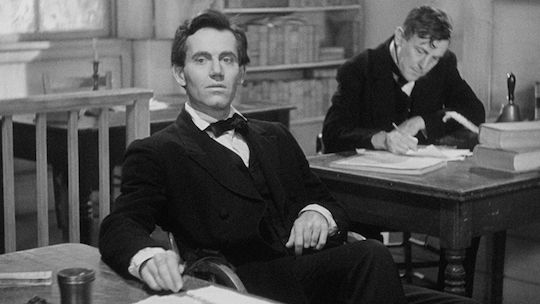
Playing out over 10 years, the film follows Young Honest Abe (Henry Fonda) from his days of autodidactism with a law book in Illinois, through his love for, and the death of, Ann Rutledge (Pauline Moore) and his arrival in Springfield to practice law (which he does with a shrewdness mixed with the wisdom of Solomon). The bulk of the film’s plot focuses in particular on him representing two brothers accused of murder in a courtroom trial, where Lincoln’s wit, wisdom and determination see justice done.

Okay reading that subplot, it’s pretty clear that this is a fairly rose-tinted view of The Great Emancipator. Henry Fonda had put off playing the role, as he felt it would be like hewing a performance out of marble. It’s hard for non-Americans to even begin to understand the reverence with which Lincoln is almost universally held in America, but it runs through this film like sugar through a stick of rock. Lincoln throughout the film is maybe an increasingly canny operator with a mastery of winning people over and playing crowds large and small, but he’s also always right, always does the right thing and always has a warm regard and love for genuine real people.

If you made the film today it would probably be called Abraham Lincoln: Origins, as Ford shows Lincoln building up all the weapons that would become central to his political artistry. Fonda starts the film gangly and physically awkward, finding it hard to know what to do with his height or long arms while giving speeches (Fonda wore platform shoes to increase his height). But even at the start his words are warm and genuine, even if his delivery is awkward. It’s something he masters to a far greater degree by the mid-way point of the film, when he skilfully diffuses a potential lynch mob with wit, gentleness, calm and a bit of righteous shaming. By the time he hits the courtroom, he’s overwhelmingly confident in his physicality and able to match it up with his oratorical brilliance and his skill at using seemingly rambling, inconsequential stories to suddenly hit home a sharp and painful truth.

Fonda’s impressive performance as Lincoln makes the film. Fonda gives Lincoln not just these positives but also hints at his sharpness of mind and his cunning. Negotiating a legal disagreement between two farmers (which he does with such skill that both end up paying him), he not only gives a fair sentence, but shows how he is not above manipulating men to achieve his ends (and, in biting one of the coins that he is given, that he may be honest himself but he’s not always trusting). He has a romantic regard for the mother of his clients (played very well by Alice Brady), but can still gently patronise her with his romantic ideal of her as an ideal American mother.

But when the push comes, Lincoln is a man of principle, wrapped in a skilful performance. The idea of mob justice is anathema to him, while Fonda makes clear he’s smart enough to not say that outright but to guide the crowd to agree with him. During the selection of the jury for the courtroom scene, he will accept men honest enough to say they favour hanging for the guilty, but turn down equivocators or those who believe they are better than the accused men. During the trial scene, he erupts in moral outage when the boys’ mother is pressured into naming one of her sons as the killer so as to save the other from the death penalty.

But he’s also a clever and brilliant player of the game, able to charm both the working classes and the rich, even if he’s not comfortable with either. During the trial scene, his quick wit and relaxation run rings around the government prosecutor (a good role of absolute convictions from Donald Meek) and he easily wins the crowd over with a series of gags and light touches that also carry with them a real, deep truth. Ford is also able to show his ambition – over the grave of Ann Rutledge he lets the fall of a stick decide whether he will continue his career or stay at home, and he all too clearly lets the stick lean over one way before letting it fall (he even acknowledges this himself).

Ford’s film is only very loosely based on actual true events – only the final coup Lincoln uses to win the case is really based on fact. The film is covered with smatterings of what look now like clumsy droppings in of key facts or persons from Lincoln’s life – from the cowpoke who plays “Dixie” (“Sounds like a song you could march to” is Lincoln’s comment) to Lincoln meeting future-wife Mary Todd, to his legal (and romantic) rival being none other than Stephen A Douglas his later rival for the presidency. There could have been a lot more, but afraid that it would make the film ridiculous, Ford kept these to a minimum by simply refusing to shoot them (such as a planned scene where Lincoln met John Wilkes Booth).

It all works because the audience knows who Lincoln will become, and it’s told with an earnestness and a certain amount of pace. Ford however really crafts a modern American myth and it even ends in a suitably epic scale: having won the case, Lincoln strikes off for a walk up a hill, trudging into the distance while a storm brews, heading onwards and upwards away from us and into his future. Sure it’s corn, but it works.