Errol Flynn buckles swashes in this stirring and exciting pirate adventure
Director: Michael Curtiz
Cast: Errol Flynn (Peter Blood), Olivia de Havilland (Arabella Bishop), Lionel Atwill (Colonel Bishop), Basil Rathbone (Lavasseur), Ross Alexander (Jeremy Pitt), Guy Kibbee (Hagthorpe), Henry Stephenson (Lord Willoughby), Robert Barrat (Wolverstone), Hobart Cavanagh (Dr Bronson), Donald Meek (Dr Whacker), Jessie Ralph (Mrs Barlow), Frank McGlynn Snr (Reverend Ogle), David Torrence (Andrew Baynes), J. Carrol Naish (Cabusac), George Hassell (Governor Steed), Halliwell Hobbes (Sunderland)
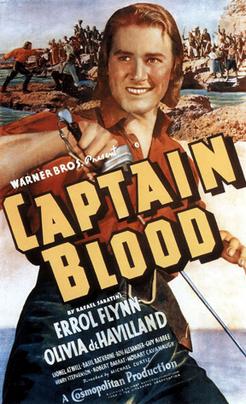
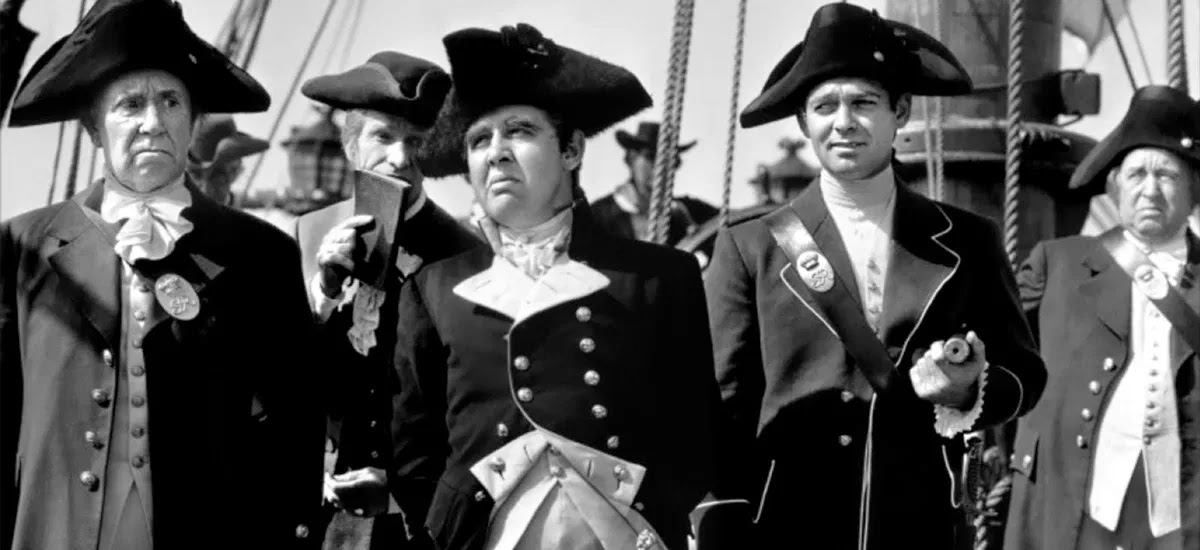
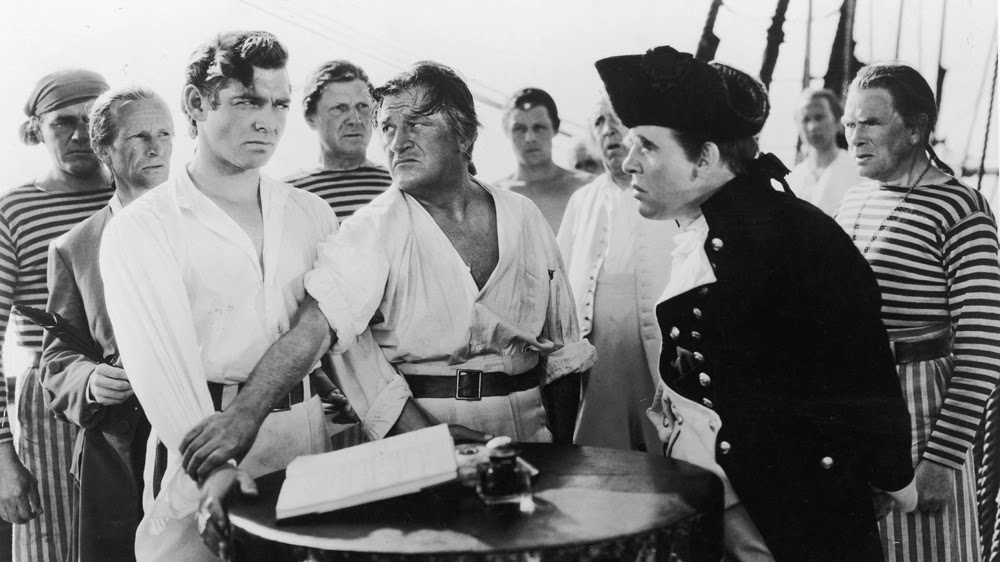
Dr Peter Blood (Errol Flynn) is having a bad day. Plucked from his bed to tend to a dying man by close friend Jeremy Pitt (Ross Alexander), he’s arrested. That’s because it’s 1685 and Jeremy and tat dying man are part of Monmouth’s ill-fated rebellion against James II. Blood, Pitt and many others are shipped to Jamaica and sold into slavery. Blood is purchased by the ambitious Colonel Bishop (Lionel Atwill), whose daughter Arabella (Olivia de Havilland) is strangely drawn to the proud slave. Blood struggles to find freedom for his friends, helped by his medical skills successfully treating the governor’s gout, until a fortunate Spanish attack gives them the chance to escape and set up a career as pirates – all while dreaming of one-day clearing their names.
It’s all gist to the swashbuckling mill, in this rip-roaringly entertaining adventure, the first collaboration of Curtiz, Flynn, de Havilland and Rathbone, that would eventually lead to the genre-defining brilliance of The Adventures of Robin Hood. Flynn was essentially plucked from nowhere, taking the part after an asthma-suffering Robert Donat turned it down, coached (or bullied) through the performance by the relentless task-master Curtiz, opposite a de Havilland with less than a handful of credits to her name. Everything pretty much comes together in a celebration of old-school matinee thrills, with a star oozing charisma at its heart.
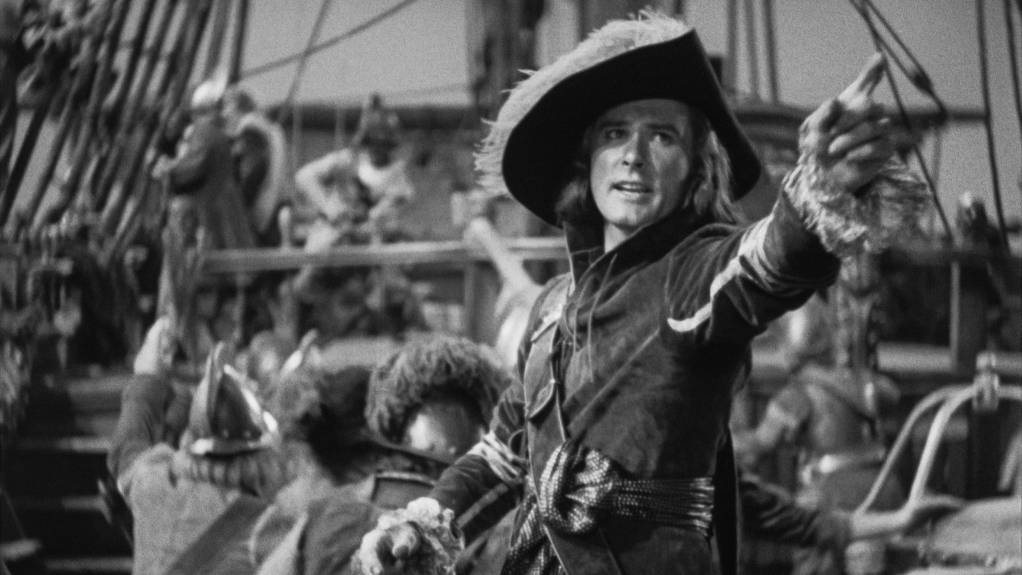
Because, say what you like about Flynn, if there is star quality they guy had it in spades. Whether that’s swinging by rope from ship to ship, staunchly standing against injustice against Judge Jeffries (shooting off a few cutting one-liners on Jefferies ill-health along the way), defiantly stating he will never be broken when tied to a pole for a lashing or delicately navigating a spikey love-hate relationship with the haughtily playful Arabella, you can’t take your eyes off him. Captain Blood’s dialogue is frequently slightly heightened, but Flynn’s ease with it (which he learned the hard way – Curtiz reshot several earlier sequences later when he had relaxed and got better) lets it sing, as he stands tall and talks of equality and justice.
Captain Blood is in many ways the perfect Flynn vehicle, setting the template for the roles the star would later triumph in: an egalitarian man of nobility and principle, who fights when he must, with determination and never bitterness. Captain Blood uses this to maximum effect, surrounding Flynn with a cast of seasoned pros virtually none of whom were taller than his shoulders (just to make him look even more heroic as he towers above them). This was the guy Hollywood had been waiting for since Douglas Fairbanks, a hale-fellow well-met slice of masculine charm and energy.
He triumphs in a film which is often wordier and plot-heavier than you think. It’s a credit to the relentless energy Curtiz bring to it, that you almost don’t notice it takes nearly an hour before piracy enters this pirate movie, almost half its run time dedicated to Blood’s struggles in Jamaica. It works because the character dynamics are very well-drawn. George Hassell’s slightly pathetic governor, constantly whining about his gout is as entertaining as the two useless doctors (Hobart Cavanagh and Donald Meek) easily bested by Blood’s practical brilliance. Curtiz is also able to lay-on the grim injustice of indentured servitude on Jamaica, embodied by a gigantic mill wheel the prisoners turn round and round, to the constant soundtrack of lashing (it has to be said, Captain Blood does feel a bit awkward, especially today, in its near complete absence of Black slaves).
But you can don’t feel any drag when sequences like Blood’s defiant trial in England or the carefully measured flirtation between him and de Havilland (full of intelligence and allure) is so well done. And then of course, when you get to the piratical antics, it’s well worth the wait. Flynn, as noted, was made for making principled speeches in the nominal role of rebel (these pirates solemnly swear, among other things, never to mistreat a woman). The naval battles – brilliantly assembled from a mix of miniatures, old footage from silent films and studio-bound sets – are quite gripping, full of exploding ships, cannon fire, boardings and frantically energetic sword fights.
That’s almost nothing to the location-shot, shoreline duel among the rocks between Flynn and Rathbone. Basil Rathbone was surely only cast for his ability to fight duels like this – his character, a French pirate captain, is so unnecessary to the plot and turns on Blood for such trivial reasons, it’s hard not to feel it’s been shoe-horned in to give the actor something to do before the swords come out. The duel is full of deathly cut and thrust, with its final shot of Rathbone lying in the sand, the turf washing over his face (it’s no spoiler to say that Hollywood’s finest fencer again loses) beautifully done.
Captain Blood is full of visual style and flair, Curtiz the master-craftsman showing us all how it’s done. The Rembrandt-inspired locations of Stuart England are filled with angular lighting and giant-cast shadows. The camerawork through the mix of studio sets and location footing seamlessly ties locations together. His management of the film perfectly marries the scale of the adventure set-pieces with the elements of character stories that run throughout. It’s a film that manages to be exciting and witty, rollicking adventure and light comedy.
It also helps that it has a host of leading Hollywood character players doing fabulous work. Lionel Atwill is full of pomposity, self-importance and casual, unthinking cruelty as the ambitious Colonel Bishop. Ross Alexander – who tragically died only a year after the film was released – has a fair degree of earnest charisma. Guy Kibbee is hugely entertaining as grouchy Hagthorpe, a stand-out in a parade of crewmen (Frank McGlynn, David Torrance, Forrester Harvey and J Carrol Naish) who fully embrace their concisely written characters. And, of course, Olivia de Havilland is romantic allure itself, determined and independent and more than a match for Flynn.
As is the way with this era of Hollywood, there are several period details that are all over the place (a street light outside Blood’s London home?), with things like coaches and de Havilland’s dresses parachuted in from several decades later. But these little details are almost by-the-by in a film as full of energy, entertainment and excitement as this, a swashbuckler that continues to thrill and delight almost 90 years on.