
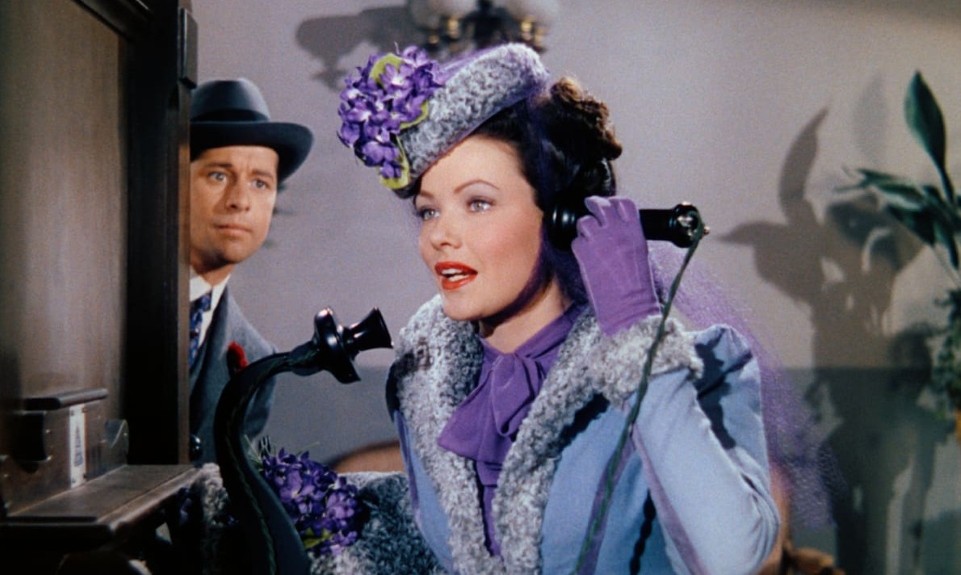
Lubitsch brings his touch to death and infidelity all flown under the wire of the Hays Code
Director: Ernst Lubitsch
Cast: Gene Tierney (Martha), Don Ameche (Henry Van Cleve), Charles Coburn (Hugo Van Cleve), Marjorie Main (Mrs Strable), Laird Cregar (His Excellency), Spring Byrington (Bertha Van Cleve), Allyn Joslyn (Albert Van Cleve), Eugene Pallette (EF Strable), Signe Hasso (Mademoiselle), Louis Calhern (Randolph Van Cleve), Helen Reynolds (Peggy Nash), Clarence Muse (Jasper), Tod Andrews (Jack Van Cleve)
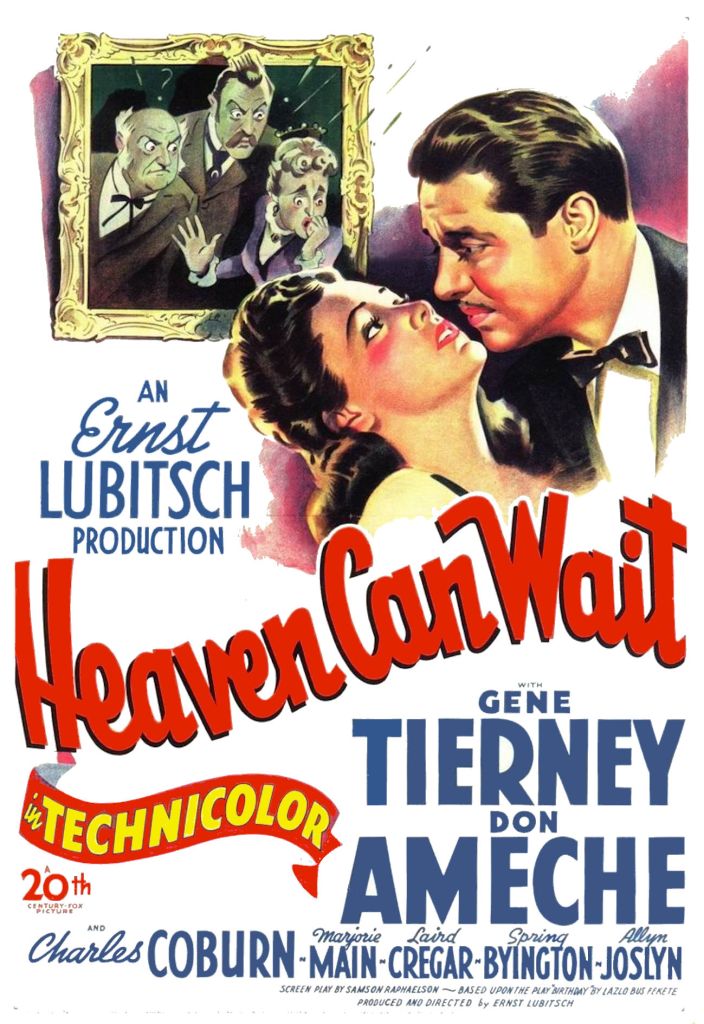
If you are going to start a film in Hell, it helps if you have the Lubitsch touch. Heaven Can Wait tells the life story of the late Henry Van Cleve (Don Ameche), a charming old roué being interviewed by ‘His Excellency’ (Laird Cregar) at the entrance of a place ‘where innumerable people had so often told him to go’. Van Cleve’s life is one of general well-meaning romance, from his boyhood discovery that kissing a girl doesn’t mean you have to marry her, through to his elopement with Martha (Gene Tierney), the intended of his stuffy cousin, his winning her back after his (implied) good-natured faithlessness, and their happy decades of marriage and his roguishly flirtatious final years.
Perhaps only Lubitsch had the wit – and cheek – to sneak the story of a shameless Casanova under the Hays Code wire as a sort of heart-warmingly decent fable. Because, in many ways, Henry Van Cleve is exactly the sort of person the Code had doubts about – and of course Lubitsch loved: a debonair, classy man of means, who appreciates fine art and beautiful woman, would die of shock at the idea of a hard day’s work and never repents his choices for a second. Played with a bashful smile and wide-eyed honesty (even innocence) by Ameche, this is the sort of seducer the Hays Code could get behind (especially as Lubitsch subtly blurs the reality of his many conquests).
But than you also can’t imagine any other director presenting Satan like this. He’s embodied by Laird Cregar as a sort of genial bank manager – in a Hell that looks like a hotel lobby – whose hilarious dropping (Bond-villain like) of a loud-mouthed society Grande Dame down a trap door mid-conversation only makes us like him more. Our framing device runs us through a series of Henry’s crucial birthdays (the original play was even titled ‘Birthday’ – Heaven Can Wait is a much better title), many of them making a hilarious mini-film themselves, with sharp-edged dialogue perfectly captured by Lubitsch’s smooth and witty camera, that knows just how long to hold a shot.
Heaven Can Wait is full of just-under-the-wire sexual energy, disguised but very apparent today. What else are we to make of new Van Cleve maid ‘Mademoiselle’ (a very funny Signo Hasso) announcing her two years working for a duke were what he called “the happiest of his life”? Not to mention the life advice – kissing don’t mean marriage – she gives the Van Cleve (who learned, as a boy, when wooing an impressed girl with his insect pets that it pays to have ‘lots of beetles’). Or the clear implication Henry and Mademoiselle spend a wild night sharing far more than just a bottle of champagne.
Lubitsch hints at this with mutual hiccups. Throughout Heaven Can Wait coughs, sneezes and hiccups serve as a code for very different bodily outbursts (that of course couldn’t be shown). Wooing Martha in his tedious cousin’s (a very funny role of pedantic tedium for Allyn Joslyn) library during a terrible private concert, Martha’s sneezing fit is a clear substitute for her real feelings. Perhaps only Lubitsch could have disguised this mutual wild sexual elopement as something reassuringly pure. There is something very sweet about Ameche passing himself off as a book-store clerk to spark conversation with Tierney as she searches for How to please your husband (a title ripe for inevitable innuendo).
As with Ameche, Lubitsch gets a light, underplayed performance by Tierney that makes these two feel like a perfect pair. Heaven Can Wait’s fourth movement sees Martha flying the marriage home after suspecting Henry of an affair. Henry reassures her it is a misunderstanding – but with such ease, and such heavy breathing fluster on Martha’s part – it feels pretty clear Lubitsch is inviting us to understand perhaps Martha thinks fidelity is an optional extra with someone she has such hots for. It’s all conveyed with such lightness – and Ameche plays Henry with such innocent earnestness, never once tipping the wink – it’s extremely funny.
As you’d expect with Lubitsch, the film is full of marvellous comic touches. Charles Coburn is excellent as Henry’s worldly-wise grandfather, who might love his family but only really likes Henry. Coburn’s wry amusement at Henry’s antics is consistently hilarious, Lubitsch gifting him two perfectly timed wonderful sight gags (one with a glass of water, the other seeing him emerge suddenly from a crowd). Even better though is the wonderful set-piece of Martha’s feuding parents (played with perfect passive aggressive bluster by Eugene Pallette and Marjorie Main), sitting at opposite ends of a long table, communicating only through long-suffering servant Jasper (a very refreshing role for Clarence Muse, where the Black man is smartest in the room). Lubitsch films this in a single take, gliding from table end to end which only magnifies the humour.
The first 70 minutes of Heaven Can Wait are so good – sharp, cheeky, funny – that when the Van Cleves effectively elope again, it perhaps would be better the film ends. Sadly, the final half hour dials up the sentiment (as Henry tries to steer his son away from a life of debauchery, an older Martha nobly resigns herself to cancer and Henry meets his end) and the energy drains out. Even Satan gets a moralistic, happy-ever-after closing speech! This closing act is duller, considerably less snappy and very easy to drift off in. You feel Lubitsch exhausted his interest and filmed the final act by contractual obligation.
But until then, this is a sharp, witty, delightful comedy, crammed with great performances. It balances naughty charm with surprisingly dark undertones (with each movement forward, more and more characters die off, a dark reminder this film opened in the afterlife) and has more than enough laughs in its first 70 minutes for you to sit through the closing 25. Perhaps second-tier Lubitsch, but his second tier his others first.

