Author: Alistair Nunn

Romeo and Juliet (1968)

Romeo and Juliet (1968)

Zeffirelli helps to reinvent Shakespeare on film as vibrant, urgent, young and sexy

Director: Franco Zeffirelli

Cast: Leonard Whiting (Romeo), Olivia Hussey (Juliet), John McEnery (Mercutio), Milo O’Shea (Friar Laurence), Pat Heywood (Nurse), Paul Hardwick (Lord Capulet), Natasha Perry (Lady Capulet), Robert Stephens (Prince), Michael York (Tybalt), Bruce Robinson (Benvolio)

When Romeo and Juliet was released in 1968, it was like a shot of adrenalin into the heart of Shakespeare. It was a play where audiences were used to middle-aged classical actors posing as teenage lovers (not just on stage: the last Hollywood version cast Leslie Howard and Norma Shearer with a combined age of 76). It was a play of wispy poetry, light breaking from yonder windows and stately tragedy. What it definitely wasn’t, was a young play. A play full of vibrant energy, youthful abandon and plenty of sex and violence. Zeffirelli’s film changed that: it was fast, sexy and above all young. It was unlike any Romeo and Juliet many cinema goers had seen before.

Everything new is eventually old of course. So influential was Zeffirelli’s film, it came to be remembered as a “tights and poetry” epic. Its traditional Renaissance Italian setting and well-spoken cast came 30 years later to represent the very same stuffy traditionalism it was kicking in the shins. When Baz Luhrmann released his William Shakespeare’s Romeo + Juliet, full of fast-paced editing, MTV tunes, gunplay and horny, Verona Beach teenagers, it was biting its thumb at the revolutionary style of Shakespeare Zeffirelli had introduced.

But, such is the richness of Shakespeare, there is more than enough room for both visions. Watching the film today is still to be struck by its pace and energy. This is a grimy, immediate film which Zeffirelli frequently shoots with a handheld intensity (particularly in the film’s sequences of violence). The costumes may have a primary-coloured sheen to them, but the emotions are raw and dangerous. There is a comedic zip and energy to its first half, which gives way to a grim sense of inevitable tragedy, that always seems just a few adjusted decisions away from being averted.

To pull the film together, Zeffirelli made some tough decisions. Almost 65% of the dialogue was jettisoned, most notably the whole of Juliet’s speech prior to taking the sleeping drug. Everything was cut and arranged to play to the strengths of his cast. His young lovers were great at the physical and emotional teenage energy, so that’s what Zeffirelli focused on. He cast two unknowns: 17-year-old Leonard Whiting and 15-year-old Olivia Hussey. Both had exactly the sort of unfussy naturalism he was looking for, playing the roles with a breathless, energetic genuineness.

They are, of course, not the greatest performers of the roles you will ever see. But Whiting’s Romeo is passionate, naïve and utterly believable as the sort of love-struck teenager who will choose oblivion when he’s lost his true love. Hussey (who, unlike Whiting, continued as an actor) has a wonderful innocent quality and a forceful determination underneath it. The two of them throw themselves into every scene (and each other) with gusto, rolling on the floor in despair or bounding into fights and arguments as if every word or blow will be their last.

It’s a youthful energy that the whole film bottles up and sells to the audience. Its opening scene takes the “I bite my thumb at you sir” classicism of the initial Montague-Capulet clash, and throws it into a dusty street brawl that sucks in most of the city. The camera weaves among this action, as people fly at each other, onlookers run in panic and extras’ bodies pile into the scuffle.

It’s an effective entrée for the film’s most effective sequence: the plot-turning fight that leads to the death of Mercutio and Tybalt. Zeffirelli brilliantly stages this as youthful bravado and hot-headedness that gets out of hand. Mercutio and Tybalt’s fight is initially more performative than deadly (so much so Mercutio’s friends don’t realise he’s been wounded until he dies) – only Romeo’s attempts to stop it cause it to escalate. Tybalt is horrified at the possibility he has harmed Mercutio and flees in terror. Mercutio maintains a front of all-good-fun that turns more and more into bitterness. Romeo’s revenge on Tybalt starts as an out-matched sword fight but turns into a brutal, dusty scrabble on the ground, with fists and daggers flying. All shot and staged with an improvisational wildness, people in the crowd ducking out of the way. It still carries real immediacy.

It’s particularly effecting as, until then, the film is arguably a romantic comedy. The first half not only surrenders itself to the youthful abandon and passion of the lovers, it’s also not adverse to a bit of knock-about farce with the Nurse (a fine performance of gruff affection from Pat Heywood). The Capulets’ ball is staged as another immersive scene, Nina Rota’s music helping to create one of the best renaissance courtly dances on film. With Romeo blanked by an austere Rosalind (who seems to barely know who he is), it zeroes in on the intense, can’t-take-my-eyes-off-you bond between the two lovers. All of it shot with a dreamy romantic intensity.

That carries across to the balcony scene, that again stresses the dynamism and sexual longing that revolutionises the poetry-and-posing the scene had become in people’s minds. This is after all a young couple who can’t keep their hands off each other to such an extent, they have to be physically separated by Friar Laurence (a cuddly Irish Milo O’Shea, over-confident and ineffective) before their marriage.

It makes it all the more striking then when the second half tips into melancholy and heartbreak. Zeffirelli brings the focus even more intensely onto the lovers. As well as Juliet’s speech, the Apothecary and Romeo’s killing of Paris (shot but cut as there were worries it would make the hero less sympathetic) are ditched, and the action is streamlined and runs inexorably to Romeo’s decease and the camera’s focus on Juliet’s hand as she begins to come back to life.

It’s a film full of interesting little side notes and character interpretations. John McEnery’s energetically manic and witty Mercutio (he, along with O’Shea handles much of the actual Shakespeare) is excellent, with more than a hint of a repressed homoerotic longing for Romeo. Natasha Perry’s austere Lady Capulet flirts openly with Michael York’s fiery Tybalt (their secret affair now a popular interpretation) while Paul Hardwick’s bluster as Capulet carries an air of desperation, with Zeffirelli capturing sad glances at his wife. To bolster its Shakespeare credentials, Olivier speaks the prologue (as well as dubbing multiple members of the Italian cast) for no pay or credit (though he must have known there was zero chance of his famous voice not being recognised!).

Zeffirelli’s film may just be, in its way, one of the most important Shakespeare films in history. If Olivier had shown Shakespeare could work as spectacle and Welles that it could be art, Zeffirelli showed it could be exciting and cinematic. That energy and filmic motion didn’t need to serve the poetry. It became so influential, that it eventually came to be seen decades later as “classical Shakespeare”. But it helped lay the groundwork for a series of films and productions that would leave posing, poetical renditions of the Bard behind.
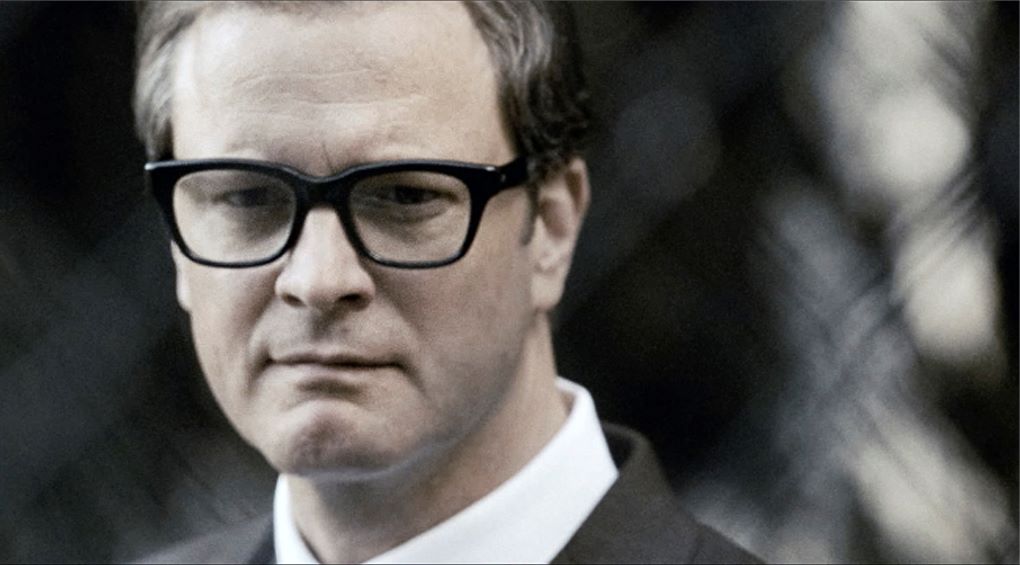
A Single Man (2009)

A Single Man (2009)

Grief is at the heart of this moving, beautifully made debut from Tom Ford

Director: Tom Ford

Cast: Colin Firth (George Falconer), Julianne Moore (Charley Roberts), Nicholas Hoult (Kenny Potter), Matthew Goode (Jim), Jon Kortajarena (Carlos), Paulette Lamori (Alva), Ryan Simpkins (Jennifer Strunk), Ginnifer Goodwin (Mrs Strunk), Teddy Sears (Mr Strunk), Lee Pace (Grant Lefanu)

Grief is like a gaping wound that never heals. It’s an unbearable burden LA-based English professor George Falconer (Colin Firth) can’t bear any longer. Distraught after the death of his partner of sixteen years Jim (Matthew Goode), George decides November 30th 1962 will be the last day of his life. He will spend the day putting his affairs in order, soaking up the isolated intensity of moments, have dinner at his oldest friend Charley’s (Julianne Moore) house, then take his life. Adapted from Christopher Isherwood’s novel, A Single Man follows that one day.

The universal pain of grief and vibrancy of love shines out of one of the most tender gay-love stories ever made (strikingly shot and acted by a straight director and leads). A Single Man is a film that aches in every frame with the desolation of loss and the agony of moments that can never be claimed, touches that can never be made and conversations that can never be had. It studies how empty and overbearing life can feel when we know we must face it alone, without the person who made the world make sense to us.

It is of course a double burden when that loss cannot be acknowledged. George learns of the death of Jim via an awkward phone call from Jim’s brother (a vocal cameo from Jon Hamm) who can’t bring himself to openly acknowledge the love between the two men and tells him it’s a “family only” funeral. George himself can only convey repressed English regret during the phone call, before collapsing into lurching emotional hysteria after it. His loneliness and cool distance from others is all a side effect of man who must always hide his true feelings and who and what he is.

The film gains a huge amount from Colin Firth’s extraordinary performance in the lead role, hiding a seething, raw pain under a genteel and refined exterior. This seemingly cold, precise man – who dresses like a fashion model and is polite to a fault – is a tempest below the surface of loss that cannot be expressed. It’s as much the burden of putting on one face to the world, knowing there is another below the surface, that has crushed George’s spirit over the past years, as the loss of Jim. All of this is captured by Firth with exquisite sensitivity, in a perfectly judged performance.

Even George’s closest confidante Charley – his best friend, and one-time experimental romantic fling, now a depressed divorcee – can’t quite understand George’s feelings for Jim. Played with a wonderful air of domestic, middle-aged tragedy by Julianne Moore, Charley still can’t quite believe a homosexual love can ever really be the “equal” of a heterosexual one – that some part of George would have been happier if he had accepted a ‘normal’ relationship and family with her rather than the more ‘exotic’ relationship he chose. If even those closest to George can’t really see his relationship as legitimate, what chance does his apple-pie neighbourhood have of doing so?

It’s the intense loneliness – no one to share his pain with, no way to really mourn his love – that has finally beaten the will to carry on for George. Ford’s direction reflects his sense of ennui by presenting the world as coldly drained out, rich colours replaced with greyscale-tinged greys and blues. Warm colours only intrude in those moments where George consciously decides to engage, one final time, with the wonders the world has to offer, the frame filling with warmth and colour.

Ford’s elegiac film doesn’t shy away from the coldness of pain and loss. Opening with a (literally) chilling scene, as George imagines encountering Jim’s dead body in the snows, it conveys the functional distance the world can seem to have when we are dealing with life changing internal feelings. George is entrapped into tired conversations about university politics (his gaze drifts to two male tennis players, the screen momentarily filling with colour). Reflecting his fastidious nature, he carefully puts his affairs in order at the bank and catalogues keys, account details and suicide notes on his desk. All of it feels irrelevant compared to the pain within.

But A Single Man is also a hopeful film. Even when the world seems at its bleakest – when we have decided we can’t go on – there is still hope. It’s represented here by Nicholas Hoult, warm, open and honest as George’s student Kenny who intuitively identifies something is wrong with George and goes to huge lengths to try and find out what. The tenderness between the two – and the protectiveness as well as genuine smiles Kenny can promote in George – is a beat that suggests there may still be some chance of happiness in this world where we least expect it.

It’s part of the same warmth and humanity that underlies Ford’s heartfelt film, wonderfully directed. If it was a parade of bleakness, it would have far less effect. But flashbacks to George and Jim together show the joy and comfort of their lives, while the small moments of warmth and humanity in the present constantly remind us of what George’s decision will cost him.

The film’s final dark splash of irony may well be a little too on the nose, sign posted as a possibility a little too heavily earlier in the film. But, in its exploration of grief and intelligent, intense character study it’s a wonderful debut from Ford. And Firth’s extraordinary, career defining role (a year later, after winning the Oscar for The King’s Speech he thanked Tom Ford as being someone who owed a piece of the award to) is one for the ages that speaks to anyone who has ever known loss.

Shadow of a Doubt (1943)

Shadow of a Doubt (1943)

A small town family is corrupted by a malign force in Hitchcock’s favourite of his films

Director: Alfred Hitchcock

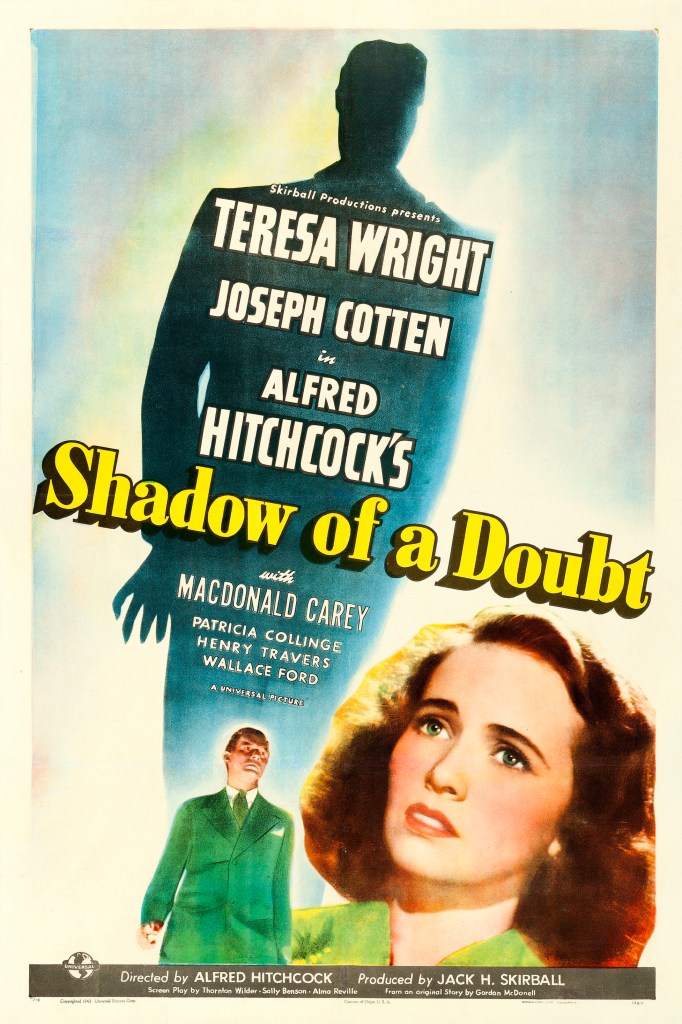
Cast: Teresa Wright (Charlie Newton), Joseph Cotton (Uncle Charlie Oakley), Macdonald Carey (Detective Jack Graham), Henry Travers (Joseph Newton), Patricia Collinge (Emma Newton), Wallace Ford (Detective Fred Saunders), Hume Cronyn (Herbie Hawkins), Edna May Wonacott (Ann Newton), Charles Bates (Roger Newton)

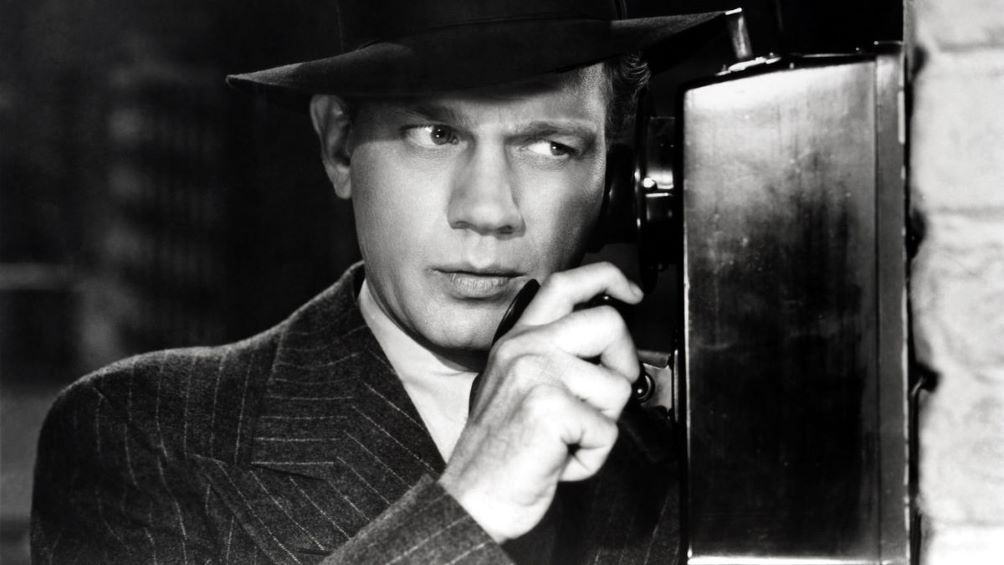
It’s a surprise to discover Shadow of a Doubt was Hitchcock’s favourite of his films (although the Master of Suspense was a notorious kidder). It rarely makes even the top ten of Great Hitchcock’s and for years was semi-forgotten in his CV. But delve into this small-town chiller and it becomes less of a surprise the master was so fond of it. Hitchcock’s first American-set film (his previous American films being British-set), this takes an idyllic, everyone-knows-your-name, no-doors-locked small town in California and injects into the middle of it a ruthless sociopath, as charming as he is shockingly ruthless. Doesn’t that sound like Hitchcock all over?

That small-town is Santa Rosa in California. There the Newton family is thrilled at the imminent arrival of Uncle Charlie (Joseph Cotton) from New York. None more so than his niece Charlie (Teresa Wright), a precocious teenager who shares her uncle’s wit and worldly wisdom. He arrives laden with gifts – but also dragging two police detectives and swirling rumours of terrible crimes. Surely Uncle Charlie – hero to all and idol of his niece – can’t also be the ruthless “Merry Widow” killer, dispatching aged widows for their riches? And, if he is, what on earth will Charlie do about it?

A lot of what would become Hitchcock’s central concerns in his later, darker, mature works make their inaugural appearance in this dark, creeping mystery. Everything in the Newton home is perfect, until they welcome Charlie, whose amiable greed and self-interest tarnishes everything he touches. Despite this, he’s the most likeable, charismatic, charming character in the film. So much so, a big part of us wills him not to be the murderer we can all be pretty confident he is. He’s far too exciting and dynamic for us to want him torn away from us!

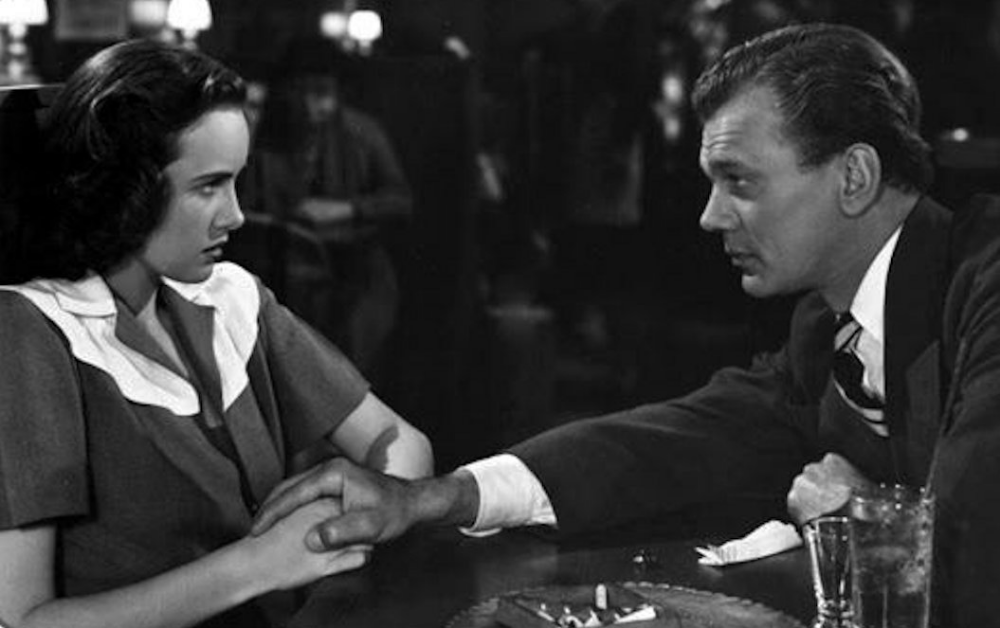
The two Charlies are close – so much so Hitchcock would surely have dialled up the incestuous spark between them even further if he had made the film fifteen years later. They have a near supernatural mental bond, seemingly able to predict where and when the other might be. They laugh and flirt. In arguments Uncle Charlie grasps his niece like a frustrated lover, clutching her too him. As well as sharing many character traits (implying it would be easy for Charlie to become like Uncle Charlie) they’re closeness feels as much like a courtship as it does familial closeness. When Uncle Charlie takes Charlie to a gin bar to gain her confidence and support to hide from the cops, the entire scene feels like the appeal of a would-be lover.

It overlaps another theme future Hitchcock have taken further: the thin line between innocence and killer. Uncle Charlie and his namesake have a special bond. They share the same world-view and many of the same ideas. They’re both charismatic and natural leaders. They both feel stifled by this small-town world. They are both ruthlessly determined when roused. One of them might be innocent and one might be good – but how much of a push would it be to turn one into the other?

Hitchcock probes this possibility throughout in a film stuffed with doubles and duality. Both Charlies are introduced with similar shots of them lying in bed, being questioned by others. Later Uncle Charlie will inherit Charlie’s room in the house. Greeting each other at the station, they move towards each with mirroring shots. They share the same name. Twins, doubles, mirrors and the number two abound in the film – a marvellous blog here captures this all in far more detail and insight than I could here.

Uncle Charlie slithers into Santa Rosa like the serpent into the garden of Eden. He offers temptation left, right and centre. The Newton family receive lavish (stolen) gifts. His brother-in-law’s bank gets a investment from the cash Uncle Charlie carries around (he’s old fashioned you see). He laughs and jokes, reminds Charlie’s mother of the joys of her past and inveigles himself into the heart of the family (he even sits at the head of the table). But he’s also a dark, sinister figure, frequently framed at the top of staircases, marching inexorably towards camera and (in one stand out moment) breaking the fourth wall to address us directly while coldly, contemptuously outlining his theory about the pointless burden useless lives have on the rest of us.

He’s played with a charismatic, cold-hearted, jovial wickedness by Joseph Cotton. Cotton is so good as this on-the-surface amiable man, with a soul devoid of any love, it you’ll wish he’d got parts like this more often. Liberated from playing decent best-friends, Cotton dominates the film with a malignant charisma, married with a growing only-just-concealed desperation at the fragility of his fate. Opposite him, Teresa Wright is marvellous as a young woman who finds her sense of morality fully awakened into outrage by this dark presence corrupting everything in her life.

Corruption is central to Shadow of a Doubt – no wonder Hitchcock loved it – with Uncle Charlie turning everything in the simple, honest town into something darker and tainted by his very presence. There is an almost cliched home-spun decency about the town (almost as if co-writer Thornton Wilder was parodying his Our Town), serving to make Uncle Charlie’s modern sociopathy even more of a destructive force.

Shadow of a Doubt is directed with immense care, but a great deal with subtle flourish. Staircase shots abound, to stress sinister motivations, positions of weakness and unease. Characters lurch towards the camera frequently, as if the whole film was hunting us down. An air of menace, lies and danger builds inexorably as Uncle Charlie’s true-nature leaks out. There is also wit: not least from Charlie’s father (a jovial Henry Travers) and eccentric neighbour (a scene-stealing Hume Cronyn) gleefully discussing true crime throughout. There is also Hitchcock’s love of irony, not least in the fact Charlies problems are largely caused by his attempts to conceal a newspaper article that otherwise would have gone unnoticed.

Hitchcock makes his cameo early on as a card player on a train journey. He’s revealed to be holding all the trumps. That’s how he likes it: and perhaps explains his fondness for Shadow of a Doubt. Low key but perfectly constructed, it’s a film that latches onto themes of corruption, dark temptation and ruthless violence. Film logic abounds – who cares that the detective’s investigation is so inept they’d never be employed again – and the second half is crammed with murder attempts as unsubtle as they are ingeniously dark. Shadow of a Doubt feels like a prototype for darker themes of obsession and temptation Hitchcock would explore in the future. Perhaps that’s why he was so fond of it: it’s where he started to spread his wings.

Seven Samurai (1954)

Seven Samurai (1954)

Superb, archetypal action-adventure men-on-a-mission film: Kurosawa’s masterpiece, brave, bold and thrilling film-making

Director: Akira Kurosawa

Cast: Toshiro Mifune (Kikuchiyo), Takashi Shimura (Kambei Shimada), Daisuke Katō (Shichirōji), Isao Kimura (Katsushirō Okamoto), Minoru Chiaki (Heihachi Hayashida), Seiji Miyaguchi (Kyūzō), Yoshio Inaba (Gorōbei Katayama), Yoshio Tsuchiya (Rikichi), Bokuzen Hidari (Yohei), Yukiko Shimazaki (Rikichi’s wife), Kamatari Fujiwara (Manzō), Keiko Tsushima (Shino), Kokuten Kōdō (Gisaku)

I’ve often been a Kurosawa sceptic. But it’s hard to stay critical, when he made a masterpiece as near perfect as Seven Samurai. It’s one of those films that is long (the favoured cut is nearly three and a half hours) but never once drags. Kurosawa directs with such intelligence, skill and pace, you can’t help but be swept up in it. It’s one of the finest action epics ever made, but also has a rich vein of sadness and melancholy. After all, the samurai may fight the good fight, but they always lose.

In the sixteenth century, a farming village is under-threat from a bandits, rogue samurai turned ronin, who plan to steal the harvest. To protect themselves, the village elder (Kokuten Kōdō) declares they need samurai of their own (and since the farmers have little to offer, they better “hire hungry samurai”). They recruit a team of seven, led by experienced Kambei (Takashi Shimura), who accepts out of nobility. Among the team is wild-card peasant-turned-wannabe-Samurai Kikuchiyo (Toshiro Mifune). The seven arrive in the village and prepare for battle: but, even when working together, no one ever completely forgets the rigid societal boundaries of Japanese culture.

Seven Samurai is a wonderful character study, a sublime action film and complex and engaging exploration of Japanese history and society. It also has a perfect three act structure, it’s run time expertly divided into the samurai’s recruitment, preparation and defence of the village. This careful construction counters that epic run time – each act tells an almost self-contained story, meaning the film’s momentum never slackens.

It’s bought together by a director making a perfect fusion between Japanese cinema and his American and European influences. Kurosawa had never been shy about his admiration for directors like Ford and Hawks. You see elements of cowboy flicks throughout: from the set-up of the villagers as homesteaders, the samurai as the cavalry and the rogue ronin as the Indians, down to sweeping camera shots and vistas straight from Ford (the kinetic energy of Stagecoach is surely an influence). His Western influences always made Kurosawa more digestible than (for example) Ozu.

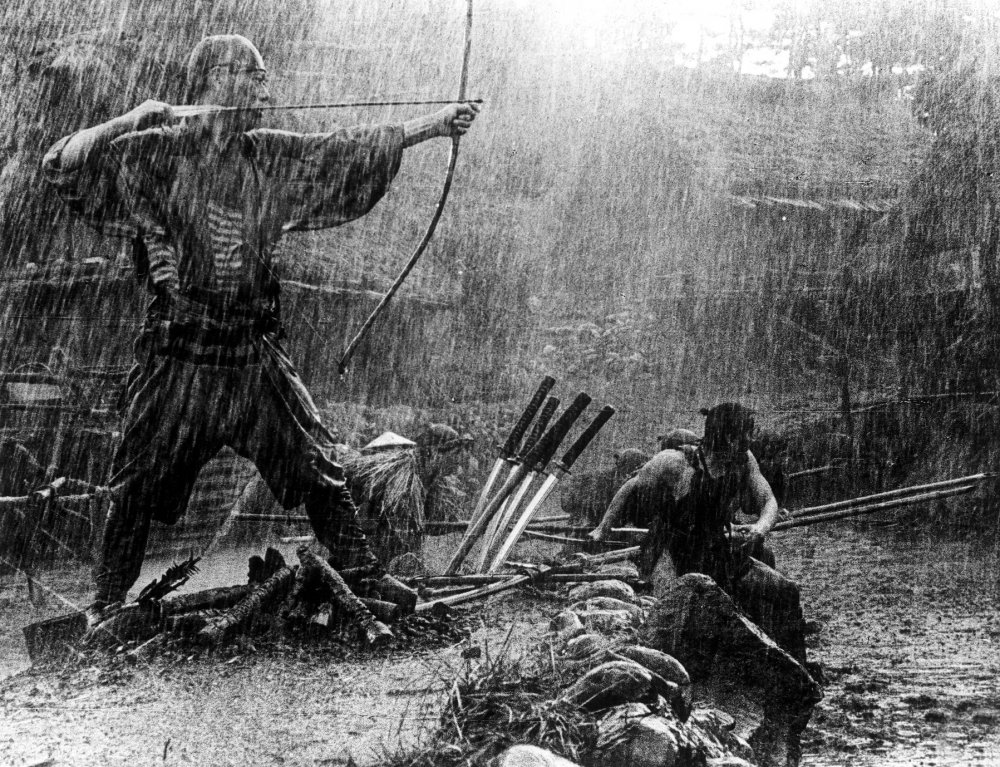
Seven Samurai is an also electric employment of Eisenstein style techniques of skilful editing, dissolves, fast cutting and an embracing of the language of cinema. Kurosawa accentuates action with slow motion: when Kambei dispatches a bandit (in his superb introduction scene), the body falls seemingly forever, death building in impact. Zoom cuts introduce locations, bringing us closer and closer to events. Kurosawa shot the battles with three cameras (a master and two roving cameras) allowing him to capture the kinetic action of his rain-soaked finale. Brilliant montages introduce concepts, characters and themes. It’s a masterclass.

It’s also masterful at quickly sketching character. We know from his first introduction – a brilliant cold-open fifteen minutes or so into the film – that Kambei is a man of both shrewd tactical awareness and puts duty before superficial pride, by his willingness to shave his hair so he can pass as a monk to rescue a child. (The gasps of those watching say it all at this willing acceptance of a cultural mark of shame). Kyūzō is introduced duelling with wooden swords. Why don’t we swop to real blades says his opponent: because you’ll die, Kyūzō matter-of-factly describes, his matter-of-fact bluntness and lack of bragging backed up by his immense skill when the chap dies seconds later. Gorōbei’s shrewdness is shown by the ease he dodges Kambei’s ambush test, just as Kikuchiyo’s rawness is when he blunders straight into it (and promptly loses his temper). Little moments like this abound, in a film stuffed with clever character beats.

The film presents a Japanese culture where concepts of honour and self-sacrifice sit awkwardly alongside regimented hierarchical and societal rules. The samurai can’t help but look down on the peasants – even while they see it as their duty to protect the weak. The villagers, in turn, look at the samurai as barely-to-be-trusted potential oppressors or dangerous parasites who steal their land and daughters (or both). Much of the film’s second act, as the samurai train the villagers to resist the attack, is about these two communities learning to respect each other. But it’s a tenuous alliance, held together by circumstance: when the dust settles, the surviving samurai are no longer welcome.

The samurai are a dying breed. Kambei knows the future belongs to people who provide industry and food. Samurai principles of honour and duty, pride in their skill, is also increasingly irrelevant in a world where the gun decides conflict. The ronin have three rifles and these deadly weapons are no respecter of skill or honour (none of the seven are bested in conflict, but all who fall do so to a bullet). Perhaps this is why the samurai cling to their principles and their honour. They know the world they knew is dying away and that there may be no place for them in the new.

This conflict is given a human shape by Kikuchiyo. Played with an electric, charismatic wildness by Toshiro Mifune (allowed to let rip, he’s a breath-taking explosion of jagged movements, eccentric line deliveries and unbound energy), Kikuchiyo is neither peasant nor samurai. Bought up from working stock – carrying stolen papers of nobility to try and pass himself off as samurai – he’s also rejected by his farmer peers for his warrior status. This makes him a character who can expose hypocrisies on both sides: denouncing the farmers pleading for help but cowering from the samurai; then angrily arguing samurai selfishness and pride have left the peasants with little choice but to horde food and riches to survive.

Not that Kurosawa is shy of admiration for the samurai. Yes, the flaws of their class are exposed – and we see more than enough their potential for arrogance, pride and violence. But the seven also contain a collection of their best traits. Takashi Shimura is brilliant as Kambei: selfless and honourable who takes on the task to honour the peasant’s offering all they can (however little that be). Heihachi (played by an ebullient Minoru Chiaki) represents generosity and warmth. Kyūzō (an enigmatic Seiji Miyaguchi) is awash with self-effacing warrior skill, shrugging off his feats with simple matter-of-fact statements. Shichirōji and Gorōbei are loyal and thoughtful warriors, Katsushirō (a charming Isao Kimura) a decent man eager to prove his worth. These are the best of their class.

They’ll need to be to win in this desperate action. Their preparation carefully outlines the obstacles facing to defence of this village – and to corral the villagers to defend their property. Houses outside the village walls are abandoned (Kambei seeing down a near rebellion on this, with threats of immediate justice), a raid on the ronin’s base aims to reduce their numerical advantage, the difficulty of turning the terrain against superior numbers repeatedly made plain. Kurosawa’s visual storytelling means the action when it comes is not only captivating, but completely understandable.

And what action. Seven Samurai can take its place on any list of the greatest war films ever made. The final hour features attack-after-attack on the village, interspersed with raids, skirmishes and derring-do. Both Kyūzō and Kikuchiyo take solo missions out of the village, though Kikuchiyo’s hunt for glory, even while he captures a rifle, leaves part of the wall undefended and leads to tragedy (Kambei is furious at this failure in discipline). It culminates in a rain-soaked final stand, shot with an all-absorbing power and engrossing kinetic energy.

The samurai sacrifice much for the village. But for what thanks? A peasant disguises his daughter as a boy, because he assumes, if discovered, the samurai will instinctively rape her. When the ronin don’t arrive as expected, the peasants grumble that the samurai are eating more than their fair share. As the samurai fall, their deaths are marked with a decreasing lack of notice (the final deaths don’t even gain on-screen funerals). With victory assured, the peasants return to their crop and don’t even lift a hand to wave the samurai goodbye.

It seems like poor reward for people who have sacrificed so much. But then that’s part of the point Kurosawa is making. Some samurai chose honour. Some choose the opposite. But they are always relics of a feudal system that is being left behind by events and the modern world. Its not just guns that will take them eventually. It’s a sadness that adds an even richer vein to this gripping, superb action drama. Kurosawa’s films may have flaws – but he doesn’t put a foot wrong in Seven Samurai.

Amsterdam (2022)

Amsterdam (2022)

Lots of quirk, whimsy and smugness, not a lot of interest or dynamism in this satirical mis-fire

Director: David O. Russell

Cast: Christian Bale (Burt Berendsen), Margot Robbie (Valerie Voze), John David Washington (Harold Woodsman), Robert De Niro (General Gil Dillenbeck), Chris Rock (Milton King), Rami Malek (Tom Voze), Anya Taylor-Joy (Libby Voze), Zoe Saldana (Irma St Clair), Mike Myers (Paul Canterbury), Michael Shannon (Henry Norcross), Timothy Olyphant (Tarim Milfax), Andrea Riseborough (Beatrice Vandenheuvel), Taylor Swift (Elizabeth Meekins), Matthias Schoenaerts (Detective Lem Getwiller), Alessandro Nivola (Detective Hiltz), Ed Begley Jnr (General Bill Meekins)

David O Russell’s has made a niche for himself with his ensemble awards-bait films, filled with touches of quirk and offering rich opportunities for eccentric, showy performances from actors. Some of these have walked a fine line between charm and smugness: Amsterdam tips too far over that line. Like American Hustle it’s a twist on a real-life event (opening with a pleased with itself “A lot of this really happened” caption) but, unlike that film, it fails to insert any compelling storyline, settling for a whimsical shaggy-dog story that frequently grinds to a halt for infodumps or lectures.

Set in 1933, just as Roosevelt has taken office, it follows three friends who formed a friendship for life in post-war Amsterdam. They are: wounded veterans doctor Burt Berendsen (Christian Bale) and lawyer Harold Woodsman (John David Washington) and socialite-artist-turned-nurse Valerie Voze (Margot Robbie). Berendsen and Woodsman lost touch with Valerie in the 1920s, but now they are all bought together after the murder of their respected former commander as part of a plot from various nefarious types to overthrow the government in a fascist-inspired coup.

Sounds gripping right? Well, Amsterdam fails to find any urgency in this. In fact, details of this plot and the political context it’s happening in are sprinkled around the film as if Russell kept forgetting what the film was supposed to be about. It’s almost as if he stumbled on an unknown piece of American history – a rumoured coup attempt, thwarted by being denounced by the ex-Marine General approached to lead it (here represented by De Niro’s ramrod straight General Dillenbeck) – but got more and more bored with it the longer he spent on it.

Instead, his real interest is in the faint overtones of Jules et Jim style thruple between Berendsen, Woodsman and Voze (though this is American not French, so any trace of homoeroticism is dispatched, despite the obvious bond between the two men). The most engaging part of the film is the Act two flashback to these three healing, dancing and bonding in post-war Amsterdam, in a “our troubles are behind us” bliss. Even if it’s self-satisfied in its bohemianism.

To be honest, even then, they have an air of smugness behind them. They pass the time singing improvised nonsense songs based on words pulled out of a hat and playfully posing in Valerie’s modernist artwork. Valerie is played with almost enough charm by Robbie for you to overlook she is a standard Manic Pixie Dreamgirl, the sort of babe who pulls shrapnel from bodies to turn it into artistic tea-sets as a commentary on the madness of war. She and Woodsman form a relationship (with the married Berendsen as a sort of – well I’m not sure what, but definitely not a sexual third wheel) and these blissful Amsterdam days are the times of their life. Russell is so keen for us to know it, that all three pop up in short cutaways at key moments to whisper “Amsterdam” direct to the camera, an affectation that fails to deliver the spiritual impact its straining for.

It’s better than the shaggy dog story around the conspiracy that fills the 1930s part of the storyline. This remains so poorly defined, that Bale has to narrate a concluding slideshow of clips and fake newsreel and newspaper coverage to explain what on earth has just happened. The lack of clarity about the stakes – and the general lack of seriousness or urgency anyone treats them with –fails to provide any narrative oomph. Instead, it drifts along from casual meeting to casual meeting, every scene populated with a big-name actor showboating.

There is a lot of showboating in this film. Bale, an actor with an increasingly worrying tendency for funny voices and tics, fully embraces the facially scarred, glass-eye wearing Berendsen, perpetually stooped with a war wound and prone to fainting from pain-killer overuse. It’s a showy, actorly performance with a licence to go OTT. Bale does manage to invest it with an emotional depth and vulnerability, but there’s more than an air of indulgence here.

Most of the rest follow his lead. Malek and Taylor-Joy sink their teeth into a snobby socialite married couple. Rock essentially turns his role as a veteran into a less sweary extension of his stand-up act. Myers and Shannon seize with relish roles as ornithologist spies (is this meant to be a joke about the origins of the James Bond name from the author of a bird-spotting guidebook?) Poor John David Washington ends up feeling flat with his decision to underplay (like he’s in a different movie) and only De Niro really manages to feel like anything other than an actor on holiday.

Russell wants to make a point about the continual corruption of the rich and how their hunger for more power will never be sated. There are some half-hearted attempts at attacking racism, with the ill treatment of black veterans, but it lacks bite or edge. His attempts to draw parallels with Trump are all too clear, but the film largely fails to integrate these ideas into the film. In fact, it ends up relying on voiceover lectures from Bale about dangers to democracy. It ends up like being hectored by an angry socialist after a student revue night.

The film is shot with a series of low angle shots and medium and close ups that eventually made me feel like I was watching it from the bottom of a well. A vague sepia-ish tone is given by Emmanuel Lubezki, but the film looks flat and visually uninteresting (so much so I was stunned to see $80million had somehow been blown on it, despite most of the cast working for scale). It drifts towards a conclusion, without giving us anything human to invest in (as Russell managed so well in Silver Linings Playbook or The Fighter) or providing the sort of caper enjoyment he delivered in American Hustle. Instead, it’s oscillates between smug and dull.

The Fugitive (1993)

The Fugitive (1993)

An innocent man goes on the run in the one of the finest thrillers of the 90s

Director: Andrew Davis

Cast: Harrison Ford (Dr Richard Kimble), Tommy Lee Jones (US Marshal Sam Gerard), Sela Ward (Helen Kimble), Joe Pantoliano (US Marshal Cosmo Renfro), Jereon Krabbé (Dr Charles Nichols),Andreas Katsulas (Fredrick Sykes), Daniel Roebuck (US Marshal Bobby Biggs), Tom Wood (US Marshal Noah Newman), L Scott Caldwell (US Marshall Erin Poole), Johny Lee Davenport (US Marshall Henry), Julianne Moore (Dr Anne Eastman), Ron Dean (Detective Kelly), Joseph Kosala (Detective Rosetti), Jane Lunch (Dr Kathy Wahlund)

I think there are few things more terrifying than being accused of something you didn’t do. How can you hope to prove your innocence, when no one listens and there isn’t a scrap of evidence to back up your story? How dreadful again if the crime you are accused of, that everyone thinks you are guilty of, is the brutal murder of your wife? The double blow of everyone thinking you guilty, while the real killer walks free. What would you do to clear your name? And how much harder would that be, if you were also on the run from the law who are eager to prep you for the electric chair?

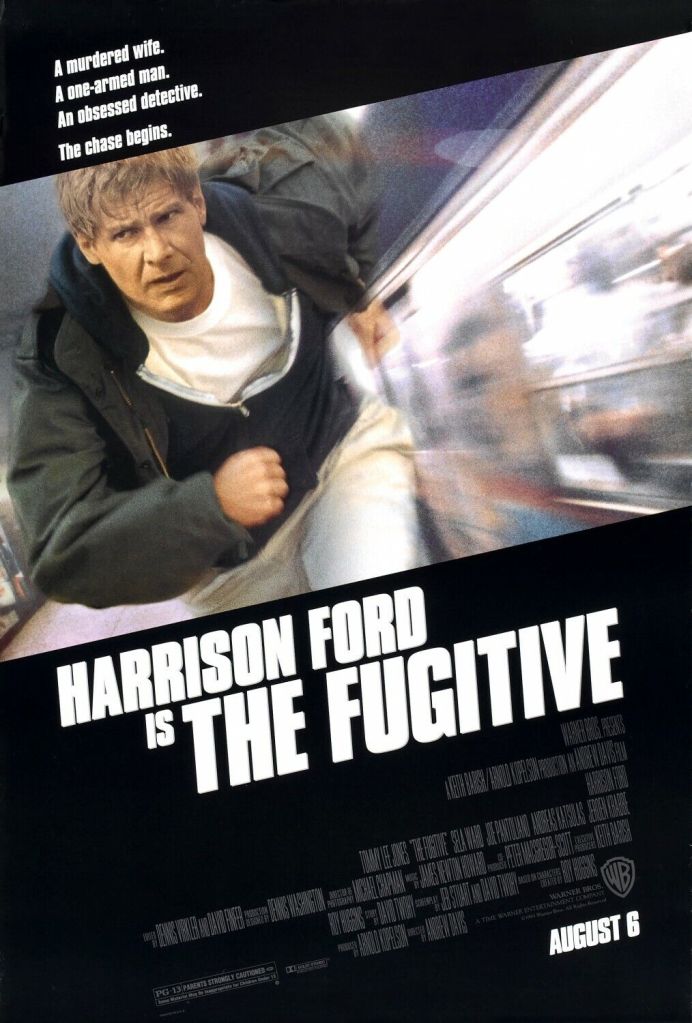
It’s the key idea of The Fugitive, adapted from a hit 60s TV show, and undoubtedly one of the best thrillers of the 90s. Harrison Ford is Dr Richard Kimble, on death row for the murder of his wife Helen (Sela Ward). In transit to prison, an accident caused by a convict’s escape attempt gives him a chance to escape. Returning to Chicago, Kimble is determined to hunt down the mysterious one-armed man he knows murdered his wife and work out why. Problem is, he’s being chased down by a team of US Marshals led by the relentless Sam Gerard (Tommy Lee Jones), who’s not interested in Kimble’s guilt or innocence, only in catching him.

The Fugitive is propulsive, involving and almost stress-inducing in its edge-of-the-seat excitement. It’s a smart, humane and gripping thriller, both a chase movie and an excellent whodunnit conspiracy thriller. It’s one of those examples of Hollywood alchemy: a group of people coming together at the right time and delivering their best work. It’s comfortably the finest work of Andrew Davis, a journeyman action director, who delivers work of flawless intensity, perfectly judging every moment. It’s shot with an immediacy that throws us into the city of Chicago and its surroundings (Davis was a resident of the city and worked with photographer Michael Chapman to bring the real city to life on screen) and the film never lets up for a moment.

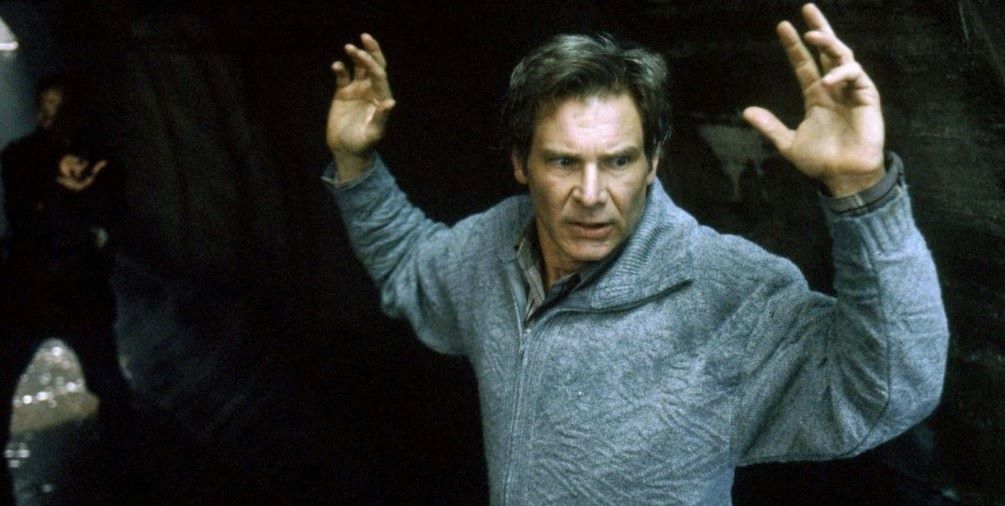
It gains hugely from the casting of the two leads. No actor can look as relatably harassed as Harrison Ford. Determined but vulnerable – there is a marvellous moment when Ford squirms with suppressed fear rising in an elevator filled with cops – Ford makes Kimble someone we immediately sympathise with. He’s smart – evading police, forging IDs, inveigling himself into hospitals to access amputee records – but constantly aware of the danger he’s in, brow furrowed with worry, narrow escapes met with near-tearful relief. Ford excels at making righteousness fury un-grating – the film makes a lot of his boy-scout decency – and never forgets Kimble is a humanitarian doctor, putting himself frequently at risk to save lives, from pulling a wounded guard from wreckage during his escape or saving a boy from a missed diagnosis in the hospital where he is working as a cleaner.

You need a heavyweight opposite him, which the film definitely has with Tommy Lee Jones. Jones won an Oscar for his hugely skilful performance. It would have been easy to play Gerard as an obsessed, fixated antagonist. Jones turns him into virtually a dual protagonist. Much as we want Kimble to stay one step ahead of the law, we respect and become bizarrely invested in Gerard’s hunt for him. Jones is charismatic as the focused Gerard, but also a man far more complex than he lets on. He genuinely cares for his team, takes full responsibility for their actions and finds himself becoming increasingly respectful of Kimble, even entertaining the idea of his innocence.

Not that an unspoken sympathy will stop him doing his job. When Kimble pleads his innocence at their first meeting his (iconic) response is “I don’t care”. Later, he doesn’t hesitate to fire three kill-shot bullets at Kimble when nearly capturing him in a government building – Kimble saved only by the bullet-proof glass between them. Jones never loses track of Gerard’s dedication above all to doing his job (the investigation he starts into Kimble’s case is motivated primarily by it being the most efficient way to work out where Kimble might go). But the edgy humour and pretend indifference hide a man passionate about justice and with a firm sense of right and wrong.

These two stars make such perfect foils for each other, it’s amazing to think they spend so little time opposite each other. Davis makes sure those few meetings have real impact, starting with their iconic early face-off at the top of a dam. A gripping chase through the bowels of this concrete monster, it’s also a brilliant establishing moment for how far both men will go: Gerard will continue the hunt, even after losing his gun to Kimble in a fall – because he has another concealed, ready to hand; Kimble won’t even think about using a gun and will go to the same never-ending lengths to preserve his chance at proving his innocence, by jumping off that dam.

The film implies they recognise these similarities in each other. Perhaps that’s why Kimble even eventually bizarrely trusts Gerard as a disinterested party – even while he remains terrified of Gerard catching up with him. The unpicking of (what turns out to be) the conspiracy behind Helen’s death is carefully outlined and surprisingly involving (considering it rotates around sketchily explained corporate shenanigans) – largely because Davis has so invested us in Kimble’s plight.

That’s the film’s greatest strength. Everything draws us into sharing Kimble’s sense of paranoia: that one misspoken word or bad turn could lead to his capture. Scored with lyrical intensity by James Newton Howard, it’s tightly edited and only gives us information when Kimble gets it. We only learn information about the night of the murder as he remembers or uncovers it. Davis twice pulls brilliant “wrong door” routines, where both editing and the careful delivery of information to us at the same time as Kimble makes us convinced that raids are focused on him, when they are in fact looking at someone else entirely.

This sort of stuff makes us nervous, worried for Kimble – and hugely entertained. I’ve seen The Fugitive countless times, and its relentless pace, constant sense of a never-ending chase and the brilliance of its lead performers never make it anything less than utterly engrossing. There is barely a foot wrong in its taut direction and editing and it’s crammed with set-pieces (the dam face-off, a chase through a St Patrick’s Day parade, a breathless fight on an elevated train) that never fail to deliver. It’s a humane but sweat-inducing thriller, a near perfect example of its genre.

The Woman King (2022)

The Woman King (2022)

Punchy historical action epic is very entertaining (if not hugely original narratively) as well as being a triumph of representation

Director: Gina Prince-Bythe

Cast: Viola Davis (General Nanisca), Thuso Mbedu (Nawi), Lashana Lynch (Izogie), Sheila Atim (Amenza), John Boyega (King Ghezo), Hero Fiennes Tiffin (Santo Ferreira), Adrienne Warren (Ode), Jayme Lawson (Shante), Masali Baduza (Fumbe), Angélique Kidjo (The Meunon), Jimmy Odukoya General Oba Ade), Thando Dlomo (Kelu), Jordan Bolger (Malik)

It’s 1823 in the West African Kingdom of Dahomey. The kingdom is trapped in the middle of a host of competing interests: most notably the rival Oyo empire and the European slavers controlling the region’s main port. Dahomey depends for its security on the Agojie, an elite group of women warriors commanded by their respected general Nanisca (Viola Davis). War brews between Dahomey and Oyo, and Nanisca is pushing King Ghezo (John Boyega) to end Dahomey’s involvement in the slave trade. At the same time, a new Agojie recruit, Nawi (Thuso Mbedu) brings memories of past traumas flooding back to Nanisca – might she and Nawi have some lost bond?

The Woman King is a pulsating action film, a mixture of Braveheart and Black Panther (it even has a cold open, as the Agojie storm an Oyo village to save captured Dahomey citizens bound for the slave ships, that feels like a straight lift from the latter film’s opening). Proudly celebrating both women and black people (men are very much in secondary roles, while the only white character is a hypocritical slaver played with relish by Hero Fiennes Tiffin), it’s a punch in the solar plexus for what’s been a male-dominated genre.

Watching it I suddenly realised, half-way through, that if the film had been made 10 or 15 years ago, the plucky new recruit having to prove she belonged among the Agojie would have been played by a white actress. There would have been a flashback to the child being found by the Agojie and then a montage of her searching from fear to longing to emulate the women around her. Like Cruise in The Last Samurai, she would have become the best-of-the-best, accepted by her new black sisterhood. It’s a triumph that Hollywood no longer needs stories like this filtered through white eyes before they would even consider bringing them to the screen.

Instead, the focus is strongly on a story that wants to celebrate the rich culture and history of African kingdoms. Dahomey’s civilisation, advanced farming and irrigation, egalitarian culture and humane religious and spiritual practices, are shown in loving detail. Their tenuous position as a small kingdom surrounded by rivals is carefully presented, just as the corrupting nature of European powers is made clear. It is they who have turned slavery – an ever-present in African history – into an industry that dominates the African economy and has led to a subtle devaluation of human lives that many Africans openly collaborate in.

In this, Prince-Bythe’s tightly directed film juggles a coming-of-age story for Nawi with a coming-to-terms story for Nanisca. It’s a film that manages to present both in the context of a series of action set-pieces and exciting training montages (the Agojie effectively have to complete a massive obstacle course to qualify as a member of the sisterhood). To be honest, much in the film isn’t really that original, more a remix of set-pieces and ideas from similar films. What makes it stand out is the representation and the context where it is taking place.

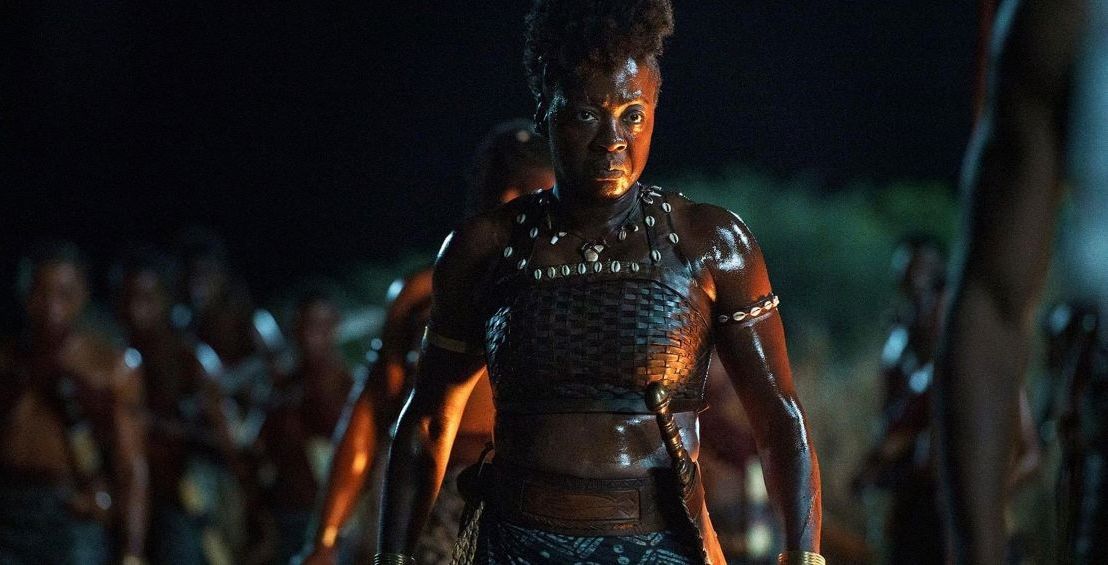
It also allows impressive actors to take on roles way outside of public expectations. None more so than Viola Davis, whose pumped up physique shatters any perceptions of what you might expect. This is a tour-de-force role from Davis, as she plays a defiant and strong woman, secretly terrified of trauma in her own past (and worries about her own weakness) who leads by charismatic example, but is just as capable of unjust slap-downs. She’s a woman struggling to embrace all facets of herself, doing so in the spotlight of a whole country looking to her for leadership. It makes for a powerful performance from Davis, perfectly fusing her skill at playing matronly warmth, imperious distance and deep reserves of determination and courage.

There are similarly excellent performances from a uniformly strong cast, with Lashana Lynch a stand-out as a courageous fighter who surprises herself with her mentorship abilities. Thuso Mbedu gives a star-making turn as Nawi, a young woman who matches Nanisca for bull-headedness and suppressed self-doubt, who reveals herself as a natural leader. Shelia Atim is excellent as Nanisca’s level-headed trusted number two, while John Boyega walks perfectly a fine-line of a man teetering between being a wise leader and a playboy.

They are helped by a film that may lack originality in its plotting and structure, but makes up for that with its warmth for its characters, and the gritty, involving realism of its shooting. Prince-Bythe keeps the pace of the film running smoothly and stages each of the film’s many set-pieces with a dynamism that keep you on the edge of your seat. She also successfully manages to incorporate some searching material around Nanisca’s past traumas without being exploitative.

Historically, the film is a little dubious, walking a carefully curated line on Dahomey’s involvement in slavery (in many ways it might have been better if the film was set in a fictional kingdom inspired by Dahomey). It doesn’t dwell on the Agojie chaining up their captives to be shipped to the slavery markets. It pushes an anti-slavery message strongly – but ignores the historical fact that the real Ghezo continued in the trade until the bitter end. (Legitimate points could have been made about his right to the same compensation as plantation owners elsewhere.) There is a complex, difficult story here that the film romanticises into something with cleaner rights and wrongs.

But, with a history of poor representation and white-only-lens view on African culture in film, you can forgive a film aiming to redress that balance. Strongly directed, exciting and crowd-pleasing, with well-drawn characters played with real skill by a very strong cast, it might recycle many ideas from other films, but it does it with a compelling freshness.

The Great Dictator (1940)

The Great Dictator (1940)

The Little Tramp takes down Hitler in this iconic satire on the dangers of over-mighty strong-men

Director: Charles Chaplin

Cast: Charles Chaplin (Jewish barber/Adenoid Hynkel), Paulette Goddard (Hannah), Jack Oakie (Benzino Napolini), Reginald Gardiner (Schultz), Henry Daniell (Garbitsch), Billy Gilbert (Herring), Maurice Moscovich (Mr Jaeckel), Emma Dunn (Mrs Jaeckel), Grace Hyle (Madame Napolini), Carter de Harven (Bacterian ambassador), Bernard Gracey (Mr Mann)

They were born four days apart and had the two most famous moustaches of the 20th century. There the similarities end. One became the world’s most beloved comic, the other its most reviled bogeyman. Chaplin and Hitler were bound together in people’s minds for a decade before Chaplin turned his revulsion at Hitler into satire: The Great Dictator sees him play both a version of his Little Tramp (here reimagined as a Jewish barber) and a version of the Fuhrer (as a temper-tantrum-throwing, hatred-spewing, lunatic). But it also sees Chaplin effectively playing himself, capping the film with a famous humanitarian appeal to the audience for a little peace and understanding.

The Great Dictator is, just about, a comedy. A Jewish barber (Chaplin) serving in the front lines for Tomania during World War One, saves the life of officer Schultz (Reginald Gardiner) but loses his memory. In a veterans’ hospital for 20 years, he emerges into a radically different Tomania, now an anti-Semitic, fascist dictatorship ruled by the barber’s doppelganger Adenoid Hynkel (Chaplin again). Hynkel rants and raves about racial purity and Tomanian expansion and his stormtroopers march through the Jewish ghetto. The barber is saved from death, first by Hannah (Paulette Goddard) and then by Schultz, now a senior leader in the new Tomania. But, as Hynkel eyes up an invasion of neighbouring Osterlich, what role can the barber play in stopping his plans?

Chaplin said later, if he had known the horrors Hitler’s regime would perpetrate, he would never have made the film. That would have robbed us of one of the sharpest, most astute satires of power-hungry radicalism ever made. But Chaplin made his stinging assault on Hitler – painting him as both ludicrous and insanely dangerous – at a time when Hollywood was still nervously appeasing Germany to keep access to its film market, before the true horrors were known.

Chaplin’s film is chilling enough with what it does know. Its depiction of bullying stormtroopers is deeply unsettling, for all they are also comic buffoons. These jackbooted bullies march into the ghetto, swiftly escalating from daubing “Jew” on shop windows to beating and shooting innocents. Hynkel casually orders the execution of thousands and day-dreams of a world where Jews are no more. We see Jews brutalised. Chaplin doesn’t pull punches in demonstrating fascism is a dangerous cancer in the world, or that the likes of Hynkel are appalling in their ruthless heartlessness.

That makes it a mark of genius that Hynkel is also the centre of a ridiculous farce painting him as inept, childish and laughable. Chaplin achieves this by masterfully channelling Hitler’s mannerisms – no less than you would expect from the most gifted physical comedian in history. We are introduced to Hynkel at a Nuremberg-style rally, delivering a speech in a hilarious mix of gobbledegook and random German words (“Werner Schnitzel!”) delivered with a perfect parody of Hitler’s physicality. (Marking the film’s careful balance between jokes and seriousness, this includes a spit-flecked rant against “Der Juden”). His grandiosity is further punctured with coughing fits and clumsiness.

That’s nothing to what we see of Hynkel off-stage. Prone to carpet-chewing rants, prat-fall prone with the manner of a bitter, insecure teenager, Hynkel is a bully elevated into a position of power, clinging to the trappings of office to give him a feeling of personal worth. Residing in a presidential palace that’s a perfect parody of Speer’s grandiose architecture, Hynkel is both laughable and deeply dangerous. Chaplin gets this mixture of the sublimely ridiculous and terrifying in every scene: most notably in Hynkel’s famous dance with an inflated globe. He bounces and cavorts with this like a romantic lover (appropriately themed to Wagner) – but it all grows out of his near sexual excitement at the idea of conquering and purifying the world of Jews (and brunettes).

The Great Dictator bursts that globe, but it also bursts the bubble of puffed-up strong men in a way that’s still highly relevant today. Hynkel and fellow dictator Napolini (a perfect capturing of Mussolini’s mannerisms, mixed with a “mamma-mia” accent from Jack Oakie) are both buffoons, who can’t even co-ordinate shaking hands in between their ludicrous salutes. These buffoons have the power and coldness to kill millions, but are both idiots. Napolini’s state visit is a hilarious game of one-up-manship, from Hynkel’s feeble attempts to intimidate Napolini in his office, to the two of them pathetically pumping their barber chairs higher and higher (to insane levels) to try and look the tallest. They even engage in a childish food fight while bickering over who will have the right to invade Osterich. Vanity, childishness and homicidal nation-destroying all hand-in-hand.

To counter his brilliant deconstruction of Hitler, Chaplin deployed his Little Tramp character in a new guise, here re-imagined as a Jewish barber, but with the same mix of good intentions and bumbling clumsiness. There is classic Chaplin business – his shaving of a client perfectly in time to Brahm’s Hungarian Dance No 5 is pretty much perfection – but also darker material. The Barber is saved from lynching, nearly gets roped into a suicide attack on Hynkel and winds up in a concentration camp. This is the Tramp’s war: his decency used to point-up the hideousness of Hynkel even more.

And, in case we miss the point, Chaplin plays a third character in the final five minutes. With Hynkel in prison (mistaken for the Barber), the Barber-as-Hynkel takes his place to speak to Tomania. He’s got the Barber’s soul, Hynkel’s appearance… but his words are Chaplin’s. Talking direct to camera – just as the Barber glances at the fourth wall throughout – Chaplin makes an impassioned plea for peace, like the curtain speech of a classical actor. He was begged not to do it (it later lead to him being denounced as a Commie) – but Chaplin was making the film to make this point. It was all very well to make Hynkel look stupid, but equally important to put forward an alternative vision, one of hope and faith in mankind’s decency. The speech may be on the nose (probably a little too much), but Chaplin delivers it with the intensity of someone who passionately believes every word he is saying – and at least it serves as a culmination of themes and ideals the entire film espouses among the jokes, rather than a blast from the blue.

The Great Dictator is over-long (at over two hours), and some of its comic moments are more successful than others. But the sequences that deconstruct Hitler are almost perfect (and feature superb support from Daniell and Gilbert as lupine Goebbels and cry-baby Goering parodies) and the film balances hilarious farce, biting political wit, and an earnest despair at the horrors of dictatorship with just the right touch of hope.

Chaplin’s genius combined with his passion created a landmark, brave film. Few others could have balanced its tonal shifts with such deft skill and perhaps no other performer could have been both so funny and so appallingly destructive. Hitler banned the film, but succumbed to curiosity and arranged a private screening. No one knew what he thought of it – but he watched it twice.

Summertime (1955)

Summertime (1955)

An independent woman finds romance in Venice in this luscious travelogue, one of the best of its genre

Director: David Lean

Cast: Katharine Hepburn (Jane Hudson), Rossano Brazzi (Renato de Rossi), Darren McGavin (Eddie Yaeger), Jane Rose (Mrs McIlhenny), Mari Aldon (Phyl Yaeger), Macdonald Parker (Mr McIlhenny), Gaetano Autiero (Mauro), Jeremy Spender (Vito de Rossi), Isa Miranda (Signore Fiorini)

American spinster Jane Hudson (Katharine Hepburn) has dreamed of her holiday-of-a-lifetime in Venice for as long as she can remember. So long in fact, that she wants to capture every single minute on camera and not miss a single sight in the gloriously romantic city. But there is more in this canal city than she expected, something her life of proud, self-sufficient, isolation has had little of: romance – namely from antiques dealer Renato (Rossano Brazzi), the two of them thrown together by chance, in a meeting of hearts and minds.

Summertime was, surprisingly, referred to by David Lean as his personal favourite of his films. It feels like an odd choice: the final film shot in the period between his ever-green 1940s British classics (and Summertime has echoes of Brief Encounter, from love affairs to train stations) and the super-epics that would fill the rest of his career. But, in its patient, quiet and slightly sad look at the continuous presence of regret in our lives and our feelings of loneliness, it perhaps speaks of something in the soul of this surprisingly vulnerable great director.

It won’t have hurt either that Lean himself fell in love with Venice during the shooting of the film. Summertime is very much in the genre of “romantic holiday travelogue” so beloved of the 1950s, when it was practically de rigeur to send glamourous Hollywood stars to exotic locations to conduct star-cross’d love affairs. Summertime might just be the finest of these, combining one of Hollywood’s all-time greats with a director and cameraman who made the setting truly cinematic, rather than the holiday snaps the journeymen who shot similar films reduced the locations to.

I’ll admit it helps I love Venice as well (and it’s amazing, watching this, how little the city has changed in the past 70 years). But Lean and gifted photographer Jack Hildyard shoot it with an intimate wonder. We follow Hepburn down the city’s winding streets and across its many bridges with a close intimacy that doesn’t shy away from the bustle of the city. A beautiful moment sees the camera slowly reveal the appearance of the St Mark’s Square campanile through an arched streetway. Carefully cut imagery flicks over striking features of Venetian architecture. Lean and Hildyard make the city feel like both a dream of a destination, but also a real, organic place, full of delightful nooks and crannies. It’s a masterclass in how to shoot a city both for impact and truth.

It’s a backdrop for an affecting, low-key, character study that gains hugely from the intelligent, emotionally precise performance from Hepburn. No actress in Hollywood could convince more as a woman full of enough brio and confidence to be very comfortable in her own solitude. The brilliance of Hepburn though is to play this all as a carefully maintained front shielding a loneliness she is always aware of but doesn’t want to acknowledge. It’s there from her compulsive need to make conversation with a fellow passenger (a lovely uncredited cameo from André Morell) on the train into the city, or with the people she meets at her hotel. The desire for human contact fills the easy rapport she builds with street urchin Mauro (a lovely performance from Gaetano Autiero) or the awkwardness she feels sitting alone in the bustle of St Mark’s.

It’s why romance – or perhaps the lack of it in her life – creeps up on Jane. Her first chance encounter with Renato is at a café in St Mark’s when he signals down the waiter she’s struggled to catch the eye of, leaving her discombobulated and uncomfortable, as if surprised that a man has taken even a passing interest in her, and uncertain how to respond. She retreats and sit on the canal-side, her eyes caught by a lion-headed drain that water laps in and out of. Perhaps only Hepburn could turn such a small moment into one of such profound passing reflection – and Lean shoots it with a beautiful simplicity.

The relationship slowly builds as she happens to chance on Renato’s antiques shop and he sells her an 18th-century Venetian red glass goblet. Hepburn has a beautifully sensitive, almost girlish tentativeness to her as they walk idly together the next night through the streets. After they kiss under a bridge, she impulsively mumbles she loves him and then runs, as if she was startled by her own confession. The next night she prepares to meet him with a pampering session not out of place in a teen drama, sitting waiting for him with a giddy excitement.

As her beau, Rossano Brazzi has a wonderful unknowable quality to him. There are touches of his own sensitivity and isolation. There is also the worry, as he sits with cosmopolitan ease at a café table or (possibly) flogs Jane a worthless red glass goblet (she later discovers they are ten a penny, though he swears his is a genuine antique) that he could be a heartless roué. Jane worries it as well. But does she care? After all, this is a holiday-of-a-lifetime and perhaps a love affair is just part of that. It might well be the same for Renato: like Brief Encounter, two lonely people who recognise qualities in each other come together for a brief time, to find a little comfort. Let the fireworks explode (which Lean literally does in one more-than-suggestive cross-cut late in the film).

Summertime is very romantic, but it’s also very true. Both Jane and Renato know exactly what they are getting going into this: a blissful moment in time, but not a lasting commitment. There is something very true about this: and a pleasing acknowledgement that independence isn’t a condition to be fixed, but a state that allows bursts of companionship in between voyages of self-contentment. It’s mixes this with touches of humour (Hepburn sportingly performs a pratfall into the Venetian water – although it left her with an eye infection that troubled her for the rest of her life).

It’s possibly the finest travelogue romance ever made, very well paced and gently but handsomely filmed by Lean. Hepburn gives a stunningly intelligent, gentle and wise performance and its honest look at loneliness and passing regret at that loneliness – but still being contented at the choices you have made in life – also make it perhaps one of the most realistic and true-to-life.

The Prince of Tides (1991)

The Prince of Tides (1991)

Past traumas are uncovered and a gentle love story unfolds in Streisand’s extremely effective relationship drama

Director: Barbra Streisand

Cast: Nick Nolte (Tom Wingo), Barbra Streisand (Dr Susan Lowenstein), Blythe Danner (Sally Wingo), Kate Nelligan (Lila Ward Newbury), Jeroen Krabbé (Herbert Woodruff), Melinda Dillon (Savannah Wingo), George Carlin (Eddie Detreville), Jason Gould (Bernard Woodruff)

For many, La Streisand is easy to knock. She developed a reputation as difficult: controlling, demanding and perfectionist. But don’t we praise these qualities in men? Perhaps she has more than a point when she claims complaints against her are grounded in sexism. Her snubbing by the Academy – The Prince of Tides got seven nominations including Best Picture, but none for Streisand bar as Producer – certainly feels like a crusty boys’ club deciding there is no place at their big night for a strong-minded woman. Doubly unfair since Streisand deserves plenty of praise for a film as rich, heartfelt, moving and surprisingly funny as The Prince of Tides.

Tom Wingo (Nick Nolte) is a football coach in South Carolina, where his marriage to Sally (Blythe Danner) is drifting towards the rocks, largely thanks to Tom’s jovial inability to be emotionally open. He’s called to New York when his poet sister Savannah (Melinda Dillon) attempts suicide. To aid her recovery, Tom must talk to her psychiatrist about the traumas of their childhood. But Tom himself is far, far away from putting bottled-up pain behind him. Streisand plays the psychiatrist, Dr Susan Lowenstein, struggling in an unhappy marriage with an arrogant violinist (Jeroen Krabbé, being Euro-smug as only he can) and with a troubled relationship with her son Bernard (played by Streisand’s real-life son Jason Gould). Despite initial uncertainty, will a spark of romance flair up between Wingo and Lowenstein?

Well, if you listen to the luscious score by James Newton Howard for a few seconds, you can be pretty confident the answer will be “yes”. (But it’s fine – Lowenstein’s husband is an arrogant tosser and Wingo’s wife tearfully confesses her own affair; no need to worry about betrayal here.) Officially adapted from his own huge novel by Pat Conroy,working with Becky Johnston (though it was an open secret Conroy frequently confirmed that Streisand wrote the script), it distils a massive novel into a tightly paced, extremely well-made romance that feels, in many ways, a throwback to the “women’s pictures” of the 1940s. (Conroy was thrilled.)

The big difference is that the typical Bette Davis role is here played by Nick Nolte. This is an extraordinarily superb performance by Nolte: never before had I appreciated what a deeply soulful, sensitive performer he is, especially when he is called to play the “gruff” card so frequently. Nolte’s Wingo is a Southern, gentlemanly good-old-boy, a man’s man who laughs off trouble and moves with the physicality of a rough-and-tumble sportsman. But, under the surface, he’s a sensitive, vulnerable a man tortured by past traumas he can barely bring himself to think about and consumed with guilt, self-loathing and the inability to express his feelings.

In nearly every frame of the film, Nolte is sensational: endearing, funny, joyful (his dancing at a house party has a hilarious self-mockery to it) but also stand-offish and self-contained. The film revolves around key meetings between him and Streisand’s Lowenstein, which grow increasingly intense as the taciturn joker Tom, almost against his will, has his carefully mounted defences stripped away. We see nothing, by the way, of Lowenstein’s treatment of Savannah, so tightly focused is the drama on Tom’s story. While narratively sensible, this does mean that Savannah is reduced to little more than a narrative device.

It makes for effective drama, well directed by Streisand. It’s a film that mixes moments of shock – Tom seeing his sister’s bloodstains on her apartment floor or deflate into mumbling incoherence when pushed on his past – with moments of genuine warmth and sweetness. Heck even a heated argument between the two of them segues suddenly into something comic when Lowenstein impulsively throws an Oxford English Dictionary at him, damn near breaking his nose. It should also be noted Streisand unselfishly casts herself in the less showy role – essentially a feed for Nolte – and cedes the finest moments and meat of the film to him.

Perhaps that’s also partly why Streisand’s doctor is the least convincing part of the film. With her diva nails and famous features, no amount of dome-like-glasses ever really makes you forget you are watching one of the world’s icons pretend to be a psychiatrist. (Particularly as the film relies on the magic therapist trope so beloved of Hollywood, where gentle probing and quiet “what do you think” lines lead to huge emotional revelation.) If anything, she’s more convincing and comfortable as the socialite mum struggling with her dreadful husband and resentful son.

Why the son is quite as resentful as he is to his mother, is left a bit of a mystery. Nevertheless, Jason Gould does a decent job as a young man torn between playing the football he loves and fulfilling the musical promise his father expects. (He also has a great father-son chemistry with Nolte, who coaches him in football skills.) Much clearer is why Lowenstein is struggling with her ghastly husband. Jeroen Krabbé is beautifully, smackably, smug and condescending. So much so that I laughed heartedly at the film’s most crowd-pleasing moment, as Tom punishes him for his rudeness over a dinner party by juggling his priceless Stradivarius over the edge of a penthouse balcony.

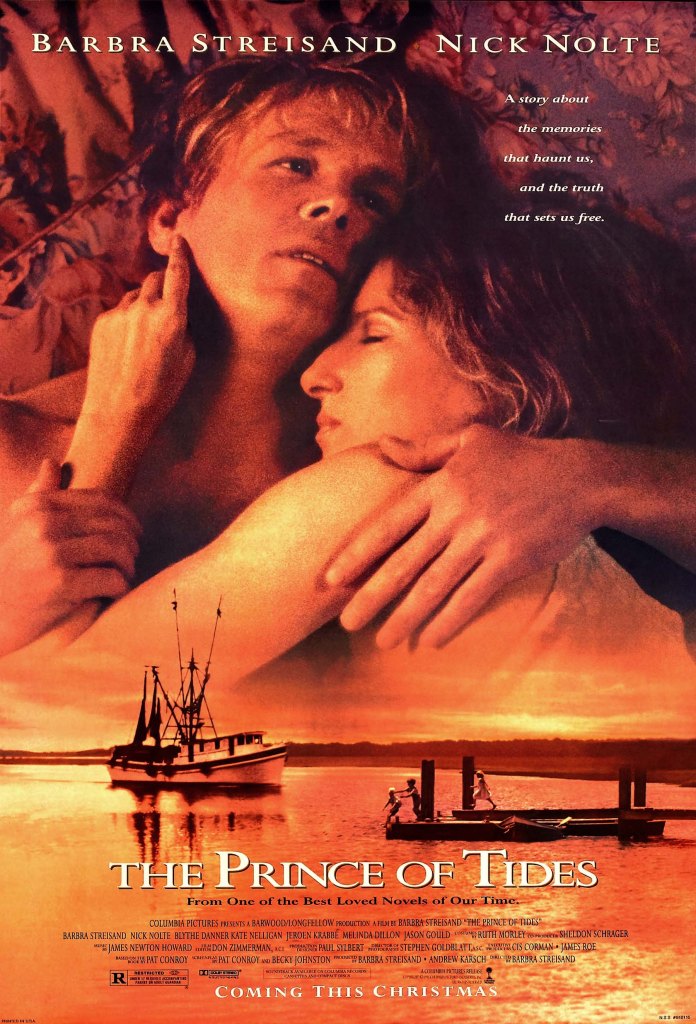
It makes it easy for us to accept Streisand’s eventual affair – much as Blythe Danner’s Sally regretfully confessing that Tom’s emotional closed-offness has driven her into the arms of another man. Despite the poster’s impression though, this is far from a steamy romance, waiting almost four fifths of its runtime before the two confess their feelings for a cathartic affair. For the bulk of the film, it’s an unspoken mutual affection, driven by Tom’s Southern flirtatious manner and Susan’s half-smiles. Again, it’s a slow-build, carefully paced romance that feels real.

Also because the film’s real build is not towards the two stars converting flirting to grinding, but in uncovering the exact trauma Tom is suppressing and has made him resent his mother (Kate Nelligan very good as an aspirant social-climber, refusing to invest love in her children) almost as much as his violent father (a surly Brad Sullivan). The reveal is, in some ways, expected – but also shockingly unexpected, particularly due to the visceral rawness which Streisand shoots the Nolte-narrated flashback with (Nolte is, needless to say, wonderful in this scene).

It’s part of the surprisingly effectiveness of a film that, in other hands, could have been a sentimental family drama, but is lifted by excellent, committed performances (Streisand is clearly a whizz with actors) and sensitive, patient direction. Streisand resists attention-grabbing flash, carefully letting scenes and emotions build, using subtle but effective camera movements. It comes together into a film that surprised me greatly with its richness. It eventually has a heart-warming message to tell of the power and importance of having the courage to admit your pain and emotions and, in its portrait of a man’s man engaging with his vulnerability, projects a message still powerful today. If Redford or Eastwood had directed it, they would have won an Oscar.