Author: Alistair Nunn

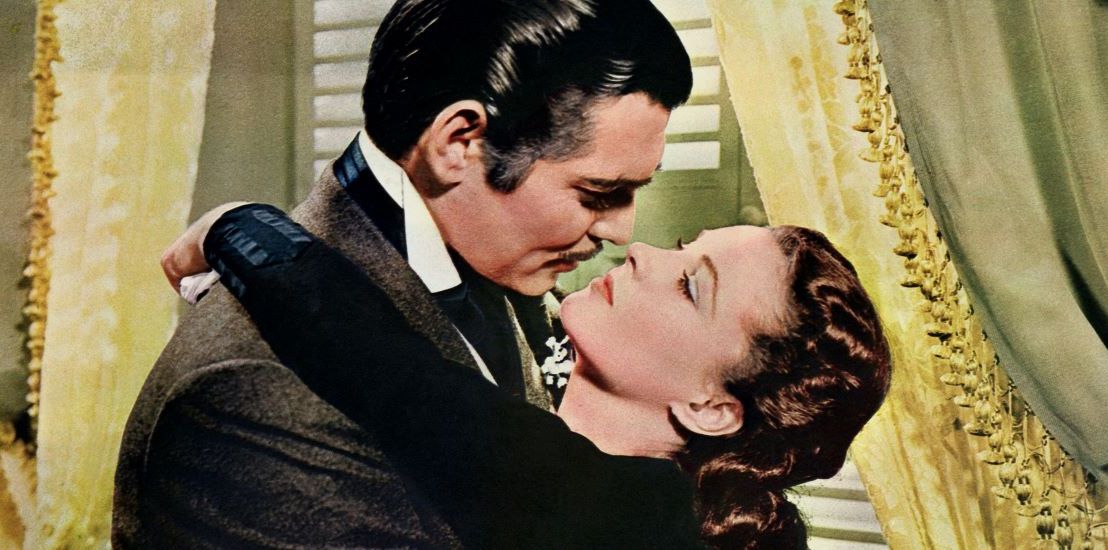
Gone with the Wind (1939)

Gone with the Wind (1939)

For decades unchallenged as the best loved Hollywood film ever made, but showing some signs of its age, it’s still an undeniable marvel

Director: Victor Fleming

Cast: Vivien Leigh (Scarlett O’Hara), Clark Gable (Rhett Butler), Leslie Howard (Ashley Wilkes), Olivia de Havilland (Melanie Hamilton), Thomas Mitchell (Gerald O’Hara), Evelyn Keyes (Suellen O’Hara), Ann Rutherford (Careen O’Hara), Barbara O’Neil (Ellen O’Hara), Hattie McDaniel (Mammy), Butterfly McQueen (Prissy), Oscar Polk (Pork), Rand Brooks (Charles Hamilton), Carroll Nye (Frank Kennedy), Jane Darwell (Mrs Meriweather), Ona Munson (Belle Watling), Harry Davenport (Dr Meade)

For most of the twentieth century, if you asked people to draw up a list of the greatest Hollywood films of all time, you can be pretty sure this would be close to the top. A landmark in Hollywood history, everything about Gone with the Wind is huge: sets, run time, costs, legend. It’s crammed with moments that have developed lives of their own in popular culture. Its score from Max Steiner – luscious and romantic – is instantly recognisable, practically Hollywood’s soundtrack. It’s the most famous moment in the lives of virtually all involved and for decades whenever it was released, it raked in the cash. But as we head into the twenty-first century, does GWTW (as it called itself even at the time) still claim its place at the head of Hollywood’s table?

It’s the love child of David O. Selznick. Never mind your auteur theory: GWTW credits Victor Fleming as the director, but parts of it were shot by George Cukor (the original director, who continued to coach Leigh and de Havilland), William Cameron Menzies (the legendary art director, who shot the Atlanta sequences) and Sam Wood (who covered for an exhausted Fleming for several weeks). This is a Selznick joint from top to bottom. GWTW is possibly the ultimate producer’s film: a massive show piece, where not a single cent isn’t up on the screen. Huge sets, vast casts, colossal set pieces, thousands of costumes and extras. It’s an extravaganza and Selznick was determined that it would be an event like no other. And a hugely entertaining event it was.

It would also be scrupulously faithful to Margaret Mitchell’s novel, with a dozen screenwriters working on it (including Selznick). GWTW was the ultimate door-stop romance novel. Set in Atlanta, Georgia, the entire film is a no-holds barred “Lost cause” romance of the South during the Civil War and Reconstruction. Scarlett O’Hara (Vivien Leigh) is the passionate, wilful daughter of a plantation owner, desperately in love with Ashley Wilkes (Leslie Howard), who is attracted to her but all set to marry his cousin Melanie (Olivia de Havilland). Also interested in Scarlett is playboy Rhett Butler (Clark Gable). Romantic complications are set to one side when the Civil War breaks out, bringing disaster to the South. As the war comes to its end will Scarlett and Rhett find love, or will Scarlett’s fixation on Ashley continue to come between them?

GWTW’s casting was the sort of national obsession not even the casting of a superhero gets today. Every actress in Hollywood seemed to screen test for Scarlett O’Hara, with Selznick playing the search for all the publicity it was worth. No one suggested Vivien Leigh. But, lord almighty, Leigh was placed on this Earth to play Scarlett O’Hara. GWTW is dominated by Leigh, dripping movie star charisma. She would be synonymous with the role for the rest of her life, and it’s no exaggeration to say this one of the greatest acting performances in movie history. Leigh balances a character stuffed with contradictions. Scarlett is wilful and vulnerable, impulsive and calculated, childish and dependable, selfish and generous, spoilt and sensible, romantic and realistic… But Leigh balances all this with complete ease. It’s an act of complete transformation, an astonishingly confident, charismatic and complicated performance.

There was no debate about who would play the romantic hero, Rhett Butler. He basically was Clark Gable. And Gable was perfect casting – so perfect, he was almost too scared to play it. But he did, and he is sublime: matinee idol charismatic, but also wise, witty and vulnerable (it’s easy to forget that Rhett is really in the traditional “woman’s role” – the ever-devoted lover who sticks by his woman, no matter how badly she treats him, spending chunks the latter half of the film halfway to depressed tears). For the rest, Leslie Howard was oddly miscast as Wilkes (he seems too English and too inhibited by the dull role) but Olivia de Havilland excels in a generous performance as Melanie, endearingly sweet and loyal.

These stars were placed in a film production that’s beyond stunning. Shot in glorious technicolour, with those distinctive luscious colours, astonishingly detailed sets were built (plantations, massive dance halls, whole towns). Everything about GWTW is designed to scream prestige quality. It lacks directorial personality – the best shots, including a crane shot of the Civil War wounded or a tracking shot on Leigh through a crowded staircase, seem designed to showpiece the sets and volume of extras. It’s a film designed to wow, crammed with soaring emotions and vintage melodrama. Nothing is ever low key in GWTW: disasters are epic, love is all-consuming passionate clinches. They built stretches of Atlanta so they could burn it down on camera. It’s extraordinary.

And much of GWTW is extremely entertaining. Especially the first half. It’s an often overlooked fact that if you ask people to name things that happen in GWTW, nearly everything (bar the film’s final scene obviously) they will come up with is in the first half. Rhett behind a sofa in the library? Atlanta on fire? Rhett and Scarlett at the ball? Scarlett surrounded by admirers at a garden party? “I’ll never be hungry again?” All before the interval. The first half is a rollicking, fast-paced rollercoaster that takes us from the height of the South to the devastation after the war. It grabs you by the collar and never lets go, supremely romantic, gripping and exciting.

The second half? Always duller. Bar the start and finish of the second half (nearly two hours in all), it’s a Less memorable film. Sure, it has the O’Hara’s in extreme poverty, Scarlett reduced to converting a curtain into a dress to glamour up some cash to keep Tara. It’s got Ashley and Melanie’s adorably sweet reunion. And it’s got possibly the most famous line ever in movies “Frankly my dear, I don’t give a damn” (not to mention “Tomorrow is another day”).

Other than that? It’s a bitty, plot-heavy series of forgettable, episodic moments which you feel really should have been cut. Who remembers Frank Kennedy? Or Scarlett’s lumber mill? Rhett pushing his daughter in a pram? The London sequence? There is a solid hour of this film which is flatly shot, dully paced and devoid of anything memorable at all. GWTW owes all its beloved reputation to the first half: and to be fair you’ll be so swept up in that you’ll give the film a pass for its middling second act. After all you get just about enough quality to keep you going.

But what about the elephant in the room? GWTW, like no other beloved film, has a deeply troubling legacy. They were partly aware of it at the time – after all, every racial epithet was cut, as is every reference to the KKK (it’s referred to as a “political meeting” and Rhett and Ashley’s membership is glossed over) and we never see the attack they carry out on a shanty town of former slaves. But GWTW remains, in many ways, a racist film peddling an unpleasant and dangerous mythology that the “Lost Cause” of the South was all about gentlemanly fair play, rather than coining it off plantations full of enslaved workers.

GWTW, in many ways, plays today a bit like a beloved elderly relative who comes round for dinner and then says something deeply inappropriate half-way through the main course. The dangerous mythology is there from the opening crawl which talks of the South as a land of “Cavaliers and cotton fields” where “Gallantry took its last bow…[full of] knights and their ladies fair, of Master and Slave”. The third shot of the film is a field of smiling slaves, working in a cotton field. Hattie McDaniel won an Oscar (at a segregated ceremony) and she is wonderfully warm as Mammy, but her character is another contented underling. At least she seems smarter than the other main black characters, Pork and Prissy: both are like children reliant on the guidance of their masters.

The Cause of the South is luscious and romantic, as are the people who fight it. Nearly every Yankee we see is corrupt, ugly and greedy, rubbing defeat in our heroes’ faces. It’s not quite Birth of a Nation, but the second half has a creeping suspicion of freed black people. A carpetbagger from the North is a smug, fat black man who mocks wounded Southern soldiers. Scarlett’s walk through the streets of a rebuilt Atlanta sees her startled and mildly hustled by black people who no longer know their place. Every prominent black character is sentimental about the good old days. GWTW would make an interesting double feature with 12 Years a Slave.

It’s this dangerous and false mythology that makes the film troubling today. It’s why you need to imagine the entire thing with a massive asterisk – and why you should be encouraged to find out more about the era than the fake and self-serving fantasy the film peddles as reality. But for all that, GWTW is so marvellous as a film that it will always be watched (and rightly so), even if it was always a film of two halves and only becomes more controversial in time. But watch it with a pinch of salt, and it is still one of the most gorgeous, sweeping and romantic films of all time: that’s why it still remains, for many, the definitive “Hollywood” film.

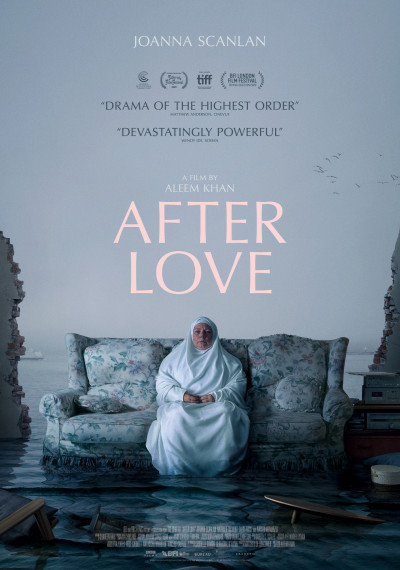
After Love (2021)

After Love (2021)

Loss, grief and family combine in Aleem Khan’s poetic, heartfelt debut

Director: Aleem Khan

Cast: Joanna Scanlan (Mary Hussain), Nathalie Richard (Genevieve), Talid Ariss (Solomon), Nasser Memarzia (Ahmed), Sudha Bhuchar (Farzanna), Nisha Chadha (Mina)

Mary Hussain (Joanna Scanlan) is a white English woman who converted to Islam decades ago to marry Ahmed (Nasser Memarzia). Ahmed works as a captain of a ferry ship, travelling between their home in Dover and Calais. When he suddenly passes away, Mary is distraught. But that’s nothing compared to how she feels when she discovers Ahmed had a second family in Calais: Genevieve (Nathalie Richard) and their son Solomon (Talid Ariss) – whose very existence is a painful memory of the child Mary and Ahmed lost decades ago. Mary travels to Calais to do she’s-not-sure-what but, due to a misunderstanding, ends up working as a cleaner in Genevieve’s house as she packs for a move, totally unaware Ahmed is not just ignoring her calls.

The debut film from Aleem Khan – whose mother was similarly a white English convert, living in Kent, who immersed herself in her adopted culture – After Love is part fascinating moral dilemma, part profound exploration of the burden of grief. Mary’s life has been shattered by the loss, not only of her husband, but the even greater loss of her understanding of what her life was. Khan captures this with a beautifully shot visual metaphor: Mary hallucinates the world literally collapsing around her, from dust dancing in the sunlight, to cracks appearing in the ceiling above her to a vivid hallucination of the white cliffs of Dover collapsing behind her as she sails to Calais.

Khan’s film is at its strongest when it centres Mary’s emotions and faith. It’s a wonderful endorsement of the power of faith. Faith is central to Mary’s life: she immersed herself in her adopted culture – from prayer to dress to food, which she cooks with love-infused skill. Part of the film’s purpose is to challenge any underlying assumptions we may have about this culture. Mary’s faith is not something forced upon her or which provides barriers to her. It has, instead, given her peace, purpose and contentment. In a world where images of Islam are not always so positive, it’s refreshing to see religion as such a positive force in a person’s life.

But the film also knows seeing a woman in a hijab carries certain assumptions. Its perhaps the biggest reason why, when Mary arrives at her door, Genevieve assumes she is a cleaner. Later she will question why Mary wears it, as if it was a set of chains rather than a personal choice that is an expression of her faith. For Genevieve, the hijab not only makes it easier to push her into a servile position, it also defines her, in the eyes some, as being on the lower rungs of society (which she isn’t). You can be confident if Mary had turned up wearing a black dress and a hat, the film would have played out very differently.

We see Mary carefully prep what she might say to this other woman, before she arrives. It all goes out of the window in tongue-tied fear and shock when she arrives. Instead, she ends up working as a cleaner. Mary accepts the misunderstanding for reasons she almost can’t understand herself. Is it meekness? Awkwardness? Curiosity? Shock that this woman is far more glamourous than she is? Does she want revenge? She hardly knows herself, using her position in the house, effectively as a servant, to learn more about this woman and the family she built with her husband.

If there is a weakness in After Love it’s the slightly contrived nature of this plot. In a film grounded in the realism of the pain of loss – Mary’s devastation, confusion and sense of being adrift is explored with a profound sensitivity – it revolves around the sort of plot device that wouldn’t seem out of place in a soap opera. It takes a bit of investment – which the film just about manages to earn – to go with this storyline, which relies slightly on contrivance to sustain itself.

But it does allow us to have our perceptions about Genevieve challenged as well. While we assume, at first, she will be little better than a hussy, we discover she is a sensitive, realistic woman, well aware that she is (and more than a little guilty about being) “the other woman”. She is struggling with her teenage son Solomon, who can’t understand why his life is so unusual and of course blames his mother more than his absent (and therefore idealised) father.

In fact, the longer Mary stays in this house, not telling the truth, becoming a confidant to mother and son, the more you start to feel your loyalty shift. From our first perception of Mary being the wronged woman, the more you start to feel she is taking terrible advantage of Genevieve and her son. That not telling them Ahmed is dead, as they long to hear from him, is wrong. That her attempt to comfort Solomon (whom she starts to feel a motherly love for) by texting him from Ahmed’s phone is inadvertently deeply cruel. You start to feel unease about this interloper, lying to this family at what is already a difficult time.

The fact you stick with her is due to the extraordinary performance by Joanna Scanlon. Quiet, polite, over-flowing with faith and a desire to help, Scanlon also lets us see that the loss of Ahmed (and the loss of her memories of a happy marriage) has torn her apart. Scanlon’s performance drips with grief and pain, an anguish she can barely form into words. It’s a gentle powerhouse of humanity (and rightly BAFTA winning). Richard and Ariss also give fabulously raw performances as two people only just holding their own relationship together, never mind processing the loss of a husband and father.

After Love is strongest when exploring the profound and lasting effect of grief. Khan’s film is shot with a poetic beauty, and he draws deep and moving performances from his lead actors. It revolves around a massive contrivance but carries enough impact that you’ll feel the same note of hope, of the debris settled and life going on, as the film ends on.

The Ghost Writer (2010)

The Ghost Writer (2010)

Conspiracies, lies and dirty politics surround a politician who definitely isn’t Blair in Polanski’s superb thriller

Director: Roman Polanski

Cast: Ewan McGregor (The Ghost), Pierce Brosnan (Adam Lang), Kim Cattrall (Amelia Bly), Olivia Williams (Ruth Lang), Tom Wilkinson (Professor Paul Emmett), Timothy Hutton (Sidney Kroll), Jon Bernthal (Rick Ricardelli), Tim Preece (Roy), Robert Pugh (Richard Rycart), David Rintoul (Stranger), Eli Wallach (Old Man), James Belushi (John Maddox)

An American publishing company is in dire straits. They’ve paid a fortune for the autobiography of former British Prime Minister Adam Lang (Pierce Brosnan), once seen as a visionary liberal idol but now blamed for a deeply controversial war in Iraq (sound familiar?). Problem is his trusted aide Mike McCara – who is actually writing the book – has been found drowned on Martha’s Vineyard where Lang, his wife Ruth (Olivia Williams) and staff are staying. The book needs to be finished in a month – but it’s in an unpublishable mess. Who ya gonna call? A Ghost writer (Ewan McGregor) of celebrity memoirs to finish the job of course. But will the Ghost resist trying to investigate whatever McCara uncovered in Lang’s life that may have led to his suspicious death?

Adapted from a novel by Robert Harris – who turned from a strong supporter of Blair, to terminally disenchanted – The Ghost Writer comes to the screen as a superbly controlled, perfectly placed piece of tight-wound tension from Roman Polanski, that mixes wonderful elements of Hitchcockian menace and Seventies conspiracy thriller, not to mention lashings of his own Chinatownbut here switched to the doom-laden drizzle of New York, rather than the sunkissed glory of California.

Set on a grim, grey and foreboding Martha’s Vineyard (although, for obvious legal reasons, actually filmed in Potsdam), Polanski lets every scene grow in unsettling tension. Very little explicit is every said, but danger from unknown, unseen forces is a constant presence. Accompanied by a Herrmann-esque score from Alexandre Desplat (also with a hint of a twist on Jerry Goldsmith’s work on Chinatown), this is film made with such calm, patient authority that its exudes engrossing tension. Polanski employs some beautiful touches, worthy of Hitchcock: from the Ghost, uncertain if he is being followed when boarding a car ferry, making a desperate run for freedom; to a wonderful tracking shot at a book launch that follows a note containing a vital reveal, passed from hand to hand through a crowd to the guilty speaker.

The Ghost Writer also has neat moments of dark comedy which also feels reminiscent of Hitchcock’s ability to mix dark chuckles with oppressive tension. The Ghost’s recruitment as a writer – and his hilariously frank suggestion that political memoirs are boring beyond belief – is a lovely lightly comic entrée that completely fails to prepare us for the conspiracy thriller that follows in all the right ways. Stuck in Lang’s house on Martha’s Vineyard, the Ghost tries to secretly download a copy of the memoir he is only allowed to read under supervision: his attempt coincides, to his terror, with what turns out to be a test of the alarm system. In the background of a shot during a monologue from Lang, a worker struggles with wearied patience to clean the wind-filled grounds of leaves, constantly, dutifully, collecting them back up as they blow away.

These moments of lightness make the dark even blacker. We are constantly left guessing as to who knows what. Was McCara murdered? What mysteries lie in Lang’s university past that McCara considered so important? Lang and his wife oscillate from welcoming to coldly distant. Particularly so with Ruth Lang, a superb performance from Olivia Williams. Ruth has, quite possibly, been the power behind the Lang throne, but now seems less sure of where she stands. She’s tense, without making clear why and at times painfully blunt. Suffering no fools, brittle, sharply intelligent, coldly determined, her surprisingly vulnerability draws the Ghost in, despite him knowing its “a bad idea”.

But then The Ghost makes more than a few bad ones. Perhaps because he gets fed up with people thinking he’s stupid and is too keen to prove them wrong. Ewan McGregor is wonderful as a man who spends most of his time wearily ignoring digs at the fact he’s best known for ghosting the autobiography of a celebrity chef. The Ghost – as in Harris’ book he remains un-named, suitable for a man whose job is to pretend to be his client – seems to be a disconnected observer, but emerges as a dogged detective – even if he is painfully out of his depth and acting way beyond his expertise. He becomes increasingly panicked at the terrifying world of international politics and espionage, like a beginner swimmer dropped in the deep end, while unable to stop himself digging further, like picking at a scab.

The film picks at its own scab with the legacy of Blair. Brosnan’s confident, charismatic performance captures an impression of Blair while never trying to be an impersonation. He perfectly conveys the easy charm and casual but shallow warmth of the professional politician, but the slightest scratch of the surface reveals a man who feels hard-done-by and undervalued and sick of being judged for making the tough calls. Polanski allows him moments of sympathy: it’s hard not to see his point when he makes the case for what many would call intrusive security and the self-righteousness of his persecutor, former foreign secretary Ryecart (Robert Pugh, channelling Robin Cook) hardly warms the viewer (or the Ghost) to him.

The Ghost Writer manages to make its political parallels – especially about Iraq – pointed but not too heavy handed. (There is a lovely performance from David Rintoul as a calmly spoken former-army type who turns out to be a rabid anti-war protester). It imaginatively fictionalises a version of history, humanising characters who could otherwise be crude caricatures. The cast are wonderful and this is an intelligent, gripping, classic conspiracy thriller. Mastered by Polanski, who assembles the film with such control that it takes a cold grasp of your heart without ever seeming to overwork itself. As the credits roll, Polanski having left us with a poetically tragic image of pages blowing emptily in the wind on a London street, you’ll realise how the quiet doom so expertly built could only have led to one thing. The Ghost shoulda forgot about it: its Chinatown.

The Magician (1958)

The Magician (1958)

Illusion, faith and rationalism are all explored in Bergman’s fascinating musing on performance

Director: Ingmar Bergman

Cast: Max von Sydow (Albert Emanuel Vogler), Ingrid Thulin (Aman/Manda Vogler), Gunnar Björnstrand (Dr. Vergerus), Naima Wifstrand (Granny Vogler), Bengt Ekerot (Johan Spegel), Bibi Andersson (Sara), Birgitta Pettersson (Sanna), Gertrud Fridh (Ottilia Egerman), Lars Ekborg (Simson), Toivo Pawlo (Police Superintendent Starbeck), Erland Josephson (Consul Egerman), Åke Fridell (Tubal), Sif Ruud (Sofia Garp), Oscar Ljung (Antonsson), Ulla Sjöblom (Henrietta Starbeck), Axel Düberg (Rustan)

He who tells the truth may be the greatest liar. So thinks Mr Aman (Ingrid Thulin), in the carriage carrying him and the rest of Albert Emmanuel Volger’s Magnetic Health Theatre to a performance in a village in nineteenth-century Sweden. It’s fitting for Aman to thinking about it, since he’s actually Vogler’s wife Manda. The mute Vogler (Max von Sydow) claims powers of healing and mesmerism. But perhaps he’s making it up? If we peek behind the curtain, what is the truth?

Peeking behind the curtain is exactly what their clients want to do. The troupe is due to perform before a trio of rationalists, practically falling over themselves to debunk every step Vogler takes. Dr Vergerus (Gunnar Björnstrand) is a chilly health official who only believes what his own hands touch. Consul Egerman (Erland Josephson) wants to prove it’s rubbish to his wife Ottila (Gertrude Fridh), while Police Superintendent Starbeck (Tovio Pawlo) is a swaggering bully who just likes making people feel small. But can the imperious Vogler turn the tables on these would-be myth busters?

Bergman first struck upon the idea for The Magician after observing how much audiences at the theatre wanted to go backstage and meet the actors – and how they were invariably disappointed when they did at how everyday it was. Based on a GK Chesterton play, The Magician is a multi-layered musing on the relationship between performance and viewing, and the conflict between rationalism and faith. At heart it sympathises with the plight of the performer, presenting their work to an unsympathetic, uninterested, unengaged and unimpressed audience.

The theatre troupe look all sorts of glamourous, with the eccentric costumes and their intriguingly unknowable personae. They offer a carnival of the weird and wonderful that fascinates the rationalists, in spite of how much they want to debunk it. But, as they strip down the acts, they find plainer, simpler, less mysterious people below. Despite their eagerness to know how the trick is done, they are disappointed to find out. They barely watch the acts, or listen to the skill of the performers, because they are focused on unpicking the minutia and detail (Bergman having a pop at pretentious critical writing like the material here perhaps?).

Our rationalists are, to a man, an unpleasant, smug and often insufferable bunch. They have a clear world view and anything unscientific doesn’t fit in it: even God is “totally out of date”. Tovio Pawlo’s Starbeck is a crude, jumped-up bully, who feels barely more than a step or two higher up the social pyramid than Vogler. Egerman (a wonderfully nervy and insecure Erland Josephson) is so in awe of facts and statistics he can barely think for himself. Really controlling things is Dr Vergerus, a masterful performance of arrogance and self-satisfaction masquerading as open-minded scientific enquiry from Gunnar Björnstrand.

Far from inquiring, Vergeus’ mind is rigidly closed to anything outside of his world view. People are categorised and little more than objects of curiosity – he even speaks (ominously it turns out) of an eagerness to dissect Vogler. Flashes of the supernatural or inexplicable are met with blank terror which Vergeus swiftly covers with cold impassivity. He has made up his mind well before Vogler arrives. Like the rest of the rationalists, he preaches absolute truth but only on his own terms.

And perhaps he’s right to, in a way. The troupe are liars – but at least they are honest about it. They claim magical skills of healing and love potions (“what the bottle looks like and the colour” is far more important than the contents) which they merrily flog to the credulous. Their magic tricks are dressed up in elaborate costumes and quasi-mystical business. Their promoter Tubal (another impressive, bombastic performance for Bergman from Åke Fridell) shamelessly peddles exaggerated stories of their mastery. They may be a glamourous, but they are also cheap.

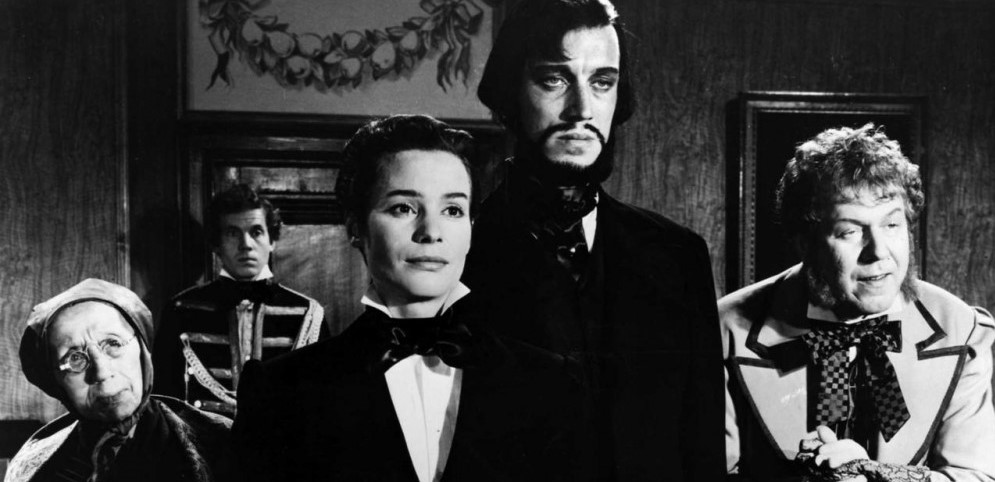
And then of course there is Vogler, who has practically dressed himself as a prop. Coated in pale make-up, Fu Manchu facial hair and a flowing black wig, von Sydow presents Vogler as an enigmatic showman. Bergman makes fabulous use of his riveting stare – surely he doesn’t need any flim-flam to hypnotise when he can glare at you like that. There is a sadness to Vogler though: his faith in himself has gone. Encountering a dying actor on the road (a neat cameo from Bengt Ekerot – and a nice call-back to his and von Sydow’s Seventh Seal team-up), Vogler’s face leans forward in fascination, curiosity and a strange longing as the actor faces death, as if he is longing to touch powers beyond once more. Manda is adamant his powers used to be real, but behind the contemptuous and defiant stare it’s unclear if Vogler knows where he is going.

Not that it matters. He’s still got the star quality to leave Mrs Egerman weak at the knees, desperate to seduce him to touch a part of his magic. And the powers are still there – even in their first meeting, Vegeus feels a flash of discomfort as Vogler’s fixed stare causes his mind to drift (a fear he dismisses in seconds). Its only as Bergman’s film strips down the performance qualities of Vogler – his costume, his make-up, his stage persona – and leaves an off-duty actor, that the dark fascination of his clients finally snaps all together into smug, rationalist contempt.

But that’s not before Vogler turns the table on Vergeus with an unsettling confrontation in a locked loft, after a performance seems to have gone disastrously wrong. It’s Vogler’s intimidating “real performance” to prove he and his troupe can still engross and deceive their audiences. This horror-tinged, mesmeric sequence of reflections, shadows, distant sounds and small movements is another reminder of what a master of the cinema of terror Bergman could have been (imagine he had joined von Sydow for The Exorcist!). It’s a superb sequence that almost shakes Vergeus’ faith in his certainty, before becoming another confirmation of how dismissive audiences are when they find out how the trick was done (no matter the impact it had on them at the time).

The Magician isn’t perfect. The middle of the film spends a little too long with the servants in the belly of the house (a Bergman trope of delight for the love of simple, everyday pleasures among the working classes). But its exploration of rationalism and artistry is fascinating. There are masterful performances (in addition to the earlier named, Ingrid Thulin is outstanding). But there is a lingering sense underneath that perhaps Bergman is gently accusing us of being little better than the rationalists, eager to know how cinema works but then talking it down when we find out. Which I suppose means a review of it rather makes his point.

Kinds Hearts and Coronets (1949)

Kinds Hearts and Coronets (1949)

Murder and amorality abound in the darkest (and perhaps Greatest) Ealing comedy ever

Director: Robert Hamer

Cast: Dennis Price (Louis Mazzini), Alec Guinness (The nine members of the d’Ascoyne family), Valerie Hobson (Edith), Joan Greenwood (Sibella), Audrey Fildes (Mama), Miles Malleson (Hangman), Clive Morton (Prison Governor), John Penrose (Lionel), Hugh Griffith (Lord High Steward)

Imagine you’re Louis Mazzini (Dennis Price). Your mother is the outcast daughter of the d’Ascoyne family (all of whom, male or female, bear a striking resemblance to Alec Guinness), Dukes of Chalfort. These vindictive snobs won’t even allow his mother to be buried in the family mausoleum. However, in the event of a series of unlikely deaths, Louis is the eventual heir to the dukedom. That couldn’t happen, could it? Even if they’re all such stuffy, tedious bores that the suave, sophisticated, urbane and witty Louis feels a lot more like what a duke should be.

What to do? Well, it’s obvious really: Louis will have to murder them. Because Louis wants nothing more than the thing he can’t have. It’s the same with the ladies in his life: his childhood sweetheart Sibella (Joan Greenwood), sensual and manipulative, seems all the more tempting when he’s with the refined and austere Edith (Valerie Hobson) and vice versa. We know that the charming Louis’ murderous career will eventually end at the gallows – the film opens with him writing his memoirs and eating his last meal in prison – but what crime will find him there?

Kind Hearts and Coronets is one of the first of the Ealing comedies. It’s also pretty much the one that sets the Gold Standard. I’ll confess I’ve been sceptical in the past, but rewatching it again, its black comic humour, shrewd psychology and delightful amorality delighted me as never before. Kind Hearts is a very, very funny movie: perfectly constructed, gorgeously scripted and supremely sharp, knowing and scintillating. It’s a miraculously marvellous film.

Is there a comedy sharper and more heartless than Kind Hearts? Our hero is, at best, a sociopath who kills without the slightest regret. Murders are frequent punchlines. One of its leading ladies is as selfish, conniving and ruthless as the hero. D’Ascoynes bite the dust regardless of their decency (and some of them are genuinely quite nice). But we don’t care – largely because Louis is such a smoothly charming and amusing person.

Brilliantly played by Dennis Price, even when poverty forces him into the role of draper’s assistant Louis is the genteel duke to his fingertips. His sociopathic focus on his own desires is delivered with such dry wit (“It is so difficult to make a neat job of killing people with whom one is not on friendly terms”) we can’t help but like him, even though he is a remorseless killer. Dispatching one d’Ascoyne and his mistress in a river “accident” he only sighs “I was sorry about the girl, but found some relief in the reflection that she had presumably during the weekend already undergone a fate worse than death.”

Some critics have attempted to position Louis as some sort of class warrior, pruning the nobility. Would that were so, eh? The biggest snob in the film is clearly Louis (compared to him the worst of the d’Ascoynes are more rude and boorish), a man so convinced of his own intellectual and hereditary superiority that even his lowly roots don’t concern him.

Louis really matches our expectations of a duke. He’s refined in voice and manner, dignified in physicality and has the sort of arch wit no one else can compete with (when Sibella tells him her husband wishes to go to Europe to expand his mind, Louis replies “He certainly has room to do so”). He is a million miles from a class warrior: he wants nothing more than to take his place on the velvet cushions of the House of Lords (so much so he insists on being tried there). He’s so convinced of his own superiority, the dispatch of legions of d’Ascoynes cause him to lose not a second of sleep.

He’s also charming, funny and ingenious: we like him. It’s the same reason we like Joan Greenwood’s scheming, sexy and selfish Sibella: what’s more fun than an unashamed baddy? It’s easier to like her more than Valerie Hobson’s staid Edith – though Hobson’s generous performance is spot on for creating the ideal upper-class wife, exactly the sort of refined status symbol Louis would long for.

Hamer’s perfectly paced comedy is largely a triumph of dialogue and characterisation. He shoots much of it in carefully positioned mid-shot. But there are wonderful moments of visual comedy. Who can forget Admiral d’Ascoyne slowly submerging, going down with his sinking ship? Or, best of all, Louis and Edith’s gentle garden conversation about her husband Henry d’Ascoyne’s future while, in the background, over a wall, the small explosion that has just killed him smokes away (“I could hardly point out that Henry now had no time left for any kind of activity, so I continued to discuss his future” Louis observes). But above all, Hamer doesn’t skim on the cold amorality of Louis. While we are never invited to judge him, there are no attempts to hide his sociopathic blankness.

Confronted with real emotion and situations outside his control, Louis is helpless. When his mother dies, he can only mourn her with a flourish straight out of the cheap melodrama he despises. When Sibella’s husband, the dull Lionel, insults his background, he’s reduced to punching him. Caught off guard in his trial, his articulate wit absolutely deserts him. Louis slips on  personae like the fine suits he wears, but his ambitious mind can only travel on his pre-planned route, no others.

But that makes him more than match for the d’Ascoynes. In a masterstroke, all members of this family are played by Alec Guinness, the sort of impish, playful trick Guinness loved. It’s a series of eight distinct comic sketches – to be honest none of them a challenge to Guinness, who is such a great actor that playing these pencil-sketch eccentrics was no-problem-at-all – but still a delightful running gag. His d’Ascoynes include a bumbling vicar, a windbag general forever banging on about his Boer (Bore?) war, a sneering playboy scion, bumbling amateur-photographer Henry (the most sympathetic by a mile), a stuffy banker, an austere suffragette and a bullying duke with a capacity for violence.

Seeing each of these Guinnesses is a neat running joke (not to mention, a little gag at the in-breeding of the upper classes). Price gets in on the act as well, doubling up as Louis’ Italian Tenor father (who dies of shock on Louis’ birth – our hero’s first murder?). But it’s also part of the film’s comedic commentary on construction, duality and falseness. Is it a surprise that the d’Ascoynes are all facets of the same actor, when Louis himself is an entirely self-constructed man, part bitter by-blow, part natural duke? Nothing is ever quite what it seems. Louis lies to everyone he meets, pretends affections he never feels and presents a front to the world totally different from his real self. Even the reason Louis is on death row turns out to be radically different from what we expect.

Kind Hearts and Coronets is a perfect display of arch Wildean front, redirected into sociopathic irritation (I can’t call Louis furious – he’s not got enough depth to him for real anger). It’s a jet-black comedy, crammed with superb lines and brilliantly acted, above all by Price whose tortured unknowability behind his Cowardian suaveness is perfect. Guinness went into film legend, Greenwood is fascinatingly vicious and Hobson the embodiment of polite class. Every scene has a great line and the humour is as dark as it comes. It’s one of the greatest of all Ealing’s comedies –certainly the darkest and most vicious – with a hero who looks, acts and talks like a villain.

The Four Hundred Blows (1959)

The Four Hundred Blows (1959)

Injustice, oppression and disregard fill the life of a young ‘Truffaut’ in this marvellous coming-of-age story

Director: François Truffaut

Cast: Jean-Pierre Léaud (Antoine Doinel), Albert Rémy (Antoine’s father), Claire Maurier (Antoine’s mother), Guy Decomble (“Sourpuss”, the teacher), Patrick Auffay (René Bigey), Georges Flamant (Monsieur Bigey), Pierre Repp (English teacher), Daniel Couturier (Betrand Mauricet), Luc Andrieux (Gym teacher), Robert Beauvais (School director)

Truffaut’s first film, shot when he was just 26 years old, is not only one of the finest debuts ever, it’s also one of the films most in touch with being a child. Heavily based on Truffaut’s own troubled childhood, it’s a beautifully told exploration of how much children can be misunderstood by adults and what a cage, of circumstances outside of your control, childhood can become.

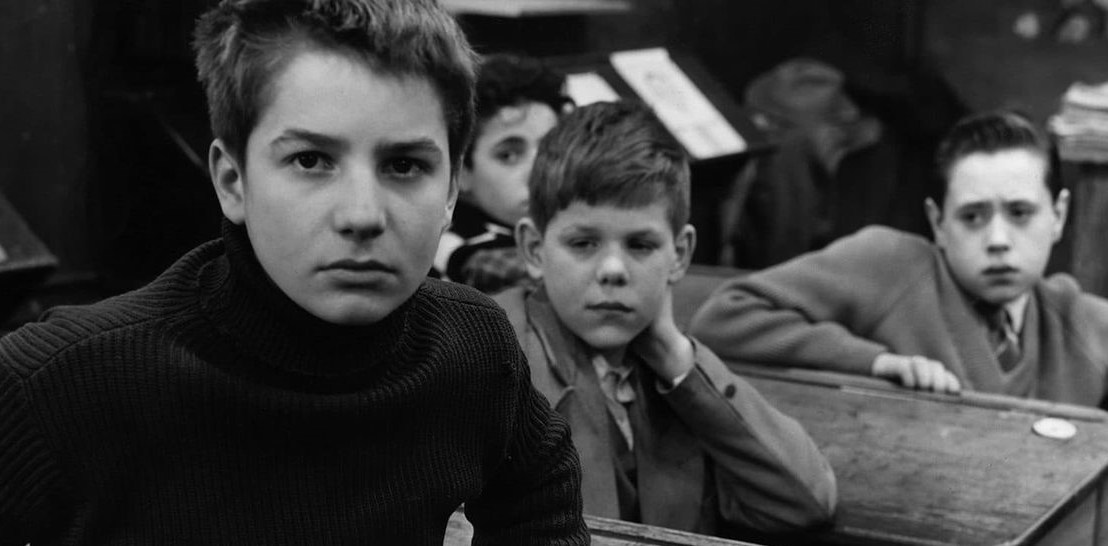
Antoine Doinel (Jean-Pierre Léaud) is a 12-year-old living in a cramped apartment with his parents, who have a tempestuous relationship and alternate between half-interested mateyness and exasperation with their son. Antoine is marked at school as the class trouble-maker and constantly finds himself in scrapes, only increasing the perception of him as a tearaway and lost cause. Eventually packed off to a reform school (basically a borstal), only his imagination and love of books and film (qualities no one sees in him but us) give him any hope.

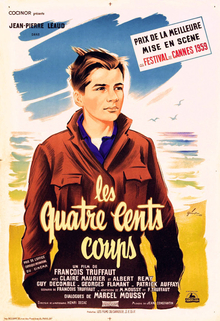
What’s with that title? In French it’s Les Quatre Cents Coups in reference to the expression “faire les quatre cent coups” which roughly translates as “raising hell”. The alternative English title of Wild Oats (which to be honest isn’t much better) was rejected. But perhaps it’s for the best. The 400 Blows has a poetic gorgeousness about it: it reminds us of Waugh’s powerful quote from Brideshead Revisited about the destructive impact of circumstances and misguided interventions on the tragic Sebastian: “a blow, expected, repeated, falling upon a bruise”. And what is Antonie’s life but 400 blows hammering down, repeatedly and expectedly on the same bruise?

This is a kid who never catches a break. From the opening scene, as the kids pass around a page torn from a naughty calendar, it’s him who gets caught with it – because he starts doodling artistically around her eyes. He’s distracted from his punishment homework by one of his father’s (brief) bursts of friendly interest. Worried, he skips school the next day then invents a ridiculous lie of his mother dying to cover it, cementing the impression he is a habitual liar. When he quotes his beloved Balzac in a school essay competition, he is thrown out of the class for plagiarism. After stealing a typewriter, he’s caught when he tries to return it. The kid cannot get a break.

It’s a hugely sympathetic and moving insight into Truffaut’s own childhood. He too was raised, largely in indifference, by two parents who seemed uncertain they wanted him. Like Antoine, he discovers the man he thinks is his father actually isn’t. He also he spent eight years living with his grandmother, because his mother wanted an abortion not a child, and witnessed his mother’s extramarital romances. Truffaut to spent much of his time with his closest friend Robert Lauchney (here appearing as René Bigey – Lauchney worked on the film’s crew).

But, also like Antoine, Truffaut was passionate about imagination and the arts. Antoine reads Balzac’s Le Père Goriot (smoking an illicit cigarette – after all he’s French) and it makes such a powerful impression he can quote large chunks of it from memory in a school essay and builds a candle-lit shrine at home to the author (with his usual luck, the candle nearly burns down the cramped flat). The cinema is his other big escape. He takes every opportunity to visit, staring at the screen with wonder, stealing film posters (he swipes an image of Harriet Andersson in Summer with Monika) and finding an outlet for his imagination and intelligence that the real world never offers.

This is a child who requires attention, focus and encouragement to bring out his vibrancy and creativity. What he gets are orders to take the bins out and stupefyingly boring lessons of endless repetition mixed with abuse at school. Home life has only flashes of happiness: Antonie’s childish, giggling joy when his parents take him to the film, and laughing in the car as they remember the film on the way home, is the only time he seems to smile in their presence. At others, his mother mixes irritation with sudden bursts of affection that are really bribes for good behaviour.

He is bought to life in an extraordinary performance from Jean-Pierre Léaud. Found from a pool of 200 applicants from a newspaper advert, Léaud transformed Truffaut’s idea of Doinel. Truffaut saw him as more overtly fragile, timid and artistic. Léaud has all of that – but matches it with a defiance, a bravery and a slight resentment that makes his vulnerability all the more affecting. He is the sort of kid you see as a tearaway but, look closer, you’d see the soul of an artist.

Léaud’s performance is guided with a great deal of delicacy and skill by Truffaut – so successfully that he and Truffaut would collaborate five more times on films about Antoine’s future life. His part was largely unscripted, Truffaut outlining the plot and scene and then encouraging him to use his own words. It’s gloriously effective in a beautifully naturalistic late scene, when Antoine (the camera focused solely on him), responds to a series of questions from an unseen psychiatrist about his past, including an abashed cheeky giggle when asked about his sexual experience.

The 400 Blows also helped to kickstart what would become the French New Wave. Truffaut – and cinematographer Henri Decaë – shot the film with an on-the-streets naturalism that gave a large dollop of documentary realism to a narrative film. Decaë’s roving camera, moving easily and naturally through the streets, tracking the movement of the children, is also reminiscent of the very act of being a child, where life is often one of wild drifting and aimless but purposeful running through streets. The wide angles capture the everyday details of the Paris in a way that feels intimate and real, and also manage to hammer home the cramped apartment the Doinels live in (Antonine’s bedroom, Harry Potter like, is basically a cupboard under the stairs next to the bin).

It all builds towards the film’s extraordinary ending. Thrown into a reform school, essentially told by his mother she doesn’t want him to come home, barred from seeing his friend René, asked to choose which hand he wants to be slapped with by the teachers and forbidden access to the books and films he loves, Antoine does what he has done all his life. He runs.

Running from a football match, evading a pursuing teacher, Truffaut gives us two long tracking shots of extraordinary beauty but also profoundly openly to interpretation. Antoine runs through the countryside, the camera keeping pace with him, his feet pounding on the grass and pavement. We are joining him in his flight, running free alongside him. Then he arrives at his destination – and the camera tracks him as he walks across the beach until finally he sees the sea. He wades – and then turns to look directly at us, Truffaut freeze-framing and zooming in.

Are we being challenged? After all, perhaps we are all complicit in the wretched judgement Antonine has faced. Or is this him welcoming us, accepting us, acknowledging us as his co-conspirator and escapee? Who quite knows. What we do know is that The Four Hundred Blows set Truffaut on the path to being one of the world’s leading directors – and is a stunning, sympathetic and heart-breaking insight into the struggles and injustice that childhood can consist of.

Drive (2011)

Drive (2011)

Neon, darkness and shades of grey fills the screen in a film that’s practically the definition of cult

Director: Nicholas Winding Refn

Cast Ryan Gosling (Driver), Carey Mulligan (Irene Gabriel), Bryan Cranston (Shannon), Albert Brooks (Bernie Rose), Oscar Isaac (Standard Gabriel), Christina Hendricks (Blanche), Ron Perlman (Nino Paolozzi), Kaden Leos (Benicio Gabriel)

Impassive and supernaturally calm, the Driver (Ryan Gosling) sits with the car engine purring. In this five-minute window he is the get-away driver who will go to any length. Outside of that, criminals are on their own. Its one of the simple rules he lives by. He never compromises. Until, of course, he finds something worth compromising for. That would be his neighbour Irene (Carey Mulligan) and her young son Benicio (Kaden Leos), trying to make ends meet while her husband Standard (Oscar Isaac) is in prison. The Driver helps them – and feels compelled to go on helping them when newly released Standard (trying to go straight) does one more job to get out from under the thumb of his criminal friends. That last job is always the worst one isn’t it? Particularly when crime lords as ruthless as Bernie (Albert Brooks) and Nino (Ron Perlman) are involved.

Drive won Refn the best director award at Cannes (after a huge standing ovation). It’s not hard to see why. This film is so overflowing with style, uncompromising cool and unreadable enigma it was practically a cult classic before it was even released. Layered in a mix of 70s and 80s chic – with its electric pink titles, John Carpenter-ish Los Angeles visuals and counter-culture smarts – it echoes cutting-edge crime drama from the punk years of Hollywood (it’s practically a remake of The Driver for starters!), by way of touches of Melville crime drama and Spaghetti Western anti-hero. Scored to a mix of ambient beats and electronic rock, it’s the dictionary definition of style.

It keeps you on your toes from the start. Its opening not only explores the Driver’s incredible skills (speed, manoeuvring, ingenious evasions and knowing when to go slow, he can do it all) it also sets us up for the whole film. Shot largely alongside the Driver in the car, we zip through streets and understand the determination (and hints of danger) under his impassive surface. That prologue is the whole movie in capsule – a careful wait, a sense of a fuse being list, touches of humour to distract us (the Driver’s precision with his gloves) and brilliant misdirection when his focused  attention to listening to a football game on the radio pays off in spades when we see his plans revealed.

Much of the first 40 minutes carefully develops the Driver’s surprisingly contented life: his happy acquiescence in the racing dreams of his fixer and mechanic boss Shannon (an ingratiating Bryan Cranston), who the Driver likes so much he doesn’t care that Shannon regularly swindles him; a soft, unspoken half-romance with Irene (Carey Mulligan, truthful and with a strength beneath the vulnerability); and a big-brother bond with her son Benecio. In another world this could have been a film where a loner learns to make a connection and finds love.

But it ain’t that film. The troubles start with Standard’s release from prison. Skilfully played by Oscar Isaac as well-meaning but essentially hopeless, Standard’s problems become Irene and Benecio’s problems. That one last job goes south – as they always do – in an orgy of cross, double cross and increasingly graphic violence. And the burning propulsive energy that lies under Drive, just like that purring engine in the films opening, is let rip.

What we get in the second half is dark, nihilistic and violent. Oh, good Lord, is it violent. Bone crunchingly, skull shatteringly, blood spurtingly violent. Because when gangsters get pissed off, they play for real. And it turns out, when the Driver finds something to care about, he plays for real as well. Refn’s eye for violence is extremely well-judged. We see just enough for it to be horrifying, but the worst is done via sound and editing (the Driver’s almost unwatchable assault on a goon in a lift puts almost nothing on screen, but the squelches and crunches on the soundtrack leave nothing to the imagination).

Refn’s trick is to combine lashings of indie cool and ultra-violence with a deceptively simple story that allows plenty of scope for interpretation. Drive has a sort of mythic, Arthurian quest to it, with the Driver as a sort of knight errant, defending a damsel in distress. But it’s also a grim crime drama, with a man at its centre who brutally kills without a second thought. This all depends on the enigmatic Driver at its heart. No other actor alive can do unreadable impassivity like Ryan Gosling – this could almost be his signature role. He’s ice-cool and professional, but also rather child-like and gentle.

Is he a guy dragged down by his own worst impulses? His jacket has a large scorpion on its back, echoing the old fable of the frog and the scorpion. Rather than one or the other, the Driver feels like both in one. A frog who wants to carry everyone over the river, but whose poor instincts and capacity for violence acts as the scorpion that destroys him. Where does he come from? What is his past? The film ends with a series of enigmatic shots that, to my eyes, suggest a supernatural quality to him. I sometimes toy with the idea he’s a sort of fallen angel, constantly protecting the wrong people like he has a scorpion curse on him. Refn’s gift is to craft pulp with psychological intrigue.

Drive is a very cool film – and Carey Mulligan and Ryan Gosling’s careful playing gives it a lot of heart, just as Albert Brooks’ marvellously dangerous gangster gives it a sharp, unpredictable edge. It rips its eye through the screen, with pace, speed and iconic imagery, all splashed with a pop art cool. But it’s not just a celebration of style: it’s also a dark romance, a tragedy and an exploration of a character who may be his own devil or may not even be human at all. Either way, its intriguing and exciting. Can’t ask for much more than that.

Nope (2022)

Nope (2022)

Be afraid of looking in Jordan Peele’s puzzling but less enlightening horror suspense film

Director: Jordan Peele

Cast: Daniel Kaluuya (Otis Jnr “OJ” Haywood), Keke Palmer (Em Haywood), Steven Yeun (Ricky “Jupe” Park), Brandon Perea (Angel Torres), Michael Wincott (Antlers Holst), Wrenn Schmidt (Amber Park), Keith David (Otis Haywood Snr), Donna Mills (Bonnie Clayton)

Spoiler warning: Peele loves to keep ALL the plot details on the QT – so I discuss more than he would want, but hopefully not enough to spoil the plot.

Jordan Peele’s previous horror films brilliantly married up genuine chills with acute social commentary. Plot details have often been kept under wraps – after all half the joy of watching Get Out or Us the first time is working out what the hell is going on. Nope continues this trend, but for the first time I feel this is to the film’s detriment. I actually think Nope would be improved if you know going into it that this was Peele’s dark twist on Close Encounters of the Third Kind (with added body horror). Instead, Nope plays its enigmatic cards so close to its chest that it ends up never having a hand free to punch you in the guts.

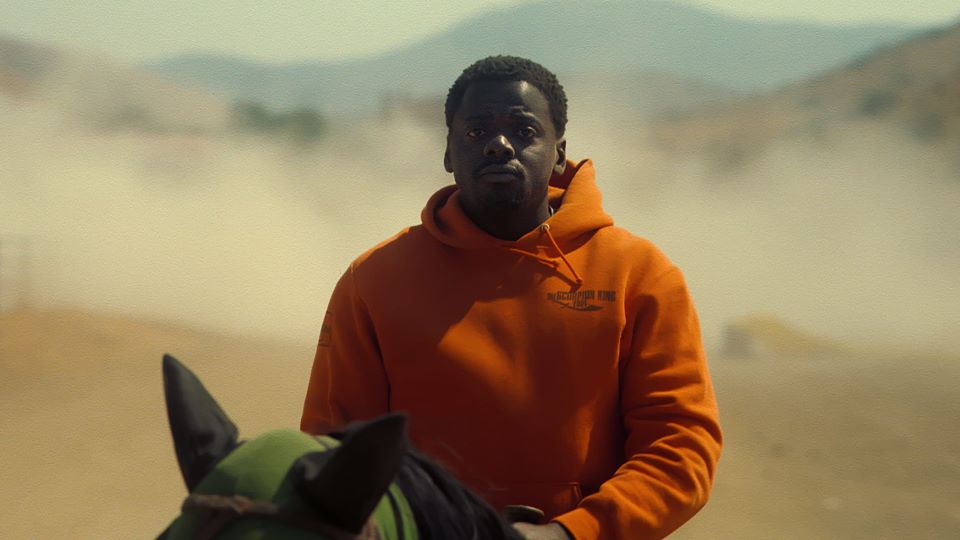
Pensive and guarded Otis Jnr (Daniel Kaluuya) – known, unfortunately, as OJ – and his exuberant wanna-be-star sister Em Haywood (Keke Palmer) are trying (with differing levels of enthusiasm) to keep their father’s Hollywood horse handling business alive after his freak death from a coin falling from the sky (everyone assumes it fell from a plane). The business is struggling, with OJ forced to frequently sell their horses to their neighbour, a former child star turned ranch theme-park owner, Ricky (Steven Yeun). Their lives are altered however when they discover a huge UFO living in a cloud near their ranch, sucking up horses (and other animals) and spitting out any inorganic remains. Seeing this as their path to fortune (and in Em’s case fame) they try and capture the UFO on film.

Nope is all about our compulsive need to look. Nothing draws our eyes like spectacle – and what could be a bigger spectacle than a huge saucer in the sky that eats people? It doesn’t matter if we know we shouldn’t, our eyes are drawn up (now imagine if Peele had been able to call the film Up!). We want to be part of the big event, whether that’s seeing the latest blockbuster at the big screen or rubber-necking at a roadside accident. Nope hammers this point home, when it becomes clear you are only at danger from the saucer when you look directly at it. Spectacle literally kills!

This is all an inversion of the mid-West America that starred at the skies in wonder in Close Encounters. There the Aliens capped the film with a glorious light show with awe and wonder from the humans watching. Here the appearance in the sky is a prelude to sucking you up, digesting you and vomiting out blood and bits of clothing a few hours later. Despite this, Ricky tries to make an entertainment show out of the creature (something he, of course, learns to regret), and OJ and Em find little reason to re-think their attempts to capture the animal on screen.

Peele’s film takes a few light shots at social media culture. Of course our heroes’ first instinct is to reach for their phones (they are looking for that “Oprah shot” that will guarantee fame and fortune). OJ at least is largely motivated by the cash influx his struggling business needs – Em wants the fame. But the film still attacks the shallow “main event-ness” of social media, where having the best and most impressive thing to show off (for a few seconds) is the be-all-and-end-all.

Peele remains too fond of these characters to judge them too harshly. But he has no worries about taking shots at the fame-and-money hungry Ricky, or a TMZ reporter who arrives at the worst possible moment and dies begging to be handed his camera so he can record the moment. Arguably Ricky would have made a more interesting lead: a man chewed up and spat out by the fame machine and angling for a second chance, who thinks he’s way smarter than he actually is.

The film opens with a chilling shot of what we eventually discover was the bloody aftermath of the disastrous final filming day of Ricky’s sitcom from his childhood-acting days, Gordy’s Home. Gordy was a chimp living with an adopted family: until the chimp actor snapped in bloody fury. It sets up a sense of danger, but the plot never quite marries it up with the main themes of Nope. Parallels are thinly drawn with Ricky’s attempt to commercialise this infamous tragedy, but it feels forced: the whole section plays like a chilling short story inserted into the main narrative. And the film never explores in detail the lesson from this bloody tragedy, that we underestimate the dangers animals can pose (despite the film being littered with creatures).

Instead, Peele settles for a stately reveal of his plot. It takes almost an hour for the film’s true purpose to become clear, but it lacks the acute and darkly funny social commentary that made his previous films so fascinating while they took their time showing you their hand. Interesting points are made about how black people are (literally) whitewashed out of Hollywood’s history (the Haywoods claim to be descended from the black jockey featured in the first ever moving film made in America). But it’s a political point that sits awkwardly in a satire (about something else!), and Peele overstretches the opening without making the central mystery compelling enough.

There are, however, fine performances from the actors, Kaluuya’s shuffling physique – slightly over-weight, the troubles of the world weighing him down – is matched with his charismatically sceptical looks. Keke Palmer is engaging and funny as his slap-dash sister, and the warm family bond between these two works really well. It never quite makes sense that someone as publicity-averse as OJ would really want to become a social media sensation, but you can let it go.

There is lots of good stuff in Nope – it’s beautifully filmed and assembled and once it lets you in on its plans, it has a strong final act. But its social commentary isn’t quite sharp or thought-provoking enough – people are shallow and love spectacle and social media, who knew – and neither the mystery or the plot are quite compelling enough. It’s told with imagination and Peele has a fascinating and unique voice: but Nope isn’t much more than a solid story well told.

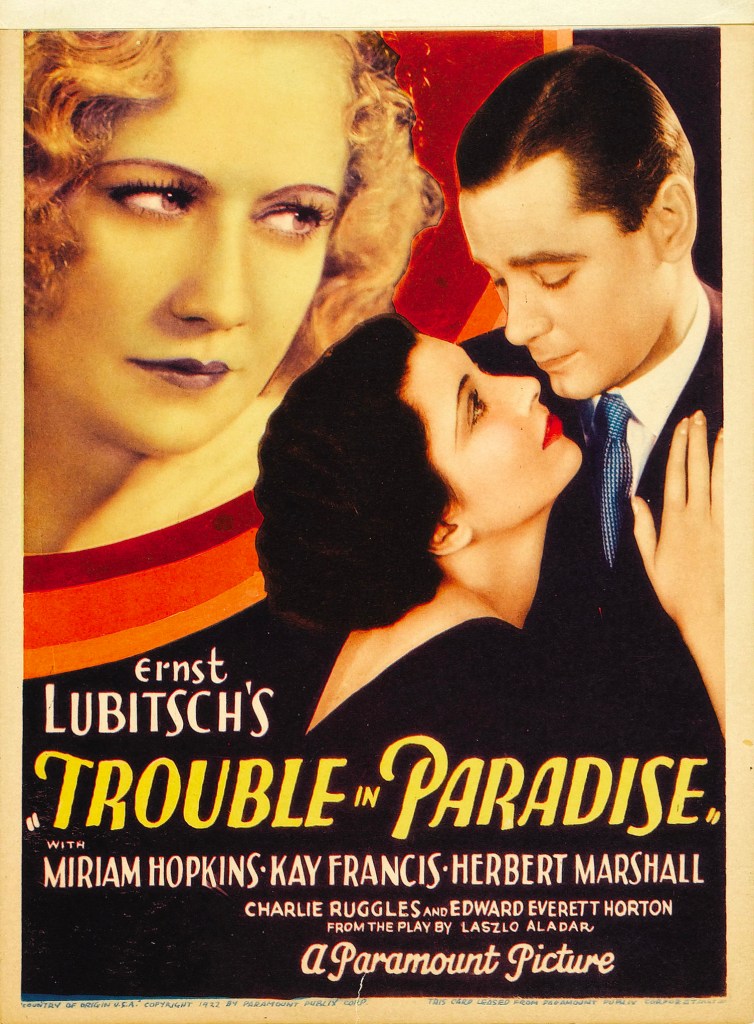
Trouble in Paradise (1932)

Trouble in Paradise (1932)

Stealing, swindling and sex abound in Lubitsch’s masterful – and influential – early Hollywood comedy

Director: Ernst Lubitsch

Cast: Miriam Hopkins (Lily), Kay Francis (Madame Colet), Herbert Marshall (Gaston Monescu), Charles Ruggles (The Major), Edward Everett Horton (Francois Filiba), C. Aubrey Smith (Adolph J Giron), Robert Greig (Jacques, the butler)

“Ah, that Lubitsch touch!” It was a slogan invented by the studio (probably to help turn Lubitsch into a brand – see also “The Master of Suspense!”). No one has ever been quite sure what it is exactly – but you can’t argue it doesn’t exist after watching Trouble in Paradise. A smoother, more charming slice of Wildean wit mixed with saucy naughtiness you couldn’t hope to find. All put together with effortless, cosmopolitan wit by Lubitsch, where every shot and camera movement has been planned for maximum effect. No wonder it’s one of the great early Hollywood comedies.

It’s Vienna and a Baron and a Countess are sitting down to a wonderful dinner together. But both know all is not what it seems: they’re both professional conmen. The Baron is Gaston Monescu (Herbert Marshall), the Countess Lily (Miriam Hopkins) – and they can pick each other’s pockets as easy as breathing. Falling in love, they team up and head for Paris, there to relieve fabulously wealthy Marie Colet (Kay Francis) of some of her firm’s dividends. Gaston becomes Marie’s private secretary – but don’t you know it, he finds himself falling in love with her. Will he go through with the scam? And will Lily give him the choice? The answer is almost certainly not what you think.

Trouble in Paradise is so swift, smooth and gloriously comically inventive that its very existence is enough proof of that Lubitsch touch. The comic business here is so marvellously done, so hugely influential and inventive, that half the comedies existing owe it a debt. Take a look at that first sequence as the two of accuse each other of being thieves and liars, in between passing each other the salt, with consummate politeness then proceed to take part in a pickpocketing game of one-upmanship (purses, pins, watches, garters, you name it!). All shot and directed with a perfect mixture of one-take dryness, matched with perfectly chosen fluid camera movements that accentuate punchlines.

Then there’s that script (“Do you remember the man who walked into the Bank of Constantinople and walked out with the Bank of Constantinople?”). It’s crammed to the gills with sensational bon mots with more than a touch of Wilde or Coward but also a certain emotional truth (“I came here to rob you, but unfortunately I fell in love with you.”). Trouble in Paradise is an intensely suave and sophisticated film that delights in making its characters feel like the nimble-thinking smartie-pants who always know what to say, that you’d love to be, but never quite are.

It’s grist to the mill of Lubitsch, who coats the film in the three things that really makes it work: European sophistication and ruthlessly dry wit; playfully smooth direction; and more than a dollop of sex (and lots of people in this, let’s face it, are pretty impure to say the least). Sex is in fact what’s at the heart of this film: they may be criminals, but Gaston and Lily are at least as interested in getting some of that as anything else and Marie is more than a match for them.

Trouble in Paradise is pre-Code – and far racier than anything we normally expect from Old Hollywood. After all, this is a film that makes a series of perfectly timed punchlines out of a Butler constantly knocking on the wrong bedroom door to find Marie, unaware that Gaston and Marie are “spending time together” elsewhere. Gaston and Lily’s first meeting is capped with a “do not disturb” sign being hung on their bedroom door. The word sex gets bandied about. In case we missed the point, Lubitsch shoots a romantic clinch between Gaston and Marie by focusing the camera on the bed where their shadows are being cast, looking for all the world like they are lying down on it. Later Lubtisch will focus on a clock marching forward in time as we hear Gaston and Marie flirt (and clearly more than just flirt) as the time flows by.

No wonder when the Code was introduced, Trouble in Paradise was slammed on the shelf for years. It’s more than clear that Gaston has it away with Marie and Lily – and, even more scandalously, no one seems to mind that much. There is sexual liberalness to Trouble in Paradise. Marie is happily stringing along two boorishly foolish suitors (Charles Ruggles as a bluff retired major and Edward Everett Horton as a slightly pompous fop, fleeced in the past by Gaston – both very funny). Gaston feels many things, but never ashamed, while Marie seems sexually excited by the idea that he might be a crook. (Their first meeting is a simmering swamp of sexual tension.)

Lubitsch keeps the film flowing so effortlessly, it glides down barely touching the edges. The humour is spot on and perfectly delivered. At one point Lily (still disguised as the Countess at this point) phones her “mother” in front of Gaston. Her conversation is polite and giddy – then Lubitsch cuts to the other end of the call where her crude landlady is prattling bored on the end, and we realise it’s all part of a con. Gags like this have inspired filmmakers for years. You can see the root of half the screwballs that were to come in the love triangle flirtatiousness between Marshall, Francis and Hopkins.

All three of them are excellent. Marshall had few better opportunities to showcase his dry wit and sex appeal (he was so often cast as stuffy, dull husbands), and he’s the ideal arch gentleman here, with a twinkle in his eye at his daring smartness and very sexy in his confidence. (The constant shots of Gaston running up and down stairs is, in itself, a gag – Marshall had only one leg and all that running was a body double). Far from a rube, Kay Francis makes Marie a sexually curious, determined and out-going woman who knows what she wants and happily plays the game to get it. Miriam Hopkins has a punchier feistiness as a woman who can shift personae with effortless ease.

Trouble in Paradise – that Paradise being Gaston and Lily’s natural partnership – slides so smoothly from set-piece to set-piece, each of them shot with superbly smooth camera movements that perfectly accentuate their comic impact, that it continues to offer huge entertainment. Brilliantly acted, packed with superb set-pieces, it benefits above all from that glorious Lubitsch touch. Sophisticated, amoral, naughty but with a touch of heart among all the lying and cheating, it’s very funny and very cheeky and all about sex and stealing. It’s a landmark film.

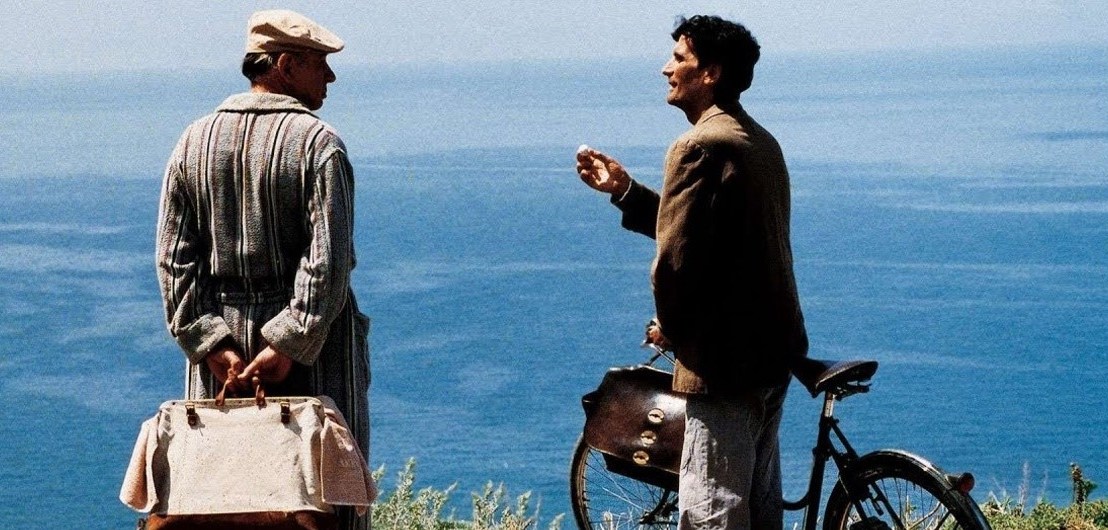
Il Postino (1995)

Il Postino (1995)

A friendship (of a sort) across the divide in this sentimental, overtly charming romantic comedy drama

Director: Michael Radford

Cast: Massimo Troisi (Mario Ruoppolo), Philippe Noiret (Pablo Neruda), Maria Grazia Cucinotta (Beatrice Russo), Renata Scarpa (The Telegrapher), Linda Moretti (Donna Rosa), Mariano Rigillo (Di Cosimo), Anna Bonaiuto (Matilde Urrutia)

Pablo Neruda (Philippe Noiret) arrives on an Italian island in 1950, exiled from his home in Chile. He brings celebrity to the small community: but also transforms the life of local Mario Ruoppolo (Massimo Troisi). Mario, a quiet and slightly lost man who doesn’t want to follow in his father’s fishing footsteps, takes a job delivering Neruda’s mail. He becomes fascinated by poetry and idolises Neruda with whom he forms a friendship, after he enlists him to help woo Beatrice (Maria Grazia Cucinotta), daughter of the local café worker. Mario becomes more and more influenced by Neruda’s communism and love of language. How will he cope when Neruda’s exile ends?

A massive box office success – one of the biggest foreign language hits in the USA – Il Postino is a film born from tragedy. Troisi had long wanted to adapt the novel by Antonio Skarmeta. So much so, he delayed urgent heart surgery to make the film. With filming due to start, Troisi was so ill he could work little more than an hour a day. Many of his scenes were done in a single take. Radford re-worked scenes to allow Troisi to sit as much as possible, while a body double did all long shots, medium shots and any close-up where Troisi’s face didn’t need to be seen. Troisi recorded all his dialogue before filming – and tragically died the day after shooting completed.

It’s a moving story: and it’s hard to separate your reaction to it from your reaction to the film. Perhaps influenced by Troisi’s illness, Radford turns Il Postino into a quiet, gentle and mediative piece, crammed with restrained camerawork and thoughtful pacing. There is a gentle, easily digestible warmness to Il Postino, with relatable themes around love, friendship and the power of poetry. But you can’t help but feel subtitles made some feel they were watching something arty, rather than something that is essentially a bit of popular fiction turned into a film.

Don’t get me wrong, there are plenty of positives. Radford perfectly captures the warmth and eye-opening wonder of a man discovering intellectual horizons he never imagined. Mario at first seems not particularly bright – but we discover he is simply a man who has grown up without intellectual stimulation of any sort. No one ever leaves his island and the only ambition anyone has is to become a fisherman. Watching a newsreel of Neruda’s arrival in Italy, the villagers seem as stunned by seeing these magic moving pictures as they do the famous poet’s arrival.

Into this tiny world drops a magic figure: someone who makes Mario discover that the functional words that only ever dropped hesitantly from his mouth, can actually be crafted into gorgeously elaborate sentences, full of power and beauty. Poetry at first just seems like a great way to get girls – Mario is stunned by the amount of mail from ladies Neruda receives – but then becomes an end in itself. Slowly Mario appreciates things around him – the moon, the lapping of waves on the shore, the sound of the wind in the hills – in a way he never even thought about before. Similarly, he begins to question the quiet acquiescence the village shows to all-too-obviously corrupt local politician Di Cassimo.

This largely works due to a quiet, unforced and gentle performance from Troisi. Shyly muttering his lines and rarely raising his head up to look directly at the person he is talking to, Troisi’s performance has an unaffected naturalness to it. He’s quiet, abashed and shy, also childlike, worshipping Neruda with a puppy-dog intensity (that never wilts, even after Neruda leaves the island) and reacts to things around him with an awe-filled wonder.

Opposite him, Noiret soaks himself in artistic confidence as Neruda, a man very aware he’s a huge fish in a small pond. Perhaps because he’s lonely, perhaps because he finds Mario’s childlike openness endearing, he indulges and encourages Mario’s attempts to befriend him. But, despite appearances, I’m not sure Il Postino wants to commit to the fact that this is not a friendship of equals. Neruda is fond of Mario – but he never, truly, sees him as an equal. Mario is, at heart, a distraction Neruda is fond of. He indulges Neruda’s clumsy attempts to win his attention, and there is a slight quiet background air of fatherly condescension in his treatment of him.

It means people overlook the more interesting parts of Il Postino. Because, despite the way it’s presented, this isn’t a story of a friendship over a divide. The final act is in fact more interesting in showing, after Neruda leaves, that a relationship that changed Mario’s life forever was just a brief, fond distraction to Neruda. Neruda remains the most important person in Mario’s life – but he wouldn’t even make the top hundred in Neruda’s life. Neruda makes little effort to keep in touch, gets a secretary to write a functional letter to Mario and takes years to even consider a visit.

The real point of interest here is how Mario flew, Icarus like, close to the sun – but found he could only get so close. He will only ever be a footnote in Neruda’s life, while Neruda is his life. Even when faced with evidence of Neruda’s affectionate disregard, he will still insist on naming his child after him. Similarly, poetry is something he can love but never quite master himself. This is interesting stuff. Il Postino avoids it.

Instead, it’s a film that settles on sentiment. You can’t argue with the skill Radford directs the film, or the quiet power of a late sequence when Mario records the sounds of the island for Neruda. Radford’s unobtrusive direction – partly influenced by working around Troisi’s illness – works to wring the maximum emotion from it. But it’s still a sentimental package: a package skilfully presented to Academy voters by Miramax (Luis Bacalov’s Oscar win for score was surely connected to Weinstein mailing a recording to every member of the Academy) and presents a pleasant fantasy story for the masses, that veers away from its more complex parts to present something far more reassuring and gentle.