Tag: Charles Ruggles

Love Me Tonight (1932)

Love Me Tonight (1932)

Delightful semi-parody of Lubitsch, that’s one of the most enjoyable and brilliant films of the decade

Director: Rouben Mamoulian

Cast: Maurice Chevalier (Maurice), Jeanette MacDonald (Princess Jeanette), Charles Ruggles (Vicomte Gilbert de Varèze), Charles Butterworth (Comte de Savignac), Myrna Loy (Comtesse Valentine), C. Aubrey Smith (Duc d’Artelines), Elizabeth Patterson (First aunt), Ethel Griffies (Second aunt), Blanche Friderici (Third aunt)
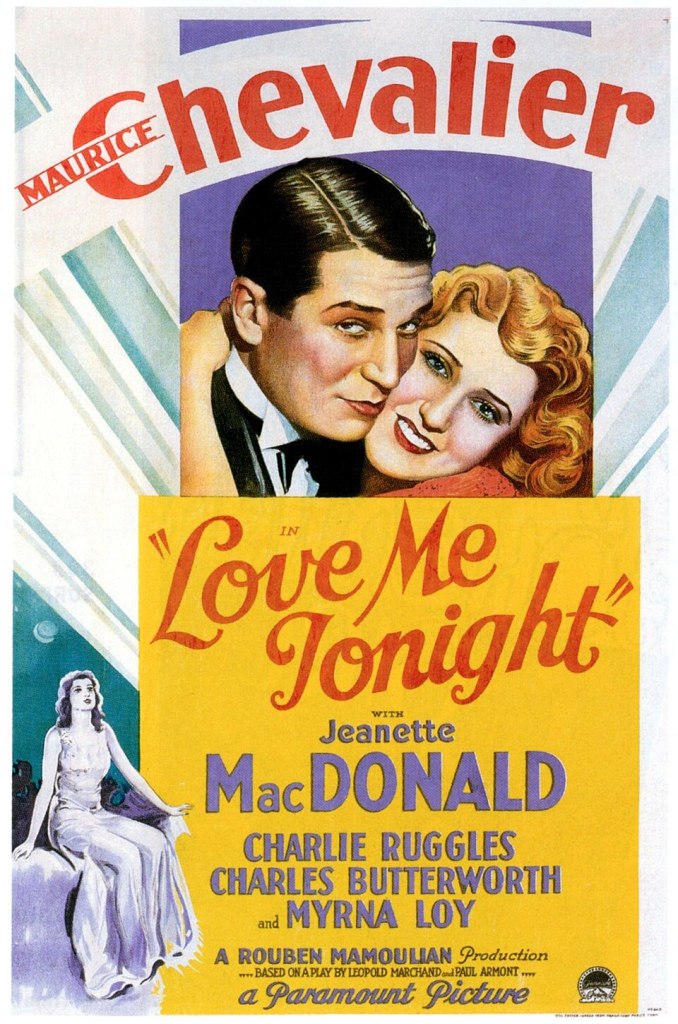
It’s very easy to assume Love Me Tonight comes from Ernst Lubitsch’s masterful hands. It does seem to have every element of his classic “Touch”: mixing light comedy in refined, courtly circles with charming ear-worm ditties – not to mention the presence of Maurice Chevalier and Jeanette MacDonald as an unlikely couple drawn (inevitably) together. It’s a surprise then that itwas directed by that overlooked master Rouben Mamoulian, intended as a parody of Lubitsch’s style. But it was so masterfully witty and well-delivered, that arguably became the greatest Lubitsch comedy ever.

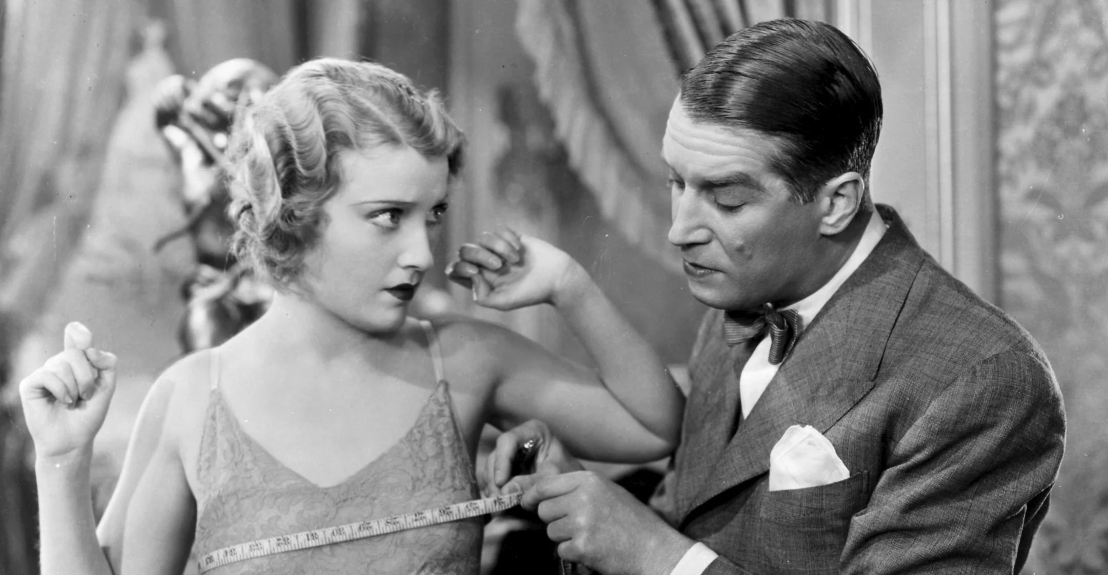
It’s certainly one of the finest, funniest and most inventive musical comedies you’re going to see. Set in Paris at some point in the 1920s (despite which, only Chevalier has any trace of an accent), we meet Maurice (Chevalier), a plucky tailor with a dream, thrilled to land the big-spending Vicomte de Varèze (Charles Ruggles) as a client: and less thrilled to discover the Vicomte never pays his bills. Maurice rides post-haste to the Vicomte’s family manor, where the guilt-free Vicomte (worried his uncle (C. Aubrey Smith) will cut him off in disgrace) passes him off as a hidden royal, while he tries to raise money. Maurice falls in love with the Vicomte’s cousin, widowed Princess Jeanette (MacDonald), who at first can’t stand him, but soon discovers his charm.

Perhaps you should be tipped off this is a parody (of sorts) of vehicles the stars had made at least twice already with Lubitsch, that Love Me Tonight doesn’t even bother to change their names. But Love Me Tonight has a rich, cheeky script full of risque one-liners (tragically, some of the naughtiest stuff is lost forever after a post Hays Code recut) and it barrels along with an effortlessly smooth comic charm. Although the stars both found Mamoulian harder to work with than Lubitsch, these are two of their lightest, funniest most endearing performances, with Chevalier archly flirtatious while still a perfect gentleman and MacDonald austerely repressed with just a hint of excitement.

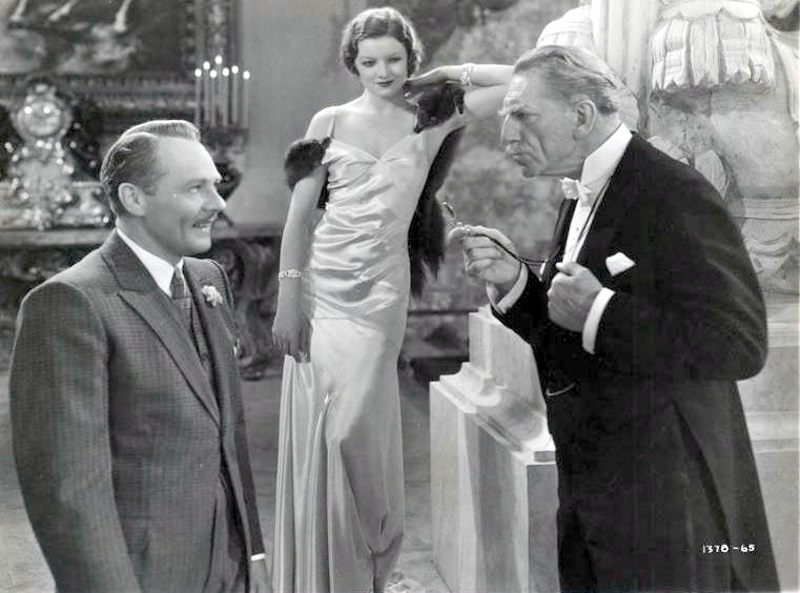
It’s a film stuffed with gloriously eccentric characters, with a top-of-the-line comic cast, all throwing themselves into top-of-the-line songs. Charles Ruggles is full of shameless, comic selfishness as the Vicomte who genuinely doesn’t understand why he should pay debts. C. Aubrey Smith shows more playfulness here (including a delightful moment where he dances in glee) than he did in his whole career of stiff-upper-lipped army officers. Charles Butterworth scowls and sulks superbly as MacDonald’s unwanted suitor. Elizabeth Patterson, Ethel Griffies and Blanche Friderici are great fun as a pack of easily-flustered maiden aunts (“Oh let me die!” one quietly mutters at a moment of risqué shock) who are one-third Macbeth’s witches, two thirds excited, yapping puppies. Perhaps best of all, Myrna Loy is a vampishly, sex-obsessed young woman making a pass at anything with a penis and a pulse.

Backed with a host of excellent songs – ‘Isn’t it Romantic’, ‘Mimi’, ‘Love Me Tonight’ and ‘The Son of a Gun is Nothing but a Tailor’ are first rate – the film is crammed with genuinely funny lines and marvellous moments of comic invention. From Maurice (shamelessly) mumbling the most risqué lines of ‘Lover’ (making his intentions all too clear) to a hilarious sequence where he derails a stag hunt by escorting the lucky animal to safety in a cottage, there is something to make you laugh almost every minute. Mamoulian directs with real zip and pace throughout, keeping the delightfully light confection gloriously whisked without ever letting it grow heavy.
That’s just scratching the surface of Mamoulian’s outstanding work. Disparaged as a director obsessed with innovation, it’s hard to see how anyone felt that was a negative when you see results as rich as this. Love Me Tonight is so full of brilliantly dynamic use of sound, visuals and editing, that I’m stunned it isn’t referenced more often as a landmark in Hollywood’s emerging understanding of what was possible. The fact it does all this, in fabulously enjoyable way, in gorgeously designed sets where charming actors effortlessly do their work is even better.

The invention is right there from the opening frames. Taking a theatrical technique he had used on Broadway in Porgy and Bess, Mamoulian opens the film on the street of Paris. One-by-one the citizens emerge to go about their daily business – sweeping streets, cobbling shoes, beating carpets, washing windows – the cacophony building up into a rhythmic beat that leads us into the opening number. It’s superbly done, so simple but so far ahead of the imaginings of other directors at the time, it smacks a smile on your face.

It continues with the masterful delivery of the ‘Isn’t it Romantic’ song. Starting with Chevalier singing the song (off-the-cuff) in his tailor shop, it’s picked up (in turn) and then travels across the country, via a customer, taxi driver, composer in the taxi, platoon of soldiers, fiddler in the country and finally winds its way under Jeanette’s window for MacDonald to sing. With an effect both natural and brilliantly artificial, the two stars are linked together by one song without even meeting. Again, it’s simple but perfect.

Love Me Tonight is crammed with superb moments like this that take the breath way. At a shocking reveal, a ceramic urn smashes on the ground – but the sound is replaced by a dynamite blast, reflecting the impact the reveal has had. A superb split screen gives the appearance of Chevalier and MacDonald in bed together (they are of course in different beds dreaming of each other). When Chevalier is given the crazed horse Solitary to ride at the hunt (so called, as the horse always come home alone) Mamoulian uses sped-up-film to masterful effect. He then balances this with artfully slow-motion footage, when the hunt ‘tip toes’ away from the resting stag – he even uses reverse film for a stunt to show Chevalier leaping onto the back of MacDonald’s horse. A final horse-train chase sequence wouldn’t like out of place in an action thriller, in its brilliant use of composition and editing to suggest speed and dynamism.

There is barely a frame in Love Me Tonight that doesn’t have a stroke of theatrical or cinematic genius. But these never overwhelm the story or unbalance it. Even without noticing the superb nature of the film’s construction, you could still love every minute of its humour, charm and romance – not to mention the effortless likeability of everyone involved. Love Me Tonight may have began as a parody of a familiar genre, but it’s also possibly the greatest example of the genre in existence, mastering the Lubitsch touch so well, it turns out it didn’t need Lubitsch at all. One of the best films of the 1930s.

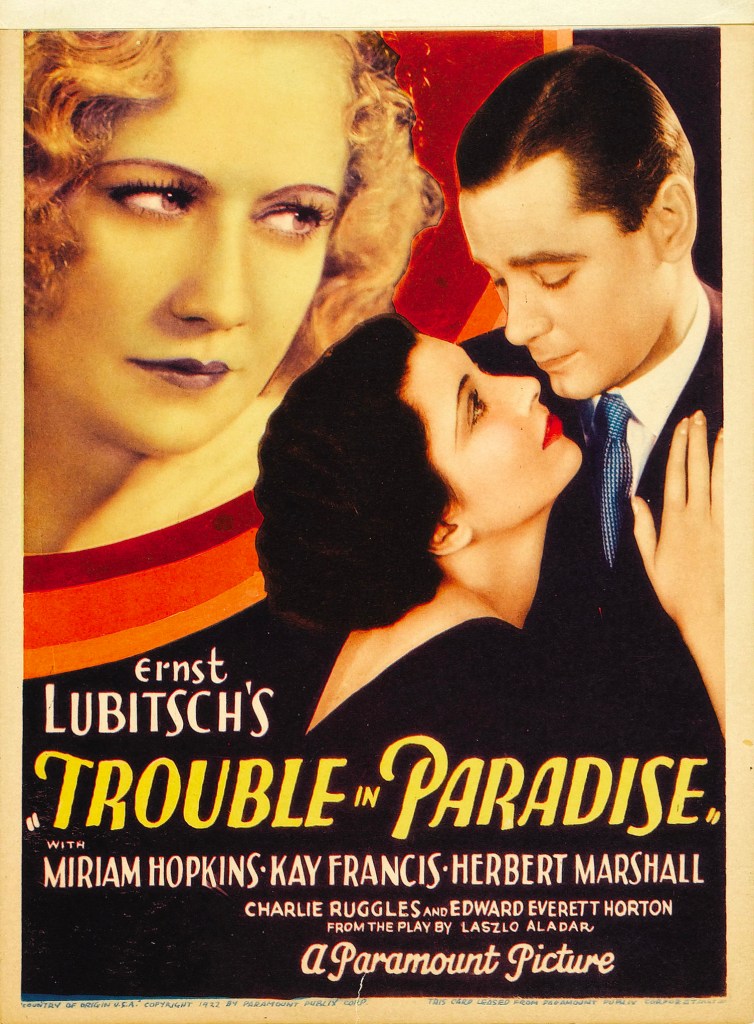
Trouble in Paradise (1932)

Trouble in Paradise (1932)

Stealing, swindling and sex abound in Lubitsch’s masterful – and influential – early Hollywood comedy

Director: Ernst Lubitsch

Cast: Miriam Hopkins (Lily), Kay Francis (Madame Colet), Herbert Marshall (Gaston Monescu), Charles Ruggles (The Major), Edward Everett Horton (Francois Filiba), C. Aubrey Smith (Adolph J Giron), Robert Greig (Jacques, the butler)

“Ah, that Lubitsch touch!” It was a slogan invented by the studio (probably to help turn Lubitsch into a brand – see also “The Master of Suspense!”). No one has ever been quite sure what it is exactly – but you can’t argue it doesn’t exist after watching Trouble in Paradise. A smoother, more charming slice of Wildean wit mixed with saucy naughtiness you couldn’t hope to find. All put together with effortless, cosmopolitan wit by Lubitsch, where every shot and camera movement has been planned for maximum effect. No wonder it’s one of the great early Hollywood comedies.

It’s Vienna and a Baron and a Countess are sitting down to a wonderful dinner together. But both know all is not what it seems: they’re both professional conmen. The Baron is Gaston Monescu (Herbert Marshall), the Countess Lily (Miriam Hopkins) – and they can pick each other’s pockets as easy as breathing. Falling in love, they team up and head for Paris, there to relieve fabulously wealthy Marie Colet (Kay Francis) of some of her firm’s dividends. Gaston becomes Marie’s private secretary – but don’t you know it, he finds himself falling in love with her. Will he go through with the scam? And will Lily give him the choice? The answer is almost certainly not what you think.

Trouble in Paradise is so swift, smooth and gloriously comically inventive that its very existence is enough proof of that Lubitsch touch. The comic business here is so marvellously done, so hugely influential and inventive, that half the comedies existing owe it a debt. Take a look at that first sequence as the two of accuse each other of being thieves and liars, in between passing each other the salt, with consummate politeness then proceed to take part in a pickpocketing game of one-upmanship (purses, pins, watches, garters, you name it!). All shot and directed with a perfect mixture of one-take dryness, matched with perfectly chosen fluid camera movements that accentuate punchlines.

Then there’s that script (“Do you remember the man who walked into the Bank of Constantinople and walked out with the Bank of Constantinople?”). It’s crammed to the gills with sensational bon mots with more than a touch of Wilde or Coward but also a certain emotional truth (“I came here to rob you, but unfortunately I fell in love with you.”). Trouble in Paradise is an intensely suave and sophisticated film that delights in making its characters feel like the nimble-thinking smartie-pants who always know what to say, that you’d love to be, but never quite are.

It’s grist to the mill of Lubitsch, who coats the film in the three things that really makes it work: European sophistication and ruthlessly dry wit; playfully smooth direction; and more than a dollop of sex (and lots of people in this, let’s face it, are pretty impure to say the least). Sex is in fact what’s at the heart of this film: they may be criminals, but Gaston and Lily are at least as interested in getting some of that as anything else and Marie is more than a match for them.

Trouble in Paradise is pre-Code – and far racier than anything we normally expect from Old Hollywood. After all, this is a film that makes a series of perfectly timed punchlines out of a Butler constantly knocking on the wrong bedroom door to find Marie, unaware that Gaston and Marie are “spending time together” elsewhere. Gaston and Lily’s first meeting is capped with a “do not disturb” sign being hung on their bedroom door. The word sex gets bandied about. In case we missed the point, Lubitsch shoots a romantic clinch between Gaston and Marie by focusing the camera on the bed where their shadows are being cast, looking for all the world like they are lying down on it. Later Lubtisch will focus on a clock marching forward in time as we hear Gaston and Marie flirt (and clearly more than just flirt) as the time flows by.

No wonder when the Code was introduced, Trouble in Paradise was slammed on the shelf for years. It’s more than clear that Gaston has it away with Marie and Lily – and, even more scandalously, no one seems to mind that much. There is sexual liberalness to Trouble in Paradise. Marie is happily stringing along two boorishly foolish suitors (Charles Ruggles as a bluff retired major and Edward Everett Horton as a slightly pompous fop, fleeced in the past by Gaston – both very funny). Gaston feels many things, but never ashamed, while Marie seems sexually excited by the idea that he might be a crook. (Their first meeting is a simmering swamp of sexual tension.)

Lubitsch keeps the film flowing so effortlessly, it glides down barely touching the edges. The humour is spot on and perfectly delivered. At one point Lily (still disguised as the Countess at this point) phones her “mother” in front of Gaston. Her conversation is polite and giddy – then Lubitsch cuts to the other end of the call where her crude landlady is prattling bored on the end, and we realise it’s all part of a con. Gags like this have inspired filmmakers for years. You can see the root of half the screwballs that were to come in the love triangle flirtatiousness between Marshall, Francis and Hopkins.

All three of them are excellent. Marshall had few better opportunities to showcase his dry wit and sex appeal (he was so often cast as stuffy, dull husbands), and he’s the ideal arch gentleman here, with a twinkle in his eye at his daring smartness and very sexy in his confidence. (The constant shots of Gaston running up and down stairs is, in itself, a gag – Marshall had only one leg and all that running was a body double). Far from a rube, Kay Francis makes Marie a sexually curious, determined and out-going woman who knows what she wants and happily plays the game to get it. Miriam Hopkins has a punchier feistiness as a woman who can shift personae with effortless ease.

Trouble in Paradise – that Paradise being Gaston and Lily’s natural partnership – slides so smoothly from set-piece to set-piece, each of them shot with superbly smooth camera movements that perfectly accentuate their comic impact, that it continues to offer huge entertainment. Brilliantly acted, packed with superb set-pieces, it benefits above all from that glorious Lubitsch touch. Sophisticated, amoral, naughty but with a touch of heart among all the lying and cheating, it’s very funny and very cheeky and all about sex and stealing. It’s a landmark film.

Ruggles of Red Gap (1935)

Charles Laughton wonders what he’s got himself in for in Ruggles of Red Gap

Director: Leo McCarey

Cast: Charles Laughton (Ruggles), Mary Boland (Effie Floud), Charles Ruggles (Egbert Floud), ZaSu Pitts (Mrs Judson), Roland Young (Earl of Burnstead), Leila Hyams (Nell Kenner), Maude Eburne (Ma Pettingell), Lucien Littlefield (Charles Belknap-Johnson), Leota Lorraine (Mrs Belknap-Johnson), James Burke (Jeff Turtle)

Ruggles (Charles Laughton) is the perfect gentleman’s gentleman. So how will he react when his gentleman, the Earl of Burnstead (Roland Young), loses him at cards to nouve riche American Westerner Egbert Floud (Charles Ruggles) and his social-climbing wife Effie (Mary Boland)? Wodehousian antics meet societal culture-clashes, in Leo McCarey’s witty and rather sweet comedy from Charles Laughton’s annus mirabilis (Ruggles, Bligh and Javert all in the same year!) that’s a celebration of American egalitarianism and the well-hidden warm cordiality of the polite British.

Directed with a fine sense of comedic timing by Leo McCarey, Ruggles of Red Gap is refreshingly heart-warming and a celebration of the rewards of decency. For all his initial reserve – and Jeevesian distaste for his new employer’s brashness and love of chequered suits – Ruggles emerges as a decent man, liberated by the classless openness of America. In fact, the idea of all men being equal opens Ruggles eyes for the first time to the idea of making his own decisions (after all he doesn’t question being told he will be moving from Paris to Washington State) and being seen as something other than just an extension of his employer.

Ruggles makes this point with some excellently delivered set-pieces. Most of these revolve around the enjoyable cultural clash between Ruggles and his new employer, the relaxed Egbert, who can’t imagine not calling Ruggles by a host of invented names (from “Bill” to “The Colonel” – the latter causing no end of trouble later) or inviting this staid servant to sit down and have a beer. Egbert’s obliviousness to the careful social rules that Ruggles has lived his entire life by works, because there is not a jot of meanness or correction to it. Egbert genuinely doesn’t understand the fine points of class difference and sees no reason not to treat Ruggles like a friend rather than a servant.

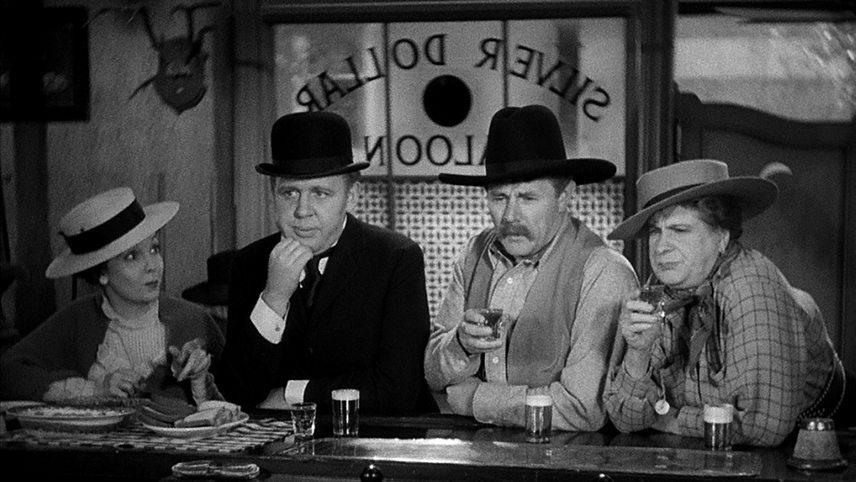
It makes for some terrific moments of comic business. Ruggles and Egbert conduct a running battle where Egbert’s natural politeness and Ruggles’ duteous deference leads to them constantly insisting the other walks first through doorways. Their first day together sees Egbert and a friend taking Ruggles to a Parisian bar and getting him roundly pissed (probably for the first time in his life). Later Egbert’s insistence on introducing him when they arrive in Red Gap as his friend “the Colonel”, combined with Ruggles patrician manners leads to him being mistaken as a genuine aristocrat by the snobbier element of Red Gap society.

Regular Americans may be overly boisterous – you can’t miss the increasingly irritated reactions by Parisians at Egbert’s reunion on the streets of Paris with an old friend, which escalates from embraces, to loud whoops to riding each other like horses – but generally they mean well (good natured fun is poked at the American’s hopelessness with foreign languages – “je voodrais ham un eggs”). In Red Gap, the patrons of a saloon greet Ruggles as one of their own. In turn Ruggles – and even the Earl of Burnstead – are charming and respond far more warmly to their decency than the snobbery of the hoi polli.

If there are unsympathetic characters in the film, it’s the snobs of the American elite, desperate to grab a bit of that old world glamour. Egbert’s snobby brother-in-law Charles sticks out as dyed-in-the-wool snob, concerned mostly with position and being seen with the right people. Effie (hilariously played by Mary Boland) is interested in Ruggles largely as a status symbol, and spends her entire time crafting Egbert into her idea of a gentleman. By contrasts the actualupper status chap, the Earl (delightfully under played with a hilarious uber-poshness by Roland Young) is relatively decent, humble and far prefers the fun-loving social crowd of Red Gap the stuffed shirts.

The film was a very personal one for Laughton, deep into his decision to take up American citizenship. Ruggles’ (and Laughton’s) love for American society is captured in the scene where he recites the Gettysburg Address to the rapt patrons of the saloon (none of whom could remember a single word of it when asked beforehand). In previews, the audience sniggered at Laughton’s emotional rendition (he couldn’t get through it without weeping) – so McCarey re-cut so we only see Laughton from behind and instead focuses on the faces of his audience: suddenly the scene carries real emotional force.

Laughton’s performance is an odd mix. Some moments – such as the Gettysburg address – he nails. His interplay with the other actors is highly effective, but many of his reaction shots often feel overplayed. He over eggs the pudding with the comic eyebrows and, like the scenes when he plays drunk, he sometimes seems to be trying too hard to be funny. But his ability to offer several different versions of shock and surprise is pretty faultless and he captures beautifully Ruggles growing sense of independence and delight at there being more opportunities in life than he ever imagined.

The rest of the cast bounce off each other with all the ease of a relaxed repertory company. Charles Ruggles (who knew Ruggles was such a common name!) is brilliant as Egbert, loud, brash but overwhelmingly kind and decent. His comic timing is exquisite and his chemistry with Mary Boland (one patient the other long suffering) is a constant delight. The comic playing of the cast, with assured – if at times visually disjointed – direction by Leo McCarey helps craft this into a delightfully heart-warming comedy of manners with just the right touch of slap-stick. At the end of which you’ll be as willing to jack it all in and set up a grill in Red Gap as Ruggles is.