Tag: Maurice Chevalier

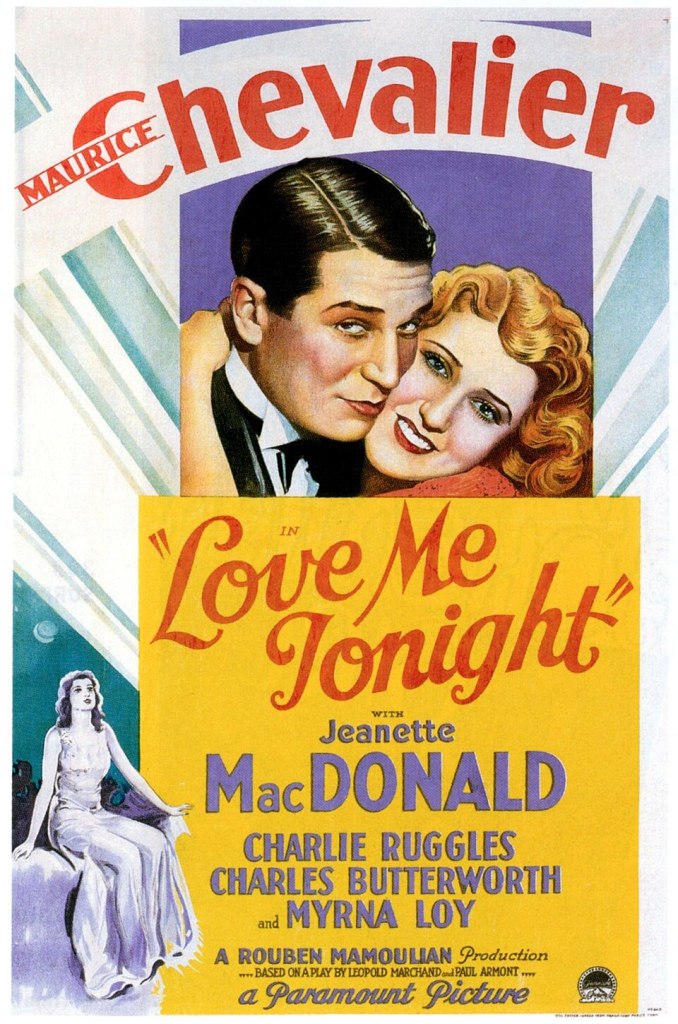
Love Me Tonight (1932)

Love Me Tonight (1932)

Delightful semi-parody of Lubitsch, that’s one of the most enjoyable and brilliant films of the decade

Director: Rouben Mamoulian

Cast: Maurice Chevalier (Maurice), Jeanette MacDonald (Princess Jeanette), Charles Ruggles (Vicomte Gilbert de Varèze), Charles Butterworth (Comte de Savignac), Myrna Loy (Comtesse Valentine), C. Aubrey Smith (Duc d’Artelines), Elizabeth Patterson (First aunt), Ethel Griffies (Second aunt), Blanche Friderici (Third aunt)

It’s very easy to assume Love Me Tonight comes from Ernst Lubitsch’s masterful hands. It does seem to have every element of his classic “Touch”: mixing light comedy in refined, courtly circles with charming ear-worm ditties – not to mention the presence of Maurice Chevalier and Jeanette MacDonald as an unlikely couple drawn (inevitably) together. It’s a surprise then that itwas directed by that overlooked master Rouben Mamoulian, intended as a parody of Lubitsch’s style. But it was so masterfully witty and well-delivered, that arguably became the greatest Lubitsch comedy ever.

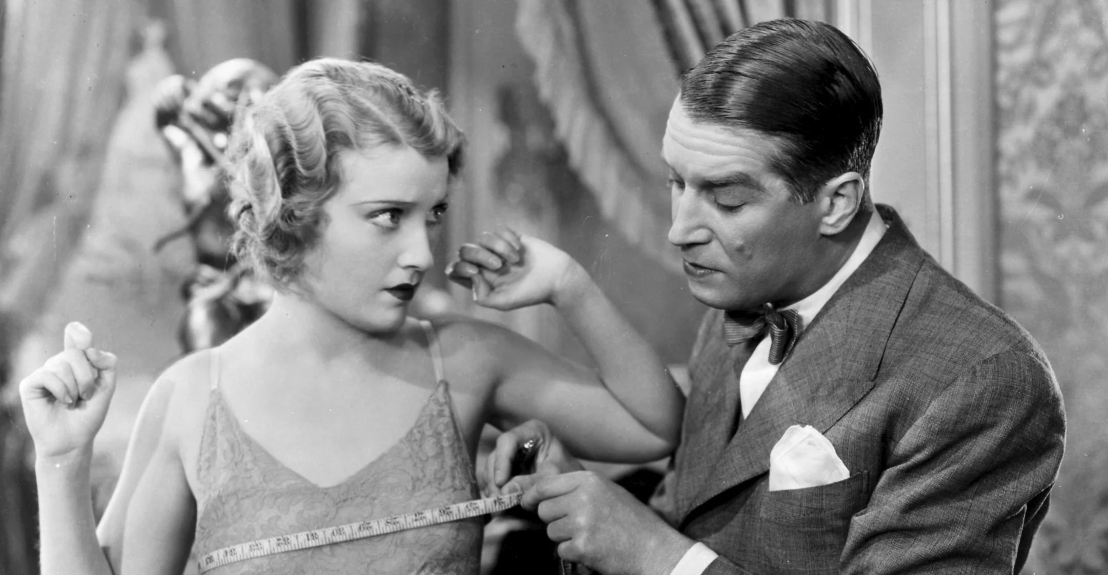
It’s certainly one of the finest, funniest and most inventive musical comedies you’re going to see. Set in Paris at some point in the 1920s (despite which, only Chevalier has any trace of an accent), we meet Maurice (Chevalier), a plucky tailor with a dream, thrilled to land the big-spending Vicomte de Varèze (Charles Ruggles) as a client: and less thrilled to discover the Vicomte never pays his bills. Maurice rides post-haste to the Vicomte’s family manor, where the guilt-free Vicomte (worried his uncle (C. Aubrey Smith) will cut him off in disgrace) passes him off as a hidden royal, while he tries to raise money. Maurice falls in love with the Vicomte’s cousin, widowed Princess Jeanette (MacDonald), who at first can’t stand him, but soon discovers his charm.

Perhaps you should be tipped off this is a parody (of sorts) of vehicles the stars had made at least twice already with Lubitsch, that Love Me Tonight doesn’t even bother to change their names. But Love Me Tonight has a rich, cheeky script full of risque one-liners (tragically, some of the naughtiest stuff is lost forever after a post Hays Code recut) and it barrels along with an effortlessly smooth comic charm. Although the stars both found Mamoulian harder to work with than Lubitsch, these are two of their lightest, funniest most endearing performances, with Chevalier archly flirtatious while still a perfect gentleman and MacDonald austerely repressed with just a hint of excitement.

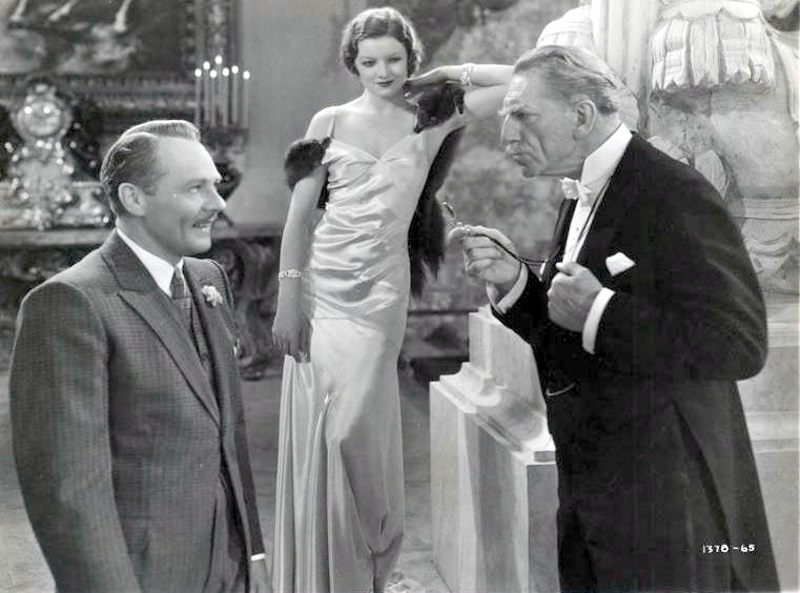
It’s a film stuffed with gloriously eccentric characters, with a top-of-the-line comic cast, all throwing themselves into top-of-the-line songs. Charles Ruggles is full of shameless, comic selfishness as the Vicomte who genuinely doesn’t understand why he should pay debts. C. Aubrey Smith shows more playfulness here (including a delightful moment where he dances in glee) than he did in his whole career of stiff-upper-lipped army officers. Charles Butterworth scowls and sulks superbly as MacDonald’s unwanted suitor. Elizabeth Patterson, Ethel Griffies and Blanche Friderici are great fun as a pack of easily-flustered maiden aunts (“Oh let me die!” one quietly mutters at a moment of risqué shock) who are one-third Macbeth’s witches, two thirds excited, yapping puppies. Perhaps best of all, Myrna Loy is a vampishly, sex-obsessed young woman making a pass at anything with a penis and a pulse.

Backed with a host of excellent songs – ‘Isn’t it Romantic’, ‘Mimi’, ‘Love Me Tonight’ and ‘The Son of a Gun is Nothing but a Tailor’ are first rate – the film is crammed with genuinely funny lines and marvellous moments of comic invention. From Maurice (shamelessly) mumbling the most risqué lines of ‘Lover’ (making his intentions all too clear) to a hilarious sequence where he derails a stag hunt by escorting the lucky animal to safety in a cottage, there is something to make you laugh almost every minute. Mamoulian directs with real zip and pace throughout, keeping the delightfully light confection gloriously whisked without ever letting it grow heavy.

That’s just scratching the surface of Mamoulian’s outstanding work. Disparaged as a director obsessed with innovation, it’s hard to see how anyone felt that was a negative when you see results as rich as this. Love Me Tonight is so full of brilliantly dynamic use of sound, visuals and editing, that I’m stunned it isn’t referenced more often as a landmark in Hollywood’s emerging understanding of what was possible. The fact it does all this, in fabulously enjoyable way, in gorgeously designed sets where charming actors effortlessly do their work is even better.

The invention is right there from the opening frames. Taking a theatrical technique he had used on Broadway in Porgy and Bess, Mamoulian opens the film on the street of Paris. One-by-one the citizens emerge to go about their daily business – sweeping streets, cobbling shoes, beating carpets, washing windows – the cacophony building up into a rhythmic beat that leads us into the opening number. It’s superbly done, so simple but so far ahead of the imaginings of other directors at the time, it smacks a smile on your face.

It continues with the masterful delivery of the ‘Isn’t it Romantic’ song. Starting with Chevalier singing the song (off-the-cuff) in his tailor shop, it’s picked up (in turn) and then travels across the country, via a customer, taxi driver, composer in the taxi, platoon of soldiers, fiddler in the country and finally winds its way under Jeanette’s window for MacDonald to sing. With an effect both natural and brilliantly artificial, the two stars are linked together by one song without even meeting. Again, it’s simple but perfect.

Love Me Tonight is crammed with superb moments like this that take the breath way. At a shocking reveal, a ceramic urn smashes on the ground – but the sound is replaced by a dynamite blast, reflecting the impact the reveal has had. A superb split screen gives the appearance of Chevalier and MacDonald in bed together (they are of course in different beds dreaming of each other). When Chevalier is given the crazed horse Solitary to ride at the hunt (so called, as the horse always come home alone) Mamoulian uses sped-up-film to masterful effect. He then balances this with artfully slow-motion footage, when the hunt ‘tip toes’ away from the resting stag – he even uses reverse film for a stunt to show Chevalier leaping onto the back of MacDonald’s horse. A final horse-train chase sequence wouldn’t like out of place in an action thriller, in its brilliant use of composition and editing to suggest speed and dynamism.

There is barely a frame in Love Me Tonight that doesn’t have a stroke of theatrical or cinematic genius. But these never overwhelm the story or unbalance it. Even without noticing the superb nature of the film’s construction, you could still love every minute of its humour, charm and romance – not to mention the effortless likeability of everyone involved. Love Me Tonight may have began as a parody of a familiar genre, but it’s also possibly the greatest example of the genre in existence, mastering the Lubitsch touch so well, it turns out it didn’t need Lubitsch at all. One of the best films of the 1930s.

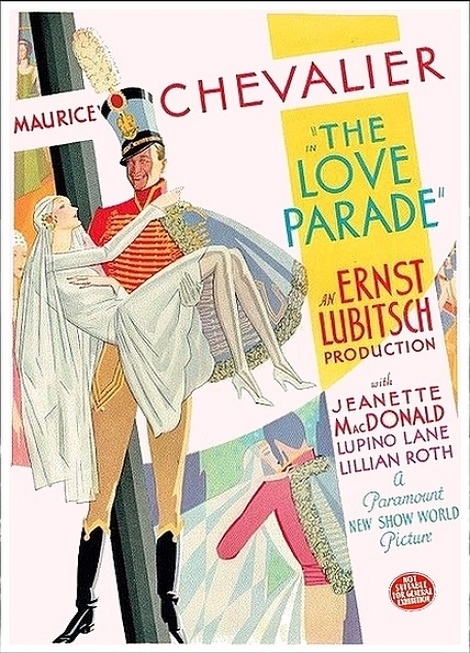
The Love Parade (1929)

The Love Parade (1929)

Lubitsch’s delightful early musical mixes European class with battle of the sexes wit

Director: Ernst Lubitsch

Cast: Maurice Chevalier (Count Alfred Renard), Jeanette MacDonald (Queen Louise), Lupino Lane (Jacques), Lillian Roth (Lulu), Eugene Pallette (Minister of War), E. H. Calvert (Sylvanian Ambassador), Edgar Norton (Master of Ceremonies), Lionel Belmore (Prime Minister)

Sylvania has a problem with its ambassador in France, Count Alfred Renard (Maurice Chevalier) – largely that he can’t stop seducing anything that moves. Renard is swiftly recalled to his homeland… where he catches the eye of young, unmarried Queen Louise (Jeannette MacDonald), who immediately thinks he might just be the man for her. Renard isn’t averse to marrying into royalty, but quickly finds himself chafing in the role of Prince Consort – this isn’t what marriage is supposed to be, the husband doesn’t defer to the wife!

It is of course a slightly dated version of marriage, and The Love Parade could be seen as a very light piece of Taming of the Shrew style-action where a strong woman learns true happiness is sometimes being the number two. The fact that, despite this, The Love Parade is still charming, funny and more than a little delightful is partly due to the immensely skilled lightness it’s directed with by Lubitsch (it feels the whole sweet confection could burst with a puff of strong air) and the huge charm of its leads. After all, Chevalier is no-one’s idea of a Petruchio while Jeanette MacDonald manages to marry up romantic longing with being tired of the restrictive burdens of royalty, that you believe she’d be happy to share some of it out.

The Love Parade was one of the first ‘talkie-musicals’ and it’s assembled with such pace and energy by Lubitsch (at his very best) that you almost don’t notice how often its forced into static framing for the talking and singing (where couples frequently sit or stand opposite each other to burst into song). That’s because the film is awash with swift intercutting between different locations, often to great comic effect (not least cut aways to groups of ministers, soldiers and servants excitedly commentating from afar on the lead’s first date) and intermixes this with smoothly seductive tracking shots through grand Habsburg-style sets.

Lubitsch’s film however uses sound effectively and remarkably imaginatively. Establishing his confidence with it, it opens with us overhearing dialogue from outside a room before the door swings open and we see Chevalier stride in and confide directly to us. Sound is used throughout for comic effect, either in its presence – the highly suggestive ‘400 cannon blasts’ on the night of the wedding or the frustrated drumming of fingers on the table our happy couple do in the midst of an early row to the awkwardly quiet march-past of a group of soldiers trying not to disturb the Queen’s lie-in. It’s creative stuff, considering the limitations at the time, and bounces effectively off the parade of songs and witty dialogue that powers the film.

Alongside that, the film works because it’s such an interesting exploration of social mores and etiquette, not to mention a cheeky love of the sort of content code-Hollywood would have frowned on. The opening sequence revolves around the aftermath of one of Renard’s seductions, with shots of garters, a furious husband and a gun loaded with blanks (Renard seems to have a drawer full of these for just such occasions). Queen Louise is all too clearly extremely aroused by reading about Renard’s string of sexual conquests, immediately running into her dressing room to apply more make-up before she can greet him with all the coquetteish excitement she can manage.

There is innuendo throughout (“My wife has told me everything” one of Renard’s embassy colleagues announces, something Chevalier’s face tells us is clearly far from true). Lubitsch uses visual humour expertly, cutting away from Renard’s delighted recounting of one of his adventures to a shot outside where we watch Renard and his audience talking silently from the other side a window, with only their reactions clueing us into how saucy the story is. All this is classic ‘Lubitsch touch’, which thrives among these gorgeously grand sets and costumes.

The Love Parade manages to keep us feel sympathy for the likeable Renard, not least once he discovers, as Prince Consort, his duties seem to be little more than shaving (because, as he tells Louisa, he looks terrible in a beard) and resting (so he’s nice and ready for the evening’s fun later). He literally can’t eat a meal until Louisa arrives to eat first (he’s reduced to plucking an apple from a tree to beat off hunger) and finds his advice is instantly handed back to him unread by one of Louisa’s many court flunkies. Sure, you’d prefer that The Love Parade works its way into a proper partnership at the end, rather than just reversing the power to it’s ‘natural order’ but at least you can see Renard has a point.

It’s interesting that a more natural partnership actually seems to develop between their two servants, Renard’s valet Jacques (Lupino Lane) and Louisa’s maid Lulu (Lilian Roth). Lane and Roth give energetically charming comedic performances – and also by far the most engaging and dynamic musical sequences. The highlight here is ‘Let’s be common’, that brilliantly uses Lupino’s double-jointed flexibility to stage the film’s most overtly entertaining number. There is a Mozartian quality to these super-smart servants – so much so, I’d willingly trade a few of Chevalier or MacDonald’s numbers for a couple more with them.

Which isn’t to disparage the stars. Chevalier’s comic skills are exploited to the max here – his reaction to ‘being shot’ in the opening sequence is a masterclass in timing – and it’s a part he invests with huge charm which sells Renard’s slight selfishness as genuine likeability. Lubitsch throws in a few neat gags about his accent, not least Renard’s penchant to voice his frustrations in perfect, rat-a-tat French to bewildered Sylvanians (he’s deeply disappointed when he asks one obstructive courtier if he speaks French only to get the answer ‘yes’). Jeannette MacDonald is also skilfully sharp and just frustrating enough, from her opening scene where she is poutishly pissed that he flunkies can’t find her a consort (despite the fact she doesn’t want one) to her mix of romanticism and imperiousness that runs through the film.

The Love Parade is an engaging and funny Lubitsch masterclass in his particular genre of sophisticated comedy, as well as a strikingly original use of sound and music. It remains engaging and entertaining today.

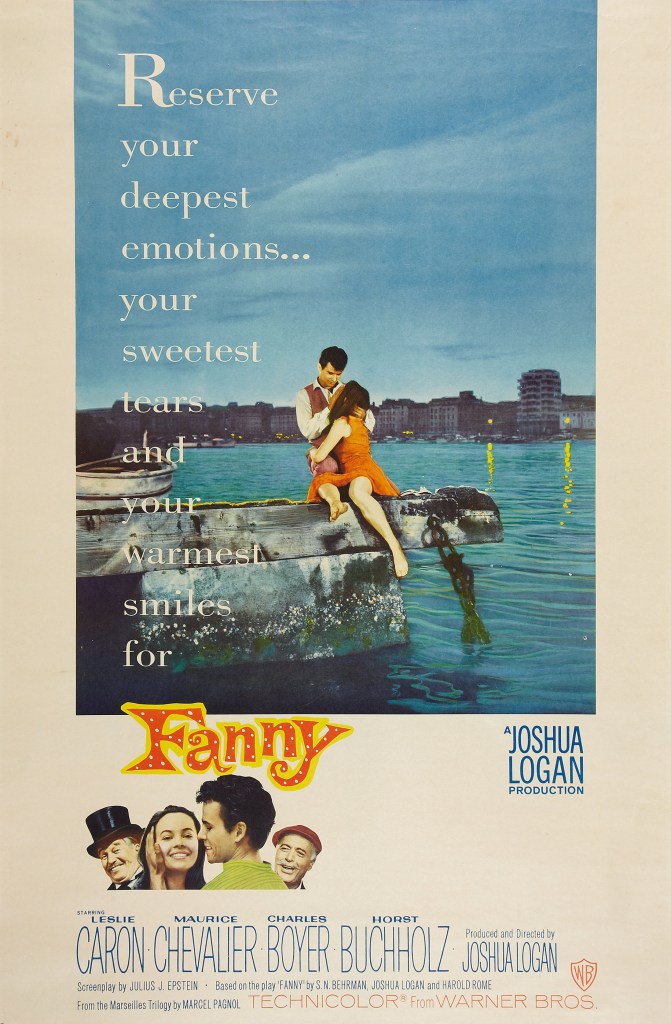
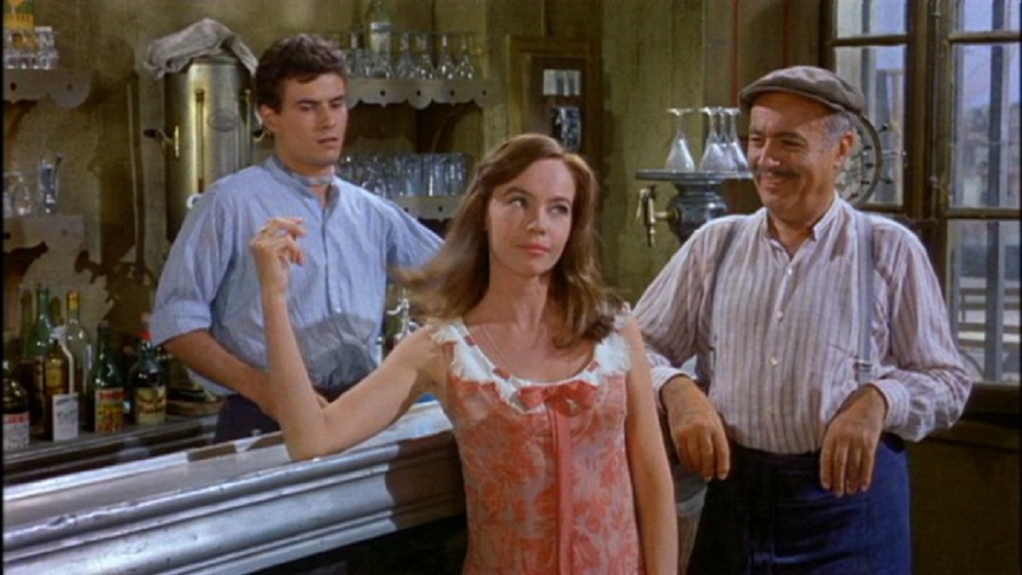
Gigi (1958)

Louis Jourdan forms an unusual romance with Leslie Caron’s Gigi

Director: Vincente Minnelli

Cast: Leslie Caron (Gigi), Louis Jourdan (Gaston Lachaille), Maurice Chevalier (Honoré), Hermione Gingold (Madame Alvarez “Mamita”), Eva Gabor (Liane d’Exelmans), Jacques Bergerac (Sandomir), Isabel Jeans (Aunt Alicia), John Abbott (Manuel)

In 1958 Gigi was littered with Oscars, winning all nine of its nominations to become one of the most successful films at the ceremony ever. It’s bizarre considering this is a run-of-the-mill musical with all the production values you would expect from an Arthur Freed production, but not really anything special compared to several other films from the same stable. It’s one of those moments when you remember Singin’ in the Rain didn’t even get nominated for Best Picture

Anyway, based on a book by Collette, Gigi deserved some sort of award for sneaking under the Hays code a story about a young girl training to be a courtesan, and the heartless playboy her family want her to seduce. Leslie Caron is Gigi, while the man who she has a sisterly affection for is Gaston (Louis Jourdan), the man around town bored with all the artificiality around him. Both Gigi and Gaston are heavily guided by their mentors: in Gigi’s case her grandmother, famed former courtesan Madame Alvarez (Hermione Gingold), in Gaston’s his uncle Honoré (Maurice Chevalier) a charming old rake. Everyone wants the two of them to become lovers, but do Gigi and Gaston want the sort of relationship of convenience their mentors expect?

That the film exists at all is a triumph of careful negotiation between Freed and the Hays Code, not usually open to films about high-class prostitutes and their marks. It does make for an occasional bit of confusion from the viewer – and a truncated plot as key ideas are circuited around (or over) – but also marvellous scenes, well written by Alan Jay Lerner, where Madame Alvarez and her sister (and courtesan trainer) Aunt Alicia (Isabel Jeans) discuss Gigi having “matured” to the correct age to become Gaston’s mistress by using unfinished sentences and raised eyebrows.

It makes for a slightly odd viewing experience today, especially with our far more enlightened views of the role women can have in society. The film mines comic material out of Gaston’s jilting of an unfaithful mistress (including Honoré toasting him for having driven the poor girl to attempted suicide after her public humiliation), while the comedic training sequences as Alicia attempts to turn Gigi into every man’s dream of the perfect mistress carries more than a whiff of exploitation today. But the film comes from a different r time, where such matters wouldn’t have occurred to either audiences or film makers.

Theres is a similar vibe in the film’s now most notorious sequence (and its opening) as Maurice Chevalier’s Honoré introduces the film and its world by crooning “Thank Heaven For Little Girls”. It’s a great catchy song (wonderfully delivered by Chevalier) but its lyrics thankful that “little girls get/Bigger every day”, matched with the septuagenarian Chevalier leering at a group of schoolgirls playing in the park, carry more than a whiff of the paedophile today. 

While you could say that this is all part of Minelli and Lerner’s intentions – that under the elaborate design of the film, there runs an undercurrent of selfish men carelessly using women for their own entertainment and many women enabling and encouraging this – it’s presented with such lightness, froth and charm that any potential darkness underneath it gets lost all together. Instead, its charming outer confection tends to obscure the difficult morals under the surface and prevents the viewer from engaging with them.

And the film’s design is what it’s really about. The first major musical to be shot largely on location – compare to An American in Paris which recreated the city of romance on a sound stage – its camera work is fairly reserved and focused on admiring the sets and locations more than providing a bit more to really engage the eye with. The design is impressive, mixing art nouveau and Cecil Beaton’s elaborate style, and the sets and costume (all Oscar-winning of course) really impress, even if the opulence ends up becoming overwhelming, not least with the overpowering reds that fill Gigi’s rooms. Minelli’s love of opulence and art ends up crushing the film.

That design also overwhelms the character. It’s telling that among its nine nominations, not a single one was for acting. Leslie Caron and Louis Jourdan do perfectly acceptable jobs, but their characters are not particularly interesting. Surprisingly for a musical – one starring Leslie Caron! – there is no dancing either. The film really misses the presence of people like Gene Kelly, the kind of leading man or woman who could carry a film on charisma. The real charisma comes from Chevalier (the one surprise to miss an Oscar nomination), who is so perfect as Honoré, so charming and dry (and who delivers his songs so well) that the film flags dramatically when he is absent (which he is for much of the final act). But the film misses a real heart.

It makes for a film that looks good, but is more a triumph of style and ingenious storytelling than it is storytelling with impact. Its Oscar win is perhaps a tribute to its faultless opulence and big budget spectacle. Because, boiled down to it, it’s a film with a story that hinges slightly on things that aren’t exactly tasteful revolving around people who aren’t very interesting. It has some good songs and moments from the Alan Jay Lerner script, but there is a reason this Best Picture winner has stuck in the collective memory so little, despite its record-breaking haul.