Author: Alistair Nunn

Moonstruck (1987)

Moonstruck (1987)

Charmingly romantic comedy with little touches of Shakespeare in its celebration of family love

Director: Norman Jewison

Cast: Cher (Loretta Castorini), Nicolas Cage (Ronny Cammareri), Olympia Dukakis (Rose Castorini), Vincent Gardenia (Cosmo Castorini), Danny Aiello (Johnny Cammareri), Julie Bovasso (Rita Cappomagi), Louis Goss (Raymond Cappomagi), John Mahoney (Perry), Feodor Chaliapin (Old man), Antia Gilette (Mona)

People do strange things all the time. We don’t always understand why, so why not say it’s a midsummer madness caused by the moon. Moonstruck seizes that old superstition of blaming the position of our nearest celestial neighbour for sending us all a bit barmy, and weaves it into a film that’s both a playfully eccentric romantic comedy and a sweet tribute to the power of a family’s loving bonds. John Patrick Shanley’s (Oscar-winning) script pulls these strings together so well, it’s not a surprise it’s the sort of a film that frequently ends up on people’s ‘favourite film’ lists.

Loretta Castorini (Cher) is an Italian-American widow, living with her parents, who is starting to wonder if she is cursed with spinsterhood. As the moon reaches its bright zenith, she agrees to marry her terminally dull, utterly unromantic boyfriend Johnny (Danny Aiello), because anything’s better than nothing (despite the fact he seems to see her as much a substitute for his mother as a romantic partner). She agrees to mend the bad blood between him and his younger brother Ronny (Nicolas Cage). Ronny is a picture-postcard of an eccentric, a one-handed baker (blaming his brother for that) prone to melodramatic fits of rage and outbursts of Operatic passion. Loretta and Ronny – blame that moon – are instantly smitten with each other. Who is going to sort that out?

It all pulls together into a sort of modern fairy tale, where everything has an air of gently heightened reality. It’s also the sort of thing that wouldn’t seem out-of-place in Shakespeare’s lightest comedies: people fall in love on a sixpence, feuds are fixed in minutes, cheating spouses instantly return to their wives and jilted suitors smile and join in the celebratory drinks. In this world of theatrical, fairy-tale comedy, it’s quite easy to buy that an exceptionally bright moon is sending everyone a little bit crazy (like Shakespeare’s Dream lovers in the forests outside Athens, going through one crazy doped-up night before settling suddenly into two loving couples) and eventually you just run with it in Jewison’s charming film.

With a script full of witty lines and theatrical bits of bombast (which Cage in particular, inevitably, rips through), Moonstruck is also one of those endlessly charming, relaxing and pleasant films where fundamentally everyone is at-heart decent. Sure, mistakes are made throughout; harsh words and truths are spoken, but within a film where everyone cares for each other. Ronny may (rather unjustly) blame his brother for briefly distracting him at work into losing his hand, but deep down he’s just waiting for an excuse to forgive his brother. Loretta may have a prickly relationship with her mother, but it’s roots are really firm and based around both protecting the other from knowledge of the knee-jerk philandering of her father. It takes the influence of the moon to suddenly spark these people into a few days of crazy behavior that changes their lives and leads them to re-address their relationships with each other.

It also makes Loretta, in an Oscar-winning comedic turn from Cher, face up to the fears about where her life is going. In a performance that is remarkably unglamourous – Cher plays every inch of the reliable window settling into spinsterhood and the film never falsely ‘transforms’ her – Cher invests Loretta with a deep fear and resignation below her surface of reliability and unflappability. Loretta is so used to being practical and dependable, organising the lives of everyone (even patiently instructing the confused Johnny on how to propose marriage), part of her romantic relief with Ronny is being able to let rip a more sensual and vulnerable part of herself. Cher lets the mask slip, as if having had love potion dripped into her eyes, letting her express her deeper feelings.

It makes sense then that she should fall in love with someone as self-willed and resistant to being mothered as Ronny. In an early role that straight away captures Nicolas Cage’s willingness to rip into a scene (what other actor would feel like such a natural fit for a lovably blow-hard, one-handed, baker melodramatically prone to threatening no end of harm on himself?), Ronny has all the sort of wildness and uncontrolled energy and excitement the rest of Loretta’s life doesn’t have. And he doesn’t want her to fill a surrogate role for another family member – he wants her to be part of an equal relationship on her own terms with him.

It’s probably the sort of relationship Loretta’s parents had at one point. Before her mother Rose (another Oscar-winner, Olympia Dukakis) become cynical and shut-off from her husband Cosmo (Vincent Gardenia). Cosmo has let his decency get squashed under a fear of growing old, clinging to a younger girlfriend (Anita Gillette) who he conducts an affair more out of habit more anything. No wonder Rose considers flirting with John Mahoney’s constantly-jilted professor (in a touch that hasn’t aged well, he keeps trying to date his students), but not going the whole hog, while Cosmo tries to feel young again by doubling-down on his quietly dying affair.

What’s surprising then is that Moonstruck bubbles all this romantic back-and-forth into a warm celebration of familial love. While romantic bonds are firey, they are transient – the bonds of family last. Moonstruck culminates in the family putting the sort of romantic divisions that have kept them apart aside to come together in a warm celebration: like Shakespeare’s lovers they have woken up and found out everything is in fact fine. There’s something really reassuring and hopeful about this – that our feuds and divisions can bring us together as much as they can tear us apart.

It’s another reason as well why this is a popular film. It’s helped of course by John Patrick Shanley’s well-crafted script, and the terrific playing of the actors. Cher and Cage both have great chemistry and get the tone of the eccentric but touchingly tender unlikely romance just right. Dukakis and Gardenia are both funny and sweet as their parents, Aiello gives a very generous performance as a dutiful-boy-who-never-grew-up and there’s a scene-stealing cameo from Feodor Chalipin as Loretta’s eccentric grandfather. Above all, Moonstruck is a playful, feel-good film that doesn’t take itself too seriously and lives you feeling hopeful that everything can work itself out – even when the magic of the moon sends us a little crazy.

Transformers: Rise of the Beasts (2023)

Transformers: Rise of the Beasts (2023)

Transformers serves away from the charm of Bumblebee back to the tedious machismo of Bay

Director: Steven Caple Jnr

Cast: Anthony Ramos (Noah Diaz), Dominique Fishback (Elena Wallace), Dean Scott Vazquez (Kris Diaz), Luna Lauren Velez (Breanna Diaz), Peter Cullen (Optimus Prime), Ron Perlman (Optimus Primal), Peter Dinklage (Scourge), Michelle Yeoh (Airazor), Pete Davidson (Mirage), Liza Koshy (Arcee), Colman Domingo (Unicron)

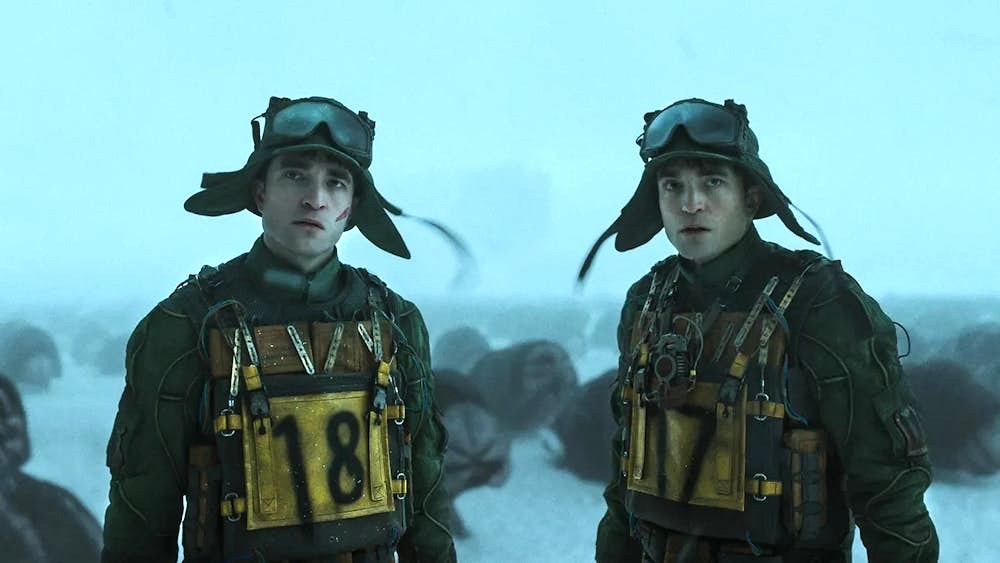
Somehow the Transformers franchise lucked out and managed to make a film I actually wouldn’t feel awkward showing to a child. Bumblebee avoided the crude sexualisation and graphic violence (hidden by the fact you are watching CGI engine oil and bits of metal flying around, rather than blood and bits of human flesh) of Michael Bay’s films. I really enjoyed it. I can’t really say the same about this follow-up. I’d at least let a child watch it – although it’s the cinematic equivalent of letting them have a Big Mac for dinner.

Transformers: Rise of the Beasts could have continued in the tone of Bumblebee, a delightful mix of cartoon and Buster Keaton/Laurel and Hardy. Instead, it takes tiny elements of that, then mashes them up with the throw-it-all-at-the-screen style of Bay. It’s not a happy marriage, and Rise of the Beasts is tired and overly familiar, crammed with crude banter and the sort of mass smackdown we’ve seen done time-and-time again. Give me strength. Rise of the Beasts isn’t really a sequel to Bumblebee – the events of that film are referred to only in a blink-and-you’ll-miss-it reference. The boyish charm of Bumblebee is drenched in audio clip quotes from Scarface and the like. Instead, it’s another “end of the world seconds away from a giant robot monster” flick.

Far in the future Unicorn (voiced with regal indifference by Colman Domingo), the planet eating robot from the 1985 film (when he was voiced by a final pay-cheque collecting Orson Welles) is trapped in another dimension, but wants to break into ours. He sends his minion Scourge (Peter Dinklage, dialling it in big time) to 1990s Earth to hunt down the MacGuffin that will do it. Only Optimus Prime (Peter Cullen) and his Autobots can stop him, allied with an ex-soldier desperately trying to help his kid brother Noah Diaz (Anthony Ramos) and Elena Wallace (Dominique Fishback) a junior archaeologist who can unearth the MacGuffin from where it has been hidden centuries ago by the Maximals, a group of transformers descended from our Autobots who transform into giant mechanical animals (their leader Optimus Primal is a Kong style ape).

It all seems a million miles away from the charm of the first film, with a teenage girl bonding with her first car who just happens to be a clumsy robot. There is precious little charm at all Rise of the Beasts. The human characters are either faintly forgettable, loud and brash or serve only as plot points. Anthony Ramos has to do a lot of digging to find any depth in a character given only a cursory plotline of desperation to provide for his mum and brother. Dominique Fishback’s archaeologist has the faintest of backstories about being cheated out of the credit for her work, before she’s fiddling with MacGuffins with handwave lines. The action zips across two universes and two continents, but never seems to really find firm grounding for itself.

There’s also something rather sad about the film swopping out the fairy tale elements of Bumblebee with a far more conventional Bro-romance. Ramos’ street-wise ex-soldier is paired up with Peter Davidson’s Mirage, a loud-mouthed Autobot who, despite a few witty lines, basically comes across as a street-wise bro with a hot streak of immaturity. There is a streak of laddish banter throughout the film – none of it, thank God, as appallingly sexist or racist as what passes for this sort of chat in Bay’s films – that essentially doubles down on restoring the franchise to something that appeals only to teenage boys and adults who wish they still were teenage boys.

After the broadening out of Bumblebee with a female lead given actual agency, this feels like a retrograde step. Rise of the Beasts does manage to pay this Bros plotline off with a surprisingly effective scene of self-sacrifice – but does so while not shirking on red-blooded (or red-oiled) young men whooping and cheering as they blast stuff out of the sky. It’s a step firmly back towards a territory that places male relationships at a premium – be it bros or actual brothers – and the bonds between men a world that leaves women on the outside looking in.

Not to mention the plot continually readjusts its stakes and characters depending on the requirements from scene to scene. Scourge is an unstoppable killing machine… until the plot requires him not to be. Characters are killed off… until the plot needs them to come back to life. Characters are fixated on their own needs… until the plot needs them to be altruistic. It combines that up with a final battle sequence that feels painfully derivative of the end of Avengers: Endgame, with Scourge mustering an army of rent-a-baddies to slow down the heroes while he slowly plugs a thingamee into a do-hickey.

Even Optimus Prime takes a backward step. While Bumblebee salvaged some likeability out of this hero, Rise of the Beasts very much returns him to Bay form: a deeply flawed leader with anger-management issues, who slices and dices foes with reckless abandon, rips off heads and uses neat kiss-off lines like “Then DIE”. I suppose he doesn’t execute at point-blank range a surrendering foe begging for mercy (Bay did this twice!) but he still hardly feels like an admirable hero. Rise of the Beasts vaguely acknowledges this by having Prime go on a loose arc of learning to put the needs of humans on a level with the Autobots (yup he’s also a proto-racist at the start) but it’s a very loose peg to hang a hero on.

Rise of the Beasts gives up on any pretensions of doing something fresh, engaging or different with the series. Even the beasts, for all their animalistic looks, are basically barely characters, more different looking toys imported into a flagging cinematic universe (Ron Perlman and Michelle Yeoh lazily yawn their way through terminal dialogue). While Bumblebee took the starting principles of the franchise and found the joy in them, Rise of the Beasts is a teenage wet dream of toys hitting each other to no great purpose, that places male relationships at its heart and leaves you with nothing to really care about. It’s a callback to everything bad about this franchise.

Cabaret (1972)

Cabaret (1972)

Fosse’s influential adaptation reinvents the musical into a superb exploration of sexuality and wilful blindness

Director: Bob Fosse

Cast: Liza Minnelli (Sally Bowles), Michael York (Brian Roberts), Helmut Griem (Baron Maximilian von Heune), Joel Grey (MC), Fritz Wepper (Fritz Wendel), Marisa Berenson (Natalia Landauer), Elisabeth Neumann-Viertel (Fräulein Schneider)

Some say Life is a Cabaret (old chum) – but they may well be closing their eyes to what’s really going on around them. Much harder to do that in Cabaret, a dark study of Weimar Germany, the quintessential time-period where everyone was so wrapped up in having a good time they failed to notice the world was beginning to burn down around them. Fosse’s version is a musical, but song and dance fills just over a quarter of the runtime. At its heart, it’s a character study of two young people in a particular time and place with very different perceptions of the dangers around them. It makes for a dark, inventive re-working of the Broadway original with Fosse stretching his wings into the sort of complex work culminating in the forensic self-examination of All That Jazz – and make Cabaret one of the most unique and exceptional of musicals.

Our Babes in 1931 Weimar Berlin are Sally Bowles (Liza Minnelli) and Brian Roberts (Michael York). Sally is a would-be superstar, plying her trade singing and dancing at the Kit Kat Klub. The host of erotic and blackly comic numbers there is the unsettling MC (Joel Grey). Brian is an academic, a reserved and very English young man with a preference for other men. Housemates in the same boarding house, the two become very close – and both very close indeed to happy-go-lucky Baron Maximilian von Heune (Helmet Griem). Sexual, romantic and emotional feelings ebb and flow while in the background the Nazis march relentlessly towards power along a path of violence.

Fosse was desperate to direct Cabaret, a film he felt certain would be a hit– and producer Cy Feuer was keen to bring his raunchy, dynamic choreography to the seamy world of the Kit Kat Klub. But Fosse also wanted to do something very different to the original musical. He wanted to return more to it literary roots, the semi-autobiographical works of Christopher Isherwood. He also felt, based on his experience directing Sweet Charity, that realism and bursting into song didn’t work. So the original script was jettisoned in favour of a new story junking most of the musicals plot (and several key characters), change its male lead from a straight American back to a queer Brit and cut all but one song not inside the Kit Kat Klub, making them a commentary on the action.

It’s a master-stroke, making Cabaret both a compellingly staged musical, but also a dark social issues piece and exploration of sexuality. In fact, you could watch Cabaret and wonder if Fosse didn’t really want to direct a musical at all. His heart, I feel, lies in the increasingly sexually charged and fluidic relationship between the three lovers at its heart: Sally’s vivacious enthusiasm, Brian’s careful guardedness and Maximilian’s shallow glee. It’scaptured beautifully in a late-night drinking scene in Maximilian’s palatial house, with the camera sensually close as the three dance together, their lips inches away from each other, the desire bubbling between them.

There’s a striking comfort with sexual freedom in Cabaret. Brian’s homosexuality – or bisexuality after he and Sally together discover his previous disastrous liaisons were clearly with “the wrong three girls” – is treated unremarkably by all: after all the Kit Kat Klub has its share of drag queens (one of them sharing a telling look with Brian after they surprise each other at the urinal). It’s all part of a wider bohemian lifestyle, exemplified by Sally who is always dreaming that a big break is just around the corner. This is the decent, brave and accepting side of Weimar Germany.

But Cabaret is also about the danger all around the characters, which too many of them ignore. Brian is the most conscious and politically aware, for all his English reserve. But Sally’s major flaw is that she chooses to pretend it’s not happening. Minnelli’s gorgeous rendition of ‘Cabaret’ at the end is so often seen as a triumphant embracing of life on her own terms, that its overlooked Sally performs it having decided to turn her back on broadening her own life outside her comfort zone and is singing to a room increasingly full of Nazis who will stamp out the very life she’s dreaming about.

Sally is bought to life in a superb, Oscar-winning performance by Liza Minnelli. Minnelli’s singing is of course extraordinary – her rendition of ‘Maybe This Time’ is one for the ages – but she’s also superb at bringing to life Sally’s bubbly naivety and kindness while also suggesting the fragility and desperation to be liked under the surface. There’s something very innocent about her, for all her hedonism: her attempted seduction of Brian has the clumsy brashness of an over-eager virgin, and while instinctively keen to help others she’s clueless at dealing with real emotional problems (there’s a wonderful moment when Minnelli looks sideways in panic as Maria Berenson pours her heart out to her, as if trying to find a way to escape). It’s a gorgeous, endearingly sweet performance – and perfectly counterpointed by Michael York’s career-best turn as the sharp, gentle, thoroughly decent Brian, with his own unique moral code.

Around them, Fosse uses the musical numbers to darkly comment on the action, helped by the demonic feel of Joel Grey’s sinister MC (the first real shot of the film is Grey’s face looming up from below to flash a Lucifer grin), whose manner becomes increasingly cruel, Fosse cutting to brief shots of him knowingly grinning as the dangers of Nazism become increasingly hard to avoid. Grey (who originated the part on stage) has a look of Joseph Goebbels about him, and it’s hard not to feel he’s some sort of manic sprite given even more life and energy as the world fills with horrors around him.

The musical numbers are extraordinary, brilliantly assembled by Fosse and full of seedy glamour – there is a gorgeous shot in ‘Willkommen’ when the camera whips around the high-kicking chorus line that’s like a shot of adrenaline. They mix between the darkly funny – the troubling romantic longing of ‘If You Could See Her’ – and the gorgeously inventive, with the tightly choreographed movements of ‘Money, Money’. Grey is a crucial part of this, his charismatic singing and dancing burning through the celluloid – who can forget his cruel glee under the comic interplay of ‘Two Ladies’ – and the use of him as a cryptic chorus who never speaks except on stage is a master stroke.

From its early scenes, we are left in no doubt of the violence many are choosing to ignore. From a street lined with ripped up election posters which Sally and Brian stroll down, to cut aways to stormtroopers brutally beating opponents, we can’t escape the inevitable death of this happy-go-lucky world. It’s also Fosse’s masterstroke to make the only musical ‘number’ outside the Klub not only goose-bumpingly powerful but also a skin-crawling piece of Riefenstahl-framed Nazi triumphalism.

Cabaret superbly captures in this one moment the seductive power of Nazism. As an Aryan boy sings ‘Tomorrow Belongs to Me’ (a slow camera pan reveals his SA uniform) at a beer garden, gradually the crowd joins in. The song builds into a resounding crescendo, people’s faces beaming with pride, full of fixed fanaticism, all of them sharing a special, powerful moment of belonging. Fosse’s unbelievable nerve is to present this utterly straight (someone with no knowledge of Nazism would be deeply moved watching it), making its seductive power even more chilling: because you can’t watch without also feeling a nausea inducing feeling of goose-bumps.

Hard not to agree with Brian when he wryly asks the smug Max whether he’s still sure the Nazis can be controlled. (Max parrots the upper class view that the Nazis are useful tools for getting rid of the socialists). It’s much easier for us to understand why Fritz Webber’s scruffy charmer Fritz (hiding his scuffed shirt cuffs) is scared of revealingly his Jewish heritage, even if it’s all he needs to do to win the love of Marisa Berenson’s shopping mall heiress. You don’t want to pop your head over the parapet in this world.

What’s clear in this superb film, is we can applaud the characters only so far: after all they decide to avoid the obvious that hedonism must be put aside to see the world for what it really is. There is a tragedy, in Sally in particular, that she can’t or won’t do this. As beautiful as her optimism is, it eventually becomes wilful blindness. This is part of what makes Fosse’s extraordinary film one that transcends its source material to become something truly unique. It’s a calling-card of a great director.

Sinners (2025)

Sinners (2025)

Coogler’s mix of political statement and horror flick is overlong but very effective

Director: Ryan Coogler

Cast: Michael B Jordan (Elijah “Smoke” Moore/Elias “Stack” Moore), Hailee Steinfeld (Mary), Miles Caton (Sammie “Preacher Boy” Moore), Jack O’Connell (Remmick), Wunmi Mosaku (Annie), Jayme Lawson (Pearline), Omar Miller (Cornbread), Delroy Lindo (Delta Slim), Li Jun Li (Grace Chow), Yao (Bo Chow), Buddy Guy (Old Samme)

In 1932 twin brothers Smoke and Stack (Michael B Jordan, pulling double duty) return to the racist South of Mississippi after years of war service followed by time spent working for the gangs of Chicago. They dream of setting up a juke joint for the Black community, flying in the face the racism of local Mississippi. But the dangers of the KKK pale slightly, when their opening night coincides with the arrival of vampire Remmick (Jack O’Connell) who dreams of forming a new family of the dead – and wants to recruit Mississippi’s Black community, with promises of equality in his world they could never have in their own. Holed up in their juke joint, can the brothers and their families and friends survive a night long siege until dawn?

The basic set-up of Sinners is, to be honest, familiar. It delights in hueing close to Vampire mythology – garlic, wooden stakes, silver and sunlight are the key weapons here and the vampires are powerless to cross a threshold until they are invited – and the ‘base under siege’ that occupies the film’s final act is essentially taken direct from the sort of set-up John Carpenter excelled at in his heyday. What makes Sinners really stand-out is the richness of its character relationships and its social context.

That social context is, of course, the Jim Crow South. Sinners is a film steeped in the racial injustice of a particular time-and-place. In 1932, Black workers still pick cotton on plantations in exchange for wooden nickels. Families live in shanty towns and use different shops than the white folk (local goods dealers the Chow’s run two convenience stores, on opposite sides of the street, to serve their two clienteles). The danger of lynchings are everyday threats (Delroy Lindo has a haunting monologue, beautifully delivered, as Slim recounts the lynching of a former band partner, who unwisely produced his stuffed wallet at a train station). Virtually the only white people we see (other than Rennick) are KKK members.

In this world of radical injustice, it’s fascinating that Coogler suggests, in some ways, the afterlife of a Vampire is more just and fair than actual life. Rennick, himself the relic of a long-oppressed pagan Irish community, makes solid points about Smoke and Stack facing a losing battle trying to play by the white man’s game as entrepreneurs and would-be local businessmen. He even, genuinely, states he would be happy to kill the entire KKK just to wipe their hatred from the Earth. There is a certain truth in the fact that, in the legions of the undead, all are equal and race means nothing. That getting bit could be a doorway to a new world, free of racial oppression – even if it also seems to mean living in the sort of community Rennick alone crafts.

It becomes a fascinating idea, joined with the fact that Rennick also points out Christianity is a spirituality forced on the Black community. Unlike the blues music, that gifted young cousin to the brothers, Sammie (a lyrical performance in every sense from Miles Caton) plays so well it can cross the bounds of space and time joining Black souls together, the enslaved people didn’t bring Christianity with them across the water. It was forced on them, as much as the labour in the fields. Sinners isn’t quite brave enough to explicitly denounce the Church as just another wing of enslavement (even if Sammie’s preacher father uses trauma to hammer conversion on people, rather than offering comfort). But it does make clear that Sammie’s ‘coming-of-age’ is whether he will choose the culture of his ancestors or the culture of his oppressors.

This is thought-provoking stuff – and Coogler does a superb job of threading it through the blood-spurting, neck-biting, stake-hammering action that fills up a large portion of the film’s conclusion. Sinners is dripping in Blues music, which artfully and beautifully wraps itself around the film to perfectly capture its tone and pitch. The sequence where Sammi’s music fills the juke joint, is transcendent in more ways than one, powerful and transporting in its musicality and passion (Ludwig Göransson’s score, created in partnership with several Blues artists and the actors is exceptional). Coogler matches it with one his trademark, virtuoso, one-take shots, the camera seamlessly weaving in and around the juke joint as our 1930s characters dance alongside modern club dancers and musicians as well as tribal African musicians of the distant past.

It also rewards more as Coogler takes his time throughout the film’s long opening act to really establish the characters and their relationships. You can argue that Sinners is over-indulgent in the sometimes overlong (well over an hour) long ‘recruitment’ sequence as Smoke and Stack assemble family and friends for their opening night. But this careful exploration of the closeness and warmth between these people – their loving sense of family, loyalty and sometimes painful shared history – pays off in spades when they begin one-by-one to turn to Rennick and then on each other. Coogler then makes these corruptions of the living into the hungry undead really sting, just as we feel the pain of those left among the living who must stake their nearest and dearest.

That carries further impact from the strength of the acting. Jordan, one of the most charismatic actors out there, gives a superb double-performance as the two twins, expertly sketching out their contrasting personalities and their deep love for each other. He makes Stack charismatic, gregarious and fun, and Smoke gruff, reserved but endlessly loyal and protective. They are too sharply humane turns, with Jordan so naturally playing off himself you forget both are played by the same actor.

Equally fine are the rest of the cast. Miles Caton is youthful idealism being shaken by traumatic events on the greatest night of his life. Wunmi Mosaku gives Smoke’s wife Annie a moral authority and deep sense of lingering grief. Hailee Steinfeld is vivacious but similarly burdened by disappointment and pain at chances lost as Stack’s one-time girlfriend that prejudice thwarted. Delroy Lindo’s soulful skill invests Slim with a real grace under the drunkenness. Even O’Connell, at times transformed into an Orlock-like nightmare, has a lonely humanity behind his ruthless, never-ending desire to build a new community (which he controls) around him.

There are powerful subtexts throughout here, even if parts of Sinners could at times benefit from a little tightening. Coogler effectively gives a rich hinterland to some familiar genre settings: and he surprises us with two codas, one rich in satisfying revenge violence the other with a rhapsodic melancholy which feel like natural ends for both their characters. Sinners mixes its Spike Lee influences with its John Carpenter ones with excellent effect, and is another firm reminder of the visual flair and piercing individualism of Coogler as director.

The Roaring Twenties (1939)

The Roaring Twenties (1939)

Superb gangster film, that sums up a whole era of film-making with a fast-paced grit

Director: Raoul Walsh

Cast: James Cagney (Eddie Bartlett), Priscilla Lane (Jean Sherman), Humphrey Bogart (George Hally), Gladys George (Panama Smith), Jeffrey Lynn (Lloyd Hart), Frank McHugh (Danny Green), George Meeker (Harold Masters), Paul Kelly (Nick Brown), Elizabeth Risdon (Mrs Sherman), Joseph Sawyer (Sgt Pete Jones)

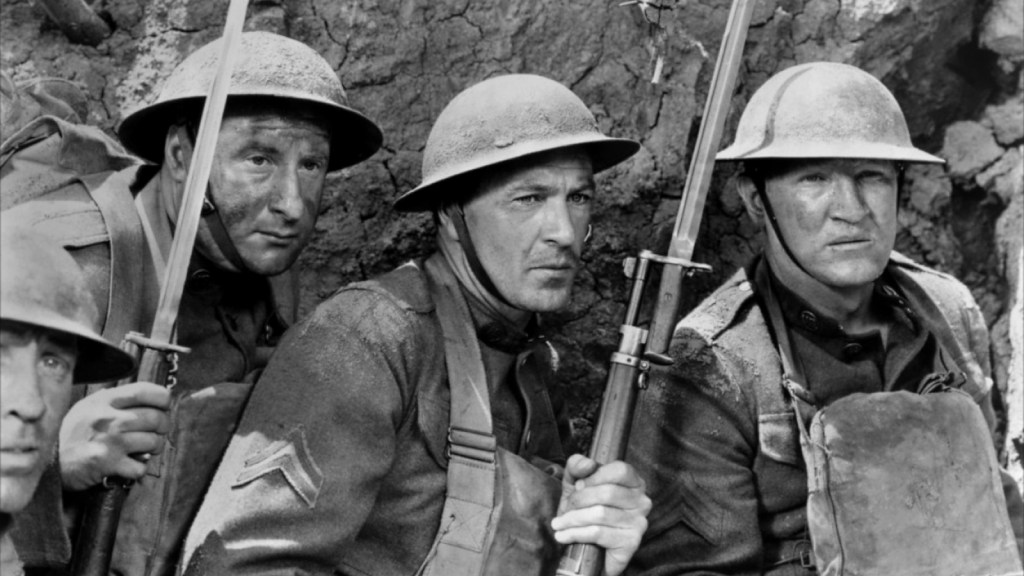
Three guys fall in a foxhole, might sound like the beginning of an odd wartime joke but it’s the encounter that begins The Roaring Twenties. Framed as both a period piece, looking back to a time already a decade away from the contemporary audience, and a sort of memorial piece to a whole cycle of bootlegger gangster films. It’s also a film far too regularly overlooked when discussing that cycle: in my opinion it’s one of the finest and possibly Cagney’s most complex gangster role (with apologies to White Heat). It’s a fast-paced, hugely entertaining slice of crime drama, with fascinating, multi-faceted characters and an intriguing level of social depth.

Those three foxhole guys are Eddie Bennett (James Cagney), destined to run a bootlegging empire in Chicago; George Hally (Humphrey Bogart), destined to become his sociopathic ruthless partner; and Lloyd Hart (Jeffrey Lynn), destined to become a lawyer walking an awkward line. Returning from World War One, Eddie finds little welcome for returning servicemen, but his pluck and sense of personal loyalty eventually see him stumble into, and then embrace, the bootlegging business with glamourous hostess Panama Smith (Gladys George). Problem is danger abounds in the crime-ridden city and its impossible to work in this business without getting your hands dirty. Throw-in Eddie’s candle-holding love for the quietly uninterested Jean Sherman (Priscilla Lane) and you have a recipe for long-term disaster.

The Roaring Twenties is a punchy, well-cut, overlooked gem. From its opening montage that rolls back over newsreel from 1940 to the trenches of World War One to its closing tracking shot that culminates in Eddie’s fatal tumble on the steps of a church (as always in the gangster film, no-one escape death’s moral judgement no matter how psychologically complex they are) it’s a feast of fast-moving entertainment. Along the way Walsh throws in everything, from gun battles to musical numbers, by way of comedy, obsessive love and social commentary. The Roaring Twenties is arguably a nostalgic cocktail with a dim view of its decade: one of crime, hedonism and hypocrisy.

And it’s corrupted Eddie. This is Cagney firing on all cylinders: and it’s remarkable how skilfully he creates a complex, sympathetic character out of similar material to his despicable hood in Public Enemy or the flat-out psychopath he forged in White Heat. Eddie is in many ways a decent man who finds all the dreams he’s been clinging too are fantasies. He can’t land the mechanic job he dreamed of, his uniform is the subject of mockery, the woman he’s been corresponding with turns out to be a teenager (Cagney’s disappointment, discomfort and faint attraction when he first meets Jean Sherman’s skipping late-teens Priscilla is beautifully done). Eddie is left bumming around town desperate for any opportunity.

Cagney’s performance really works, because Eddie – even with an angry streak that means he can knock out two chucking goons with one punch – is fundamentally a decent bloke, corrupted by circumstances. He sees the liquor-brewing game as a short-term fast buck, which he stumbles into because he’s too chivalrous to allow Panama to take the wrap for a bootlegging delivery he’s made. He’s loyal to his friends and tries to solve problems amicably. He’s got a charming, barrow-boy entrepreneurship to him, brewing booze in his bath and selling it as a high-quality import. Cagney shows how desperately Eddie clings to his self-image that crime isn’t a lifestyle choice, but a short-term necessity he’ll jack in one day for the peace and quiet of running a taxi company.

But Cagney never stops letting us see the corruption soaking in: Eddie is learning to heartlessly take what he can get, to forget the consequences of his actions and when violence comes he’ll shrug off deaths as ‘not his fault’ or respond with an increasing ease viciousness (in a nice call back, he even shoves a cigar into a goons face, an echo of his famous grapefruit scene from Public Enemy). When he faces news, he doesn’t like, or is denied the things he wants, lashing out is his first option – and once he starts necking his own product, his downfall is only a matter of time as he falls prey to the sort of ‘World is Yours!’ attitude that doomed Scarface.

From grasping ever more business opportunities to grooming (in more ways that one) the now adult Priscilla into his ideal girl (he can’t watch her perform without grasping the pained hand of Panama, his eyes locked in monomania desire that he’s clearly convincing himself is a sort of pure, brotherly concern). Eddie clearly sees her as his ‘reward’ for his hardwork, a fantasy that doesn’t have any place for her liking him but not loving him. But there is a neat touch throughout The Roaring Twenties – a momentum packed film that races through years in minutes – that Eddie fundamentally isn’t ruthless enough for this game.

Certainly not compared to Humphrey Bogart’s study in shallow, selfish cruelty. Shown early on grinningly shooting a fifteen-year old German soldier in the dying minutes of the war (“He won’t be 16!”), George Hally is the monster Eddie can’t be. A guy who doesn’t care for anyone, who betrays and kills at the drop of a hat, who doesn’t stop for any sense of form and decency. For all Eddie tells George that time has moved on and people like them don’t have a place in the Thirties, Bogart’s cold-eyed George feels like the sort of man who would flourish in the era to come.

Compared to him, Eddie and Panama are romantics. Gladys George gives a fascinating performance as Panama, one of the most complex gangster dames of all. George brilliantly walks a narrow line, clearly loving Eddie but accepting he doesn’t feel the same way – and (reading between the censor lines) entering a relationship with him anyway. Panama is half-partner, half-mother to Eddie giving him a sort of matronly support and tenderness and, when his fortunes drop off a cliff in the thirties, looking after the slubby, drunken figure Eddie becomes (Cagney looks more bashed up, scruffy and pathetic in the final act than almost any other star would dare).

Fascinating character relationships like this underpin a film that feels like a summation of years of Warner Bros gangster films. Walsh’s direction is pin-point sharp, from his montage construction (including a surprisingly surreal Wall Street Crash sequence with melting buildings), through the shoot-outs. The Roaring Twenties script – by Robert Rossen and Jerry Wald among others – offers characters who are complex, flawed and don’t quite seem to realise at times how terrible their world is.

When the end comes, and Eddie’s body slumps on the steps – after an inspired, sustained tracking shot that follows his teetering bullet-ridden body, the sort of athleticism Cagney was a natural at – it seems fitting the famous closing words are “He used to be a big shot”. That sums up not only the character, but an entire era of film-making being confined (temporarily) to the dustbin of history. It’s a melancholic note to end an extraordinarily good film, one of the great gangster films, in which Cagney, Bogart and George bring life to fascinatingly complex characters.

Alibi (1929)

Alibi (1929)

Early talkie as flashes of interest here-and-there as it awkwardly adapts to sound

Director: Roland West

Cast: Chester Morris (Chick Williams), Harry Stubbs (Buck Buchanan), Mae Busch (Daisy Thomas), Eleanor Griffin (Joan Manning Williams), Regis Toomey (Danny McGann), Purnell Pratt (Sergeant Pete Manning), Irma Harrison (Toots)

After a long stretch, Chick Williams (Chester Morris) is finally out of the slammer – and he’s celebrating by getting married to Joan Manning (Eleanor Griffin), who just happens to be the daughter of Police Sergeant Pete Mannings (Purnell Pratt). But it’s all fine, because Chick is going straight. And when the police are convinced Chick killed a police officer during a bungled burglary, Joan is certain he didn’t. In fact, she can give him a cast iron alibi – they were at the theatre together and, even if the killing did happen when they were separated during the interval, he definitely didn’t do it. Or did he?

Alibi (an early nominee for Best Picture) is another classic example of both Hollywood adapting a melodramatic Broadway murder-drama hit to the screen and a silent film hurriedly (and sometimes awkwardly) retrofitted to sound. It makes it a strange beast, a hodgepodge of different acting styles with scenes ranging from dynamic and experimental camera movement with flashes of intriguing sound usage to painfully awkward dialogue scenes where most of the actors stand very still and enunciate very slowly and clearly to make sure the mics pick up every word.

We get an explosion of sound at the start – films of this era knew audiences were gripped by such humdrum audio marvels as prisoners marching out of cells, bells ringing and police rhythmically tapping nightsticks against a wall. West does shoot this with quite a bit of interest – in particular the sudden appearance of the prisoners from behind a row of doors that swing shut. It’s handsomely designed by William Cameron Menzies and there are the odd moments of flair: a camera that tracks from a low-angle into the hotel Chick and his associates use for their base of operations; a stool pigeon crumbling into panic with a nightmare vision of his interrogator’s heads swirling around him; a drunk leaning in towards a massive bottle in close-up; shadows are cast behind doors; there are some dynamic fights and punches and an impressive rooftop flight.

But it’s mixed with some painfully stilted dialogue scenes, with most of the cast shown up in a bad light. Scenes involving Sergeant Manning and his police cronies seem to take hours as the actors trudge painfully slowly through the dialogue, their voices at time sounding like the film has been caught in a projector reel. You really notice the difference when the actors do something silently, their bodies moving with a swift confidence they lose as soon as they speak. Several actors – most notably Eleanor Griffin – still rely on tried-and-trusted silent reactions, signposting reactions they are also communicating with dialogue.

It stands out when the film does use dialogue well. The stool pigeon interrogation sees the interrogators repeat “Who killed O’Brien” and “Come on, come on” over and over again with an increasing rhythmic pace which really captures the mood of relentless interrogation. A scene involving a police switchboard sees a line of operators all speaking, but each sentence we catch forms a coherent narrative whole. There are some relatively ambitious song and dance numbers in Chick’s club. It’s just a shame so many of the core dialogue sequences are so dire.

Alibi does throw in a few decent twists here and there. Today we are not a jot surprised that Chick is in fact a villain, but the film manages to play its cards fairly close to its twist. That’s largely due to Chester Morris’ (an Oscar nominee) very effective performance, easily the finest in the film. Morris has the air of a cocky James Stewart, a false small-town bonhomie covering his greed and arrogance. He plays the humble suitor well – but his smug grin to Sergeant Manning when Joan reaffirms her complete faith in Chick is a great insight to who he is. He’s also a bully and, it transpires, a complete coward – Morris nails a great breakdown scene late in the film where his assurance disappears in a cloud of begging.

Morris is probably slightly better than much of the film deserves. He’s also luckier than Regis Toomey, whose ‘drunken acting’ as booze-hound criminal (truly some of the worst bits of alcoholic acting I’ve ever seen) is still not really excusable, even when you find out it’s a double bluff on his character’s part. (It’s so awful I’m amazed anyone is fooled). Toomey is also the centre of a death scene so ridiculously overblown, maudlin and sentimental it’s far more likely to illicit laughs than tears today as it stretches out over almost five minutes of screentime.

There is the odd intriguing idea in Alibi. It’s remarkable how critical of the police it is – even if it defaults to framing them as heroes in the end. Joan tells her father she could never marry the copper suitor he favours, because she believes cops to be corrupt bullies. An idea you can see partially borne out when our stool pigeon is made to put his fingerprints on a gun and threatened with judicial fake-self-defence murder unless he confesses. Bullets are fired freely at criminals, who left alone to be roughed up and threatened when arrested. It’s not exactly the most flattering view of law enforcement, who (despite reverting to heroes at the end) are constantly shown to be willing to bend the word of the law.

These moments of interest just about sustain it, added to Morris and West’s touches of flair. But it’s also got some painfully dated, awkward moments as Hollywood still struggled to stumble from silence to sound.

Johnny Belinda (1948)

Johnny Belinda (1948)

Small-town drama is a beautifully done exploration of prejudice with excellent performances

Director: Jean Negulesco

Cast: Jane Wyman (Belinda MacDonald), Lew Ayres (Dr Robert Richardson), Charles Bickford (Blackie MacDonald), Agnes Moorehead (Aggie MacDonald), Stephen McNally (Locky McCormick), Jan Sterling (Stella), Rosalind Ivey (Mrs Poggerty), Dan Seymour (Pacquet), Mabel Paige (Mrs Lutz), Alan Napier (Defence Attorney)

Small towns. Sometimes they’re safe, cosy little havens of the familiar. And sometimes they’re bitchy places of resentment and suspicion where everyone judges everyone else’s business. In an environment like that, it doesn’t pay to be different. Belinda MacDonald (Jane Wyman) is as different as they come: a deaf and dumb young woman, who (despite her intelligence and warmth) everyone assumes is a mentally deficient. Just as different, in a way, is Dr Richardson (Lew Ayres), a compassionate, well-educated man who forms his own opinions and is oblivious to other’s prejudices. Life’s going to be tough for this pair.

Dr Richardson is the only person in this small Canadian fishing town who can see the bright, vivacious young woman Belinda is. With his support, her father Blackie (Charles Bickford) rediscovers his love for a daughter, who he always blamed for her mother’s death in childbirth, while her austere aunt Aggie (Agnes Moorehead) thaws and proves her loyalty. Belinda will need them when she is raped by the popular Lucky (Stephen McNally) and trauma leaves her unable to remember who is responsible for the resulting child. The town, of course, blames Dr Richardson.

Johnny Belinda has all the ingredients of a melodrama: but it surprises as a mature, sensitive and moving story about real people. It’s amazing to see a 40s film this frank about rape and an illegitimate child, that lays not a finger of reproach on the victim, instead turning its fire on the small-minded judgements of those around her. It’s also striking it doesn’t define Belinda solely as a victim, either of deafness or rape. She gives birth to a child she dearly loves, refuses to let what’s happened haunt her and sees her life as one with blessings rather than curses. But neither is she an angelic character, being at times as capable of mistakes and quick judgements as the rest of us.

It helps that Jane Wyman (in an Oscar-winning turn) gives a perfectly judged performance. She’s never winsome or cloying, but fills Belinda with an uncomplaining grit to make the best of things, matched with a growing joy as her opportunities expand, from her discovery of sign language to the birth of her child. In complete silence (Wyman intensively learned sign), Wyman employs her expressive eyes to communicate a range of emotions from wonder to joy to fear to pain and grief (including a wordless rendition of the Lord’s Prayer). Belinda is a character we deeply empathise with, but never we nor the film treat her as an object of charity.

That also springs from Ayres’ Dr Richardson, a genial, kindly man whose inability to see the worst in people makes him a target-in-waiting for gossip. His less than regular attendance at Church has already raised question. Add his academic earnestness – and Ayres wonderfully embodies a man quietly passionate about making a difference – and you’ve got someone who doesn’t fit in a town that respects manly ruggedness. Richardson doesn’t pick up on this at all – just as he doesn’t even notice the clearly besotted devotion of his housekeeper Stella (an excellent portrait of quiet desperation by Jan Sterling).

Gossip is soon flying that Richardson is too close to Belinda. A trio of judgemental old woman, like Irish banshees, frequently stand on street corners to share little tit-bits of meanness.  The town punches down on outsiders, fitting people into insultingly simple brackets. It’s partly why immigrant shop-owner Pacquet (Dan Seymour) becomes the ringleader of a morality lynch mob: he’s all too aware it otherwise won’t be long before he’s the target again. No one, of course, can imagine for a moment that the carefree, rugged Lucky (Stephen McNally, a wonderful portrait of utterly smackable shallow vileness) could be the sort of cruel, cowardly cad he is.

A cad who takes notice of a newly confident Belinda – and not in a good way. Part of Johnny Belinda’s power is you can sense the latent danger in those eyes on a newly radiant and confident Belinda at a town shindig, the shy wallflower turned smiling young woman enjoying the music through feeling the vibrations of a violin string (a lovely moment, played with a real burgeoning wonder by Wyman). It’s a mark of the cruelty of the world that this confidence just makes Belinda a target for the vile Lucky.

Again, it’s a mark of Johnny Belinda’s success that the cruelty of what happens hits so hard. Rarely have I despised a film villain as much as Lucky, perhaps because he’s so weak, snivelling and arrogant – the sort of guy so arrogant and stupid he crows over the good-looks of his illegitimate son. He’s a picture of the real villains out there: the weak, stupid and shallow who always get passes from those around them.

Johnny Belinda creates deep, engaging characters. Charles Bickford’s Blackie is presented as first as a gruff, careless father. But the film – and Bickford’s performance – slowly unpeels him as a tender, caring and decent man. The sort of man whose first instinct is to protect, who delights in his unexpected grandson and is thrilled with the excitement of sign language. Similarly, Agnes Moorehead gives a terrific performance as a woman who seems at first a bullying harridan, but becomes a pillar of familial strength. (Both of them and Ayres were Oscar nominated, Johnny Belinda one of the few films to get nominations in every acting category).

This affecting story of people who feel real and three-dimensional, is well directed with restraint and care by Jean Negulesco (easily his finest film) and shot with a real beauty in its rugged Canadian sea-town visuals by Ted McCord. Max Steiner’s excellent score mixes emotional melody with sea shanty influences. It’s a world where intense but very real emotions help ground a story of rape, murder, scarlet letters and court cases into something that feels real and relatable.

Johnny Belinda feels like an overlooked gem, a sort of perfect example of Hollywood issue film where the ‘issue’ isn’t pounded over our head but built organically into the plot. One where characters surprise us with developments that feel real, embodied by a series of excellent actors at the top of their game. It’s a small gem that deserves to be better known.

Lost Horizon (1937)

Lost Horizon (1937)

Capra’s well-made Utopian dream lacks any of self-awareness of the flaws in its vision

Director: Frank Capra

Cast: Ronald Colman (Robert Conway), Jane Wyatt (Sondra), Edward Everett Horton (Alexander Lovett), John Howard (George Conway), Thomas Mitchell (Henry Barnard), Margo (Maria), Isabel Jewell (Gloria Stone), HB Warner (Chang), Sam Jaffe (High Lama)

Life can be such a never-ending rat race, the idea of chucking in that relentless pursuit of fortune and glory can be really tempting. Fortunately, it turns out there is a place you can do that: Shangri-La, a halcyon Utopian community buried deep in the Himalayas. There the mountains give it a gloriously perfect climate and preserves its residents youth for potentially hundreds of years. It’s a paradise for legendary diplomat Robert Conway (Ronald Colman), one of a group of Westerners whose plane crashes near-by, all of them invited to make their lives there.

It’s easy to see why this appealed to Frank Capra – even if his real idea of Shangri-La was Small Town America – and he poured years (and millions of dollars) into this dream project (it also took years to make back the investment). Conway is part of a group of mostly British Westerners escaping revolution in China. In Shangri-La, he’s deeply drawn to the peaceful ideology outlined by their host Chang (HB Warner) and Shangri-La’s spiritual leader, the Great Lama (Sam Jaffe). Not to mention the charms of resident Sondra (Jane Wyatt). Problem is, his brother George (John Howard) is desperate to return home. What will Robert choose?

Lost Horizon has a lot to admire about it, in among the incredibly earnest force of its telling, devoid of any drop of cynicism or irony. This is like a 101 of what to expect from Capra? It’s a celebration of the glories of living a simple, pure life without ruthless ambition and realpolitik. It’s filmed on a highly impressive scale by Capra – the gargantuan sets certainly show where the money went. Striking sequences, like a seemingly never-ending torch-lit parade of the people of Shangri-La marching towards Chang’s opulent estate, are breathtaking.

It hosts a fine parade of actors: Colman is perfect as the debonair, world-weary Conway, Horton and Mitchell make their supporting comic double-act genuinely funny (Horton, in particular, litters the film with wonderful bits of comic business using everything from mirrors to jewellery boxes), HB Warner makes a series of infodump ideological sermons more engaging than they deserve and Isabel Jewell creates a great deal of charm in the blousy Gloria. Interestingly, perhaps the most compelling sequence of Lost Horizon occurs before they even arrive, as these characters feud and panic on a hijacked plane taking them in totally the wrong direction.

But there is often something a little too pure about Lost Horizon. Even as the film-making beautifully unspools, it’s hard not to notice that for a huge chunk of this long film very little really happens beyond slightly sanctimonious speechifying comparing ‘our’ civilisation with the peaceful life of Shangri-La. In fact, it’s easy (particularly in our more cynical age) to start feeling a bit twitchy. So earnestly perfect is everything there, with a simplistic and unchallenging view of kindness and brotherly love, it starts to feel like being continually slapped by a SparkNotes copy of Thomas More. Capra uses John Howard’s blowhard George, to put a counter-view – but fills him with such ambition and desire that we are of course never in danger of taking him seriously.

Graham Greene wrote of the film “nothing reveals men’s characters more than their Utopias” before observing the design of Shangri-La resembled nothing more or less than a luxurious Beverly Hills Estate. Rarely has a truer word been spoken: this mountainous paradise, with its carefully designed gardens, well-stocked libraries, grand ballrooms and lush woodland perfect for riding feels like a slice of affluent middle-class Western civilisation in the middle Tibet. It makes for an interesting window into the film today.

Because it’s hard not to see Shangri-La as less of a land of beautiful contentment, and more as a sort of colonialist wet dream. Scratch the surface and it’s a very hierarchical community. Literally at the top of the hill, living in upper-class harmony surrounded by art, books, comfy armchairs and fine dining are the elite (all bar one of them Westerners). At the bottom, in their huts, live the Tibetan natives happily continuing their traditional way of life, happy to live and work (unlike the Chinese revolutionaries who Conway and co flee in the film’s opening) in the shadow of their betters. A smarter film than Lost Horizon might have pointed out the irony that Shangi-La is just a colony where the natives haven’t yet embraced political self-determination – but I’m not sure if such an idea occurred to Capra.

As soon as this crossed my mind, I couldn’t help picking holes in the calamitous internal logic of the film. Shangri-La’s only contact with the outside world is via a group of Tibetan sherpas who trek up and down the mountain once a month bringing supplies from the outside world – presumably its them who have trooped up thousands of books (including the complete works of Robert Conway!), hundreds of mediocre paintings and roomfuls of rococo furniture. The kindly inhabitants of Shangi-La’s palace never considered overseeing the construction of basic plumbing and power generation for the natives living in the valley below them (though they somehow recruited contractors to supply those things to their house on the hill).

In fact, the whole of Shangri-La’s world is set up on maintaining a strict two-tier system that keeps people content by making sure they never think for themselves. (What passes for education, is a series of patronising missionary-style sing-alongs). Even more chilling, the Grand Lama (a softly spoken Sam Jaffe, under mountains of make-up) has dreams of Shangri-La rebuilding global civilisation after its inevitable destruction, the whole world adopting his simplistic ideology. He means well, but I couldn’t help be reminded of Dr Strangelove orgasmically rising from his chair at the thought of creating a fascist Utopia of sexual bliss under an Earth poisoned by nuclear radiation.

None of these ideas enter into Lost Horizon’s simplistic world-view. It sticks with saying what the world needs is to be crafted into a sort of country estate, a sort of Tibetan Downton Abbey, with everyone happy with their assigned place in the chain. Lost Horizon gets as close as it can to any form of social criticism when Conway bemoans 90 ‘whites’ were saved from that opening Chinese revolution while thousands of natives were left to die. But aside from that, is exactly what it says on the tin: there are no flaws in Shangi-La.

And maybe I’m being impossibly cynical. Lost Horizon is a lovely film to bathe in for a while – after all Capra, at his peak, couldn’t make a clanger if he tried. But there is a more complex story on the edges here. If Lost Horizon had showed us more of Conway’s Gulliver-Like return to civilisation, lost in a series of spinning newspaper headlines, it could have given us more of that. But Capra is no Thomas More or Jonathan Swift. The satirical and suppressive elements under a hierarchical Utopia are alien to his mindset. Lost Horizon is a reassuring promise founded on shaky ground indeed.

Firebrand (2024)

Firebrand (2024)

Atmospheric film attempts to redefine Katherine Parr, but fails to make a successful dramatic case

Director: Karim Aïnouz

Cast: Alicia Vikander (Katherine Parr), Jude Law (Henry VIII), Eddie Marsan (Edward Seymour), Sam Riley (Thomas Seymour), Simon Russell Beale (Bishop Stephen Gardiner), Erin Doherty (Anne Askew), Ruby Bentall (Cat), Bryony Hannah (Ellen), Junie Rees (Princess Elizabeth), Patsy Ferran (Princess Mary)

For years people had this muddle-headed idea that Henry VIII was a jolly fat-man with a charmingly eccentric habit of constantly marrying the wrong woman. In fact, this homicidal tyrant was one of history’s definitive arseholes, his hands scarlet red with the blood of anyone who annoyed him (including at least two of his wives). His last wife, Katherine Parr, is similarly often remembered as a dutiful matron than a dynamic and intelligent woman (who wrote a book on theology and ruled as regent for several months).

Firebrand is a noble attempt to challenge that narrative, drawing focus towards Katherine Parr’s (Alicia Vikander) zeal for religious reform and the near-fatal attention it brought her from the hard-core traditionalists around Henry VIII (Jude Law) not least Bishop Stephen Gardiner (Simon Russell Beale). This reimagining of the final months of Katherine Parr’s marriage to the bloated tyrant tries its very best to reclaim her as a major figure in the founding of the Church of England and if, in the end, it doesn’t quite manage this, it’s still good to have Katherine reclaimed from history’s trivia corner – and links her closely to the eternally popular Elizabeth I (poor Mary remains a dowdy fanatic, played by a gloomy looking Patsy Ferran – feminist sympathy can only go so far.)

Aïnouz does give Firebrand a freshly claustrophobic and sinister feel behind the costume details (bringing the sort of outsider eye that Kapur bought to Elizabeth). It has an imposing, doom-laden score of moody strings and sudden, discordant noise, frequently presenting the English countryside not as lush environment, but misty place pregnant with unknown menace. It’s a fine mood setter for a land where reformist religious practices are ruthlessly suppressed by a religiously conservative king (Henry’s only interest in reform being what he personally could get out of it – in his case a divorce and a mountain of monastery cash).

In the candlelit gloom of the court, the capricious king makes life as unpredictable and dangerous as he is. Henry is accompanied everywhere by a group of fawning hangers-on, whose job is to whooping up the court to collapse into hysterics whenever the king says anything approaching a joke. The most effective thing about Firebrand is it’s presenting of a Henry VIII who is one part Harvey Weinstein to two parts Josef Stalin. Jude Law gives a masterclass in preening cruelty and psychopathic bullying, as man so used to getting what he wants even the slightest suggestion he can’t sends him into a spiral of spittle-flecked rage. Firebrand plays up his corpulence, the suppurating stench of his ulcers (Law, in method style, wore a cologne that stank of piss during filming) making this king a million miles from the broad-shouldered Holbein image.

Henry paws openly at attractive court ladies and delights in humiliating those around him. He uses physicality as a weapon of control, constantly grasping people by the fae or neck to draw them towards him. Law is superbly cruel and domineering, while being pathetically needy, demanding complete and total affection from his wife and yo-yoing between randy affection and assault if he doubts for a second anything other than her complete devotion.

If only the film was able to make as compelling a case for Katherine Parr’s undoubted qualities, as it does for the King’s negatives. Alicia Vikander has a hard job – Katherine is rarely, if ever, not under observation so must constantly hide her thoughts and emotions behind a stoic shield. But it’s a shield that partly deadens her performance. Firebrand only finds a few moments, at its start, for Katherine to truly be herself, in the presence of Erin Doherty’s passionate firebrand Anne Askew (whose Protestantism overlaps with a socialistic political view which doesn’t quite ring true for Tudor England).

Vikander and Doherty’s relationship is one of the film’s most interesting, with more than a hint of romance between these two reformers, one who has never compromised and another who compromised so much she literally married her persecutor. Aside from that, Vikander has to work hard to try and communicate her fierce commitment to reform behind her eyes – something that’s a lot harder than using her skill at telegraphic her hatred and fear of Henry. Her management of the king does provide moments of interest, notably a fascinating sequence when Katherine publicly humiliates a potential mistress in order to re-spark the king’s interest in her (Henry, like other egotists, liking nothing more than young women fighting over him).

But Firebrand struggles to translate Katherine’s religious views into either something politically compelling or dramatic. Instead, it largely resorts to working hard to tell usthat Katherine was a feminist icon, the inspiration for Elizabeth I and the true mother of the Church of England – rather than showing it. It also has to awkwardly rework the actual historical events to facilitate this.

As such, we have her roundly rejecting the advances of Sam Riley’s lecherously ambitious Thomas Seymour (in real life she immediately married him on Henry’s death – showing even intelligent people can fall for terminally selfish idiots), arrested, imprisoned and threatened with burning (in real life Katherine avoided this by publicly submitting utterly to Henry’s ‘superior’ judgement in all things religious) and an optimistic ending of her and Elizabeth planning a feminist protestant utopia (as opposed to Elizabeth’s affair with Seymour that permanently fractured their relationship). Firebrand ends with a paean to how Parr’s writing laid the foundations of Anglicanism, which feels quite a reach to make from one book.

Strangely however, the film’s biggest historical deviation of fact – her final solving of her Henry problem – despite being a clearly fictional flourish is surprisingly satisfying (not least because of the vileness of Law’s Henry) and manages to ring spiritually true for what a parade of people (and Katherine as well probably) would have liked to do to the murderous maniac if given the chance. But it’s also too little, too late in a film that otherwise is a little too dry, a little too lacking in narrative drive. For all it wants to build up the reputation of Katherine Parr, it gives Vikander far too little meaty content to really play with while ceding much of the interest to its wallowing in the cruelty of the king.

42nd Street (1933)

42nd Street (1933)

Less a musical, more about a musical – but a delightful love letter to the joy of theatre

Director: Lloyd Bacon

Cast: Warner Baxter (Julian Marsh), Bebe Daniels (Dorothy Brock), George Brent (Pat Denning), Ruby Keeler (Peggy Sawyer), Guy Kibbee (Abner Dillon), Dick Powell (Billy Lawler), Una Merkel (Lorraine Fleming), Ginger Rogers (Anytime Annie), George E Stone (Andy Lee), Ned Sparks (Barry), Robert McWade (Jones), Allen Jenkins (MacElroy)

Jones and Barry are putting on a show! The cry lights up Broadway (in an impressively staged series of quick-cuts, cross fades and super-impositions of the excited souls). And 42nd Street is all about the creation of that show, from the signing of the contracts to the opening night and the spontaneous making of a star. If it feels, watching 42nd Street that it’s made up of nothing but theatrical cliches… then it’s because most of them became cliches from excessive re-use after 42nd Street showed they worked so well – and made such a hugely entertaining film along the way.

The show is Pretty Lady, to be directed by Julian Marsh (Warner Baxter), the finest director (and friendliest tyrant) on Broadway who needs the money after losing a packet in the Crash. He’s not the only one struggling in Depression-era America: the competition to land a job as chorus girl is fierce. So, it’s a lucky chance that debutante Peggy Sawyer (Ruby Keeler) lands a gig. The star is Dorothy Brock (Bebe Daniels), a vaudeville veteran trying to make it as a serious Broadway actor and currently the squeeze of the shows’ wealthy financier Abner Dillon (Guy Kibbee) – although she is still seeing her old partner Pat Denning (George Brent). But will Dorothy make it through the drama to opening night – or will Peggy need to step up to save the day?

It’s not a surprise that of course she does, but then Julian’s final words to her (“You’re going out a youngster, but you’ve got to come back a star!”) is the film’s most famous moment. As well as launching a thousand backstage dramas, 42nd Street is remembered as a musical. But there is actually precious little music in it. We have to wait almost 45 minutes before the first song (Dorothy’s rendition of ‘You’re Getting to Be a Habit with Me’) and the final fifteen until we see the bulk of Busby Berkeley’s choreography. Other than that, this is very entertaining soapy, backstage drama with romantic entanglements. It’s a more film about the stressful theatrical alchemy involved in making a musical, rather than a musical itself – there is no ‘putting my feelings into song’ here.

And it’s taking place in Depression-era desperation. Everyone needs a job – that’s why they are so excited about hearing there is a show in town. That plays into the family atmosphere behind the scenes. After all everyone needs the show to be a success, and if that means roping in a few gangsters to get a wayward star back into line so be it. Much like, in fact, 42nd Street itself, coming to the screen after a glut of musical flops (perhaps that’s why there is so little actual musical content in it). The film zeroes in refreshingly and lovingly on the hard work, dedication and family atmosphere that can grow up in theatre, where everyone is working towards a common goal – and why I, a veteran of more than my share of putting a show on, felt a real soft spot for it growing.

And there is support, for all the bitchy moaning behind the scenes. Julian Marsh may tyrannically insist on absolute perfection – rehearsing through the night, waking the piano player when needed – but, it’s all to service a common goal. When emergency hits, the company flocks around and support each other. When one of their number triumphs there will be more congratulations than there are jealousies: even Dorothy will lay aside any personal feelings to support the new star. 42nd Street really captures the sense that behind the curtain in the theatre a little world of its own is created, one which can be very loving in its own unique way.

It’s also a world, with more than a few sexual escapades, something hard to overlook in a film as full of chorus girl’s legs as this (the chorus girls are largely hired on the basis of how good those legs look). Dorothy is effectively trading her favours for a career leg-up from the clueless Dillner, while sticking with true love Denning. Denning, jealous, conducts his own speculative flirtation with Peggy (in a fun sequence, her landlady throws her out for daring to bring Pat home for a coffee – while behind her another chorus girl smuggles out her lover with an illicit kiss). Anytime Annie didn’t get her nickname for her dancing, Lorraine is happy to leverage her relationship with dance director Andy Lee and Lee himself (it’s implied) is the willing subject of Julian’s attentions.

In the midst of this, poor Peggy feels rather naïve. Sure, she may be bouncing between unlooked for attentions from a young member of the company and leading young man Dick Powell, but a passing possibility of romance with George Brent’s cuckolded partner (in every sense) to Bebe Daniel’s star leaves her flustered. Brent’s intentions may well be noble, but left alone with him in his apartment, Peggy is sweetly nervous and locks her door after she is chivalrously conveyed to the spare bedroom by Brent, as if scared she may give into temptation. Hilariously they are only in his apartment, after his calling on her is mistaken for a dalliance by her landlady, who throws them both out while boasting she never misses a trick – all while, in the back of the shot, another tenant quietly ushes her beau out of the door.

All of this gives some lovely opportunity to its actors, and there are several delightful turns in 42nd Street. Not least in the chorus, where Una Merkel has a wonderfully playful flirtatiousness and Ginger Rogers gives her monocle-clad Anytime Annie a rogueish sexiness. Guy Kibbee’s moronically uncultivated sugar daddy gets several good laughs at his boorish cluelessness. If Ruby Keeler at times seem a bit unnuanced as the lead (there has long been some rather mixed feelings about her slightly heavy-footed dancing) and Dick Powell is eminently forgettable as her love interest, there is more than enough class from Baxter’s stressed out director, George Brent is very fine and Bebe Daniels invests Dorothy Brock with just enough vulnerability under the diva exterior to always leave you rooting for her (she is, after all, just as desperate for work as the meanest chorus girl).

It’s a film put together with flair – the early montage is pacily and flashily assembled – and a great deal of wit (producer Darryl F Zanuck and Berkely often gain the lion’s share of the credit for its pace, wit and zip although I feel some credit must go to experienced director-for-hire Lloyd Bacon). The final dance numbers are expertly done and very well filmed by Berkely, including a point where the camera glides under a parade of leg arches. But above all, it’s a heart-warming and witty tale that pulls back the romantic curtain of theatre to reveal – well an equally romantic view of the camaraderie and magic that brings a show to the stage. But it would be a hard heart that could not find something to smile at here.