Category: Action film

The Four Feathers (1939)

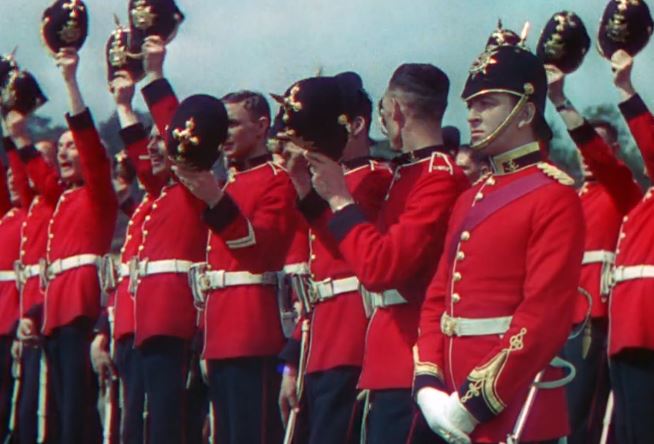
John Clements jacks in the soldier’s life, then has to prove he’s not a coward in The Four Feathers

Director: Zoltan Korda

Cast: John Clements (Harry Faversham), Ralph Richardson (Captain John Durrance), C. Aubrey Smith (General Burroughs), June Duprez (Ethne Burroughs), Allan Jeayes (Geveral Faversham), Jack Allen (Lt Thomas Willoughby), Donald Gray (Peter Burroughs), Frederick Culley (Dr Sutton), John Laurie (Khalifa)

Who doesn’t love a sweeping boys own adventure? The Four Feathers is a prime example of a classic late Victorian adventure story by AEW Mason, where stiff-upper lipped British men do what must be done for honour, Queen and country in the face of hordes of dangerous ruthless natives. Okay, you can see typing that why some of these attitudes can be seen as “troubling today” – and the film’s occasional non-PC stumbles (John Laurie blacks up – as does every other actor playing a speaking African – as radical leader Khalifa, while his army is referred to by an on-screen caption as “fuzzy-wuzzies”). But it’s a product of its time, and its attitudes are really less racist, than the sort of patronising parental colonialism, where the Khalifa has to be stopped as much because he is a danger to his fellow natives as he is the British rulers.

Anyway, putting it’s “of its time” attitudes to one side, The Four Feathers is an endearing, enjoyable and wonderfully made adventure story. After the death of General Gordon (see Charlton Heston’s epic Khartoum) in 1885, war is declared on the Khalifa in the Sudan. However young Harry Faversham (John Clements) resigns his commission on the day of the announcement that his regiment will be shipped out, feeling his obligation to join the army has ended with his father’s death and worried that he will prove a coward. His friends Durrance (Ralph Richardson), Willoughby (Jack Allen), Burroughs (Donald Gray) and fiancée Ethne Burroughs (June Duprez) are singularly unimpressed and all send him white feathers of cowardice. Realising he has led down everyone, Faversham disguises himself as mute, Sangali native (including facial brand – ouch!) and heads out to the Sudan to help his friends and regain his honour: and do they need it, as Durrance is blinded and Willoughby and Burroughs captured by the Khalifa.

The Four Feathers was shot on a huge budget at the time, with extensive on-set location shooting, and it barrels along with an old-fashioned sense of adventure that is hard not to get a little bit swept in. Of course, it’s also easy to question some of the film’s colonialist, white-man’s burden attitudes and also its opinions on what constitutes bravery and nobility (leaving the army because you never wanted to be in it in the first place is seen as yellow-bellied nonsense, which I suppose makes sense for a film made just before World War Two). 

But take it as a product of its own time, and the film works extremely well – easily the best version of the many that have been made of AEW Mason’s book. While epic, it gives us a low-key, dignified lead character who it’s easy to admire and relate to. John Clements plays the role with an expected upper-class stiffness in places, but he’s also a man bursting with desires to be something more than a soldier, then plagued with guilt and self-loathing when he believes he has betrayed all those he is closest to. Clements’ performance anchors the film extremely well, and makes Faversham into an admirable, very human protagonist, pushing himself to insane levels of deprivation and suffering to redeem himself in his own eyes, as much as in his friends.

Those friends are also not painted as arrogant buffoons or cruel, knee-jerk bullies. Ralph Richardson mines a great deal of sympathy from Durrance, a man determined to do his best but (its implied ) living under a deep sense of inadequacy and fear himself, who knows he is second best in most things, especially in love, and who accepts the ill fortunes that befall him with an eventual stoic good-nature. The film’s most successful sequence, features a wordless disguised Faversham, guiding the blind Durrance not only back to the British troops, but also helping him to find some will to carry on living. Its sterling work from Richardson, and his physical intelligence – his initial blindness is almost comically blundering, before the character trains himself to move and act almost as if he still had his sight – makes for further emotional connection.

All this is set in a sweeping, marvellously entertaining, grand-scale by Zoltan Korda. No expense was clearly spared, and the large scale sequences of battles and attacks – as well as the shots of armies moving across the desert wasteland – carry a great deal of scale and impact. The film barrels along with an impressive force, throwing events and actions at us throughout, all while juggling the personal stories of its lead characters. The technicolour shooting of the film has a classic gorgeousness about it, and the film has more than its fair share of decent lines. The film highlights a number of rather stirring battle set pieces, as red coated Englishman fight against overwhelming odds, the sort of thing that we are meant to frown at today but actually remains rather gripping.

The Four Feathers may be dated in places, but as a piece of classic entertainment from its era it’s hard to beat. The action adventure is full of bangs, shots and stiff-upper lipped Brits overcoming trials and tribulations. Faversham is a grounded and relatable character, and his doubts and fears make him admirable, not least because of the great lengths he goes to in order to overcome them. The Four Feathers still entertains today because it feels like exactly the sort of classic Sunday afternoon adventure story that appeals to boys of all ages.
Heat (1995)

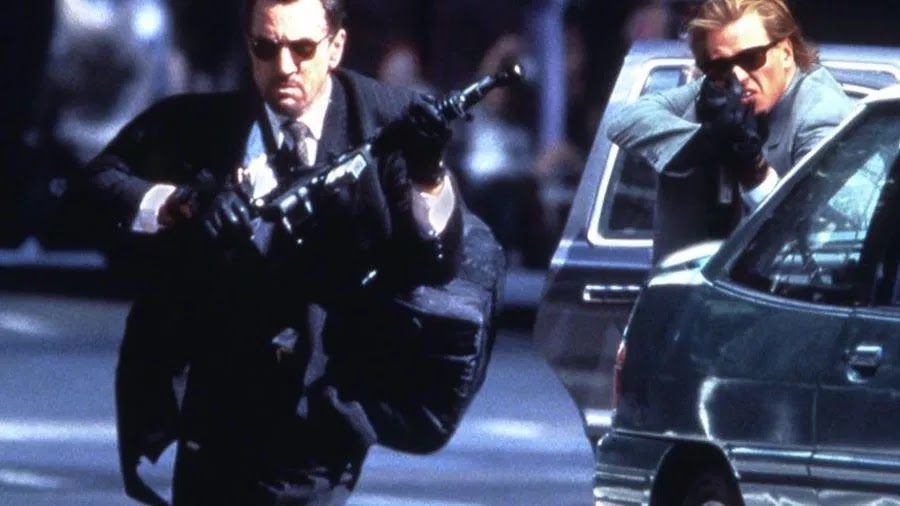
De Niro is packing Heat

Director: Michael Mann

Cast: Al Pacino (Lt Vincent Hanna), Robert De Niro (Neil McCauley), Val Kilmer (Chris Shiherlis), Jon Voight (Nate), Tom Sizemore (Michael Cheritto), Diane Venora (Justine Hanna), Amy Brenneman (Eady), Ashley Judd (Charlene Shiherlis), Mykelti Williamson (Sgt Drucker), Wes Studi (Detective Sammy Casals), Ted Levine (Detective Mike Bosko), Dennis Haysbert (Donald Breedan), William Fichtner (Roger van Zandt), Natalie Portman (Lauren Gustafson), Tom Noonan (Kelso), Kevin Gage (Waingro), Hank Azaria (Alan Marciano), Danny Trejo (Trejo), Xander Berkeley (Ralph)

In the mid-90s, Heat was the cinematic event of the year. De Niro! Pacino! Together! In one scene! The two acting heavyweights – wildly proclaimed and popular since the 1970s – had of course made The Godfather Part II together but had shared no scenes. Here, however, we’d see them both at the same time riffing off each other. The great thing is that there is so much more to Heat than just that one scene. Heat is a sort of poetic cops and robbers flick, part stunning action adventure, part profound exploration of the internal souls of men chasing down leads, both good and bad.

Neil McCauley (Robert De Niro) is a skilled career criminal who lives his life with a monastic self-denial, saying you can have nothing in your life “that you cannot walk out on in 30 seconds flat if you spot the heat around the corner”. Vincent Hanna (Al Pacino) is a bombastic, egotistical, workaholic detective with a self-destructive family life. Naturally, these two men find themselves on opposite sides, as McCauley plans his next job and Hanna works to stop him. But the men, with their similar codes dedicated to their chosen career, find that they have an increasing mutual respect – not that that will stop either of them “putting the other one down” if push comes to shove.

Heat is the pinnacle of Michael Mann’s career, and his most triumphant exploration of the conflicted, complex, masculine personalities at the heart of the high-adrenalin worlds of crime and police work. Mann has a gift for giving the simple rush and tumble of cops and robbers a sort of epic poetry, like a metropolitan Beowulf, and he achieves this again here. Heat is a film that throbs with meaning, it’s cool blue lensing and chilly, modern architecture serving as a perfect counterpoint to the cool, professional and focused personalities of its characters.

Heat also goes the extra mile by building this playground confrontation into a mythic battle of wills, a battle of principles and ways of living that seem separated only by a few degrees. Mann invests this with such sweep, such grandiosity (without pomposity), such scale that it becomes a sort of modern epic, a film where intense meaning can be mined by the viewer from every scene. Whether there is in fact any meaning there – avoid listening to Mann’s commentary which drills down so many of his elliptical character beats and open-ended scenes into the dullest, most predictable tropes that he had in mind while filming – is another issue, but Mann’s trick as always with his best work is to make something really quite small and everyday seem like a grand, timeless epic.

It all boils down to that famous coffee shop scene, where De Niro and Pacino for a few magic moments come together. It’s a scene that explicitly asks us to see cop and criminal and understand that there is in many ways very little to choose between them. It hinges on the gentle competitiveness of the actors, and the way they subtly play off each other. It also plays on our own histories of these two actors, of decades of seeing them as two sides of the same coin, both carrying so much cultural baggage for a string of iconic roles that saw them rule Hollywood for over a decade. It’s the sort of scene given extra investment, where you sense the mutual respect of the actors fuelling the strange bond that powers the scene. 

It’s also the one scene of the film that Pacino underplays in. The rest of the film he goes way bigger, powering through each scene with an explosion of shouting and drama. It’s a performance ripe for parody, with more than an edge of ham, but it just about works. Pacino turns Hanna (hilariously the character shares a name with a BBC political journalist of the 1980s) into the purest form of adrenalin junkie, a larger-than-life personality who tears through people and cases with a focused determination that allows no room for a personal life. De Niro downplays far more by contrast, apeing a sort of 1940s noir cool, a monkish insularity that prevents anyone from getting close to him, mixed with a laser-guided determination to do whatever it takes to make his score.

Mann’s film throws these two characters into a series of stunning set pieces with the bank robbery at the centre (“the one last score” that McCauley can’t pass up no matter the danger). The robbery – and the shoot out that follows it – is a triumph of action cinema, brilliantly shot and edited. The gun play is stunning, with Andy McNab having served as a consultant for the actors on the use of automatic weapons. The scene rips through the screen, spewing bullets all over the place in a ruthless, no-onlooker-spared rampage that also really pushes the limits of effective sound design. That’s just the highlight of several scenes that – with guns or otherwise – hum with tension, danger and excitement.

Mann also has enough room in this film though to skilfully establish a number of supporting characters with compelling story lines of their own. Val Kilmer is a tad wooden as McCauley’s number two, but his storyline of troubled marriage is mined for unexpecting pathos (thanks also to Ashley Judd’s fine work as his wife). Kevin Gage is very good as a psychopathic criminal unwisely brought on board to fill a slot in an early robbery. Dennis Haysbert has his own tragic plotline as a criminal trying to turn straight. Diane Venora is excellent as Hanna’s neglected wife, as is Portman as his vulnerable daughter-in-law. This isn’t to mention excellent performances from a rogues gallery of character actors, from Jon Voight to William Fichtner. 

Mann keeps all these plotlines perfectly balanced in a film that is very long but never drags for a minute. Crammed with exciting set pieces and brilliant sequences, it’s a film that manages to feel like it is about a very masculine crisis – the failures of men to balance the personal and their career, selfishly harming those around them because of their addiction to action. Mann’s film looks brilliantly at the essential emptiness and sadness this leads to – as well as the blinkered drive that never prevents men from stopping for a second and changing their lives, no matter how many reflective cups of coffee they have. Mann partners this existential, poetic feeling drama with the ultimate crash-bang cops and robbers and thriller, which will leave you on the edge of your seat no matter how many times you see it. Quite some film.

Star Wars Episode II: Attack of the Clones (2002)

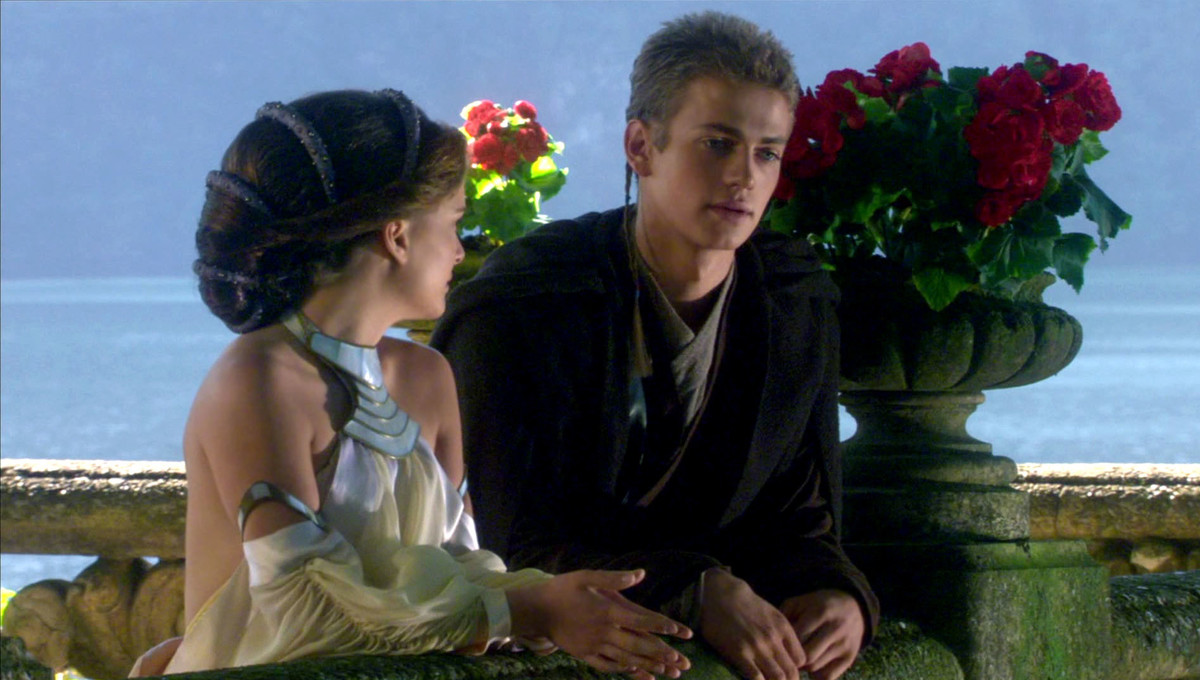
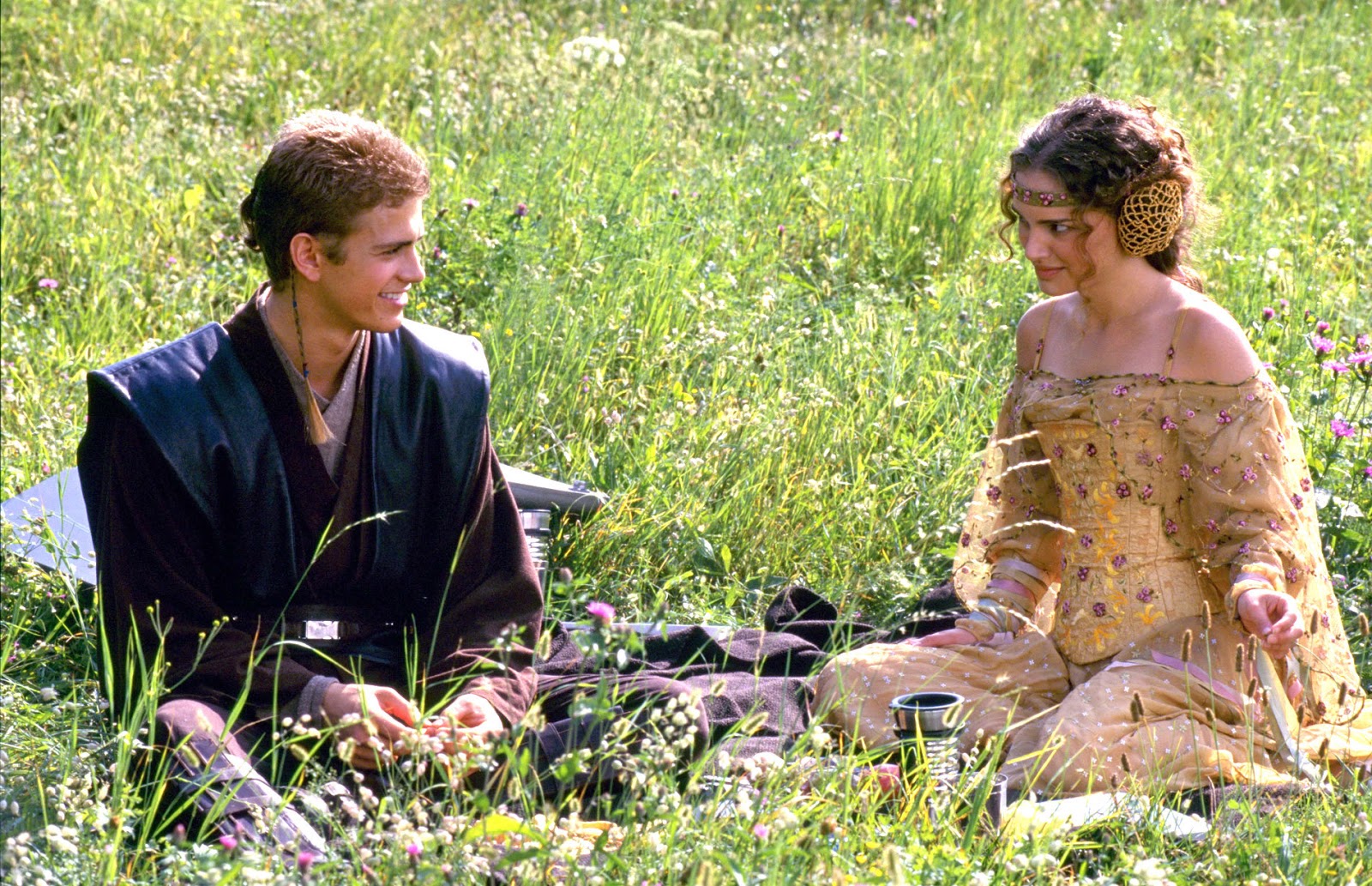
He hates sand you know. Anakin puts the moves on Padmé in Attack of the Clones

Director: George Lucas

Cast: Ewan McGregor (Obi-Wan Kenobi), Hayden Christensen (Anakin Skywalker), Natalie Portman (Senator Padmé Amidala), Ian McDiarmid (Chancellor Palpatine), Christopher Lee (Count Dooku), Samuel L. Jackson (Mace Windu), Temuera Morrison (Jango Fett), Frank Oz (Yoda), Anthony Daniels (C-3PO), Kenny Baker (R2 D2), Jimmy Smits (Bail Organa), Ahmed Best (Jar Jar Binks), Pernilla August (Shmi Skywalker), Joel Edgerton (Owen Lars), Silas Carson (Nute Gunray/Ki-Adi-Mundi)

Nothing could be as bad as The Phantom Menace. Surely? Well, umm, Attack of the Clones is pretty bad, but it’s not quite as stodgy and racist as the first one. It really isn’t. But don’t get me wrong, it’s still tone death, poorly written, crappily directed, poorly assembled, textbook bad film-making disguised under a lot of money.

Anyway, ten years have crawled by since Phantom Menace. Padmé (Natalie Portman) is now a senator campaigning against a revolutionary Separatist movement in the Republic, led by mysterious former Jedi Count Dooku (Christopher Lee). After a failed assassination attempt, Jedi Knight Obi-Wan Kenobi (Ewan McGregor) and his Padewan pupil Anakin Skywalker (Hayden Christiansen) are assigned to protect her. After another assassination attempt throws up a strange link to a mysterious planet of industrial cloners, Obi-Wan investigates leaving Padmé in Anakin’s care: but the two of them are falling in love, strictly against the rules of the Jedi order.

Sigh. Attack of the Clones is once again a mess, overly computer engineered, badly directed by a director with no knack for visual storytelling other than throwing special effects at the screen. It has a densely disinteresting plot about shady dealings around a mysterious Clone army that eventually the film doesn’t bother to resolve. Lucas shoots the entire film in a shiny, sterile, entirely computer generated environment that looks worse and worse the older the film gets. It builds towards a series of clashes at the end that have impressive spectacle on first viewing, but are hugely empty viewing experiences the more you come back to them. But all this isn’t even the film’s main problem.

First and foremost, the most egregious problem with this film is the romance at its heart. This romance, whose impact is meant to be felt through every film is to come, is as clumsy and unconvincing as anything you are likely to see. Not for one second are you convinced that this couple could ever actually be a thing. For starters Anakin is a whiny, preening, chippy rather dull man who over the course of the film murders a village full of people. Hardly the sort of character to make women swoon. On top of this, his romantic banter and tendency of staring blankly and possessively at Padmé has all the charm of a would-be stalker, mentally planning out the dimensions of the basement he’ll imprison his love in. 

Padmé is hardly much more engaging. Her way of handling this love-struck young man, who she claims she doesn’t want to encourage? To flirt with him in a series of increasingly revealing costumes, while constantly telling him “no we can’t do anything” – for unspecified reasons. But then as she says “you’ll always be that 12 year old boy to me” (Oh yuck George!). Portman looks she can barely raise any interest in holding Anakin’s hand, let alone conceiving future generations of Skywalkers. The desperate attempt to create a sense of “love across the divide” falls flat, flat, flat with all the sweep of a Casualty romance of the week. Put it frankly, we are never ever given any reason at all for us to think that they have any reason to be in love.

Despite all this the film desperately tries to throw them together into a series of clichéd romantic encounters, from candle-lit meals to gondola cruises around the lakes of Naboo. Jesus the film even throws in a flirtatious picnic (in which, true to form, Anakin espouses the benefits of totalitarianism, hardly the sort of thing to get a young girl’s heart fluttering!) followed by a roll around in the long grass after a bit of horseplay. To be honest it’s sickening and all the fancy dressing in the world never disguises the utter lack of chemistry between either characters or actors. And you’ll suffer with the actors who are trawling through the appalling “romantic” dialogue. The infamous “I don’t like sand. It’s coarse and rough and irritating and it gets everywhere. Not like here. Here everything is soft and smooth” sums it up – especially as Anakin ends it with stroking Amidala’s exposed shoulder possessively. Late in the film Padmé says “I’ve been dying inside since you came back into my life” – I know how she fuckin’ feels.

But then to be honest nothing really works in this simply terrible film. Of course a lot of the blame rests with Lucas whose overwhelming ineptitude as a writer and director is exposed in scene after scene. Most of the dialogue lacks any wit or lightness at all, constantly straining for a grandeur it can’t deliver and reads like George simply knocked out the first draft and left it at that. As for his directing: the camera positioning lacks any imagination what-so-ever. Most scenes that don’t have lightsabers feature characters sitting talking at each other to fill in plot details (I’m not joking here, there are so many different designs of chairs in this film it’s like strolling around IKEA). Sometimes George spices it up by having characters work slowly and aimlessly from A to B telling each other the plot (I’m failing to resist saying this is a pretty decent metaphor from the film).

The film shakes this up with a few action sequences which either tediously ape things we’ve seen before, but not-as-good (a chase through an asteroid field smacks of Empire Strikes Back) or having a computer game realism to them that never involves you. A prolonged sequence in a battle droid factory literally looks like a computer game from its hideously shiny lack of realism, to its logic, to the way George shoots it with the conveyor belt moving relentlessly forward visually like a dated platform game.

In fact computer game is a pretty good way of thinking about this film. When making this film, Lucas was convinced this would be the start of a new age: that only dull, traditional directors would be building sets and that all the cool kids would make everything in computers. Watching this film today in hi-def blu-ray does it no favours. Lucas’ computer generated sets (in most shots everything except the actors and their costumes are not real) look ridiculously shiny and unrealistic. There is no weight and reality to anything. Instead it all looks like some sort of bizarre, wonky computer visuals. How can you invest in anything in this film when even the goddamn sofa they are sitting on is a visual effect? How can anything have any weight or meaning? Compared to the lived in appearance of the Millennium Falcon, nothing looks realistic or carries any weight at all.

George Lucas isn’t really a director of action either. It’s hard not to compare the epic battles here with the style and substance of the (equally effects filled world) of Lord of the Rings being released at the same time. There, the battle scenes not only carry real emotional weight and peril but also have at least some sense of tactics and story-telling. This is just a collection of special effects being thrown at each other, like an exploding fart in a special effects lab. This makes for events that look impressive when you first see them, but carry no lasting impact: when you revisit the film, nothing feels important or dangerous or coherent – instead it’s just a lot of stuff happening, loudly.

This goes for the famous Yoda-Dooku light saber duel. Sure when I first saw this, seeing a computer generated muppet take on a stunt double with an octogenarian’s face super-imposed on his felt really exciting. But again, on repeated viewings, it’s just a load of wham and bang that kind of leaves you cold (not least because the fight is a showy bore-draw). It’s as ridiculously over-made and over stuffed as half a dozen other fights in the film. It’s almost representative of how crude these prequels are: a character always defined by his intellect and patience in Yoda reduced to a bouncy special effect for a moment of cheap “wow” for the fans. I’ll also throw in the lousy fan service of turning Boba Fett (a character who has a fascination for a lot of fans for no real reason) into an integral part of the Star Wars backstory – as if George intended this character at any point to be so popular, until he released the merchandising opportunities…

Lucas’ direction fails time and time and time again. Even small scenes fall with a splat or feature moments that get the wrong type of chuckles. The moment where Anakin embraces his dying mother? Forever ruined by the snigger worthy collapse of Pernilla August’s Shmi in his arms, looking like a primary school child miming playing dead (tongue out and all) in a school play. Obi-Wan and Anakin’s chase through the skies of Coruscant packed with “jokey” attempted buddy cop lines that never ring true. The film has even more skin crawlingly embarrassing scenes than Phantom Menace, from a sickeningly cutesy room of “younglings” learning Jedi skills to Obi-Wan’s bizarre encounter with a greasy alien in some sort of American diner. There is precisely one moment of wit in the film (Obi-Wan using the force to tell a drug dealer to “You want to go home and rethink your life”). Other than that – nope, it’s poorly made, poorly written, poorly assembled rubbish.

None of the actors emerge with credit. Pity poor old Hayden Christiansen, left to his own devices by Lucas’s inept, direction free, direction. But he is absolutely, drop-down, unreedemably awful in this film. In fact Anakin, far from being a jumping off point, was the death-knell of his career. Was there really no other young actor with charisma who could have stepped in to take this role instead? Portman fairs a tiny bit better, while at least McGregor, Jackson and Lee have enough experience to take care of themselves. But there is no sense of relationship between any of these characters. The two most important relationships Anakin has in the film contain no chemistry: he and Padme and he and Obi-Wan (neither of whom seem to particularly like each other).

Attack of the Clones could never be as disappointing as Phantom Menace (what could?) but it’s far, far, far away from being a good film. It’s got a simply terrible script, is directed with a dull flatness that all the CGI flair and shouting can’t distract you from. There is nothing in there for you to invest emotionally in. It’s built around a relationship that quite frankly doesn’t work at all on any levels. It builds to a random ending that feels like George ran out of ideas rather than because it meets any thematic reason. How could it all have gone so wrong?

Destroyer (2018)

Nicole Kidman goes way-against-type as a bend the rules cop in Destroyer

Director: Karyn Kusama

Cast: Nicole Kidman (Detective Erin Bell), Sebastian Stan (Chris), Toby Kebbell (Silas), Tatiana Maslany (Petra), Bradley Whitford (DiFranco), Jade Pettyjohn (Shelby Bell), Scoot McNairy (Ethan), Toby Huss (Gil Lawson)

There are few things that pique the interest of reviewers and viewers more than a celebrated Hollywood star going well against type, looking rough, playing tough and letting those shades of grey flow freely. That’s the cheap interest in Destroyer, Karyn Kusama’s engaging, well-made thriller which showcases the sort of way-against-type performance by Nicole Kidman that practically demands the poster scream “Kidman as you’ve never seen her before!”. Of course this all serves to obscure that Kidman is a damn fine actress and a committed performer, and she gives it everything in this grimy, underworld thriller of compromised cops and ruthless robbers.

Erin Bell (Nicole Kidman) is a detective with a shady past: an undercover operation with an FBI Agent Chris (Sebastian Stan) which went wrong 15 years ago. In the present day, the body of a John Doe in Los Angeles opens up links to this case from the past, causing Erin to start a rogue investigation into her old undercover days and the gang members she knew back in the day, specifically her long-held grudge against the psychopathic Silas (Toby Kebbell).

Destroyer gives us a familiar story – the cop with the dodgy past, gone to seed, playing against the rules, tired of life, with a shattered family background, investigating what could be one last case that has devastating links to the past – but presents it from a slightly new angle by making the protagonist a woman. This calls for a terrific performance from Nicole Kidman, who is bashed up, run down, grouchy, seedy and above all immensely damaged. Kidman’s skill at a performer is evident in every scene, creating a character who cannot escape from the burdens of her past, who rejects all help and who is unable to live with the burden of some sort of unspecified guilt.

Much has been made of Kidman’s roughed up, broken nosed, run down, alcoholic appearance (the film gets a lot of mileage over close ups of her ravaged, aged, alcoholic’s hands), but her commitment to the role transcends any deliberate slumming. She is completely believable as the sort of rough-and-tumble, rule breaking cop. The make-up also means that the flashback scenes to a 15-years younger Erin are immediately clear – and give us a clear indication of how far she has fallen since her more hopeful days.

The film is all about the burden of the past, and the film constantly flashes back and forth between the present day and Erin’s time undercover. The film carefully and slowly unveils the exact reasons for Erin’s guilt and why she has become the person she is, but the burden of it hangs over every scene in the present and is visible in Kidman’s eyes in every scene. It brings these themes to life extremely well and weaves an engaging story, even if everything in it seems like a collection of familiar events from other films.

In fact that is the film’s biggest weakness, right there. Many of the events, characters and themes in it feel like they have been plucked from a range of noir thrillers, thrown up into the air, and then reassembled into a new patchwork. As impressive as Kidman’s character is, it’s familiar to us from any number of hard-boiled cops past. The film’s structure – of Kidman going from contact to contact to get closer to Silas – basically allows for a series of actors to give performances that, for all their skill, end up feeling like a random collection of stock characters. None more so than Silas himself who, despite Toby Kebbell’s best efforts, is a totally forgettable rent-a-psycho. But then you can say the same for Tatiana Maslany’s aged junkie and, for all his slimy excellence in the role, Bradley Whitford’s sleazy money launderer. Other characters feel the same as well, from Kidman’s troubled teenage daughter, her would-be gangster boyfriend, Erin’s put upon ex-partner or her wearily understanding partner. These people all seem, to various degrees, to be stock caricatures rather than characters.

What really makes the film work is the dynamic, often hand-held, kinetic energy of Karyn Kusama’s direction. Jittery, immediate and very real, Kusama makes a number of these stock situations – from shoot outs to roughing up suspects – look at least new and exciting. The two main shoot outs in the film are extremely excitingly done and make for gripping set pieces, with the added originality of seeing the main players being women. 

But the film itself is just a little too obvious and stock for it to really stand by itself, for all the quality of the direction and the excellence of Kidman. There are some moments that work brilliantly with the unexpected twist of having a woman in the lead role and seeing Kidman throw herself into a gunfight with a heat-packing disregard for her own safety is all the more electric for it. But it’s still a little too predictable and familiar – for all the fact that there is a decent semi-twist towards the end that reveals not all is as we thought at the start – which perhaps doesn’t make it a film for all time.

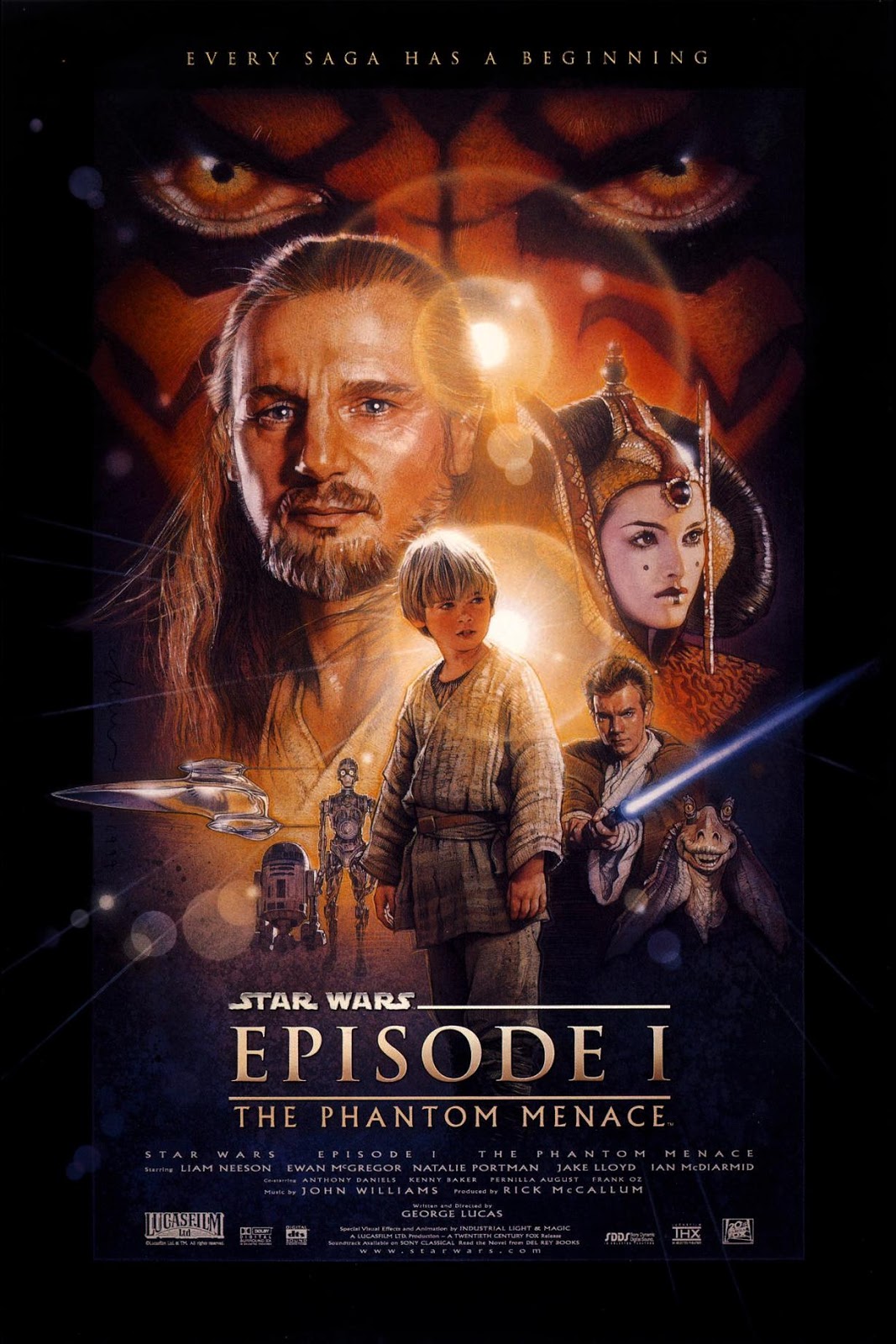
Star Wars Episode 1: The Phantom Menace (1999)

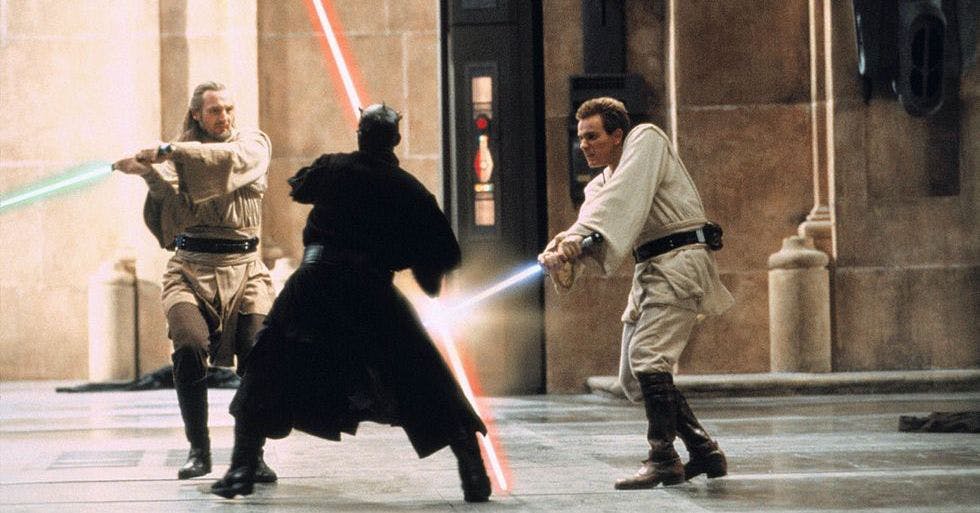
Jedi vs Sith – where did it all go wrong in The Phantom Menace?

Director: George Lucas

Cast: Liam Neeson (Qui-Gon Jinn), Ewan McGregor (Obi-Wan Kenobi), Natalie Portman (Queen Padmé Amidala), Jake Lloyd (Anakin Skywalker), Ian McDiarmid (Senator Palpatine), Anthony Daniels (C-3PO), Kenny Baker (R2 D2), Pernilla August (Shmi Skywalker), Frank Oz (Yoda), Ahmed Best (Jar Jar Binks), Oliver Ford Davies (Sio Bibble), Hugh Quashie (Captain Panaka), Samuel L Jackson (Mace Windu), Ray Park (Darth Maul), Terence Stamp (Chancellor Valorum), Kiera Knightley (Sabé), Silas Carson (Nute Gunray/Ki-Adi-Mundi), Brian Blessed (Boss Nass), Ralph Brown (Ric Olié)

Has there ever been a more disappointing film than The Phantom Menace? I don’t think any film has ever opened to so much hype and fan expectation. The Second Coming could have trouble competing with the expectations piled onto this first Star Wars prequel. Everyone thought it would be the film of the year. Until they saw it. No one thought it would be the film of the year after that.

Of course you should have sensed a disturbance in the force the second you read the opening crawl. The first sentence “Turmoil has engulfed the Galactic Republic” sounds promising right? Well let that expectation die as we hit the second sentence “The taxation of trade routes to outlying star systems is in dispute”. Not exactly a flight for the Empire with the Death Star plans is it? Perhaps only a multi-millionaire like George Lucas could have expected a storyline based around a tax dispute would get the pulses racing. 

But then this is a jumping off point for a seriously shambolic film experience. Phantom Menace is a total mess, an incoherent, poorly scripted, farce of a film, a terrible stumble through a dashed off storyline that makes no sense. Anyway, Naboo is a planet under siege from the Trade Federation. Jedi knights Qui-Gon Jinn (Liam Neeson) and Obi-Wan Kenobi (Ewan McGregor) are sent to negotiate but things quickly turn to violence and they need to flee the planet with its 14 year old (?) elected (??) Queen (???) Padmé Amidala (Natalie Portman). On the planet of Tatooine they encounter a 9 year old slave Anakin Skywalker (Jake Lloyd) with a natural instinct for the force. Qui-Gon wants to train him, while the Galactic Republic tries to resolve the siege of Naboo.

That’s sort of the story – but even writing it down seems episodic and vague. But then that’s everything in the film. Nothing is really clearly explained, and we are never properly introduced to who all the sides are in this film and what they might want. There is a complete lack of any real narrative sense at all. The antagonists and protagonists of the film are hard to define. In fact they are frequently a pile of two dimensional yawns. It’s pretty hard to care about any of them. I guess you feel a bond with Obi-Wan, but that’s based on old films – watch this and Obi-Wan is a do-nothing whiner. 

But all the characters are infected by this. George Lucas is completely unable to bring any characterisations to these people, his lines constantly falling flatly or crappily to the ground, while the actors themselves struggle to find anything to engage it. Harrison Ford famously told Lucas on the first film that “you can type this shit but you can’t say it” – and that’s pretty much nailed on for this film. There is not one single vaguely memorable line in this film. Rather you are struck every second with feeble lines that sound like they might have had depth (“There’s always a bigger fish!”) but when analysed for a second make no sense whatsoever. It’s no wonder Neeson seriously considered quitting acting after this film.

Yes these two characters will get it on in the next film. Yuck.

There isn’t a single character in the film to really invest in. There is no equivalent to your Han Solo, the witty outsider to puncture some of the grandaeur. Instead every character is a flat, po-faced, non-personality who spend all their time in the film very seriously going about their business, never explaining anything. The Jedi are particularly affected by this, written as serious stick-in-the-muds constantly lecturing and ticking off other characters. Qui-Gon Jinn makes a tedious lead character, who constantly gets in the way of the relationship building we need to see between Obi-Wan and Anakin. Because we know where the film series is going, spending time on Qui-Gon feels like wasted time. The backstory is to see the relationship build between Obi-Wan and Anakin – instead they hardly speak in the film, and we instead spend ages on Qui-Gon. It’s poor story-telling and wastes a film showing us unimportant back story rather than spending time on the core stuff. It’s bad enough that we have to waste one third of the prequel series on Anakin Skywalker: The Wesley Crusher Years (seriously has anyone, even a child, ever loved a film where a brattish, super kid is the hero? You won’t be shouting Yiipppeeee…)

Lucas isn’t a director of actors, he’d say the same. But he is supposed to be a master of visuals and special effects. This is a film where everything you could possibly imagine has been thrown at the screen. Each frame is full of complex business, every single section crammed with special effects. There is a lot going on visually all the time, but all of it comes across like an explosion in a colouring book. Unlike the effects of the original trilogy, nothing really feels real or carries any real weight. Instead you see every special effects shot in the film and see frames filled with clutter and shiny, computer generated weightless nonsense. Worst offender is the hideously overextended pod race sequence, like a particularly dull Formula One race, which carries no real stakes (as we all know the result) and, for all the high speed camera work and editing feels not one iota as thrilling as the speeder chase in Return of the Jedi.

On top of this, most of the interventions into the Star Wars backstory makes the original trilogy worse. This is the film that gave us midichlorians, some sort of magic alien thing that lives in blood and gives the Jedi the ability to use the force. The reaction to this midichlorian nonsense, undermining the mystique of the force into something that could measured like a top trump was so negative that it was mentioned at most once in the two sequels. Other areas got similarly scathed, not least turning Anakin Skywalker into the worst form of “gifted child”. I’m not even going to touch on the icky fore-knowledge we have about the fact that Anakin and Padme are going to get it on in the future, something that is hideous to think about.

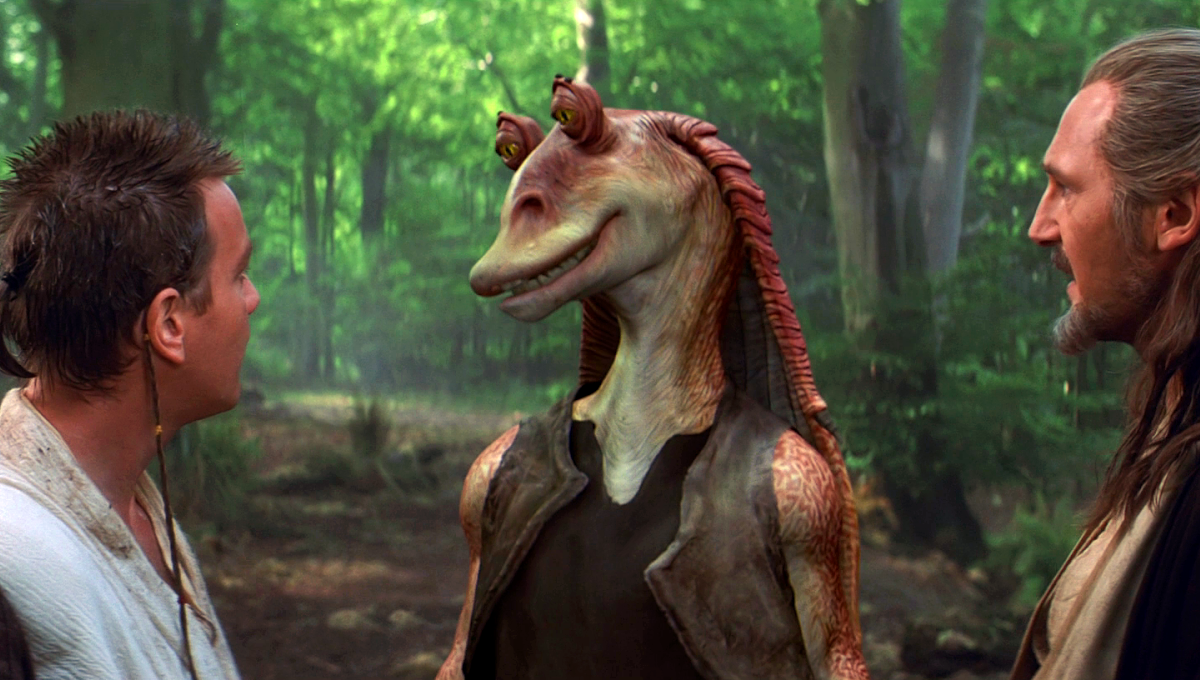
The most hated character in film history?

Lucas also fudged the new stuff he introduced in the film. The worst element: of course it’s poor old Jar-Jar Binks. I genuinely feel sorry for Ahmed Best, an actor whose career never recovered, who is just doing here what he was told to do. But Binks is the most irritating character possibly ever conceived for a hit blockbuster. An idiotic, comic creation designed for the kids who falls over, trips up, says stupid things and steps in shit he does nothing useful for the whole course of the film and tries to entertain kids who were way more interested in Darth Maul. Binks is almost irredeemable, every sentence enough to send everyone’s teeth on edge. 

Lucas trumpeted how much Binks was setting the trend of being the first major computer generated character. Lucas was incapable of guiding the actors to respond (or even look at) the correct spaces where Binks was standing. And Lucas was so pleased with it, he never stopped to think. Binks makes no sense. Like the rest of the Gungans he’s a joke. There is literally no reason at all for the Jedi to take him anywhere with them, particularly as he constantly gets in the way, causes trouble and offends people. Even in the “desperate” final battle, Binks prats about – compare him to the moments of tragedy and sacrifice given to the Ewoks in Jedi and you’ll see how bad this is.

Yes Watto loves Money. What? What’s the problem?

And of course he and the Gungans are shocking racist caricatures in their Jamaican accent. If you had any doubts that Lucas had no one saying no to him on anything, this film is stuffed with pretty shocking racist characters. Binks is terrible, but the villains of this place are the money obsessed Trade Federation, all with Japanese accents. On Tatooine, Anakin is kept by a greasy, fly ridden, money obsessed, big nosed, fly-covered alien Watto who looks, sounds and acts like a children’s version of The Eternal Jew. Did no one watching the film take a second and say “hang on this looks a bit dodgy…”

All of this nonsense finally comes together in a grand final battle which sums the whole film up, in a sequence where the tone shifts and changes all the time with no sense of a single person doing so intentionally. We have the Gungans comically fighting the droids in a series of awful little vignettes. We have the Queen chasing through the palace in a poorly explained subplot. We have a 9 year old child accidentally flying a ship into space and accidentally blowing up the baseship (Anakin saves the day without even realising it, the one thing that could make the child even more irritating than he already is). And we have the Jedi fighting Darth Maul in a battle that looks impressive at first but is in fact overly busy and overly choreographed. 

The Phantom Menace has few reasons to like it at all. You get bored with the story. You don’t invest in the characters. You don’t engage with the events. You don’t feel your pulse racing. The plot drifts from planet to planet with very little logic at all. The dialogue is terrible. The story telling is abysmal. The direction is flat. The film throws in moments that crap over the original trilogy. Lucas made is wait for decades – but then seems to have produced a film that he didn’t really want to do. It’s a truly dire film.

The Empire Strikes Back (1980)

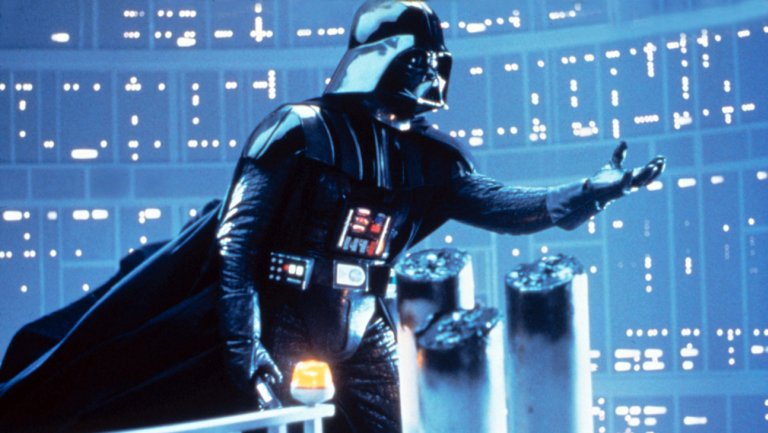
Darth Vader in the film that really made him an icon: the flawless The Empire Strikes Back

Director: Irvin Kershner

Cast: Mark Hamill (Luke Skywalker), Harrison Ford (Han Solo), Carrie Fisher (Leia Organa), Billy Dee Williams (Lando Calrissian), Anthony Daniels (C-3PO), David Prowse & James Earl Jones (Darth Vader), Peter Mayhew (Chewbacca), Kenny Baker (R2-D2), Frank Oz (Yoda), Alec Guinness (Obi-Wan Kenobi), Denis Lawson (Wedge Antilles), Kenneth Colley (Admiral Piett), Michael Sheard (Admiral Ozzel), Jeremy Bulloch (Boba Fett), Ian McDiarmid (Emperor)

As Star Wars sprawls into a massive Disney money-spinning franchise, for both fans and producers alike the original trilogy is increasingly becoming like Holy Texts, the events and characters of which must guide all future films. And of all these, none of them is holier than The Empire Strikes Back. It’s odd to think that the initial reaction to this sequel was a bit mixed at the time, since this is not only the very finest of all the Star Wars films, but also one of the best genre films ever made, one of the greatest sequels ever made – in fact one of the best, most consistently rewarding films you are ever going to see. It’s going to be loved forever, any critical view is almost superfluous. And the reason for that is surely linked to the fact that I’ve seen it hundreds of times and I still love every frame of it.

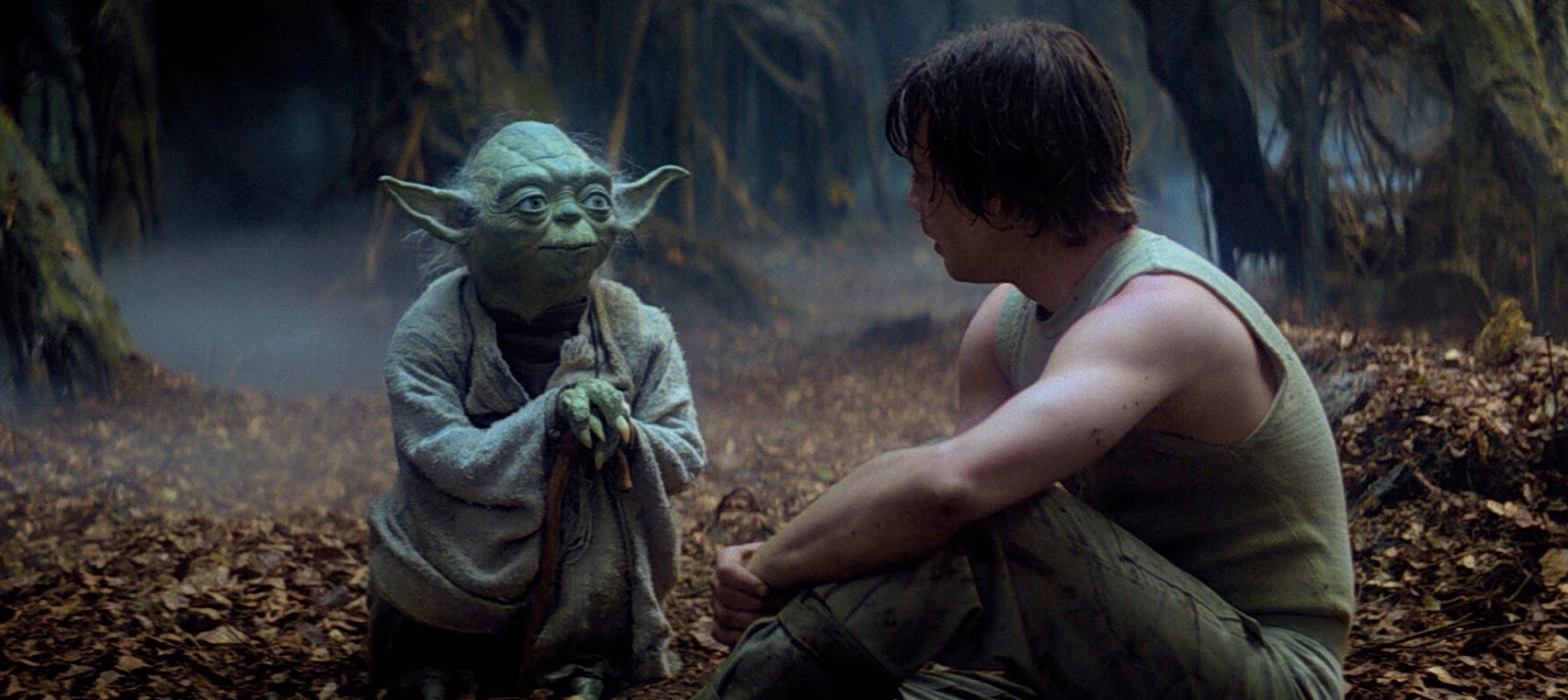
Anyway, nearly everyone must know the story. Some time has passed since the rebels successfully took out that Death Star. Now they are secure in a new base on the ice planet Hoth, being hunted by the empire in an operation commanded by the feared Darth Vader. When the Empire locates the base, our heroes are separated in the ensuing escape: Luke (Mark Hamill) is guided by the force and the ghost of his mentor Obi-Wan (Alec Guinness) to seek out the legendary trainer of Jedi Yoda (Frank Oz). Meanwhile, Han (Harrison Ford) and Leia (Carrie Fisher) are on the run in a malfunctioning Millennium Falcon, dodging Star Destroyers and eventually taking refuge in the Cloud City of Bespin, run by an old friend of Han’s, Lando Calrissian (Billy Dee Williams). But is this a safe refuge? And what is the secret reason why Vader is so determined to hunt down Luke?

So what is it that makes The Empire Strikes Back so damn good? Well it takes everything from the first film and deepens and enriches all the characters and themes that that film explored. While you could say Star Warsis the quintessential romantic space opera – part Western, part fairy tale legend – it’s also a feel-good fun ride. Empireis a rich, complex and endlessly rewarding film that takes all its characters and turns them into fully rounded and intriguing personalities. When you think about the turmoil and struggles each of them goes through in this film – from Luke, through Vader even down to C-3PO – it’s not hard to see why these characters have worked their way into the hearts of every viewer. We see them all go through huge amounts and we learn and discover things about them in every frame. It’s fascinatingly well done storytelling and brilliantly structured character building.

In fact the whole film is a triumph of investment. Even more than the first one, we get a real sense of the mighty ruthlessness of the Empire (staffed exclusively it seems by British character actors from 1970s TV), of its resources, its willingness to do anything. Even more than in the first film, the odds seem piled against the rebellion, with the limited ship, tiny fire power, the fact that our heroes spend virtually the entire film either running, hiding or captured – how can you not feel the pull of wanting to take up this romantic cause eh? 

Perhaps it works so well as Lucas handed over much of the on-the-ground-floor creativity over to other people (you only have the watch The Phantom Menace to see what happened when he took all these reins back up again). The witty, energetic, fun script – packed full of lines that trip off the tongue, and character moments that feel real and human – is by Lawrence Kasdan. Directing meanwhile is handled by Irvin Kershner, a middle-of-the-road director who taught Lucas at film school but here seems to transcend his abilities to deliver a true masterpiece, with all the thrill of a teenager finally given the keys to the big car. 

Kershner can handle all the spectacle, but like no other movie in the series Empire works because it’s rooted in the small-scale, in the reaction shot, in the camera soaking up the actors. There are so many shots of actors looking at things in this movie (I think they all have significant moments of this) while we see their thoughts and emotions play across their faces. Kershner never forgets that this is a story about people not about bangs and whizzes in space. In doing that, in making this a brilliant character drama, he really turned Star Wars into not just an adventure but a series where we invested heavily in these people. There is a reason why the modern films come back time and time to the characters from this film: Empire really made us care about them, turned them into family members, people we’d seen through highs and lows. We see them in a modern film and it’s like greeting long lost friends.

And it helps that the stars give their best work here. Harrison Ford may never have been so cocksure, so cool but also strangely vulnerable and lovable. While in Star Wars he was used to puncture the grandeur, here he’s got a put-upon vulnerability to him, a bravado in his courtship with Leia that hides his touchiness. Not to mention we are constantly reminded he’s a wanted man. Ford also gets massive comic mileage from his exasperation with the constantly malfunctioning Falcon. All this and he never looks flustered: “Never tell me the odds!” indeed! And he gets possibly the best loved line in the whole series with “I know”.

Fisher is equally good as a prickly Leia, who is afraid to let down the imperious commanding cool to let any hint of feeling and emotion show. Mark Hamill does a very easy to overlook job of emotional commitment as Luke Skywalker – particularly as he spends a large chunk of the film interacting only with a robot prop and a puppet. He sells the conflict Luke is feeling, the clash between doing action that feels right now and having the patience to build his skills. And of course, he sells the anguish of finding out that twist.

Ah yes the twist. Empire was perhaps one of the first films to impose such strict pre-production secrecy onto its key plot development. On set, only Irvin Kershner and Mark Hamill knew that Vader was Luke’s father (no spoiler warning – I think Lucasfilm have well and truly spoilt that one themselves). Dave Prowse, who was not trusted to keep it to himself, to was given a line around Obi-Wan killing Luke’s father (he must have been slightly surprised at Hamill’s reaction, which does seem a bit OTT to that news). But this moment again really, really, really works because it is both a surprise AND something that makes total sense. It doesn’t feel like hints have been dropped through the whole film in advance, but when you hear it you spot them all over the place. It’s also such a brilliant narrative rug pull it has also effectively powered the creation of the prequels and is still central to the new trilogy.

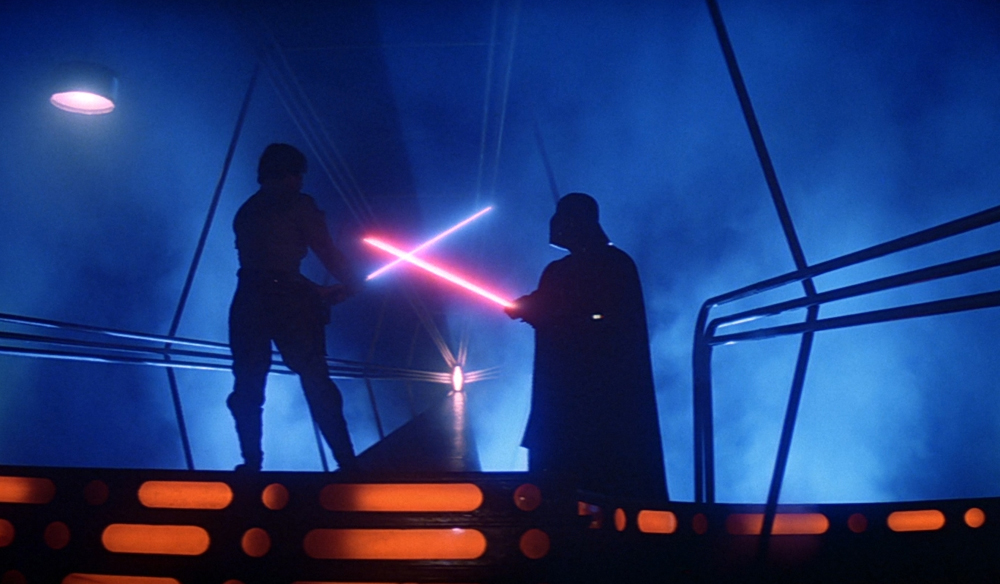
Away from all this, the film is also a masterpiece in pacing and action sequences. It took a lot of guts to put the major space battle at the start of the film, but it works an absolute treat – while also being something completely different from anything in the first film. It looks and feels really cool. And it contrasts perfectly with the smaller scale, more intimate desperation of the escape from Besbin that ends the film, matched with Luke’s battle with a never-more-imposing Vader. I’ll also mention as well that John Williams’ score for all these sequences is practically perfect in every way, adding no end of tension, emotion and excitement to all these sequences.

And it’s the fact that you get all this, mixed with a real, genuine investment in all the characters (good and bad), that really makes the film work in a way that no other Star Wars film has quite managed since, and that makes this the crown jewel in the franchise. It’s one of those serendipity projects where everything fell into place, everyone brought their best to it, and the stars aligned. It’s lightening in a bottle, and the franchise has used it ever since as its setter for everything from tone to plot developments. You will rarely find anything as fun, or widely loved, as this film.

The Hurt Locker (2009)

Danger awaits round every corner in the shocking The Hurt Locker

Director: Kathryn Bigelow

Cast: Jeremy Renner (Sgt William James), Anthony Mackie (Sgt JT Sanborn), Brian Geraghty (Specialist Owen Eldridge), Guy Pearce (Staff Sgt Matthew Thompson), Christian Camargo (Lt Colonel John Cambridge), David Morse (Colonel Reed), Ralph Fiennes (British Mercenary), Evangeline Lilly (Connie James), Sam Spruell (Contractor Charlie)

There have been few wars in history as controversial as the Iraq war. Despite this, it’s hard to think of a film that really has nailed the complex social, political and military causes behind the war – or managed to engage with the deep unease much of the Western world feels for the campaign. While there have been great films about Vietnam, that other opinion-dividing conflict of the last 50 years, there hasn’t been one about Iraq yet – perhaps because the wound is still so fresh. The Hurt Locker gets closest by far – largely because it is a film that makes war its subject, not Iraq; it could just as easily be set in the fields of France as the streets of Baghdad.

After the death of their Staff Sergeant (Guy Pearce) while defusing an IED in Baghdad, Explosive Ordnance Disposal (EOD) unit members Sgt Sanborn (Anthony Mackie) and Specialist Eldridge (Brian Geraghty) are joined by a new team leader Sgt William James (Jeremy Renner). However, they both – particularly the by-the-book Sanborn – grow increasingly concerned about James’ maverick methods and willingness to take personal risks to defuse bombs. Slowly, tensions rise in the team.

The Hurt Locker makes no comment whatsoever on the controversy behind the decision to intervene in Iraq. Instead, its focus is entirely on the psychology of those who go to war, and the sorts of personalities it can attract, from those with a keen desire to do their duty to others who get a certain “buzz” from risk and conflict that they cannot find elsewhere in their lives. As the film’s opening words say, “War is a Drug”. And there are few characters more afflicted by an addiction to that drug than Sgt William James.

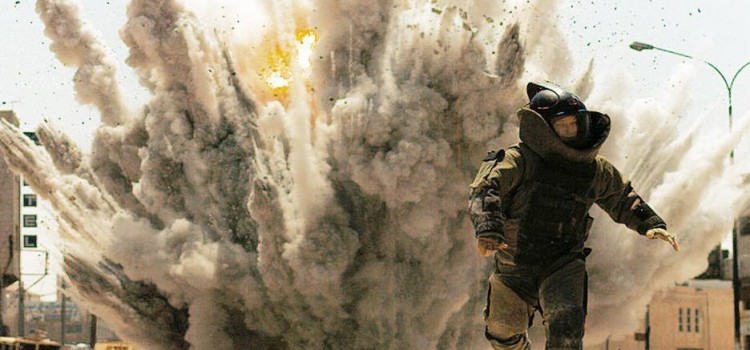
Not that James is a villain. One of the film’s many strengths is that he is far from a lunatic. Played with a career-defining charisma and intensity by a then almost-unknown Jeremy Renner, James takes personal risks (defusing bombs without the huge rubber safety suits, turning off his comms to concentrate, returning to bombsites to collect trophies or lost items) but he also shows concern and empathy for his fellow soldiers and (largely) avoids putting them in danger. With the team pinned down by snipers in the desert, he calmly reassures Eldridge and talks Sanborn quietly through taking down the snipers. He develops bonds with people and later in the film shows great compassion and willingness to put himself in danger to save a man unwillingly attached to a suicide vest.

James’ struggles are to deal with the modern world and its shallow obsessions compared to the thrill of putting your life on the line (as the film brilliantly illustrates with a final vignette of James back home at the end of rotation, staring blankly at a wall of cereal boxes in a supermarket). On campaign, he talks dismissively of his child and claims to not know or understand his relationship with his wife. But this is a front – it’s clear his family life is far more settled than he suggests – and is actually more connected to his guilt at enjoying his time on military posting more than he does the neutered warmth of family life. Renner excels at all this complex psychology, crafting a man who is aware of his addiction, can’t combat it but feels a deep guilt for it.

The Hurt Locker is about how this rush of war can be more compelling and life-affirming than hearth and home. It’s also perhaps a commentary on how we ourselves get a rush from watching action and war films – that it’s only a few steps from enjoying watching the excitement of conflict, to enjoying being in the middle of that kind of action. Is James really that bad? Defusing bombs is a difficult and demanding job – and James knows (rightly) that he is one of the best at doing it. And shouldn’t a man enjoy his job? Renner’s glee at a job well done is balanced by guilty awareness that he shouldn’t be enjoying himself as much as this.

Kathryn Bigelow is in her element directing this burst of male testosterone, assembling a film that is gripping, tense and hugely exciting. It’s essentially constructed around a series of set-pieces, each of them more unsettling than the one before. Bigelow’s direction is impeccable, as each of these sequences is both unique in tone and utterly compelling. Bigelow became the first woman to win Best Director at the Oscars – and her acute understanding of men enamoured with the buzz of adrenalin is what gives the film much of its narrative force.

It also helps that the film she has assembled here is a technical marvel, brilliantly shot by Barry Ackroyd with a scintillating display of hand-held cameras, cleverly focused details and immersive story telling. The Hurt Locker is a film both drenched in sun and darkness, with burning yellows and oppressive greys. It’s a film that captures the incredibly alien, heat-stoked insanity of Iraq, and the journalistic style and camerawork make everything we watch feel even more immediate.

In the middle of this, the psychological drama between the maverick James and the cautious, procedure-led Sanborn (played by an equally impressive Anthony Mackie, whose every moment buzzes with frustration and anger at the dangers he sees James inflict on them) plays out wonderfully. Bigelow has an immediate understanding of how the adrenalin and testosterone of combat quickly bubble up into violence and aggression off the battlefield, with these two men often becoming like rutting stags, struggling to place their own supremacy on the team – with Brian Geraghty’s weaker Eldridge the pawn between the two.

The Hurt Locker does what it does so well that it’s easy to overlook its flaws. Its narrative is so pure that you regret it gives barely a second to addressing the issues in Iraq or how the behaviour and attitude of the soldiers there (mostly angry and abusive towards the local population) may be contributing to the problems. It also struggles to add much narrative originality to the story, beyond its set-pieces – in particular James’ friendship with a young Iraqi boy seems like the forced stuff of movie convention in a film that prides itself on reality. When dialogue takes over from action, many of the psychological points it raises have been seen in countless films past. You could argue that the film is largely at its weakest when it tackles any questions of plot at all, and that what Bigelow has really done here is make one of the finest boots-on-the-ground immersions you are going to see.

And if The Hurt Locker is just that then, you know what, that’s fine too. Because when it does this it’s one of the best in the game. Brilliantly assembled, shot and edited (those many Oscars were well deserved) it’s a gripping war film that relies a little too much on some of the conventions of war and combat films, while also focusing very intently on how war affects the psychology of the men at the sharp end. It gives a truly unique perspective of the dangers (in every sense) and is brought to life by a series of fine performances, with Renner and Mackie outstanding. Wonderfully directed, and smashingly tense, it’s a worthy contender in the upper echelons of any list made of great war films.

Terminator 2: Judgment Day (1991)

Terminator 2: Judgment Day (1991)

Cameron’s action masterpiece, a film Arnie possibly owes his whole life too

Director: James Cameron

Cast: Arnold Schwarzenegger (T-800), Edward Furlong (John Connor), Linda Hamilton (Sarah Connor), Robert Patrick (T-1000), Joe Morton (Miles Bennett Dyson). Earl Boen (Dr Silberman), S Epatha Merkerson (Tarissa Dyson), Jenette Goldstein (Janelle Voight), Xander Berkeley (Todd Voight)

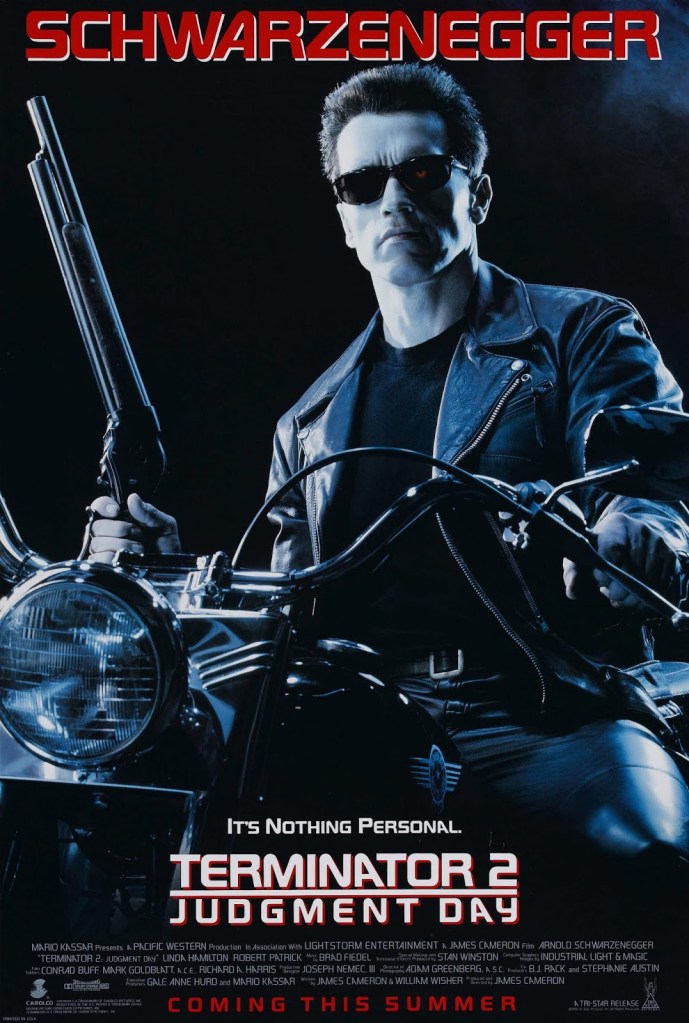
Schwarzenegger always said he’d be back. And if there’s one film that perhaps explains the, otherwise fairly inexplicable, success of this former body-builder who can’t really act as one of the greatest film stars of the early 1990s, it’s Terminator 2. And this film makes quite the calling card, as it can make a strong claim to being one of the greatest action films and one of the greatest science fiction films of all time. Its influence permeated Western culture – quotes from it are recognised all over the world – and its brilliant mixture of Armageddon-tinged high-brow time thinking with truck chases and lots of shooting has led to increasingly feeble attempts to recapture the magic with innumerable crappy sequels.

After the events of the first film, John Connor (Edward Furlong) is now a tearaway teenager while his mother Sarah (Linda Hamilton) is in an institution. So: perfect time for Skynet to send back another Terminator to take out the future leader of the resistance. The resistance sends back its own champion. But, handy-dandy, which is which? Is Arnie playing the baddie once more? Or is Robert Patrick’s unnaturally still non-descript looking fella really an evil Terminator? The answer is only a shock to anyone who has been living under a rock since 1991 (even the film’s original publicity gave the answer away). Soon Arnie’s reprogrammed good Terminator and the two Connors are on the run from Patrick’s liquid metal shape-shifter – and hatching a plan to prevent original Skynet inventor Miles Dyson (Joe Morton) from finishing his life’s work.

Terminator 2 hasn’t dated a bit. It’s still one of the very best rip-roaring, balls to the wall, action films ever made. It is essentially set piece after set piece – but with the set pieces strung together with intelligently written scenes that juggle interesting themes with sharply drawn, realistic characters. Cameron’s direction is, I might almost say, faultless. The film balances bangs and shoot-outs with such impressive zeal and imagination that you will wear out the edge of your seat. But the main reason these sequences work so well is because you care so deeply for the characters in the film, you invest so much in the story of the movie.

I think it’s possible no one does this sort of thing better than James Cameron. Certainly no-one ever gets more out of Schwarzenegger than his directing Svengali. Perhaps because only someone as dementedly determined as Cameron would never feel intimidated by an ego as large as Arnie’s. Cameron gets here, hands down, Arnie’s greatest ever performance. No wonder Arnie has tried to re-launch the franchise so many times, he’s never been able to recapture the magic from this film. Gifted with the ability to learn, here the Terminator becomes (within its robotic programming, perfect for the stiffness of Arnie’s skill with dialogue) a surrogate father figure for John, a creature increasingly capable of caring for and emulating human behaviour. And Cameron draws out of Schwarzenegger a performance striking for its growing mellowness and gentleness, its slowly developing emotional openness and humanity. 

It should, by rights, be corny as hell – the saga of a drifting boy given some shape and purpose in life by a father figure who showers him with love and attention. But it really works. Cameron understands perfectly when to throttle back on any possible schmaltz, and instead keep the characters strikingly real. Connor is a surly teenager, but also someone looking for love. The Terminator understands humanity more and more, but is still a machine. The barriers make the moments when emotions force their way through genuinely moving. And it also means that you deeply invest in this rag tag group of people staying together and saving each other.

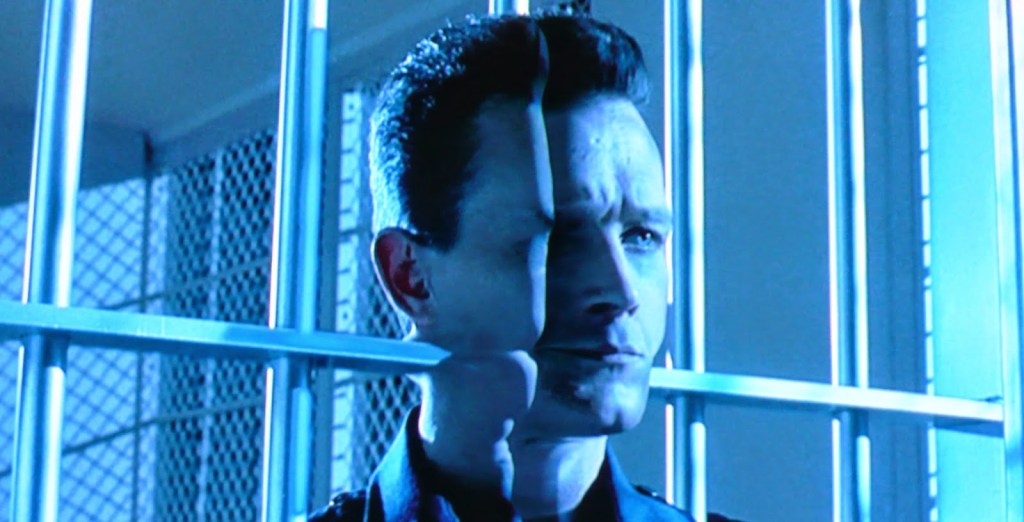
And the stakes are against them when they are up against an opponent as fearsome as Robert Patrick’s shape shifting T-1000. Cameron’s initial concept for the Terminators – before the studio suits pushed the fortunate casting of Schwarzenegger on him – had been for them to be non-descript looking, average types. Patrick, with all due respect, fits that exactly – and has the additional dark sting of being disguised as a cop almost throughout. He gives the part a cold, mechanical chill, a total lack of empathy or any emotion that contrasts with the growth of those abilities in our hero Terminator.

The special effects used to create the liquid, shape shifting T-1000 were ground breaking at the time (and contributed to this being the most expensive film ever made) and they are still bloody impressive today. The T-1000 effortlessly shifts between states and skilfully reforms its body to become new people. When under attack, it convincingly has holes blasted into it from shot guns, becoming strange Thing-like abominations before restoring its original shape. It looks extraordinary – helped as well by the steel-like chill of the film’s cinematography that covers every shot in the cities and much of the film’s second half in an icy blue.

Cameron’s film has that icy feel to it, as we never allowed to lose the dread of the future apocalypse. In fact, Sarah Connor is herself a constant physical reminder of it. Played by Linda Hamilton with the sort of fire and determination that turned her into a cult figure, Sarah Connor has pumped herself up to the Nth degree for the wars to come. However, she is a damaged, tragic figure, lost in grief, whose every dream is haunted by visions of dreadful nuclear Armageddon. How could you forget what is at stake, when it’s in every shot of Linda Hamilton’s eyes?

That’s even before the high-stakes action Cameron throws at the screen. The film is built structurally around four, equally different, action sequences and, while each of them has dim echoes of events we saw in the previous Terminator film, they are delivered with such panache and aplomb that it doesn’t really matter. Cameron of course manifestly understands that these sort of sequences mean nothing at all anyway unless we care about the characters involved, so the narrative focus of the film is tightly concentrated on no more than five characters, each of whom we see learn, grow and develop as the film progresses (even the evil T-1000 excels himself by becoming more smarmy, vile and even sadistic as the film progresses).

Because, much as you might want to mock some of the comedic buddy play between John and the Terminator, it adds an emotional heart and heft to the film. It’s two characters who have no real emotional connections at the start of the film, learning over the course of the film to love each other. Yes it allows for some wonky, dorky comedy from Schwarzenegger – a well the series would drain dry in future films – but it works an absolute treat here. Throw in Linda Hamilton as the archetypal cold warrior (wisely she passed on most of the future sequels that were to follow) and you had a pretty much perfect family unit to invest in.

Cameron also manages to give the film a gloomy but not domineering sense of dread, but punctures it with hope. It’s a film that is all about the future impacting the past – but also keen for us to understand that the future is not written, that our fates are not set, that both can be what we make of them. The film’s conclusion (changed from the original ending) of an empty road, heading we know not where, is a neat visual metaphor for our unknown futures. It may be a dark, forbidding, road – but we don’t know where it’s going for sure.

Terminator 2 is one of those cast iron classics that never gets old. It’s also the last Terminator film you ever need to see. All other entries are little more than superfluous retreads after this. It’s a pitch perfect balance of action and emotion and it’s always a treat and never a chore to watch it.

Jason Bourne (2016)

Matt Damon swings back into action in after-thought Jason Bourne

Director: Paul Greengrass

Cast: Matt Damon (Jason Bourne), Tommy Lee Jones (Director Robert Dewey), Alicia Vikander (Heather Lee), Vincent Cassel (The Asset), Julia Stiles (Nicky Parsons), Riz Ahmed (Aaron Kalloor), Ato Essandoh (Craig Jeffers), Scott Shepherd (Edwin Russell), Bill Camp (Malcolm Smith), Vinzenz Kiefer (Christian Dassault), Gregg Henry (Richard Webb)

They say you should never go back. Producers had been begging Paul Greengrass and Matt Damon to get back together again and make another Bourne film. After all, there was hardly anyone asking for a sequel to that Jeremy Renner one was there? But Jason Bourne seems like a film that’s been made after Greengrass and Damon ran out of reasons for saying no. I can’t decide if we can blame them for that or not. But their making the film at all suggests they aren’t really losing any sleep about whether people feel this half-hearted effort has an impact on the legacy of the others.

Anyway it’s ten years later. The world is an increasingly technical place, with people living in an era of increasing social unrest and anti-government fury. Jason Bourne (Matt Damon), recovered from his amnesia, now lives off-the-grid – until of course he’s unearthed by his old colleague Nicky Parsons (Julia Stiles). Parsons is now working with a hacker commune in Iceland, and has unearthed more evidence about the shady CIA programme, Treadstone, that Bourne used to be a part of, and about Bourne’s own recruitment into it. Meeting in Athens in the middle of an anti-government riot, Parsons is killed and Bourne is set on a collision course with the CIA as well as finding out more about the mysterious death of his father 20 years before. 

Jason Bourne is basically going through the motions. There is an attempt to add another layer of mystery around Bourne’s background, but it barely seems to add much to the hinterland of Bourne we’ve already learned about in the last couple of films. Furthermore, I’m uncomfortable with a Bourne here who goes increasingly on a rampage of revenge. Part of the charm – or rather what makes Bourne different – in the previous films was that he was a man who lived in a world of violence, but didn’t care for it himself. He used brutal force only when it was absolutely necessary, and several times chose not to take a personal revenge. Here however, he dispatches at least three people, which doesn’t seem to square with the character as we’ve previously seen him.

Furthermore, the film seems to be struggling to reclaim Bourne as one of the formal good guys, a patriot and American hero. Again part of what made him different in the original trilogy was that he stood outside the government and nations, that (as Greengrass once said) “he’s on our side”. Here he’s clearly less than sympathetic to anti-government forces, and strongly opposed to exposing CIA secrets. In fact he ends up feeling rather conservative here to be honest, and more like the faceless killer that he started as rather than a renegade. 

It’s not helped by the fact that the plot is pretty meh, a remix of different elements from previous films, carefully ticked off to make sure we get everything we could expect. So we get a reworking of various car chases, fights, tense meetings in public locations etc. etc. The film-making is very well done – Greengrass rewrote the book on how to make films like this, and he carries that on here, brilliantly mixing twitchy editing, handheld camera work, immersive film-making and gloomy silences to create a really wonderfully done viewing experience. It’s just more of the same from the originals. The film just ends up living in the shadow of the originals, rather than really forging something out on its own.

Greengrass tries to tap into contemporary ideas. We get the sense of anti-establishment clashes and Internet data scams – but it never really feels like it goes anywhere or coalesces into any real point at the end of it. What is the actual message of this film? There are hints that Tommy Lee Jones’ gravelly CIA Director and Riz Ahmed’s Mark Zuckerberg-lite tech expert are planning some sort of mass intrusion on people’s privacy – but the film never explains this or explores it. It never even makes Bourne aware of it – and since Bourne is our “window” into this world, that means we never understand it either.

I mean, the film is fine other than that, but that’s all it really is. Matt Damon still hasn’t lost it as Bourne – and blimey he should have some inverted award for how little he speaks in this film – and he has not only the physicality but also the worn-down, haunted look of a man who has seen way, way too much. There are professional performances from the rest, but nothing that stretches any of the actors here, with Alicia Vikander particularly under-used as an unreadable CIA agent. 

But that sums up the whole film. Despite all the attempts to build in a modern “torn from the headlines” angle to the story, it feels more like Greengrass and Damon are quite happily (and with some enthusiasm at least) going through the motions in order to pick up a cheque. And I guess that’s fine. It just means we are probably not going to rush to see this again.

The Spy Who Loved Me (1977)

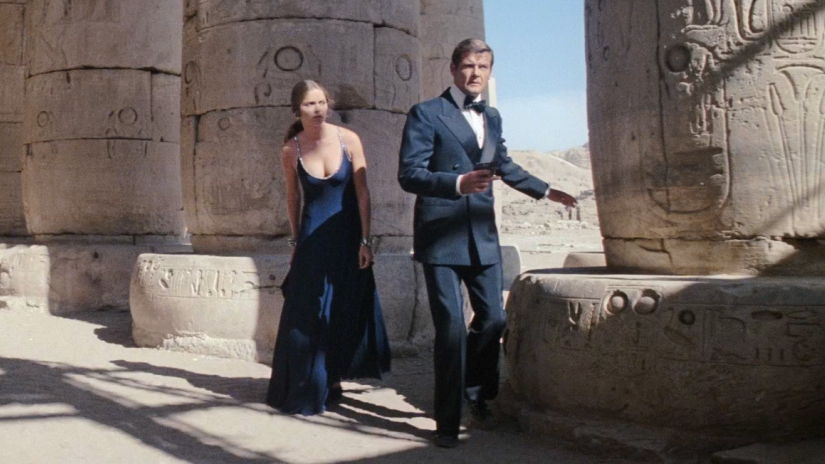
Bond finds himself in another pretty pickle in The Spy Who Loved Me

Director: Lewis Gilbert

Cast: Roger Moore (James Bond), Barbara Bach (Anya Amasova), Curd Jürgens (Karl Stromberg), Richard Kiel (Jaws), Caroline Munro (Naomi), Walter Gotell (General Gogol), Bernard Lee (M), Desmond Llewelyn (Q), Lois Maxwell (Miss Moneypenny), Geoffrey Keen (Frederick Gray), Robert Brown (Vice-Admiral Hargreaves), George Baker (Captain Benson), Michael Billington (Sergei Barsov), Vernon Dobtcheff (Max Kalba), Nadim Sawalha (Fekkesh)

Roger Moore had made two Bond films before he made The Spy Who Loved Me – but this is the one when he finally hit upon the formula that works for him. It’s also probably the moment where the Bond films became – once for all – comedy adventure capers. It was but a few more degrees from here until Bond was telling a tiger to “sit” or racing past a double-taking pigeon in the middle of St Mark’s Square. And the public loved it. For better or worse, Moore’s Bond here helped define the franchise for a whole generation.

Anyway, the story. It’s eerily familiar in many ways to Thunderball and You Only Live Twice: a power-crazed lunatic (Karl Stromberg) running a secret organisation wants to destroy the world. His plan? To capture one American and one Soviet submarine and use them to fire nuclear missiles at the nation’s two capitals, to kickstart a nuclear war, leaving only his underwater kingdom intact. Just as well then that an over-keen Stromberg (Curd Jürgens) first captures a British sub, meaning James Bond (Roger Moore) is called in to investigate. Bond will work with the USSR’s finest agent – Anya Amasova, Triple X (Barbara Bach) – to find out what’s going on and why.

TSWLM is a lot of fun, possibly the ultimate expression of what a lot of people think Bond is. It’s hugely silly, rather exciting and has almost no connection with reality whatsoever. Moore goes through the whole thing with his eyebrow forever arched, tipping the wink at the audience – “You do know, dear boy, this is all dreadfully silly stuff”. Sometimes in Bond this humour gets a bit much – but here it’s pretty much pitched perfectly. And Moore looks like he is having the time of his life.

The film is crammed with action set pieces in striking locations: the Alps! The pyramids! A converted oil tanker base! Nothing is left to the imagination, and everything is thrown at the screen. It gets the sense of excitement right from the pre-credits sequence, with Bond’s high-speed ski chase across the alps from Russian would-be hitmen. Fools – what chance did they have? I don’t know what I like most about this scene: is it the wild ski stunts? The way music and camera action combine so well? The fact that it’s crystal clear Moore probably spent precisely zero days on location for this sequence? What am I talking about, it’s got to be that insane parachute jump at the end – with the camera leaving it just long enough for you to start to think “is Bond going to get out of this one?”. (Spoilers he does.)

That’s almost nothing compared to the famous Lotus-turned-submarine car chase, which pretty much set the standard for all the car-based action (not to mention gadget filled cars) that would follow in the franchise. The idea of a car that turns into a submarine: it’s both brilliant and so overwhelmingly silly that, like Bond at its vibrant best, it seems to transcend class and logic into a higher plane of excitement.

And all this with a plot that is almost staggeringly stupid. Jurgens has a lot of arch, naughty fun as scheming monomaniac (with subtle webbed hands) Stromberg, a pompous arsehole and a great villain. Of course he wasn’t a physical threat – hence the invention of Jaws, surely the most popular henchman ever invented for Bond. Jaws is a lunking, vicious but strangely endearing brute – it’s hard to put your finger on why he’s strangely likeable, maybe it’s just the totally absurd idea of a hitman whose killer tools are metal teeth. Maybe it’s because Richard Kiel has such a dorky sense of humour – and is as good at the glance at the camera as Moore himself is.

Of course it is a dated film – and it’s always the women that show it. If this set a lot of good Bond archetypes, then it also helped to cement a few bad ones. Anya Amasova is (allegedly) the greatest agent Russia has. Not that you would know it, as she stumbles in this film from moments of staggering incompetence and stupidity to victimhood and damsel-in-distress. There is a hint of character development – Bond offs her boyfriend in that alpine chase literally without a backward glance – but that’s soon forgotten by the end under Bond’s charms. The poor woman can’t even drive stick (“That’s reverse, let’s try again shall we” says Bond with smackable smugness) and by the end of the film she’s bikini-clad and being rescued by Bond. It says a lot when the strongest thing about her character is that her name isn’t an innuendo.

But you can let it go, because the rest of the film is such good fun. Everything is nonsense of course, and you could steer a submarine through the plot holes. If Stromberg only needs two submarines to start his evil plan, why on earth does he grab a third one at the start of the final act? (Just as well he does, of course, as otherwise Bond would never get on board his base.) Stromberg is ruthless enough to eliminate three underlings and to set up a nuclear war to wipe out the world – but those captured submarine crews he keeps alive, imprisoned, with a small guard, next to the armoury on his base. Ooops. His plan is almost effortlessly undone with a radio message from Bond. But never mind. It doesn’t matter.

The point is that this is all great fun and basically set the tone for the next ten years of Bond films – until Dalton shifted gears. Moore is really good in it, as a sort of ringmaster of silliness – and he’s clearly enjoying it wildly. The Spy Who Loved Me is his best film – and for all its dumbness, its leaning into cheap humour, its ludicrous plot and sexist attitudes, it’s still up there at the top of the franchise. Because for a lot of people, all those negatives are exactly what they now expect from Bond.