Category: Action film

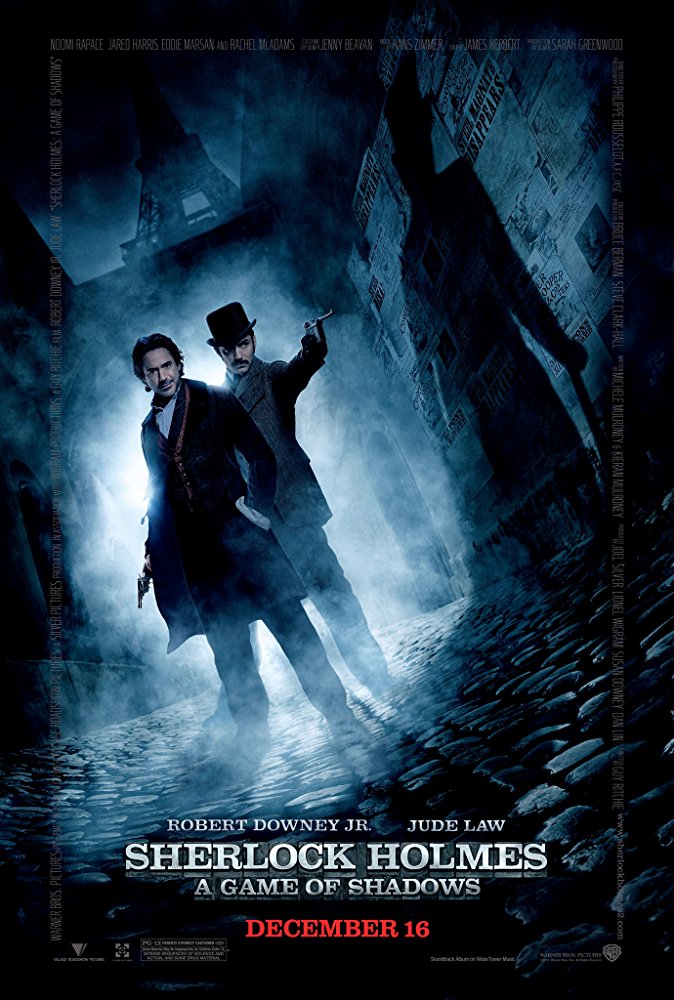
Sherlock Holmes: A Game of Shadows (2011)

Our heroes are on the run in Sherlock Holmes: A Game of Shadows

Director: Guy Richie

Cast: Robert Downey Jnr (Sherlock Holmes), Jude Law (Dr John Watson), Jared Harris (Professor James Moriarty), Noomi Rapace (Madame Simza Heron), Stephen Fry (Mycroft Holmes), Kelly Reilly (Mary Morstan), Rachel McAdams (Irene Adler), Eddie Marsan (Inspector Lestrade), Paul Anderson (Sebastian Moran), Geraldine James (Mrs Hudson), Thierry Neuvic (Claude Ravache)

Sequels are tricky beasts. You need to work out what people liked about the first film and double down on it, while also expanding the story in new and exciting ways. When I first saw Sherlock Holmes: A Game of Shadows in the cinema, I was very sceptical about whether this film managed that. But actually, viewing it a second time around (and almost seven years later), I enjoyed it a lot more than I remembered.

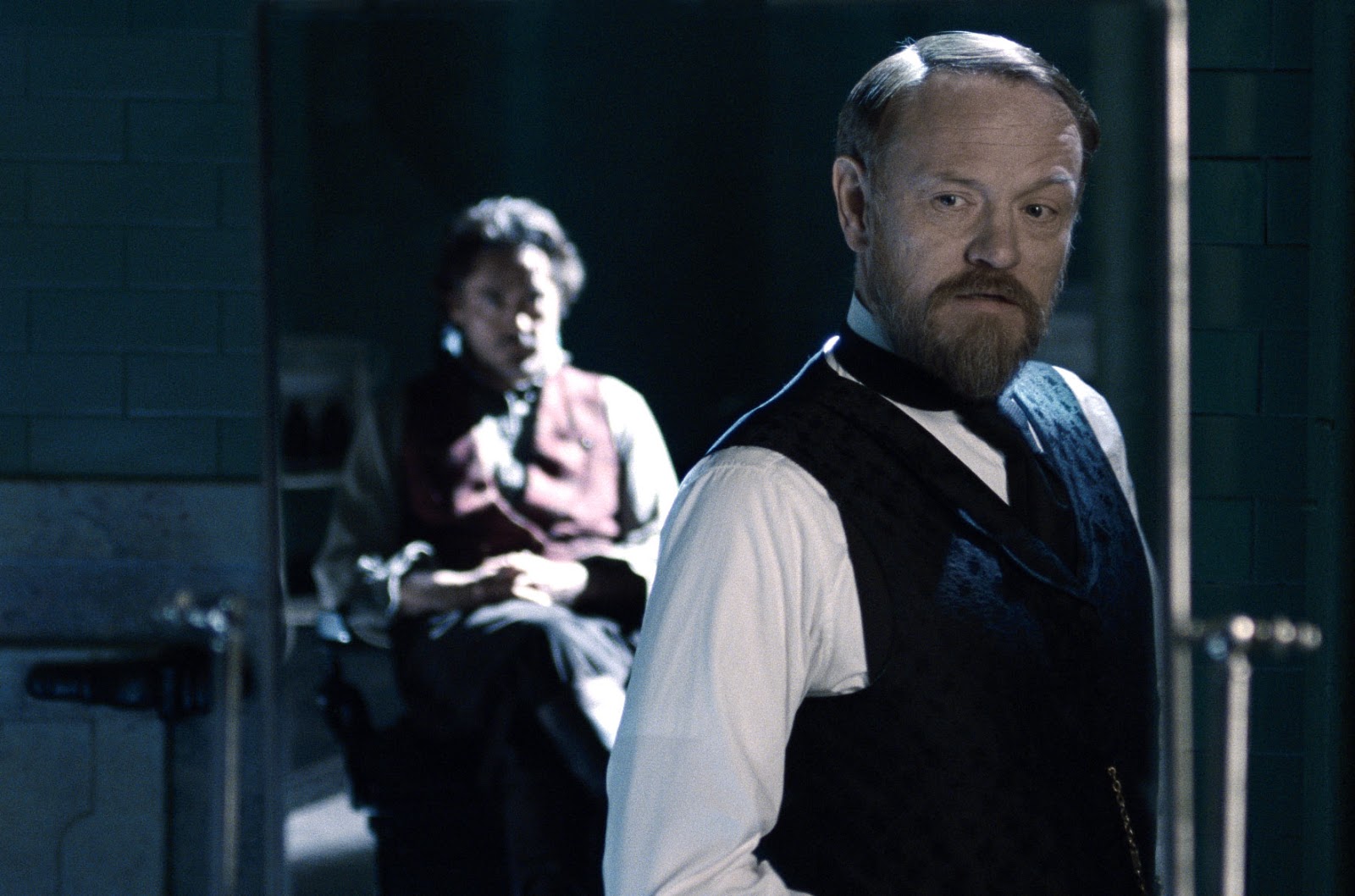
As Watson (Jude Law) prepares for his wedding to Mary Morstan (Kelly Reilly), Sherlock Holmes (Robert Downey Jnr) is consumed into an investigation targeting the “Napoleon of Crime” Professor James Moriarty (Jared Harris). A series of bombings across Europe is being blamed on anarchists – but is it in fact a scheme launched by Moriarty’s military-industrial complex to instigate a world war (from which he can make a profit)? Well what do you think?

Sherlock Holmes: A Game of Shadows doubles down most strongly on the relationship between Holmes and Watson. Recognising that the things from the first film everyone loved was the brotherly banter between these two, the sequel places it front and centre. While the first film felt the need to introduce a traditional love interest for Holmes, this film kills off Irene Adler in the first few minutes (despite this, poor Rachel McAdams has better material here than most of the first film). Instead the true “romantic” relationship of the film is Holmes and Watson, as they banter, bicker and make huge sacrifices to protect each other. 

It’s helped again by Downey Jnr and Law’s excellent performances and their strong chemistry. Saying this, the first half hour of the film thinks it’s funnier than it is, with its intermixing of Watson’s stag night with a series of Downey fights. There is a little too much brashness to it early on, without sufficient grounding in the warmth between the two characters. But once we hit the real action 40 minutes into the film, the balance between comedy, affection and peril is pretty effectively met.

And Ritchie directs some very fine action sequences here. There is an extraordinary sequence of a chase through the forest, which uses an exquisite mixture of hand held cameras, Steadicam, slow motion and half a dozen other tricks to deliver a series of striking and immersive shots. Yes it’s overblown and in-your-face but it works perfectly. The film is crammed with brash, powerful action scenes like this that really strike you between the eyes. 

It also still keeps in touch with the original novels in a nice way. Some of the best dialogue scenes are those between Holmes and Jared Harris’ muscular but serpentine Moriarty (Harris is very good, a far stronger villain than the first film). These scenes use dialogue from the original stories extremely effectively. Meanwhile, its build towards its version of the Reichenbach fall is actually very clever, one that twists on the movie’s “calling card” of Holmes predicting every move of a fight before it begins by having Moriarty pull the same trick (which is in itself a neat scene).

Where the film does fall short amidst all this action and explosions and jokes (some good, some bad) is that we don’t get much in the way of investigation or deduction. There is a bit of sleight-of-hand and a touch of pocket picking, but most of the “deductions” are based on highlighting with the camera or dialogue objects that might as well be labelled “Important Plot Device”. Holmes doesn’t so much as investigate here as charge head first from one combat sequence or dangerous situation to another. There isn’t a lot of patience in his method here – and not a lot of patience in the film itself. But then this film is largely based on The Final Problem, probably one of the least “detective” of the stories in the cannon.

But Game of Shadows is very good fun, has some neat action sequences, is well shot and is more or less entertaining, even if some of the comedy suggests it’s a little too pleased with itself. Sure it loses some of the smaller-scale delights of both the books and original film in its rush to make sure you are wowed. But I enjoyed it a lot more the second time round, since I’d watched the original film more recently and was tuned up into what it was trying to do.

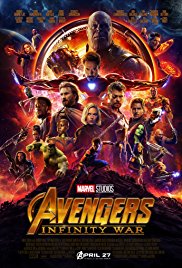
Avengers: Infinity War (2018)

Josh Brolin is hero-villain Thanos in the latest chapter (and it really is a chapter) of the Marvel franchise Avengers: Infinity War

Director: Anthony & Joe Russo

Cast: Robert Downey Jnr (Tony Stark), Chris Hemsworth (Thor), Mark Ruffalo (Bruce Banner), Chris Evans (Steve Rogers), Scarlett Johansson (Natasha Romanoff), Josh Brolin (Thanos), Chris Pratt (Peter Quill), Benedict Cumberbatch (Dr Stephen Strange), Don Cheadle (James Rhodes), Tom Holland (Peter Parker), Chadwick Boseman (T’Challa), Paul Bettany (Vision), Elizabeth Olsen (Wanda Maximoff), Anthony Mackie (Sam Wilson), Sebastian Stan (Bucky Barnes), Tom Hiddleston (Loki), Idris Elba (Heimdall), Peter Dinklage (Eitri), Benedict Wong (Wong), Pom Klementieff (Mantis), Karen Gillan (Nebula), Dave Bautista (Deax), Zoe Saldana (Gamora), Vin Diesel (Groot), Bradley Cooper (Rocket), Gwyneth Paltrow (Pepper Potts), Benecio del Toro (Collector), William Hurt (Thaddeus Ross), Danai Gurira (Okota), Letita Wright (Shuri)

Well this is what it has all been building towards. Or at the very least, this is the start of what it has been building towards, since the film ends on a (slightly underwhelming as soon as you think about it) cliffhanger leadinginto the next film. You never reach the end in these movies – each one, while serving some of the story, is also a jumping-off point for the next one. Marvel’s Cinematic Universe is a triumph of long-form storytelling and juggling characters – but it’s also like a shark moving forward, promising us even more thrills and spills if we tune in next time.

This time the Avengers come together (and overcome inevitable personality clashes) to defeat Thanos (a motion-captured Josh Brolin). Thanos is a lunking purple beast who believes the universe is vastly overpopulated. The solution? Why kill half the universe’s population, so the other half can lead lives of perfect contentment on the remaining resources. How? Well he needs the Infinity Stones, six all-powerful gems that, together, will give him control of time and space. He just needs to wrestle them from their various hiding places.

Avengers: Infinity War has been called less of film and more an episode in a long running TV series. I think that’s fair. This film is in no way designed for anyone new to the saga to step in – half of the expansive cast are not even fully introduced. And actually it’s a good thing: we’re almost 20 films in now into this expanded universe, and if you are one of those critics sniffing that there wasn’t any concession made to the newcomer, well tough. One of the film’s strengths is that it understanding its playing to the galleries of long-established fans. Your enjoyment of the film will only increase the more Marvel films you’ve seen.

Unfortunately this sort of “dive straight in and to hell with the consequences” approach is also the root of the film’s weaknesses. This film’s primary aim is to juggle all its characters successfully, balancing its huge number of events and locations so they remain coherent, throwing in enough set pieces along the way for whoops and cheers. What it manifestly is not for is to tell a story about character or to give us striking visual images.

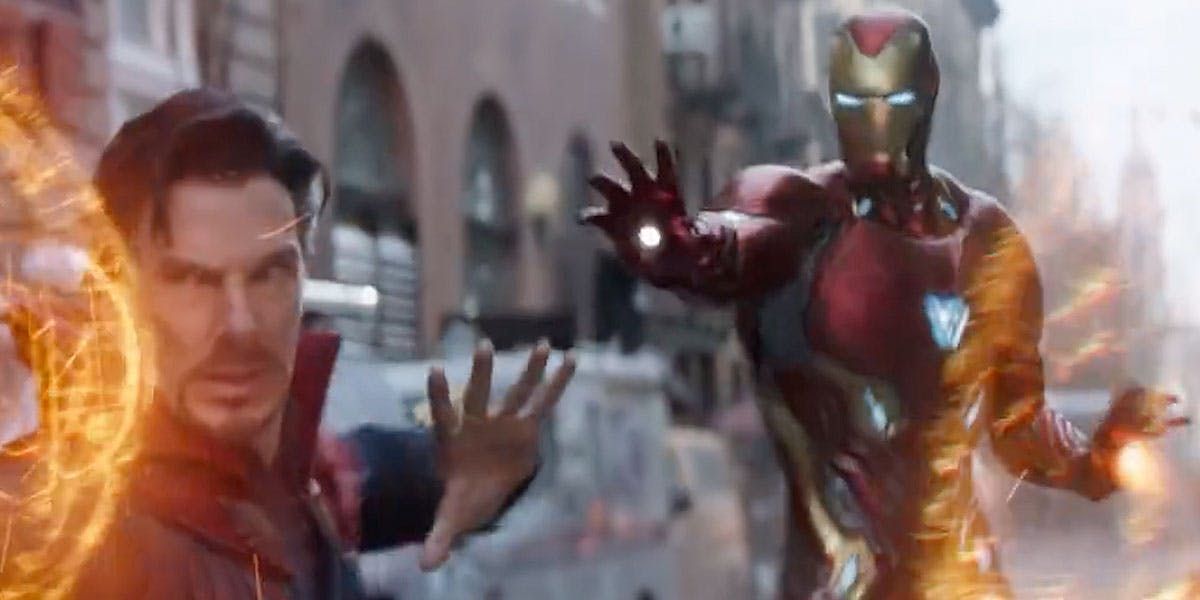
It’s like a mega, mega, mega budget all-action crossover episode of something. The excitement for the viewer is, say, Iron Man and Doctor Strange butting heads or Thor and the Guardians of the Galaxy exchanging comic riffs. It’s not designed for us to learn anything new about these heroes. In fact, the character beats are pretty formulaic. A standard arc generally goes like this: brief individual introduction doing something everyday, a meeting where much plot is quickly exchanged, bickering, a huge battle and some self sacrifice. Repeat. The film does nothing fresh on this formula which Joss Whedon introduced so well in The Avengers. If it ain’t broke, don’t fix it.

The difference with The Avengers was that it felt like a real novelty, and there was a smaller number of characters to bring together (it seems almost timid now to remember the original Avengers gang was only 6-7 strong – it’s almost 20+ now). Each character had more time and we got a much better sense of how their individual personalities affected the other. Here the Russos have to try and deal with the vast number of heroes by effectively breaking them up into 3-4 silos, giving even the most prominent ones probably no more than 20 minutes of screen time.

On top of which, despite the much vaunted “all bets are off” promotion of the movie, the action still has a stakes-free weightlessness to it. Yes some characters die, and while 1-2 of these might well stick, by the end of the film the main question is how many of the deaths will be reversed, not the impact of them. In fact the final sequence (which sees several deaths) slowly carries less and less weight the more you realise these deaths are really serving as a cheeky “how will they get out of that” moment.

Which is the dark secret of Avengers: Infinity War: it’s really nothing more than a trailer for its sequel. At the end of its vast running time – after all the functionally filmed action and odd decent one liner – you realise you have watched an extended prologue for the next film. That’s the one we’ve all been building for. The events of this film, in the long run, are the long road we need to take to get there.

This is not to say the film doesn’t have moments of enjoyment. The spectacle may not be filmed with much more than a derivative traditionalism, but it can’t help but be enjoyable. There isn’t much imagination about the implications of these heroes’ powers, in the way of say X-Men 2, but it’s still impressive to watch. Thor and Captain America get some pretty cool entrances. 

But I got the impression it must have been pretty boring to act in. Most of the vast cast have very little to do except a few one-liners and then punching. The character who most emerges as a three-dimensional figure is Thanos. Josh Brolin’s interpretation of the character as a sort of misguided humanitarian, who feels to do a great right he must do a greater wrong, yearns not for control of the universe but (in a perverse way) to save it. His quest for these stones is built like some sort of Arthurian epic, involving sacrifice and struggle. It would have been easy to make Thanos a sadistic maniac, but making him someone who believes he is doing the right thing is much more interesting. Essentially he’s the main character of the film.

Of the rest those that get the most to do are those with a connection with Thanos. Zoe Saldana as his adopted daughter turned foe Gamora gets some meaty emotional material, as does Chris Pratt as her would-be boyfriend Peter Quill (Pratt is the actor who probably gets the most “actorly” material in the film by far). Paul Bettany as Vision (the robot with an infinity stone in his head) gets to centre a plot that balances self-sacrifice with his love for Wanda Maximoff (Elisabeth Olson pretty good, even if her character oscillates between bad assery and weeping).

For the rest, it’s just their actor’s charisma that carries them through. Robert Downey Jnr gets a touching moment or two (most notably his reaction to another character’s distressed fear on facing death). Benedict Cumberbatch is great value as Strange. Chris Hemsworth gets to continue flexing his comic muscle as Thor. Others like Chris Evans are criminally wasted.

But then their time will come. Because there is another film in the pipeline – and if our heroes still feel slightly like they can survive anything up to and including getting crushed by a moon, it’s because we know that there are still movies to be made, and money for Marvel to take to the bank. And that’s probably the real nemesis of these expansive, bombastic films: the lack of danger is only going to continue while the studio doesn’t want to kill anyone major off. Hopefully that will change, but without it it’s still a film of the invulnerable hitting the inevitable.

Avengers: Infinity War is pretty good – but largely as a spectacle and because it superficially pays off what you were being hyped up to see in its action and character partnerships. But give it a year or so – and repeat viewings – and I think its stock will fall.  Because it doesn’t really do anything that unexpected, and most of its more daring movies are designed with loopholes to undo them. There are enough bright lights to entertain you (and I mostly was) but I don’t think there is much depth for you to swim in when you come back for a second dip.

Deadpool (2016)

Ryan Reynold swings into action in slightly-pleased-with-itself comicbook satire Deadpool

Director: Tim Miller

Cast: Ryan Reynolds (Wade Wilson/Deadpool), Morena Baccarin (Vanessa), Ed Skrein (Francis Freeman/Ajax), TJ Miller (Weasel), Gina Carano (Angel Dust), Brianna Hildebrand (Negasonic Teenager Warhead), Stefan Kapičić (Colossus), Leslie Uggams (Blind Al)

One day (soon?) we’ll reach critical mass with comic book films. Eventually, when every single character who’s ever appeared in a frame of a DC or Marvel comic has appeared on the screen, we’ll surely wonder if we will ever see anything new again. Some may already feel this, so perhaps that explains why Deadpool, which, for all its faults, is a comic book film doing something different, made such a big impact.

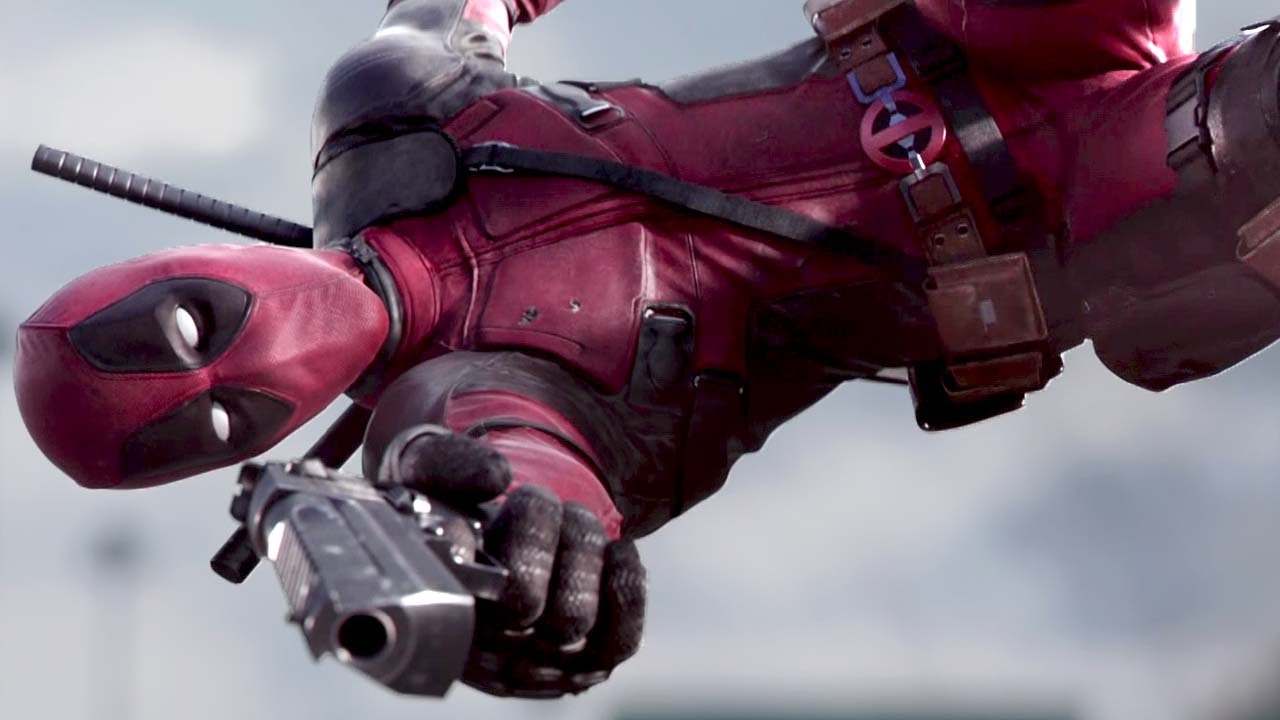
Wade Wilson (Ryan Reynolds) is a mercenary who meets and falls in love with Vanessa (Morena Baccarin). Discovering he has terminal cancer, he leaves her so she does not have to watch him die, and signs up to a gruesome medical procedure designed to bring out dormant mutant genes that may cure him. It works but leaves him hideously deformed. Wanting revenge, he names himself Deadpool and hunts for a cure to his deformity – scared Vanessa would reject him without it.

What Deadpool does well is wittily flag up the familiar tropes of comic book movies. The film in fact follows each trope to the letter – but at least it has a foul-mouthed cheeky commentary. The big question you have to ask is, can a film really be that smart and different if it basically does something very traditional? If I tell you I’m going to perform a tired magic trick you’ve seen before, but I’ll do it while pointing up every single cliché of delivery, with panache, does it matter the magic trick is still as tired as I said it was at the start?

That’s what Deadpool is – the same old ideas, re-packaged in a different way, so juvenile and cheeky that for a beat or two it feels like something new, which it manifestly isn’t. It might not take itself seriously, but it also doesn’t really develop into something unique. The film opens with a neat comic riff on credits, listing not the actors but their generic character traits (“Love Interest”, “Brit Baddie”, “Comic relief” etc. etc.) – sure this is funny and smart, but doesn’t change the fact that the characters themselves are exactly that. 

Deadpool is a faux-clever film. It’s a cheeky piece of college humour: an X-Men film with swearing, sex, fourth wall breaking and gags about other films. There is a sort of witty enjoyment from Deadpool reminding us he knows he is in a movie. But most of the time, he basically behaves exactly like dozens of other lead characters in dozens of other films: he has an emotional arc of fear of rejection and embracing who he is that you’ve seen so many times before.

But the market is so saturated with films like this that the difference of presentation makes you feel for a moment you are seeing something new or clever – rather than essentially a very high budget, end-of-the-pier routine full of cheeky humour. Much of this is pretty funny by the way, but don’t kid yourself that it’s anything clever. And I don’t really think many of the gags here would stand up to repeated viewing – it’s basically just swearing and shocks. The writing is not great, its punchlines and shock beats giving the illusion of intelligent scripting.

Most of its success (in more ways than one) comes down to Ryan Reynolds. Reynolds campaigned for the film to be made for nearly a decade, and he totally nails the character. He thought up many of the best gags, and delivers the entire thing with whipper-snapper quickness and likeability. He gets the balance generally just right, and lands all the film’s big laughs. He’s very good.

But it’s an elevation of material that plays at being clever, while really just being an effective repackaging of the same-old, same-old. Remove the jokes and everything you would expect from a superhero origins story is present and correct. 

So maybe everyone was a little tired of the same old, same old from Marvel et al and wanted something different. That’s the explanation I can think of for why a pretty average film ended up so damn popular. The action when we get it is pretty good, there is some imagination behind the cameras, but it’s basically a teenager’s idea of the best film, like, ever rather than an actually very good film. It’s not reinventing the wheel, but it puts a nice shiny new tyre on it.

Hellboy (2004)

Ron Perlman fights the darkness in curio del Toro comic book flick Hellboy

Director: Guillermo del Toro

Cast: Ron Perlman (Hellboy), Selma Blair (Liz Sherman), Rupert Evans (John Thaddeus), John Hurt (Dr Trevor Bruttenholm), Karel Roden (Rasputin), Jeffrey Tambor (Tom Manning), Doug Jones (Abe Sapien), Brian Steele (Sammael), Ladislav Beran (Karl Ruprecht Kroenen), Bridget Hodson (Ilsa Haupstein), Corey Johnson (Agent Clay)

As little as 10 years ago, outside a few core characters like Batman, the X-Men or Spiderman, comic book movies were an odd curio hard to place in the mass market. Today of course, you can virtually get any character who has appeared in a cartoon strip up on the screen with a budget of millions. But back in 2004, Guillermo del Toro had to squeeze this project out on a smaller budget in order to get the studio to agree to make the film.

Hellboy has a particularly demented story. In 1945, the Nazis, working in partnership with Rasputin (Karel Roden) – yes thatRasputin, don’t even ask – attempt to open a portal to hell to, well I’m not quite sure what they want to do, but it probably involves the destruction of the world. Anyway, some humble GIs stop them and the only thing that comes through the portal is a little demon with an enormous stone fist. Raised by paranormal expert Dr Trevor Bruttenholm (John Hurt), this creature grows up into cigar-chomping secret-agent-for-the-FBI Hellboy (Ron Perlman), working on paranormal investigations. But when Rasputin returns from the dead it looks like all hell (literally) is about to break out.

Okay it should be pretty clear to you from that that Hellboy is an odd film. It’s very much from del Toro’s B-movie heart, and he invests this nonsense material with a great deal of directorial style and heart – a real “geek-boy-artist” job. Del Toro has a great deal of imagination and is able to strike a happy balance between enjoying the material and not taking it all too seriously. So he lets the film barrel along, throwing plenty of nonsense at the screen without worrying about trying to make it make real-world sense. In fact Del Toro is clearly so fond of the material that he basically shoots the whole thing like a comic book come to life. 

So the film is crammed with bright primary colours mixed with murky blacks, and Del Toro frames many key moments like comic book panels. It’s a film packed with striking images and scenes built around stuff that feels like it should teeter over into ridiculous camp all the time but never quite does. Its steam-punky styling instead manages to feel somehow both strikingly original visually and also strangely packed with integrity – like Del Toro made a very personal big-budget movie for his childhood, the sort of bizarro cult film that’s actually-quite-good and it’s going to win a huge following once people can find it for themselves (which is indeed what happened).

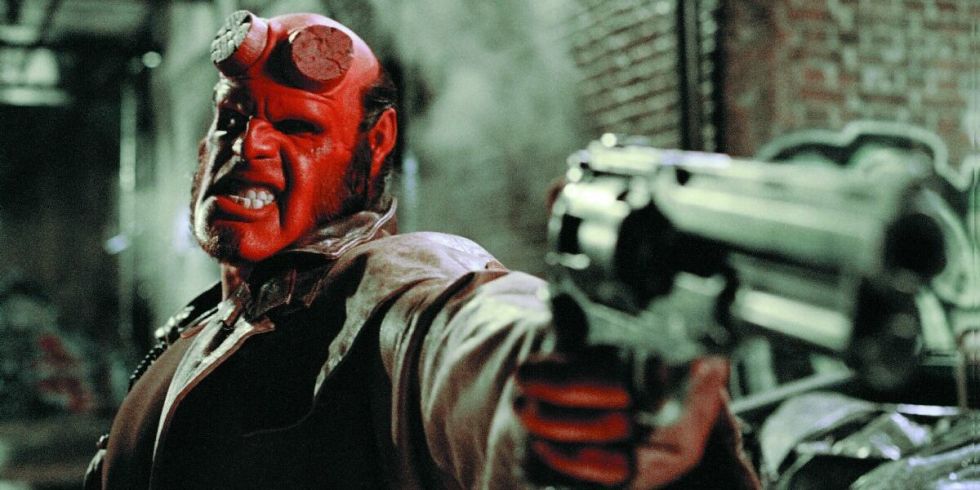
Del Toro’s other great principled stand was to ensure that Ron Perlman played the lead. Hellboy is a bizarre character – over six feet, red, horns, a tail – but what Perlman and Del Toro do so well is to make him some sort of Brooklynish chippy blue-collar worker with a kitchen-sink earthy wit. Perlman is clearly having a whale of a time playing this temperamental demon like some sort of longshoreman Han Solo, a brattish teenager and rebel with a world-weary cynicism. He’s crammed with contradictions (the demon who fights for good!) that Del Toro is keen to explore – and makes consistently interesting.

Because he’s such a different character, he energises a fairly traditional story and his character’s pretty standard personal-struggle-plotline (will he do the right or the wrong thing?). Perlman juggles all this really well, and gives a performance that is both dry and funny but also has moments of real heart and emotion. He even manages to sell his rather possessive love for Selma Blair’s (also pretty good) fellow orphan with pyrotechnical abilities as something heartfelt and caring, despite the fact that at one point he basically stalks her. It’s a rather wonderful performance.

The rest of the cast are a bit more of a mixed bag. Rupert Evans is saddled with the audience surrogate role – asking the questions we can’t ask – while Karel Roden’s lipsmacking performance as Rasputin never quite engages as a villain. Stronger roles come from Jeffrey Tambor as an officious FBI director and especially from John Hurt as Hellboy’s father-figure, the kind of quintessential ageing mentor that you can imagine his wards adoring. 

The rather silly plot doesn’t really matter. The importance here is the gothic chill of Del Toro’s style, mixed with his crazy “larger-than-life” dark comic book tone. And it works really well: the film is fun and witty, and if the storyline never really feels like it earns the “end of the world” threat (and builds towards an uninvolving duking out with a giant CGI monster), there are enough enjoyments along the way to make you want to make the journey.

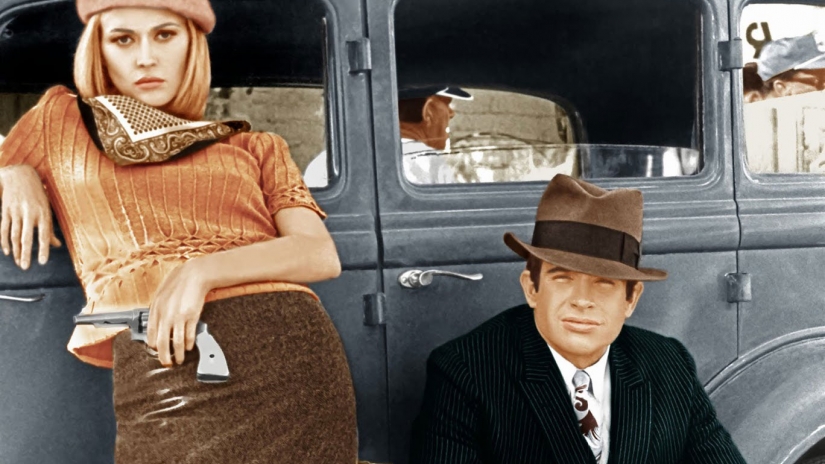
Bonnie and Clyde (1967)

Faye Dunaway and Warren Beatty are the shallow, violent romantics Bonnie and Clyde

Director: Arthur Penn

Cast: Warren Beatty (Clyde Barrow), Faye Dunaway (Bonnie Parker), Michael J Pollard (CW Moss), Gene Hackman (Buck Barrow), Estelle Parsons (Blanche Barrow), Denver Pyle (Marshal Frank Hamer), Dub Taylor (Ivan Moss), Gene Wilder (Eugene Grizzard), Evans Evans (Velma Davis)

Bonnie and Clyde can lay claim to being one of the most influential American films ever made. It came out of a seismic cultural change in America, as old style Hollywood royalty faded out and a new generation stormed the barricades to make films that felt rougher, rawer and told complex stories in shades of grey. 

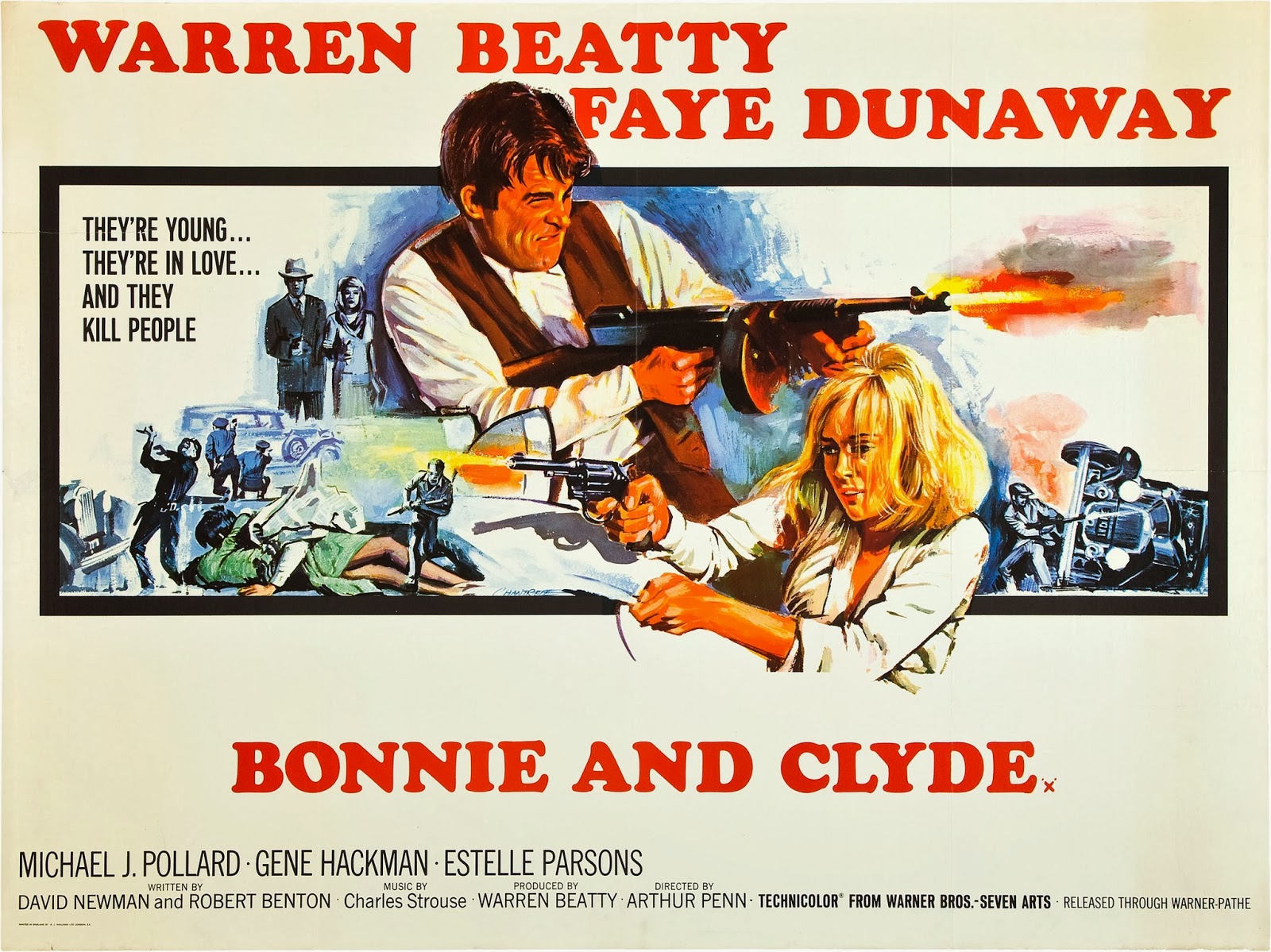
Clyde Barrow (Warren Beatty) and Bonnie Parker (Faye Dunaway): drifting youngsters, not interested in accepting a conventional life. They want to go where they please and take what they please. And if some people get hurt – well they can justify that to themselves. As the poster famously said: “They’re young. They’re in love. And they kill people”. In a deliberately disjointed narrative, where time is unclear, the two meet, head out together, commit crimes, stay on the run and are eventually killed by law enforcement. The story is simple – it’s the telling of it that matters.

Bonnie and Clyde latches on to a counter-culture vibe that was growing in strength at the time. But what the film does so brilliantly is subvert this. It invites us to identify to with the romantic, Byronic yearnings of its heroes, who see themselves as free spirits, living a life of idealistic, unconstrained excitement. But the film also has a clear eye on the trail of violence they leave behind them, their lack of regard for this and the impact on the victims. Because make no mistake, these dreamy killers get more and more violent as they go on.

The film turns these two killers into would-be celebrities – guys who want to project a certain image of themselves to the world (down to mailing the papers photos and poems about themselves). They enjoy the notoriety and their self-proclaimed mythology. Clyde walks into banks and gleefully announces he’s with the “Barrow gang”, as if half expecting someone to ask for his autograph. Later in the film, as Clyde reads their press coverage out loud, with CW Moss like a star-struck groupie, the film never forgets the two of them were basically nobodies, who wanted to feel like somebodies.

And it lets you enjoy the romance of this. There is something fairy-tale like in the film about Clyde picking up Bonnie from outside of her home, taking her into town for flirting and robbery. The whole film continues this dreamy logic, with time jumps and scenes that don’t necessarily link up directly with each other. 

But then the violence takes over. Wow is Bonnie and Clyde a film that lets you know about the impact of bullets. Gun shots don’t just maim or wing, they rip bodies apart. The japey feeling of their bank robberies gets dispelled about half an hour into the film when Clyde shoots a bank teller in the head from point blank range (“him or me”, he later tells his brother). The gang are so incompetent, that the film is frequently punctured by shoot-outs in which no mercy is shown to anyone. 

This is of course hard for the gang to reconcile with their self-image as Robin Hoods, so they mostly forget about it. Clyde won’t steal money from ordinary people (though he’ll happily steal cars, or beat a grocery store clerk into a coma). They playfully tease and taunt a captive US Marshal – until he spits in Bonnie’s face at which point violence ensues. Only at points do the gang seem to have the slightest idea of the dangers: after kidnapping Gene Wilder’s nervy car-owner and his fiancé, a happy-go-lucky Evan Evans (both excellent), merry conversations in the car with the gang are suddenly halted when Wilder admits he’s an undertaker – Bonnie immediately demands they are thrown out and the next shot is her weeping in a field. She doesn’t seem to understand the connection, but we can.

The film is superbly put together. Warren Beatty produced the movie practically from its inception. Robert Benton and David Newman’s script was intended as a French New Wave film – evident in its looseness, its lack of old-school values, its violence, its focus on naïve dreamers who choose the easy way out – but Beatty took the script, re-crafted it with Robert Towne (billed as special advisor) and decided the film needed an American director, not a Truffaut or Godard. He brought on board Arthur Penn, and the two worked together (fought together) closely to bring this radical, edgy, jittery, electric film to the screen. 

Penn and Beatty pushed themselves to some of their best work. Beatty is terrific as the vainglorious Clyde – whose determination in crime is matched by his impotence in the sack (the film wisely doesn’t overplay Clyde’s impotence as an ironic theme, but lets the audience draw its own conclusions). He also produced the film expertly. Penn’s direction is sublime, marrying the finest elements of French New Wave cinema with old-style Westerns.

The film is restless and energetic, and intermixes moments of fun and frivolity among the gang with ominous danger and violence. The camera jitters and shakes, while throwing us into the action – the film is masterfully edited – while at other points sailing on like a neutral observer. The film has a neat satiric edge, and Penn uses banjo music masterfully to ironically contrast with much of the action we see on the screen. The characters – all of them – seem to spend so much time talking about their press coverage because they have so little to say to each other. Even the lovers only really seem to find a moment of quiet devotion shortly before their death. It give you violence as entertainment, but also tells you effectively and quietly how appalling and dangerous violence is.

The acting is similarly extraordinary. Beatty is wonderful, as is Dunaway as an impossibly young, romantic Bonnie who adapts with alarming swiftness to killing and robbing. Michael J Pollard is excellent as the slightly simple, eager young car mechanic who hero-worships the couple. Hackman and Parsons are both excellent as Barrow’s older-but-not-wiser brother, and his wife who seesaws between resentment, fear and an imperious delight in her new-found infamy.

Penn’s brilliant film deconstructs the mythology of criminals to show the emptiness underneath, their shallow self-regard and lack of insight. It does this while still managing somehow to remain affectionate towards these two murderous dreamers. Bonnie and Clyde is a sublime modern Western, a commentary on fame, a dissection of violence and a great black comedy. Shot with youthful energy and an influential lack of traditionalism, it’s a film that always feels modern and necessary.

Sherlock Holmes (2009)

Robert Downey Jnr and Jude Law made a great odd couple in Sherlock Holmes

Director: Guy Richie

Cast: Robert Downey Jnr (Sherlock Holmes), Jude Law (Dr John Watson), Rachel McAdams (Irene Adler), Mark Strong (Lord Henry Blackwood), Kelly Reilly (Mary Morstan), Eddie Marsan (Inspector Lestrade), Hans Matherson (Lord Coward), James Fox (Sir Thomas Rotheram), Geraldine James (Mrs Hudson), William Houston (Constable Clark), William Hope (Ambassador Standish)

I don’t think there has been a single character brought to the screen more often than Sherlock Holmes. Sure there are certain tent-pole performances (Rathbone, Brett, Cumberbatch) that people automatically think of when you say “Sherlock Holmes”, but there are hundreds of others. It’s a character that survives constant re-imagination. In fact, you could argue it’s pretty much vital to bring something of your own to the table when putting together a Sherlock Holmes dramatisation. It’s what made Sherlock so successful. And it’s something that works very well here.

Sherlock Holmes (Robert Downey Jnr) is part Bohemian artist, part mad scientist, part kickboxer. The sort of guy who can think so far ahead he can plan out an entire fight in his mind before it even begins. He’s partnered up with determined, smart, handy-with-a-sword Dr Watson (Jude Law). With Watson preparing to move out of 221B to marry Mary Morstan (Kelly Reilly), they take on their last case: defeating creepy Dracula-lite Lord Blackwood (Mark Strong), who claims to have returned from the dead and wants to take over the British Empire. Along the way they are helped (or hindered) by the mysterious Irene Adler (Rachel McAdams) an old flame of Holmes’.

Guy Ritchie’s rollicking adventure is actually a huge amount of fun that, underneath the crashes and bangs, actually has a really strong respect for the original stories (the film is littered with references and quotes from the originals, none of which feel shoe-horned in except maybe Rachel McAdams’ Irene Adler, perhaps because the producers felt Holmes needed a love interest to stop any worries that he might be a bit too much in love with Watson). Ritchie has crafted a Holmes-Watson relationship that repositions them as a sort of odd-couple surrogate brothers, a marriage of equals (and make no mistake, a marriage is basically what this Holmes and Watson have). It’s big and silly, but then so were the original stories (The Creeping Man anyone?). 

Ritchie is a film-maker it’s easy to find faintly annoying, with his faux-geezer attitudes, his bizarre philosophical views and his love of the poor-taste gag. But on this film he’s basically a director-for-hire rather than putting his own story together and, you know what, putting this director into a studio strait-jacket is actually pretty good. It smacks some disciple on him, makes him drop his indulgent and poor-taste jokes and instead brings his strengths as a director – his sense of pace, his eye for a witty image, his rollicking sense of fun – to the fore. That’s probably why this is his most enjoyable and best film. 

It’s a film that mainly works because Downey Jnr and Law make a terrific pairing as Holmes and Watson. They have great chemistry, they spark off each other extremely well as performers and they really give the sense of two life-long devoted friends. Both actors are very good here. The film hits these notes of male friendship extremely well – a mixture of mocking and abuse, mixed with devotion and loyalty. The film gets the balance of these things exactly right: from debates to fights, you really get a sense that these two are honorary brothers, almost a bickering old married couple. 

In fact, the whole film revolves quietly around this relationship coming under threat (as Holmes sees it) of Watson leaving Holmes to get married – although, nicely, the film makes clear his fears of Mary are completely unfounded. Part of the dual engine of the film is Holmes continuing to tempt Watson into getting more and more involved with his cases, because he doesn’t want to lose his friend. It’s actually quite sweet. As are the protective feelings both have for the other: Watson knows Holmes puts himself at ridiculous risks, in turn Holmes shows a gentle worry for Watson’s gambling addiction (a popular Sherlockian society interpolation from references in the story).

All this warm, brotherly stuff from two excellent performers is built into a dramatic, thrillingly shot, series of action and detection scenes. The film’s big gimmick is Holmes’ ability to use his analytical abilities to accurately predict the outcome of fights (which the film communicates with slow motion and forensic narration by Downey Jnr, before staging the entire fight again at real time). It’s actually a fairly neat way of turning his deductive abilities into a visual language. Alongside this, plenty of this great fun – exciting or, as in Holmes’ battle with a 7ft giant, funny. All hugely entertaining.

Placing the focus on this relationship and the action does mean that the mystery elements of the plot get a bit short-changed. The story is a rather silly series of near-Dracula style high-Gothic mysteries that may or may not be real (all these occult references more than echo The Young Sherlock Holmes!). There isn’t much in the way of the small intricate puzzles of the early stories here – but then plenty of the later ones became increasingly hyper-real Gothic stories, so I guess that is fine. Mark Strong does a decent job as the villainous Blackwood, using his sinister looks and imperious voice extremely well. 

It also looks wonderful – the photography and set design is marvellous – and the score by Hans Zimmer must be one of his best ever, a sprightly mix of Irish music, Westerns and Music Hall. Ritchie directs it with a wonderfully, tongue-in-cheek, entertaining sprightliness, like Sherlock Holmes meets Indiana Jones. Holmes more than survives his re-imagination as an action superhero – and in fact he brings across a lot of the tone and character of the original book along with him. A terrific entertainment and a more than worthy entry to the Holmes movie cannon.

Captain America: Civil War (2016)

Captain America and Iron Man stand-off in overblown Captain America: Civil War

Director: Anthony and Joe Russo

Cast: Chris Evans (Steve Rogers), Robert Downey Jnr (Tony Stark), Scarlett Johansson (Natasha Romanoff), Sebastian Stan (Bucky Barnes), Anthony Mackie (Sam Wilson), Don Cheadle (James Rhodes), Jeremy Renner (Clint Barton), Chadwick Boseman (T’Challa), Paul Bettany (Vision), Elizabeth Olsen (Wanda Maximoff), Paul Rudd (Scott Lang), Emily VanCamp (Sharon Carter), Tom Holland (Peter Parker), Frank Grillo (Crossbones), William Hurt (Thaddeus “Thunderbolt” Ross), Daniel Brühl (Helmet Zemo), Martin Freeman (Everett K Ross), Marisa Tomei (May Parker), John Kani (T’Chaka), John Slattery (Howard Stark), Hope Davis (Maria Stark), Alfre Woodward (Mariah Dillard)

Captain America: Civil War is another explosive entry in the MCU, and is even more stuffed than usual, with nearly all our Avengers thrown into the mix – with the added twist that they fight each other! Yup it’s time for another playground argument: “If X fought Y, which one would win?!” That’s the main thrust of Captain America: Civil War, but it’s actually a distraction from the real plot. The much hyped fight at the airport (and the build-up to it) is a rather dull hour in the middle that distracts from a richer, more interesting film.

There is dissent in the ranks of the Avengers. The UN wants them to sign the “Zukovian Accords” – an agreement that they will work only under the direction of the UN. For Tony Stark (Robert Downey Jnr) this legal framework for their actions is essential – but Steve Rogers (Chris Evans) argues that the Avengers need to have the freedom to go where they are needed, not only where they are told. In this tense situation, a bombing in Vienna is swiftly blamed on Roger’s old friend Bucky Barnes (Sebastian Stan), who has become the brain-washed killer The Winter Soldier. In disagreement with Stark about the Accords and determined to protect Bucky, Steve quickly finds himself on a collision course with Tony.

The central idea here is actually fairly interesting: are superheroes people with a higher duty or just a group of vigilantes? Should they follow the direction of politicians – or be free to go where they are needed, when they are needed? How much accountability should they hold? If, in saving the world, dozens of civilians should die in the aftermath, is that acceptable or not? These are the ideas that lie under the arguments that the characters – principally Captain America and Iron Man – have. 

The first 40 minutes set this up nicely: an operation goes wrong, people are killed and the Avengers are confronted with footage of the collateral destruction they have caused while saving the world. But these ideas get left behind as the film gets caught up with pushing our characters into an artificial-feeling battle so destructive that an entire airport gets trashed by the “let’s cool our actions” team while trying to stop the “we should be independent” faction.

It would have been really nice to have these ideas explored in more depth, rather than a few moments here and there. Essentially, the film hires Alfre Woodard to deliver a top-notch performance as a mother whose son was Avengers collateral damage, to convince Tony things need to change, and leaves it at that. Steve’s counter-argument gets laid out swiftly – though he strangely makes no reference to the fact that the previous film saw a very similar “government organisation” revealed as the source of all evil in the Marvel world. It’s quick beats like this that set up this collision – but only Tony and Steve get any chance to express any form of developed views (in a few very well acted scenes). The motivations of the rest of the Avengers seem under-developed.

But that’s the problem with Captain America: Civil War: it’s seriously overstuffed. With some of these plots and characters removed, we could have actually had a very rich, thematic story.

The whole “Zukovia Accords” plot also has to constantly juggle for space with leftover “Winter Soldier” plotline from the previous two films. Truth be told, the latter is the more interesting, dealing with actual emotions, friendships and loyalties – chiefly the bond between Bucky and Steve (very well illustrated in a few brief, well played scenes). It’s this dilemma of whether Bucky can be held responsible for things he did under mind control that becomes the film’s key question. This plot line works far more effectively as it basically involves only three of the characters and feels like it has genuine things at stake, in a way I just can’t feel about the forced “civil war” angle. 

But it’s that civil war angle that the film is being sold on – and it’s what the middle section of the film is given over to. The big, airport-wrecking battle between the two sides is well shot, has good special effects and throws in plenty of neat one-liners. But what it completely lacks is any sort of dramatic tension or any stakes. As our heroes indestructibly bounce around while swapping light banter you never feel that this battle really amounts to anything. The sides don’t seem that far apart, or really that different – in fact the whole thing feels like playground horseplay.

The big battle is even undermined by the fact that we’ve already seen our heroes fight each other at least twice already in small combinations – and in all these cases, bodies are thrown about mercilessly but no one suffers more than a few scratches. Even after a character falls hundreds of feet to the ground, he’s later shown as basically being absolutely fine. The big battle is supposed to be the exciting showpiece, but it’s basically just big filler. A load of noise, where nothing really happens and no-one really feels at any risk, with no real consequences (all the emotional consequences emerge from the smaller scale final confrontation which would be unchanged if this airport fight was removed).

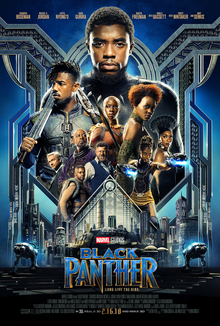
The film only really recovers again once that fight is benched, and we wind up with three of our heroes squaring off over very personal issues. This also brings to the fore the Daniel Brühl’s fascinating character, a very different type of villain: someone whom the film plays a neat game of misdirection with. The film reveals one of its themes as revenge, and how much it can dominate or twist our lives. This is given voice through a wonderfully written and played scene between Brühl and Boseman (very dynamic as the future Black Panther, dealing with grief over the murder of his father).

That scene gives an insight into the film’s real strengths: the small moments. The bits where the overblown fighting can be put to one side and we can see these characters (and the very good actors who inhabit them) talk. Moments like this carry more humanity, interest and tension than a thousand sequences of a giant Ant-man. In these moments, Downey Jnr and Evans are both terrific. Evans was born to play this part, making Rogers adamantine in his decency and nobility without being wearing, and also demonstrating an increasing streak of an old-soul who is tired of listening to other people and wants to make his own choices. Downey Jnr increasingly makes Stark a man hiding resentments, fears and doubts under a veneer of cool. Several other excellent performances also burst around the margins of the film (I’d single out Mackie who is excellent as the loyal Sam).

It’s just a shame Captain America: Civil War wastes some strong material in the prolonged set-up – and then enactment – of its superhero feud. Enjoyable as it can be to see this sort of stuff from time to time, after a while it’s tedious to watch invulnerable people taking pot shots at each other with no discernible impact. A single conversation with stakes – with a doubt about whether a friendship will hold or not – has more tension and excitement than a hundred sequences of heroes hitting each other. There is a more interesting story here – but between the action and the obligatory set-ups for future Black Panther and Spiderman movies (excellent as Boseman and Holland are in these roles) it doesn’t quite reach its potential.

Vertical Limit (2000)


Chris O’Donnell and Scott Glenn head into high nonsense in Vertical Limit

Director: Martin Campbell

Cast: Chris O’Donnell (Peter Garrett), Bill Paxton (Elliot Vaughan), Robin Tunney (Anniez Garrett), Scott Glenn (Montgomery Wick), Izabella Scorupco (Monique Aubertine), Robert Taylor (Skip Taylor), Temuera Morrison (Major Rasul), Stuart Wilson (Royce Garrett), Nicholas Lea (Tom McClaren), Alexander Siddig (Kareem Nazir), David Hayman (Frank Williams), Ben Mendelsohn (Malcolm Bench), Steve Le Marquand (Cyril Bench), Roshan Seth (Colonel Amir Salim)

You know a film is in trouble when its heart-rendering death scene at the open is met with howls of laughter from the packed cinema. But Vertical Limit is that kind of film: totally ridiculous, mind-numbingly stupid and filmed in such a melodramatic, over-the-top way it’s impossible to take seriously. It’s a silly, contrived, stupid movie, but at least it’s good clean fun.

Peter (Chris O’Donnell) and Annie Garrett (Robin Tunney) are on a climbing trip with their father when an accident puts them all in danger. Their father sacrifices himself to save their lives, but afterwards the siblings drift apart. Three years later she’s part of mountaineering team taking arrogant millionaire Elliot Vaughan (Bill Paxton) up K2. When disaster strikes (of course!) and Annie, Elliot and wounded Tom McClaren (Nicholas Lea) are stranded up the mountain, Peter gets together a team to head up the mountain to save them. The best way of doing this? Why, carrying nitro-glycerine up the mountain! That’s right, this is a film where our heroes basically carry a series of bombs up a mountain: it’s The Wages of Fear meets Cliffhanger.

Oh lord where to begin? In the very first scene, I horribly misread the relationship between Annie and Peter – so it was a bit of shock, after what seemed like a fair amount of flirting, to have them revealed as brother and sister. But their weird obsession with each other hangs over the whole picture, and is used to justify the people killed in this film to save Peter’s sister. Peter certainly can’t get excited about his nominal love-interest (a bored looking Izabella Scorupco), although that might be partly due to Chris O’Donnell’s balsa-wood earnestness.

But then the whole film is wonkily acted. Bill Paxton is so obviously a wrong-un, he practically twirls his moustache through the whole film. Scott Glenn plays a mystic climber mourning the loss of his wife, like some sort of bizarre shaman. Robert Taylor is wooden as Skip. Alexander Siddig is wasted as a rent-a-Muslim (the film is so old the call to prayer even needs to be explained!). Among the smaller roles, Ben Mendelsohn plays a sort of climbing Crocodile Dundee. None of these actors bring their A-game to this rubbish.

And it is rubbish. Nothing in it is particularly exciting, despite the efforts of Campbell to throw a (literal) avalanche of events at the screen, with characters hanging over cliffs like no-one’s business. None of these action sequences is actually that exciting – some, like a prolonged helicopter drop-off, are frankly dull – and everything has a sort of inevitability about it. You can predict who will die and who won’t, and the film only talks about things that are going to happen: of course Montgomery Wick’s wife’s body will be revealed after one of several avalanches (another scene that provokes sniggers rather than gasps); of course Vaughan will try and kill his fellow survivors; of course Peter will have to come to terms with his dad ordering him to cut him loose at the start of the film.

Most of the mountain climbing effects are not convincing. The opening sequence is obviously filmed at ground level, the passes of K2 look like sound stages. At one point Wick drops the title by saying they are at the “Vertical Limit” where the body starts dying: O’Donnell responds like a forgetful child actor, suddenly remembering he’s supposed to be out of puff in this scene. The very idea of taking nitro-glycerine up the mountain like this is so completely irresponsible and stupid that the film can’t get over it. Needless to say many, many, many more people die on this rescue expedition than are actually rescued at the end. Not that it matters, as Annie and Peter reconcile to continue their odd flirtatious relationship once more!

Vertical Limit is a terrible film. No doubt about it. It’s good to laugh at, I’ll give it that. But it’s got literally nothing else going for it. Nothing. Martin Campbell: how did you deliver something this mundane and stupid?

Kong: Skull Island (2017)


The ape headlines and all other parts of the movie get crushed in Kong: Skull Island

Director: Jordan Vogt-Roberts

Cast: Tom Hiddleston (James Conrad), Samuel L. Jackson (Colonel Preston Packard), John Goodman (Bill Randa), Brie Larson (Mason Weaver), John C Reilly (Hank Marlow), Corey Hawkins (Houston Brooks), Toby Kebbell (Major Jack Chapman), John Ortiz (Victor Nieves), Jing Tian (San Lin), Jason Mitchell (Glenn Mills), Shea Whigham (Earl Cole), Thomas Mann (Reg Slivko), Richard Jenkins (Senator Al Willis)

Kong: Skull Islandis another attempt to kickstart a monster franchise (rumours abound that eventually Kong and Godzilla duke it out. I’d start worrying about all those major landmarks.). So anyway, Kong: Skull Island sees a team of explorers head towards the mysterious Skull Island to… well to poke around I think. Actually the aims of the expedition rarely trouble the screenwriters so they shouldn’t trouble us. Anyway, Kong (larger than ever) is deeply pissed at this invasion of his territory so trashes every helicopter going. Our heroes are stranded on the island, while their incursion releases numerous monsters who endanger the whole world that only Kong can stop.

This pretty feeble film is a crumby repackage of numerous (much better) films – and yet another example of a generation of film-makers producing films whose only points of reference are older, better movies. This one plays like Apocalypse Now humped by King Kong. Perhaps one day we’ll actually get some truly original, distinctive films that make their own points rather than reworking others. And perhaps we’ll still get genre films that actually are interested in character and development, rather than bashing and blowing things up.

Anyway, the human characters are almost completely pointless in this B-movie retread. I was wondering how they persuaded such an illustrious cast of actors to come on board. This mystery was solved when I watched a remarkably bland DVD-feature – Tom Hiddleston’s video diary. This was basically shots of Hiddleston talking about having a great couple of weeks in Hawaii flying in helicopters, four weeks sunning himself in Australia and three weeks of travelling down a Vietnamese river. And he got paid millions of dollars to do it. No wonder he ends the video saying he’d recommend this life to anyone.

It certainly wasn’t the character that lured him in. Conrad is interesting for precisely one scene – as a troubled drunk in the bar – before he reverts into clean shaven, upright and heroic. His vaunted skills as a tracker are never used. His set-up as the natural survivor and leader never comes to fruition. His relationship with Brie Larson is based solely on them being the two most attractive members of the cast. As for Larson: has an Oscar-winning actress ever followed up her win with such a truly pointless, empty, non-part? 

The film is completely uninterested in human beings – it can’t even bother to make those that buy it early in the film distinctive individuals. Even the ones left at the end barely pass as people we know. Only John C Reilly crafts a truly engaging character as a sort of Ben Gunn figure. Samuel L Jackson gets the “soldier maddened by war” so that we have the typical “the real danger is man” sub-plot, but everything is by the numbers. The characters are so mix-and-match that you feel no peril at any point. It’s so cynical that it can even drop in a Chinese scientist from nowhere (who does nothing at all in the film) solely to try and sell the film to that market.

Our nominal heroes: most of them I’ve already forgotten

Kong is the real focus of the movie – and there is limited interest you can get out of a gigantic ape bashing and ripping things apart. Protracted battles go on and on and on. You really see the difference between the work of Andy Serkis and Peter Jackson in their Kong movie and this one. That Kong actually felt like a character you could bond with. This is just the wet-dream of a boy who grew up watching too many Harryhausen pictures, a behemoth who everyone stares at with wonder but whom the audience never feels any emotional investment in. And for all the faults of Jackson’s Kong, it was a film with brains, with heart, made with artistry and which understood character and emotion give meaning to spectacle, rather than being dull speed bumps a film needs to get over.

The film aims sometimes for an Apocalypse Now-style dread of humanity and the madness of war etc. etc. – but nearly always misses. The humans (and their aims) are such non-event blanks that we can’t care less about the danger of humanity. The film itself has none of the poetry of Apocalypse Now, and instead just wants a lot of (PG rated) violence and a bit of madness. Some of the madness even seems a bit uncomfortable – a tribe of natives are treated as humble exotics. It’s aiming to piggy-back on an attitude of America being humbled by Vietnam and lashing out – but never adds any material in the story to actually take this idea anywhere. Calling characters Conrad and Marlow doesn’t suddenly give it a Heart of Darkness depth – it just makes you think the screenwriters thumbed through CliffNotes before naming their characters. 

Instead the film winds on, never really getting entertaining, boring us with the characters and taking way too long lingering over monsters and bashings. The only thing the film loves is the bang, the buck and the “ain’t it SO COOL” shots of a monster ape hitting things. It’s totally empty, boring trash and it has all the grace and skill of a child’s home movie. Don’t get me wrong, it’s professionally made – but totally empty. Nothing in there is designed to stick with the audience or even remotely make them think. Harryhausen movies had a depth and magic to them that inspired a generation. Films, like this one, churned out by today’s imitators are empty light shows that won’t last a week in the imagination.

King Arthur (2004)


Clive Owen leads his merry men in clumsy would-be Arthurian epic King Arthur

Director: Antoine Fuqua

Cast: Clive Owen (Arthur), Ioan Gruffudd (Lancelot), Keira Knightley (Guinevere), Stellan Skarsgård (Cerdric), Ray Winstone (Bors), Mads Mikkelsen (Tristan), Joel Edgerton (Gawain), Hugh Dancy (Galahad), Ray Stevenson (Dagonet), Stephen Dillane (Merlin), Til Schweiger (Cyrnic)

The story of King Arthur has entertained generations for so long, it’s actually a bit of a surprise that there hasn’t been a great movie made about it. Sure there have been entertaining guilty pleasures (like my love for the bobbins Excalibur) but there hasn’t been a great action adventure made about the legendary king. And this Jerry Bruckheimer actioner sure ain’t it. But it re-enforces my seemingly never-ending appetite for distinctly poor, big-budget, epic films.

Arthur (Clive Owen) is a half-Celtic Roman cavalry officer who commands a Sarmatian cavalry unit, serving a fixed term of service with Rome. They help to guard Hadrian’s Wall against rebel native Britons. Before their discharge, the knights are given one last job: go behind enemy lines to rescue a prominent Roman citizen living beyond the wall. Once they arrive, they find he has enslaved the local Brits – including imprisoning a young woman named Guinevere (Keira Knightley). Knowing a Saxon invasion force lead by the fearsome Cerdric (Stellan Skarsgård) is ravaging Britain – and that the Romans are withdrawing from the empire – Arthur decides to lead the whole group back to the wall and safety.

King Arthur isn’t a terrible film, just a totally mediocre one. It’s an uninspired coupling together of half-a-dozen other better movie: from its Dirty Dozen line-up, through its Gladiator style score (Hans Zimmer rips himself off again), to its remix of a thousand period sword epics from Spartacus on, mixed with its Braveheart style design and battle scenes. It’s almost completely unoriginal from start to finish. There is no inspiration here at all – it’s made by people who have seen other films and based everything on that rather than wanting to make a film themselves.

It even wraps itself up with an unseemly haste, as if all involved knew they hadn’t nailed it so decided the best thing to was to knock the whole thing on the head and call it a bad job.

The film probably stumbles from the start with its claim to present a sort of “true historical story” of King Arthur. Now I’m not one to get hung up on historical accuracy too much – except when it’s making extravagant claims which are just not true – but the “true story” here is bobbins. Nothing really feels right – from the Roman politics to the idea of a group of loaded Roman settlers setting up a huge estate deep into Scotland (I mean what the fuck was Hadrian’s Wall for eh?). The knights bear very little resemblance indeed to their legendary counterpoints. In fact it’s almost as if they had a script about a brave band of Roman soldiers and just stuck the name King Arthur on it for the name recognition (perish the thought!).

The idea of a group of seasoned, grizzled warriors isn’t a bad one – and it works rather well here because most of the actors in these roles are pretty good (particularly Mads Mikkelsen as a sort of Samurai Tristan). It makes for some interesting dynamics and always some fine character work – the best arc going to Ray Stevenson’s Dagonet as a knight who finds something to fight for. It also contrasts rather well with Stellan Skarsgard’s world-weary villain, who’s seen it all and finds it hard to get excited about ravaging and pillaging anymore.

But it’s a shame that this promising set-up gets wasted. After a good start, when we get to see all our heroes’ personalities reflected in their fighting styles as they repel an attack on a bishop, these dynamics quickly settle down into the usual tropes: you’ve got the joker, the cocky one, the reluctant one who’s only out for himself… Fortunately the Director’s Cut (which I watched) deletes the worst of Ray Winstone’s comic “banter”, but it’s still pretty standard stuff.

The mission behind the wall then pretty much follows the pattern you would expect: the guy they go to rescue is an unsympathetic bastard, they find themselves protecting the weak, it’s a dangerous journey back to safety, blah-blah-blah. Although a battle on the ice has some genuine excitement to it, there isn’t anything new here at all. Everyone just feels like they are going through the motions. 

When the battles kick off in earnest, they are pretty well mounted – even if they are hugely reminiscent of the opening battle of Gladiator and the low-camera, immersive battles of Braveheart. Sure there is a smoky immediacy about them, like a sword wielding Saving Private Ryan, but it’s still pretty much what you would expect. The action pans out with no real surprises – our heroes and villains even match up for the expected clashes.

Clive Owen is a fine actor, but he is manifestly wrong for the role of a classical hero and the awe-inspiring battlefield heroics he is called to carry out here. He’s too modern an actor, with too much of the world-weary smoothness to him, for him to really convince as this hardened medieval warrior. Owen’s delivery and style is so restrained he can’t bring the bombast or elemental force the part requires. Allegedly he was cast because Bruckheimer believed he would be the next James Bond – the actor they turned down for Arthur? Daniel Craig… 

Nope. Sorry.

Similarly Kiera Knightley is just as miscast. Let’s put aside the fact that she is half Owen’s age. There is a prep school headgirlishness to her that just doesn’t work when we are asked to buy her as woad-covered warrior princess. She’s too strait-laced, too polite, too sophisticated. When she does step into the full-on Boudicca look, you’ll giggle rather than tremble. For all her exertion, she’s not convincing in the role either.

But then that’s King Arthur all over: trying hard but not convincing, with such a tenuous link back to the original myth that the fact they are just using the Arthur name to flog some more tickets is all the more obvious. Major elements of the legend are missing – in particular the Arthur-Lancelot-Guinevere love triangle is cut down to the merest of suggestions, enough for it to be noticed but not enough for it to feel like a real plot – and other elements (Merlin, the Sword in the Stone, the Round Table) seem shoe-horned in for no real effect. It’s basically just a bombastic B-movie, a sort of Gladiator rip-off without the poetry. Moments of fun, but still not that good.