Category: Action film

The Man From UNCLE (2015)

Armie Hammer and Henry Cavill try, and fail, to get some zing out of The Man From UNCLE

Director: Guy Richie

Cast: Henry Cavill (Napoleon Solo), Armie Hammer (Ilya Kuryakin), Alicia Vikander (Gaby Teller), Elizabeth Debicki (Victoria Vinciguerra), Jared Harris (Adrian Sanders), Hugh Grant (Alexander Waverly), Luca Calvani (Alexander Vinciguerra), Sylvester Groth (Uncle Rudi), Christian Berkel (Udo Teller), Misha Kuznetsov (Oleg)

The Man From U.N.C.L.E.was a 1960s TV spy caper series, which I confess I’ve never seen an episode of but I’m reliably told (by my wife who has) that it’s all larks and fun. This Guy Ritchie remake, on the other hand, is a tonal mess that has no idea what the hell it is. Only Hugh Grant gets anywhere near to appearing in a caper movie – probably because he’s virtually the only member of the cast who might have grown up watching the original series.

Anyway, in the early 1960s Napoleon Solo (Henry Cavill) is an international master-thief turned CIA agent (this suggests his character is a whole lot more fun than he actually is). Ilya Kuryakin (Armie Hammer) is a KGB super-agent, dealing with issues of psychosis (yup more fun to be had there). This odd couple are ordered to team up and work with car mechanic (no seriously) Gaby Teller (Alicia Vikander), whose father is working with renegade Italian fascists, led by femme fatale Victoria Viniciguerra (Elizabeth Debicki), to build a new nuclear mastery over the world. Or something.

It should be a ridiculous, overblown, mix of Bond and high 60s camp. Instead it’s dreary, chemistry-free, largely uninvolving sub-Mission: Impossible high jinks that I’m not ashamed to say I dozed off during at one point. Would that I had slept through more of it. It’s quite damning when the most enjoyable thing about it is thinking about the accent Olympics going on (we have a Brit playing an American, an American playing a Russian, a Swede playing a German, an Australian playing an Italian, an Irishman playing an American…).

No matter which way the three leads are arranged, Cavill, Vikander and Hammer have no chemistry at all in any combination. There is precisely zero bromance between the two leads. Vikander and Hammer have a will-they-won’t-they romance that comes from absolutely nowhere and leads nowhere (set up for sequels that will never come). Cavill looks the part, but completely lacks the cheeky, self-confident, “I’m-enjoying-all-this” charm that the part requires – instead he’s flat and boring. Hammer has more of the winking-at-the-camera cool, but he’s saddled with a part that frequently requires him to burst out in hotel-room-trashing outbursts of anger. Vikander just looks a bit bored with the whole thing.

These rather joyless characters go through a series of action set pieces, none of which got my pulse racing, and all of which felt like off cuts from a lousy Mission: Impossible sequel. Car chases, fisticuffs, gun fights, explosions, boat chases – they all tick by with no wit or pleasure involved anywhere. In these sort of things, you need to feel the characters are such adrenaline junkies that they sorta enjoy the crazy antics they get thrown into – you don’t get any of that from these three.

Much as I like Elizabeth Debicki, she can do little with her underwritten part – I mean I get that the plot isn’t the main thing in a film like this, but they could have at least given our villain a character. Instead she is as cardboard cut-out as the rest of the storyline. The acting from the bulk of the cast is also really odd – some seem aware they are in a tongue-in-cheek spy film, others seem to think they are in an espionage thriller. It’s a mess. There are scenes of pratfall comedy followed by grim scenes of torture and violence. In one juddering moment of this spy romp, the flipping Holocaust is dragged in as a shorthand for identifying a character as an “ultimate villain” – which given he had our hero strapped to a chair and was about to torture him, I think we could all have worked out without exploiting genocide. Anyone else think pulling this appalling real world event (with photos!) into a stupid caper movie is really tasteless? Did no one watch this thing while it was being edited?

I will say the design is pretty good and it’s well shot. But compare this to the fun and games of Guy Ritchie’s Sherlock Holmes films (which this is obviously trying to emulate) and the total lack of chemistry at its heart becomes immediately clear. Hugh Grant is a complete relief when he turns up as he’s the only actor who actually looks like he is enjoying his part and wants to be there. It was a big box office bomb and it’s no surprise. No one is having fun, the spirit of the original series seems to have been completely lost, and the lead actors totally fail to bring the leading-man pizzazz the film needs. Perfect if you want a nap.

Robin Hood (2010)

Russell Crowe takes aim as Robin Hood

Director: Ridley Scott

Cast: Russell Crowe (Robin Longstride), Cate Blanchett (Marian Locksley), William Hurt (William Marshal), Mark Strong (Sir Godfrey), Mark Addy (Friar Tuck), Oscar Isaac (Prince John), Danny Huston (King Richard), Eileen Atkins (Eleanor of Aquitaine), Max von Sydow (Sir Walter Locksley), Kevin Durand (Little John), Scott Grimes (Will Scarlet), Alan Doyle (Allan A’Dale), Matthew Macfadyen (Sheriff of Nottingham), Lea Seydoux (Isabella), Douglas Hodge (Sir Robert Locksley)

When this film was developed, it was a CSI style medieval romp called Nottingham. Russell Crowe was cast as the film’s hero – an ahead-of-his-time Sheriff of Nottingham, busting crimes in Olde England and dealing with rogue thief (with good press) Robin Hood. Yes that really was the original idea. Mind you, it would at least have been more original than what we ended up with after Scott and Crowe had a bit of a rethink.

So here we are: Robin Hood: Origins (as it might as well have been called). Russell Crowe is Robin Longstride, on his way back from the crusades as an archer in the army of King Richard (Danny Huston) army. When Richard is killed at a siege in France (it was one last siege before home – what are the odds!), the messengers carrying the news back to France are ambushed and killed by wicked Sir Godfrey (Mark Strong). Robin finds the bodies and assumes the identity of Sir Robert Locksley, travelling to England to tell Prince John (Oscar Isaac) the news of his succession – then returning to Nottingham with his friends, where Robert’s father Sir Walter (Max von Sydow) asks him to continue pretending to be Robin for dull tax reasons – and soon feelings develop between Robin and Sir Robert’s widow Marian (Cate Blanchett). But John is intent on farming the land for taxes, and Sir Godfrey is in cahoots with the French to conquer England.

Robin Hood is a semi-decent, watchable enough retread of a story so totally and utterly familiar that even the things it rejigs end up feeling familiar. In fact, to be honest you sit watching it and wondering why on earth anyone really wanted to make it. Scott brings nothing original and different to it, and the film looks like a less visually interesting retread of Kingdom of Heaven. Plot wise it’s empty. What’s the point of it all? It slowly shows us all the pieces of the Robin Hood myth coming together, so best guess is that it was intended to be the first of a series (there seems to have been no interest or demand for a sequel of any sort). 

And then we’ve got Russell Crowe. Leaving aside everything else, Crowe looks about 10 years too old for the part. He delivers some sort of regional accent that meanders from Ireland to Yorkshire in its broadness, a laughable stumble around the country. Crowe does his slightly intense, sub-Gladiator mumbles and stares at the camera and attempts to suggest a deep rooted nobility, but actually comes across a bit more like a snoozing actor awaiting a pay-cheque.

Cate Blanchett does her best, lending her prestige to the whole thing in an attempt to make it land with some dignity (she of course does the opening and closing narration, which struggles to add some sort of grandeur to the whole flimsy thing). She’s saddled with a Maid Marian who is granted various “action” moments, but still has to be saved by Robin and face possible rape from a leering Frenchman (at least she saves herself from that one). 

It also doesn’t help either actor that their romance plays out in the dull middle third of the film, where the plot grinds to a halt as we deal with Sir Walter (Max von Sydow almost literally acting blindfolded) using Robin as some sort of tax dodge scheme. The film is overloaded with characters, all of whom are separated at this point and struggling manfully to make their disconnected plotlines interesting: so we get John dealing with the pressures of office, Sir Godfrey scheming and looting, William Marshal trying to find a middle ground, Robin and Marian falling in love – it’s a mess. On top of this a get a ludicrous reworking of the Magna Carta as some Medieval version of the Communist Manifesto (it’s written by Robin’s executed dad no less, giving him a bizarre “painful backstory” to overcome). None of these plots really come together, and so little time is spent with each of them that they all end up getting quite boring.

The film culminates in a totally ridiculous battle scene on a beach, as Sir Godfrey’s French allies arrive on the shores of medieval England in some sort Saving Private Ryan landing craft. The tactics of this landing and the battle that ensues are complete nonsense. Every single character rocks up at this battle, which should feel like all the plot threads coming together but instead feels like poor script-writing. When Marian turns up, disguised as a man (how very Eowyn), leading a group of warrior children (I’m not joking) who feel yanked from the pages of Lord of the Flies, it’s just the crowning turd on this nonsense.

And all this fuss to defeat Sir Godfrey? Why cast Mark Strong and give him such a nothing part? Sir Godfrey is a deeply unintimidating villain. Everything he does goes wrong. He is bested in combat no less than three times in the film (once by a flipping blind man!). His motivations are never even slightly touched upon. He has less than one scene with John, the man who he is supposed to be manipulating. He runs away at the drop of a hat and Robin gets the drop on him twice on the film. He’s neither interesting, scary or feels like a challenging adversary or worthy opponent.

But then nothing in this film is particularly interesting. The set-up of the merry men around Robin (they seem more like an ageing band of mates on tour by the way than folk looking to rob from the rich and give to the poor) is painfully similar to dozens of other film, particularly in the Little-John-and-Robin-fight-then-become-brothers routine. Crikey even Prince of Thieves shook up the formula by making Will Scarlet Robin’s brother. Scott is going through the motions, like it was one he was committed to so needed to see through to the end despite having long-since lost interest. It’s not a terrible movie really, just a really, really, really average one with a completely miscast lead and nothing you haven’t seen before.

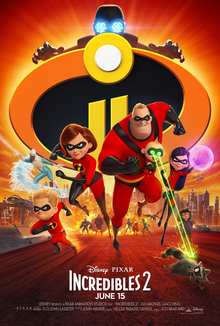
The Incredibles 2 (2018)

The family are back together, in belated but brilliant sequel The Incredibles 2

Director: Brad Bird

Cast: Craig T Nelson (Bob Parr/Mr Incredible), Holly Hunter (Helen Parr/Elastigirl), Sarah Vowell (Violet Parr), Huck Milner (Dash Parr), Samuel L Jackson (Lucius Best/Frozone), Bob Odenkirk (Winston Deavor), Catherine Keener (Evelyn Deavor), Brad Bird (Edna Moda), Sophia Bush (Voyd)

Fourteen years? In Hollywood that is nearly an eternity. Can you even imagine a film released today getting its first sequel over a dozen years later? But that is how long we’ve had to wait for a sequel to The Incredibles

Picking up immediately after the first film finished, the efforts of the Parrs, Bob/Mr Incredible (Craig T Nelson), Helen/Elastigirl (Holly Hunter), their children Violet (Sarah Vowell) and Huck (Dash Parr) and their friend Frozone (Samuel L Jackson) to stop the Underminer only lead to destruction. Superheroes are once again anathema to the authorities, but tech millionaire Winston Deavor (Bob Odenkirk) and his inventor sister Evelyn (Catherine Keener) are determined to change their reputation. Their plan? Use Elastigirl as the new “face” of responsible superhero-ing. Elastigirl takes on a new threat: the villainous Screenslaver who uses screens to hypnotise people and control them. Meanwhile, Bob has to cope with the pressures of being a stay-at-home dad, dealing with with teenage crushes, homework challenges and controlling super-powered baby Jack-Jack, who can barely control his never-ending series of powers.

And the world of Hollywood has changed so much since the first Incredibles film came out. Back then, comic book films were only just starting to come into fashion, and the Marvel Cinematic Universe didn’t even exist. So can The Incredibles forge its way in a cinematic landscape now overstuffed with superhero derring-do?  Well yes it does, because the film hasn’t lost the sense of what was so enjoyable about the first film. We still get all the action-packed excitement of some damn fine adventure sequences, choreographed with skill and wit. Playing alongside that we get all the homespun domestic turmoil of modern family life, right down to a dad struggling to help his son with his homework (“How can they change math?!”) and trying not to mess up his kids’ lives. 

The film resets the table to get us back to the situation of the first film – superheroes are illegal and unwanted and anything the Parrs do is going to have to be under the wire. And then it spins out a twist on the first film – this time it’s the super-competent and intelligent Elastigirl who will be the hero, while the more old-school Mr Incredible stays at home and looks after the kids. This combination works perfectly – Elastigirl is a brilliantly conceived character, cool, calm, collected, super smart, ultra-determined and ridiculously good at what she does. Holly Hunter’s southern tones are smoothly perfect for this part, investing it with just the right level of humanitarianism.

Really I should be annoyed about the end of the last movie being so completely reset in the opening minutes of this one, but truthfully the idea of superheroes struggling to balance everyday problems with illegal super-heroing is such a totally brilliant idea you are really happy to see it play out again, this time adding the dilemmas of Mr Incredible suddenly being thrown into a situation he can’t handle – having to be a regular dad – and collapsing in an unshaven, exhausted mess. 

Seeing someone struggle with such everyday problems is hilarious enough, but the film has a USP in the challenges of looking after cute little ball-of-trouble baby Jack-Jack: a sweet, blubbering little kid with a regular smorgasbord of powers, none of which he is able to control. Bob’s struggles to deal with this explosion of wildness (everything from laser rays to moving in the fourth dimension) throw up endless hilarious moments and sight gags that had me laughing out loud (probably too loud) in the cinema.

Sitting alongside this, Brad Bird hasn’t forgotten how to shoot and cut an action sequence – whether it’s animated or not. A chase where Elastigirl has to stop an out-of-control train is not only hugely exciting, but also tense and witty. Elastigirl is also such a relatable character that she adds huge amounts of human interest to every one of these action bits, and her determination to save lives – even of her enemies in exploding buildings – is really rather touching. The final action sequence doesn’t quite match the highlights of the first film, but it does excellent work.

Of course the villain is in fact using these strengths against her. If the film has one weak point, it’s that the identity of the villain is really rather obvious from the start. I pretty much guessed immediately who the villain was going to be. I can’t see anyone of any age being fooled, and the motivations of this villain seem a lot more rushed and less interesting than those of Syndrome in the first film. 

But that feels like a minor blemish on what is an excellent sequel, a real gem in the Pixar cannon. It’s still got the brilliantly retro-cool design that mixes the modern world with the 1950s and 60s. Michael Giacchino’s soundtrack is cracking. Brad Bird brings himself back as scene-stealing superhero costume designer Edna Mode. What’s not to like? I wouldn’t mind waiting another 14 years if they produce a third film as good as this one.

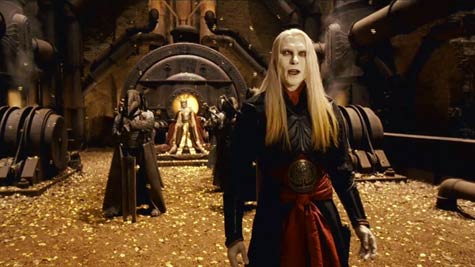
Hellboy II: The Golden Army (2008)

Ron Perlman faces larger problems than ever in Hellboy II: The Golden Army

Director: Guillermo del Toro

Cast: Ron Perlman (Hellboy), Selma Blair (Liz Sherman), Doug Jones (Abe Sapien/Angel of Death/Chamberlain), Seth MacFarlane (Johann Krauss), Luke Goss (Prince Nuada), Anna Walton (Princess Nuala), Jeffrey Tambor (Tom Manning), John Hurt (Professor Trevor Bruttenholm), Roy Dotrice (King Balor)

There is something quite sweet about the Guillermo del Toro taking all the chips won for directing Pan’s Labyrinth and cashed them in for this comic book sequel. There you have the distillation of the man’s career right there: one for the artist and then one for the teenage boy he used to be. But Hellboy II is a marvellous creation, a gorgeous to look at, magical, rather funny comic book film crammed with amazing images, ingenious creatures and sparkling moments of action and adventure.

Thousands of years ago, the magical creatures of the world, led by the elves, fought a war against mankind. To win a desperate victory, goblins created the dreaded Golden Army, an indestructible mechanical army. Horrified at the slaughter, Elven King Balor (Roy Dotrice) offered a truce. His son Prince Nuala (Luke Goss) disagreed. In the present day, Nuala goes about to collect the three pieces of the crown needed to control the Golden Army – and only Hellboy (Ron Perlman) and his friends from the BPRD can stop him. 

Hellboy II is immensely imaginative and wonderful to look at. Perhaps inspired by Pan’s Labyrinth, the film plays like a cross between the most brain-twisting magic depths of that film and a traditional comic book. So we get dozens of creatures, each pulled from the pages of some sort of acid tripped Tolkien novel: with extended hands, distorted heads and steam-punkish extremities, the creatures on show are masterpieces of design and character. The juxtaposition between this ethereal, magical world of elves and goblins and mankind’s expansion brings home the danger this world is in: the Elven King’s palace in the modern day is in a sort of converted sewer, while Nuala’s base is an abandoned underground line. With some performers (often del Toro’s muse Doug Jones) under layers of make-up and prosthetics, it’s extraordinary the amount of personality each of these creatures gets. When the film takes a turn down a Diagon Alley-style market, you regret Del Toro never got to make a Harry Potter film.

Hellboy looks both part of this world and also like a muscular bull in a china shop. Ron Perlman continues to be perfect in the part, and captures the wry, cynical, slightly teenagerish humour of the part. Del Toro does a wonderful job of showing the sense of family between Hellboy, his lover pyrokinetic Liz (a decent performance by Selma Blair, although she is too often relegated to the “woman” role), and his surrogate brother, amphibious empath Abe (Doug Jones getting to provide the voice as well this time, and getting a fine display of growing emotional expression). The quiet character moments between the action really ring true – a very funny sequence sees Hellboy and Abe bemoan their romantic entanglements by getting drunk while singing Can’t Smile Without You.

It’s scenes like that which add the heart alongside the throbbing action and colourful character weirdness of del Toro’s vision. It’s also part of the distinctiveness of the whole vision of the film. Everything is seen with as fresh an eye as possible, and makes for some really striking images and scenes. The steam-punk aesthetic of the Golden Army seems to fit together perfectly with the more organic world of the Elves. There’s a sense at all times that the design and pacing of the film have been carefully thought through so everything fits logically together. Starting the film with a wonderfully animated Golden Army backstory (voiced by a briefly returning John Hurt for maximum impact) is just another reflection of the artistry at work here.

There is a nice vein of humour running through the film – there are some funny sight gags as characters walk nonchalantly through bizarre goings-on in BDRP HQ – and the more gory moments of the action are shot with a certain black comedy. The film also gets a decent few points in about how humanity rejects things that are different, which are not surprising but still hit home.

Hellboy II does start to become a bit more generic as it heads towards its final denouement. Most of the events of the final few scenes are pretty predictable from the outset, and offer little in the way of surprises. For all the chemistry she has with Perlman, Blair is more or less relegated to the sidelines for large chunks of the film (usually the action). But for most of the run time, it’s inventive, imaginative fun with a director bringing a distinctive vision to the genre while also kicking back his heels and having fun. And fun is what it wants the viewer to have as well – don’t try too hard, sit back, relax and enjoy yourself.

Jurassic World: Fallen Kingdom (2018)

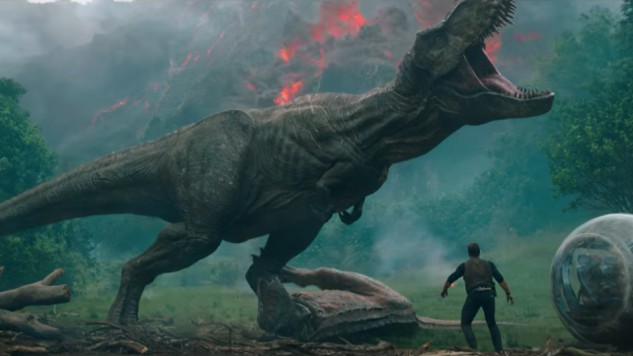
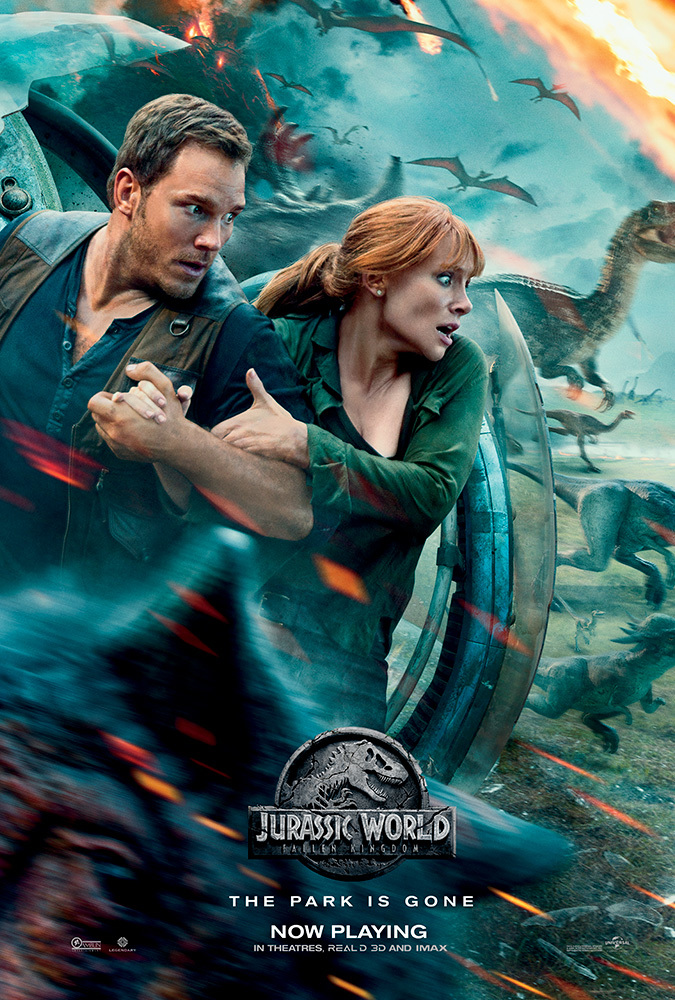
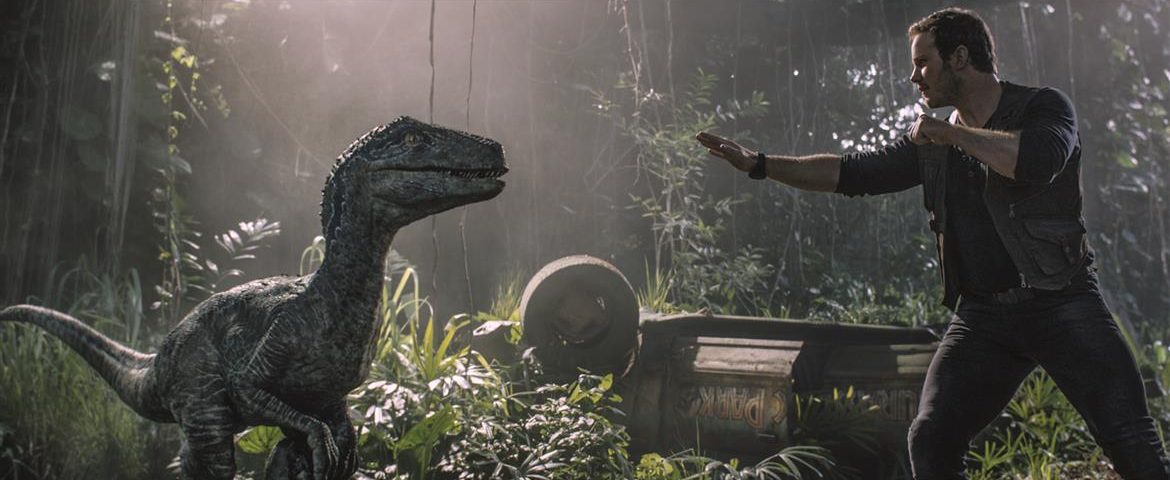
Chris Pratt comes face-to-face with an old friend in Jurassic World: Fallen Kingdom

Director: JA Bayona

Cast: Chris Pratt (Owen Grady), Bryce Dallas Howard (Claire Dearing), Rafe Spall (Eli Mills), Justice Smith (Franklin Webb), Daniella Pineda (Zia Rodriguez), James Cromwell (Sir Benjamin Lockwood), Toby Jones (Gunnar Eversol), Ted Levine (Ken Wheatley), BD Wong (Dr Henry Wu), Isabella Sermon (Maisie Lockwood), Geraldine Chaplin (Iris), Jeff Goldblum (Dr Ian Malcolm)

I don’t care how old I get. I still love those dinosaurs. Doesn’t everyone? And of course what’s better than seeing dinosaurs munch down on them what deserves it? Well you got plenty of that in Jurassic World: Fallen Kingdom, which throws everything it can at the screen and is enjoyable enough, even if it feels a little like one for the money.

It’s been five years since the events of the first film, and the old Jurassic Park is now abandoned and the whole island given over to the control of the dinosaurs. In what you have to say is a pretty damning indictment of InGen’s planning (but then they really planned nothing well on this whole project) turns out the whole island is actually a volcano and, yup, she’s gonna blow. Claire Dearing (Bryce Dallas Howard) is leading a campaign to win government support for saving the dinosaurs, when she is recruited by Eli Mills (Rafe Spall), chair of a charity foundation set up by ageing businessman and park co-founder Benjamin Lockwood (James Cromwell) to lead a ‘Noah’s Ark’ mission to the island. But they need the help of Owen Grady (Chris Pratt) to find Blue the last surviving member of his Velociraptor pack. Arriving on the island howeer, they find not everyone can be trusted.

Jurassic World: Fallen Kingdom plays like a remix of events and moments from each of the earlier films. So you more or less get exactly what you might expect, and the film never really surprises you at all. You have a dangerous mission on the abandoned island (Jurassic Park III), dangerous chases in a lab (Jurassic Park), a bioengineered super dinosaur running riot (Jurassic World), dinosaurs on the main land (The Lost World) and businessmen with ulterior motives (all of them). None of the sly wit and the relatively patient build-up of Jurassic World is really present here: instead we are almost immediately thrown into an island literally exploding, and the film gets bigger and bigger from there (even if it doesn’t get better).

JA Bayona directs this with a breezy professionalism, with a decent sense of pace and some well-constructed tension sequences. There are some decent call-back jokes, not least to Claire’s far more appropriate choice of footwear. The film also gets some decent material out of exploring the back story of Owen’s bond with the velociraptor back, not least his parental bond with lead velociraptor Blue. It makes for some interesting emotional material, but it’s a shame that this never really feels like it plays back into any broader theme in the movie. There is some stuff in there about parental bonds (Lockwood and his granddaughter, Wu’s plans to have Blue “mother” his latest super dinosaur abomination) but it doesn’t go anywhere.

That’s part of the problem of this film: it goes nowhere we haven’t really been before. Even the beats of wonder as people go “oh wow that’s a dinosaur” feel repeated and tired – the first moment even revolves around a brachiosaurus, just as the same moment did in the first film. Bayona does however draw some heart rendering material from the dinosaurs running vainly from death in the volcanic eruption – most notably from a brachiosaurus tragically bellowing in despair as it is engulfed in volcanic gas. 

But it’s all pretty samey. And the plot moves at such a lick that it actually starts to feel a little bit silly. So of course Owen and Claire are persuaded in minutes to go back to the island. Of course they are betrayed in the first few minutes. Of course the island starts to erupt almost as soon as they arrived. Everything happens at this crackerjack pace, that actually starts to make things feel even more cartoonish than a film about a load of man-made dinosaurs feels like to start with.

That’s on the top of the fact that none of the new characters make any real impact – most of them might as well have “Trope” or “Plot Device” written on their faces. The villain stands out a mile away the instant he appears. His main henchman is so nakedly untrustworthy, you marvel Claire and Owen even consider going on the mission with him. The comic relief character is insanely annoying. Countering this, Chris Pratt plays off his charisma extremely well to remain a very magnetic hero, and I think Bryce Dallas Howard gets much more to play with here as a Claire far more plugged in and competent than in the first film.

But the atmosphere of affectionate nostalgia, and delight that powers the first film so well and makes it (for my generation) such a huge joy to watch, with its tongue-in-cheek but also smart and not-overly-done fanboy style, is missing here. This feels more like a film assembled by people who have seen all the films and basically wanted to box tick everything you might expect to see. It’s not really trying to do something different, it’s just treading water.

But despite all that, it’s still quite good fun.  That’s the odd thing. Yes people in it behave with staggering stupidity and the film doesn’t offer any surprises (the dinosaurs have clearly read the script when planning their meals). Yes it’s derivative and unoriginal. But I still rather enjoyed it. It’s lacking in any inspiration or (you feel) the sort of genuine affection Colin Trevorrow brought to it, but you know it’s good enough. Whether good enough is good enough is of course another question.

The Wages of Fear (1953)

Yves Montard and Charles Vanel struggle to collect The Wages of Fear

Director: Henri-Georges Clouzot

Cast: Yves Montard (Mario), Charles Vanel (Jo), Folco Lulli (Luigi), Peter van Eyck (Bimba), Véra Clouzot (Linda), William Tubbs (Bill O’Brien), Darío Moreno (Hernandez), Jo Dest (Smerloff)

You’re stuck in a dead-end town without the money to get out. There’s been an accident at the local mining company that runs the town. They need to get super-duper, explosive material up there to blast the mine and prevent a fire spinning out of control. The only way to do it is in a truck up a bumpy hill road in the blazing sunshine. The company will pay a small fortune to anyone desperate or stupid enough to do it. Would you collect these Wages of Fear?

That’s the conceit in Clouzot’s slow-burn, tension-packed masterpiece. Mario (Yves Montard), along with several others, is stuck in a dead-end desert town in South America unable to afford the air fare to escape. Mario befriends an ageing gangster Jo (Charles Vanel), now also stuck in the town, and the two of them are tempted to drive trucks full of nitroglycerine (which can explode when hot or under the slightest jolt or pressure) to help put out a massive fire at the local American-owned oilfield. Along with Bimba (Peter van Eyck), a German, and Luigi (Folco Lulli), an Italian, they drive trucks up there – but the pressure affects the men in different ways and the dangers of the drive make it highly unlikely that they will all make it.

The Wages of Fear is the classic slow-burn leading to (literally) explosive tension. It’s almost a full hour into the film before the nitroglycerine makes an appearance, but after that the film lays a constant series of dilemmas in the way of our heroes as they try to make their way 300 miles to the oilfield. Never before has the slightest jolt of a car, or the smallest pot hole, been more wracked with danger. Is it any wonder each of the men go a little insane: who could do this and not be a little cracked in the head?

Clouzot directs this with a sublime brilliance. The film is a masterclass in subtle build-up. The opening act of the film establishes the characters of Mario and Jo (and to a lesser extent Bimba and Luigi). We see them in their natural habitat, and learn to understand their characters so thoroughly, that we are genuinely surprised and a little unnerved about how much they change over that long and dangerous 300 miles. Yves Montard’s Mario is a quintessential cool customer – hanging at bars, treating his girlfriend Linda (Vera Clouzot, the director’s wife) with a distant disdain – but he’s also a man easily influenced, prone to hero worship not least to new-guy-in-town Jo, on whom he has a massive man-crush.

Jo, played with a sustained brilliance by Charles Vanel, is the big fish in the small pond, a small-time gangster lording it over his fellow town-dwellers with an unruffled arrogance. Jo has no interest in anyone else and claims Mario’s allegiance as his right – in fact he takes delight in provoking Luigi, Mario’s previous best friend (crush?). He watches with amused detachment when Mario drops Linda to spend time with him. He openly provokes a fight in a bar with Luigi (Clouzot’s first sequence of bubbling tension, brilliantly shot with an unease and unpredictability that could see almost anything happen once a gun emerges) and makes a big show of his past relationship with O’Brien the oil company representative. 

The stage is set for us to see Mario as too laid-back, distracted and indolent to succeed and Jo as a collected, calm and controlling presence made for drama. So it works even better to see these two men change position as the journey continues and fear grabs Jo in a way that seems to surprise even him. Mario, meanwhile, becomes almost ruthlessly focused in his determination to see the mission through to its completion, and increasingly distant from those around him. Because in these life and death situations, there is no time for fear or to mollycoddle the concerned. When a single mistake could kill you all, you can’t afford to waste time on someone too scared to carry on.

Mind you, the opening section of the film brilliantly establishes the desperation these people feel to escape from this dead-end town. A young man, not selected for the driving operation, hangs himself in despair. Bimba states that the slightest horseplay or distraction on his trial run with the truck during the selection process will lead to deadly consequences for the joker – and he’s not fooling around. O’Brien of the oil company makes it clear that the mission is almost certainly suicide – and that the company basically doesn’t care at all about the fates of those selected to go on it: they are completely disposable.

Those selected are both lucky and unlucky – and Clouzot uses a brilliant early sequence to establish the danger of the nitro. O’Brien calmly takes a small sample of it in a shot glass and spills it to destructive effect. As one reviewer said, “you sit waiting for the theatre to explode”. Part of this is the way Clouzot uses the men in the film: they are very much rats on a running track, trapped in a route full of danger, with no release or relaxation from the deadly load they carry. Extraordinary sequences abound in the film’s second half, like a whistle-stop our of tension set-pieces from films.

The dangers of everything are doubled because the characters are driving a portable bomb. Moving over a bumpy road – terrifying. Driving round a tight corner on a rickety wooden platform over a cliff – tense enough normally, even more so now. Encountering a road block with a giant stone – guess we need to use some of this incredibly reactive stuff (a brilliant scene as Bimba tenderly pours a small amount of nitro into a drilled hole and rigs up a fuse). Crawling the truck through an oil slick – sublime. And it works so well because the film makes clear that our heroes have no choice at all, they simply must get the money that will come from finishing the mission.

Clouzot totally understands the personal dynamics that underpin these crisis situations. Bimba and Luigi slowly overcome distance to find a real bond between them. Meanwhile Mario and Jo’s relationship disintegrates, as Jo’s cowardice leads to Mario treating him with increasing disdain, contempt and finally disgust. Mario himself becomes increasingly adamantine, fixed on the mission’s success at the exclusion of all other concerns. 

Clouzot ends events with a supremely ironical touch, almost darkly comic – but then somehow not a surprise in this film where life is cheap and can literally blow up in your face at any moment. Sublimely directed, and a masterclass in tension and subtle character development, it features a brilliant performance from Charles Vanel and constantly rewards viewing. The Wages of Fear are high – but their price can be even higher.

Die Hard with a Vengeance (1995)

Samuel L Jackson and Bruce Willis Die Hard with a Vengeance

Director: John McTiernan

Cast: Bruce Willis (John McClane), Jeremy Irons (Simon Gruber), Samuel L Jackson (Zeus Carver), Graham Greene (Detective Joe Lambert), Colleen Camp (Detective Connie Kowalski), Larry Bryggman (Inspector Walter Cobb), Anthony Peck (Detective Ricky Walsh), Nick Wyman (Mathias Targo), Sam Phillips (Katya)

The Die Hard franchise has spawned multiple imitators, all with the signature format of a hero taking on villains in a confined space: everything from a boat, to a train, to a plane to a bus. Of course the franchise itself had already started to head away from this in Die Hard 2, which takes place across an entire airport. Die Hard with a Vengeance pumps it up even further by setting the action in an entire city. Sure it loses some of the magic claustrophobia of the original, but then it’s got to do something different right? 

John McClane (Bruce Willis) is on suspension, with his marriage in ruins and his life on the skids. No change there then. But he’s dragged out of retirement when terrorist Simon (Jeremy Irons) detonates a bomb in New York and makes it clear he’ll keep doing so until McClane agrees to take on a series of games and challenges across New York – each with deadly penalties. In the first of these, with McClane wearing a very unfortunate sign in the middle of Harlem, he is saved by Zeus (Samuel L Jackson), a shop owner with his own problems with white people, who is forced to join McClane on Simon’s deadly game. After a bomb detonates in Wall Street, McClane starts to wonder: does Simon have an ulterior motive?

Die Hard with a Vengeance is probably most people’s second favourite Die Hard film, and it’s easy to see why. It’s got scale, bangs, loads of action and jokes. It largely takes the best things from the two previous movies and tries to replicate them: so we’ve got the bigger scale and stakes of Die Hard 2, matched with the battle of wits that powered Die Hard. At the same time, it avoids Die Hard 2’s habit of squeezing in as many references and characters from the first film as possible, and tries to make something fresher.

But yet, as I get older, I’m actually getting less keen on it. Guiltily, I think I prefer both entries 2 and 4. I just feel there is something a bit mean about Die Hard 3, something a bit brutal and vicious. Now I am no shrinking violet, but there is a lot (and I mean a lot) of angry swearing in Die Hard 3 – which actually makes it feel rather dated. Everything is “f this” and “f that”. But it’s symptomatic of a particularly 1990s action vibe about the film.Anyway it’s all angry – everyone in the film is angry most of the time. I mean sure they are stressed, but McClane was stressed in the last two films but it didn’t just project itself through fury.

McClane himself, in the first two films, may be hard as nails but he’s also a regular guy doing his best to save lives. But in this film he’s just extremely angry – probably because the character is hungover – and feels less like a police officer interested in preserving life than a vigilante acting above the law. Twice in this movie he executes people (one of whom is trying to surrender (in German)!) with no real warning. The blood and guts count seems a lot higher. The camera lingers on corpses and spurting blood. The character just feels harder to relate to. 

It’s no great surprise that the original intention of the script was for McClane to become actually more and more unhinged by events. It gets lost at the end, when the film settles for a more generic and triumphant ending rather than the unsettling, low-key one originally filmed (which feels like a much better thematic fit for the film you’ve just watched). It would have been interesting to make a film where the hero becomes as damaged and ruthless as the villain – but the studio didn’t want that, so we don’t get it.

McTiernan’s attempt to recapture the vibe of the first Die Hard film also doesn’t quite click. Simon is an odd character, who utilises brute force one minute and then inexplicably spares lives the next. His eventual heist on Wall Street is partly blood-free, partly a brutal slaughter of any resistance. McTiernan is obviously aiming for a battle of wits, but the original concept of Simon setting McClane a series of children’s riddles to solve gets lost half way through the film. Like Die Hard there is an attempt to get a sense of gleeful enjoyment from Simon’s actions, but Jeremy Iron’s character (despite his best efforts) isn’t devilishly charming enough for this to work.

But then things in the film do work. The chemistry between Willis and Jackson is very good, and Jackson really nails a character who is part cocksure, angry radical and half squeamishly out of his depth. The film’s at its most involving when it gets wrapped up in cat-and-mouse games. The first half of the film, which focuses on this, is by far the most interesting and offers the best twist on the action – from riddles about the man going to St Ives, to having to cross New York in a fraction of the time needed, or trying to defuse a bomb by putting four gallons into a five-gallon jug. The more these riddles die away in the second half and the film goes for more generic shooting and killing, the less interesting it becomes.

Not that this sort of stuff isn’t good fun. Although McClane seems more bad tempered and ruthless – and the baddies are mostly faceless goons rather than people – it’s still fun to see him take on the odds so successfully, and to see him being underestimated by the villains (the character is always smarter than he appears). McTiernan, with a huge budget, throws everything at the screen from bombs to fist fights to car chases. He doesn’t manage to create the magic sense of heroism that the first film has in such abundance, or that sense of one man doing what he must to save others, but the film still broadly works.

There is something very 1990s about this film, from its swearing to its violence to its general atmosphere of gritty comic book thrills. It is fun to hear jokes about Hillary Clinton (jokingly named as the next President – oops) and Donald Trump. But it’s that lack of moral purpose to McClane that proves the biggest problem – he’s motivated less by saving lives than by revenge. It’s a crueller film, sharper and meaner, which means for all the enjoyment it can bring, I can’t love it like I do the first film. It takes McClane to dark places, and presents a bad tempered hero it would be hard to like without the first two films. He’s already starting to feel less like a regular put-upon guy and more like an angry maverick dealer in violence. There is less to build on in this film, and perhaps that’s why we had to wait a while until nostalgia made John McClane a character we wanted to see again.

Black Panther (2018)

Chadwick Boseman is the legendary Black Panther in Marvel’s solid comic book outing

Director: Ryan Coogler

Cast: Chadwick Boseman (T’Challa/Black Panther), Michael B. Jordan (N’Jadaka/Erik Kilmonger Stevens), Lupita Nyong’o (Nakia), Danai Gurira (Okoye), Martin Freeman (Everett K Ross), Daniel Kaluuya (W’Kabi), Letitia Wright (Shuri), Winston Duke (M’Baku), Angela Bassett (Ramonda), Forest Whitaker (Zuri), Andy Serkis (Ulysses Klaue), John Kani (T’Chaka)

Marvel’s comic book world is now so stuffed with characters, worlds and dimensions that it is remarkable how many of its heroes are white and male. Black Panther does something completely different, giving us a set of African heroes and placing the common framework of a Marvel film within a very proud, and distinct, African heritage. So you can pretty much guarantee you ain’t seen a comic book film quite like this one.

After the death of his father (in Captain America: Civil War), T’Challa (Chadwick Boseman) becomes king of the secretive nation of Wakanda. Camouflaging itself as a poor and unadvanced nation in order to avoid interaction with the rest of the world, Wakanda has in fact for centuries been mining a remarkable metal, vibranium, that has helped the nation become hugely technologically advanced. Its king also bears the responsibility of being the “Black Panther”, ingesting a vibranium-infused herb to gain superhuman speed and strength. However, others have their eye on the throne, not least Erik “Kilmonger” Stevens (Michael B Jordan), who wants to turn Wakanda into a force that could protect the black people of the world from their historical oppressors and avenge centuries of slavery.

Black Panther never fails to be entertaining. The film is shot with a genuinely vibrant excitement, and I love the way it proudly embraces a comic book twist on African tribal heritage. In fact the film’s depiction of an African nation which is secretly the most powerful and advanced nation in the world is really quite an impressive political statement.

Ryan Coogler directs the film with flashy brilliance and comes up with a few ways of presenting what are (essentially) action sequences we’ve seen many times before in unique new ways. The stand-out is an early action scene in a Korean bar, filmed to appear as an immersive single take around a large set, the camera dipping and zooming from character to character. Coogler also brings a fair amount of visual wit to the fights while not losing the emotional and character depth the story is aiming for.

The film also has some fine performances, with Boseman dripping dignity, nobility and decency as T’Challa. Regular Coogler collaborator Michael B. Jordan gives a great contrast as bitter LA slums kid turned misguided would-be dictator Kilmonger. Danai Gurira stands out as proud general Okoye, torn between duty and personal loyalties. Hell even Forest Whitaker – clearly loving every moment of this OTT Marvel world – gets some weight and dignity out of his typical grandstanding style.

It’s another mark for the film that the world of Wakanda is so effectively gender neutral. Kings of Wakanda have a Praetorian Guard of female warriors, most of the leading voices on its council are women, and its technical genius is T’Challa’s sister Shuri (played by Letitia Wright in a charming, star-making performance). Sure it doesn’t feel like the role of Black Panther himself is up for grabs for anyone lacking a penis, but this is a world where women are equal, if not leading, partners in the action.

The film also addresses issues of post-colonial struggle, not least attitudes towards slavery and oppression handed out to Africa over centuries. Kilmonger’s fiendish plot is, in many ways, actually quite sympathetic – he wants to use Wakanda’s resources to protect those of African descent across the world. Jordan gets some good moments from his speeches laced with anger at the historical treatment of Afro-Caribbeans and, to be honest, it’s hard not to see his point. So hard in fact that the film has to drop hints that Kilmonger is a potential tyrant to stop him from seeing too reasonable. 

This is where the film’s plot starts to get slightly hazy. The character arc of T’Challa himself is pretty unclear. Traditionally in these films, the character must embrace his destiny. Problem is, a lot of this arc was covered in Captain America: Civil War. The writers are unable to give him a truly compelling replacement arc here. T’Challa drops a few references early on to not feeling ready – but basically swiftly embraces it. He never outlines a real alternative agenda to Kilmonger – there are characters in the film who argue “Wakanda doesn’t get involved in the world”, but he isn’t one of them, so there is no journey towards engagement with the outside world (on far more humanitarian terms than Kilmonger advocates). 

Frankly, Okoye is given a better character arc than T’Challa, beginning by advocating “we must serve the throne and respect our traditions even if we doubt them”, and learning later to follow her own conscience. T’Challa, in contrast, is no discernibly different at the end of the film to how he was at the beginning. 

T’Challa’s journey is basically getting something, losing it and then getting it back. Strip away Boseman’s performance and the character is basically pretty dull. He partly suffers, as does the rest of the film, from an overstuffed cast spreading the focus of the film far too thinly and leading to character arcs and interconnections feeling rushed. Kilmonger’s connection with T’Challa is forced – they only know each other for at best two days! – and there is a superfluity of villains. There’s not only decoy antagonist Klaue (and his gang) hanging about for a good chunk of the film, but also Daniel Kaluuya’s ill-defined best friend turned opponent, W’Kabi. Combining Kilmonger and W’Kabi would have helped no end, allowing two different, divergent agendas to develop and cause a relationship rift between two friends (Kaluuya is instead totally wasted in a nothing part, whose allegiances change depending on the demands of the plot). 

The good guys fare no better: Lupita Nyong’o is completely wasted as a love interest who feels stuffed into the movie because, y’know, these films gotta have one. She does nothing in the film that could not be easily done by another character, and nearly all of T’Challa’s emotional scenes – and personal motivation – are tied into his sister rather than this are-they-aren’t-they-a-couple. 

It’s all part of the traditionalism that underlies the film. Its structure is familiar and, like many Marvel origin films, the villain is a dark reflection of the hero with similar skills. The final battle is traditional and a little dull (and feels very similar to Avengers: Infinity War). The film avoids showing T’Challa torn between isolation and intervention – he in fact advocates both in the first 15 minutes – and doesn’t really make much of the prospect of a hero changing his mind or developing his views to embrace a wider world.

But it stands out because it is different. And it deserves no end of praise for making such a film so full of love and respect for its heritage. It walks a very difficult line between enjoying the bright exotic colours while not making the film patronising or overly “other-worldly”. How many other Hollywood films have, at best, two white characters (well played in both cases by Martin Freeman and Andy Serkis)? How many others would dare have the villain make a defiant, sizzling and emotionally inspirational speech about racial oppression and the hypocrisy of the West (though the film goes easy on America, with the speech taking place at the hilarious “Museum of Great Britain”. Where is this place – please get my tickets!).

That it slightly dodges and fudges the implication of these themes in its plotting and the conception of its hero – who is basically a dull character played by a charismatic actor – doesn’t reduce its pleasure at doing something different. I’m not sure it will stand up to repeated viewings – look past the setting and it does little new – but it’s a worthy entrance in a crowded universe.

Collateral (2004)

Tom Cruise and Jamie Foxx take a long taxi ride in Michael Mann’s thriller Collateral

Director: Michael Mann

Cast: Tom Cruise (Vincent), Jamie Foxx (Max Durocher), Jada Pinkett Smith (Annie Farrell), Mark Ruffalo (Detective Ray Fanning), Peter Berg (Detective Richard Weidner), Bruce McGill (Frank Pedrosa), Irma P. Hall (Ida Durocher), Barry Shabaka Henley (Daniel Baker), Javier Bardem (Felix Reyes-Torrena)

Tom Cruise enjoys throwing us film-goers curveballs every now and again. In Collateral he pops up as a sociopathic hitman, grey of hair and suit (like a buzzcut, rampaging John Major) leaving bodies strewn about the place. It’s great to see him in Michael Mann’s lean, very enjoyable action thriller, looking as sleek and soulless as the rest of LA.

Cruise’s Vincent is a hitman in LA to knock off a list of targets. But how will he get from hit to hit? Why by hiring a taxi driver for a night: risk-averse dreamer Max (Jamie Foxx) who has been working “temporarily” as a taxi driver while he builds plans for his dream limo business for a mere 12 years. Max is thrilled to have a big spender in his car – until something goes wrong on hit #1 and a body lands on his cab. Max no has no choice but to assist Vincent – although Vincent ends up becoming more attached to Max than he might ever have imagined.

Mann shot his film on a high-definition video and it gives a very unique look at LA, really capturing the hazy yellows and cool blues of the city and giving everything in the picture a slightly grainier, starker look. But that would count for nothing if the story of the film wasn’t pretty good, and Collateral is a very effective action thriller, which doesn’t reimagine the genre but offers more than enough freshness to enliven the familiar elements it’s made up from. 

Its main assets (along with Mann’s cool, detached and pin-point sharp direction) are the performances of its two leads. Cruise is just about bang-on as a professional hitman, devoid of empathy, who finds surprising possibilities of friendship open in front of him. He’s a fascinating character, like someone who has spent so long studying people that he can just about replicate human reactions, without understanding the humanity behind them. Cruise’s obsessive preparation for his roles also help makes him flawlessly convincing as this lethal ubermensh.

Foxx however is just as good as a basically decent, friendly, low-key guy who is kidding himself that he is not drifting through life. It’s Max’s story we follow throughout the film – and it’s his sense of personal morality, his strict belief in right and wrong, that gives the film its dramatic force. Foxx also avoids undermining or laughing at Max, who is basically a man so buttoned up and cautious that (without a major push) he’ll clearly die of old age in that cab. 

These two characters thrown together have a curious chemistry – a sort of riff on the casual bonds that can develop between driver and passenger as they talk about their lives, views and interests. It’s not a friendship – certainly not in Max’s case – but it’s a strange sort of bond nevertheless. Vincent, you feel, hasn’t talked to many people like this – and while he’s still willing to threaten Max or put him at great risk, he still develops a strange protectiveness about him. It’s this quirky and different relationship that powers the film and finally makes it unique. This odd couple don’t overcome boundaries to become bosom friends, but they also don’t come together as fierce rivals. Instead they sort of work out a co-existence in that cab.

It’s the most interesting thing about a film that otherwise – to be honest – deals a pretty familiar deck with confidence. Sometimes the film plays its cards so well you overlook them – the first time I watched it, I was semi-surprised at the reveal of the final victim, but really it should be pretty obvious to anyone who has seen a movie before. The plot is full of moments like this that are played with a freshness – or with a cunning – that stops them from feeling familiar.

But that’s really what it is. The journey around LA from hit-to-hit is a familiar sounding idea. The encounters between Vincent and the targets are pretty familiar – the exception being a fascinating, and hard to read, encounter with Barry Shabaka Henley’s jazz player turned informant, which sizzles with tension – and the action scenes, while well staged, are the sort of shoot-outs we’ve seen before. Mann shoots them with a vibrant excitement, but it’s mostly B-movie stuff presented freshly.

What it comes down to is that relationship between those two characters, and the skill of director and actor in drawing out subtleties in performance. (Don’t listen by the way to the director’s commentary, which ruthlessly strips these subtleties away as Mann bangs on about heavy-handed, predictable backstories which thankfully don’t make it into the movie, but make it sound dumber than it is). Cruise and Foxx are both fantastic, Mann’s direction of this sort of icy-cold, impersonal, dangerous city is impeccable and the film itself doesn’t fail to entertain.

The Count of Monte Cristo (2002)

Guy Pearce and Jim Caviezel as friends turned foes in The Count of Monte Cristo

Director: Kevin Reynolds

Cast: Jim Caviezel (Edmond Dantès), Guy Pearce (Fernand Mondego), Dagmara Dominczyk (Mercedès Mondego), Luis Guzmán (Jacopo), Richard Harris (Abbè Faria), James Frain (JF Villefort), Michael Wincott (Armand Dorleac), Henry Cavill (Albert Mondego), Albie Woodington (Danglers), JB Blanc (Luigi Vampa), Alex Norton (Napoleon Bonaparte), Patrick Godfrey (Morrell), Freddie Jones (Colonel Villefort), Helen McCrory (Valentina Villefort)

Alexander Dumas’ novels are beasts. The Count of Monte Cristo is a real mountain of a book, a sprawling story of adventure and revenge. Kevin Reynolds’ film had a near impossible task to turn this into a film – most have gone down the route of adapting the book into a TV series – but triumphantly succeeds by locating in it a very clear, very filmic narrative.

In 1815, Edmond Dantès (Jim Caviezel) and Fernand Mondego (Guy Pearce) are young men serving on a merchant ship, who wash up on Elba where Napoleon (Alex Norton) is in exile. Tricked into taking a letter for Napoleon back to France, Dantès is betrayed by Mondego, who desires Dantès’ fiancée Mercedès (Dagmara Dominczyk) and resents his own envy for the far poorer Dantès. The corrupt magistrate Villefort (James Frain) colludes to protect his own family’s secrets, and Dantès is locked up in the dreaded Chateau d’If for 15 years, during which time he meets fellow prisoner Abbè Faria (Richard Harris) who teaches him politics, mathematics, philosophy and sword-fighting. Faria shares with Dantès the secret of the vast treasure he hid on the island of Monte Cristo – treasure Dantès dreams of using for his revenge.

This is actually a fairly nifty adaptation of a huge novel into something cinematic. Almost every change made to the original book ends up working extremely well – and adds an immediately understandable dramatic tension to it. I’d actually go so far as to say this might be a masterpiece of cinematic adaptation. The decision to make Dantès and Mondego childhood friends and rivals instantly adds a real frisson of betrayal to Mondego’s actions, as well as adding a very personal element to the revenge portion of the narrative. The simplification of the other “betrayers” also works extremely well, while the careful links throughout back to Dantès’ upbringing never let us forget the roots he has come from.

The script is also packed full of fun interjections. The idea of the chess piece, which Dantès and Mondego pass from one to the other, becomes laced with symbolism, while the changing of Jacopo into a sort of Brooklyn pirate works extremely well (Guizmán gets some of the best lines, but also gets to show a touching loyalty and concern for Dantès). On top of which, the pushing to the fore of the swashbuckling sword-fighting excitement sets us up for a cracking final sword fight between our two friends-turned-enemies. 

Reynolds also shoots the film extremely well with a host of interesting angles and framing devices showing how Dantès position and confidence change throughout the story. The film’s climactic sword fight is brilliantly staged and the film charges forward with a real momentum (there are of course no sword fights in the book!). 

Particularly well handled through is the sequence that is (in many ways) most faithful to the original book – Dantès’ time in the Chateau d’If. What I love in this sequence is that it’s a perfect combination of stuff from the book, Karate Kid style training, and some good old-fashioned warm character building. It’s also got two terrific performances from Michael Wincott as an almost comically dry sadistic guard and Richard Harris as the imprisoned Abbè Faria, the quintessential wise-old-mentor (the relationship between Faria and Dantès is beautifully judged).

The film perfectly balances its sense of fun and adventure with a very real-feeling story of a man who has to learn there is more to life than revenge. The plot that Dantès puts together probably isn’t the most complex piece of chicanery you are ever going to see, but it doesn’t really matter because the focus is the fun of the journey, and the thrill of someone being a few steps ahead of everyone else. 

Jim Caviezel is very good as Dantès, just the right blend of forthright moral strength and simmering resentment (few actors do stoic suffering better than Cavizel). There is a really nice questioning throughout the film of Dantès’ motives and whether revenge is really worth the candle, which adds a lovely depth to Cavizel’s performance.

But the film probably gets waltzed off by Guy Peace (who turned down the role of Dantès because he thought Mondego was more fun) who gets to campily simmer, sulk and fume at the edge of every scene. Mondego is brilliantly reinvented as a fearsomely proud, selfish, hedonistic aristocrat with a major inferiority complex, who takes everything from Dantès and still isn’t happy at the end of it. But Pearce has a whale of a time with his cruelty and resentment, and it’s a great reminder of how much he is (as an actor) in love with make-up, Mondego being scruffy, slightly pock-marked and increasingly bad of tooth.

He’s a villain you can scowl at and he’s a perfect counter-point for a hero whose emotional distance is designed to make him at times a difficult man to invest in. The film’s expansion of their personal relationship in its early section works really well, setting up the innate inequalities between them (wealth on one side, bravery and decency on the other) during the film’s cheeky and amusing opening sequence on Elba with Napoleon.

The Count of Monte Cristo is an extremely well structured, hugely entertaining adventure film. It’s very much like a 1930s swashbuckler, and every scene has some delightful moment that you’ll love. There are some very good performances in here as well, working with a very good conversion of this doorstop of a book into a film. Skilfully directed, interestingly shot, well acted – it’s a gem that’s far too overlooked.