Category: Action film

Spy (2015)


Melissa McCarthy takes on the bad guys in actually rather funny comedy Spy

Director: Paul Feig

Cast: Melissa McCarthy (Susan Cooper), Jason Statham (Rick Ford), Rose Byrne (Rayna Boyanov), Jude Law (Bradley Fine), Miranda Hart (Nancy B. Artingstall), Bobby Cannavale (Sergio De Luca), Allison Janney (Elaine Crocker), Peter Serafinowicz (Aldo), Morena Baccarin (Karen Walker)

Comedy is an unusual thing to write about, I often find. Unlike any other film genre, you know immediately whether it works or not, ‘cos if you ain’t laughing it probably ain’t working. Well the good thing is that Spy does work, as I certainly laughed. It’s actually a fairly well structured comedy, a smart parody of Bondish action films matched with the foul-mouthed crudity you get in the films from the Feig/Apatow stable.

Susan Cooper (Melissa McCarthy) is the cheery deskbound analyst who provides real-time data and intel to would-be 007 Bradley Fine (Jude Law). But after disaster strikes, Susan volunteers to go into the field to find out as much as she can about Rayna Boyanov (Rose Byrne), the daughter of a rogue arms dealer who is taking over the family business. Despite the concerns of her boss – and super-macho fellow agent Rick Ford (Jason Statham) – Susan proves surprisingly adept at espionage, disguise and above all action.

What Spy does well is that it feels like it’s been written and shot with a bit of discipline, rather than the over-indulged and forced “improvisation” that so often blights these sort of comedies. It feels more controlled, and therefore easier to engage with – we are watching a group of good actors tell a story, rather than a gang of comedians showing off. I think this is helped by the fact that most of the cast are not natural comedians, but instead actors delivering gags with skill. Feig also shoots the film with zip and punch – most scenes don’t drag on indulging forced banter.

Melissa McCarthy is very  good as the rather sweet lead, torn between the role she has given herself in life, and her own desire to use her capabilities. Her character delivers many of the comic moments of the film, but she’s not the joke – instead she is shown to be brilliantly proficient both as the “eyes and ears” of Jude Law’s suave Bond-spoof role, and also as the woman in the field. McCarthy’s comic timing is matched with an affection for her character that makes her likeable and easy to empathise with. What she creates here is a genuine character who grows and develops as the film progresses.

The film’s real weapon is the strong cast of proper actors giving expert comic turns. Rose Byrne is hilarious as an imperiously bitchy, foul-mouthed villain who makes every line into a thinly veiled (and often not veiled at all) insult. Jason Statham gives probably a career-best performance as a ludicrously macho secret agent bragging incessantly about a string of unlikely sounding exploits, while being barely competent in the field. Who knew The Transporter could do such a neat line in self-parody? Allison Janney’s foul-mouthed, impatient CIA boss and Miranda Hart’s ditzy surveillance expert offer similarly rich comic roles. These actors know that the trick of real comedy is to deliver well prepared punchlines with controlled efficiency rather than crummy flights of fancy.

Spy also works because it has an actual story, and mixes this effectively with action and hi-jinks that feel like solid spoofs of Bondish films but are also genuinely entertaining in themselves. It’s a plot that stands (more or less) on its own, rather than feeling like a shoddy framework to hang rude jokes on. As such, the rude jokes complement by the plot (rather than crushing it) and most land with a genuine chuckle. It’s also lovely to have a film that places female characters so front-and-centre, not as props or as “sexy fighting women” (I’m looking at you Pride and Prejudice and Zombies) but as confident individuals who know who they are and are not defined by their relationship to a man. McCarthy is terrific, as are the rest of the cast. This is a film you will definitely enjoy.
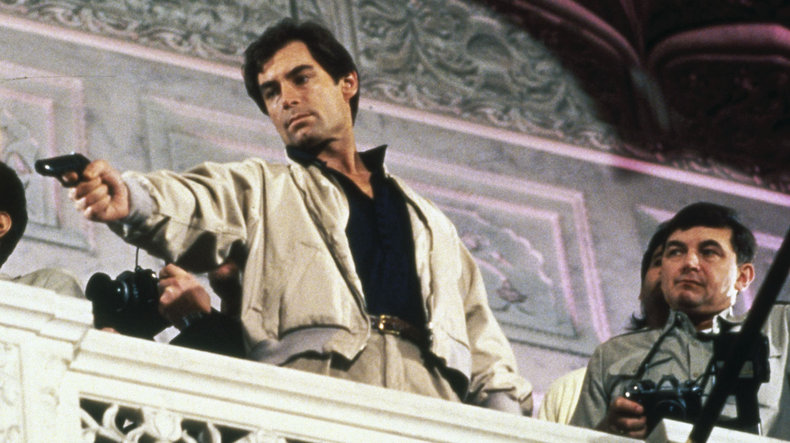
The Living Daylights (1987)


Timothy Dalton’s meaner Bond takes aim in top Bond Film The Living Daylights

Director: John Glen

Cast: Timothy Dalton (James Bond), Maryam D’Abo (Kara Milovy), Jeroen Krabbé (General Georgi Koskov), Joe Don Baker (Brad Whitaker), John Rhys-Davies (General Leonid Pushkin), Art Malik (Kamran Shah), Andreas Wisniewski (Necros), Thomas Wheatley (Saunders), Robert Brown (M), Demons Llewellyn (Q), Geoffrey Keen (Minister of Defence), Caroline Bliss (Miss Moneypenny), John Terry (Felix Leiter), Walter Gotell (General Gogol)

After A View to a Kill,even the Bond producers realised something had to change. Roger Moore at 60, was definitely too long in the tooth to still be the debonair super spy. The producers were quick to land their first choice – TV’s Remington Steele star, Pierce Brosnan. But a last-minute renewal of the cancelled show meant Brosnan was out – and the producers turned to one of the first choices when Connery left: Timothy Dalton. Dalton had considered himself too young in 1969, but the stars aligned now. So we had a new Bond – a younger, sleeker, meaner model. To quote that other franchise with a revolving lead: Change my dear, and it seems not a moment too soon…

James Bond (Timothy Dalton) is tasked to protect a defecting Russian general, Georgi Koskov (Jeroen Krabbé), but during the mission he refuses to take the life of Kara Milovy (Maryam D’Abo), a cello player from the Viennese orchestra turned sniper, whom he believes to be nothing but an amateur. When Koskov is snatched by mysterious forces, Bond must trace his only link to Koskov: Kara Milovy, who he quickly discovers is Koskov’s lover. Soon he questions the legitimacy of the defection – and the links to sinister American arms dealer Brad Whittaker (Joe Don Baker).

First and foremost, this is Timothy Dalton’s film. His Bond was something so radically different from Moore that, to a certain extent, the public wasn’t ready for it. Dalton went right back to Fleming’s books, and brought to the screen for the first time a Bond who actually feels like the character of the novel: world-weary, cynical, reluctant (even bitter), a man on the edge of anger with a darkness behind the charm. When Bond is threatened by being reported to M by his colleague Saunders (an excellent Thomas Wheatley), he snaps in response: “If he fires me, I’ll thank him for it”. Can anyone imagine Moore or Connery saying that?

He’s also a man capable of genuine emotion and loyalty, who forms friendships and relationships throughout the film that we haven’t really seen before. Sure some of the comic elements feel shaped more for Moore’s lips than Dalton’s, but Dalton’s Bond made everything feel more grounded than the overblown later Moore movies. To put it bluntly, Dalton makes Bond feel like a human being, not just a super-hero. There’s a reason he’s been called the best actor to take on the role. He treats it like an acting job. He might be the best Bond.

This works particularly interestingly as this film is a sort of half-way-house between a Moore film and an early Connery film. The tone of the film is kept relatively light (a key chain that works via a wolf whistle! Skiing down a slope on a cello case!), but the villains of the piece are relatively low key (they want to make a killing on drug deals) and there is a nice mix between some exciting (but not over the top) stunts and an almost Hitchcockian feel.

This Hitchcock feel is not least in the (rather sweet) romance between Bond and Kara, with its Notorious feel of a man manipulating a woman while genuinely growing to care for her. Setting most of these scenes in a romantically shot Vienna also helps enormously, with its noirish Third Man feel. Unlike many other Bonds, the relationship here between Bond and the girl feels like a genuine romance. Kara may be a bit of a damsel in distress, but she feels like a warm-hearted, decent person wrapped up in events beyond her experience. And although audiences at the time, accustomed to Moore and Connery’s unending conquests, were critical of the reduction in Bond’s sexual adventures, making him less promiscuous results in Bond feeling like much more of a jaded romantic than a casual philanderer, and makes his relationship with Kara much more resonant.

The whole film feels much more grounded in reality, without losing a sense of fun. The film does its action sequences extraordinarily well. The car chase through snowy Austria is brilliantly done (the car gets a series of stand out gadgets), with Dalton delivering each new revelation of the car with a winning dryness. This sequence develops into the brilliantly funny cello-case skiing sequence (“We’ve nothing to declare!”/”Except a cello!”). Again, the sequence works so well because it is skilfully counterbalanced with the almost Le Carre-ish piece of spycraft Bond uses first to get Kara out from the under noses of her KGB watchers.

Interestingly, one of its most striking sequences doesn’t even involve Bond: that plaudit has to go to the thrilling one-man assault by unstoppable ubermensch Necros on the MI6 house where Koskov is being held. A particular showcase here is the brutal kitchen fight between Necros and an MI6 officer, surely the greatest fight in the series not to feature Bond (and all the more exciting as you don’t know what could happen to these characters), plus it’s great to see someone in MI6 other than Bond being able to handle themselves.

The final major sequence of the film, with Necros and Bond fighting while clinging for their lives to a net, dangling out the back of a plane, is a truly striking action set-piece, a real vertigo inducing stand-out. If you can put to one side in your head the fact that Bond’s key allies during the whole Afghanistan sequence of this film are basically Al-Qaida in an earlier form (with Art Malik’s charming Kamran Shah basically exactly the sort of man who went on to become Osama Bin-Laden), and you can enjoy the sequence for its terrific excitement.

The weaknesses of the film are in its structure. Both villains (and their plot) are underwhelming. Koskov is something very different – charming, feckless, manipulative (he’s quite well played by Krabbé) – but hardly much of a threat, and he drops out of the film for a chunk in the middle. Joe Don Baker’s Whittaker is too distant from the central plot for him to earn his role as Bond’s final antagonist. It feels like the writers have split one character into two – a Koskov who hid Whittaker’s ruthlessness and bullying under a charming, foolish veneer might have really worked. Their plan is grounded in a reassuring reality, but it never feels like that big a deal. Its complexity is also probably a little too great for the narrow focus the film gives it. The final Whittaker-Bond confrontation is underwhelming considering what we’ve seen before.

But that is because this is Dalton’s film – or, if you like, a Bond film focused on Bond. From the stirring introduction on a training mission parachuting into Gibraltar, Dalton seizes the film by the scruff of the neck. Unlike nearly any other Bond film before now, this feels like one about the type of man Bond is – the killer with a well-hidden heart, the cynic who believes in his cause. He has great chemistry with his fellow actors – not least John Rhys-Davies, excellent as General Pushkin – and above all romantic chemistry with Maryam d’Abo.

The humour allows us to warm to Bond, while the darkness Dalton brings to the role helps us invest emotionally in his more tortured interpretation. All else aside, TLD is damn good fun with some excellent action sequences and a terrific score. It’s very much in the upper echelon of Bond films.

First Knight (1995)


Casting choices only Hollywood producers could make #473: Richard Gere IS Lancelot du Lac

Director: Jerry Zucker

Cast: Sean Connery (King Arthur), Richard Gere (Lancelot), Julia Ormond (Guinevere), Ben Cross (Prince Malagant), John Gielgud (oswald), Liam Cunningham (Sir Agravaine), Christopher Villiers (Sir Kay), Valentine Pelka (Sir Patrise), Colin McCormack (Sir Mador), Alexis Denisof (Sir Gaheris), Ralph Ineson (Ralf), Stuart Bunce (Peter)

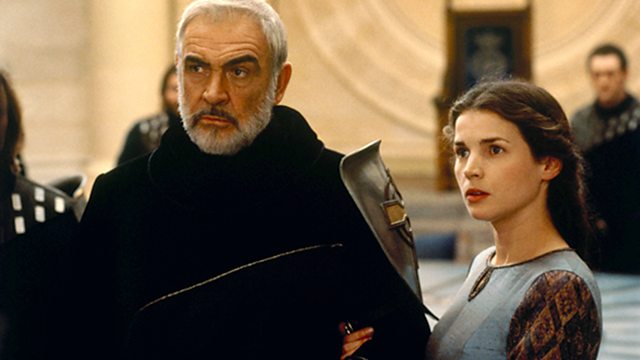
First Knight continues a proud tradition of Hollywood adaptations of British legends, with full-blown action and romance mixed with an anachronistic modern-ish vibe which clashes completely with the design of the rest of the film. Think anything from Ivanhoe to Robin Hood: Prince of Thieves. At heart these films are ridiculous, but to be a success they need to embrace this and create something with a bit of heart. First Knight is almost wholly absurd from start to finish – but it’s still remarkably good fun. Even when you laugh at the bizarre sequences that pepper the film, it’s still somehow entertaining. It doesn’t take itself seriously – so I feel people who lambast it are missing the point.

Anyway, it retreads the story of King Arthur (Sean Connery) with a modern mix. Here Arthur is an old man, marrying Guinevere (Julia Ormond) to seal a truce between Camelot and Guinevere’s home of Lyonesse. While being escorted to Camelot, an attempt is made by the villainous Malagant (Ben Cross) to kidnap Guinevere, but she is saved by charismatic chancer and expert swordsman Lancelot (Richard Gere). Returning to Camelot, she marries Arthur while Lancelot finds himself inducted into the Knights of Camelot. But their adventure together has led to a deep romantic bond between Lancelot and Guinevere – one that threatens to tear apart the harmony of Camelot.

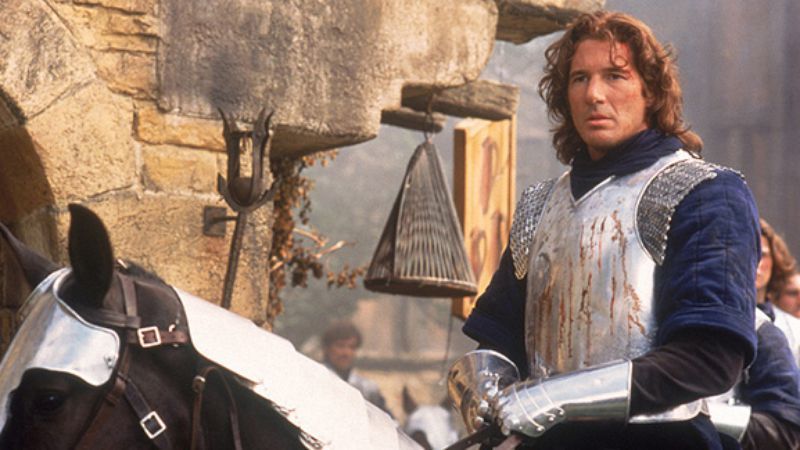
Something stupid or horrendously anachronistic happens in every scene of First Knight. Many of these moments are thanks to Richard Gere. Gere is at his most smirky here as Lancelot, an American Gigolo in King Arthur’s Court. There are few more modern actors than Gere – so seeing him in armour and cod-medieval garb jumps straight out as completely incongruous. Rather like Costner in Robin Hood, he makes no concessions to period whatsoever, and behaves more or less as he does in Pretty Woman. Every event in the film is met with his trademarked smirk-cum-grin and a twinkle in his eye. And while he clearly spent a lot of time on his sword work for this film, you literally never forget you are watching Julia Robert’s sugar daddy pretend to be a knight.

But then why should be really have made an effort to adjust his manner, accent or style for this film? After all this is a film where Lancelot takes part in a Total Wipeout competition – and on the basis of his performance in it is basically offered a spot at the round table. As a travelling entertainer, Lancelot woos the crowd with the sort of patter not out of place on a New York street corner. Later, the baddies hook up a boat with a pulley system that turns it into a super-fast speedboat. The baddies are all armed with pistol sized cross bows. It’s the sort of film where the lead villain rides into Camelot and shouts “Nobody move! Or Arthur DIES!”. Anyone watching this expecting a faithful exploration of Thomas Mallory seriously needs to change the channel.

So instead embrace the film for what it is. And enjoy the production values! The music score is swellingly impressive (now hugely familiar to any fans of Sky’s Ryder Cup coverage). The Camelot location looks brilliant. The costumes are wonderful – even if the knight’s armour (basically little more than a shield on the shoulder) looks horrendously inefficient. There is a very effective night-time battle excitingly filmed. The photography looks luscious. It’s shot with an old school, chocolate box, romance that makes everything look like a grand renaissance painting. The final battle between Malagrant and Lancelot is terrific.

I’ve also got to say that it offers an actually fairly interesting role to Sean Connery as Arthur. Considering that four years after this film he made Entrapment, a film in which he boffed Catherine Zeta-Jones, in a way it’s fairly daring for him to make a film that puts so much prominence on his age making him an unsuitable lover for Guinevere. His age is prominent in every scene (especially when counter poised with the modern vibrance of Gere). Half the time he’s with Guinevere he reminds her that he knew her as a child (yuck). He takes no part in any of the action – it’s Lancelot who (twice) rescue Guinevere, while Arthur commands from the rear. His relationship with Guinevere is almost devoid of sex and passion (they share only one remotely passionate snog). He even plays the poor cuckold, the man unable to excite his wife. Has Connery ever played such an unflattering part?


Julia Ormond – an actress who achieved a certain run of prominent roles in the 1990s – plays Guinevere. Despite the fact she seems to frequently find herself in distress, Ormond does manage to make Guinevere not feel like a damsel in distress. She’s proactive, she saves others, she’s defiant and (by and large) she knows what she wants and tries to get it. She also is an effective leader of her people. Ormond is also a fine, generous actress – she manages to convey a lot of chemistry with both Gere and Connery, two actors very different in style.

The film remains charged through with silliness. Ben Cross’ snarling villain has big speeches about how he wishes to escape from “the tyranny of Arthur’s Law”. The LAW is a major theme throughout the film – the characters bang on about it with an earnest insistence. Arthur falls back on it to make sense of his life. Lancelot struggles to understand and embrace the values it brings. Guinevere is determined to match law and duty together. Sure there are some silly grandstanding speeches about it – and the film runs with gleeful pride of Camelot as some sort of Socialist Utopia – but I suppose there’s a kernel of an idea at the centre here about justice and its importance in the world. It might mean we get a scene where Camelot is left totally undefended while everyone gathers for an open trial of Guinevere (guess what happens!), but at least it’s got an idea.

Of course that doesn’t get in the way of the silliness, the high blown acting, the silly events and the overblown dialogue. The heroes are all clean cut, and chiselled of jaw with perfect teeth, the villains all dressed in black, forever scowling and rugged of shave. It never for one minute feels remotely like it is happening in a truly medieval world. Richard Gere is, frankly, completely wrong as a medieval knight. But he’s strangely completely right for a film that is a chocolate box entertainment, a soufflé of a romance with swords and passion, that provides a few stirring moments and an interestingly different part for Connery. Gere is a perfect measure for the film – it’s a silly entertainment for those with an affection for Mills and Boon not Henry V. And there’s nothing wrong with that – it knows what it is, and knows what it wants to be taken as. Enjoy it. After all Camelot Lives!

The World is Not Enough (1999)


Pierce Brosnan falls into Sophie Marceau’s clutches. Time for one last screw.

Director: Michael Apted

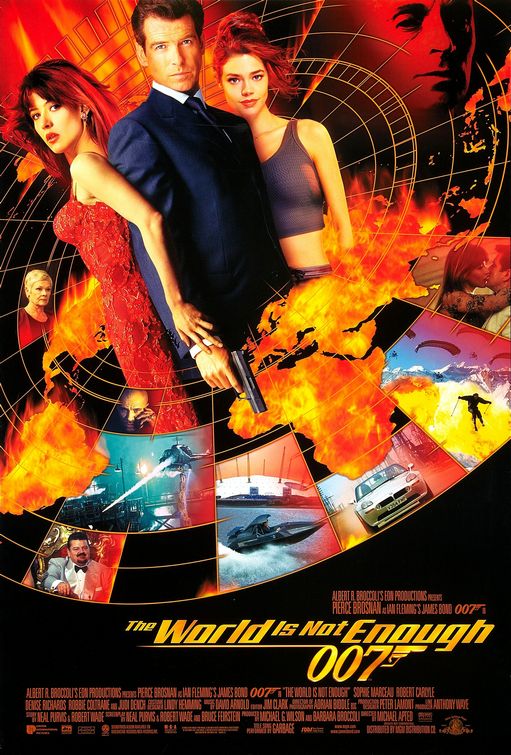
Cast: Pierce Brosnan (James Bond), Sophie Marceau (Elektra King), Robert Carlyle (Renard), Denise Richards (Dr Christmas Jones), Robbie Coltrane (Valentin Zukovsky), Judi Dench (M), Michael Kitchen (Bill Tanner), Colin Salmon (Charles Robinson), Desmond Llewelyn (Q), John Cleese (R), Samantha Bond (Miss Moneypenny), Ulrich Thomsen (Sasha Davidov)

I’ve long been of the belief that Pierce Brosnan’s Bonds were each a decline from the last, no matter how much money and action were thrown at the screen. TWINE in no way shakes that opinion. It’s a film I remember when I saw it in the cinema twenty years ago being a little, well, disappointed by.

After the assassination of an oil tycoon in MI6 headquarters, James Bond (Pierce Brosnan) is assigned to protect his daughter Elektra (Sophie Marceau) as she vows to complete the pipeline her father started. MI6 believes her life is endangered by her former kidnapper Renard (Robert Carlyle). Heading to Eastern Europe, Bond soon finds himself in the middle of a complex game, with a mysterious string puller, that seems to revolve around the stealing of a nuclear warhead and the kidnap of M (Judi Dench), with only nuclear scientist Dr. Christmas Jones (Denise Richards) to help.

TWINE is all about its electrifying opening sequence. It’s possibly the biggest, most exciting introduction to a Bond movie yet. Not only does it have a truly compelling action sequence in the boat chase down the Thames, but there’s plenty of plot, tension, mystery, revelation and humour – Bond straightens his tie under water – to match the entire content of some Bond capers. Brosnan is deadly in the Bilbao sequence – you believe he’s a killer – he’s working out of the money trap is Bond at his most ingenious and the beautifully filmed and edited boat chase is an absolute wonder. It’s edge of the seat stuff and when it finishes, you can just imagine a cinema full of people letting out a sigh of relief and kicking back to enjoy the rest of the film.

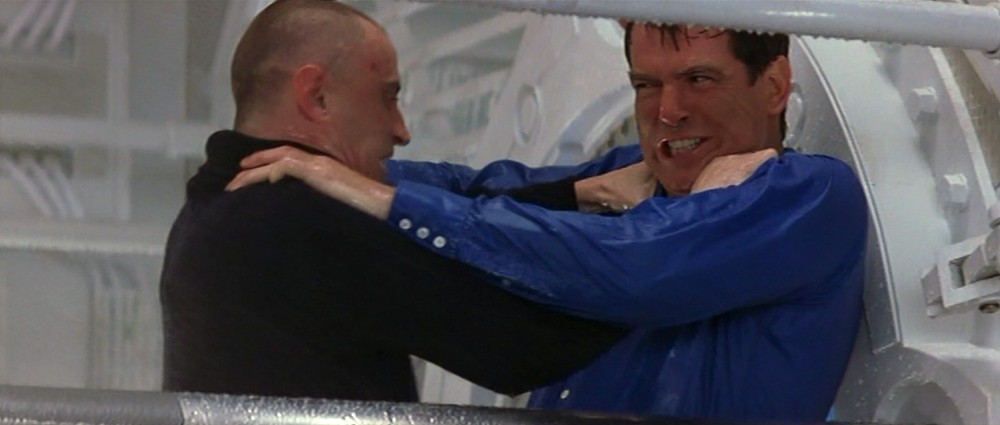
In fact that’s part of the problem. As Anthony Lane said in his review of the film “It’s the best 15 minutes in film this year. Let’s pack up and go home”. The problem is literally nothing in the film that follows can even hope to live up to this – and by the end, it’s practically given up trying. How does a film that started so vibrantly end with such a hackneyed fight on a submarine, with our heroes squabbling over something so fiddily it looks like an ink cartridge?

In between the phenomenal start and the damp squib ending, the film pings off to a lot locations – Azerbaijan! Turkey! Bilbao! – but everywhere still has the same bland, identikit feel to it, for all the shots of the odd famous landmark. That’s not to mention the rather laborious plot that ties the film together. It’s a film that feels like it’s trying to make a series of big statements about our hidden selves, revenge, manipulation – but falls short each time. It’s wrapped inside the most elliptical villain scheme I can remember. I only watched it a few days ago and even I’m not sure why Elektra wanted to blow up that damn submarine in Turkey.

Bond and Renard face off in the underwhelming sub sequence

Increasingly it becomes bogged down in machinations that feel recycled from previous films in the series. Shady Russians, corrupt security guards, chases down the snowy mountains, fiddily endings in old style nuclear subs. The film’s second biggest set piece – the attack on a cavier factory – has a rather formulaic inevitability about it. 

It has its moments of cool and charm, but in many ways it’s a blunt and crude film. What sort of eclectic film casting selects people as wildly diverse as Goldie and Ulrich Thomson as sidekicks? Robbie Coltrane returns as Zukovsky, but his character has been broadened from his first outing in GoldenEye into some sort of comic relief, a cane carrying buffoon a million miles from the ruthless ex-hitman in his first appearance. We even get a return of the “MI6 accidentally stumbles in on Bond doing the nasty” closing gag so beloved of the Roger Moore era. By the end of the film it really feels we’ve come a million miles from the ruthless efficiency and dynamic action it opened with.

The film’s most interesting beat, without a doubt, is Elektra King. It’s a stroke of inventiveness to turn the character established as the Bond girl, into the film’s villain.  Elektra uses many of the tropes of traditional Bond girls – vulnerability, sensuality, playfulness, a certain gutsiness – and repackages them as villainous tools, weapons of manipulation and deceit. Sophie Marceau is very good as possibly the most intriguing villain of the whole series, and the film neatly leaves open the question of how far her experiences twisted her, or whether her sociopathy was a deep lying trait. Her chemistry with Brosnan seems at times a little forced, but she gets most of the meaty content of the story and handles it with gusto. It’s especially neat to see how Marceau adjusts and adapts her performance for each person she encounters – with Reynard she’s playful and infatuated, with Bond she’s more aloofly sensual.

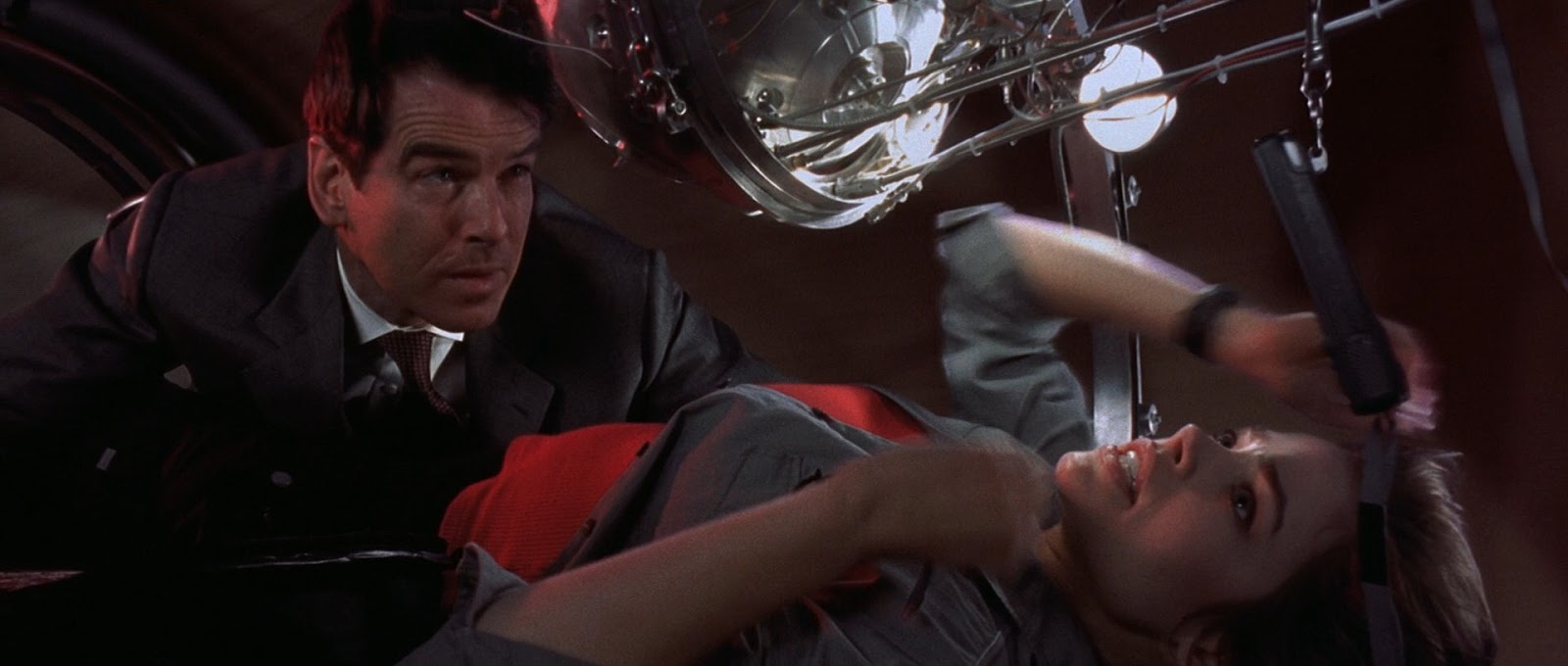
Denise Richards gets all nuclear physicist

She certainly fares better than poor Denise Richards, playing a character who feels like she was written backwards from the film’s closing punchline (“I thought Christmas only comes once a year” indeed). As if the producers wanted to counterbalance the innovativeness of Elektra, Richards feels like she’s wandered in from a classic Moore film: nominally an expert in something grand sounding (nuclear physics – and you can have a £1 from me if you ever meet anyone who believes Denise Richards has a PhD in rocket science) but really a damsel in distress dressed in hot pants. I’d further add that Brosnan already looks far too old for her.

The film’s best asset though is Brosnan’s Bond. The more I rewatch Brosnan’s efforts, the more I feel sorry the guy didn’t get more of the sort of material Dalton and Craig received either side of him. He clearly has the acting chops to do something a bit more interesting with the character, but his Bond is always a bit tonally confused – one moment he will stare viciously at a fallen opponent, the next he’ll be wearing a shit-eating grin and perving over ladies’ underwear in a nightclub. Brosnan does both these things, I hasten to add, extremely well: this film is probably his peak action performance, and at several points (not least his first encounter with Reynard) his sense of physical danger is jaw dropping. TWINE is a kind of perfect embodiment of his era: 1/3rd Connery to 2/3rd Moore.

For all that the big picture of the film gets away from Apted, he does have a good eye for smaller moments that stick with you – the tie moment, Brosnan’s look into the camera after his first kill. Moments like this appear throughout the film: a cut back to Zukovsky’s grin when Bond’s car is destroyed, the pinpoint bullet shot that hits a plate of glass right in front of an unblinking Reynard. Moments like this get increasingly lost as the film pushes on and becomes more and more formulaic and traditional, but they are still there.

That’s what it all comes back to: the film is not the sum of its parts. Moments stand out, but the whole thing really doesn’t. Everything feels a little too pre-packaged. Even an actor as brilliant as Robert Carlyle (the sort of actor everyone said should play a Bond villain) is lost in the mix, his performance as forgettable as a million other “ruthless anarchist” types we’ve seen before. There are some neat homages – I like the painting of Bernard Lee in MI6 HQ – but too much of it feels like more of the same, told with a professionalism that crushes the life out of individualism. So while it has moments that excite and entertain, as well as elements (such as Elektra King) that feel unique and original, too much of it also feels like, well, any other Bond film. For all its energy, it feels like watching a world-class athlete run on the spot.

FINAL COMMENT:This film does get some credit however for how tastefully it handles the final scenes of Desmond Llewelyn as Q. Tragically Llewelyn died in a car crash shortly before the film was released, but his work here is possibly some of the best he contributed to the series. Never let them see you bleed and always have an escape route.

Ronin (1998)

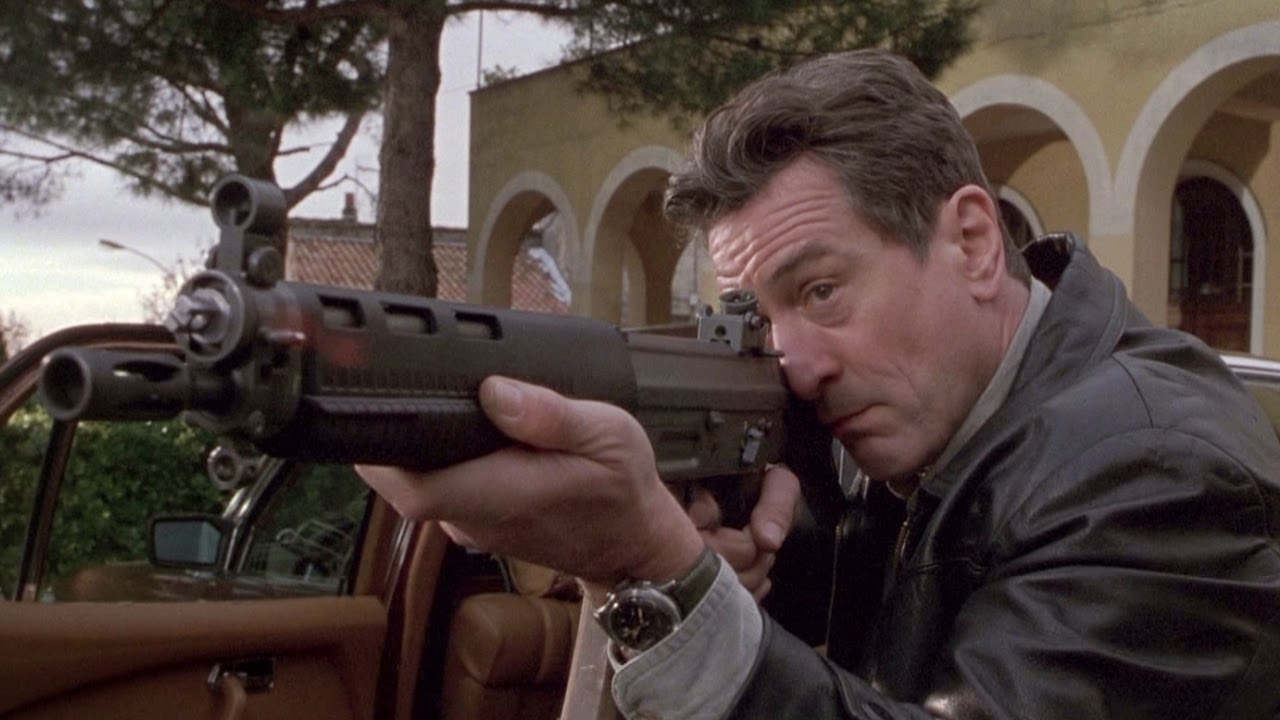
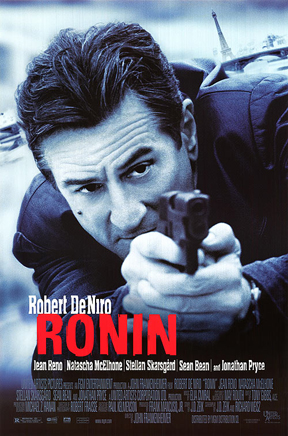
Robert De Niro takes aim in super cool car-chase classic Ronin

Director: John Frankenheimer

Cast: Robert De Niro (Sam), Jean Reno (Vincent), Natascha McElhone (Dierdre), Stellan Skarsgård (Gregor), Sean Bean (Spence), Skipp Sudduth (Larry), Michael Lonsdale (Jean-Pierre), Jonathan Pryce (Seamus O’Rourke), Jan Triska (Dapper Gent), Féodor Atkine (Mikhi)

Sam (Robert De Niro), Vincent (Jean Reno), Gregor (Stellan Skarsgård), Spence (Sean Bean) and Larry (Skipp Sudduth) are ex-intelligence operatives from the Cold War (or “the late unpleasantness”). Now working as mercenaries, they are hired by IRA operative Dierdre (Natascha McElhone) to steal a mysterious case. The operation becomes increasingly complex as trust is betrayed, new competitors emerge, and a stream of gun battles and car chases soon bursts out.

I don’t think there are enough words to say how much I love this film. I have seen it I honestly don’t know how many times. Some films just connect with you, or something about them so completely works for you that you can’t help but enjoy them. Ronin is quite simply one of my favourite ever films – others may poke at it, but to me I think this is a perfectly structured piece of film-making, a 1970s-style thriller produced in the 1990s, the last flourish of old-school, Cold War spy film-making. In fact, I genuinely think the further we move away from the bombastic 90s, the richer this film looks. It’s becoming less and less of a guilty pleasure and more and more of a pleasure.

First and foremost you have to talk about what Ronin is most famous for: its jaw dropping car chases. What’s particularly exciting about these is that everything you are seeing was done for real. There is barely a spot of trickery in this – they simply hired the best stunt men in the world, got hold of some cool looking cars, and let them go to town all over France.

Of course, watching cars going round and round in itself isn’t massively interesting: what makes it compelling in Ronin is the skilled story-telling. Not only do we always know what’s going on, but the characters are kept in the forefront (most of the actors’ terrified faces were real, as they tore round the streets of Paris for real at 90+ miles an hour). In addition to that, the editing and shooting of these scenes is simply superb. The film gets a perfect balance of sound effects and musical cues: the soundtrack of the final car chase is split 50/50 between revving engines and music. A combination of low angles (putting us practically on the front of the car) and medium and long shots keep the visuals of each chase fresh. You’d actually have to be without a pulse to not be gripped by these sequences. These are without a doubt the best car chases ever committed to screen.

But it’s not just about car chases. This is a brilliant mood piece, filmed in a drained out colour palate that makes the whole thing feel like the characters have been transplanted intact from the 1970s. Frankenheimer’s direction is crisp and cool, and he has an eye for an excellent shot. He also allows plenty of subtle character and mood building to counterpoint the action, as in the excellent, almost wordless, opening sequence following De Niro’s arrival at a café. Carefully he cases the joint while the others arrive, putting in place a possible escape route (we later discover) before heading in. Later, the film builds a moment of exquisite tension and excitement about a drawing on a board and the colour of a boat house. We even get a scene where De Niro guides some of the characters through performing surgery on him to remove a rogue bullet.

The whole film is packed full of excellent vignettes like this: I love the moment when De Niro pretends to have lost his nerve and carelessly knocks a coffee cup off a table to see how Skarsgard’s slightly sinister Gregor may respond (he catches it before it hits the ground and then immediately looks sheepish as if he has given something away). The film also sprinkles dark hints throughout of a wider world (“Where do I know you from?” “Vienna” “Of course…” an example of exposition-free dialogue that establishes a back story), while the characters’ backgrounds and their recruitment by “the man in the wheelchair” remain deliberately obscure.

It’s also one of the best Macguffin films you are going to see ever. What’s in the case? Who knows? Who cares? The film’s structure totally understands that it doesn’t matter to us what’s in the thing at all. It’s only important in that it matters to the characters: and that most of them are willing to go to any lengths to secure it (preferably for free).

The other major strength of the film is its cracking dialogue, the work of an uncredited David Mamet (allegedly pissed off that the Writer’s Guild of America declared he had to share billing). The dialogue is endlessly quotable, and deftly sketches out character: for instance, we understand immediately De Niro’s cool confidence and Bean’s blustering faux machismo from exchanges like this: 

Spence: You worried about saving your own skin?
Sam: Yeah I am. It covers my body.

That only scratches the surface of the film’s dialogue, which crackles – this exchange between Vincent and Sam sums up its wit, and lived-in quality:

In fact the film is full of cool lines like this that seem to carry a flavour of working in intelligence, and stick in the imagination (“The map is not the territory” or “Either you’re part of the problem or you’re part of the solution or you’re just part of the landscape”). The best moments sizzle with an effortless cool, with dialogue that you find yourself (or I do anyway) regularly dropping into everyday conversation. It also helps to slowly build relationships within the film, with Sam and Vincent’s dialogue quickly finding itself in sync, a clever little indicator of their building friendship.

The relationship between Sam and Vincent is in many ways the heart of the film – while other characters fall by the wayside, events ruthlessly exposing their weaknesses, it’s these two who form a close bond. Vincent may believe “Everyone’s your brother until the rent comes” but their friendship develops a real warmth and trust – they are the real romantic link in the film (despite a flirtation with Natasha McElhone’s steely IRA gun runner Dierdre).

All this content comes together brilliantly into a tightly contained and carefully paced thriller. It’s also strikingly well-acted in a tight, stripped down manner. This is probably the last engaged, “serious” role De Niro did before his career drifted into decades of self-parody. He gives Sam a brilliant lived-in quality, with a wry sense of humour. Jean Reno is equally well cast as the laconically cool Vincent, while Natasha McElhone is engaging and intriguing as Dierdre. Stellan Skarsgård is a stand-out as the ice-cool Gregor. Of the no-less than three Bond-baddy actors, Michael Lonsdale probably has the best part as a model-building fixer, though Sean Bean does decent work as twitchy poseur. Jonathan Pryce is, I have to say, not completely convincing as an IRA heavy, but does a decent job.

Okay I’ll concede the final reveal and resolution of the film’s plot is not the best moment (a particularly heavy-handed, plumbily voiced BBC radio voiceover explains much of the ending), but that’s a bump in the road of gripping, smart and old-school thriller. It’s accomplished in its filming, and its mood sizzles from the screen. The car chases are edge-of-your-seat gripping, and there is barely a false beat in acting or dialogue. The direction is full of character and has a brilliant eye for little details. Above all else, I really love this film – probably more than is healthy – and I have seen it a crazy number of times. I can’t imagine not enjoying watching it – and I don’t think I ever haven’t, even though I must know it frame-by-frame. Brilliant stuff!

Moonraker (1979)


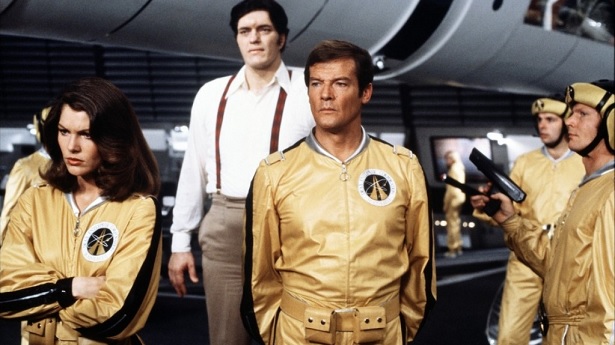
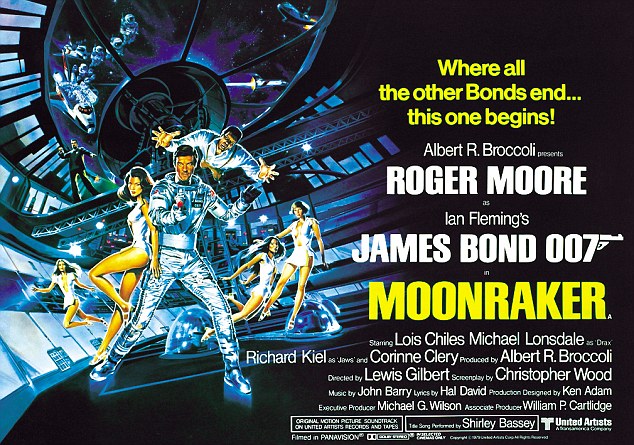
Roger Moore is James Bond…IN SPACE!!!!

Director: Lewis Gilbert

Cast: Roger Moore (James Bond), Lois Chiles (Holly Goodhead), Michael Lonsdale (Hugo Drax), Richard Kiel (Jaws), Corinne Clery (Corinne Dufour), Bernard Lee (M), Geoffrey Keen (Defence Minister), Desmond Llewelyn (Q), Lois Maxwell (Miss Moneypenny), Emily Bolton (Manuela)

After The Spy Who Loved Me, the Bond producers had finally found a format that suited Roger Moore’s take on the role:  a comedic, tongue-in-cheek style, with Moore leaning on the fourth wall, winking at the audience. In fact, SWLM made so much money that this one feels almost like a remake rather than a new film – it’s got the same basic concept, the final sequence is pretty similar, the opening sequence again revolves around a daring parachute stunt, even Jaws pops up again. For a film that heads into truly unchartered physical territory for Bond (space!), it’s as familiar and derivative as Bond gets.

Bond (Roger Moore) investigates Hugo Drax (Michael Lonsdale), a shady businessman whose operations are expanding into space. After a string of exotic locales (a chateau in France! Venice! Mexico City! Brazil!) an evil scheme to destroy the world from space clicks into place. Bond has to take to the stars to take down Drax. Despite the criticism that will follow, this is probably near the end of Moore’s high point in the role – and in none of his future films was he quite as debonair and dashing as he is here.

If you ever needed evidence that the James Bond franchise looked at whatever was popular in the cinema at that moment in time and then ripped it off as quickly as possible in their next film, then it’s Moonraker. Surely never in anyone’s lifetime would they expect to see a film that could be tagged “James Bond…in SPACE!” but after the success of Star Wars that is exactly what they were served up. The idea is so completely silly that people wonder if you’ve made it up.

But, sigh, that’s what we get here. And it is beyond silly. The film climaxes in a space battle between the NASA Marines (don’t ask) armed with laser cannons (yes you read that right), duking it out with Drax’s own personal guard also armed with cannons (it really is as silly as it sounds). All this against a backdrop of Drax’s own personal Death Star. Afterwards, Bond has to shoot down three deadly missiles that will wipe out the population of the Earth. Naturally, his targeting computer doesn’t work for the final one, so Bond has to basically “use the force” to target and shoot it down. Star Wars in all but name right? Had the producers no shame?

It doesn’t help that Moonraker amps up the already jokey tone of SWLM to an overbearing degree. At least it was a formula that works with Moore, but so little is treated seriously that when they do something violent it sticks out tonally like a sore thumb. This is probably the only film I can think of in which a woman is ripped apart (off screen) by a horde of hounds, followed shortly afterwards by a pigeon performing a comic double take after an amphibious gondola sails through the middle of St Mark’s Square (don’t even ask). It’s a film that has no discipline, no control and no real consistency. It dances all over the place with no logic at all. It gets the balance wrong and instead of being tongue-in-cheek often comes across as overblown, heavy-handed and ludicrous.

In fact the plot, such as it is, is hard to follow because it’s almost an afterthought. It’s effectively a reheat of SWLM (repopulate the planet with a chosen elite), while the space battles are similar to the slow motion fights of Thunderball. Bond moves from location to location with only the barest logical links. Drax identifies Bond as a threat early on – but then continues to pull out a series of bizarre and unreliable schemes to eliminate him. The action sequences feel like versions of previous films in the series – and don’t get me started on the fact Bond still hasn’t learned that punching Jaws in his metal mouth is a bad idea (he does it three or four times in this movie). Everything moves forward with a restless momentum that never allows us to connect with anything that happens.

There is some decent potential here. The fight on the ski lift is pretty good. Michael Lonsdale has a psychotic chill about him that, in a better film, might have made him a memorable villain. In fact, Lonsdale is so grounded as a villain he feels wrong for a film that’s so silly. And it’s all the more surprising he has such an outlandish scheme – or that he hangs around with such a pantomime villain as Jaws. Jaws clearly returns due to popularity – and has been thoroughly neutered as a threat here. Even before he falls in love with a girl with pigtails and switches sides, he’s already an almost comic buffoon – even bashful about knocking off a Bond aide in front of witnesses.

It’s a film that can’t decide if it’s a thriller or a comedy. It probably leans more towards comedy – which is a shame as it’s not that funny. The hideously overplayed gondola sequence tells you everything you need to know about the film’s lack of wit. Its comedy is as overplayed and heavy-handed as some of the action can be – more likely to get you rolling your eyes than holding your sides. Saying that, it does have possibly the best final punchline of any of the films (“I think he’s attempting re-entry sir”) – the sort of joke you probably didn’t get when you first watched the film aged about 10. Other than that it’s like a series of gags told by people who aren’t really that funny.

Moonraker is the sort of bizarre freak of nature that you almost can’t believe exists. Leaving aside its amping up of the tongue-in-cheek formula into the realms of the bizarre, it’s basically a bit too stupid and unbelievable for even this franchise to pull off. Lasers? Space-stations? Space marines? Bond in space? I mean really? As a rip off of Star Wars it leaves a lot to be desired – and so long as these films take place in a world that is even vaguely linked to our own, plots like this just have the stench of bullshit.

War for the Planet of the Apes (2017)


Andy Serkis goes to war as Ape Leader Caesar in the final entry in the new Planet of the Apes saga

Director: Matt Reeves

Cast: Andy Serkis (Caesar), Woody Harrelson (The Colonel), Steve Zahn (Bad Ape), Karin Konoval (Maurice), Terry Notary (Rocket), Ty Olsson (Red), Michael Adamthwaite (Luca), Toby Kebbell (Koba), Judy Greer (Cornelia), Sara Canning (Lake), Gabriel Chavarria (Preacher)

The Planet of the Apes trilogy of the past few years is so far superior to the original films (bar the first) that even decent efforts still stand tall over their forebears. War isn’t quite the classic you want, but it is a worthy companion to the two previous films, and sets a tough act to follow for (inevitable) sequels and remakes.

Caesar (Andy Serkis) is nearing the end of a long war with humanity, desperate for peace to allow the apes to set up their own home. But after a night attack by demagogue rogue soldier The Colonel (Woody Harrelson) leaves Caesar suffering a huge personal loss, he finally succumbs to his rage and anger and goes on a quest for vengeance, accompanied only by his oldest and closest companions. Along the way he discovers the doom of mankind has already begun, with a virus slowly robbing them of the power of speech and reason.

It’s a slight shame that the final film in an excellent trilogy isn’t quite the knock-out I hoped it would be. It’s a good film, but not a great one. It won’t exactly leave anyone disappointed, but it doesn’t quite send the entire trilogy out on as triumphant a high as hoped. Part of the problem is that I just found it a slightly more straightforward, less thematically rich than the other films. It’s more of a simple “revenge” story, married up with a host of film genre references from Apocalypse Now to Westerns to old-school Hollywood Biblical epics.

The title suggests a bit more action than the film actually offers. The war, such as it is, turns out to be almost a macguffin – a feud between rival groups of humans rather than an ape-human smackdown. It’s actually the most internalised conflict yet – the war to decide the sort of planet the apes will inherit is in the soul of the sort of leader Caesar will decide to be. Like all revenge dramas around sympathetic characters, the big question is will our hero decide to lay aside vengeance – to be the better man. It’s a tribute to the film that the answer is as difficult and unclear-cut as you expect the question would be.

As this film, more than any other, is ape-centric (there are at best three human characters), it rests even more than on the strength of Serkis’ acting. It feels unoriginal to say it now, but what Serkis has achieved is astonishing. He has turned a special effect with an actor behind it into a living, breathing character – someone you never doubt is real. His performance is a complex internalisation, as far away from flashy as you can get – it’s all about the eyes, and Serkis’ shine with life.

It’s lucky that Serkis is  here, as he elevates the entire film to a higher level, where otherwise it can occasionally  feel like a careful assembly of bits and pieces of other films. Caesar and gang’s journey through the snowy depths of North America looks and feels like a spaghetti western. By the end of the film, Caesar feels like a Moses figure leading his people to the promised land. The biggest influence by far however is Apocalypse Now. The soldiers all feel like angry Vietnamese war vets, the opening battles through the forest have a definite air of the jungle, while Woody Harrelson’s slightly underpowered villain is so reminiscent of Kurtz, he even does a Brando impersonation at points. The structure of the film even matches Heart of Darkness, Caesar on a trek “down river” to confront a rogue soldier turned cult leader.

It’s not exactly unique and recycles much of its content, but Reeves is still a damn fine director and not only shoots with dynamism, but also ensures there is heart and depth behind everything. There is a subtle understory of ape civil war, with the followers of Koba now serving the humans out of an “enemy of my enemy” mentality. Making the Colonel the leader of a maniacal cult also makes him a good contrast with Caesar’s standing with the apes. At least two characters develop in ways far different than you are led to expect, due to clever playing with the viewer’s expectations of how movies are “supposed” to pan out.

So why doesn’t it all quite work as well? If it’s so full of good stuff, why doesn’t it sing like the others? Well maybe it’s a little too long. Maybe the Colonel isn’t quite a good enough antagonist for Caesar. Maybe the grim mood and focus on the revenge arc mean some of the thematic richness of the previous films has been lost. Maybe there just isn’t quite enough “humanity” in this story of apes. It’s hard to put your finger on – but it’s just not quite as good as the others, not quite as memorable. It’s a strong well-made film, very well directed and superbly acted by Serkis and the other motion capture artists – but it’s not quite the classic it feels like it could be. You’ll be slightly unsatisfied but find it hard to work out exactly why.

On Her Majesty's Secret Service (1969)


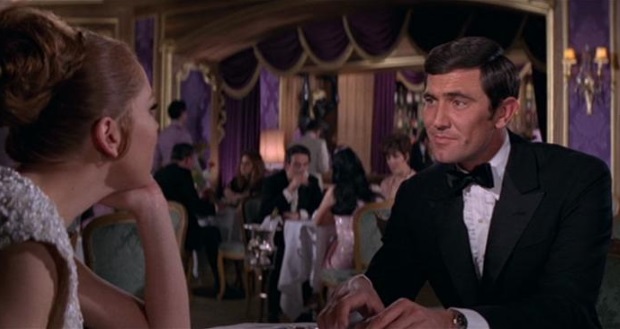
George Lazenby flirts with Diana Rigg. If only he was James Bond.

Director: Peter R. Hunt

Cast: George Lazenby (James Bond), Diana Rigg (Tracy di Vicenzo), Telly Savalas (Ernst Stavro Blofield), Gabriele Ferzetti (Marc-Ange Draco), Ilsa Steppat (Irma Bunt), Bernard Lee (M), Lois Maxwell (Miss Moneypenny), George Baker (Sir Hilary Bray), Bernard Horsfall (Shaun Campbell)

After You Only Live Twice, Sean Connery was through with Bond. Despite the producer’s pleas, Connery was off. The producers were hit with a conundrum – should they recast and start again? Or recast and pretend nothing has changed? They went with the second option and spread the net among the world’s actors, and hired… a man whose only screen work was in a chocolate advert.

Bond (George Lazenby) is on the hunt for villainous SPECTRE head Blofield (also played by a new actor, Telly Savalas). Following a lead, he meets and begins to fall in love with daughter of a Count, Tracy di Vicenzo (Diana Rigg), before infiltrating Blofield’s alpine HQ disguised as an expert in heraldry (seriously that is the plot). There he uncovers a plot for world domination that involves a dozen attractive young women, a deadly virus and the usual collection of inept SPECTRE henchmen.

It’s become a bit retro-cool to reassess OHMSS as the finest James Bond film. This always seemed odd to me: this series, more than any other, is so closely tied in with the personality and skills of the lead actor – and this film has the weakest of the lot. But compared to the two slightly tired films that came before it (YOLT and Thunderball), this one does have more narrative ambition and offers a freshness and sweep in its filming, as well as a compellingly filmed series of action pieces.

Really though you can’t talk about OHMSS without mentioning the Lazenby-sized elephant in the room. Poor George. Watching Lazenby you can never forget this is a guy who landed Bond on the basis of (a) he looked good in a tuxedo and (b) he broke a stuntman’s nose when he auditioned.  But let’s start with the positives. Well he can fight – jeez louise this guy can fight. Lazenby’s Bond is possibly the most physically aggressive until Craig. He’s totally at his ease in the fast-paced fisticuffs that fill the movie. He looks very believable when he’s asked to do anything athletic or dangerous looking. I’ll also cut him some slack that he is given a terrible wardrobe of clothes here (could he look more camp?) and that he spends a significant chunk of the film disguised as a camp heraldry expert.

It’s just a shame that anything involving acting is a bit too much of a stretch for him. His delivery of his dialogue is flat and lifeless. For a large chunk of the film, his voice is all too obviously dubbed (by George Baker). He’s frankly not that funny, despite having several gags (including of course “This never happened to the other fellow”) which are actually pretty good. He can’t bring any real emotional depth to the romance. His chemistry with Diana Rigg is pretty middling, although he does a decent job of his grief at her (spoilers!) death. But it’s the voice that you keep coming back to. It’s grating – flat, dull and monotone. Even though the material makes Bond more human than ever, Lazenby’s underwhelming performance doesn’t make us feel any closer to him.

The producers were clearly aware of the problem, so crammed the film with as many references back as they could manage, as if to reassure audiences “Yes Connery has gone, but don’t worry it’s still Bond!”. So we get a scene of Bond flicking through a desk full of knick-knacks from previous films (the film even plays snatches of the scores). M, Q and Moneypenny work overtime to treat Bond exactly the same. All this attention to continuity of course only goes so far – despite the fact they both spent a fair bit of time with each other in the previous film, Blofeld doesn’t even remotely recognise Bond when he rocks up at Blofeld’s base pretending to someone else, disguised by nothing but a pair of glasses. For a film determined to hammer home the continuity more than any other in the series (until Spectre) this doesn’t make a lot of sense.

So the real question: can you have a great Bond film, when Bond himself in it is pretty dreadful? Can you really enjoy the film when the whole time you almost force yourself to picture any of the other Bonds in place of the one you’re actually watching? Well OHMSS gets pretty close to success despite the fact it has a black hole at its centre, which is a tribute to it. This one feels closer to Ian Fleming than almost any other film in the series. It’s the straightest adaptation of the source since From Russia With Love. Lazenby’s more human take on the role (sentimental, scared at times) does feels closer to Fleming’s Bond than Connery’s Ubermensch. This doesn’t mean the plot isn’t utter bobbins – but at least it’s very Fleming-esque bobbins.

In fact the producers threw everything except the kitchen sink at this one. There’s a car chase (in the middle of a car rally), a helicopter-led storming of a SPECTRE base, no end of punch-ups, a barrage of battles, ski-chases down the alps, a final battle in a toboggan (surely the only film until Cool Runnings to build up to a climatic encounter in a winter-sports event). Many of these sequences are terrific, and Hunt films everything with a grounded realism (despite the ludicrousness of so much that happens) that makes everything immediate and exciting. He also combines this with an ability to shoot moments of epic action with sweep and majesty.

It’s also quite refreshing in how it treats its romantic lead. Diana Rigg is not only (by far and away) the best actress to play a Bond girl until the Craig years, but she is allowed to create a character who feels a worthy partner to Bond. Tracy is brave, determined, can take care of herself, rescues Bond at one point and gets to do all the driving (and is extremely good at it). Sure the film has its old-fashioned moments (when her father encourages Bond to court her, he charmingly states: “What she needs is a man… to dominate her! To make love to her enough to make her love him! A man like you!”. Okay…), but as far as it goes this is pretty advanced stuff for Bond at the time.

The plot is nonsense of course, and Telly Savalas feels like a strange choice for Blofeld (he’s far too gritty, aggressive and, above all, American!) but the action is really well counterpointed with the relationship between Bond and Tracy. Tragically, this film has exactly the rich, deep and emotional material Connery was crying out for. The love story – despite Lazenby’s limitations – feels genuine and sweet and the final tragic ending is, by far and away, the best bit of acting Lazenby gives in the entire film. But you keep imagining what it would have been like if Connery had been in this film, or indeed anyone who could actually act (even Moore could have made a lot more of this material).

That’s the problem with OHMSS. Bond films depend on their Bond – and when the Bond lacks any real charisma and struggles to deliver on anything other than the physical side of the business, your film is always going to be in trouble. Which is a real shame, because nearly everything else about this film is actually really good. It feels fresh, exciting and real in a way others felt tired and over familiar. It’s got some excellent action and excitement. It’s shot and edited with real vibrancy. The action set pieces are exciting. It’s got a sweet romance at its centre. You just don’t really connect with or care about the hero. And for a film series that rests so heavily on the lead, that is pretty terminal.

Independence Day: Resurgence (2016)


Independence Day 2: Not a Resurgence but a wake.

Director: Roland Emmerich

Cast: Liam Hemsworth (Jake Morrison), Jeff Goldblum (David Levinson), Jessie Usher (Dylan Hiller), Bill Pullman (President Tom Whitmore), Maika Monroe (Patricia Whitmore), Sela Ward (President Elizabeth Lanford), William Fichtner (General Joshua Adams), Judd Hirsch (Julius Levinson), Brent Spiner (Dr Brakish Okun), Charlotte Gainsbourg (Dr Catherine Marceaux)

Sometimes your first instincts in films are great. They help you to try new things and unearth new favourites that can find a place in your heart. And sometimes your first instincts are bollocks. You see a film and, for whatever reason, you were in the right mood and you think “well that was great!” Then you come back to watch it a few months later and your second reaction is “What the hell was I thinking?”. Such a film was Independence Day: Resurgence for me.

The plot is alarmingly simple. Probably because it’s essentially the same plot as the first film. Twenty years after the events of Independence Day, mankind lives in peace and prosperity and has rebuilt the world, with a new global military armed with alien technology ready to repel any future attacks. Of course the attack comes… Soon mankind is on a ticking clock (“We were wrong. We only have 1 hour left to save the world!”)…

Okay. I did enjoy this in the cinema. I confess. Then I watched it again and released it was complete bollocks. Totally pointless sequel that adds literally nothing to the first film.

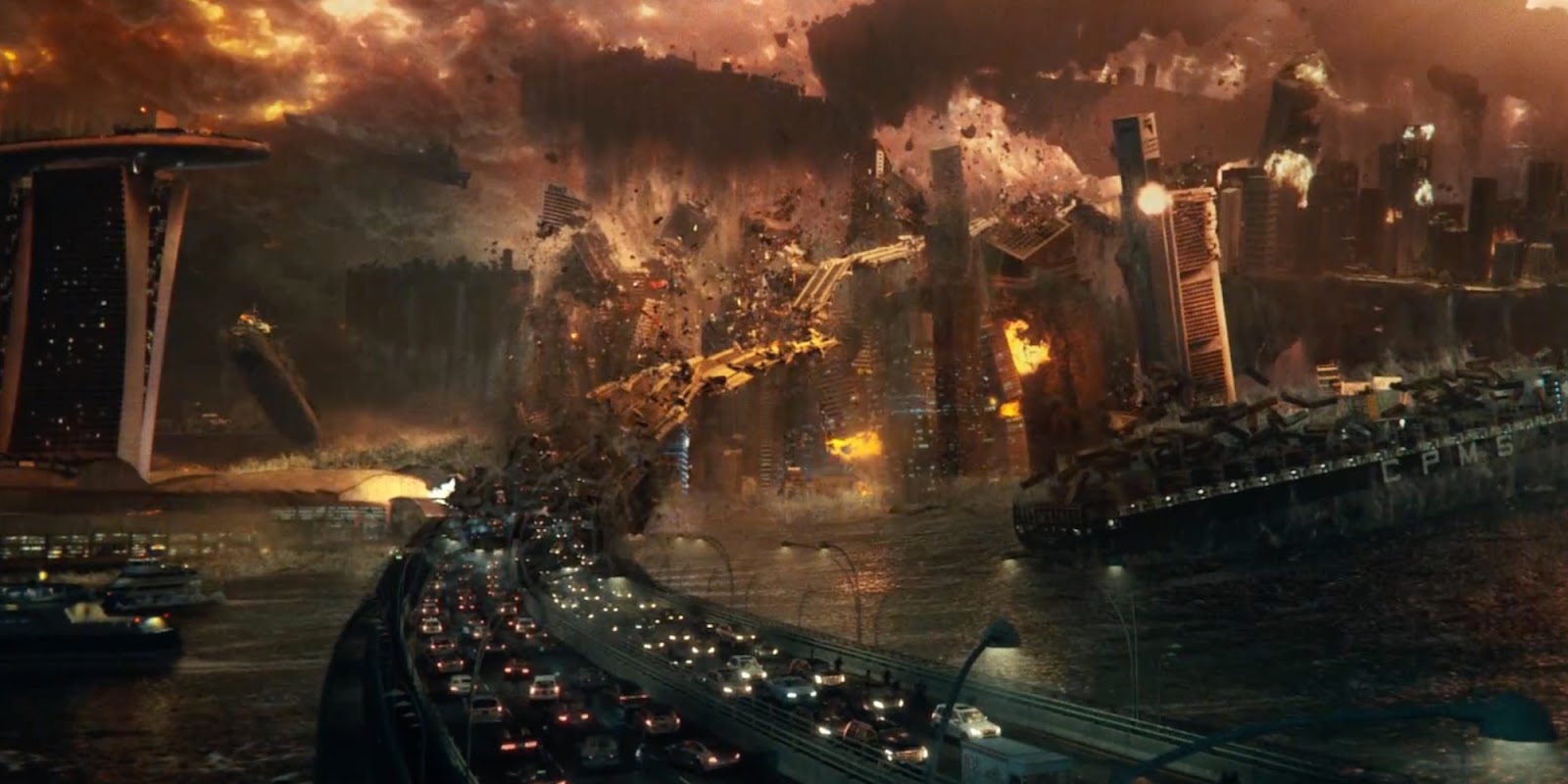
First off this film is essentially a remake rather than a sequel. A first alien ship (different species) arrives and there is panic. An attempt at communication rebuffed (theirs not ours this time). Warnings about an imminent attack are ignored. The aliens destroys several cities (mankind has been busy, as many of the landmarks destroyed in the first film have been reconstructed in perfect detail to get mashed again). A human counterattack ends in dismal failure. Even the goddamn ending of the film is once again a final battle at the salt flats, with the clock ticking. One of our heroes sacrifices themselves. It’s the Fourth of July – need I go on?

The only things that they haven’t carried across are the charm and thrills of the original. In fact there is nothing here to interest anyone who doesn’t have fond memories of the first film: the new characters are largely forgettable, most of the sequences are commentaries on the first film. Resurgence captures none of the twisted sense of awe and wonder of the original Independence Day – the shock of seeing aliens arrive, the terror they unleash, the helplessness of mankind. The action sequences (particularly the assault on the alien spaceship) have none of the sense of danger that makes the same sequences in the original so exciting – it just makes you want to re-watch the first film but not in a good way.

Instead the film aims BIG. Everything is BIGGER. Mankind has planes that fly in space, ray guns and moon bases. The aliens have a ship that’s not the size of city, but the size of a continent! Half the world is wiped out in minutes! The alien attack all takes place in one day! We’ve only got one hour to save the world from having its core drained! It’s all pushing to make the film more EXCITING! It fails. Not only is everything familiar, but everything is so rushed that there are none of the moments for reflection the first film has. Half the world is wiped out in this film and no-one takes even a minute to think about the impact of that.

It’s not just content from the last film that is familiar. This film reveals the aliens are a sort of hive mind with – you guessed it – a Queen. Is it essential for every single bloody alien film to have a queen? Ever since Aliens the idea has been done to absolute death. Needless to say, our heroes (having seen films before) work out that if they take down the Queen, all the other aliens will shut down. Familiar? Only to everyone who has ever seen a film before.

The film’s sexual politics are also all over the shop. It proudly boasted in advance it would feature a gay relationship. But the gay couple in this are safely sexless: not a single line of dialogue hints too heavily at their homosexuality and the closest they get to showing physical affection is to hold hands briefly (the point being of course, if they were too gay it wouldn’t sell abroad).

Secondly, and even more uncomfortably, at some point it was clearly decided a cross-racial relationship wouldn’t play well either. It would make sense to me if the two children from the first film had grown into love interests for each other – and if they were both white I am certain this would have happened. But this film introduces a whole new (white) suitor for Whitmore’s daughter. Hiller’s adopted son? No love interest for him at all. In fact Dylan is relegated to the role of the charisma-free straight-shooter, with Liam Hemsworth given the coveted role of the charismatic maverick who has the courage to think outside of the box and save us all. This is even more cowardly than the film’s shyness around its gay characters.

Independence Day: Resurgence is a lifeless film. It has just enough fun about it for those who remember the first film to watch it with a sense of nostalgic glee. But it has none of that film’s wit, none of its tension, none of its sense of mankind overcoming impossible odds. Despite all the hand-waving towards the unity of the world, even more than the first film this might as well be “America Vs. Aliens”. It caught me in a good mood at the cinema, with the right nostalgic mindset. But whereas Jurassic World(for instance) mixes nostalgia with genuine wit and excitement, this is a film that never comes to life. It’s DOA. Far from a resurgence, it’s a wake.

It’s also pretty hard to forgive it for this marketing abomination. Daley Blind for starters has not won twenty league titles. As for Wayne’s acting. Jesus Christ…

Dawn of the Planet of the Apes (2014)


Andy Serkis becomes the Ape Caesar in a triumphal marriage of performance and special effects

Director: Matt Reeves

Cast: Andy Serkis (Caesar), Toby Kebbell (Koba), Jason Clarke (Malcolm), Gary Oldman (Dreyfus), Keri Russell (Ellie), Kodi Smit-McPhee (Alexander), Kirk Acevedo (Carver), Judy Greer (Cornelia), Terry Notary (Rocket), Karin Konoval (Maurice)

In 2011, Rise of the Planet of the Apes was another attempt to relaunch the money-spinning ape vs. human franchise. Unlike Tim Burton’s disastrous 2001 effort, it took a stance that felt truly unique. Sure, it still felt the need to reference back to the original film in places, but it was a terrific piece of story-telling. Anticipation was high for this sequel – and it met those expectations.

Ten years after the outbreak of a virus that has decimated the human race, the apes have built their own community in the forests near San Francisco, led by Caesar (Andy Serkis). A human party, led by Malcolm (Jason Clarke), enters the forest looking to restart a hydroelectric dam to supply power to the human’s San Francisco community. As the two communities collide, Caesar and Malcolm must work out a truce, despite the doubts of human leader Dreyfus (Gary Oldman) and Caesar’s lieutenant, former lab-chimp Koba (Toby Kebbell).

Dawn is an intelligent and visceral piece of film-making, which enrichens the first film in the series, as well as offering a surprisingly deep analysis of human (and ape) nature. Marry this  up with some quite astonishing special effects, and staggering work from the actors creating the apes through motion capture, and you have a hugely rich science fiction film that helps to cement this trilogy as the finest version of the Apes story so far. It’s also damn good fun.

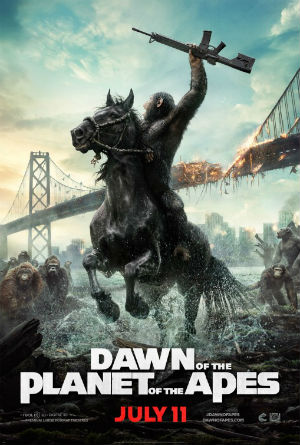
Even more than the first film, Dawn places apes front-and-centre. The film is book-ended with close up shots of Caesar’s eyes, the determination and resolve in them springing from very different causes. The questioning of the nature of humanity revolves around Caesar – the leader balancing the urge to protect his own people against a willingness to support the needs of his people’s only potential threat. Caesar is the most humanitarian character– yet his determination to view other apes as does himself prevents him from seeing Koba’s treachery. It’s his own generosity that is his Achilles heel.

Andy Serkis, the Master of Motion Capture, has mastered this art like few other actors, but his performance as Caesar is his triumph. The degree of emotion he is able to communicate is astounding, while his physicality is extraordinary – it’s a perfect marriage of ape traits and human characteristics. It’s a triumph as well of special effects, but you quickly forget this and embrace the character you are watching. Serkis gives Caesar a deep hinterland of warmth and emotion, a desperation to protect what he has built, touched with a hint of blindness to the reactions his dismissal of Koba’s concerns will have on someone so damaged.

What’s interesting is that, although the film swings heavily in favour of the Apes, it’s the humans who become the victims of aggression, and the humans who are the most open (or desperate) to negotiation and co-operation. A simpler film would have turned Gary Oldman’s Dreyfus into a despotic counterpart to the traumatised Koba. Instead, Dreyfus proves surprisingly open to negotiation, demonstrates great affection for his followers, weeps ecstatically over finally being able to turn his tablet back on and look at photos of his family and only resorts to drastic measures after the human colony seems doomed.

The villain of the piece is Koba (remarkable work from Toby Kebbell). The film, though offering many indicators of Koba’s ruthless lack of regard for any life but his own, gives us reasons (even though these are sometimes stated directly for his feelings and the trauma that lie underneath them. The film doesn’t short change us on Koba’s obvious bravery in battle or his ability to inspire troops. Koba’s inability to adjust his thinking (unlike any other character in the film) leads to the violence. Just as Caesar’s urge to see all apes as meeting his own standards allows violence to grow around him, so Koba’s urge to judge all humans by the standards he has given them leads him to sacrifice countless ape lives in a bloody attack.

These themes of divided loyalty and the damage our own urges (for both good and evil) play out in a cracking storyline, packed to the rafters with action, shot with a confidence and skill by Matt Reeves. Despite being a film that always feels about larger themes, it wears this rather lightly, and offers more than enough popcorn thrills to please any Ape action fan. Koba’s assault on the human stronghold is both grippingly exciting, but also unbearably tense – the film embraces the grim sacrifice and slaughter of war. The final confrontation between Caesar and Koba is shot with a giddying, vertigo-inducing sharpness.

The ape effects are, it goes without saying, extraordinary. These are expressive, living, breathing characters – a brilliant meeting of some wonderful acting and brilliant special effects. Could you imagine a few years ago a film being anchored by a special effect ape played by motion capture? You quickly forget that they are not ‘real’ and accept them as genuine characters. Even more so than Rise, Caesar and the apes are front-of-centre and this is Caesar’s story. Serkis is of course a huge part of this – his influence and dedication to the motion capture and ape portrayal is superb.

Dawn of the Planet of the Apes is a terrific and thought provoking epic film, one that deepens, darkens and enriches the previous film and leaves an audience with not only a lot to consider but also highly thrilled. Unlike the previous film it doesn’t shoe-horn in weak references to earlier films, but concentrates on telling a terrific and character-led story. It’s another terrific entry into a series that feels like it could become one of the great science fiction trilogies.