Category: Action film

Dirty Harry (1971)

Dirty Harry (1971)

Eastwood enters into cinematic legend in this grippingly entertaining pulpy cop thriller

Director: Don Siegel

Cast: Clint Eastwood (Inspector Harry Callahan), Harry Guardino (Lt Al Bressler), Reni Santoni (Inspector Chich Gonzalez), John Vernon (Mayor), Andy Robinson (Scorpio), John Larch (Police Chief Paul Dacanelli), John Mitchum (Inspector Frank DiGiorgio), Mae Mercer (Mrs Russell)

“Do you feel lucky? Well do ya? Punk” With these words, .44 Magnum in one hand and remains of a hot dog in the other (yes, Harry Callahan was so cool he didn’t even stop having lunch to take on a bunch of armed robbers), Clint Eastwood made a permanent mark on cinematic history. In 1971 Dirty Harry was condemned by some as fascist or reactionary, but really it’s just energetic, punchy, impossibly entertaining pulp. In a year where tough, rule-bending cops were de rigour, Dirty Harry may have more of a B-movie vibe than Friedkin’s Oscar-winning The French Connection but there is no doubt which one is the most viscerally entertaining.

“Dirty” Harry Callahan (Clint Eastwood) – so called because he gets all the jobs no-one else wants – is a tough-as-nails Inspector who values the Rule of Law over the Rules of the Law. Taciturn, not-suffering fools and always on the hunt for criminals (as the prototype gruff cop maverick, of course he works best alone), he prowls the streets of San Francisco and stops at nothing to take down bad guys and protect the innocent. He’s the guy you want on the case when the ruthless Scorpio killer (Andy Robinson) holds the city to ransom, shooting innocent people at random, seizing hostages and sending notes demanding payment to prevent more outrages.

Dirty Harry is lean, mean and a simply perfect piece of pulpy action. Directed with a tautness by Don Siegel, that never let’s go, it riffs on real life events – Scorpio is an obvious stand-in for the Zodiac Killer – and basically shifts a shoot-first-ask-questions-later cowboy into the heart of a modern city. Harry, embodied with sublime suitability by Eastwood (cementing his image) has a waspish sense-of-humour, speaks as he finds, never-ever-stops, has the ruthless determination we all wish we had and carries inside himself (buried deep) a maudlin sadness at his fundamental loneliness.

Dirty Harry doesn’t shirk in showing how a cop who bends the rules to deliver real justice can be an attractive figure. Harry doesn’t quite shoot first – he gives a cursory warning every time – but he always responds with lethal force when people are threatened. He’ll carry out illegal search operations of despicable offenders, he’ll follow a psychopath because he knows he’ll offend again (he’s right, but still) and when Scorpio won’t tell him where a hostage has been hidden, he doesn’t think twice about effectively torturing the guy to get him to talk.

Siegel’s film knows that this makes Harry the sort of guy we liberals tut about but, when push-comes-to-shove we need. Harry clones run through film and television history – what is 24’s Jack Bauer, but Dirty Harry fighting nuclear terrorists? – and it’s rooted in the fact that, although we know we should respect the rights of criminals, secretly we don’t want to. Surely, it’s not an accident that the film was set in San Francisco, the nirvana of liberalism in 1970s America. What makes that possible – cops like Harry.

The film stacks the deck slightly by making most of the besuited bosses Harry rubs up against punch-clock rules followers who place the letter of the law above its spirit. Of course, the DA will release Scorpio back onto the street because the damning evidence Harry has collected needs to be thrown out. Of course, he’ll order Harry to leave the clearly-mad-as-a-bag-of-bats Scorpio in peace. Of course, almost every other law official we see can’t hold a candle to Harry’s ruthless skill. Eastwood is so cool, we need to take a beat to remind ourselves that Harry is a widower who lives in an empty apartment, has no friends and he looks on with a quiet envy when his wounded partner is comforted by his wife.

But Harry is made for other things. Siegel’s character-defining set-piece early on, irrelevant to the plot, introduces everything we need to know about Harry. He effortlessly surmises a robbery is taking place at a bank across the street, calls for back-up and when he realises it will arrive too late, grabs that .44 Magnum and hot dog and strolls across the street into a shoot-up. At the same time, it’s a miracle no one is caught in the crossfire or crashing cars. He then bluffs another robber to stand down with a hard-as-nails bad ass speech, despite his chamber being empty of bullets.

To take on a guy like that, you need a truly inspired villain. Andy Robinson, his performance a master-class of twitch with a high-pitched giggle that acts like nails on a blackboard, provides it. He makes Scorpio a deeply unhinged, unpredictable predator who compensates for his slightness and youth (opposite Eastwood’s chiselled masculinity) by simply being an utterly unpredictable lunatic, with no sense of moral compass. Robinson pitches the performance just right, avoiding obvious histrionics to present a character larger than life but terrifyingly plausible.

The duel between them is shot by Siegel like an extended, grimly tense mix of chase and spy thriller. Opening the film with Scorpio searching the horizon for a new victim through a rifle’s telescopic lens, it throws us into a dark nightmare of San Francisco, with parks and baseball grounds places of unimaginable danger and a closing tense game of cat-and-mouse at an industrial plant. Through it all, Eastwood brings his softly spoken charisma to a man who knows full well there is little too him but the chase, but who puts the rights of the guilty a very, very distant second to the victims.

Dirty Harry plays like a punch to the guts, a superbly (and seductively) entertaining film that gives just enough hints at the dangers of Harry’s methods, while making their effectiveness abundantly clear. Siegel’s direction is pitch-perfect – this is one of the greatest cop thrillers ever made – and Eastwood’s performance is iconic. The French Connection maybe a more complex film – but Dirty Harry is more entertaining and the one you’d choose to put on with some popcorn.

Our Hospitality (1923)

Our Hospitality (1923)

Keaton’s feature-length debut is a masterpiece of comic invention and slapstick stunt thrills

Director: Buster Keaton (& John G Blystone)

Cast: Buster Keaton (Willie McKay), Joe Roberts (Joseph Canfield), Natalie Talmadge (Virginia Canfield), Ralph Bushman (Clayton Canfield), Craig Ward (Lee Canfield), Monte Collins (Parson), Joe Keaton (Train engineer), Jack Duffy (Train conductor)

It starts with a dark and stormy night. If that sounds like cheap melodrama that’s kind of the point. Keaton’s first feature length comedy would be different from his joke-crammed shorts. This would be plot-led comedy, a drama full of jokes. As part of that, Keaton started the film with a storm-filled, joke-free, DW Griffith-inspired opening salvo that sees the lead character’s father dead in Intolerance inspired opening. With its gun flashes and bodies, we know in this film bullets kill.

The father is John McKay and he dies along with James Canfield in a deadly exchange. It’s part of a long-running feud betwixt McKays and Canfields (any similarity to the legendary Hatfield-McCoy feud is entirely deliberate), and the rest of the Canfields swear revenge on McKay’s baby son-and-heir. Twenty-one years later, Willie McKay (Buster Keaton) has grown up in New York, ignorant of the feud. When he returns to his father’s ranch, he finds himself in the awkward position of having fallen in love with Virginia Canfield (Natalie Talmadge), daughter of his newly discovered deadly enemy Joseph Canfield (Joe Roberts). How will matters be resolved?

With a great deal of laughs and a breath-taking series of stunts. Our Hospitality is early Keaton but already it cements his legend of comic invention and physical daring as well as his dynamism and imagination as a filmmaker. Our Hospitality is crammed with comic bits of pieces that Keaton would go on to explore and finetune in even greater detail in later films, but also culminates in a (admittedly slightly tongue-in-cheek) but still surprisingly gripping action sequence as our hero battles to survive a mountainous waterfall and save his love from toppling.

The film neatly divides into four acts, each subtly different in tone but all unified by Keaton’s creativity. Stone-faced and implacable, Keaton never mugs or goes overboard for the laugh but trusts that, with the intimacy of the camera, the smallest inflection or slightest turn of the head will raise a chuckle. He’s also charmingly innocent, refreshingly resourceful and rather brave – a perfect combination for a little guy (it helps, as always, that Keaton is literally a little guy) we root for.

That charm powers a lot of the film’s second act, a long incident-filled train journey McKay takes to the South. Keaton was fascinated by the comic potential of early technology – watching Willie, po-facedly, cycling with an early peddle-free bike, his feet alternately propelling the bike and lifted in the air is hilarious (the Smithsonian even asked if it could display this perfect replica) – and he deliberately set the film in 1831 to introduce a Stephenson-style rocket train, pulling its open carriages behind it. This vehicle not only looks hilariously ramshackle and strangely incongruous, it also opens an ocean of possibilities.

It is, for starters, hilariously slow – Willie’s dog has no problem keeping up with it. Its tracks have been laid with a rigid rule-following lack of imagination – at one point they ride up over a fallen tree log, the train and carriages bumping over it. The train is forced to stop by a donkey that refuses to leave the line (eventually the engineer simply drags the tracks around the donkey). There is an on-going feud between the Engineer (played by Keaton’s father Joe) and ticket-master about who is actually in charge of the train. At one point it veers off the tracks and down a road (everyone comments about how much more smoother this is) and later gets separated from the carriages at a junction, requiring Keaton gymnastics to bring it together. By the time it trundles into the station – and note how beautifully the train is filmed – you’ve had more comic invention than most other comedies.

During this journey Willie falls in love with fellow passenger Virginia (played, a little awkwardly, by Keaton’s wife Natalie Talmadge), little knowing she is a Canfield. The Canfields swiftly discover his identity: Willie asks one of her brother’s directions to his ranch, and the brother guides him there, all the while darting away at every opportunity to try and borrow a gun to take his revenge.

Most of the second act, which gives the film its title, revolves around Willie’s invite from Natalie to dinner at the Canfield house. Southern gentility declares the Canfields cannot take revenge on Willie while he is their guest – as soon as Willie realises this he does everything he can to remain in the house, as the (literal) instant he steps outside the door, guns come out. (Keaton also gets a lot of comic mileage from the cumbersome one-shot guns, which Willie frequently pinches to discharge to give himself a few precious moments to move outside while various Canfield’s reload).

When Willie eventually flees the house – disguised as a lady – it leads into a glorious, action-packed chase scene. Scaling mountains and cliffs, shot with a vertigo inducing brilliance (in reality Keaton placed the camera on its side and made it appear with his genius physicality that he was climbing rather than crawling). There are falls into rapids, Willie is dragged behind a racing train carriage and finally bobs and floats down a rapid (including one shot, kept in the film, where Keaton’s rope snapped and he was literally washed head first down a river). It culminates in an athletic, stunt-filled, precarious balance on a log suspended over a waterfall (a brilliant backdrop shot makes this feel impossibly high), swinging desperately on a rope to save Virginia from falling.

Our Hospitality is awash with comic energy and genius touches of business but it’s also an impressively ahead-of-its-time in the skill of its plotting and structure – you could pretty much remake it exactly today (but with words) without changing a detail, and it would still be a hit. But it wouldn’t be a legend because the only thing you wouldn’t have is Keaton. And he’s the lodestone that balances the whole thing.

Con Air (1997)

Con Air (1997)

Big bangs and silly action abounds in Nicolas Cage’s enjoyable action epic

Director: Simon West

Cast: Nicolas Cage (Cameron Poe), John Cusack (US Marshal Vince Larkin), John Malkovich (Cyrus ‘The Virus’ Grissom), Steve Buscemi (Garland ‘The Marietta Mangler’ Greene), Ving Rhames (Nathan ‘Diamond Dog’ Jones), Colm Meaney (DEA Agent Duncan Malloy), Mykelti Williamson (Mike ‘Baby-O’ O’Dell), Rachel Ticotin (Guard Sally Bishop), Monica Potter (Tricia Poe), Dave Chappelle (Joe ‘Pinball’ Parker), MC Gainey (‘Swamp Thing’), Danny Trejo (‘Johnny 23’)

A rickety plane full of the worst of the worst and very low security. Battles to the death over the fate of a cuddly bunny. A car dragged after a flying plane. On any other day, that might all be considered strange. In Con Air it’s just grist to the mill. Made in the heart of Cage’s post-Oscar swerve from off-the-wall indie star to pumped-up, eccentric action star, Con Air is loud, brash, makes very little sense, feels like it was all made up on the spur of the moment and is rather good fun.

Cameron Poe (Nicholas Cage) is an Army Ranger who ends up in jail after he is forced to protect himself and his wife (Monica Potter), with deadly consequences, in an unprovoked bar brawl. Seven years later he is finally about to be released from prison to meet his young daughter for the first time. To get him to his release though, he’ll need to hitch a ride on a prison transfer plane that is shuttling the ‘worst of the worst’ to a high security prison. With criminal genius Cyrus ‘The Virus’ Grissom (John Malkovich) and his number two ‘Diamond Dog’ (Ving Rhames) on board, what could go wrong? Needless to say, the criminals seize the plane – can Cameron, with help on the ground from US Marshal Vince Larkin (John Cusack) protect the hostages and save the day?

There isn’t really any way of getting around this. Con Air is a very silly film. Nothing in it really bears thinking about logically. To the tune of a soft rock score and Leann Rimes (actually, How Do I Live is a damn good song, and I won’t hear a word otherwise), Simon West shoots the entire thing like it was a primary-coloured advert for action movies. It’s the sort of film that feels like the action set-pieces were written first – “The plane will crash on the in Las Vegas! Right, how do we get the plane to Las Vegas and out of fuel?” – and where the actors thrash around trying to make a plot that feels made-up on the spot full of try-hard dialogue work.

But despite this, Con Air seems to work. Whether it’s because of its brash confidence in its own ridiculousness or because it hired enough scribes to pen one-liners and character quirks to just about give the film a sense of wit and character (Poe’s ongoing effort to protect the cuddly bunny he intends to give his daughter is just one of a decent set of running gags – “Put the bunny. Back. In the box.”). You suspect watching it that there was the intention somewhere along the line to make something darker and more violent – the criminals’ seizure of the plane is surprisingly bloody – that just got forgotten about when it was decided it worked best as a dumb end-of-term panto.

A large part of its success stems from Cage’s droll performance. Turning himself into a sort of every-day action hero with just the odd trace of his famed grand guignol eccentricity here and there, Cage’s Cameron Poe makes for an intriguing lead for a balls-to-the-wall action film. Poe is softly-spoken, invariably polite, sweetly excited about seeing his daughter and pretty much encounters every unlikely event he sees with a laconic dead-pan (“On any other day that might be considered strange” he murmurs when witnessing the plane drag a sports car behind it through the air).

Cage of course looks ridiculously pumped up and spends most of the film in an obligatory Die Hard style vest. He hands out ruthless beatings of ne’er-do-wells – although only Cage could impale a serial killer on a pipe and sadly intone “Why couldn’t you just put the bunny back in the box”. Only Cage would take a part clearly intended as a Bruce Willis smirker and turn it into a sort of kick-boxing Paddington Bear. His stubborn refusal to take the film seriously means he cancels out Simon West’s ridiculously macho aesthetic that otherwise infects almost every frame. While everything else is loud, sharply cut and features actors spouting try-hard tough dialogue, the film’s central character spends the opening of the film learning Spanish and exchanging surprisingly sweet letters with his daughter and strolls around earnestly trying to do the right thing.

John Cusack similarly runs counter to the tone. Clearly counting the minutes until he can cash his cheque, Cusack turns his US Marshal into a laid-back, sandal-wearing boy scout, quietly exasperated about the wildness around him. I suspect half of Cusack’s drily low-key dialogue was written by him just to keep himself interested. Malkovich is cursed with the film’s worst try-hard tough-guy dialogue, but even he enjoys downplaying the role into softly spoken comedy. The three leads leave the blow-hard silliness to their foils Colm Meaney (as a permanently angry DEA agent) and Ving Rhames (as a violent would-be revolutionary).

With most of the people in it not taking it seriously, it generally means the ridiculousness of the plot – an aimless capture of a plane built around a series of set-pieces – and flashes of violence get watered down in favour of comic nonsense that of course ends with a rammed slot machine hitting a jackpot and the villain being stabbed, launched, electrocuted and crushed in a super-display of overkill. Whether this is what West intended who can say? But it’s certainly a lot better this way.

After all who cares if the villain’s masterplan depends on the sudden appearance of a sandstorm or that no war hero would ever go to jail for protecting his wife in a bar (Poe must have the worst lawyer in the world). It’s all about the jokes (a body at one point has a message scrawled on it and is literally posted into thin air), the bangs and, above all, the weary, half-smirking performances of the leads who can’t believe the nonsense they are sitting in the middle of.

Battleship Potemkin (1925)

Battleship Potemkin (1925)

Revolutionary in more ways than one, this masterpiece still carries a real punch today

Director: Sergei Eisenstein

Cast: Aleksandr Antonov (Grigory Vakulinchuk), Vladimir Barsky (Commander Golikov), Grigori Aleksandrov (Chief Officer Giliarovsky), I. Bobrov (Young sleeping sailor), Mikhail Gomorov (Militant sailor), Aleksandr Levshin (Petty Officer), N. Poltavseva (Pince-nez woman), Lyrkean Makeon (Masked Man), Konstantin Feldman (Student agitator), Beatrice Vitoldi (Woman with baby)

If you have any doubt whether you have ever seen a film influenced by Battleship Potemkin I’d direct your attention to just one sequence. No, not the Odessa Steps. Instead: we’re on the deck of the Potemkin. The tyrannical captain has reacted to a complaint about the mouldy meat by demanding everyone refusing to eat it is shot. In a series of swift edits, mixing shots of the soon-to-be-victims, the marines who will do the shooting, different angles of the ship, we keep cutting back to Sailor Vakulinchuk’s face. What will he do? Will he protest? If you have ever seen a film build a violent crescendo with repeated cuts to a hero torn on taking action, you’ve seen something inspired by Battleship Potemkin.

It was made to celebrate the 20th anniversary of Russia’s first go-round for revolution, the series of uprisings that nearly overthrew the Tsar in 1905 (and led to him caving and allowing a degree of political representation anathema to him). Sergei Eisenstein, with the highly praised film Strike under his belt, was selected to direct. Eisenstein was offered a script full of events, but just one really spoke to him. That revolt of the sailors of the Potemkin, off the coast of Odessa. This was something he thought he could make a movie about! Eisenstein ditched nearly the whole of the script to focus on the class struggle between the sailors and workers and the faceless Tsarist system.

Battleship Potemkin would be a showcase for Eisenstein to expand the possibilities of editing images, cross-cutting to suggest inferences between events and characters. It’s no accident we cut so swiftly, and so often, from the maggot-filled meat the sailors are given and the stubbly, smug faces of the officers who insist the meat is edible. It’s pretty clear those maggots aren’t the only parasites aboard ship. The guns of the Potemkin are returned to time and again, dominating and dividing the frame or serving constantly as a reminder, first of the oppressive Tsarist regime, then of the heroic defiance of the sailors when faced with the Tsarist fleet sailing towards them.

Eisenstein’s mise-en-scene would become unimaginably influential. Not least because Battleship Potemkin is the most effective propaganda film ever made. It is impossible not to feel complete kindred with the sailors – all humble, honest, stoic Russian types, roused only to action by repeated provocation – and to despise the officer class, puffed up, dripping in elaborate uniforms, sneering at everyone, twirling moustaches over stubbly faces.

The film is shot time and again to present the sailors and the crowds in Odessa as a single, unified force. It’s rare where one of them appears alone – only reaction shots which capture their individual resolve (and, later, horror) – and they are mostly presented as united in purpose. In particular, Eisenstein shoots the citizens of Odessa as a near never-ending flow: they pour down the streets and steps (in a disciplined, respectful, mass) and fill the pier leading to Vakulinchuk’s makeshift grave. They work together and collaborate on tasks. On the other hand, the officers are frequently shot alone, either in close-up to stress their monstrous features or to capture their spittle-filled rants.

The sole exception is that meat-grinder of sabres and bullets that chews through the crowds at the Odessa Steps sequence. Here these soldiers – the brothers who don’t rise up but carry out the cruel, sadistic orders of their superiors – are barely human at all. There is no trace of personality or individuality in them. The features Eisenstein cuts to most are their marching feet, striding inexorably forward over bodies like a machine, and the bayonet tip of the rifles that relentlessly pour bullets into the crowd. If Bolshevism is a mass of individuals working as a coherent whole, then Tsarism is a brutality where the only faces are scornful and cruel officers.

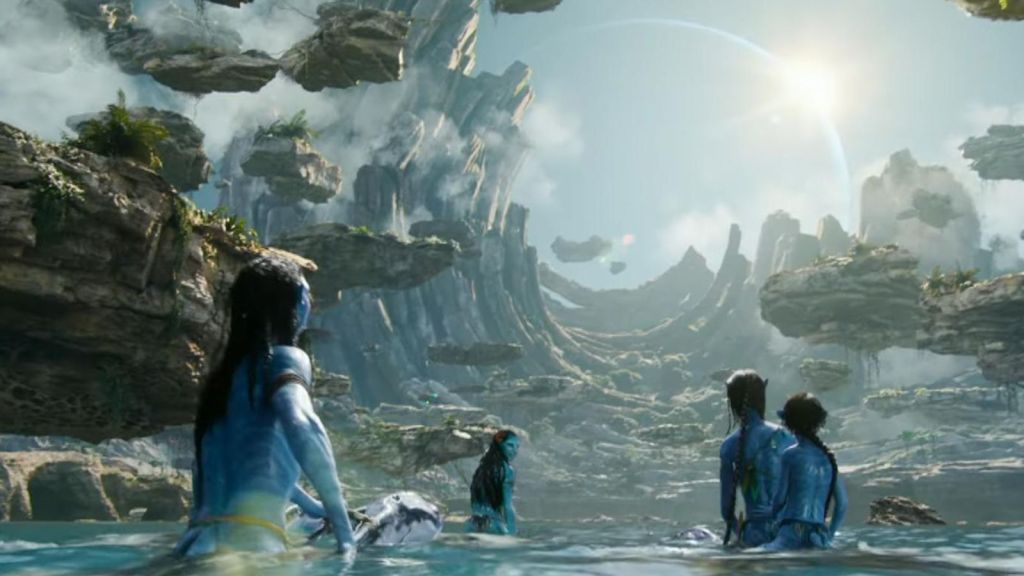
The eventual coup of the sailors is masterfully cut together, fast-paced and overwhelmingly modern. It’s another indicator of the huge influence Battleship Potemkin has had on the grammar of modern filmmaking. As we watch Vakulinchuk and his fellows fight the officers, chasing them across the deck, scrabbling for weapons and the final duel between Vakulinchuk and Commander Golikov, its only the silence and black-and-white imagery that really distinguishes it from a similar end sequence in Avatar: The Way of Water. Battleship Potemkin can lay claim to being the most influential action film ever made, it’s use of fast-cutting to build tension, empathy and the imposing terror of seemingly insurmountable odds in a hostile environment second to none.

Editing and montage was central of Eisenstein’s technique – and you can argue that camerawork, character and (sometimes) narrative were secondary. Battleship Potemkin works as well as it does because it is an experience film. Its characters are ciphers, all of them Marxist tools towards an end effect. Eisenstein’s film is one of cuts designed to bring pace and rhythm, to project and create a visceral emotive reaction. He is very different from other silent directors who used the camera as a viewing tool, mobile and flowing. His movement comes from fast edits and quick cuts. Battleship Potemkin is modern in the sense that its finest sequences are a dizzying array of cuts and quick shots, that continue to influence action films today.

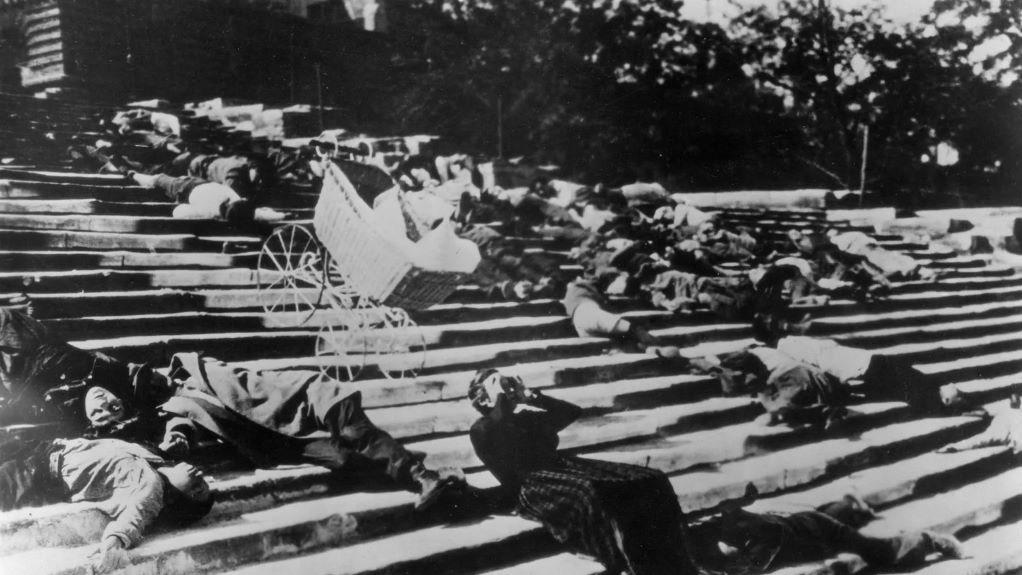
Which brings us, of course, to the Odessa Steps. Does it matter that this never happened in real life? Eisenstein essentially takes the 1905 Bloody Sunday massacre at the gates of the Imperial Palace in St Petersburg and transposes it to Odessa. It captures the mood of the time. Edits build in intensity – and swiftness – to highlight the growing tension and then explosive terror when the guns start firing. People flee in terror – one of the few tracking shots in the film follows the descent first of people, that that famous pram – down the steps. Reaction shots show a horrified mother, an older woman pleading for peace and a furious student radical.

And the furious intensity of the montage helps communicate the rampage. Careful cutting highlights the horror of a boy shot, trampled and then carried up to the soldiers by his distraught mother only to be gunned down. This is montage at its finest, and it even transforms time. People are shot and start to fall, we cut to reactions, soldiers marching, the stairs and then back to that person still falling. Is it reality? No. Is it drama? Yes. It’s a magisterial triumph of Eisenstein’s style, everything servant to the editing machine.

Battleship Potemkin is in the end all about editing. Eisenstein loves the impressions it can build. From maggots to officers. The sadistic priest’s face which constantly cuts back to his crucifix which thuds into his hand like a mace. The three lion statues – one lying down, one sitting, one standing up – cut swiftly together in sequence to give the impression the statue is reacting to events. Where Potemkin avoids camera inventiveness it more than makes up for it with the power of its montage.

And Eisenstein would argue that’s what cinema (ultimately) is and what differs it from theatre. It certainly works to make Battleship Potemkin thrillingly impactful. It’s no wonder that almost every country in the world – including the USSR – seems to have banned it at some point. It carries such visceral impact, it’s practically a weapon in the class war. Eisenstein’s influence continues to felt today, and while other pioneering directors would introduce more effective camerawork and story-telling techniques, none would harness the potential of the editing suite as effectively as Eisenstein.

Not seen it? Watch it now

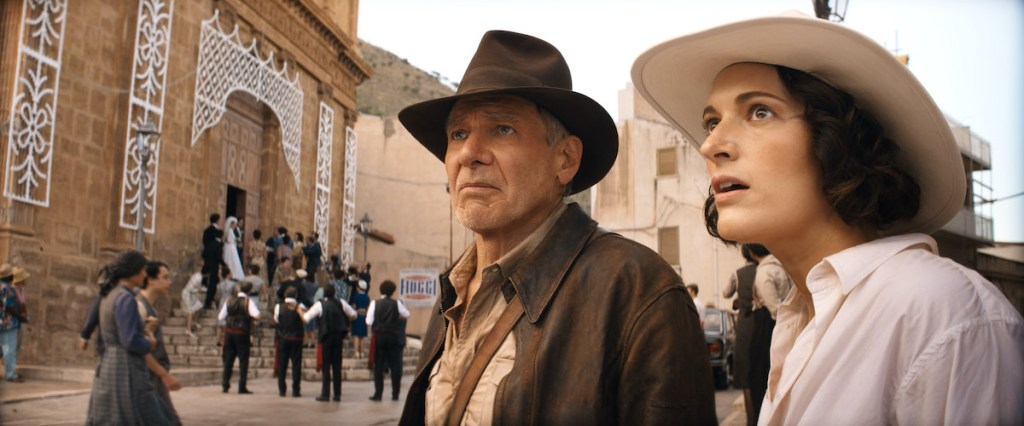
Indiana Jones and the Kingdom of the Crystal Skull (2008)

Indiana Jones and the Kingdom of the Crystal Skull (2008)

Indy is back. Hunting aliens. What could go wrong? Grab a fridge and let’s work it out.

Director: Steven Spielberg

Cast: Harrison Ford (Indiana Jones), Shia LeBeouf (Mutt Williams), Cate Blanchett (Colonel Irina Spalko), Karen Allen (Marion Ravenwood), Ray Winstone (George “Mac” McHale), John Hurt (Harold Oxley), Jim Broadbent (Dean Charles Stanforth)

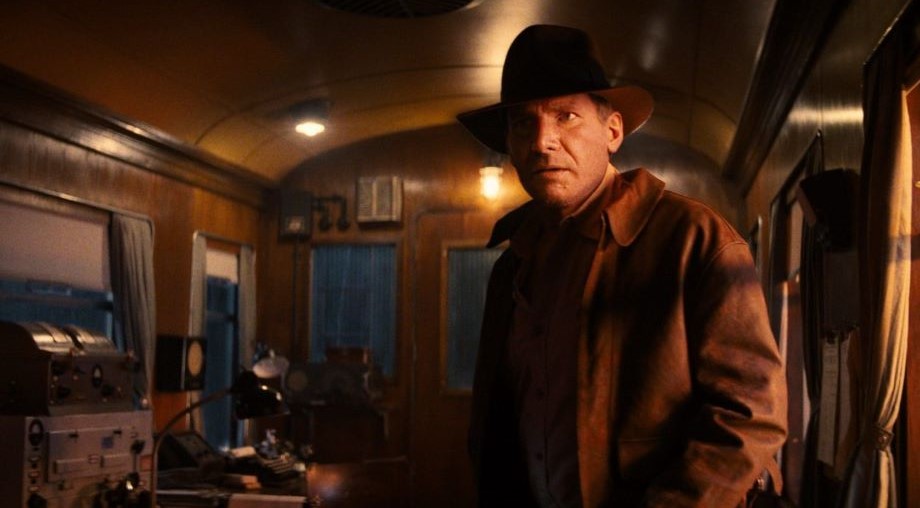
Flying into ignominy faster than a tumbling fridge, you’d be hard-pressed to find anyone who lists Kingdom of the Crystal Skull as their favourite Indy film. I’ll confess I enjoyed it in an affectionate escapist way when I first saw it. But lord, doesn’t it just get worse after every viewing?

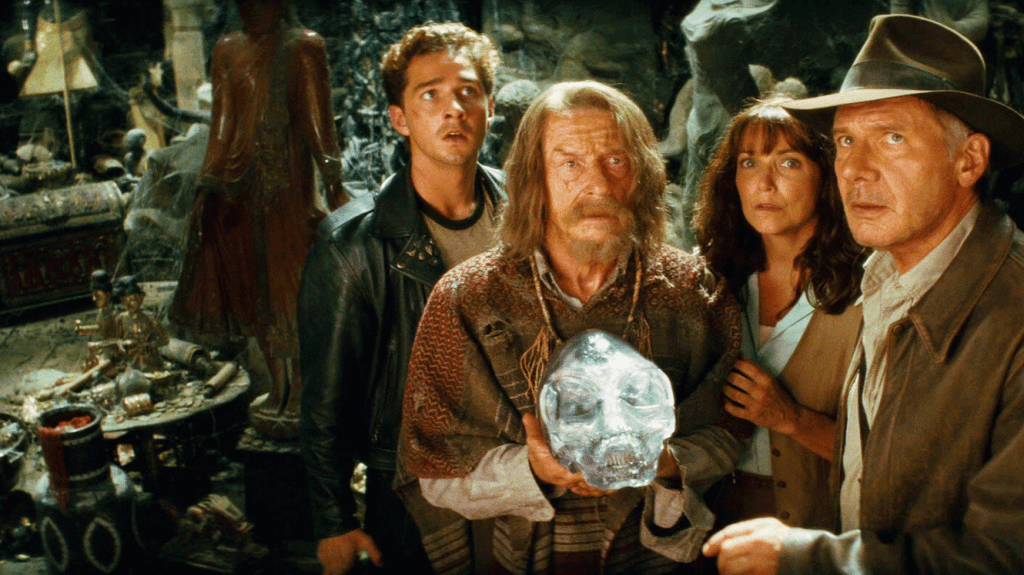
It’s the 1950s and Indiana Jones (Harrison Ford) is still hunting for archaeological gems. Just as he’s still getting into trouble. This time with the Russians. A secret group in America, led by Colonel Irina Spalko (Cate Blanchett) is on the hunt for a mysterious artefact – a secret mummified alien corpse. Spalko wants to trace the aliens to find the fountain of all knowledge. Indy is suspected of being a Commie agent – not least after his old ally Mac (Ray Winstone) is revealed as a double agent – but soon finds himself roped into searching for the secret aliens and their buried crystal skulls by Mutt Williams (Shia LaBeouf), a greaser and school drop-out and son of Marion Ravenwood (Karen Allen) (wonder who the father could be?). Soon they are racing to a secret alien tomb in the Amazon.

You can spend ages scooting around what doesn’t work here. But the heart of it might be this: this is a sequel trying to pass as a young man’s film, made by two older directors who had long since fallen out of touch with the passions that filled their lives 30 years earlier. Truth be told, I suspect both Spielberg and Lucas always saw Indiana Jones as a fun diversion from other passions and never really cared about it the way generations that grew up quoting it did. Perhaps that was the biggest disappointment of all about Indiana Jones and the Kingdom of the Crystal Skull, a film that has potential but always feels like it’s being put together by obligation (and to make money).

Still, the good stuff. Harrison Ford is, of course, still Indy and there is a great deal of pleasure in seeing him inhabit this gruff mix of brains, fists and reluctant, cynical decency. The film also does a good spin on the father-son relation of Last Crusade by casting Indy as the exasperated father who finds a bond with his wild-card son (well played by Shia LaBeouf). The two have a lovely run of banter, and some neat comedy – not least a great little moment in a bar where Mutt steals a drink from a waitress’ tray, only for Indy to smoothly put it back all the same motion.

There is an exciting chase through the streets of New Haven, with Indy and Mutt on a bike escaping the Russians, including a great sight gag of Indy being pulled into a chasing car passenger window, fighting through the car and emerging the other side back onto Mutt’s bike. The opening extended fight and chase sequence (before we hit that fridge) in an Area-51 storage site is equally well done, fast paced, witty and crammed with tonnes of Spielberg flourishes. Cate Blanchett is intriguingly off-the-wall as the villain. The film even leans into Ford’s age as Indy swings over a gap and misses (“Damn I thought that was closer”) and gives Indy much of his Dad’s grouchiness.

But too much doesn’t work. And all those beats that fall on their face eventually bury the moments that do work. For starters, the original films felt real. They are shot with a grainy realism and featured practical effects. Spielberg stressed in the build-up he wanted to keep that look. So naturally the first thing we see in the film is a CGI gopher. The film is shot with a glossy, lens-smeared shininess. After a while loads of stuff looks unreal. From the fake CGI sky in the opening scene to the hideously unreal looking jungle chase, culminating in the bizarre sight of Mutt swinging, Tarzan-like, leading an army of monkeys. Like the Star Wars prequels, it feels like Lucas and Spielberg mistook making things bigger, glitzy and more exotic for making them better. Truth is nothing in this film is as exciting as Indy climbing over a real van in Raiders or riding a real horse alongside a real tank in Last Crusade. These are real and gripping. Everything here looks like it’s been built in a computer, nothing feels real or possible, and everything is bigger and heartless.

That heartlessness carries into the plot. The earlier films had clear and emotionally engaging stakes. Indy had to save his soul (Raiders and Doom), a village of children (Doom) and his relationship with his father (Last Crusade) while chasing clearly defined artifacts. Here he’s sort of incidentally building a father-son relationship with a kid he doesn’t realise is his son until over halfway through and heading into the Amazon to return a glass skull because it told him to do it. These are not well-defined stakes. That’s before we even touch on the aliens.

I can’t quite put my finger on it, but where artefacts based on the Bible or Hindu religion make perfect sense, an alien skull chase that culminates in a parallel dimensions and flying saucers feels silly. It feels as awkwardly out-of-place as midichlorians in Phantom Menace. It makes the film jar as much as those special effects filled set pieces. I know it’s supposed to mirror the 50s setting by playing with the classic 50s B-movie set-up. But it doesn’t fit with the rest of the franchise.

And you are made even more aware of this by how cynically the film has been filled with fan-bait call-backs: the opening sequence in the Grail storage warehouse, the music cues, Karen Allen, a repeat of the father-son set-up (this time flipped), a car chase through a hostile environment, horrible small animals, Commies standing in for Nazis. Killer ants standing in for snakes, horrible insects and rats. Travel and map montages. All this does is remind you of better films.

It’s not helped by how many performances fall flat. Winstone and Hurt both insisted on reading the script before they signed up. Perhaps they also read their pay offers at the same time, because that’s surely the only reason they said yes to these roles. Winstone is painfully unfunny as the ever-betraying Mac whose geezerish cries of “Jonsey!” quickly gets on your nerves. Hurt is saddled with a sort of Ben Gunnish eccentric, babbling nonsense (you won’t believe by the way he and Ford are similar ages). Karen Allen, bar the sweetness of seeing her again, is not great.

The feeling you are watching the runt of the littler is impossible to escape. Indy was a hero people loved because you could see him bleed. When he was punched it hurt. When he fell, he struggled to get back up. The Indy from Raiders would never have been hurled miles in a fridge from a nuclear blast and been absolutely fine. Christ, he was too knackered to stand up after running from that rock. That’s why the fridge moment doesn’t work: no one watching it can believe for a moment that either (a) a fridge would be hurled away like that rather than melt (b) that anyone would be utterly unharmed by it or (c) that its lead lining would save anyone from being irradiated. A mystic box that melts people’s faces when open we can buy because its “power of God” is carefully established with just enough mysterious power. Something grounded in reality like a nuclear blast can’t work. We know what that does – the fridge stretches our willingness to disbelieve too far.

But then you feel Spielberg and Lucas didn’t mind. To them these were fun home movies, a chance to indulge some childish gags. They weren’t invested in it the way we were. They had moved on and I don’t think really either of them wanted to make it. When they did, they showed they didn’t really know what people really liked about the films in the first place. They assumed it was the action. Maybe they thought they needed that with the blockbusters they were going up against. But people loved the heart and the reality. When the fridge was nuked, they knew they won’t going to get that here. That Kingdom of the Crystal Skull would have none of what made us fall in love in the first place. It was an adventure we wouldn’t want to follow Indy on ever again.

The Magnificent Seven (1960)

The Magnificent Seven (1960)

Man’s gotta do what man’s gotta do in this iconic rollercoaster of a Western

Director: John Sturges

Cast: Yul Brynner (Chris Adams), Steve McQueen (Vin Tanner), Horst Buchholz (Chico), Charles Bronson (Bernardo O’Reilly), Robert Vaughn (Lee), James Coburn (Britt), Brad Dexter (Harry Luck), Eli Wallach (Calvera), Vladimir Sokoloff (Old Man), Jorge Martinez de Hoyos (Hilario), Rosenda Monteros (Petra), Rico Alaniz (Sotero), Pepe Hern (Tomas)

“That’s the greatest shot I’ve ever seen!” – Chico after seeing Britt take down a bandit on a horse with a pistol from an unimaginable distance.

“The worst. I was aiming at the horse.” – Britt’s response.

To be honest I could probably just watch The Magnificent Seven for that moment alone. Akira Kurosawa enjoyed this remake of his greatest film so much, he presented Sturges with a samurai sword as congratulations. It’s a staple of any rainy Bank Holiday and the actors who played the seven is a classic pub quiz question (how many have scratched their heads trying to remember Brad Dexter’s name?). The Magnificent Seven has passed into cultural legend.

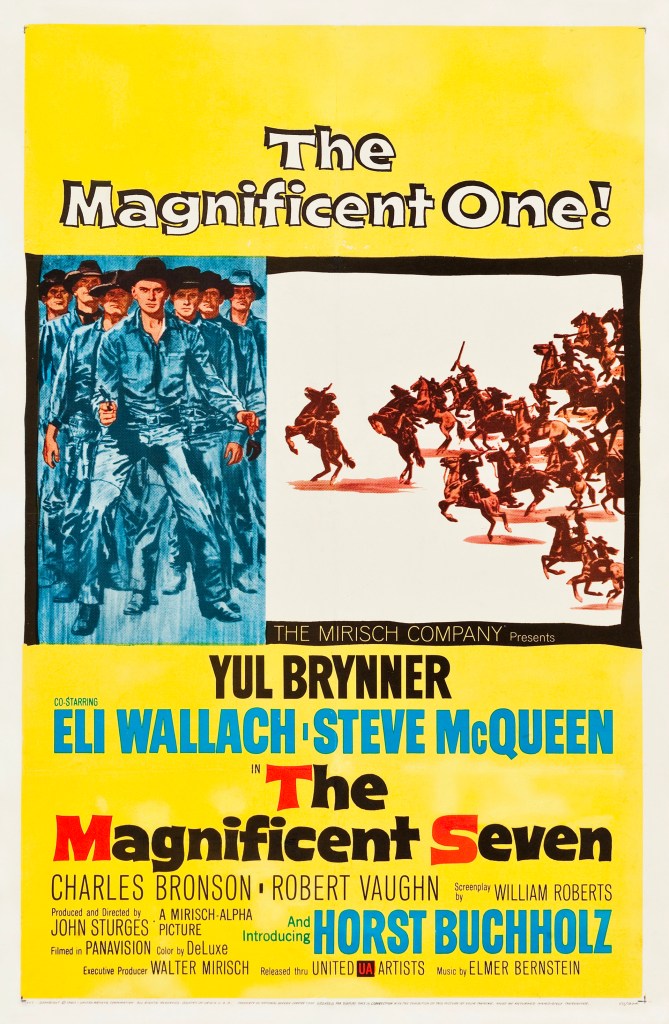
It’s a very faithful remake of the Japanese original (if an hour shorter). A farming village is plagued by bandits, led by scruffy, smug rogue Calvera (Eli Wallach). So, the farmers set out to find a gang of gunmen willing to work (almost literally) for peanuts to protect them. And they find themselves a heck of a posse: Chris (Yul Brynner), the unflappable tactician, Vin (Steve McQueen) the maverick sharp-shooter, tough-as-nails Bernardo (Charles Bronson), nervy veteran Lee (Robert Vaughn), samurai-like Britt (James Coburn), boisterous mercenary Harry (Brad Dexter) and plucky newbie Chico (Horst Buchholz). But will these few protect the village or will they cut and run when the going gets tough?

What do you think? The Magnificent Seven is one of those classic men-on-a-mission films, where men were stoic, noble and only stopped taking names to kick some ass. While The Magnificent Seven sheds much of the class and culture-based depth and tragedy of the original, it certainly doubles down on its fun and excitement. It barrels along with glorious energy from set-piece moment to set-piece moment, all marshalled with great skill by Sturges.

And those set-pieces are great. Chris and Vin riding a hearse shotgun (literally) through town when no-one else has the guts to do it. Britt’s dazzling knife-throwing skills calmly winning him victory in a one-on-one with a braggart. Chico proving his worth on the journey back to the village and berating the villagers running in fear from their rescuers (“Now we are seven”). The first battle with the bandits. That legendary bad shot from ice cool Britt. The final face-off in the village. What’s not to love about this explosion of well-paced, gripping, exciting action?

The casting was a smorgasbord of talents. Books have been written about Brynner and McQueen’s personality clash. The evidence of their on-going game of one upmanship is all over the picture. In nearly every shot Brynner is in, McQueen can be spotted in the background fiddling around with his hat to pull focus. Brynner took to elaborate cheroot lighting using his boot to keep eyes on him. Either way, the two of them bring their qualities perfectly to the screen. Brynner has more than a touch of the old master samurai to him, McQueen the cocksure cool (it wouldn’t be a surprise to see him turn up to the village on a motorbike). Sturges’ film builds a surprisingly warm friendship between these two that forms the emotional heart of the film.

The rest of the gang all get their moments in the sun. Robert Vaughn expertly makes Lee’s loss of nerve look like careful, deadly precision rather than a desire to duck whenever bullets go flying – in a few strokes he presents a lifetime of front to maintain presence. James Coburn – a huge fan of the original – brilliantly channels Seiji Miyaguchi as an unflappable professional. Brad Dexter bounces along as jovial chancer. Bronson gets the dullest role as the guy who befriend the village kids but manages to make his priggish material (the Western equivalent of “you kids should take care of your education and listen to your parents”) sound like tough-guy cool.

The film’s main change was to dramatically reduce the importance of Toshiro Mifune’s character, here represented by Horst Buchholz’s farmer turned gunman (also taking on Isao Kimura’s romantic subplot). Buchholz gets a version of the “the farmers are made who they are by the warriors” speech that the iconic Mifune nailed in Seven Samurai. But it’s a weaker, under-written part – it feels like what it is, a functional role for a pretty actor – with Buchholz awkwardly and dutifully going through the romantic motions with village girl Petra.

It’s part of the lack of depth to The Magnificent Seven. The original’s study of shattered world orders and the dangers of progress and change have no comparison here, although the film has a rather nice moment as the heroes bemoan the loneliness of their chosen lot (“Home, none. Wife, none. Kids… none. Prospects, zero. Suppose I left anything out?”). Brynner’s Adams has a lovely touch of regret at lost chances behind his manly eyes. The surviving gunmen know it’s the farmers who really win in the end. But, even with that, this is a film more interested in entertaining you.

That’s why we get a proper villain – Wallach’s great value as this ingratiating bully, who can’t even begin to understand what would motivate people to do something for so little gain – to give the final battle even more of a personal touch. Sturges also makes sure we get the full entertainment value of these grizzled fighters giving their all – perhaps for the first time – for a cause that goes beyond their immediate needs and that might just help give some meaning to their lives.

Above all though it’s rollicking good fun. Sharply written with tons of good lines, well-played by the cast and shot with pulsating excitement by John Sturges, every scene offers a little moment of delight. It’s a film you can kick-back and enjoy no matter what day it is, full of thrills and spills. One of those classics that never troubles the greatest films list, but always finds a place on the most popular lists.

Avatar: The Way of Water (2022)

Avatar: The Way of Water (2022)

Cameron’s film makes a huge splash despite its soggy plotted, flooded run-time

Director: James Cameron

Cast: Sam Worthington (Jake Sully), Zoe Saldaña (Neytiri), Sigourney Weaver (Kiri Sully), Stephen Lang (Colonel Miles Quaritch), Kate Winslet (Ronal), Cliff Curtis (Tonowari), Jamie Flatters (Neteyam Sully), Britain Dalton (Lo’ak Sully), Timothy Jo-Li Bliss (Tuk Sully), Jack Champion (Spider), Bailey Bass (Reya), Filip Geljo (Aonung), Duane Evans Jr (Rotxo), Edie Falco (General Frances Ardmore), Brendan Cowell (Captain Scoresby), Jermaine Clement (Dr Ian Garvin)

After thirteen years it finally arrived. The sequel to a film that seemed to leave no cultural impact, Avatar. People were convinced it would flop. But they say that about all Cameron films. And, if anyone should have learned anything from Terminator 2, Titanic and Avatar it was don’t bet against Cameron. If Avatar 2’s purpose was to make an awful lot of money, it has succeeded in every level. If its purpose was to make a strong and entertaining film… I’m not so sure.

About the same amount of time has passed on Pandora and Sully (Sam Worthington) and Neytiri (Zoe Saldaña) have raised a family of four children, including Kiri (Sigourney Weaver) born from the avatar of their friend Grace. They have also raised Quaritch’s son ‘Spider’ (Jack Champion) among them. Then the humans return… a bloody war begins, with Sully leading a guerrilla campaign. The company resurrects Colonel Quaritch (Stephen Lang) as a Na’vi super soldier to fight on their own terms. After Spider is captured, Sully and his family flee to live among the Metkayina, a sea-living tribe. But they can’t escape the war and its dangers.

As Avatar: The Way of Water is garlanded with praise and Oscars nominations, I feel like we are all part of a wide conspiracy of silence. So desperate are so many to keep viewers handing over their cash at the box office, that a film completely designed to be seen on the big screen (and this really is) is being praised to the skies by some as a masterpiece. It is not. It’s not even the best Avatar film. Instead, Avatar 2 is a visually impressive but hellishly long, predictable re-tread of the first film that stuffs the eyes with CGI wonders but leaves not a jot for the heart.

I was reminded part way through the overlong runtime that Cameron once made imaginative, thrilling sequels that completely reset the table. Aliens reinvented a haunted house horror movie as a pulsating action film. Terminator 2 turned a chase story into ramped up family story that mused on destiny. Avatar 2… basically tells exactly the same story, but with a familiar generational family conflict storyline and lots of water. It has the same environmental messages and anti-corporation vibe. When this lands, it works. A whale hunt is shot in terrifying detail, a giant mother whale creature brutally trapped and eviscerated for a small cannister of fluid extracted from its brain. This is also probably the most effective sequence and the one that moved me the most.

The effects do look impressive. There is no denying that, and the motion capture that turns the actors in blue giants is totally convincing. These Na’vi look and feel like flesh and blood beings. The visual imagination that creates this world, with its sweeping vistas and eclipse-kissed sky not to mention the myriad exotic creatures that populate it are stunning. If Avatar 2 deserves praise it’s for that. Pretty much every single frame looks like it cost a million dollars.

Unfortunately, it often also has a sheen of unreality. I became desperate for something real to appear on screen. But when only one character out of ten is not an effect, you don’t get much of that. On top of which the decision to film in slick, blur-free 48 frames per second means everything glides across the screen with the perfect-focused quality of a videogame. Don’t know what I mean? Try looking at things around you while moving your head at moderate speed. What do you see? Blur. Blur is real. The perfect focus of this world clues you up in every second that nothing in it is real.

The lack of reality eventually starts to remind you of The Phantom Menace. In fact, the only thing really separating this from that disaster is that James Cameron is a master director of epic, visual cinema. The film-making here, as a technical exercise , is beyond reproach. And few directors shoot action scenes with as much skill and raw excitement as Cameron. I can’t fault anything about that, even while I struggled to care as they dragged out over a huge chunk of time.

But Cameron’s weakness as always been the writing. He is a flat and unimaginative writer of dialogue – the Na’vi dialogue is awful flicking from ponderous (“We Sully’s stick together. That is our greatest weakness. And our greatest strength!”) to painfully bad (the number of “Bros” and “Dudes” from the Na’vi teenagers is fist-bitingly awkward, like your Dad trying to be down with the kids).

That’s not mentioning the fact that it’s so similar to the first film. The earth people return, war starts and eventually our heroes travel to a new part of Pandora where, just like Jake in the first film, they go through a training montage to learn the “way of the water”. This takes up most of the middle act. That’s not forgetting the huge number of themes and characters reshuffled and represented.  We build towards a clash very similar to the first film at the end. Nothing here feels fresh, everything feels like a retread. Our villain is resurrected as a Na’vi but, despite almost being defined by his racism in the first film, he doesn’t bat an eyelid at this.

There is a vague attempt to transfer Sully’s “torn between two cultures” storyline to Spider. But this character remains terminally under-developed and the film’s attempt to explore the father-son dynamic between him and Quaritch is so rushed, you wonder if Cameron was interested (odd since it’s crucial to the final act). Instead, we get a huge amount of generational clash in the Sully family, with Jake butting heads with his second son who struggles with being “the spare” (oddly appropriate right now), a hot head who gets everyone in trouble. These play out with a reassuring predictability, so much so that if I asked you to guess the fates of those involved you probably could.

There are bizarre logic gaps. Quaritch and his soldiers have been resurrected to destroy the Na’vi resistance – but instantly drop this for a personal vendetta against Sully (no one seems to care about the resistance after the first half an hour). When Spider is captured, Sully and gang don’t give a damn or even consider rescuing him. Sully doesn’t want to put the forest Na’vi in danger by staying – but doesn’t care about moving that danger to the water people.

Above all it’s frankly hellishly long, fully of trivial culture clash stuff and just the fact that the people in at are giant and blue or that it looks fabulous doesn’t make it good. Instead, Avatar 2 is a re-tread that feels like its treading water, spinning plates and repeating rather than reinventing. I’d rather watch the original again which, while it wasn’t inspiring, at least felt new.

Robin Hood: Prince of Thieves (1991)

Robin Hood: Prince of Thieves (1991)

I can’t lie: no matter how many faults it has, Costner’s Robin Hood epic is above all criticism for me

Director: Kevin Reynolds

Cast: Kevin Costner (Robin of Locksley), Morgan Freeman (Azeem), Mary Elizabeth Mastrantonio (Lady Marian), Christian Slater (Will Scarlett), Alan Rickman (Sheriff of Nottingham), Geraldine McEwan (Mortianna), Michael McShane (Friar Tuck), Brian Blessed (Lock Locksley), Michael Wincott (Guy of Gisborne), Nick Brimble (Little John), Harold Innocent (Bishop), Walter Sparrow (Duncan), Daniel Newman (Wulf), Daniel Peacock (Bull), Sean Connery (King Richard)

I find there’s a simple way of telling if someone is the same generation as me. Hum a few bars of Bryan Adam’s Everything I Do. Adopt an American accent and proclaim you are showing “English courage”. Rasp about cutting someone’s heart out with a spoon or calling off Christmas. Mime shooting a flame tipped arrow or say before carrying out anything complex that you’ve “seen it done many times…on horses.” All of which is to say, if you haven’t already guessed from this parade of in-jokes, that Robin Hood: Prince of Thieves is one of those films of my youth immune from criticism.

The second biggest box-office hit of 1991, having beaten a crowd of Robin Hood pictures to the screen, Prince of Thieves is, to be honest, a ridiculous cheese-fest of wildly inconsistent tone and acting styles, murkily shot and hurriedly plotted. It feels at times like what it is – a film rushed to the screen as quickly as possible to hit a deadline. I know truth be told, it’s a bit of a mess. But it doesn’t matter. I love it. If you, like me, saw this for the first time around 12 or 13 how could you not? For all its many flaws, it’s a massive, rollicking adventure. So, while my head tells me Errol Flynn is the finest Robin Hood on screen…my heart will always be with Costner’s oddly accented outlaw.

In 1194 Robin of Locksley (Kevin Costner) the son of a baron (Brian Blessed of all people!), is captured by the Moors on Crusade and escapes along with fellow prisoner Azeem (Morgan Freeman), who vows to repay his life debt to him. Together they arrive in England to find the land in urgent need of healing. The tyrannical Sheriff of Nottingham (Alan Rickman) plots to seize the throne and Robin is named an outlaw. He and Azeem find sanctuary in Sherwood Forest, where Robin becomes the leader of a band of outlaws. He robs the rich to give to the poor, romances Marian (Mary Elizabeth Mastrantonio), and fights to uphold justice.

All of this is played out in the very best blockbuster style, with logic frequently thrown out of the window in favour of excitement, jokes and gravity defying arrows. Kevin Reynolds was hired to direct to lure on board his fellow Kevin (and mate) Costner, then the biggest star in the world. Costner as the wealth-redistributing bandit is, in reality, as bizarre a piece of casting as Richard Gere playing Lancelot. Never the most confident with accents, rushed producers essentially told Costner told to not bother, concluding most moviegoers wouldn’t give a toss if Nottingham’s most-famous son spoke with a Californian twang. They were right. And to be honest, it’s part of the film’s crazy charm.

After all, the film plays fast and loose with everything else about England. This is the film where Robin arrives at the White Cliffs of Dover and announces it’s a day’s walk to Nottingham. That is, let me tell you, a very long day – particularly when you go via Hadrian’s Wall (which Costner then confidently tells us is but five miles from Nottingham). Any grasp of actual English history is completely irrelevant to a film set in a fantasy merrie-England, where the Bayeux Tapestry, Celtic warrior tribes, lords who dress like the KKK, witches and a King Richard who looks and sounds like Sean Connery (the real Richard was 38 and French) all co-exist.

But who cares? Nothing in the film is meant to be taken seriously, and surely Reynolds and co reckoned we’d work that out when Costner – for whom five years in prison has made no impact on his film-star good-looks but left his fellow prisoners scrawny, wasted men of skin and bone – slams his hand down on an anvil and announces to a man preparing to cut his hand off “This is English courage!” in that Californian lilt. It’s not just him: accent-wise the film is all over the place. Christian Slater also makes no attempt at an accent while Mastrantonio’s is impeccable; the Merry Men come from all over the place, Mike McShane vaguely flattens his Canadian accent and Morgan Freeman goes all in on a Moorish accent. This all adds to the fun.

And what fun it is. Reynolds can shoot the hell out of an action set piece and if you don’t get a buzz from seeing Costner shoot a flaming arrow in slow-mo, firing another through a rope, or taking down rampaging Celts with them like they were heat-seeking missiles, there is something wrong with you. A flame-soaked battle in Sherwood is an action highlight – full of drama and terror – and the film’s closing grudge-match between Robin and the Sheriff a high-octane mano-a-mano sword fight.

It gains a huge amount from its impeccable score. Of course, we all remember Bryan Adam’s Everything I Do (it was number one for most of 1991). But the film’s real MVP is Michael Kamen, whose luscious, rousing score lifts even the film’s weakest moments to the heights of classic action adventure. The film’s opening number is a triumph of epic scene-setting. His work fills moments of triumph with joy, beautifully complements (and improves!) comedy and provides a genuinely moving romance theme that bolsters the chemistry between Costner and Mastrantonio’s strong-willed and independent Marian (even though film rules demand the woman introduced to us as something akin to a ninja ends the film a white-dressed damsel-in-distress).

The film’s other MVP is, of course, the late, great Alan Rickman. If you wonder why a generation of people worshipped Rickman, you need only look at his leave-nothing-in-the-dressing-room performance here. So reluctant to play another villain that he only agreed when given carte blanche to play the role however he wanted (including re-writing all his lines with the aid of friends Ruby Wax and Peter Barnes), Rickman delivers his second iconic villain after Gruber. He has a gleeful, OTT, pantomime glee, seething with frustrated impatience at his incompetent underlings but carrying more than enough genuine menace to be threatening. Every line he has – almost every single one – is laugh-out loud funny, either due to its grandiosity or Rickman’s utter commitment and darkly sexy energy (he also makes a beautiful double bill with Geraldine McEwan: two pros milking the film’s comic potential for all it is worth).

Rickman dominates the film – although of course, as he himself said, he had the far more fun and wilder part than Costner – and is central to many of its most iconic moments. What makes it work is Rickman is very serious about not taking the film very seriously: he’s not laughing at it or wanting us to know how superior he is to it: instead he throws himself with gusto into an all-action panto.

With this sort of thing, you can forgive the film’s wildly inconsistent tone (it ends with a prolonged semi-rape joke for goodness sake!), its at times forced attempt to suggest a community among a random collection of Brit character actors playing the merry men, or its meandering into some dark material. Morgan Freeman not only shows surprising action chops, he also gets a showcase for his mentor and comedic abilities. The resolution of the antagonistic relationship between Robin and Will Scarlett is surprisingly effective (it’s another note of the film’s bizarreness that we are meant to believe Costner and Slater both sprang from the Blessed loins) and those action set-pieces work.

The film wasn’t always a happy experience – Reynolds was forced to shoot it in ten weeks on no real prep and was locked out of the editing suite – but perhaps the rush helped create the boisterous adventure we end up with. Maybe years of study and research would just have been less fun. Who cares about dusty books when Robin and Marian can kiss at a misty riverside to the tune of Bryan Adams or Costner splits an arrow in two with another arrow at a thousand paces? Robin Hood: Prince of Thieves is a big, silly, action film full of flaws. And I wouldn’t change a frame of it.

Black Panther: Wakanda Forever (2022)

Black Panther: Wakanda Forever (2022)

Grief and loss are the beating heart of this tender and heartfelt Marvel film, mixed with standard action tropes

Director: Ryan Coogler

Cast: Letitia Wright (Shuri), Lupita Nyong’o (Nakia), Danai Gurira (Okoye), Angela Bassett (Queen Ramonda), Tenich Huerta Mejía (Namor), Dominique Thorne (Riri Williams), Winston Duke (M’Baku), Martin Freeman (Everett K Ross), Julia Louis-Dreyfus (Valentina Allegra de Fontaine), Florence Kasumba (Ayo), Michaela Coel (Aneka)

There is one thing you can never imagine – and never want to – having to plan for in your franchise. The tragic loss of your lynchpin. For Black Panther that man was Chadwick Boseman, and his heart-breaking early passing hangs over the film like a shroud.

Black Panther: Wakanda Forever is two films in one. One is a standard Marvel adventure film, with gags, set pieces and careful groundwork laid for future entries. The other is a heartfelt eulogy, a processing of the raw shock the people making the film – and many watching it – felt at the loss of this fine actor. In universe, T’Challa (Boseman) has passed away. His sister Shuri (Letitia Wright) blames herself for failing to save his life and his mother Queen Ramonda (Angela Bassett) has become protective and unrelenting in her judgements.

With its monopoly on vibranium, Wakanda is now the most powerful nation on Earth. Other powers want a piece of that apple – and the US are plumping the deaths of the oceans for vibranium. But their search intrudes on a secret underwater civilisation led by wing-footed, super-strength Namor (Huerta Mejía). Namor threatens to unleash destruction unless Wakanda deliver him the scientist who created the US’s vibranium detector – who turns out to be a college student genius with Tony Stark vibes, Riri Williams (Dominique Thorne). When Shuri refuses to hand her over, Namor states he is coming for the surface – and will destroy Wakanda, a country he cannot trust.

Black Panther: Wakanda Forever is bookended by two heart-breakingly genuine moments of emotion. The death of T’Challa (off screen) and his funeral – a grief stricken, beautifully filmed funeral procession – carries a great deal of genuine rawness. A final montage of shots of Boseman, presented as the memories of Shuri finally coming to terms with her brother’s death is moving. The strongest parts of the film are these human moments. Wright has been open at her shock and pain at Boseman’s death and this translates beautifully in her affecting performance.

These adjustments to the script are the strongest parts of the film. Letitia Wright and Angela Bassett provide subtle, delicate work as two people affected by grief in very different ways, but both now more reckless, protective and retributive than before. The responses, guilt and pain of several characters carry real force and leave the deepest mark on the audience. It also builds a subtle “passing the torch” narrative, as Wakanda fears they have seen the last of their “Black Panther” who protected their nation through history.

Away from this, the film settles into being a more traditional Marvel franchise extender. Rightly much time has been given to the real-life tragedy, but this means much of the remainder of the plot feels rushed. Our new antagonists are hurriedly introduced – so much so that leader Namor (well played by Tenich Huerta Mejía with a charisma that covers an under-written part) introduces his people’s entire culture in an awkward info dump an hour into the film. Not a single other character of his merman race gets so much as a name (as I can remember) let alone a personality.

Despite being a slightly silly concept of an Atlantan (but definitely not Atlantis because that’s already been claimed by another franchise) underwater city with water pressure having given its inhabitants super-human strength, it is another strong commitment to diversity. These people descend from the Mayan civilisation, meaning they share the same history of persecution by the West as the African nations Wakanda represents. It should make them natural allies, right?

Of course, it doesn’t as this is a film that pivots on the mistakes and miscalculations of political leaders and how these force them into war. The film makes its point about political rivalries early with Ramonda giving the French and US an almighty ticking off at (a surprisingly small) UN for their ruthless attempt to obtain vibranium for themselves. However, Black Panther: Wakanda Forever dodges really delving into the most interesting implications of this.

Because there is a kernel of a really interesting, challenging idea here. In many ways Wakanda behaves with exactly the same domineering arrogance as the Western powers they criticise. The Wakandans take unilateral decisions for the world because they know best, treat other nations like recalcitrant children and horde the world’s most powerful resource for themselves. They are this close to a benign, dictatorial state. But the film isn’t interested in exploring this.

Bringing Wakanda and Talokan into rivalry on the grounds of Talokan seeing them as potential oppressors – as the most powerful among the surface nations they have always feared would crush them – would have been more interesting than the confused, convoluted “with us or against us” war we end up with. But I understand that a film, which prides itself on celebrating African culture, is not going to want to be seen as undermining any of that with something sharper.

Besides, this is all a set-up for the inevitable large scale action sequences. The finest is a haunting attack on a ship, where the Talokans use their siren voices to inspire the crew of an American black ops ship to drown themselves. There’s a decent car chase, some well-choreographed fights a pitched battles that thrill. It’s also notable that the loss of Boseman has led to this franchise being dominated by women of colour, all of whom deal with the sort of dilemmas and consequences that are normally the preserve of male (and white) comic-book heroes.

But the film’s heart is in the personal moments – and more interesting when looking at Shuri’s protective affection for Dominique Thorne’s plucky (sometimes overly so) inventor. It’s also interesting that this is a film that flirts more than I was expecting with its leads choosing anger and vengeance, over forgiveness and conciliation. Shuri and Ramonda lash out, with dangerous consequences, and express minimal regret. Black Panther: Wakanda Forever deserves points for being willing to tackle the negative implications of grief.

That’s the strength of the film, just as a pain of Boseman’s death is the beating heart. Black Panther: Wakanda Forever is overlong and skips more challenging ideas, but it is also shot through with genuine grief. It’s not perfect, but it’s real, well-meaning and (for all its silliness and bombast in places) has a heart firmly in the right place. When a Black Panther rises in the final act, you will feel the film has earned it.

The Most Dangerous Game (1932)

The Most Dangerous Game (1932)

Manhunting takes on a new meaning, in this punchy, influential horror-thriller that launched a whole genre

Director: Ernest B. Schoedsack, Irving Pichel

Cast: Joel McCrea (Bob Rainsford), Fay Wray (Eve Trowbridge), Robert Armstrong (Martin Trowbridge), Leslie Banks (Count Zahoff), Noble Johnson (Ivan), Steve Clemente (Tartar), William Davidson (Captain)

It’s man of course. Adapted from Richard Connell’s iconic short story, The Most Dangerous Game sees famous big-game hunter Bob Rainsford (Joel McCrea) washed up on jungle island in the middle of the ocean. He finds a Gothic castle, home to White Russian aristocrat Count Zahoff (Leslie Banks). Zahoff is an overblown egotist with a hunting obsession. He seems an urbane, generous – if sinister – host. But what’s behind that locked iron door? If he’s such a passionate hunter where are all his trophies? And why do people keep getting ship-wrecked and disappearing on his island?

The Most Dangerous Game is staged in a trim 63 minutes, with much of the first half being build-up towards the extended chase sequence that fills it’s second half. The film kickstarted a genre of “manhunt” films, which would take its ideas (and violence) much further. On its release, many of the shots of Zahoff’s human trophy room (with its mounted and pickled heads and his grim, wry commentary of the fates each met on his hunt) were cut, and the first victim, drunken buffoon Martin Trowbridge (Robert Armstrong) is killed off camera. That’s not to say the violence is avoided as the film’s final battle features snapped spines, stabbings and death by bloody-thirsty hounds.

It all makes for an exciting film, told with whipper-sharp pace. This is especially surprising considering how relatively slowly it starts, with Rainsford and his friends chatting about the ethics of hunting (oh the irony!) on their luxury yacht before it sails into Zahoff’s booby trap. Any idea we are in for a staid journey is quickly dispelled as Rainsford’s two fellow survivors are swiftly gutted by sharks, forcing him to swim for shore and the striking, immersive jungle set.

The Most Dangerous Game was shot on the same sets as King Kong – either concurrently or as a test for design work for that classic, depending on who you ask. Schoedsack would go on to direct that – and bring along Wray, Armstrong and several other members of the cast – and TMDG is a wonderful initial try-out for Kong. You can even recognise shots and settings from that film, while the film’s wonderful use of tracking shots, careful editing and superb whip-pans as hunter and hunted charge through the bushes makes for brilliant dramatic tension in its own right.

That’s after we’ve had the odd gothic, horror-tinged oddness of Zahoff’s castle. Zahoff’s trophy room is somewhere between medieval torture chamber (a sort of iron maiden device seems to be the main persuader Zahoff users to get guests to join in ‘the game’) and haunted house, with pickled heads bubbling in jars. The house itself is intimidating, huge in scale with rooms decorated with blood-thirsty hunting tableaus inspired by myths and legends.

It all matches Zahoff’s own OTT grandness. Played, in a remarkable film debut, by Leslie Banks, Zahoff is a truly iconic villain. Banks, a war veteran with striking scars and half of whose face had been paralysed, is a mesmeric, captivating presence whose eyes shine with obsessive indifference and sadistic glee. Spending his nights pontificating to his guests – who he treats with snobby disdain – he’s also a braggart and a cheat. He talks a good game of giving his guests a “fair chance” – but arms them only with a knife, while he has a bow and arrow and rifle (not to mention a team of dogs and three burly, violent, Tartar servants). Banks plays the role to the absolute hilt, dressed in stormtrooper black, a riotous operatic grandness just the right side of camp, relishing every second.

He soaks up most of the interest in the film. Joel McCrea is left with little to do but to look wary – although the revenge-soaked fury he returns with in the film’s violent denouement is effective. Fay Wray adds a lot of charm to the film in this early trial as scream queen. Robert Armstrong tries the nerves a little too much as her drunken brother, overplaying the comic stumbling. But the relative grounded normality of McCrea and Wray is needed for us to stick with them when they are reduced to fleeing through the jungle to escape the maniacal eyes of Banks.

Zahoff of course wants to get the respect of noted hunter Rainsford, but that doesn’t stop him frequently cheating in their battle of wills. He’s smart enough to dodge Rainsford’s traps, but doesn’t hesitate to unleash his hounds or leave (what he believes to be) the killing blow to someone else. It’s a nice beat to remind us that, for all his big speeches, Zahoff is an inadequate bully desperate to be the legend he claims to be.

It’s something we grow aware of throughout the film’s momentum packed second half, essentially a wild chase through the jungle with Rainsford and Eve desperately trying everything to stay one step ahead (the original story didn’t include a female character, but it’s a wonderful insertion which helps humanise Rainsford considerably compared to Zahoff). The unrelenting action, expertly shot, is undeniably exciting (even if we expect, based on its successors, a higher number of innocents being chased to meet fatal deaths) helping to make TMDG one of the most influential B-movies around.