Tag: Edie Falco

Avatar: Fire and Ash (2025)

Avatar: Fire and Ash (2025)

Third chapter in the story and it covers some familiar ground to the first, while still being great to look at

Director: James Cameron

Cast: Sam Worthington (Jake Sully), Zoe Saldaña (Neytiri), Sigourney Weaver (Kiri), Stephen Lang (Colonel Miles Quaritch), Oona Chaplin (Varang), Cliff Curtis (Tonowari), Kate Winslet (Ronal), Joel David Moore (Dr Spellman), CCH Pounder (Mo’at), Edie Falco (General Ardmore), David Thewlis (Peylak), Jermaine Clement (Dr Garvin), Giovanni Ribisi (Parker Selfridge), Britain Dalton (Lo’ak), Jamie Flatters (Neteyam), Trinity Jo-Li Bliss (Tuktirey), Jack Champion (Spider), Brendan Cowell (Captain Scoresby)
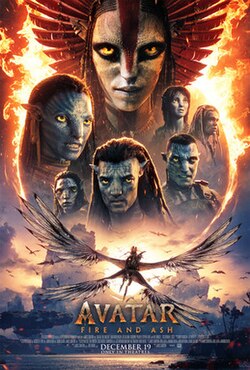
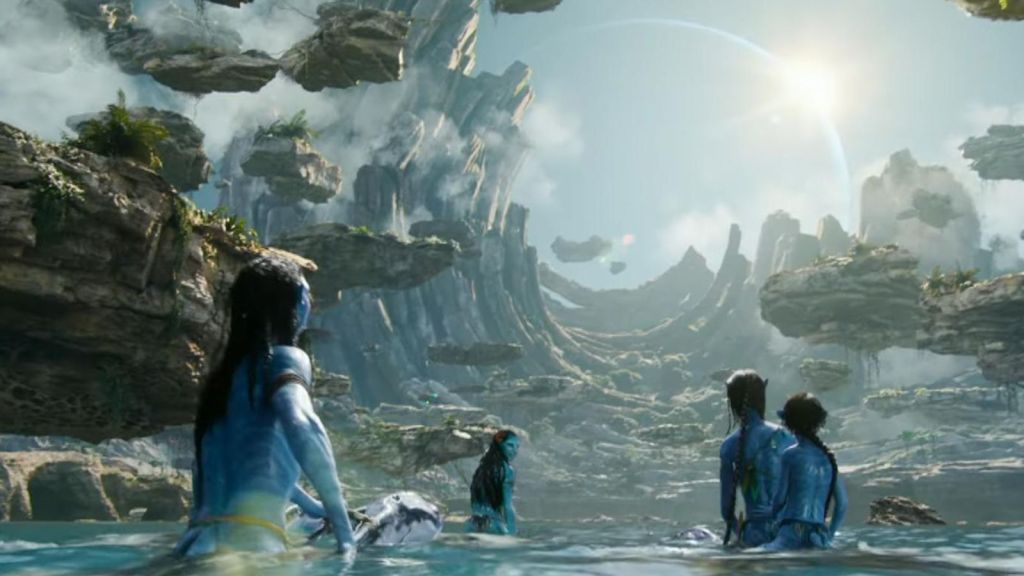
Back to Pandora we go. You can’t deny the beauty and spectacle of James Cameron’s imaginary world. Does Avatar: Fire and Ash take us anywhere the previous two films didn’t? On paper, I suppose it does. Some new locations, an interesting new tribe, some new visual wonders. But narratively, no it really doesn’t. Avatar: Fire and Ash perhaps shows the limits of the Avatar universe, essentially presenting us remixed elements of the previous two films, set out over a huge running time. It’s hard not to think that, already, we’ve seen it all before.

Picking off where the previous film left off, Jake (Sam Worthington) and Neytiri (Zoe Saldaña) mourn the death of their son Neteyam. With Neytiri increasingly hostile to humans and adopted human honorary son Spider (Jack Champion) just one failed breathing device away from dropping dead on Pandora, the decision is made to take him back to the rebel human scientists. En route, the family are attacked by a savage, fire-worshipping Na’vi tribe, led by the aggressive Varang (Oona Chaplin).

In the chaos, daughter Kiri (Sigourney Weaver) discovers her unique bond with spirit of the planet Eywa, giving her the power to give Spider the ability to breathe Pandora’s toxic-to-humans air. This makes Spider the centre of a deadly game of push-and-pull: if the humans can retro-engineer his ability, they could conquer Pandora; if Jake lets him live, he will always be a danger. Then there’s the influence of Spider’s natural father, Quaritch (Stephen Lang), still living on in his Na’vi body, but increasingly fighting his own battles – and joining a passionate alliance with the dangerously destructive Varang.

I watched Avatar: Fire and Ash in about three chunks on Disney+. Which I actually think does the film a lot of favours. For starters, it avoids the crushing weight of watching the whole four hours in one sitting. Secondly, giving it an episodic breakdown like that works rather well with Cameron’s narrative structure which breaks the film down into three natural acts (conflicted opening – separated family – unity in the final battle). But what it can’t disguise is the fact that so much of this film feels like reheated elements of the previous films. Right down to the film’s final battle, which combines narrative and visual elements of the final battles of both the previous films, in both the sky and the air.

Throw that in with not only a repeat of Sully’s ‘chosen’ status and many elements of his original story gifted to daughter Kiri (though Sully clings on to more than enough of it). Sigourney Weaver has a lot of fun with the way motion capture gives her the chance to play a teenager, but her passionate, slightly scared exploration of what might be her profound powers does feel rather similar to Jake’s own journey in the original film. Even Neytiri’s increased hostility towards the humans sees her just taking on elements of her original families storylines and emotions, with her children shifted to her role in the first film.

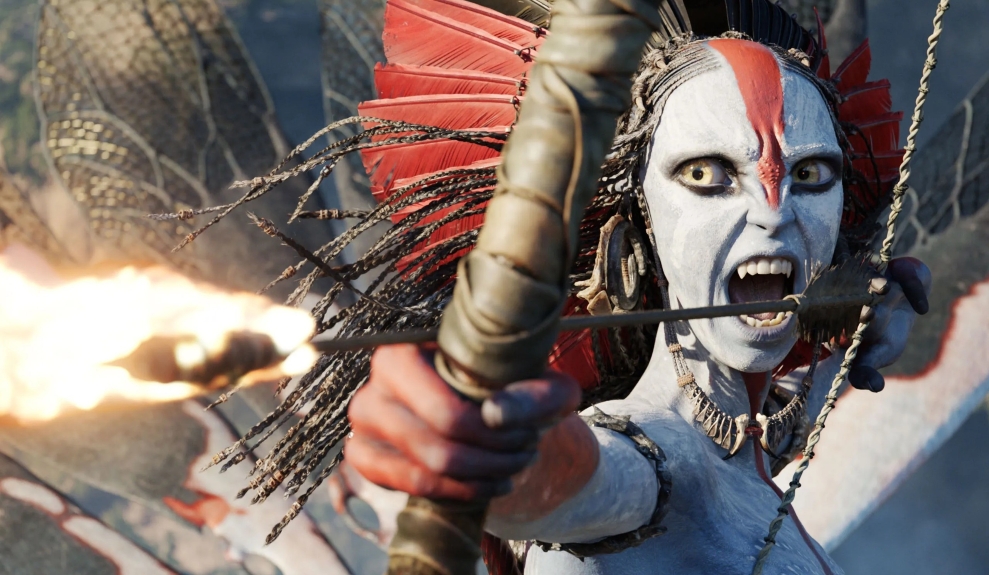
The most original element of the film is the introduction of Varang’s tribe of Viking like savages, burning settlements down and disfiguring fellow Na’vi simply (it seems) for the hell of it. This brutal, destructive force in the series feels fascinatingly new – not least since Cameron’s depiction of the Na’vi has so often seen them portrayed as peaceful, Kumbia types at one with nature. Their savagery is visceral and embodied extremely well by Oona Chaplin, who contorts her body into sensual and violent shapes. Chaplin gives Varang a terrifying sadistic glee, quivering with excitement when she discovers the power of machine guns and viciously lashing at anyone who challenges her with a monomaniacal energy. She’s the shot in the arm the film really needs.

Bits in Fire and Dust are similarly slightly fresher. Cameron sprinkles in little bits of originality. The families grief at the loss of one of their own in the previous film – and the unspoken blame felt and given – is told tenderly. Sully’s moral dilemma about whether, for the greater good, he will dispatch Abraham-like his adopted son Spider is well drawn. There are interesting suggestions that Quaritch is starting to embrace parts of his new-found Na’vi skin more than he expected (considering his knee-jerk racism), and his confused parental feelings towards Spider are well played by Lang. But the characters relentless, Terminator-like indestructibility is starting to get a bit weary now.

Similarly, too much else feels familiar. The portrait of the Sully kids is better drawn – and Weaver gets some good material as Kiri goes on a spiritual journey in some visually impressive (what else!) visions. But much of their dialogue still has a clunky “Hey Bro!” feeling to it. The themes about the struggles between pacifism and rising up to fight when needed feel very well explored now from the previous films.

Cameron does land a few anti-guns points, with only Varang’s tribe of lunatics embracing them. He piles on the praise at the power of nature and bonds that unite us. There is a genuine pleasure in seeing the human hunters of the intelligent whale-like creatures on Pandora meet their comeuppance. One thing Cameron does well in these things is making the villains so repulsive and unsympathetic that we cheer happily at seeing them meet well-deserved ends. But the set-pieces, stunning and exciting as they frequently are, rarely offer anything new either dramatically or narratively. Like the rest of the film, they fit into a familiar template that suggests the world of Pandora offers few further opportunities.

It’s interesting to consider if the two sequels Cameron plans will manage to find somewhere new to take us in this marvellous technicolour world of awe-inspiring visuals. But I worry that those films too will benefit from being broken down into three digestible, almost more enjoyable chapters of a familiar story on a streaming service, rather than an overwhelming three and a half hour trawl through ground, stunning that it is, we have all walked over before.
Avatar: The Way of Water (2022)

Avatar: The Way of Water (2022)

Cameron’s film makes a huge splash despite its soggy plotted, flooded run-time

Director: James Cameron

Cast: Sam Worthington (Jake Sully), Zoe Saldaña (Neytiri), Sigourney Weaver (Kiri Sully), Stephen Lang (Colonel Miles Quaritch), Kate Winslet (Ronal), Cliff Curtis (Tonowari), Jamie Flatters (Neteyam Sully), Britain Dalton (Lo’ak Sully), Timothy Jo-Li Bliss (Tuk Sully), Jack Champion (Spider), Bailey Bass (Reya), Filip Geljo (Aonung), Duane Evans Jr (Rotxo), Edie Falco (General Frances Ardmore), Brendan Cowell (Captain Scoresby), Jermaine Clement (Dr Ian Garvin)

After thirteen years it finally arrived. The sequel to a film that seemed to leave no cultural impact, Avatar. People were convinced it would flop. But they say that about all Cameron films. And, if anyone should have learned anything from Terminator 2, Titanic and Avatar it was don’t bet against Cameron. If Avatar 2’s purpose was to make an awful lot of money, it has succeeded in every level. If its purpose was to make a strong and entertaining film… I’m not so sure.

About the same amount of time has passed on Pandora and Sully (Sam Worthington) and Neytiri (Zoe Saldaña) have raised a family of four children, including Kiri (Sigourney Weaver) born from the avatar of their friend Grace. They have also raised Quaritch’s son ‘Spider’ (Jack Champion) among them. Then the humans return… a bloody war begins, with Sully leading a guerrilla campaign. The company resurrects Colonel Quaritch (Stephen Lang) as a Na’vi super soldier to fight on their own terms. After Spider is captured, Sully and his family flee to live among the Metkayina, a sea-living tribe. But they can’t escape the war and its dangers.

As Avatar: The Way of Water is garlanded with praise and Oscars nominations, I feel like we are all part of a wide conspiracy of silence. So desperate are so many to keep viewers handing over their cash at the box office, that a film completely designed to be seen on the big screen (and this really is) is being praised to the skies by some as a masterpiece. It is not. It’s not even the best Avatar film. Instead, Avatar 2 is a visually impressive but hellishly long, predictable re-tread of the first film that stuffs the eyes with CGI wonders but leaves not a jot for the heart.

I was reminded part way through the overlong runtime that Cameron once made imaginative, thrilling sequels that completely reset the table. Aliens reinvented a haunted house horror movie as a pulsating action film. Terminator 2 turned a chase story into ramped up family story that mused on destiny. Avatar 2… basically tells exactly the same story, but with a familiar generational family conflict storyline and lots of water. It has the same environmental messages and anti-corporation vibe. When this lands, it works. A whale hunt is shot in terrifying detail, a giant mother whale creature brutally trapped and eviscerated for a small cannister of fluid extracted from its brain. This is also probably the most effective sequence and the one that moved me the most.

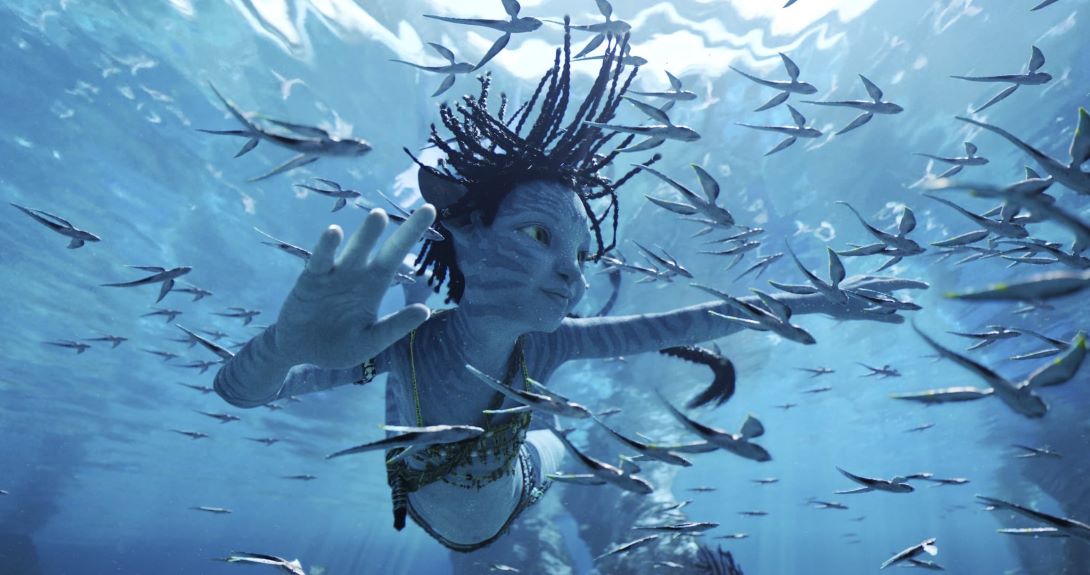
The effects do look impressive. There is no denying that, and the motion capture that turns the actors in blue giants is totally convincing. These Na’vi look and feel like flesh and blood beings. The visual imagination that creates this world, with its sweeping vistas and eclipse-kissed sky not to mention the myriad exotic creatures that populate it are stunning. If Avatar 2 deserves praise it’s for that. Pretty much every single frame looks like it cost a million dollars.

Unfortunately, it often also has a sheen of unreality. I became desperate for something real to appear on screen. But when only one character out of ten is not an effect, you don’t get much of that. On top of which the decision to film in slick, blur-free 48 frames per second means everything glides across the screen with the perfect-focused quality of a videogame. Don’t know what I mean? Try looking at things around you while moving your head at moderate speed. What do you see? Blur. Blur is real. The perfect focus of this world clues you up in every second that nothing in it is real.

The lack of reality eventually starts to remind you of The Phantom Menace. In fact, the only thing really separating this from that disaster is that James Cameron is a master director of epic, visual cinema. The film-making here, as a technical exercise , is beyond reproach. And few directors shoot action scenes with as much skill and raw excitement as Cameron. I can’t fault anything about that, even while I struggled to care as they dragged out over a huge chunk of time.

But Cameron’s weakness as always been the writing. He is a flat and unimaginative writer of dialogue – the Na’vi dialogue is awful flicking from ponderous (“We Sully’s stick together. That is our greatest weakness. And our greatest strength!”) to painfully bad (the number of “Bros” and “Dudes” from the Na’vi teenagers is fist-bitingly awkward, like your Dad trying to be down with the kids).

That’s not mentioning the fact that it’s so similar to the first film. The earth people return, war starts and eventually our heroes travel to a new part of Pandora where, just like Jake in the first film, they go through a training montage to learn the “way of the water”. This takes up most of the middle act. That’s not forgetting the huge number of themes and characters reshuffled and represented.  We build towards a clash very similar to the first film at the end. Nothing here feels fresh, everything feels like a retread. Our villain is resurrected as a Na’vi but, despite almost being defined by his racism in the first film, he doesn’t bat an eyelid at this.

There is a vague attempt to transfer Sully’s “torn between two cultures” storyline to Spider. But this character remains terminally under-developed and the film’s attempt to explore the father-son dynamic between him and Quaritch is so rushed, you wonder if Cameron was interested (odd since it’s crucial to the final act). Instead, we get a huge amount of generational clash in the Sully family, with Jake butting heads with his second son who struggles with being “the spare” (oddly appropriate right now), a hot head who gets everyone in trouble. These play out with a reassuring predictability, so much so that if I asked you to guess the fates of those involved you probably could.

There are bizarre logic gaps. Quaritch and his soldiers have been resurrected to destroy the Na’vi resistance – but instantly drop this for a personal vendetta against Sully (no one seems to care about the resistance after the first half an hour). When Spider is captured, Sully and gang don’t give a damn or even consider rescuing him. Sully doesn’t want to put the forest Na’vi in danger by staying – but doesn’t care about moving that danger to the water people.

Above all it’s frankly hellishly long, fully of trivial culture clash stuff and just the fact that the people in at are giant and blue or that it looks fabulous doesn’t make it good. Instead, Avatar 2 is a re-tread that feels like its treading water, spinning plates and repeating rather than reinventing. I’d rather watch the original again which, while it wasn’t inspiring, at least felt new.