Category: Best Picture winner

Birdman (or The Unexpected Virtue of Ignorance) (2014)


Michael Keaton is haunted by his superhero alter-ego in Iñárritu’s well made but heavy handed theatre satire

Director: Alejandro González Iñárritu

Cast: Michael Keaton (Riggan Thomson), Zach Galifianakis (Jake), Edward Norton (Mike Shiner), Andrea Riseborough (Laura Aulburn), Amy Ryan (Sylvia Thomson), Emma Stone (Sam Thomson), Naomi Watts (Lesley Truman), Lindsay Duncan (Tabitha Dickinson), Merritt Wever (Annie)

Oscar voters seem to be invariably drawn towards stories about actors and acting. Put together a decent and ambitious movie about those subjects, ideally with a sprinkling of gentle satire that pokes fun at acting but basically says at the end it is a noble profession, and you got yourself a contender. So it was with Birdman.

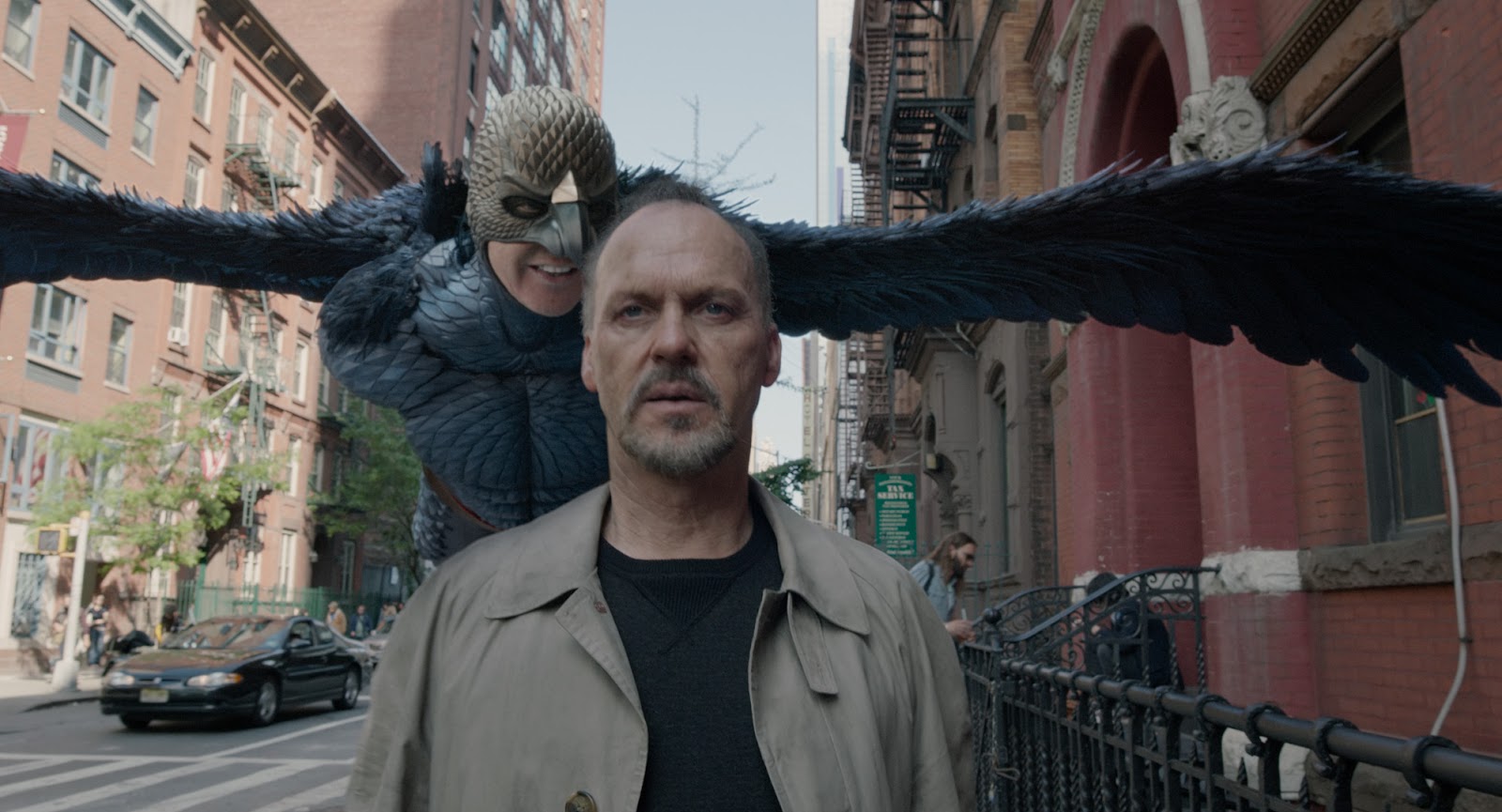
Riggan Thomson (a career revitalising role for Michael Keaton) is a faded movie star who hit celebrity 15 years ago with a series of films about a superhero, Birdman. Today he is trying to reclaim his artistic integrity by directing, adapting and starring in a Raymond Carver story on Broadway. At the same time he wants to rebuild a relationship with his daughter (Emma Stone), a recovering drug addict. The film covers the stumbling journey towards the opening night, with Thomson dealing with a demanding and difficult enfant terrible co-star (Ed Norton), a string of disasters and the haunting presence of his Birdman alter-ego, lambasting his choices and urging him to return to blockbusters.

I’m going to lay into this film a bit. It’s harsh, because it is really trying to do something different, for which it deserves credit. So I’ll start with the good stuff. The conceit of making the film look like it was done in one take is extraordinarily well done – the camera work is inventive and extraordinary. Emmanuel Lubezki is a visual genius and the technical accomplishment is astounding, a real tour-de-force. The acting is also very good. Michael Keaton embraces the best script he had in years, giving the part such commitment and emotion you overlook it’s a fairly simple part. Emma Stone is raw and tragic as his daughter. Ed Norton gives one of his finest performances as a dickish method actor (a neat self-parody) who in quieter conversations reveals real depth – and provides more insights into the passion for creativity than virtually anything else in the film.

Okay, that’s the really good stuff. It’s got some good lines as well, and its general style never stops being entertaining. But it’s also nowhere near as clever as it thinks it is. It wants to be a profound study of the nature of life and art, but it never really gets to grips with these ideas or drills down into them. For art, its contrasts are simplistic verging on hectoring. It never really gets to the heart of what acting is or means. For life it boils down into a straightforward “father wants to win back love of family” plot. The film presents all this as something deep and meaningful, and uses a lot of style and razamatazz – but the basic points remain simple or under-explored.

Part of my problem with the film is that is wears its pseudo-intelligence rather too heavily, and it ends up turning into smugness. Lubezki’s camera work is extraordinary but it also has a “look-at-me” quality that really begins to distract from the viewing of the film – even second time around the content of the film passes you by a bit. Tellingly, on the DVD Iñárritu talks about being drawn to the project because he wanted to make a film that felt like it was done in one take. Fine, but perhaps it would have been better if he had been a bit more interested in, say, the content of the film itself? Everything about the film-making demands you give it your attention, from the camerawork to the insistent drumming soundtrack. These elements are not bad in themselves – but it’s showing off rather than craft servicing the film.

The film’s themes themselves are, I think, also not as interesting or challenging as the film-makers believe them to be. The central idea of actors being shallow with chaotic home lives is so tired as to be a cliché: “Why don’t I have any self-respect?”/”You’re an actress, honey” summarises the sort of jokes you’ve seen before in other films.

I also felt the film’s attempts to analyse the nature of art and performance were formulaic and even rather empty. Lindsay Duncan plays a chilly theatre critic, determined to destroy the play, and Keaton delivers well Riggan’s rant to her on using labels and presenting opinions as facts. There isn’t any counterbalance to this offered, no exploration of, for example, criticism can service art or how opinion guides our reception of what we perceive as good art. A heavy handed fantasy sequence has his Birdman alter ego addressing the camera directly “Look at these people, at their eyes… they’re sparkling. They love this shit.” Yeah Alejandro we get it, we are shallow and deep down prefer action films than all this “ talky, depressing, philosophical bullshit” – hardly an original thought, and hardly framed originally though, is it? Do we really need to be whacked on the head with it? What point is this trying to make that we haven’t heard hundreds of times before?

But then is it any wonder that it wants to try and make points about cinema rather than theatre? For a film set exclusively in a theatre, I don’t really feel that its makers really understand the pressures or nature of theatre. Instead, it merely stands in here as a short hand for “cultural worthiness” – Riggan might as well be making an independent film or writing a novel, theatre is just a counterpoint used for blockbuster films (a genre Iñárritu clearly does understand and has opinions on). Nothing in the film really seems to capture a real sense of backstage in a theatre or what putting on a play is like, for example Peter Yates’ film of The Dresser. There is no sense of the collaborative nature of the medium or its immediacy as a performance art – it’s labelled as lazily as a vehicle for pretension and self loathing as criticism is for bitterness and failure.

The film also plays with the notion of Riggan’s (possibly) unhinged nature. Throughout the film we see him use superpowers – levitation, telekenesis, flight, control of fire. Along with his haunting by the Birdman character (done with a nice parody of the gravelly Christian Bale-Batman voice), it all ties into the possibility that Riggan is losing the ability to keep his real life and his career’s defining moment from merging into one another. The film’s ending builds on this, playfully suggesting some of what we have seen might have been real (though it also could be interpreted as a final dream sequence) – but I’m not sure what is gained by introducing these skills other than for visual flair. Riggan’s inner turmoil is never explored fully by the film and I don’t feel the film has the patience to explore his feelings or depression. As such, I find the open-ended ending doesn’t really add anything – it feels like it has been inserted to create debate, rather than acting as a culmination for your interpretation of the film, a la Inception say.

Phew. Birdman is by no means a bad film. It is a good one, but not a great one. It has much to admire, both on a technical and performance level, but (like Riggan) it is straining for an intellectual depth and thematic richness that simply isn’t there. It’s a showpiece, a brilliantly done one, really impressive to watch and it dazzles while it takes place – but there isn’t much to talk about afterwards. It is what it is. Compared to this year’s film-about-acting, La La Land, it’s both less charming and less profound, and has less to tell us about the compromises and struggles of real life. You can enjoy it, and it needs to be seen, but I can’t see it ageing well.
A Man For All Seasons (1966)


Paul Scofield ways up a difficult demand from a not-so merry monarch

Director: Fred Zinnemann

Cast: Paul Scofield (Sir Thomas More), Wendy Hiller (Alice More), Robert Shaw (Henry VIII), Orson Welles (Cardinal Wolsey), Leo McKern (Thomas Cromwell), Susannah York (Margaret More), Nigel Davenport (Duke of Norfolk), John Hurt (Richard Rich), Corin Redgrave (William Roper), Colin Blakely (Matthew)

Writing these film reviews is sometimes harder when it’s a film you know so well. I was probably in my very early teens when I first saw this and I’ve seen it dozens of times since. I know all the scenes, all the beats, and I love it. This is a brilliant film, and its depth, richness and intelligence are ingrained. It’s a wonderfully written, played and directed piece that transforms a historical event from a history lesson into an endlessly relevant and affecting parable.

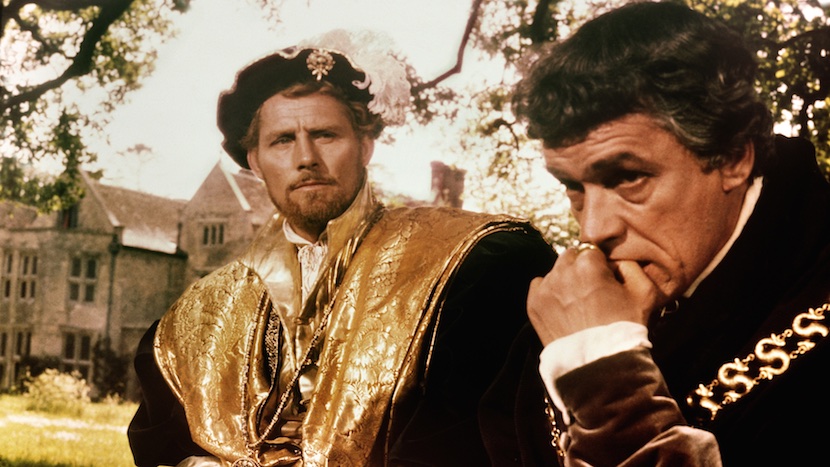
Paul Scofield (simply becoming the man) is Sir Thomas More. With Queen Catherine unable to bear Henry VIII (Robert Shaw) a son, wheels are in motion to ditch the Queen and marry the king to Anne Boleyn (a split second cameo from an unpaid Vanessa Redgrave, making you believe in a moment Anne could split a kingdom). More, however, can’t agree to the divorce – his faith in the Catholic church is non-negotiable, and the church won’t recognise the marriage. So while the rest of the kingdom falls in line, More is arrested and takes refuge in his complete silence – having never spoken of his reasons, he can never be tried for them.

Re-watching this masterful film for the first time in a few years on a newly released, fully restored Blu-ray, I was immediately reminded what a thoughtful, interesting and enjoyable film it is. Having read the play again, I genuinely think (and I’m not alone) Bolt’s script is superior to the original. Several changes have been made, most notably the removal of the “Common Man”, a theatrical device whereby one actor played all the smaller working class roles, while delivering a commentary on the action. It’s a very theatrical device, which Bolt believed wouldn’t work on screen, but its removal also purifies the story, tightens the focus and allows us to focus on More. The commentary on More’s conflicted character is instead provided by Paul Scofield’s superlative performance in close-up. Bolt also removed much of the political background, making the film more of a parable of conscience rather than a “history play”.

The film is a beautiful celebration of old-fashioned Hollywood film making. Fred Zinnemann is sometimes forgotten today, extremely unfairly for a man with a hugely impressive back catalogue. A Man for All Seasons was perfect for a director whose best work saw one man stand alone against a system – be that at Pearl Harbour or the Wild West. Zinnemann was an “actor’s director”, and draws out a series of impressive performances. But his often simple set-ups never feel staged.

He and John Box (production designer) understand the power of claustrophobia, of life and death conversations in small rooms – from Wolsey’s imposing red office that seems an extension of his personality, to Cromwell’s poky office and More’s cell, the sense of being trapped builds throughout the film. By contrast, the final courtroom’s spaciousness only underlines the fact that it’s a fix. Throughout the film looks wonderful and its spare score is a beautiful Tudor-style series of compositions that carry a perfect pitched of awe and doom. It’s so beautiful (and often overlooked) I’ve put a link to the opening here.

 In fact, Zinnermann constructs the film throughout with wonderful beats and telling shots. The first appearance of Henry VIII, his head obstructing the sun, More blinking looking up, is one of the best visual impressions you’ll see of the Icarus nature of the Tudor court. A beautiful cut takes us from More (in a windswept garden, a lovely commentary on the turbulence of his life) wondering if he can find a way to sign the oath, to a shot of the view from behind his prison bars – pages and pages of story told to us in one simple cut. Later, from the same position, we’ll see a whole year pass by in a few moments – simple, unfussy, very effective. The film is packed with small, subtle moments like this that never intrude by themselves, but build to create the effect of the film wonderfully.

And this is a great film, there’s no doubt about that. The story is surprisingly simple, but Bolt and Zinnermann make it feel truly universal: the man against the state, the individual standing for what he believes is right despite all the pressure bought to bear against him. It’s a timeless parable and could be applied to virtually any time or place you could name. It’s also extremely well written: nearly every other line is memorable, the speeches are extraordinary. Every moment of reflection and observation sounds (and is) universal in its application. Its straightforwardness also helps make the story very moving, and it successfully carries out the trick of telling a movie about a saint while making him a living, breathing man we can relate to.

Of course, a large part of its success is due to Paul Scofield’s performance in the lead role. Honed after years of performing the role, it’s again almost hard to talk about individually as Scofield is so central to the film; talking about its success is in many ways to talk about Scofield’s success. Scofield’s performance is one where the actor disappears and the character remains: his More is totally real. You feel throughout not only his dignity and wisdom and his sharply defined sense of private and public morality – but also his warmness, his wit, his benevolent regard for people and those around him. He’s a caring master and friend – but not a push-over; and is adamantine in his decisions. Scofield is also able to show the contradictions of the man: a private man who cannot give up the lure of the limelight. Every beat of the performance is brilliantly observed, a list of highlights would fill a book. He carries the entire film from start to finish and never lets it slip for a second.

He’s helped by some wonderful support (and it’s a testimony to his generosity as an actor that he cedes the screen several times). Robert Shaw’s Henry VIII is a scene stealing tour-de-force. It’s up there with Robert Duvall’s Kilgore as cameos that wrench control of the movie. He’s on-screen for about 12 minutes, but he perfectly captures Henry’s charisma and his childish temper and fury. He’s intelligent (but not that intelligent – I love his sulky response when he is quickly bested by Margaret More in knowledge of Latin) and friendly but not that friendly – the sort of man who literally rips flowers from a tree to show someone how beautiful they are: destruction and excitement combined in one moment. You totally believe that this is a man who could shatter a country in a fit of pique.

Wendy Hillier also deserves notice for what might be the trickiest role in the film as Lady Alice, a woman who lives happily in the shadow of her husband. Ill-educated and lacking any understanding of her husband, it’s a part that could be almost yokel like. But Hillier brings it a world of dignity and fiery defiance, and she brings a completely convincing fury to Alice as she rails against  injustice. The final scene between her and More is a masterclass from both of simple, uncomplicated love that has held two people with very little in common together for a lifetime.

There is literally not a bad performance in this film. Every actor is perfectly cast and completely understands their roles. Nigel Davenport masterfully portrays the pride and dimness that lies under Norfolk’s bluff domineering persona. John Hurt nails Rich’s weakness, selfishness and greed and layers it with a convincing note of underlying self-loathing: a star marking performance. Orson Welles seems to have prepared his whole life for the bloated, corrupt Wolsey. Leo McKern (the only other cast member from the original production) invests Cromwell with a low viciousness and a deadly political savvy that is based exclusively on realpolitik and devoid of decency. Susannah York, Corin Redgrave and Colin Blakely all also excel.

Historically, the character of More has faced far more criticism and scepticism recently. Several historians have bought attention to More’s rigid Inquisition-like Catholicism and his willingness to execute heretics; Hilary Mantel’s equally brilliant Wolf Hall was partly written as a response to Bolt’s presentations of More and Cromwell, lauding the latter at the expense of the former.

But these controversies are not what this film is about – and it’s never trying to be a history lesson. It presents its version of the story on its own terms (very little is ever leaned about the “King’s Great Matter” or the reasons for it) – instead, like The Crucible, it turns a historical event into a deeply moving and profound parable. In doing this it transcends being a simple recounting of events, and instead becomes an independent work of art. Historical accuracy is of no relevance to the audience when viewing Henry IV Part 1: it is of no matter here either, and is something the film never claims. And it’s all the better for it. Still one of my all-time favourites.

The Lost Weekend (1945)

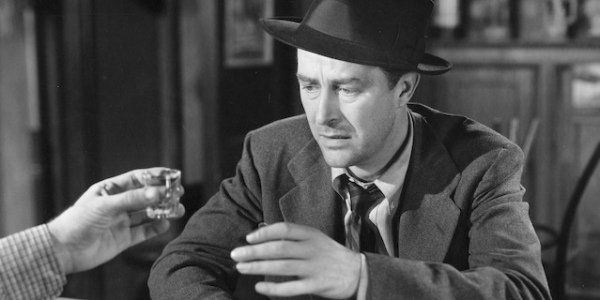
One more for the road: Ray Milland spend the rest of his life reassuring people he wasn’t an alcoholic. Talk about the film that keeps on giving.

Director: Billy Wilder
Cast: Ray Milland (Don Birnam), Jane Wyman (Helen St. James), Philip Terry (Wick Birnam), Howard da Silva (Nat), Doris Dowling (Gloria), Frank Faylen (‘Bim’ Nolan)

It opens like a counter view of the American Dream: a long pan down through the New York skyline. A voiceover leads us through the window (via a shot of a bottle hanging out of the window) onto a pair of brothers packing for a weekend away. Only of course the bottle is really the third character here, and it’s all that one of the brothers has on his mind.

The Lost Weekend is simply that: a long weekend in which we see alcoholic would-be author Don Birnam (Ray Milland) lie, cheat and steal with a shabby English charm through the bright lights of the city, occasionally resolving to quit the demon booze, but constantly drawn back by its siren charm. Other characters drop in and out of his story: an almost fanatically supportive girlfriend Helen (Jane Wyman), his weary brother Wick (Philip Terry), an ambiguousbartender (Howard da Silva – very good), a naïve hooker (Doris Dowling – innocent in the way only Hollywood golden age hookers can be) and finally a truth-telling male nurse Bim (Frank Faylen).

Probably what’s most remarkable about this film is that it was made at all, especially considering that this was when Hollywood’s “morality” dictates ruled. Film historians have suggested that Wilder’s introduction of an obvious hooker, and the suggestions of the Nurse’s homosexuality, so focused the Hays Code’s attention that they let slide that the central character is a lying, shifty drunk who feels only slight shame and very little regret for his actions, and whose announcement at the end that he has changed is potentially just the beginning of another cycle of sobriety in the addicted alcoholic.

Wilder’s genius here in filming is, instead of judging him or pitying, the camera sticks firmly with Don and makes us a co-conspirator in his low cunning and desperation to obtain alcohol. Don is a man who, during the course of the film, pawns several valuable possessions (some not his own), trashes his own apartment in search of booze, fleeces money from people with sympathetic-sounding grandiose stories, and is reduced to attempting public theft. But instead of placing us in the perspective of the (overly) saintly girlfriend frustrating us by striving to reform Don, we stick with Don and are invited to see those standing between him and the booze as the antagonists that Don perceives them to be.

Wilder also skilfully suggests that the same earnest help that Helen (and to a lesser extent Wick) are piling on Don is actually contributing to pushing him further into desperate addiction by smothering him. Don doesn’t seem to be ready to listen to anyone until, sunk to near rock bottom and hospitalised in the drunks’ ward, nurse Bim tells him out right that he is a self-destructive loser who is controlled by his addiction (I’ll also point out this doesn’t stop Don trying to bribe him to facilitate his escape from the ward). I’m also going to mention here a popular theory from film critics that Bim is a figment of Don’s imagination (his name is a near anagram of Don’s, he talks only to Don in the film, seems to know everything about Don’s inner thoughts, and his coded homosexuality links to Don’s own suggested homosexuality in the original book – the underlying cause of his addiction).

The film also has a wonderful noirish quality, capturing of the seedy world of the drunk: the bars and pawnshops that are Don’s world, and the impressionistic lighting used to dramatise Don’s drunken states. In one shot I particularly enjoyed, Don searches desperately for a bottle he hid while drunk the night before – he can’t remember where he hid it because he was pissed, but we know it’s hidden in the lightshade. The camera frames Don and his search with the lampshade constantly in shot above him. A later agonising sequence captures a hideously hungover Don staggering down Third Avenue to reach the pawnbrokers – only to find on arrival (in another moment of black comedy that permeates the film) that it, and all other pawnbrokers, are closed for the day.

The film wouldn’t work though without the excellent performance of Ray Milland in a role that he never matched again. Milland, an ex-pat Welshman with a theatre background, has just the right edge of shabby nobility to make you believe that everyone would continue to find this man endearing and constantly want to give him that second, third, fourth chance. Milland and Wilder are also not afraid to show us that Don’s only real creativity with language comes from drink – his inspired, poetic speeches grow with fervour the more beer he consumes, while his attempts to write without a drink get little further than the front page. Don is sympathetic to us, because I feel we all recognise our failures in him and our self loathing. Hating Don would almost be like hating ourselves – after all who hasn’t looked at their life and thought (to quote another classic) “I coulda been a contender”?

Brilliantly directed and with a fantastic central performance, this is perhaps one of the most empathetic films made about addiction. It’s not perfect – Wilder I think does his best to suggest that the rather sudden happy ending could be the start of another cycle of recovery and collapse, but I’m not sure if there is quite enough in the film to suggest this. Similarly Jane Wyman’s loving girlfriend is so cloyingly devoted you can well imagine she would drive a man to desperation – it’s a very dated character, and hard for a modern viewer not to see her as a facilitating doormat. But all that aside, this is a film packed with beautiful moments, great images and a knock-out performance by Milland. Recommended!