Category: Box office bomb

Doctor Dolittle (1967)

Doctor Dolittle (1967)

The biggest crimes of this musical disaster is that is both hugely dull and thuddingly charmless.

Director: Richard Fleischer

Cast: Rex Harrison (Dr John Dolittle), Samantha Eggar (Emma Fairfax), Anthony Newley (Matthew Mugg), Richard Attenborough (Albert Blossom) Peter Bull (General Bellowes), Muriel Landers (Mrs Edie Blossom), William Dix (Tommy Stubbins), Geoffrey Holder (Willaim Shakespeare X)

Sometimes you think a film can’t possibly be as wretched as its reputation says. And then you watch Doctor Dolittle. This musical monstrosity, charmlessly adapted from a series of children’s novels, nearly sunk 20th Century Fox, losing millions (but still gaining nine Oscar nominations due to relentless lobbying by the studio). It’s not aged well: syrupy, over-long, lacking in any magic and, most damningly of all, crashingly dull over its bum-numbing runtime. Nearly everything either went wrong or is wrong with this.

Its plot is both tediously straightforward and frustratingly vague. In 1845, in the postcard-village setting of Puddleby-on-the-Marsh, eccentric Doctor John Dolittle (Rex Harrison) has become fluent in every animal tongue there is. Some think he’s a crazy misanthrope – after all his house is packed with every type of animal you can name and he spends the day chatting to them and being rude to humans – but others think he’s charming. (Sadly, you may find yourself siding with the former.) He dreams of finding the legendary Great Pink Sea Snail (for reasons that are never quite clear) and eventually heads on a whimsical journey with some new-made friends.

Doctor Dolittle’s principal crime, perhaps the reason why it has so few defenders, is that it’s at heart a very boring film. It takes nearly fifty minutes for even a trace of the plot to kick-in, then it meanders around a side quest of returning a seal to the sea before rushing the final act about the Great Pink Sea Snail. Really nothing much happens, and the stakes feel tiny: there is the vague danger that the unflappable Dolittle might get banged up in an asylum and (I suppose) the outside chance the native tribe of the floating island they encounter might sacrifice them, but that’s about it. Essentially, the film assumes that to entertain the family market, a bit of whimsy, a lot of Harrison nodding and “I see”-ing to animals and a few tunes (some of which are hummable) was enough to keep the kids happy. It’s not.

Any poor child strapped down to watch this light-weight confection, puffed up with an epic run-time and large-scale sets, will find themselves wading through as much animal shit as the film’s stars did on set. There is, at a push, one memorable sequence in Doctor Dolittle: Richard Attenborough’s circus master launching into a high-tempo musical number as he marvels at the pushmi-pullyu Dolittle is trying to flog him (the animal itself is so painfully obviously the front of two panto horses stitched together, I can only assume Attenborough was stunned by Dolittle’s cheek). Attenborough sells the heck out of this (to be honest) bland ditty, committing no end to its high-kicking energy (I like to think Fleischer immediately thought “that’s the guy I need to play John Christie”).

Attenborough can’t really sing or dance but at least he can give a good impression of someone who can. Harrison doesn’t bother. Of course, Harrison was arriving on this fresh from the glory of My Fair Lady where he had worked out it was possible to become a rich musicals star by talking with a bit of rhythm. Doctor Dolittle is set up for him to do the same, talking through his numbers – the problem being none of them are as good as anything by Alan Jay Lerner (who was supposed to write this, before he pulled out). Harrison murders a series of songs that might just have passed muster with an actual song-and-dance man. The low-point is early on as “Talk to the Animals” degenerates to Harrison literally bellowing at point blank range to a field of sheep and cows.

Dolittle has been further set up for Harrison to coast by essentially retrofitting his character into Henry Higgins #2. Dolittle shares all of Higgins’ misanthropic, obsessive tendencies only this time without someone like Audrey Hepburn to make us like him. His character is infuriatingly inconsistent, not least in his attitude to animals. The guy respects animals so much, he won’t eat meat but is perfectly happy to sell the pushmi-pullyu to a circus but then rescues a trapped female seal from the same circus? (I really hope this isn’t due to any feelings he has for said seal. Harrison whispers what sounds suspiciously like a love song to the seal while it’s dressed as a lady, even kissing the poor animal. This is probably the only kids film you’ll see to softly imply bestiality is a way to live your life).

There isn’t really a single interesting or particularly likeable character in Doctor Dolittle. Presumably thinking every kids’ film needs a kid, Dolittle (and we) are saddled with William Dix’s Tommy Stubbins, the sort of vomit-inducing stage-school brat most kids actually watching the film would love to pinch lunch money from. Anthony Newley can at least sing and dance, even if he is stuck with a bland Orisih accent (not helped by Harrison’s envy on-set leading to several of Newley’s scenes being cut). Samantha Eggar is utterly hamstrung by playing a character whom no one involved in the film can decide is Newley’s love interest (age-appropriate) or Harrison’s (because he’s the star) so sort of makes her the partner of both of them (so Dolittle can also claim to be the first kids’ film that promotes polyamory, making it quite advanced).

Oddly the animals themselves feel like rather minor characters. I assume this is because the production wanted to use real animals (since the times it uses puppets, they are breathtakingly unconvincing) but real animals have the unfortunate problem of not being actors. The most prominent animal, an irritating macaw called Polynesia, talks fluent English anyway so the others hardly need Dolittle’s skills. This even caused a slight kerfuffle on launch: the promotion had led with pictures of Dolittle riding a giraffe, a scene first cut then hurriedly shoved back in as part of a pointless montage on the island, after complaints.

Most of all, Doctor Dolittle feels like a charmless chore to watch. Nothing is sweet, nothing is charming, the hero is frequently a stand-offish jerk and you get no sense anyone really wants to be there. Which is, apparently, the case as during its hideously long production, the animals caused nightmares (everyone got shat on multiple times, which at least prepared them for the film’s critical reception), the Wiltshire village used for the location collectively lost its rag as over-running shooting meant no trace of the modern world was allowed in for months on end, and Harrison (allegedly) behaved like a total tit (at one point Christopher Plummer was signed up to replace him, then paid his full agreed salary after Harrison agreed to continue).

Doctor Dolittle trudges, inevitably, towards its chocolate-box finale – but anyone still watching will surely long-since ceased to care about anyone or anything involved in this mess. A later stage adaptation did salvage some of Leslie Briscusse’s songs, but nothing else was saved from this disaster that killed stone-dead nearly everyone’s careers. It really is as bad as they say.
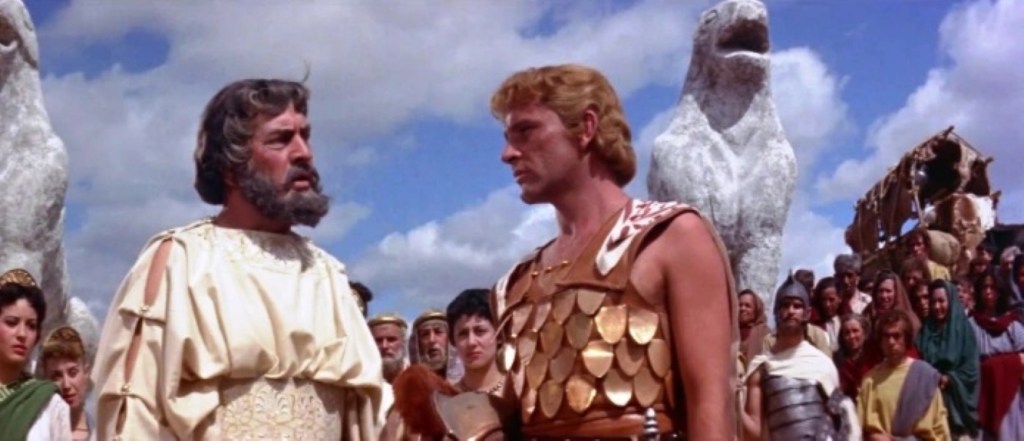
Alexander the Great (1956)

Alexander the Great (1956)

An odd epic, which both loathes its subject and also presents him as a golden-boy

Director: Robert Rossen

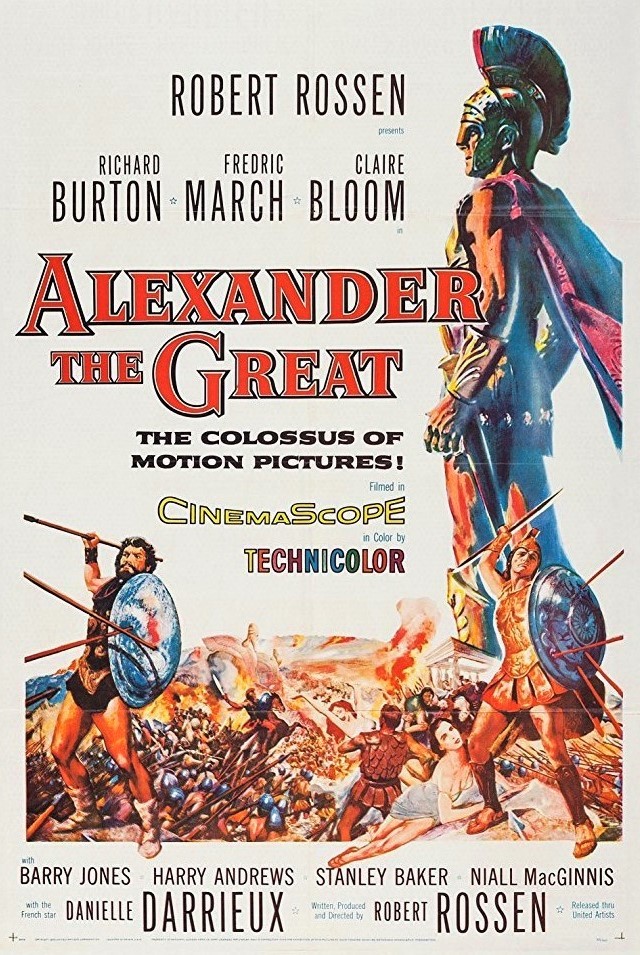
Cast: Richard Burton (Alexander the Great), Fredric March (Philip II), Claire Bloom (Barsine), Danielle Darrieux (Olympias), Barry Jones (Aristotle), Harry Andrews (Darius), Stanley Baker (Attalus), Niall MacGinnis (Parmenion), Peter Cushing (Memnon), Michael Hordern (Demosthenes), Marisa de Leza (Eurydice), Gustavo Rojo (Cleitus the Black), Peter Wyngarde (Pausanias), William Squire (Aeschenes)

No one in history achieved so much, so young as Alexander the Great. He conquered most of the known world before he was thirty and left a legend that generations of would-be emperors found almost impossible to live up to. He did all this, while remaining a fascinatingly enigmatic figure: either a visionary nation-builder or a drunken man of violence, depending on who you talk to. Alexander the Great, in its truncated two hours and twenty minutes (sliced down from Robert Rossen’s original three-hour plus) can only scratch the surface of his story and that’s all it does.

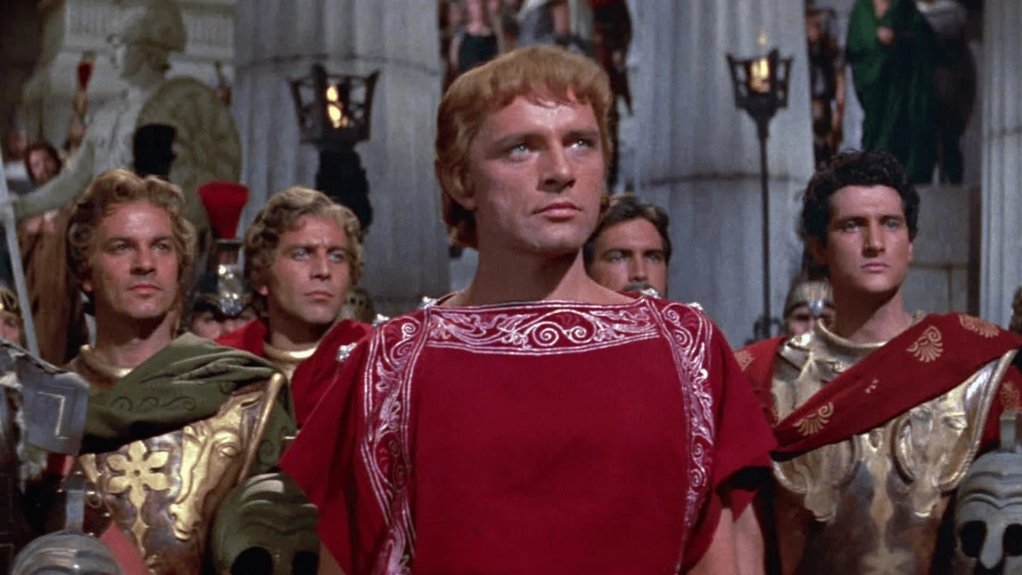
As the great man, Richard Burton flexes his mighty voice in a film that splits its focus roughly equally between the early days of Alexander and his troubled relationship with both his father Philip II (Fredric March) and his mother Olympias (Danielle Darrieux) and his own kingship and conquest of the known world until his early death. Surprisingly, perhaps because the world is so vast, it’s the first half of the film that’s the most interesting – perhaps because showing up the internecine dynastic squabbles between petulant royals are more up director and writer Rossen’s alley than global dominance.

Perhaps as well because it feels pretty clear Rossen doesn’t particularly seem to like Alexander. Over the course of the film, the pouting monarch will prove to have a monstrous ego (even as a teenager fighting Philip’s wars, he cockily re-names a sacked city after himself), ruthlessly slaughters opponents after battles, is prone to fits of rage, informs his followers with wild-eyes that he’s God himself, leads his army into the dried out hell of the deserts of the Middle East and turns (at best) a blind eye to his mother’s plans to assassinate his father and then murder his father’s second wife and baby son.

The film culminates in a shamed Alexander kicking the bucket more concerned with maintaining his legend for future generations than assuring any kind of future for his kingdom. But the sense of hubris destroying the great man is never quite captured. This is partly because the grand figure we are watching lacks any personal feelings or fear. He can’t seem to experience loss or grief and only understands negative events in terms of their impact on his reputation. And he never seems to truly learn from this – even when he harms friends, his regrets are based around the impact such action will have on how those around him see him. At the same time, Rossen can’t quite follow his heart and make a real iconoclastic epic meaning he instead leaves titbits here and there for the cinema-goer to hopefully pick up among the spectacle.

As such, Alexander is still pretty persistently framed as we expect a hero to be, with a rousing score backdropping Burton’s speeches and poses, even while the film seems deeply divided about whether this guy who conquered most of the known world and lay waste to Babylon was a good or bad thing. While acting half the time like a egomaniac tyrant, the film still carefully partially shifts blame for his character flaws onto his mother’s Lady Macbethesque influence (Darrieux does a good line in whispering insinuation) or Philip’s bombastic egotism (March, growling with impressive vigour).

Rossen has far more admiration for people like the fiercely principled Memnon (a fine Peter Cushing) who refuses to compromise only to be rewarded by a post-battle one-sided butchering from Alexander after his offer to surrender and spare the lives of his men is turned down. Even Michael Hordern’s Demosthenes comes across as a man of principle, certainly when compared to Alexander’s Athenian-of-choice Aristotle, interpretated here as a pompous windbag cheer-leader for dictators. Oddly even Harry Andrews (possibly, along with Niall MacGinnis’ wily Parmenion, the films finest performance) as Darius comes across as a man of surprising human doubt under his regal exterior. But, perhaps because of choppy-editing cutting down a complex story into just over two hours, Alexander the Great can’t resist framing its hero as a sun-kissed golden-boy, towering above everyone else in the film.

Watching Alexander the Great you get the feeling the film has effectively entombed him as a marble statue, so devoid is he of fundamental humanity. Perhaps this was Rossen’s solution to shooting a film about someone he seemed so devoid of human interest and sympathy for. There is a reason why Charlton Heston – the first choice for the role (can you imagine!) – called Alexander the Great “the easiest kind of picture to make badly”. Frequently Alexander the Great tips into a sort of sword-and-sandles camp made worse by how highly serious it takes itself. Not helped by Burton’s all-too-clear boredom with the part and contempt for the material, Alexander strikes poses and delivers speeches as if he’s been ripped straight out of Plutarch or a bust display in a museum.

Apart from rare moments – usually in the first half as he processes his complex feelings of love and loathing for his overbearing father – he is almost never allowed to be human. His friends – most notably his famed best-friend (and lover) Hephaestion – are reduced to a gang of largely wordless extras and only Claire Bloom’s Barsine is given any scope to talk to him as if he’s a man rather than just a myth. It gets a bit wearing after a while as you long for something human about the man you can cling onto.

It’s also a shame that Rossen seems uncomfortable with shooting the battle sequences. The battles of Granicus and a combined Issus-Gaugamela look rather like damp scuffles over shallow streams than some of the mightiest clashes of the Ancient world. Rossen communicates no visual sense of either strategy or scale (despite the bumper budget). Similarly, the grand sets look too theatrical and never quite as impressive as they should do, despite some fine painterly compositions. Rossen can never quite find a way to make his hundreds of extra seem like thousands and he falls back in the second half to communicating Alexander’s success through a tired combination of map montages, voiceover and repeated shots of men marching left to right and burning cities.

Alexander the Great is a deeply flawed epic. It’s neither swashbuckling fun that bowls you along, or a breath-taking piece of historical spectacle. Nor is it psychologically adept or insightful enough to show you something truly different about its hero. Instead, it tries to straddle both ways of thinking and ends up collapsing in the middle. If only Rossen had found his own Alexanderian solution to cutting this Gordian knot. Instead, the film just ends up a cut-about mess that fades from memory all too soon.

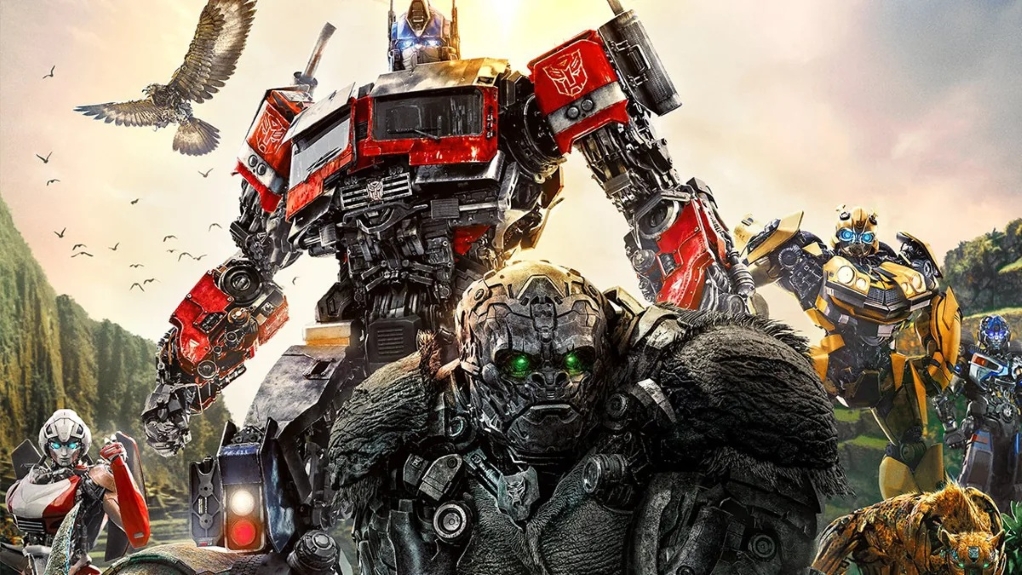
Transformers: Rise of the Beasts (2023)

Transformers: Rise of the Beasts (2023)

Transformers serves away from the charm of Bumblebee back to the tedious machismo of Bay

Director: Steven Caple Jnr

Cast: Anthony Ramos (Noah Diaz), Dominique Fishback (Elena Wallace), Dean Scott Vazquez (Kris Diaz), Luna Lauren Velez (Breanna Diaz), Peter Cullen (Optimus Prime), Ron Perlman (Optimus Primal), Peter Dinklage (Scourge), Michelle Yeoh (Airazor), Pete Davidson (Mirage), Liza Koshy (Arcee), Colman Domingo (Unicron)

Somehow the Transformers franchise lucked out and managed to make a film I actually wouldn’t feel awkward showing to a child. Bumblebee avoided the crude sexualisation and graphic violence (hidden by the fact you are watching CGI engine oil and bits of metal flying around, rather than blood and bits of human flesh) of Michael Bay’s films. I really enjoyed it. I can’t really say the same about this follow-up. I’d at least let a child watch it – although it’s the cinematic equivalent of letting them have a Big Mac for dinner.

Transformers: Rise of the Beasts could have continued in the tone of Bumblebee, a delightful mix of cartoon and Buster Keaton/Laurel and Hardy. Instead, it takes tiny elements of that, then mashes them up with the throw-it-all-at-the-screen style of Bay. It’s not a happy marriage, and Rise of the Beasts is tired and overly familiar, crammed with crude banter and the sort of mass smackdown we’ve seen done time-and-time again. Give me strength. Rise of the Beasts isn’t really a sequel to Bumblebee – the events of that film are referred to only in a blink-and-you’ll-miss-it reference. The boyish charm of Bumblebee is drenched in audio clip quotes from Scarface and the like. Instead, it’s another “end of the world seconds away from a giant robot monster” flick.

Far in the future Unicorn (voiced with regal indifference by Colman Domingo), the planet eating robot from the 1985 film (when he was voiced by a final pay-cheque collecting Orson Welles) is trapped in another dimension, but wants to break into ours. He sends his minion Scourge (Peter Dinklage, dialling it in big time) to 1990s Earth to hunt down the MacGuffin that will do it. Only Optimus Prime (Peter Cullen) and his Autobots can stop him, allied with an ex-soldier desperately trying to help his kid brother Noah Diaz (Anthony Ramos) and Elena Wallace (Dominique Fishback) a junior archaeologist who can unearth the MacGuffin from where it has been hidden centuries ago by the Maximals, a group of transformers descended from our Autobots who transform into giant mechanical animals (their leader Optimus Primal is a Kong style ape).

It all seems a million miles away from the charm of the first film, with a teenage girl bonding with her first car who just happens to be a clumsy robot. There is precious little charm at all Rise of the Beasts. The human characters are either faintly forgettable, loud and brash or serve only as plot points. Anthony Ramos has to do a lot of digging to find any depth in a character given only a cursory plotline of desperation to provide for his mum and brother. Dominique Fishback’s archaeologist has the faintest of backstories about being cheated out of the credit for her work, before she’s fiddling with MacGuffins with handwave lines. The action zips across two universes and two continents, but never seems to really find firm grounding for itself.

There’s also something rather sad about the film swopping out the fairy tale elements of Bumblebee with a far more conventional Bro-romance. Ramos’ street-wise ex-soldier is paired up with Peter Davidson’s Mirage, a loud-mouthed Autobot who, despite a few witty lines, basically comes across as a street-wise bro with a hot streak of immaturity. There is a streak of laddish banter throughout the film – none of it, thank God, as appallingly sexist or racist as what passes for this sort of chat in Bay’s films – that essentially doubles down on restoring the franchise to something that appeals only to teenage boys and adults who wish they still were teenage boys.

After the broadening out of Bumblebee with a female lead given actual agency, this feels like a retrograde step. Rise of the Beasts does manage to pay this Bros plotline off with a surprisingly effective scene of self-sacrifice – but does so while not shirking on red-blooded (or red-oiled) young men whooping and cheering as they blast stuff out of the sky. It’s a step firmly back towards a territory that places male relationships at a premium – be it bros or actual brothers – and the bonds between men a world that leaves women on the outside looking in.

Not to mention the plot continually readjusts its stakes and characters depending on the requirements from scene to scene. Scourge is an unstoppable killing machine… until the plot requires him not to be. Characters are killed off… until the plot needs them to come back to life. Characters are fixated on their own needs… until the plot needs them to be altruistic. It combines that up with a final battle sequence that feels painfully derivative of the end of Avengers: Endgame, with Scourge mustering an army of rent-a-baddies to slow down the heroes while he slowly plugs a thingamee into a do-hickey.

Even Optimus Prime takes a backward step. While Bumblebee salvaged some likeability out of this hero, Rise of the Beasts very much returns him to Bay form: a deeply flawed leader with anger-management issues, who slices and dices foes with reckless abandon, rips off heads and uses neat kiss-off lines like “Then DIE”. I suppose he doesn’t execute at point-blank range a surrendering foe begging for mercy (Bay did this twice!) but he still hardly feels like an admirable hero. Rise of the Beasts vaguely acknowledges this by having Prime go on a loose arc of learning to put the needs of humans on a level with the Autobots (yup he’s also a proto-racist at the start) but it’s a very loose peg to hang a hero on.

Rise of the Beasts gives up on any pretensions of doing something fresh, engaging or different with the series. Even the beasts, for all their animalistic looks, are basically barely characters, more different looking toys imported into a flagging cinematic universe (Ron Perlman and Michelle Yeoh lazily yawn their way through terminal dialogue). While Bumblebee took the starting principles of the franchise and found the joy in them, Rise of the Beasts is a teenage wet dream of toys hitting each other to no great purpose, that places male relationships at its heart and leaves you with nothing to really care about. It’s a callback to everything bad about this franchise.

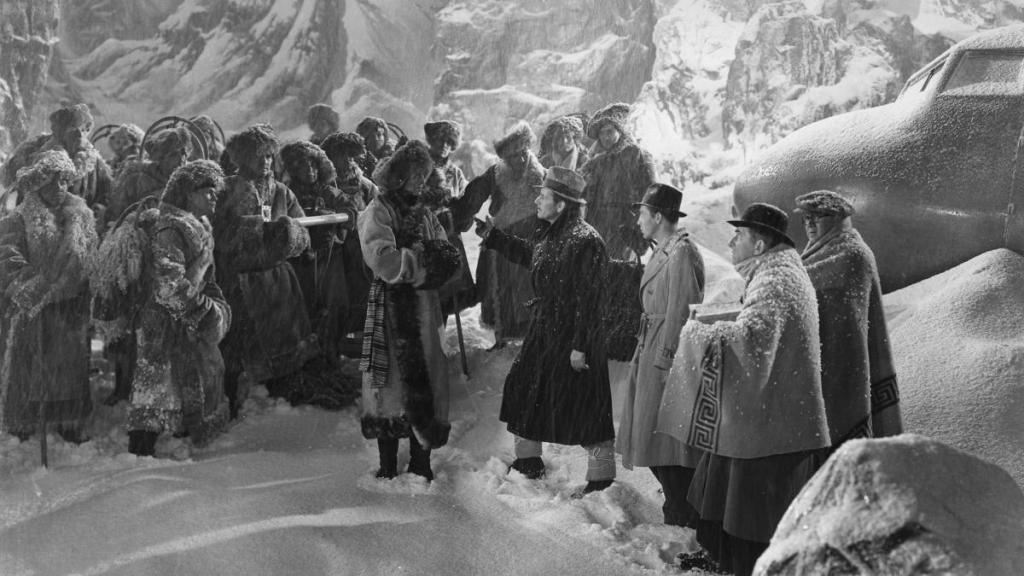
Lost Horizon (1937)

Lost Horizon (1937)

Capra’s well-made Utopian dream lacks any of self-awareness of the flaws in its vision

Director: Frank Capra

Cast: Ronald Colman (Robert Conway), Jane Wyatt (Sondra), Edward Everett Horton (Alexander Lovett), John Howard (George Conway), Thomas Mitchell (Henry Barnard), Margo (Maria), Isabel Jewell (Gloria Stone), HB Warner (Chang), Sam Jaffe (High Lama)

Life can be such a never-ending rat race, the idea of chucking in that relentless pursuit of fortune and glory can be really tempting. Fortunately, it turns out there is a place you can do that: Shangri-La, a halcyon Utopian community buried deep in the Himalayas. There the mountains give it a gloriously perfect climate and preserves its residents youth for potentially hundreds of years. It’s a paradise for legendary diplomat Robert Conway (Ronald Colman), one of a group of Westerners whose plane crashes near-by, all of them invited to make their lives there.

It’s easy to see why this appealed to Frank Capra – even if his real idea of Shangri-La was Small Town America – and he poured years (and millions of dollars) into this dream project (it also took years to make back the investment). Conway is part of a group of mostly British Westerners escaping revolution in China. In Shangri-La, he’s deeply drawn to the peaceful ideology outlined by their host Chang (HB Warner) and Shangri-La’s spiritual leader, the Great Lama (Sam Jaffe). Not to mention the charms of resident Sondra (Jane Wyatt). Problem is, his brother George (John Howard) is desperate to return home. What will Robert choose?

Lost Horizon has a lot to admire about it, in among the incredibly earnest force of its telling, devoid of any drop of cynicism or irony. This is like a 101 of what to expect from Capra? It’s a celebration of the glories of living a simple, pure life without ruthless ambition and realpolitik. It’s filmed on a highly impressive scale by Capra – the gargantuan sets certainly show where the money went. Striking sequences, like a seemingly never-ending torch-lit parade of the people of Shangri-La marching towards Chang’s opulent estate, are breathtaking.

It hosts a fine parade of actors: Colman is perfect as the debonair, world-weary Conway, Horton and Mitchell make their supporting comic double-act genuinely funny (Horton, in particular, litters the film with wonderful bits of comic business using everything from mirrors to jewellery boxes), HB Warner makes a series of infodump ideological sermons more engaging than they deserve and Isabel Jewell creates a great deal of charm in the blousy Gloria. Interestingly, perhaps the most compelling sequence of Lost Horizon occurs before they even arrive, as these characters feud and panic on a hijacked plane taking them in totally the wrong direction.

But there is often something a little too pure about Lost Horizon. Even as the film-making beautifully unspools, it’s hard not to notice that for a huge chunk of this long film very little really happens beyond slightly sanctimonious speechifying comparing ‘our’ civilisation with the peaceful life of Shangri-La. In fact, it’s easy (particularly in our more cynical age) to start feeling a bit twitchy. So earnestly perfect is everything there, with a simplistic and unchallenging view of kindness and brotherly love, it starts to feel like being continually slapped by a SparkNotes copy of Thomas More. Capra uses John Howard’s blowhard George, to put a counter-view – but fills him with such ambition and desire that we are of course never in danger of taking him seriously.

Graham Greene wrote of the film “nothing reveals men’s characters more than their Utopias” before observing the design of Shangri-La resembled nothing more or less than a luxurious Beverly Hills Estate. Rarely has a truer word been spoken: this mountainous paradise, with its carefully designed gardens, well-stocked libraries, grand ballrooms and lush woodland perfect for riding feels like a slice of affluent middle-class Western civilisation in the middle Tibet. It makes for an interesting window into the film today.

Because it’s hard not to see Shangri-La as less of a land of beautiful contentment, and more as a sort of colonialist wet dream. Scratch the surface and it’s a very hierarchical community. Literally at the top of the hill, living in upper-class harmony surrounded by art, books, comfy armchairs and fine dining are the elite (all bar one of them Westerners). At the bottom, in their huts, live the Tibetan natives happily continuing their traditional way of life, happy to live and work (unlike the Chinese revolutionaries who Conway and co flee in the film’s opening) in the shadow of their betters. A smarter film than Lost Horizon might have pointed out the irony that Shangi-La is just a colony where the natives haven’t yet embraced political self-determination – but I’m not sure if such an idea occurred to Capra.

As soon as this crossed my mind, I couldn’t help picking holes in the calamitous internal logic of the film. Shangri-La’s only contact with the outside world is via a group of Tibetan sherpas who trek up and down the mountain once a month bringing supplies from the outside world – presumably its them who have trooped up thousands of books (including the complete works of Robert Conway!), hundreds of mediocre paintings and roomfuls of rococo furniture. The kindly inhabitants of Shangi-La’s palace never considered overseeing the construction of basic plumbing and power generation for the natives living in the valley below them (though they somehow recruited contractors to supply those things to their house on the hill).

In fact, the whole of Shangri-La’s world is set up on maintaining a strict two-tier system that keeps people content by making sure they never think for themselves. (What passes for education, is a series of patronising missionary-style sing-alongs). Even more chilling, the Grand Lama (a softly spoken Sam Jaffe, under mountains of make-up) has dreams of Shangri-La rebuilding global civilisation after its inevitable destruction, the whole world adopting his simplistic ideology. He means well, but I couldn’t help be reminded of Dr Strangelove orgasmically rising from his chair at the thought of creating a fascist Utopia of sexual bliss under an Earth poisoned by nuclear radiation.

None of these ideas enter into Lost Horizon’s simplistic world-view. It sticks with saying what the world needs is to be crafted into a sort of country estate, a sort of Tibetan Downton Abbey, with everyone happy with their assigned place in the chain. Lost Horizon gets as close as it can to any form of social criticism when Conway bemoans 90 ‘whites’ were saved from that opening Chinese revolution while thousands of natives were left to die. But aside from that, is exactly what it says on the tin: there are no flaws in Shangi-La.

And maybe I’m being impossibly cynical. Lost Horizon is a lovely film to bathe in for a while – after all Capra, at his peak, couldn’t make a clanger if he tried. But there is a more complex story on the edges here. If Lost Horizon had showed us more of Conway’s Gulliver-Like return to civilisation, lost in a series of spinning newspaper headlines, it could have given us more of that. But Capra is no Thomas More or Jonathan Swift. The satirical and suppressive elements under a hierarchical Utopia are alien to his mindset. Lost Horizon is a reassuring promise founded on shaky ground indeed.

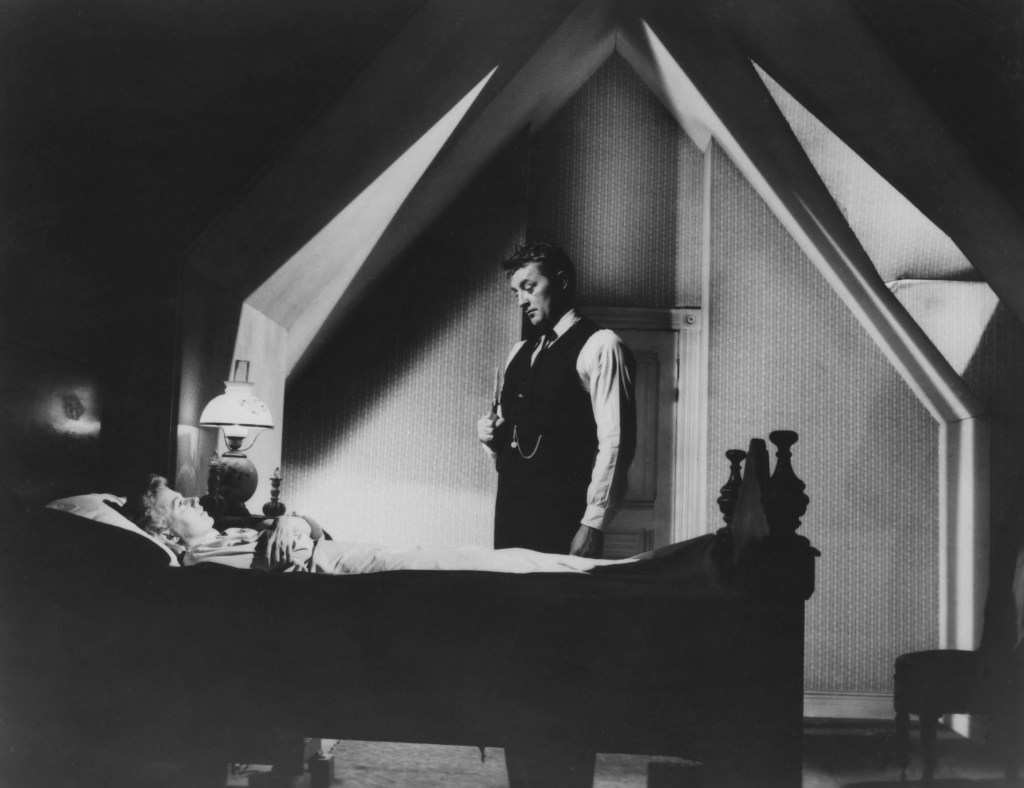
The Night of the Hunter (1955)

The Night of the Hunter (1955)

Laughton’s only masterpiece is a fairy-tale, stuffed with beautiful images and dreamlike logic

Director: Charles Laughton

Cast: Robert Mitchum (Harry Powell), Shelley Winters (Willa Harper), Lillian Gish (Miss Rachel Cooper), James Gleason (Uncle Birdie), Evelyn Varden (Icey Spoon), Don Beddoe (Walt Spoon), Billy Chapin (John Harper), Sally Jane Bruce (Pearl Harper), Gloria Castilo (Ruby), Peter Graves (Ben Harper)

Few films have had their critical reputation change quite as much as The Night of the Hunter. When released, its reception from film critics and audiences was so negative that the crushing disappointment saw director Charles Laughton decide his debut would also be his last film. Flash forward seventy years and it’s now hailed as one of the great American films, a pictorial masterpiece. The Night of the Hunter sits alongside Citizen Kane as the classic film unappreciated in its day.

Adapted from Davis Grubb’s best-selling novel, it follows the nightmareish experiences of young John Harper (Billy Chapin) and his sister Pearl (Sally Jane Bruce). These kids witness their father Ben (Peter Graves) dragged away by the cops to imprisonment and execution – but not before he’s hidden $10,000 in Pearl’s doll and sworn them both to secrecy. Word about the money gets out: it’s why sinister ‘Preacher’ Harry Powell (Robert Mitchum) arrives and starts a-courting their mother Willa (Shelley Winters). After swiftly disposing of Willa, Powell turns his attentions to the kids – who flee down river, eventually coming under the protective wing of kindly widower Rachel Cooper (Lilian Gish) and her brood of young waifs and strays. Is it far enough though to escape Powell’s clutches?

The Night of the Hunter plays out like a fairy tale. Its images are full of the magic of the countryside and mysticism of nature. It frequently, deliberately, uses artificial sets and locations to create a dream-like state. It’s got a classic monster its heart, with Powell a demonic force-of-nature. It follows a pair of children on a journey reminiscent of Hansel and Gretel. There is a kindly old woman and a moral message of the importance of love, family, faith and loyalty. Everything in it feels, to various degrees, heightened. This is Southern drama via Hans Christian Anderson.

I wonder if that’s what threw people off on release. I’d agree that the film’s opening – Lilian Gish’s face superimposed over a starry night sky (followed by a cut of five kids heads superimposed over the same sky raptly listening) – might tee us up for the film’s mood, but looks and feels kitsch. The moments where Laughton deliberately aims at heightened, almost cartoonish, reality push the envelope of what you can accept – why does Powell, at one point, chase the kids up a flight of stairs, hands stretched out before him like he’s in a live action Tom & Jerry cartoon? Stumble onto The Night of the Hunter unwarned about its fantastical grounding and melodrama and it must look and feel odd, bizarre and even a bit laughable.

But it’s these same qualities that have made the film last. Laughton created a film of magical force and power, crammed with striking, imaginative images and beautiful sequences that tip between dream and reality. Its real heart lies in the children’s escape down the river, a remarkable sequence as the camera follows the boat drifting down an obviously artificial river, the children asleep as it glides past spider’s webs, frogs and other wildlife. From a film that opens with the aggressive arrest of the Harper’s dad, this burst of Where the Wild Things Are mysticism intentionally feels like we are crossing into a completely different world, let alone movie. But it’s also part of the film’s striking originality and quirky memorability. Few things look conventionally ‘real’ – in fact, like the farmhouse the kids stop at overnight in their long drift down river it feels even intentionally artificial – but it also gives the film a timeless, poetic feeling.

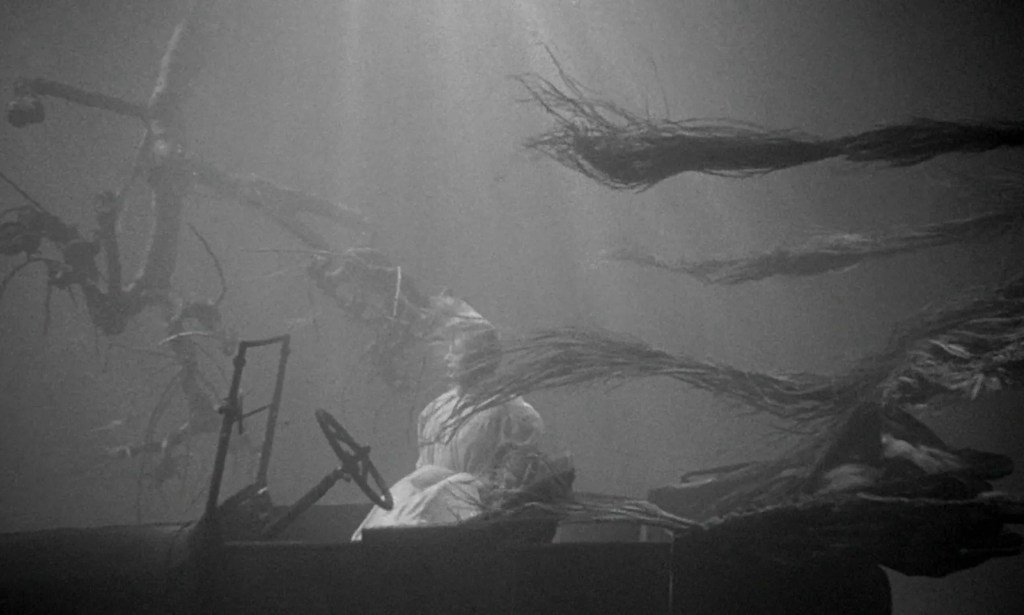
It’s a beautiful sequence in a film stuffed with them. Laughton worked closely with cinematographer Stanley Cortez and several sequences are awash with poetic visual flourishes inspired by some of the great German silent cinema of the 1920s. Who can forget the visually stunning shot of Willa’s body in a car at the bottom of the river, her hair flowing in matching waves with the weeds around her (possibly the most beautiful image of death in the movies)?  From the countryside shots that bring back memories of Murnau’s Sunrise to striking sets that seem to have emerged from The Cabinet of Dr Caligari. Most striking is the high-ceiling, Church-like set that is Powell and Willa’s bedroom, a shadow-laden expressionist nightmare. The scene is played with the same carefully choreographed expressionist force, from Mitchum’s vivid gestures to Winter’s corpse-like resting.

Death comes from Mitchum’s Preacher, one of the great monsters in cinema. With those famous ‘Love’ and ‘Hate’ tattoos, Mitchum makes the role truly terrifying. Mitchum kept up a studied public contempt for acting, but he immerses himself in Preacher in a way he did with few other roles. He makes him horrifyingly charming (he wins adult confidences easily) and his smooth gravel-voice and masculine bearing are both imposing and intimidating. But Mitchum also embraced the weirdness, the psychopathy of a man who murders without a second thought while keeping up a private conversation with the Lord. Preacher is an animalistic demon wrapped up in human skin – he lets out the most bizarre, piercing screams when foiled or injured – twisting his body into unsettling shapes before his misdeeds or letting his eyes boil with anger and disgust (most particularly at sex, something he seems to find repulsive and fascinating).

It’s an extraordinary, terrifying, monstrous performance unlike almost everything else in Mitchum’s career in its willingness to go to such twisted, eccentric, unnatural extremes. Mitchum credited Laughton as his finest director – and Laughton’s skill with actors is clear from all the performances. Shelley Winters’ has rarely been better in a role she skilfully downplays, as an unhappy woman, desperate for redemption, forced to feel ashamed of her desires. The two children are very good, in particular Chapin’s frequently raw panic and trauma and determination. The rest of the cast is stuffed with striking, Dickensian pen portraits, performances of striking eccentricity.

These performances fit within the magical realism of the film in a film that is as stylised as this. Again, I can’t imagine that audiences at the time – used to blockbusters, shot on gloriously realistic locations – were ready for something that aped so strongly the artistic flourishes of silent cinema. But it works spectacularly for a film about a children’s semi-magical quest into the wilderness. It’s hard to think of another film that leans so completely into such an aesthetic unreality as this one – even the town the kids eventually escape to feels like it’s a movie set rather than a real place.

The film’s final act in the home of Miss Rose Cooper is not as strong as those before. There is something rather po-faced and self-satisfied about the slightly clumsy moral message of finding faith and goodness which feels rather twee and disappointing considering the gothic film we’ve just watched. The film’s final sequence, on a peaceful Christmas day, belongs in a more conventional film (even though you could argue it’s also a conventional fairy tale ending). Much as I enjoy several moments of Lillian Gish’s performance as a tough old woman – like a shot-gun wielding Whistler’s Mother – the shift of focus away from Preacher’s demonic schemes feels like a loss.

The Night of the Hunter, for me, isn’t the complete masterpiece it’s sometimes hailed as – there are clumsy moments (I would agree the Tom & Jerry Preacher chase feels tonally out of place, and neither the opening or closing is strong), but it’s also filled with moments of pure cinematic magic – and has a performance from Mitchum that is one for the ages. Its imagery is beautiful, it’s tone mostly perfect and its imagination limitless. The greatest sadness about watching it is that Laughton never directed again – based on this, imagine how good his next film might have been?

Megalopolis (2024)

Megalopolis (2024)

Coppola’s ambitious epic commits the cardinal sins – boring, hard to follow and immensely tedious

Director: Francis Ford Coppola

Cast: Adam Driver (Cesar Catilina), Giancarlo Esposito (Mayor Franklyn Cicero), Nathalie Emmanuel (Julia Cicero), Aubrey Plaza (Wow Platinum), Shia LaBeouf (Clodio Pulcher), Jon Voight (Hamilton Crassus III), Laurence Fishburne (Fundi Romaine), Jason Schwartzman (Jason Zanderz), Kathryn Hunter (Teresa Cicero), Dustin Hoffman (Nush Berman), Talia Shire (Constance Crassus Catilina)

I wanted to like it. Honestly I did. I really respect that Coppola was so passionate about this dream project that he pumped $120 million of his own money into it to make it come true. You can’t deny the ambition about a film that remixes modern American and Ancient Roman history, within a sci-fi dystopia. But Megalopolis is a truly terrible film. Coppola wanted to return to the spirit of 1970s film-making: unfortunately what he’s produced is one of the era’s self-indulgent, overtly arty, unrestrained and pretentious auteur follies where an all-powerful director throws everything at the screen without ever thinking about whether the result is interesting or enjoyable.

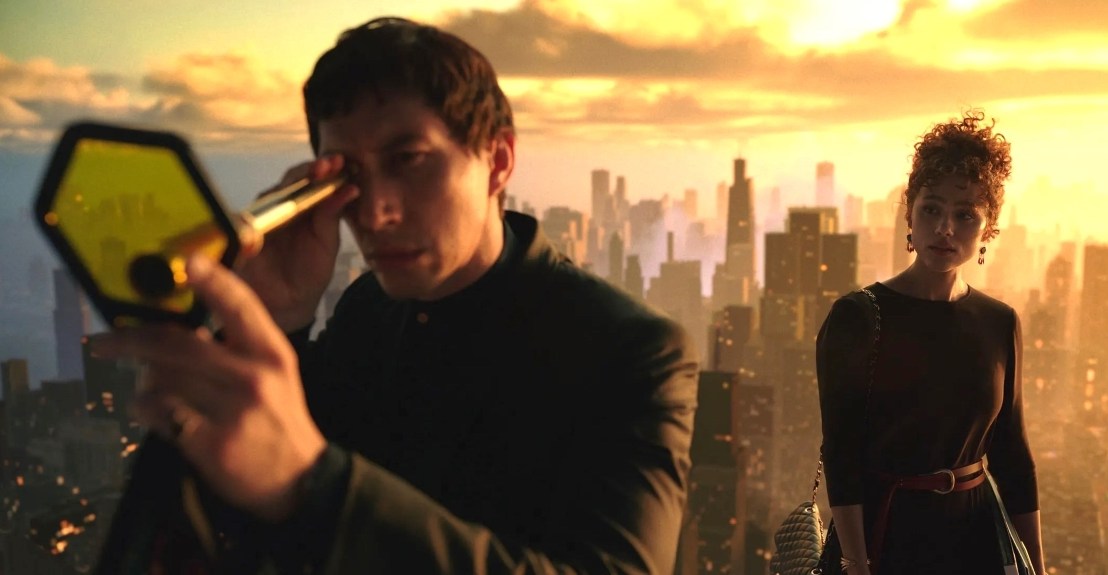
In New Rome (basically New York), Cesar Catilina (Adam Driver) is a visionary architect and inventor, who created ‘megalon’, a sort of magic liquid metal. His vision is to use it make a glorious new Rome. He’s opposed by Mayor Cicero (Giancarlo Esposito) who wants to focus spend on practicalities rather than castles-in-the-sky. This leads to a series of increasingly dirty political flights between Catilina, Cicero and Catilina’s cousin Clodio Pulcher (Shia LaBeouf) the degenerately populist nephew of super-wealthy banker Crassus (Jon Voight), who is married to TV star and ambitious social climber (and Catiline’s former girlfriend) Wow Platinum (Aubrey Plaza). Catilina is also in a tentative relationship with Cicero’s daughter Julia (Nathalie Emmanuel). Or yes and he can mysteriously stop time. Somehow. Even he doesn’t know how.

The film is a sympathetic portrait of Catiline, a powerful Roman who (probably) caused a scandal by shagging a Vestal Virgin then attempted to mount a coup with a heavily pandering populist set of promises which led to his suicide (after defeat in battle) and his followers being executed by then-consul Cicero. Megalopolis’ version mixes this with elements of Caesar’s career and remixes Cicero, Claudius Pulcher and Crassus into versions of their historical forbears. It’s a neat idea, but it’s utterly bungled in delivery. Megalopolis is a film practically drowning in pretension, bombast and self-importance, its script stuffed with faux-philosophy and clumsy political points, its Roman history crude and obvious.

It feels pretty clear Megalopolis should be three to four hours and has been sliced down to two and a quarter. The problem is it feels like it goes on for four hours and practically the last thing I could imagine wanting as the credits roll was watching yet more of this nonsense. The most striking thing about Megalopolis is how boring it is (I nearly dropped off twice – and I was in an early evening showing). It hurtles through a series of impressive-looking-but-dramatically-empty set-pieces that often make no real narrative sense and carry very little emotional force. Characters are introduced with fanfare and then abruptly disappear (Dustin Hoffman’s fixer gets a big moment then literally has a building dropped on him) and the final forty minutes is so sliced down it loses all narrative sense.

Megalopolis feels like a bizarre art project, a collage of influences, opinions, concepts and inspirations, as if Coppola had been collecting ideas in a scrapbook for forty years and then put them all in. His heavily-penned script forces clunkingly artificial lines into its character mouths, frequently feeling like a chance to show off his reading list. Marcus Aureilus, Goethe, Rousseau and Shakespeare among others showily pop-up, alongside speeches from the real Cicero. Driver even does a (to be fair pretty good) rendition of Hamlet’s ‘To be or not to be’ soliloquy, though it’s a sign of the film’s self-satisfied literariness that I can’t for the life of me work out why he launches into this at a press conference. Laurence Fishburne delivers the occasional narration with such poetic clarity, you almost forget it’s full of dull, gnomic rubbish, straining at adding depth to bland, fortune-cookie level statements.

It’s not just literary influences. The film is awash with pleased-with-itself cinematic references. Most obviously, Metropolis homages abound in its design, while Coppola’s breaking the film up with stone-carved chapter headings is a silent-film inspired touch. As well as Lang, there are clear nods-of-the-head to Abel Gance’s Napoleon (most obviously in its troika shots) while the smorgasbord of influences checks off everything from Ben-Hur to Vertigo to The Greatest Show on Earth (and damningly not as good as any of those, even DeMille’s clunker). All of this is combined with a wild mix of cross-fades, double exposures, sixties-style drug-induced fantasies and half a dozen other filmic techniques that are all very impressive but feel like a young buck looking to impress, rather than providing a coherent visual language for the film. Catiline’s time-stop abilities are some sort of clumsy stand-in for the powers of the film director – calling cut whenever he wants – but what we are supposed to make of the point of this in a film as randomly chaotic as this I have no idea.

The entire tone is all over the place. A scene of tragic maudlin grief will immediately be followed by sex farce. An attempted murder by a Buster Keaton inspired pratfall. A speech so overburdened with philosophical and literary allusions it practically strangles the person speaking it will lead into a joke about boners. The cast splits into two halves: one seems to have been told this is a serious film which requires deathly sombre, middle-distance-starring pontificating; the other half that they are making a flatulent satire. The random mix of acting styles has the worst possible effect: it makes those in the first camp seem portentous and dull; and those in the second like stars of an end-of-pier adult pantomime.

Driver makes a decent fist of holding this together, even if Catiline is an enigmatic, hard-to-understand character whose aims and motivations seem as much a mystery to Coppola as they do to the poor souls watching. But he can deliver a speech with conviction and seems comfortable mixing soul-searching with goofy dancing. Nathalie Emmanuel, though, is utterly constrained by taking the whole thing so painfully seriously that the life drains out of her. On the other side, Aubrey Plaza is the most enjoyable to watch by going for out-right-comedy as a vampish, power-hungry woman who uses her body to dominate men. Shia LaBeouf also goes so ludicrously overtop as a faithful version of the seriously weird Claudius Pulcher – he engages in cross-dressing, murder, incest and drums up crowds by quoting Trump and Mussolini – that it’s either daring or just as much of an unbearably self-satisified art project as the rest of the film depending on your taste.

But the main problem with Megalopolis is that its smug, pat-on-the-back, aren’t-I-clever artistic self-indulgence makes the film painfully slow and terrifically boring. How could a film that features riots, assassination attempts, orgies, murders, an actual meteor strike and magic time-stopping be as dull as this? When everything is thrown together without no emotional coherence whatever. Characters we don’t relate to or understand, who are either po-faced ciphers or flamboyant cartoons, stand around and quote literature at each other, while the director tries a host of flashy tricks he’s liked from other movies and never gives us an honest-to-God reason to give a single, solitary fuck about anything that’s actually happening at any point to anyone in the film.

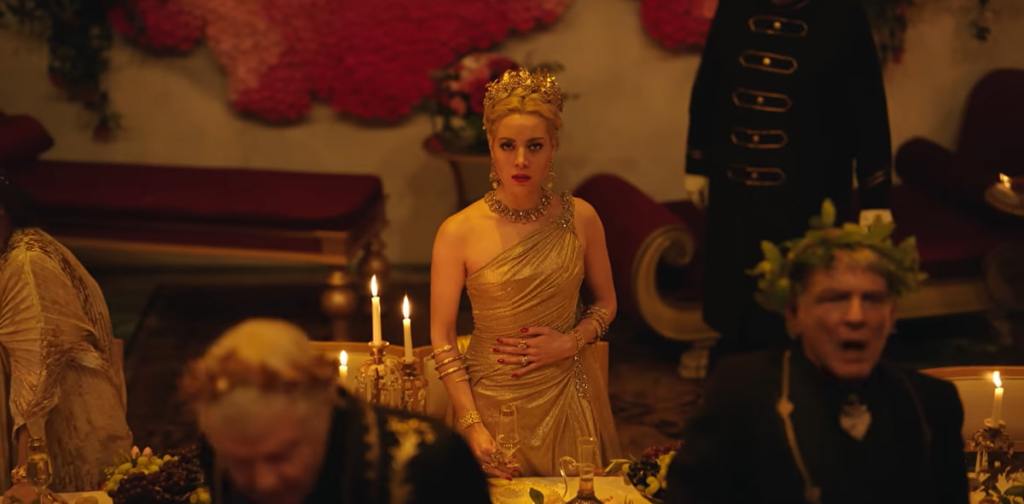
It is perhaps the ultimate auteur folly. A director creating something that only appeals to him, at huge expense (and I suppose at least he paid for it himself rather than wrecking a studio) where no one was allowed to say at any point “this makes no sense” or “this is heavy-handed” or “this scene doesn’t mesh at all with the one before it”. Instead, it throws a thousand Coppola ideas at the screen, in a film designed to appeal to pretentious lovers of art-house cinema who like to tell themselves Heaven’s Gate is the greatest film ever made or the artform peaked with Melieres and it was all down-hill from there.

To approach the film in its own overblown style: whenever an auteur crafts, Jove plays dice with the Fates to decide on the cut of the cloth for Destiny’s Loom: should it come up sixes, the Muses smile, but should it be Snake Eyes, Pluto himself shall claim his due from those who would seize Promethean fire.

That makes as much sense as chunks of the film.

Furiosa: A Mad Max Saga (2024)

Furiosa: A Mad Max Saga (2024)

Deliriously overblown and full of demented imagination even if it never quite feels necessary

Director: George Miller

Cast: Anya Taylor-Joy (Furiosa), Chris Hemsworth (Dementus), Tom Burke (Praetorian Jack), Lachy Hulme (Immortan Joe), Alyla Browne (Young Furiosa), George Shevtsov (History Man), John Howard (People Eater), Angus Sampson (The Organic Mechanic), Nathan Jones (Rictus Erectus), Josh Helman (Scotus), Charlee Fraser (Mary Jabassa), Elsa Pataky (Mr Norton)

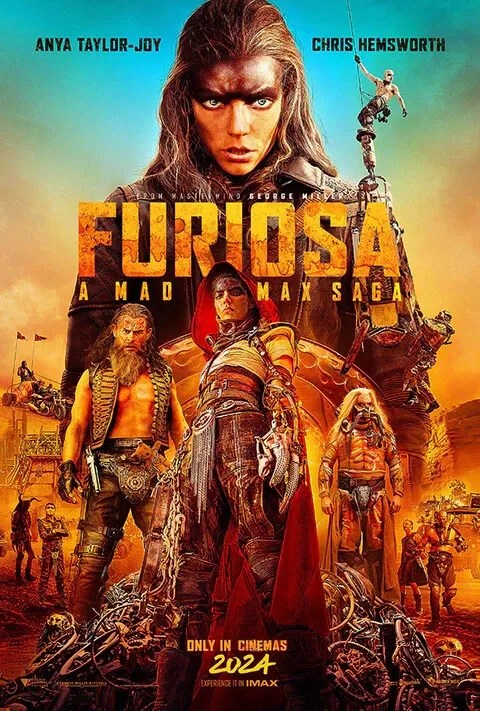
Is there a more demented mainstream film series than Mad Max? Furiosa follows the balls-to-the-wall excess of Mad Max: Fury Road with more of the same and a mythic atmosphere of Godfather Part II-backstory deepening. What you end up with might feel slightly odd or self-important – over two and a half hours of direct build-up for a pay-off we saw almost ten years ago (perhaps that’s why Furiosa ends with a cut-down play-back of the major events of Fury Road spliced into the credits, so we can all be reassured the villains left alive here got their comeuppance later). Furiosa is frequently overlong, a little too full of its love of expansive world-building and never quite convinces you that we actually need it – but then it’s also so bizarre, Grand Guignal and totally nuts perhaps we should just be happy that, in a world of focus-grouped content, it even exists.

We’re back on the desert wasteland of post-apocalyptic Australia as motorbike riding goons kidnap young Furiosa (Alyla Browne) from the Green Place hoping to use her to persuade crazed war lord Dementus (Chris Hemsworth) to lead his forces there. Despite the heroic efforts of her mother (Charlee Fraser), Furiosa remains a captive with only a secret tattoo on her arm (guess what’s going to happen to that…) to guide her home. Dementus provokes a resources war with cult-leader Immortan Joe (Lachy Hulme), with Furiosa traded, then escaping a hideous fate as one of Joe’s wives, instead growing up secretly-disguised as a boy (becoming Anya Taylor-Joy) as part of Praetorian Jack’s (Tom Burke) War Rig crew. Then the war between Immortan Joe and Dementus explodes again, foiling Furiosa and Jack’s plan to escape and giving Furiosa a change at revenge against Dementus.

That sprawling plot outline hopefully gives an idea of the ambitious bite George Miller is taking out of his world. While Fury Road took place over, at most, a few days, Furiosa stretches well over twenty, so gargantuan in scale and newly invented locations (as well as the mountainous citadel, we get the oil-rig nightmare of Gas Town and the Mordor-like Bullet Town) that it squeezes most of the entire Act Five war between Dementus and Immortan Joe into a brief, tracking-shot, montage. Furiosa is actually rather like a fever-dream Freud might have had after reading an airplane thriller, split into on-screen chapter titles – each with portentous (and sometimes pretentious) names like ‘The Pole of Inaccessibility’ – and a self-important narration dialling up mythic importance. If Fury Road was like someone stabbing an adrenalin-filled syringe straight into your heart, Furiosa is a like being told a detour-crammed story by someone a bit the worse-the-wear after a long night.

Not that Furiosa shirks on the banging madness of Fury Road’s slap-in-the-face action. It features a mid-film War Rig vs motor-bike raiders pitched-driving battle that is so extreme you wonder no one got crushed under wheel while making it, perfectly capturing the addled madness of Fury Road. A Chapter 4 pitched battle at one of Furiosa’s Dystopian-on-speed locations sees destruction, devastation and disaster on an even grander scale than anything else Miller has done before in this series, with an entire mining crater turned into a whirligig of firey destruction. That’s not forgetting three desperate desert chases – the finest of which is the film’s opening sequence, which see Furiosa’s mother track down and ruthlessly dispatch Furiosa’s kidnappers with a velociraptor-like ruthlessness and efficiency. No wonder Miller can put a whole war into a single shot – and why he feels comfortable ending Furiosa with a surprisingly personal and small-scale confrontation.

The main confrontation is between Furiosa and her self-proclaimed warlord – and would-be surrogate Dad – Dementus. Furiosa gives Chris Hemsworth the opportunity he’s been waiting for, allowing to flex his comic muscles, chew hilarious lumps out of the scenery and still show his menace. He makes Dementus an overgrown child, brilliant at stealing but with no idea about how to use them, obsessed with self-improvement (his dialogue is full of verbose, overwritten phrases, like a psychotic thesaurus) and only really happy when he’s smashing something. Introduced framing himself like a zen-like messiah, it doesn’t take long until he’s charging around on a chariot drawn by motorbikes, tasting other people’s tears and giving self-aggrandizing speeches while torturing Furiosa’s nearest-and-dearest. It’s a gift of a part, funny, scary, loathsome but strangely likeable even when he does awful things.

Opposite him, Anya Taylor-Joy actually has less to work with as Furiosa (she only takes over the part almost an hour into the film). Although this is meant to be a Furiosa film, it rarely feels like its telling us much more than we already know, especially since much the skills that ‘makes’ Furiosa what she is in Fury Road takes place in montage and her desire for freedom and to protect others are swiftly established so that any new-comers can unhesitatingly root for her. If Dementus is all talk, Taylor-Joy’s Furiosa is silent and simmering, her humanity either shrinking or quietly growing from moment-to-moment. She has a quiet romance with Tom Burke’s world-weary Praetorian Jack, but this really about converting her into a mythic figure of vengeance rather than making her a personality.

A vengeance we’ve already seen pan-out in Fury Road. I’ll be honest, for all the grand scale of Furiosa, I don’t really feel I learned anything about its central character here I hadn’t already picked up from Theron’s brilliantly expressive performance in the first film. For all the impressiveness of the scale, a lot of Furiosa boils down to physically showing us things that were implied in the first (second?) film – from locations, to the reasons why Furiosa lost her arm to giving us clear reasons for her motivations. But all this is already there – and with brilliant economy – in Fury Road. Telling us all again feels like Miller giving us the footnotes (Furiosa Silmarillon perhaps?) rather than anything truly new and the Homeric backdrop Miller is going for never really clicks into place.

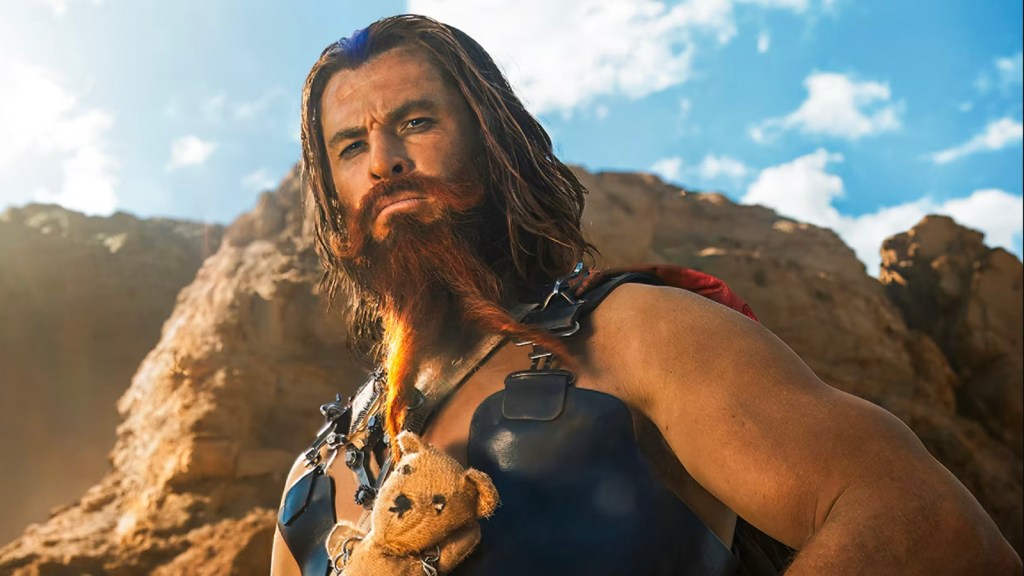
So the most successful swings are not narrative but visual. Furiosa reminds you what an absolutely insane extreme world Mad Max is. Death cults of radiation-deformed albinos? Villains who bottle milk straight from the nipple (not a cow’s), while another obsessively fondles his exposed, pierced ones? A villain who straps a battered old Teddy bear to himself? Action set-pieces that throw in everything – flying bikes, lava lakes and arms stoically lopped off? Even time-jumps are done imaginatively, like a wig, caught in a branch, decaying in front of our eyes. Every single design decision in this – and the gorgeously sun-kissed photography – is dialled up to eleven for George Miller’s very personal vision of pulpy, dystopian chaos.

You can wonder at times – as I did – whether we really needed a two-and-a-half hour film that’s expands the thematic depth of a chase movie which already outlined its characters motivations and personalities with impressive economy. But then, there are moments in Furiosa that just feel like they’ve been pulled out of someone’s crazy dreams. It’s put together with such a good mix of pulp poetry and head-banging craziness by George Miller that after a while you just go with it. And it sticks with you in a way focus-grouped Marvel films never seem to.

Mutiny on the Bounty (1962)

Mutiny on the Bounty (1962)

Epic retelling that sticks with the same melodrama and nearly destroyed Brando’s career

Director: Lewis Milestone (Carol Reed)

Cast: Marlon Brando (Lt. Fletcher Christian), Trevor Howard (Captain William Bligh), Richard Harris (John Mills), Hugh Griffith (Alexander Smith), Richard Haydn (William Brown), Tarita Teriipaia (Princess Maimiti), Matahiarii Tama (Chief Hitihiti), Percy Herbert (Matthew Quintal), Duncan Lamont (John Williams), Gordon Jackson (Edward Birkett), Chips Rafferty (Michael Byrne), Noel Purcell (William McCoy), Tim Seely (Midshipman Ned Young), Henry Daniell (Admiral)

After the success of Ben-Hur, MGM thought it had cracked the mystery of making those cash-registers go ring-a-ding: massive historical pictures, with scale and run-time dialled up to “epic”. Mutiny on the Bounty was one of the most famous stories of all time and they’d had signed up Marlon Brando, universally seen as the greatest actor alive. It couldn’t go wrong, could it? Months of shooting and a disastrous box-office release later (despite a MGM campaign that landed this a Best Picture nomination), and Mutiny on the Bounty effectively destroyed Brando’s career for the next ten years and became a by-word for star excess.

Brando played mutineer Fletcher Christian – but in a manner completely different from Clark Gable (who, Brando disparagingly stated, only played himself minus the moustache). Brando’s Christian would be British and then-some: posh, foppish, a gentleman torn between the rules of society and those of fair play. Bligh – played with a constant sneer by Trevor Howard – would follow in the footsteps of Laughton, but Brando wanted to make something more serious, more historical. Less of a blood-and-thunder naval drama and more a character study that would give a fair crack of the whip (so to speak) to the Tahitian natives the mutineers lived among.

The film we ended up with though is no more historically accurate than the 1935 Best Picture winner. Part of the film’s disastrous reception might well be that this epic tells more-or-less exactly the same salacious story of a devilish sadist scowling as he whips men to death (far from the truth of the real Bligh, a poor leader but not a monster) until his noble number two steps up (the real Christian was a spoilt weakling) but in what feels like twice the time with half the fun. If you want to watch this version of the Bounty story, why would you want to choose this one? (We’d have to wait until the 1984 version for a more fair-handed telling.)

Not that Mutiny on the Bounty is as terrible as its reputation suggests. It touches – particularly in its thoughtful post-mutiny coda on Pitcairn island – on an interesting character study of the mixed motivations of Christian, filled with regrets and self-pitying sulking. It wants to explore where the balance lies between what is right by the letter of the law and by its spirit. Nothing Bligh does in the film is wrong as such, but his relish and zeal in doing it are. Christian isn’t a conventional hero, but a smirking, foppish character prone to snide remarks and affecting an air of disconnected duty for large chunks of the film. If the film had allowed Bligh more sympathy, rather than the two-dimensional monster he’s portrayed as here, it might have made for an interesting character clash.

Instead, it tends to be slow, self-important and pompous, not helped by Brando’s indulgent performance which sacrifices drama for portentousness. For all the film offers a cartoonish villain, it’s resolutely unfun and deathly serious. Shot with a professional, disengaged widescreen flatness by Milestone (called in from decades of retirement as a “safe-pair of hands”, after the sacking of Carol Reed), it’s uninspired and mistakes size for visual interest. The ship, in particular, is shot with a wide-angled spaciousness which feels completely wrong for a location supposed to be ripe with claustrophobic tension.

The drama attempts to make up for this with its parade of lashings, keel-haulings and bodies (or obvious dummies) tumbling to their death from the rigging. Trevor Howard delivers exactly what’s asked fork here, sneering and constantly in the wrong. It’s one of the film’s failings that it leans into psychological complexity in some places, while most of its events and its second lead are presented with cartoonish silliness. Its location shooting in Tahiti looks great (although the all-too-obvious intercutting of this with scenes on sound stages, sometimes from one cut to another, jars) but a widescreen image of glistening sea would look gorgeous in even the most workmanlike hands.

Perhaps the film is, at times, a chore because it all too clearly was for many involved. Reports of Mutiny on the Bounty have regularly focused on its disastrous making, with directors fired, location shoots awash with dysentery, shooting months over schedule. Above all, Brando rewriting the film on the fly, muscling a disinterested Milestone aside to direct certain scenes. Not a surprise that the studio decided all the blame would be dropped on him not them (they were also stung by the contract they gave him, at $5k a day overtime, Brando’s perfectionism becoming one of the main factors of the film going months over schedule), leaving him virtually unemployable for a decade.

But is that fair? Brando arguably become the awkward, unlikeable, misunderstood Bligh with the cast and crew as the mutineers, all of them intent on a voyage of mutual self-destruction. Put simply, this was a clash between Brando’s immersive, deep-dive acting style and Old Hollywood. To Brando “professional” meant something very different to the “hit-your-marks-say-your-words” attitude of Milestone and the crew: it meant searching over time for the heart of a character. The sort of psychological depth Brando was aiming for was just anathema to many of those he was working with, coming across as the unprofessional self-indulgence of a spoilt star. Combine that with Brando’s stand-offish shyness and professional selfishness and you had a recipe for disaster.

Severed from any director he respected (he made it all too clear he considered Milestone a hack studio Yes-Man) and with no-one having either the power or inclination to restrain him, Brando threw every idea he had at the screen, no matter how awful. So we got Christian with a ludicrous, giggle-inducing accent, a performance stuffed with foppish eccentric touches (and awful costume choices) that aims at thoughtful re-invention but comes across as a camp, bizarre mess. The tragic thing is Brando is clearly passionate about the project, putting more thought and commitment into this performance than he ever offered in barely-bothered turns in films like Sayonara.

Brando was also working with a group of Reed-recruited actors with no sympathy for him. This group of macho British and Irish heavy-drinkers (Hugh Griffith, in a crucial role, frequently disappears for no reason as his alcoholism eventually became such a burden he was fired mid-shoot) had no sympathy for the fey Brando or his acting style. Richard Harris’ loathing of his co-star – who responded to their open dislike with petty on-set power-plays, only making the whole problem grow – in particular is all too-clear. Brando looks most comfortable working with the Tahitian actors (he had long been a passionate anti-racist campaigner) and later married Tarita Teriipaia. It’s one of the few times where he makes Christian feel fully human rather than a mixed bag of conflicting actorly tricks.

Mutiny on the Bounty has its moments: unfortunately it’s all the wrong ones. For a film that wanted to be a more serious, historical exploration of the mutiny, its best parts revolve around Howard’s lip-smacking villainy, combined with flashes of its on-location shooting. Problem is, that’s not dissimilar from what we got in the 1935 original – and really you’d just be better off watching that.

Hello Dolly! (1969)

Hello Dolly! (1969)

Bloated, miscast and over-produced musical that nearly sank the genre and studio

Director: Gene Kelly

Cast: Barbra Streisand (Dolly Levi), Walter Matthau (Horace Vandergelder), Michael Crawford (Cornelius Hackl), Marianne McAndrew (Irene Molloy), EJ Peaker (Minnie Fay), Danny Lockin (Barnaby Tucker), Joyce Ames (Ermengarde Vandergelder), Tommy Tune (Ambrose Kemper), Judy Knaiz (Gussie Grander), David Hurst (Rudolph Reisenweber), Louis Armstrong (Band leader)

The old-fashioned musical had always been a winner for Hollywood. So, I guess it made perfect sense to pump $25 million (just over $200 million in today’s money) into Hello Dolly!. Reality didn’t agree though. Hello Dolly! was a massive box-office bomb which, despite its seven Oscar nominations (including Best Picture, due to intense studio lobbying) pretty much killed the traditional, Freed-style musical stone-dead. After this, musicals would have drama at their heart (like Fiddler on the Roof or Cabaret) and scale down the production numbers.

It also didn’t help that the mega-budget, colossal production values across its bum-numbing two-and-a-half hour run time ruthlessly exposed Hello Dolly! as a perilously slight story, in a way its years playing on Broadway hadn’t. Dolly Levi (Barbra Streisand) is a widowed matchmaker, hired by grumpy “half-a-millionaire” Horace Vandergelder (Walter Matthau) to find him a wife. However, Dolly rather fancies getting back into the game with Horace herself. Around them other parties flirt, such as Horace’s niece Ermengarde (Joyce Ames) with artist Ambrose Kemper (Tommy Tune) and his clerks Corenlius Hackl (Michael Crawford) and Barnaby Tucker (Danny Luckin) with fashion store owner Irene Molloy (Marianne McAndrew) and her assistant Minnie Fay (EJ Peaker).

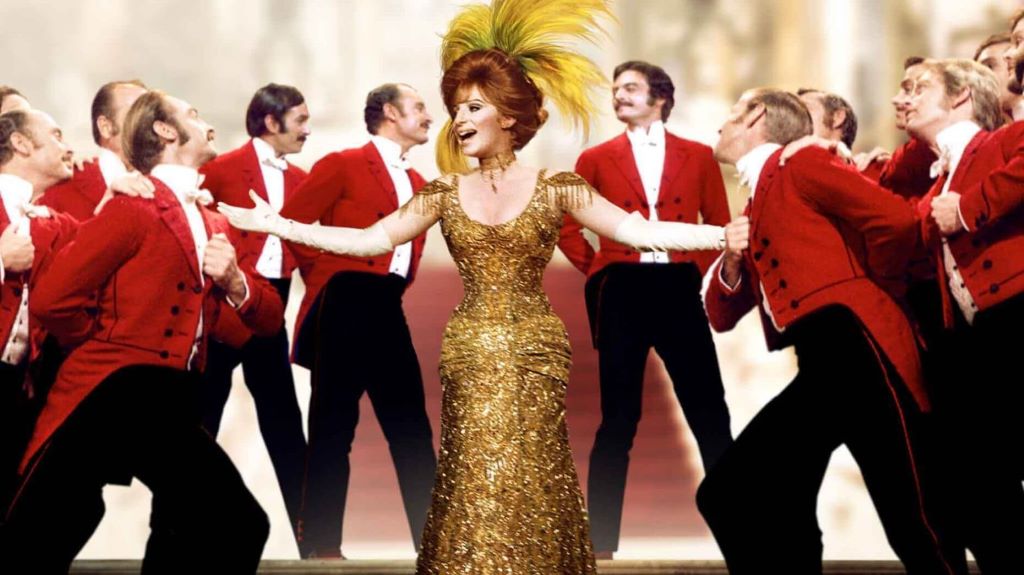
I’ll grant the scale and sets are impressive. Whole streets and parks were built. Grand, elaborate costumes (some of Streisand’s costumes cost thousands and thousands of dollars by themselves) add wow factor. If you believe “more is more” Hello Dolly! is for you, it’s Oscar for set design well deserved. But as you watch Streisand hit a high note in long shot while an entire parade of thousands takes place around her, you start to realise you’ve not formed a bond with the characters. When we finally get them all in one place (a crowded restaurant in New York) the best part of thirty minutes is taken up with three massive numbers (Dancing waiters! Streisand’s entrance number! Comedy foot-tapping from Crawford! Louis Armstrong cameo!) that piles so much stuff on, that you almost forget what the scene was meant to be about in the first place.

What this probably needed to be is a tighter, American in Paris style romantic comedy, the sort of stuff Arthur Freed would have run out in 100 minutes with a few set pieces. Instead, it’s a bloated mega-production with colossal sets, 12,000 extras, widescreen soaking up the action and vast, never-ending dance numbers that fail to progress either story or emotion. After being bludgeoned by balletic leaps, you suddenly realise not only has nothing much happened, but you are being asked to invest in the future happiness of characters you barely know and often hardly even like.

It’s not helped by the chronic miscasting of the leads. Barbra Streisand was the hottest star in town – the studio was (correctly) convinced mega-stardom was inevitable after watching the rushes of Funny Girl – but she is wrong on almost every level for Dolly Levi. A part intended for a slightly-over-the-hill widower in her late 40s, was barely retrofitted for a glamourous diva aged 26. Streisand, clearly painfully aware she was wrong for the part, struggles to work out how to play it. Sometimes she’s coquetteish, other times she goes for a mother-in-law largeness, most of the time she ends up channelling Mae West sauciness. While her singing is (of course) outstanding, she never looks comfortable. Equally out-of-place is Walter Matthau, whose grouchy comedy style never meshes with the tone of the film (although he has a great bit of business with a walking stick which he hammers down onto a table with such irritated force it almost rebounds and hits him in the face).

It also doesn’t help that Matthau and Streisand all-too-clearly can’t stand each other (their closing kiss is hilariously awkward – try replicating their physical positions to see how unnatural and unromantic it is). On set Matthau felt Streisand was too big for her newcomer boots while Streisand saw him as envious of her star quality. The two frequently fell into heated rows: this at least meant they fitted in naturally on a set where almost no-one got on. Streisand and Kelly’s working styles (both being demanding perfectionists) proved incompatible, Kelly stopped speaking to the official choreographer who also stopped speaking to the costume designer.

With the leads struggling, most of the film’s charm actually relies on its secondary leads. Hello Dolly! is, actually, an effective showcase for Michael Crawford’s physical dexterity (some would say recklessness) and his sweet romance with Marianne McAndrew’s charming Irene Molloy is the film’s emotional heart. It’s a shame both their film careers effectively ended here (though Crawford would go on to greater things on stage). Their dance number Elegance is one of the film’s most engaging while their duet It Only Takes a Moment is the simplest filmed and most moving moment in the film.

Bloat and bombast overwhelms the rest. Although Kelly knows how to shoot dancing – effective camera moves and having the dancers move towards the camera, increasing their dynamism is very well done – he’s far less suited to the character moments which Stanley Donen and Vincente Minnelli excelled at. The gags very rarely land, either because the timing is off or the camera is so focused on getting the mammoth sets in that the bits of business look like minor irrelevances.

Fundamentally, Hello Dolly! bet the house on throwing all the budget on the screen to wow audiences the way something like The Great Ziegfeld had over thirty years ago. But audiences needed an emotional connection with what they were watching. Hello Dolly spectacularly fails to deliver on this. What we were left with is a very slight story about matchmaking, basically a chamber piece with about six characters, transposed onto the sort of epic backdrop that makes Gone with the Wind look humble. The mismatch never works and the entire enterprise eventually collapses under its own gravitational pull. A box office dud that nearly sank the studio, the musical would never be the same again.

Golda (2023)

Golda (2023)

Undramatic saga of Middle East history that fails to bring seismic events to life

Director: Guy Nattiv

Cast: Helen Mirren (Golda Meir), Camille Cottin (Lou Kaddar), Liev Schreiber (Henry Kissinger), Rami Heuberger (Moshe Dayan), Rotem Keinan (Zvi Zamir), Lior Ashkenazi (Lt General David Elazar), Dvir Benedek (Major General Eli Zeira), Ed Stoppard (Major General Benny Peled), Dominic Mafham (Lt General Haim Bar-Lev), Emma Davies (Miss Epstein), Ohad Knoller (Major General Ariel Sharon)

I’m sure you couldn’t have picked a worse time to release a film celebrating Israel’s fight against the Arab nations than November 2023. As the world looks on in horror at the latest cycle of violence engulfing Gaza, it hardly feels like the right time to kick back and cheer as Israeli forces fight for their country in the 1973 Yom Kippur War. But, even without that, Golda is fatally undermined by being a turgid, dull biopic where despite the volume of events little is made either engaging or interesting.

Golda Meir (Helen Mirren) is Prime Minister of Israel, managing the country’s military response after the combined forces of Egypt and Syria launch a surprise attack on the Golan Heights and Sinai. After intelligence failures leave Israel on the back foot, Meir must plan Israel’s counter-offensive, deal with the moral complexities of sacrificing soldiers, and work diplomatically to ensure the continued support of the US via Secretary of State Henry Kissinger (Liev Schreiber), all while dealing with cancer. All of this is told through the intermittent use of a framing device, where Meir is being interviewed by a 1974 committee investigating those intelligence failures.

Golda is obviously apeing Cuban Missile Crisis political thriller Thirteen Days, with its focus on a tight timeline, generals in cigarette-smoke-filled rooms making tough calls, and the dilemmas faced by an elected leader trying to ensure their country’s survival. Unfortunately, where Thirteen Days mixed history lesson with genuine drama, Golda just feels like it takes thirteen days to watch. How did they manage to make such a seismic conflict as dull as this?

There was a bit of controversy initially on casting the non-Jewish Helen Mirren. That can be largely forgotten, not least because Mirren is by some way the best thing in the film, gravelly and conveying the unbearable pressure on Meir. She even gets to show her human side, with sweet scenes with her loyal assistant (well played by Camille Cottin) and a plate of borsch and an offer for Henry Kissinger (a decent Liev Schreiber). Mirren is caked under various prosthetics but does a good job.

But the rest of the film is a dull mess with its flat, lifeless script singularly failing to add tension or drama. The film feels like a box-ticking exercise, from flat conversations on various troop movements to the casualty figures Meir dutifully records in her notebook. Only rarely does the film bring any of this viscerally to life (such as the increasingly crowded morgue Meir walks through to receive her cancer treatments). Events at the front are given no human face to draw us into the crackly reports coming in over radios, and there is little sense of characters having to debate and choose between different courses of action under huge pressure. Keeping the action contained within just a few indoor locations serves to make the film feel cheap rather than claustrophobic.

Our only glimpse of the front is to see Dayan fly over the Golan Heights (and promptly vomit in guilt). Discussions in briefing rooms get bogged down in establishing who someone is and what they are in charge of, rather than communicating the stakes. So, we get various uniform-clad actors spouting reams of geographical locations, division numbers and military statistics, accompanied by maps where the odd cigarette lighter stands in for various armies. Somehow, despite the volume of talking, its nearly impossible to understand any of this, so poorly is it communicated visually.

That’s before we get started on the film’s one-sided lack of historical context. A brief series of captions that opens the film runs down an Israeli-only perspective of the country’s history. The crucial background of the 1967 war – a pre-emptive strike by Israel that seized the land now being attacked in 1973 – is completely ignored. It’s never made clear that the Arab nations argued they had launched their attack in response to 1967, and no wider context is given.

This feels particularly awkward considering recent events (in late 2023) threw the conflicting narratives in the region even more into the limelight. Both Arabs and Israelis have legitimate cases. But a film that focuses on one side only and whose only Arab voice is a radio intercept of a Syrian gleefully celebrating the “death of the Zionists” hardly feels like it is making a mature and sensitive statement about the Middle East conflict.

It means the film’s final celebration that the war led to the peace agreement between Egypt and Israel – including the recognition of Israel by Egyptian Premier Sadat – rings hollow. Peace, as a topic, is never raised in the course of the film (so hardly feels like a thematically correct ending) and its celebration at the end feels like a fig leaf to suggest an “upbeat” ending, when 1973 was effectively just another round in a war that was to continue (with increasingly horrific impact on civilians on both side) for the rest of all our lifetimes so far.

Golda fails as drama, fails as history and fails as a film. It’s a mess.