Category: Boxing film

The Champ (1931)

The Champ (1931)

Seminal father-and-son drama that largely avoids excessive melodrama while essentially inventing a genre

Director: King Vidor

Cast: Wallace Beery (Andy “Champ” Purcell), Jackie Cooper (Dink Purcell), Irene Rich (Linda Purcell), Roscoe Ates (Sponge), Edward Brophy (Tim), Hale Hamilton (Tony), Jesse Scott (Jonah), Marcia Mae Jones (Mary Lou)

The Champ is the grand-daddy of an entire genre of “Dad-and-lad” films. If it sometimes feels over-familiar today, then that’s because many of now familiar cliches of slightly washed-out Dads caring for (and being cared for) precocious-but-caring pre-teen sons were born here. Even at the time, plenty of people saw The Champ as drowning in more than a little sentimentality. But The Champ is mostly effectively underplayed and directed with a spry energy that stops it becoming too cloying.

Andy Purcell (Wallace Beery) is adored by his 8-year-old son Dink (Jackie Cooper) as “Champ”. Andy was a heavyweight champion once; but is now an over-the-hill fighter more likely to be found propping up a bar or shooting dice than throwing punches in the ring. Constantly guiding Champ away from temptation, Dink doesn’t waver in his devotion, even when presented with the possibility of a new life with his long-lost now-wealthy mother (Irene Rich). Champ wants to prove to his son he can be the man Dink believes he can be, taking to the ring one more time against the Mexican champion – with heart-tugging consequences.

It’s not just dad-and-lad cliches – there’s more than a few boxing cliches whose DNA is in The Champ – Vidor even directed here one of the first-ever training montages, as Champ gets ready to duke it out with the Mexican champ. But its heart is really in the unbreakable bond between father and son, their unwavering love which survives no end of testing the father applies to it. Champ is an unreliable wash-up who makes it a regular habit to piss away money, culminating in selling their treasured race-horse “Little Champ”. But Dink knows, for all is flaws, Champ truly loves his son.

A film like this relies on the chemistry between the two actors, so it’s just as well both Beery and Cooper genuinely feel like they’ve known each other all their lives. (Hopefully it doesn’t spoil the magic to discover the famously misanthropic Beery loathed Cooper, who in turn felt Beery was a scene-stealing bully). Their interplay, their easy, natural chatter and playful physicality is heart-warmingly believable. From sharing a bed in their rundown flat, to messing around with their hats or teasing each other during country jogs, Vidor’s film finds a natural ease in their relationship. There is a genuine feeling of parental love between the two, captured in little moments that feel real, such as Champ’s superstition about Dink spitting on things ‘for luck’ (from betting slips to boxing gloves).

Beery won one of the first Best Actor Oscars – a historic tie with Fredric March in Dr Jekyll and Mr Hyde (ruled a draw despite Beery gaining one fewer votes) – and it’s a deserving one. Beery underplays a role that could billow over the top, from his woozy drunk acting which is convincingly low-key to the streak of guilty self-loathing Beery keeps clear is running through Champ. He’s a man who despises his weaknesses, who knows he is not the legend his son still believes him to be, deeply ashamed of his actions but yet time-after-time lets down and embarrasses his son, from getting arrested in drunken scuffles (in front of the whole town) to slurring nonsense in a bar.

The warmth of Vidor’s direction keeps us on-side with Champ, even as he needs to be sobered up with cold tomato soup and ice to make a meeting with a promoter (even so, he’s still late and screws it up in any case due to still being pissed) or as he is hauled out of a police van, scruffy and swinging misguided punches. It makes us hope for the best from Champ, even if it’s left subtly open whether he strikes Dink (from between the bars of his prison cell) from anger or in an attempt to drive the boy away from his self-destructive father. (Either way, in a touch that inspired Raging Bull, Champ is so ashamed of his perhaps- half-meant blow, he pummels the cell wall with his hand, his face contorted in lashings of shame and self-loathing.)

Beery’s performance is perfectly complemented by Cooper, one of the most natural child stars ever. Cooper’s Dink pulls off the difficult trick of feeling both charmingly wise before his years, but still like a naïve child. Vidor trusted Cooper’s instincts enough to just let be on the camera, notably during a largely improvised sequence where Cooper prattles to himself while climbing up onto the roof of his wealthy mother’s new home. But Cooper can also manage the emotion: when tears come, they feel real and genuinely distraught. In other hands, the final act emotional breakdown might have felt like the worst sort of stage-school tears but Cooper makes it genuinely feel like a child so torn up he can barely process the depth of his feelings.

Cooper’s performance largely sells the film’s heavily melodramatic ending, which could well have collapsed into a soapy mess. It’s the moment where Vidor’s film most insistently tugs on the heart-strings, desperate to get those tears pouring. But he also softens Beery’s self-destructive lunk who, nice-is-he-is, we care for partly because his son is so overwhelmingly devoted to him. And we believe Champ would be desperate to do anything to live up to the sort of hero-worship he has here.

Vidor’s film also gains from his smooth, visually engaging direction. The Champ opens with an impressive tracking shot of our heroes running, and makes excellent use of space and blocking throughout to ground the father-and-son constantly at the centre of a busy world bustling around them. It’s also a generous film: the Champ’s ex is no villain, but a wealthy, decent guy, neither is there racism in the depiction of Dink’s young Black friend Jonah. The decision to use sped-up film for the fight may look vaguely comic today, but adds energy while Vidor largely avoids the trap of hammering the emotional points home too strong.

The Champ is still an effective crowd-pleaser, sailing by in 80 swift minutes, so successfully taking many of the struggling-parent-conventions of ‘women’s pictures’ and applying them to men, that it’s been effectively re-made and re-invented dozens of times, in dozens of settings. And you can’t say more for its effectiveness than that.

Champion (1949)

Champion (1949)

Kirk Douglas is a boxing heel in this noirish melodrama full of excellent moments

Director: Mark Robson

Cast: Kirk Douglas (Midge Kelly), Marilyn Maxwell (Grace), Arthur Kennedy (Connie Kelly), Paul Stewart (Tommy Haley), Ruth Roman (Emma), Lola Albright (Palmer), Luis van Rooten (Harris), Harry Shannon (Lew), John Day (Dunne), Ralph Sanford (Hammond), Esther Howard (Mrs Kelly)

What does it take to get to the top? Skill, luck, ambition, determination – and sometimes just being a ruthless bastard. Midge Kelly (Kirk Douglas) as all five of those skills in spades, flying from bum to champ in just a few short years, burning every single bridge along the way. Champion tells the ruthless story of how Kelly alienated his devoted lame brother Connie (Arthur Kennedy), dropped the trainer (Paul Stewart) who discovered him in a heartbeat and used and tossed aside a host of women: dutiful wife Emma (Ruth Roman), would-be femme fatale Grace (Marilyn Maxwell), artistic, sensitive Palmer (Lola Albright) wife to his new manager. As he enters the ring to defend his title against old rival Johnny Dunne (John Day), will all these chickens come home to roost?

Champion is deliciously shot by Franz Planer with a real film noir beauty, in particular the vast pools of overhead light that fill spots of the backstage areas of the various venues Midge fights in. Its boxing is skilfully (and Oscar-winningly) edited into bouts of frenetic, enthusiastic energy – although you can tell immediately that no one in this would last more than 90 seconds in a real ring – and it manages to throw just enough twists and turns into its familiar morality tale set-up to keep you on your toes and entertained. In fact Champion is a gloriously entertaining fists-and-villainy film, full of well-structured melodrama and decently drawn moral lessons. It’s the sort of high-level B-movie Studio Hollywood excelled at making.

For a large part it works because Douglas commits himself so whole-heartedly to playing such an absolute heel, the kind of guy who knows he’s a selfish rat but just doesn’t give a damn. Douglas was given a choice of a big budget studio pic or playing the lead in this low-budget affair, chose Champion – and his choice was proof he knew where his strengths lay as an actor. Midge Kelly is the first in a parade of charismatic, ruthless exploiters that Douglas would play from Ace in the Hole to The Bad and the Beautiful. Kelly is all grinning good nature until the second things don’t go his own way: and then you immediately see the surly aggression in him.

Its why boxing is a good fit for him. He doesn’t quit a fight – pride won’t let him. It’s the quality that Tommy sees in him, after Midge is literally pulled in off the street to pad up the under-card at a challenger’s fight night. Clueless as he is about boxing technique, he refuses to stay down and picks a fight with the promoter on the way out when cheated out of his fee. Champion shows how, for resentful people like Kelly, pugilism is a great way of getting your own back when you feel life has screwed you in some way. Perhaps that’s why he goes for his opponents with such vicious, relentless energy and why he takes such a cocky delight in beating the hell out of them. In fact, Champion could really be a satire on the ruthless, put-yourself-first nature of much of Hollywood, with both Connie and Tommy commenting that the fists-and-showbiz world is a cutthroat one.

What Champion makes clear though is that Kelly isn’t corrupted by fame. For all Douglas’ charming smile, there is a cold-eyed sociopathy in him from the start. Kelly performs loyalty, but it’s always a one-way street. He’ll assaults those who call his weak-willed, more cynical, crutch-carrying brother Connie ‘a gimp’, but he has no real sense of loyalty. He doesn’t even pause for a second when seducing Emma (daughter of the diner the brothers end up working at on arriving in LA) for a quick fumble despite knowing Connie’s feelings for her. Later, criticised by Connie, he’ll just as angrily lash out at Connie, mocking his disabilities, the second his brother starts to make decisions of his own.

Kelly’s ruthlessness towards women is also clearly something innate. He’ll whine like a mule when forced (virtually at gunpoint) to marry Emma, who he’ll immediately leave behind with no interest of hearing from again (until she finally develops some feelings for Connie of course, at which case he seduces her as a point of pride). His sexual fascination for the manipulative Grace – a purring Marilyn Maxwell – quickly burns out, again not pausing for a second in chucking her aside, all but flinging dollar bills on a table as he goes. Even more heartlessly, after showing some flashes of genuine courtliness in his romantic interest in Palmer (a very sweet Lola Albright), he happily takes a cheque from her husband (right in front of her) to never see her again. None of this comes from fame: it’s the sort of guy Kelly is.

And, as Douglas’ smart, self-absorbed performance makes clear, it’s because deep down Kelly always thinks he is the victim and the world owes him a living. There is a strong streak of self-pity in Douglas’ performance, bubbling just below the surface combined with a narcissistic need to be loved by strangers even while he’s reviled by everyone who knows him. There is an escape from inadequacy for Midge in fighting: something he keeps coming back to time-and-again in complaints about the unjust treatment the world has given him in the past, used to justify any number of lousy actions.

Champion unfolds as an interesting study of a deeply flawed, increasingly unsympathetic character with a huge drive to destroy other people, either by words or fists. An excellent performance by Douglas is counter-poised by a host of other strong turns, especially from Arthur Kennedy, whose Connie effectively trapped in an abusive relationship and Paul Stewart’s unromantically realistic trainer who knows the score long before anyone else. Handsomely shot and directed with a melodramatic flair by Mark Robson, it can enter the ring with any number of other boxing films.

Rocky III (1982)

Rocky III (1982)

Rocky needs to build his way back to the top – again – in this boxing buddy movie

Director: Sylvester Stallone

Cast: Sylvester Stallone (Rocky Balboa), Talia Shire (Adrian Balboa), Burt Young (Paulie Pennino), Carl Weathers (Apollo Creed), Burgess Meredith (Mickey Goldmill), Tony Burton (Duke Evers), Mr T (Clubber Lang), Hulk Hogan (Thunderlips)

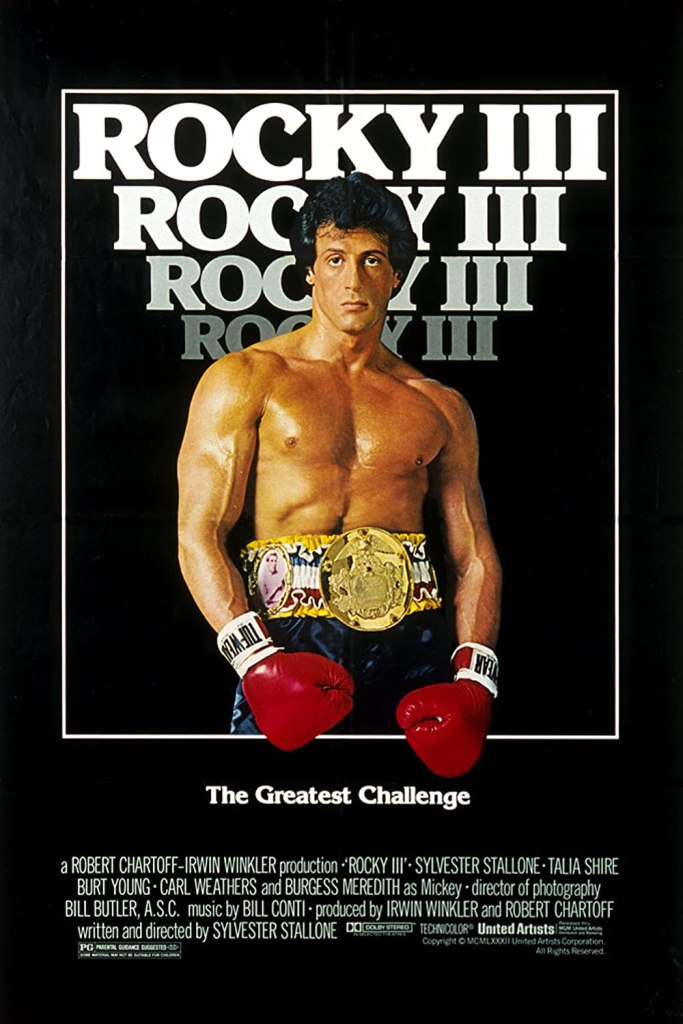
Life is good for Rocky Balboa (Sylvester Stallone)! Ten successful title defences and he is literally on-top of the world. Time to hang up his gloves right? Wrong of course. He’s challenged by hungry new up-and-comer Clubber Lang (Mr T), a brutal, never-beaten machine. Dismissive to all around him, Lang says Rocky has never taken on a proper challenger: turns out he’s right as Mickey (Burgess Meredith) only put Rocky up against challengers he knew he could beat. Lang takes Rocky apart in the fight – not before indirectly causing a fatal heart-attack for Mickey – and Rocky is a broken man. Who else can bring him back from the brink than his old frenemy, the Count of Monte Fisto himself, Apollo Creed (Carl Weathers)?

Rocky III confirms that there are in only so many plots available for a Rocky film. This one shakes the formula up by having Rocky start at the top, then fall to the bottom, then rise back up again. But it’s the same story, now taking place in a slightly different style to the first two. Any sense of kitchen-sink drama is gone from Rocky III. You can see it in the body of Stallone, now a chisselled, Michelangelo sculpture. This is a cartoon with a happy ending, and the fact it’s entertaining doesn’t hide that the whole franchise was leaving reality behind.

Saying that, Rocky III makes a bigger push for tragedy than either of the other two. Stallone leans heavily into incoherent blubbing as Rocky cradles the body of his surrogate father, Mickey dying with one last growling word of wisdom. It’s, of course, the moral of all film mentors that they must eventually kick the bucket so their proteges can take their place. It shakes Rocky up like nothing before. That and the beating he takes from Lang, in a brutal one-sided beat-down.

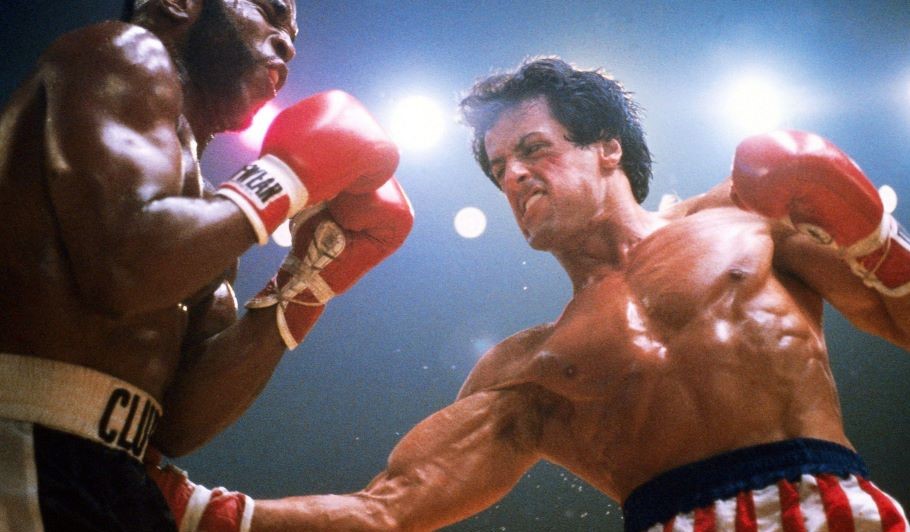
One of the film’s claim to cult fame is of course the casting of Mr T as Clubber Lang. Growling and scowling like a cartoon heavy, with some punchy one-liners (“I don’t hate Balboa. I pity the fool!”), it’s a part that works due to Mr T’s charisma. Stallone shoots Clubber Lang like some sort of fighting lion, frequently employing slo-mo to focus in on Lang’s scowling face and flying fists, the soundtrack echoing with his roar. Mr T is the series best villain, a man so loathsomely cocky (literally no one likes him, not the crowds, the commentators, his fellow boxers…) that he propositions Adrian, shoves Apollo before the first fight and gives Mickey a heart attack.

You needed someone like that to bring together Apollo and Rocky as a super-team. Rocky III is the series first buddy-movie. It’s hard not to see something faintly homoerotic in Weathers and Stallone, bodies greased and rippling in muscles, eyeing each other up, running along beaches or the faintly sexual air to Weather’s delivery of lines about wanting a “special favour” from Rocky “after the fight”. No wonder there isn’t much time for Adrian in the film – what chance could she have when these two have such a mutual appreciation society going on? – with Talia Shire’s best scene as a sounding board for Rocky’s confession of fear about stepping back into the ring against Lang.

Saying that, the inevitable training sequence – this is the film with the quest for “the Eye of the Tiger” – is great value. It’s fun to watch Rocky pick-up Apollo’s signature Muhammad Ali style quick feet and Weathers is very good as the former champ taking vicarious revenge who forms a genuine friendship with his old rival (I love it when Apollo shadowboxes in excitement when Rocky begins to turn the final fight in his favour). Of course, montage takes Rocky from down-hearted dope (suffering from slo-mo visions which play like a half-arsed panic attack) to freeze-frame triumph. (I’ll also say Rocky III rather neatly mocks Paulie’s kneejerk racism about training with ‘these people’).

To get to these expected beats, Stallone first needed to pad out the run time – and slight plot. Surely that’s the only reason for the bizarre Act One ‘exhibition’ match which sees a complacent Rocky fight an exhibition match against wrestler “Thunderlips” (a terrible cameo from Hulk Hogan), the sort of sequence you keep thinking must be a dream but is in fact real. We also get an initial training montage structured like a modern morality play, Rocky’s lazy prep for fighting Lang sees him living like a Hollywood hotshot, while Lang trains with a monastic dedication. No surprise who is going down in the ring (even if the first fight wasn’t only thirty minutes into the film).

The rematch though doesn’t disappoint, taking its lead from Ali’s rope-a-dope from the Rumble in the Jungle. And the real coda, which is all about friendship, is sweeter than this comic book, Roy of the Rovers film has any right to be. Rocky III replays some of the elements of the first two films, this time as a comic strip, but by focusing on a bromance (and throwing in a properly hissable pantomime villain) despite the fact you know it lacks any inspiration, you’ll still punch the sky when Rocky turns that final fight and leave the film whistling Eye of the Tiger.

Rocco and His Brothers (1960)

Rocco and His Brothers (1960)

Visconti’s realistic family epic simmers with the dangers of split loyalties, but is mixed on gender politics

Director: Luchino Visconti

Cast: Alain Delon (Rocco Parondi), Annie Girardot (Nadia), Renato Salvatori (Simone Parondi), Katina Paxinou (Rosaria Parondi), Roger Hanin (Duilio Morini), Spiros Focas (Vincenzo Parondi), Claudia Cardinale (Ginetta), Paolo Stoppa (Tonino Cerri), Max Cartier (Ciro Parondi), Rocco Vidolazzi (Luca Parondi, Alessandro Panaro (Franca), Suzy Delair (Luisa), Claudia Mori (Raddaella)

Visconti was born into a noble Milanese family: perhaps this left him with a foot in two camps. He could understand the progress and achievement of northern Italy in the post-war years, those booming industry towns which placed a premium on hard work, opportunity and social improvement. But he also felt great affinity with more traditional Italian bonds: loyalty to family, the self-sacrificing interdependency of those links, and the idea that any outsider is always a secondary consideration, no matter what. It’s those split loyalties that power Rocco and His Brothers.

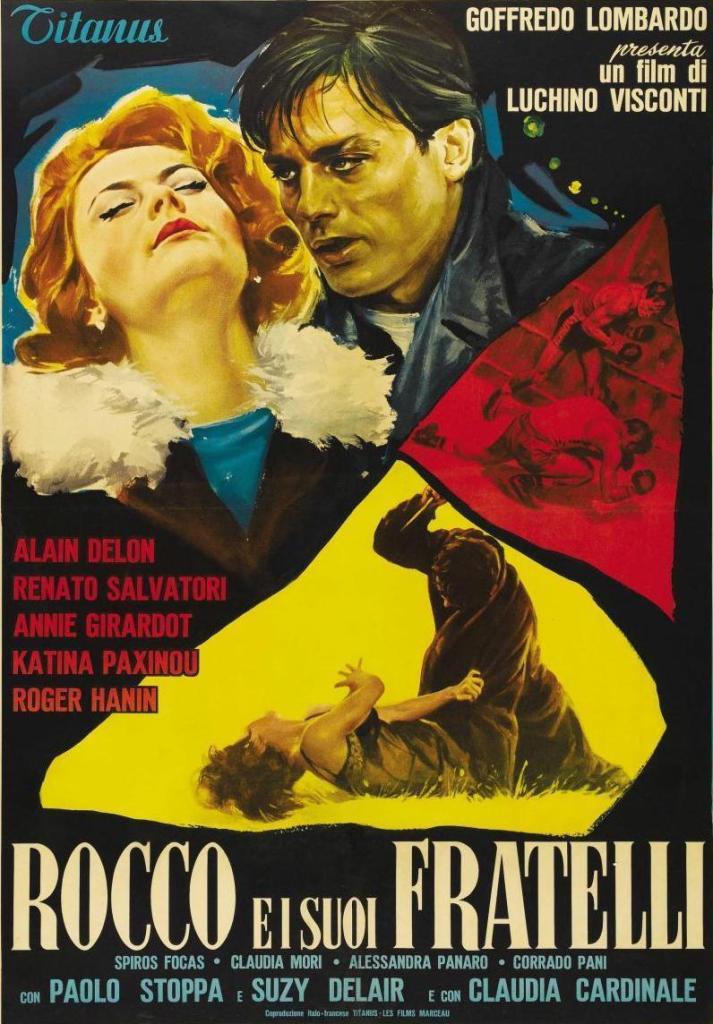
Rocco (Alain Delon) is one of five brothers, arriving in Milan from the foot of Italy looking for work with his mother Rosaria (Katina Paxinou). The hope of the family is second brother Simone (Renato Salvatori), a sparky pugilist destined for a career as a boxing great. But Simone can’t settle in Milan, too tempted by the opportunities he finds for larceny and alcohol. He falls in love with a prostitute, Nadia (Annie Girardot), until she rejects him and then he drifts ever downwards. Rocco, always putting family first, inherits his place first as a boxer than as Nadia’s lover. Problem is, Simone is not happy at being replaced, and the three head into a clash that will see Nadia become a victim in the twisted, oppressive, family-dominated loyalty between the two brothers.

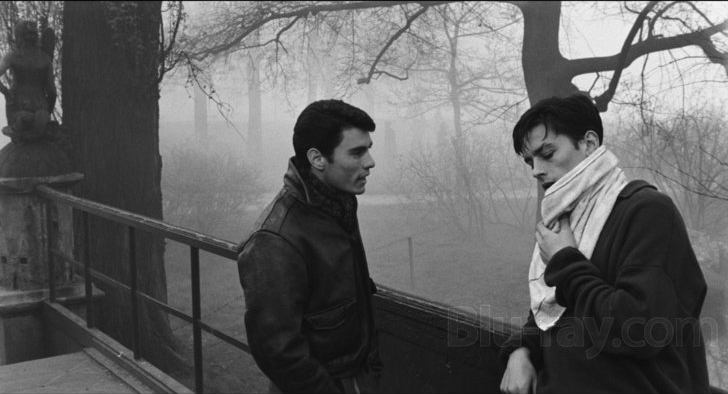
Rocco and His Brothers is a further extension of Visconti’s love of realism – but mixed with the sort of classical themes and literary influences that dominated his later period pieces, themselves in their stunning detail a continuation of his obsession with in-camera realism. Filmed in the streets of Milan, where you can feel the dirt and grit of the roads as much as the sweat and testosterone in the gym, it’s set in a series of run-down, overcrowded apartment blocks and dreary boxing gyms that you could in no way call romantic.

This ties in nicely with Visconti’s theme. Rocco and His Brothers is about the grinding momentum of historical change – and how it leaves people behind. In this case, it’s left Rocco and Simone as men-out-of-time. Both are used to a hierarchical family life, where your own needs are sacrificed to the good of the family and every woman is always second best to Momma. While their brother Ciro knuckles down and gains a diploma so he can get a good job in a factory, Simone drifts and Rocco bends over backwards to clean up the mess his brother leaves behind. Naturally, Simone and Rocco are the flawless apples of their mother’s eye, Ciro an overlooked nobody.

The film focuses heavily on the drama of these two. And if Visconti seems split on how he feels about the terrible, destructive mistakes they make, there is no doubting the relish of the drama he sees in how it plays out. Rocco, by making every effort to make right each of the mistakes his brother makes, essentially facilitates Simone’s collapse into alcoholism, criminality and prostitution. Simone flunks a boxing contract? Rocco will strap on the gloves and fulfil the debt. Simone steals from a shop? Rocco will leave his personal guarantee. Simone steals from a John? Rocco will pay for the damage.

Caught in the middle is Nadia, a woman who starts the film drawn to the masculine Simone but falls for the romantic, calm, soulful Rocco. Wonderfully embodied by Annie Girardot, for me Nadia is the real tragic figure at the heart of this story. Whether that is the case for Visconti I am not sure – I suspect Visconti feels a certain sympathy (maybe too much) for the lost soul of Simone. But Nadia is a good-time girl who wants more from life. Settling down to a decent job with Rocco would be perfect and he talks to her and treats her like no man her before. Attentive, caring, polite. He might be everything she’s dreaming off, after the rough, sexually demanding Simone.

Problem is Nadia is only ever going to be an after-thought for Rocco, if his brother is in trouble. Alain Delon’s Rocco is intense, decent, romantic – and wrong about almost everything. He has the soul of a poet, but the self-sacrificing zeal of a martyr. He clings, in a way that increasingly feels a desperate, terrible mistake, to a code of conduct and honour that died years ago – and certainly never travelled north with them to the Big City. When Simone lashes out at Nadia with an appalling cruelty and violence, making Rocco watch as he assaults her with his thuggish friends, Rocco’s conclusion is simple: Simone is so hurt he must need Nadia more than Rocco does. And it doesn’t matter what Nadia wants: bros literally trump hoes.

Rocco does what he has done all his life. He wants to live in the south, but the family needs him in the north. He wants to be a poet, but his brother needs him to be a boxer. He loves Nadia but convinces himself she will stabilise his brother (resentful but trapped, she won’t even try, with tragic consequences). All of Rocco’s efforts to keep his brother on the straight-and-narrow fail with devastating results. Naturally, his mother blames all Simone’s failures on Nadia, the woman forced into trying to build a home with this self-destructive bully. Rocco’s loyalty – he sends every penny of his earnings on military service home to his mother – is in some ways admirable, but in so many others destructive, out-dated indulgence.

And it does nothing for Simone. Superbly played by Renato Salvatori, he’s a hulk of flesh, surly, bitter but also vulnerable and self-loathing, perfectly charming when he wants to be – but increasingly doesn’t want to. His behaviour gets worse as he knows his brother is there as a safety net. It culminates in an act of violence that breaks the family apart: not least because Simone crosses a line that Ciro (the actual decent son, who Visconti gives precious little interest to) for one cannot cross and reports him to the police.

That final crime is filmed with a shocking, chilling naturalism by Visconti, horrific in its simplicity and intensity. But I find it troubling that Visconti’s core loyalties still seem to be with the out-of-place man who perpetrates this crime and his brother who protects him, rather than female victim. Rocco and His Brothers could do and say more to point up the appalling treatment of Nadia, or at least make clearer the morally unforgiveable treatment she receives from both brothers (she’d have done better disappearing from Milan after Simone’s attack and never coming back, not playing along with Rocco’s offensive belief that Simone’s assault was a sort of twisted act of love).

Saying that, this is a film of its time – perhaps too much so, as it sometimes feels dated, so bubbling over is it with a semi-Marxist view of history as a destructive force. But it’s shot with huge vigour – the boxing scenes are marvellous and their influence can be felt in Raging Bull – and it ends on a note of optimism. The film may have disregarded Ciro, but there he is at the end – happy in his choices, settled, making a success of his life. Rocco and Visconti may see the drama as being exclusively with the old-fashioned brothers, making their counterpoint a paper tiger, but it ends with him – and (I hope) a reflection that Ciro’s path may be duller and safer, but also nobler and right.

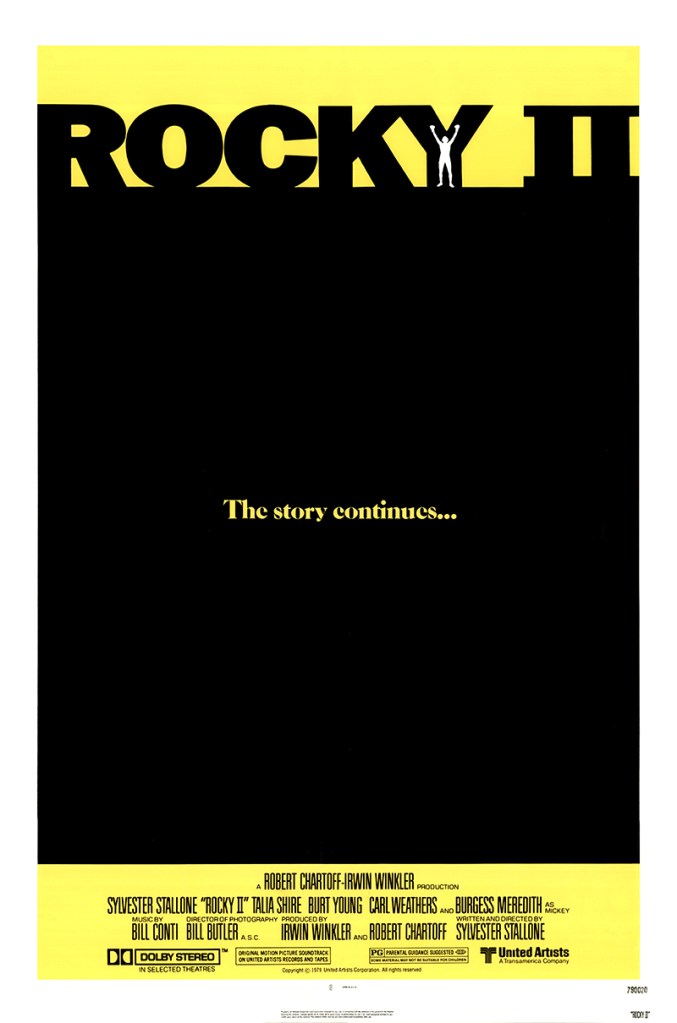
Rocky II (1979)

Rocky II (1979)

Rocky Balboa rides again, in Stallone’s enjoyable virtual remake of the first film

Director: Sylvester Stallone

Cast: Sylvester Stallone (Rocky Balboa), Talia Shire (Adrian Balboa), Burt Young (Paulie Pennino), Carl Weathers (Apollo Creed), Burgess Meredith (Mickey Goldmill), Tony Burton (‘Duke’ Evers), Sylvia Meals (Mary Anne Creed), Joe Spinell (Tony Gazzo)

It’s minutes after the end of that shock title fight won (just) by Apollo Creed (Carl Weathers – very good here as a curled ball of frustration), but already the champ is smarting since the moral victory was won by plucky challenger Rocky Balboa (Sylvester Stallone). Now Apollo wants a rematch. It’s the last thing Rocky – or his soon-to-be-wife Adrian (Talia Shire) want: Rocky’s eyesight is shot and he wants to retire to a well-earned career of cashing in on his fame. But when his money dries up, Rocky has no choice but to saddle up once again – only this time he and trainer Mickey (Burgess Meredith) are “gonna eat lightnin’ and crap thunder” till Rocky wins the bout outright.

I like to think of Rocky II as being, just like Rocky semi-autobiographical. If the first Rocky was about plucky small-timer Sylvester Stallone getting a shot at the big-time, Rocky II is about the hero returning to the scene of his success, but only on his own terms. Stallone had followed up Rocky with a film he wrote and starred in about union politics (F*I*S*T) and a would-be epic on an Italian-American family Paradise Alley which he wrote, directed and starred in that flopped. I’m guessing part of him didn’t want to be (at that time) just the guy who did Rocky. He wanted more.

That’s the vibe I get in a film where Rocky spends the first hour telling anyone who’ll listen he doesn’t want to fight no more. If he can’t make a career in advertising – and Rocky’s stumbling inarticulacy and border-line illiteracy quickly show that a filming career ain’t a goer – he wants a job in an office. Like Stallone pushing higher-brow passion projects, Rocky wants a new chapter. And, just like (I assume) Stallone was met by executives saying “just make another Rocky” so Rocky meets a (admittedly sympathetic) office manager who basically politely asks him “why don’t you just go back to fighting”

Just as Rocky fights Creed on his own terms, because it’s his decision, Stallone made Rocky II on his own terms: he would direct. The film we end up with is decent, but honestly little more than a retread. This is designed for people who saw and loved the first film – and at that time might not even have seen it since the cinema. It’s a nostalgia vehicle after only three years!

The basic structure is the same. Rocky shuffles around, bashful and quiet. He tries to be something he’s not and does his best to fit in (buying a home, car and posh new coat) but he never loses track of his fundamental decency. He still has a sweet relationship with Adrian – their ice rink date is basically restaged here with a zoo-set proposal (a neat joke since Rocky said in the previous film he couldn’t imagine a date to a zoo). Just as they had a brief will-they-won’t-they, so the couple have a crisis as Adrian struggles to support Rocky’s decision to go back into the ring and falls into a brief coma after a painful delivery of their son.

The training is all pretty much the same – as it would be in almost every film to come – including a call back to Rocky’s epic run up those steps, this time as the culmination of a run around seemingly the whole of Philadelphia, with half the cities kids running behind him cheering. Then he takes to the ring for another 15-round, mano-a-mano face-off with Apollo, sweat, blood and fists flying, Rocky switching to right-hand from southpaw.

Rocky II is entertaining – but it’s a diet coke rehash of Rocky, with all the same tricks but an ever-so-slightly diminished reward. Probably because nothing about it surprises you one little bit. It’s a film that’s looking to recapture that warm glow from 1976 and doesn’t aspire to anything more. It even ends with our hero bellowing “Adrian!” at the end. You’d have a decent quiz if you cut the two films up and threw random scenes at people and asked them to guess which Rocky film they were from.

Saying that, the franchise pretty much exhausted its kitchen-sink roots here. By the time we get too Rocky III there was no way the film was going to remember that Rocky’s eyesight was going or that he was a plucky underdog fighter. From here, Rocky would turn into a chiselled slab of marble and Rocky would fight Hulk Hogan, hire a robot butler and bring down communism. Compared to the nonsense that would follow in films 3 and 4, Rocky II really does look like the last time we had a Rocky film that might just have been directed by Ken Loach.

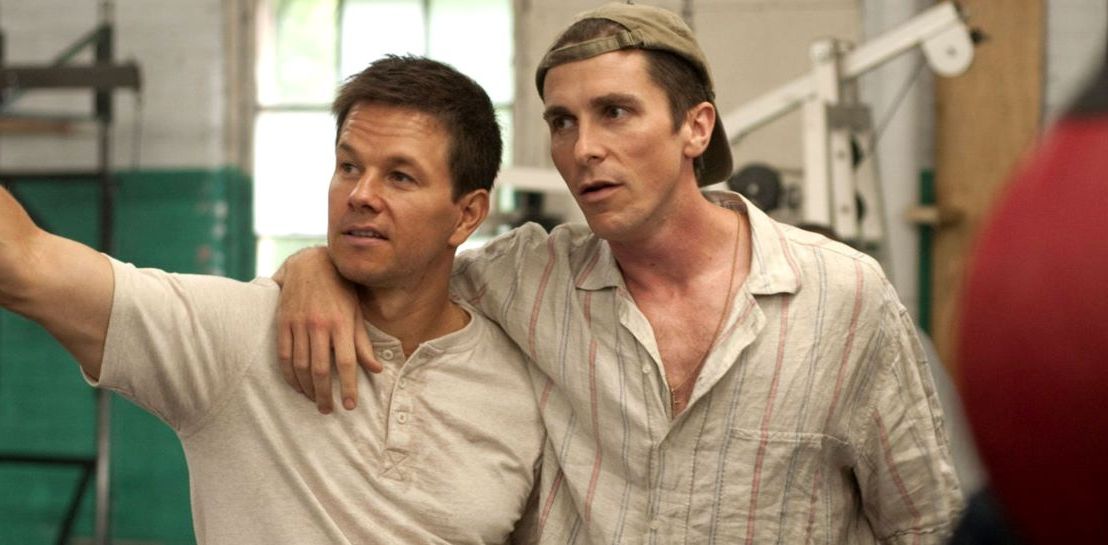
The Fighter (2010)

The Fighter (2010)

A fighter has a title shot, in a surprisingly heartwarming film about the importance of family, no matter how messed up it is

Director: David O Russell

Cast: Mark Wahlberg (Micky Ward), Christian Bale (Dicky Eklund), Amy Adams (Charlene Fleming), Melissa Leo (Alice Eklund-Ward), Jack McGee (George Ward), Frank Renzulli (Sal Lanano), Mickey O’Keefe (Himself)

Everyone loves Rocky. We all want to that local-hero-turned-good, the guy who went the distance. Lowell, Massachusetts had that in Dicky Eklund. Eklund, a minor pro-boxer, once went the distance against Sugar Ray Leonard in 1978 (he argues he knocked him down, although many are convinced Leonard slipped). “The Pride of Lowell” then became… a crack addict, tumbling from disaster to let-down, helping and hindering the career of his brother, fellow boxer Micky Ward.

The story of the two brothers – leading up to Ward’s eventual title shot in 1997 – comes to the screen in Russell’s affectionate, if traditional, boxing drama, long a passion project of Mark Wahlberg who plays Micky. Wahlberg kept himself in boxer-condition for years as he dreamed of making the film, recruiting director and cast and producing the film. The fine, sensitive film we’ve ended up with is a tribute to his commitment and producing skills, while the fact that Wahlberg casts himself in the least dynamic part is a nice sign of his generosity.

Because it’s only really on the surface a Micky Ward film. Sure, the film follows the vital events in his life. It opens with him bashed up in a mis-match, filling his role as a “stepping stone” fighter, someone the future champs flex their muscles against. We follow his struggles to escape from under the thumb of his large brash family – above all his bombastic, domineering mother Alice (Melissa Leo). He forms a relationship with ambitious-but-caring Charlene (Amy Adams), moves up the ranking, lands that title shot, fights the big bout. But it never quite feels like Micky is the star.

Because, really, this feels like it’s about Dicky Eklund working out the first act of his life is over, and trying to find if he has what it takes to start a second, more humble, one. The film opens with Dicky followed by an HBO crew for a fly-on-the-wall documentary. Dicky’s convinced himself it’s to chart his boxing come-back. It’s actually about the horrific impact of crack addiction. Dicky is a strung-out, unreliable junkie, living on past glories but screwing up everything he touches, being enabled by the fawning worship of his mother and sisters, who still worship him as the families main event (and continue to do so, even as Micky rises to title shot). The film’s heart is Eklund sinking to rock bottom and realising he has forced the compliant Micky into playing a subservient role in his own life.

Perhaps it feels like a film more focused on the remoulding of this charming but selfish figure because of the compelling performance of Christian Bale. Starving himself down to match Eklund’s wizened, strung-out physique (he’s still got the boxer moves, but his body has wasted away) is a day’s work for a transformative actor like Bale. But this isn’t just a physical performance, but a deep immersion into the personality of a person who almost doesn’t realise until it is too late how fundamentally flawed he is. Bale’s a ball of fizzling energy and electric wit coated in a lethargic drug-induced incoherence. His energy is frantic but uncontrolled, wild and mis-focused. It’s a superb, heartfelt performance of loveable but dangerous uselessness that nabbed Bale an Oscar.

But what makes The Fighter a surprisingly warm film is that, for all his many flaws, selfishness and self-obsession, Dicky genuinely cares for his brother. He wants the best for him, he believes in and loves him. Much of the power of Bale’s performance comes from the fact he never forgets this, even when Dicky is at his worst. In fact, Russell’s whole film works because that warmth and love everyone feels for Micky is never forgotten and never weaponised by Russell into helping us make moral judgements about the characters. Nor does it forget that Micky may sometimes hate his family, but he never stops loving and needing them.

A weaker film would have stressed the trailer-trash greed of Melissa Leo’s Alice. Leo (who also scored an Oscar and famously dropped the f-bomb on live TV, condemning the ceremony to a permanent time delayed broadcast ever since) is in many ways playing an awful character: controlling, nakedly favouring Eklund over his brother, quick to judge, rude and aggressive. She’s never truly likeable – but Russell’s film understands everything she does is motivated by love. She genuinely wants the best for Micky, even while she pushes him into bad fights and never listens to him. She tries to protect him, and expresses this in destructive selfishness.

In many ways she’s just like Micky’s girlfriend Charlene, who recognises early that Micky’s family (who have turned him into a timid hen-pecked type) can’t be trusted to run his whole career, but who also subtly pushes herself into Alice’s place as the leading decision-making influence in his life. Very well played by Amy Adams (who lost the Oscar to Leo), Charlene is smart, sexy, loving but just as determined that it’s her way or the highway.

What Micky needs to do, the film carefully (if rather safely) outlines, is take the best qualities of all his influences. It’s Eklund’s “job” to realise Micky needs everyone he loves singing from the same hymn-sheet. It needs compromise and putting other people first. It makes for a nice little paean to the importance of family relationships, founded on forgiveness and admitting when you are wrong. Micky forgives his mother and brother for their selfishness: they, in turn, acknowledge their mistakes. Eklund is crucial here: Bale is again superb as a man who suddenly realises pride has nearly ruined his life and embraces the junior role in the relationship with his brother.

Sure, none of this reinvents this wheel, but it still makes for engaging and rather sweet drama. Russell mixes it with some neat stylistic flourishes that don’t overwhelm the film. It’s shot with an edgy, handheld immediacy reflecting its street roots. The fights are shot with old TV cameras, so that invented footage can fuse with 90s HBO coverage. Russell of course gets great performances from his actors, as he always does.

The Fighter is in many ways predictable. But it wears its heart very much on its sleeve, and Wahlberg deserves credit for assembling it and for giving a quiet, generous performance at the centre of it. And the film’s commitment to the idea that, no matter the problems in our families, we can all find the courage to admit our mistakes and pull in the same direction remains heartwarming.

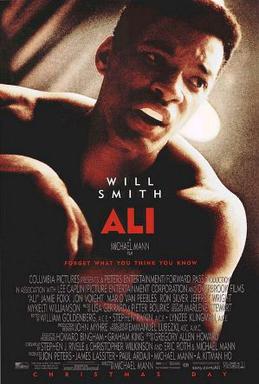
Ali (2001)

Ali (2001)

Will Smith captures The Greatest in a film that misses the fire and passion of Muhammad Ali

Director: Michael Mann

Cast: Will Smith (Muhammad Ali), Jamie Foxx (Drew Bundini Brown), Jon Voight (Howard Cosell), Mario van Peebles (Malcolm X), Ron Silver (Angelo Dundee), Jeffrey Wright (Howard Bingham), Mykelti Williamson (Don King), Jada Pinkett Smith (Sonji Roy), Nona Gaye (Khalilah Ali), Michael Michele (Veronica Porché), Michael Bentt (Sonny Liston), James Toney (Joe Frazier), Charles Shufford (George Foreman), Joe Morton (Chauncey Eskridge), Barry Shabaka Henley (Herbert Muhammad)

There is perhaps no greater sportsman of the 20th century than Muhammad Ali. Not for nothing did he call himself “The Greatest”. His impact on his sport is unrivalled, and his impact on our culture almost matches it. He’s one of those titanic figures that, even if you don’t care a jot for boxing, you know exactly who he is. Ali approved the film – and even more so, Smith’s performance – in Mann’s film that covers ten turbulent years in Ali’s life, from winning the title and changing his name, to refusing the Vietnam draft and losing his boxing licence and title, to reclaiming the title again in  the legendary “Rumble in the Jungle”.

If there is a major flaw about Ali, it’s that Ali was a man who was about so much more than just boxing – but Ali struggles to be more than a film about a boxer. It’s hard today to look at the film and not think that a black director would have had more connection with the emotional, cultural and political turmoil that defined Ali’s life in the 60s and 70s. Mann mounts all this well – and gives it plenty of empathy in the film – but his outsider perspective perhaps contributes to the film’s coldness.

Coldness is the prime flaw of the film. There was no sportsman larger than life than Ali. No public figure who demanded attention more, no boxer who fought his battles as much with wit, convictions and passion as well as fists as Ali. A film of his life needs to capture some of this magic alchemy: it needs to feel like a film that conveys the man Ali was. While there is no doubt there was a melancholy in Ali, a quiet inscrutability behind the pizzazz, this film leans too much into this. It does this while never really telling us anything about Ali’s inner life.

As two marriages are formed and collapse, we don’t get an understanding of what drew Ali to, and caused him to turn away from, these women. His relationship with the Nation of Islam ebbs and flows throughout, but other than a few on-the-nose statements from Ali, we don’t get an idea of how his faith defines him. We get his brave stand against serving in the Vietnam war, but not the emotional and intellectual conviction behind it (other than parading a series of famous quotes).

The film is packed with famous black figures – from Malcolm X to rival boxers and Ali’s support team – his father and family, not to mention three of his wives, but the relationship the film is most invested in is Ali’s mutual appreciation/attention-feeding verbal duels with boxing correspondent Howard Cosell (a pitch-perfect vocal and physical impersonation by Jon Voight). There feels something wrong about this film about a black icon, that his relationship with a white man feels the best defined.

But then it’s also a flaw with the film that its most striking, inventive and memorable sequences are all pitch-perfect recreations of filmed events. Will Smith perfectly captures the vocal and physical grace of Ali, and brilliantly brings to life his interviews with Cosell and his larger-than-life press conferences. The boxing matches are compellingly filmed, a perfect mix of slow-mo and immersive angles (they were largely fought for real, with few punches pulled). Ali’s final KO of Foreman in the Rumble in the Jungle, after several rounds of exhausting Rope-a-dope, is punch-the-air in its triumphal filming and scintillating excitement. But all of this stuff you could actually watch for real today. How essential is a film that uses actors to recreate, with better camera angles and superior editing, stuff that was filmed when it actually happened? Essentially if I want to see Ali stunning the world with his words, or sending Foreman to the canvas, would I choose to watch the man himself, or Will Smith’s perfect impersonation of him doing it?

There is nothing wrong with Will Smith’s performance though. For all his Oscar-winning work in King Richard, this is his finest performance. Bulked up to an impressive degree (Smith spent a year preparing for the film), he’s got Ali’s movements in and out of the ring to a tee and the voice is an unparalleled capture of The Greatest’s. It’s a transformative, exact performance – Smith has just the right force of character for the patter, but also brings the part a soulful depth that the film struggles to explore further. It’s a superb performance.

Enough to make you wish this was in a better, more passionate film. Ali was at the centre of a storm of civil rights and class war in America. He became the public face of a black community struggling to make its voice heard, sick of tired of being treated like second-class citizens by a country they were expected to die for in battle. The politics of the time is lost – Mario van Peebles has a wonderful scene as a troubled Malcolm X, but even he feels like a neutered figure – and the cultural impact of Ali is diluted.

The film ends with captions that dwell on Ali’s later boxing career and his marriages. That’s fine. But this a man who was so much more than what he just did in the ring. He used his position to take a stand on vital issues in America, at huge personal cost, when thousands of others would have settled down to mouth platitudes and make money. He took on the government and refused a compromise that would have allowed him to continue boxing, because he felt the war and America’s domestic policies were wrong. He was a brave leader of men, at a time of furious injustice. The film conveys the facts, but none of the glorious passion. It’s a photocopy of Ali, which is why its best bits are recreations of filmed events. It can’t quite understand or communicate the tumultuous feelings behind racial injustice in the 60s and 70s. It could – it should – have been so much more.

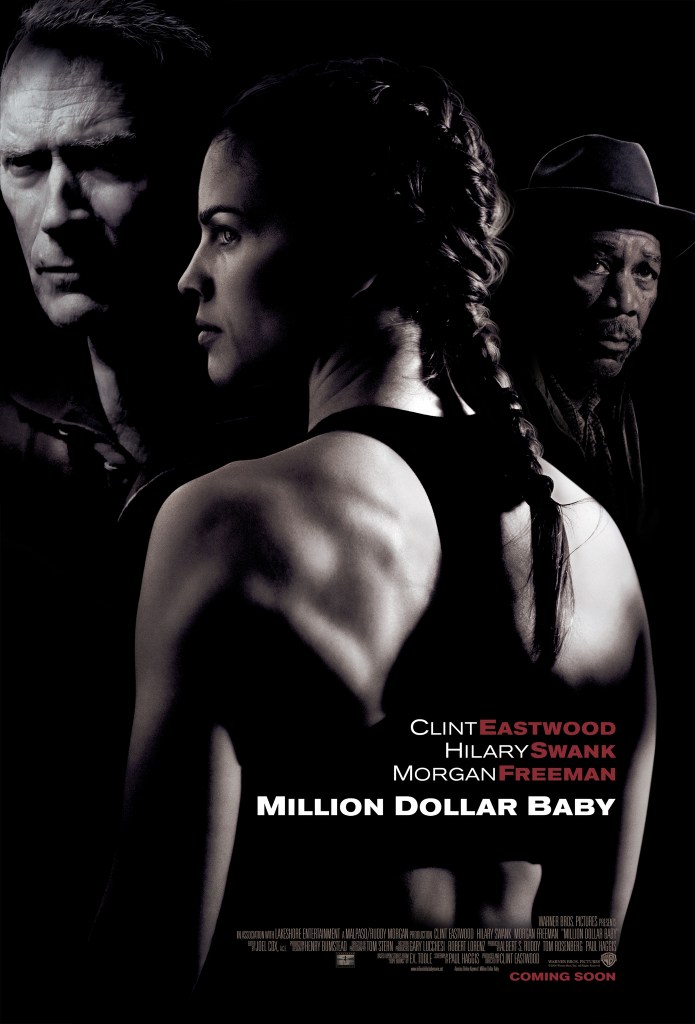
Million Dollar Baby (2004)

Million Dollar Baby (2004)

Oscar-winning sucker punch (literally) movie as a woman goes against the odds to make her boxing dreams come true

Director: Clint Eastwood

Cast: Clint Eastwood (Frankie Dunn), Hilary Swank (Maggie Fitzgerald), Morgan Freeman (Eddie “Scrap-Iron” Dupris), Jay Baruchel (Dangerous Dillard), Mike Colter (“Big” Willie Little), Lucia Rijker (Billie “The Blue Bear” Osterman), Brian F. O’Byrne (Father Horvak), Anthony Mackie (Shawrelle Berry), Margo Martindale (Earline Fitzgerald), Marcus Chait (JD Fitzgerald), Riki Lindhome (Mardell Fitzgerald), Michael Pena (Omar), Benito Martinez (Billie’s manager)

Spoilers: I thought the end of Million Dollar Baby was pretty well known, but when I watched it with my wife, I realised half-way through she had no idea where it was going. I’ll be discussing it, so consider yourself warned!

We know what to expect from most Sports stories don’t we? A plucky underdog fights the odds and emerges triumphant, winning the big match or going the distance when everyone doubted them. So it’s not a surprise Million Dollar Baby was marketed as a sort of female-Rocky. It had all the ingredients: Swank as a dreamer from the wrong-end-of-the-tracks, tough but humble and decent; Eastwood as the grizzled trainer; a working-class backdrop; a struggle to put their pasts behind them on the road to glory. Then, imagine what a sucker punch the final act of the film is when you suddenly realise you’ve not been watching a feel-good drama, but the entrée to a heart-wrenching euthanasia story.

Maggie Fitzgerald (Hilary Swank) has spent months persuading grouchy boxing trainer Frankie “I don’t train girls” Dunn (Clint Eastwood) to train her. Frankie suffers from a string of lifelong regrets, from the daughter that returns his letters unread to not ending a fight decades ago that saw best friend Eddie (Morgan Freeman) blinded in one eye. Frankie’s resistance is eventually worn down by Maggie’s persistence and the two form a close bond. Maggie is on fire in the ring – until a foul punch leads to a terrible fall leaving her paralysed from the neck down. With Maggie having lost everything that gave her life meaning, how will Frankie respond when she asks him to end her life?

Of course, the clues should be there earlier that we are not about to settle down for a triumphant Rocky II-style yarn. Eastwood’s (self-composed) maudlin score constantly works against the action, until we realise it is sub-consciously preparing us. Expectations are overturned: Frankie’s reluctance to let his fighter “Big” Willie (Mike Colter) go for a title shot – hesitation that lasts so long, eventually Willie hires a new manager – is shown to be misjudged when Willie wins. Dunn spends hours in church every day, plagued with guilt about misdeeds he can’t begin to put into words. Maggie’s family are not a supportive working-class bubble, but trailer-trash dole-scum who react to Maggie buying them with house with fury as it may affect their (unmerited) benefit cheques. We even get several shots of the stool that will eventually play a crucial role in crippling Maggie.

What the film is actually building to in its opening 90 minutes is not a story of triumph, but how a close relationship builds between a man who has lost his family and a woman whose family is a grasping horror story. Eastwood charts this with a carefully judged pace, delivering one of his finest performances as the guarded and grouchy Frankie, who uses his gruff exterior to protect himself from the possible hurt of emotional commitment. Because it’s clear Frankie actually cares very deeply, frequently going the extra mile to help people, even while complaining about it.

It’s that buried heart, that draws him towards the determined and good-natured Maggie. Rather like Frankie, Hilary Swank makes clear in her committed performance Maggie’s optimism and enthusiasm is as much of a shield as Frankie’s gruffness. She knows that she’s nothing to her family except a meal ticket and her entire life seems to have been one of loneliness, working dead-end jobs to funnel money to her mother at the cost of any life of her own. Switching away from her grinning enthusiasm leaves her in danger of staring at her own life and seeing what a mess it is.

With their two very different shields, these two characters are exactly what the other needs and one of the film’s principle delights is to see them slowly confiding in each other, sharing their vulnerabilities and filling the void their own families have left in their lives. This all takes place inside a conventional “sports movie” structure, which writer Paul Haggis almost deliberately doubles down on, as Maggie builds her skills, via training montages and Frankie starts to relax about sending people into the ring to have seven bells beaten out of them and dreams about one more shot.

This all means it hurts even more when that (literal) sucker punch comes. Eastwood’s film doesn’t shirk from the horrors of Maggie’s disability – re-enforced by the previous 90 minutes establishing how crucial movement and reflexes are to boxing, and how this element in particular helps give her life meaning. She’s covered with bed sores, can’t breathe without a respirator, it takes over an hour to lift her into a wheelchair (which she cannot operate) and eventually her infected leg is amputated. Her family visit only to get her to sign over her assets (she tells them where to get off). She is reduced to biting through her own tongue to try and bleed to death, meaning she is left sedated to prevent self-harm.

It’s all more for Frankie to feel guilty about. Although the film could have given even more time to exploring the complex issues – and moral clashes – around the right to die, it does make very clear the crushing burden of guilt and the impact his final decision will have on him. In fact, it would have benefited from spending more time on this and giving more time to O’Byrne’s priest (who quite clearly states that it’s wrong), to help give more definition to the arguments around assisted suicide (I wonder if Eastwood’s agnostic views came into play here).

Perhaps the film spends a little too long on its initial – even deliberately formulaic – rags-to-riches boxing story. In its boxing club vignettes, you can see the roots of the film in a series of short stories by former boxing trainer FX Toole. Mackie’s cocky boxy and Baruchel’s gentle intellectually disabled would-be boxer run through the film play like short story anecdotes. The narrative is linked together by narration from Morgan Freeman. It’s a natural fit for Freeman – essentially a semi-reprise of Red in Shawshank – and fits him like a glove (it was no surprise he won an Oscar). But trimming this content could have given more time to the films closing moral dilemma.

Which doesn’t change the impact it has. Eastwood’s low-key style – with its drained-out colours and piano chords – make a perfect fit, and its expertly played by himself and Swank (who also won an Oscar). Even on a second viewing, Million Dollar Baby still carries a real impact, particularly as you appreciate how subtly the sucker punch that floored so many viewers first time around is built up to.

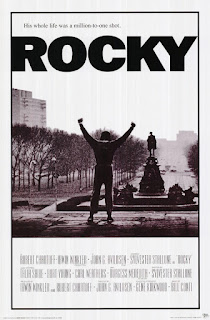
Rocky (1976)

Rocky (1976)

Doubters and some very steep steps are conquered in the Best Picture winning Granddaddy of Sports movies

Director: John G. Avildsen

Cast: Sylvester Stallone (Rocky Balboa), Talia Shire (Adrian Pennino), Burt Young (Paulie Pennino), Carl Weathers (Apollo Creed), Burgess Meredith (Mickey Goodmill), Thayer David (Miles Jergens), Joe Spinell (Tony Gazzo), Tony Burton (Tony “Duke” Evers), Pedro Lovell (Spider Rico)

How many people have run up those steps to the Philadelphia Museum of Art? So many, they’ve renamed them “the Rocky Steps” – and placed a statue of Stallone (from Rocky III) there. You can be sure everyone hummed Gonna Fly Now while they did it. It’s all a tribute to the impact of Rocky, the iconic smash hit that led to no less than seven sequels (and counting!) and, arguably, kickstarted the 80s in Hollywood (a decade Stallone would stand tall across with both Rocky and Rambo). The original Rocky mixes genre-defining delights and a feel-good, crowd-pleasing story with a surprisingly low-key setting that deals in a bit of Loachesque reality and social commentary.

Rocky Balboa (Sylvester Stallone) is a journeyman southpaw boxer, fallen on hard times. He’s making ends meet with a bit of loan shark enforcement (although of course he’s far too nice to actually break any bones) and getting seven bells knocked out of him at low-key fights. His trainer Mickey (Burgess Meredith) thinks he’s wasting his talent, and Rocky spends the day casting puppy dog eyes at Adrian (Talia Shire) sister of Rocky’s chancer best friend Paulie (Burt Young). But Rocky’s life changes overnight when Heavyweight Champion of the World Apollo Creed (Carl Weathers) picks him at random as the nobody he will fight in a title bout (to get Apollo some free publicity). Can Rocky dedicate himself to training so he can “go the distance”?

Surely everyone knows by now, don’t they? The big fight only takes up the last ten minutes of the film. What we’ve spent our time doing beforehand is watching possibly the one of the best ever packaged feel-good stories, full of lovable characters and punch-the-air moments, directed with a smooth, professional (but personality free) charm by Avildsen. Rocky genuinely looked and felt like a little slice of Capra, a fairy tale triumph for the little guy struggling less against the world and more against his own doubts.

And it overcame some real heavyweights to win Best Picture: it knocked aside All the President’s Men, Taxi Driver and Network in a shock win. Is Rocky better than those films? No. But is it more fun to watch? Yes, it probably is – and I would be willing to bet many more people have come back to it time and time again. It was also a triumph for Stallone, a jobbing actor, who produced a first draft of the script in three days and fought tooth and nail to make sure he played the lead.

And Stallone’s performance is absolutely central to its success (can you imagine what it would have been like with, say, James Caan in the role?). Stallone gives Rocky exactly the sort of humble, shy, sweetness that makes him easy to root for. Rocky is no genius, but he’s loyal, polite, well-meaning and Stallone taps into his little-used qualities of softness and naivety. Rocky is lovable because, for all the punching, he’s very gentle – just look at him make a mess of money collecting or the way he talks like a little kid with his pets. Stallone has a De Niroish – yes seriously! – quality here: he absent-mindedly shadow boxes throughout and gives a semi-articulate passion to his outburst at Mickey. His romance with Adrian is intimate and gentle. The whole performance feels lived in and real.

Real is actually what the whole film feels like – despite the fact it’s a ridiculous fairy tale of a boy who becomes a prince for a day. It helps that its shot deep in the streets of Philadelphia, on the cheap and on the fly in neighbourhoods and locations that feel supremely unstaged (Avildsen avoided the cost of extras by frequently shooting at night or very early morning). Even that run up the stairs was a semi-improvised moment. Rocky’s world is a recognisable working-class one that for all its roughness, also feels like a community in a way Ken Loach might be proud of (even the loan sharks are easy-going). Day-to-day the film manages to capture some of the feel of a socio-realist film with a touch of working-class charm.

It also makes a lovely backdrop to the genuinely sweet romance that grounds the film: and a recognition of the film’s smarts that a great crowd-pleaser needs a big dollop of romance alongside a big slice of action. Very adorably played with Talia Shire (original choices Carrie Snodgrass and Susan Sarandon were considered too movie-star striking), Adrian feels like a slightly mousy figure (and she is as sweet as Rocky) but also has a strength to her. She’s led a tough life as sister to the demanding Paulie (and Burt Young does a great job of making a complete shitbag strangely lovable and even a bit vulnerable), but it’s not stopped her feeling love. She and Rocky complement each other perfectly – gentle, shy people, who have something to prove to themselves and the world.

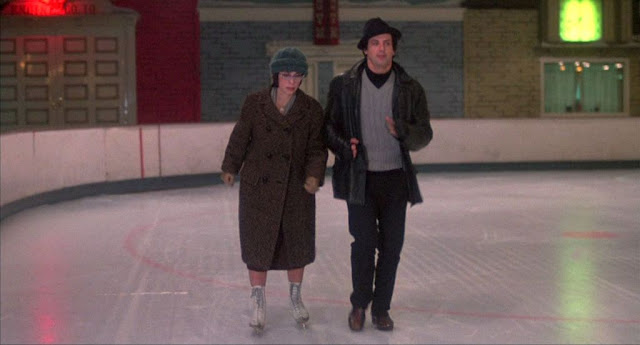
Is there a sweeter first date in movies than that solo trip to the ice rink? Cost cutting saved the day here (it was intended to be packed), that stolen few minutes skating while Rocky hurriedly tries to find out a much about Adrian as he can (an attendant counting down the time they have as they go), Adrian both charmed and bashful. It’s a lovely scene and goes a long way to us giving these characters the sort of emotional devotion that would keep audiences coming back for decades.

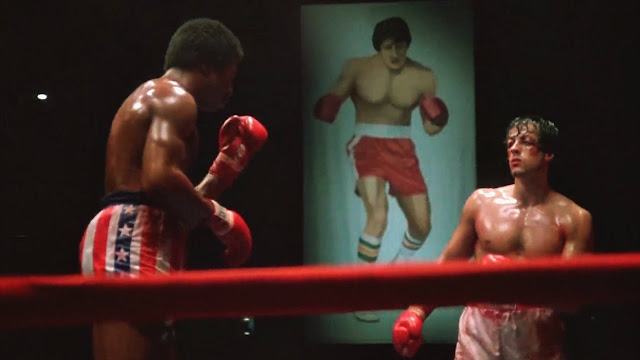
That and those boxing fights of course. Rocky’s final fight sets a template most of the rest of the films would pretty much follow beat for beat. But it’s still fun watching Rocky go toe-to-toe against all odds. Particularly as we know what is important to Rocky is not victory but proving something to himself. It helps as well that Stallone still looks like an underdog of sorts (over the next ten years he would turn himself into a slab of muscular stone).

Opposite him is Apollo Creed, with Carl Weathers channelling his very best Mohammad Ali. The underdog story makes for fine drama, and Rocky is superably packaged: there is a reason why so many other films essentially copied it. From montage, to an “against all odds” fight to Burgess Meredith’s grizzled trainer (a part you’d see time-and-again in the future from different respected character actors) there is a superb formula Rocky takes and repackages from classic films of the 40s and 50s and re-presents to huge and successful effect.

And it works because it’s so entertaining. Stallone is hugely winning in the lead role – more sweet and sensitive than he would be in later Rocky films (traits he would allow himself to rediscover in the more recent films) and it’s a perfectly packaged feel-good entertainment. But it’s also got a grounded sense of realism and reality, with an affecting love story. It’s one of the first – and best – films of the 80s, where formula and crowd-pleasing would be king.

Raging Bull (1980)

Robert De Niro takes to the ring in Scorsese’s marvellous Raging Bull

Director: Martin Scorsese

Cast: Robert De Niro (Jake LaMotta), Joe Pesci (Joey LaMotta), Cathy Moriarty (Vickie LaMotta), Nicholas Colasanto (Tommy Como), Theresa Saldana (Lenora LaMotta), Frank Vincent (Salvy Batts), Lori Anne Flax (Irma LaMotta)

On the surface, Raging Bull seems an unusual topic for Scorsese. A sports biopic? For this, the least sports-engaged director in Hollywood? Even in Scorsese’s most masculine works, sports are always noticeable for their absence. But Raging Bull is a masterpiece, a film whose legacy has seen it named as the greatest film of the 1980s, showcasing possibly Robert De Niro’s most famous performance. A brilliant combination of art, searing personal drama and boxing, Raging Bull may not always be the easiest watch in the world, but it’s a scintillating piece of cinema.

Opening in 1964, we see the overweight, ageing Jake LaMotta (Robert DeNiro) preparing for a comic stand-up routine. From there, the film flashes back to the younger Jake in the ring, with the film following LaMotta’s boxing career. However, the real drama is in his out-of-the-ring relationships, with his brother and manager Joey (Joe Pesci) and his second, younger, wife Vickie (Cathy Moriarty). LaMotta inside the ring is a bull, a man who can take unbelievable levels of punishment. Outside the ring though he is a fragile, paranoid, self-loathing man with a sharp self-destructive streak, whose envy and jealousy systematically destroys every relationship he touches.

Watching the film, its clear Scorsese knows very little about boxing but fortunately he knows everything about filmmaking. Raging Bull is a marvel, a superbly made and directed marvel. Scorsese’s triumphant decision was to shoot the film in black-and-white (some truly beautiful work from Michael Chapman). This gives the film both the classic, gorgeous feel of a 1940s Hollywood movie, but also allows the boxing matches themselves to take on an almost impressionistic artistry, with powerfully emotive monochrome images. The photography also creates a stark, documentary like sense of reality for the many scenes of domestic disharmony and violence, while later shots brilliantly allow LaMotta (lost in self-loathing and disgust) to almost disappear into the inky darkness of the frame. Raging Bull would be half the film it is, if it was in full colour.

Recovering from a cocaine addiction that nearly killed him, Scorsese was intimately familiar with self-destruction – and its perhaps this that drew him towards LaMotta’s jealousy, possibly the film’s major theme. LaMotta is a self-loathing individual, who sees little value in himself, who treats pummellings in the ring like just punishments and believes everyone is betraying him. It’s one of the finest films about the green-eyed monster ever made. Obsessed with his younger wife – whom LaMotta first encounters at age 15 and whom he marries as soon as she is legal – LaMotta also earnestly believes she is sleeping with every man around. It’s clear that these paranoid fantasies stem from his own disgust at himself, LaMotta’s own conviction that there is nothing of value in him.

It’s this jealousy that really destroys LaMotta, his trigger-happy temper seeing him able to switch on an instant from a calm – but monomaniacal – insistence that he just wants to know the truth about his wife, to indiscriminate violence. LaMotta is an impulsive, excessive creature who does everything to a huge degree, from doubting his wife, to shovelling food into his guts. Scorsese’s camerawork – particularly it’s La Dolce Vitaish love of Cathy Moriarty – reflects LaMotta’s internal dysfunction. It worships Moriarty in the same way LaMotta does, but also reflects his obsessive possessiveness.  

All of this is further captured in Robert De Niro’s iconic performance. De Niro won the Oscar for this stunning tour de force. Raging Bull became almost as famous for De Niro’s all-consuming preparation: he trained for months to achieve the physique and skill of a professional boxer (he even entered some professional bouts, winning two out of three). He then went completely the other way, the entire film going on a four month hiatus while De Niro went on an eating tour around Italy to pile on the pounds for the ageing, overweight LaMotta. At the time it seemed like no other actor had gone to such levels.

This focus on De Niro’s preparation sometimes obscures in the mind the genius of the actual performance, as if we have almost been blinded by the training and technique behind it. De Niro’s energy, his fury, his intelligent understanding of the fractured mind of the paranoid brilliantly brings LaMotta to life. So intense is the actor’s understanding of the disgust that lies at the heart of LaMotta’s personality that, even at his worst, the man is never completely unsympathetic. De Niro rages through scenes of jealous outbursts and violence, but he also has a childish gentleness of the man unable to understand the world around him, twice in the film collapsing into bursts of affecting tears. The older LaMotta is perhaps wiser, but just as inarticulate in emotions as his younger version and as unable to fix the damage. It’s a masterful performance, a physical and emotional tour-de-force.

De Niro also worked closely on the choreography of the boxing scenes, which allowed Scorsese the freedom to shoot these with an imagination and brilliance that had never been seen before. Each fight has its own unique feel, with Scorsese understanding that this sport is a neat parallel for how LaMotta sees life, a series of brutal clashes with pride and self-regard on the line. Scorsese’s fights are elemental clashes – the soundtrack frequently uses slowed sounds to create an animalistic roar.

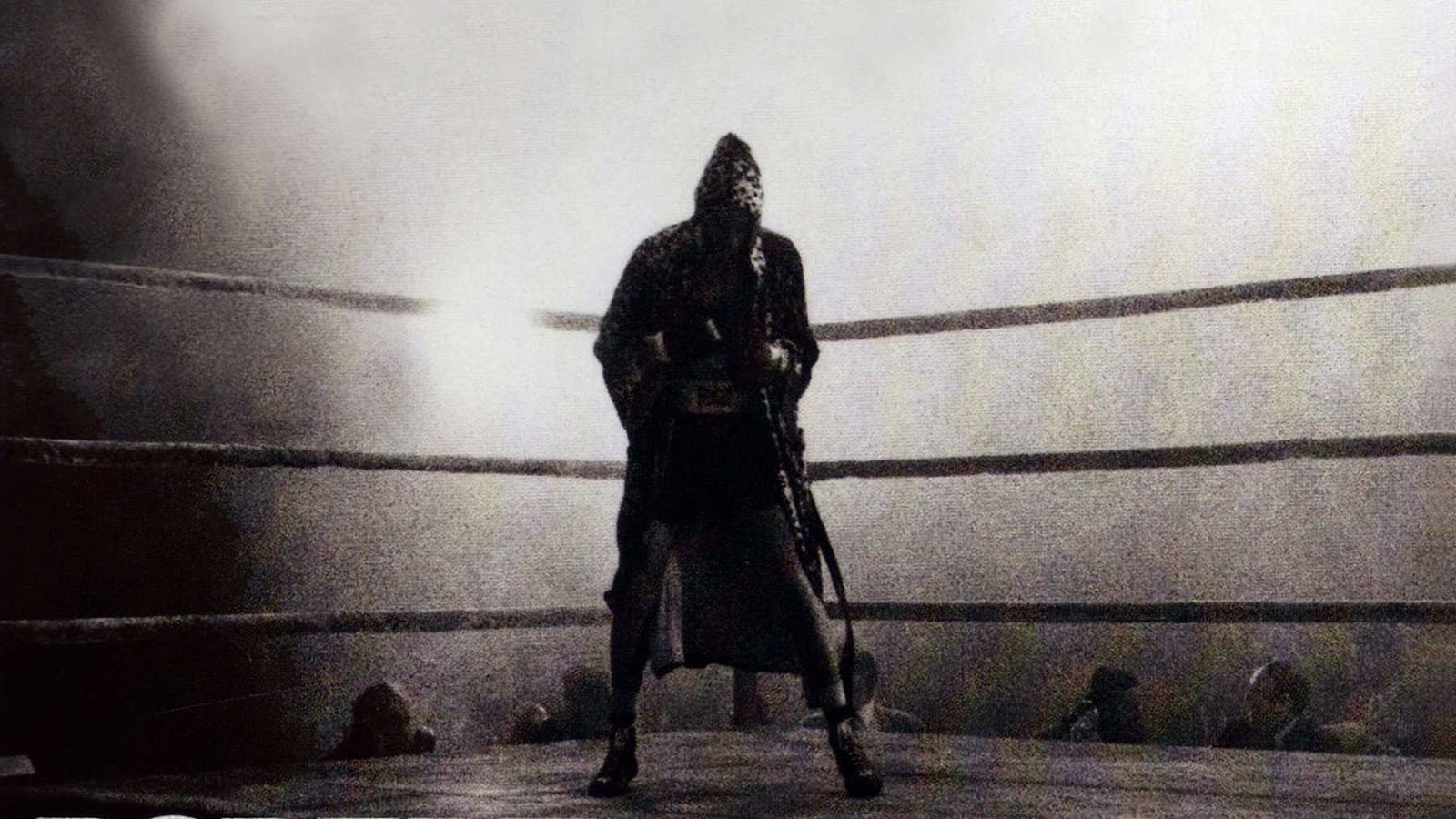
The camera is frequently thrown into the ring with the pugilist – and LaMotta here is really more of a pugilist than a boxer, there is very little sense of tactics – with low angles and tight camerawork. Scorsese puts the camera – and the viewer – into the ring, making us part of the fights. Every punch and blow carries impact, and this is perhaps the most blood drenched boxing film in history, with the darkened liquid covering the faces of the fighters and dripping from the ropes of the ring. The fights reflect LaMotta’s mood, with one late fight seeming like an almost medieval battle, mist rolling in and the fighters flying at each other with a reckless abandon. There is nothing romantic about boxing here, it’s a grimy reality of violence with a purpose and brute strength, endurance challenges that only the strongest can emerge from.

LaMotta’s confidence and mastery of the ring is contrasted throughout with his lack of nous and understanding in the real world, and his ability to destroy everything he touches. Joe Pesci excels as his supportive brother who realises far too late the uncontrollable anger at the heart of this fighter, while Cathy Moriarty is also excellent as a young woman whose only real mistake is to want to live some part of her own life. Scorsese charts LaMotta’s destruction of both of these relationships, culminating in the washed up boxer pounding the walls of a jail cell weeping and screaming “Why! Why! Why!”, hatred for his self-destruction dripping from every pore.

Raging Bull looks unlike any other boxing film, instead like a perfectly formed art piece, its soundtrack full of classical tunes and its photography adjusting between the beauty of neo-realism and the cold realities of documentary film making. It’s superb, a masterful film, a work of art and also a profound understanding of the destructive impact of jealousy and self-loathing. Showcasing career defining work from De Niro, it’s no wonder this is still hailed as the greatest film of the 1980s and one of the greatest of all time.