Category: Christmas films

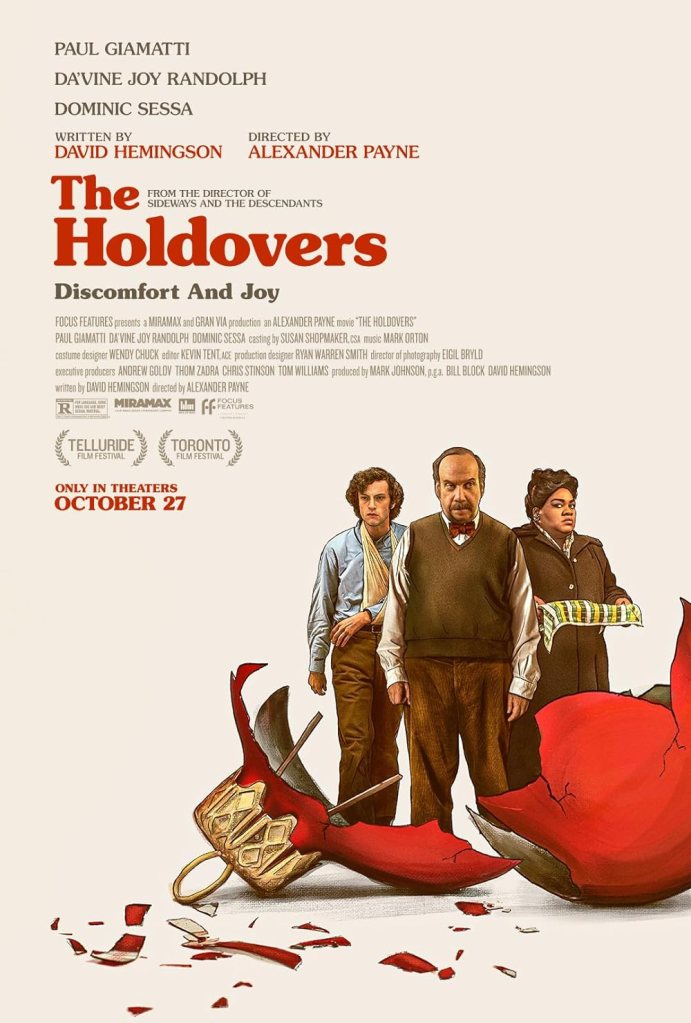
The Holdovers (2023)

The Holdovers (2023)

Alexander Payne’s hilarious Christmas-themed prep school drama is a heart-warming delight

Director: Alexander Payne

Cast: Paul Giamatti (Paul Hunham), Dominic Sessa (Angus Tully), Da’Vine Joy Randolph (Mary Lamb), Carrie Preston (Lydia Crane), Brady Hepner (Teddy Kountze), Ian Dolley (Alex Ollerman), Jim Kaplan (Ye-Joon Park), Michael Provost (Jason Smith), Andrew Garman (Dr Hardy Woodrup)

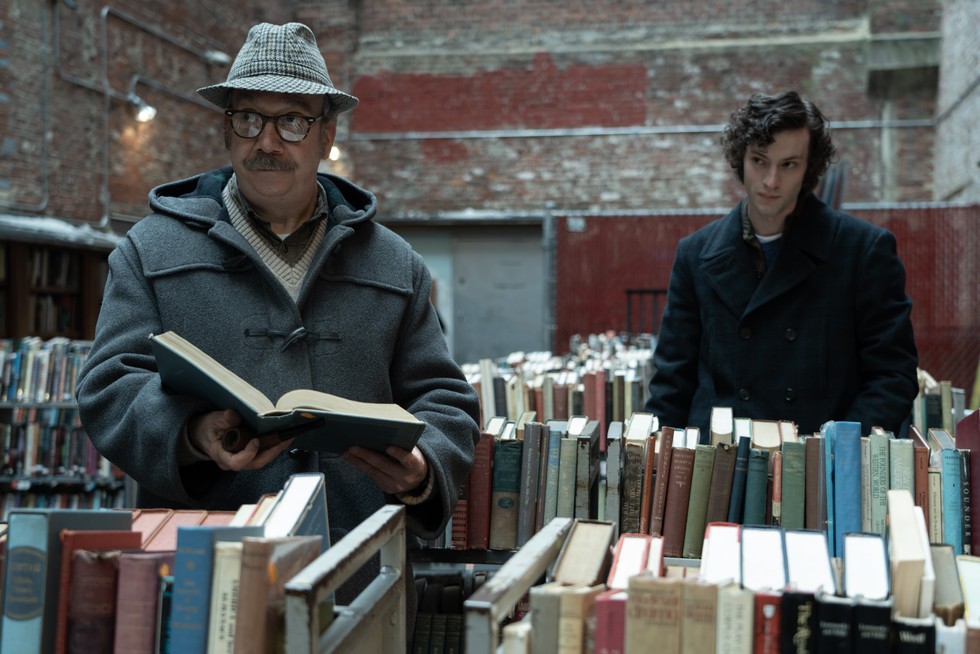
Christmas is a time when people come together – not always by choice. In 1971, Paul Hunham (Paul Giamatti) is a curmudgeonly classics teacher at Barton Academy, a New England boarding school for the wealthy which he once attended himself on a scholarship. He’s despised by teachers and students alike for his waspish wit, brutal marking and abrasive personality. As a punishment for refusing to give a donor’s son the grade needed for Princeton, Hunham must spend Christmas with “the Holdovers”, the students whose families cannot take them for Christmas. Principal among these is Angus Tully (Dominic Sessa), while Mary (Da’Vine Joy Randolph) the campus cook whose son (a former scholarship student at the school) was killed in Vietnam also remains on site. These three difficult, damaged people surprise themselves and each other as time together thaws each of them.

I found this film an absolute delight, funny, heartwarming and rather moving, a treat for any time of the year. Shot and edited with a deceptive simplicity, it’s only when you think back that you realise every scene was perfectly formed, every beat wonderfully timed and not a frame was wasted. This is serene film-making that never draws attention to itself. Payne textures the film like a missing 70s auteur piece – like other parts of his work there are strong elements of Hal Ashby, not least The Last Detail – and his measured, patient staging makes the moments of waspish or foul-mouthed humour land with as much impact as quiet moments of raw pain.

What’s really striking about The Holdovers is the warmth and regard it has for its three characters. Lesser films would set them up as standard tropes: people whose edges would be worn off due to the magic of reaching out to others. What The Holdovers does really well is establish from the start that, depressed and damaged as they are, they are all at heart kind, decent people. Paul’s hostility to his students stems from disgust at their entitlement – we’re completely with him when he hits the roof at the contemptuous “get over it” attitude one student shows to the grieving Mary. Mary’s motherly instincts express themselves in myriad ways. And Angus’ sardonic, smart-aleck waspishness doesn’t stop him comforting a vulnerable younger student.

To make this work as well it does, the acting is key and in its principals The Holdovers is blessed. Paul Giamatti is superb as the prickly Paul, who at first even we can find challenging. Like a bullying Mr Chips, Paul sets tests for Christmas, orders the holdovers to exercise and study during vacation and delights in insulting his students. But Giamatti slowly shows this is a shield for a man disappointed with life, who feels its injustice and imbalance very keenly and decides it’s best to attack life head on.

Paul is a man who really, really cares – so much so, that it’s easier to never allow himself to get close to anyone. Giamatti balances this heartfelt humanity with perfectly pitched comedy. Paul’s acidic put-downs, layered with dense classical references, are frequently hilarious but it’s also rather touching to see him trying to use the same references to try and spark small-talk with strangers (unfortunately the etymological origins of Santa Claus in Ancient Greece leave his audience baffled.). You believe him when he talks about finding the world a bitter and complicated place just as you can understand why he feels he has to respond in kind.

You can also understand why he starts to see the same traits in Angus Tully. Played with a wonderful naturalness by Dominic Sessa (in his film debut), Angus also uses humour and intelligence as a shield. Both he and Paul are sharply intelligent (Paul even grades Angus a B!), disgusted by the casual superiority of Angus’ classmates (in particular the awful – and surely not accidentally named – Kountze) and turn out to be all-but orphans struggling with the same depression. What’s delightful about Sessa’s performance though is he manages to show Angus is still just a kid – he can be vulnerable, moody but also innocent: he’s breathlessly excited when flirting with a girl at a party and bounds off to pack his bags with a whoop when Paul agrees to take him on a “field trip” to Boston.

Angus and Paul are surprising kindred spirits. They both stretch the “Barton men do not lie” mantra to the limit in a series of minor crises, from a hospital visit to a prevented barroom brawl to a meeting with Paul’s puffed up former Princeton schoolmate. The Holdovers also, refreshingly, avoids creating cheap melodrama between them. Promises that certain facts will remain entre nous are loyally kept, making the film’s close (with developments we could have an anticipated at the start) feel true.

The bridge these two meet across is Da’Vine Joy Randolph’s wonderfully warm yet brittle performance as a loving woman lost in grief. Mary had clearly focused every hour on her son since his birth, his death leaving her bereft. Around her house, his possessions are stored like mini-shrines. Mary keeps up her professionalism while screaming in agony on the inside, but she’s still determined to see the best in people. All three actors are astonishingly good.

The Holdovers sparks these actors off each other in a series of scenes that are, in turn, hilarious, surprising and then, from nowhere, deeply moving. It’s a lovingly optimistic film at heart. Except for Kountze and the headmaster, every character is deep-down decent (the holdover who spontaneously – and excitedly – invites his fellow holdovers to a skiing holiday is adorable). It’s a film that finds this good in people without being cloying, possibly because the characters puncture any sentimentality with a well-timed, foul-mouthed quip. It also swerves away from predictable tropes (despite Payne cheekily teasing more than a few) to create a sense of a story that feels true.

The Holdovers is also rare in American films for taking class as a strong theme. Barton is a sort of finishing school for the rich, where the size of the library a benefactor buys is more important than the academic skill of his son. Paul is, rightly, appalled by the casual assumption of superiority of many of the students, and their smug obliviousness to their privilege. Mary’s son, due to not being able to afford college, was condemned to enlistment in Vietnam in the hope of a GI bill education. Paul’s past misfortunes are steeped in class injustice and Payne frequently stresses the plush comfort of the school compared to the working-class town it sits inside. There is something quite British about this sharp-eyed look at a “classless society”.

The Holdovers is an intelligent but also magnificently heart-warming film with just the right touch of lemony bittersweetness. With three gorgeous performances, Payne’s film superbly shows how the defences we use to protect ourselves can hurt us as much as those around us. Avoiding sentimentality, it concentrates on making us care deeply for its three damaged souls as they stumble towards understanding. It does this with sensitivity, empathy and (perhaps most importantly) a lot of humour. The Holdovers is a small-scale triumph, the sort of film I can imagine watching again and again and always bringing a small tear to the eye.

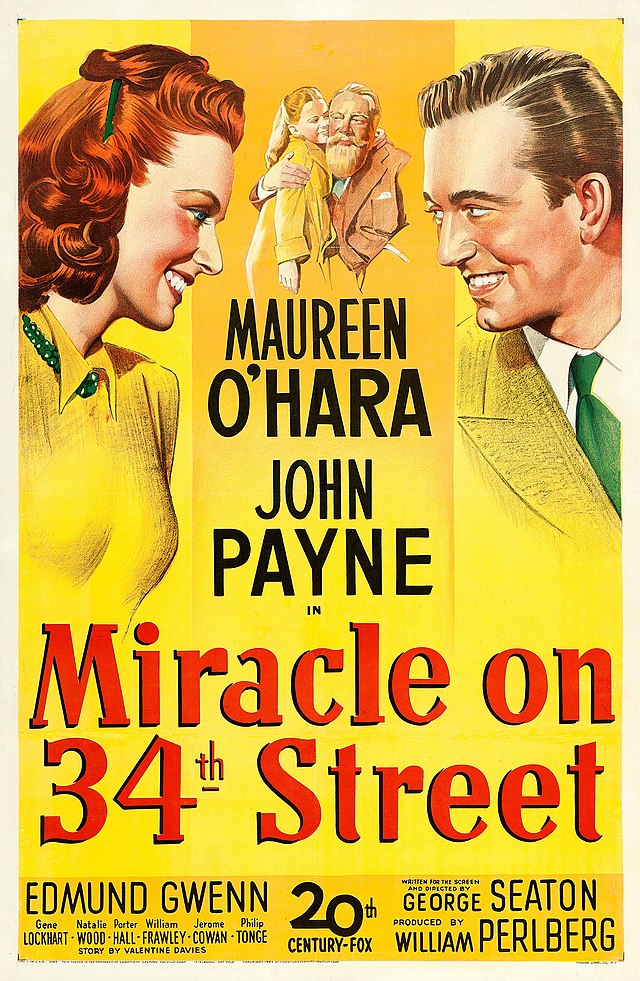
Miracle on 34th Street (1947)

Miracle on 34th Street (1947)

Warm Christmas fable will make you want to believe in Santa all over again

Director: George Seaton

Cast: Maureen O’Hara (Doris Walker), John Payne (Fred Gailey), Edmund Gwenn (Kris Kringle), Natalie Wood (Susan Walker), Gene Lockhart (Judge Henry X Harper), Porter Hall (Granville Sawyer), William Frawley (Charlie Halloran), Jerome Cowan (DA Thomas Mara), Philip Tonge (Julian Shellhammer), Henry Antrim (RH Macy), Thelma Ritter (Peter’s mother)

Santa Claus is a sweet little story we were told as kids, all part of buying into the magic of Christmas. How can we have been so silly as to think a jolly fat man with a red coat and flying reindeer delivered our Christmas presents? It’s the sort of fantasy adults are primed to burst like an over-inflated balloon. As a tribute to the earnest joy of believing in childish things, Miracle on 34th Street should also be the sort of thing the adult in us can’t wait to mock. Instead, its warmth and good-natured sweetness carries you along and makes you want to believe.

It’s the build-up to Christmas, and Macy’s in New York is working overtime to bring the magic to its customers (and turn a tidy profit). Macy’s Day Parade director Doris Walker (Maureen O’Hara) is relieved when Kris Kringle (Edmund Gwenn) takes the place of a drunken parade Santa and then occupies Santa’s Grotto in the store. Kringle is exactly the sort of guy you picture when you think of Santa – and, on top of that, claims to be Santa himself, much to the discomfort of Doris who doesn’t believe in all that stuff and certainly doesn’t want her daughter Susan (Natalie Wood) to. But when Kringle finds himself in court, fighting against being committed to an institution, with only Doris’ boyfriend Fred Gailey (John Payne) to defend him, can he prove there is a Santa Claus and it’s him?

Seaton’s film is an adorable delight which is funny and good-natured enough to avoid the trapdoor of sickly sentimentality. It’s a film about adults getting back in touch with the giddy delight of believing childish things. It flags up every cynical objection – and then gently suggests we’d be happier forgetting them. After all, what’s the harm in allowing ourselves in a few harmless flights of fancy – why should everything be measurable? Kris Kringle comes up against the hard-headed: harried mothers, businessmen, judges and lawyers and wins them over with his genuineness and warmth. He makes people want to believe – and doesn’t that, in a way, make him Santa?

It helps a huge amount that Edmund Gwenn is perfectly cast. Piling on the pounds and facial hair, Gwenn looks the part but also is the part. His performance is kind, considerate and bursting with warmth and good cheer. In a performance full of light, unforced playfulness, Gwenn gets the level of sweetness just right. A squeeze or two more and you would choke on the schmaltz of the whole conceit: but Gwenn is so adorable the audience wants to believe in him as much as the characters.

Especially as this Santa melts some of the cold commercialism of our modern Christmas. Miracle on 34th Street has a lot of good-natured fun at how Kris confounds the latent money-making of Christmas. On hire he’s instructed to memorise a list of preferred products to push on children. Instead he points mothers towards competing stores where they can get the exact gift they want or pick up better quality goods than at Macy’s. Of course, the concept proves so popular with customers that RH Macy is confounded by the goodwill it creates in his customers (and the huge sales it will lead to from their loyalty). Even other department stores start doing the same.

It’s one of the recurrent themes of the film: Kris brings out the best in people. Maybe not always for the right reasons: the shop-owners who want money, the judge who wants re-election. But it shows what benefit a little bit of good can have in the world. Kris also shows how little touches of consideration can change lives. There is a truly heart-warming moment where Kringle meets a Dutch orphan who simply wanted to meet Santa – although her adopted mother warned her Santa can’t speak Dutch. Much to her surprise, Kris launches into fluent Dutch, to the delight of the child. Miracle on 34 Street has several moments where the unstudied delight of children is captured to great effect, not least Natalie Wood’s delighted response to discovering the reality of Kringle’s beard (it also, to be fair, has several fairly cloying child actors).

Eventually the forces of darkness – led by Porter Hall’s twitch-laden store “psychologist”, whose bullying self-importance makes him the only person Kringle dislikes – insist we all put away childish things and chuck Kringle in an asylum. Miracle on 34th Street segues into a Capra-esque court-room drama (it’s hard not to detect touches of Mr Deeds Goes to Town) which pits Kringle’s home-spun honesty against legal cold professionalism. The clash becomes a delightful headache, as both the Judge and DA confront outraged children at home who can’t believe they are putting Santa on trial. It’s a great gag: who wants to be the judge who rules categorically Santa does not exist?

Alongside these gently amusing courtroom shenanigans (with John Payne doing an excellent job as Kris’ inventive lawyer) the film balances an endearing domestic plot. There is the inevitable will-they-won’t-they between Payne and O’Hara (if there is a bit of slack you need to cut the film today, it’s in Fred’s pushy wooing of Doris, including corralling Susan). But also, can O’Hara’s all-business professional, who’s raised her daughter with a Gradgrindish obsession with facts, melt her heart and allow both of them to believe a little bit? O’Hara handles this softening with all the consummate skill of a gifted light-comedian, while Gwenn’s delightful interaction with Wood’s precocious Susan, keen to access a world of imagination she’s never really known, is perfectly done.

it becomes a film about the power of believing. In our modern age we become expected to only base decisions on cold hard facts. Doris has taught her daughter to doubt imagination as a weakness to protect her from disappointment in the world (she is after all divorced, quite daring for a 40s family drama). But its also made Susan less likely to invest in faith, to open herself up to hopes and dreams. Its recapturing the ability to believe in something and be enriched by it that becomes one of the film’s richest messages.

It would be incredibly easy to poke fun at the good-natured naivety of Miracle on 34th Street, where businessmen are money-focused-but-decent and lawyers are amiably ready to indulge Kris with a smile. But it’s a film that zeroes in on an in-built nostalgia for simpler times in all of us. We’ve all been little Susan, sitting in a car desperately wanting to believe in the magical. It’s a film that demonstrates the eventual emptiness of cynicism, encouraging the audience to just put all that aside for 90 minutes and remember what it was like to be a child again. Throw in with that Edmund Gwenn as the definitive Santa and it might just be one of the greatest Christmas films ever made.

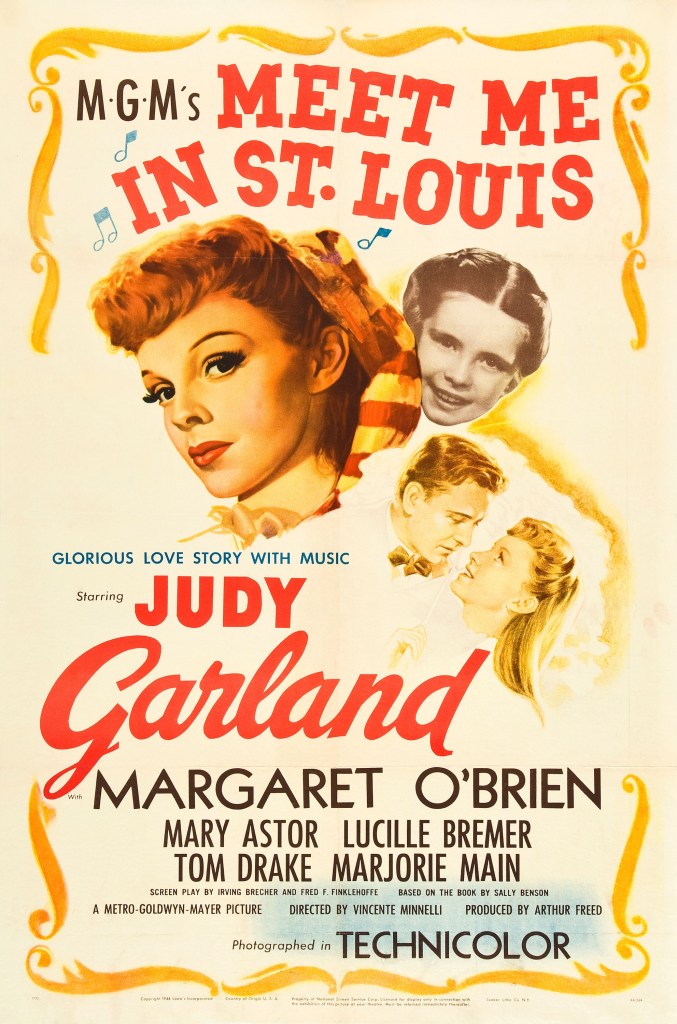
Meet Me in St Louis (1944)

Meet Me in St Louis (1944)

Technicolour musical delight in this unashamedly nostalgic and feel-good Minnelli musicial

Director: Vincente Minnelli

Cast: Judy Garland (Esther Smith), Margaret O’Brien (“Tootie” Smith), Mary Astor (Mrs Anna Smith), Lucille Bremer (Rose Smith), Leon Ames (Mr Alonzo Smith), Tom Drake (John Truett), Marjorie Main (Katie), Harry Davenport (Grandpa), June Lockhart (Lucille Ballard), Henry H Daniels Jnr (Lon Smith Jnr), Joan Carroll (Agnes Smith), Hugh Marlowe (Colonel Darly), Robert Sully (Warren Sheffield), Chil Wills (Mr Neely)

“There’s no place like home” is the message lying behind two of Judy Garland’s most iconic films. While it might be at the heart of Wizard of Oz, that longing may be even stronger in Meet Me in St Louis. From the Arthur Freed production stable, this technicolour delight is relentlessly gentle and optimistic. It went down a delight in a year when so many Americans dreamed of the end of a war that had separated families and kept soldiers from their home and remains a delightful paean to a lost America (that perhaps never even was).

Set, of course, in St Louis in 1904 during the build-up to the World’s Fair (the gleam of the electric lights turning at the exhibition are the film’s final shot), Meet Me in St Louis follows the lives and loves of the Smith family. Patriarch Alonzo Smith (Leon Ames) is a lawyer (or something, the film doesn’t trouble itself too much), his wife Anna (Mary Astor) a devoted home maker. They have four daughters: Rose (Lucille Bremer) hopes for a proposal from Warren Sheffield (Robert Sully), youngest children Agnes (Joan Carroll) and especially “Tootie” (Margaret O’Brien) are perpetually in trouble and Esther (Judy Garland) is just starting to make eyes at next door neighbour John Truett (Tom Drake). But their contented life could all turn upside down when father announces they will be moving to New York. Surely, they can’t leave St Louis behind?

In many ways Meet Me in St Louis is an inverse The Magnificent Ambersons. While Welles’ film brilliantly charted the decline of a family of wealthy snobs (the Ambersons would certainly recognise the Smiths as equals) with technology an intruder, upending everything they understand about the world, Meet Me in St Louis is a gloriously entertaining celebration of nostalgia with new technology either a source of jokes (scrambled long-distance calls, jolly cable-car songs) or wonder (that closing light-show). Both have stylistic comparisons: from their use of title cards to their fluid camera showcasing sumptuous sets and costumes. But only one of them is about cheering you up.

Meet Me in St Louis only barely has a plot, so concentrated is it on charm and whimsy (father’s announcement, which introduces the real drama, arrives over half-way through). Adapted from a series of short stories by Sally Benson, it’s an episodic film built around events – parties, cable-car rides, a Halloween adventure and a Christmas Eve ball – with a few threaded plotlines of flirtation, principally between Esther and John. Freed sprinkles in a series of songs from his collected rights holdings (including the title song) with a few additional tunes from writers Hugh Martin and Ralph Blane, the most notable being The Trolley Song (a ludicrously catchy-number you can’t get out of your head) and the iconic Have Yourself a Merry Little Christmas (although their original far more depressing lyrics were hurriedly re-written).

These last two are performed with astonishing bravura by Judy Garland in possibly her finest hour (until A Star is Born). Garland’s singing is almost effortlessly graceful and beautiful, and she matches it with a very warm, feisty and engaging performance. Esther lands perfectly between two stools: she can be rebellious, impatient and judgemental but also caring, sensible and forgiving. Garland is reassuringly collected, funny and luminous through-out – so much so it’s striking to read what a nightmare the shoot was, with the star frequently absent as she succumbed to the mental and physical ailments that would plague the rest of her life.

Part of the success of her performance was the closeness that developed between her and Minnelli – the first director to really treat her as an adult and collaborator (they started an affair during the film). Minnelli, in only his third film and first in colour, directs with the assurance and visual beauty of an accomplished pro. Meet Me in St Louis was his first Freed musical and it might just be his best. The sumptuousness of the visuals and design were to a large part due to him – you can see the influence this had on the later work of Visconti among others, particularly the ballroom scene – and Minnelli worked labouriously with the actors to build a sense of family between them.

This pays off in spades throughout the film, where the close chemistry between the actors only helps create a nostalgic glow for happy days gone by. Ames and Astor have a relaxed ease of a long-married couples, while the four sisters interact with each other with an easy, unstudied naturalness – sharing chairs, food from their plates and time together with an unfussy ease. In particular Minnelli helped guide Margaret O’Brien to the one of the most delightful child performances on screen: the Halloween sequence, where “Tootie” confronts a scary neighbour is a masterclass of childish excitement and fear, matched later by O’Brien’s affecting distraught tears at the prospect of leaving St Louis.

Minnelli shoots the film with a technical confidence and imagination that quickly makes you forget it’s simple plot. That Halloween sequence is an eerie wonder, shot with a low-angled, tracking shot unease that leaves a haunting impression. He and cinematographer George J Folsey deigned a gorgeous gaslight dimming sequence as Esther and John go through her house dimming the lights, the camera moving in a single, complex, take up-and-around them while Folsey adjusts the set light in sync. Later there is a brilliant shot that seems to pass through a window to lead us straight into the ball, which seems years ahead of its time in its technical accomplishment. The ‘Trolley Song’s sequence uses framing and costumes perfectly to turn a cable car into something that feels as large as a small theatre. It’s an exceptionally well-made film.

You could argue certainly that it is a conservative and unchallenging film. It’s a celebration of small-time life, an argument for staying where you are and embracing the status quo. It never crosses its mind to consider that it’s a lot easier to do that if you have a huge house and servants. Not a moment of anger or serious disagreement is allowed to enter the picture. Everyone is unendingly nice all the time. But does that matter? Sometimes you need a film like a warm hug. And, when you do, don’t you want it also to be a masterclass in filmmaking with a star like Garland at the top of her game? Of course you do.

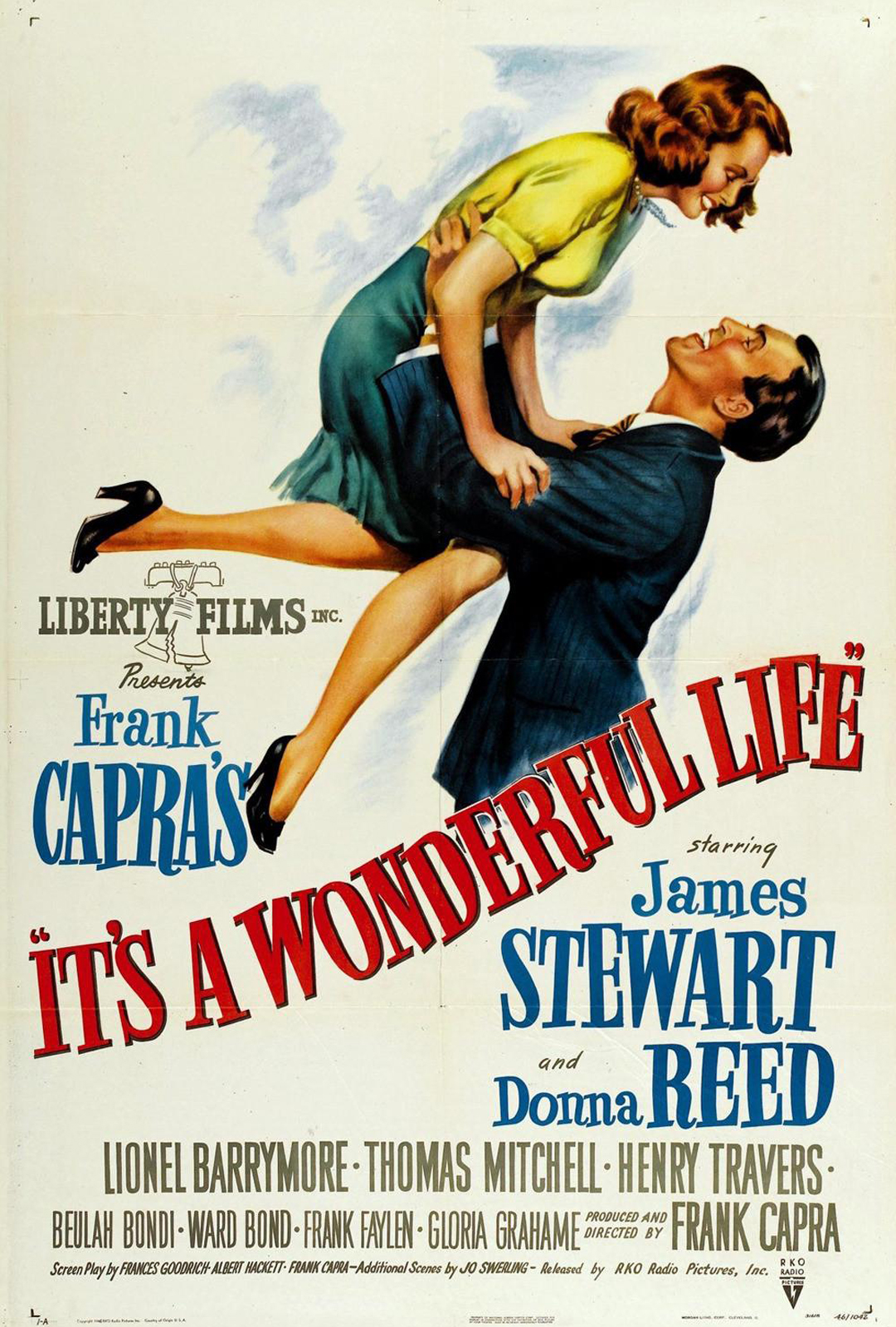
It's a Wonderful Life (1946)

James Stewart discovers he has lived a good life in It’s a Wonderful Life

Director: Frank Capra

Cast: James Stewart (George Bailey), Donna Reed (Mary Hatch), Lionel Barrymore (Henry F Potter), Thomas Mitchell (Uncle Billy Bailey), Henry Travers (Clarence Odbody), Beulah Bondi (Ma Bailey), Frank Faylen (Ernie Bishop), Ward Bond (Bert), Gloria Grahame (Violet Bick), HB Warner (Mr Gower), Frank Albertson (Sam Wainwright), Todd Karns (Harry Bailey), Samuel S Hinds (Pa Bailey)

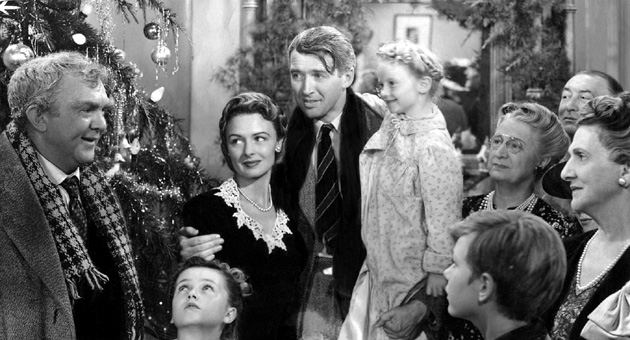
For many people it’s as much a part of Christmas as mince pies and Santa. Any list of the greatest Christmas films of all time – in fact any list of the most beloved films of all time – isn’t complete without It’s a Wonderful Life. Capra’s emotional, heart-warming, seasonal tale encourages us to take a breath and look at the riches in our life, to look past the surface frustrations and disappointments. It seems to have something to say to everyone. There’s a reason why it has been a staple of Christmas for decades.

The small town of Bedford Falls is a place George Bailey (James Stewart) has always dreamed of leaving for a life of adventure. However, circumstances always meant he has stayed in the town, running the family savings and loans business. He’s made a success of the business, raised a family with his wife Mary (Donna Reed – extremely good in an unshowy role), helped half the town into decent affordable homes, and changed his whole community for the better. So why is George standing on a bridge on Christmas Eve, contemplating throwing himself into the river? And will his guardian angel Clarence (Henry Travers) persuade him there are things worth living for?

Capra’s film is very easy to see as a wallow in sentimentality. Certainly, the film is in love with its image of small-town America, here a nirvana of folksy lightness where everyone knows everybody’s name. In reality, America as a whole, even at the time, probably had more in common with Potter’s grasping capitalism or the nightmare vision Clarence conjures of a neon-lit Potterville of loose morals and vice. But the film would never have worked if it was just sickly sentimental – or if it had been a cynical satire for that matter. Instead it works because it is overwhelmingly human, empathy dripping from every pore. It invests us deeply in this whole community and succeeds in making the viewer relate to them at every step.

This is partly because Capra has such a masterful skill for how the little touches can make a story come to life. The loose banister cap that Bailey keeps dislodging in his home. The drawing Donna has made of George’s offer to lasso the moon. The film is full of small moments of character, that create the over-whelming richness of a whole life. It’s also a story full of charm and genuine feeling for its characters, that understands the pain little griefs and small tragedies have.

Perhaps that’s also one of the reasons for the love people have for it. Because, let’s not forget, this is a film set on the darkest day of its lead character’s life, when he considers ending it all. One of the things I find the most touching about the film is that it never stigmatises depression, guilt or feelings of inadequacy. If someone as universally loved as George can look at his own life as a disappointment, and that this feeling is treated as both reasonable but also mistaken in the best way, it reassures as all not only that we shouldn’t feel guilty for feeling this but hopefully that we are as mistaken as George is. Failure is all in the perception – and It’s a Wonderful Life reminds us that perception is often unreliable when we turn it on ourselves.

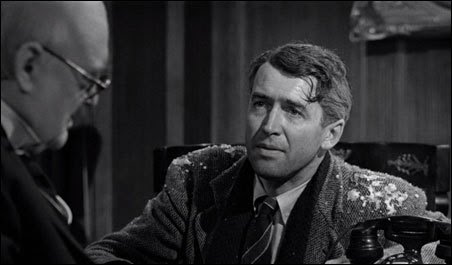
Capra’s film relies strongly on our bond with George – so the casting of James Stewart in the role plays off perfectly. Stewart is quite simply superb, completely human and deeply moving. Capra provides Stewart with several striking set-piece speeches (all of which he delivers with aplomb). The entire film is essentially a riff on Stewart’s charm and likeability – but also his everyday quality, the sense that when we watch him we are looking at someone like us. Stewart makes Bailey honest, decent and kind. You can immediately see why people like him. His principles and sense of justice drive him every day to do the right thing – and what makes him such a deeply relatable character is that this so often flies in the face of his own desires and interests.

What Capra also understands – and taps into so well here – is the darkness in Stewart. Because someone so like us is surely as likely to suffer from  depression and disappointment as the rest of us. You can never forget this is a man who has dreamed his whole life of leaving this town, of making it as an architect, of forging a broader life for himself. He never wanted to be the pillar of the community and family man he becomes. There is disappointment in Bailey at every turn, however much he treats the world around him with warmth. This isn’t what he wanted. No matter if it has won him love and respect from all around him.

And who hasn’t ever felt that? But we know that deep down – even if he doesn’t always realise it – Bailey is happy with his lot. That if he didn’t care deeply about town, friends and family he would have left years ago. We know he’s a good man: that later he will deeply regret berating his poor befuddled Uncle Billy (a gloriously cuddly Thomas Mitchell) for losing $8k and losing his temper at his wife and children on Christmas Eve. There is a pain for us to see such a good man, a loving man, who we feel we understand, angrily ask his wife why they had so many children. Everyone has lashed out like George – and everyone has, at some time, looked at where their life is and felt “I could have been more than this”. Far fewer people have taken the time to look at all the good alone in their lives and what a good mark they have made on the world.

But that’s the genius of the film. Taking its cue from Dicken’s Christmas Carol (I’d also say Lionel Barrymore’s brilliantly hissable Potter is clearly a version of Bleak House’s vile moneylender Smallweed), effectively Clarence is the Ghost of Christmas Present, showing George what the world would have been like without him. Sure some of this is overblown – Potterville for goodness sake! – but the impact is those personal stories. The brother drowned as a child. The pharmacist imprisoned for manslaughter. The affordable homes never built. The family that never even existed. The mix of science fiction and classic morality tale helps us all to reflect – so many of us have people all around who care for us, whose lives would have not been as rich as they are without us, however much we may disappoint ourselves at times.

That’s perhaps behind the love for the film. It’s about hope, while never closing its eyes to despair. It recognises that sometimes we are not happy – and it tells us that that’s okay, so long as we don’t lose hope. It encourages us to take a look at ourselves in the round and to appreciate the whole picture, not just a part of it. You can call that sentimentality if you want – but at Christmas time this message of hope and love is sometimes exactly what you need.

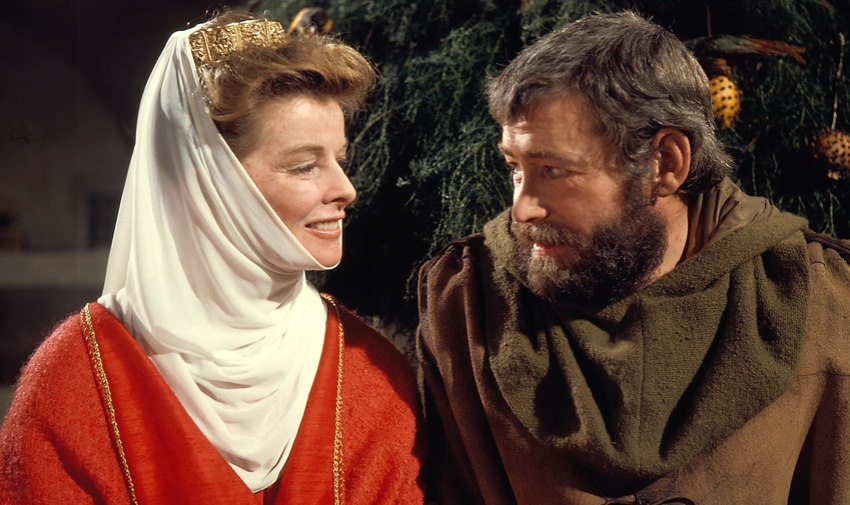
The Lion in Winter (1968)

Katharine Hepburn and Peter O’Toole are the feuding royals in The Lion in Winter

Director: Anthony Harvey

Cast: Peter O’Toole (Henry II), Katharine Hepburn (Eleanor of Aquitaine), Anthony Hopkins (Richard the Lionhard), John Castle (Prince Geoffrey), Nigel Terry (Prince John), Timothy Dalton (Philip II), Jane Merrow (Alais), Nigel Stock (Captain William Marshall)

James Goldman’s play The Lion in Winter did solid but not spectacular business on Broadway. But when it came to film, it surfed a wave of popularity for stories about British history and became one of the most financially successful films of its year, winning three Oscars (including for Goldman). Even more than that, it went on to be West Wing President Jed Bartlett’s favourite movie of all time. I think we know which prize is the most treasured.

Christmas 1183 (including an ahistorical Christmas tree and gift wrapped presents and all) and Henry II (Peter O’Toole), king of England and huge chunks of France, wants nothing more than family around him to mark the occasion. Problem is, this is possibly the more dysfunctional family ever. His Queen Eleanor of Aquitaine (Katharine Hepburn) has been under “home arrest” for ten years in her castle, and his children Richard (Anthony Hopkins), Geoffrey (John Castle) and John (Nigel Terry) seem to take it in turns to conspire against their father, their allegiances shifting faster than even they can sometimes follow. For added complexity, Henry is living with his late eldest son’s intended Alais (Jane Merrow) as husband and wife and her half-brother the new King of France Philip II (Timothy Dalton) is joining the family for Christmas. Over one night, this family will fight, feud and change pacts and allegiances until hardly anyone knows where the games end and the hate begins.

Anthony Harvey’s film is a stately, often wordy, faithful reconstruction of Goldman’s script that gives front-and-centre to the often scintillating dialogue between the family members, that leans just the right side of ahistorical (sample line: “Hush dear, Mummy’s fighting”) but frequently allows it’s top-of-the-line cast to let rip on some glorious speeches and dialogue duets crammed with ideas, wordplay, character and wit. Harvey therefore basically decides to sit back as much as possible and allow the actors do the work, using a mixture of medium shots and close-ups to bring the focus as much as possible to the Broadway-style staging or into the actor’s faces. He also uses the strength of the performers to allow for a series of long takes as they burn through pages of Goldman’s dialogue. The fact that there is hardly an interesting shot in the film, and its visual language never matches it’s verbal fire is a shame, but a price the film thinks worth paying.

And it matters little when Harvey is able to work as well with actors as he does here. All the performers are at the top of their game. Katharine Hepburn (winning her fourth Oscar, in a tie with Barbra Streisand in Funny Girl) has the perfect level of acute intelligence and imperious arrogance for Eleanor. But Harvey encourages from her a softness at crucial moments, that in-between the barn-storming speeches and verbal putdowns, Hepburn finds moments of quiet sadness and loneliness – a sense that sometimes ten years of imprisonment means she has had enough of all this – that are some of her most affecting work on screen. She’s hilarious but deeply moving – and totally believable as one of the most powerful women of the middle ages. 

She also is matched perfectly with O’Toole. Playing a 50-year old King at 35, O’Toole brings all the fire and charisma of his personality to the part, in a film where he perfectly balances the larger-than-life gusto of Henry II with his own personal disappointments, guilt and sorrow. O’Toole had already triumphed once as the charismatically brilliant king in Becket (for which he was also Oscar nominated, as he was here), but this performance is even better. Not only is his facility with the dialogue faultless, he also utterly convinces as the sort of awe-inspiring figure who dominates every room he’s in not just with force of character but the acuity and sharpness of his intellect. This might be his finest screen performance – and the one where he was most cheated of the Oscar (losing to a highly active campaign, criticised at the time, from Cliff Robertson in Charly).

To fill the cast out around these pros at the top of their game, Harvey raided British theatre to pluck some promising gems from British Theatre, more or less all of them here in their film debut. Anthony Hopkins is marvellously proud, forceful but just a few beats behind most of the others as a Richard who says what he means and sticks to it. Timothy Dalton is his polar opposite (and equally brilliant) as a Philip II who never says what he means and manipulates with a playful ease everyone he meets. John Castle (an actor who never had the career he should have had) is smugly unlikeable and coldly superior as the unliked middle-brother Geoffrey, while Nigel Terry is a snivelling punching bag as two-faced coward John. Jane Merrow is heartfelt and earnest as Alais, the only unquestionably kind and good person in this bunch.

These characters rotate sides and allegiances over the course of one evening, raging at each other like a medieval Who’s Afraid of Virginia Woolf? The brilliance of the dialogue never stops entertaining – although towards the end the film loses a bit of energy (it probably peaks with Henry’s loud double bluff of dragging the family in the middle of the night to a wedding he has no intention of seeing performed), perhaps partly because the film itself never really comes to flight as something cinematic. This is despite the decision to downplay the glamour – costumes are simple and look lived in (the cast wore them for hours off set to make them look lived in) and sets are far from pristine. It perhaps contributes to the slightly mundane feel of the filmmaking.

But the tricks are all in the dialogue and perhaps the film works best with an interval and a chance to take stock. There are several marvellous scenes, even if the constant feuding and side changing does wear you out after a while. But it’s a treat for the acting. Hepburn and O’Toole are simply at the top of their game, and the rest of the cast more than keep up with them. With an excellently imposing score from John Barry (also Oscar-winning), it’s a shame the film itself is a little too flatly and uninspiringly filmed with a murky lack of visual interest, but there are more than enough qualities for you to issue a pardon.

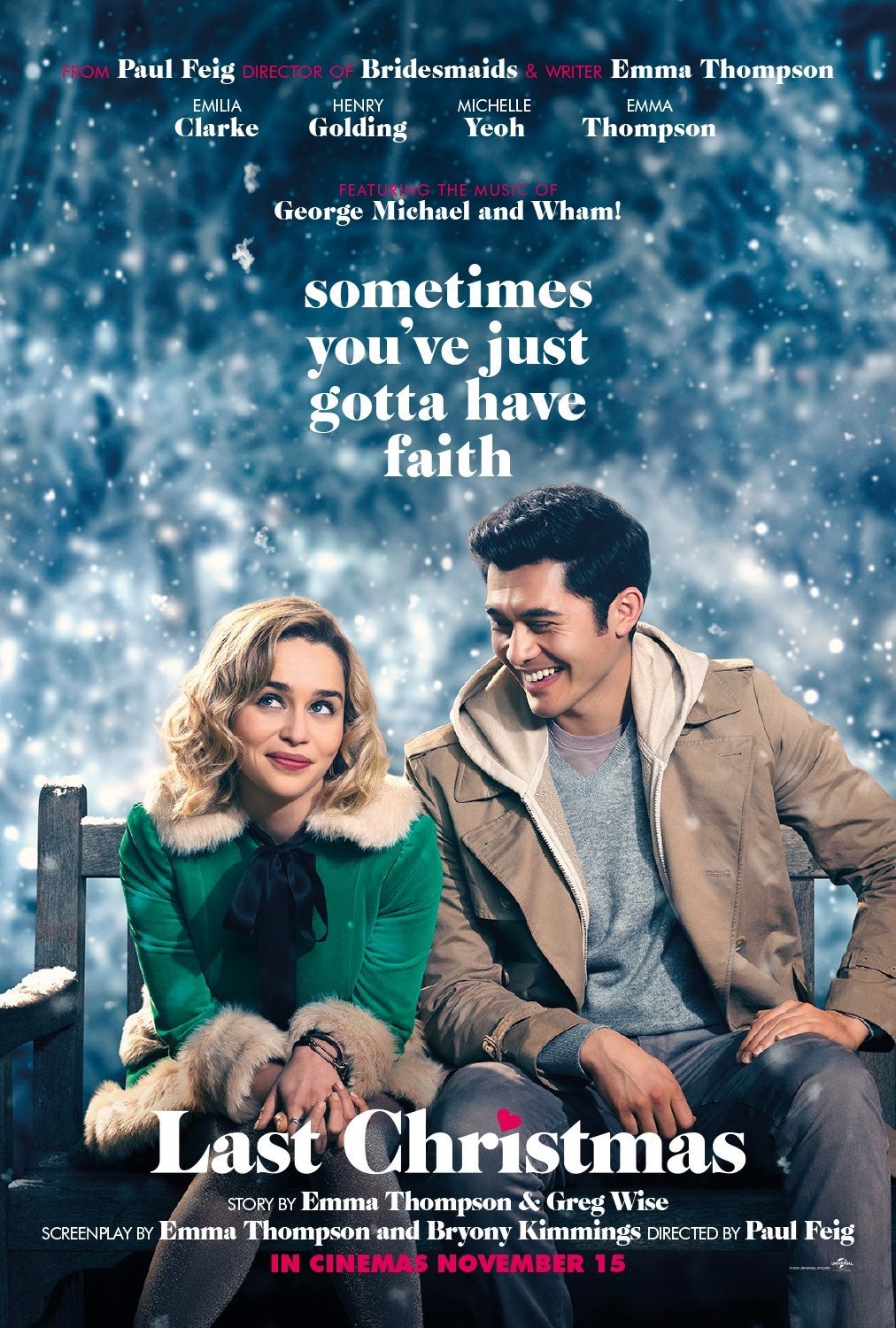
Last Christmas (2019)

Emilia Clarke and Henry Golding in a Christmassy romance with a twist

Director: Paul Feig

Cast: Emilia Clarke (Kate), Henry Golding (Tom Webster), Michelle Yeoh (“Santa”), Emma Thompson (Petra), Lydia Leonard (Marta), Peter Mygind (“Boy”), Rebecca Root (Dr Addis), Patti LuPone (Joyce), Ingrid Oliver (PO Crowley), Laura Evelyn (PO Churchill), Rob Delaney (Director), Peter Serafinowicz (Producer)

Last Christmas has been savaged by critics and held up by many like it was some sort of embodiment of everything that’s wrong with cinema. Jeez louise guys, take a chill pill why don’t you? Feig’s London based comedy, working with an Emma Thompson script, does exactly what it says on the tin – an It’s a Wonderful Life-inspired Christmassy story, that ticks all the Christmas boxes. It has no pretentions for doing anything else. And there is nothing wrong with that!

Kate (Emilia Clarke) is recovering from a heart transplant last year, and she’s heading off the rails. She takes no responsibility for anything, she’s selfish, lazy, demanding and making a car-crash of her life and health. Working as a full-time Elf in a Covent Garden Christmas store (run by Michelle Yeoh as “Santa”), Kate’s life is heading down the toilet until one day she meets Tom Webster (Henry Golding), an almost supernaturally decent guy, kind, considerate, friendly and caring. With his guidance can Kate start to turn her life around?

Well there is a twist in Last Christmas and, to be honest, it’s pretty easy to see coming. Anyone with half an eye on costumes or numbers of interactions will see it coming and anticipate what they are going to get. But you know, that’s fine. This is a film that knows what it is, a fairly unchallenging rom-com that’s spiced with a little touch of Capra-esque whimsy and a conventional morality tale of a selfish person turning round their life.

There are some good jokes, there are some reasonably charming performances, there is a good sense of fun driving through the whole film and it manages to capture at least a little touch of that Christmas-movie alchemy (a la Love Actually) where you can imagine people happily sitting down to watch it, in a light, fun, unchallenging way, for years to come. Its Feig’s offering for the Christmas movie cannon and it’s a perfectly acceptable entry. In fact its cosy predictability and familiar structure is pretty much a key part of its appeal. Because at Christmastime we don’t really want anything that’s going to stretch us or demand things from us. We kind of want to sit around and watch something a little predictable, a little fluffy but basically well-meaning and fun.

Emilia Clarke does a terrific job as light comedienne in the lead role, a role perhaps far more suited to her quirky, klutzy, off-the-wall charm than years of playing Daenerys Targaryen on Game of Thrones ever was. She throws herself into it here, happy to be silly, and shows both a good skill for pratfalls and also for drawing out a vulnerability from her character as well as being extremely charming. Henry Goulding makes a very good match as a character who could very easily tip over into smugly perfect, but again remains just the right side of charming.

Thompson writes herself a decent role as Kate’s Yugoslavian mother, a typical sort of nightmare domineering mother from films of this time, but laced with a sadness and isolation in the modern world and her adopted country. Moments that show the reaction of the characters to Brexit and the growing hostility to immigrants sometimes lean a little too heavily on the liberal conscience of the audience, but it fits in with the generally gentle, liberal attitudes of the film.

It’s a film that knows it’s a guilty pleasure, but it seems to have been designed to give you a sort of pre-Christmas glow. Catch it in the wrong mood and you will consider it one of the worst things you have seen. Take it in the right mood and you might even be charmed by it.

Little Women (1994)


Gillian Armstrong’s beautifully cast and played adaptation of Little Women is a classic

Director: Gillian Armstrong

Cast: Winona Ryder (Jo March), Gabriel Byrne (Friedrich Bhaer), Trini Alvarado (Meg March), Kirsten Dunst (Young Amy March), Samantha Mathis (Amy March), Claire Danes (Beth March), Susan Sarandon (Marmee March), Christian Bale (Theodore Laurence), Eric Stoltz (John Brooke), John Neville (Mr Laurence), Mary Wickes (Aunt March)

There are certain adaptations that simply set the standard. I’m thinking of the BBC Pride and Prejudice or Emma Thompson’s Sense and Sensibility. For productions like this, it almost seems superfluous to create another version: why would you want to when you can already watch the whole thing done perfectly? Gillian Armstrong’s superlative production of Little Women is such a film: so perfectly cast, immaculately acted and brilliantly assembled that I simply can’t imagine another production bettering it.

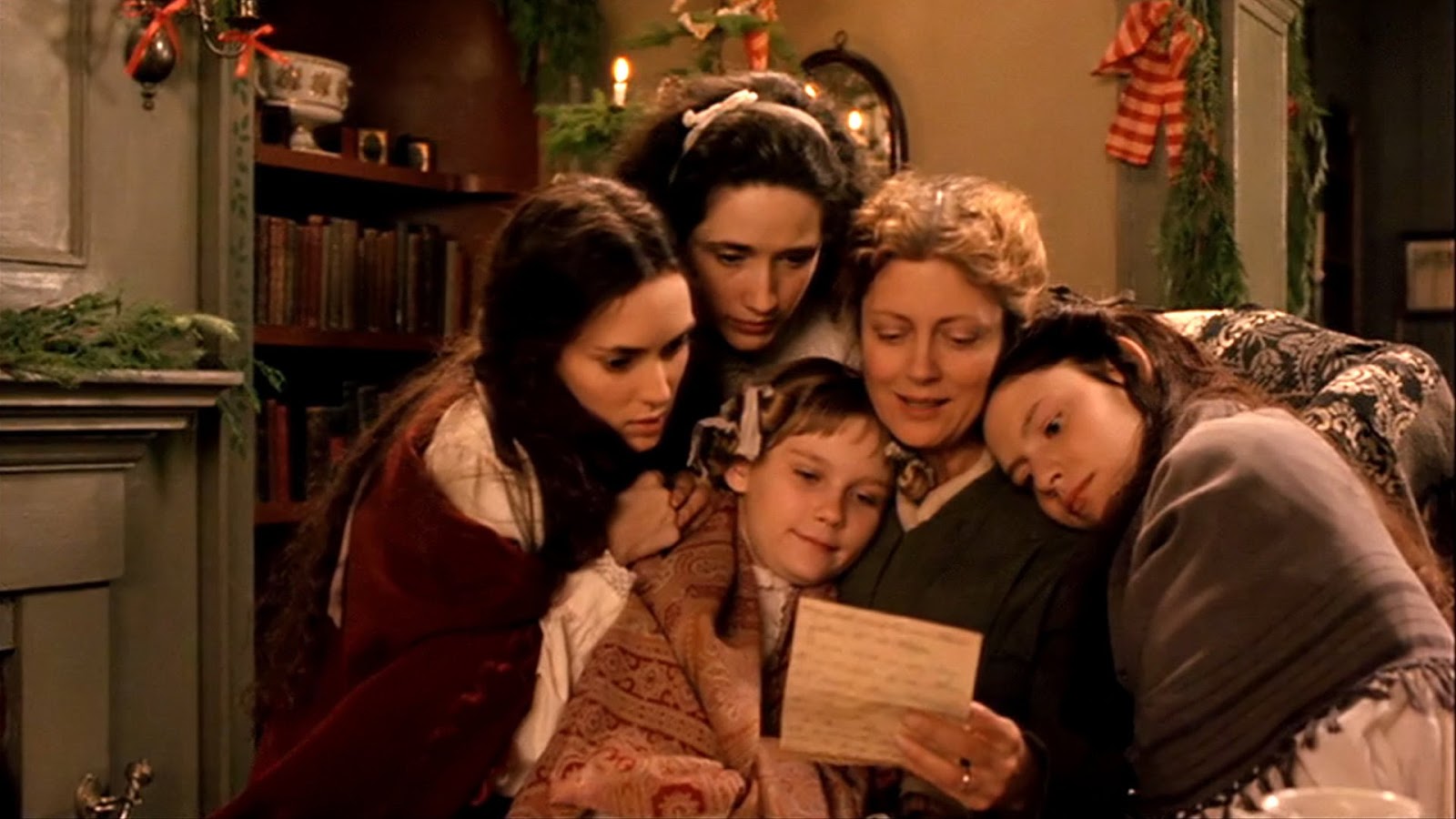
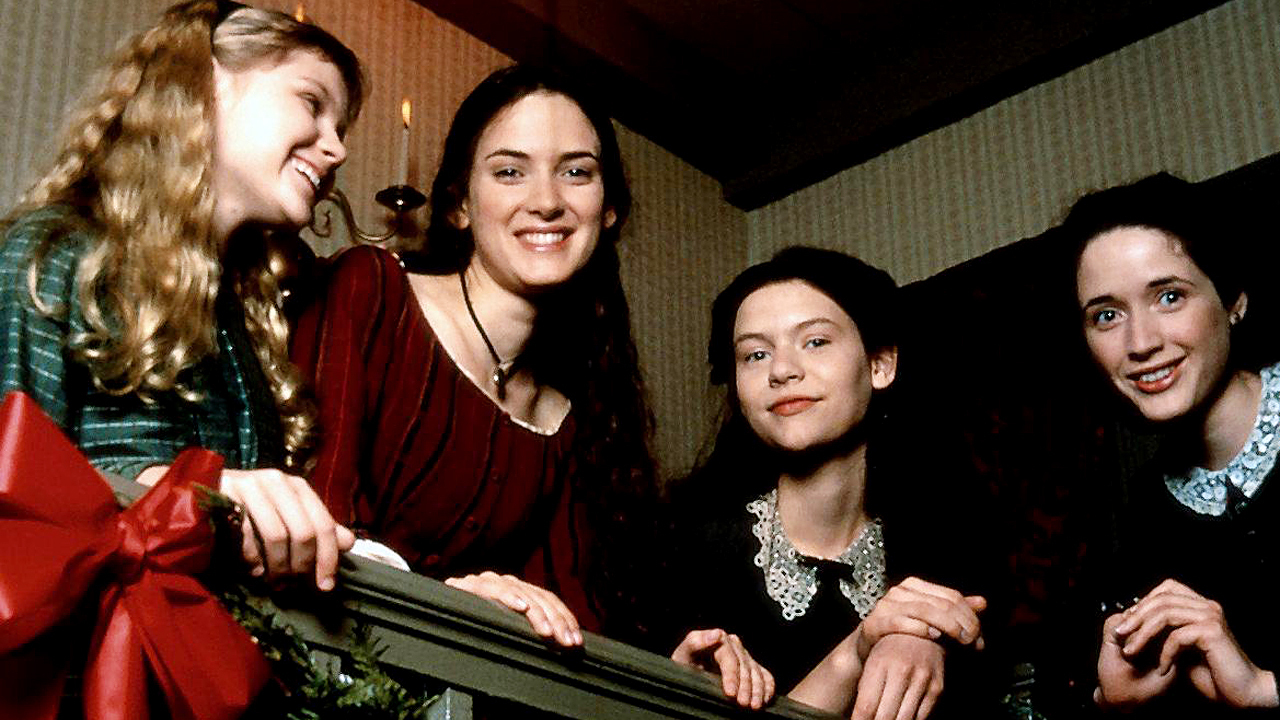
In Massachusetts during the American Civil War, the March sisters live with their mother (Susan Sarandon): sensible Meg (Trini Alvarado), tomboyish Jo (Winona Ryder), gentle Beth (Claire Danes) and temperamental Amy (Kirsten Dunst). While their father is away fighting, the girls grow up and experience the highs and lows of life and love, while never losing sight of the strong bond that holds them together.

Not only is it impossible to imagine another production besting this, I can’t imagine another creating so many “something in my eye” moments as this film manages. Gillian Armstrong’s tender direction gets a guaranteed emotional response from the audience every time, largely because she keeps the film simple, focused and doesn’t overegg the emotion. She recognises the story itself carries delicious highs and heartbreaking lows – and lets these moments speak for themselves. From its opening moments, establishing the girls’ love of theatricals and their own private “Pickwick club”, you know you are in the safe hands of people who fully understand the novel.

It’s a film which plays it very, very simple and lets the beauty of the moments speak for themselves. Many work perfectly: no less than three times I felt myself welling up, from the presentation of Mr Laurence’s piano to Beth, to Beth’s tragic death, to the final scenes between Jo and Professor Bhaer. Each of these moments is quite simply perfectly played and carry a major emotional wallop. It’s because Armstrong sets out a film that is totally straight, and a completely loving and respectful adaptation of Alcott’s novel. Armstrong, and adapter Robin Swicord, also build a profound, focused story of growing up and learning to adjust to loss and the changes life brings us. Focusing on this creates a very clear journey in the movie – as well as a story anyone who has had any life experiences is going to respond to.

Part of the reason why the film is such a complete success is the superb playing from a cast without a weak link among it. The four March sisters genuinely feel like people who have grown up together, so strong are the bonds of chemistry between them. I’d also hugely commend Armstrong and Swicord for so skilfully establishing the different personalities of the sisters – within the opening few minutes you’ll feel like you know all their personalities exactly (a task utterly failed by a recent three-part BBC adaptation).

In the lead role, it’s scintillating to watch Winona Ryder and remember what a superb, heartfelt and gloriously expressive actress she is. Vulnerable but also tomboyish, boisterous and also tender, she brilliantly captures Jo and her semi-bohemian, semi-homespun yearnings, and her passionate love for a life different from the traditional. Ryder also has such wonderful skill with conveying emotion – at several key moments, waves of emotion seem to pass over her face in careful micro-expressions. Several moments carry the weight that they do, because Ryder sells them so well. 

Her three sisters are equally well-cast. If she has a rival for skill of expression and conveying depth of emotion it’s Claire Danes, who is astonishingly good as the gentle Beth (hard to believe she was only 15 at the time!). Danes’ simple joy and her gentle, unassuming love for those around her really hit home. Danes’ joyful warmth makes Beth’s acceptance of the piano from Mr Laurence a beautiful moment, while her tender humanity makes her death incredibly moving. Kirstin Dunst is superb as the young Amy – part brattish pre-teen, part excitable child. Her sudden horror when she realises the gravity of burning Jo’s book again helps this moment work so well. Trini Alvarado has the less interesting part, but her grounded, calm, proper and gentle performance as Meg balances the work of the sisters really well, and Alvarado demonstrates she has real empathy for the role.

The rest of the cast are equally good. Samantha Mathis (taking over the older Amy) delivers an excellent portrayal of a woman keen to head into the world. Susan Sarandon is perfect as a wonderfully loving, all-knowing mother. Christian Bale is perfect as the playboyish Teddy, full of playful fire. John Neville sells a few crucial scenes as a humane Mr Laurence. Gabriel Byrne is certainly far more handsome than his literary counterpart, but he’s so wonderfully gentle, caring and kind that it hardly matters: the relationship between him and Jo is beautifully judged.

Beautifully judged basically sums up the whole thing: there is not a bum note in this whole film. Armstrong and Swicord nail every single decision. Armstrong’s direction is outstanding: a brilliant example is the gently, unbearably sad sequence of sprinkling roses in Beth’s room after her death – it’s so simply done but incredibly moving. The film is crammed with moments like this, beautifully scored by Thomas Newman. Swicord’s script is marvellous, and it successfully draws out the feminist message of the book, without hammering the points: it gently flags up the lack of opportunities often available for women at the time, but also celebrates the contribution they can make. 

Little Women is a simply superb piece of adaptation, and a deeply affecting and heart-warming film. Only a film that lets you invest in the characters as much as this, could move you as much as it does. When Ryder smiles, you feel your whole world light up. When Danes cries with joy you feel your heart sing. When tragedy comes you feel like you’ve had a loss yourself. The story is superbly streamlined, each character is perfectly established, the relationships between them all are so wonderfully done – you can’t help but fall in love with it. If it had been a film about men it would have been littered with Oscar nominations. As it is, despite the sexism of the Academy, it’s a film you’ll treasure and return to again and again.

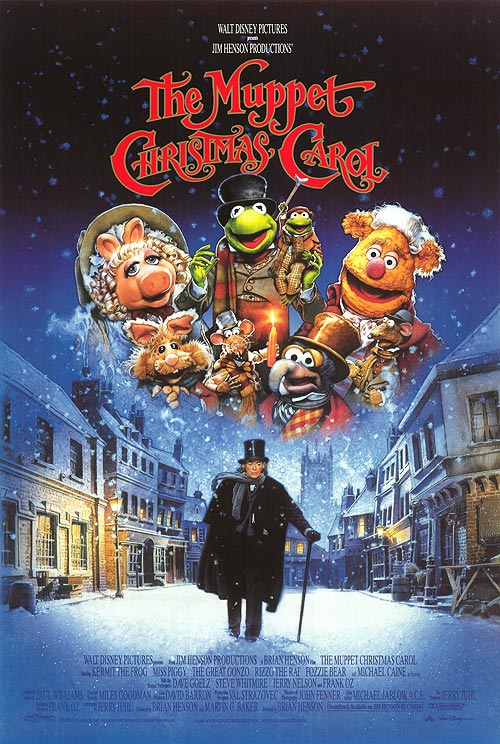
The Muppet Christmas Carol (1992)


Michael Caine with some of his best ever co-stars in The Muppet Christmas Carol

Director: Brian Henson

Cast: Michael Caine (Ebenezer Scrooge), Kermit (Bill Cratchitt), Miss Piggy (Emily Cratchitt), Gonzo (Charles Dickens), Rizzo the Rat (Himself), Statler and Waldorf (Jacob and Robert Marley), Fozzie Bear (Fozzie Wig), Dr Bunsen Honeydew & Beaker (Charity Collectors), Sam the Eagle (Schoolmaster), Steven Mackintosh (Fred), Meredith Braun (Belle), Robin Weaver (Clara)

There have been many adaptations of Charles Dickens’ beloved novel. Surely few people would disagree – this is the best one. If you don’t love this film I’ll just say it – there is something wrong with you. That’s it. There is no hope for you. Just give up, pack up and go home. Because no Christmas is complete without this film. It’s brilliant. 

It’s also perhaps the version that feels the closest to Dickens’ plot – which is remarkable considering 90% of the parts are played by puppets. But what they do so well here is bring the film back to the roots of the novel – it follows the plot pretty much spot on, the setting and design feel brilliantly Dickensian, and it even introduces Dickens as a character. And who better to play the great Victorian showman than the Great Gonzo? Gonzo anchors the film brilliantly, and is both really funny and delivers an awful lot of text from the original book. This actually feels more like a slice of Dickens than nearly any other adaptation you can think of – I’m sure he would have loved it.

That’s why the film works – it has a mix of brilliant muppet humour in it (and there are some really laugh out loud moments) but it’s also a pretty straight adaptation. There are moments where the fourth wall is leaned on, but the content is never mocked. So you get all the fun moments around the edges, but you still get an extremely strong story that has worked for over 100 years. Thank goodness they pulled away from the original idea of parody and played it straight with a smile!

One of the main reasons it works so well is Michael Caine’s superb performance in the lead role. When Caine agreed to do the movie, he was straightforward about his intentions: “I’m going to play this movie like I’m working with the Royal Shakespeare Company. I will never wink, I will never do anything Muppety. I am going to play Scrooge as if it is an utterly dramatic role and there are no puppets around me.” That is totally what he does. Because Caine walks the balance so well, he plays the moments of comedy with great humour, but also the emotional force of Scrooge’s journey.

Caine so totally believes in and respects the world he is working in, that he brings the entire audience with him. If Caine can, with a totally straight-face, treat talking to a small bunny singing carols with as much integrity as he does sharing a scene with Laurence Olivier, all the rest of us can as well. Just think how the film’s mood would have been wrecked if Caine had winked at the camera, or said something like “I told you to only blow the bloody doors off” – the careful balance of the film would have been wrecked in a moment.

I think you can safely say this is one of Caine’s finest films: he’s got fantastic comic timing – his scowly ill-humour for the first third of the film is a delight – but he makes the later scenes genuinely moving. It almost seems like he inspires the muppets around him – Kermit and Miss Piggy’s later scenes dealing with the death of Tiny Tim are genuinely tear inducing (is this the only production of Christmas Carol where Tiny Tim isn’t insufferable?). The Muppets are all brilliant here (if Caine is going to treat them as real actors, I certainly am as well!).

That’s why the film works – it’s really emotionally moving. The muppets inspire a huge residual affection in everyone, and the film mines this brilliantly. So we get pleasure from seeing them – look there’s Fozzie Bear and Sam the Eagle! – and then feel their pain when they are sad. The film gets the balance just right on the muppets’ essential anarchy: at one point Sam the Eagle needs to be reminded that he is playing a Brit, Rizzo frequently forgets he’s playing a role, Animal seems unable to play the gentle music the script plays for at Fozziewig’s party… The film is crammed with small moments like this.

And it all works because it is held within a fine piece of straight storytelling – a faithful adaptation of Dickens, with a brilliant lead performance. It’s also very well made – inventively shot with a real sense of mood and atmosphere and brings memorable scene after memorable scene. There is barely a frame of the film where there isn’t something delightful, entertaining, thought-provoking or all three to spot. It carries emotional weight, it’s laugh-out-loud funny, you’ll fall in love with the characters. Caine sets the tone brilliantly, and raises the game of everyone involved – it’s an impossibly difficult acting task that no one in a muppet film has ever pulled off as well again. 

It’s one of the greatest Dickens adaptations, one of the sweetest comedies you’ll see, and one of the greatest Christmas movies ever made. On top of that it’s a brilliant musical, with some fantastic hummable songs (though the cutting of Love Is Gone from the DVD edition – too sad apparently –makes you sigh for Disney’s corporate soul). No Christmas would be complete without it. A must-watch classic.

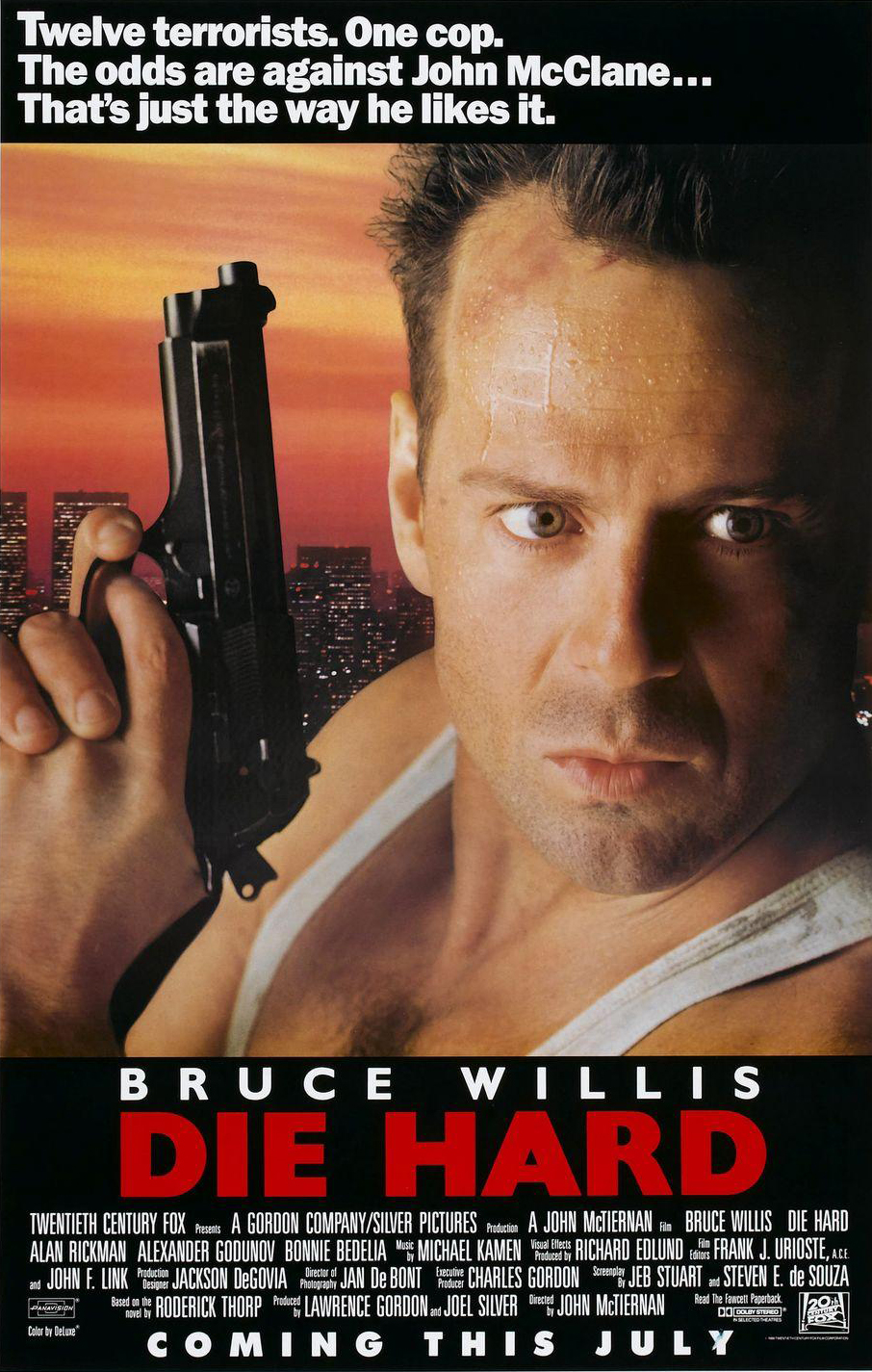
Die Hard (1988)

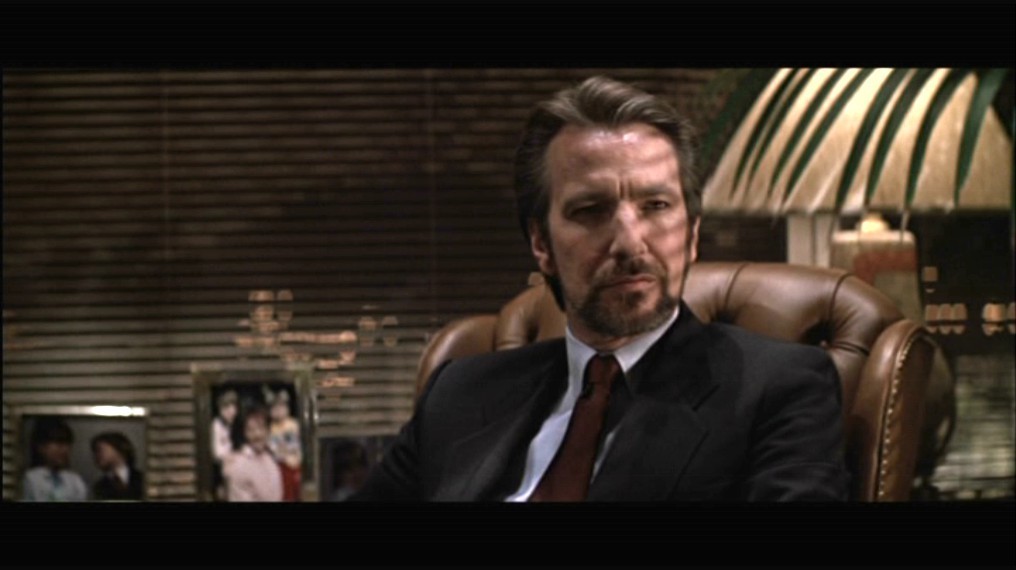
Alan Rickman sets the bar for all Hollywood villains in Die Hard

Director: John McTiernan

Cast: Bruce Willis (John McClane), Alan Rickman (Hans Gruber), Alexander Gudonov (Karl), Bonnie Bedelia (Holly Gennaro McClane), Reginal VelJohnson (Sgt Al Powell), Paul Gleason (Dwayne T. Robinson), De’Voreaux White (Argyle), William Atherton (Richard Thornburg), Clarence Gilyard (Theo), Hart Bochner (Harry Ellis), James Shigeta (Joseph Yoshinobu Takagi)

Is there a better action film ever made than Die Hard? In fact, I’m almost tempted to say: has a more influential film emerged from 1980s Hollywood than this masterpiece of tension, action, thrills and wry humour? Die Hard set the template for action: the structure of the hero and villain locked in a battle of wits, claustrophobic locations, one man (sometimes now a woman) against overwhelming odds… There is a reason so many films now have their plot explained as Die Hard on a [insert eccentric location or method of transportation here].

The plot is brilliantly simple and streamlined – so compellingly is the whole enterprise put together that you don’t notice that it was all being made up in the spot (the main hint of that being there is clearly no ambulance in the baddies’ arrival truck). If you don’t know the plot, where have you been since 1988? John McClane (Bruce Willis) is a cop who’s in LA to spend Christmas with his estranged wife Holly (Bonnie Bedelia). Joining her office party at Nakatomi Plaza, a massive skyscraper still partly under construction, their marital discord is interrupted by the building being seized by a group of European terrorists (or are they?) led by urbane sophisticate Hans Gruber (Alan Rickman). Now it’s all down to John, dressed in nothing more than a vest and trousers, without even any shoes to take on a dozen heavily armed baddies single-handed. 

Die Hard is a perfect storm – everyone involved was in the right place, at the right time of their careers, with material they were perfectly able to bend to their skills. There have been so many wonky thematic rip-offs of this film that a lot of credit should go to John McTiernan for setting such a brilliant template that proved irresistible to adapt. It goes without saying that the film is whip-sharp and rattling with tension, and that its action moments are brilliantly shot and choreographed. What makes Die Hardwork so well is that it puts character and performance at its heart. McClane is a character we can root for, a regular guy as far away from an Arnie or Sly superman as you can get; similarly Gruber is so charming and charismatic, part of you wants him to win.

Although there is plenty of blood and violence, McTiernan doesn’t dwell on it (watch the far more brutal Die Hard 2 for contrast), and there is no sadism in the editing. Instead, McTiernan invests the film with a lot of sly humour and wit – and he is not afraid to acknowledge that there is an illicit thrill in watching intelligent people like Gruber put detailed plans into place, executing them perfectly while running rings around the law. The use of Ode to Joy as Gruber’s personal theme tune is incredibly playful, and the film successfully positions itself in its narrative with Gruber as the protagonist and McClane the antagonist (with the difference that McClane is the character we root for) – as such, McClane’s reactive role in the plot constantly stresses his isolation and vulnerability, while Gruber’s control of the narrative positions him as a truly daunting opponent. A modern film would have kept the reveal of Gruber’s plan until the third or fourth reel – here Gruber tells us within five minutes of arriving that he’s there to rob the place; immediately we are connected with him and understand his aims, and understand the structure of the film coming up from the start.

The humour of the film is never heavy handed, and it’s perfectly balanced with the threat – Gruber and McClane are witty and dry but their characters are never undermined. The film never forgets its Christmas setting, which makes for a number of humourous contrasts (altogether now “Now I have a machine gun. Ho-Ho-Ho”). There is no comic relief as such, and every character serves a clear role in the plot – no fat on the bones here. I also really like the fact that the film at many points subtly undercuts machismo: the gung-ho FBI agents Johnson and Johnson are cocksure morons; as the SWAT team storms the building one of them stops to shriek “ow” after pricking his hand on a thorn. Sly comedy runs throughout – preparing to defend the building from the same SWAT attack, one of the terrorists glances around nervously before helping himself to some candy from behind a shop counter (because kidnap and murder are not a problem, but stealing sweets is really naughty). The film is packed with rich incidental moments like this that charm the viewer, even while bodies piles up and parts of the building go up in smoke.

Bruce Willis was also the perfect choice as McClane. Not only does he have the physical capability, but he has the acting skills. Long before he succumbed to the smirk or the grimace as his default settings when bored (watch Die Hard 5 – or rather don’t – to see the comparison between then and now), he makes McClane very real. Yes he’s confident and arrogant, but McClane is also laced with self-loathing (watch him beat himself up after his conversation with Holly) and under the surface he has a deep humanity, which dedicates him to saving lives (twice in this film he lambasts himself for not doing enough to save people). Willis not only takes a physical battering over the course of the film – don’t we all wince at the idea of running barefoot over a floor of glass? – but he’s also half the time desperately scared under the adrenaline, using wit and defiance as a defence mechanism. McClane does things in this film we could never do in real life (jump off an exploding building using a fire hose as rope – yup you’re dead) but Willis always feels like a regular guy – someone we can understand, relate too. He’s as far away from Arnie in, say, Predator as you can get.

Of course we’ve come all this way without mentioning arguably the film’s MVP, the incomparable Alan Rickman. Astonishingly, this was his first ever film, but Rickman is so perfectly brilliant in this film that I don’t think it’s an exaggeration to say every Hollywood villain since has been weighed against his performance here and found wanting. Rickman taps into a truth: wouldn’t we all love to be the baddie? Despite it all, Gruber is clearly enjoying himself throughout: to borrow a phrase, he’s an exceptional thief and since he’s moved up to kidnapping we should all be more polite. He’s also sharply intelligent, his invention and arrogant confidence that he has thought of everythingare actually rather thrilling – while his exasperation at both McClane and the inadequacies of his underlings are oddly charming. Rickman’s arch and clipped delivery turns lines into endlessly quotable bon-mots – he has a perfect sense of timing and says more with an arched eyebrow than other actors could with a page of dialogue.

The film’s master touch is to recognise early the strength of these two characters and to make the main duel not so much a physical fight as a battle of wits. Skilfully navigating the viewer around the building, Gruber and McClane execute move and counter move, both thinking fast on their feet while never losing sight of their main goals. The film also brilliantly allows them to engage in a running verbal battle via walkie-talkie, making their clash increasingly personal – and also allowing both characters to demonstrate their ingenuity. It also allows us to invest in the clash between them – and to make the sense of one-upmanship that runs through the film feel very alive.

The focus here has been on those two characters, who really drive the film – but every member of the rich supporting cast contributes hugely. Bonnie Bedelia is very effective in a difficult part as Holly – assertive, independent but never trying or tiresome (we see her point on McClane as well, who can be a jackass). Alexander Gudonov is perfect as the Han’s macho-but-short-sighted Number Two. William Atherton is gloriously vile as an exploitative reporter. Hart Bochner embodies the shallow, coke-fuelled, Masters of the Universe 80s as Ellis. Reginald VelJohnson adds a lot of humanity as the thoughtful Al Powell.

Okay there are one or two things wrong with the film (I’ve always found Al’s final use of his gun at the film’s end a bit uncomfortable, and I suspect from the conflicted messages of the soaring music and VelJohnson’s sad-faced acting that this was a tricky moment for the producers to get right). But this is an explosion of filmic joy that constantly rewards multiple viewings (god knows how many times I’ve seen this film). The action sequences never tire, the characters never lose their interest. I don’t think it’s a stretch to call it a masterpiece as well as a landmark piece of film-making.