Category: Comic book film

Deadpool (2016)

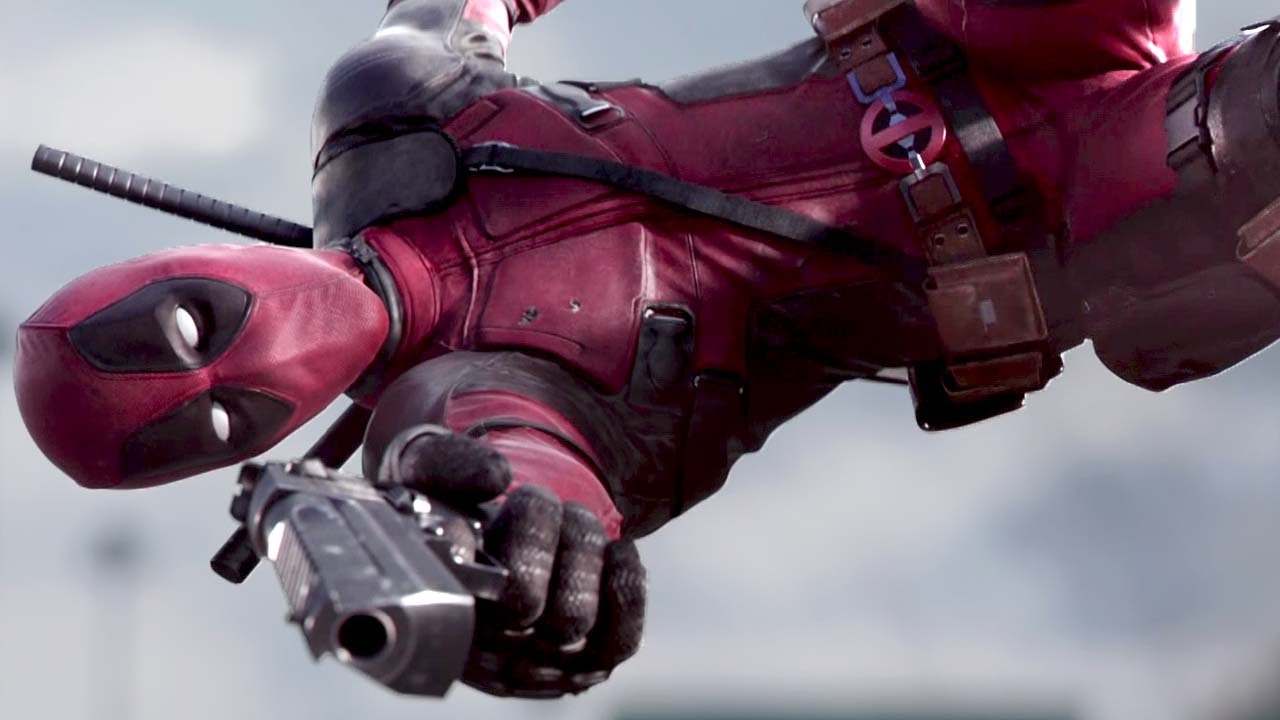
Ryan Reynold swings into action in slightly-pleased-with-itself comicbook satire Deadpool

Director: Tim Miller

Cast: Ryan Reynolds (Wade Wilson/Deadpool), Morena Baccarin (Vanessa), Ed Skrein (Francis Freeman/Ajax), TJ Miller (Weasel), Gina Carano (Angel Dust), Brianna Hildebrand (Negasonic Teenager Warhead), Stefan Kapičić (Colossus), Leslie Uggams (Blind Al)

One day (soon?) we’ll reach critical mass with comic book films. Eventually, when every single character who’s ever appeared in a frame of a DC or Marvel comic has appeared on the screen, we’ll surely wonder if we will ever see anything new again. Some may already feel this, so perhaps that explains why Deadpool, which, for all its faults, is a comic book film doing something different, made such a big impact.

Wade Wilson (Ryan Reynolds) is a mercenary who meets and falls in love with Vanessa (Morena Baccarin). Discovering he has terminal cancer, he leaves her so she does not have to watch him die, and signs up to a gruesome medical procedure designed to bring out dormant mutant genes that may cure him. It works but leaves him hideously deformed. Wanting revenge, he names himself Deadpool and hunts for a cure to his deformity – scared Vanessa would reject him without it.

What Deadpool does well is wittily flag up the familiar tropes of comic book movies. The film in fact follows each trope to the letter – but at least it has a foul-mouthed cheeky commentary. The big question you have to ask is, can a film really be that smart and different if it basically does something very traditional? If I tell you I’m going to perform a tired magic trick you’ve seen before, but I’ll do it while pointing up every single cliché of delivery, with panache, does it matter the magic trick is still as tired as I said it was at the start?

That’s what Deadpool is – the same old ideas, re-packaged in a different way, so juvenile and cheeky that for a beat or two it feels like something new, which it manifestly isn’t. It might not take itself seriously, but it also doesn’t really develop into something unique. The film opens with a neat comic riff on credits, listing not the actors but their generic character traits (“Love Interest”, “Brit Baddie”, “Comic relief” etc. etc.) – sure this is funny and smart, but doesn’t change the fact that the characters themselves are exactly that. 

Deadpool is a faux-clever film. It’s a cheeky piece of college humour: an X-Men film with swearing, sex, fourth wall breaking and gags about other films. There is a sort of witty enjoyment from Deadpool reminding us he knows he is in a movie. But most of the time, he basically behaves exactly like dozens of other lead characters in dozens of other films: he has an emotional arc of fear of rejection and embracing who he is that you’ve seen so many times before.

But the market is so saturated with films like this that the difference of presentation makes you feel for a moment you are seeing something new or clever – rather than essentially a very high budget, end-of-the-pier routine full of cheeky humour. Much of this is pretty funny by the way, but don’t kid yourself that it’s anything clever. And I don’t really think many of the gags here would stand up to repeated viewing – it’s basically just swearing and shocks. The writing is not great, its punchlines and shock beats giving the illusion of intelligent scripting.

Most of its success (in more ways than one) comes down to Ryan Reynolds. Reynolds campaigned for the film to be made for nearly a decade, and he totally nails the character. He thought up many of the best gags, and delivers the entire thing with whipper-snapper quickness and likeability. He gets the balance generally just right, and lands all the film’s big laughs. He’s very good.

But it’s an elevation of material that plays at being clever, while really just being an effective repackaging of the same-old, same-old. Remove the jokes and everything you would expect from a superhero origins story is present and correct. 

So maybe everyone was a little tired of the same old, same old from Marvel et al and wanted something different. That’s the explanation I can think of for why a pretty average film ended up so damn popular. The action when we get it is pretty good, there is some imagination behind the cameras, but it’s basically a teenager’s idea of the best film, like, ever rather than an actually very good film. It’s not reinventing the wheel, but it puts a nice shiny new tyre on it.
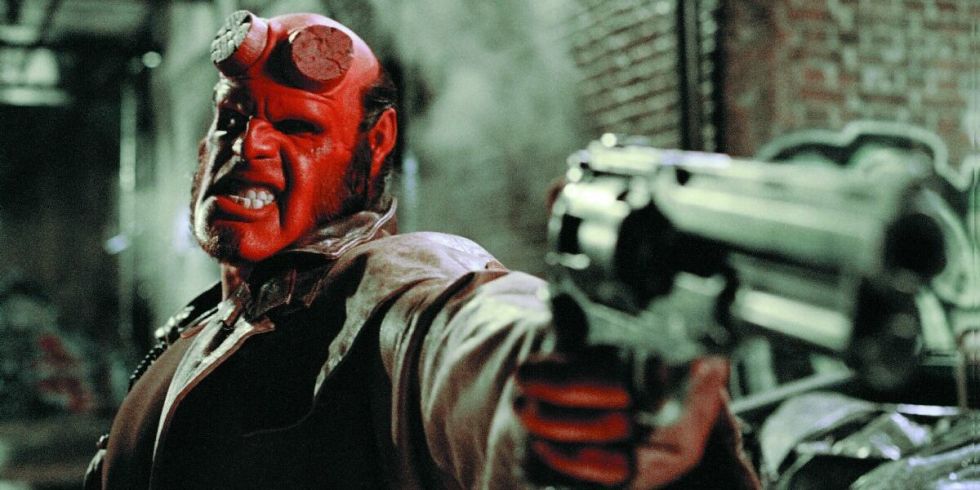
Hellboy (2004)

Ron Perlman fights the darkness in curio del Toro comic book flick Hellboy

Director: Guillermo del Toro

Cast: Ron Perlman (Hellboy), Selma Blair (Liz Sherman), Rupert Evans (John Thaddeus), John Hurt (Dr Trevor Bruttenholm), Karel Roden (Rasputin), Jeffrey Tambor (Tom Manning), Doug Jones (Abe Sapien), Brian Steele (Sammael), Ladislav Beran (Karl Ruprecht Kroenen), Bridget Hodson (Ilsa Haupstein), Corey Johnson (Agent Clay)

As little as 10 years ago, outside a few core characters like Batman, the X-Men or Spiderman, comic book movies were an odd curio hard to place in the mass market. Today of course, you can virtually get any character who has appeared in a cartoon strip up on the screen with a budget of millions. But back in 2004, Guillermo del Toro had to squeeze this project out on a smaller budget in order to get the studio to agree to make the film.

Hellboy has a particularly demented story. In 1945, the Nazis, working in partnership with Rasputin (Karel Roden) – yes thatRasputin, don’t even ask – attempt to open a portal to hell to, well I’m not quite sure what they want to do, but it probably involves the destruction of the world. Anyway, some humble GIs stop them and the only thing that comes through the portal is a little demon with an enormous stone fist. Raised by paranormal expert Dr Trevor Bruttenholm (John Hurt), this creature grows up into cigar-chomping secret-agent-for-the-FBI Hellboy (Ron Perlman), working on paranormal investigations. But when Rasputin returns from the dead it looks like all hell (literally) is about to break out.

Okay it should be pretty clear to you from that that Hellboy is an odd film. It’s very much from del Toro’s B-movie heart, and he invests this nonsense material with a great deal of directorial style and heart – a real “geek-boy-artist” job. Del Toro has a great deal of imagination and is able to strike a happy balance between enjoying the material and not taking it all too seriously. So he lets the film barrel along, throwing plenty of nonsense at the screen without worrying about trying to make it make real-world sense. In fact Del Toro is clearly so fond of the material that he basically shoots the whole thing like a comic book come to life. 

So the film is crammed with bright primary colours mixed with murky blacks, and Del Toro frames many key moments like comic book panels. It’s a film packed with striking images and scenes built around stuff that feels like it should teeter over into ridiculous camp all the time but never quite does. Its steam-punky styling instead manages to feel somehow both strikingly original visually and also strangely packed with integrity – like Del Toro made a very personal big-budget movie for his childhood, the sort of bizarro cult film that’s actually-quite-good and it’s going to win a huge following once people can find it for themselves (which is indeed what happened).

Del Toro’s other great principled stand was to ensure that Ron Perlman played the lead. Hellboy is a bizarre character – over six feet, red, horns, a tail – but what Perlman and Del Toro do so well is to make him some sort of Brooklynish chippy blue-collar worker with a kitchen-sink earthy wit. Perlman is clearly having a whale of a time playing this temperamental demon like some sort of longshoreman Han Solo, a brattish teenager and rebel with a world-weary cynicism. He’s crammed with contradictions (the demon who fights for good!) that Del Toro is keen to explore – and makes consistently interesting.

Because he’s such a different character, he energises a fairly traditional story and his character’s pretty standard personal-struggle-plotline (will he do the right or the wrong thing?). Perlman juggles all this really well, and gives a performance that is both dry and funny but also has moments of real heart and emotion. He even manages to sell his rather possessive love for Selma Blair’s (also pretty good) fellow orphan with pyrotechnical abilities as something heartfelt and caring, despite the fact that at one point he basically stalks her. It’s a rather wonderful performance.

The rest of the cast are a bit more of a mixed bag. Rupert Evans is saddled with the audience surrogate role – asking the questions we can’t ask – while Karel Roden’s lipsmacking performance as Rasputin never quite engages as a villain. Stronger roles come from Jeffrey Tambor as an officious FBI director and especially from John Hurt as Hellboy’s father-figure, the kind of quintessential ageing mentor that you can imagine his wards adoring. 

The rather silly plot doesn’t really matter. The importance here is the gothic chill of Del Toro’s style, mixed with his crazy “larger-than-life” dark comic book tone. And it works really well: the film is fun and witty, and if the storyline never really feels like it earns the “end of the world” threat (and builds towards an uninvolving duking out with a giant CGI monster), there are enough enjoyments along the way to make you want to make the journey.

Captain America: Civil War (2016)

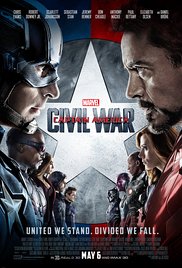
Captain America and Iron Man stand-off in overblown Captain America: Civil War

Director: Anthony and Joe Russo

Cast: Chris Evans (Steve Rogers), Robert Downey Jnr (Tony Stark), Scarlett Johansson (Natasha Romanoff), Sebastian Stan (Bucky Barnes), Anthony Mackie (Sam Wilson), Don Cheadle (James Rhodes), Jeremy Renner (Clint Barton), Chadwick Boseman (T’Challa), Paul Bettany (Vision), Elizabeth Olsen (Wanda Maximoff), Paul Rudd (Scott Lang), Emily VanCamp (Sharon Carter), Tom Holland (Peter Parker), Frank Grillo (Crossbones), William Hurt (Thaddeus “Thunderbolt” Ross), Daniel Brühl (Helmet Zemo), Martin Freeman (Everett K Ross), Marisa Tomei (May Parker), John Kani (T’Chaka), John Slattery (Howard Stark), Hope Davis (Maria Stark), Alfre Woodward (Mariah Dillard)

Captain America: Civil War is another explosive entry in the MCU, and is even more stuffed than usual, with nearly all our Avengers thrown into the mix – with the added twist that they fight each other! Yup it’s time for another playground argument: “If X fought Y, which one would win?!” That’s the main thrust of Captain America: Civil War, but it’s actually a distraction from the real plot. The much hyped fight at the airport (and the build-up to it) is a rather dull hour in the middle that distracts from a richer, more interesting film.

There is dissent in the ranks of the Avengers. The UN wants them to sign the “Zukovian Accords” – an agreement that they will work only under the direction of the UN. For Tony Stark (Robert Downey Jnr) this legal framework for their actions is essential – but Steve Rogers (Chris Evans) argues that the Avengers need to have the freedom to go where they are needed, not only where they are told. In this tense situation, a bombing in Vienna is swiftly blamed on Roger’s old friend Bucky Barnes (Sebastian Stan), who has become the brain-washed killer The Winter Soldier. In disagreement with Stark about the Accords and determined to protect Bucky, Steve quickly finds himself on a collision course with Tony.

The central idea here is actually fairly interesting: are superheroes people with a higher duty or just a group of vigilantes? Should they follow the direction of politicians – or be free to go where they are needed, when they are needed? How much accountability should they hold? If, in saving the world, dozens of civilians should die in the aftermath, is that acceptable or not? These are the ideas that lie under the arguments that the characters – principally Captain America and Iron Man – have. 

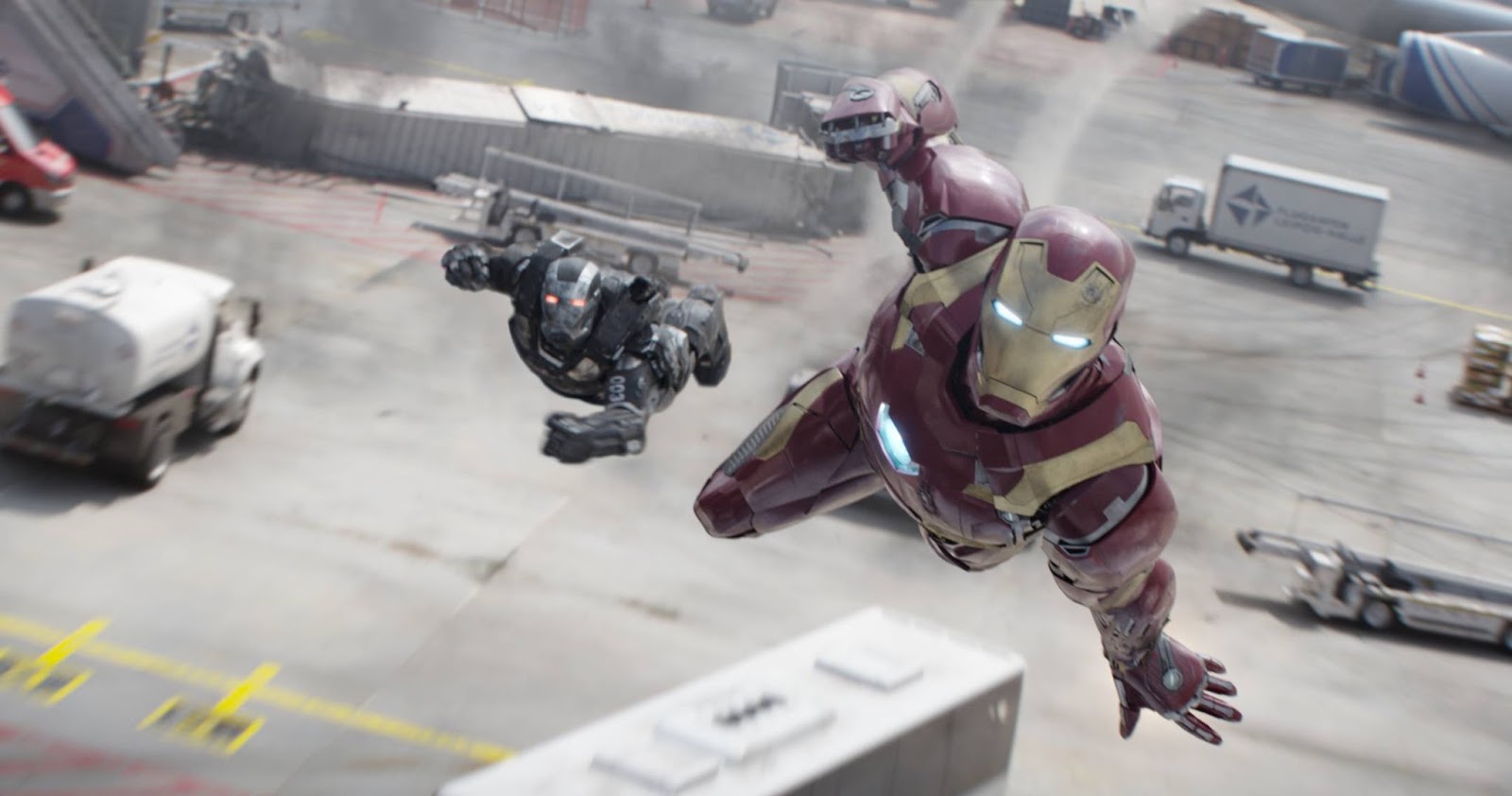
The first 40 minutes set this up nicely: an operation goes wrong, people are killed and the Avengers are confronted with footage of the collateral destruction they have caused while saving the world. But these ideas get left behind as the film gets caught up with pushing our characters into an artificial-feeling battle so destructive that an entire airport gets trashed by the “let’s cool our actions” team while trying to stop the “we should be independent” faction.

It would have been really nice to have these ideas explored in more depth, rather than a few moments here and there. Essentially, the film hires Alfre Woodard to deliver a top-notch performance as a mother whose son was Avengers collateral damage, to convince Tony things need to change, and leaves it at that. Steve’s counter-argument gets laid out swiftly – though he strangely makes no reference to the fact that the previous film saw a very similar “government organisation” revealed as the source of all evil in the Marvel world. It’s quick beats like this that set up this collision – but only Tony and Steve get any chance to express any form of developed views (in a few very well acted scenes). The motivations of the rest of the Avengers seem under-developed.

But that’s the problem with Captain America: Civil War: it’s seriously overstuffed. With some of these plots and characters removed, we could have actually had a very rich, thematic story.

The whole “Zukovia Accords” plot also has to constantly juggle for space with leftover “Winter Soldier” plotline from the previous two films. Truth be told, the latter is the more interesting, dealing with actual emotions, friendships and loyalties – chiefly the bond between Bucky and Steve (very well illustrated in a few brief, well played scenes). It’s this dilemma of whether Bucky can be held responsible for things he did under mind control that becomes the film’s key question. This plot line works far more effectively as it basically involves only three of the characters and feels like it has genuine things at stake, in a way I just can’t feel about the forced “civil war” angle. 

But it’s that civil war angle that the film is being sold on – and it’s what the middle section of the film is given over to. The big, airport-wrecking battle between the two sides is well shot, has good special effects and throws in plenty of neat one-liners. But what it completely lacks is any sort of dramatic tension or any stakes. As our heroes indestructibly bounce around while swapping light banter you never feel that this battle really amounts to anything. The sides don’t seem that far apart, or really that different – in fact the whole thing feels like playground horseplay.

The big battle is even undermined by the fact that we’ve already seen our heroes fight each other at least twice already in small combinations – and in all these cases, bodies are thrown about mercilessly but no one suffers more than a few scratches. Even after a character falls hundreds of feet to the ground, he’s later shown as basically being absolutely fine. The big battle is supposed to be the exciting showpiece, but it’s basically just big filler. A load of noise, where nothing really happens and no-one really feels at any risk, with no real consequences (all the emotional consequences emerge from the smaller scale final confrontation which would be unchanged if this airport fight was removed).

The film only really recovers again once that fight is benched, and we wind up with three of our heroes squaring off over very personal issues. This also brings to the fore the Daniel Brühl’s fascinating character, a very different type of villain: someone whom the film plays a neat game of misdirection with. The film reveals one of its themes as revenge, and how much it can dominate or twist our lives. This is given voice through a wonderfully written and played scene between Brühl and Boseman (very dynamic as the future Black Panther, dealing with grief over the murder of his father).

That scene gives an insight into the film’s real strengths: the small moments. The bits where the overblown fighting can be put to one side and we can see these characters (and the very good actors who inhabit them) talk. Moments like this carry more humanity, interest and tension than a thousand sequences of a giant Ant-man. In these moments, Downey Jnr and Evans are both terrific. Evans was born to play this part, making Rogers adamantine in his decency and nobility without being wearing, and also demonstrating an increasing streak of an old-soul who is tired of listening to other people and wants to make his own choices. Downey Jnr increasingly makes Stark a man hiding resentments, fears and doubts under a veneer of cool. Several other excellent performances also burst around the margins of the film (I’d single out Mackie who is excellent as the loyal Sam).

It’s just a shame Captain America: Civil War wastes some strong material in the prolonged set-up – and then enactment – of its superhero feud. Enjoyable as it can be to see this sort of stuff from time to time, after a while it’s tedious to watch invulnerable people taking pot shots at each other with no discernible impact. A single conversation with stakes – with a doubt about whether a friendship will hold or not – has more tension and excitement than a hundred sequences of heroes hitting each other. There is a more interesting story here – but between the action and the obligatory set-ups for future Black Panther and Spiderman movies (excellent as Boseman and Holland are in these roles) it doesn’t quite reach its potential.

Flash Gordon (1980)


Flash Gordon: Sometimes words fail you

Director: Mike Hodges

Cast: Sam J Jones (Flash Gordon), Melody Anderson (Dale Arden), Max von Sydow (Ming the Merciless), Topol (Hans Zarkov), Ornella Muti (Princess Aura), Timothy Dalton (Prince Barin), Brian Blessed (Prince Vultan), Peter Wyngarde (General Klytus), Mariangela Melato (General Kala), Richard O’Brien (Fico), John Osborne (Arborian Priest), Philip Stone (High Priest Zogo), John Hallam (General Luro)

Well. If almost 40 years on, Flash Gordon is a cult favourite and beloved by millions, then there is hope yet for Jupiter Ascending. By any objective standards, Flash Gordon is a terrible film. But it gets a pass from millions because it’s one people have grown up with. I dread the same reaction to The Phantom Menace from those people whose first exposure to Star Wars was through that film.

Ming the Merciless (Max von Sydow) rules the planet Mongo and decides to destroy the Earth for his own amusement. Disgraced ex-NASA scientist Hans Zharkov (Topol) is the only man on Earth who believes a series of natural disasters are the actions of invaders from space. Zharkov flies a rocket into space to find them – accompanied, for strange reasons, by professional football star “Flash” Gordon (Sam J Jones) and travel agent Dale Arden (Melody Anderson). Arriving at Mongo, they encourage its citizens – especially the forest people led by Prince Barin (Timothy Dalton) and the hawkmen led by Prince Vultan (Brian Blessed) – to unite and rise up against Ming.

Yup you read that right. It’s all as barmy as you might expect. Any film that asks to believe Brian Blessed can fly is always going to be odd. Flash Gordon does at least have its tongue firmly in its cheek. The whole thing is as camp as Christmas. In an age where science fiction and comic books are treated like holy texts, it is at least interesting to see a film that treats its source material with such a breezy lack of respect. The entire film is an exercise in high camp, cheaply put together, that refuses to take anything seriously and actively encourages the respected actors in its cast to take the piss.

So what is Flash Gordon? Is it a big old joke? Yes it probably is. No one is taking it seriously. The actors clearly think it’s a pile of campy rubbish. The producers seem determined to throw as much technicolour cartoon colours at everything as possible. The film is so cartoonish it all but has “Pow!” and “Thwack!” appear on screen as punches land. At a time when Star Wars (and it’s hard to believe it, but George Lucas only made Star Wars because he couldn’t get the rights for this) took its space opera roots rather seriously, this seemed to miss the point completely. It’s a would-be Star Wars rip off that has nothing in common with the tone of the thing its ripping off. Usually that would be a good thing: here I’m not sure it is.

So the dialogue is terrible, the plot line makes no real sense, the film barrels around telling jokes against itself as inopportune moments. Characters shrug off events with no problems at all – at one point a character undergoes brainwashing torture: two scenes later he’s fine (“I just didn’t think about it” he gleefully tells someone. It’s never mentioned again.) The special effects, even for the time, are shockingly bad (the backdrops are sub-Doctor Who. The costumes and design are ludicrously overblown, like an explosion in a campy dressing-up box. It’s a terrible display of excess married with a complete lack of understanding about what made the things it’s trying to rip off successful in the first place. But yet, and yet, and yet it’s still in a terrible, terrible, terrible way quite good fun.

But perhaps the most interesting thing about its campy rubbishness, is how much odd sexual stuff creeps in under the radar. There are also lashings of sadomasochism, incest, orgasms, sex dens, threesomes, swinging, voyeurism – acres of cheeky sexual humour. Ming has a ring that can induce orgasms (it’s so effective on Dale Arden that it’s even commented only Ming’s daughter has had such a response). Ming has a harem, full of opiates to encourage “performance”. There are references to pleasure planets and sex toys. Ming’s daughter is whipped while tied to a bed by Ming’s henchmen (while Ming watches eating some popcorn). The arborians have a bizarre ritual which seems laced with wanking references. It never stops. At least they had some fun.

Some of the actors are also clearly enjoying themselves. Of course Brian Blessed throws himself into it: an actor who never knowingly underplays, Blessed rips through a bizarre role that sees him perform in a jockstrap with some unconvincing wings. Timothy Dalton channels Errol Flynn. Max von Sydow chews the scenery and virtually everything else in sight as a campy, moustachio-twirling Ming. Peter Wyngarde has a great voice and uses it to marvellous effect as pervy security chief Klytus, while Mariangela Melato plays his dominatrix assistant. There are bizarre, eclectic casting choices: so we get Look Back in Anger author John Osborne playing a high priest, Blue Peter’s Peter Duncan as an initiate, and Richard O’Brien (of course!) playing – well to be honest himself.

Sam J Jones is of course simply awful as Flash (wooden, dull and confused). Melody Anderson isn’t a lot better as Dale Arden, while Ornella Muti gets some awful dialogue which she does at least deliver with some conviction (sometimes too much: “Not the BORE WORMS!” sticks in the mind as a bizarre moment of over such over conviction that it simply becomes funny). It’s a bizarre mix of acting styles and overblown, fourth-wall leaning. It’s so bad, I suppose, that to many people it’s good. But actually it gets a little overbearing.

Because nothing is taken seriously at all, the film actually becomes a bit wearing after a while. The writer later regretted playing everything for laughs: it removes any stakes from this ridiculous film. It says a lot that Brian Blessed – the most overblown actor in it – is the only one who really emerges with dignity intact. Blessed at least knows it’s utter crap and plays it like he’s taking the piss in every scene. He commits so fully to the scenery chewing that it sort of works. The rest of the cast can only aspire to his levels of camp. Flash Gordon is a terrible film. But age and fondness have been kind to it, and made it remembered as something better than it is. It’s a misfiring gag with some great Queen songs. It goes on forever, it looks awful but it fails utterly as anything but a joke. But hell maybe that’s enough.

GI Joe: Retaliation (2013)


Channing Tatum and Dwayne Johnson wonder how they landed in this mess in GI Joe: Retaliation

Director: Jon M. Chu

Cast: Dwayne Johnson (Roadblock), Bruce Willis (General Joe Colton), Channing Tatum (Duke), Jonathan Pryce (President of the US), Adrianne Palicki (Lady Jaye), DJ Controne (Flint), Ray Park (Snake Eyes), Byung-hun Lee (Storm Shadow), Ray Stevenson (Firefly), Arnold Vosloo (Zartan), Walton Goggins (Warden James), RZA (Blind master)

Back in 2009, Hasbro (flushed with success from its Transformers franchise) released GI Joe: a humble, straightforward nonsense actioner (almost exactly the sort of film spoofed by Team America) in which gung-ho American action heroes save the world, destroying major cities on the way. It was harmless, Stephen Sommers-directed fun. Critics hated it. Audiences saw it, but were basically meh. It left us on a cliff-hanger. The cliff-hanger led to this joyless, “by-contractual-obligation” reboot.

The villainous Zartan (Arnold Vosloo) has changed his entire DNA to make him an exact physical match for the President of the United States (Jonathan Pryce) and taken his place. Using his powers, he orders a surprise attack on the GI Joe force, wiping out their base. All the Joes, including Duke (Channing Tatum) are killed, except for Roadblock (Dwayne Johnson), Lady Jaye (Adrianne Palicki) and Flint (DJ Controne). Now they need to form a team to take revenge, defeat Zartan and prevent the plans of the newly escaped Cobra Commander.

Oh dear God this is an awful film: a truly dire comic book disaster, terribly written and practically incoherent in its plot and storyline, peopled from top to bottom with bored looking actors. It’s barely a sequel at all to the original film. In fact, it disregards most of the plot of GI Joe: Rise of Cobra altogether, barely acknowledging its existence. None of the plot threads of the first film are carried across at all, with the exception of the replacement of the President. On top of that, all the characters the first film spent time establishing as our heroes are unceremoniously dispatched (mostly off-screen) to be replaced with a trio of new heroes, none of whom make any real impact. Is it just me who feels cheated that all the characters the first film tried to build up just get wiped out like so many wasps when a pest controller comes calling?

Was it really necessary to totally dump the previous film? It wasn’t that bad. And if they were going to do that, could they not have come up with a fresher reboot than this? Who on earth thought the way to make the series fresher was to introduce Bruce Willis (at his most breezily, contemptuously disengaged) as a new hero? The film barely has time to introduce its new heroes: Lady Jaye has Daddy issues and is looking for approval (her Daddy, by the way, sounds like a sexist asshole with his “women shouldn’t serve in the military” attitudes and I was waiting for another character to point this out – they don’t of course), while Flint barely has a character beyond being a cheeky-chappie. When even Dwayne Johnson can barely be bothered to bring his C-game to a role, you know you’re in trouble: this film turns the most engaging action star of our age into a dull rent-a-muscle.

Then the plot. Yawn. Oh dear God yawn. Is there a plot? Not really. Events happen. They keep happening. Occasionally characters (like the “Blind Master”) pop up to essentially blurt out a load of plot, in between rushed character introductions. Turgid fight scenes are given extended screentime – but since they usually involve people we don’t really know fighting people we’ve barely been introduced to, it’s pretty hard to get engaged in them. Nothing really links together or carries any meaning. In fact, the film is about so little – and what plot there is, so clumsily and irritatingly spoonfed to the audience while our heroes take a frustratingly long time to catch-up – that you’ll be surprised the run time is as long as it is. I’ve already forgotten most of it and I watched it two days ago.

I say watched it, because I’m not sure “letting it pass before my eyes” on a Saturday morning over breakfast really counts. Certainly the final battle scenes – involving the storming of a bunker, something blowing up in space, world leaders in peril, and embarrassingly trite “personal rivalry” stories coming to a head – are so unimaginatively filmed, so dully predictable in their execution, that I fast forwarded through them. I just wanted the fucking thing to end. In fact I bemoaned the failure of Cobra to knock off all the Joes to start with. Not that the villains are much better themselves.

Pity poor Channing Tatum. Actually on reflection don’t: he’s well out of it. Tatum and Johnson’s double bill is the most likeable thing in the movie, the only thing that feels remotely real. Tatum was called back for reshoots (as he became more famous in between finishing filming and the planned release date, after the success of Magic Mike) and it’s a neat reminder of what an engaging, off-the-cuff performer he can be: when he kicks the bucket, the film’s most likeable, interesting character goes with it. The other actors just seem interested in picking up a cheque.

GI Joe: Retaliation isn’t a reboot. It’s an execution. It’s not even an execution you can get worked up about. In fact, I would have happily knocked off some of its characters myself. Did we create the language of cinema to come up with something as stodgy and insipid as this? Where is the magic and inspiration, where is the fun? What looking glass did we fall through, that anyone thought this pile of crapparoo was the way to restart a franchise?

Thor: Ragnarok (2017)


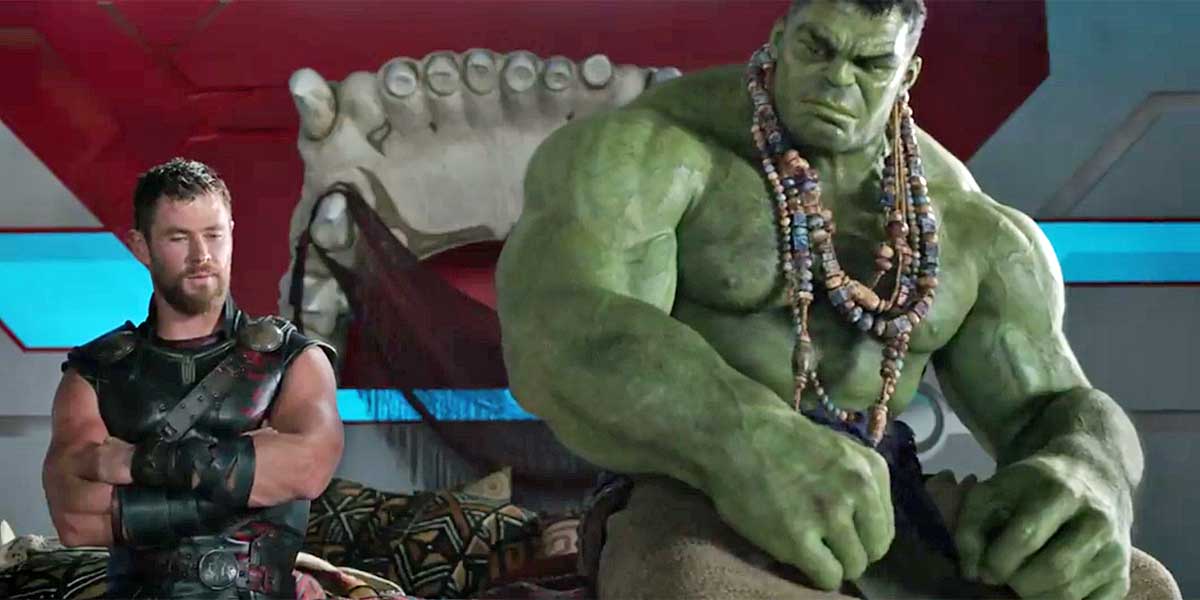
Thor and Hulk: It’s the buddy movie you’ve been waiting for

Director: Taika Waititi

Cast: Chris Hemsworth (Thor), Tom Hiddleston (Loki), Cate Blanchett (Hela), Idris Elba (Heimdall), Jeff Goldblum (Grandmaster), Tessa Thompson (Valkyrie), Karl Urban (Skurge), Mark Ruffalo (Bruce Banner/Hulk), Anthony Hopkins (Odin), Benedict Cumberbatch (Doctor Strange), Rachel House (Topaz), Taika Waititi (Korg)

The Marvel franchise is now on to 17 films. That’s 17 films all in the same universe, with at least three more to come in the next year or so. The weight of franchise backstory has started to feel overbearing, with so many other films to tie into and characters to set up that the individual film itself is left with barely any identity or purpose. How refreshing then to have a film that cuts loose and takes a slightly different tone: a genuine action comedy. Thor: Ragnarok is so tonally different from the other Thor films (let alone the other films in the series) it actually manages to feel like its own beast – it’s as close to a director-led vision as the franchise has got.

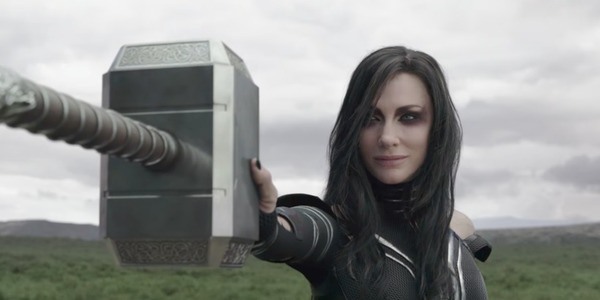
Thor (Chris Hemsworth) has been all over the universe, working to stop Ragnarok (the prophesised end of Asgard). Returning to Asgard, he unmasks his troublesome step-brother Loki (Tom Hiddleston) who has been disguised as Odin (Anthony Hopkins). Travelling to Earth to rescue their dying father, they arrive in time to see his death. Unfortunately, this releases their elder sister Hela, Goddess of Death (Cate Blanchett). While Hela ruthlessly conquers Asgard, Thor is trapped on the planet Sakaar and forced to enter a deadly gladiatorial contest – against his Avenger ally the Hulk (Mark Ruffalo) – all while trying to escape back to Asgard to stop Hela.

Thor: Ragnarok has a plot that ambles at points rather than sprints. But this hardly matters, as its main focus is on entertaining the audience. Waititi creates a sort of punk 1980s wildness, mixed with a fun-loving wit. The result is a film with action, and high stakes – but never takes itself too seriously. It perfectly understands how to puncture grandeur or pomposity of the Asgardian gods with a neat one-liner or a bit of everyday conversational inanity (a lot of the latter comes from Waititi himself, hilariously playing chilled out rock gladiator Korg).

Waititi also allows Hemsworth to let rip with his comic timing rip in a way he’s scarcely been allowed to do since Branagh’s original. It drops the faux-Shakespearean seriousness of Thor: The Dark World, and Hemsworth repositions the character in a more relaxed and charming style. From his opening introduction, undercutting the monologing of a fire demon with a dry series of puns while dangling from a ceiling in chains, he finds a neat balance between seriousness and charisma. Waititi is also (like Branagh) not afraid to let Asgard’s mightiest warrior be the butt of a few sight gags – one laugh out loud moment involving a very strong window is a stand out. Hemsworth demonstrates here he’s a far more accomplished comedian (physically and verbally) than he gets credit for.

This more relaxed Thor is perfect for the rock-and-roll feel of the film. Expertly scored (there is particularly fine use of Led Zeppelin’s Immigrant Song) it has a groovy, 1980s feel. The planet Sakaar is a primary-coloured, odd-alien filled, campy explosion of energy and vibrant punky fun. Said planet is run by the Grandmaster, played by Jeff Goldblum at his most Jeff Goldblumiest ever – if you can picture that you’ve got the tone of the whole planet. This neon lit style is reminiscent of everything from Flash Gordon to The Last Starfighter

The film’s loose comic style also allows a series of fun match-ups, from Thor and Loki (a wonderfully weaselly, fun Tom Hiddleston – still one of the best things in this whole franchise), to Thor and Strange (a lovely cameo from Cumberbatch), Thor and Valkyrie (a neat mixture of drunken self-loathing and female Thor-ness from Tessa Thompson) and lastly Thor and Hulk. The latter provides a lot of the film’s comic gold, the Hulk finally turned into some sort of character with achildish vulnerability and swagger (though the film still finds time for a Hulk penis gag). Waititi also throws in some nice call-backs to previous films – the bunch here set themselves up as the Revengers, while there are multiple references to the mantra used to calm the Hulk in Avengers: Age of Ultron – without making it feel in-jokey. 

There is so much fun in the film, you almost forget the main plot of the film is fairly heavy-going, end-of-the-world stuff. For a Marvel film there is a large body count of recurring characters (at least four bite the bullet here), while Hela’s plot encompasses mass slaughter and destruction. Scenes with Hela are kept short (structurally the film effectively strands her on Asgard to contain her invincibility), so it’s just as well the part is played with such charismatic dryness and imperious arrogance by Cate Blanchett (easily the best Marvel villain since Loki). She’s ably backed up by Karl Urban, adding a lot of complexity to reluctant cowardly turncoat Skurge. Waititi shoots Hela’s rampage of destruction with an exciting dynamism – it’s an action scene that feels different, no mean feat in a franchise that has had so many fights.

In fact most of the action feels very fresh, the fights never out-stay their welcome, and there are some brilliant visual flourishes – the final battle in particular throws in some almost painterly images as Thor and his allies take on Hela’s zombie army. The arena fight between Hulk and Thor is about a million times more interesting than the dull Hulkbuster battle between Iron Man and Hulk in the past Avengers film as Watiti keeps the focus on character rather than pummelling. The film also manages to keep the stakes high – there are always innocent people our heroes fight to protect.

Thor: Ragnarok might well be the most entertaining, fun film Marvel has produced. It’s almost certainly the best Thor film. While The Dark World failed dismally to build on the mixture of earnestness and comedy in Branagh’s original, this one feels like a natural progression of the first, amping everything up into a vibrant, 1980s styled cocktail of action and fun. It’s terrifically entertaining, well paced, anchored in characters we care about, and it just wants to entertain the viewer. You’d have to be pretty cold for it not to succeed.

Wonder Woman (2017)


Gal Gadot prepares to save the world as Wonder Woman

Director: Patty Jenkins

Cast: Gal Gadot (Diana), Chris Pine (Steve Trevor), Robin Wright (Antiope), Danny Huston (General Erich Ludendorff), David Thewlis (Sir Patrick Morgan), Connie Nielsen (Hippolyta), Elena Anaya (Isabel Maru), Lucy Davis (Etta Candy), Saïd Taghmaouri (Sameer), Ewen Bremner (Charlie), Eugene Brave Rock (Chief Napi)

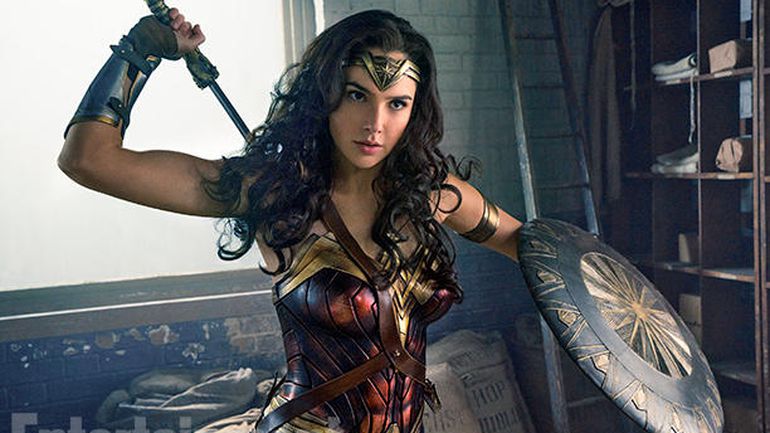
The DC universe has largely been a feeble attempt to parrot the success of Marvel, but without the latter’s charm or sense of fun. Each film has been a crushingly, overwhelmingly, teenage-boy focused series of grim super-bashing. So it’s a refreshing change that for their fourth film we get something different: lighter, funnier, warmer and focused on women rather than men.

On a hidden island, the Amazons live in hiding, waiting for the day they will return to save humanity from the villainous fallen god Ares. Diana (Gal Gadot) is the daughter of Hippolyta (Connie Nielson) queen of the Amazons, trained by Antiope (Robin Wright) into becoming their greatest warrior. Their timeless world is shattered in 1918, when American pilot Steve Trevor (Chris Pine) crashlands his plane on the island – and explains the world is torn apart by war. Convinced this is Ares’ influence, Diana leaves the island with Steve – and finds herself thrown into a world she scarcely understands, with only her faith in the goodness of mankind to sustain her.

Wonder Woman is a change of pace from previous DC filmes – largely because it is pretty good. For the first time in this struggling universe, we have a bit of lightness and humour, and some engaging central characters. Which, considering the dark grimness of the previous entries is saying something. It’s bright, feels like a comic book (in a good way), has a decent story arc and, most importantly, you care. Is it the best comic book movie ever made? Of course not, but it’s a damn solid effort.

A lot of this is due to Gal Gadot being such an endearing lead. She gives Diana a perfect blend of serene, super-powered action goddess and naïve, charming lost-out-of-time sweetness. So one minute she can cooing over the first baby she’s ever seen, the next she can be laying out baddies in a scuffle. Her unquestioning faith in the fundamental goodness of people makes her innocence very winning. In fact, her secret weapon is empathy, a quality the film really embraces. Gadot’s skill is in keeping such unremitting goodness and positivity hugely loveable. She is terrific.

The film deals with her head-turning beauty with a witty affection (“You put specs on her and she’s suddenly not the most beautiful woman you’ve ever seen?” Etta comments on one particularly feeble disguise option Steve suggests). In fact, the romance between Diana and Steve (Chris Pine similarly engaging as an “above average” man head over heels in love) is really well drawn – he clearly adores her, while she has a shy, almost teenage crush which blossoms over time into a genuine affection. It’s a very innocent and heart-warming romance, that plays out extremely well.

Needless to say as well, the film makes a fine counter-balance to the leering cameras you see in other films. Diana’s unmatchable competence is immediately recognised by Steve: while Steve understands the world, Diana is very much the hero, for all her fish-out-of-water naïveté. The film holds off a reveal of the costume for a long time – but when it is, it’s not a sexualised moment, but one of awe. The opening section of the movie, with its Amazonian islanders, also allows plenty of ass-kicking to be given to the women (Robin Wright is especially terrific as an Amazonian general – she should get her own Taken style action series).

Wonder Woman is not perfect. Structurally it’s pretty similar to other origin stories. Much of the backstory makes little sense, while the powers (or not) of the Amazonians in comparison with Diana are poorly explained. Away from the charm of the lead characters, nothing feels particularly new – none of the action sequences feel unique, and are shot with competence rather than inspiration. The final battle briefly looks like it might do something different, before it becomes an all too familiar CGI bashing.

I’m also not sure about setting the film in the First World War. Seeing Diana lead a successful charge through the trenches where real people died in their thousands, somehow doesn’t sit quite right. It’s uncomfortable to watch a cartoon hero walking across no man’s land into gunfire, just as thousands of real people had to, but without super-powers to make it a moment of awesome cool. They just died; it wasn’t the setting for an action sequence, oh a moment of “wow she’s cool”.

I’m not sure about the film’s use of the grim trenches of the First World War for kick-ass action

Unlike the Second World War (where at least we know the SS were completely despicable) its portrayal of German soldiers as mostly faceless villains feels unjust – these were largely just ordinary people in a horrendous situation. Making Luddendorf a psychotic, lunatic also feels uncomfortable – he was real. Would it have been so difficult to make up a General von Baddie? (It doesn’t help that Danny Huston gives a truly abysmal performance of over-the-top hamminess). This is an area where Captain America handled its setting much better – the film may have been set in a real war, but the villains are specifically Hydra soldiers, a made-up army of made-up people who had consciously sworn allegiance to Evil. The First World War was a complex tragedy in shades of grey – presenting it as a good vs evil, with the Germans eager to embrace a horrifying nerve gas, just doesn’t feel right.

The strengths of the film are away from the action, and I think that’s why it has formed a bond with people. You genuinely care and root for Diana and Steve. It’s got wit and humour and it doesn’t take itself too seriously. When the action really kicks off the film isn’t anything special, but before then it has its moments: a charming sequence where Diana tries on (and breaks with various fighting moves) female costumes of the 1910s; a beautiful Renaissance-painting style flashback to the backstory of how the gods fell; the early fumbling scenes of romantic interest between Diana and Steve. It’s where the heart of the film is.

In fact that’s what the film is really about (and what really makes it work) – the heart at the centre. It gets a little bit lost in all the booms and bombast of the second half, but there is more than enough of it in the first half to carry it through. When the film is tightly focused you can really feel it coming to life. The more of that the better. It’s also a breath of fresh air for presenting such a strong female lead, whom the men are defined by their relationship to (rather than vice versa). It’s fun and it’s heart-warming. Its old ideas presented from a fresh perspective

Ant-Man (2015)


Paul Rudd springs into action as Ant-Man

Director: Peyton Reed

Cast: Paul Rudd (Scott Lang), Michael Douglas (Hank Pym), Evangeline Lilly (Hope van Dyne), Corey Stall (Darren Cross), Bobby Cannavale (Paxton), Michael Peña (Luis), Anthony Mackie (Sam Wilson/Falcon), Judy Greer (Maggie), Hayley Atwell (Peggy Carter), John Slattery (Howard Stark)

Back into Marvel’s Cinematic Universe, as yet another comic book hero comes to the big screen. Is there going to be anyone who has appeared in a Marvel comic at any point who isn’t going to find their way into a live action film at some point? It’s looking unlikely!

Hank Pym (Michael Douglas) was formerly Ant-Man, a super-hero who can shrink himself to the size of an ant, with superhuman strength. In the present, he has been forced out of his own company by his former protégé Darren Cross (Corey Stoll) and his estranged daughter Hope van Dyne (Evangeline Lilly). When newly released thief Scott Lang (Paul Rudd), desperate to provide for his daughter, steals Pym’s Ant-Man suit, Pym identifies him as the man who he can train up to take his place as Ant-Man and help to protect the shrinking technology from being misused by Cross.

Ant-Man was a project developed for many years by Edgar Wright, dynamic director of the Cornetto Trilogy with Simon Pegg and Nick Frost. But our old friend Creative Differences reared its head, and studio and director went their separate ways. Which is a real shame as you can’t shake the feeling a director with genuine invention and imagination might have been able to craft something truly original out of this, rather than the essentially solid piece of craftwork it is.

There’s nothing particularly wrong with Ant-Man. It’s just a rather average, forgettable film with moments of interest. It’s a jolly, inoffensive little caper, which goes through the motions of the origins story of a hero without offering anything that different from what we’ve seen dozens of times before now. It’s all very professionally done, and even witty in places, but it’s nothing special.

This is particularly a shame since there are genuine moments of originality. A battle between Lang and Cross, both shrunken, takes place in a child’s train set, with the film cutting between the different scales of events for some effective comic impact (so we see the train crash with seismic impact on small scale, then see the same event at normal scale where it seems laughably minor). Similarly, Michael Peña’s character tells a series of anecdotal stories in voiceover in a laid back, hipster patter, with his words and phrasing exactly lip-synched by the people in the story. It’s a neat little piece of cinematic invention.

The heist structure of the film is good fun, and the pseudo-science of shrinking is entertainingly (and consistently) explained. Even our hero’s ability to control ants doesn’t seem too silly (which is really saying something).

It’s just all pretty much what you would expect. Corey Stoll’s villain in particular seems a slightly contrived after-thought, an antagonist whose existence serves as a contrast to Lang and Pym rather than a character who seems to be organically developed. Their final confrontation is amusingly done – but it’s a familiar Marvel trope now: a hero and villain with the same powers facing off. We’ve seen it done many times since the first Iron Man film.

Saying that, Paul Rudd is a decent and engaging lead (even though he seems to be effectively playing himself) and he makes Lang into a character it’s easy to root for (even if we’ve seen the sort of “Dad wants to prove himself” narrative many, many times before). Michael Douglas could do his mentor role standing on his head, but brings the role a nice lightness of touch. Evangeline Lilly brings a nice mix of resentful and caring to a tricky role as Pym’s overlooked daughter.

The problem you always have is that everything in the film feels a little bit too straight-forward and easy. It’s not a bad thing that this is a film that simply sets out to entertain, but somehow, enjoyable as it is, you want something a little bit more rather than the rather safe concoction that we have here. It’s fun while it lasts but then it disappears from your mind almost completely once it’s finished. Is that a good thing? Well it makes good escapism. But plenty of these films have managed to be more than just something to enjoyably pass the time. Which is all Ant-Man really is.

The Amazing Spider-Man 2 (2014)


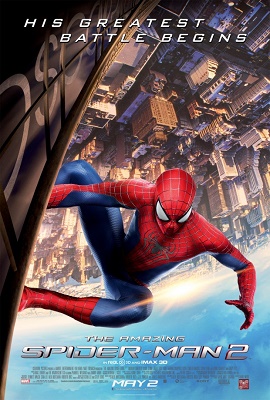
Spider-Man retreats in full flight from the shocking explosion of this film behind him

Director: Marc Webb

Cast: Andrew Garfield (Peter Parker/Spider-Man), Emma Stone (Gwen Stacy), Jamie Foxx (Max Dillon/Electro), Dane DeHaan (Harry Osborn/Green Goblin), Colm Feore (Donald Menken), Felicity Jones (Felicia Hardy), Paul Giamatti (Aleksei Sytsevich/Rhino), Sally Field (Aunt May), Campbell Scott (Richard Parker), Embeth Davidtz (Mary Parker), Marton Csorkas (Dr Kafka), Chris Cooper (Norman Osborn)

The Amazing Spider-Man 2 was set to launch a Spider-Manfranchise that “would last a THOUSAND YEARS!!!”. It didn’t. In fact this bloated, poorly constructed, overlong mess killed those plans stone dead. It says a lot that a film which took $709 million worldwide is considered a flop. But the reaction to the film was so mehthat there was no desire to see any further films about this Spider-Man. On every count the film is a catastrophic failure.

Peter Parker (Andrew Garfield) is enjoying the life of a super-hero, while struggling to maintain his relationship with Gwen Stacy (Emma Stone) due to his guilt over her father’s death. That sentence, by the way, demonstrates how schizophrenic this film’s tone is: a hero who loves life and simultaneously is plagued with guilt? He’s also obsessed by finding out what happened to his parents (killed off in a superfluous pre-credits flashback, setting up a mystery the film loses all interest in). At the same time, he must take on obsessive loner fan Max turned supervillain Electro (Jamie Foxx), and old friend Harry Osborn turned supervillain Green Goblin (Dane DeHaan).

After a so-so remake of Sam Raimi’s first Spider-Man, Sony seemingly decided to skip Spider-Man 2 and jump straight to a remake of the reviled Spider-Man 3. Many of that film’s disastrous mistakes are made again: romantic tension that never feels real, action sequences that feel like trailers and, worst of all, stuffing the film to the gills with villains (at least four characters can lay claim to being major primary or secondary antagonists). It also makes its own mistakes, chucking in endless references to a dull, confusing ‘mystery’ around Peter’s parents (that will never now be resolved).

On top of all that, there is something so nakedly grasping about Amazing Spider-Man 2 it’s almost impossible to love. It’s such a greedy film that almost every conversation and stray camera shot tries to set-up potential future movies (the low point being a camera pan down a room full of devices that will become the weapons of future baddies). The plot gets constantly drifts down side alleys as it frantically tries to establish enough plots for the studio to keep churning out films over the next five years. This also means it goes on forever without any real sense of impetus developing in the story.  The action is so nakedly shot with an eye on the trailer, that nearly each fight is literally shot with a crowd of people watching behind barriers, cheering events on.

Whatever happened to the trick of making a successful franchise being to make a good movie? Imagine a film focused on a single villain plotline, and played that off against a relationship drama (something like, say, Spider-Man 2). That might have been something worth seeing, that might have made you think “well I enjoyed that, I wouldn’t mind seeing another one”. But this film is little more than an extended trailer for films to come – it’s as soulless and empty as a piece of marketing puff.

Any ‘emotional’ moments are placed so blatantly as filler between the action that they carry no resonance. Does anyone give a toss if Gwen Stacy goes to London or not? Was anyone actually moved at all when she (spoiler!) dies at the end? For all of Spider-Man 3’s faults, at least when Harry Osborn went bad it resonated, as audiences had seen his and Peter’s relationship play out over two films. Here Harry is introduced, the next scene he and Peter openly say they are best friends, then they barely spend any further time together before Harry’s “shocking” volte-face. If the film can’t be bothered to spend any time earning it, why should I spend any time investing in it?

Andrew Garfield’s Peter Parker has his fans, but I’ve found him (in both films) an insufferable, cocky prick. Garfield is a very good actor, but his direction to play Parker as a young buck completely fails. His wisecracking persona works as Spider-Man, but falls flat as Peter, who never seems particularly sweet, relatable or endearing in a way Tobey Maguire managed so well. The parental plotline doesn’t help here either: having spent the first film not really giving a toss about the death of Uncle Ben, here he outright obsesses over his parents in a way that just doesn’t ring true, particularly as it carries with it an implicit rejection of Aunt May. His borderline controlling/stalkerish behaviour with Gwen Stacy is also pretty hard to stomach (he spends half the film telling her what to do, the other half either following her or openly stating he will never let her go – okay weirdo…)

It’s quite damning that despite all this, Garfield (and to be fair, Emma Stone) is the best thing in this lifeless pile of stodge. Jamie Foxx is so hilariously miscast as Electro it skewers the whole movie (surely part of the reason why he is in it so little). Foxx can’t resist showing the audience all the time that he (the actor) is far smarter, cooler and popular than the character – his contempt for the role drips off the screen. DeHaan overacts wildly as Harry, bested only by Giamatti’s cartoonish overblown shouting. Field cashes her cheque with professionalism as Aunt May.

People aren’t stupid. They can tell when they are being ripped off. And they can tell when a studio flings bangs and bucks at the screen with no heart and soul behind them, when a film’s been made by people who want to fleece fanboys, rather than create something that speaks to their love of the material. It’s the problem with both of these Garfield Spider-Man films (and to a certain extent Raimi’s last one). They are soulless, dead films made by committees. They listen to all the worst cries of the fans and then try to give them everything at once. They end up giving them nothing. Which is what this film is: a big, empty pile of nothing.

Solomon Kane (2009)


James Purefoy excels in cult-classic in the making Solomon Kane

Director: Michael J Bassett

Cast: James Purefoy (Solomon Kane), Max von Sydow (Josiah Kane), Pete Postlethwaite (William Crowthorn), Alice Krige (Katherine Crowthorn), Rachel Hurd-Wood (Meredith Crowthorn), Jason Flemyng (Malachi), Mackenzie Crook (Father Michael)

Solomon Kane was a pulp-magazine character from the 1920s. I’d never heard of him before – I imagine many others haven’t either – so bringing a film about him to the screen was always going to be a labour of love. That’s certainly what this film is. 

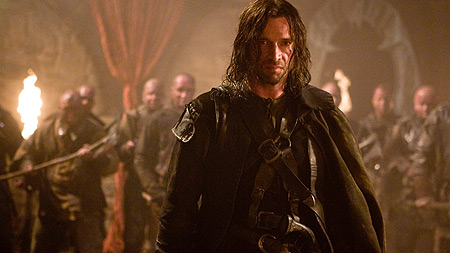
In 1600, Solomon Kane (James Purefoy) is a ruthless mercenary, but is confronted by a demon who tells him his soul is forfeit to the Devil. Horrified, Kane flees to sanctuary in a monastery, forsaking violence and devoting himself to God. After being expelled because the abbot has a dream, he encounters a Puritan family, the Crowthorns, and travels with them. Kane is deeply drawn to the Crowthorns – and when they are ambushed, the family killed, and daughter Meredith (Rachael Hurd-Wood) kidnapped by the servants of the sorcerer Malachi (Jason Flemyng), Kane swears to revenge the Crowthorns and rescue Meredith.

There’s something quite sweet and charming about Solomon Kane. It’s an old fashioned B-movie with a winning style. Is it going to rock any worlds? Probably not, but it’s got plenty of swagger and it makes a small budget go a long way. Bassett’s influences are pretty clear – everything from Witchfinder General to Lord of the Rings – but he shoots the film with a commendable energy. The visual flair is impressive, and successfully creates the feel of an England halfway between civilisation and the middle ages. Bassett also knows how to shoot an action scene, and the film is stuffed with fantastic sword fights that hit the right balance between brutality and dynamism.

Bassett also finds a fair amount of emotional heft in the story. The decision to focus a large chunk of the opening 45 minutes on Kane’s guilt and his attempts to make amends, make him a character we end up caring about. The “good family that wins our hero’s heart” cliché is exactly that, but it works very well here as Bassett takes his time and lets Kane’s bond with the Crowthorn family grow organically. All this patient establishment of Kane’s personality really pays off during the action of the second half.

It’s also helped a great deal by James Purefoy’s committed performance in the lead role. Purefoy has long since been a favourite of mine, who never really got the breaks to become a bigger star. His performance has the physicality and charisma, but Purefoy also adds in a Shakespearean depth to create a man desperate for redemption, carrying a pained heart very close to the surface. He dominates the whole film, setting the tone; and I suspect his dedicated performance encouraged fine work from the actors around him, despite almost all the other roles being little more than cameos. There are blockbusters whose leading actors are incapable of holding the screen as well as Purefoy does here.

Bassett’s B-movie spectacle is not perfect. The eventual explanation of why the Devil wants Kane’s soul is inexcusably garbled. Jason Flemyng is miscast as the demonic sorcerer Malachi, and his final confrontation with Kane lacks real impact (largely because Malachi has so little presence throughout the film) and devolves into a face-off with a dull special effects monster that looks rather like Megatron in the live-action Transformers films. There is a smaller-scale, personal ending in this film, but it gets crushed under the foot of the special effects. It’s a shame that a large portion of this film’s budget probably went on this.

Solomon Kane is structured, and plays, like a B-movie – but it’s proud of that. Its low budget demanded inventiveness and dedication from the cast and crew, all of whom delivered. The grimy design of the world is perfect, the story creates a good combination of action and emotion. Its story may be pretty clichéd, but it’s presented with great gusto – and has a terrific leading performance from a heavily under-rated actor in James Purefoy. More people deserve to see this – if this isn’t a cult classic in the making, I’m not sure what is.