Category: Coming of Age film

Captains Courageous (1937)

Captains Courageous (1937)

Well-made, coming-of-age story with two very fine leads and a heart-tugging ending

Director: Victor Fleming

Cast: Freddie Bartholomew (Harvey Cheyne), Spencer Tracy (Manuel Fidello), Lionel Barrymore (Captain Disko Troop), Melvyn Douglas (Frank Burton Cheyne), Charley Grapewin (Uncle Salters), Mickey Rooney (Dan Troop), John Carradine (‘Uncle Jack’), Oscar O’Shea (Captain Walt Cushman)

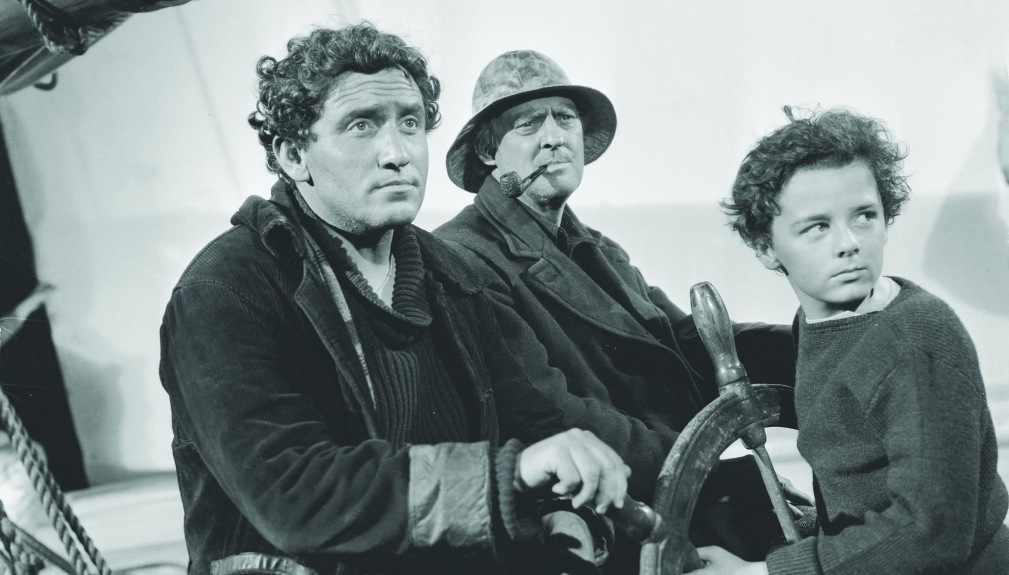
Harvey Cheyne (Freddie Bartholomew) is a hard kid to like. Scion of Henry Ford-like American tycoon Frank Burton Cheyne (Melvyn Douglas) he’s an arrogant, entitled snob who believes he is deserves anything he wants because Daddy has never-empty pockets. The servants in his father’s estate can’t stand him, his prep school classmates only pretend to like him and even his teachers think he needs to be taken down a peg or two. Suspended from school, his father (upset at what his son has become) hopes a trip to Europe will help Harvey grow-up. But, en route, Harvey is lost at sea and picked up by the fishing boat We’re Here. Despite his objections, they have no interest in cutting short fishing season by three months to take him straight back and slowly Harvey finds himself rather enjoying fishing life, helped by his growing bond with salt-of-the-Earth Portuguese fisherman Manuel (Spencer Tracy).

Adapted from a Rudyard Kipling novel – despite what you might think, Harvey and his father are also American in the original – Captains Courageous is a surprisingly sweet coming-of-age tale, mixed with a surrogate-father-son relationship, well-directed by Victor Fleming and strongly played by the cast. The cast spent months bobbing up-and-down in a giant water tank to bring the film to the screen, and it’s a tribute to Fleming’s direction and Harold Rossen’s sharp camerawork that it often genuinely feels like a film pulled in from the seas like Manuel’s fishes.

It also has some wonderful chemistry between its two leads. Freddie Bartholomew, one of the biggest (and most skilled) child stars of the 30s, had a hard task here: appearing in virtually every scene, he has to turn a character who most viewers would love to give a cuff around the ear too, into a kid we end up admiring. Captains Courageous doesn’t shirk at stressing Harvey’s arrogant, self-absorbed unpleasantness: he treats the servants like talking furniture, brags about his editorship of the school magazine (a position bought for him by his father’s purchasing of their printing press) which he feels with dull articles (essentially ‘what I did on my holidays’) and shamelessly uses his father’s money to bribe people (including his schoolmaster, who he loans $50 to then casually mentions it would be great if the history test could be made easier).

He is, in short, a total brat and that only starts to change on We’re Here. Bartholomew’s trick is to do just enough to suggest a decent kid buried under the surface here, even when he’s demanding the ship turn round to take him home or assuming his ship-mates will settle into playing servants for him. He and the film slowly reveal his childish enthusiasm waiting for an outlet. With a distant father, you get the feeling Harvey felt acting like the pampered, entitled wealthy man was the only way to impress him. Captains Courageous is rather endearing in showing how he flourishes when faced with pushback by someone (Manuel) who gives him genuine attention, teaches him things and won’t take his nonsense (in the way nearly every other employee in his life does).

Bartholomew’s thoughtfulness, vulnerability and eager-to-impress energy makes for a great combination with Spencer Tracy’s jovial warmth as Manuel. Tracy – who won an Oscar – was later rather self-critical of his curly-haired ‘liddle feesh’ accented-fisherman, generously claiming his success was partly due to Bartholomew. But Tracy’s work here is endearing, funny and unforced, making Manuel a mix of big brother and father, full of energy and joi d’vivre, with exactly the sort of easy-going happiness in small things (catching a big fish, playing music, even swabbing a deck) that Harvey never has. Tracy also brings out Manuel’s strong morals and his respect for others – it’s no surprise that he has no truck with Harvey’s cheating in a fishing competition.

In fact, Manuel’s response to this (deep disappointment, throwing the competition and firmly telling Harvey he’s no fisherman) is exactly the sort of firm-but-fair parenting, with a moral education, that Harvey needs. But Manuel is also a fierce defender of him when he admits his mistakes and also offers the sort of direct, in-person support and regard for Harvey that his own father failed to do. (There is a lovely reaction shot from Tracy – one of the best reactors in movies – of warm pride when Harvey admits blame). The two actors have a natural, easy bond which is genuinely endearing. Manuel even becomes as keen for the boy’s good opinion (bashfully clamming up when Harvey reacts with shock to his talk of ladies). Captains Courageous allows Tracy to be as playful, loose and fun as he ever has.

The staging and design of the fishing boat is marvellously done, the actors having clearly (and impressively) done their homework around the tying of knots, casting of lines and rowing of oars. Lionel Barrymore gives a fine salty sea-dog (with a hidden heart of gold) as the captain, with Mickey Rooney echoing him as his eager son and John Carradine scowling as Manuel’s rival fisherman. There is a genuine sense of energy and vibrancy in all the fishing and sailing scenes (despite some, at times, less than convincing back projection), with Captains Courageous more than holding its own with epics of the sea.

Of course, you are not perhaps surprised that the film is also heading towards a tragic end, as so many coming-of-age tales do. But it’s extremely well-done and, thanks to the playing of the cast carries real emotional impact, not least through Bartholomew’s and Tracy’s poignant performances. There is also a mature and tender coda to Captains Courageous about the nature (and difficulties) of fatherhood, adding further depth to a character study of a young boy that genuinely sees him grow and develop in a way that feels neither sickly sweet nor forced – and has a real warmth and joy to it. Full of impressive staging and with a wonderfully played relationship between Bartholomew and Tracy, it’s a fine, heart-warmer turned tear-jerker.

The Phoenician Scheme (2025)

The Phoenician Scheme (2025)

Anderson marries heart, truth and a genuinely engaging and compelling plot with his unique quirk

Director: Wes Anderson

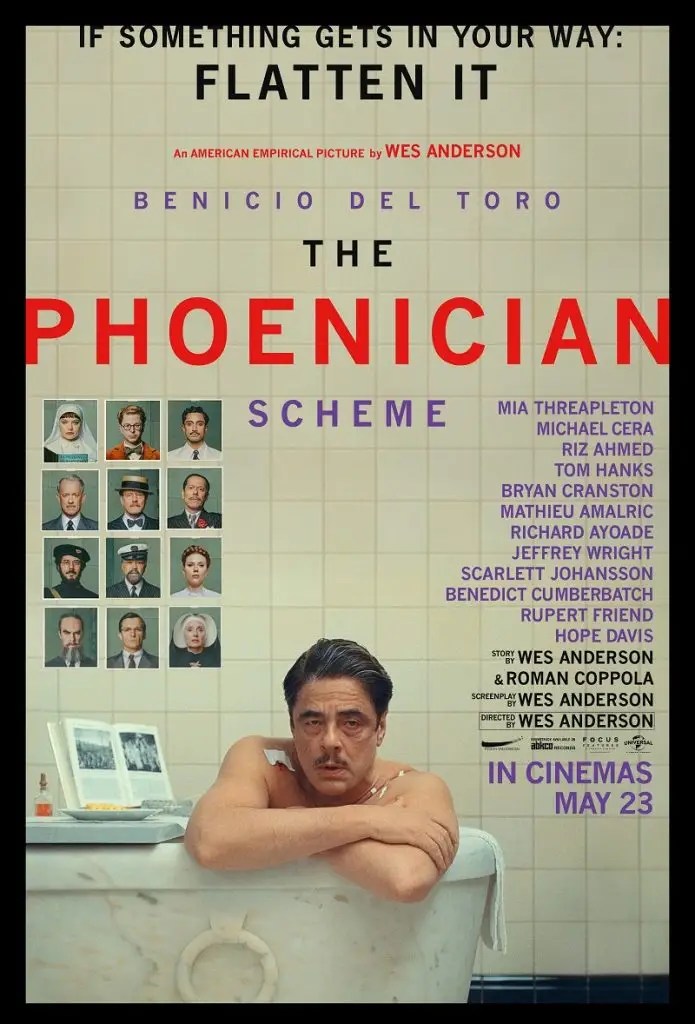
Cast: Benecio del Toro (Zsa-Zsa Korda), Mia Threapleton (Sister Liesl), Michael Cera (Bjorn Lund), Riz Ahmed (Prince Farouk), Tom Hanks (Leland), Bryan Cranston (Reagan), Mathieu Amalric (Marseilles Bob), Richard Ayoade (Sergio), Jeffrey Wright (Marty), Scarlett Johansson (Hilda Sussman), Benedict Cumberbatch (Uncle Nubar), Rupert Friend (Excalibur), Hope Davis (Mother Superior), Bill Murray (God), Charlotte Gainsbourg (Korda’s late wife), Willem Dafoe (Knave), F. Murray Abraham (Prophet), Stephen Park (Korda’s pilot), Alex Jennings (Broadcloth), Jason Watkins (Notary)

Wes Anderson is one of those directors I often sit on the fence about, with a style so distinctive it can in become overwhelming. But when it works, it works – and The Phoenician Scheme is (aside from his superb Netflix Dahl adaptations) his best work since his masterpiece The Grand Budapest Hotel. In this film, Anderson finds an emotional and story-telling engagement that adds depth to all the stylised invention. It’s a film I’ve found more rewarding the longer I’ve thought about it.

Set in an Anderson-esque 1950s (Andersonland?), notorious industrialist and arms trader Zsa-Zsa Korda (Benecio del Toro) spends his life dodging assassins. After one attempt gets close, he decides to try and repair his relationship with estranged daughter Liesl (Mia Threapleton), a novice nun who suspects her father might have had her mother murdered (he denies it). With governments, business competitors and others on his tail, Korda throws together a complex scheme for one last success in Phoenicia, a massive new development built with slave labour. As Korda juggles rivals and investors, will he repair his relationship with his daughter? And how will he fare in his recurrent visions of standing at the (noir) Gates of Heaven, being judged for entry?

Anderson’s film, of course, is another superb example of his visual style, constructed like an intricately layered work of art. Each shot could probably hang in an art gallery, framed to perfection with gorgeously sublime colours that soak off the screen. The elaborate set design and vintage costume work are striking as always, with every piece perfectly placed and every feature expertly judged. Within this, his carefully selected cast deliver the wry, dry and arch Anderson-dialogue with aplomb, embracing every moment (of many) where Anderson allows the characters to share a raised eyebrow or a pithy aside to the camera.

In other words, it might all be as you expect – a formula that started to feel a bit tired after intricate, insular films like The French Dispatch and Asteroid City, which felt so personal to Anderson that they were virtually impenetrable to everyone else. But what elevates The Phoenician Scheme is that Anderson embraces both a surprisingly tense plot-line – the closest he can probably get to a thriller, laced throughout with satire, humour and more than a fair share of the ridiculous – and gives a genuine emotional force to a father and daughter struggling to recognise what (if anything) could bring them together. Throw in questions around life, death and what constitutes making a life ‘worth living’ and you’ve got a rich, intriguing and rewarding film that could stand even without the Anderston scaffolding.

Perhaps only Anderson could mix an unscrupulous businessmen targeted by assassins (some of these are delightfully, blackly, comic – not least an opening plane bomb that sees Korda ejecting his pilot for refusing to attempt a crazy hail-Mary manoeuvre to survive an inevitable crash) with Korda closing vital deals (in a deliberately, impenetrably complex scheme) by shooting hoops with a pair of baseball-fanatic brothers (Tom Hanks and Bryan Cranston, both hilarious), taking a bullet for a fez-wearing gangster (Matheiu Almaric, wonderfully weasily) and forcing an eccentric naval captain (Jeffrey Wright, perfectly deadpan) during a blood donation to sign with a bomb. And spin out a joke where Korda hands over custom-made hand grenades to business associates like they are branded pens. All while dodging a shady government cabal (fronted by Rupert Friend’s Transatlantic Arthurian-nick-named Excalibur).

But The Phoenician Scheme works because under this comic twist on spy thrillers, it has a real heart. Anderson’s finest films are where he works with an actor who can bring depth and feeling to the quirk. And here, he might just have brought out the best from an actor prone to a little quirk himself. Benecio del Toro gives Korda a world-weary cynicism but also a subtle fragility. There is nothing that won’t flummox Korda, a guy tipped off on attempts on his life because he frequently recognises assassins he’s hired himself in the past. But he’s also quietly afraid his life has been for nothing: that he is, in fact, not a rogue but an out-and-out villain ruining countless lives. And that God (in the form of, who else, Bill Murray) isn’t going to be welcoming up there.

It motivates a careful dance of reconciliation and grooming to take over his business with his estranged daughter Liesl, delightfully played by Mia Threapleton (with just the right mix of dead-pan flair for the dialogue, while giving it an arch warmth). Liesl imagines herself as distant from Korda as can be – the novice (literally) to his expert manipulator – but she turns out to have far more talent for Korda’s mix of chutzpah, disregard for rules and ruthless improvisation. Watching the relationship – and recognition – between these two (beautifully played by both actors) is very funny and also surprisingly sweet (you know its Anderson when a nun suddenly pulling a small machete out of her wimple is both oddly endearing and absolutely hilarious).

This sense of emotional development and personal and dramatic stakes is improved further by the celestial semi-trial (cue Willem Dafoe as an advocate angel), in a black-and-white heaven that mixes Powell and Pressburger’s Matter of Life and Death (surely the name Korda is no coincidence) and the imagery of Luis Buñuel. This all leads into a surprisingly gentle but affecting tale of redemption and second-chances, including an ending that feels surprising but also somehow completely, wonderfully inevitable and fitting,

The Phoenician Scheme may even be slightly under-served by its Andersonesque framing and design: after all it’s become easy to overlook the depths when the display is as extraordinary as this. When Anderson unearths a deeper meaning, working with masterful performers who can imbue his quirky, witty dialogue with heft, he can be one of the best out there. And do all that without sacrificing an air of charming whimsy, and building towards the most hilarious fist fight since Bridget Jones’s Diary (between del Toro and Cumberbatch’s tyrannically awful Uncle Nubar). Not a lot of directors can pull that off – and it’s a lovely reminder that Anderson at his best is an absolutely unique, wonderful gem in film-making.

The Champ (1931)

The Champ (1931)

Seminal father-and-son drama that largely avoids excessive melodrama while essentially inventing a genre

Director: King Vidor

Cast: Wallace Beery (Andy “Champ” Purcell), Jackie Cooper (Dink Purcell), Irene Rich (Linda Purcell), Roscoe Ates (Sponge), Edward Brophy (Tim), Hale Hamilton (Tony), Jesse Scott (Jonah), Marcia Mae Jones (Mary Lou)

The Champ is the grand-daddy of an entire genre of “Dad-and-lad” films. If it sometimes feels over-familiar today, then that’s because many of now familiar cliches of slightly washed-out Dads caring for (and being cared for) precocious-but-caring pre-teen sons were born here. Even at the time, plenty of people saw The Champ as drowning in more than a little sentimentality. But The Champ is mostly effectively underplayed and directed with a spry energy that stops it becoming too cloying.

Andy Purcell (Wallace Beery) is adored by his 8-year-old son Dink (Jackie Cooper) as “Champ”. Andy was a heavyweight champion once; but is now an over-the-hill fighter more likely to be found propping up a bar or shooting dice than throwing punches in the ring. Constantly guiding Champ away from temptation, Dink doesn’t waver in his devotion, even when presented with the possibility of a new life with his long-lost now-wealthy mother (Irene Rich). Champ wants to prove to his son he can be the man Dink believes he can be, taking to the ring one more time against the Mexican champion – with heart-tugging consequences.

It’s not just dad-and-lad cliches – there’s more than a few boxing cliches whose DNA is in The Champ – Vidor even directed here one of the first-ever training montages, as Champ gets ready to duke it out with the Mexican champ. But its heart is really in the unbreakable bond between father and son, their unwavering love which survives no end of testing the father applies to it. Champ is an unreliable wash-up who makes it a regular habit to piss away money, culminating in selling their treasured race-horse “Little Champ”. But Dink knows, for all is flaws, Champ truly loves his son.

A film like this relies on the chemistry between the two actors, so it’s just as well both Beery and Cooper genuinely feel like they’ve known each other all their lives. (Hopefully it doesn’t spoil the magic to discover the famously misanthropic Beery loathed Cooper, who in turn felt Beery was a scene-stealing bully). Their interplay, their easy, natural chatter and playful physicality is heart-warmingly believable. From sharing a bed in their rundown flat, to messing around with their hats or teasing each other during country jogs, Vidor’s film finds a natural ease in their relationship. There is a genuine feeling of parental love between the two, captured in little moments that feel real, such as Champ’s superstition about Dink spitting on things ‘for luck’ (from betting slips to boxing gloves).

Beery won one of the first Best Actor Oscars – a historic tie with Fredric March in Dr Jekyll and Mr Hyde (ruled a draw despite Beery gaining one fewer votes) – and it’s a deserving one. Beery underplays a role that could billow over the top, from his woozy drunk acting which is convincingly low-key to the streak of guilty self-loathing Beery keeps clear is running through Champ. He’s a man who despises his weaknesses, who knows he is not the legend his son still believes him to be, deeply ashamed of his actions but yet time-after-time lets down and embarrasses his son, from getting arrested in drunken scuffles (in front of the whole town) to slurring nonsense in a bar.

The warmth of Vidor’s direction keeps us on-side with Champ, even as he needs to be sobered up with cold tomato soup and ice to make a meeting with a promoter (even so, he’s still late and screws it up in any case due to still being pissed) or as he is hauled out of a police van, scruffy and swinging misguided punches. It makes us hope for the best from Champ, even if it’s left subtly open whether he strikes Dink (from between the bars of his prison cell) from anger or in an attempt to drive the boy away from his self-destructive father. (Either way, in a touch that inspired Raging Bull, Champ is so ashamed of his perhaps- half-meant blow, he pummels the cell wall with his hand, his face contorted in lashings of shame and self-loathing.)

Beery’s performance is perfectly complemented by Cooper, one of the most natural child stars ever. Cooper’s Dink pulls off the difficult trick of feeling both charmingly wise before his years, but still like a naïve child. Vidor trusted Cooper’s instincts enough to just let be on the camera, notably during a largely improvised sequence where Cooper prattles to himself while climbing up onto the roof of his wealthy mother’s new home. But Cooper can also manage the emotion: when tears come, they feel real and genuinely distraught. In other hands, the final act emotional breakdown might have felt like the worst sort of stage-school tears but Cooper makes it genuinely feel like a child so torn up he can barely process the depth of his feelings.

Cooper’s performance largely sells the film’s heavily melodramatic ending, which could well have collapsed into a soapy mess. It’s the moment where Vidor’s film most insistently tugs on the heart-strings, desperate to get those tears pouring. But he also softens Beery’s self-destructive lunk who, nice-is-he-is, we care for partly because his son is so overwhelmingly devoted to him. And we believe Champ would be desperate to do anything to live up to the sort of hero-worship he has here.

Vidor’s film also gains from his smooth, visually engaging direction. The Champ opens with an impressive tracking shot of our heroes running, and makes excellent use of space and blocking throughout to ground the father-and-son constantly at the centre of a busy world bustling around them. It’s also a generous film: the Champ’s ex is no villain, but a wealthy, decent guy, neither is there racism in the depiction of Dink’s young Black friend Jonah. The decision to use sped-up film for the fight may look vaguely comic today, but adds energy while Vidor largely avoids the trap of hammering the emotional points home too strong.

The Champ is still an effective crowd-pleaser, sailing by in 80 swift minutes, so successfully taking many of the struggling-parent-conventions of ‘women’s pictures’ and applying them to men, that it’s been effectively re-made and re-invented dozens of times, in dozens of settings. And you can’t say more for its effectiveness than that.

The Paper Chase (1973)

The Paper Chase (1973)

Overlong, shallow mentor-mentee film that never gets anywhere near finding enough depth or humour

Director: James Bridges

Cast: Timothy Bottoms (Hart), Lindsay Wagner (Susan Fields), John Houseman (Professor Charles W Kingsfield Jnr), Graham Beckel (Ford), James Naughton (Brooks), Edward Herrmann (Anderson), Craig Richard Nelson (Bell), David Clennon (Toombs)

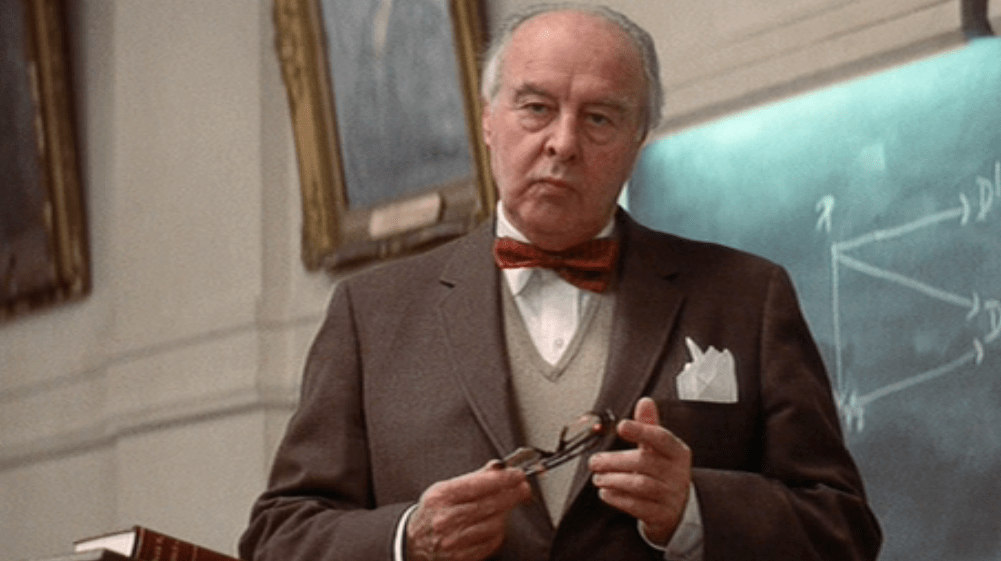
It’s a tale as old as time: the ambitious youngster and the domineering mentor they both loath and love. The Paper Chase rolls through this familiar set-up, based on a novel by law professor John Jay Osborn (descendant of that John Jay) who might well have seen a bit of himself in his novel’s stern mentor. That mentor is Professor Charles Kingsfield (John Houseman), an imperiously patrician professor of contract law at Harvard. Kingsfield is a demanding teacher, treating his class with arch disdain, demanding the best from them. Among his class is Hart (Timothy Bottoms), a fiercely hard-working ambitious young man who finds himself not only increasingly admiring Kingsfield but also (unknowingly at first) in an on-again-off-again relationship with Kingsfield’s daughter Susan (Lindsay Wagner).

This forms the meat of James Bridges’ dry, only fitfully engaging Harvard-set film which ambles gently from largely predictable plot-beat to plot-beat. After an initially promising start it swiftly outstays its welcome. The Paper Chase is frequently far-too sombre, slow-paced and unenlightening film which frequently flatters to deceive either as a character study, an insight into the dynamics of the mentor-pupil relationship, a love story or a comedy. It bears considerable, highly unfavourable, comparison with the more modern Whiplash which takes essentially the same set-up (an ambitious student desperate to impress a domineering mentor he loathes and loves) but uncovers far more psychological depth and insight.

The Paper Chase’s main claim to fame is John Houseman’s Oscar-winning performance. Despite his veteran Hollywood status as producer and screenwriter, Houseman was effectively a newcomer with only a brief performance in conspiracy thriller Seven Days in May prior to this. Houseman took on a part turned down by a host of leading actors (James Mason was the original choice, but scheduling ruled him out). He had the advantage of years of experience as an acting coach at the Juilliard School – his students reflecting Kingsfield was not a radical departure from Houseman’s own teaching style – and having a legendary standing in American Theatre not a million miles away from Kingsfield’s standing in the law.

It’s a smooth, eye-catching performance but neither the role (nor Houseman’s performance) are particularly complex, mostly requiring an ability to confidently roll out arch syllables and raise sceptical eyebrows. It’s funny, but a surface delight, the film continuously avoiding any attempt to delve into the character. Does he brutally push his students to prepare them for a brutal profession? To separate the wheat from the chaff? Because he’s a bully? Who really knows. When a student in his class, struggling to keep up, attempts suicide, Kingsfield barely reacts. He’s a stone-eyed enigma to the end, the character all front and no depth. It’s hard not to think Houseman couldn’t have played it standing on his head (he wrote later, he almost felt ashamed about winning an Oscar for what he considered a ten-day vacation from his teaching).

There is a chance for uncovering real psychological interest in Bottom’s role. Unfortunately, Bottoms lacks Houseman’s charisma, making Hart an unengaging, frequently uninteresting character, who it becomes fundamentally hard to care about – a death knell in a film about Hart’s ability to grow up and not depend on the approval and praise of others. Trapped in The Paper Chase is an interesting tale of a man latching onto a father figure – a father figure who tries to teach him that looking for others for approval is a fool’s errand by treating him with disdain throughout. Such a tale never comes into focus.

Neither does the film’s chronicle of the relationship between Hart and Susan – engagingly played by Lindsay Wagner – burst into the sort of witty interplay the script is straining at. Instead it increasingly drags, not helped by the underplaying of both actors. The barrage of bust-ups and disagreements between them keeps promising to burst into life like an updated Hepburn-Tracy vehicle. Instead, it meanders almost pointlessly, neither making interesting points about Hart’s obsession with proving his worth or Susan’s desire herself to defy her father.

A far more interesting film would have delved more into exactly what attracts Hart to Susan. Surely it can’t be a coincidence that Hart feels an intense attraction to the daughter of the law professor he is obsessed with impressing? Are Hart’s feelings sparked by a subconscious awareness from their first meeting of the similarities between Susan and Kingsfield? Freud would go to town on Hart’s continuing desire to both seduce Susan in the bedroom and Kingsfield in the classroom. It could be rich material for the film, but The Paper Chase seems utterly unaware of this engaging subtext, settling instead for the blandly predictable.

Similarly, the film has no interest in exploring any of the interesting questions around teachers like Kingsfield, who rely essentially on intimidation and academic hazing to motivate students, ruthlessly accepting the collateral damage of drop-outs like a badge of pride. Never once does The Paper Chase pause to question the merits or failings of this system or the type of people it produces or behaviours it encourages. The suicide attempt of a classmate at the pressure applied by Kingsfield, doesn’t stop the rest of the cast giving him a round of applause at the end of the semester. Never does it seem to make up its mind whether Hart’s perverse hero-worship of Kingsfield (who effects to have no idea who he is) is Stockholm syndrome or a vindication of Kingsfield’s methods by transforming a potentially mediocre lawyer into A-Grade material.

In fact as the credits rolled on The Paper Chase I was left wondering what on earth I was supposed to take out of this. Does Hart learn to care or not care about what Kingsfield thought of him? Was Kingsfield a heartless law robot or a great teacher or something in between? Sure, it culminates with Hart throwing away his final exam mark sight unseen – but the film is careful to make sure we the audience have seen he’s (of course) aced the class. It’s a sign the film was as blindly in love with Kingsfield as Hart was, vindicating all his methods (deliberate or otherwise). The Paper Chase is slow, unenlightening, nowhere near funny or dramatic enough to sustain interest for a class let alone a whole semester.

Empire of the Sun (1987)

Empire of the Sun (1987)

Beautifully shot version of Ballard’s semi-biographical novel with a superb lead performance

Director: Steven Spielberg

Cast: Christian Bale (Jim Graham), John Malkovich (Basie), Miranda Richardson (Mrs Victor), Nigel Havers (Dr Rawlins), Joe Pantoliano (Frank Demarest), Leslie Phillips (Mr Maxton), Masatō Ibu (Sergeant Nagata), Robert Stephens (Mr Lockwood), Takatarō Kataoka (Young pilot), Emily Richard (Mary Graham), Rupert Friend (John Graham), Ben Stiller (Dainty), Paul McGann (Lt Price)

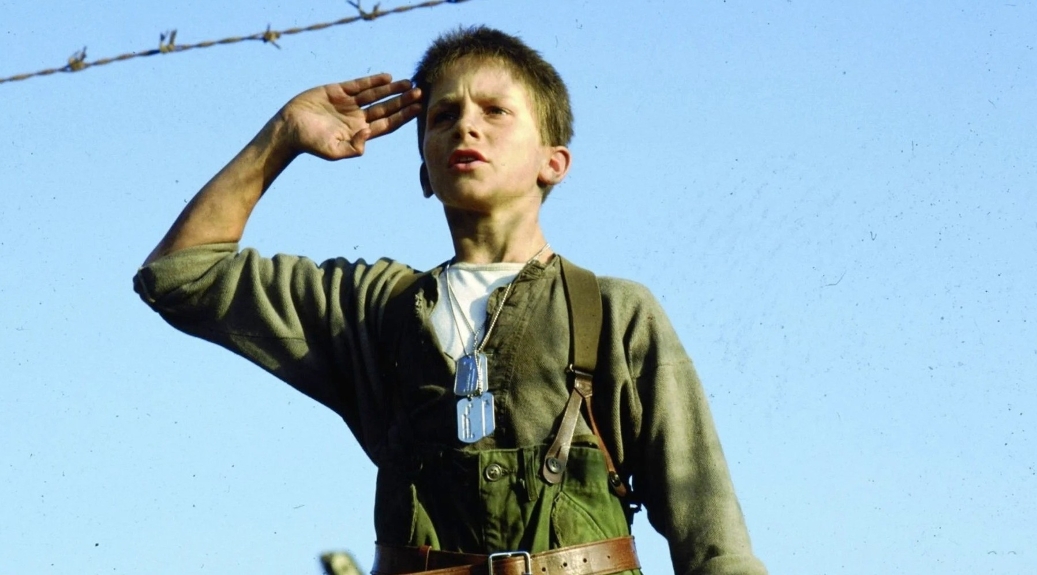
JG Ballard was 12 when he was sent from Shanghai to a Japanese internment camp in 1943 for the remainder of the Second World War. His experiences formed the basis for his novel, Empire of the Sun. The key difference being that, unlike him, young Jim Graham (an incredible Christian Bale) is separated from his parents, falling under the duelling influences of charmingly callous grifter Basie (John Malkovich) and compassionate Dr Rawlins (a very good Nigel Havers), switching between starving trauma and boyish excitement at the explosions of war around him.

Empire of the Sun was originally due to be a David Lean project, before he handed the reins to producer Steven Spielberg. Keen to echo one of his idol’s works – keen to make a film that could sit alongside The Bridge on the River Kwai – and clutching an excellent Tom Stoppard adaptation, Empire of the Sun becomes a grand epic, gorgeously filmed by Allen Daviau. But it also a strangely under-energised affair. It has flashes of powerful emotion, moments where it is profoundly sad and moving. But it’s also an overlong film that struggles to fully commit to a young boy’s emotionally confused reaction to war.

On its release, Empire of the Sun suffered in comparison to Hope and Glory. Unlike Spielberg, John Boorman’s presented a deeply personal, autobiographical view of war through his own memories. Boorman, remembering his own experiences, was not afraid to present war as a child might see it: the grandest game in the world. It’s something Empire of the Sun struggles to process, awkwardly struggling to fuse Jim’s romantic view of the camp as a home full of adventure and its neighbouring airstrip being lined with fighter planes he worships, with his understanding that the guards are dangerous temperamental bullies prone to violence. There is something in this difficult to manage balance between childish wide-eyed excitement and terror at war that Spielberg can’t quite master.

Which isn’t to say there’s not a lot to admire in Empire of the Sun. Visually it’s a wonder, from its early green fields and blue-sky framed shots of the Shanghai British community to the increasingly yellow-filtered bleakness of the punishing, drought packed prison camp and death march that is the eventual fate of the internees. If anything, the film is a little too strong on the desolate beauty of the POW camp, the grand visuals sometimes making an awkward fit with its tale of childhood trauma. John William’s overly grand score – too reminiscent of the adventures of previous Spielberg films – also doesn’t quite work, overpowering moments of the film that should feel more subtle.

This visual and aural grandness would work, if Spielberg could commit to Jim’s frequent view of war as a grand game. After all, separated from his parents in Shanghai he cycles anywhere he wants. In the camp, he cosplays as an American pilot and charges around with the breathless energy of a kid at summer camp. To him, an attack on the airfield becomes a glorious fireworks show. Spielberg is more comfortable with the scenes showcasing Jim unquestionable distress (in particular, a teary breakdown over his inability to remember his parent’s faces). It’s a film that wants to be a survivor’s story amongst suffering, but in which the lead spends a great deal of time enjoying his situation.

Empire of the Sun can’t quite wrap its head around Jim’s psychology, never quite willing to commit to the perspective of a naïve child who can’t quite understand the real horror of the situation he’s in, even while death piles up around him. It’s more comfortable with familiar coming-of-age tropes, such as the early stirring of Jim’s sexuality with Miranda Richardson’s alluringly distant Mrs Victor. (Richardson is very good as this society grand dame, fonder of Jim than she admits).

None of this though is to bring into any question the breathtakingly mature performance by future Oscar-winner Christian Bale (Spielberg’s greatest directorial feat is the unstudied naturalness he helps draw out of Bale). Bale’s performance does a lot to square the circle of Jim’s excitement with the fragile trauma under the surface, almost more than the film does. If there is one thing Spielberg’s film does get, thanks to Bale, it’s a child’s inexhaustible reboundability. Jim is never quite spoiled by his experiences: shaken yes, but still a kind, imaginative child with a relentless optimism. Bale’s performance is highly nuanced, the flashes of pain and panic very effective, the subtle hardening of his survival instinct very well judged.

Bale’s stunningly mature performance powers one of Empire of the Sun’s strongest themes: Jim’s subconscious quest for substitute parents. Barely able to remember his real parents, Jim looks to other adults to fill the gap, while lacking the maturity to judge who is appropriate and who not (he even allows himself to be ‘renamed’ from Jamie to Jim). This brings out a strong Oliver Twist subplot, with Jim fixing himself onto an amoral American Fagin. John Malkovich gives a serpentine menace to the amoral Basie, the grifter who always comes out on top, demonstrating just enough affection for Jim while never leaving you in doubt he’d eat the boy alive if circumstances called for it.

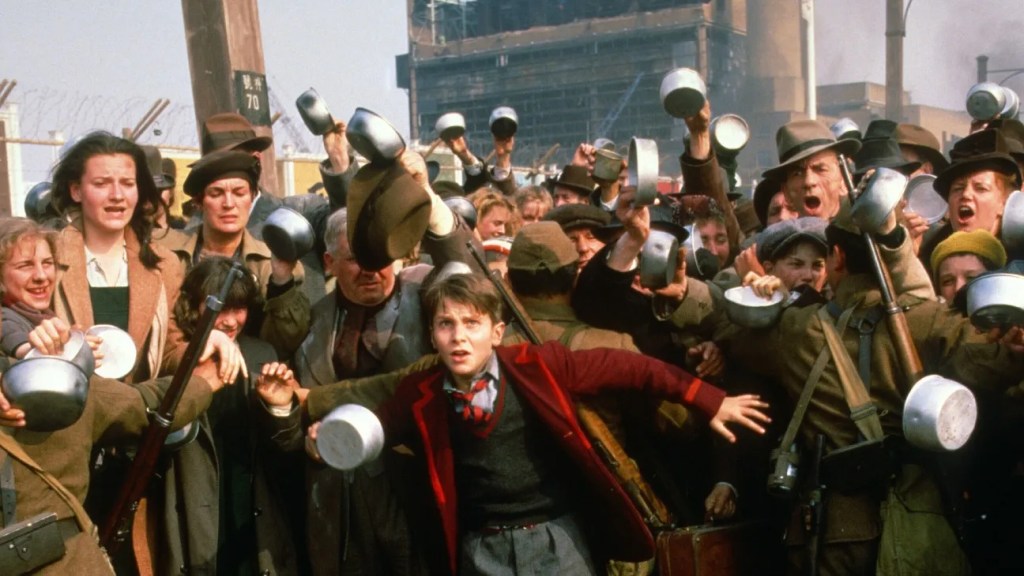
With so many strengths, it makes it more of a shame Empire of the Sun doesn’t quite click. It’s at least twenty minutes too long, dedicating too much time to larger scale moments which, while impressively staged, distance us from the heart of the movie. It works best with smaller personal moments, even within its epic sequences. The Japanese army marching into Shanghai is masterfully staged, but it’s the terror of Jim as he loses his parents in a surging crowd that carries the real impact. Similarly, Jim watching the A-bomb explode, light flowing across the screen, has a silent power. Some moments capture the changing world in microcosm brilliantly: Jim’s discovery that his parent’s staff are looting his home, has the maid respond to his anger by calmly walking across the room and slapping him. This moment captures the fall of everything Jim has known perfectly.

You wish there was more of these smaller, more intimate moments in Empire of the Sun – just as you wish that the film was more slimmed down, more focused and better able to engage with the complex child’s perspective that could simultaneously love and hate the way. Spielberg’s film despite its many strengths and virtues, isn’t quite willing to do that.

Scent of a Woman (1992)

Scent of a Woman (1992)

Pacino roars to Oscar-glory with an impressive turn in an enjoyable but predictable coming-of-age drama

Director: Martin Brest

Cast: Al Pacino (Lt Col Frank Slade), Chris O’Donnell (Charlie Simms), James Rebhorn (Mr Trask), Gabrielle Anwar (Donna), Philip Seymour Hoffman (George Willis Jnr), Ron Eldard (Officer Gore), Richard Venture (Willie Slade), Bradley Whitford (Randy), Nicholas Sadler (Harry Havemeyer)

Hoo-ha! It took eight nominations, but Pacino finally lifted the Oscar for his abrasive, damaged, charismatic turn as blind retired army Lt Colonel Frank Slade in Scent of a Woman. It’s not really a surprise: it’s a gift of a part, tailor-made for an actor as in love with bombast as Pacino to rip into, and rip he does. But he also manages to find the moments of gentleness, pathos, fear and self-loathing while expertly calibrating his internal acting dial to pings with explosive entertainment when the big show-stopping speeches come. It’s a million miles away from Michael Corleone’s bolted down, internalised rage – but it’s also a hell of a lot of fun to watch.

Pacino picks Scent of a Woman up and carries it single- handedly through enemy lines. Almost nothing will surprise you in this cosily familiar mix of coming-of-age posh-school drama and well-worn “odd couple” friendship, where an abrasive older guy toughens up a reluctant mild protégé. But, whaddya know, the kid also softens the old guy up. Charlie Sims (Chris O’Donnell), decent and polite scholarship kid at super-posh Baird school, faces expulsion because his principles won’t let him snitch on the spoilt, trust-fund, tosspot kids who played a prank on the school’s sanctimonious headmaster (James Rebhorn). Taking Thanksgiving to think about what to do, he accepts a job looking after Slade who promptly ropes him into a trip to New York, where the blind Slade plans on one final glorious weekend before blowing his brains out in a five-star hotel.

Of course, the film doesn’t end with Pacino’s little grey cells dripping down the side of the Waldorf’s no-expense-spared wallpaper. It will not surprise you at all that Martin Brest’s film heading where all feel-good films like this head: learned lessons, love of life re-embraced and a big speech from the big star solving all the problems. Scent of a Woman’s biggest flaw is it takes a very long time to hit all these familiar beats on the way towards its cookie-cutter capping of its coming-of-age/road trip set-up. Martin Brest was never a director to tell a story in a few sentences when a whole chapter would do, and Scent of a Woman is the last time he got the balance right between the length of the journey and the pleasure of being on it.

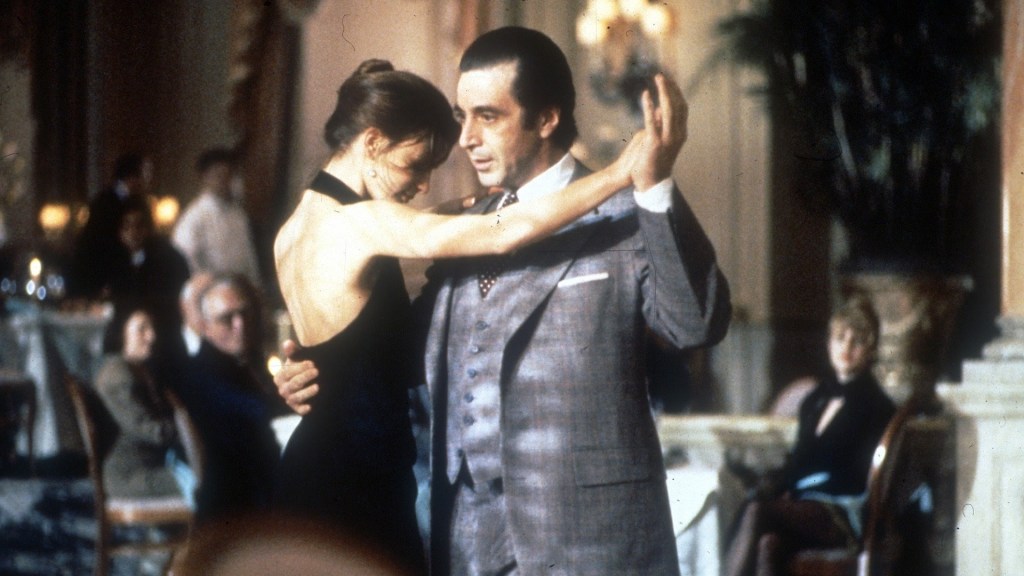
But then, as mentioned, a lion’s share of the credit belongs to Pacino. Surly but with just enough cheek. charm and biting wit, it’s a hugely entertaining role with big meaty speeches to chew on. Pacino makes it very funny, from his don’t-give-a-crap rudeness to his don’t-take-no-for-an-answer insistence on getting his own way. The film gives him a memorable set-piece moment pretty much every 15 minutes: his surly introduction, via a speech on the beautiful scents of women, the film’s iconic tango-dancing with Gabrielle Anwar, driving a Ferrari around the empty streets of the Bronx (and convincing a cop who pulls him over that he’s not blind), a thwarted suicide with the sort of barked refrain Pacino loves (“I’m in the DARK here!”) to a leave-no-prisoners final “courtroom” speech that’s one of the best of its kind. This is all meat and drink for Pacino.

But this is a more nuanced performance than just a star’s turn. Pacino makes Slade a deeply unhappy man, slowly realising he has been so most of his life. A man who uses anger, wit and cruelty as shields to drive people away and make himself look and feel tough. Blindness has become a constant reminder of his vulnerability and dependence, but also made the shell of isolation he has built around himself all consuming. He’s realising pretty much everyone he knows hates him, whose family (from youngest to oldest) want as little to do with him as possible, who has never had a meaningful relationship and clings to a war record he frequently garnishes to appear more important. Pacino manages to convey all this deep-down regret and self-loathing extremely well, matched with a physically dedicated performance of approximating blindness that is one of the best there is on film.

There’s a striking scene midway through where Slade crashes his brother’s Thanksgiving dinner. The family are less than happy to see him, but tolerate him at a table he dominates, first with garrulous (uninvited) army stories and then increasingly rude, sexual comments about his nephew’s wife. The nephew (Bradley Whitford) eventually tears him off a strip: in 1992 some felt sorry for this merciless puncturing of Slade’s self-mythologising, but today I can’t help but agree with Whitford’s takedown of Slade’s bullying. Slade’s eventual assault on his nephew is allegedly for calling Charlie “Chuck” once too often, but really feels like a desperate attempt to take revenge without feeling in the wrong. It’s a scene that actually cements what an awful negative force Slade has been, something he’s just starting to realise no end of whimsy can fix. This is a complex stuff among the Hoo-Ha.

Pacino’s helped by a very fine, generous performance from Chris O’Donnell as a young man who may be naïve and innocent but, in his own way, has more guts and integrity than the mercurial Slade ever did. While Slade is fundamentally selfish (and always has been), Charlie will make sacrifices for people he knows will never do the same for him and won’t flex his principles for any personal gain. O’Donnell also does some magnificent reacting throughout, frequently generously providing the dramatic context and crucial reaction points to make Pacino’s character work effectively.

Scent of a Woman’s posh-school drama provides a few more straight-forward figures of loathing: from James Rebhorn’s headmaster, via Philip Seymour Hoffman’s smug, gutless, entitled fellow student (a prototype of his role in The Talented Mr Ripley) who hangs Charlie out to dry, culminating in the three unbearably arrogant rich kids who carry out the prank. In some ways the plot here is far more engaging than Slade’s suicide run, even though nothing surprising really happens at all throughout it’s runtime. It also allows Brest to caps it off with such a dynamite speech from Pacino that it made the Oscar probably a foregone decision (even though Denzel Washington’s Malcolm X could feel rightly aggrieved at missing out on the little bald man).

That kind of sums the whole film up. Despite moments of complexity in its character study – forcefully delivered with depth and feeling by Pacino – Scent of a Woman is a film that offers virtually no surprises at all while expertly hitting every single beat you would expect to see while giving maximum entertainment factor along the way. It’s the sort of thing that Oscars are grown from.

The Night of the Hunter (1955)

The Night of the Hunter (1955)

Laughton’s only masterpiece is a fairy-tale, stuffed with beautiful images and dreamlike logic

Director: Charles Laughton

Cast: Robert Mitchum (Harry Powell), Shelley Winters (Willa Harper), Lillian Gish (Miss Rachel Cooper), James Gleason (Uncle Birdie), Evelyn Varden (Icey Spoon), Don Beddoe (Walt Spoon), Billy Chapin (John Harper), Sally Jane Bruce (Pearl Harper), Gloria Castilo (Ruby), Peter Graves (Ben Harper)

Few films have had their critical reputation change quite as much as The Night of the Hunter. When released, its reception from film critics and audiences was so negative that the crushing disappointment saw director Charles Laughton decide his debut would also be his last film. Flash forward seventy years and it’s now hailed as one of the great American films, a pictorial masterpiece. The Night of the Hunter sits alongside Citizen Kane as the classic film unappreciated in its day.

Adapted from Davis Grubb’s best-selling novel, it follows the nightmareish experiences of young John Harper (Billy Chapin) and his sister Pearl (Sally Jane Bruce). These kids witness their father Ben (Peter Graves) dragged away by the cops to imprisonment and execution – but not before he’s hidden $10,000 in Pearl’s doll and sworn them both to secrecy. Word about the money gets out: it’s why sinister ‘Preacher’ Harry Powell (Robert Mitchum) arrives and starts a-courting their mother Willa (Shelley Winters). After swiftly disposing of Willa, Powell turns his attentions to the kids – who flee down river, eventually coming under the protective wing of kindly widower Rachel Cooper (Lilian Gish) and her brood of young waifs and strays. Is it far enough though to escape Powell’s clutches?

The Night of the Hunter plays out like a fairy tale. Its images are full of the magic of the countryside and mysticism of nature. It frequently, deliberately, uses artificial sets and locations to create a dream-like state. It’s got a classic monster its heart, with Powell a demonic force-of-nature. It follows a pair of children on a journey reminiscent of Hansel and Gretel. There is a kindly old woman and a moral message of the importance of love, family, faith and loyalty. Everything in it feels, to various degrees, heightened. This is Southern drama via Hans Christian Anderson.

I wonder if that’s what threw people off on release. I’d agree that the film’s opening – Lilian Gish’s face superimposed over a starry night sky (followed by a cut of five kids heads superimposed over the same sky raptly listening) – might tee us up for the film’s mood, but looks and feels kitsch. The moments where Laughton deliberately aims at heightened, almost cartoonish, reality push the envelope of what you can accept – why does Powell, at one point, chase the kids up a flight of stairs, hands stretched out before him like he’s in a live action Tom & Jerry cartoon? Stumble onto The Night of the Hunter unwarned about its fantastical grounding and melodrama and it must look and feel odd, bizarre and even a bit laughable.

But it’s these same qualities that have made the film last. Laughton created a film of magical force and power, crammed with striking, imaginative images and beautiful sequences that tip between dream and reality. Its real heart lies in the children’s escape down the river, a remarkable sequence as the camera follows the boat drifting down an obviously artificial river, the children asleep as it glides past spider’s webs, frogs and other wildlife. From a film that opens with the aggressive arrest of the Harper’s dad, this burst of Where the Wild Things Are mysticism intentionally feels like we are crossing into a completely different world, let alone movie. But it’s also part of the film’s striking originality and quirky memorability. Few things look conventionally ‘real’ – in fact, like the farmhouse the kids stop at overnight in their long drift down river it feels even intentionally artificial – but it also gives the film a timeless, poetic feeling.

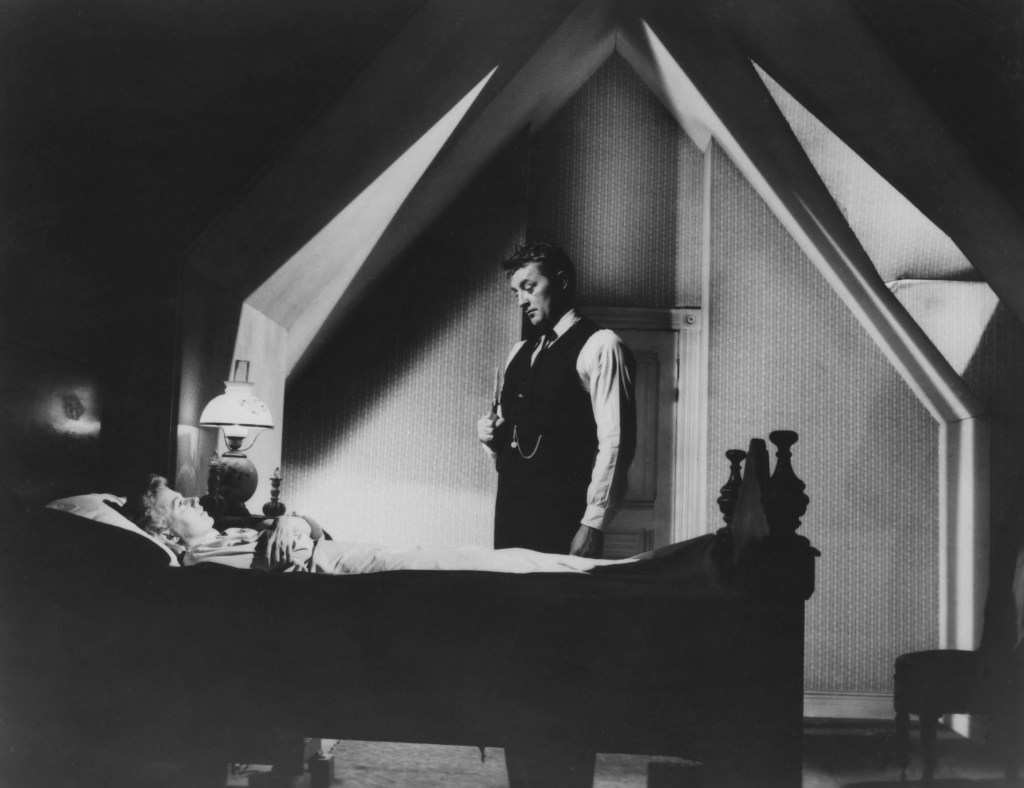
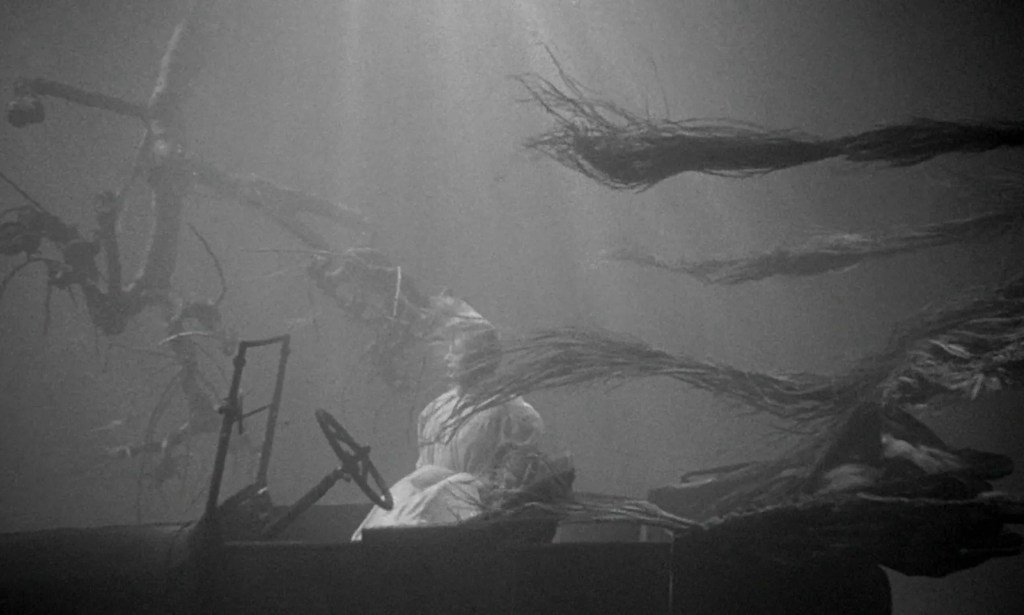
It’s a beautiful sequence in a film stuffed with them. Laughton worked closely with cinematographer Stanley Cortez and several sequences are awash with poetic visual flourishes inspired by some of the great German silent cinema of the 1920s. Who can forget the visually stunning shot of Willa’s body in a car at the bottom of the river, her hair flowing in matching waves with the weeds around her (possibly the most beautiful image of death in the movies)?  From the countryside shots that bring back memories of Murnau’s Sunrise to striking sets that seem to have emerged from The Cabinet of Dr Caligari. Most striking is the high-ceiling, Church-like set that is Powell and Willa’s bedroom, a shadow-laden expressionist nightmare. The scene is played with the same carefully choreographed expressionist force, from Mitchum’s vivid gestures to Winter’s corpse-like resting.

Death comes from Mitchum’s Preacher, one of the great monsters in cinema. With those famous ‘Love’ and ‘Hate’ tattoos, Mitchum makes the role truly terrifying. Mitchum kept up a studied public contempt for acting, but he immerses himself in Preacher in a way he did with few other roles. He makes him horrifyingly charming (he wins adult confidences easily) and his smooth gravel-voice and masculine bearing are both imposing and intimidating. But Mitchum also embraced the weirdness, the psychopathy of a man who murders without a second thought while keeping up a private conversation with the Lord. Preacher is an animalistic demon wrapped up in human skin – he lets out the most bizarre, piercing screams when foiled or injured – twisting his body into unsettling shapes before his misdeeds or letting his eyes boil with anger and disgust (most particularly at sex, something he seems to find repulsive and fascinating).

It’s an extraordinary, terrifying, monstrous performance unlike almost everything else in Mitchum’s career in its willingness to go to such twisted, eccentric, unnatural extremes. Mitchum credited Laughton as his finest director – and Laughton’s skill with actors is clear from all the performances. Shelley Winters’ has rarely been better in a role she skilfully downplays, as an unhappy woman, desperate for redemption, forced to feel ashamed of her desires. The two children are very good, in particular Chapin’s frequently raw panic and trauma and determination. The rest of the cast is stuffed with striking, Dickensian pen portraits, performances of striking eccentricity.

These performances fit within the magical realism of the film in a film that is as stylised as this. Again, I can’t imagine that audiences at the time – used to blockbusters, shot on gloriously realistic locations – were ready for something that aped so strongly the artistic flourishes of silent cinema. But it works spectacularly for a film about a children’s semi-magical quest into the wilderness. It’s hard to think of another film that leans so completely into such an aesthetic unreality as this one – even the town the kids eventually escape to feels like it’s a movie set rather than a real place.

The film’s final act in the home of Miss Rose Cooper is not as strong as those before. There is something rather po-faced and self-satisfied about the slightly clumsy moral message of finding faith and goodness which feels rather twee and disappointing considering the gothic film we’ve just watched. The film’s final sequence, on a peaceful Christmas day, belongs in a more conventional film (even though you could argue it’s also a conventional fairy tale ending). Much as I enjoy several moments of Lillian Gish’s performance as a tough old woman – like a shot-gun wielding Whistler’s Mother – the shift of focus away from Preacher’s demonic schemes feels like a loss.

The Night of the Hunter, for me, isn’t the complete masterpiece it’s sometimes hailed as – there are clumsy moments (I would agree the Tom & Jerry Preacher chase feels tonally out of place, and neither the opening or closing is strong), but it’s also filled with moments of pure cinematic magic – and has a performance from Mitchum that is one for the ages. Its imagery is beautiful, it’s tone mostly perfect and its imagination limitless. The greatest sadness about watching it is that Laughton never directed again – based on this, imagine how good his next film might have been?

The Fallen Idol (1948)

The Fallen Idol (1948)

Brilliant thriller about how hard the world is for a child to understand

Director: Carol Reed

Cast: Ralph Richardson (Baines), Michèle Morgan (Julie), Sonia Dresdel (Mrs Baines), Bobby Henrey (Philippe), Denis O’Dea (Chief Inspector Crowe), Jack Hawkins (Detective Amos), Walter Fitzgerald (Dr Fenton), Dandy Nichols (Mrs Patterson), Geoffrey Keen (Detective Inspector Davis), Bernard Lee (Inspector Hart), Dora Bryan (Rose), Karel Stepanek (First Secretary), Torin Thatcher (Constable)

We’ve all had heroes we worship haven’t we? Few hero worships burn as brightly as a child’s. Eight-year-old Philippe (Bobby Henrey), son of a foreign ambassador in London, is awe-struck by the embassies English butler Baines (Ralph Richardson), a kind, decent man with a twinkle in his eye who enjoys spinning stories for Phil about his exciting life in India. The highlight of Phil’s day is spending time in Baines’ parlour. For Baines though, his highlights are the snatched moments of release from his domineering, unloving wife (a masterfully tough-to-like Sonia Dresdel) that he spends with embassy secretary Julie (Michèle Morgan).

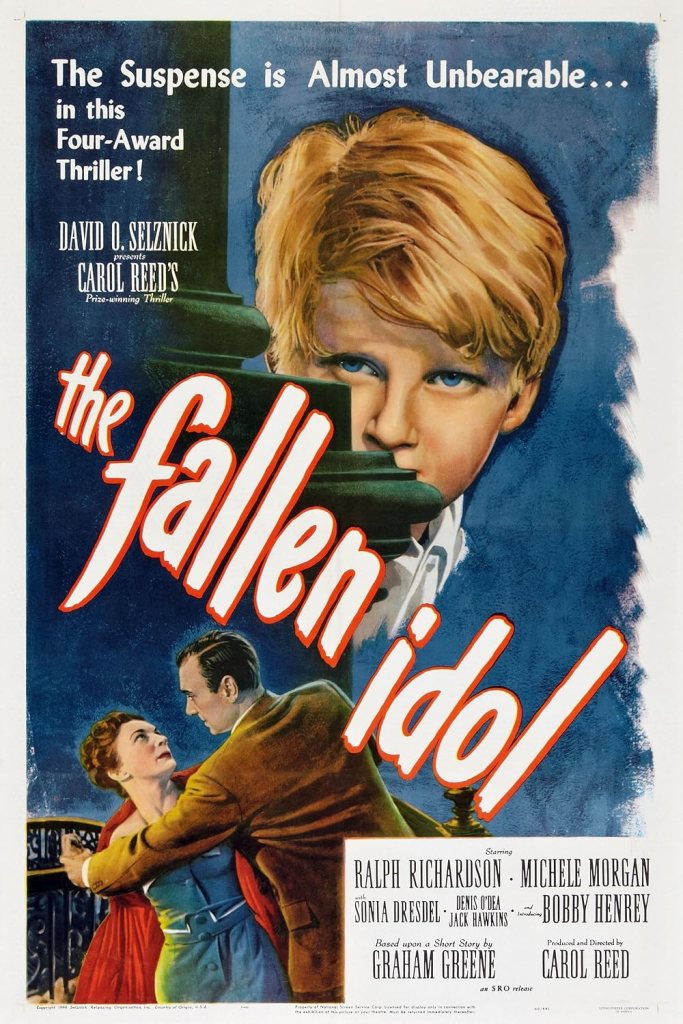
The affair is obvious to us in seconds. But Phil – from whose perspective we see large amounts (but, crucially, not all) of the film play-out – is of course oblivious, readily accepting Baines awkward assurance Julie is just his niece. The Fallen Idol – the middle film in Reed’s astonishingly high-quality run of films that includes Odd Man Out and The Third Man – is a brilliantly tense, very moving story of how adrift children feel in the adult world, how easily they misinterpret signals and misread social cues. Superbly filmed, with a wonderful script by Graham Greene (from his own novel) it’s a masterclass in how the simplest situation can lead to the most intense drama.

It revolves around a fatal trap for Baines. Believing his wife is away for the weekend (she has in fact concealed herself in the embassy mansion), Baines treats himself to a day and night with Julie. Discovered, the confrontation leads to Mrs Baines dead at the bottom of the stairs. The argument is partially witnessed by Phil – but crucially, only glimpses of it as he runs down the exterior fire escape, peering in through windows as he goes – but in full by the viewer. It’s clearly a terrible accident, taking place after Baines had left. But Phil is convinced he has witnessed a murder – and so passionate is his hero worship of Baines (and loathing of Mrs Baines), he decides to do everything he can to protect the butler.

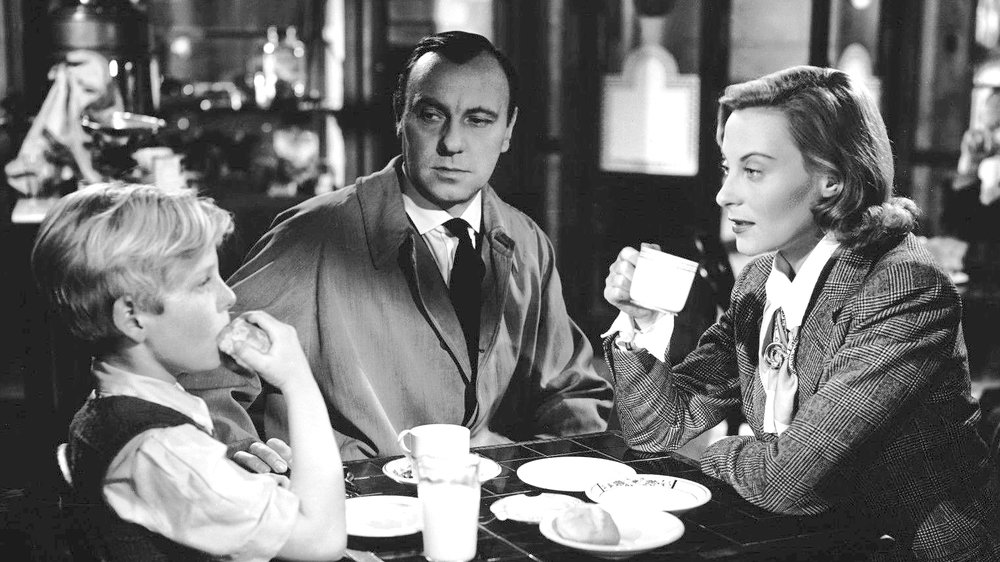
The genius of Reed’s The Fallen Idol is that we are always know more than any of the characters. Just as we can tell immediately from witnessing Baines and Julie’s whispered, Brief Encounter-ish meeting in a London coffee shop that they are in the midst of a passionate affair, so we also know much faster than any character that Mrs Baines is still in the house and that her death is a clumsy accident. We can also see, in ways Phil cannot, that his desperate lies only undermine Baines honest version of events. We know all the details well ahead of the police, watching them misinterpret clues and behaviour in the worst possible light. The entire film shows how damning circumstances and coincidences can fold up into a vice-like trap from which there is almost no escape.

The Fallen Idol is a film awash with lies. In many ways it’s a heartbreaking reveal of how quickly the compromises and selfishness of the adult world corrupts the child’s. At the heart of these lies is Baines himself. The role is beautifully played by Ralph Richardson, utilising his eccentric cuddliness to exceptional effect, but also perfectly capturing the selfishness, weakness and cowardice of Baines. Because Baines is a liar – not only to his wife, but also to Julie (he spectacularly lacks the guts to ask his wife for a divorce, despite what he tells Julie) and, walking Phil back after he has crashed Baines’ tea-time meeting with Julie, urgently instructs him to lie if he is ever asked about what happened that afternoon. Baines doubles down on his duplicity by using the unwitting Phil as a shield to cover a zoo-trip date with Julie, and even his adventure stories to Phil are all slightly self-aggrandizing tall tales.

One of the toughest things about The Fallen Idol is that hero-worship is a confused one-way street, especially when children are involved. Baines is fond of Phil but often treats him with distracted affection out-of-kilter with the earnest, devoted adoration Phil pours on him. This devotion from Phil is so great, even his belief that his hero is a murderer makes no impact on him. Having taken his idol’s lessons to heart, about what to do when questioned about anything to do with Julie, Phil lies and lies to the investigating officers, corrupting himself (he believes, after all, he is helping a killer) while also making the innocent Baines seem guiltier-and-guiltier with every word.

Carol Reed draws a superbly natural performance from Bobby Henrey, in a performance utterly lacking in childish, mannered acting tricks. It’s a hugely natural performance, over-flowing with innocence making Phil a character we end up deeply caring for. The early half of the film throws us perfectly into the excited world of a child with a whole mansion to run around in, cuddling his pet snake close to his chest. Reed also brilliantly captures how a moment of trauma confuses and terrifies an innocent into not knowing what action to take. Fleeing the house barefoot – clearly terrified and heartbroken – immediately after the death, Phil is petrified when he encounters a policeman not because he is intimidated, but because he fears inadvertently betraying his idol.

Reed superbly captures the desperate vulnerability of children, the nightmare of not having your voice listened to as adults talk over and around you. The Fallen Idol (with its careful use of disjointed angles and God-like, wide-angle shots from above) has a superb sense of the horror of being caught in a situation you neither fully understand or can influence. It’s echoed perfectly by Baines’ increasingly defensive panic as each denial falls on all-too-obviously deaf ears. Phil also misinterprets almost everything he is told in the film, right up to when the sympathetic Julie (a lovely, warm performance from Michèle Morgan) begs him that only the truth can help Baines.

The Fallen Idol spices this up with superb moments of comedy. Dora Bryan has a delicious cameo as a ‘lady of the night’, called upon to by the flummoxed policemen at the station Phil has fled to, to try and draw some words out of the stubbornly silent child – and who can only fall back on the cliches of her profession (‘Can I take you home dearie?’). An Inspector (a lovely cameo from Bernard Lee) called in to translate in the embassy is begged by the first secretary to drop his inept schoolboy French. A tense interrogation of Baines is interrupted when a pedantic embassy staffer insists he must be allowed to check the clocks in the room (Reed wittily shows the characters revolving, clockwork like, impatiently on the spot in the background while this interminable check goes on).

But the great strength of The Fallen Idol is how it captures the joyful innocence of childhood and the Kafkaesque confusion the adult world can have on a child. Poor Phil never really understands anything that goes on (although the film ends with a sweet irony of Phil being the only person who perhaps understands a vital ‘clue’ only to be completely ignored) while we are always in complete understanding. Reed’s direction is faultless, both from his work with actors to his masterful use of camerawork and editing to really capture the confusing, unreadable adult-world from a child’s perspective. It’s a masterful, gripping, heart-rending film – a small scale classic that perfectly mixes tension and wit.

CODA (2021)

CODA (2021)

Surprise Oscar-winner is reassuring, unsurprising feel-good fare, charming but crammed with familiar beats

Director: Sian Heder

Cast: Emilia Jones (Ruby Rossi), Marlee Matlin (Jackie Rossi), Troy Kotsur (Frank Rossi), Daniel Durant (Leo Rossi), Eugenio Derbez (Bernardo Villalobos), Ferdia Walsh-Peele (Miles), May Forsyth (Gertie)

Ruby Rossi (Emilia Jones) feels like she has been working her whole life. The only hearing person in a deaf family, she’s both translator and interpreter. She works early morning shifts on their fishing ship with her father, the imposing-but-playful Frank (Troy Kotsur), and older brother Leo (Daniel Durant), and butts heads with her former-beauty-queen mother Jackie (Marlee Matlin). After graduating from high school, Ruby assumes this will be the rest of her life: until music teacher Mr Villalobos (Eugenio Derbez) helps her discover her gift for singing and, suddenly, a new future of Berkle Music College is possible. But can she balance the conflicting demands of her family and dreams?

CODA is an eminently likeable, thoroughly unchallenging film. If someone dumped a pad down in front of you and asked you to guess, sight unseen, what its main plot beats would be, pretty much anyone who has ever seen a movie would nail 90% of them. But it’s a well-told, charming small-scale story, with a positive perspective on disability and tugs heartstrings with the assured skill of a master. In the end it doesn’t really matter that nothing in it is remotely surprising, challenging or unexpected, because it delivers exactly the emotional response the viewer is likely to want from it.

It’s a film about communication. The Rossi’s need Ruby’s ability to hear, and her ease with spoken English, to navigate the world around them in the fastest, smoothest way. Ruby, meanwhile, is struggling to communicate her own passions, after a lifetime of adapting herself to her family. Unlike them, she wants more than a life on the docks. This guilty conflict with the family she adores ironically makes her constantly avoid communication both with her family and her music teacher (investing his personal time and money in her) about the pressure slowly crushing her.

These increasingly conflicted desires and choices form the film’s heart. Will Ruby make her own life, or stay with her family for as long as they need her? It’s not helped by the fact that her talent (out of all the talents in the world) is one her family can’t fully share in, meaning they struggle to understand her dilemma. (Her mother outright sees Ruby’s singing as nothing more than teenage rebellion – stating if her parents were blind, Ruby would have embraced painting). On top of which, Ruby’s genuinely loving (but insular) family have been her whole world for as long as she can remember.

The Rossis are vibrant and warm-hearted with a salty sense of humour and a stubborn independent streak. Jackie and Frank are so infatuated with each other (even after decades of marriage) they frequently engage in noisy sex (much to the embarrassment of Ruby, when a visit from a would-be boyfriend is interrupted by some extremely loud, bed pounding coitus from next door). They delight in teasing each other – from Leo and Ruby’s inventive sign-language insults for each other to the hilariously intentionally explicit sign-language safe-sex lecture Frank gives Ruby and her prospective boyfriend. But they are also a tight-team, seeing themselves as having to fight for their place in the world and discussing problems with the low income of the fishing business as a unit.

CODA is keen to establish the Rossis not as victims or people the audience should feel sorry for, but as a warm and loving family of everyday working-class Americans, who just happen to be deaf. It’s part of the film’s challenging of perceptions around disability. Frank continues a fishing business started by his father, which he intends to hand to his son, and (eventually) steps up to become a leader in his community. Jackie is a chippy, opinionated woman who still loves the glitz and glamour of her old beauty pageant days while getting stuck into managing the family’s new business interests. All of them are vibrant and romantic, sexual people, confident in themselves and who they are, far from the passive recipients of charity and help that so many disabled people in film have been.

But CODA dodges more challenging questions around disability. It never really engages with the implication that the Rossi family have got so used to having a full-time, free translator, that they have become disconnected from the world around them. I can’t help but feel there is a germ of a more interesting film here about the family (however inadvertently) allowing themselves to be cut off from others. They have let their ability to lip-read slip, filter all their communication with anyone outside the family through Ruby, and have grown so used to her manning the radio for their fishing business that they can’t run the boat effectively without her (leading to inevitable coastguard trouble).

It’s also had a knock-on effect in the fishing community: the other fishermen have clearly never had to really build a relationship with the Rossi’s (after decades, no one on the docks has learned even the most rudimentary sign language or any communication techniques like moving lips clearly when speaking). Jackie is outright resentful of the hearing wives of the other fishermen and neither she nor Frank can imagine actually running a business without Ruby’s to handle literally all the verbal communication involved. The closest the film comes to addressing this is Leo angrily telling Ruby the family aren’t helpless – they managed before she was born and they will if she leaves. But the film doesn’t want to explore the implication that the Rossis allowed themselves to slip into a comfort zone that ultimately proves isolating and even damaging for them.

CODA does get some good material from their struggle to engage with music (even if this is an uncomfortable cliché for some in the deaf community). There are well-staged moments, such as the Rossis attending Ruby’s graduation concert, where we “hear” what they hear (nothing) and need to judge the performance, like they do, from the reactions of those around them. A scene where Frank finally appreciates part of his daughter’s skill by feeling the vibrations of her singing is done with real emotional force. However, it cheats by feeding this into an off-stage conversion where the family switch (overnight) from hesitant to “all-in” for a classic last-minute-dash to get Ruby to her audition.

That’s representative of CODA shifting away from more complex, challenging themes and issues for a heart-warmingly positive tale, familiar from dozens of movies past. Saying that, Heder does a good job pulling together the familiar elements, and Troy Kotsur (Oscar winning) and Marlee Matlin both give emotionally rich performances as the parents. Ruby is excellently played by Emilia Jones – who spent months learning sign language in order to perform the part and improvise with the other actors. But CODA feels like a gentle, consensus film full of pleasant moments and reassuring insights that love will overcome, which perhaps explains why it won an Oscar in a year of more divisive films. There is nothing in it that could possibly rile you up or shake your faith in the decency of ordinary people. CODA is a film designed to wrap around you like a comfort blanket.

Fanny and Alexander (1982)

Fanny and Alexander (1982)

Bergman’s gorgeous final film, a sublime family saga, that leaves you thinking for days

Director: Ingmar Bergman

Cast: Bertil Guve (Alexander Ekdahl), Pernilla Allwin (Fanny Ekdahl), Ewa Fröling (Emilie Ekdahl), Jan Malmsjö (Bishop Edvard Vergérus), Gunn Wållgren (Helena Ekdahl), Erland Josephson (Isak Jacobi), Jarl Kulle (Gustav Adolf Ekdahl), Allan Edwall (Oscar Ekdahl), Pernilla August (Maj), Mona Malm (Alma Ekdahl), Börje Ahlstedt (Carl Ekdahl), Christina Schollin (Lydia Ekdahl), Harriet Andersson (Justina), Stina Ekblad (Ismael Retzinsky), Mats Bergman (Aron Retzinsky), Gunnar Björnstrand (Filip Landahl)

After many years (and masterpieces) Bergman wanted to move on from film: but before he went, there was time for one more magnum opus, a sprawling family saga that would throw a host of his interests (death, family, sexual openness, God, theatre, infidelity, the unknowable) onto one grand, sprawling canvas. Fanny and Alexander would be a truly personal film, featuring a young protagonist with more than a passing resemblance to Bergman himself. Despite this it’s an irony Bergman might like that the finest version of this film we have is actually a five-hour recut for television (the limits of run-time from distributors being one of many things Bergman was tired of). That version is a beautiful, life-affirming, gorgeous piece of film-making, an extraordinarily humane story tinged with the supernatural told on a luscious, Visconti-like scale. It’s a fitting sign-off from a master.

In 1907, the wealthy Ekdahl family live in a luxurious apartment block, their rooms filled with the rich detail of their love of art and culture. Ten-year-old Alexander’s (Bertil Guve) father Oscar (Allan Edwall) and mother Emilie (Ewa Fröling) run the Ekhdal theatre, where his wealthy grandmother Helena (Gunn Wållgren) once performed. After a fabulous Christmas celebration, Oscar dies after a stroke while rehearsing the role of the Ghost in Hamlet. After a period of mourning, Emilie remarries to the older Bishop Edvard Vergérus (Jan Malmsjö), who turns out to be a domestic tyrant, obsessed with the letter of religious and family law. Will Alexander, his younger sister Fanny (Pernilla Allwin) and their mother escape from Vergérus’ controlling clutches?

What really strikes you first and foremost about Fanny and Alexander is its gorgeous warmth – hardly the first quality you traditionally associate with Bergman. It opens with a prolonged (over an hour) Christmas celebration, with the family and their servants eating, laughing, telling stories and dancing through their gorgeously furnished apartment. It should feel indulgent (and I suppose it is), but this warm reconstruction of an at-times-flawed, but fundamentally loving and vibrant family is actually deeply moving and heart-warming.

The Ekdahls have a bohemian freedom, with their love of theatre and art (only Uncle Carl, a manic depressive businessman, feels slightly out-of-place and even he takes the children to one-side during the festivities to entertain them by blowing out candles with his farts). Their house is charmingly egalitarian, with the servants treated as part of the family, loyalty they return. The theatre troupe (led by Bergman regular Gunnar Björnstrand in his final, small, role) – are equally part of this extended family, the theatre a second magical home where the children take small roles in various productions and delight in the stagecraft and costumes behind-the-scenes.

Fitting a Bergman family (and the Ekdahl’s share some elements with parts of Bergman’s family) they are extremely forward-looking in their morality. Uncle Gustav Adolf (played with bombastic, gentle charm by Jarl Kulle) is a notorious ladies man, but goes about it with such innocence and near-childish openness his patient wife Alma (Mona Malm) indulges him because in all other respects he’s a loving husband and father, and his overall fidelity to her is never in doubt. Alma restricts herself to a single slap of his new lover, maid Maj, but otherwise treats her like a sister. Pernilla August is hugely endearing as this caring young woman, swiftly absorbed into the wider Ekdahl family who value her care for others. The Ekdahl’s have no time for conventional morality, led from the front by matriarch Helena (Gunn Wållgren is fantastic as this wordly-wise, ideal grandmother figure) who has lived a life of sexual openness with her husband and values people not societal conventions.

Oscar, their father (wonderfully played by Allan Edwall as a bashfully mediocre actor and a quietly shy but warm man) takes his role as the leader of this company very seriously, but with a light touch (modestly bemoaning his lack of statue compared to his father). Bergman uses a myriad of small moments to make this father an ideal parent, not least a late-night fantastical story he improvises for the children, spun around their nursery room chair, one of the most tender moments of parent-child bonding in the movies. (This despite hints that Oscar, who has allowed the younger, more sensual Emilie to conduct her own affairs, might not be their true father).

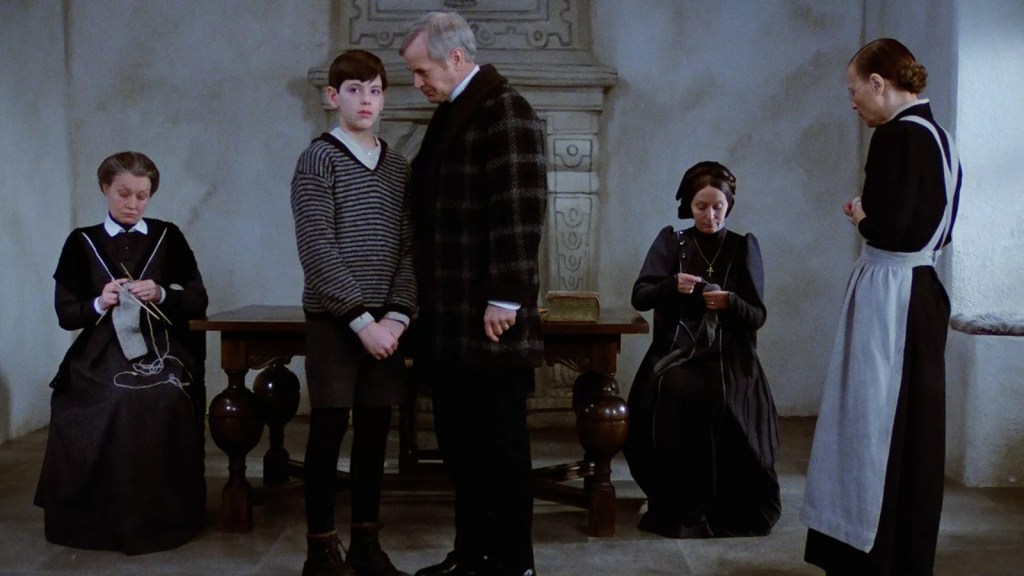
The stunning production and costume design (which won Oscars for Anna Asp and Marik Vos-Lundh) are essential for creating this immersive, rich and vibrant life: one which will be exploded in Dickensian tragedy by the death of Oscar and the arrival of the Murdstone-like Edvard Vergérus (played with chilling, smug hypocrisy by Jan Malmsjö under a fake smile) who is everything the Ekdahls are not. Where they are warm and egalitarian, he is cool and elitist, he is a prude with no regard for art and his home is in bleached-out puritan stone, devoid of personal touches – it literally looks like a different world to that we’ve spent the first few hours in, full of untrustworthy people (like Vergérus’ maid played by a wonderfully two-faced Harriet Andersson).

Vergérus is all about control, something we suspect from the start with his aggressively tender manhandling of Alexander, his hand slamming into the back of his neck. He worms his way into the affections of Emilie – a woman who, with her earth-shattering wails over the body of Oscar, is clearly vulnerable in her raw grief (Ewa Fröling is extraordinary as this gentle figure, prone to appalling judgement and unexpected strength of character) – and then sets out their marriage terms with controlling agendas, not least that in arriving in his house, she and her children must shed every inch of their previous life, from personal connections to the knick-knacks they have grown to love. He’s a poor advert for a God Alexander is already cursing for taking his father (his attic, filled with crumbling religious symbols, feels of a part of Bergman’s world where God is at best a passive observer, at worst a near malicious presence).

Bergman makes clear Vergérus is a man who genuinely believes he is doing the best for his family and that the moral lessons he hands out, at the end of a cane, to Alexander are essential. A weak man who mistakes bullying for strength. In many ways the fact he is not vindictive just weak and convinced of his own moral certainty (re-enforced by his fawning family, who treat him like a sort of prophet). Sure, he’s capable of anger, anti-Semitic slurs and little acts of cruelty, but Malmsjö shows him as a man who is trying, in his own wrong-headed way, to win the love of his adopted wife and children and can’t understand why he is not met with gratitude and love.

Perhaps it’s this sudden dropping into a cold world (one not dissimilar from Bergman’s own troubled relationship with his priest father – in fact you leave Fanny and Alexander wondering if Bergman hated his own father as much as Alexander who literally prays for his death) that so sparks Alexander’s own links to a mystic world around him. There is a rich vein of something other throughout Fanny and Alexander, from the statues Alexander watches move in the opening sequence (not to mention the haunting spectre of Death he witnesses in the same moment), to Oscar constantly appearing to Alexander like Hamlet’s Ghost. Is this haunting Alexander’s guilt at this failure to face his dying father on his deathbed, or a link to a world beyond our understanding?

After all Oscar’s Ghost greets Helena at one point, the two entering into a loving conversation. And he’s not the only supernatural touch around Fanny and Alexander. Family friend (and Helena’s lover) the Jew Isak (a rich performance by Bergman regular Erland Josephson) lives in a house full of mystic puppets that might be able to breath and walk. Isak perhaps uses magic to help smuggle the children out of Vergérus’ house (making them appear in two places at once), while his androgenous son Ismael (played by a woman, Stina Ekbad) is implied to having the spiritual power to channel Alexander’s hatred of Vergérus into actual supernatural revenge in the real world (another classic literary touch, that plays on spirituality and the Mad Woman in the Attic in Jane Eyre).

Fanny and Alexander is an extraordinary film, I feel I have only begun to scratch its surface here. It’s both a Dickensian family fable and a semi-benevolent Ghost story. It’s a family saga and a careful look at a particular time and place. It’s funny and moving. It really feels like one final mighty effort from a master.