Category: Crime drama

Minority Report (2002)

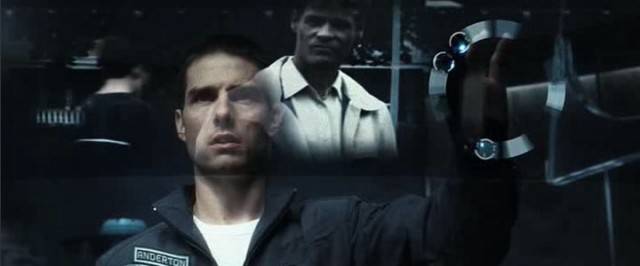
Tom Cruise messes with fate and the future in Minority Report

Director: Steven Spielberg

Cast: Tom Cruise (Chief John Anderton), Max von Sydow (Director Lamar Burgess), Samantha Morton (Agatha), Colin Farrell (Danny Witwer), Neal McDonough (Detective Fletcher), Steve Harris (Jad), Patrick Kilpatrick (Knott), Jessica Capshaw (Evanna), Lois Smith (Dr Iris Hineman), Kathryn Morris (Lara Anderton), Peter Stormare (Dr Solomon P Eddie), Tim Blake Nelson (Gideon)

If you could see what lies ahead for you in your future would you change it? Or would you accept what fate has clearly already decided? It’s one of many questions that Minority Report, Spielberg’s bulky, brainy sci-fi chase movie slash film noir, tackles. And the answer it suggests is: everybody runs.

It’s the year 2054, and murder in the District of Columbia is a thing of the past thanks to the Pre-Crime Division. Using three psychics, known as “pre-cogs”, permanently hooked-up to a machine that can visualise their visions of violent deaths and murders that will occur, the Pre-Crime team led by Chief John Anderton (Tom Cruise) arrest and imprison murderers hours, minutes and seconds before they even commit their crimes. Anderton believes passionately in the system – but his belief is shaken when the next murderer to be identified is none other than himself. Anderton is due to kill in a complete stranger in 36 hours – and immediately goes on the run to work out who this man is, why he would wish to kill him, and if there is any truth in the rumour that the pre-cogs don’t always agree, and that the most powerful pre-cog Agatha (Samantha Morton) can produce a “minority report”: an alternative vision that shows a different future.

Spielberg’s film is one that mixes searching discussion on fate, choice and destiny with the pumping, fast-moving action of a chase movie and the gritty, hard-boiled cynicism and intrigue of a classic film-noir. He frames all this in a brilliantly constructed, dystopian future where adverts and government surveillance can read our eyes wherever we go and identify us immediately (throwing personalised ads in the faces of people everywhere they step) and, in the interests of safety, people who have technically not done anything yet are imprisoned for life on the basis of things it has been determined they will do.

It makes for a pretty heady cocktail, and one which will have you questioning how much of what we decide is our choice and how much is destiny. If Anderton knows his destiny, can he change his fate? Will he have the willpower or the ability to avert his destiny? Or does knowing what will happen and where it will take place only drive him towards his fate? Put simply, does knowing the future in advance give you a chance to change or it or does it make that future even more likely (or perhaps even inevitable)? Spielberg’s film delves intelligently into these questions, throwing paradoxes and causality loops at the viewer with a genuine lightness of touch.

This works because the film balances these more philosophical questions with plenty of adventure and excitement. Several chase sequences – which make imaginative use of various pieces of future tech like driverless cars and jet packs – keep you on the edge of your seat. Spielberg tentpoles the film throughout with some brilliant set pieces, from Alderton’s race against the clock to stop a killer at the start to his own escape from the clutches of his former colleagues. 

These set pieces also differ in styles. These more conventional action sequences are sandwiched between others that are a mix of darkness, comedy, horror and slapstick. In one sequence, Alderton must attempt to hide in a bath of icy water (Cruise holding his breath of course for a prolonged period on camera) to evade a series of body-heat seeking metallic spiders, with Alderton desperate to protect his freshly replaced eyes from being exposed too soon to daylight. Later, Alderton will evade the cops thanks to the advice of pre-cog Agatha whose simple instructions (Grab an umbrella! Stand still for five seconds behind the balloons! Drop coins for the tramp!) wittily use her fore-knowledge of events to guide Alderton through a gauntlet of perils.

The horror is in there as well from those creepy spiders, not to mention the ickyness of Cruise carrying out an operation to replace his eyes to evade that all-intrusive retinal scanning. The sequence – with Peter Storemare as a sinister doctor who delights in leaving unpleasant tricks for the temporarily blinded Alderton (rotten food and sour milk being the most gross) – is a brilliantly vile, uncomfortable piece of kooky surrealism in the middle of a wild chase. And also tees up the bizarre dark comedy of Cruise – attempting to use his old eyes to break back into his former office – dropping his eyes and desperately chasing them as they roll down a corridor towards a drain. 

There are also darker themes in Alderton’s tragic background. Saddled with a drug addiction and a broken home, we learn Alderton is still struggling with the grief of losing a son to kidnappers – a loss he clearly holds himself personally responsible for. Getting tanked up at home and interacting with old home movies of his lost son, Alderton carries within a deep sadness and grief. It’s a challenge that Cruise rises to really well, his ability to bring commitment and depth to pulpy characters perfect for making Alderton a character you really invest in.

It also gives Alderton the tragic backstory and self-destructive problems so beloved of grimy, gumshoe cops of old noir films. That’s certainly also the inspiration for the drained out, greying look of the film that Spielberg shoots, with colours bleached and the future looking a confusing mix of clean, sleek machines and dirty, rain sodden streets. Alderton’s hunting down of his future victim has all the shoe leather and bitterness of classic Chandler. Meanwhile Federal Agent Witwer (a decent performance from Colin Farrell) chases him down with the determination of an obsessed cop, while also showing more than a few of the quirks of the maverick PI himself.

Minority Report is so good in so many places, it’s a shame that the final act so flies off the rails from the tone of what we have seen before, eventually stapling a happy ending onto a film that tonally has been building towards something very different. On a re-watch, there is just enough in the film to allow you to interpret this ending as a sort of fantasy or dream, but you’ll want the film to end the first time it crashes to black (you’ll know the point I mean). I prefer to believe the ending is a sort of dream – although Spielberg drops no hints to this effect in the film visually at all, in the way something like Inception does so well, to leave you questioning reality – because with that thought that final act betrays everything you have seen before in its simplicity and embracing of binary rights and wrongs.

But with that massive caveat, Minority Report is a very impressive film – and for at least the first hour and fifty minutes probably one of Spielberg’s best. It gets lost in the final act – and I know I said this but please let that be a fantasy – but until then this is a brilliant mix of genres and intelligence and Hollywood thrills with Cruise at his best. It’s exciting and its emotionally involving. Ignore that ending and it’s great. When you re-watch it, pretend you can’t see that future.

The Driver (1978)

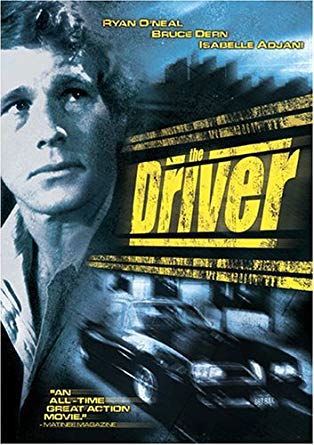
Isabella Adjani and Ryan O’Neal buckle up in The Driver

Director: Walter Hill

Cast: Ryan O’Neil (The Driver), Bruce Dern (The Detective), Isabella Adjani (The Player), Ronee Blakely (The Connection), Matt Clark (Red Plainclothesman), Felice Orlandi (Gold Plainclothesman), Joseph Walsh (Glasses), Rudy Ramon (Teeth)

The Driver was Walter Hill’s attempt at making a pure genre film. Characters? Who really needs ‘em – how about we just name every character after their function? Plot? Let’s keep it really simple – cops and robbers? Events? Let’s never take longer than 20 minutes to get from one action, car-chase set-up from another. The Driver is an alarmingly simple piece of genre film-making – which means you can see why it’s been so popular with a generation of film-makers who have admired its stripped down cool and sparse chill.

The Driver (Ryan O’Neal) is a supernaturally gifted escape car artist, who lives his life by an almost samurai code and rigid punctuality. The Detective (Bruce Dern) is the obsessed cop willing to bend the rules in order to catch this uncatchable man. The Detective hires a gang of criminals to hire The Driver to be part of a bank job – he’ll let them get away with the heist if they will help him catch The Driver. But things are never that simple.

The Driver barely has a plot at all really – it’s totally about the vibe of creating something so stripped down there is barely anything left. Like pure experience cinema. However, somehow, a piece of pulp cinema like this still manages to end up feeling very self-important and pleased with itself, for all its grimy realism. 

For starters, it’s hard not to feel slightly annoyed by none of the characters having names. On top of this they are all treated, to varying degrees, as unengaging ciphers, plot devices rather than human beings. When they speak they tend to stand and stare into the middle distance while doing so, or drop elliptical statements that feel important but are actually pretty empty. This isn’t helped by casting a selection of actors who are pretty balsawood in the first place: Ryan O’Neal is no one’s idea of Laurence Olivier, although at least his wooden delivery pretty much matches up well with a bland cipher like the Driver. Isabelle Adjani, in her first English language role, feels rather confused by the whole thing and goes for a dead-eyed inscrutability.

Perhaps, with the lack of energy coming from his co-stars, Bruce Dern goes all out as a character who, really, makes no sense at all as the lawman so obsessed with justice he’ll break the law to enforce it. Dern pretty much chews the scenery with wild-eyed intensity, even though in dialogue he also has too fall back on the same empty, metaphorical nonsense as the other two.

This all makes for a strange mixture of bizarre art installation and hard-boiled, super driving stunts. Everything that doesn’t take place behind the wheel of car is laced with a portentous self-importance. The driving in this film is, by the way, fabulous. The film has three major sequences of driving expertise which signpost each act, and each is shot and framed with an influential edginess by Hill. Using low angles, and strapping the camera onto the bonnet of the car, the film throws us into the middle of all the wheel-spinning action.

The opening sequence – a high speed escape from a robbery that narrowly falls behind the Driver’s tight schedule causing all sorts of problems – is a perfect entrée for what will come, neon lit cars burning down and through downtown LA, engaged in all sorts of fast turns and clever tricks to shake off tails. Hill follows this up with an entertaining sequence mid-movie, where the Driver proves his unquestionable skill by expertly manoeuvring at high speed around a car park, skilfully and deliberately knocking parts of the car off as he goes round. This all builds towards the final chase, which rips through a building estate and finally a factory as the Driver chases down the thieves who have fleeced him of his cash.

Ah yes, the cash. There is a complex sting operation going on here around some cash from a job being kept in a locker in a train station, but it hardly really matters (the film barely stops to explain it anyway). You only need to know it’s a trap but the Driver needs it as the results of this big job. Like the characters, events in the film matter only as far as their plot function requires. It makes for an odd viewing experience, but this has influenced so many films later – not least Drive which is a remake in all but name – that The Driver, for all it is a slightly frustrating watch at the time, is assured now of a classic status you wouldn’t have expected when it bombed at the box office on release.

BlacKkKlansman (2018)

Adam Driver and John David Washington infiltrate the KKK in Spike Lee’s brilliant, thought-provoking, political message film BlacKkKlansman

Director: Spike Lee

Cast: John David Washington (Detective Ron Stallworth), Adam Driver (Detective Philip Zimmerman), Laura Harrier (Patrice Dumas), Topher Grace (David Duke), Jasper Pääkkönen (Felix Kendrickson), Ryan Eggold (Walter Breachway), Paul Walter Hauser (Ivanhoe), Ashlie Atkinson (Connie Kendrickson), Corey Hawkins (Kwame Ture), Michael Buscemi (Jimmy Creek), Robert John Burke (Chief Bridges), Fred Weller (Patrolman Andy Landers), Harry Belafonte (Jerome Turner)

BlacKkKlansman feels like it would make great material for a comedy film. The true story of the first black cop in Colorado, who in the 1970s tricked the Ku Klux Klan (over the phone) to give him membership of the party, working with a white colleague for face-to-face meetings. Hard to believe but, as this film says, “Dis Joint is based on some fo’ real, fo’ real shit”. And the film has more than its share of comic beats. But Spike Lee is far smarter, and far more worried about where America is going, to simply make a film that turns the KKK into a gang of idiots. Instead this becomes a dark, terrifying vision not just of what America was but what it is.

Ron Stallworth (John David Washington) is that first black cop. Ambitious and keen to do his bit, he points out that he is perfect for some undercover work – and after first investigating some of the civil rights movement (and falling for Black Student Union Leader Patrice Dumas, played by Laura Harrier) he is motivated to turn his attention to the Klan. Cold calling local organiser Walter (Ryan Eggold), he quickly finds himself welcomed to the Klan (who are of course completely unaware of his race). Working with fellow undercover detective Zimmerman (Adam Driver), a more relaxed Jewish cop, who can handle the face-to-face meetings, Stallworth opens an investigation into extremism in the far right, with their main target being Grand Wizard David Duke (Topher Grace).

Spike Lee’s film starts as a clever balance between exploring the central comedy of this set-up – the black cop busting the KKK – and an exploration of the racial tensions that were barely concealed in America in the 1970s. Stallworth experiences a parade of suspicion and resentment of the police from his fellow African-Americans, while some of the responses from the police officers range from suspicion to outright racist distrust. It’s his brilliant handling and understanding of the racial tensions in America that power the movie – and give it the impact and importance it undoubtedly has.

The comic timing in much of Washington’s phone calls with various hard-right racists is spot on, and the film gets laughs from the gullibility and foolishness of the Klan (Duke talks at length about how he can always tell the difference vocally between a white man and a black man). But Lee knows that extremism like this fundamentally isn’t a joke – and it’s certainly not in this film, which wraps up a part cop-caper, part undercover thriller with a sharp political message.

Because no matter how stupid the KKK are, we are left in no doubt about how dangerous, violent and vile they truly are. The racist language, the repeated use over and over again of every insulting term imaginable for African Americans and Jews, the prolonged fantasy talk about lynchings and murders, the amount of guns these people have available to them, the mix of suave “public face” racists and the violence-as-a-first-resort hicks and hillbillies that follow them… It’s beyond alarming, its’ terrifying. And Lee is quite clear – give any of these people even the slightest piece of endorsement and encouragement, and they would gleefully enact another Holocaust. There ain’t nothing funny about that. 

Instead, scene after scene of Adam Driver’s undercover cop interacting with this human slime shows no amount of humanity or empathy can be found at all among this appalling crowd of people. You feel the terror of these people and Lee fills every scene with a mounting tension and horror that slowly strangles (fittingly) the initial comedy of the set-up. But then that is part of Lee’s extraordinary work on this film, an angry blast of politically motivated invective wrapped up in an entertaining story. Lee makes it clear that we are kidding ourselves if we think racism is a problem of the past, or something that can be easily wrapped up (it’s easy to see why he was so pissed off that Green Book, a far more cosy, reassuring and hopeful film about racism, scooped best picture). The film ends with an alarming flash forward to shots from Charlottesville, reactions to the murder of Heather Heyer and shots of Trump mindlessly talking about “very fine people on both sides”. The message “America First” is shouted as proudly in the 1970s plotline as it is in the real life footage of 2017.  Hammering home Lee’s fears that the KKK have never had a warmer environment to work in than they do today.

Lee’s film does struggle when it comes to the plot that he builds around the events of the film. The film makes clear that in many ways the whole investigation was for nothing and produced no lasting results: it unearthed KKK sympathisers in key government departments (all of whom were “sent to Alaska” in the words of Stallworth) but was then abruptly closed down. While this real target is referenced in a throwaway scene or two, a late fictionalised bomb plot by the KKK – which of course revolves around Stallworth’s fictional black power girlfriend – doesn’t quite ring true and feels slightly out of place.

But the real aim of the film is Lee’s political message, and on that score this film is powerful, sticks in the mind and leaves a lasting impression. Lee’s direction is also a brilliant mixture of flash and sensitively filmed set-pieces. There are superb cameos from Harry Belafonte (in a heartfelt speech) telling a story of historic lynching, and Corey Hawkins as articulate, passionate activist Kwame Ture. Both these sequences stand out, with Lee’s controlled direction knowing when to move the camera and when to hold it and let the power of the words and emotions do the work.

The cast all give outstanding performances. Driver is chameleonic (and Oscar nominated) as the cop who moves naturally between his own liberal views and his easy approximation of racism. Washington is brilliant in the lead role as the dedicated lawman, willing to prove himself among the racists of his own department. Grace and Eggold stand out as two different types of the face of “acceptable” KKK. Lee’s film builds on these performances with his own passion to create a truly lasting and important piece of filmmaking. Never believe the world has changed: this film reminds us immediately that cozy stories that talk of “how far we’ve come” are fairy tale fantasies that distract us from the danger of a racial lynching being just round the corner.

Heat (1995)

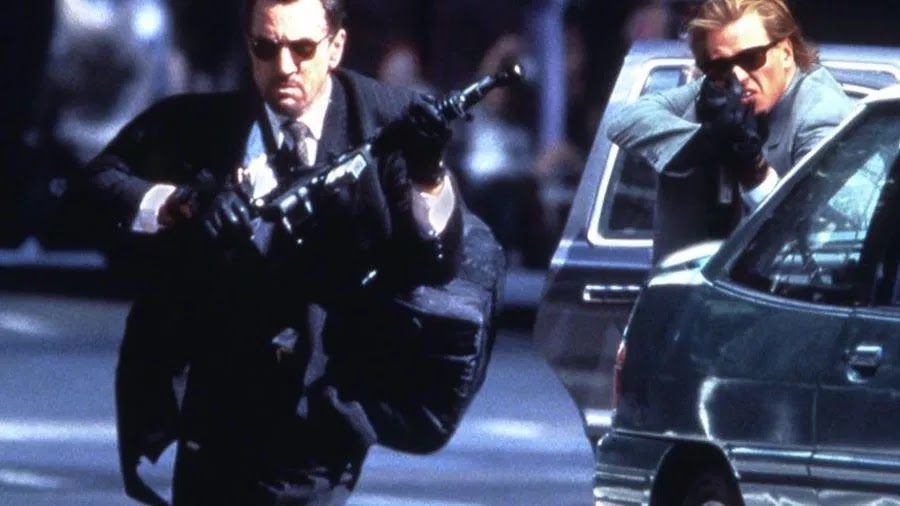
De Niro is packing Heat

Director: Michael Mann

Cast: Al Pacino (Lt Vincent Hanna), Robert De Niro (Neil McCauley), Val Kilmer (Chris Shiherlis), Jon Voight (Nate), Tom Sizemore (Michael Cheritto), Diane Venora (Justine Hanna), Amy Brenneman (Eady), Ashley Judd (Charlene Shiherlis), Mykelti Williamson (Sgt Drucker), Wes Studi (Detective Sammy Casals), Ted Levine (Detective Mike Bosko), Dennis Haysbert (Donald Breedan), William Fichtner (Roger van Zandt), Natalie Portman (Lauren Gustafson), Tom Noonan (Kelso), Kevin Gage (Waingro), Hank Azaria (Alan Marciano), Danny Trejo (Trejo), Xander Berkeley (Ralph)

In the mid-90s, Heat was the cinematic event of the year. De Niro! Pacino! Together! In one scene! The two acting heavyweights – wildly proclaimed and popular since the 1970s – had of course made The Godfather Part II together but had shared no scenes. Here, however, we’d see them both at the same time riffing off each other. The great thing is that there is so much more to Heat than just that one scene. Heat is a sort of poetic cops and robbers flick, part stunning action adventure, part profound exploration of the internal souls of men chasing down leads, both good and bad.

Neil McCauley (Robert De Niro) is a skilled career criminal who lives his life with a monastic self-denial, saying you can have nothing in your life “that you cannot walk out on in 30 seconds flat if you spot the heat around the corner”. Vincent Hanna (Al Pacino) is a bombastic, egotistical, workaholic detective with a self-destructive family life. Naturally, these two men find themselves on opposite sides, as McCauley plans his next job and Hanna works to stop him. But the men, with their similar codes dedicated to their chosen career, find that they have an increasing mutual respect – not that that will stop either of them “putting the other one down” if push comes to shove.

Heat is the pinnacle of Michael Mann’s career, and his most triumphant exploration of the conflicted, complex, masculine personalities at the heart of the high-adrenalin worlds of crime and police work. Mann has a gift for giving the simple rush and tumble of cops and robbers a sort of epic poetry, like a metropolitan Beowulf, and he achieves this again here. Heat is a film that throbs with meaning, it’s cool blue lensing and chilly, modern architecture serving as a perfect counterpoint to the cool, professional and focused personalities of its characters.

Heat also goes the extra mile by building this playground confrontation into a mythic battle of wills, a battle of principles and ways of living that seem separated only by a few degrees. Mann invests this with such sweep, such grandiosity (without pomposity), such scale that it becomes a sort of modern epic, a film where intense meaning can be mined by the viewer from every scene. Whether there is in fact any meaning there – avoid listening to Mann’s commentary which drills down so many of his elliptical character beats and open-ended scenes into the dullest, most predictable tropes that he had in mind while filming – is another issue, but Mann’s trick as always with his best work is to make something really quite small and everyday seem like a grand, timeless epic.

It all boils down to that famous coffee shop scene, where De Niro and Pacino for a few magic moments come together. It’s a scene that explicitly asks us to see cop and criminal and understand that there is in many ways very little to choose between them. It hinges on the gentle competitiveness of the actors, and the way they subtly play off each other. It also plays on our own histories of these two actors, of decades of seeing them as two sides of the same coin, both carrying so much cultural baggage for a string of iconic roles that saw them rule Hollywood for over a decade. It’s the sort of scene given extra investment, where you sense the mutual respect of the actors fuelling the strange bond that powers the scene. 

It’s also the one scene of the film that Pacino underplays in. The rest of the film he goes way bigger, powering through each scene with an explosion of shouting and drama. It’s a performance ripe for parody, with more than an edge of ham, but it just about works. Pacino turns Hanna (hilariously the character shares a name with a BBC political journalist of the 1980s) into the purest form of adrenalin junkie, a larger-than-life personality who tears through people and cases with a focused determination that allows no room for a personal life. De Niro downplays far more by contrast, apeing a sort of 1940s noir cool, a monkish insularity that prevents anyone from getting close to him, mixed with a laser-guided determination to do whatever it takes to make his score.

Mann’s film throws these two characters into a series of stunning set pieces with the bank robbery at the centre (“the one last score” that McCauley can’t pass up no matter the danger). The robbery – and the shoot out that follows it – is a triumph of action cinema, brilliantly shot and edited. The gun play is stunning, with Andy McNab having served as a consultant for the actors on the use of automatic weapons. The scene rips through the screen, spewing bullets all over the place in a ruthless, no-onlooker-spared rampage that also really pushes the limits of effective sound design. That’s just the highlight of several scenes that – with guns or otherwise – hum with tension, danger and excitement.

Mann also has enough room in this film though to skilfully establish a number of supporting characters with compelling story lines of their own. Val Kilmer is a tad wooden as McCauley’s number two, but his storyline of troubled marriage is mined for unexpecting pathos (thanks also to Ashley Judd’s fine work as his wife). Kevin Gage is very good as a psychopathic criminal unwisely brought on board to fill a slot in an early robbery. Dennis Haysbert has his own tragic plotline as a criminal trying to turn straight. Diane Venora is excellent as Hanna’s neglected wife, as is Portman as his vulnerable daughter-in-law. This isn’t to mention excellent performances from a rogues gallery of character actors, from Jon Voight to William Fichtner. 

Mann keeps all these plotlines perfectly balanced in a film that is very long but never drags for a minute. Crammed with exciting set pieces and brilliant sequences, it’s a film that manages to feel like it is about a very masculine crisis – the failures of men to balance the personal and their career, selfishly harming those around them because of their addiction to action. Mann’s film looks brilliantly at the essential emptiness and sadness this leads to – as well as the blinkered drive that never prevents men from stopping for a second and changing their lives, no matter how many reflective cups of coffee they have. Mann partners this existential, poetic feeling drama with the ultimate crash-bang cops and robbers and thriller, which will leave you on the edge of your seat no matter how many times you see it. Quite some film.

The Anderson Tapes (1971)

Sean Connery plans the perfect crime under the noses of the government in The Anderson Tapes

Director: Sidney Lumet

Cast: Sean Connery (John “Duke” Anderson), Dyan Cannon (Ingrid Everleigh), Martin Balsam (Tommy Haskins), Ralph Meeker (Captain Delaney), Alan King (Pat Angelo), Christopher Walken (The Kid), Val Avery (“Socks” Parelli), Dick Anthony Williams (Edward Spencer), Garrett Morris (Everson), Stan Gottleib (“Pop”)

Everywhere we go now we kind of know that we are being watched. There are cameras everywhere. Satellite links build into our cars. Heck we all carry everywhere we go a portable tracking and recording device that can be listened into. So the idea of surveillance being ever present wouldn’t be a surprise to us. But in 1971, the idea that the government could be listening all the time, at any time was something that couldn’t cross anyone’s mind. 

It certainly doesn’t occur to John “Duke” Anderson (Sean Connery) just out of chokey after a ten year stretch. He’s back into a world he hardly understands, but it doesn’t take longer than five minutes in the swanky apartment block of his girlfriend Ingrid (Dyan Cannon) for him to case the joint and plan to do it over – all the apartments at once. Putting a crew together, Duke plans to clean out all the whole block of all its valuable property in one go, with financial backing from the Mafia (who owe him for unspecified reasons). Problem is, Duke’s entire plan is being recorded and monitored by different government agencies from top to bottom who – even if they aren’t speaking to each other – are in position to wreck his plans the instant anyone puts the clues together…

The Anderson Tapes is part crime thriller, part black comedy caper. It generally plays it pretty light – with flashes of violence or danger – and throws in some satire on the surveillance age. The tapes in question are different levels of surveillance at every location Duke seems to stop at. His time in the apartment is recorded by a PI following his girlfriend. The feds bugging his mafia contacts. Most of his criminal gang are being watched by the cops. All this recording creates a load of trees which block the view of the forest. Not one of these agencies thinks about joining up their thinking, meaning the actual robbery comes as a complete surprise to all of them. It’s a neat satirical mark on the incompetence of administrative led organisations – when the robbery is finally being reported by a ham radio operator, the news almost doesn’t get through because of a refusal by the 911 operator to transfer a call without an agreement on who will pay the charges for the call.

In all this surveillance Duke is like a romantic hangover from a by-gone time. As played by Sean Connery he’s a romantic figure, like some sort of working-class Raffles, living by the principles of a gentleman thief. He abhors violence, gets on well with all races and creeds, respects his victims and protects them (so long as they don’t get in his way) and runs operations designed to be clean, quick and painless. He justifies his thievery with talk of how most of the property he nicks is just sitting pointlessly in safes, that the insurance will pay out and that in a way he’s giving a bit of excitement to bored middle-class people. Connery is rather good in this role, channelling this rogueishness and expertly maintaining Lumet’s light tone.

Lumet’s direction is competent, professional and assured. Lumet did not hold the film in high regard – it was one he did “for the money” – but he expertly constructs the film, keeps it tight and brings more than enough intriguing directorial flourishes to it. The action frequently pauses in the criminals conversation for a jump cut to the feds listening to the recordings, having paused the recordings themselves (the paused action even uses voiceover from the feds asking for confirmation of who they are listening to). Later, Lumet uses a similar device in the robbery interjecting flash forwards to the people in the apartment bloc being interviewed on site by the police, commenting on events we have often just seen while the aftermath plays out behind them, that throws in plenty of narrative curve balls and misdirects as the action pans out.

The film is dated in places. Quincy Jones’ score often uses a jarring series of electronic beeps that are meant to echo the surveillance of the piece, but actually sounds impossibly dated and jarring. An opening monologue of Connery on the thrill of safe cracking uncomfortably sounds like he is comparing it to non-consensual sex, Martin Balsam’s gang member is an impossibly limp-wristed antiques expert (although he is immediately believable as someone who wouldn’t be questioned surveying apartments for architectural improvements while he is actually casing the joint). There are other moments – but the film gets by because it never leans too hard on any of these attitudes. Indeed the apartment concierge, is depicted as inflatteringly racist and homophobic, in stark contrast to the multi-ethnic, un-prejudiced gang carrying out the robbery.

The Anderson Tapes is an enjoyable, is very 1970s, piece of work that has more than enough to entertain you. It has a clever structure and makes some sound points on surveillance which probably make it more relevant today than it even was then. Connery is very good in the lead role and there is some excellent support (Christopher Walken is strikingly charismatic in one of his first roles). It’s not in the first rank of its director’s films, but it’s still a very fine caper thriller.

Destroyer (2018)

Nicole Kidman goes way-against-type as a bend the rules cop in Destroyer

Director: Karyn Kusama

Cast: Nicole Kidman (Detective Erin Bell), Sebastian Stan (Chris), Toby Kebbell (Silas), Tatiana Maslany (Petra), Bradley Whitford (DiFranco), Jade Pettyjohn (Shelby Bell), Scoot McNairy (Ethan), Toby Huss (Gil Lawson)

There are few things that pique the interest of reviewers and viewers more than a celebrated Hollywood star going well against type, looking rough, playing tough and letting those shades of grey flow freely. That’s the cheap interest in Destroyer, Karyn Kusama’s engaging, well-made thriller which showcases the sort of way-against-type performance by Nicole Kidman that practically demands the poster scream “Kidman as you’ve never seen her before!”. Of course this all serves to obscure that Kidman is a damn fine actress and a committed performer, and she gives it everything in this grimy, underworld thriller of compromised cops and ruthless robbers.

Erin Bell (Nicole Kidman) is a detective with a shady past: an undercover operation with an FBI Agent Chris (Sebastian Stan) which went wrong 15 years ago. In the present day, the body of a John Doe in Los Angeles opens up links to this case from the past, causing Erin to start a rogue investigation into her old undercover days and the gang members she knew back in the day, specifically her long-held grudge against the psychopathic Silas (Toby Kebbell).

Destroyer gives us a familiar story – the cop with the dodgy past, gone to seed, playing against the rules, tired of life, with a shattered family background, investigating what could be one last case that has devastating links to the past – but presents it from a slightly new angle by making the protagonist a woman. This calls for a terrific performance from Nicole Kidman, who is bashed up, run down, grouchy, seedy and above all immensely damaged. Kidman’s skill at a performer is evident in every scene, creating a character who cannot escape from the burdens of her past, who rejects all help and who is unable to live with the burden of some sort of unspecified guilt.

Much has been made of Kidman’s roughed up, broken nosed, run down, alcoholic appearance (the film gets a lot of mileage over close ups of her ravaged, aged, alcoholic’s hands), but her commitment to the role transcends any deliberate slumming. She is completely believable as the sort of rough-and-tumble, rule breaking cop. The make-up also means that the flashback scenes to a 15-years younger Erin are immediately clear – and give us a clear indication of how far she has fallen since her more hopeful days.

The film is all about the burden of the past, and the film constantly flashes back and forth between the present day and Erin’s time undercover. The film carefully and slowly unveils the exact reasons for Erin’s guilt and why she has become the person she is, but the burden of it hangs over every scene in the present and is visible in Kidman’s eyes in every scene. It brings these themes to life extremely well and weaves an engaging story, even if everything in it seems like a collection of familiar events from other films.

In fact that is the film’s biggest weakness, right there. Many of the events, characters and themes in it feel like they have been plucked from a range of noir thrillers, thrown up into the air, and then reassembled into a new patchwork. As impressive as Kidman’s character is, it’s familiar to us from any number of hard-boiled cops past. The film’s structure – of Kidman going from contact to contact to get closer to Silas – basically allows for a series of actors to give performances that, for all their skill, end up feeling like a random collection of stock characters. None more so than Silas himself who, despite Toby Kebbell’s best efforts, is a totally forgettable rent-a-psycho. But then you can say the same for Tatiana Maslany’s aged junkie and, for all his slimy excellence in the role, Bradley Whitford’s sleazy money launderer. Other characters feel the same as well, from Kidman’s troubled teenage daughter, her would-be gangster boyfriend, Erin’s put upon ex-partner or her wearily understanding partner. These people all seem, to various degrees, to be stock caricatures rather than characters.

What really makes the film work is the dynamic, often hand-held, kinetic energy of Karyn Kusama’s direction. Jittery, immediate and very real, Kusama makes a number of these stock situations – from shoot outs to roughing up suspects – look at least new and exciting. The two main shoot outs in the film are extremely excitingly done and make for gripping set pieces, with the added originality of seeing the main players being women. 

But the film itself is just a little too obvious and stock for it to really stand by itself, for all the quality of the direction and the excellence of Kidman. There are some moments that work brilliantly with the unexpected twist of having a woman in the lead role and seeing Kidman throw herself into a gunfight with a heat-packing disregard for her own safety is all the more electric for it. But it’s still a little too predictable and familiar – for all the fact that there is a decent semi-twist towards the end that reveals not all is as we thought at the start – which perhaps doesn’t make it a film for all time.

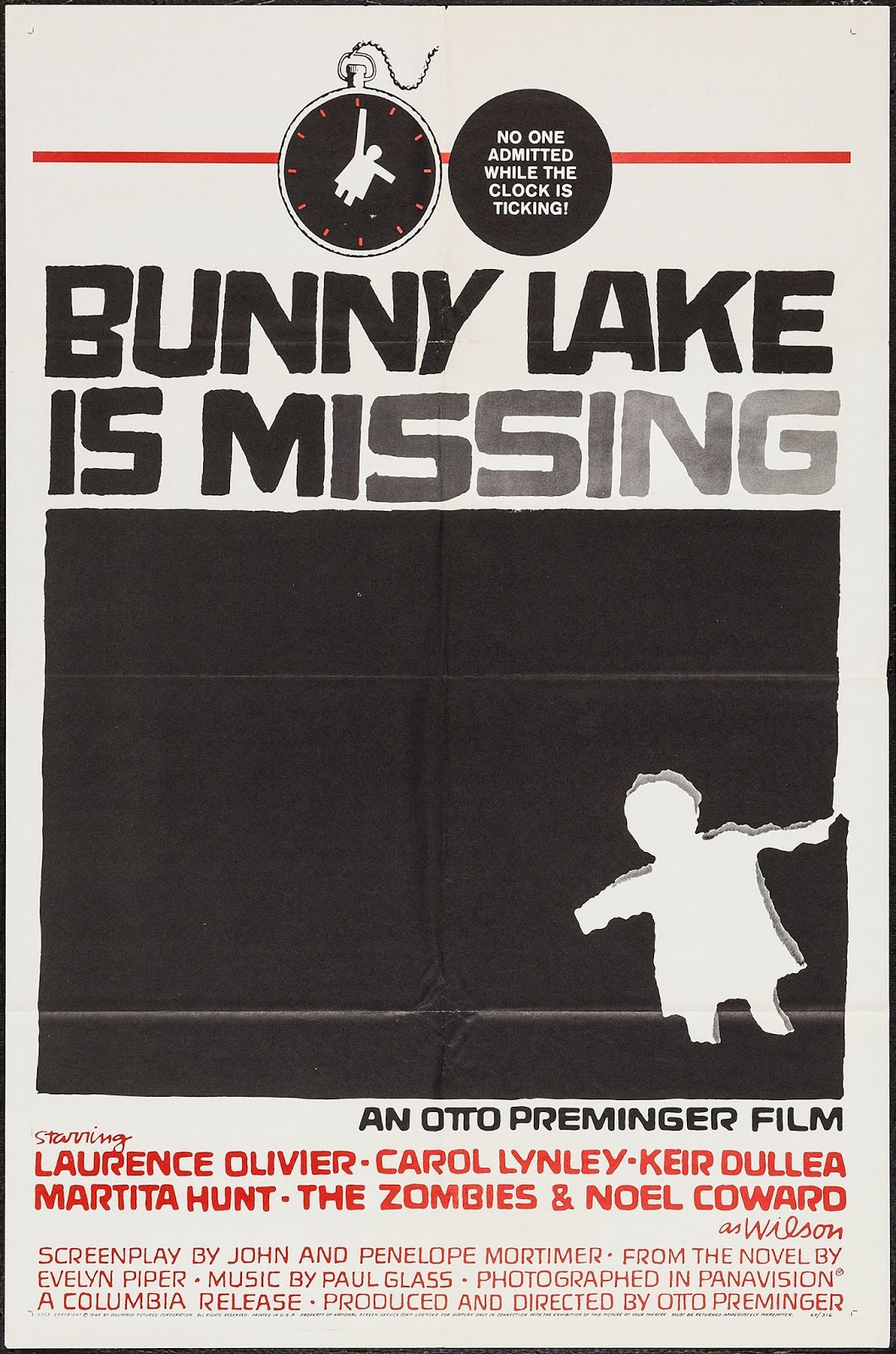
Bunny Lake is Missing (1965)

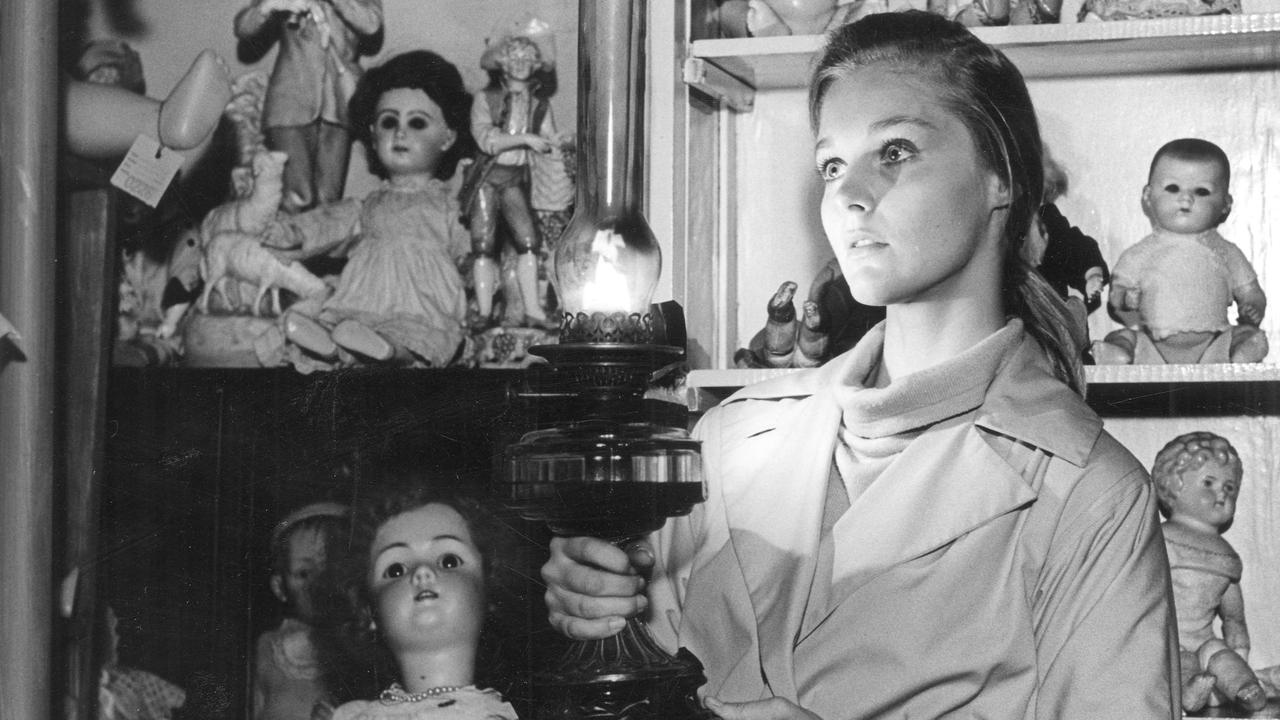
Carol Lynley’s daughter ‘Bunny’ goes missing – but is the girl real or not? Classic noir mystery Bunny Lake is Missing

Director: Otto Preminger

Cast: Laurence Olivier (Superintendent Newhouse), Carol Lynley (Ann Lake), Kier Dullea (Steven Lake), Martita Hunt (Ada Ford), Anna Massey (Elvira Smollett), Clive Revill (Sergeant Andrews), Finlay Currie (The Doll Maker), Lucia Mannheim (The Cook), Noël Coward (Horatio Wilson)

Otto Preminger’s career was an interesting mixture of high-brow, noirish thrillers and pulpish adaptations. Bunny Lake Is Missing is a mixture of these, a restructuring of a hit novel. Transplanting the novel from New York to London, the film covers a single day and the investigation into a missing child ‘Bunny’ Lake. Her American mother Ann Lake (Carol Lynley) drops her at her new school, and returns at the end of the day to find no one has seen her daughter or any record of her existence. While her protective brother Steven (Kier Dullea) rants and rages, Superintendent Newhouse (Laurence Olivier) leads the investigation. As Newhouse fails to find any evidence for the child’s existence at all, the question is asked: is she a figment of Ann’s fragile imagination?

Preminger plays this delicate game of “guess who” with the audience for a skilled and enjoyable 90 minutes before giving us any form of answer. The film throws us straight into the mystery of whether Bunny is real or not from the off, as our first shot of Ann is her alone in the school after dropping her daughter off. We see as little evidence of Bunny’s existence as the cast does. From there it’s a careful balance between giving us enough reasons to both trust Ann’s conviction her daughter is real and also give us enough reasons to suspect that Ann may be as unbalanced as Newhouse is concerned she might be. 

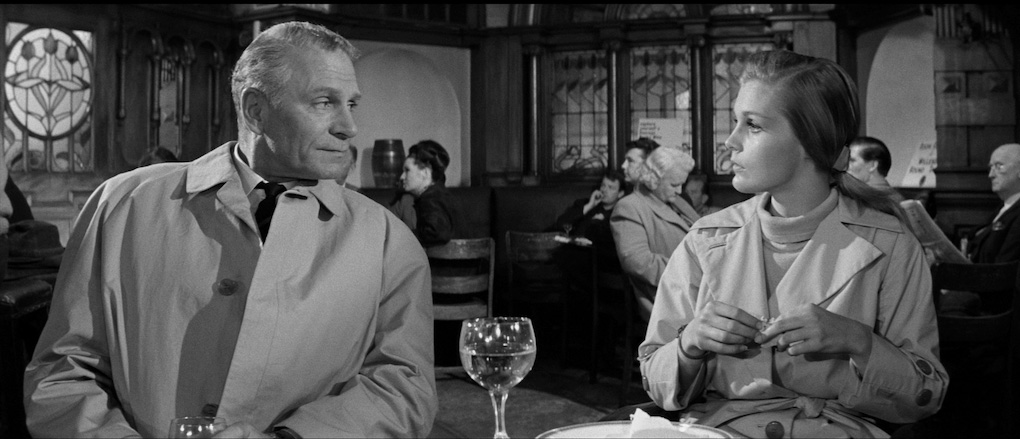
It’s quite the game the film plays, and Preminger does it very well, the film never tipping the hand too much one way or the other. Shot in luscious black and white, it’s a film of noirish shadows and imposing blackness where everything feels a little bit out of kilter and untrustworthy. Preminger throws us into Ann’s perspective by using a number of clever tracking shots that allow us to follow her through the events of each scenes. These shots are sustained, subtle and also give us a further subconscious reason to trust her – we are effectively seeing the events of the film side-by-side with her. It makes for a rather empathetic film, and one you find yourself investing into.

Not least because it completely understands the twin horrors of both losing a child and not being believed by anyone no matter how desperate you plead that you are telling the truth (no matter how generous people are while doing so). Preminger acutely understands we all deep down worry that we are going to be let down by those we need to believe in – and this feeling of concern, mixed with frustration and pity for Ann is what draws us to her. Even while we think there is more behind Bunny’s existence than meets the eye.

The screenplay by John and Penelope Mortimer also throws plenty of potential suspects at us. These are largely a series of delicious cameos for vintage British actors. These extreme odd-balls also make the two Americans in London (Ann in particular) seem even more like fishes out of water. Martita Hunt is excellent value as a retired school headmistress, seemingly confined to a bedroom in the attic of the school (!) whose hobby is recording children talking about their nightmares. Anna Massey is equally good as a harassed matron more concerned about the negative impact on the school’s reputation than child’s safety. Pick of the bunch of this rogues gallery is Noël Coward (having a whale of a time) as Ann’s drunken landlord, a faded actor and sexually ambiguous seductress who in one priceless scene gleefully shows a group of police detectives some of his favourite whips (“I find the sensation [of being whipped] rather titillating…[this was] reputed to belong to the great one himself. The Marquis de Sade”) from his collection of bizarre sex toys.

These perverts, oddballs and weirdos are all investigated with a cool professionalism by Laurence Olivier’s Superintendent Newhouse. Olivier gives possibly one of his most humane, restrained and engaging performances: he’s the epitome of caring, dedicated professionalism and a superbly humane detective. Carrying much of the burden of conveying the films narrative, Olivier is superb here – and he manages to make Newhouse exactly the sort of man you would long to investigate your child’s disappearance, even as he starts to doubt the child even exists. Olivier is in fact so strong, that the parts of the film where he disappears suffer noticeably from his absence – no one else among the principles can match him for presence.

Saying that, Carol Lynley does an excellent job as a character we invest in and sympathise with, but can never quite bring ourselves to be sure is reliable. It’s a difficult line she walks between being believably distraught and simultaneously slightly off kilter, enough to make you worry that she be (knowingly or not) making the whole thing up. The feeling may be more than helped by the exceptionally weird relationship between herself and her brother, one of an incestuously unsettling intensity (their relationship as brother and sister isn’t divulged until almost 15 minutes into the film and it’s as much a surprise to the audience as it is to the characters).

Kier Dullea as her brother gives a decent, if rather strained performance, as Steven. Dullea’s slight emptiness in the role can perhaps be partly attributed to his terrible relationship with Preminger, later claiming making the film was the worst experience of his life. (Olivier was also unimpressed calling Preminger a bully). 

It’s a shame as Dullea is crucial to the final sections of the film. I won’t give away the reveal and solution, but Preminger overplays his hand here, stretching the final sequence of the film out to a full 15 minutes which rather overstays its welcome. Maybe the sort of psychological complexity it’s aiming for is a bit more familiar to use today, than it was in 1965, but it certainly feels like a scene overstretched. But that’s a blemish on a very solid mystery before then that brings more than enough pulpish pleasure, fine performances and interesting film making to reward rewatching.

I, Tonya (2017)

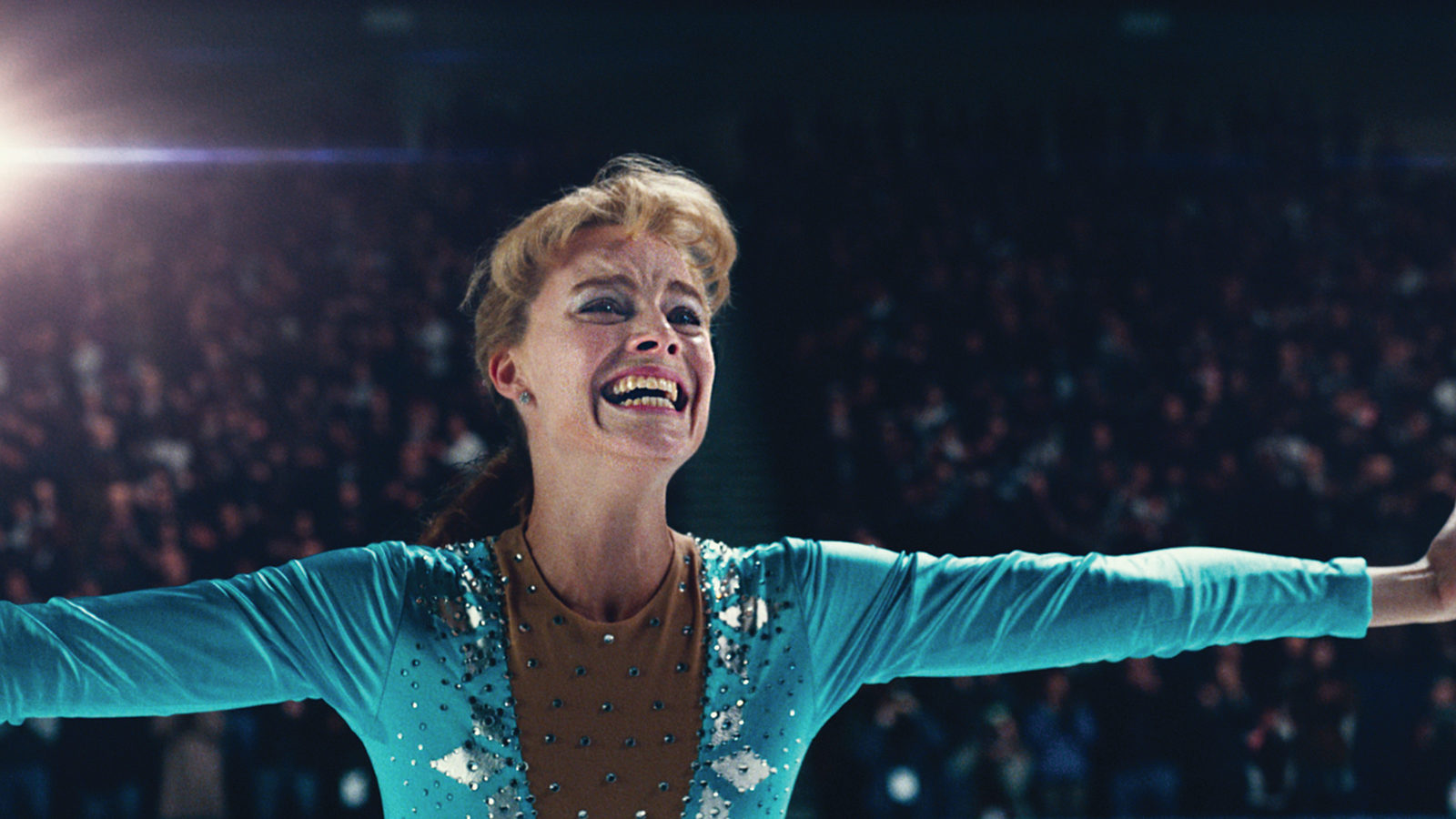
Margot Robbie triumphs as Tonya Harding in I, Tonya

Director:  Craig Gillespie

Cast: Margot Robbie (Tonya Harding), Sebastian Stan (Jeff Gillooly), Allison Janney (LaVona Golden), Julianne Nicholson (Diane Rawlinson), Bobby Carnavale (Martin Maddox), Paul Walter Hauser (Shawn Eckhardt), Caitlin Carver (Nancy Kerrigan), Bojana Novakovic (Dody Teachman)

In 1994, Tonya Harding (Margot Robbie) is the bad-girl of ice skating. From a working-class Portland background, with a domineering mother (Allison Janney), she struggles to be accepted in the upper-class world of ice skating. After some success, including becoming the first American ice skater to complete two triple axel jumps, she constantly finds success undermined by her own failings and indiscipline, and the influence of her wastrel, abusive husband Jeff (Sebastian Stan). When competing with rival Nancy Kerrigan for a place on the 1994 Winter Olympic team, Tonya encourages her husband to send Kerrigan threatening letters to put her off. What happens instead is an attack on Kerrigan that breaks her knee – and the fallout will have devastating consequences.

I,Tonya is much more than a film about an attack on a rival skater. Tonya (in the film) complains that the event (which she claims to have had so little to do with) has overshadowed her whole life, but that’s not a mistake the film makes. The film is instead a brilliant deconstruction of class and media in America. Tonya struggles in the world of ice skating because she comes from a working-class, trailer-trash background. This leads her to grow up with several chips on her shoulder, aggressively acting out against judges and fellow competitors, because she wants to belong but never feels she does. In a country that likes to pride itself that it doesn’t have the sort of class system the UK has, it’s a striking commentary on how Tonya completely fails to escape the impact of her poor, violent background – and uses it as a justification and excuse for everything that happens to her in the film.

Her background also makes it every easy for the media to cast Tonya as a villain, first as the difficult punk of ice skating, later as the Machiavellian arch schemer of a vile plot. The worst part of this is – like the reality stars of the 00s who would follow her – Tonya feels she needs to keep playing a role in order to “stay in the public eye”. In turn, the media – largely embodied here by Bobby Cannavale’s delighted media commentator, who gleefully recounts every key moment of the film in a smug series of talking head interviews – keeps the pressure on, puffing her up into whatever it requires her to be to fill a 24 hours news cycle. It’s surely no accident that the film ends with camera moving away from Jeff’s house, while news of OJ Simpson’s arrest plays on the television.

And why does Tonya fit herself into this role? Because, the film suggests, she is a victim who has confusingly absorbed her victim status into her personal relationships and self-value. Treated appallingly be her domineering mother, and hit constantly by her worthless husband, Tonya clearly believes that she is personally of very little worth. If she is so used to being an angry, raging punchbag at home, is it any wonder that she settles into that role publically? To the extent that, throughout, Tonya constantly sidelines or pushes away the more supportive people around her, like Julianne Nicholson’s (who is very good) dedicated coach.

The film handles this range of complex psychological and social themes with aplomb. In a neat touch, the film acknowledges that the events of its narrative are so controversial that everyone in it has a different view. The film is framed through a series of talking head interviews with the leading players (played by the actors) twenty years on. Each of them tells a contradictory version of the story and around the “incident”. The film, bravely, gives some weight to all these viewpoints. It’s brilliantly handled, as we see certain scenes from the perspectives of different characters, which makes them much easier to relate to. Gillespie also has a lot of fun with the film leaning on the fourth wall – frequently characters turn to the camera mid-scene for a few words of commentary, sometimes to stress a point, other times to deny the thing we have just watched ever happened. 

The eclectic and dynamic storytelling works an absolute treat, and Gillespie gets the tone absolutely right. While dealing with serious themes, the film is also blissfully funny. Much of the fourth wall humour is brilliant. While taking the characters seriously, the film is also written with a real dark wit. And (once you remind yourself that Kerrigan’s career was not seriously affected by the attack), the build up to the scheme itself, and the feeble cover up, is hilarious. Everyone in the chain of events is stupider than the person above them. Tonya is no genius, her weak husband is a clumsy fool, his friend Shawn an idiotic fantasist, the men hired to attack Kerrigan almost unbelievably stupid. The inevitable crumbling of the plot is hilarious in its disintegration.

It works as well because of the strength of the acting. Margot Robbie is superb as Tonya. She fills her performance with empathy for Tonya, but never lets her off the hook – Tonya never takes responsibility at any point for anything she does. Robbie gets the balance just right between the “little girl looking for love” vulnerability of Tonya, mixed with the bitterness and rage that always lurks just below the surface. She acutely understands the messed up psychology of someone who has been treated badly by everyone around her, and then finds it impossible to form a healthy relationship with the world.

On Oscar-winning form, Allison Janney rips into the sort of part that must have (rightly) looked like a total gift on the page. It’s a scene-stealing role: Harding’s mother is a foul-mouthed bully whose every other line is a zinging put down or resentment-filled burst of cruelty. Janney, however, keeps the part real: there is always a sense that somewhere in there, she genuinely feels she is doing what’s best for her daughter, even if her methods are completely misguided. Sebastian Stan is equally good as Tonya’s weak-willed, not-too-smart husband and Paul Walter Hauser is hilarious (as well as a remarkable physical match) as Shawn. 

I, Tonya is a very smart, very funny piece of social satire mixed with tragedy. While being very funny, it’s also sad and rather moving. It has some terrific acting in it and is directed with confident, but not overly flashy, aplomb by Gillespie. As a commentary on the media it’s well judged, and as a look at the impact of class at America it feels fresher than ever.

The Untouchables (1987)

The Untouchables (1987)

Super stylish cops and robbers thriller, as Costner and Connery take on Capone

Director: Brian de Palma

Cast: Kevin Costner (Eliot Ness), Sean Connery (Jimmy Malone), Andy Garcia (George Stone), Robert De Niro (Al Capone), Charles Martin Smith (Oscar Wallace), Patricia Clarkson (Catherine Ness), Billy Drago (Frank Nitti), Richard Bradford (Chief Mike Dorsett), Jack Kehoe (Walter Payne)

“What are you prepared to do!”

It’s the motto of this electric law-enforcement film, one of those all-time classics that provides endlessly quotable lines and moments you can’t forget. It’s crammed with iconic moments, from its brilliantly quotable dialogue from David Mamet, via its wonderful music score, to its artful film literacy and iconic performances. If there is an untouchable film, this one is pretty close. I love it.

It’s 1930, prohibition is in full force and Chicago is ruled by gangland kingpin Al Capone (Robert De Niro). Young Federal Officer Elliot Ness (Kevin Costner) is thrown into Chicago to end Capone’s reign and stamp out the illegal liquor business. Not surprisingly, it’s hard to know who to trust in a town as stinking as this one, until a chance meeting with disillusioned beat cop Jimmy Malone (Sean Connery) helps him find a group of people he can trust – “Untouchables” who aren’t going to go on Capone’s payroll. But to bring Capone down he’s going to have to embrace the “Chicago way” and start to bend his strict moral code. 

Listening to Brian de Palma talk about the making of the movie, you can’t help but suspect he felt he was doing one for the suits rather than one from the heart. Well perhaps he should do that more often, because The Untouchables is a lean, mean, hugely entertaining action-adventure, that plays with genuine ideas and but also nails every single moment. Every scene is shot with a confident, compelling swagger – the sort of thing that reminds you what a conneseur of high-class pulp de Palma can be. The Untouchables plays out like a super-brainy graphic novel adaptation, and every scene sings. There is barely a duff moment in there.

A lot of this comes straight from David Mamet’s brilliant script. Really, with lines like this, moments as well-crafted as this, characters as clearly, brilliantly defined as the ones on show here, you can’t go wrong. Quotable lines fall from the actors’ lips like the gifts they are: “He brings a knife, you bring a gun. He sends one of yours to the hospital, you send one of his to the morgue. That’s the Chicago Way!” It’s dialogue like this that just has ageless appeal, the sort of stuff you find yourself trying to work into day-to-day conversation.

But Mamet’s script is also sharply clever. It swiftly lays out at the start Ness’ moral compass, his code – and then, as the film progresses, it cleverly shows the whys and wherefores for Ness compromising these. Needless to say, the man at the end of the film is totally different from the bright-eyed naïve agent we met at the start. Mamet also brilliantly works shades of grey into all our heroes, while scripting some compelling moments of grandstanding bastardy that an actor as marvellous as De Niro is just waiting to send to the back of the net.

De Niro was of course the inevitable choice as Capone. Bob Hoskins was contracted just in case De Niro said no (when told De Niro would be taking the job but he would get a $20k pay-out for his time, Hoskins told de Palma he’d be thrilled to hear about any other movies de Palma didn’t want him to be in), but it had to be Bobby. The film drops Capone in at key moments: the film opens with the swaggering bully delighted at holding court with English newspapers while being shaved (de Palma’s camera draws down from an overhead shot, like a spider descending from the ceiling, to reveal him in the barber’s chair) – a flash of danger emerges when the barber slips and cuts Capone’s face (de Niro’s flash of fury, followed by his decision to pardon – combined with the barber’s terror – is perfect). Later Capone rages at Ness, hosts a very messy dinner party with a baseball bat, and weeps at the theatre while a key character bleeds to death at his home (a brilliant example of de Palma’s mastery of B-movie cost cutting). He’s the perfect dark heart.

And opposite him you need a white knight – even if it a white knight who is set to be sullied. I’m not sure Kevin Costner ever topped his performance here, in the film that made him a superstar overnight. Looking like the perfect boy scout – his fresh faced earnestness is one of his finest qualities – Costner also has a WASPish hardness under the surface. The burning determination he has to destroy Capone, his disgust at the murder and chaos Capone deals in, is never in doubt – just as his initial naïveté about how to end Capone is all too clear. Costner masterfully shows how each event pushes Ness a step or two further in bending his rules, to fight Capone’s ruthlessness with ruthlessness of his own. “What are you prepared to do!” Malone asks him, and the film is about Ness working out how far his moral compass can stretch. I can’t think of many films that so completely and successfully have the lead character change as much as Costner does here without it feeling rushed or forced. It’s a wonderful performance.

But the film is stolen – and it’s no surprise, as he has the showiest part, most of the best lines, and of course the movie-star cool – by Connery. It’s easy to mock Connery’s blatantly Scottish Irish cop – he gives the accent a go for his first scene, but promptly drops it. What Connery’s performance is really all about is an old dog who never got a chance to do the right thing, finally being given the licence, the support and the inspiration from the younger man to clean up this filthy city. And Connery rages in the film, a force of nature, the perfect mentor, the cop who against all initial expectations is prepared to go through any and all risks to get Capone. He’s the samurai beat cop, and Connery (Oscar-winning) growls through Mamet’s dialogue with all the love of the seasoned pro letting rip. It’s an iconic performance – and led to a five year purple patch of great films and roles for Connery.

But the film works partly because of these great performances and the script, but also because of de Palma’s direction. The pacing is absolutely spot-on, the camera full of moments of flash and invention. Every action sequence has its own distinct tone, from the horse riding hi-jinks of a Canadian border interception of a booze truck, to the dark slaughter late at night of one of the film’s main characters (a masterful, Hitchcockian piece of genius by the way that uses the POV shot to exceptional effect). A late roof chase sizzles with a ruthless energy.

But the real highpoint of the action is of course that famous train-station shoot out. Allegedly the original plans on the day had to be ditched due to budgetary reasons – so cinephile de Palma pulled a sublime Battleship Potemkin homage out of his locker. Shot in near silence, save for gunshots, the bounce of a pram falling down the station stairs (baby on board) and a spare score from Morricone, the sequence is true bravura cinema, both hugely exciting and strangely endearing for all those who know anything about the history of cinema. 

De Palma and Mamet keep the story focused, clear and every scene has a clear purpose and goal. There isn’t a single superfluous character or moment. Everything is perfectly assembled to serve the overall impact of the film. It’s gripping, entertaining and compelling: the sort of film where if you catch it at the right age it has you for life. Ennio Morricone’s operatic score is perfect for the film, underlining and emphasising every moment and effectively sweeping you up. Costner and Connery are superb, De Niro is perfect, the film is a gift that has something new to give every time you see it.

À Bout de Souffle (1960)

Jean Seberg and Jean-Paul Belmondo get obsessed with their own images in À Bout de Souffle

Director: Jean-Luc Godard

Cast: Jean-Paul Belmondo (Michael Poiccard), Jean Seberg (Patricia Franchini), Daniel Boulanger (Police Inspector Vital), Henri-Jacques Huet (Antonio Berruti), Roger Hanin (Carl Zumbach), Jean-Pierre Melville (Parvulesco), Liliane David (Lilane)

The French New Wave emerged from a group of film critics from influential magazine Cahiers du cinema in the 1960s, led by Francois Truffaut (who contributed a four page story outline to this film, although Godard later minimised his contribution as much as possible). The movement believed the director was the “author” of the film, stamping their personality on it. Packed with references to classic Hollywood movies, the films were shot with an improvisational lack of formality (that often hid brilliant cinematic technique) inspired by Italian neo-realism.

Breathless, Jean-luc Godard’s revolutionary masterpiece, was one of the central films in this school of filmmaking. It followed the last few days of Michael Poiccard (Jean-Paul Belmondo). A young man drifting through a life of petty crime, who idealises Humphrey Bogart’s style, he one day steals a car; it happens to have a gun in it, and in a moment of casual indifference he shoots a policeman trying to arrest him and flees. In Paris, while being hunted by the police, he reunites with his girlfriend, American student Patricia Franchini (Jean Seberg), and their self-absorbed relationship plays out under the shadow of the police net getting tighter and tighter.

Jean-Luc Godard’s film was hugely influential, as it seemed to re-write the rules of how films were to be made. Godard’s film is down and dirty, it’s almost guerrilla, but filmed with a wonderful, improvisational beauty. Shots are hand-held and dynamic, the action is all filmed on location, the framing is rough and ready, the camera gets up close and personal with the actors, throwing us in with them with an overwhelming sense of realism. The whole film feels irreverent, casual and cool, and gets a wonderful sense of urban Paris. It magnifies and reflects the very qualities the lead characters believe they have themselves.

Godard’s most influential touch was the use of jump cuts within scenes, with action jumping from moment to moment within a scene seemingly spontaneously, giving an impression of constant movement and ripping out the sense of time between actions. It also gives a sense of the film always driving forward, bouncing from beat to beat. According to rumour, this influential use of editing was a happy accident. The original cut of the film was well over two hours, and the distributors wanted something less than 90 minutes. Rather than cut whole scenes, Godard cut the small moments of movement or peace in scenes, giving the film a jagged freshness.

The whole film is full of these moments, the jumps over silences and conversational gaps, jumps in time lags between walking from point A to point B. It really works as well. The exterior scenes buzz with an exciting freshness. The long second act, basically nothing more than a conversation in a bedroom between the two leads, is edited almost like an action scene in a modern film – perfect for the self-dramatising energy the two characters are leading their lives with.

It’s those two leads who really help to make the film. Seberg picked up a quarter of the film’s budget to be the “name” lead, and she brings the film a soulful but distant sense of coolness. Belmondo was the real find, turning himself overnight into a mega star. In the sixties these were the people that your cool student wanted to be. Belmondo nailed his sense of iconoclastic cool in the opening moments – particularly when turning casually to the camera while driving his stolen car, to involve us personally in the story of his own life that he is constructing.

You can see how the performances (and characters) of the two leads had such impact on filmmaking. Energetic but also listless, contemptuous of authority and certain that whatever the world has in store for them it is definitely something more, self-absorbed and selfish, immature and convinced that their lives are more important that the average people around them – they are the predecessors of Bonnie and Clyde, of the young killers in Badlands. And nothing seemed to capture the counter-culture cool than Belmondo with a cigarette dangling from this mouth, apeing Bogart. 

But both lovers are equally selfish and obsessed with their own stories. Or rather, self-consciously living their lives like they are in a narrative – in fact you could say that the film predicts the self-obsession of the social media age. Michael lives a life that is all an entirely constructed front. He’s a would-be gangster, with a carefully studied front of gritty cool. He spends endless time making sure that his look, his clothes, his postures, his manners are always spot-on. He constantly keeps up a stream of consciousness narrative about his own life and situation, positioning himself as the sort of representative of modern American hip.

And Patricia is the same. Although at first she seems the more natural and grounded of the two, it’s clear her self-obsession is just as profound (if not more so) than Michael’s. Patricia constantly reviews and rebuilds the narrative of her own life, discussing her romantic life like it was a carefully constructed fiction, or some sort of hyper-cool Mills and Boon. “Do I love you? Should I love you? Can I make myself not love you?” Patricia’s construction of her own narrative – and her desire to shape and control it completely – makes her as completely artificial as Michael is. 

She’s so determined to construct her own narrative, that she shrugs off a string of revelations about Michael as if they didn’t exist. He’s a killer? Okay. He’s got at least two names? Hardly matters. He’s married? Nobody’s perfect. When deciding to betray Michael to the authorities, the action seems almost motiveless, but it quickly becomes clear that it is led by her latest review of the life situation and deciding it’s not what she wanted. Surrendering Michael to the law is her chance to say “No, I shape the story here – and I get to control who I feel love for, no one else”. By betraying Michael she is cutting a part of a life narrative out like she was removing a tattoo, something that she is not sure she wants any more but finds hard to remove.

One area where I do struggle with the film now is the attitude it has to its heroes. I think it wants us to kind of admire Michael – for all his faults – as some sort of unconventional hero looking to lead his life. I struggle to feel the engagement with a guy who is literally a murderer as much as the film wants me to – but I think this is the result of a major change from the more rebellious 1960s, to our changed times today. But then I’m also not sure that the film has as much heart as it wants to have – its characters are so consciously artificial that you never really get a sense of them as human beings. They are always characters, never people – and the film is always focused on their constructed images rather than anything real for you to invest in. There is much to admire, and not much to love.

And that doesn’t change the influential nature of the film. While it’s easier to admire the film than to love it – for all the strength of the performances, the characters are selfish fantasists – and its technical achievements sometimes distance as much as they throw us into the action, it’s still brilliantly put together. It’s masterfully made, and while I’m not sure it really has any heart, it’s got enough energy, force and urgency to make dozens of films.