Category: Crime drama

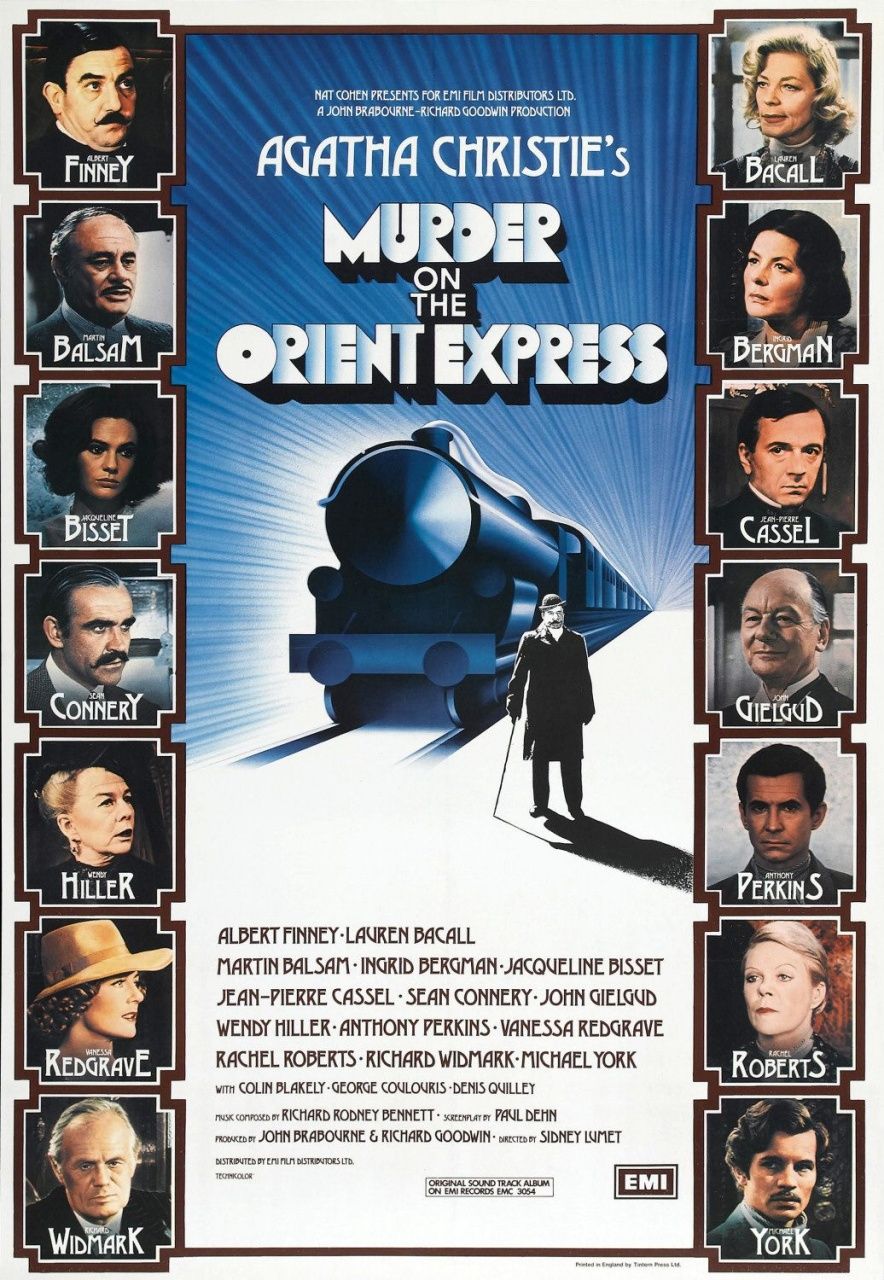
Murder on the Orient Express (1974)

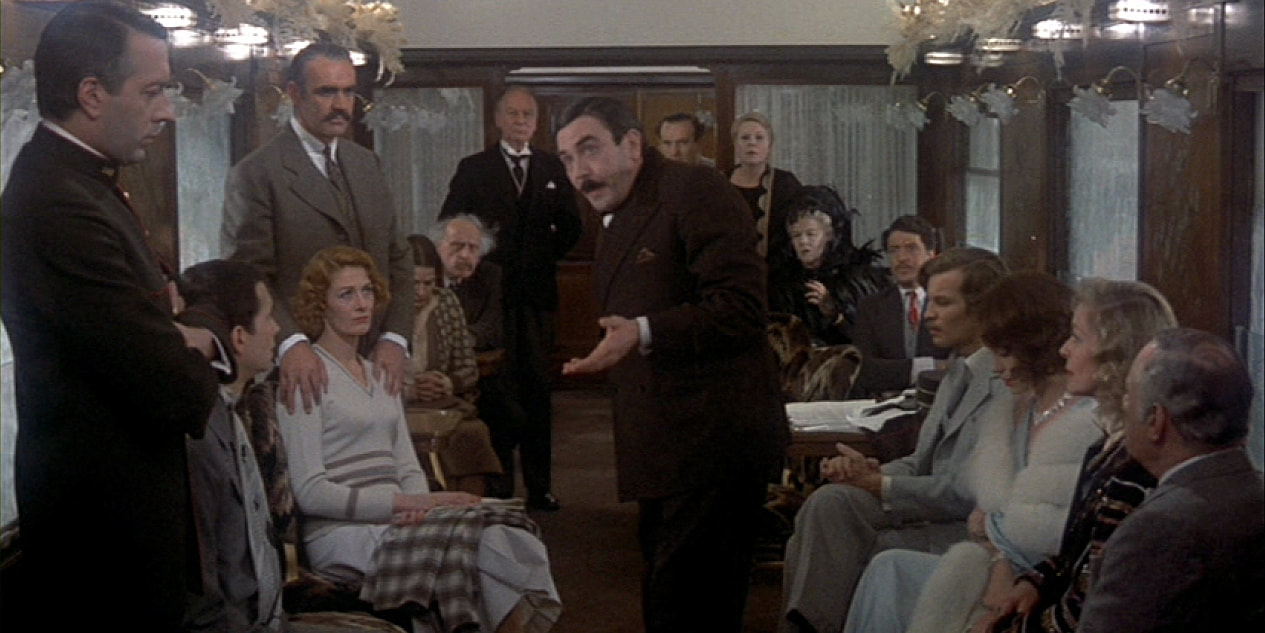
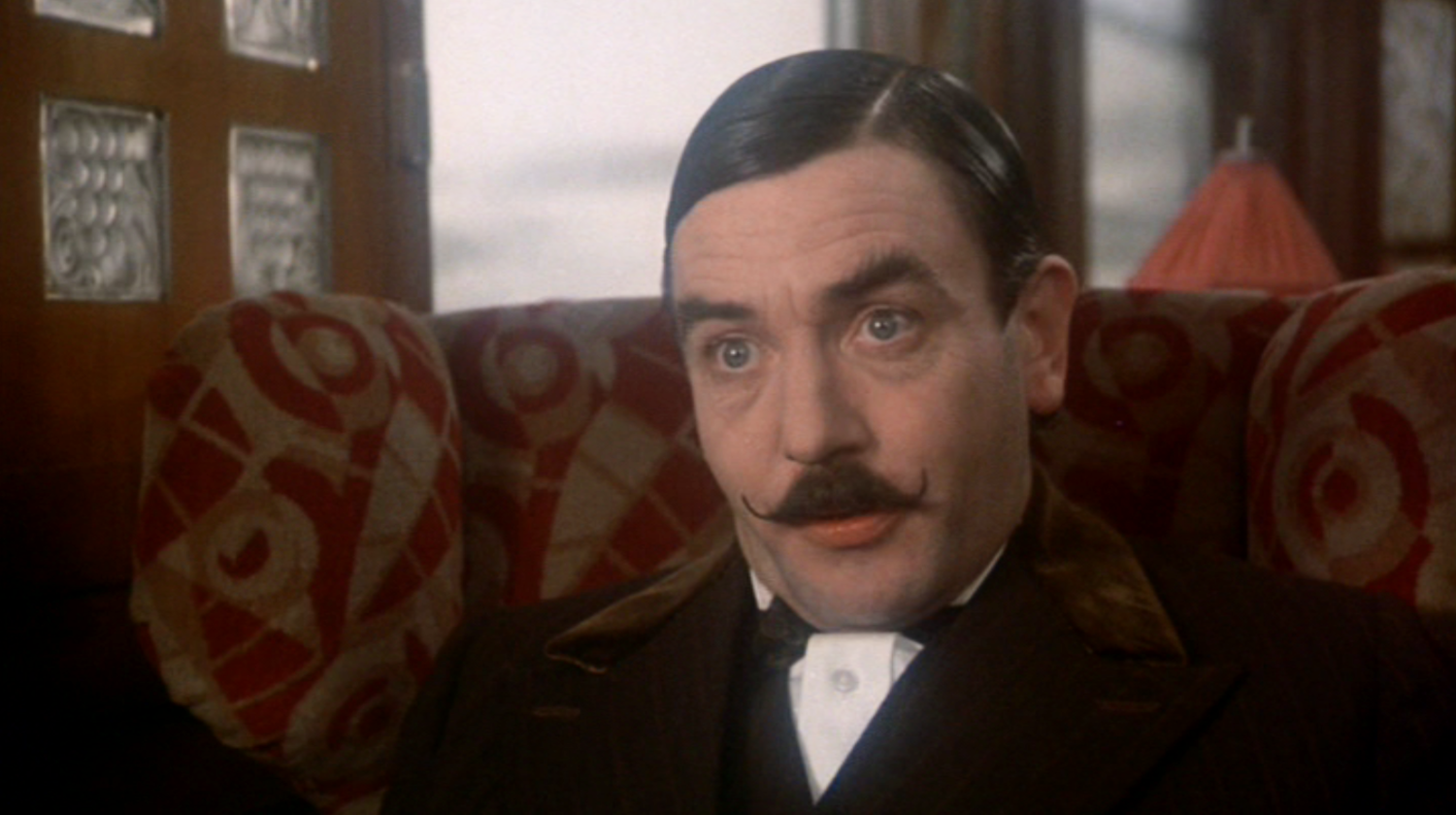
Albert Finney interrogates an all-star cast in Murder on the Orient Express

Director: Sidney Lumet

Cast: Albert Finney (Hercule Poirot), Lauren Bacall (Linda Arden), Martin Balsam (Signor Bianchi), Ingrid Bergman (Greta Ohlsson), Jacqueline Bisset (Countess Helena Andrenyi), Jean-Pierre Cassel (Pierre Paul Michel), Sean Connery (Colonel John Arbuthnot), John Gielgud (Edward Beddoes), Wendy Hiller (Princess Natalia Dragomiroff), Anthony Perkins (Hector McQueen), Vanessa Redgrave (Mary Debenham), Rachel Roberts (Hildegarde Schmidt), Richard Widmark (Ratchett), Michael York (Count Rudolf Andrenyi), Colin Blakely (Cyrus Hardman), George Coulouris (Dr Constantine), Denis Quilley (Antonio Foscarelli)

If there was a film that set the template for our expectations for an Agatha Christie adaptation, it was probably this one. A big starry cast. Luscious period detail. An engrossing plot with clues and double meanings in every corner. A healthy mix of the OTT and the chilling. Marshalled by Sidney Lumet, almost certainly the best director to take on a Christie mystery ever, this film was a massive hit then and remains a hugely enjoyable, rewarding treat now, the sort of masterclass in quality film-making and bravura acting that is guaranteed to leave a smile on your face.

You surely must know the plot by now right? Hercule Poirot (Albert Finney) returning from a successful case in the East hitches a ride on the Orient Express on the way home. During the journey he is asked by American businessman Ratchett (Richard Widmark) if he would take up the role of his bodyguard after threats against his life. Poirot turns him down – and sure enough the next morning Ratchett turns up dead in his compartment, with no less than a dozen knife wounds in his chest. With the train stranded in a snow drift, the killer must be one of the other twelve passengers in the carriage. And so the case begins…

Sidney Lumet’s superb, classy piece of murder mystery is a triumph of design and style. The train looks superb, the period detail is perfect, the costumes are luscious. But what Lumet brings to it all underneath all this Sunday afternoon splendour is a genuine sense of chilling menace. Helped a great deal by Richard Rodney Bennett’s haunting musical cues, this film never lets the viewer forget that the heartless destruction of an entire family is at the root of the crime itself, or that the desires for revenge we find in ourselves can take us to dark places. 

Lumet’s film opens with a brilliantly constructed series of newspaper stills, establishing the horrors of the Daisy Armstrong case that underpins the mystery, the kidnapping and murder of a young child (based on the Lindbergh kidnapping) that led to tragic consequences for an entire family. This chillingly sad and tragic back story is echoed throughout the film, and immediately establishes the stakes for all involved.

So we spend the film then trying to work out how all the suspects might fit it into this story. Lumet’s concept of bringing together an all-star cast was a brilliant idea, not only giving each of the suspects a quickly established personality (partly inspired by the actor’s body of work), but also assembling a group of such talented actors that they can sketch out a character within a few moments. Lumet’s first recruit for the cast was his old collaborator Sean Connery – and the agreement of Connery to take on a supporting role brought a host of actors to follow. It all adds to the fun, an enjoyable star-spotting exercise, and also an amusing game of watching sometime wildly competing acting styles.

Connery plays Arbuthnot with a stiff-upper lip English reserve, but then you also have a wonderfully arch (and very funny) John Gielgud, a dementedly twitchy Anthony Perkins (McQueen seems to have been adapted into a junior brother of Norman Bates), a show-boatingly larger-than-life Lauren Bacall (great fun), a Germanic stern Rachel Roberts and an inscrutable Vanessa Redgrave. That’s just a few of a terrific collection of actors, and arguably only Wendy Hiller’s overly imperious Princess Dragamiroff is a bit of a miss.

Lumet’s strength in depth allowed him to push his actors into demanding places – complex set-ups and, most especially, a series of long takes in his often confined performance spaces. The highlight – in fact it won her an Oscar – is Ingrid Bergman’s five-minute (practically only) scene where the camera slowly rotates around her across five minutes as she tells her story. Bergman’s shy, nervy, gentle and timid missionary comes across as achingly vulnerable. Bergman had been offered the larger role taken by Wendy Hillier, but wisely turned it down for this show-stopping moment.

The advantage of having such accomplished actors was most clear in the burden placed on Finney as Poirot. Watching it now – familiar as we are with decades of David Suchet’s definitive performance – it’s easy to see Finney’s performance as a little too much. Covered with make-up and a fat-suit, his shoulders hunched around his neck, his hair plastered down with grease and his accent frequently heading way out over the top, Finney certainly leaves very little in the dressing room. His Poirot is an amiable showman, a man willing to adjust his personality and approach from suspect to suspect, but in the end a man with a well-being arrogance and a deep sense of personal morality as well as a profound sense of humanity.

Finney was a surprising Oscar nominee for Best Actor, but he almost certainly owed this to his final speech, an almost thirty-minute tour-de-force. Lumet, operating in small confines, determined that the best way of getting the most dramatic energy from the speech was to use long takes, elegant camera moves, and the minimum of cutting – to let Poirot cast his spell over the audience as much as he does over the suspect. As such Finney – in a tiny, crowded, set – performed the complete monologue several times (each time apparently flawlessly) so that the camera could be positioned in each point in the confined set at a time. The result is seen in the final sequence, which uses dizzying long takes and careful camera moves to draw us brilliantly into the reveals that come thick and fast.

Finney’s performance is magnetic in its theatricality and commitment, and Lumet’s directing decisions throughout the sequence really help to make this sequence as effective as it is. Lumet’s peppers this sequence with a series of brief flashbacks to earlier in the film, which skilfully present snippets of the characters testimonies represented at different camera angles, which is both eerie and also throws a new light on the scenes we have already seen. For all that Finney is a bit much at times, you can’t help but enjoy this piece of showmanship.

The final resolution remains justly famous, and it largely owes a lot to this film. Agatha Christie even was favourable to the film (one of only two films of her work she liked, the other being Billy Wilder’s adaptation of Witness for the Prosecution) although (in words I presume heard by Kenneth Branagh) she bemoaned the smallness of Finney’s moustache. There have been several film and TV adaptations that have followed, but only David Suchet’s version has challenged it for the title of the best. With its gorgeous settings, imaginative direction and wonderful cast I never tire of watching it.

Angels with Dirty Faces (1938)

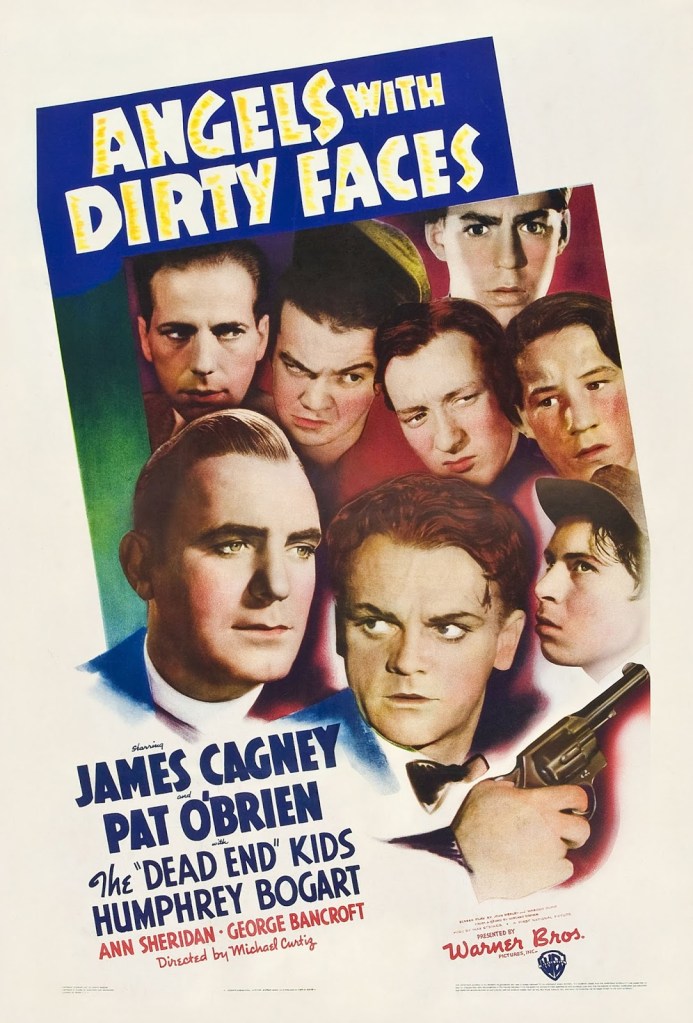
Angels with Dirty Faces (1938)

Cagney lets rip in this classic gangster film which is all about its barn-storming ending

Director: Michael Curtiz

Cast: James Cagney (Rocky Sullivan), Pat O’Brien (Father Jerry Connolly), Humphrey Bogart (Jim Frazier), Ann Sheridan (Laury Martin), George Bancroft (Mac Keefer), The Dead End Kids

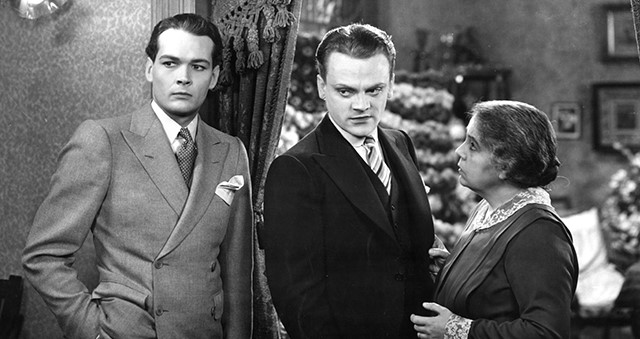
It has perhaps the most famous ending of all gangster films. Faced with his final few minutes on Death Row, charismatic gangster Rocky Sullivan meets with his oldest friend, Father Jerry O’Connell. Rocky is a hero to the kids on the block, and Father Jerry pleads with him: go the chair yellow and just maybe you can help turn these kids away from a life of crime. No way Rocky is going to lose his pride – until the final few moments, when suddenly he collapses into a morass of whimpering fear and terror. Did he decide to listen to Jerry’s pleading? Or did he really go yellow after all?

It’s the question that you are meant to take from Angels with Dirty Faces, a superb example of the gangster genre, brilliantly directed by Michael Curtiz. And it works so well because quite simply no other actor in the history of film could have pulled it off as well as Cagney does. If you have any doubts about whether Cagney deserves to stand as one of the truly greatest film actors of all time, this film erases them. 

Cagney is simply superb as Rocky. Has there ever been a gangster who was so charismatic, so magnetic, so strangely decent in his way, who plays in the corrupt world of crime but has his own absolutely rigid moral code? Few other actors could have you so ready to believe he would ruthlessly pull the trigger at the drop of the hat, and yet would still be someone you’d consider inviting round for dinner. Every single scene hinges on his brilliance as a performer, and his interaction with each character is superbly judged. He is an unapologetic bad guy, a man who openly says that he isn’t sure he is capable of empathy in the same way as normal people, yet he also has a fierce sense of loyalty and doesn’t hesitate to take the rap for others or to put himself in harm’s way to protect those he feels loyalty towards.

It’s all part of the intriguing moral puzzle of the film, that rather bravely inverts the idea of good and evil that the Hays Code mandated. On the surface this is a Board approved plot of two kids from the wrong end of the block, one who ends up good one who ends up bad, with the bad one getting his comeuppance and the good saving souls all around. But scratch the surface and actually this is a film that is making far more subtle points about a world that is in shades of grey. For starters, the most faithful and loyal character in the film is the hoodlum Rocky. 

But more than that, the film stresses that the margin between priest and criminal is very thin indeed. Repeatedly it’s stressed that Jerry is only a priest – rather than a fellow criminal graduate of the reform system like Rocky – because he was able to run away faster from the police during their days of mayhem as tearaway boys. It only takes chance and a few lucky turns, and the priest owes his ability to find God and the good life solely because the criminal happily took the whole rap as a Kid. The priest and the criminal work almost hand-in-hand trying to encourage the local kids to engage more in their community (even if they are teaching subtly different lessons) and their friendship is unaffected by the events of the film. 

Much as the film is building a traditional narrative of crime being attractive but not in the end paying, it is also subtly suggesting that good and evil perhaps coexist in harmony more than we might think (or might be comfortable to acknowledge). Which brings us back to the title I guess: Jerry is an angel with a dirty face from his flawed childhood, but in a way Rocky himself is an angel whose face is covered with the muck of crime. Both characters have lives that have crime and misdemeanours behind them, even if they have eventually chosen different routes.

Curtiz’s film allows this commentary to bubble subtly and cleverly under a host of wonderful scenes and carefully composed sequences. The highlight of which might well be an extraordinarily well made extended shoot out scene, as Rocky faces his final show down with the cops after one crime too many. But it’s a peak of a series of superb sequences that make excellent use of framing and intent. Curtiz even makes the Dead End Kids – a group of, I’ll be honest, rather irritating child actors, whose fates I find it hard to get worked up about – reasonably engaging. There are several other fabulous performances, not least a wonderfully snivelling turn from Humphrey Bogart as a cowardly and corrupt lawyer with more than a few criminal connections.

It all comes back to that final sequence as events catch up with Rocky and the electric chair awaits. Cagney is simply brilliant in this scene, a perfect steel front of composure and pride that we are invited to question whether it cracks or he does so deliberately. Curtiz shoots the sequence in shadow play (apart from one shot of Rocky’s hands clinging desperately to a radiator) – to meet the Hays Code rules about what you could and couldn’t show on screen, the chair being a no – but it works superbly and Cagney’s powerhouse but also restrained performance nails it perfectly. While you like to think Rocky has done the “right thing” you can’t be sure – and it’s that question that hangs over it that helps cement this as a brilliant inversion of the black-and-white morals of the era: we like to think decency has prevailed, but maybe it’s all just being yellow after all…

Capote (2005)

Philip Seymour Hoffman excels as the morally complex author in Capote

Director: Bennett Miller

Cast: Philip Seymour Hoffman (Truman Capote), Catherine Kenner (Nelle Harper Lee), Clifton Collins Jnr (Perry Smith), Chris Cooper (Alvin Dewey), Bob Balaban (William Shawn), Bruce Greenwood (Jack Dunphy), Katherine Shindle (Rose), Amy Ryan (Marie Dewey), Mark Pellegrino (Dick Hickock)

What profits a man if he gains the whole world but loses his own soul? It’s the sort of summation that I imagine Truman Capote himself would object to as trite and obvious. But it’s a question at the heart of Bennett Miller’s thoughtful, low-key biographical drama that seems to capture not only the agony of writing and creation, but also something of the soul of its lead.

In November 1959, two drifters Perry Smith (Clifton Collins Jnr) and Dick Hickock (Mark Pellegrino) kill an entire family in a remote farmhouse in Kansas. News of this is spotted by Truman Capote (Philip Seymour Hoffman), a brilliant novelist and New York intellectual, looking for his new project. Heading to Kansas, with assistant, novelist and lifelong friend Harper Lee (Catherine Keener), Capote’s initial plan for an article on the reaction of small-time America to unspeakable violence balloons into a full scale book, fuelled by his growing fascination for Perry Smith. While the book takes years – and the trial and appeals of the killer take longer and longer to resolve, the entire experience has an increasingly haunting effect on Capote himself.

Miller’s quietly and professionally assembled film, with a superbly haunting, autumnal feel to it that immediately echoes the blackness of the crime, and the traumatic effect being involved in it has on Capote. It’s also a superb film that understands how writers often work – the seizing of inspiration, the quiet observation, the shaping of moments and titbits of conversation into perfectly captured sentences that can be reproduced in the book. It helps that Capote has – despite his larger than life unusualness and eccentricity – a sort of unusual chameleon like ability, or rather the ability of the charismatically self-obsessed to make all others yearn for his attention and approval.

It’s all part of the many facets of the Capote’s personality that is brought out in Hoffman’s superb performance. Winning the Oscar – and almost every other award going – Hoffman perfectly captures not just every single physical and vocal attribute of Capote, but also seems to seize part of his soul as well. This is such a masterful examination of a person’s psyche, mixed desires and conflicting feelings that Hoffman’s psychological insight seems totally legitimate. Hoffman’s performance is strikingly perfect, transformative in the way few actors manage.

Hoffman’s Capote is a man who flits between arrogance and a caring tenderness, self-doubt and ruthless, consideration and selfishness, who slowly becomes more and more unnerved not only perhaps by his fascination with a brutal killer, but also the own moral depths he is willing to go to. He’s manipulative, emotionally intelligent and genuine enough to gain the confidence of a wide range of people – from Chris Cooper’s gimlet-eyed agent investigating the case (won other by his wife’s fondness for Capote’s novels and Capote’s starry Hollywood anecdotes) to Perry Smith’s would-be intellectual and sensitive soul who is also a hardened killer. 

It’s that relationship with Smith that is the heart of the film, Captoe’s growing closeness with him akin to a seduction, Smith the willing talker, flattered to share his insights into life with the famous writer, Capote eager to gain secret confessions of what was flashing through Smith’s mind while he committed the killings. But it goes deeper than that: Capote grows – or persuades himself he does, so great is his deception – a genuine affection and regard for Smith, wanting perhaps to see that there is more to him than appears. Nursing Smith through a hunger-strike he feeds him by hand. He spends hours in his cell. He reads every scrap Smith gives him of his writing. There is a slight breathless tension to their scenes together, and Capote agonises over the idea of Smith being executed, even as he begins to be repelled by the influence of letting someone else into his life is having over him, and his ability to finish the book.

Because finishing the book is his aim, and his every action is based around getting to that goal. Every moment of flattery and openness gains some other advantage, every second of his time in Kansas is based around soaking up the information he needs to complete the work. But the book will never be complete and finished, because Capote himself has become such a part of the story – by becoming a part of Smith’s life – it seems to almost start draining Capote himself. Writing the book, is like writing his own life, pulling out elements of his own psyche, his own darkness, you feel Capote would rather not explore.

Because as much as he enjoys the recognition and glory readings of the book bring him – he is increasingly unnerved by his own ruthless treatment of Smith. Lying to Smith about the progress of the book, lying about the title, ignoring his phone calls, finally brow beating Smith into telling all of his story about the killing by disparaging all of Smith’s “insight” by claiming there is no concept or idea that Smith can express that has not already occurred to Capote. Smith is a killer, but he is also somehow a sort of lost boy – Collins performance brings a lot out of the strange innocence and promise in Smith – and it still alarms Capote privately that he can so use Smith, lie so completely to him and still feel such overwhelming unnerved grief – or fear or something – when Smith is executed, and execution he has done nothing to help prevent despite his promises to the contrary.

Capote feels equal mixed feelings about fellow writers. His partner Jack Dunphy (Bruce Greenwood in a very good performance) seems to accept his role as the lesser light – and their relationship works all the better for it. Easier than the friendship between himself and Harper Lee, superbly played by Catherine Keener. Keener and Hoffman have a natural chemistry, reflecting Capote and Lee who know each other so well they can literally finish each other’s sentences and completely understand each other. Capote however cannot accept Lee’s success of her own, striking a wedge in the relationship – just as Lee begins to believe that Capote is manipulating real people like fictional tools for his journalistic novel.

Capote tackles complex and fascinating ideas in a coolly well-assembled, extremely well directed, framework that gets some sense of the difficulties and challenges involved in artistic creation – and the moral compromises that some people are driven to make to achieve them. Not to mention the way we are can make ourselves increasingly more and more uncomfortable as we discover more and more about our own personalities and flaws.

The Public Enemy (1931)

The Public Enemy (1931)

Cagney’s first landmark gangster film, still a propulsive and gripping thriller

Director: William A Wellman

Cast: James Cagney (Tom Powers), Jean Harlow (Gwen Allen), Edward Woods (Matt Doyle), Joan Blondell (Mamie), Donald Cook (Mike Powers), Leslie Fenton (Nails Nathan), Beryl Mercer (Ma Powers), Robert Emmett O’Connor (Paddy Ryan), Murray Kinnell (Putty Nose)

The gangster film has been popular as long as there have been movies. And if there was an actor that first became synonymous with the hair-trigger violence of the underclasses, it was James Cagney. The Public Enemy was Cagney’s big-break, a career shift from the song-and-dance films that had been his bread-and-butter before this. Cagney seizes the opportunity with relish – and helped set a template that everyone from Tony Montana to Tommy Vito have followed ever since.

Tom Powers (James Cagney) is an impulsive, violent, ambitious small-time crook who gets more and more embroiled in the world of crime, from his boyhood in the 1900s to the introduction of prohibition in the 1920s. Partnered with his lifetime-long best friend Matt Doyle (Edward Woods) – and despite the disapproval of his straight-laced brother and war vet Donald (Mike Powers) – Powers rakes in the crash as an enforcer for Paddy Ryan’s (Robert Emmett O’Connor) liquer business. But when the gang war breaks out, the dangerously impulsive Powers finds himself in the middle of a situation he can no longer control.

Cagney amazingly wasn’t the first choice for Powers. In fact, he started shooting the film playing the terminally dull nothing-part of Matt Doyle, with Edward Woods playing Powers (the two child actors at the start of the film playing their young versions, specially cast for their resemblance to Cagney and Woods, remain noticeably the wrong way round). Cagney’s charisma tore up the screen in the rushes – far overshadowing the bland Woods – and the call came from the top: “Swop these guys round!” And so film history was born.

As silence turned to sound in the movies, so the style of acting that the movies required grew and changed. Originally sound was the preserve of the well-spoken, crystal clear, the mic needs to capture every word, diction of the classically trained actor (half the cast in the film continue to speak with cut-glass, Mid-Western clarity). Cagney was something else. A little spitball of energy, who rushed through the lines, who threw in his own accented casualness, who dropped letters from words, who felt real and alive. 

It’s astonishing watching this what a brilliantly modern actor Cagney is: the little psychological touches that speak to Powers’ many hang-ups and insecurities. The commitment to any bit of business required. The method dedication to doing things for real (not least his insistence that at one point Donald Cook punches him for real). His Powers is a brilliant portrait of searing nervous energy – that lifetime of dance training paid off in spades in Cagney’s mastery of physicality – and ruthless thoughtlessness, spiced with a touch of smartness (“Your hands ain’t so clean. You killed and liked it. You didn’t get them medals for holding hands with the Germans” he sneeringly tells his brother). It’s a masterful performance of magnetism that holds so much influence with films to come you’ll retrospectively see touches of Cagney in nearly every dangerous psycho played by actors such as Pacino, De Niro and Pesci.

Wellman’s film is also hugely influential, practically laying the ground work for the structure of gangster morality tale – from those first trivial involvements in crime, the getting deeper, those terrible relationships (often with a girl with a pauncheon for dangerous men), the isolation and the fall. Wellman shoots it with a brilliant eye for action – there are majestic chases, gun fights and punch ups that still entertain today (for all their slightly old fashioned look). As a piece of pulp story telling this is damn high class.

But the other trick is that some of the best scenes are those away from the action. Powers clashes with his brother are brilliantly done. An early sequence in which as a boy Powers wordlessly takes the strap from his strict father (a scene that is echoed years later in Scorsese’s Goodfellas, with Powers a clear prototype for both Tommy and Henry in that film) is brilliant. Most famously of all, the breakfast sequence when a bored and frustrated Powers shoves a grapefruit in the face of the (legitimate) complaints of a girlfriend. Watching it today it’s amazing to think how influential this scene was – audiences hadn’t really seen anything like it.

And it works as a dance with the devil because Wellman and Cagney both know that we might not want to spend time with Powers, but a part of us wants to see this working-class grasper and charismatic fun-loving criminal to succeed and get-ahead. You end up rooting a bit for him – even though you know, with the Hays Code in place, that Powers won’t still be standing by the end of the film. The executives were so worried about audiences being a little too keen on Powers, they added a sanctimonious message about the dangers of crime to the start of the film.

Fast-paced, pulpy, violent and full of excellent scenes with a real eye for how America grew and changed over the first 25 years of so of the 20th century, Wellman’s Public Enemy is a masterclass of film-making – and about a zillion times more influential than many of the prestige films released at the time. But it also works so well because Cagney is one of the best there is, not just in the gangster films, but films themselves. A performer you can’t tear your eyes away from who turns a pulp character into a sea of complexity, he’s as much one for the ages as the picture.

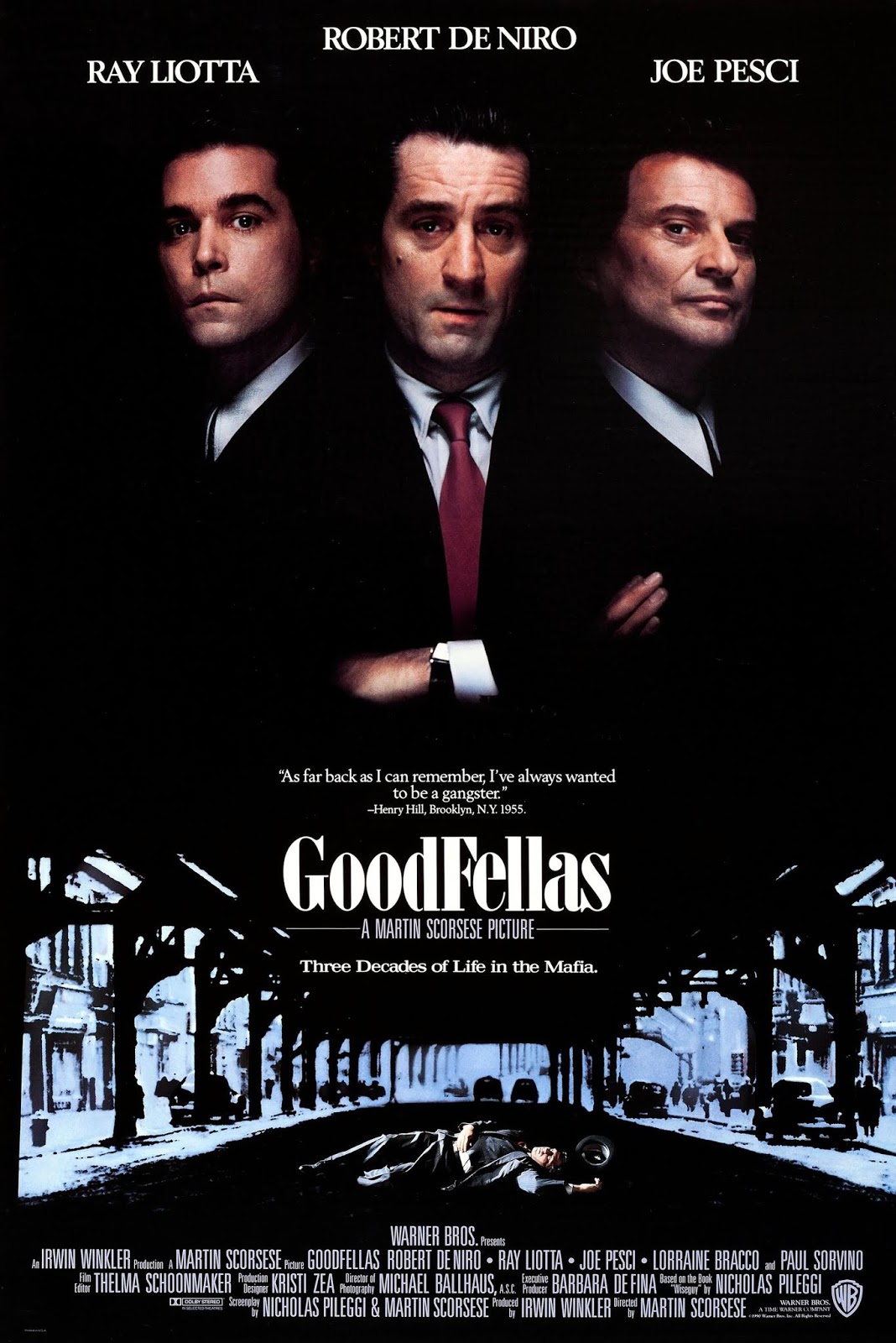
Goodfellas (1990)

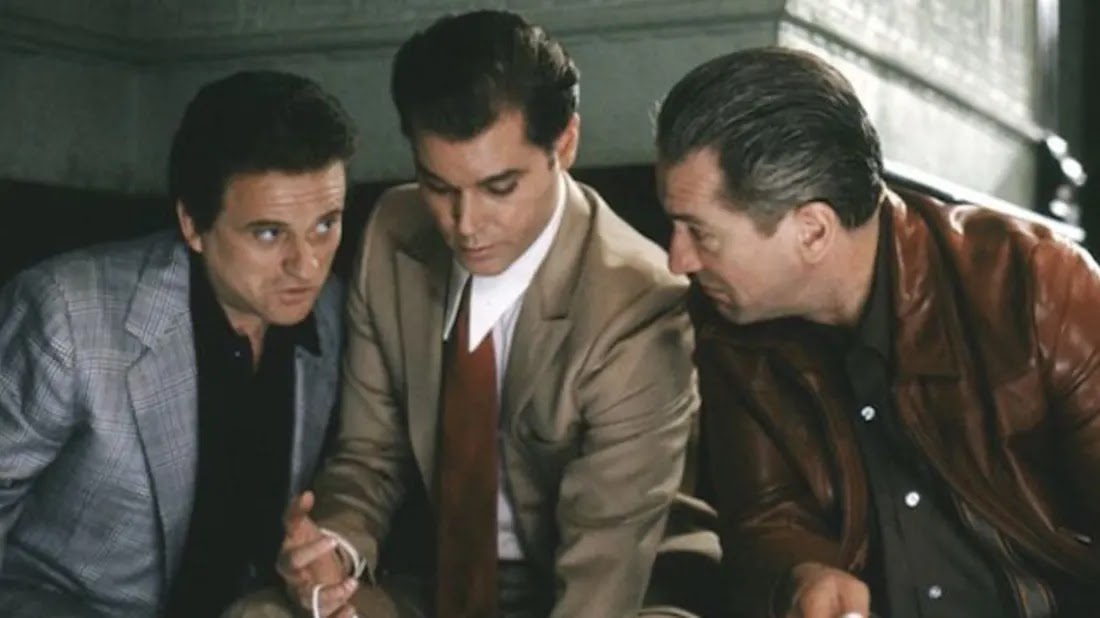
Pesci, Liotta and De Niro embrace the life of crime in Scorsese’s masterpiece Goodfellas

Director: Martin Scorsese

Cast: Ray Liotta (Henry Hill), Robert DeNiro (Jimmy Conway), Joe Pesci (Tommy DeVito), Lorraine Bracco (Karen Hill), Paul Sorvino (Paulie Cicero), Frank Sivero (Frankie Carbone), Frank Vincent (Billy Batts), Tony Darrow (Sonny Bunz), Mike Starr (Frenchy), Chuck Low (Morrie Kessler), Frank DiLeo (Tuddy Cicero), Samuel L. Jackson (“Stacks” Edwards), Catherine Scorsese (Tommy’s mother), Michael Imperioli (Spider), Debi Mazar (Sandy)

If there is one film loved more than any other in Martin Scorsese’s filmography, it’s probably Goodfellas. It’s a seismic high-point, not just in its genre – the greatest gangster film ever made since The Godfather Part II – but in film-making, it’s influence and legacy seeming to hung over everything ever since, not least the next-great gangster epic The Sopranos (with which it shares a whopping 27 actors, most notably Lorraine Bracco, Michael Imperoli, Frank Vincent and Tony Sirico). But, on top of all that, Goodfellas works so well because it is a masterpiece of both style and substance, a superbly inventive film that uses all the tricks of cinema to tell a fascinating and brilliantly paced morality tale.

“As far back as I can remember I always wanted to be a gangster”. So says Henry Hill (Ray Liotta), our Irish-Italian guide (and those heritage distinctions are very important in this world) who joins the wrong crowd as a teenager in the 1960s and winds up a strung-out, cocaine-addicted wreck in the 1980s caught by the cops and turned for states evidence, fleeing to an obscure life in witness protection with his long-suffering wife and sometime-accomplice Karen (Lorraine Bracco). Along the way though, Hill loves the glamour and greed of the gangster life, it’s excitements and boys-club rules, guided by his mentor the terrifyingly ruthless Irish-Italian Jimmy “the Gent” Conway (Robert DeNiro), psychopathic fellow gangster Tommy DeVito (Joe Pesci) and menacingly quiet capo Paulie Cicero (Paul Sorvino – never better). 

Scorsese’s film is an electric celebration of movie making, partly why it’s so beloved of film buffs. Scorsese marshals all the weapons in his considerable arsenal as filmmaker. We get jump cuts. We get freeze frames (each marking a significant moment in Hill’s life). We get sharp editing. We get unreliable narration. We get dizzyingly brilliant long-shots and tracking shots (none more so famous than Henry and Karen’s arriving at a club – from travelling from the back door, through the kitchen and into the best table at the club all in one wonderful shot). We get Scorsese’s brilliant use of music, his perfectly placed camera, his brilliance in knowing when to hold his shots, his mastery of lighting (an early hit is so bathed in red it feels like digging a grave in hell). This film was the master at his ultimate height, inspired by everything from the New Wave to old-school 1930s gangster films.

He was also perfect for the material, as no one perhaps understood this world better than Scorsese: and that’s the seductive good and the terrifying bad. Back to that shot of Karen and Henry arriving at the club. The whole sequence – the deference with which Henry is treated, his cool comfort with power, the exclusiveness and special treatment of the whole thing – that smacks of the sort of ultimate party we can only dream of. For most of the first half of the film, Scorsese totally understands why this life is so appealing and exciting. Sure there is violence. There’s danger. But there’s also comradeship. There’s doing anything you want all the time (so long as you stick within the clubs rules). There’s being treated by a God by those around you. Who wouldn’t enjoy that? Is there any wonder Henry saw this as he was growing up and, more than anything, wanted a part of it? In voice-over Karen makes it clear, all this violence and power and being asked to hide guns by your boyfriend is sexy. Who cares about the implications, give me a slice of that pie.

Without understanding this glamour, the film could never show the dark depths of the underbelly of gangsterism. Strangely, perhaps because this is a blue-collar film (the highest gangster we see, Paulie, is still only a few steps away from the street), it’s easier for viewers to give these guys a pass for their behaviour (in a way no one did with Scorsese’s spiritual sequel, his white-collar crime movie The Wolf of Wall Street). Don’t be fooled. Scorsese hints at it with the opening prologue, with Henry, Jimmy and Tommy pulling over a car to brutally finish off (with a spade, knife and gun) a body of a yet-to-be-revealed victim in the back of a car. These ain’t good guys, and for all Henry is shocked by the capacity of violence from the other two he does nothing to stop it.

Because violence is what powers this film, it can happen anytime, it can happen to anyone and your killers always come to you smiling as friends. The gangster code preaches all the time about never betraying your friends, never ratting. But these guys stab each other in the back all the time. There is no honour among thieves. Every hit comes seconds after friendly enquiries and laughs. When Jimmy masterminds a brilliant heist, so paranoid and distrusting is he of those he did the crime with that he has them all killed (a masterful cut montage). Later in the film, strung out on cocaine and terrified of the law Henry treats every meeting like it’s the entrée to him being killed. Even Karen isn’t safe – witness the brilliantly oblique scene late in the film when Jimmy offers her some coats ‘they’re just round the corner’ – is it a hit? Are the coats real? Who knows…

Loyalty is only extended at best to one or two figures. Jimmy (Robert DeNiro in imperious form, terrifyingly cold and also generously ceding the best moments to his co-stars) seems to have a never-ending patience for the psychopathic, instinctive violence of his best friend Tommy. Played with a petrifying Oscar-winning flourish by Joe Pesci, Tommy is like a murderous Rumpelstiltskin, a brutal killer and wired murderer who can explode at any moment. Witness the famous “Funny how?” scene – it plays superbly off Tommy’s unpredictability, his hair-trigger possibility to either laugh with you or shoot you. Much of the film’s problems for our ‘heroes’ – not less that body in the boot of the car – stems from Tommy’s capacity for thoughtless violence. 

Scorsese directs these scenes with such unbearable tension, that any romance of the early sequences of the young Henry Hill disappears. How could you even begin to imagine spending time in a room with these violent, soulless men who kill each other at the drop of a hat? Despite all this, never for one moment until the very end does Henry even consider leaving this world behind. Like so many of the characters in The Sopranos the addiction of this world of power is just way, way too much and if that means a short life then, hell, so be it. Even at the end on witness protection, Henry’s punishment is that he is forced to live a normal life like a no-body (or rather like the rest of us) while balancing the guilt of betraying the people he left behind. Loyalty is a complex thing, but always one-sided in the Gangster world.

As Hill Ray Liotta gives the finest performance of his career. Henry is part wide-eyed naïve dreamer unaware that his dream is a nightmare, and loving every minute of it. Liotta’s Hill is an addict to everything he touches – danger, violence, infidelity and most damagingly of all the mountains of cocaine he is consuming by the 1980s. Compared to the other gangsters, he’s a decent guy – but only in the sense he hesitates (slightly) in the face of murder. He’s selfish, greedy, strangely likeable oddly sympathetic but you feel he gets everything he deserves. Just as good is Lorraine Bracco as his wife Karen, too aroused and infatuated with the bonuses the crime life brings her to listen to her conscience. 

Scorsese’s film is a masterpiece that completely understands that the gangster life is, at the end of the day, a series of boys who never grew up who espouse concepts like duty, honour and faith but live lives of greed, petty murder, vengeance and savagery. Sure walking on the dark side can be fun, can be exciting and can bring you some immediate bonuses. But it also leaves your soul as cold as Jimmy’s or as blackly non-existent as Tommy, the sort of guy who can pour affection on his mother while shrugging off her worries about what that terrible smell is in the boot of his car. These guys are having fun for half the film, until they aren’t, but don’t get seduced by the fun of it. Scorsese knows only too well that they’re going where the film started: a red light washed grave in the middle of nowhere.

The Big Heat (1953)

Lee Marvin, Gloria Grahame and Glenn Ford feel The Big Heat coming on

Director: Fritz Lang

Cast: Glenn Ford (Det Sgt Dave Bannion), Gloria Grahame (Debby Marsh), Lee Marvin (Vince Stone), Jeanette Nolan (Bertha Duncan), Alexander Scourby (Mike Lagana), Jocelyn Brando (Katie Bannion), Adam Williams (Larry Gordon), Kathyn Eames (Marge), Willis Bouchey (Lt Ted Wilks)

Films like Fritz Lang’s The Big Heat were generally seen at the time as easy-to-overlook pulp thrillers. Today however, they are seen as classics and few look as ahead of their time as The Big Heat, a skilfully constructed, almost nihilistic, revenge thriller that turns its view of America into that of a land big, grim and full of corruption.

Detective Sergeant Dave Bannion (Glenn Ford) is called in when a senior policeman is found to have committed suicide. All is not what it seems though: the wife Bertha (Jeanette Duncan) doesn’t seem as sad as she should, there are conflicting reports that the death might be suicide and the dead man’s possible lover is found brutally killed shortly after Bannion talks to her. Bannion is a stubborn, bull-in-a-China-shop type, so he quickly assumes smooth local gangster Mike Lagana (Alexander Scourby) is connected up in all this, not least after his wife Katie (Jocelyn Brando) receives a threatening phone call. But Bannion’s methods lead to tragedy, and he soon finds himself going rogue to find justice, with the eventual help of Debby Marsh (Gloria Grahame), gangster’s moll of brutal sadist and Langana lieutenant Vince Stone (Lee Marvin).

Lang’s film is a strikingly un-rose tinted view of America. The very first shot of the movie is a gun, and violence is endemic in this corrupt world, where justice is for sale. We barely see a character who doesn’t have some whiff of corruption. Bannion finds cops doing guard duty outside Lagana’s home while he throws a party and half the higher-ups in the department are either in the pocket of the gangsters, or determined to do as little as possible to rock the boat. The lives of the families of those causing trouble for this system don’t account for much either, with any unpalatable truths brushed firmly under the carpet.

Thown into the middle of this is Glenn Ford’s Detective Bannion. At first glance Bannion looks like exactly the hero we would want – a straight-down-the-line type who says what he thinks, and determined to let nothing stand in the way of, or water down, his investigation. Better known for comedies, Glenn Ford is very good as this bullish man, who very clearly thinks of himself as “the only good cop in town”, and whose determination to stop at nothing very soon tips over into recklessness. Because reckless is what he is: Bannion is fixated on revenge after a tragic attack on his family, and he has no compunction – or even it seems moral awareness – that this path causes danger and consequences for other people around him.

Bannion’s situation is largely self-inflicted – is it sensible going straight to the house of a leading local gangster and threatening and humiliating him? – and Bannion turns out to be largely a destructive force for those who meet him. Most affected are the four female characters he interacts with in the film. A mixture of innocent, corrupt, in denial and cruel, all four of these women find themselves thrown into often mortal danger, with Bannion barely stopping to consider the risks to them. Bannion, it becomes clear, is the ultimate ends-justify-the-means kind of guy, willing to accept collateral damage of almost any kind if it means he can take down the bad guys who have done him wrong. It makes for an intriguing anti-hero at the film’s centre, with Bannion increasingly resembling a sort of proto-type Dirty Harry, the hard-boiled cop who’ll do things his way and damn the consequences.

Mind you, it doesn’t mean he isn’t right about the corruption in this damn dirty town. Preening gangster Mike Lagana (played with a wispy arrogance by Alexander Scourby) has everyone in his pocket, and couldn’t give tuppence for any small fry causing him problems. First introduced lazily in bed setting in chain events that will cover up the reason for the suicide of a leading policeman, he has fingers in every pie. He’s also – the film economically suggests – sexually indiscriminate and a bit of a mummy’s boy to boot, sure signs of cadism in any 1950s detective story. His decadent home and personal cowardice (for all his speed in ordering deaths) make his corruption probably even more galling for straight-shooter Bannion.

In fact, I’m not sure Bannion can even accept Lagana as a “worthy foe” and he increasingly zeroes in on Lagana’s number two, the brutish Vince Stone as the man he intends to take down. Played with a star-making swagger by Lee Marvin, Stone is a force of nature, an act-first-think-next-week kind of guy, who terrorises people around him and will resort to anything from fists to pots of boiling coffee to exact obedience. Marvin scowls and prowls his way through the film like a caged bear, constantly on the verge of violence. It’s a brilliant performance.

It also makes clear why he’s pushed Debby – played with a wonderful fragility behind all her femme fatale looks by Gloria Grahame – so far under his thumb. As she says, why intercede against anything he does when she could be next to take a beating. Grahame is excellent as a woman who has suppressed her conscience about what is going on around her, and learned to use her sexuality as a tool for getting what she wants. Watching her slowly begin to come to life as a moral force provides one of the film’s finest stories – her desire to do the right thing and get revenge, a firm contrast with Bannion’s more hardline goals.

All of this is packaged neatly and without fuss by Lang into a superb indictment of America. Every official is at least shady, if not outright bent. Every scene bubbles with the possibility of violence and danger. The innocent are swiftly trampled and the heroes need to bring themselves down to the same brutal, intimidating rough and tumble as the villains to have any chance of cracking the crime. Bodies pile up, lives are ruined, but at the end you still wonder if any of it will have any lasting impact. For Lang it feels like America is a constant spiral of danger and corruption that begins and end with a gun. Either way The Big Heat is a true classic.

Legend (2011)

Tom Hardy plays with himself in Legend

Director: Brian Helgeland

Cast: Tom Hardy (Ronnie Kray/Reggie Kray), Emily Browning (Frances Shea), Christopher Eccleston (Superintendent Leonard “Nipper” Read), David Thewlis (Leslie Payne), Taron Egerton (Edward “Mad Teddy” Smith), Chazz Palminteri (Angelo Bruno), Paul Bettany (Charlie Richardson), Colin Morgan (Frankie Shea), Tara Fitzgerald (Mrs Shea), Paul Anderson (Albert Donoghue), Sam Spruell (Jack McVitie), John Sessions (Lord Boothby), Kevin McNally (Harold Wilson)

Tom Hardy is the sort of actor who, if you could find a role for him in your film, you certainly would. So how about getting the chance to cast him twice? That’s the happy situation Brian Helgeland was in here, with the chance for Hardy to play not one but both of the Kray twins. The buzz around Hardy taking on both roles was so strong that the film itself was almost completely forgotten in the crush. This was perhaps easy to do since the film is pretty mediocre at best, a confused mess that can’t decide if it wants to wallow in the undeserved glamour of the Krays or whether it wants to explore the darker currents below the surface.

The film covers most of the career of the Kray brothers – the seemingly more grounded, ambitious Reggie and then the more impulsive Ronnie, recently released from psychiatric prison. The Kray brothers balance competing demands: Ronnie is essentially happy where he is, king of a small pond, while Reggie has dreams of expanding a criminal empire across the Atlantic in partnership with the Mafia. Meanwhile, various gangland opponents and the police stalk the brothers, while Reggie’s relationship and later marriage to Frances Shea (Emily Browning) slowly collapses.

Helgeland’s film is a fairly bland piece of film-making that wants to have its cake and eat it. It wants to enjoy the criminal undertakings of the Krays, their clubland cool, charisma and charm. But it also wants to make clear that these are violent criminals who have very few moral qualms about anything they do. It’s a printing and an exploration of the legend, but the problem is that it never actually becomes particularly interesting, despite the best efforts of everyone involved. Perhaps everyone became too blinded by the pyrotechnics and undoubted skill of Hardy’s double performance that the overall film itself got a bit lost.

Hardy is superb, turning the brothers into two highly distinctive personalities who both seem like two halves of the same shattered personality, whose character traits slowly merge and even swap over the course of the film. Hardy also develops a key physicality and style for both characters that is very similar but also clearly different in both cases. So you get Ronnie, Churchill-bulldog like, with a muscular, growling heaviness that stinks of paranoia. And Reggie, smart-suited and slicked back, with a confident thrusting demeanour that falls apart over the film into a weasily fury.

Both these progressions make perfect sense, and Hardy is so skilled at playing both halves of many conversations that you forget while watching the film that you are looking at one actor playing two roles. Astonishingly – and perhaps the biggest trick he pulls – he turns this tour-de-force double role into something that feels so natural you don’t notice it happening. And the bond that ties the two brothers together into a descent into hell is so strong that even when beating the crap out of each other they still seem like two halves of one messed up personality.

Hardy is of course so brilliant, the rest of the skilled cast basically only get a few beats to sketch out various gangland figures and coppers. Excellent actors – Eccleston, Thewlis, Bettany, Anderson – are picked out to do this, but none make much of an impression. The thrust is always the strange dance of personality between the Krays, two brothers who effectively destroy each other with their actions, but are so closely bound together that the one cannot survive without the other.

It’s psychology like this that you wish the film could explore, especially as Hardy takes both brothers to dark and bitter places that makes both of them openly vile and terrifying to imagine meeting. Helgeland chooses to explore much of this – particularly Reggie’s darkness – through a rather tired voiceover led structure via Emily Browning’s Frances Shea. There is nothing wrong with Browning’s performance, but the predictable and rather traditional structure that this gives the story – not to mention the rather clumsy scripting – ends up dragging the film along.

Helgeland makes a decent job of directing this film, and it looks fine, but it is strangely underpowered and unengaging at every turn, a bland piece of gangland history that only really catches fire when both Hardys take the stage and this superstar actor lets rip. Away from him, there is a soft-focus nostalgia in its look back at the sixties, which confuses the attitude the film has towards the Krays, and a ticking off of historical events that gets in the way of creating a compelling narrative.

Hardy overshadows the film and he deserves to as he is more or less the only reason to watch it.

John Wick Chapter 3: Parabellum (2019)

Keanu Reeves, Halle Berry and some very, very mean dogs in John Wick Chapter 3

Director: Chad Stahelski

Cast: Keanu Reeves (John Wick), Ian McShane (Winston), Mark Dacascos (Zero), Laurence Fishbourne (The Bowery King), Asia Kate Dillon (The Adjucator), Halle Berry (Sofia), Lance Reddick (Charon), Anjelica Huston (The Director), Saïd Taghmaoui (The Elder), Jerome Flynn (Berrada)

Early on in the film, John Wick (Keanu Reeves in a role he might have been born to play) builds a gun from scratch components of other weapons to fire some outsized ammunition, throws an axe across a room to take out an assassin, and then effectively reloads a horse, using its rear leg kicks to dispatch two more luckless assassins. It’s a dizzying 20 minutes or so of pure balls-to-the-wall action fun full of invention and black humour. The film never gets near repeating it, despite much trying.

John Wick: Chapter 3 – Parabellum doesn’t have much in the way of plot. Instead it’s effectively a two-hour series of fight sequences. What plot there is pops up around the edges of all this imaginative blood-letting. That plot doesn’t really make much sense, and can basically be summarised as John has been declared excommunicado by “The High Table”, the shady organisation that runs the criminal underworld, meaning he is a target for every assassin in the world, and he is trying to reverse that decision. That’s kind of it, and any other subplots are basically slightly confusing or narratively empty detours from that central idea.

If you cut out all the fight sequences from the film, it wouldn’t run a lot longer than 15 minutes. There isn’t really any interest in the talking stuff or the characters, which seems to be fine for the likes of Laurence Fishbourne, who is wheeled out for three scenes of badass scenery chewing, but does mean that motivations and reasons for why anyone is doing anything at all remain completely unclear. There is a key subplot involving Ian McShane’s management of the Continental, the criminal “neutral zone” hotel in the centre of New York, that involves so many changes of allegiance and intentions that it winds up making no real sense.

But then people ain’t going to this for a character study. They are there for the fights. And, as I say, these are really inventive and entertaining. The first 20 minutes – with John haring through New York, trying to stay one step ahead of a blizzard of killers – is brilliant. It’s designed to be watched with large groups of people in the same mood, encouraging you to laugh, wince and shout out with the people around you. You can’t fault the work that has gone into the filming of this or the commitment of the actors or the genius of the choreographers. All of this is pretty faultless. And, no matter what extended fight you watch, you know you will see something different in every single one.

The problem is, the vast number of fights begins to pummel the audience into submission as well. Seeing Keanu Reeves involved in a series of three-in-a-row mixed martial arts sequences, each lasting well over 5-10 minutes, you start to let the whole thing drift over you. Put bluntly, after the initial explosion of action, the film hits a level it tries to sustain for almost an hour. And it’s too much. You just can’t keep that same level of engagement. I actually nearly dropped off at one point, which is not a good sign. How much action can one film take? 

There needs to be a balance. And without any real investment in what we are seeing, John Wick 3 is another of those films designed for YouTube. I can imagine watching most of these fights as little five-minute videos on the Internet in the future. Actually broken down like this I will probably enjoy it a lot more. But as a single film, there is nothing there to link it together.

The first film had a simple, but very pure, storyline that we could all relate to. A man loses his beloved wife, who on her deathbed gifts him a dog to care for. Said dog is then killed in a senseless break-in by some arrogant criminals. John Wick’s revenge is against those who thoughtlessly took from him the last piece of the only woman he loved. Everyone can relate to that – and it grounded everything we saw and immediately put us on John’s side. This film however is a confused motivation-less mess. If the series originally presented us with a John unwillingly dragged back into this world, since then (and here) he seems like a character with no inner life. 

The film attempts vaguely to add one, suggesting that John must make a choice between being a killer or the better man. Problem is choosing to be the better man isn’t really a platform for fights. So we lose what the film really needs, which is John struggling between his good and bad demons. Instead his motivations are a confused mess and the film spends more time showing us the brutal groin attacks of Halle Berry’s dogs (those things fight with no honour let me tell you) than giving us a lead character with a coherent personality.

It makes John Wick 3 not a lot more than a YouTube compilation, and giving Ian McShane some Latin to drop to explain the film’s title, or trying to change a character in Act 4 into a personal rival for John, doesn’t suddenly give it depth or interest. It’s fun in small chunks, but this is way too long and seems to have lost at least half of what made the first film such a guilty pleasure.

King of Thieves (2018)

Michael Caine leads the Old Lags on one last hurrah in the misjudged King of Thieves

Director: James Marsh

Cast: Michael Caine (Brian Reader), Jim Broadbent (Terry Perkins), Tom Courtenay (John Kenny Collins), Charlie Cox (Basil/Michael Seed), Paul Whitehouse (Carl Wood), Michael Gambon (Billy “The Fish” Lincoln), Ray Winstone (Danny Jones), Francesca Annis (Lynne Reader)

In 2015, a group of old lags robbed a safety deposit company in Hatton Garden. Over the Easter weekend, the gang broke while the facility was empty, drilled through a wall, climbed into the safe and cleared out almost £14 million in cash, diamonds and other goods. The crime captured the public imagination largely because the robbers, bar one member of the gang, were all over 60. This country has a certain nostalgia for rogues, and a tendency towards a condescending affection for the aged. In real life, the only thing remotely charming about these hardened criminals, many of them with extremely violent backgrounds, was their age.

James Marsh pulls together a great cast of actors for his heist caper. Brian Reader, the brains behind the operation, is played with gravitas by Michael Caine. Terry Perkins, the man who cuts Reader out of the profits, is played by Jim Broadbent. Tom Courtenay, Ray Winstone, Paul Whitehouse and Michael Gambon play the rest of the lags while Charlie Cox is the young tech expert who brings the possibility of the heist to Reader’s attention. With a cast like this, it’s a shame the overall film is a complete mess from start to finish.

I watched this film after first watching ITV’s forensically detailed four-part series, Hatton Garden, covering the heist in full detail. That drama was far from perfect, but it was vastly superior to this. The main strength of Hatton Garden was that it never, ever lost sight of the fact that this was not a victimless crime. Real-life small businesses went bust due to property lost in the heist. Families lost priceless, irreplaceable heirlooms. Items of hugely sentimental value have never been recovered. Lives were damaged. On top of that, Hatton Garden stresses the grimy lack of glamour to these thieves, their greed, their paranoia, their aggression and their capacity for violence. Far from charming rogues, they are selfish, greedy old men who fall over themselves to betray each other and are clueless about the powers and abilities of the modern police force.

King of Thieves occasionally tries to remind people that these were hardened career criminals. But it also wants us to have a great time watching actors we love carry out a heist against the odds, like some sort of Ocean’s OAPs. James Marsh never manages to make a consistent decision on the angle he is taking on these men or the crime they carried out. It’s half a comedy, half a drama and the tone and attitude towards the burglars yo-yos violently from scene to scene. The end result, basically, is to let them off with a slap on the wrist.

“It’s patronising” rages Reader at one point at the media coverage of the crime, annoyed at how it stresses their age as if that somehow makes it a jolly jaunt. Never mind that the film does the same. The score contributes atrociously to this, a series of jazzy, caperish tunes that echo the 60s heydays of these violent men (Reader and Perkins had both stood trial for murders, and were lucky to get off) punctured with some cheesily predictable songs. Tom Jones plays as our heroes comes together, and Shirley Bassey warbles The Party’s Over as things fall apart. The old men banter and bicker about the confusions of the modern world like a series of talking heads from Grumpy Old Men and the general mood is one of light comedy.

The film does try and darken the tone in the second half, post-robbery, as things start to fall apart and tensions erupt in the gang. Here we get a little bit of the mettle of the actors involved in this. Jim Broadbent, in particular, goes way against type as Perkins’ capacity of violence (even at a diabetes-wracked 67) starts to emerge. Tom Courtenay’s Kenny Collins emerges as manipulative liar, playing off the robbers against each other. Ray Winstone sprays foul language around with a pitbull aggression. Even Michael Caine roars a few death threats, furious at being betrayed by the gang.

But it never really takes, because the film never throws in any sense of the victims of this crime. Blood is never drawn in this slightly darker sequence of the film. Even the clashes between the gang are played at times for light relief. Anything outside the gang is ignored. The victims? Who cares. The cops? There is barely a policeman in this film who has a line.

The film undermines the whole point it might be trying to make – that these were dangerous men – by succumbing to romanticism at its very end. As the captured old lags await trial, we first see them laughing and joking with each other as they prep for court and then, as they walk towards the dock, the film throws up old footage of the actors from the 60s, 70s and 80s, stressing their romanticism. Look, the film seems to be saying: these were criminals, but they were old fashioned criminals, remember when Britain used to make its own underdog crims instead of being awash with hardened, violent gangs? It’s hard to take. And it’s like the whole film. A tonal mess that finally absolves the robbers who ruined lives and who still haven’t returned almost £10 million of ordinary people’s goods. King of Thieves isn’t charming. It’s alarming.

Now You See Me (2013)

A gang of magicians get up to all sorts of antics in light and empty caper Now You See Me

Director: Louis Leterrier

Cast: Jesse Eisenberg (J Daniel Atlas), Woody Harrelson (Merritt McKinney), Isla Fisher (Henley Reeves), Dave Franco (Jack Wilder), Mark Ruffalo (Agent Dylan Rhodes), Mélanie Laurent (Agent Alma Dray), Morgan Freeman (Thaddeus Bradley), Michael Caine (Arthur Tressler), Michael Kelly (Agent Fuller), Common (Agent Evans)

Sometimes the simplest tricks are the best. Remember David Blaine? All his huge illusions and stunts weren’t worth thruppence compared to the simple awe of watching him perform card tricks in front of stunned regular folks in the streets. This film is pretty much the same, a dazzlingly shot con-trick of a film that wants to reveal a stream of tricks that it was holding up its sleeves over its runtime, each twist being less and less impactful. The most magic thing in this is the sleight of hand card trick Jesse Eisenberg performs at the start of the film – after that it’s like watching your soul drain away over two hours under an onslaught of wham-bam twists.

Anyway, J Daniel Atlas (Jesse Eisenberg), Merritt McKinney (Woody Harrelson), Henley Reeves (Isla Fisher) and Jack Wilder (Dave Franco) are a ragtag bunch of professional magicians, hypnotists, stunt performers and conmen who are recruited by a shadowy magical organisation known only as The Eye for reasons unknown. One year later they are performing huge stadium gigs, with the support of millionaire insurance man Arthur Tressler (Michael Caine), as The Four Horseman. During their first show they magic millions of Euros out of a bank in Paris while performing in Las Vegas – a stunt that attracts the attention of the FBI and Interpol who send agents Dylan Rhodes (Mark Ruffalo) and Alma Dray (Mélanie Laurent) to investigate. Meanwhile, the Horsemen are on the run from the law, and still working towards ends unknown, while dodging magic debunker Thaddeus Bradley (Morgan Freeman). But is anything as it seems?

The answer of course is no. But then what do you expect from a film that proudly announces (frequently) “the closer you look, the less you will see”. It’s a pretty good message for the film – but not in a good way – as Now You See Me is as insubstantial as air, a puff of showmanship so pleased with its twists and tricks that it completely fails to have a heart. By the time we get to the end of the film and realise almost everything we saw over its runtime wasn’t real you’ll feel disconnected rather than engaged.

In fact, as a heist/con movie, this isn’t that good. The formula depends on you thinking you’ve got it worked out and then BOOM you realise you didn’t. It also by and large depends on charming, playful leads (think Newman and Redford in The Sting) and on a sort of consistent logic where you get the satisfaction of pieces you didn’t even notice falling into place as vital clues. Now You See Me does none of this.

In fact, it’s so pleased to tell you that it pulled the wool over your eyes that it rushes several of its reveals with an indecent haste. It largely fails to sprinkle clues throughout the film and basically plays unfair with the whole audience. There are things you can never hope to work out as they are based on not being shown vital clues early on. Characters and the film carefully never reveal any hints of true allegiances or motivations until the last possible minute.

In fact it’s one of those films where most of the characters are, for large chunks of time, really pretending to be someone else. This can work, but it doesn’t here as most of the Horsemen are basically rather unlikeable arrogant arseholes. The four actors mostly coast through basic set-ups, and you’ll be pleased when they fade into the background in the second half of the move (all four of them are basically decoy protagonists, and the film shelves them when it can no longer think of a way of hiding their true motivations in plain sight any more). The real lead is actually Mark Ruffalo’s FBI agent, and Ruffalo is a charming, likeable, schleppy presence that you can root for, even if the plot takes us on a character journey with him that makes no real sense (the clue for this is the film’s references to a magician who buried a card in a tree years earlier for one trick). 

It’s flashy in its film making, and Leterrier has a workmanlike touch with making things look cooland putting the camera in interesting places. He has no real idea of character or pacing – the film is frequently quick, quick, slow – and he creates a film here that has nowhere near the brains it thinks it has. It’s all flash and no substance. Look too closely and you’ll see nothing there.