Category: Crime drama

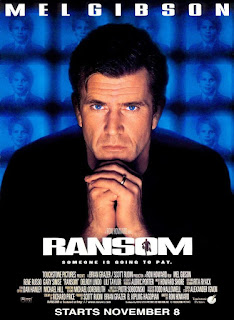
Ransom (1996)

Ransom (1996)

Every parent’s nightmare gets tackled in this efficient, smart (but not quite smart enough) thriller from Ron Howard

Director: Ron Howard

Cast: Mel Gibson (Tom Mullen), Rene Russo (Kate Mullen), Gary Sinise (Detective Jimmy Shaker), Delroy Lindo (FBI Special Agent Lonnie Hawkins), Lili Taylor (Maris Conner), Liev Schreiber (Clark Barnes), Donnie Wahlberg (‘Cubby’ Barnes), Evan Handler (Miles Roberts), Brawley Nolte (Sean Mullen), Paul Guilfoyle (FBI Director Stan Wallace), Dan Hedaya (Jackie Brown)

There is no greater fear for any parent than losing a child. Doesn’t matter if you are prince or pauper, the same heart-pounding dread is there. But sometimes the risks are greater if you a prince. Because the more money you have, the more likely a kidnapper might think you’d be willing to swop that money to get your kid back.

It’s what kidnappers decide when they take the son of Airline owner Tom Mullen (Mel Gibson). The kidnappers want $2million and no questions asked, in return for his son Sean (Brawley Nolte). Tom and his wife Kate Mullen (Rene Russo) are willing to pay – with the advice of FBI Agent Lonnie Hawkins (Delroy Lindo). But after the first bungled handover, Tom becomes convinced the kidnappers have no intention of returning his son alive. So, he takes a desperate gamble to try and turn the tables, much to the fury of secretive kidnapper (and police detective) Jimmy Shaker (Gary Sinise).

Ransom is a change of pace for Ron Howard, his first flat-out thriller. And it’s a very good one. Ransom has a compulsive energy to it, powered by sharp filming and cutting and some impressively emotional performances from the leads. It also takes a number of unexpected narrative twists and turns – before it reverts to a more conventional final act – and manages to keep the viewer on their toes.

Its main strength is an emotionally committed performance from Mel Gibson. Taking a leaf from Spencer Tracy’s book, this is Gibson at his best, very effectively letting us see him listen and consider everything that happens around him. Mullen is a determined man who plays the odds, and cuts corners only when he must – but is also convinced of his own certainty. He applies his own business learning – of negotiation and corporate deal-making – to this kidnapping, which is an intriguingly unique approach. Gibson’s performance is also raw, unnerved and vulnerable and he plays some scenes with a searing grief you won’t often see in a mainstream movie. Russo does some equally fine work – determined, scared, desperate – and their chemistry is superb.

Howard coaches, as he so often does, wonderful performances from his leads and from the rest of the cast. Gary Sinise turns what could have been a lip-smacking villain into someone chippy, over-confident and struggling with his own insecurities and genuine feelings for his girlfriend (a doe-eyed Lili Taylor, roped into kidnapping). Delroy Lindo is very good as the professional kidnap resolver and there are a host of interesting and engaging performances from Schreiber, Wahlberg, Handler and Hedaya. Ransom turns into a showpiece for some engagingly inventive performances.

Howard also triumphs with his control of the film’s set-pieces. The kidnapping sequence is highly unsettling in its slow build of the parent’s dread. The first attempted exchange is a masterclass in quick-quick-slow tension, with Gibson and Sinise very effective in a series of cryptic phone calls. The ransom phone calls are similarly feasts of good acting and careful cross-cutting, which throb like fight scenes. Howard understands that this is a head-to-head between two men struggling in a game of deadly one-up-manship, both of them constantly trying to figure out not only their next move, but the likely reaction of their opponent.

For much of the first two thirds of the film, Ransom is very effective in its unpredictability. There is a genuine sense of dread for how this might play out and the radical changes of plan both sides of the kidnap play out land events in a very different place than you might expect at the start. The more hero and villain try to out-think each other, the murkier the plot becomes.

It’s unfortunate that the final third devolves into a more traditional goody/baddy standoff with guns, punches and our hero reasserting his control (and the safety of his family) through the fist and the trigger. But then I guess in the 90s you couldn’t have a Gibson film without a bit of action. But when the film focuses on the thinking, talking, slow-burn tension and the sheer terror of parents who have lost a child, it’s a very effective and tense film that stands up to repeat viewings.

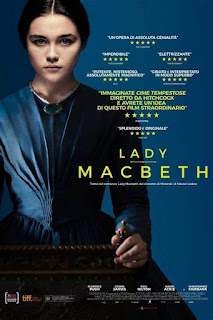
Lady Macbeth (2016)

Lady Macbeth (2016)

Florence Pugh is either a feminist icon or a ruthless monster in this Gothic drama

Director: William Oldroyd

Cast: Florence Pugh (Katherine Lester), Cosmo Jarvis (Sebastian), Naomi Ackie (Anna), Christopher Fairbank (Boris Lester), Paul Hilton (Alexander Lester), Golda Rosheuvel (Agnes), Anton Palmer (Teddy)

On a rural estate in Northumberland in 1865, Katherine (Florence Pugh) enters a loveless marriage with Alexander (Paul Hilton), son of landowner Boris (Christopher Fairbank). The marriage is a disaster, with the couple incompatible and Katherine bored and trapped with no friends or allies. When Alexander and Boris travel for business, she finally gets the chance to explore her surroundings and enters into a passionate sexual relationship with estate worker Sebastian (Cosmo Jarvis). When Boris – but not Alexander – returns, Katherine begins a chain of events that will see her commit a series of increasingly shocking crimes to hold onto the things she wants.

Oldroyd’s film is adapted by Alice Birch from a Russian short story, and is told with an icy, observatory coldness that doesn’t flinch from the increasingly sociopathic ruthlessness of its lead character. The film at first seems like it will set out a feminist fable, of a trophy wife struggling against the neglect and imprisonment of forced marriage. But, as it progresses, any pretence that Katherine is a feminist hero is stripped away: she is modern only in the most dreadful sense – a woman who will willingly commit almost any act of ruthlessness to safeguard her interests.

Playing Katherine, the film is blessed with a star-making turn from Florence Pugh. Only 19, Pugh gives a performance of such stunning depth and intelligence from a young actress that possibly hasn’t been seen since Kate Winslet in Heavenly Creatures. She’s a master of outward stillness and inscrutability, while always communicating the raging whirlpool of emotions underneath the surface. She’s fiercely intelligent, viciously ruthless, frequently observes other characters silently and can twist her face into a mocking defiance. Pugh also communicates the desperate emotional need for connection that motivates this woman, her willingness to go to such shocking lengths motivated by that yearning for a love that she has never known.

Oldroyd is careful not to present her a Gothic monster (would certainly be easy to do so!). The film is careful to outline how unwanted and ill-treated she is by Alexander and his father. Boris (a bullying Christopher Fairbank) ignores and talks down to this person-as-a-piece-of-property, basically just an unlooked-for freebie with some land, who is failing to get on with the production of an heir. Alexander (Paul Hilton, superbly weak and dripping with contemptuous bitterness) has no interest in his wife, his sexual interest restricted to ordering her to strip and face the wall while he pleasures himself. Neither of these characters ever have anything like a conversation with her, instead speaking to her like a dog or malfunctioning appliance.

So, you can see why she is so drawn to the passion of Sebastian – and also, perhaps, why she might find this cocky but not-exactly-sharpest-tool man an attractive chance for her to wear the trousers for once. Their couplings have a sexual urgency and passion to them that is lacking for anything else in the film. But we never see them as emotional or intellectual equals. There is no scene of romance, bonding or conversational or unsexual emotional connection with them. Katherine becomes obsessed with Sebastian – but it seems to be at least as much an obsession with the sex and the sense of control he brings her, as much as it is Sebastian himself.

As Sebastian, Cosmo Jarvis is initial bluster and wide-boy charm that strips away to reveal a man far more timid, scared and increasingly out-of-his-depth with what he’s got caught up in. For all his Lady Chatterley’s Lover physicality, Jarvis has a real vulnerability in his eyes and a certain little-boy lost quality. His panic and shock as event balloon become increasingly tragic.

Equally affecting is the terror of Naomi Ackie’s maid, torn between different sides. Like Pugh, Ackie is superb at suggesting emotional torment under a still surface and her character Anna frequently finds herself the mute observer of increasingly dangerous events, unable to influence them.

The film is shot with a coolness that at times makes it hard to connect with emotionally. In many ways this is a horror film, with a creeping intimidation, scoreless backdrop and a chilly aesthetic of empty rooms and muted colours. There are some bravura scenes: a life-changing breakfast scene is shot with a terrifying but suggestive stillness, just as it is played by Pugh with a chilling unreadability. Oldroyd’s film masterfully uses a number of simple and unflashy camera set-ups that build up to an overwhelming feeling of dread.

And some of this stuff is hard to watch. Two killings are shown in disturbing detail, enough to haunt your dreams. But the film wisely just presents the facts and avoids judgement – however implied that might be. It also makes for an intriguing condemnation of avarice – everyone in the film seems to be longing for something, but none of them find that struggle was worth it. And at its centre is a intriguingly unknowable and unreadable woman, who only becomes more alarming the more we find out about her.

Lady Macbeth is sometimes a little cold and distant for its own good. But its hauntingly grim and has a stunning, career-making performance from Florence Pugh. Filmed with creeping dread, it’s a cold, disturbing film that will linger with you.

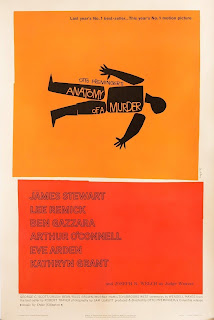
Anatomy of a Murder (1959)

Anatomy of a Murder (1959)

The mechanics of courtroom showmanship is ruthlessly exposed in this gripping drama

Director: Otto Preminger

Cast: James Stewart (Paul Biegler), Lee Remick (Laura Mannion), Ben Gazzara (Lt Frederick Manion), Arthur O’Connell (Parnell McCarthy), Eve Arden (Maida Rutledge), Kathryn Grant (Mary Pilant), George C. Scott (Claude Dancer), Orson Bean (Dr Matthew Smith), Russ Brown (George Lemon), Murray Hamilton (Alphonse Paquette), Brooks West (Mitch Lodwick), Joseph N Welch (Judge Weaver)

Winston Churchill once said Democracy was the worst form of government, except for all the others. You could say something similar about trial by jury: it ain’t perfect, but it’s better than any other justice system we’ve given a spin to in human history. Trials aren’t always forums for discovering truths: they are stages to present arguments (or stories), and they are won by whoever has the best one. Maybe cold, hard facts and evidence make up your story, maybe perceptions. Maybe it’s about how you tell the story. Elements of all three are found in Otto Preminger’s brilliant courtroom drama, Anatomy of a Murder.

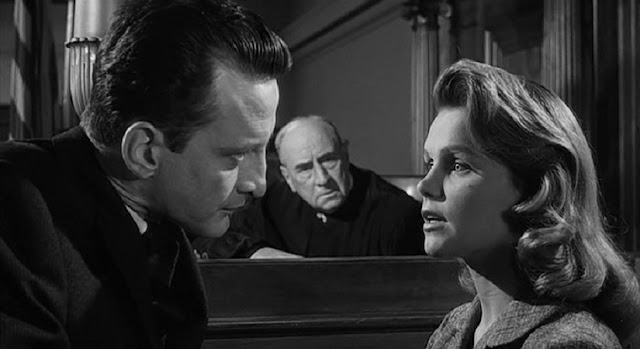
In a small town in Michigan, a US army lieutenant, Frederick Manion (Ben Gazzara) is arrested for the murder of innkeeper Barney Quill. Manion says he did the deed only because Quill raped Manion’s wife Laura (Lee Remick). Representing him is lawyer Paul Biegler (James Stewart), a former district attorney looking to start-up a new practise. On the opposite side is new DA Mitch Lodwick (Brooks West) and, far more of a worry, hot-shot lawyer Claude Dancer (George C. Scott) all the way from the Attorney General’s office. They say there was no rape – only a jealous murder after a consensual affair. It’s he-said-she-said, only “he” is dead. How will the trial clear that one up?

Otto Preminger was the son of a noted Austrian jurist, and Anatomy of a Murder can be seen as a tribute to his father, and to the process of the law itself. Not that it’s a hagiography. The film recognises the virtues as well as the faults of the system. Above all, that the system is not perfect, it can’t base every decision on firm facts and often requires people to take leaps of faith based on their gut instinct about who may, or may not, be telling the truth.

Preminger’s film does its very best to put us in the position the jury is in. We get no real evidence about what happened beyond what they get, and very few bits of additional information (except, perhaps, for seeing what many of the characters are like outside of the courtroom). Instead, the viewer is asked to make their mind-up on whether events fell-out as Manion claims (or not) based on our own judgement of the probabilities and of his (and Laura’s) character. The film opens with the crime committed and closes shortly after the verdict: there are no flashbacks or pre-murder scenes to help nudge us towards one view or another. The murder victim appears only as a photo. Like the jury we have to call it on what we see in front of us.

Anatomy of a Murder also makes clear there are plenty of shades of grey in the process of justice. During his first consultation with Manion, Biegler carefully suggests he consider whether he was in fact insane when he committed the deed – as that sort of defence will be much easier, since he doesn’t deny the killing. Sure enough, on their second meeting, Manion is now deeply unsure about his state of mind. Biegler then works backwards to establish precedent for the plea (a finds a single, over 75 years old one) to pull together a defence of irresistible impulse and to peddle hard a picture of the victim as an unrepentant rapist practically asking for a wronged husband to do the deed.

Biegler’s case is flimsy – but the key thing is to present it with pizzazz. And that’s what he’s got. Stewart’s performances in Hitchcock classics are highly regarded, but this might well be his finest dramatic performance. This is a brilliantly sly deconstruction of Stewart’s aw shucks charm: Biegler promotes an image of himself as a down-on-his-heels, bumpkin-like country lawyer, punching above his weight against the big city lawyers, Stewart dialling up the famous drawl. But it’s miles from the truth: Biegler is a former DA, an experienced trial lawyer and a formidable advocate. Stewart flicks the switch constantly, visibly putting on his persona like a skin, shedding it when no longer needed.

There is a constant suggestion that everything Biegler does is for effect. From fiddling with fishing tackle during the prosecution’s opening statements, to furious court-room theatricals as he thuds tables at slights and injustices. All of it is carefully prepared, rehearsed and delivered to make an impact on the jury. The constant parade of effect, manufactured outrage and appeals to an “us against them” mentality provokes exasperation from his opponents and a weary toleration from the Judge (played by real-life McCarthy confronting attorney Joseph N Welch). Stewart uses his Mr Smith Goes to Washington nobility, but punctures it at every point with Biegler’s cynicism and opportunism. Biegler, at best, persuades himself his client is innocent – but I would guess he doesn’t really care either way. He immediately perceives the personalities of his clients and then does his best to shield their less flattering qualities from the jury.

The one advantage we have over the jury is the additional insight we get into this strange couple, living a possibly unhappy, and certainly love-hate, marriage. Manion plays wronged fury in the court – but Gazzara gives him a lot of self-satisfied smarm and bland indifference to his crime in real life, meeting every event with a smirk that suggests he’s sure he can get away with anything. Equally good, Lee Remick’s Laura presents such a front of decency and pain in court, you’ll find it hard to balance that with the promiscuous, blousy woman we see outside of it, who provocatively flirts with intent with anything that moves. But it’s all about the show: present them right, and these unsympathetic people can be successfully shown as a conventional loving couple.

The prosecution is playing the same game. George C. Scott is superb as a coolly professional lawyer, who will use any number of tricks – from angry confrontation, to seductive reasonableness – to cajole a witness to say anything he wishes them to say. He will turn on a sixpence from being your friend, to berating you as a liar. And he’s not averse to his own morally questionable plays in court. Like Biegler, he knows presenting a good story is what is needed to win: the truth (or otherwise) isn’t enough.

Anatomy of a Murder still feels like a hugely insightful look at the legal process. Most of its runtime takes place in court, which Preminger shoots with a calmly controlled series of long-takes and two-shot set-ups, that help turn the film into something of a play (as well as a showpiece for fine acting). Along with its very daring (for the time) exploration of rape, it has a very cool soundtrack from Duke Ellington, that drips with allure and gives the film a lot of edge. The acting is all brilliant – along with those mentioned, Eve Arden is first-class as Biegler’s loyal secretary and Arthur O’Connell sweetly seedy as his heavy-drinking fellow lawyer. Anatomy of a Murder gives a first rate, at times cynical, look at the flaws and strengths of trial by jury – and is an outstanding courtroom drama.

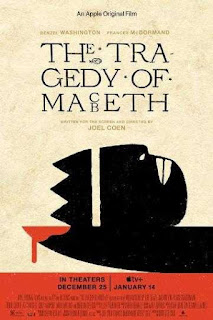
The Tragedy of Macbeth (2021)

The Tragedy of Macbeth header

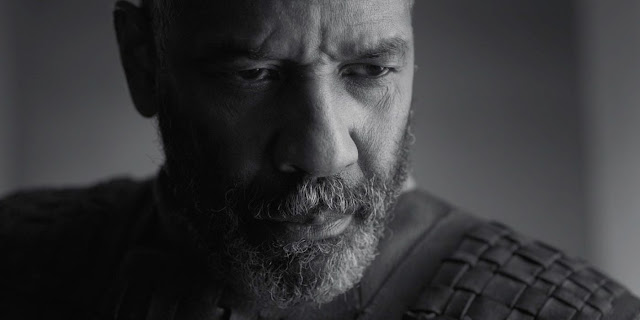
Denzel Washington and Frances McDormand are the Macbeths in this brilliant, noirish, superb Shakespeare film

Cast: Joel Coen

Director: Denzel Washington (Lord Macbeth), Frances McDormand (Lady Macbeth), Corey Hawkins (Macduff), Brendan Gleeson (King Duncan), Harry Melling (Malcolm), Bertie Carvel (Banquo), Alex Hassell (Ross), Kathryn Hunter (The Witches), Moses Ingram (Lady Macduff), Ralph Ineson (Captain), Stephen Root (Porter), Miles Anderson (Lennox), Jefferson Mays (Doctor)

Shakespeare on screen is difficult to pull off. Focus too much on the language and you end up with something more theatrical than cinematic. Zero in on the visuals and you lose what makes Shakespeare great in the first place. That’s not even to mention that films – with their huge audiences – tend to focus on simple, more traditional interpretations of a play that add little to interpreting it afresh. These are all problems avoided by Joel Coen’s The Tragedy of Macbeth which is bloody, bold and resolute and jumps straight into the upper tier of great Shakespeare films. Inventive, dynamic, gripping and excellently acted it succeeds in being both a creative production of the play and something truly cinematic.

Shot in a crisply clean black-and-white, the 4:3 frame frequently filled with rolling mist and stark white light (it’s superbly shot by Bruno Delbonnel), this is a Macbeth set in a Jan Kott inspired Samuel-Beckett-tinged wasteland, with Scotland a bleak, blasted country, its characters leading lives full of sound and fury that signify nothing. The Macbeth’s castle is an Esher like construction of perfectly formed empty rooms, towering walls and arches casting grim shadows and open ceilinged rooms allowing onlookers to observe everything. There are brilliant images: not least the handle to Duncan’s door which is strikingly lit to resemble a knife. Characters frequently emerge from the mist or the darkness to walk towards us and confess their darkest thoughts.

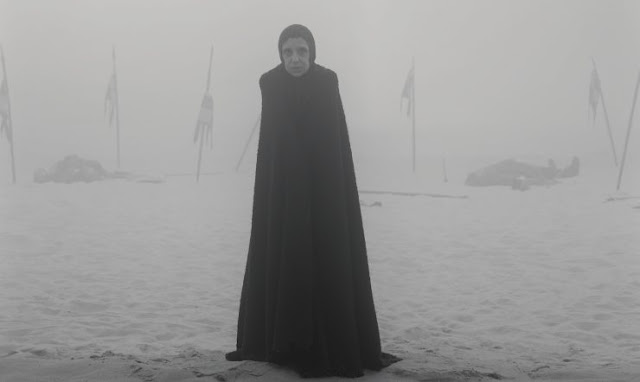
No Shakespeare film has better used set and location since Orson Welles’ Othello – a film this is sharply reminiscent of, with its brilliant use of angles and shade that constantly disconcerts the viewer (even leaving us confused at points on whether we are looking down or up). Coen also seems to have been inspired by Peter Brook’s grimly nihilistic King Lear film, with this Scotland being trapped firmly in a circle of destruction powered by the witches. All three are played by Kathryn Hunter, whose contortionist twisting and ability to switch her vocals on a sixpence from sing-song to a Gollumesque growl make them truly feel of the earth and yet not. Hunter is inspired casting – sometimes representing all three witches in a single schizophrenic body, at others playing all three at once. A brilliant image at one point shows her double reflection in a watery pool, turning her body immediately into a trinity.

Hunter’s movement is birdlike and agile – fitting since it’s suggested the witches can transform themselves into carrion crows, flying over Scotland picking bones clean of fresh. The first image is the three birds circling the Captain as he walks slowly across a beach to report to Duncan. Later Hunter perches on a crossbeam in another opened-ceiling room, subtly poking Macbeth on to greater monstrosities. There is a cycle of destruction here – and the film’s ending implies all this chaos is bound to start again.

Crucial to this is Ross. Following Polanski’s Macbeth – and again heavily inspired by Jan Kott – Alex Hassell’s unctuous Ross, ingratiates himself with all while happily engaging in acts of brutality. He personally executes Cawdor (by beheading), joins Banquo’s murderers, shows the way to the sacking of Macduff house and hands Malcolm both the crown and Macbeth’s severed head. But Coen takes it further again: rather than a cruel opportunist, this Ross seems to be an agent of the witches – or maybe even a witch himself. Hassell’s costume, with its curiously feminine robe and wing-like arms, echoes the witches and Ross moves smoothly from side-to-side even in the final acts, planting seeds of further destruction (including further implied murders) and collaborating directly with the witches to restart the cycle at the end.

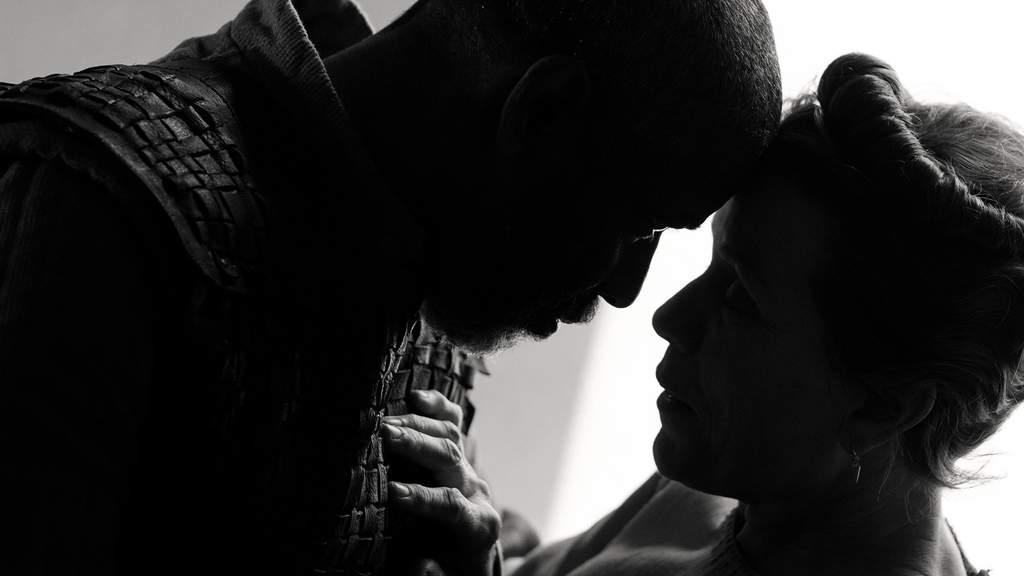
All this makes Macbeth and Lady Macbeth at times feel like rather tragic puppets at the heart of a terrible cycle of events they cannot control. It certainly fits with Denzel Washington’s balanced and intelligent performance in the lead. While Washington doesn’t mine as much weight and meaning from the text as the great stage Macbeths, he gives his line readings an unstudied naturalism and a dynamic and thoughtful rhythm (even if he is prone a little too much to the “soft-slow/fast” approach). His Macbeth is a weak, indecisive man, happy only when he is in action. Clearly ambitious from the start, he binds himself in knots thinking but, once a decision has been made, has no hesitation. Violence is an instinctive tool – he kills several people with no hesitation and a lightening aggression – but he’s lost without direction. He clings to the crown as if it will somehow give the things he has done meaning.

Washington’s performance shifts gears once Macbeth has decided to fully commit himself to those scorpions that fill his mind, becoming an unbalanced mixture of fatalistic and recklessly impulsive. No wonder he has less need for his wife. Frances McDormand is perhaps even better as a Lady Macbeth who sees the crown as her last chance for legacy in a world that has left her behind. McDormand really understands the way to mine nuance from the language. Frequently inpatient with her husband, she is decisive where he is not, but squeamish around violence in a way he isn’t. Both Washington and McDormand manage to suggest a great deal of unfulfilled sadness in the Macbeths, two people in the twilight of their years who pounce on a chance for a last hurrah but find themselves psychologically unsuited for the consequences.

The two leads are at the head of a uniformly strong cast. Hunter and Hassell are both superb. Bertie Carvel is a brooding but honest Banquo. Corey Hawkins a forceful but thoughtful Macduff, played with guilt and wise from the start on Macbeth’s villainy. Moses Ingram brings a lot of warmth to a striking scene as Lady MacDuff. Ralph Ineson’s delivery of the Captain’s speech is spot on. Harry Melling is an immature, stubborn Malcolm.

But the real star here might just be Coen’s direction. The brooding, overbearing beauty of the film is all part of its atmosphere of creeping intimidation and danger. There are some truly striking, haunting images: the flame lit murder of Banquo, a deranged Macbeth fighting a spectral hallucination of Banquo, water pouring down into the flagstones after Macbeth’s final visions of the future, the smoke and mist filled murder of Macduff’s children (a shot of Wellesian brilliance), Lady Macbeth standing before a sheer drop, the imaginative arrival of Birnam wood, Macduff and Macbeth’s final duel in a narrow battlements. This is a punchy, brilliant, beautiful, intelligent and unique reimagining of the play that mixes Shakespeare, visual and has something clear and unique to say about staging the play. Comfortably one of the greatest Shakespeare films ever made.

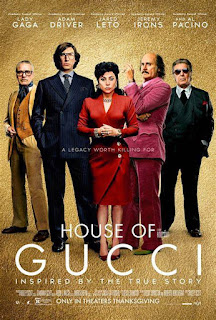
House of Gucci (2021)

House of Gucci (2021)

Ridley Scott’s bizarre film is half-pantomime, half true-crime drama

Director: Ridley Scott

Cast: Lady Gaga (Patrizia Reggiani), Adam Driver (Maurizio Gucci), Jared Leto (Paolo Gucci), Jeremy Irons (Rudolfo Gucci), Al Pacino (Aldo Gucci), Salma Hayek (Giuseppe Auriemma), Jack Huston (Domenico De Sole), Reeve Carney (Tom Ford), Camille Cottin (Paola Franchi), Youssef Kerkour (Nemi Kirdar)

There are few juicier combinations than glamour, money, fashion and true crime. Scott’s House of Gucci taps into this with a film that’s somewhere between pantomime and tragedy. Full of actors giving their very best “Mamma Mia!” Italian accents and shrugging shoulders, it oscillates wildly from scene-to-scene between black comedy and operatic high drama. It’s a strange mixture, with House of Gucci becoming some sort of bizarre treat, like an end-of-year treat for cinema viewers to unwrap.

The film follows the disastrous marriage between Maurizio Gucci (Adam Driver) and Patrizia Reggiani (Lady Gaga). Patrizia, a ruthlessly ambitious gold digger, zeroes in on the shy Maurizio, heir to 50% of the Gucci fashion fortune, and marries him. This is all to the horror of his father Rudulfo (Jeremy Irons), who (correctly) identifies Patrizia’s ambitions, and cuts them off. Taken under the wing of Rudolfo’s brother Aldo (Al Pacino), Patrizia pushes Maurizio into a management role in the company – and down a slippery slope that will lead to forgery, betrayal and eventually murder.

House of Gucci feels like it might have existed more comfortably as a ten-part TV drama. It’s essentially a big, brash version of the Emmy-award winning The People vs. OJ Simpson, but told in about a quarter of the time. What this basically means is that any subtle character work and detailed story telling is sacrificed, with the focus firmly on the salacious and entertaining drama. The overall effect is a swift rush through a story that becomes a series of sensational, almost comedic, clashes between larger-than-life personalities squabbling over a huge pot of money. Like Dallas on the big-screen, it’s all scored with a series of funky pop tunes, adding to the sense of pantomime.

It’s an odd outing from Scott, with (it felt to me) little of the individual stylistic touches that he has bought to other projects. In fact there’s very little of his stamp on it: it’s Scott as professional craftsman. He and the film feel very confused by the tone. Mostly the film doubles down on black humour and show-casing big, brash performances. Then it might acknowledge briefly that there were real victims here, which it wants to treat with a level of respect. By and large, the film is like a glossy magazine article, with Scott nudging you as you turn each page and saying “you will not believe what happened next!”

I suppose House of Gucci probably could have explored more the personal and emotional hinterlands of its characters. Relationships shift dramatically from scene-to-scene, with Maurizio and Patrizia’s marriage souring over-night, for no clear reason. Pre-existing family rivalries and politics could have been explored more: it’s heavily implied Aldo and Rudolfo are already engaged in a struggle of ideals (Aldo wants commercial expansion, Rudolfo to remain an elitist fashion house). Drama could have been made of the attempts by both brothers to use other members of the family as pawns in this feud. But then, a film that dived into the psychology of the players might well have ended up being more about business and less about the entertaining ruthlessness of the rich and famous.

The performances are wildly different in tone. Lady Gaga effectively holds the film together as an ambitious woman who is only partially aware (at first) of what a ruthless gold digger she is. Devoid of any interests other than being rich (“I’m a people pleaser” she tells Rudolfo when asked what her interests are), Patrizia is the sort of monster of ambition who would fit comfortably into an episode of Desperate Housewives. Setting her cap at Maurizio with a laser-like focus and shafting everyone left, right and centre (although Gaga does hint at her deeply repressed insecurity) it’s a performance that walks a fine line between OTT and human. The film has a lot of fun at her amoral certainty – she sees no problem with forging Rudolfo’s signature on some vital papers after his death (the film even sets forgery up as Chekhov’s skill in its opening scenes) and Gaga enjoyably plays the outrage that only someone convinced they never wrong can feel.

Opposite her, Driver plays Maurizio as a timid, easily seduced young man, pushed into taking a leading role in a business he has no real interest in (or aptitude for). Driver is softly spoken – and gives the most restrained and grounded performance in the film – and frequently meets another demand from his wife with a chuckle and a reluctant “Patrizia…”. House of Gucci steps carefully around Maurizio, sometimes playing him as an innocent abroad, at others as a man corrupted by his wife into a creature of ambition.

Most of the rest of the cast go for a broad style which, while fun to watch, only adds to the sense that we aren’t supposed to be taking anything too seriously. While many of the Gucci family probably were larger-than-life personalities, I’m not sure they could have been the cartoons they are here. Irons goes for a waspish Scar-like mastery of the cutting remark. Pacino doubles down on his shoulder-hunched energy, with added shouting. Hayek gives a performance that’s a near master-class in Vampish camp, plotting murder from a mud bath.

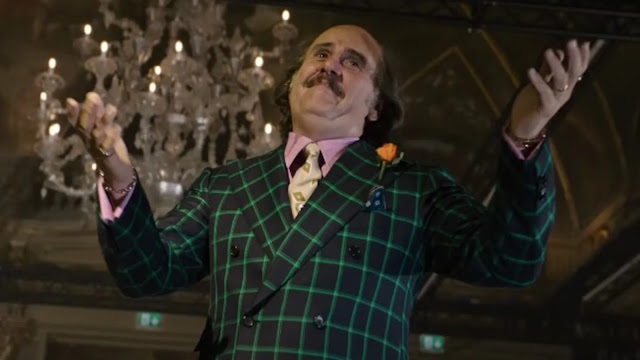
Towering above them all is Jared Leto, who seems to be in a film all of his own, with every scene another clip for his “for your consideration” show-reel. Buried under a mountain of latex that transforms him into a clone of Jeffrey Tambor, Leto goes all out as the passionate, ultra-stereotypical-Italian Paolo Gucci, in a performance that’s either a shameless parade of showing off or somewhere near a stroke of genius. It works because, beneath all the hammy exuberance, Leto make’s Paolo a desperately sweet guy, the only real innocent in the film. Leto and Pacino in particular feed off each other – a late scene between the two is hilarious (I’m not sure in the right way, but who can tell what these actors are aiming for sometimes) in its joyful overplaying.

Perhaps joy is the one thing House of Gucci needs a little bit more on. I wonder how more entertaining again it might have been if the film had really gone all out on being a camp classic. It shies away from this, wanting to leave some vestige of respect for the dead and not lose its true-crime-roots. But, I wonder if a director more suited to this material than Scott – who struggles to stamp his personality on it – might have done more to make this into a cult classic.

No Country for Old Men (2007)

Javier Bardem is terrifying in the Coen’s Oscar-winning No Country for Old Men

Director: Joel & Ethan Coen

Cast: Tommy Lee Jones (Sheriff Ed Tom Bell), Javier Bardem (Anton Chigurh), Josh Brolin (Llewelyn Moss), Woody Harrelson (Carson Wells), Kelly Macdonald (Carla Jean Moss), Garret Dillahunt (Deputy Wendell), Tess Harper (Loretta Bell), Barry Corbin (Ellis), Stephen Root (Wells’ Hirer)

The borderlands of America. A vast panoramic countryside, where times may change but the underlying violence and savagery continues to lurk just under those dusty plains. It’s ground the Coens have explored before, but perhaps never with such mastery as in No Country For Old Men, a film that mixes the style of a classic Western with the nihilism and bleakness of their most challenging work, all capped with just a hint of their incomparable quirky black humour. A pitch-perfect adaptation of Cormac McCarthy, No Country For Old Men scooped four Oscars, including Best Picture.

In the border Terrell County in Texas in 1980, a Vietnam-vet and welder Llewelyn Moss (Josh Brolin) stumbles across a drug deal gone wrong in the desert: several dead men, a truck full of drugs and a suitcase containing $2 million. Taking the case, Moss sends his wife Carla Jean (Kelly MacDonald) to her mother’s for safety and flees first to Del Rio then Mexico to try and keep the money. Unfortunately, he’s being followed by relentless, psychotic hitman Anton Chigurh (Javier Bardem) who will stop at nothing to fulfil his contract – and heaven help anyone who gets in the way. Trailing in their wake is worn-out Sheriff Ed Tom Bell (Tommy Lee Jones), who feels increasingly adrift in a violent world he no longer understands.

The Coen’s film is a bleak, pessimistic and doom-laden look at man’s inhumanity to man – all of it watched with a weary sadness by Jones’ tired Sheriff, in a hauntingly gentle performance. The vision the Coens present is a world that may have moved on in decades from the Wild West, but still has that era’s cavalier regard for life. Life is very cheap in No Country For Old Men and even the slightest mistake, hesitation or act of kindness can have horrific consequences. It’s a film where death is a constant, terrible surprise – so much so it claims the life of one significant character entirely off-screen and can be handed out on the basis of a coin toss.

That coin toss will come at the prompting of Chigurh. Played with an Oscar-winning calm voidness, by an unworldly Javier Bardem, Chigurh is relentless, merciless and completely detached from humanity. Emotion is a complete stranger to him, other than a pride in his work and a capability for being irritated by a non-co-operative target. Chigurh sees himself as an instrument as fate, a nihilistic view where individual choice is removed from the equation. In one chillingly memorable scene, he relentlessly but with a terrifying calm gets a gas station attendant to call a coin toss: the attendant struggles to understand what he’s wagering, but it’s all too clear to us – and in case we miss the point, Chigurh urges him to keep the coin afterwards as it’s a momentously lucky object.

There’s a possibility that this is how Chigurh rationalises the world to himself. He is absolved of all moral consequences for his actions, as everything is pre-ordained, objects and people travelling to predetermined outcomes. It’s a viewpoint another character invited to toss a coin late in the film will firmly reject, saying all Chigurh’s actions are a choice. They’re probably also right. Chigurh kills throughout the film partly because it’s the most expedient way to get what he needs – from a car, to escaping a police station – but also because of the pride he takes in his work being the best, and anything obstructing that should be punished. He has no regard or interest in the money or even for his employers, all of them disposable in the pursuit of doing his job well. It’s perhaps not a surprise that a survey by psychologists named him the purest psychopath caught on film.

Pity those who cross his path. Compared to him, Woody Harrelson’s professional hitman is just that: a guy doing a job rather than an elemental, unstoppable force of nature (Harrelson is superb as a charming, slightly cocky pro, who accidentally gets in over his head). In many ways, it makes it even easier to root for Josh Brolin’s Llewelyn Moss as he tries to stay one step ahead of him with his ill-gotten gains. In a breakout role, Brolin makes Moss the quintessential everyman, with just enough touches of grace and decency to make us overlook the fact that he’s an opportunist putting himself and his family at risk to steal drug money. Moss is such an underdog – but also so ingenious and determined – he becomes the perfect person to root for.

The film largely chronicles the battle of wits between Llewelyn and Chigurh across Texas and Mexico, the two of them carrying out a hunter-tracker dance that has echoes of similar duels from directors like Leone. In one set-piece moment after another, we see their coolness under fire, as well as their focused determination to get what they want, regardless of cost. Brolin’s performance is a superb slice of taciturn Texan-ness, with just enough decency to get him in trouble: from protecting his wife, to taking water back for an injured man, to rejecting the advances of a poolside floozy. It’s interesting that he invariably ends up in more trouble when he tries to do something good – but such behaviour sets him aside from Chigurh and lets us know he’s one of us.

All this bleakness is followed with sad-sack sorrow by Tommy Lee Jones’ sheriff, whose eyes speak of endless, uncountable horrors that fresh ones don’t even seem to shock him anymore. Jones bookends the film with two superb monologues, that reflect on what seems like the increasing brutality of the modern world. But the Coens are smart enough to know that this sentimentality is misleading – Bell’s uncle Ellis (a fine cameo by Barry Corbin) tells him frankly that the world was ever thus and its naïve to think otherwise. This is also one of Jones’ finest performances, a tragic Homer, totally ineffective, reduced to following around and picking up the pieces.

All of this plays out without hardly any trace of a music score – Carter Burwell’s scant score makes use of everyday sound and hints of music at a few dry moments – hammering home the coldness and bleakness of it all. Excellently shot by Roger Deakins, whose classic, restrained, pictorially beautiful presentation of the West brings back a truckload of cinematic memories, the Coen’s film still finds room for dashes of dry humour. Sure, it ends with a nihilistic comment on the horrors of the world and our hopelessness in them, but there are small shoots of hope growing in there if you look closely. They are well hidden, but they are there.

No Country for Old Men is perhaps the Coens’ most fully rounded, morally complex, intriguing and dynamic film, a wonderful mix of the style of their earlier work with the bleakness of Fargo and just some touches of the wit they displayed elsewhere. Cormac McCarthy is the perfect match for two masters, whose direction is as faultless as their script. It’s a film that rewords constant viewing and is constantly shrewd and terrifying in its analysis of the human condition. Essential watching.

Miller's Crossing (1990)

Gabriel Byrne (and hat) is outstanding in the Coen’s brilliant gangster pastiche Miller’s Crossing

Director: Joel & Ethan Coen

Cast: Gabriel Byrne (Tom Reagan), Marcia Gay Harden (Verna Bernbaum), Albert Finney (Leo O’Bannon), John Turturro (Bernie Bernbaum), Jon Polito (Johnny Caspar), JE Freeman (Eddie Dane), Steve Buscemi (Mink Larouie), John McConnell (Bryan), Mike Starr (Frankie)

In a forest clearing, a black hat dances in the wind; sometimes it almost touches the ground before another gust lifts it up again. What does it mean – Who can say? That hat is the heart of the Coen Brothers marvellous pastiche of, and tribute to, gangster films – probably the only early Coen brothers film I really like (and the one I’ve seen the most). The Coens, bless ‘em, always liked to claim it was just a film about a man and his hat. But it’s also a rewarding, complex, jet-black film noir comedy about ethics and morals, with intriguingly unknowable characters. And lots of hats.

Tom Reagan (Gabriel Byrne) is the friend and fixer of Irish crime boss Leo O’Bannon (Albert Finney) who runs a prohibition era city. Cool, calm and collected Tom is the smartest guy in the city – and a compulsive gambler with a self-destructive streak a mile wide. Leo’s rival, Italian gangster Johnny Caspar (Jon Polito) wants to whack crooked bookie Bernie Bernbaum (John Turturro), who’s spreading the word on boxing matches Caspar has fixed, making Bernie a packet and eating into Johnny’s profit. Problem is Leo says no – because he’s in love with Bernie’s sister Verna (Marcia Gay Harden, very good), a ruthless femme fatale, who also happens to be sleeping with Tom. When Leo finds out, Tom finds himself in the middle of a struggle to control the city – and forced to play both ends against the middle to save his skin.

Miller’s Crossing is a masterpiece of pastiche. Shot with a coolly steady-hand by Barry Sonnenfield – deliberately apeing classic film noir– and production designed within an inch of its life to look like the perfect Hollywood idea of a 1920s-era gangster film, it’s a perfect mix of everything from Hammett to Chandler to Puzo. It’s a sort of hyper-remake of Hammett’s The Glass Key, where a crooked boss and his fixer are split apart by a woman, but fundamentally remain loyal to each other. Everything you could expect from a classic gangster film appears, but dialled up to eleven: from the grandiose design, to bullet-spraying Tommy gun ruthlessness and the bloody mess left behind.

Miller’s Crossing is great because, unlike those other early Coen films, it combines loving pastiche and quirky humour, with a genuinely gripping story and fully rounded, complex characters. You can enjoy it as a homage, but also on its own terms as a compelling piece of story-telling. It’s sense of atmosphere is faultless, with a delightful mood of whistful regret behind all the killing that comes from Carter Burwell’s pitch-perfect score, riffing brilliantly off Irish folk songs. The film is crammed with brilliant sequences, ranging from comedy, gun-toting action and stomach-churning tension.

It opens with an obvious, crowd-pleasing Godfather homage, with Caspar sitting across from Leo entreating him for action. But take a listen to what Caspar is talking about as he asks for the right to kill Bernie: Ethics. Ethics is what the film is really about. Every character in Miller’s Crossing makes a choice about their moral stand. Because, even in a world of killing and violence, man (and woman) gotta have a code. That’s not about right and wrong, but simple rules you live by.

A code is what Tom has. Superbly played by Byrne – Hollywood handsome, but world-weary with a touch of self-loathing and tired of always seeing several steps ahead of everyone else – Tom is one of the most intriguing enigmas in a Coen film. How can someone this smart be such a mess? He owes thousands to bookies and he’s screwing his best friend’s girl. For all his smarts, and ability to see all the plays (something he proves time and again), there is something fragile about Tom. The Coens remind us of this with their running joke of Tom being smacked about endlessly (every major character lands a blow at some point on him). For all this, Tom very rarely fights back: not only does he not like getting his hands dirty, there is also a sense of sado-masochistic guilt about Tom. Like he’s smart enough to know he’s in a dirty business, and deserves all this physical abuse.

The thing that makes Tom’s world work is ethics – in his case loyalty to Leo. Not even being kicked out by his furious friend changes that. Miller’s Crossing has a strangely sweet bromance at the heart of it, gaining a lot from Finney and Byrne’s natural chemistry and forging a relationship that’s part brotherly, part father-and-son. Of course, a girl can’t come between them. Tom’s clings to his loyalty to Leo – the thing that makes him able to exist in this world – and no threat from Berne or promise of a good deal from Caspar will make him compromise. Rather he will play all of Leo’s enemies (and Leo himself) off against each other, to make sure his friend emerges on top.

It’s all symbolised by that hat. Tom dreams about that hat dancing in the wind – his literal nightmare is losing that hat (his ethics) in the wind. In so many scenes, Tom keeps in constant contact with his hat, balancing it on his knee or rolling it around his hands. When Verna wants to grab his attention, it’s the hat she steals back to her apartment. It’s a physical representation of his grounding, of his contact with reality. Without the hat he’s vulnerable: it’s inevitably tossed away before a threat or beating.

Tom’s not alone: every character has their own ethics. Bernie is an appallingly mercenary, selfish, two-faced, cheating little rogue – but he’s just made that way, it’s nothing personal it’s how he gets ahead. Caspar is obsessed with loyalty, justifying to him the amount of violence he hands out. Leo has a little boy’s loyalty to old friends and family, the sort of guy shocked when bad things happen to friends but who is happy to literally shred people with a tommy gun. Verna is out for herself, but wants to protect her brother. Even the ruthless Dane is loyal to Caspar and to those he’s “soft on” to the bitter end. All these characters justify their actions by adherence to ethical rules they’ve made for themselves.

But only Tom is really worried about getting his hands dirty. That’s something Bernie exploits in the film’s pivotal – and most famous – scene as Tom is unwillingly forced to prove his new ‘loyalty’ to Johnny by executing Bernie in the woods. In a tour-de-force by Turturro, Bernie begs, pleads and weeps for his life urging Tom to “Look into your heart”. It’s the first – and only – decision Tom makes for sentiment in the film. Naturally, it comes back to bite him. Tom’s journey in the film is perhaps to remove sentiment and heart from the equation – after all it’s all leading to a Third Man-ish ending where our hero is left standing alone while the only person he cares about walks away.

Aside from Byrne, the film is crammed with sublime performances. Finney is excellent as a big puffed-up, violent Teddy bear. Polito is hilarious as a wound-up ball of violent energy and poor judgement. JE Freeman is terrifyingly sadistic but also strangely loyal. Harden is a nightmare image of a femme fatale, ruthless to an extreme. There is a great cameo from Buscemi as a fast-talking fixer. Best of all is Turturro – grasping, selfish, cowardly, cocky, weasily and brilliantly amoral.

It’s all superbly directed by the Coens, even if sometimes their delight in shocking violence goes too far (like the childish delight in seeing bodies shredded by bullets) – not only do they get the mood perfect, but if you have any doubts about their ability to direct a set-piece take a look at Finney’s masterful Danny Boy scored shoot-out. Their script is also a knock-out of pastiche gangster parlance, as well as building a fascinating exploration of how we use morals to justify any actions we want. Miller’s Crossing is about those fatal moments where we decide whether we can justify to ourselves the actions we take and the people we have become. Or maybe it is all just about a hat.

Promising Young Woman (2020)

Carey Mulligan excels as a Promising Young Woman

Director: Emerald Fennell

Cast: Carey Mulligan (Cassandra Thomas), Bo Burnham (Ryan Cooper), Alison Brie (Madison McPhee), Clancy Brown (Stanley Thomas), Jennifer Coolidge (Susan Thomas), Laverne Cox (Gail), Chris Lowell (Al Monroe), Connie Britton (Dean Elizabeth Walker), Adam Brody (Jerry), Max Greenfield (Joe Macklemore), Christopher Mintz-Plasse (Neil), Alfred Molina (Jordan Green)

It’s late at night, you’ve had a few drinks and someone nice offers to drive you home. If you’re a man you probably think, what’s the problem? If you are woman, this can be just the first act of a night of sexual assault. It’s depressing to think this is the world we live in, but if there is one thing #metoo taught a lot of men, it’s that many women experience danger in situations we wouldn’t think twice about. These ideas are wonderfully explored in Emerald Fennell’s directorial debut, the striking, witty and deeply suspenseful Promising Young Woman.

Cassie Thomas (Carey Mulligan) goes out week after week to clubs. She lolls in the corner, slurs her words and waits for guys to offer her a lift home. Those taxis always swing past their own apartments, they always ask her to pop in for one more drink which swiftly turns into an attempt at sex. At which point, Cassie reveals she is entirely sober… Cassie’s revenge campaign is all about revealing to guys who think they are nice, that they are in fact not nice at all. Dealing with trauma over her past, Cassie’s only meaning in life is this campaign, at the cost of any personal life. But a chance meeting with Ryan (Bo Burnham), someone she used to go to college with, presents her with a choice – a new start or a settling of accounts with the man at the root of her trauma.

Emerald Fennell’s film is a superbly timely drama that brilliantly dances from genre to genre. It’s possibly the sweetest and most romantic revenge drama you’ll ever see, or the funniest shocking tragedy. But it’s primarily a film powered by righteous anger: the world shouldn’t be like this.

Many of the men are of course vile – and perhaps most of all because they are so superbly certain of their self-satisfied niceness. The film opens with one of these nights, Cassie pretending to be utterly wasted in a bar while three men chat about how drunk she is, but also how hot. The guy who seems the nicest pops her in an uber, takes her home, pours her a massive drink and takes her pants off. At which point Cassie, stone-cold-sober announces “What the fuck are you doing?”. Later Neil (Christopher Mintz-Plasse) will whine it’s not fair Cassie has “tricked” him into feeling bad (after he has already assaulted her). As if her not being helpless somehow makes him the victim.

But it’s not just men. Fennell’s film shows several times how many women conspire in keeping this status quo going. Cassie’s focused campaign against the people she holds directly responsible for the rape of her beloved best friend Nina starts with two women. One is the fellow student (now a self-satisfied mum-of-two, played with suburban smugness by Alison Brie) who thought that, by behaving like that, Nina basically had it coming. The second is the Dean of the university (a smoothly uncaring Connie Britton) who didn’t want to ruin the men’s careers. Both of these women are as much a part of the victim-blaming culture as the men Cassie shames on her nights out.

Fennell’s film is a brilliant expose of how toxic a certain kind of masculinity has become. And it’s not just the vile alpha-males responsible for the horror that happened to Nina (when we reach these people late in the film, their basic lack of humanity is staggering – even if Fennell strips them of any possible nuance by making them cartoonish in their Bullingdon-club vileness). The bulk of the men in the film are convinced that because they try and be nice, they therefore are nice.

But it’s still a film with a great deal of compassion. It notably isn’t a straightforward endorsement of revenge. It’s made clear what Cassie is doing is hugely dangerous – she has lucked out that the men she encounters are shamed into pleading and defensive whining. There is the distinct possibility that Cassie could be seriously hurt or worse – for all her planning and determination. That’s not to mention the psychological damage this has on her. She is a deeply disturbed, troubled and unhappy woman whose life is going nowhere.

It’s the emotional heart of Carey Mulligan’s wonderful performance. Mulligan nails the furious calm Cassie has on campaign – and her chilling authority in situations where she is on top. But she also shows Cassie’s emotional damage. She finds it impossible to open herself to any form of relationship, romantic or otherwise. She’s so shutdown she can’t even remember her own birthday. This crusade has sucked everything out of her life, and had a shattering emotional impact on her. Mulligan has never been better: a career defining performance, heartfelt and impassioned, dark and emotionally complex.

Fennell shoots the film with a real assuredness. When Cassie is in control, Fennell uses a series of carefully controlled static shots, often centring Cassie in the frame. Its only when events are out of her control that the camera shifts to greater movement and less stable shots. The confrontations are both darkly amusing but also chillingly edge-of-the-seat – because we can’t be sure whether everything will go wrong, or how far Cassie will go. Promising Young Woman is also very witty and even rather sweet – the slow, hopeful romance between Cassie and Ryan (a charmingly sweet Bo Burnham) is hugely endearing and gives the film a sense of hope. We’re torn: we want Cassie to have her revenge, but the damage to her is so huge that we also want her to move on.

It’s what makes Promising Young Woman a kaleidoscope of a film. Every time you shift it, your perspective changes. We thrill at seeing Cassie shame bad men, just as you worry for her safety every time. We never know what to expect from Ryan – after all we’ve seen so many men like him turn out to be predators – but we want him to be genuine. You’ll laugh one scene and have your stomach in knots the next. It culminates in a confrontation that shifts shockingly from black comedy to simply pure dark, more disturbing and difficult than you can imagine. Fennell – and a magnetic Mulligan – maintain all these different beats perfectly. A wonderful, and hugely timely, film.

Witness (1985)

Harrison Ford and Kelly McGillis have a cautious romance across the divide in Peter Weir’s gripping thriller Witness

Director: Peter Weir

Cast: Harrison Ford (Detective John Book), Kelly McGillis (Rachel Lapp), Lukas Haas (Samuel Lapp), Jan Rubes (Eli Lapp), Josef Summer (Chief Paul Schaeffer), Alexander Gudunov (Daniel Hochleitner), Danny Glover (Lt James McFee), Brent Jennings (Sgt Elton Carter), Patti LuPone (Elaine), Angus MacInnes (Dgt Leon Ferguson), Viggo Mortensen (Moses Hochleitner)

The old world meets the new, when a mother and son from an Amish community find themselves travelling through Philadelphia and the son is the only witness to a murder at the train station. The mother, Rachel (Kelly McGillis) wants to help, but is worried about her son Samuel’s (Lukas Haas) safety and is desperate to return home – after all these ‘English’ problems aren’t theirs. However, Detective John Book’s (Harrison Ford) investigation reveals the murder to be the work of dirty cops in his own department – and, after an attempt on his life, he has no choice but to flee back to Amish community with Rachel and son, hiding until he can find a way to set things right.

Directed by Peter Weir with a real professional smoothness, Witness is a triumph of atmosphere and mood, with an intriguing thriller at the heart of it. Weir brings a real understanding and respect for different ways of life, embracing the differences in the Amish way of life but also making some striking parallels between it and our modern world. It’s that emotional maturity and sensitivity that makes the film work: and the most impactful factor is the heartfelt, largely unspoken romance between Book and Rachel. Weir keeps this subtle, gentle and built on suppressed feelings and wordless moments that trusts the audience to understand their bond and their knowledge that their different worlds mean they can probably never be together.

Weir directs these moments with a real romantic simplicity, drawing possibly the most heartfelt, almost boyish, performance he’s ever given from Harrison Ford. Oscar-nominated (his only nomination), Witness is a reminder of how well Ford does both moral outrage and pained suffering. His fury at his corrupt colleagues betraying their badge is as visceral as his sense of fear when he’s chased (first in a car park, then later around an Amish farm) by Danny Glover’s heavy – we always feel worried about Ford’s safety, while also sure he can look after himself. He also works wonderfully with Lukas Haas, Weir focusing on his under-valued fatherly qualities as an actor.

Ford brilliantly combines his decency and world-weary sadness (few actors manage to look more outraged but also resigned when confronted with betrayal and villainy – and is there a more decent, homespun name than John Book?) but Witness taps into his vulnerability more than almost any other film. That’s not just physical vulnerability – he spends a large portion of the film recovering from a gunshot and looks genuinely in fear of his life in the final confrontation – but also emotionally vulnerable.

In a luscious scene he and Rachel (an equally superb performance from Kelly McGillis) dance in a barn to What a Wonderful World by Sam Cooke. As the two shyly and slightly hesitantly exchange looks, both actors allow their characters to hang on the edge of making a clear romantic gesture, but always backing away with laughs and grins. Ford has never seemed more playful, joyfully singing along while McGillis’ emotional frankness and honesty leads makes the scene beautifully romantic, with two people nervous about admitting their growing feelings for each other.

This is just one of several romantic touches that really carry impact. From the moment they arrive in the Amish village, they find themselves drawn to each other. Maybe it’s the charmingly awkward way Book wears the Amish clothes that don’t fit him. Perhaps is the delighted smile and the realisation of her own loneliness in Rachel . But the feelings are unspoken but clear. Both of them are tentative about romance. Book is passionate about justice but surprisingly shy personally (as is all too clear from his bashful talk with his sister earlier). Rachel is committed to her religion, but also yearns for something emotionally beyond what that community can give her (certainly she’s unthrilled by the expectation that she will marry Alexander Gudunov’s Amish farmer, who courts her with a pleasant but romance free dutifulness). Interestingly she is the one more forward in what she wants than Book. For all the film is a gripping thriller, this romantic story is its heart and what gives the film its impact.

The film also works because Weir treats the Amish life so matter-of-factly. The opening moments of the scene, in its simple rural setting and accompanying choral-inspired score could be set hundreds of years ago. It’s actually quite jarring when we find ourselves in busy Philadelphia: but Weir never suggests either way of life is superior to the other. Both are communities with their own rules, virtues and flaws. The Amish are peaceful, but just as capable of prejudice as anyone else. But they are free of the cruelty and violence of the modern world.

A large chunk of the film follows Book’s fish-out-of-water experiences with the Amish, and his growing regard for them reflects the film’s own feelings. He finds there’s a strange peace in the community – and we can see why after we’ve seen the hard-bitten streets Book works. Ford’s real-life carpentry skills have never been used better on film, as Book helps raise a barn (a lovely moment of communal accomplishment). But while the peace is refreshing, he can only change so much. Confronting abusive townspeople (“It’s not our way”/”It’s my way”), Book strikes back. The film’s stance on Book’s smacking down of these abusive street kids is an insight into its maturity: it’s a brief moment of triumph, but is soured instantly by the horror of his hosts – and leads directly into blowing Book’s cover.

But it works because it reflects how we are feeling. Having been led to invest so heavily in a way of life it’s easy to joke about, we feel the same as Book does: those bullies need taking down a peg or two. It fits with Book’s character as well – the idea of corrupt, bullying cops is as repugnant to him as drunken oaths mocking those who choose not to defend themselves.

Weir’s film also successfully creates plenty of thriller beats. Little Samuel’s witnessing of a murder in a train station toilet has a seedy immediacy and sense of danger that really makes you fear for the kid’s safety (and admire his life-saving ingenuity). There’s also rather nicely a simplicity to the film – it’s no whodunnit, we more or less have every question answered in the first half hour. Instead, the suspense comes from if Book can live long enough to hand out justice and how he can possibly manage that from an Amish village.

But Witness’s heart is the relationship between Book and Rachael, wonderfully bought to life by Ford and McGillis. Few thrillers would dare to be as soft and sensitive as this film – or have such restraint. It’s tinged throughout by the careful creation of two worlds that mutually co-exist, but never together. It’s open about the virtues and flaws of Amish life, but offers no judgement on either them or their religion, only acceptance of difference. Witness is a thriller with a heart, combining excitement with moments of heart-rending romance. Professional Hollywood working at its best.

Crimes and Misdemeanors (1989)

Martin Landau and Woody Allen reflect on Crimes and Misdemeanors

Director: Woody Allen

Cast: Caroline Aaron (Barbara), Alan Alda (Lester), Woody Allen (Cliff Stern), Claire Bloom (Miriam Rosenthal), Mia Farrow (Halley Reed), Joanna Gleason (Wendy Stern), Anjelica Huston (Dolores Paley), Martin Landau (Judah Rosenthal), Jerry Orbach (Jack Rosenthal), Sam Waterston (Ben)

Successful ophthalmologist Judah Rosenthal (Martin Landau) has it all: respect, fortune, a loving family…and a mistress. That mistress, Dolores (Anjelica Huston), won’t play ball and disappear but actually wants Judah to deliver on his half promises of leaving his wife. Should Judah confess all, as his rabbi friend Ben (Sam Waterston) suggests? Or should he follow the advice of his gangster brother Jack (Jerry Orbach) and remove Dolores permanently? Meanwhile, documentary film-maker Cliff (Woody Allen) has been hired by his brother-in-law, pompously successful TV producer Lester (Alan Alda), to shoot a film celebrating Lester’s life. During the shooting, Cliff can barely hide his irritation – or his growing attraction to Halley (Mia Farrow), the associate producer both he and Lester are romancing. Who will she end up with?

Dostoyevsky – could you live with a murder? – gets the Woody Allen treatment in one of Allen’s most highly respected, but troubling films. To be honest, I didn’t much care for Crimes and Misdemeanors. I have moral qualms about it – and, I will hasten to add, these qualms have nothing to do with the lack of punishment for Judah. Crimes and Misdemeanors hides its blatant cynicism and loathing for people, underneath some fine acting and good jokes. But its possibly one of Allen’s most unlikeable works, where his sympathies seem hideously astray.

It wants to be an exploration of the guilt that follows a crime. But to be honest, aside from some expert furrowing of brow and distressed line deliveries from Landau, I’m not sure Woody has much to say about guilt. Furthermore, I think he is inviting us to sympathise with Judah not because he feels bad (and even then, so what?), but for various extenuating circumstances. Namely, he’s a good man (he has all but funded a new hospital wing by himself) with a loving family and is a dedicated doctor. Furthermore, his mistress is presented almost exclusively as a demanding and difficult floozy (Anjelica Huston in an unflattering part – although at least she gets more to do than Claire Bloom in the thankless part of Judah’s wife, an almost non-existent role).

Frankly, the film suggests Judah’s motives are more complex than just removing a self-caused problem and since he feels shock (sorrow for Dolores or the crime seems noticeable absent, and it feels like Allen mistakes the one for the other) and is a nice guy, we should think again about our knee-jerk reactions of right and wrong. Problem is, Judah is not a nice guy – he’s shallow, self-pitying and self-justifying – and watching a character with, it turns out, no real morals go through a moral quandary doesn’t make for engaging viewing.

Judah’s moral reaction to the murder is insubstantial. Essentially guilt makes him wonder where there is in fact a God after all – before deciding that, on balance, the probability is that the universe will not punish him. Other than that, I’m not sure Allen has much more to add to the discussions of right and wrong. Dostoyevsky made hundreds of pages of conscious and guilt shattering a man’s equilibrium. Allen can’t manage more than about ten minutes of screen time, let alone 90 minutes.

Perhaps that’s why Crimes and Misdemeanors is padded out with a second, almost as long, unconnected secondary plot. It’s a one-sided rivalry between Allen’s film-maker and Alda’s pompous producer, with Mia Farrow as an artistic waif who serves as the prize for this unspoken competition. (This is perhaps one of the worst Allen films for female characters: we have two cold, personality-free wives for the main characters, a shrill mistress, a bland artistic waif and Woody’s character has a sister who is tied to a bed and defecated on. How did the same guy write Hannah and Her Sisters?)

Again, Allen’s sympathies lie with the idealistic, uncompromising Cliff, even more so because his interest in making films people don’t want to see makes him, in Allen’s eyes, noble. Compare and contrast with the film’s loathing for Lester – hilariously played by Alan Alda as a neat self-parody. Lester is everything Cliff isn’t, but secretly wants to be (though I’m not sure Allen realises this): successful, well-regarded, admired, rich and gets all the girls. No wonder the film hates him – even though, to be honest, he doesn’t seem the bad. After all, the sort of drive and ambition that Lester has is exactly what makes a man successful.

It wouldn’t matter so much if Cliff wasn’t remarkably similar to him, but considerably less charming. Just like Lester, Cliff is a self-important bore, cuddling his lack of success as proof of his genuineness. Cliff has no problem with effectively creepily stalking Halley (despite being married – fine though as Allen thinks she’s a bitch). Cliff’s passive aggressive assertions that Halley deserves someone like him rather than someone like Lester aren’t romantic, they’re creepy. (Needless to say, Halley ends up with Lester, to Cliff’s shock, horror and disappointment – while his wife plans to leave him).

Now I get it, there are people reading this who will think “well yes you just don’t like it because you want a simple ending where the baddies are punished – well life isn’t like that”. That’s not the case: I’m fine with films where murderers escape scot-free: but I generally want the film to know they are bad people. Crimes and Misdemeanors doesn’t. And it doesn’t really have anything of interest to say. It’s one of Allen’s films where his cynicism about humanity is exposed too heavily. You long for a bit more critical insight into Cliff, or for a more acute exposing of Judah’s self-interested excuses. You get neither, instead Allen ending on the note that the universe is dark and indifferent and only love can change things. There’s lots of the first two and precious little of the third here.