Category: Cult films

Zulu (1964)

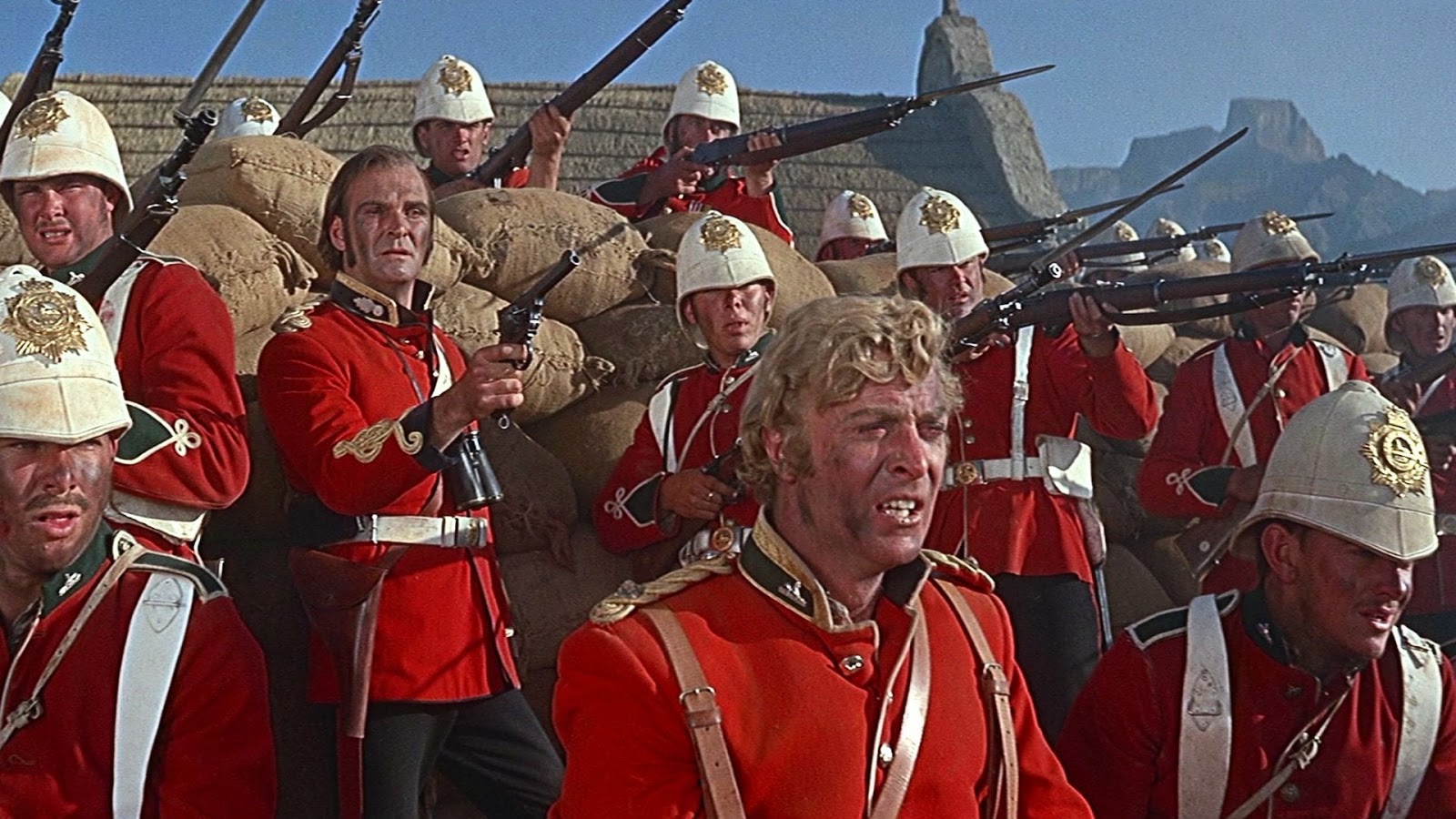
Michael Caine and Stanley Baker are under siege in classic Zulu

Director: Cy Endfield

Cast: Stanley Baker (Lt John Chard), Michael Caine (Lt Gonville Bromhead), Jack Hawkins (Reverend Otto Witt), Ulla Jacobsson (Margareta Witt), James Booth (Pvt Henry Hook), Nigel Green (Colour Sgt Frank Bourne), Patrick Magee (Surgeon Major James Reynolds), Ivor Emmanuel (Pvt Owen), Paul Daneman (Sgt Robert Maxfield), Glynn Edwards (Cpl William Allen), Neil McCarthy (Pvt Thomas), David Kernan (Pvt Fredrick Hitch)

There are some films so well-known you only need to see a frame of them paused on a television to know instantly what it is. Zulu is one of those, instantly recognisable and impossible to switch off. A few notes of John Barry’s brilliant film score and you are sucked in. Zulu has been so popular for so long, it’s almost immune to any criticism, and deservedly so because it’s pretty much brilliant.

The film covers the battle of Rorke’s Drift in the Zulu War of 1879. Rorke’s Drift was a small missionary supply station, near the border of Zululand with the Transvaal. The British had instigated the Zulu war with a series of impossible-to-meet ultimatums (the Natal government wanted to restructure Southern Africa into a new confederation of British governed states and Zululand was in its way). The British had of course massively underestimated the disciplined, dedicated and organised Zulu armies and the war started with a catastrophic defeat of the British (nearly 1,500 killed) at Isandlwana by an army of 20,000 Zulu (who lost nearly 2,500 killed themselves). Isandlwana took place on the morning of the 22nd January – and by the afternoon nearly 4,000 Zulus had marched to Rorke’s Drift, garrisoned by 140 British soldiers.

The film opens with the aftermath of the Isandlwana defeat (with a voiceover by Richard Burton, reading the report of the disaster written by British commander Lord Chelmsford). The camera tracks over the bodies of the British, as the Zulu warriors move through the camp (the film omits the Zulu practice of mutilating the bodies of their fallen opponents, which is just as well). Action then transfers immediately to Rorke’s Drift where Lt John Chard (Stanley Baker), a Royal Engineer temporarily assigned to the base to build a bridge, is senior officer by a matter of months over Lt Gonville Bromhead (Michael Caine – famously billed as “Introducing Michael Caine”). Chard takes command of the preparations to repel the siege, building fortifications, arming the walking wounded, and carefully making the defensive line as tight as possible to cancel out the Zulu numbers (the exact opposite of what happened in Isandlwana).

Zulu is drama, not history. Much has been changed to make for better drama. Chard and Bromhead were not as divided along class lines. Nigel Green (excellent) plays Colour Sergeant Bourne exactly as we would expect a Colour Sergeant to appear – a tall, coolly reassuring martinet “father to his men” – so it’s a surprise to learn the real Bourne was a short 24-year old nicknamed the Kid (the real Bourne was offered a commission rather than a VC after the battle). Henry Hook, here a drunken malingerer with right-on 60s attitudes towards authority, was actually a teetotal model soldier (his granddaughter famously walked out of the premiere in disgust). Commissioner Dalton is a brave pen pusher, when in fact it was he who talked Chard and Bromhead out of retreating (reasoning the company wouldn’t stand a chance out in the open) and then fought on the front lines. Neither side took any prisoners – and the British ended the battle by killing all wounded Zulus left behind, an action that (while still shameful) is understandable when you remember the mutilation the Zulus carried out on the corpses of their enemies at Isandlwana the day before.

But it doesn’t really matter, because this isn’t history, and the basic story it tells is true to the heart of what happened at Rorke’s Drift. Brilliantly directed by Cy Enfield, it’s a tense and compelling against-the-odds battle, that never for a moment falls into the Western man vs Savages trope. Instead the Zulus and the soldiers form a sort of grudging respect for each other, and the Zulu army is depicted as not only disciplined, effective and brilliantly generalled but also principled and brave. The British soldiers in turn take no joy in being there (Hook in particular essentially asks “What have the Zulu’s ever done against me?”), admire as well as fear their rivals and, by the end, seem appalled by the slaughter. (Chard and Bromhead have a wonderful scene where they express their feelings of revulsion and disgust at the slaughter of battle.)

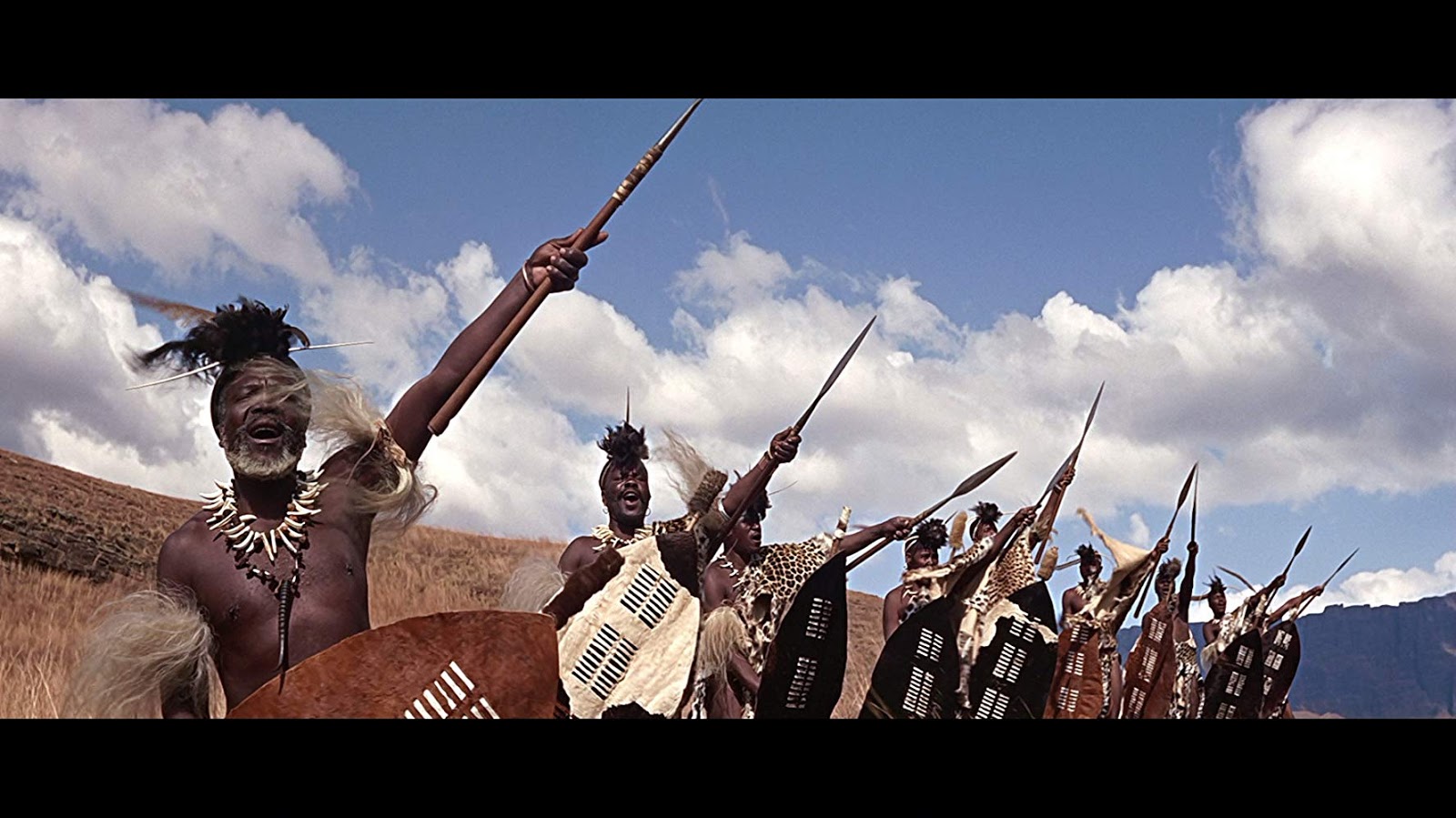
It’s a battle between two sides, where neither is portrayed as the baddie. We see more of it from the perspective of the defenders of the base, but the Zulu are as ingenious and clever an opponent as you are likely to see. The opening scenes at the court of Zulu king Cetshawayo’s (played by his actual great-grandson) allow us to see their rich culture and their own fierce traditions, grounded in honour (and spoken of admiringly by missionary Otto Witt, played with an increasingly pained then drunken desperation by Jack Hawkins, as he begs the British to flee and prevent bloodshed). Many of the Boer soldiers in the base compare the British soldier unfavourably with his Zulu counterpart. The film goes out of its way to present the Zulu people as a legitimate culture, and a respected one.

But its focus has to be on the British, as this is a “base under siege” movie, and to ratchet up the tension successfully it needs to chuck us into the base, playing the waiting game with the rest of the men. The Zulu army doesn’t arrive until over an hour into the film – the first half is given over entirely to the wait, the hurried preparations and the mounting fear as the seemingly impossible odds start to seep into the British. The men react in a range of ways, from fear, to anger, to resentment, to grim resignation. The first half also plays out the tensions between Chard and Bromhead, one a middle-class engineer, the other the entitled grandson of a General. 

Caine is that entitled scion of the upper classes, and he plays it so successfully that it’s amazing to think it would only be a couple of years before he was playing Harry Palmer and Alfie. Caine nails Bromhead’s arrogance, but also the vulnerability and eventual warmth that hides underneath it. Set up as a pompous obstruction, he demonstrates his bravery, concern and even vulnerability. It’s a turn that turned Caine from a jobbing actor into a major star (Caine originally auditioned for Booth’s part as the working-class Hook. Booth later turned down Alfie). It also meant that Stanley Baker’s excellent turn, in the drier part as the cool, controlled Chard, buttoning down his fear to do what must be done, gets unfairly overlooked.

The film never lets up the slow build of tension – and then plays it off brilliantly as battle commences. Perhaps never on film have the shifts and tones of proper siege combat been shown so well. This is perhaps one of the greatest war films ever made, because it understands completely that war can highlight so many shades of human emotion. We see heroics, courage, self-sacrifice and unimaginable bravery from both sides. We also see fear, pain, horror and savagery from both. Several moments of bravery make you want to stand up and cheer or leave a lump in your throat (I’m a sucker for the moment Cpl Allen and Pvt Hitch leave their wounded bay to crawl round the camp passing out ammunition).

Enfield’s direction is masterful, the first half having so subtly (and brilliantly) established the relative locations and geography of everything at Rorke’s Drift, you never for one minute get confused about who is where once battle commences. The combat after that is simply extraordinary, a triumph not just of scale and filming but also character and storytelling. We are brought back time and time again to characters we have spent the first half of the film getting to know, and understand their stories. Eleven men won the Victoria Cross at Rorke’s Drift (more at one engagement than at any other time in history), and each of the winners is given a moment for their courage to be signposted. All of this compelling film-making is scored with deft brilliance by John Barry, with the sort of score that complements and heightens every emotional beat of the film.

Strangely some people remember this film as ending with each of the garrison being killed – I’ve seen several reviews talk of the men being “doomed”. Perhaps that impression lingers because there is no triumphalism at the end of the film. After the attack is repelled, with huge casualties, the soldiers don’t celebrate. They seem instead shocked and appalled, and simply grateful to be alive. After the final deadly ranked fire of the British, as the smoke clears to show the bodies of their attackers, the men seem as much stunned as they do happy. Bromhead talks of feeling ashamed, Chard calls it a “butcher’s yard”. Duty has been done – but the men were motivated by wanting to survive. The film doesn’t end with high fives and beers, but people quietly sitting, gazing into the near distance. There are small moments of dark humour from the survivors, but never cheers.

It’s all part of the rich tapestry of this enduring classic. Historically, many believe the celebration of the victory at Rorke’s Drift was to deliberately overshadow the catastrophe of Isandlwana (and that the number of VCs handed out was part of this). But, even if that was partly the case, it doesn’t change the extraordinary bravery and determination to survive from the soldiers. And the film doesn’t even try to get involved in the politics of the situation. The men must fight “because they are there” and the rights and wherefores of the war (which the film ignores completely) are neither here nor there. Instead this is a celebration of the martial human spirit, packed full of simply brilliant moments, wonderfully acted and directed, and an enduring classic. It allows you to root for the besieged but never looks down on or scorns the besiegers. It pulls off a difficult balance brilliantly – and is a brilliant film.

The Black Hole (1979)

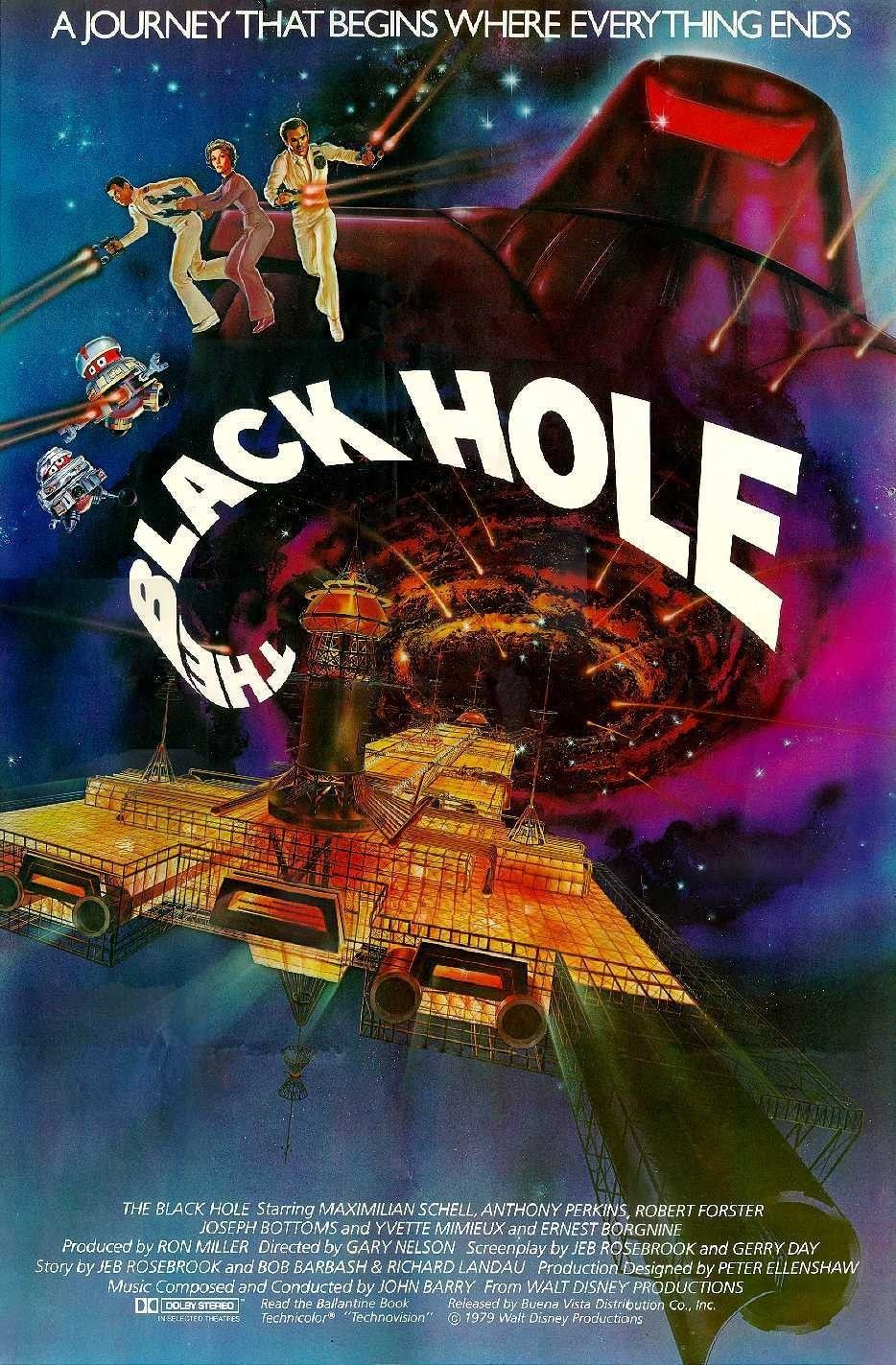
Maximilian Schell in one of his quieter moment, planning a journey into The Black Hole

Director: Gary Nelson

Cast: Maximilian Schell (Dr Hans Reinhardt), Anthony Perkins (Dr Alex Durant), Robert Forster (Captain Dan Holland), Joseph Bottoms (Lt Charle Pizer), Yvette Mimieux (Dr Kate McCrae), Ernest Borgnine (Harry Booth), Roddy McDowell (VINCENT), Slim Pickens (BOB)

When Star Wars became a massive smash hit, every single studio assumed all they needed to do was to search out any damn space-set saga it could find, dress it up with a few Star Wars-feeling elements (usually shooting and funny robots) and, Bob’s Your Uncle, you would have a box-office smash of your very own. Well that turned out not to be the case – and Disney’s The Black Hole was a case in point.

At the end of a long mission, the crew of the USS Palomino is on the way back to Earth, when they discover a black hole with a spaceship hovering around it. The ship is the long-lost USS Cygnus, commanded by legendary genius Dr Max Reinhardt (Maximilian Schell). The crew are at first welcomed by the Cygnus – but is there a dangerous secret on board? You bet there is.

The Black Hole feels like several different types of story all very unsuccessfully stapled together.  There are elements in there of a 2001-style intellectual, “what does life mean” science fiction saga. But every time we start to get near those tones, up jumps a funny robot, or a bit of shooting, or an odd “haunted-house-in-space” sequence, or a mad scientist ranting. None of these stories, by the way, are particularly good or unique. They are all rather clumsily assembled. The tone of the film is also all over the place – so we get a comedy robot with funny bug eyes getting up to hi-jinks, closely followed by Anthony Perkins being ruthlessly killed by a drill (even if it is mostly offscreen blood and guts). Who is this film for? Too dark and grim for kids, too stupid and childish for their parents.

Robert Forster and Anthony Perkins look barely interested in the events around them (Perkins must have been wondering by this point in his life where it had all gone wrong). Ernest Borgnine plays the sort of blow-hard he could do standing on his head. Perhaps aware that most of the rest of the performers weren’t really engaged in it, Maximilian Schell acts for everyone. Never one to be afraid of going overboard, Schell’s wild-eyed enthusiasm leaves no scenery unchewed. It’s the sort of performance that seems to capture the wildly uneven tone of the film: so one minute Schell is a sort of space Byron, the next minute he’s literally slapping his head over the incompetence of his minions like some sort of Space Skeletor.

There really isn’t any actual plot in The Black Hole – it takes no more than about 40 minutes to hit the final “we gotta get off this ship” run around. There are some vague ideas bandied around about the spiritual meaning of touching the edge of God’s creation – but these barely get any air time. The last 30 minutes are a hurried dash through the ship, before we finally fly through the wormhole. This wormhole flight is left obliquely unclear (it’s crammed with odd imagery inspired by Dante), and I suspect there were more ideas in the original script that were cut when they basically decided to make this a kids’ film.

But then that’s like the whole film. It’s a 2001 wannabe that has been retrofitted into something as Star Warsy as possible. VINCENT and BOB are a low-rent R2-D2 and C3P0 (they even have basically the same personalities) and Dr Reinhardt’s robot followers are nothing more than imitation storm troopers with the Cygnus like some sort of Death Star. That’s not even mentioning odd touches, such as the ESP powers given to Kate McCrae. None of these elements fit well together at all. The special effects have dated very badly (surely they can’t have looked too impressive back then either?).

It’s also of course possibly one of the least scientifically accurate films ever made. Most of the black hole physics are errant nonsense (at least so I’m told, I’m not qualified to comment). But I know enough about science to know that if anyone ever spent as much time in the cold vacuum of space as most of these characters do, they would all be frozen and dead. Most of the last chase sequence sees the crew moving through the Cygnus as parts of the ship break off, with holes to space all over the place. One character even drifts out into space only to be dragged back in absolutely fine. I guess it’s for kids but it still immediately stands out as odd. 

And then there is that ending. As our heroes head down into the wormhole, the film makes a play for some sort of cult classic status. Angles distort and bend. Bizarre imagery is thrown at us. Reinhardt merges with his robot Maximilian and seems to go to hell. Angels fly across the screen. Lights and whizzbangs. What is going on? I don’t think the film knows: its the sort of cult classic stuff where it’s left open to the viewer to give it more meaning than it probably has. The final emergence from the black hole is a total let down – hard not to have a “what was all that about?” feeling…

The Black Hole is just, to be honest, a little too rubbish. I mean there are elements in there I don’t mind: some people hate VINCENT, but I find him probably the most engaging hero (that’s probably a pretty damning statement). Schell’s scenery chewing (“MAXIMILIAN!!!!!”) is reasonably entertaining. Some of the chasing around is fun. Villainous robot Maximilian is very well designed and looks creepy. But it’s not enough. There is too much damn nonsense everywhere. It’s a film with no spiritual or intellectual depth, which means when it does try to leave questions answered it merely frustrates rather than making you think.

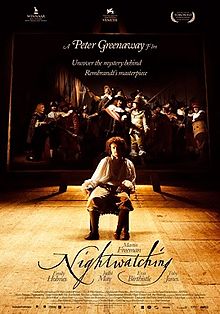
Nightwatching (2007)

Martin Freeman is the great artist Rembrandt van Rijn in this bizarre part drama part art lecture

Director: Peter Greenaway

Cast: Martin Freeman (Rembrandt), Eva Birthistle (Saskia van uylenburg), Jodhi May (Geertje Dircx), Emily Holmes (Hendrickje Stoffels), Toby Jones (Gerard Dou), Jonathan Holmes (Ferdinand Bol), Natalie Press (Marieka), Fiona O’Shaughnessy (Marita), Adrian Lukis (Frans Banning Cocq), Adam Kotz (Willem van Ruytenburch), Michael Culkin (Herman Wormskerck)

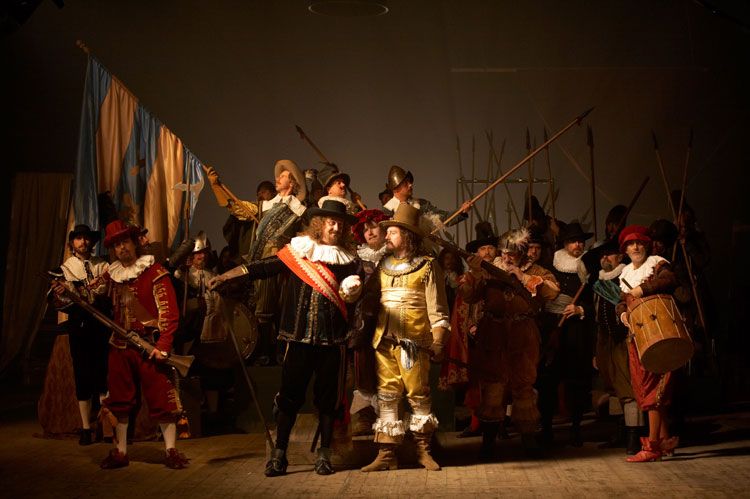
There are few artists who have such a distinctive visual style as Rembrandt van Rijn, perhaps the greatest of the Dutch masters. And there are few filmmakers with such distinctive style as Peter Greenaway. So this film is a sort of perfect marriage: Greenaway, the man who claims most of the world is visually illiterate and incapable of understanding the grace and depth of visual images (be they film or painting), taking the secret language of Rembrandt’s paintings.

Rembrandt (Martin Freeman) is hired to paint the Militia Company of District II. There is, however, a conspiracy in the company. Captain Hasselberg (Andrzek Seweryn), the original commissioner of the painting, is killed, seemingly in an accident, and replaced by Frans Banning Cocq (Adrian Lukis) and his lickspittle deputy Willem van Ruytenburch (Adam Kotz). Rembrandt believes the accident was in fact murder, removing Hasselberg so that the other members of the militia can profit in a financial deal with the British government (I won’t go into the details). Alongside this, the film also looks at the personal life of Rembrandt and his relationship with his wife Saskia (Eva Birthistle) and, after her death, his maids and mistresses, Geertje (Jodhi May) and Hendrickhe Stoffels (Emily Holmes).

Peter Greenaway is a visual stylist that’s for sure. The film takes place (apart from a few outdoor sequences in a forest) in a sort of representative set that looks a bit like a combination of a theatre stage and the bare framework of a Dutch interior painting. The camera frequently uses the width of the frame to squeeze in full-body shots of its characters, and the width and depth of the room, to try and replicate as much as possible the look and feel of these artworks. An early discussion of colour (and how to describe it) is illustrated by Geertje opening curtains in a representation of Rembrandt’s bedroom, with each colour (red-yellow-blue) in turn flooding the room from the open windows. The film looks distinctive and impressive, the costume design is meticulously researched, and the artful framing to ape the conventions and styles of Rembrandt’s painting is extremely well done.

What is less well done is the actual story itself, which is largely inert and frequently dull, and takes ages to outline what is, to be honest, a not particularly interesting conspiracy. It then intercuts this with scenes and moments from Rembrandt’s domestic life, but never ties the two of these together into something coherent. Too immersed in the details of the case to be the sort of dream-cum-fantasy of previous Greenaway films like The Draughtman’s Contract, and too preoccupied with the director’s narrative laxity to become a proper character study or piece of investigative fiction, the film rather uncomfortably falls between two stools becoming neither one thing or the other.

In fact, you almost sense Greenaway’s heart wasn’t really in it, that he really wanted to make Rembrandt J’Accuse, the companion art lecture illustrated with moments from this film, which really goes to town on his conspiracy theory. The details of the conspiracy (extremely hard to follow here) are at least easier to follow in Rembrandt J’Accuse, where they make a batty but enjoyable Dan Brownish argument – even if it is based on hands being drawn “without commitment” and elastic interpretations of visual language. To be honest, for all that Rembrandt J’Accuse is a bit odd – and that Peter Greenaway has an air of an ultra-pretentious Johnny Ball in his addresses to the camera – it actually makes a far more compelling piece of cinema than the narrative film it sits alongside.

Which is a shame because, as well as the design, there is a lot of good stuff here, not least in the performance of Martin Freeman. Cinema and TV’s eternal nice-guy gets to stretch himself fantastically as an electric, compelling genius overflowing with passion, ideas, intelligence and a chippy (frequently foul mouthed) confidence, mixed with an insatiable sex drive and nose-thumbing defiance. Freeman really gets the sense of a complex, earthy, fiery man who knows he is the smartest man in the room, and is extremely cocky with it – but also has a keen sense of justice and decency. It’s about a million miles away from Tim or Bilbo, and a big reminder that he is a hell of a performer.

Put Freeman in with the thrilling design and painterly flourishes of the film, and you’ve got sections that are really worth watching. Eva Birthistle is very good as his intelligent and articulate wife, as is Johdi May as his earthy, ill-tempered, sensual lover. Nathalie Press is heart-breaking as an illegitimate girl with a tragic life. Adrian Lukis is particularly smarmy and vile as the head of the militia. In fact, most of the performances are great.

It’s just the story is not. Moments of investigation are just building into something logical and coherent when they get interrupted by straight-to-camera addresses (very odd) from the members of the Rembrandt household explaining their personal situations. Just as we start to get invested in the loves of Rembrandt, we get thrown back into the dull conspiracy. When the two overlap, neither is really served. The story frankly isn’t interesting enough. That’s even before you have to wade through the inevitable Greenaway penchant for including as much full-frontal nudity as possible (Freeman and May in particular) and graphic sex in multiple positions and orifices. I mean, I get it, Rembrandt was a lusty guy but do we need to keep seeing it?

Nightwatching is a bizarre oddity – a vehicle for a commanding lead performance, with an actor cast way against type, that never decides whether it is some sort of biography of an artist or a secret-history-expose of a conspiracy forgotten by time. As always with conspiracy theories you suspect the obvious-but-dull is probably the truth – Rembrandt delivered a painting that was so radically different from the dull line-up paintings of this genre that it shook up the art world (not in a good way) and then he fell out of fashion, didn’t have a good understanding of money, and went bankrupt, rather than being destroyed by a shadowy Amsterdam cabal. Greenaway is so in love with his theories – and his usual lusty and psychological obsessions – that he ends up with something that is neither a drama or an art lecture but somewhere in the middle with the worst aspects of both.

Hellboy (2004)

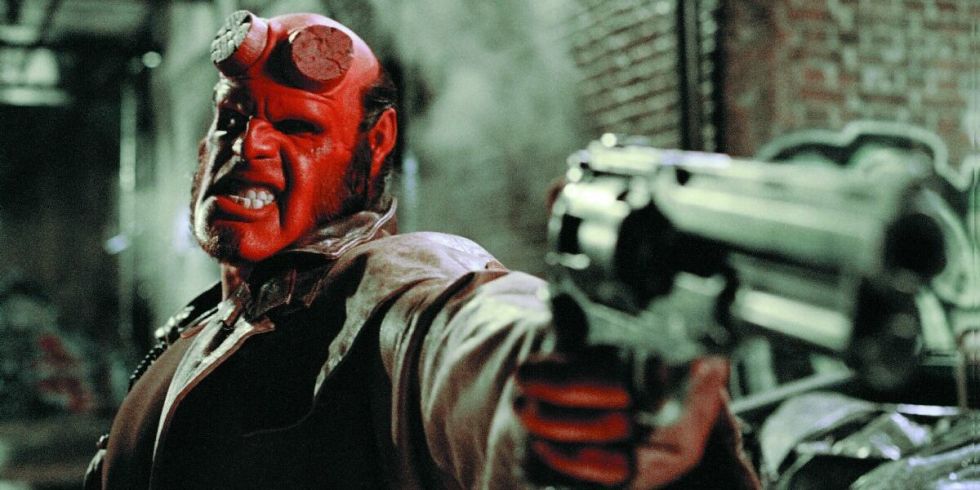
Ron Perlman fights the darkness in curio del Toro comic book flick Hellboy

Director: Guillermo del Toro

Cast: Ron Perlman (Hellboy), Selma Blair (Liz Sherman), Rupert Evans (John Thaddeus), John Hurt (Dr Trevor Bruttenholm), Karel Roden (Rasputin), Jeffrey Tambor (Tom Manning), Doug Jones (Abe Sapien), Brian Steele (Sammael), Ladislav Beran (Karl Ruprecht Kroenen), Bridget Hodson (Ilsa Haupstein), Corey Johnson (Agent Clay)

As little as 10 years ago, outside a few core characters like Batman, the X-Men or Spiderman, comic book movies were an odd curio hard to place in the mass market. Today of course, you can virtually get any character who has appeared in a cartoon strip up on the screen with a budget of millions. But back in 2004, Guillermo del Toro had to squeeze this project out on a smaller budget in order to get the studio to agree to make the film.

Hellboy has a particularly demented story. In 1945, the Nazis, working in partnership with Rasputin (Karel Roden) – yes thatRasputin, don’t even ask – attempt to open a portal to hell to, well I’m not quite sure what they want to do, but it probably involves the destruction of the world. Anyway, some humble GIs stop them and the only thing that comes through the portal is a little demon with an enormous stone fist. Raised by paranormal expert Dr Trevor Bruttenholm (John Hurt), this creature grows up into cigar-chomping secret-agent-for-the-FBI Hellboy (Ron Perlman), working on paranormal investigations. But when Rasputin returns from the dead it looks like all hell (literally) is about to break out.

Okay it should be pretty clear to you from that that Hellboy is an odd film. It’s very much from del Toro’s B-movie heart, and he invests this nonsense material with a great deal of directorial style and heart – a real “geek-boy-artist” job. Del Toro has a great deal of imagination and is able to strike a happy balance between enjoying the material and not taking it all too seriously. So he lets the film barrel along, throwing plenty of nonsense at the screen without worrying about trying to make it make real-world sense. In fact Del Toro is clearly so fond of the material that he basically shoots the whole thing like a comic book come to life. 

So the film is crammed with bright primary colours mixed with murky blacks, and Del Toro frames many key moments like comic book panels. It’s a film packed with striking images and scenes built around stuff that feels like it should teeter over into ridiculous camp all the time but never quite does. Its steam-punky styling instead manages to feel somehow both strikingly original visually and also strangely packed with integrity – like Del Toro made a very personal big-budget movie for his childhood, the sort of bizarro cult film that’s actually-quite-good and it’s going to win a huge following once people can find it for themselves (which is indeed what happened).

Del Toro’s other great principled stand was to ensure that Ron Perlman played the lead. Hellboy is a bizarre character – over six feet, red, horns, a tail – but what Perlman and Del Toro do so well is to make him some sort of Brooklynish chippy blue-collar worker with a kitchen-sink earthy wit. Perlman is clearly having a whale of a time playing this temperamental demon like some sort of longshoreman Han Solo, a brattish teenager and rebel with a world-weary cynicism. He’s crammed with contradictions (the demon who fights for good!) that Del Toro is keen to explore – and makes consistently interesting.

Because he’s such a different character, he energises a fairly traditional story and his character’s pretty standard personal-struggle-plotline (will he do the right or the wrong thing?). Perlman juggles all this really well, and gives a performance that is both dry and funny but also has moments of real heart and emotion. He even manages to sell his rather possessive love for Selma Blair’s (also pretty good) fellow orphan with pyrotechnical abilities as something heartfelt and caring, despite the fact that at one point he basically stalks her. It’s a rather wonderful performance.

The rest of the cast are a bit more of a mixed bag. Rupert Evans is saddled with the audience surrogate role – asking the questions we can’t ask – while Karel Roden’s lipsmacking performance as Rasputin never quite engages as a villain. Stronger roles come from Jeffrey Tambor as an officious FBI director and especially from John Hurt as Hellboy’s father-figure, the kind of quintessential ageing mentor that you can imagine his wards adoring. 

The rather silly plot doesn’t really matter. The importance here is the gothic chill of Del Toro’s style, mixed with his crazy “larger-than-life” dark comic book tone. And it works really well: the film is fun and witty, and if the storyline never really feels like it earns the “end of the world” threat (and builds towards an uninvolving duking out with a giant CGI monster), there are enough enjoyments along the way to make you want to make the journey.

Donnie Darko (2001)


Welcome to the weirdness: Donnie Darko ultimate 00’s cult hit

Director: Richard Kelly

Cast: Jake Gyllenhaal (Donnie Darko), Jena Malone (Gretchen Ross), Mary McDonnell (Rose Darko), Holmes Osborne (Eddie Darko), Katherine Ross (Dr Lilian Thurman), Maggie Gyllenhaal (Elizabeth Darko), Daveigh Chase (Samantha Darko), James Duval (Frank), Drew Barrymore (Karen Pomeroy), Patrick Swayze (Jim Cunnningham), Noah Wyle (Dr Kenneth Monnitoff), Beth Grant (Kitty Farmer)

Donnie Darko was a surprise cult hit. In fact, it was such a cult hit that Kelly made a “director’s cut” version of the film five years later. Funnily enough, the Director’s Cut was largely rejected by the very people who loved the first film. Why? Well probably because the film was loved because it was so weird. It was so esoteric, so hard to understand, so much of its logic unclearly defined, that much of that love was based on trying to work out what the hell is going on in it – and the director’s cut supplies lots of answers, ruining the game! 

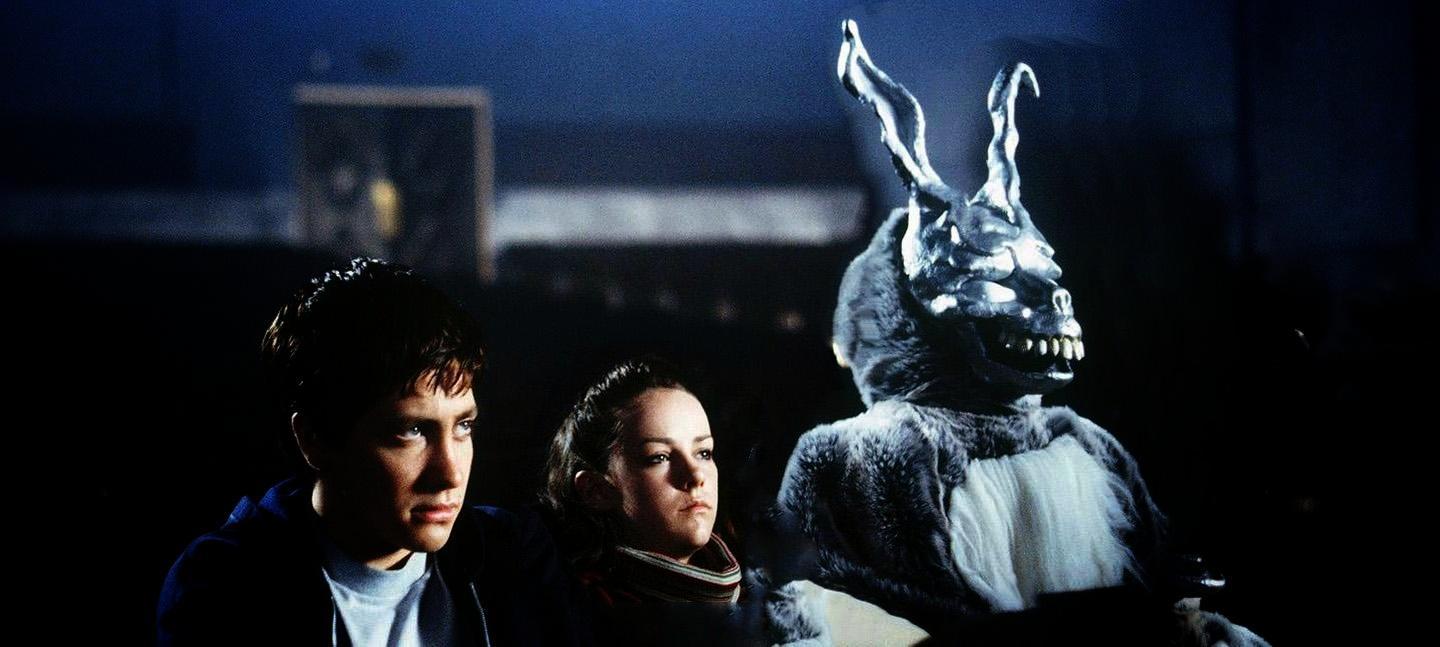
In 1988, troubled teenager Donnie Darko (Jaky Gyllenhaal) sleepwalks out of his house onto a local golf course and meets with a mysterious figure in a gruesome rabbit costume – “Frank”. Frank tells Donnie the world will end in 28 days, 6 hours, 42 minutes and 12 seconds. Donnie sleeps on the golf course overnight – and returns home to find a jet engine has crashed through his bedroom. Plagued by strange visions and hallucinations, and visitations from Frank, is Donnie suffering from schizophrenia or is he genuinely in a position to save the world? And is there a danger from the way Frank is starting to influence Donnie’s actions?

Richard Kelly’s film is a bizarre, inventive, dreamy, creepy oddball flick that deliberately never really explains what the hell is going on. Never mind the mystery of Donnie’s mental state – the film’s confusing structure, its unexplained elements of time-travel, mind-control and predestination, all of this is just left hanging out there. It’s actually a testament to how much restriction can sometimes be the mother of invention. Kelly was told that the film could not be longer than a couple of hours, meaning a lot of the more traditional explanation (reintroduced for the director’s cut) was removed to keep the run-time down. But the great thing is, this actually leaves it very open for the viewer to create their own idea of what the film is about and what is going on. It really works.

This is particularly because Kelly manages to marry the clever-clever weirdness with a real emotional investment in the characters. Not just in Donnie either: his family are all extremely well-drawn, who we grow to care for over the course of the film, from his cheery father to his loving but frustrated mother, brilliantly played by Mary McDonnell. Equally strong is Maggie Gyllenhaal as Donnie’s sister. These characters, along with dozens of other characters quickly established, but all feeling very real, are what keep you interested in the film. If it was just oddness and alienating weirdness, it would be hard to care. But this is a story that mixes science fiction oddness with genuine family drama heart.

There is a lot of oddness in there though. Frank is a character practically designed to be iconic, a twisted giant rabbit like a demonic Harvey. Combined with this are a series of curiously unsettling images and storylines. So we get Donnie with visions of streams of transparent liquid streaming out of people’s chests – possibly their future paths leading them forward. We get Donnie facing strange barriers, that seem to repel and reflect his world. Donnie is plagued with strange visions and increasingly unsettling instructions from Frank. He carries out a series of impossible feats under Frank’s direction. There are elliptical conversations about time travel and physics and while the film drops hints it never explains a damn thing. So when you finally get to the end – well lord alone knows what happens, but you’ll certainly have a hell of a lot of fun trying to work it out.

Around this, the film cuts rather a neat parody of teenage life in the 1980s and the 1980s Brat Pack films. Actors like Drew Barrymore and Noah Wyle have a lot of fun as closeted liberal teachers struggling in a school is run by an oppressive, fiercely religious set of governors. But not as much fun as Beth Grant as a PE cum civics teacher, both blinkered in her love of traditional education (and “safeguarding our youth” from the dangers of literature) while in love with Patrick Swayze’s smug self-help guru (whose bullshit “conquer your fear” videos and mantra are a superb spoof). The film has a nice eye for the politics of school classes, and placing this end-of-world fear into the all-consuming self-importance of teenage life works very well.

Throughout Kelly shoots with a confidence that belies his “first-time film director” status. Yes there is the occasional overly clever camera shot that you get from someone enjoying the toy set for the first time, but there is lots of terrific stuff. His assembly of events is brilliant, he works with actors very well indeed.

But the other factor that really makes the film work is Jake Gyllenhaal’s superb performance in the lead role. Gyllenhaal gets the balance between Darko’s vulnerability and his (possible) darkness absolutely spot-on. He manages to turn himself perfectly into a gangly, awkward, nervous kid – totally believable as the sort of young man unsure of where he stands in the world and angry. It feeds perfectly into the mystery of the film. Is Donnie a dangerous schizophrenic? Or is he right in thinking he might be important? Gyllenhaal captures all this, but also really makes us care for Donnie, turning him into someone truly sensitive and confused (helped as well by a very good Jena Malone as his awkward love interest). It’s a brilliantly distinctive performance that captures a true idea of teenage difficulties.

Any maybe that’s also why Donnie Darko works so well. Because it’s as much about teenage awkwardness and not knowing what you are doing here and why, as it is all the bizarre and unexplainable pseudo-science, time travel and predestination paradoxes that the film allows to play around the edges. It places at the centre of a brilliant science fiction drama, a real human and emotional story that feels very real and grounded and like something we have all experienced at one time in our lives. It’s a puzzle and mystery that also has a heart. It’s a difficult trick to pull off – so difficult Kelly has failed to pull it off again since.

Flash Gordon (1980)


Flash Gordon: Sometimes words fail you

Director: Mike Hodges

Cast: Sam J Jones (Flash Gordon), Melody Anderson (Dale Arden), Max von Sydow (Ming the Merciless), Topol (Hans Zarkov), Ornella Muti (Princess Aura), Timothy Dalton (Prince Barin), Brian Blessed (Prince Vultan), Peter Wyngarde (General Klytus), Mariangela Melato (General Kala), Richard O’Brien (Fico), John Osborne (Arborian Priest), Philip Stone (High Priest Zogo), John Hallam (General Luro)

Well. If almost 40 years on, Flash Gordon is a cult favourite and beloved by millions, then there is hope yet for Jupiter Ascending. By any objective standards, Flash Gordon is a terrible film. But it gets a pass from millions because it’s one people have grown up with. I dread the same reaction to The Phantom Menace from those people whose first exposure to Star Wars was through that film.

Ming the Merciless (Max von Sydow) rules the planet Mongo and decides to destroy the Earth for his own amusement. Disgraced ex-NASA scientist Hans Zharkov (Topol) is the only man on Earth who believes a series of natural disasters are the actions of invaders from space. Zharkov flies a rocket into space to find them – accompanied, for strange reasons, by professional football star “Flash” Gordon (Sam J Jones) and travel agent Dale Arden (Melody Anderson). Arriving at Mongo, they encourage its citizens – especially the forest people led by Prince Barin (Timothy Dalton) and the hawkmen led by Prince Vultan (Brian Blessed) – to unite and rise up against Ming.

Yup you read that right. It’s all as barmy as you might expect. Any film that asks to believe Brian Blessed can fly is always going to be odd. Flash Gordon does at least have its tongue firmly in its cheek. The whole thing is as camp as Christmas. In an age where science fiction and comic books are treated like holy texts, it is at least interesting to see a film that treats its source material with such a breezy lack of respect. The entire film is an exercise in high camp, cheaply put together, that refuses to take anything seriously and actively encourages the respected actors in its cast to take the piss.

So what is Flash Gordon? Is it a big old joke? Yes it probably is. No one is taking it seriously. The actors clearly think it’s a pile of campy rubbish. The producers seem determined to throw as much technicolour cartoon colours at everything as possible. The film is so cartoonish it all but has “Pow!” and “Thwack!” appear on screen as punches land. At a time when Star Wars (and it’s hard to believe it, but George Lucas only made Star Wars because he couldn’t get the rights for this) took its space opera roots rather seriously, this seemed to miss the point completely. It’s a would-be Star Wars rip off that has nothing in common with the tone of the thing its ripping off. Usually that would be a good thing: here I’m not sure it is.

So the dialogue is terrible, the plot line makes no real sense, the film barrels around telling jokes against itself as inopportune moments. Characters shrug off events with no problems at all – at one point a character undergoes brainwashing torture: two scenes later he’s fine (“I just didn’t think about it” he gleefully tells someone. It’s never mentioned again.) The special effects, even for the time, are shockingly bad (the backdrops are sub-Doctor Who. The costumes and design are ludicrously overblown, like an explosion in a campy dressing-up box. It’s a terrible display of excess married with a complete lack of understanding about what made the things it’s trying to rip off successful in the first place. But yet, and yet, and yet it’s still in a terrible, terrible, terrible way quite good fun.

But perhaps the most interesting thing about its campy rubbishness, is how much odd sexual stuff creeps in under the radar. There are also lashings of sadomasochism, incest, orgasms, sex dens, threesomes, swinging, voyeurism – acres of cheeky sexual humour. Ming has a ring that can induce orgasms (it’s so effective on Dale Arden that it’s even commented only Ming’s daughter has had such a response). Ming has a harem, full of opiates to encourage “performance”. There are references to pleasure planets and sex toys. Ming’s daughter is whipped while tied to a bed by Ming’s henchmen (while Ming watches eating some popcorn). The arborians have a bizarre ritual which seems laced with wanking references. It never stops. At least they had some fun.

Some of the actors are also clearly enjoying themselves. Of course Brian Blessed throws himself into it: an actor who never knowingly underplays, Blessed rips through a bizarre role that sees him perform in a jockstrap with some unconvincing wings. Timothy Dalton channels Errol Flynn. Max von Sydow chews the scenery and virtually everything else in sight as a campy, moustachio-twirling Ming. Peter Wyngarde has a great voice and uses it to marvellous effect as pervy security chief Klytus, while Mariangela Melato plays his dominatrix assistant. There are bizarre, eclectic casting choices: so we get Look Back in Anger author John Osborne playing a high priest, Blue Peter’s Peter Duncan as an initiate, and Richard O’Brien (of course!) playing – well to be honest himself.

Sam J Jones is of course simply awful as Flash (wooden, dull and confused). Melody Anderson isn’t a lot better as Dale Arden, while Ornella Muti gets some awful dialogue which she does at least deliver with some conviction (sometimes too much: “Not the BORE WORMS!” sticks in the mind as a bizarre moment of over such over conviction that it simply becomes funny). It’s a bizarre mix of acting styles and overblown, fourth-wall leaning. It’s so bad, I suppose, that to many people it’s good. But actually it gets a little overbearing.

Because nothing is taken seriously at all, the film actually becomes a bit wearing after a while. The writer later regretted playing everything for laughs: it removes any stakes from this ridiculous film. It says a lot that Brian Blessed – the most overblown actor in it – is the only one who really emerges with dignity intact. Blessed at least knows it’s utter crap and plays it like he’s taking the piss in every scene. He commits so fully to the scenery chewing that it sort of works. The rest of the cast can only aspire to his levels of camp. Flash Gordon is a terrible film. But age and fondness have been kind to it, and made it remembered as something better than it is. It’s a misfiring gag with some great Queen songs. It goes on forever, it looks awful but it fails utterly as anything but a joke. But hell maybe that’s enough.

The Ipcress File (1965)

Michael Caine changes the face of spy films in The Ipcress File

Director: Sidney J. Furie

Cast: Michael Caine (Harry Palmer), Guy Doleman (Colonel Ross), Nigel Green (Major Dalby), Sue Lloyd (Jean Courtenay), Gordon Jackson (Carswell), Aubrey Richards (Dr Radcliffe), Frank Gatliff (Eric Grantby)

In the 1960s, the spy world was defined almost completely by the James Bond films. People had this idea of spies as glamorous, exciting people dealing with action and adventure in exotic locations. John Le Carré had started a counter-trend, but few alternative glances at the world of espionage landed with such skill as this adaptation of Len Deighton’s The Ipcress File.

Harry Palmer (Michael Caine) is a British agent in the secret service. Re-deployed to a section of the secret services headed up by Major Dalby (Nigel Green), he is tasked to investigate the disappearance of a number of leading scientists. But how does this link with mysterious Ipcress file?

The Ipcress File has dated very little – it’s still got a real sense of counter-culture cool, it’s engrossing and exciting, and it still makes comments that ring true about the lack of glamour in the world of espionage. It helps that it’s very well directed and designed, and that it has a star-making turn from Michael Caine (one of three he did in a row, with Zulu and Alfie). The Ipcress File looks and sounds great. It’s got an intriguing plot with twists and turns that still feel surprising and unexpected. It’s a great little spy thriller – and its deliberately small scale helps to keep it feeling fresh and inventive.

The British secret services are low-tech and underfunded. The offices are bare. Dalby’s operation is run out of what seems to a recruitment office. Cars are kept pretty basic. When Palmer is offered a new role, his first question is about a pay rise (he will get an extra £100 per year). There are no gadgets or glamour. Agents are partly selected not for their special skills but for their level of dispensability. The missions they undertake are confused or murky. The division line between allies and enemies is often unclear. Jobs are often boring or of minimal value (or both) – they’re more filing and paperwork than guns and glory.

Harry Palmer is about as opposite to Bond as you can get. He’s insolent. He’s chippy. He’s got a wry sense of humour. He struggles to hide his contempt for the toffs running the secret services. He’s a sergeant from the ranks. But he’s also cultured, well-read, intelligent and charming. He’s a great chef (surely the first film hero who cooks a detailed meal on screen – the shots of the hands were Len Deighton’s by the way). He cracks gags (more for his own amusement), often with a deadpan delivery. He has an eye for the ladies, but is hardly a Bond-style player. He’s a man of depth, who buys decent food, appreciates music and theatre, and carries a slightly bitter counter-culture grin just behind his eyes. He’s probably also the only film hero you’ll see shopping in a supermarket.

Michael Caine is perfect for this role (he went on to play it four more times). It’s a star-making role because he just drips charisma off the screen, while actually often doing very little. He underplays the role extremely effectively, using his natural calm and minimalism in front of the camera. It’s probably hard to appreciate how different it was at the time to see a man with a cockney accent play a lead role in a movie like this – other British film stars at the time had cut-glass RP accents. But Caine has a cheeky, insolent vibe that made him seem like the sort of hero you could relate to – the guy who is just working here, who could probably do a better job of running the show, but will never get that chance. Caine is also stubborn and bloody-minded, a squaddie at heart with a screw-you attitude just below the surface. He fits the role perfectly – and Palmer’s insubordination and sense of not being given his due matches up perfectly with Caine’s own (well publicised) attitudes to his place in this country’s film industry (who can forget his chippy collection of a BAFTA fellowship?).

John Barry’s score has a moody sense of cool that really helps to establish the tone of the film – its humour, its wry bitterness and its mystery thriller status. It’s an endlessly hummable series of refrains that perfectly matches up with the film’s part Third Man, part adventure fable structure. Sidney J Furie’s direction is very sharp and off-kilter, and he shoots many of the scenes as if from the perspective of an observer – the camera is positioned behind objects, or shots take place through cars or phone booths. Objects slightly obscure parts of shots. It gives us a constant feeling of being under surveillance. It increases the sense of tension and paranoia. And it makes the film look really distinctive.

If the film has a major flaw, it’s that its actual plot isn’t that strong. The reveal of the villain is made rather suddenly (and to be totally honest doesn’t really make a lot of sense). The plot line around the kidnap of the scientists is pretty unclear in both its intentions and the threat it poses to the country. The final sequence of Palmer captured and interrogated is a little underwhelming. The overall narrative never quite coalesces into something really compelling. But it somehow doesn’t quite matter, because the film is really a character study around a very cool leading character.


And it’s Caine himself who ends up carrying the movie. He’s a very different type of character. “What is he, some sort of fag?” producer Harry Saltzman apparently asked when he saw the sequence where Palmer gently cooks a proper meal for a potential girlfriend. Perhaps Palmer’s gently eyeing up of a number of women was added to counterbalance the fact that Caine plays him in this sequence as someone genuinely trying to form an emotional relationship. There are beats throughout of him as more Bond-style hero (he wakes up in his flat, and pulls a gun from the bedsheets, a visual slightly countered by the fact we’ve watched him make coffee and flick through the racing news). But really he’s a competent but slightly resentful professional, who knows he has hit a class-based glass ceiling.


The Ipcress File is a terrific movie, that looks unique and has a great soundtrack. It feels like a film that changed how heroes were perceived in British cinema – for all that films like Saturday Night and Sunday Morning had placed working class men at the centre of pictures, The Ipcress File not only made one a hero of a spy thriller, but did so while making him insubordinate and chippy rather than openly rebellious. Caine is quite superb in the lead role, and he never looked back after this – while Harry Palmer is surely a character who deserves some sort of place in a list of great film spies.

An American Werewolf in London (1981)

It’s a lesson in how not to spend your gap year in American Werewolf in London

Director: John Landis

Cast: David Naughton (David Kessler), Jenny Agutter (Alex Price), Griffin Dunne (Jack Goodman), John Woodvine (Dr Hirsch), Lila Kaye (Pub landlady), Frank Oz (Mr Collins), David Schofield (Dart Player), Brian Glover (Chess Player), Rik Mayall (2nd Chess Player), Don McKillip (Inspector Villiers), Paul Kember (Sergeant McManus)

Horror and comedy are both extreme genres, on the edges of normality and are designed to provoke extreme reactions, of either terror or hilarity. So it’s often a bit of a surprise that more films haven’t attempted to put the two of them together. But that’s what John Landis does in An American Werewolf in London. You’ll laugh, you’ll scream, you’ll even cry a bit. You’ll probably also look away a few times. And you probably won’t want to go hiking straight after it.

David Kessler (David Naughton) and Jack Goodman (Griffin Dunne) are two students backpacking through the English countryside. Taking shelter from the rain in a pub, The Slaughtered Lamb (pub sign a wolf’s head on a spike), they are swiftly intimidated by the locals and head back out – ignoring suggestions to keep on the road. Sure enough, they are attacked by a crazed wolf… Three weeks later David awakens in hospital, plagued with nightmares and visions of himself running through the forest. Could he be a werewolf? Falling in love with his nurse Alex (Jenny Agutter), he soon finds himself staying in her flat in London – just as the full moon rises…

AAWIL is a playful movie, with a grungy, college-humour to it. The jokes are often laugh-out loud funny, and the central characters are very engaging. As well as this the film is filled to the brim with blood, guts and slaughter. Guts fly, blood sprays. Landis gets the balance more or less spot-on between heightened humour and bloody slaughter – every bloody moment is followed by an excellent comic punchline, and just when the humour and romances start to get too much of a hold, you get a moment of shuddering violence. It’s also crammed with some great music – although in a terrible oversight there is no playing of Werewolves of London (if ever a song seemed written for a film…).

It’s best remembered for its influential werewolf transformation sequence. Rick Baker won the first Oscar for make-up for this tour-de-force at the film’s centre, which showpieces David’s painful looking transformation. This sequence has inspired every single werewolf transformation since, including David Thewlis’ in Harry Potter. Limbs stretch and distort. Hair springs up. His body arches and his spine practically snaps itself into new positions. His face distort, and the entire shape of the body changes. And of course it’s screamingly painful. The sequence hasn’t aged a day, and it’s still a marvel of make-up and practical effects.

Landis’ decision to largely shoot werewolves from POV or in flashes is a good one – when we get the animatronic wolf on the screen towards the end it is strikingly unconvincing and artificial looking, like a wobbily muppet. But for the bulk of it he makes these animals terrifying forces of nature. No wonder the creepy pub denizens are terrified of them.

The opening pub sequence is a masterpiece of small village aggression. Who hasn’t gone into a pub like this and felt like the room went silent as soon as you entered? The actors here revel in these hostile villagers, not least Brian Glover as a domineering loudmouth and David Schofield as a sinister darts player. It also brilliantly shows from the start that David and Jack are fish out of water – stuck adrift in a land they don’t quite understand, with a condition they don’t really seem to be completely aware of.

Not that it’s all bad for David, as he gets a steamy love-affair with Jenny Agutter’s alluring Alex, every geeky college boy’s dream of a gap-year love affair. Sure the bond between them is rushed – and Alex alternates between being caring-and-observant and is actually fairly dim when the film demands it (Yeah David has come home naked over than a woman’s coat, having spent the night sleeping in a zoo and has no memory of the night – but nothing odd strikes her about his behaviour…) – but she still gives a cracking performance.

David Naughton balances the film very well as David – a geeky student, horny and almost wilfully ignoring what’s happening to him. Griffin Dunne possibly steals the show as Jack, a strange mixture of best friend, geeky off-the-cuff wit and giver of bitter-but-straight-forward advice (the make-up for Jack by the way is almost more impressive than the transformation itself). 

American Werewolf in London is a bit of a (forgive me!) shaggy dog story. Structurally I’m not sure if it’s that great, as it tends to drift at times before a rush to the finishing line. The ending in particular is abrupt – not helped by a deliberately jarring final musical choice. It bowls along, but it’s so in love with its mix of horror and comedy that you never quite end up pulling for the romance at its centre as you should. I’m not sure John Woodvine was quite the right casting for the doctor investigating the werewolf phenomenon – he’s almost seems to feel as if he is above the picture. Landis gets some neat hits on British culture, but you can’t help but feel that there is more to be mined here – there isn’t quite enough American-British culture clash there to really sell David’s confusion.

It’s not a brilliant masterpiece – but it is very entertaining and crammed with striking scenes. Landis is playing around here – in fact he may be telling a massive joke, taking the piss out of monster movies while knocking slacker comedies by turning the slacker into a murderous monster. But it’s very good for all that – and for several key sequences alone you’ll find it hard to shake. It’s a film for late-night viewing and such a good mixture of comedy and extreme horror that it will always feel unique.

Free Fire (2016)


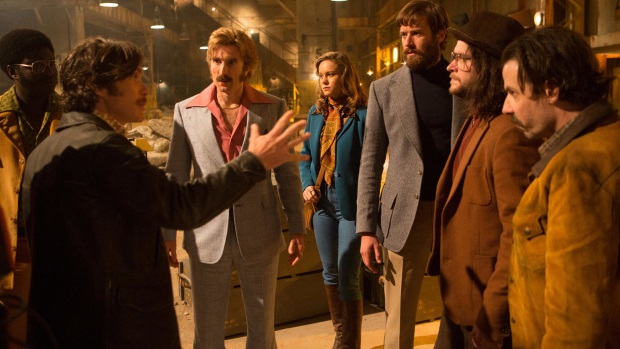
The calm before the storm in Ben Wheatley’s gun-fight Free Fire

Director: Ben Wheatley

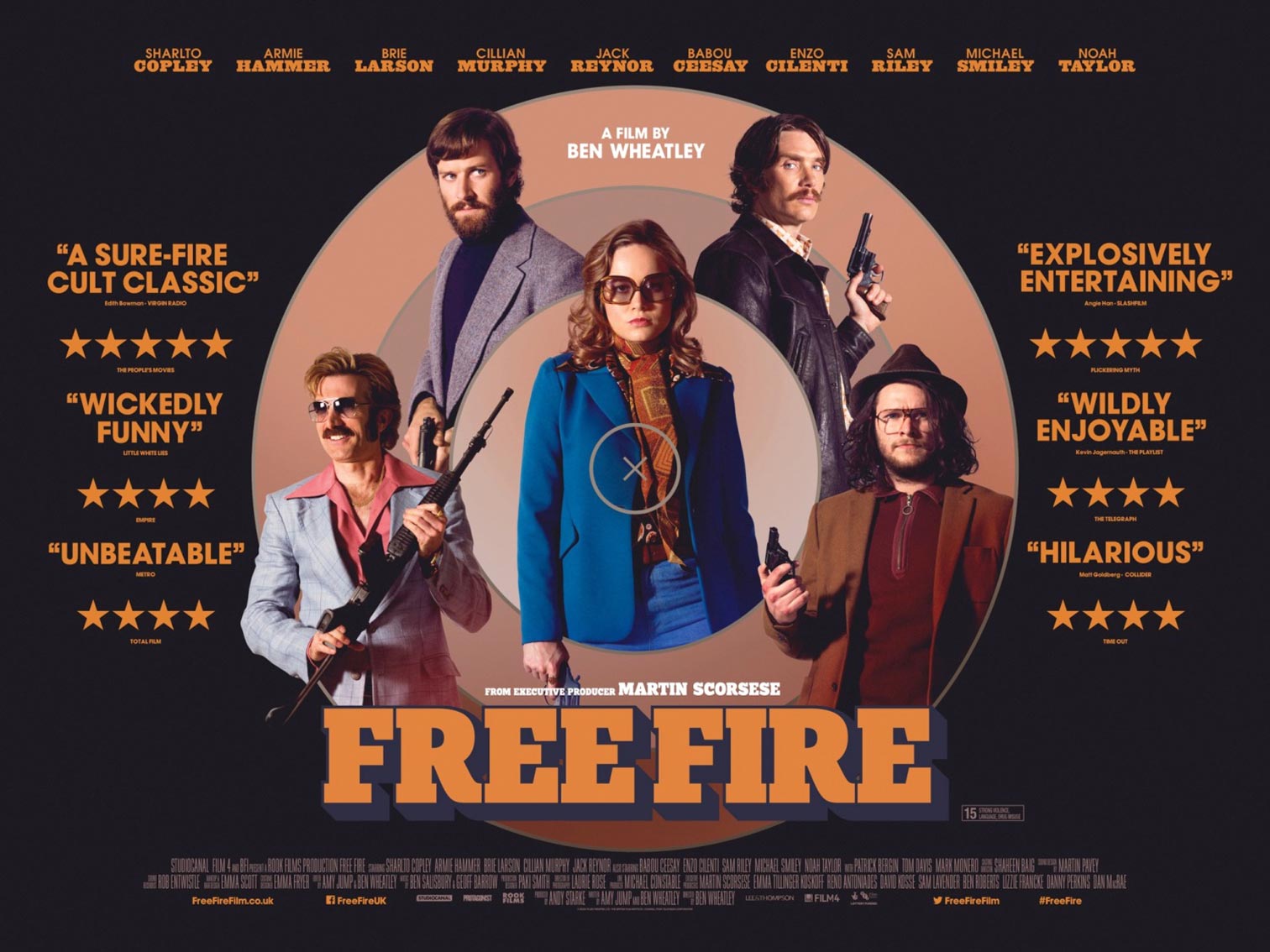
Cast: Sharlto Copley (Vernon), Armie Hammer (Ord), Brie Larsen (Justine), Cillian Murphy (Chris), Jack Reynor (Harry), Babou Ceesay (Martin), Enzo Cilenti (Bernie), Sam Riley (Stevo), Michael Smiley (Frank), Noah Taylor (Gordon), Patrick Bergin (Howie)

At some unspecified point in the late 1970s, IRA men Chris (Cillian Murphy) and Frank (Michael Smiley) meet with Vernon (Sharlto Copley), via an intermediary Justine (Brie Larsen), to buy a lot of guns in an abandoned New York warehouse. Unfortunately, Frank’s druggy brother-in-law Stevo (Sam Riley) the night before was badly beaten by one of Vernon’s men Harry (Jack Reynor), after Stevo had maimed Harry’s cousin. Next thing anyone knows, guns are drawn and the shooting starts…

And that shooting lasts for the course of the rest of the film. Free Fire is like some sort of slightly odd concept album. As if Wheatley and co-screenwriter Amy Jump sat down and wondered “can we make a gunfight that basically lasts the entire course of a film”? The answer was, as it turns out, yes they could. Was it actually a good idea? Well that’s less clear.

The good stuff first. The film looks terrific, and is very well shot. The mix of beige and slightly over-saturated colours capture a hilariously flashy look at the 1970s. Soundtrack choices are very well made. The sound design – surely the main focus of any film focused on gunfights – is excellent, with bullets sounding like they are ricocheting past your ear. It’s cut with intelligence and clarity – it’s always immediately clear where you are and where everyone else is (Wheatley even patiently films our characters entering the warehouse through a series of doors – and old trick but it immediately gives us the geography).

The screenplay is also pretty funny in places, and does a good job of sketching out characters incredibly quickly. It’s lucky it also has a fine cast of actors to inhabit these swiftly drawn characters. Best in show is probably Armie Hammer as a suave, cock-sure hired gun who clearly believes the whole shebang is a little beneath him. Cillian Murphy as the nominal lead makes an engaging double act with Michael Smiley. Sharlto Copley adds maverick, overblown colour as a cocky weapons dealer. Brie Larson plays the long game as the intermediary whose loyalties seem a little unclear. Sam Riley is engrossingly pathetic as the whining loser whose actions lead to the whole disaster.

The gun fight itself is a neat combination of the realistic and the comic book. Our heroes are hilariously inaccurate with their weapons (as you expect most people would be in this situation) but this doesn’t stop every single character getting shot in the arms, legs and other body parts multiple times. Adrenalin means they largely shrug these off for the first half hour of the film, but by the final third each character is unable to walk and visibly struggling with growing shock and loss of blood. I’ll admit it’s rather fun to see a gunfight conducted largely by people crawling around on the floor groaning, in between whining and complaining at each other.

Structurally there isn’t a lot to the film. There is a twist of sorts as both sides are double crossed (the identity of the double crossers should be worked out by most astute watchers) and the film occasionally throws enemies together in odd partnerships and alliances. But the plot is basically a real-life survival film – who is going to get out of this warehouse alive?

Which is what brings us back to this concept album idea. Yes this an entertaining enough film – and it’s very short – but is a single gun fight between characters we’ve only vaguely got to know in the opening 10 minutes really enough to sustain long term interest? Is this something I can imagine re-watching? It’s got some funny lines and some decent moments, but honestly no not really. It’s an inventive idea, like a challenge Wheatley has set himself. But instead of seeing what is clearly a talented director playing with toys and seeing if he can make a film centred solely around an action set-piece, imagine if he turned that creative fuel on making an actual film. We know he can – he’s got some fine material on his resume. So why make this?

Free Fire feels like a conscious attempt at making a cult film, with its 1970s aesthetic, its eclectic cast of characters, its witty moments and punchy action sequences. I’ll agree it’s very different from anything else I’ve seen. Does that necessarily mean that it’s a good film? I’m not sure. It’s a challenge and almost a joke. It’s different from action scenes in Hollywood blockbusters – but at the end of the day, for all the fact that the gun shots have consequence, it’s just an extended action set-piece without context. Very entertaining but kind of empty.

The Thing (1982)


The men of an Antarctic base encounter a deadly force from space in The Thing

Director: John Carpenter

Cast: Kurt Russell (MacReady), Wilford Brimley (Blair), TK Carter (Nauls), David Clennon (Palmer), Keith David (Childs), Richard Dysart (Dr. Copper), Charles Hallahan (Norris), Peter Maloney (Bennings), Richard Masur (Clark), Donald Moffat (Garry), Joel Polis (Fuchs), Thomas Waites (Windows)

In a curious coincidence, The Thing was released on the same day as Blade Runner. Both have since gone on to become landmark science fiction films, hugely influential to future film makers. Both have scenes that linger in the memory, and have ambiguous endings fans have discussed for decades. Both were also disastrous box office bombs and with negative critical reactions.

The Thing is a creeping masterpiece of sci-fi, body horror and paranoia. On an Antarctic base, an American research team rescues a dog being pursued by two Norwegians from a base close-by (the two Norwegians are both killed, one accidentally, one shot dead after firing at the Americans). Investigating the Norwegian base to see what happened, they find it destroyed and a series of grisly corpses, including one with two faces. Soon it becomes clear the Norwegians fell victim to an alien who has the power to perfectly copy and replace living organisms. The Americans realise they are trapped on the camp, with no idea who them may now be a “Thing” rather than human.

John Carpenter’s creepy, atmospheric horror film is an endlessly gripping thriller that rewards constant rewatching. Its shot with an unnerving simplicity of movement, with the focus getting tighter and tighter. We start with an unsettling helicopter shot taking in the panorama of Antarctica but, before long, the action is confined to single rooms in the American camp, with our leads shouting suspiciously at each other. The whole film is underplayed by an eerie Ennio Morricone score that really gets under your skin with its haunting electronic strains. It’s a classic by any definition of the word, and it never, ever gets old or tired: I’ve seen it a dozen times, and each time new small moments grab me, shots enchant me – and it never fails to be tense, unnerving and scary.

“You’ve got to be fucking kidding” a character states at one point. It’s pretty easy to imagine that this was the reaction of the critics at the time, at the onslaught of body horror. The Thing’s process of absorption is not only disgusting (usually involving flesh and skin peeling back to reveal all sorts of crazy shit), but its defence mechanisms involve similar depths of insane grossness. By the time our heroes are incinerating replacements with a ruthless lack of concern, we’ve already seen chests turn into massive tooth jaws, a dog Thing peel its own face off, and a head of a Thing separate itself from a burning body, grow spider legs and scuttle away. You’ve got to be fucking kidding indeed.

The Thing is pretty much a landmark in prosthetic work (you’ve never seen anything like this before). And the body horror still packs a major punch – I couldn’t eat my sticky bun while the Dog Thing ripped itself apart in the middle of a kennel early on (those poor other dogs by the way…). Some of the most effective stuff is actually the smaller scale moments – there is a great moment where a Thing grabs another character by the face and hand and face merge together. It has a truly yucky feeling to it. It’s all so carefully constructed and inventive that it haunts and fascinates. But if it was just a parade of gross images and nightmare fuel it wouldn’t have lasted. What makes it work is that it has a cracking story and a great set of characters. 

Carpenter collects a terrific group of actors, headlined by Kurt Russell. Russell’s MacReady is the perfect lead for this sort of film, a grizzled maverick slacker who reveals (when the shit hits the fan) the natural charisma of the born leader, the only man there able to make the hard calls. He even has a perfect little introduction scene, playing chess with a computer (whose voice makes it the only female character in the film incidentally). Having narrowly lost the game against a tactically more cunning opponent, he pours his drink into its workings, effectively destroying the game board. That gives you a pretty accurate idea of where the film is going. The whole film is Macready’s struggle against an opponent who is cunning, brilliant and (almost literally) faceless – is it any wonder he decides that destruction could be the only way to win? 

The rest of the cast give a lot of depth to their otherwise trope-based characters. In particular, Dysart, Brimley, David, Hallahan, Moffat and Masur stand out for creating unique feeling characters, each of them feeding into the growing paranoia that infects the camp. Because that’s what makes this film last: it’s a brilliant study of paranoia, suspicion and a group of macho men (to varying degrees) squabbling aggressively with each other in a confined space. Carpenter really captures this sense of twisted group dynamics – establishing plenty of tensions and personality flaws and clashes even before the horror begins. It feels like a real cold war movie: interlopers in our midst, but we don’t know who they are. It’s a slow burn that really pays off when the action explodes in the second half of the movie. 

And that pay-off is compelling. A particularly masterful sequence involves a series of blood tests (now a hoary old stable of these things, but at the time something really new). MacReady essentially ties up all the other remaining characters (living and dead) and sticks a scolding hot wire into a blood sample from each man. The idea being the blood of any Thing will react aggressively to the “attack”. Carpenter really lets this scene build slowly – not least because MacReady is holding all the men at dynamite and gun point. The slow build-up reveals a few innocent men, each untied to help Macready. Then just as MacReady (and the audience) begin to relax – someone fails the test and the scene jumps into body horror chaos. Completing the tests after that is a near wordless sequence of jump cuts from test to test, with the number of untied men slowly growing. It’s brilliantly done: slow – quick – slow. Perfect tension drama. It’s the centrepiece of the whole damn movie.

The other thing Carpenter really understands is that set-ups like this are perfect discussion fodder for fans. Just as we love to debate whether Deckard is a replicant or not, there are plenty of similar points in this film. Most of this revolves around Blair, the first to work out the danger the Thing will cause if it reaches civilisation: when does he become infected? How many of his actions are human, how many Thing? At one point MacReady visits him (isolated in a hut) and finds him sitting calmly asking to come back in. Creepily beside him, an unused noose hangs from the roof: it’s not commented on in the scene at all, but it speaks volumes for possible interpretations. This sort of stuff throws itself open to a debate for the ages – the film enigmatically provides enough clues without definitive answers. It does this for a number of events – deaths go unexplained, materials are destroyed and we never find out by whom. The film is full of shady events, of key moments happening off camera, of mysteries going as unanswered for the characters as they do for the audience. Ripe for you to add your own interpretation.

The final scene of the film continues this: the surviving characters sit in the burning wreckage of their base. For all they know, either or neither of them may, or may not, be Things. But it hardly matters: the cold is coming in and we (and they) know anyone left in these conditions will be frozen in a matter of hours. So you get this brilliantly low-key, weary but charged exchange:

Survivor #1: Maybe we shouldn’t.

Survivor #2: If you’re worried about me…

Survivor #1: If we’ve got any surprises for each other, I don’t think we’re in much shape to do anything about it.

Survivor #2: Well, what do we do?

Survivor #1: Why don’t we just… wait here for a little while… see what happens?

So – the question stands? Who is a Thing and who isn’t? It’s a perfect, unsettling, final frame discussion point – and one that has kept feeding debate for years.

The Thing is a nasty, grimy, tense, unsettling, gruesome, gory, yucky, scary, paranoia-inducing masterpiece. It’s easily the best thing John Carpenter ever made (its failure at the box office seemed to break the director’s spirit, as nothing he did ever again reached this). As a slow-burn, cold war flavoured conspiracy and suspicion story it’s out of the top drawer – it captures perfectly the psychosis and fear that can be brought on by trapped isolation. It’s crammed with perfectly formed scenes. It has a terrific, nearly nihilistic feel to it – even the most competent of the men (MacReady) is way out of his depth here. Our alien nemesis is a master of psychology and tactics. So is the film.