Category: Cult films

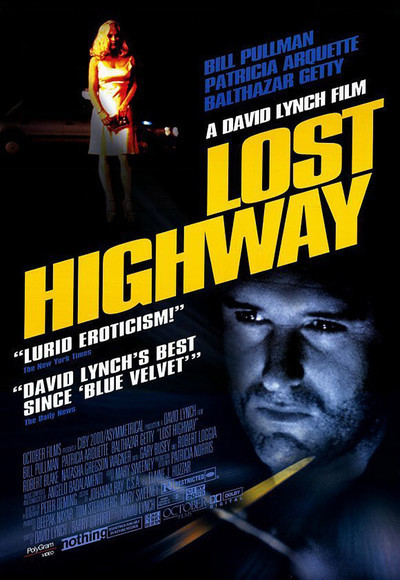
Lost Highway (1997)


Bill Pullman goes out of his mind in David Lynch’s deliberately weird Lost Highway

Director: David Lynch

Cast: Bill Pullman (Fred Madison), Patricia Arquette (Renee Madison/Alice Wakefield), Balthazar Getty (Pete Dayton), Robert Loggia (Mr Eddy/Dick Laurent), Robert Blake (The Mystery Man), Gary Busey (Bill Dayton), Lucy Butler (Candace Dayton), Michael Massee (Andy), Richard Pryor (Arnie)

It wouldn’t be a David Lynch film unless the plot was impossible to explain, but here goes. Fred Madison (Bill Pullman) and his wife Renee (Patricia Arquette) marriage is on the rocks. The couple start receiving packages containing camcorder videos of their home. These videos become increasingly more and more personal and intimate. The final video shows Fred murdering Renee. Imprisoned, Fred suffers from headaches and then overnight he transforms into another person, Pete Dayton (Balthazar Getty). Released back into the world, Dayton encounters the glamorous Alice Wakefield (Arquette again). Then things get even weirder. Yup that’s right: weirder.

Lost Highway is probably Lynch at his most obscure and baffling. Like a lot of Lynch films, it’s a question of taste. What do you want to get out of a film? If it’s a puzzling mystery then this might be the film for you. Lost Highway is like an impossible jigsaw, or a landscape with no frame of reference: trying to judge what the overall actual picture is, is nearly impossible. Traditional film making elements, such as story and character, are subservient here.

So whether you like Lost Highway will probably come down to how much you are willing to accept everything you see is constantly being dismantled and repositioned by the film. It strikes a less successful balance between this “Lynchian” material and more traditional storytelling than Blue Velvet or Mulholland Drive (both, I would argue, superior films). However, for those willing to run with a mystery, Lost Highway is a baffling but intriguing watch – unsettling, unnerving, but fascinating.

So what is it about? Now I confess I needed to read up a little bit, but the best way to understand the film is as some sort of elliptical, dreamlike fantasy created by its lead character. It seems pretty clear that the majority of the film is, at best, subjective recollection or out-and-out fantasy. A little too much attention is paid in the film to a line from Fred Madison that he dislikes video cameras as he prefers to “remember things my own way rather than how they happened”. A fairly on-the-nose statement, but a clear mission statement for a film if I ever I saw one.

In fact, Fred Madison is so keen to remember the world only as he sees it that, he literally becomes someone else to build some sort of internal fantasy world where he can win the girl. But Fred/Pete is such a screwed up, confused person he can’t even get his own fantasy world right –impressions from the real world keep draining in. At least, that’s a fair interpretation. The film of course deliberately keeps things open: is this some fantasy Fred has while trapped in his cell? Or is there some sort of metaphysical transformation that fades into the real world? Is there an element of this story being circular and self-perpetuating? Is there any reality to it at all? How much you engage with these questions is a pretty good indication of what you’ll make of this film.

Whatever your response to it, as a piece of film-making it’s a very impressive piece of work. All the usual Lynchian touches are here: the strident and discordant lighting at key moments, the intelligent and daring use of music, the intermingling of design from the modern world and Americana of the 1950s, not to mention the moments of extreme violence and graphic sex. Lynch uses unsettling camera angles and sudden tilts of angle and sound to constantly keep the audience on their toes and questioning what they are seeing. Disturbing and haunting imagery, a testament to Lynch’s painter’s eye, is perfectly judged. Confusing as this film is, it offers a parade of intriguing images.

It’s an important landmark in Lynch’s filmography: a flowering of ideas he had been dabbling with since Twin Peaks, of mysticism, perversion and human darkness, and a jumping off point for haunting, almost illogical films to come like Mulholland Drive. The Mystery Man (unsettlingly played by Robert Blake – not least as this is the last film Blake made before his conviction for murdering his own wife) is a haunting, perfect Lynchian character – unsettling in appearance and confusing in intention. Is he a real person, or a mystical force? Is he some sort of external expression of evil driving Fred on, or is he part of Fred’s fractured mind?

Patricia Arquette plays two very different femme fatales, but to what extent are they reimaginings or reversionings of each other? It’s a very good performance from Arquette, playing someone who is not quite a real person, nor quite a fantasy, who feels like a character from a film moving into a real world, which itself is probably a fantasy. Just writing this sentence shows what a crazy film this is.

For the rest of the performances, there is a good mix of the genuine and the artificial. Bill Pullman, at his most understated, is perfect to ground the film, while Balthazar Getty gives a fine, detailed performance as a character who is similar and slightly different to Fred. Robert Loggia mixes ferocity and a bizarre tenderness as a character who may or not be a foul-mouthed gangster. These performances add a level of heart to the film, allowing a bit for freedom for the strangeness.

Lynch’s Lost Highway isn’t a masterpiece – it’s perhaps too self-consciously oddball and unusual, too reliant on mood and atmosphere to make up for its lack of story and characterisation. It is however intriguing, a brilliant puzzle, even though it doesn’t really allow you to invest emotionally in it at all. You can admire it as a mystery, but you can never really open your heart to it. It’s a film that is daring and dangerous, but it’s also one that, for all its erotic sex and tortured psyches, never really feels like it’s about real people with real feelings. It’s a mixture that, as I’ve said, works better in Mulholland Drive. But this is a very good staging post to that film.

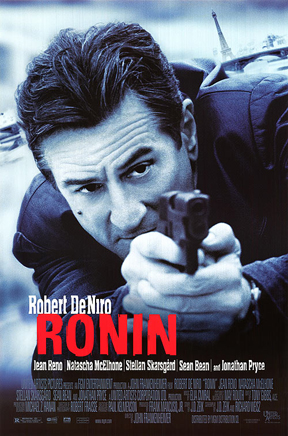
Ronin (1998)

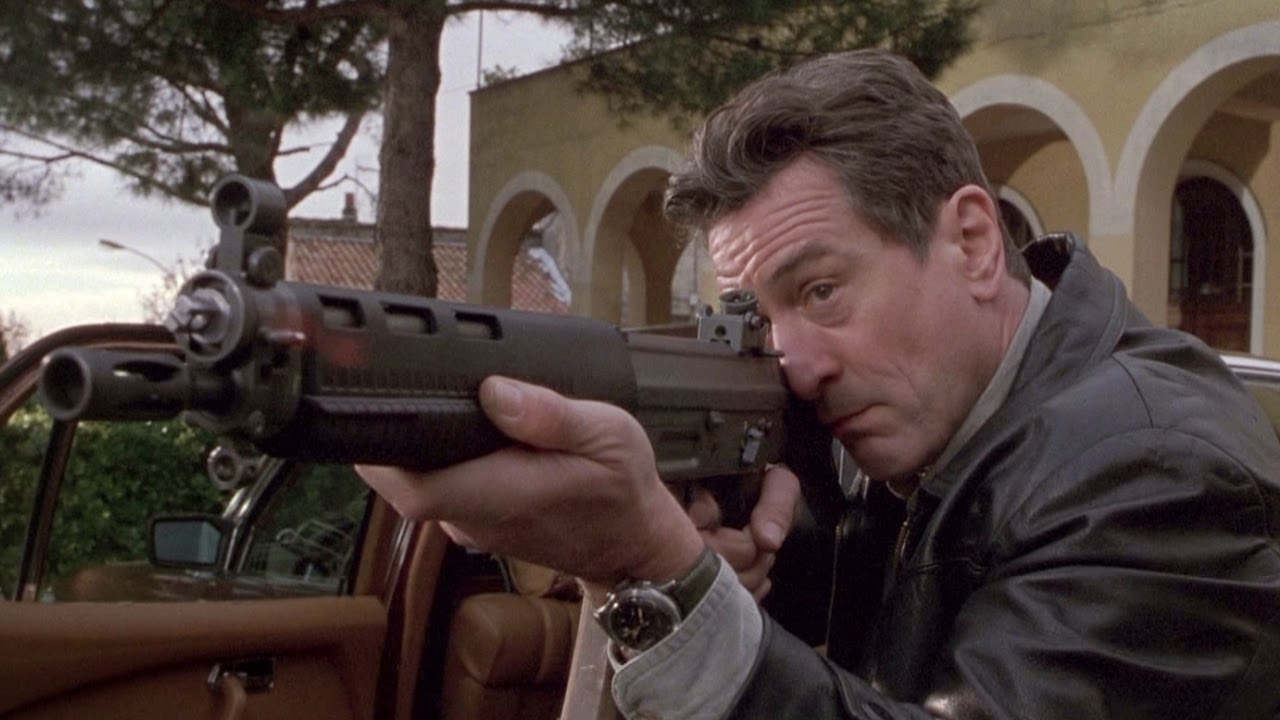
Robert De Niro takes aim in super cool car-chase classic Ronin

Director: John Frankenheimer

Cast: Robert De Niro (Sam), Jean Reno (Vincent), Natascha McElhone (Dierdre), Stellan Skarsgård (Gregor), Sean Bean (Spence), Skipp Sudduth (Larry), Michael Lonsdale (Jean-Pierre), Jonathan Pryce (Seamus O’Rourke), Jan Triska (Dapper Gent), Féodor Atkine (Mikhi)

Sam (Robert De Niro), Vincent (Jean Reno), Gregor (Stellan Skarsgård), Spence (Sean Bean) and Larry (Skipp Sudduth) are ex-intelligence operatives from the Cold War (or “the late unpleasantness”). Now working as mercenaries, they are hired by IRA operative Dierdre (Natascha McElhone) to steal a mysterious case. The operation becomes increasingly complex as trust is betrayed, new competitors emerge, and a stream of gun battles and car chases soon bursts out.

I don’t think there are enough words to say how much I love this film. I have seen it I honestly don’t know how many times. Some films just connect with you, or something about them so completely works for you that you can’t help but enjoy them. Ronin is quite simply one of my favourite ever films – others may poke at it, but to me I think this is a perfectly structured piece of film-making, a 1970s-style thriller produced in the 1990s, the last flourish of old-school, Cold War spy film-making. In fact, I genuinely think the further we move away from the bombastic 90s, the richer this film looks. It’s becoming less and less of a guilty pleasure and more and more of a pleasure.

First and foremost you have to talk about what Ronin is most famous for: its jaw dropping car chases. What’s particularly exciting about these is that everything you are seeing was done for real. There is barely a spot of trickery in this – they simply hired the best stunt men in the world, got hold of some cool looking cars, and let them go to town all over France.

Of course, watching cars going round and round in itself isn’t massively interesting: what makes it compelling in Ronin is the skilled story-telling. Not only do we always know what’s going on, but the characters are kept in the forefront (most of the actors’ terrified faces were real, as they tore round the streets of Paris for real at 90+ miles an hour). In addition to that, the editing and shooting of these scenes is simply superb. The film gets a perfect balance of sound effects and musical cues: the soundtrack of the final car chase is split 50/50 between revving engines and music. A combination of low angles (putting us practically on the front of the car) and medium and long shots keep the visuals of each chase fresh. You’d actually have to be without a pulse to not be gripped by these sequences. These are without a doubt the best car chases ever committed to screen.

But it’s not just about car chases. This is a brilliant mood piece, filmed in a drained out colour palate that makes the whole thing feel like the characters have been transplanted intact from the 1970s. Frankenheimer’s direction is crisp and cool, and he has an eye for an excellent shot. He also allows plenty of subtle character and mood building to counterpoint the action, as in the excellent, almost wordless, opening sequence following De Niro’s arrival at a café. Carefully he cases the joint while the others arrive, putting in place a possible escape route (we later discover) before heading in. Later, the film builds a moment of exquisite tension and excitement about a drawing on a board and the colour of a boat house. We even get a scene where De Niro guides some of the characters through performing surgery on him to remove a rogue bullet.

The whole film is packed full of excellent vignettes like this: I love the moment when De Niro pretends to have lost his nerve and carelessly knocks a coffee cup off a table to see how Skarsgard’s slightly sinister Gregor may respond (he catches it before it hits the ground and then immediately looks sheepish as if he has given something away). The film also sprinkles dark hints throughout of a wider world (“Where do I know you from?” “Vienna” “Of course…” an example of exposition-free dialogue that establishes a back story), while the characters’ backgrounds and their recruitment by “the man in the wheelchair” remain deliberately obscure.

It’s also one of the best Macguffin films you are going to see ever. What’s in the case? Who knows? Who cares? The film’s structure totally understands that it doesn’t matter to us what’s in the thing at all. It’s only important in that it matters to the characters: and that most of them are willing to go to any lengths to secure it (preferably for free).

The other major strength of the film is its cracking dialogue, the work of an uncredited David Mamet (allegedly pissed off that the Writer’s Guild of America declared he had to share billing). The dialogue is endlessly quotable, and deftly sketches out character: for instance, we understand immediately De Niro’s cool confidence and Bean’s blustering faux machismo from exchanges like this: 

Spence: You worried about saving your own skin?
Sam: Yeah I am. It covers my body.

That only scratches the surface of the film’s dialogue, which crackles – this exchange between Vincent and Sam sums up its wit, and lived-in quality:

In fact the film is full of cool lines like this that seem to carry a flavour of working in intelligence, and stick in the imagination (“The map is not the territory” or “Either you’re part of the problem or you’re part of the solution or you’re just part of the landscape”). The best moments sizzle with an effortless cool, with dialogue that you find yourself (or I do anyway) regularly dropping into everyday conversation. It also helps to slowly build relationships within the film, with Sam and Vincent’s dialogue quickly finding itself in sync, a clever little indicator of their building friendship.

The relationship between Sam and Vincent is in many ways the heart of the film – while other characters fall by the wayside, events ruthlessly exposing their weaknesses, it’s these two who form a close bond. Vincent may believe “Everyone’s your brother until the rent comes” but their friendship develops a real warmth and trust – they are the real romantic link in the film (despite a flirtation with Natasha McElhone’s steely IRA gun runner Dierdre).

All this content comes together brilliantly into a tightly contained and carefully paced thriller. It’s also strikingly well-acted in a tight, stripped down manner. This is probably the last engaged, “serious” role De Niro did before his career drifted into decades of self-parody. He gives Sam a brilliant lived-in quality, with a wry sense of humour. Jean Reno is equally well cast as the laconically cool Vincent, while Natasha McElhone is engaging and intriguing as Dierdre. Stellan Skarsgård is a stand-out as the ice-cool Gregor. Of the no-less than three Bond-baddy actors, Michael Lonsdale probably has the best part as a model-building fixer, though Sean Bean does decent work as twitchy poseur. Jonathan Pryce is, I have to say, not completely convincing as an IRA heavy, but does a decent job.

Okay I’ll concede the final reveal and resolution of the film’s plot is not the best moment (a particularly heavy-handed, plumbily voiced BBC radio voiceover explains much of the ending), but that’s a bump in the road of gripping, smart and old-school thriller. It’s accomplished in its filming, and its mood sizzles from the screen. The car chases are edge-of-your-seat gripping, and there is barely a false beat in acting or dialogue. The direction is full of character and has a brilliant eye for little details. Above all else, I really love this film – probably more than is healthy – and I have seen it a crazy number of times. I can’t imagine not enjoying watching it – and I don’t think I ever haven’t, even though I must know it frame-by-frame. Brilliant stuff!

Fallen (1998)


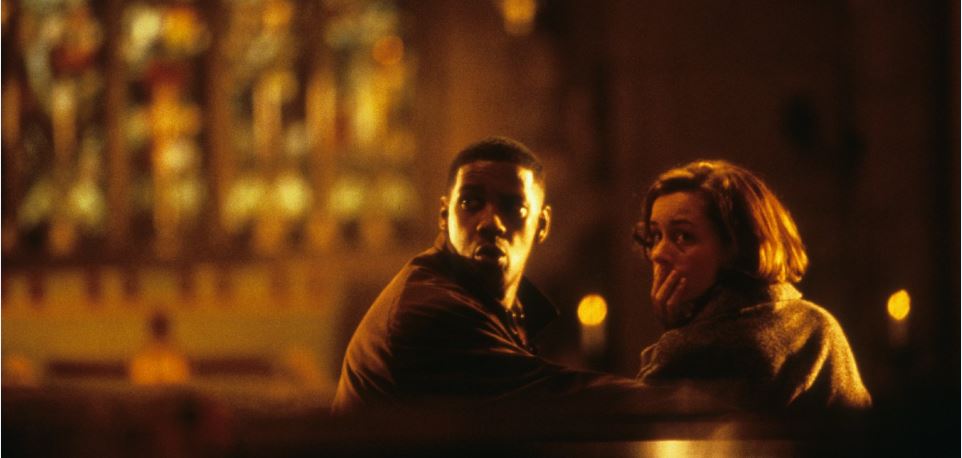
Denzel Washington and Embeth Davidtz on the run from a nasty Demon in Fallen

Director: Gregory Hoblit

Cast: Denzel Washington (Detective John Hobbes), John Goodman (Detective Jonesy), Donald Sutherland (Lt. Stanton), Embeth Davidtz (Gretta Milano), James Gandolfini (Lou), Elias Koteas (Edgar Reese), Gabriel Casseus (Art Hobbes)

Every so often, a film comes round that you know, while you watch it, is a fairly average, unspectacular piece of film-making. But for some reason something about the film just clicks with you and you end up enjoying something basically nothing special. For me, Fallen is one of those films.

What’s particularly nice about having this film as a bit of a guilty pleasure is, I’m pretty sure, most people have never heard of it. Detective John Hobbes (Denzel Washington) has recently been present at the execution of a notorious serial killer. Moments before his death, the killer grabs his hand and mutters a message in a strange language. As a copycat killer continues the crimes – and begins to frame Hobbes – the detective slowly realises his nemesis is no man, but a demon, able to possess humans by touch. He failed to possess Hobbes – and now wants to destroy his life.

There is nothing really new here: Hobbes is straight out of film noir, while the plotline of his mentally handicapped brother raising a son is pure TV-movie of the week. The demon possession idea is not exactly new (although it’s snazzily shot) and the demon quickly heads the way of most creatures in these films: foul-mouthed and delighting in sex and violence. There is a secret underground movement of those aware of the demons on Earth (fortunately we only see one of them) combatting their evil. Nothing really new.

But Fallen makes these elements seem somewhat fresh. The idea of the demon moving from person-to-person via touch is very interestingly presented. At one point Hobbes has a conversation with the demon, as it switches from host to host. Later Gretta (Embeth Davidtz) is pursued down the street by the demon, moving swiftly from person to person in a chain of touching hands. The various actors do a good job of conveying a single consistent character for the demon (fortunately he favours possessing recognisable character actors from US TV drama). Hoblit’s direction has plenty of these interesting new ways of presenting things. He’s also able to keep a good air of menace throughout the film.

It’s not perfect of course. The investigation of the demon’s background hits all the familiar beats from Dante to the Bible. Hobbes must be the only person in the world who (having decoded a message) has to ask A NUN whether the word “Apocalypse” means anything to her. A detective who has never heard of the word apocalypse? Times have changed: it’s the sub-title to a bad X-Men film now. At least one character is so obviously set-up as a candidate for long-term possession, you immediately suspect he’s innocent.

But the film has a fine closing scene, and a decent twist which plays with your initial expectations. It also gives you plenty of clues throughout (from the first shot of the film) about how the action might play out, more than enough for you to work it out for yourself. The idea of the “final confrontation in the wilderness” is again a familiar one, but the supernatural element makes this feel different. It’s actually a twist I didn’t see coming first time around (I was young at the time, not sure if I would be caught again today) – but it’s well presented and doesn’t cheat the audience.

Probably the main reason the film works so well though is Denzel Washington. Here is an actor giving a performance probably beyond the material, encouraging others to lift their game. He perfectly captures both Hobbes’ dedication and his purity of soul, with plenty of little touches that never feel heavy handed. He makes the plotline with his brother hugely sweet. He gets the balance just right between scepticism and dawning horror. It’s a real professional performance that plays off his charisma very well – imagine how awful it would have been with Keanu Reeves in the lead.

But I love that twist ending, and I’m a sucker for these demonic possession films (like disaster films or period epics) so I’ve seen this 3-4 times and really enjoyed it each time. As well as Washington, John Goodman and Embeth Davidtz give very good performances, and there is always enough mystery that you never feel you are racing  far ahead of the film (of course we know from day one it’s about demonic possession, but the characters never feel dense catching up with us). Fallen is a high quality piece of B-movie thrills. If you haven’t heard of it, do check it out.

Solomon Kane (2009)


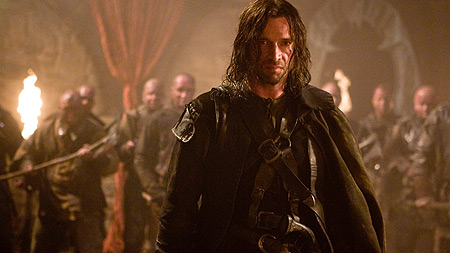
James Purefoy excels in cult-classic in the making Solomon Kane

Director: Michael J Bassett

Cast: James Purefoy (Solomon Kane), Max von Sydow (Josiah Kane), Pete Postlethwaite (William Crowthorn), Alice Krige (Katherine Crowthorn), Rachel Hurd-Wood (Meredith Crowthorn), Jason Flemyng (Malachi), Mackenzie Crook (Father Michael)

Solomon Kane was a pulp-magazine character from the 1920s. I’d never heard of him before – I imagine many others haven’t either – so bringing a film about him to the screen was always going to be a labour of love. That’s certainly what this film is. 

In 1600, Solomon Kane (James Purefoy) is a ruthless mercenary, but is confronted by a demon who tells him his soul is forfeit to the Devil. Horrified, Kane flees to sanctuary in a monastery, forsaking violence and devoting himself to God. After being expelled because the abbot has a dream, he encounters a Puritan family, the Crowthorns, and travels with them. Kane is deeply drawn to the Crowthorns – and when they are ambushed, the family killed, and daughter Meredith (Rachael Hurd-Wood) kidnapped by the servants of the sorcerer Malachi (Jason Flemyng), Kane swears to revenge the Crowthorns and rescue Meredith.

There’s something quite sweet and charming about Solomon Kane. It’s an old fashioned B-movie with a winning style. Is it going to rock any worlds? Probably not, but it’s got plenty of swagger and it makes a small budget go a long way. Bassett’s influences are pretty clear – everything from Witchfinder General to Lord of the Rings – but he shoots the film with a commendable energy. The visual flair is impressive, and successfully creates the feel of an England halfway between civilisation and the middle ages. Bassett also knows how to shoot an action scene, and the film is stuffed with fantastic sword fights that hit the right balance between brutality and dynamism.

Bassett also finds a fair amount of emotional heft in the story. The decision to focus a large chunk of the opening 45 minutes on Kane’s guilt and his attempts to make amends, make him a character we end up caring about. The “good family that wins our hero’s heart” cliché is exactly that, but it works very well here as Bassett takes his time and lets Kane’s bond with the Crowthorn family grow organically. All this patient establishment of Kane’s personality really pays off during the action of the second half.

It’s also helped a great deal by James Purefoy’s committed performance in the lead role. Purefoy has long since been a favourite of mine, who never really got the breaks to become a bigger star. His performance has the physicality and charisma, but Purefoy also adds in a Shakespearean depth to create a man desperate for redemption, carrying a pained heart very close to the surface. He dominates the whole film, setting the tone; and I suspect his dedicated performance encouraged fine work from the actors around him, despite almost all the other roles being little more than cameos. There are blockbusters whose leading actors are incapable of holding the screen as well as Purefoy does here.

Bassett’s B-movie spectacle is not perfect. The eventual explanation of why the Devil wants Kane’s soul is inexcusably garbled. Jason Flemyng is miscast as the demonic sorcerer Malachi, and his final confrontation with Kane lacks real impact (largely because Malachi has so little presence throughout the film) and devolves into a face-off with a dull special effects monster that looks rather like Megatron in the live-action Transformers films. There is a smaller-scale, personal ending in this film, but it gets crushed under the foot of the special effects. It’s a shame that a large portion of this film’s budget probably went on this.

Solomon Kane is structured, and plays, like a B-movie – but it’s proud of that. Its low budget demanded inventiveness and dedication from the cast and crew, all of whom delivered. The grimy design of the world is perfect, the story creates a good combination of action and emotion. Its story may be pretty clichéd, but it’s presented with great gusto – and has a terrific leading performance from a heavily under-rated actor in James Purefoy. More people deserve to see this – if this isn’t a cult classic in the making, I’m not sure what is.

Twin Peaks: Fire Walk With Me (1992)


Laura Palmer and Dale Cooper trapped in Twin Peaks nightmare halfway house between this world and the next

Director: David Lynch

Cast: Sheryl Lee (Laura Palmer), Ray Wise (Leland Palmer), Mädchen Amick (Shelly Johnson), Dana Ashbrook (Bobby Briggs), Phoebe Augustine (Ronette Pulaski), David Bowie (Phillip Jeffries), Eric Da Re (Leo Johnson), Miguel Ferrer (Albert Rosenfield), Pamela Gidley (Teresa Banks), Chris Isaak (Special Agent Chester Desmond), Moira Kelly (Donna Hayward), David Lynch (Gordon Cole), Kyle MacLachlan (Special Agent Dale Cooper), James Marshall (James Hurley), Frank Silva (BOB), Kiefer Sutherland (Agent Sam Stanley), Grace Zabriskie (Sarah Palmer)

Twin Peaks was a mystifying, but very short lived, sensation. Its first series gripped America with its whodunit mystery around who killed Laura Palmer: it was an early 90s Broadchurch with added mysticism and twisted Lynchian psychosis. Just like Broadchurch, the second series stumbled from disaster to disaster as the answer to the mystery was revealed. Though this plot line was dark, disturbing and haunting, effectively contrasted with the surreal humour of the rest of the show, large chunks of the episodes were, to be honest, terrible. As Lynch’s attention turned elsewhere, the show fumbled through half a season of increasingly bizarre, pointless, laughable and plain rubbish episodes, before rallying at the end with a return to the mysterious dwelling on the nature of evil that the series is now best remembered for.

Twin Peaks is a rare anomaly – a show whose most die-hard fans would probably admit at least a quarter of the episodes were terrible. Ratings had dropped off a cliff as the series went on (sure enough it was cancelled). The cast and crew knew the show had lost something – several actors, most notably Lara Flynn Boyle (here replaced by Moira Kelly) refused to appear in the film. Even the show’s star, and Lynch surrogate, Kyle MacLachlan only agreed to return for this film for a few brief scenes (requiring an urgent re-write). However, Lynch’s interest in the concept had clearly been awakened during his writing and filming of (what would become) the final episode, surely one of the most surreal, unsettling, bizarre, intriguing and disturbing episodes of TV ever screened.

Twin Peaks: Fire Walk With Me was Lynch’s final reclaiming of the series from the toilet it had dropped into. It also served partly as a “retcon” to tie the foundations of the original series plotline into the mythology the show had deepened in its final few episodes (built upon many surreal elements Lynch had introduced in the first episodes, otherwise hinted at rather than explored). As much of this mythology was unsettling, this movie very much follows that mood, losing much (if not all) of the dark, surrealistic humour that contrasted the darkness so well in the series. Twin Peaks: Fire Walk With Me is a strange movie that is more like an expanded extra episode of the series, rather than a stand-alone. It makes no attempt at all to appeal to anyone who hasn’t seen every episode of the series: I’d go so far to say it’s almost completely impenetrable without having sat through all of Twin Peaks.

The film explores two plot-lines: the first an investigation by FBI Agent Chester Diamond (Chris Isaak) into the murder of Teresa Banks, a plotline referred to many times in the series. The film then flashes forward a year to cover the final few days of the original murder victim Laura Palmer (Sheryl Lee) and her relationship with her father Leland Palmer (Ray Wise), who is possessed by a demonic presence known as BOB, driven by it to perform acts of sexual and physical violence. Laura is aware – and terrified – of the existence of BOB (a greasy haired face from a thousand nightmares) but seems unable to recognise that BOB and her father are one and the same. It’s the discovery of this in the film that will help to tip her over the edge into despair.

If the film is about anything other than expanding the mythology around BOB and the mysterious “Black Lodge” between dimensions, where evil and violence abound, it’s about the damaging impact of domestic abuse. The film intensely explores the personality damage Laura (an excellent and fully committed Sheryl Lee, leaving nothing in the locker room in a performance of fearless intensity) has suffered as a result of years of sexual abuse from her father (Ray Wise equally good as his personality veers wildly between gentle father and possessed evil rapist). Laura’s fractured psyche is the root cause, Lynch makes clear, of her sexual promiscuity, drug addiction and flashes of cruelty. She’s even aware of the damage, as seen in her desperation to protect others (especially the gentle Donna) from being sucked into the nightmare of her life.

The unremitting bleakness of Laura’s disastrous life is intermixed with the horror of the scenes where we witness Leland’s destructive behaviour to her, while the final scene of her eventual murder is haunting in its skilful nightmare imagery and suggestive editing. Lynch’s direction remains humane and tender, and despite putting Sheryl Lee through the ringer she never feels exploited. Instead, the film has an incredible empathy for both her suffering, and the confused, damaged actions she is driven to carry out. It gives us an understanding of the damage that can be done to even the strongest seeming people by abuse.

Alongside this, Lynch unleashes the full range of dark surrealism through a series of disturbing images to build up his mystical backstory. This is a flat out horror film, with twisted images of monkeys, blood and forests guaranteed to haunt your dreams. Nearly every scene in Twin Peaks re-positions the often quirky town of many of the episodes as a nightmareish world of neon, darkened rooms and twisted sexual and physical violence. The portrayal of Laura Palmer’s fragile heart is as intensely moving as it is intensely filmed, while the views behind the red curtain into the hellish underbelly of Twin Peaks’ mystical mythology will stick with you for some time – and is sure to be central to the new third series.

Twin Peaks: Fire Walk With Me was met with intense hostility when it was released: “It’s not the worst movie ever made,” the New York Times review read, “it just seems to be”. David Lynch publically stated he had clearly done when the network couldn’t do, and successfully killed Twin Peaks. Of course that wasn’t the case – with the new third series finally coming to the screen 25 years after the screening of this film. The re-evaluation of the film has only grown in the intervening period. The nightmarish content (and the final scenes of the series) – the wicked BOB, the nightmare of the Black Lodge and the Red Room, the elements of psychological horror – these are the things that Twin Peaks is remembered as being about: the rotten core of the sweet pie of the town.

The Adventures of Buckaroo Banzai Across the 8th Dimension (1984)

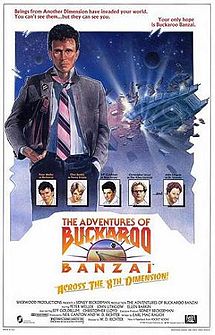
Some of the costume choices in this image probably help you to see what oddness you have in store…

Director: WD Richter

Cast: Paul Weller (Buckaroo Banzai), John Lithgow (Dr Emilio Lizardo/Lord John Whorfin), Ellen Barkin (Penny Priddy), Christopher Lloyd (John Bigbooté), Clancy Brown(Rawhide), Jeff Goldblum (New Jersey), Vincent Schiavelli (John O’Connor), Robert Ito (Professor Hikita), Carl Lumbly (John Parker)

Okay so watching that was strange. If you looked up “cult movie” in the dictionary you would probably see an embedded video of this film. It’s so cult it has literally no interest at all in appealing what so ever to anyone outside of its established sci-fi crowd. If Star Wars was sci-fi for the masses, this is camp sci-fi for the cultish elite.

The plot is almost impossible to relate but Buckaroo Banzai (Paul Weller) is a polymath genius – surgeon, rocket scientist, rockstar – who perfects a device that can travel through solid matter and dimensions. But creating the device makes him a target for a race of aliens, led by Lord John Whorfin (John Lithgow) who live in the gaps between dimensions and want to use the device to escape.

The film is part straight-laced 1940s sci-fi serial, part tongue-in-cheek romp, part comic book, part satire. In fact it’s nearly impossible to categorise, which is certainly in its favour: you’ve certainly never seen anything like it before. It’s bursting with ideas and straight faced humour and clearly had an influence on sci-fi still today (for starters there are more than a few beats of Moffat-era Doctor Who here, while Banzai himself would fit in as The Doctor). It bursts out of the screen with a frentic energy, not massively concerned with narrative logic or consistency, its solely focused on being entertaining. It throws the kitchen sink at the screen with all the passion of fan fiction.

Despite all this I think you have to have a very certain sense of humour and set of interests to really enjoy it – and I’m not sure that I did. If you don’t have an encyclopedic knowledge of comic books and sci-fi you’ll probably feel like you are missing something (and you probably are). I’m also not sure there is much there to attract the “muggle” fan – Weller plays the lead with a smoothness and a charming straightness but he’s not the most interesting of characters (to be brutally honest). Lithgow counter balances him by going utterly over the top in a performance of ridiculous Mussolini-like bombast. But it’s not completely engaging. Basically if you don’t love it within the opening 25 minutes, you aren’t going to won over by anything else that happens. Every frame of the film is setting itself up as a chance for cult fans to speak to each other.

It actually rather feels like you are being invited to a party but then are left with your nose pressed up against the window. All the actors are clearly having a whale of a time with the other-the-top setting and bizarre half-gags. But I’m not sure all that enjoyment really travels across the screen to the viewer. While it’s sorta sweet in it’s almost sexless innocence (Birkin plays the lost twin of Banzai’s wife but there’s never a hint of real sexual buzz anywhere). Characters sport guns and hang around in a nightclub, but Banzai’s gang are essentially a group of 11 year olds who have taken adult form. So it’s gentle and has an innocent chumminess, but also a bit hard to engage with it.

I think in the end I just found it a little too eager and straining to be an outlandish, deliberately cultist film – it’s like an inverted elitest piece of modern fiction, that uses narrative tricks, devices and style to make itself harder for the regular viewer (or reader) to be part of its experience. So while this is something very different and almost insanely off the wall, it’s also something that is never going to move you or appeal in the way Empire Strikes Back will do.