Category: Directors

American Beauty (1999)

Kevin Spacey and Annette Bening excel in the dated Best Picture winner American Beauty

Director: Sam Mendes

Cast: Kevin Spacey (Lester Burnham), Annette Bening (Carolyn Burnham), Chris Cooper (Colonel Frank Fitts), Thora Birch (Jane Burnham), Wes Bentley (Ricky Fitts), Mena Suvari (Angela Hayes), Peter Gallagher (Buddy Kane), Allison Janney (Barbara Fitts)
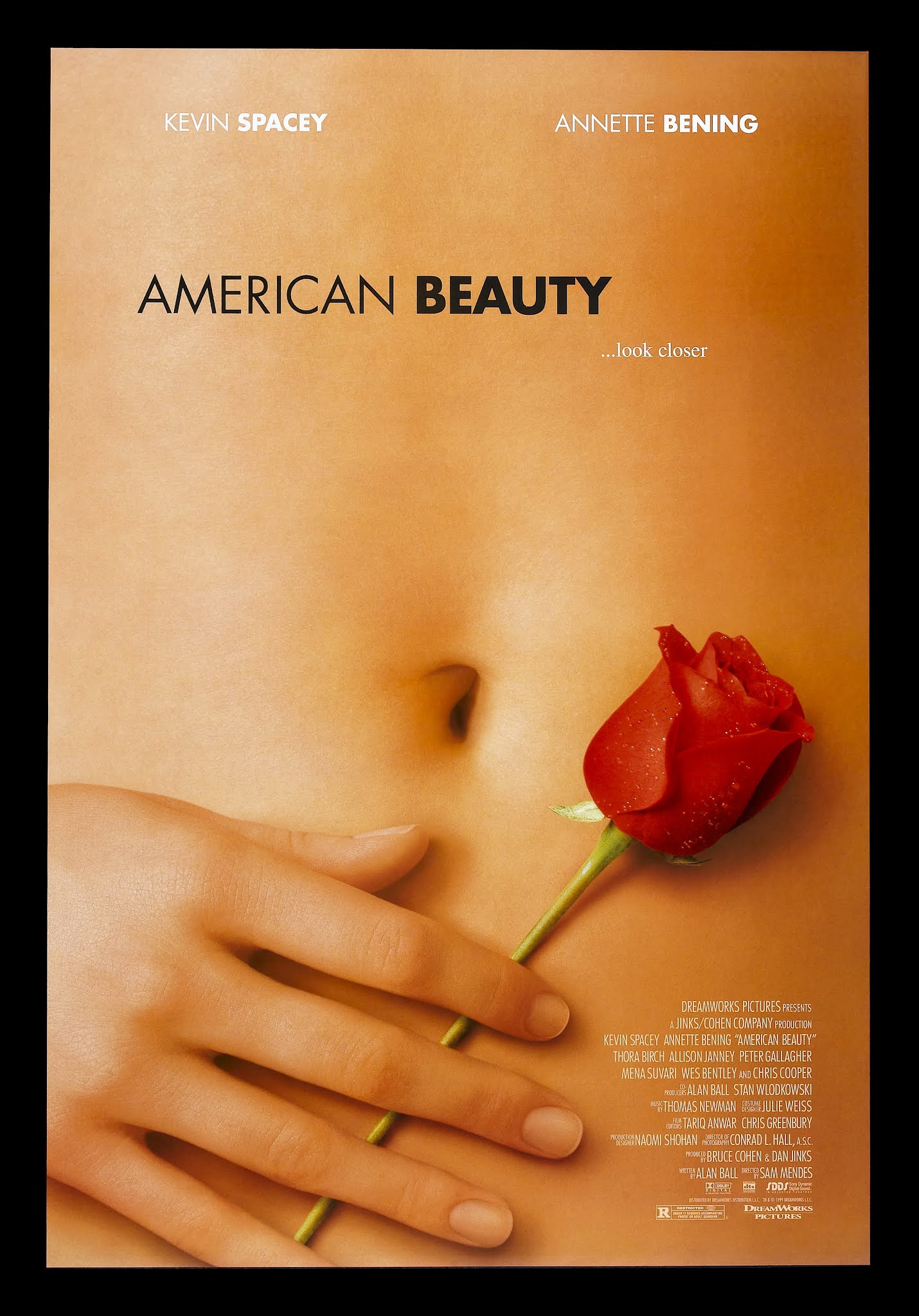
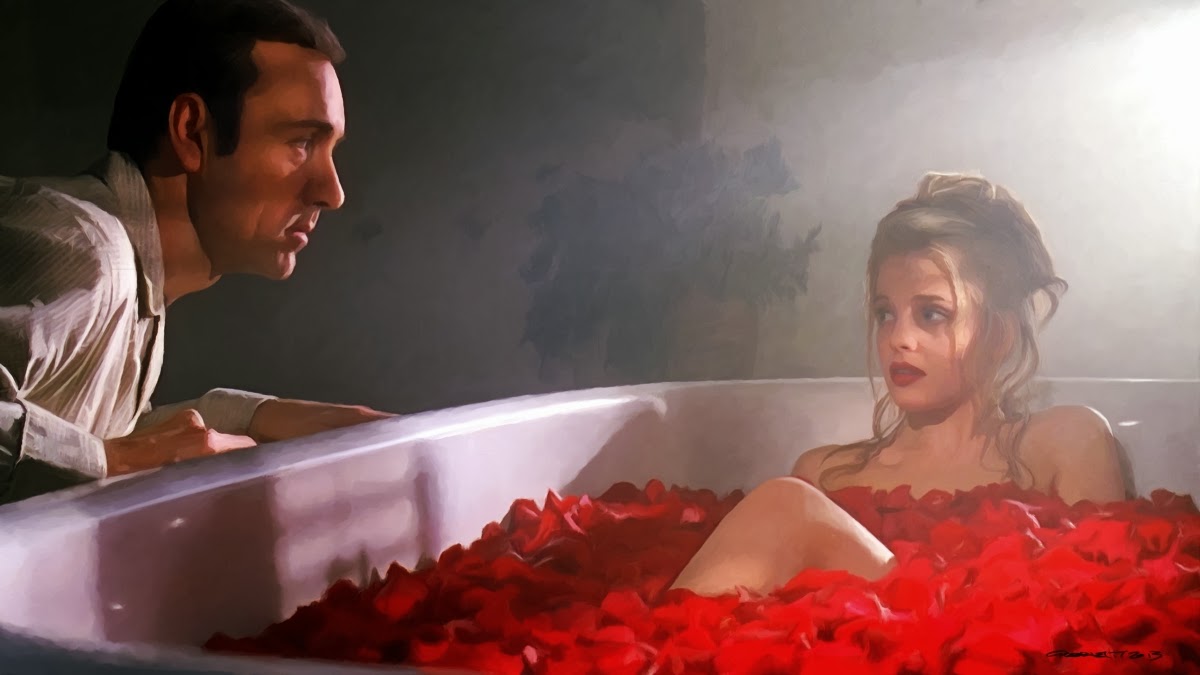
Time has not been kind to American Beauty – and I’m not just talking about Kevin Spacey. In 1999, what felt like a timely exploration of male-angst has, over time, looked less prescient and more like the last embers of a generation that thought they were The Graduate’s Benjamin but actually became his parents. Many of the sympathies of American Beauty now feel dated and slightly misguided, or obscure some genuine reflections on its characters. Its satire of consumerism feels trapped in the 90s. But it’s also very skilfully made, often funny, beautifully shot and you can see why it seemed like the next landmark masterpiece of American cinema, an Apartment for the modern age.

In suburbia, Lester Burnham (Kevin Spacey) is a middle-aged, middle-ranking magazine executive, tired of his life, unhappy in his marriage to Carolyn (Annette Bening), a fiercely ambitious real estate agent, and drifting away from daughter Jane (Thora Birch). He is snapped out of his ennui by his infatuation with Jane’s friend and fellow-cheerleader Angela (Mena Suvari). Next thing we know, Lester realises he hates his life, quits his job (blackmailing his boss on the way), buys the car of his dreams and takes a job flipping burgers – to the bewildered frustration of Carolyn, who starts an affair. Meanwhile Jane becomes intrigued by Ricky (Wes Bentley), the film-obsessed and drug-dealing son of their next-door neighbour, homophobic army colonel Frank (Chris Cooper). Oh, and it’s all narrated from beyond the grave by Lester – so we know it won’t end well.

“There is nothing worse than being ordinary” says Ricky at one point. It’s an attitude that underlies the film. American Beauty has that very showbiz attitude that the lives most ordinary people lead must be rather shallow and empty. That there can be no meaning in the life of suburbia, family and 9-to-5 that so many of us lead. A sharper film would have added depth and contrast to this – but American Beauty is a film that, for all its quality, is also very pleased with itself.

American Beauty’s debt to Billy Wilder is central to its DNA. It plays often as a mix of The Apartment and Sunset Boulevard, with Spacey skilfully channelling a twist of Lemmon as Burnham. Saying that, I can’t believe Wilder would have been as easy on Lester as Ball and Mendes are. Surely Wilder would have seen through the self-serving selfishness and sad delusion that underlie Burnham’s mid-life crisis, fuelled by his fears of emasculation.

It’s that fear running through American Beauty and – for all it looks at first like a satire on suburbia – what came out to me on rewatching is that parallel narrative of two men suffering familiar masculine crises. Burnham, the office drone, ignored at work, playing second fiddle to his wife at home. He doesn’t wear the pants anywhere – his wife chooses the music they listen to, the events they go to, she doesn’t even let him drive the car. Teenage dreams of rebelling disappeared. He’s forgotten what it feels like to be a man. Then there’s Colonel Fitts, the man’s man struggling with self-loathing due to his deeply repressed homosexuality. These are fairly conventional stories.

Lester’s story takes centre stage (even the name Lester Burnham is wimpy). Outstandingly played by Kevin Spacey, who was never better or more humane, Burnham is endearing, rather sweet, clutzy but still has that sharp-tongued Spacey sense of wit. The opening sequences perfectly capture Burnham’s Jack-Lemmonish awkwardness, repression, inadequacy and depression. But  if anything, Spacey is almost too sympathetic in the role, masking the selfishness and self-serving nature of Burnham’s mid-life crisis (which is what it is), urging us to celebrate his rules-bucking independence.  The film never gets to grips with the spark for all this being a sexual obsession with a teenage girl.

American Beauty never questions the sleazy corruption of Lester’s fantasy – and is perfectly happy with using his crush as a positive motivation for getting his mojo back, as well as frequently presenting Angela as a Lolita-esque fantasy. He holds back from sex with her when she confesses she is a virgin – but the film offers no “what am I doing” epiphany from Lester (or a realisation that he is about to sleep with someone literally young enough to be his daughter), instead turning this exploitative moment into an expression of some decency in Lester. Sure, it’s great that Lester realises his responsibilities eventually – but even in 1999, we all knew it was wrong for middle aged men to sleep with impressionable school-children.
The fact is that Election, released the year before, had more to say about exactly the sort of underperforming, thinks-of-himself-as-a-failure resentment of men of Burnham’s ilk – the difference being that Matthew Broderick’s Jim McAllister in that film is exposed as a bitter self-serving fantasist, which is what Burnham really is. Burnham’s dying moments may be full of reflections on his wife and daughter – but he ignores them or treats them with scorn throughout the film.

And there isn’t, I feel, a satirical note to this. Instead, the film roots for Burnham strongly, asking us to admire his late life rebellion. Maybe it’s the conservative in me – maybe it’s because I don’t much like The Graduate either – but I don’t feel it. Spacey is great – but Burnham is selfish and embodies a concern in certain men that career-minded women and suburbia were turning them from hunter-gatherers into hen-pecked losers. American Beauty is a direct development of the masculinity crisis films Michael Douglas specialised in throughout the 80s and 90s, of men lost in a world that isn’t 100% about them and what they want any more.

The film’s parallel plot of Fitt’s homosexuality crisis is even more familiar than Burnham’s and hits many expected bases – there are no real surprises here for anyone who has ever seen a film before. It largely works as it is so outstandingly sold by Chris Cooper, who gives a brilliantly rich and raw performance as Fitts.

But its faint whiff of predictability fits alongside a script that is often very rich on dialogue, but has a vein of pretention to it that makes the film feel it’s striving to be important. Ball’s dialogue too often undermines its own points with the stench of pretension. The teenagers in the film fall into broadly predictable cliché. The arty, dreamy ones are profound; the pretty one is shallow and flighty (although, to be fair, is shown to also be vulnerable and scared). Bentley’s character’s faux-artiste musings on the movements of a plastic bag are exactly the sort of pretentious ramblings Ball would later puncture so effectively with the college art classes in Six Feet Under. These scenes have dated terribly and ache with self-importance (and are ripe for parody).

But there is quality here, don’t get me wrong. Spacey is superb, Cooper brilliant. Annette Bening is pitch-perfect as a career-focused woman who lives her life through self-help mantras but is only just holding it together. It’s a shame that, just like Mrs Robinson, the film is so full of sympathy for its male protagonist that it has no time to empathise fully with its female lead.  Mendes directs with a stunning confidence for a first-timer, drawing brilliant performances from the actors as well as bringing a startling originality to the filming (in partnership with Conrad Hall as photographer).

But American Beauty never turns its “look closer” message on itself. It uncritically examines a particular masculine crisis and often makes points that are witty but simple. The final act becomes weighted down with a tiresome “whodunnit?” mystery. The acting, direction and much of the writing is frequently brilliant. But the film itself, as a whole, has not aged as well as we thought it might.

Moulin Rouge! (2001)

Nicole Kidman and Ewan McGregor make a love story for the ages in Luhrmann’s electric Moulin Rouge!

Director: Baz Luhrmann

Cast: Nicole Kidman (Satine), Ewan McGregor (Christian), Jim Broadbent (Harold Zidler), Richard Roxburgh (Duke of Monroth), John Leguizamo (Henri de Toulouse-Lautrec), Jacek Koman (The Unconscious Argentinian), Caroline O’Connor (Nini), Kerry Walker (Marie), David Wenham (Audrey)

It’s 20 years old now and I still don’t think there has been anything quite like Moulin Rouge! Believe me it’s not for want of trying. Baz Luhrmann’s hugely inventive, uniquely stylistic musical is cinematic marmite: either loved or reviled (not sure I’ve ever met anyone who had a meh attitude to it). One of the pioneering inventors of the juke-box musical, Moulin Rouge! mixes pop songs with inspiration from opera to Greek myth and comes up with something Spectacular, Spectacular.

It’s the turn of the century, and Christian (Ewan McGregor) arrives in Paris looking for truth, inspiration and above all: love. Arriving at Montmartre, he and courtesan Satine (Nicole Kidman) fall in love. Satine is the star at Harold Zidler’s (Jim Broadbent) Moulin Rouge and also the star of Zidler’s planned stage show. She has been promised to his wealthy backer the Duke (Richard Roxburgh). With Christian commissioned to write the script, can he and Satine hide their love from the Duke and make sure the Show Goes On? Or will tragedy strike?

Fast paced and electric, Moulin Rouge! could inspire motion sickness, especially in its opening 15 minutes which throw us deep into its unconventional medley of styles, tones and inspirations. Did that first 15 minutes lose a lot of people? You can imagine it as the earliest scenes featuring Christian’s meeting with Toulouse-Lautrec and the other Bohemians are by far its weakest. If your irritation grows at these shrill scenes (crudely over-acted with an overbearing Keaton-ish energy), I can well imagine thousands of viewers checked out in Luhrmann’s music inspired Moulin Rouge can-can musical with its explosion of rap, Nirvana, Lady Marmalade and insanely quick cutting. It’s a statement opening – and throws you straight into its heightened reality. A tone that continues for much of the opening 40 minutes.

Luhrmann leaves nothing in the locker room here. Only a director of such exuberance, playfulness – but also deep skill and understanding of high and low culture – could have balanced it as well as he does. Go with it and you’ll love it. It’s pure operatic entertainment. Luhrmann’s master-stroke is to shoot a period musical in the style of the high-velocity music-video pop that excited people in 2001 – finally you get a sense of why the Moulin Rouge and can-can seemed so exciting and sexy back then. It’s a night-club of 1999, thrown into 1899.

But what makes the film work after that initial explosion of energy – and I’ll agree that the first 15 minutes tries too hard to grab your attention – is that Luhrmann mixes the styles up so effectively. There is everything here, from Busby Berkeley numbers to heartfelt love ballads to dreamy duets to a sexual tango to a classic theatrical set-piece, tinged with a spot of tragedy. Every musical number seems inspired by a different genre and style of musical theatre. And the use of modern pop music is fun, entertaining and mines the emotional connection we all feel for the best pop songs.

It’s an MTV pop musical, mixed with Gene Kelly, lashes of camp, cheeky humour and finally tragedy and suffering. It’s got a million cuts in it, but Luhrmann successfully makes the film darker, slower and more intimate as the film progresses. From the electric dynamism of the opening, this becomes an increasingly personal tragedy revolving around five key characters. It never loses that sense of showmanship – Zidler’s planned production is an overblown Bollywood inspired extravaganza that delights in recreating the joy and brashness of that genre – but the final hour is a more adult, foreboding movie with plenty of heart.

Moulin Rouge! is all about Luhrmann’s gadfly brilliance to discover inspiration from a host of sources, pulling it together into something brilliantly original, from the plot – which is inspired by La Boheme by way of Orpheus and Eurydice – to brilliant montage songs like the Elephant Love Song Medley, which takes snippets from nearly every popular love song you’ve ever heard. Very few films can switch so effortlessly from cheeky, end-of-the-pier humour to gut-wrenching tragedy. It’s energy effectively and brilliantly applied, and that comes from the director (who was, of course, inexplicably not among the films eight Oscar nominations).

Luhrmann also gets the actors to perform with the sort of energetic, fully-committed exuberance the film needs. The principals go at every single scene with no hesitations at all – bless them, none have any concern with appearing silly at all. McGregor reveals a sweetness and earnestness (as well as very strong singing voice) he hadn’t shown before. Kidman was an absolute revelation as a woman hiding doubt, insecurity and fear under an exterior of pure confidence. Broadbent’s comedic brilliance is matched with his dramatic flair. Roxburgh is hilarious, and also vile, as the selfish Duke. Luhrmann recognises their strength – after the first 10 minutes every scene features at least two of these performers.

Things have clearly been cut here and there. Motivations and even characterisations of some of the other members of the Moulin Rouge troupe change from scene-to-scene. Sometimes it tries too hard to be inventive. But it works so often that it hardly matters. And the remixes of the songs for performance are outstanding. The “Like a Virgin” Busby Berkely number is hilarious, the “Roxanne Tango” breath-takingly influential. “The Show Must Go On” is powerfully doom-laden and “Your Song” beautifully romantic. “Come What May” – the only original number – is an iconic ballad.

There’s not been anything quite like Moulin Rouge! – and Luhrmann has never managed to match it again since. Electric, dynamic, exciting, heartfelt, moving and above all extremely joyful, it has some brilliantly judged performances from its lead actors. There hasn’t been anything like it since – and I’m pretty sure we won’t see it’s like again.

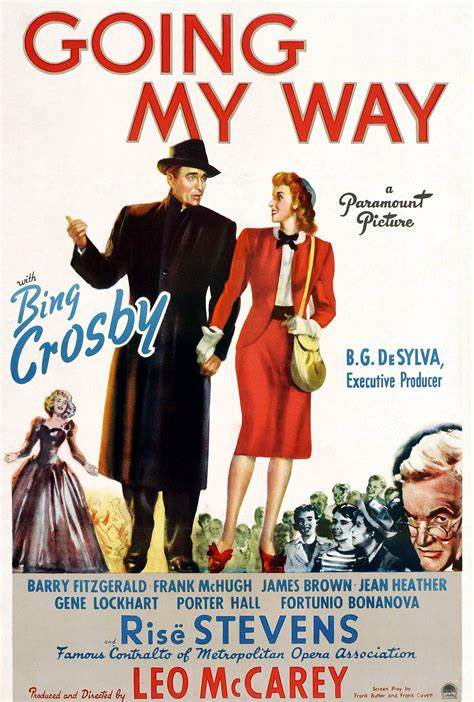
Going My Way (1944)

Bing Crosby wins hearts and minds in the sentimental Best Picture winner Going My Way

Director: Leo McCarey

Cast: Bing Crosby (Father Chuck O’Malley), Barry Fitzgerald (Father Fitzgibbon), Frank McHugh (Father Timothy O’Dowd), Rise Stevens (Genevieve Linden/Jenny Tuffel), James Brown (Ted Haines Jr), Gene Lockhart (Ted Haines Snr), Jean Heather (Carol James), Porter Hall (Mr Belknap), Fortunio Bonanova (Tomaso Bozani), Eily Malyon (Mrs Carmody)

“Schmaltz isn’t selling” record producers tell Father O’Malley (Bing Crosby) when he pitches them the little ditty he’s penned to raise funds to save his church from financial ruin. Well no one told the producers of this film: and just as well, as this became one of the most successful films of the 1940s, raking in buckets of cash and armfuls of Oscars. Watching it today, you’d hardly believe it – but that’s to forget the stress and fear of a nation at war, or that Bing Crosby (in a tailor-made role) was practically the most popular human being alive. For all that, watching Going My Way today won’t challenge you at all – other than perhaps your patience.

Father O’Malley (Bing Crosby) arrives in a (allegedly) rough neighbourhood in New York. He’s to take over the parish from the ageing Father Fitzgibbon (Barry Fitzgerald) but, gosh darn it, Father Bing doesn’t have the heart to tell Father Fitzgibbon that, so pretends to be his new curate. Promptly, Father Bing sets about solving all the problems of the parish with his charming homespun wisdom, decency, empathy and ability to bond with all. Gosh darn it, before you know what’s happened he’s turned the rough-and-tumble local boys from larcenists into an all-male choir and has roped in an old friend (who just happens to be the lead singer at the MET Opera) to give him and the boys the stage to sing a few of his songs and help save the church.

Yup, Going My Way is exactly that sort of film, and your enjoyment of it is going to be inversely proportional to how quickly being dipped in pure schmaltz brings you out in hives. This film is sickly sweet in its cozy comfort, a reassuring view of a world straight out of Enid Blyton, where the priest has all the answers, the hearts of businessmen can be melted by a few wise words, and dropping a few sporting references can win over the local ‘tough’ kids.

Going My Way is so homely and quaint, it makes Capra feel positively edgy. In fact, it lacks any of the energy, wit and style Capra brings to his pictures. That lack of buzz doesn’t help it, the languid pace drawing your attention all the more to its overbearing decency and careful weeding out of anything that could even cause a scintilla of doubt.

Instead it’s a warm gentle hug – and a hug that takes a great deal of time (at just two hours, it can seem like it’s going on forever). There are fewer songs in it than you might expect – only one every 10-15 minutes max. Often very little happens – and when it does, drama is very far from the agenda. Instead every problem is solved with consummate ease (it just needs Father Bing to open people’s eyes). Everyone is at heart decent in the extreme: the local tough kids have more high spirits than hooliganism to them, the (very) Irish women have stern exteriors but soft hearts, and the ruthless businessman is a devoted family man. After a while, I felt my patience being sorely tested.

In the middle of this, we get Bing Crosby, who won an Oscar for his work here. It’s a part tailor-made for Bing. In fact, so much so, that he essentially turns O’Malley into a dog-collar wearing version of his own stage persona, with touches of wry humour, whimsy and an affectionate smile. It’s no mean thing creating an entire persona – or performing it – but it feels a little rich to win an Oscar for it. O’Malley is of course perfect, a man free of any blemish who backs humbly into the limelight. A liberal who thinks Church should be fun (though far from a radical), there is nothing to cast even a shadow of doubt on his perfection: his flirtation with a girl never went so far as a date, he has the patience of a saint and he always knows exactly what to say to everyone.

He even wears down the defensiveness of Barry Fitzgerald’s Father Fitzgibbon. Fitzgerald also won an Oscar (for Supporting Actor) and effectively created the cinematic template for what an Irish priest is like. Fitzgibbon is bumbling with a sing-song whimsy, stuck-in-his-ways but basically decent, a touch prickly but also vulnerable and caring. His Irishness (like many of the rest of the cast) is dialled up to eleven. It’s an engaging performance, even if this old-cove-with-a-heart-of-gold schtick already felt familiar. But blimey, like the rest of the film, it can be far too much.

John Ford would have loved the Irish sentimentality of this film. It’s not perhaps Going My Way’s fault that its unquestioning regard and confidence in the church – and the assumption that all would treat them with complete deference and absolute respect – has dated it. But then maybe this was the case then as well, and it just felt much more reassuring to watch a simple world where a priest has all the answers and can change everyone’s lives. In the simple world of the film, you just let the cliché and coincidence wash over you and go with the flow.

Nevertheless, it still can make for a long watch if you aren’t in the right mood for this constant spin of Sunday-afternoon-gentleness. I have to confess it was too sweet for me – way too sweet. And there isn’t much of interest in the film, McCarey directing with a professional but uninteresting staidness (you couldn’t believe he cut his teeth doing Laurel and Hardy, so visually dull and slow is this film). Every outcome is dipped in sentimentality and sweetness and eventually watching the film is like gorging on candy-floss. Light, insubstantial, not as filling as it should be, and at the end you feel like throwing up.

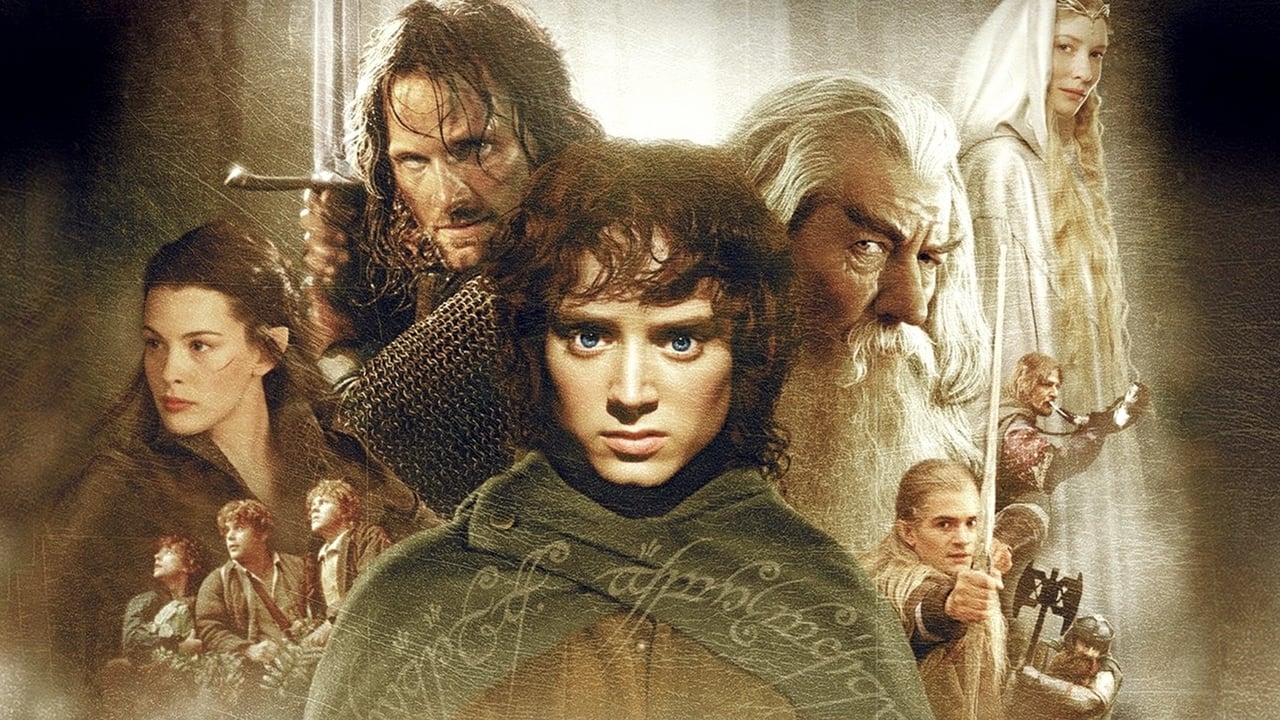
The Lord of the Rings: The Fellowship of the Ring (2001)

Peter Jackson’s near-perfect opening chapter of his Tolkien adaptation

Director: Peter Jackson

Cast: Elijah Wood (Frodo Baggins), Ian McKellen (Gandalf), Viggo Mortensen (Aragorn), Sean Astin (Samwise Gamgee), Liv Tyler (Arwen), Sean Bean (Boromir), Billy Boyd (Pippin Took), Dominic Monaghan (Merry Brandybuck), John Rhys-Davies (Gimli), Orlando Bloom (Legolas), Ian Holm (Bilbo Baggins), Cate Blanchett (Galadriel), Christopher Lee (Saruman), Hugo Weaving (Elrond)

When it was released, people wondered if there was a market for three mega-length adaptations of Tolkien. By the time it finished, Hollywood was casting eyes at The Hobbit and working out how many films that could stretch to. Peter Jackson’s The Fellowship of the Ring is a film so completely perfect it pulled off the near-impossible: embraced all, from the novel’s passionate fanbase, to lovers of blockbusters and connoisseurs of cinema. Jackson turned a landmark novel into a landmark film, the sort of work that decades of other films (and TV shows) would be inevitably compared to. By any benchmark, The Fellowship of the Ring is a cultural and cinematic turning point.

Frodo Baggins (Elijah Wood) is a young hobbit who inherits his home from his Uncle Bilbo (Ian Holm) – along with a mysterious ring which gives its wearer the power of invisibility. But more than that, this ring is the very same ring crafted by the Dark Lord Sauron: the source of his power and possibly the most evil item in the world. Warned of its danger by his uncle’s old friend, the wizard Gandalf (Ian McKellen), Frodo agrees to carry it first to the elves at Rivendell – and then from there to the fires of Mount Doom, the only place it can be destroyed. Joining him on this perilous quest is a ‘fellowship’: Gandalf, fellow hobbits Sam (Sean Astin), Pippin (Billy Boy) and Merry (Dominic Monaghan), elf Legolas (Orlando Bloom), dwarf Gimli (John Rhys-Davies), human Boromir (Sean Bean) and the mysterious ranger Aragorn (Viggo Mortensen), who may be the heir to the kingdom of men.

Jackson’s film faced a huge problem from the start: cater to the fans too much, make it too drenched in the high-fantasy of the novel, and you risk alienating an audience sceptical about stories of magic and elves; push the film too far the other way and it becomes something denounced by the fanbase. Fortunately, Jackson (and fellow scriptwriters Fran Walsh and Phillipa Boyens) transform the book into a masterfully-paced, emotionally-invested epic saga with moments of comedy and tragedy and an overwhelming sense that colossal stakes are being played for. By focusing on what makes The Lord of the Rings such a great story they helped nail making it accessible to the sort of people who wouldn’t dream of picking up a fantasy book.

The novel is carefully, subtly altered throughout to increase pace and build up the emotional depth of the characters. Its timeline is telescoped (Gandalf’s 19 year research into the ring becomes a few months), stand-alone sections removed (good bye Tom Bombadil) and personal conflicts and emotions are subtly made more prominent (most notably Gandalf’s grandfatherly affection for Frodo and the conflicted admiration and resentments between Boromir and Aragorn). What this succeeds in doing is creating a film that actually alters a lot of the original book (reassigning multiple actions and shifting many motivations) but ends up carrying so much of the emotional and narrative truth that it feels completely faithful. The tone is perfectly captured but also becomes a gripping, cinematic drama, populated by characters who feel real, for all their hairy feet or wizard’s hats.

The script is a perfect mixture of the greatest lines and quotes from the book, expanded with a real understanding of character motivation. Its all complemented by faultless direction with a sweeping visual panache from Jackson. This is a passionate director, working at the top of his game. The film is, of course, breathtakingly beautiful – New Zealand, the perfect location for Middle Earth, still dines out on the tourist trade to this day – but Jackson brilliantly mixes the epic with touches of his own Grindhouse roots. So, he can shoot stunning chase scenes with Nazgul or dreamy ascents of mountains with the same flair as he can the grimy, body horror of an Uruk-Hai’s birth. I can’t stress too much the level of Jackson’s achievement here: the film shifts between genre and tone from scene-to-scene: the Moria sequence goes through mystery, whimsy, regret, tragedy, action, awe-inspiring scope then crushing loss. Another director could have made that feel like a wildly veering train – Jackson makes it feel all of a piece. Not a single scene is untouched by directorial genius.

Jackson’s passion for the project was communicated to the entire team. In every single technical department, no effort has been spared to create Tolkien’s world (and crucially it always feels like Tolkien’s world). Stills of this film could be slotted into editions of the book and not look out of place. From the detail of the costume, design of the sets, to the writing of elvish – not a single prop, set or costume doesn’t look like it belongs. Everything feels grown out of the imagination of the reader. It’s helped hugely by the effort to recruit famed Tolkien illustrators Alan Lee and John Howe: their iconic visualisations of the novel inspired every inch of the design.

It’s also a film that feels real (even though so much of it was of course made in a computer). The film used practical locations and shooting tricks wherever possible. Obviously, the New Zealand landscape was used to sumptuous effect, but also wherever possible models and miniatures were used. Even the height differences between hobbits and other characters were largely achieved in camera. It’s an approach which not only subconsciously communicates an intimacy, it also helps make the story feel even more grounded: a sense of dramatic events happening to real people.

The film also brilliantly establishes the sinister darkness of the ring. One of the trickiest things in adapting Tolkien is dealing with the fact that your villains are a suspended glowing eye and a gold ring. TFOR expertly establishes the dark malevolence of the Ring, as a sinister, manipulative, wicked presence that corrupts those around it – it’s even given its own darkly seductive voice. Never for a moment does anyone watching this film doubt that it is bad news, its absolute is evil totally accepted. Think about that for a second and that is a stunning achievement.

Then there’s the score. If you ever wanted to prove to someone how important music is to the experience of watching a film, show them this one. Howard Shore’s orchestral compositions not only deepen and enrich every frame they accompany, they are also perfect in capturing the tone of novel. From the piping hobbit music, to the demonic choirs of the Nazguls, to the soaring but mournful themes of Gondor, this film could almost be a musical. Watch it without dialogue and you still follow it perfectly.

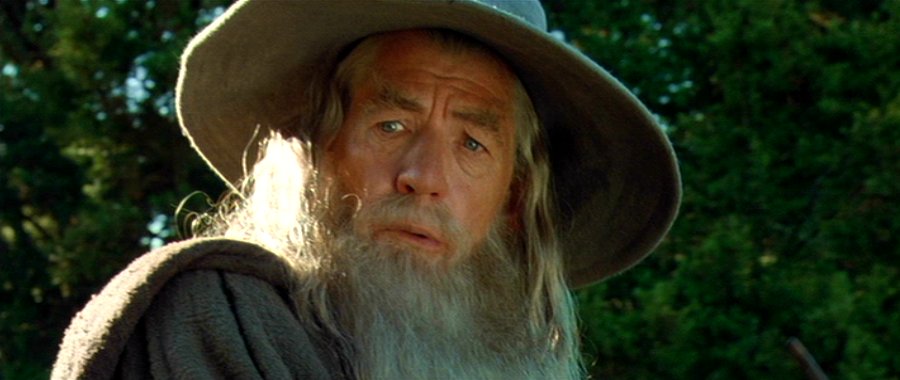
Jackson also nailed the cast. Ian McKellen quite simply becomes Gandalf, on the surface a twinkling grandfatherly presence, but below a frighteningly powerful man carrying centuries of wisdom. It’s a brilliantly iconic performance. Elijah Wood brings a wonderful innocence that slowly strips away as Frodo. Ian Holm’s Bilbo is a delightful charmer with flashes of corruption. Viggo Mortensen is all charisma and conflict as Aragorn. Christopher Lee was born to play Saruman. Liv Tyler was a revelation as Arwen. Sean Bean’s masculine Boromir hides deep-rooted personal doubt, insecurity and fear of failure. The cast is perfect.

And there isn’t a duff scene in the film. It’s opening montage is a masterclass in narrative introduction and awe-inspiring action. The Hobbiton sections have just the right tone of whimsy. The chase through Moria turns descending a staircase into a nail-biter. The final breaking of the fellowship gives us breath-taking battles and heart-rending tragedy, along with an iconic death scene.

No one else could have possibly delivered the novel to the screen better than this. Jackson’s fingerprints are on every inch of the film. It’s a masterclass in adaptation, a beautiful thing to watch and listen to, exquisitely acted and utterly compelling. Both true to the novel and totally engaging for newcomers, it might be the best of the series – and when it was released, felt like the film Tolkien fans had been waiting for their whole lives.

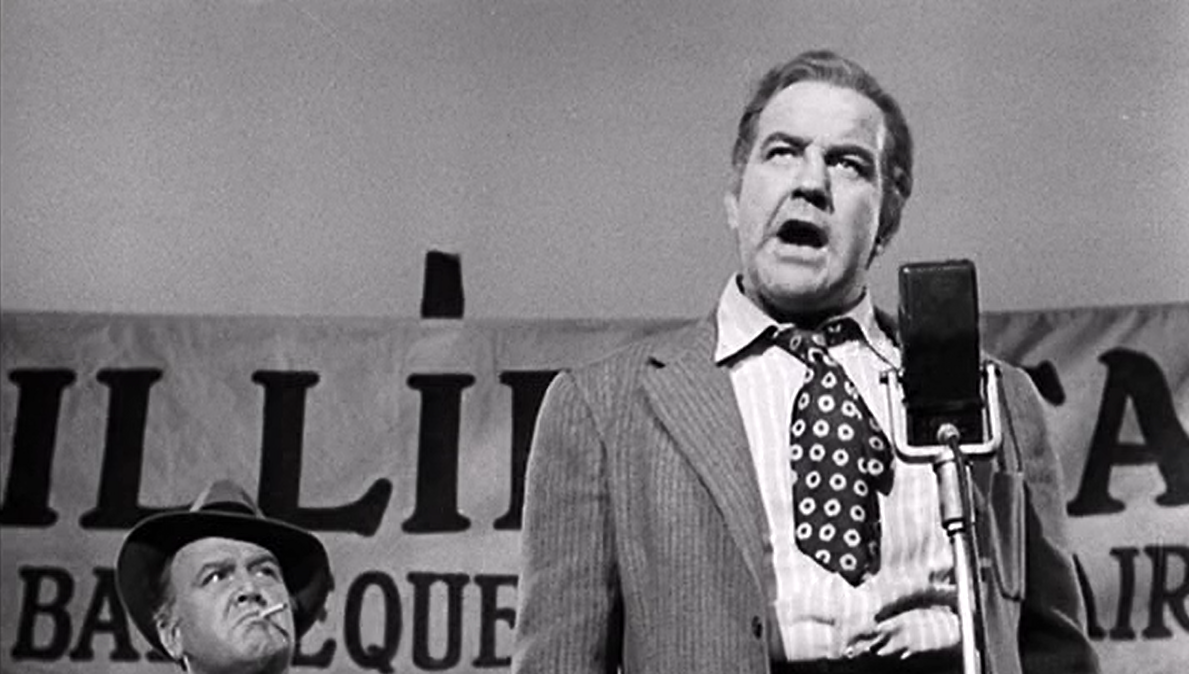
All the King's Men (1949)

Broderick Crawford is a corrupt politician in All the King’s Men

Director: Robert Rossen

Cast: Broderick Crawford (Willie Stark), John Ireland (Jack Burden), Joanna Dru (Anne Stanton), John Derek (Tom Stark), Mercedes McCambridge (Sadie Burke), Shepperd Strudwick (Adam Stanton), Ralph Dumke (Tiny Duffy), Anne Seymour (Lucy Stark), Katherine Warren (Mrs Burden), Raymond Greenleaf (Judge Monte Stanton), Walter Burke (Sugar Boy)

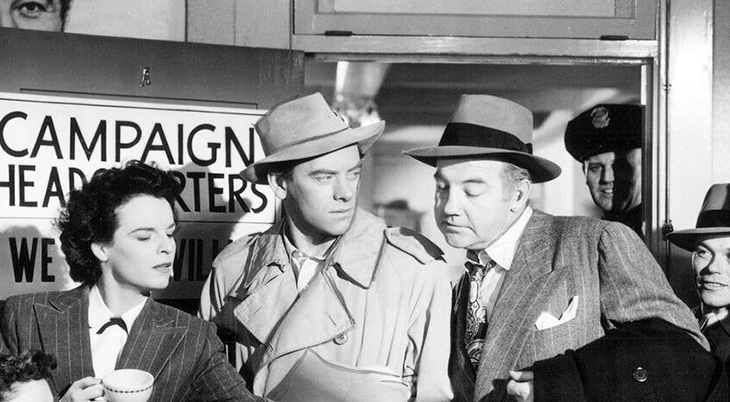
We only need to look at recent elections to see populist demagogues are far from being consigned to history. So, there will always be a touch of relevance to Robert Rossen’s Oscar-winning film All the King’s Men. Based on Robert Penn Warren’s Pulitzer-Prize-winning novel, which was itself a fictionalised version of the life of Huey P Long, the Louisiana Governor who championed the working man but also turned the State into his own personal fiefdom, until his assassination. Rossen’s film looks at the dangers of populist politicians, but at times it’s a blunted, simplistic look and is too quick to colour shades of grey into more digestible black and white.

Willie Stark (Broderick Crawford) is a hick with a dream of running from office. His first campaign for county treasurer is impassioned but naïve, and he stands no chance against the ruthless (Democratic – although it’s not named) party system ranged against him. He loses but gains the attention of idealistic journalist Jack Burden (John Ireland), dissatisfied scion of a rich family. Stark teaches himself law and runs for Governor – but is manipulated by the party machine to split the ‘hick’ vote and allow their own candidate in. However, Stark rediscovers his fire and later runs again and wins. Stark promises a state run for the little people: but his pockets are lined by big-business and the man who started as a sober Christian becomes a drinker juggling two mistresses: his secretary and advisor Sadie (Mercedes McCambridge) and (proving power is an aphrodisiac) Jack’s girlfriend Anne Stanton (Joanna Dru). But can proof of his growing corruption bring him down?

All the King’s Men is a film that would be far more effective if it allowed more scope to seeing the good in Stark, not just the bad. This is after all, a self-made man (teaching himself law at home), who builds roads, hospitals and schools. He’s not a Trump, interested only in himself and damn the consequences. Many of his policies are solid Roosevelt New Deal fare. Sure, he becomes grasping, lascivious and a terrible father – but how did this happen? Was it that Stark realised that corruption was the game and he needed to play it if he wanted to win? Were there deep lying flaws already in his character? We just don’t really know.

Instead this film sets out its stall very cleanly: populist working-class politicians are much worse than tortured wealthy liberals. The characters the film admires all hail from the same gated island community of the rich. Any hypocrisy or corruption on their part is a tragic character flaw. Stark comes from poor farm land – but any corruption makes him a monster. Really is Stark all that bad? The film stresses its moral disgust at his drinking and womanising, but in office he produces the sort of modern infrastructure the State will need. Sure a newsreel questions if the state needs a modern highway (in a patronising “they are just country folk” way) and maybe it didn’t immediately – but ask how they feel ten or fifteen years down the line.

The real problem with politics in this era is not demagogues like Stark. It’s the corrupt machine style politics that settles the elections in advance, shuts the doors against anyone they don’t like and uses muscle (metaphorical and literal) to enforce its will. This is an institutional fault line in American politics of the era: and you could argue Stark’s tragedy is not that he’s corrupt, but rather that he has to fashion himself into exactly the sort of corrupt, machine-style politics boss that the system can accept in order to win. The film isn’t really astute enough to recognise this. Instead it settles for the standard “Great Man” approach, where we can point at a single man and say “yup, he’s the problem. Get rid of him and problem solved”.

Rossen’s film takes an easy soft-left approach. The poor people love Stark, because the media tell them to (although the film has its cake and eats it by only really showing the liberal press attacking him). Stark raising campaign contributions to run from office is an unpardonable sign of tar coating his hand – never mind that we’ve seen his personally funded campaign for a minor office didn’t stand a chance. Working for the people, its argued, doesn’t cancel out the evils of trousering some cash for yourself – never mind that the wealthy liberals Rossen sympathises with, living in their large country houses, have clearly been doing so for decades.

Instead All the King’s Men is a simple film that only scratches the surface of demagoguery. Stark makes great speeches, but we never find how far it’s a show and how far it’s empty rhetoric. We never find out enough either about what he has done or hasn’t done in office to make our own minds up. Rossen’s film fixes the tables and places all the blame not on the system but on a single man – and even suggests that getting rid of that man by violence and murder is in fact justified if the liberal elite decide it is. It’s not a good look for a film.

It bungles it’s politically and personally commentary, but you can’t argue that it’s not a well-made film. Inspired by neo-Realism, much of the film was shot on location (including effectively running a mock Governor campaign in parts of California) and its shot with an edgy immediacy, in places using non-professional actors. That’s a feeling helped by its sharp, jagged editing. Rumour has it that, with the first cut running long, Rossen asked the editor to find the narrative centre of every scene and then cut a hundred feet of film either side of it. The cleaned-up result of this is a edgy film that has the air of genuine reportage and effectively uses montage.

Broderick Crawford won the Oscar as Stark, and he plays the role with a sweetness that turns into brilliant bombastic swagger. The film uses his hulking physicality to marvellous effect, and while his character often feels simplistic, Crawford nails the speeches and Stark’s Lyndon B. Johnson like powers of physical intimidation. John Ireland (Oscar-nominated) does a decent if uninspired job as the weak-willed Burden, and Joanna Dru is a little too theatrical as Anne Stanton.

The most fascinating character though might well be political fixer/secretary Sadie Burke, played by fellow Oscar-winner Mercedes McCambridge. A radio actress making her film debut, McCambridge’s performance frequently avoids the obvious choices. Sadie is a hard-edged woman, unreadable, who has sharpened her personality to survive in a man’s world. Rossen’s film subtly codes that she is Stark’s mistress, but her relationship with him seems conflicted. She’s both vulnerable, but also bitter and cold to him – moments when you expect her voice to break, she’s hard, where you expect her to be sharp she’s brittle. She’s a bitterly cynical character who has given up hope. It’s a fascinating performance.

Rossen’s film is well made and is always going to have some relevance. But you feel it could have delved far deeper into its themes. But bluntly as a portrait of corruption, it’s not a patch on Citizen Kane and in Stark it sets up a monster we can have uncomplicated fun knocking over and then patting ourselves on the back once it’s done. For all its edgy, reportive feel, it’s a fantasy film.

Mr Turner (2014)

Mr Turner header2
Timothy Spall is superb in Mike Leigh’s outstanding portrait of Mr Turner

Director: Mike Leigh

Cast: Timothy Spall (JMW Turner), Dorothy Atkinson (Hannah Danby), Marion Bailey (Sophia Booth), Paul Jesson (William Turner Snr), Lesley Manville (Mary Somerville), Martin Savage (Benjamin Robert Haydon), Ruth Sheen (Sarah Danby), David Horovitch (Dr Price), Karl Johnson (Mr Booth), Joshua McGuire (John Ruskin), Mark Stanley (Clarkson Stanfield), Patrick Godfrey (Lord Egremont), Niall Buggy (John Carew), James Fleet (John Constable)

“This guy was a revolutionary…he was also timeless”. That’s Mike Leigh’s perspective on JMW Turner – and looking at his late work, as this film does, how can you argue? Turner’s striking use of colour, his work increasingly reflecting moods rather than cold photographic reality, was a forerunner of Impressionism. Often scorned at the time, they now stand as a body of work almost unequalled among British masters. Leigh’s film is a pictorially beautiful, but also sensitive (if meandering) coverage of Turner’s last 25 years, which (like his Topsy-Turvy) is a fascinating celebration of creativity.

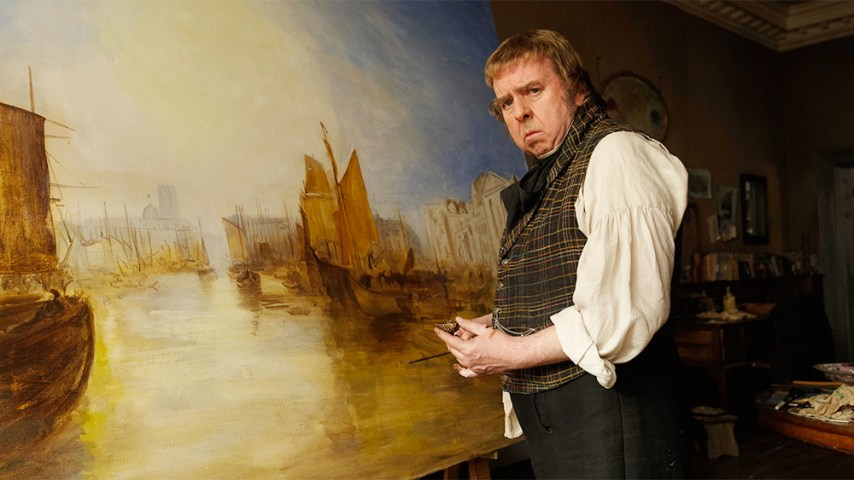
To play the artist, Leigh turned to one of his most trusted regulars, Timothy Spall. Spall spent two years learning to paint – a Day-Lewis like effort that reaps dividends as the camera catches his natural, skilfully mastery of both brush and pencil. In a career-best performance, Spall captures Turner in all his scruffy energy. Spall’s Turner is an ambling, gruff eccentric who communicates frequently through grunts (Spall finds multiple variations on a series of guttural cries, from emotional collapse to satisfaction), creating a portrait of an artist who is as deeply intellectually curious as a he is curiously reserved amongst people (for all his frequent gruff bonhomie).

It’s easy to see the grunting Turner as a curmudgeon. But he is in fact far from it. This is a man of deep personal feeling – his uncontrolled sobbing on the death of his father speaks to that – who has warm and personable feelings with his fellow artists. He engages naturally – and with genuine interest – with all he speaks to here, from lords to workers. Like all great artists, he is observing, curious and wants to discover all he can about people and their world.

Again, much like Topsy-Turvy, Mr Turner is a celebration of the power of creativity. With its beautiful imagery and lingering on the environment around Turner, we get a powerful sense of the inspiration he drew from nature. It also shows painting perhaps as it never has been shown before on screen. Turner paints with an aggression that suggests the ideas are tearing themselves out of him. The canvasses are struck, pounded and wrestled into shape. Paint and spit are mixed together, rags and brushes thrown aside. The painting is fast, messy and all-consuming, hands dripping with watery paint. It’s a sense of the artist captured by the muse.

It’s made clear that we are seeing a man who never lets a moment of inspiration pass. Who wants to capture, in his canvasses, the glory and wonder he sees in light dancing across the sky. None of this is clumsily presented or cliched: instead Leigh communicates an intimate understanding of the curiosity and ambition of the artist. The film also doesn’t back away from how revolutionary art like this is – from Queen Victoria to Music Hall comics, Turner is increasingly reviled as a half-blind, mad artist who can now longer paint. Leigh also pokes playful fun at the pretension of critics – principally John Ruskin, here presented as a pompous pillock explaining painting to painters.

It also has a brilliant eye for the performance of art. Turner is clearly a showman – and it’s hard not to think that Leigh appreciates his theatricality. The film brilliantly reconstructs a famous moment at the Royal Academy where Turner recognised his own painting (Helvoetsluys) paled in its colours next to Constable’s The Opening of Waterloo Bridge. Applying a seemingly random splash of red to his painting and then walking away – while onlookers stare aghast at the ruined painting – Turner then returns and crafts (with a rag and his nail) the blob of paint into a small, eye-catching buoy. Its details like that which make the artist. That’s inspiration, and the film is crammed with moments like this.

Taking as its effective starting point the death of Turner’s beloved father (a sparkling Paul Jesson), Leigh’s film takes an observatory, non-judgemental, episodic approach to following Turner’s life. His relationship with fellow artists – from bonhomie with pals like John Carew and Clarkson Stanfield, to guarded distance with his rival Constable, the only man he feels can match him – are contrasted with Turner’s complicated private life.

In private, Leigh presents Turner as a man partly selfish, partly unwilling to confront responsibility – a damaged relationship with his mother having left him retreating from intimacy. A man who, still in his 50s, relies on his father (who he introduces to everyone as “Daddy”) to look after him (from planning his meals to mixing his paint). Turner has disowned his teenage daughters by his mistress Sarah Danby (a furiously good Ruth Sheen).

Turner’s relationship with two women become the pivot of the film. Dorothy Atkinson gives an extraordinary performance, part shuffling curiosity, part portrait of quiet long-suffering devotion. The film supposes an occasional sexual affair between this faithful housekeeper and Turner, which for Turner is clearly little more than an opportunity for release. For Hannah Danby, it’s something considerably more – and Leigh gives the final shot of the movie to her grief and loneliness after Turner’s death.

Turner finds some peace in an unofficial marriage he forms with landlady Sophia Booth (a wonderfully humane performance from Marian Bailey), a relationship he kept completely secret, setting up a home in Chelsea. It’s a relationship set-up and run on Turner’s own terms, but for a man who was a public figure (in every sense), the film suggests that this taste of the ordinary gave him a sense of safety he hadn’t felt since the loss of his father.

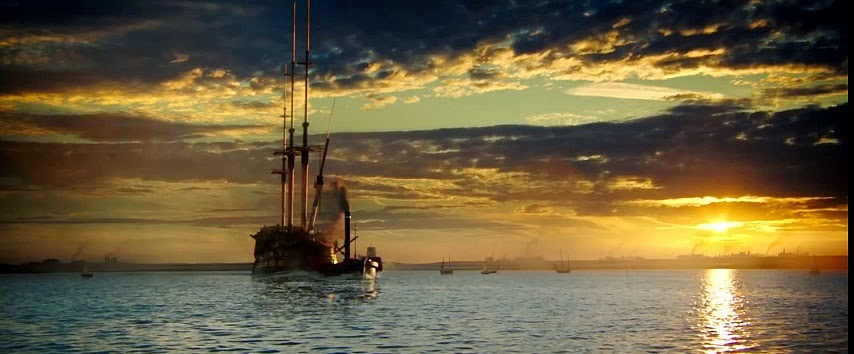
Any film about Turner almost has a moral obligation to be shot beautifully. From the opening minutes you’ll know you are in safe hands with Leigh’s regular camera-man Dick Pope. This is an astonishingly beautiful film, which takes Turner’s mastery of light as its inspiration for a series of strikingly gorgeous images. There is a reconstruction of the inspiration for The Fighting Temeraire which wouldn’t look amiss on your wall. The inspiration of Rain, Steam and Speed is extraordinary. At every moment the use of light and vibrant yellows echoes Turner’s dying words “The Sun is God”. One transition to Turner sketching in the Lake District captures a rocky outcrop so wonderfully that for a second I thought I was looking at a painting.

Mr Turner can be criticised as a collection of scenes – or sketches – that come together to form a film. There is no real plot, thematic or otherwise, in the film. Instead, it is designed to give us an impression of the artist, and follows the same sort of episodic, sometimes random, pattern than life itself follows. But in its intimate understanding of both creativity and the complexity of humanity, it becomes a wonderfully involving and inspiring film, beautifully shot and wonderfully directed by Leigh with a towering performance by Spall.

Dr Strangelove; or How I Learned to Stop Worrying and Love the Bomb (1964)

Peter Sellers tries to stop the end of the world in the terrific satire Dr Strangelove

Director: Stanley Kubrick

Cast: Peter Sellers (Group Captain Lionel Mandrake/President Merkin Muffley/Dr Strangelove), George C. Scott (General Buck Turgidson), Sterling Hayden (Brigadier General Jack D Ripper), Keenan Wynn (Colonel Bat Guano), Slim Pickens (Major “King” Kong), Peter Bull (Russian Ambassador), Jack Creley (Mr Staines), James Earl Jones (Lt Lothar Zogg), Tracy Reed (Miss Foreign Affairs)

“Gentlemen you can’t fight in here. This is the War Room!” Kubrick’s hugely influential satire helped shape our perceptions of the Cold War and its mantra of mutually assured direction. Showing no mercy to its targets, it mixes Goonish schoolboy humour with moments of genuine tension and rising horror. Sure it features some of the faults of its director –self-importance, cold distance and much of the wit is due to Sellers and the performers rather than the not-particularly-witty-Kubrick – but there is no doubt it remains a seminal classic.

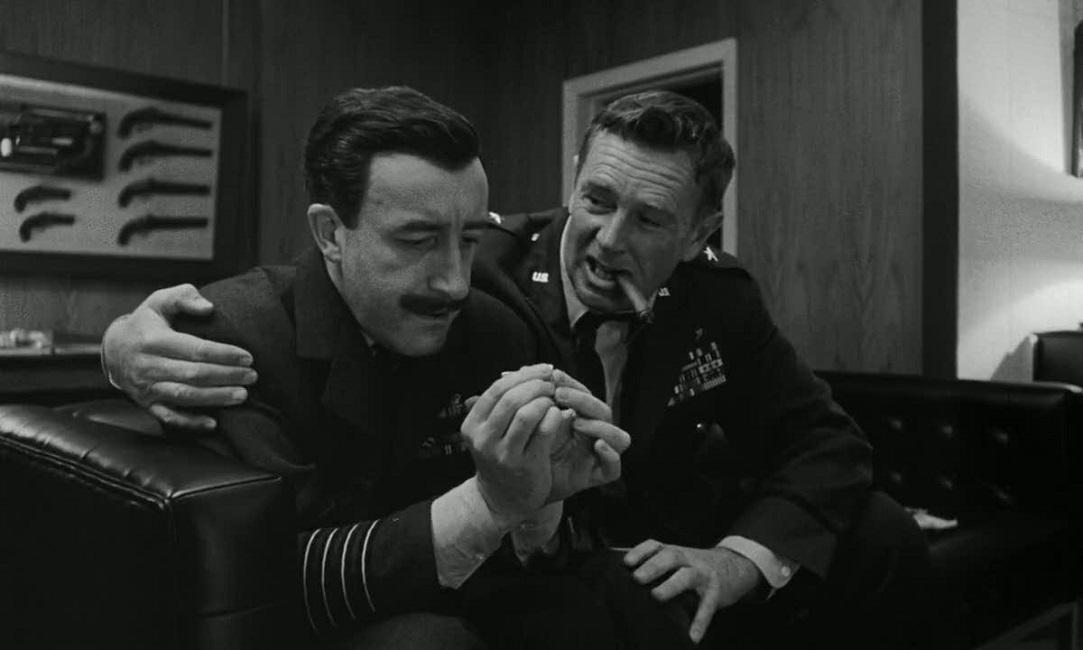
General Jack D Ripper (Sterling Hayden – excellent) orders his planes to drop their nuclear bombs on the USSR. Ripper is launching a pre-emptive strike to protect the American way of life from the Commies and, most importantly, to protect our precious bodily fluids. Yup he’s crazy, something his second-in-command RAF Group Captain Lionel Mandrake (Peter Sellers) quickly realises, but can’t do anything about. US President Merkin Muffley (Sellers again) reacts with horror at the prospect of all-out-war, negotiating with the Soviets to co-operate in shooting down the planes, while some of his advisors such as trigger-happy General Buck Turgidson (George C Scott, hilariously OTT) argue perhaps there is some merit in striking first. And sinister former-Nazi scientific consultant Dr Strangelove (Sellers one more time) spells out the impact of nuclear war.

Kubrick quickly came to the conclusion that if you were going to make a film about nuclear war, it almost couldn’t be anything buta comedy: after all the idea of two sides building a huge arsenal of weapons capable of destroying the world was so crazy, you wouldn’t believe it if you were told it. Dr Strangelove therefore ends up taking place in a world that’s one third grounded and two-thirds heightened reality. There is a great deal of college-style humour in the film (you can see it in those characters names which reference everything from the Whitechapel killer to female genitalia and excrement), but it works because its (mostly) played dead-straight.

Part of the film’s appeal was the number of sacred cows it slays. All the things that, at the time, America was meant to respect were ridiculed. The military, politicians, the Presidency, America’s moral authority, the ingenuity of American science and engineering. It’s all shown to be ineffectual, misguided, underpinned by fascist-tinged insanity, myopically obsessed with big bangs over humanity or plain ridiculous. Every single authority figure in the film is deconstructed over its course as some combination of childish, empathy-free or useless. You can’t come out of this film and every again have an unquestioning assurance our leaders know what they are doing.

This works, because it’s placed in a film that in many ways has the plot of a far more serious film (its very similar of course to Fail Safe). Chunks of it are played completely straight, or with just the merest touch of the surreal. In particular the sequences set on the bomber, commanded by Major Kong (played at short notice by Slim Pickens after injury prevented Sellers taking on that role as well) have that true sense of Kubrickian detail in their careful staging of all the procedures a bomber crew would follow (even if it still allows some fun to be poked at the expense of the survival kit, the contents of which would give a fella “a pretty good weekend in Vegas”).

Those bomber scenes sometimes outstay their welcome in their cold technicality (it’s odd to say that a film as short of this sometimes feels a little overlong), but that’s largely because in a film that is clearly demanding us to shake our heads at the madness, it struggles to get us invested in a more conventional heroic story (especially as success there is starting a nuclear conflagration).

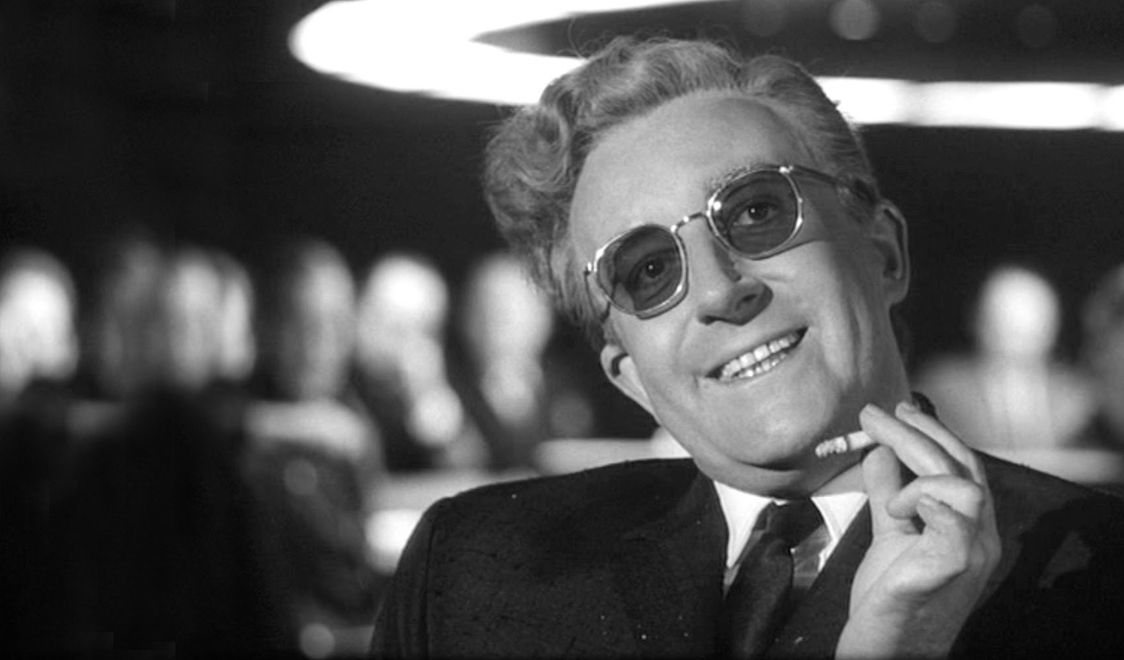
Perhaps that’s because of the coldness in Kubrick’s style – emotion doesn’t often find its way into his greatest works, and he was often reliant on working with the right people (get a McDowell in it or a  Nicholson and things can click, get an O’Neal and you can get a different story). Humour isn’t his strong suit, but fortunately he worked with Sellers at his finest hours. Sellers takes on three roles, all of them a sharp contrast, and he’s masterful in all of them. There were fewer more gifted improvisational performers than Sellers, and each of his parts benefits hugely from the dynamism (of various sorts) he gives them. It’s also interesting that two of them are actually the “one sane man” (Muffley and Mandrake) while Strangelove is a pantomime monster of insanity (introduced late in the film, he’s the final indicator that our fates are in the hands of complete lunatics).

For Mandrake, Sellers parodied the stiff-upper lip upper class, with Mandrake a stuffed-shirt, attempting to wheedle recall codes out with Ripper with a clumsy bonhomie. Muffley is played almost dead-straight as a weak man out of his depth. But he does have a phone call monologue with the Russian premier (largely improvised with Sellers) that is one of the funniest things you’ll ever see. There’s no restraint in Strangelove, a wheel-chair bound grotesque with a phantom (hardcore fascist) hand, constantly suppressing involuntary Hitler salutes and trying to hide his mounting excitement at the prospect of worldwide annihilation (“Mein Fuhrer! I can valk!”).

Kubrick’s directorial approach – wisely – seems to have been to acknowledge that Sellers was providing so much of the madness and dark comedy the concept demands, that he could be more restrained. Interestingly, for being his most famous film, it often feels like one of his least personal ones. It stands outside much of the Kubrick cannon – it’s short, its often brisk, technically it’s unflashy and often unobtrusive – and it plays on the director’s weakest vein, comedy.

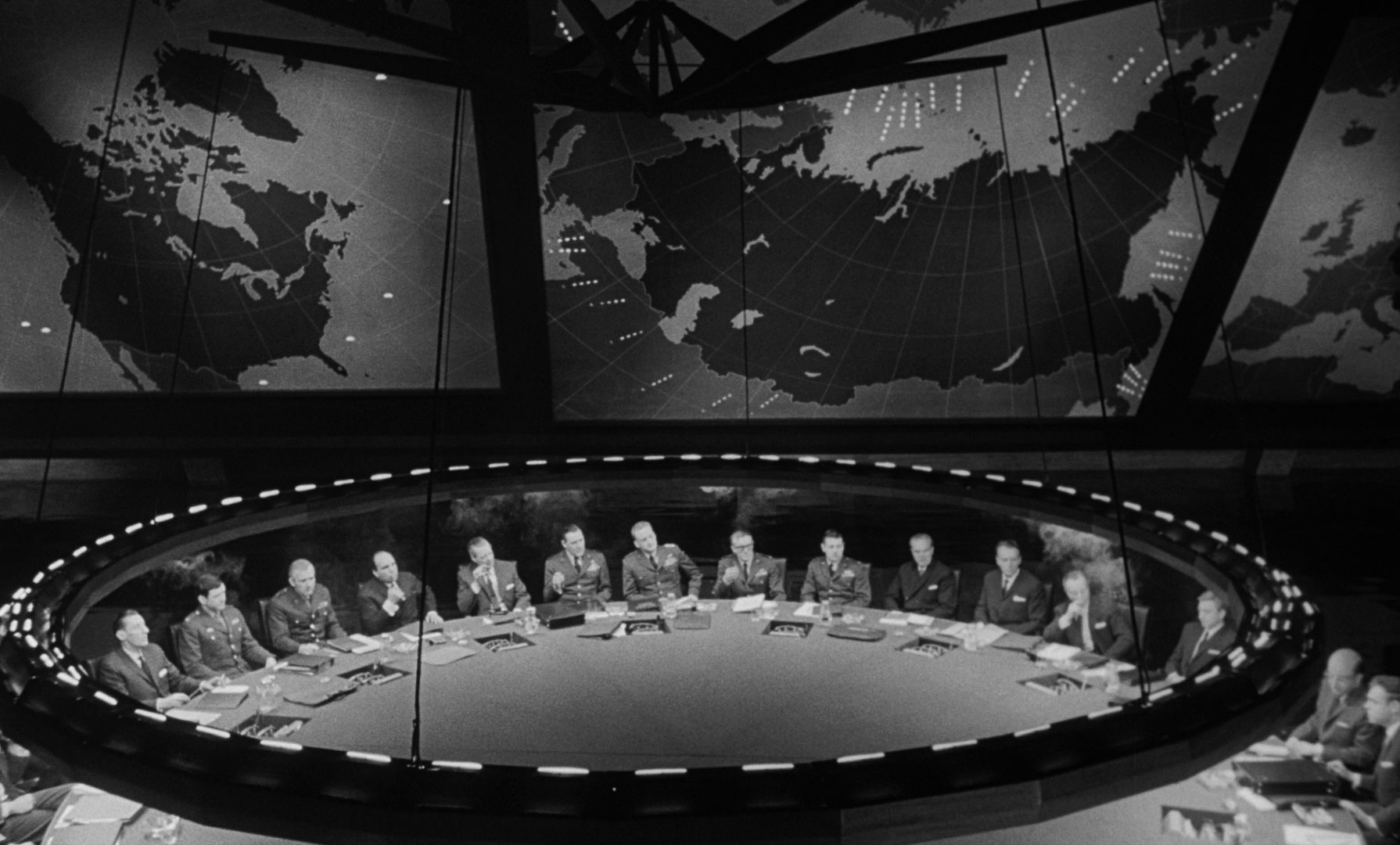
But it’s got his mastery of detail – partly also due to its faultless set design by Ken Adam. The reconstruction of the bomber interior is overwhelmingly convincing (the Air Force was amazed at how accurate it was). Ripper’s low-ceilinged office is a visual metaphor for the character’s insular insanity. Most influential of-all, the Bond villain-ish War Room, with its vast circular table and huge screens was so perfectly conceived, it cemented the idea for generations of what war planning rooms should look like (Reagan even asked where it was when he took office). The film may be darkly surreal, but its surroundings give it an authority that is essential for its success.

Authority is what the film needed to work. Perhaps that’s the greatest contribution of Kubrick, to create a structure of convincing reality, allowing the surreal and insane actions to work. From Ripper’s clear fixation on his own impotence (“I do not avoid women but I do deny them my essence”) – to Turgidson’s increasingly bombastic militarism (“I don’t say we won’t get our hair mussed, but I do say no more than 10 to 20 million killed. Tops.”), they all work because they contrast with a setting soaked in reality and detail. It also adds the important depth that gives the film impact: sure it wouldn’t happen like this, but something like this could happen.

Dr Strangelove’s humour has at times dated – there’s something undeniably schoolboyish about its tone. Stretches showing the detail of the bomber’s operation go on way too long. The film itself also takes a while to get going, and like many Kubrick films it has an air of being pleased with itself. But in Sellers it has a comic genius at the height of his game and its impact in changing the way we think about the world can’t be denied. Still a classic.

Topsy-Turvy (1999)

Allan Corduner and Jim Broadbent excel as the Gilbert and Sullivan’s in Mike Leigh’s superb Topsy-Turvy

Director: Mike Leigh

Cast: Jim Broadbent (WS Gilbert), Allan Corduner (Sir Arthur Sullivan), Lesley Manville (Lucy “Kitty” Gilbert), Ron Cook (Richard D’Oyly Carte), Eleanor David (Fanny Ronalds), Wendy Nottingham (Helen Lenoir), Timothy Spall (Richard Temple), Vincent Franklin (Rutland Barrington), Martin Savage (George Grossmith), Dorothy Atkinson (Jessie Bond), Shirley Henderson (Leonara Braham), Kevin McKidd (Durward Lely), Louise Gold (Rosina Brandham), Andy Serkis (John D’Auborn), Dexter Fletcher (Louis), Sam Kelly (Richard Barker)

It seems an odd-fit: Mike Leigh, auteur of working class drama, prestige period films and the music of the middle-class in Gilbert and Sullivan. But that’s to forget Gilbert and Sullivan were among the masters of theatre – and Leigh himself is a theatrical great. Topsy-Turvy, from seeing the most uncharacteristic of the director’s works, in fact perhaps an examination of the creative process Leigh has made his life. It’s a wonderfully made, superbly executed tribute to the struggles and rewards of artistic creation. A celebration of how disparate personalities come together to create something bigger than themselves. Affectionate, heartfelt, at times quietly moving, Topsy-Turvy is both one of Leigh’s most enjoyable films and one of his most tender.

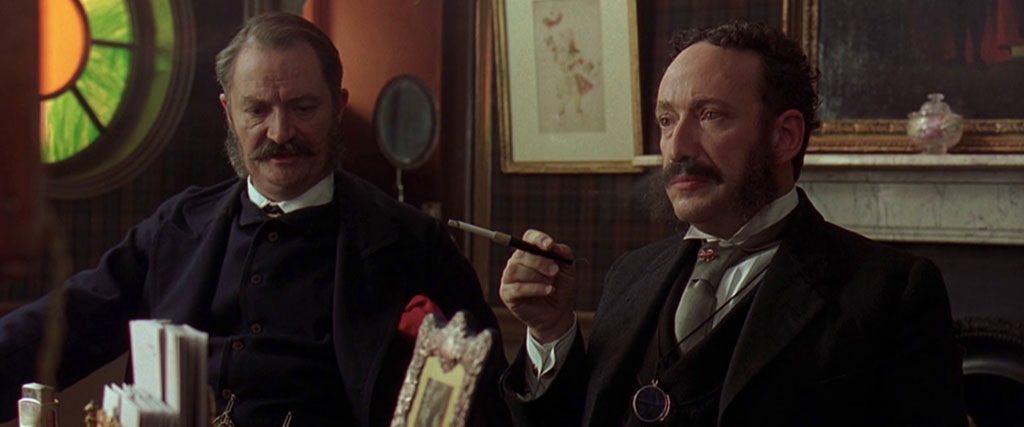
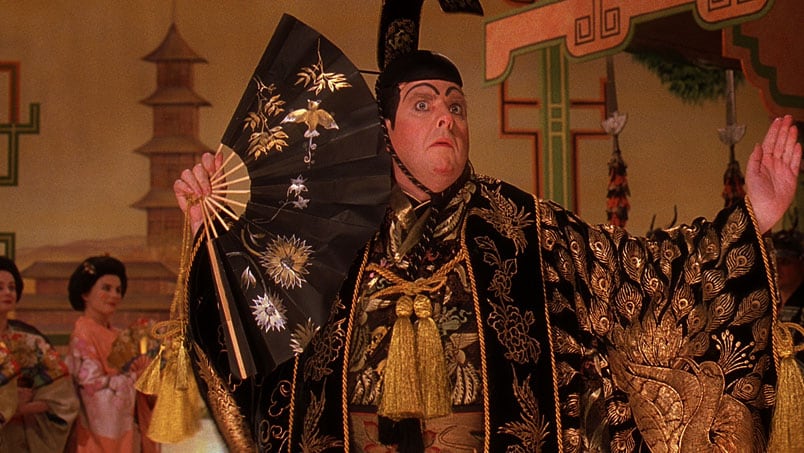
It’s 1884 and the creative partnership between WS Gilbert (Jim Broadbent) and Arthur Sullivan (Allan Corduner) is at a turning point. With their latest, Princess Ida, hardly setting the box-office alight. Sullivan feels the partnership has gone stale – and also feels under pressure to turn his attention towards more ‘serious’ composing. Gilbert refuses to change his next libretto, which Sullivan feels is effectively more of the same. Things change though when Gilbert is intrigued by an exhibition of Japanese arts and crafts, quickly creating a new libretto: The Mikado. The two geniuses, finally in unison, work together to bring the production to the stage.

Topsy-Turvy is probably Leigh’s most purely entertaining film. For anyone who has ever been involved in theatre or the arts, you’ll certainly recognise more than a few moments in this film, which is practically Leigh’s love letter to the arts. Leigh’s aim was to pay tribute to the difficulties of creativity and the demand of having to constantly refresh and reinvent your work to stay relevant and fulfilled. He succeeded: few films have so beautifully captured the struggle, pain, satisfaction and joy of creation or the strange anti-climax artistic success can bring.

Most of the second half of the film is a fascinating look at every step required to bring a production to life. From casting and contract negotiations, to costume fittings, staging and work in the rehearsal room. We get a fascinating insight into the complex backstage politics and squabbles in this small world. From actors bitching about the management (always incompetent, regardless of the situation) to the delight and playfulness of rehearsals as different opportunities are explored, it’s a wonderfully true insight into the theatre. Matched with the intricate and extraordinary detail of the reconstruction of the original production – and you have an enthralling insight into theatre. It also very appropriate for Leigh, whose organic methods of creating a film through copious rehearsal and improvisation remains very similar to theatre.

Alongside this though, the film has plenty of sympathy for the cost of creative exertion. Many of the actors lead sad and even lonely lives. Shirley Henderson’s Leonara Braham struggles with drink, Martin Savage’s George Grossmith is a drug addict (the company is too polite to mention it, but he’s clearly struggling with withdrawal at the dress rehearsal), Dorothy Atkinson’s Jessie Bond has constant pains from an unhealed ulcer. WS Gilbert and his wife lead a chaste life, he as terrified of intimacy and connection as he is of watching first nights. Sullivan juggles health problems and a long-running, regular-abortion marked, affair with Fanny Ronalds with a lingering sense of shame at not having exploited his talents more fully. These are lives that come to life when doused with creation, for all the off-stage world reveals trouble and strife.

Much of the first half is a wonderfully judged contrast between the extraverted Sullivan, keen to stretch himself but lacking the application and drive, and the repressed Gilbert, doggedly ploughing on with his (stale-sounding) original idea and unable to comprehend Sullivan’s reluctance. Leigh’s film could easily have manifested itself as a clash between two mis-matched partners. However, while the film expertly draws the parallels between the two, it also shows how much their energy comes from mutual respect. Sullivan is, after all, right that Gilbert’s first idea is a limp retread. But Gilbert’s Mikado idea is so good we don’t need a scene showing Sullivan change his mind – the simple contrast of Sullivan’s chuckles and animated striding while Gilbert reads him The Mikado’s libretto with his boredom and constant questions to the abandoned libretto speaks volumes.

Jim Broadbent is outstanding as Gilbert. He has the repressed distance, the grumpy-old-man bluntness but he mixes it with small flashes of excitement and rapture that speak volumes. His fascinated glances at the Japanese exhibition – soaking up inspiration – are beautifully judged, while his later excited larking around with a samurai sword (the very next scene sees him with a first draft) is perfect. Broadbent is both supremely funny, with several perfectly judged mon-bots, and also heartbreakingly, unknowingly lonely in his distance and fear of emotional contact. Allan Corduner makes a perfect contrast as the brash Sullivan, enjoying fame in a way Gilbert never can, but sharing with him a tortured sense of his need to fulfil his artistic potential.

The rest of the cast – a delightful mix of Leigh regulars and familiar faces – are also fabulous. Lesley Manville is wonderful as Gilbert’s wife, a gentle, eager-to-please woman who we discover has carefully buried deep regret about her emotionally repressed marriage and lack of children (Gilbert’s own difficult relationships with his parents have had a long reach on his life). Timothy Spall is wonderfully entertaining as bitchy leading actor who reacts with quiet despair when his big number is cut. Shirley Henderson’s fragility is perfect for a woman whose stage presence masks her emotional vulnerability and drink dependence. Dorothy Atkinson and Martin Savage are marvellous as two actors whose willingness to carry on under all conditions is skilfully contrasted.

Leigh’s film is also a brilliant reconstruction of time and era (rarely can a researcher be so highly billed on a film’s credits). There is a delight taken in showing how the characters react to new inventions, from Gilbert’s bellowing phone calls (“I am hanging up the phone now!”) to Sullivan’s wonder at a fountain pen (“What will they think of next?”). The design from Eve Stewart, the glorious photography of Dick Pope and the Oscar-winning costumes Lindy Hemming all are perfectly judged. The film though never becomes buried in “prestige costume drama” trappings: it’s eye for history is to acute. From alcoholism to drug addiction, broken families to the seamier streets of London, this is a film that never succumbs to easy nostalgia.

What it remains is a loving tribute to the strange families the build up around theatre. When Temple’s song is cut from the play, the chorus come together humbly but selflessly to beg for the song to be retained, because of their affection and regard for Temple. There may be disagreements, but everyone pulls together to stage the show when the time comes. Leigh’s film is full of wit, affection and a deep, loving regard for those who have chosen a life of creativity. While the film can show the cost of such a life – and the contrasting emptiness and regret away from the stage, in a life which can doesn’t always provide satisfaction – it also celebrates art in a way few other films can. One of the greatest films about the theatre ever made.

Scarface (1932)

Paul Muni wants the world in Scarface

Director: Howard Hawks

Cast: Paul Muni (Tony Camonte), Ann Dvorak (Francesca Camonte), George Raft (Guino Rinaldo), Karen Morley (Poppy), Osgood Perkins (Johnny Lovo), C. Henry Gordon (Inspector Ben Guarino), Vincent Barnett (Angelo), Boris Karloff (Tom Gaffney)

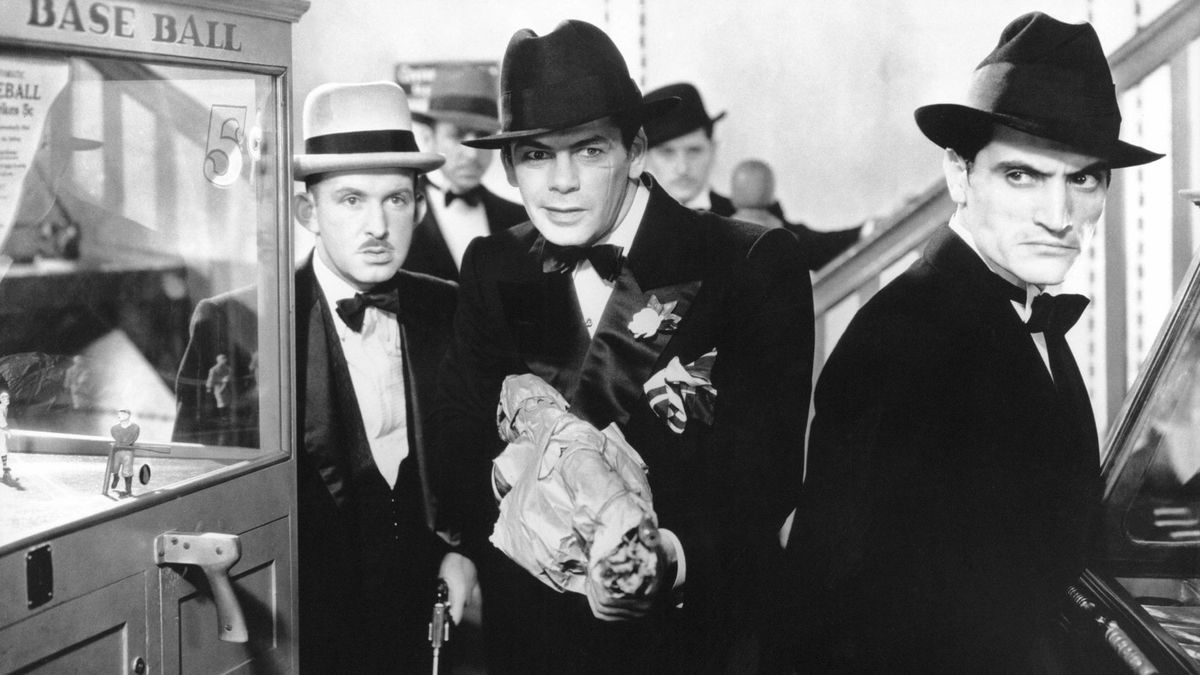
Before Tony Montana there was Tony Camonte. The suits may be sharper in 30s, but the bullets are just as lethal. Howard Hawks’ gangster film, strikingly violent for the 1930s (barely a scene goes by without a slaying), showcases the rise and fall of Tony Camonte (Paul Muni) an Italian gangster embracing the mantra “The World is Yours”. Starting as a junior hood in Johnny Lovo’s (Osgood Perkins) gang, he rises through the ranks due to his capacity for violence and his willingness to break any rule. He wants it all: money, power, Lovo’s girl Poppy (Karen Morley) and he won’t be happy until he runs this town. So long as he can still control his sister Francesca (Ann Dvorak) – because not even his best friend Guino (George Raft) can even think about touching her.

Hawks’ film is a dizzying whirligig of shootings, killings, mob violence and inventive camera-work. Fast paced and violent, many scenes are soundtracked by the rat-a-tat of Tommy guns. (Not a surprise in a film where the hero looks more excited grasping one of those in his hands than he ever does holding his girlfriend). Scarface has it all: fights, shoot-ours, car-chases, drive by shootings of bars, fist fights – you name it, Tony does it. It’s told with an electric pace and some nifty little tricks (my favourite a long cross fade of a calendar ripping off days and a Tommy gun blasting bullets, like its mowing down time itself).

Hawks uses a number of neat stylistic approaches to both present death and also signpost fate. Montage is used throughout the film, it’s inexorable build-up of violence and crime helping establish the excessive violence of Tony’s world. Shootings happen in a variety of ways, from silhouette to shadow to blatant on-screen death (though Tony’s fate, shot by several police guns, is the final blast, almost Bonnie and Clyde like as his body dances from bullet wounds under the streetlights).

You can get a good sense of whose card is marked by Hawks’ witty (and not overplayed) used of Xs. Before a St Valentine’s Day style shooting, the camera focuses on an iron girder above the victims with a series of X like metal cross beams in it – the camera returns to it, the row of Xs mirroring the victims lined up against the wall. Crime boss Gaffney is killed while bowling, his strike filled card literally marked with an X. The approach is subtle and even strangely witty.

The film is a maelstrom of excess. Starting in the aftermath of a wild party – which segues immediately into a gang hit – everything is overblown. From the violence, to the parties, to the wealth Tony builds up. It’s the same with the police as well – when it’s time for them to come out shooting they don’t hold back, assembling a small army of weapons fire which practically tears apart Tony’s apartment.

At its heart is a force-of-nature in Paul Muni’s Tony. Becoming increasingly Americanised as the film goes on (he starts heavily accented and the very picture of a scarred street thug, but becomes more-and-more accent free and smoothly dressed), Tony is not only ruthlessly ambitious he has a mania for getting more. Much like Montana, this is a man who is never satisfied until he has the world. He brags to his would-be girlfriend that he will only wear each of his new shirts once. He shows off his apartment and insists one of his henchmen (who is barely able to operate a phone) describe himself as his “secretary”. Muni’s performance mixes a grimy capacity for violence with a sordid impish delight at excess, all washed down with a childish lack of morality.

He’s also got a destructive obsession with his sister. Played with a coquettish charm by Ann Dvorak, Francesca is the apple of her brother’s eye. Is Tony even aware of the incestuous underlying his obsession? Any male attention at all sparks a jealous fury that goes way beyond a protective sibling. But there is perhaps as much to control as sexuality in this. Just as Tony wants to bring the entire city under his dominance, so he wants to control every element of his sister’s life. And in many ways she’s quite like him – as in love with flirtatious sexual excess as he is with the massive landgrab of power he’s carrying out.

Tony is moving shark-like through the city at every turn. Even while nominally following the orders of his boss Johnny (a strangely pathetic Osgood Perkins – but then power eventually makes all men weak in Scarface, even Tony. Perhaps it’s the fear of losing what you have?) he always pushes for bigger and bigger scores, making enemies Johnny can’t afford to make. The others seem paralysed in the face of him – Gaffney, default leader of the Irish mob, runs from safe house to safe house; despite the vast numbers of men following him, he never looks safe.

The film was criticised at the time for not having a sufficient moral message – tacked on in a studio reshoot was a more condemning ending with Tony (real “Shame of a Nation!” stuff), traces of which can still be seen in Tony’s brief flash of cowardice at the end. But really, in its excessive violence and cycle of destruction in a which an impulsive, brutal but not too bright killer (briefly) ends up on top was probably unsettling because it was a lot closer to the grim reality of organised crime in America. A world where the gun pays and a lunatic can take over the asylum. No wonder the censors at the time couldn’t take it. But Scarface’s compulsive violence, danger and relentless energy is what still makes it a classic today.

The English Patient (1996)

Ralph Fiennes excels as the tragic The English Patient

Director: Anthony Minghella

Cast: Ralph Fiennes (Count Almasy), Juliette Binoche (Hana), Willem Dafoe (David Caravaggio), Kristin Scott Thomas (Katherine Clifton), Naveen Andrews (Kip), Colin Firth (Geoffrey Clifton), Julian Wadham (Maddox), Jurgen Prochnow (Major Muller), Kevin Whatley (Sergeant Hardy), Clive Merrison (Colonel Fenelon-Barnes), Nino Castelnuovo (D’Agostino)

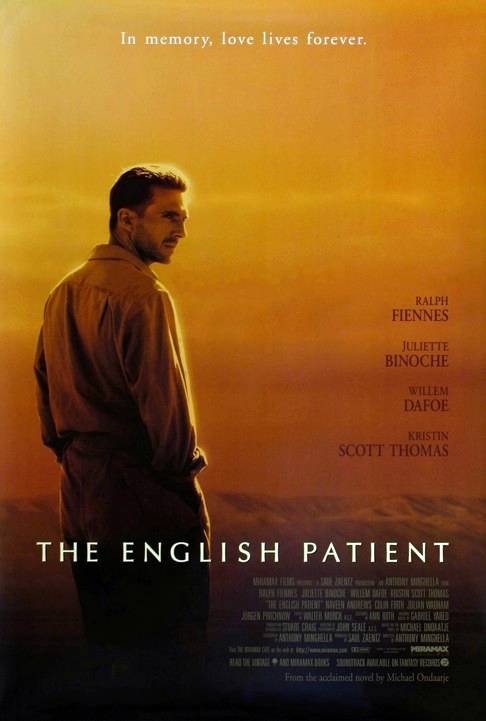
Sweeping, luscious, beautiful and an epic translation of an almost unfilmable novel into something supremely cinematic, The English Patient swept the board with nine Oscars at the 1996 Academy Awards. The English Patient has sometimes had a rocky reputation (not helped by an episode of Seinfeld where Elaine was famously non-plussed by the film). Like some of Minghella’s later work, it’s almost too well made for some to get past, looking like prime award bait. I didn’t “get it” the first time I watched it. But I – and the naysayers – were wrong: The English Patient is rich, rewarding and throbbing with a very British sense of repressed emotion and slow embracing of dangerous passions.

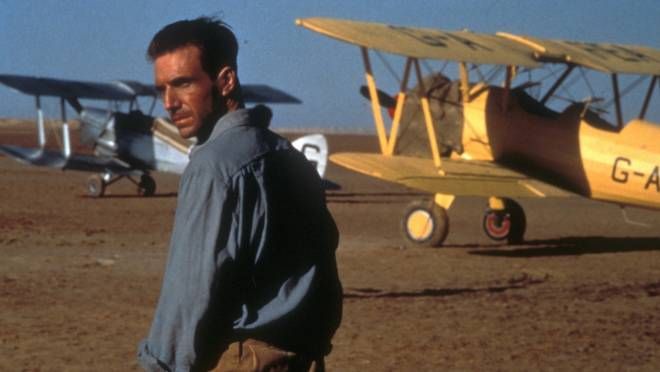
Adapted from Michael Ondatje’s multiple-award-winning novel, it unfolds across two time frames, hinging on a plane crash in the Sahara in 1942 that opens the film and leaves its pilot, Hungarian Count Almasy (Ralph Fiennes), hideously burned beyond recognition. The entire film is both an epilogue to that crash and a prologue explaining how we got there. In 1945, Almasy asserts he remembers nothing, even his own name. In what we later learn is a bitter irony, he is mistaken for an Englishman due to his perfect English. He is nursed through the final days of his life in an abandoned Italian monastery by a Canadian nurse Hana (Juliette Binoche), who has lost nearly everyone she loves in the war. Through Almasy’s memories, we see his life before the war as part of an international society of cartographers. In particular, the love affair that grows between him and Katherine Clifton (Kristin Scott-Thomas), the wife of another member of the society – an affair that will have life-shattering repercussions.

Appreciation for Minghella’s film must start with his ingenious screenplay. The English Patient, a book that moves eclectically between multiple timelines, shifting perspective frequently, and delivers its story in almost impossibly rich prose, should have been unfilmable. Minghella creates something which is both a mirror of the book’s intention, but also a cinematic text. You could use this as a teaching tool for adaptation (bizarrely one of the few Oscars it didn’t win was for Screenplay!). Working in close partnership with editor Walter Murch, Minghella’s film effortlessly cuts back and forth between at least three timelines, but never once confuses or jars. With (according to Murch) over 40 time transitions (that’s one almost every 3-4 minutes, fact fans), this could have been a jarring, impossible to follow mess. Instead, narrative clarity is its watchword.

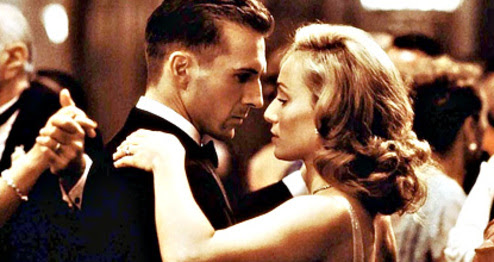
But the film also succeeds because it’s the apex of Minghella’s ability to combine luscious, poetic story-telling with acute emotion and passion. It shouldn’t be a surprise that someone who showed such understanding of grief in Truly, Madly, Deeply acutely understands how joy and pain can go hand-in-hand in love. Perhaps one of the reasons people found this a difficult film is that Almasy and Katherine are not a traditional romantic pairing. Both guarded, sometimes even cold and distant people, they are tentative, perhaps even scared, of the deep bond they immediately feel. A bond that burns all the more brightly because of the compromises and barriers in their emotional lives.

Almasy is distant, aloof, a man easy to know but impossible to understand. Katherine has a very English reserve behind a certain patrician warmth, playful at times but very aware of duty. What’s fascinating – and moving – about the film, is that these two people actually have a huge groundswell of passion between them. They are besotted with each other, but for reasons ranging from background to their own fears of emotional involvement, struggle to admit it to each other. They fling themselves at each other in romantic couplings with an almost animalistic longing. They make each other laugh. They allow themselves to speak of deep feelings, experiences and thoughts that they would not express to others. And they are also able to hurt each other through resentments, distances and shunnings in a way no one else could.

It’s a decidedly unconventional romance – compare it to, say, the next year’s Oscar winner Titanic with its far more conventional love story – but it works wonderfully. The slight air of repression also means that the confessions of deep-rooted feelings – Scott Thomas’ reveal of a gift she has never parted from, or Fiennes’ face twisted in emotional anguish – carry huge impact.

It also helps that the film is set in the sort of grand vistas that David Lean would be proud of. While you can certainly argue (with some justification) that The English Patient is a picture postcard film, its perfect visuals of the desert, the stunning beauty of so many of its shots, add to the extraordinary luscious old-fashioned 1930s romance of its setting. It could all be taking place in a world of von Sternbergesque romanticism.

Minghella’s film also interweaves skilfully the 1945 story line, revolving around Juliette Binoche’s Hana. Binoche won a deserved Oscar for a sensitive, vulnerable performance as a woman terrified of emotional commitment (sound familiar?), scared anyone she grows close to is doomed to die. Her romance with bomb disposal expert Kip (a strikingly delicate performance from Naveen Andrews, with just enough hints of anti-colonial tension mixed in) seems ready to fit this trope, but instead develops in unexpected ways. It also contributes perhaps the film’s most sweepingly romantic moment when Kip uses a pulley system, a flare and a bit of muscle to give Hana a sweeping up-close look at some Renaissance frescos. But while our flashback romance has the foreboding of doom to it, this one instead shows us the hope of a life restarting.

The English Patient also makes some striking points about the insane foolishness not just of war, but nationalism and Empire. The cartographers are a pan-European group who come together as equals, disregarding all concerns of nation. Instead they find a freedom to behave – intellectually, emotionally and sexually – in a way they never could “at home”. They represent a chance of being free to make our own choices, rather than dictated by arbitrary borders. Problems of nationhood are what will bring disaster. Colonialism is viewed equally critically: Kip gets sharp digs in at Kipling and also makes clear that his status as an Indian officer in the British Army is one of uncertainty.

Minghella’s film also works because of the mastery of the performances. Fiennes is in nearly every scene (many of them under a layer of make-up), and the role is a perfect match for the surface coldness in his performance style, which hides his wit and sensitivity. Cheated of the Oscar, Fiennes has rarely been better – his clipped romanticism mellowing in the 1945 section as a gentler but broken man. Scott-Thomas is perfectly cast – I’m not sure any other film has used her skills better – as a woman who compromised on happiness at the wrong time, and now cannot express herself.

The English Patient is a romance of slow moments, of inferred passions, which only at a few points before the end flower into something intimate. But it carries a huge emotional force, precisely because of this. Its technical work is faultless – Gabriel Yared’s score is a sumptuous mix of inspirations – and the acting superb (as well as the stars, Firth is marvellous as a decent but dull man cuckolded, Dafoe adds a layer of unpredictability as a 1945 houseguest and Whatley is the picture of working-class decency in a rare film role). The English Patient is Booker-prize film-making in its depth, richness and the work it asks you to put in, mixed with a David-Lean-meets-Mills-and-Boon pictorial loveliness, where each frame is a sun-kissed example of pictorial perfection. Mixed together, it makes for a sumptuous and deeply emotional package that I find more and more rewarding with every viewing.