Category: Directors

In a Lonely Place (1950)

Humphrey Bogart struggles with a dark capacity for rage In a Lonely Place

Director: Nicholas Ray

Cast: Humphrey Bogart (Dixon Steele), Gloria Grahame (Laurel Gray), Frank Lovejoy (Sergeant Brub Nicolai), Carl Benton Reid (Captain Lochner), Art Smith (Mel Lippman), Martha Stewart (Mildred Atkinson), Jeff Donnell (Sylvia Nicholai), Robert Warwick (Charlie Waterman)
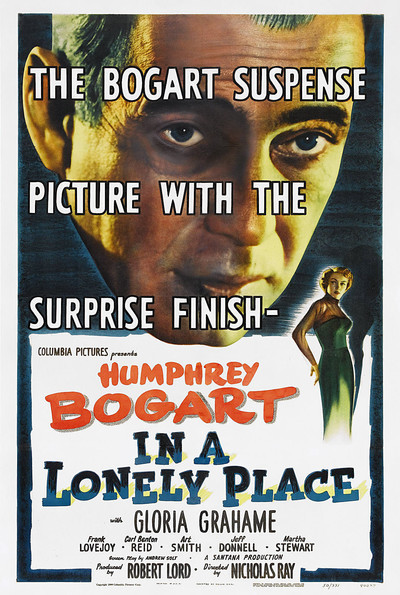
Hollywood: it’s a dark town. When movie makers turn their lens on themselves you’ve just as likely to see the dark underside of showbusiness, as you have a celebration. In a Lonely Place was made in the same year as Sunset Boulevard, and it’s even darker and less hopeful than that movie. It focuses on a person with a certain level of kudos, that has led others to overlook his deep personal flaws. In a Lonely Place reveals itself as a quite ahead of its time in its unflinching look at why people find themselves drawn into potentially abusive, controlling relationships with people who talk endlessly about how much they love you even while they try and control every aspect of your life. Overlooked at the time, it’s seen more and more as a classic.

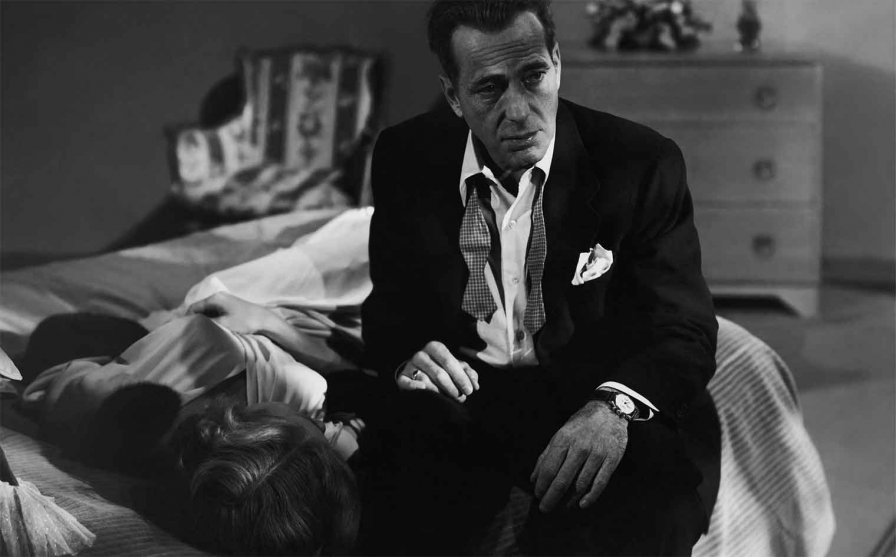
Dixon Steele (Humphrey Bogart) is a successful screenwriter but has gone a few years since his list hit. Hired to adapt a plot-boiler he’s so contemptuous of the synopsis he invites a waitress at his favourite restaurant, Mildred (Martha Atkinson), to his flat one night to describe the story to him. Becoming as bored with her as he is with the cliched plot, he sends her home. When she is murdered later that night, Dixon is number 1 suspect. He’s alibied by his neighbour, aspiring actress Laurel Gray (Gloria Grahame) and the two start a relationship. But the pressure from the investigation and his writing assignments bring Dixon’s barely controlled rage more and more to the surface – with Laurel slowly fearing that he could be capable of anything if pushed to it.

It would be expected for a movie of this period – say something like Suspicion where of course Cary Grant is just misunderstood not a would-be killer – for all this to simmer and then resolve itself as a terrible series of errors (mostly of course from the woman). In a Lonely Place doesn’t do this. Instead, from the start we are given no reason to doubt Dixon’s capacity for near-murderous rage. Practically the first thing we see him do is assault a producer – albeit avenging an insult to an alcoholic actor friend. His first resort is violence. It’s something he’ll resort to time and time again, his capacity for anger joined with a self-pity that makes preemptive violence more likely.

It bleeds into the relationship with Laurel, which at first is all goodness and light. The two of them are well-suited, and an excellent tonic for each other: she’s a combination of muse and amanuensis, helping Dixon turn out his script; he opens doors in Hollywood she has spent years pushing against. But Dixon’s possessiveness, resentment and suspicion become clearer, accentuated by Laurel’s reserve and caution to emotional commitment. The relationship becomes tortured as Dixon resents any trace of suspicion against him, alternating with desperately possessive pleading for love. Any deviation from his idea of their relationship is seen by him as an act of betrayal.

Then there’s that temper. It’s there all the time, a sadistic streak that suggests a damaging lack of empathy. Dixon – while vaguely sorry for Martha’s death – is also perfectly happy discussing her demise with a clinical academic interest. He’s unphased by crime scene photos. He feels no guilt about not driving her home. Later, at the house of his friend (one of the detectives) he theorises how the crime was committed with an animation that turns into unsettling excitement. After a row with Laurel he drives a car (with both of them in it) with reckless fury and then nearly beats to death someone whose car he clips. Dixon follows these moments with futile half-apologies – anonymous flowers for Martha’s family, anonymous cheques to pay for car damages. But he never addresses his deep psychological problems.

This relationship becomes one ripe with the unspoken capacity for violence. Gloria Grahame is excellent as a careful, guarded woman who opens herself romantically, only to become terrified that the man in her life could just as easily kill her as kiss her. It’s a tension we feel too. Making breakfast, Dixon may talk about how they will be together always– but his vulnerable voice underlines his own doubts, and his furious insistence that they marry ASAP carries the capacity for fury if denied.

As Dixon, Humphrey Bogart gives one of (if not the) greatest performances of his career. Playing a character who, with his dark rages, allegedly had similarities with himself, his Dixon is a bleak figure. Capable of wit and charm, Bogart also makes him a cruel, seedy and sinister in his excitement at murder, while never preventing us finding him vulnerable and weak in his fear at being abandoned. But not sympathetic enough for us to worry he may end things by murdering Laurel. He’s never sympathetic – his late, motiveless, slapping around of his decent agent ends our chance of finding him that for good – but he’s understandable.

And he lives in a dysfunctional town. Where Hollywood intrudes on the action, Ray makes clear it is dark, unsettling, alien and unfriendly town – a truly lonely place. There are no confidantes or friends: only colleagues and potential rivals. You are only as good as your last credit: when your last few credits are poor, you’re no-one. On the other hand, rage and misbehaviour will be tolerated if you can produce the goods. It’s not a place for humanity or goodness.

Ray’s overlooked classic is a beautiful fusion of film noir and Hollywood insider movie. With superb performances from the two leads, it also feels way ahead of its time in looking at abusive relationships. Abusive partners don’t arrive twirling moustaches. They seem decent, loving and passionate – its only when you start to disappoint them they start to turn angry, controlling and abusive. By the time the film’s end come – and it’s a bleak one – you’ll be hard pressed to find some hope in it. But you will certainly find some great film-making.
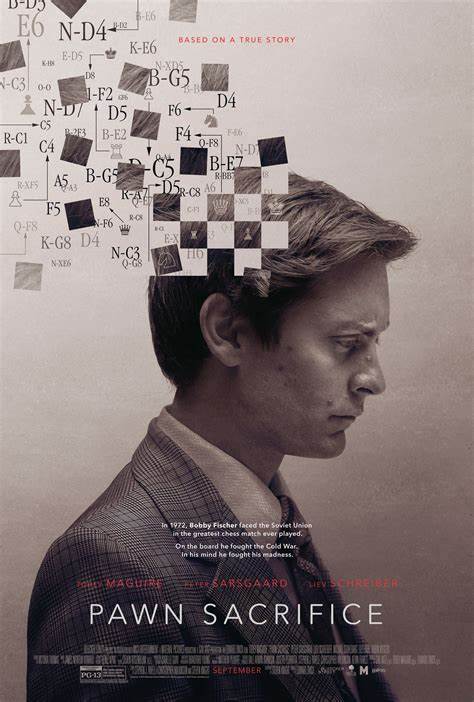
Pawn Sacrifice (2014)

Liev Schreiber and Tobey Maguire recreate Spassky/Fischer in Ed Zwick’s pointless chess drama

Director: Ed Zwick

Cast: Tobey Maguire (Bobby Fischer), Liev Schreiber (Boris Spassky), Peter Sarsgaard (Father Bill Lombardy), Michael Stuhlbarg (Paul Marshall), Lily Rabe (Joan Fischer), Robin Weigert (Regina Fischer)

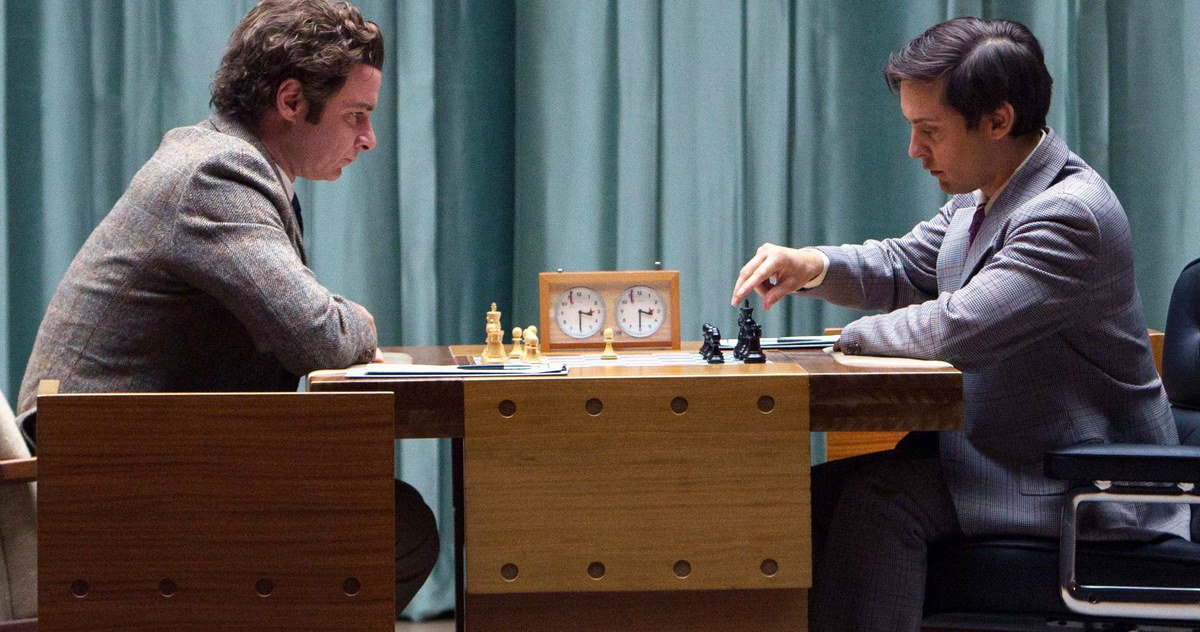
In the 1960s and 70s, Chess suddenly became world news. Like the space race before it, it was effectively a way for the USA and USSR to combat each other without the risky side effect of blowing up the whole world. The USSR had all the best players: until American chess prodigy Bobby Fischer emerged to shatter this monopoly. In 1972 the world seemed to come to a stop to watch the world championship clash between Fischer (Tobey Maguire) and Boris Spassky (Liev Schreiber) in Reykjavik. Ed Zwick’s film attempts to bring together the personal and the political – two superpowers using a game as a proxy for war – into an enlightening package. It fails.

The film opens with Fischer trashing his apartment in search for bugs on the eve of the 1972 final before flashing back in time. You’d expect the film to give us an idea of what bought our “hero” to this point. Zwick’s film utterly fails to do this. Now Fischer – very well played by an aggressively prickly Tobey Maguire – was a hugely troubled man. Though never formally diagnosed some combination of paranoia, OCD and a myriad other personality problems meant he was never more than a step away from self-destruction. Despite this he was deeply driven by an ambition to be the best chess player in the world. Its rich material, but the film never begins to get to grips with Fischer.

Could this be because it wants to tell an uplifting story – the film is really building towards the standing ovation Spassky gives Fischer in game 6 at the 1972 championship when Fischer whipped him in about 40 moves of perfect play – but is struggling with the fact that Fischer himself is deeply unsympathetic. A paranoid conspiracy freak who even by the standards of the 1960s was an aggressive, virulent anti-Semite (Fischer would later match Mel Gibson in his anti-Semitic tirades, blaming Zionism for everything from 9/11 down). A bully who refused to interact with anything except on his own terms, who cut all friends and family from his life for the most minor transgressions. There is no insight given here at all, or suggestion of what was wrong with Fischer.

It’s hard to hang a “triumph against the odds” structure – as Zwick’s unimaginative and conventional film tries to – around this. A far more interesting film would have used the 1972 tournament as an Act 2 triumph and then explored in more depth Fischer’s long spiral of self-destruction that would see him as a bearded eccentric ranting against Jews and America, in exile in Iceland. A film like that would also have then been able to properly do service to the idea of Fischer as a pawn of American state interests, who celebrate him when they want to rub the Soviet nose in it, but then drop him as soon as his purpose is served.

Instead, the film becomes formulaic and empty, leaving us with the impression that we learn nothing about Fischer at all. Why did this man of Jewish descent hate Jewish people so much? Was it self-loathing? What motivated him to seemingly self-destruct his own career so regularly? Was it a fear of being beaten? We have no idea. Instead that opening scene of Fischer destroying his apartment tells us everything we learn about the man over the course of the film. He remains an enigma – and since he’s also deeply unpleasant (the film skirts a little around how much) and we don’t get given any rich material to understand why he’s like this, he becomes a tedious figure to spend time with.

Zwick’s film also fails to communicate the cold war motivations behind this. Although there are the odd shots of the powers-that-be watching on TV in the Kremlin and the White House, we get no sense of how or why these powers are using chess to promote their own ideology. The film is endlessly reliable on vintage and reconstructed newsreel footage to constantly tell us directly things it can’t work out how to do with dialogue, from the political situation to chess moves. You learn nothing about the Cold War from this film. Michael Stuhlbarg’s lawyer turned promoter for Fischer states openly that he wants to use Fischer to show up the Russkies – but that blunt statement is it.

Instead the film is only really interesting when it is effectively recreating footage from the 1972 championship. And when a film’s strong points are recreating real events perfectly, you know you are in trouble. Zwick’s film lacks ideas, a compelling plot, insight or invention. It suffers badly today when compared to the far more dynamic and insightful The Queen’s Gambit (whose lead character is a heavily fictionalised female Fischer). Zwick’s film is him at his plodding, middle-brow worst, presenting a would-be epic shorn of anything of actual interest of controversy. The only thing that redeems it are decent performances from Maguire, Sarsgaard and Schreiber. Otherwise, this is an empty mess that tells you nothing at all about anything. You could checkmate it in about four moves.

Ben-Hur (1959)

Charlton Heston fights for freedom in the large scale but strangely empty Ben-Hur

Director: William Wyler

Cast: Charlton Heston (Judah Ben-Hur), Jack Hawkins (Quintus Arrius), Haya Harareet (Esther), Stephen Boyd (Messala), Hugh Griffith (Sheik Ilderim), Martha Scott (Miriam), Cathy O’Donnell (Tirzah), Sam Jaffe (Simonides), Finlay Currie (Balthasar), Frank Thring (Pontius Pilate), Terence Longdon (Drusus), George Relph (Tiberius Caesar), Andre Morell (Sextus)

Ben-Hur is big. Hammering home its monumentalism, the poster features the colossal stone-carved title dwarfing the people below. It’s the sort of Hollywood epic where the numbers – 10,000 extras! 2,500 horses! Over a million props! 1.1 million feet of film! 11 Oscars! – are as much a part of what you are sitting down to watch as the characters and story. Ben-Hur sits at the apex of the Hollywood Biblical epic: three and a half hours long, the most expensive film ever made (at the time). Age hasn’t always treated it kindly, and its eleven Oscars give it a sort of classic status it’s very hard for the first-time viewer to reconcile with what you actually see on the screen. Fundamentally, Ben-Hur is part spectacle, part pageant: some striking sequences linked together by the twee and the forgettable. Entertainingly middle-brow and over honoured, it’s a classic mostly because of what it represents rather than what it is.

Adapted from General Lew Wallace’s best-selling doorstop (he basically invented the airport novel, decades before the first airport ever opened), the story follows the fortunes of Jewish prince Judah Ben-Hur (Charlton Heston) in the early years of the first millennium. Ben-Hur grew up regarding Roman officer Messala (Stephen Boyd) as a brother. But when Ben-Hur refuses to help Messala identify Jewish insurgents, their friendship comes to an end. Before we know it, Messala suses trumped up charges to send Ben-Hur in chains to a life rowing as a galley slave while his mother Miriam (Martha Scott) and sister Tirzah (Cathy O’Donnell) are imprisoned. Ben-Hur survives the galleys – even becoming the adopted son of Roman Consul Quintus Arrius (Jack Hawkins). When he returns to Jerusalem, will he take his revenge on Messala? Or will the teachings of the mysterious preacher spreading the word of God change his life?

For bursts of its (huge) run-time Ben-Hur is gripping, exciting stuff. The action when it comes is superbly done and some of the moments of high-emotion really hit the spot. But it’s impossible to avoid that, for large chunks of time in-between, Ben-Hur is ponderous, overlong, more than a bit self-important and a little twee. Frequently the film grinds to a halt to parade its numbers: after all we need a long intro to the chariot race so we can see all those extras and horses. Things like this frequently don’t drive forward the story, or help the pace: but Ben-Hur was at least as much about wowing the audience as it was about telling a story.

William Wyler was offered more money than any director in history to bring it to the screen. He produces a film as faultless in its professionalism, as it is impersonal. Wyler – a director who worked best with actor-led stories – struggled with the vastness of Hur: his visual compositions often an awkward attempt to mix the width of the frame with the intimacy of two characters talking. His style doesn’t help here: the heaviness of the cameras made them difficult to move, making many of the conversation scenes of the film rather flat and dull to look at. Wyler doesn’t put a foot wrong, but it feels more like a competent professional ticking boxes.

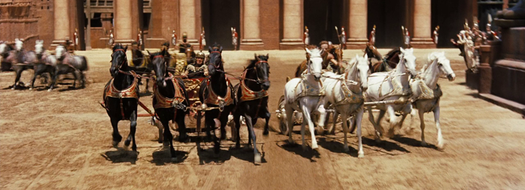
It’s the big set piece moments – of which there three – which really have stuck in people’s minds. Those would be: the early scenes with Messala/Ben-Hur, the naval battle sequence and the chariot race. Outside of those moments – which are all, in their own ways, very memorable – it’s amazing to me every time I watch it how much of the film I fail to remember. I certainly had forgotten how damn much of the movie is left post Chariot race (over 45 minutes!), the film dragging on through the Miriam/Tirzah leprosy sub-plot intercut with moments from the life of Jesus (often with dialogue of the “He’s giving a Sermon on that Mount” variety). There are several moments in the film where events play out at great length inversely proportional to their interest.

But those set-pieces are great. The chariot race alone probably made the film the success it is. It’s ten minutes of compelling drama, gripping stunts: a feast of tight editing, dynamic camera work and thundering sound effects. Shot by a second unit – although, to be fair, supervised in its planning and editing by Wyler – it’s the heart of the movie. Viscerally enjoyable, it perhaps stands out because it’s the most earthy, exciting, real thing in a movie that can be rather stagy and turgid.

Running it close is the naval battle sequence – show-casing a gravely Jack Hawkins – very well-done (and disguising its water tank shooting origins), particularly because Wyler keeps most of the focus on the slave rowers in the bowels of the ship. While fire and arrows fly up top, and boarding parties clash, it’s from the slaves perspective that we see a vessel approach to ram the ship – and their terror at drowning that we feel. It’s another fine use of the epic big-screen. With virtually no dialogue, it’s also a triumph of visual story-telling, communicating a host of emotions and actions with brilliant efficiency.

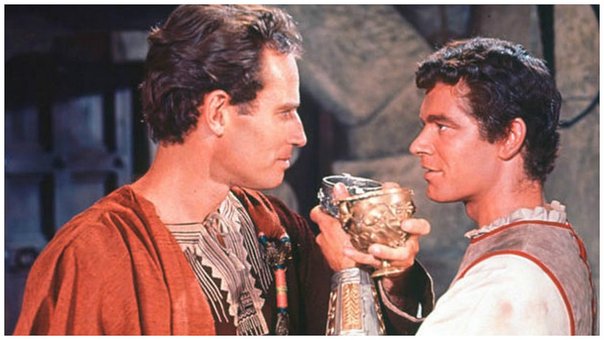
The Messala/Ben-Hur sequences have stuck in the mind for other reasons. Long-running debates exist about who actually wrote the script. The credit goes to Ken Turnberg, but Gore Vidal long claimed his fingerprints were on most of the dialogue. (Wyler and Heston disagreed, giving the credit to playwright Christopher Fry – Heston even thanked Fry in his Oscar acceptance speech.) Vidal liked to claim he directed Boyd to play these scenes as if Messala was a spurned lover of Ben-Hur – taking an equal delight in claiming Heston had no idea of this subtext. Wyler argued he had no memory of this, and denied any such direction to Boyd took place. The truth will never really be known, but to me the idea of the writer on a film like this taking creative control seems a stretch.

Anyway, it adds a frisson to the scenes – and its undeniable there is more than a touch of camp to them. To be honest I think a lot of this is due to Stephen Boyd’s OTT performance as Messala. He plays every single scene at a ludicrous pitch – throughout the chariot race he makes Dick Dastardly look the model of underplaying – and I can well imagine Vidal enjoyed taking advantage of his over-emphasis in these sequences to spin an amusing story of sneaking in a homo-erotic subtext.

The acting in general is fairly mundane – for all the film won two Oscars for its performers. Heston (in his only nomination) was named Best Actor. He’s a monumental actor, best used in roles that could have been chiselled from marble, but this is not his best (look to Khartoum, Agony and the Ecstasy or Planet of the Apes for starters). Much like Boyd he’s prone to over-emotionalism (most of the last 40 minutes feature him throwing his face into his hands), intermixed with moments of stony po-facedness. Hugh Griffith won the other Oscar (insanely generous considering he beat out Scott and O’Connell in Anatomy of a Murder) and his hammy, black-face is increasingly uncomfortable. Few of the other performers make much of an impact (although I enjoyed seeing an unbilled John Le Mesurier as a Roman doctor).

The one thing about Ben-Hur that lives up to its grandness is Miklos Rosza’s brilliant -and hugely influential – score. A brilliant mix of the inspiring epic, the grandiose and the deeply spiritual, you can hear its DNA throughout the works of John Williams and several others. It’s one of the longest scores of all time (three hours of music!) but it captures the tone of every scene perfectly, helping to build the overall effect.

It even manages to make some of the Jesus sequences work. The film is never more twee than when it touches on the Bible. Jesus is only ever shown from behind, but always as the classic long-haired, beatific figure, practically floating through the ether. Sequences that show the nativity, the sermon on the mount and the crucifixion have a Sunday School earnestness about them, largely free of drama and seem designed to be as inoffensive (and uninteresting) as possible. It’s when the film is as its most self-consciously earnest.

And Ben-Hur is a very earnest film. A professional job – with a director wrestling all those numbers – it’s got some striking sequences but even more flat, twee and forgettable moments. With acting that ranges from overly-earnest to just over the top, its classic status is more about what it is. The largest, most expensive, most honoured film of the Biblical epic genre. Its’ most famous for all those Oscars and the chariot race: in other words ten minutes of its screen time and garlands from a ceremony we often say honours the wrong films. Judged on film merits, Ben-Hur is not the best but not the worst. But it’s more about all its numbers, the vast array of things in it. It represents Big Studio investment: it’s about money. No wonder Hollywood garlanded it with so many Oscars.

Death in Venice (1971)

Dirk Bogarde falls victim to obsession in Death in Venice

Director: Luchino Visconti

Cast: Dirk Bogarde (Gustav von Aschenbach), Mark Burns (Alfred), Marisa Berenson (Frau von Aschenbach), Björn Andrésen (Tadzio), Silvana Mangano (Tadzio’s mother), Romoloa Valli (Hotel manager), Nora Ricci (Governess), Franco Fabrizi (Barber), Carole André (Esmeralda)

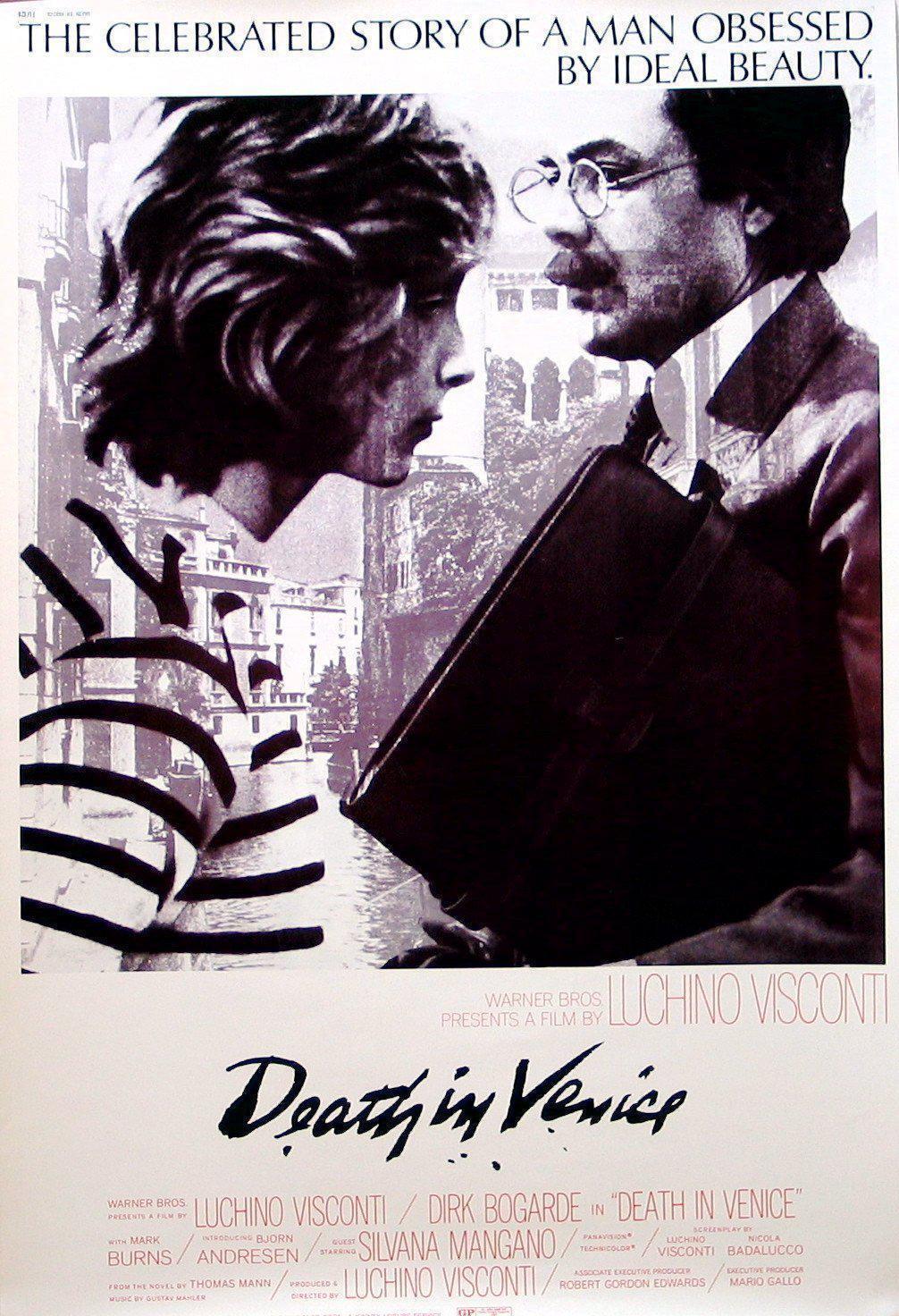
In the early 1900s a famed German composer, Gustav von Aschebach (Dirk Bogarde), travels to Venice for his health. A repressed artist who believes beauty is found not in the sensual but the spiritual, his world is turned upside down when he becomes fascinated/infatuated with a divinely beautiful teenage boy (Björn Andrésen) staying at his hotel. Gustav lingers in the city, never speaking to the boy, but reduced to watching him at the beach and following him and his family puppy-like through the city. A city that is on the verge of falling into a serious cholera pandemic. With Gustav’s health rapidly deteriorating, the title alone tells you where this all going.

That opening paragraph will probably also tell you all you need to know about whether this is the film for you or not. Increasingly, the idea of a famed artist starring with a longing, breathless admiration at a (very young looking) teenage boy (who is also at times shot with a coquettish flirtatiousness, increasingly aware that he is being looked at) has more than a whiff of Operation Yewtree to it. Take a moment though: Visconti’s extremely delicate and deliberate film largely manages to walk a tightrope between sexual interest and a deeply closeted admiration for physical beauty in the style of classical statues or paintings.

The film is not a leering pederast’s fantasy, but a melancholic meditation where this young man as much represents the loss of youth amidst a life of regret and closeted repression as it does sexual interest. Don’t get me wrong, sex bubbles under there. Gustav – even if he is struggling to process his own feelings – has a giddy schoolboy like love for this unattainable boy, something he seems aware he can (and will) never act on. Gustav becomes a rather tragic even pathetic figure. By the time the film ends and he has caked his face in the same “young” make-up that disgusts him when he sees it on the face of another ageing roue on his arrival in Venice, it’s hard not to feel he has lost his way. He seems aware death is knocking and that it is simply a matter of opening the door.

Visconti’s film is perhaps the ultimate arthouse classic. Long, slow, with lashings of Gustav Mahler playing while the camera slowly pans across incredibly detailed sets (rumour has it, even the unopened drawers were filled with period specific props) and lavish costumes. It’s got more than a puff of self-importance, taking as its subjects art, love and beauty. It’s the sort of film where nothing much really happens (there is no real dialogue for the first ten or last ten minutes), but what little happens is laced with an overwhelming spiritual and poetical importance.

The film is however outstandingly beautiful. Venice has never looked so striking – or so original. It’s not a picture postcard: the sky is frequently doom-laden pinks and reds, the streets are lined with litter, antiseptic wash and later small fires to burn away the bad air. But everything is presented with a painterly, if doom-laden, beauty. As mentioned, the period detail is exquisite and faultless. There are more than a few comparisons with Barry Lyndon in its obsession with detail, the pictorial and period over such trivial matters as storyline and humanity. Like that film it also has a languid self-importance, that has helped make it ripe for parody throughout the years.

And yet, it engages at some level slightly more than Barry Lyndon perhaps because Dirk Bogarde is a far more skilled actor than Ryan O’Neal. Bogarde is a master of the small detail. A huge portion of the film is basically Bogarde starring at Tadzio and letting a range of emotions play across his face: fascination, shame, fondness, intrigue, self-disgust, longing. Visconti frequently lets the camera just study Bogarde’s face as the actor thinks, capturing moments of almost youthful excitement that tip as swiftly into an old-man’s shame. It’s a compellingly cinematic performance from Bogarde, an actor who never quite gets the credit he deserves.

Of course, it’s also an important land-mark in gay cinema. It’s one of the few films where we have a man express a confused yearning and admiration for a beautiful teenage boy (films – such as American Beauty – which cover similar ground with men and teenage girls are far more common). Despite this, the film never tips into feeling too icky, largely because Gustav himself is a rather sexless figure. Flashbacks show his failed fumblings with (female) prostitutes and traces of a marriage with a wife (a silent Marisa Berenson – another Barry Lyndon link), with whom he shares grief at the loss of a daughter, but seemingly little else. The implication is that Gustav has carefully suppressed all his emotions in to raise himself to a higher artistic plain. Tadzio perhaps shows him there is also beauty in youth and life, rather than just intellect.

Or you might think that’s just hogwash, and an excuse for a man in his fifties to leer at a pretty young boy. There are times when Visconti makes Tadzio too coquetteish, at times casting him in the role of distant seducer (although there are hints at least some of these glances and poses are in the imagination of the infatuated Gustav). Björn Andrésen has spoken about his discomfort in making the film (where Visconti and others allegedly tended to treat him with an icky fascination) and dealing with its legacy. Often the film plays more awkwardly today and while Visconti is partly aiming for the sort of admiration of beauty we see in classic Renaissance art – like Rubens co-directed the film – he’s still at times also positioning a young teenage boy as something close to a sex object. The film is not as simple as that, and its far from being crude while Aschenbach never feels predatory or dangerous only deluded – but touches of it are there.

Death in Venice has faced years of parody. It’s an easy film to snigger about, with its self-consciously arty look and feel. Visconti wants you to know this is an important film, and like Tarkovsky often hammers this home by making it slow and ponderous. But it’s also a beautiful and strangely engrossing film. A slow-paced two hours – pace that could have been helped if the heavy-handed flashback discussions about art between Gustav and piano player (lover?) Alfred had been trimmed out. Visconti directs it with a poetic mesmerism.

It’s got the feel of a classic painting. But it’s a film: and parts of that make it troubling at times. It never questions the appropriateness or not of this semi-sexual fascination of Gustav (for all that it stresses his increasingly pathetic delusion). However, it just about works because of the overwhelming air of tragedy and regret that hangs over it – and Bogarde’s delicately judged performance. Visconti indulges himself terribly here – but produces something that feels very much his own. Death in Venice is intriguing because its simultaneously bloated and self-important, but also mesmerising and beautiful.

The Truman Show (1998)

Jim Carrey starts to wonder if there is more to his life than meets the eye in The Truman Show

Director: Peter Weir

Cast: Jim Carrey (Truman Burbank), Ed Harris (Christof), Laura Linney (Hannah Gill/Meryl Burbank), Noah Emmerich (Louis Coltrane/Marlon), Natascha McElhone (Sylvia/Lauren Garland), Holland Taylor (Alanis Montclair/Angela Burbank), Brian Delate (Walter Moore/Kirk Burbank), Paul Giamatti (Simeon), Peter Krause (Truman’s boss), Harry Shearer (Mike Michaelson), Philip Baker Hall (Network executive), John Pleshette (Network executive)

Have you ever fantasised that your whole life was a movie? It would be great wouldn’t it? You’re the star of every scene, the story lines always have a happy ending and you always emerge as the hero. But what if your life really was a massive TV series? What if everyone you had ever met was an actor playing a role? What if every experience in your life had been carefully scripted? What if nothing you knew was a real or even remotely true? That’s no-where near as fun.

Of course the odd thing today is that I suspect there are more than a few people out there who would still consider that a decent pay-off – even if they couldn’t know that they were on television, at least they would be on it. The Truman Show predated much of the surge of reality TV that was to come in the 00s, when shows like Big Brother made putting everyday (at least at first) people into situations and simply watching what happens became TV gold. Truman Burbank (Jim Carrey) is approaching his 30th birthday. Little does he know that his entire life he’s been at the centre of an elaborate TV show and that the hometown he has never left is a giant self-contained film studio. But as incidents begin to pile up, Truman suddenly questions his reality – while the show’s cast and production team work to keep him in ignorance. After all, we can’t let this ratings cash cow die!

With a precise, sharp and intelligent script by Andrew Niccol, Peter Weir’s film is a triumph. It’s partway between drama and satire, but never lets the one compromise another. It could have become a lumpen message film about the intrusion of media into our lives. Instead it’s an acute satire of TV gone mad, with a very real, sympathetic character who we invest in. Effectively the movie works on the same premise as the fictional TV show: the viewers know the world they are seeing is larger than life, but they know the character of Truman is grounded and true. It works as it bases its satirical attacks around a heartfelt story of a man (unwittingly at first) on a quest for freedom.

It’s two horses the film rides extraordinarily well – and even effectively comments on. Throughout the action we cut to the same regular joes watching the show: people in a bar, security cops, a pair of old ladies on a sofa. These people are aware they are watching a show – and watching a man effectively imprisoned – but have their emotions manipulated with ease, first by the producers then by the excitement of Truman’s very real quest. As they gasp and cheer as Truman works his way out of his prison, there is not a shred of acknowledgement to them that buy ‘booing’ the TV network they should also be booing themselves for watching in the first place. Instead they treat it just as another episode of their favourite show, the celebrations as transient and hollow as their tears of joy as the producers reintroducing Truman’s long-lost father in an attempt to ‘explain’ the strange circumstances he’s seen.

The Truman Show itself takes place in a perfect, unintimidating slice of 50’s inspired nostalgia. It’s a perfect picture of Americana – and its conservatism is itself a satire. Of course the producers set the show in the most cosy, comforting setting they could imagine. The rose-tinted past is always something we turn to for comfort viewing (take a look at the success of Downton Abbey). Alongside that, it’s a world run by advertising: Truman’s wife frequently stops to deliver scripted adverts, singing the praises of household products; a pair of old buffers have the job of pushing Truman up against a different advert hoarding every day; Truman’s friend Marlon praises their beer with every sip.

And in the sky: we have the studio itself, run by the shows creator Christof. Superbly played by Ed Harris, as part hipster artist, part messianic genius (“I am the creator” he tells Truman near the end, his voice coming through a beam of skylight, adding after a half-beat “of a television show”), Christof has carefully plotted Truman’s entire life from birth. He partly sees himself as Truman’s father – but he as much sees Truman as a tool he can manipulate for his own ends. A hands-on show-runner, Christof believes himself a genius whose will cannot be questioned. This softly-spoken dictator is a terrifying insight into what happens when self-appointed artistic geniuses can explore their ideas with no regard for morality and no restraints.

Truman himself is a charming, sweet, decent fellow – I suppose if nothing else Christof has done a superb job of bringing him up. But his entire life is a manipulated lie. The whole town is full of subconscious messages encouraging him to stay – as is the advice from his wife and best friend. Most cruelly of all, he has been deliberately traumatised into a terror of water by being made to feel responsible as a boy for the drowning of his father. Christof even boasts of his ingenuity in this “plot line” to help insure Truman would be too scared to ever consider leaving his home.

Jim Carrey was a revelation as Truman – Weir was the first director to refocus his comic mania into something more intimate and true. The part still makes a lot of hay from Carrey’s rubbery comedic chops – its part of Truman’s charm – but he matches it with a Jimmy Stewartish decency and earnestness. As the illusion begins to crack, his bemusement turns to something between disbelief and anger, but never compromises his humanity. You can see why billions of people watched him – and also understand why a man so accommodating and decent has not questioned his life before. Witty, gentle and human it’s a great performance.

But perhaps the film’s greatest strength is Weir’s sharp, clear-eyed, largely unobtrusive direction. The film makes nifty use of all the thousands of cameras contained in Truman’s world – with shots taken from button cams, CCTV, dashboards and all sorts. Its intermixed with normal camera angles, but gives us a beautiful sense of Truman’s world, and the TV world coming together throughout. The pace of the film is perfect and its slow reveal of information delicately done. Weir’s intercutting between ‘fictional’ and real world is superbly judged and the film wears its satire very lightly as well superbly mixing what could have been a dark film of imprisonment and abuse with a lightness and charm. Above all, it manages to both be a compelling story with a sympathetic hero and a sharp-pronged criticism of the shallowness of media and its viewing public.

It might well have been far too ahead of its time when it was released. It looks smarter and smarter each passing year. Truman’s world is an Instagram paradise, and with social media we’ve got even more used to spending our leisure time looking through other people’s lives rather than our own. It’s all part of what helps make Niccol’s script so sharp and prescient. Directed superbly by Weir and wonderfully acted – perhaps most of all by Harris’ Warhol turned dictator – it keeps you entertained, invested and leaves you cheering. Just like the viewers watching Truman being manipulated. Which makes you realise: is the film attacking its audience as much as anyone else? After all, we’d all watch this stuff in real life: look at how we rubberneck at accidents. What’s wrong with us eh?

The Life of Emile Zola (1937)

The Life of Emile Zola (1937)

Oscar-winning biopic that laid down many of the conventions we expect

Director: William Dieterle

Cast: Paul Muni (Emile Zola), Gloria Holden (Alexandrine Zola), Gale Sondergaard (Lucie Dreyfus), Joseph Schildkraut (Captain Alfred Dreyfus), Donald Crisp (Maitre Labori), Erin O’Brien-Moore (Nana), John Litel (Charpentier), Henry O’Neill (Colonel Picquart), Morris Carnovsky (Anatole France), Louis Calhern (Major Dort), Ralph Morgan (Commander of Paris), Harry Davenport (Chief of Staff), Vladimir Sokoloff (Paul Cezanne)

One of the lesser-known Best Picture winners, The Life of Emile Zola is a prime example of the 1930s trend for “Great Man” pictures, setting the template for a whole genre of biographical movies. A whistle-stop tour of how the Great Man came to be, before a tight focus on what made him great – ideally ending in either triumph or disaster (or, as is the case here, with both). It’s from a time when the viewing public didn’t expect a rigid adherence to the fact – and when films were very open with their flexibility with the truth (the film opens with an on-screen caption which happily states most of what happens in it is made up.) Actually, I think being told from the start you are watching a heavily fictionalised version of the truth covers a multitude of sins: and that The Life of Emile Zola is pretty entertaining when you get past that.

Emile Zole (Paul Muni) is of course one of the most famous French authors. But he was also at least as famous for his campaigning and presence as he was for his volumes and volumes of best sellers. The film follows Zola, for its first forty minutes or so, from poverty-stricken writer, struggling to make ends meet in the draughty hovel he shares with similar future-genius Cezanne, to success (although in real life by the time he wrote Nana, the book that makes him a sensation here, he was already hugely famous). Zola becomes increasingly aimless. What worlds are there left to be conquered? That all changes when Lucie (Gale Sondergaard) the wife of army officer Alfred Dreyfus (Joseph Schildkraut) asks for his help to save his life from unjust imprisonment and exile on Devil’s Island. Because the army are convinced Dreyfus is a spy – and won’t let inconvenient things like evidence that someone else did it get in the way.

The film is called The Life of Emile Zola but really it might as well have been called The Dreyfus Affair. This infamous miscarriage of justice drives the entire second half of the movie – with Zola himself disappearing from focus for stretches as the film covers the conspiracies that led to Dreyfuss spending the best part of a decade imprisoned for something he didn’t do. What seems strange today is that the film makes no mention of the most famous angle of the case: Dreyfus was almost solely suspected because he was Jewish, and the case became one of the most infamous antisemitic persecutions in history. But the studio heads – Jewish themselves and nervous of being accused of making a film that criticised Nazi Germany – removed all reference to Dreyfus’ Jewishness from the script. It’s a curious omission, but by and large doesn’t affect the film’s final impact.

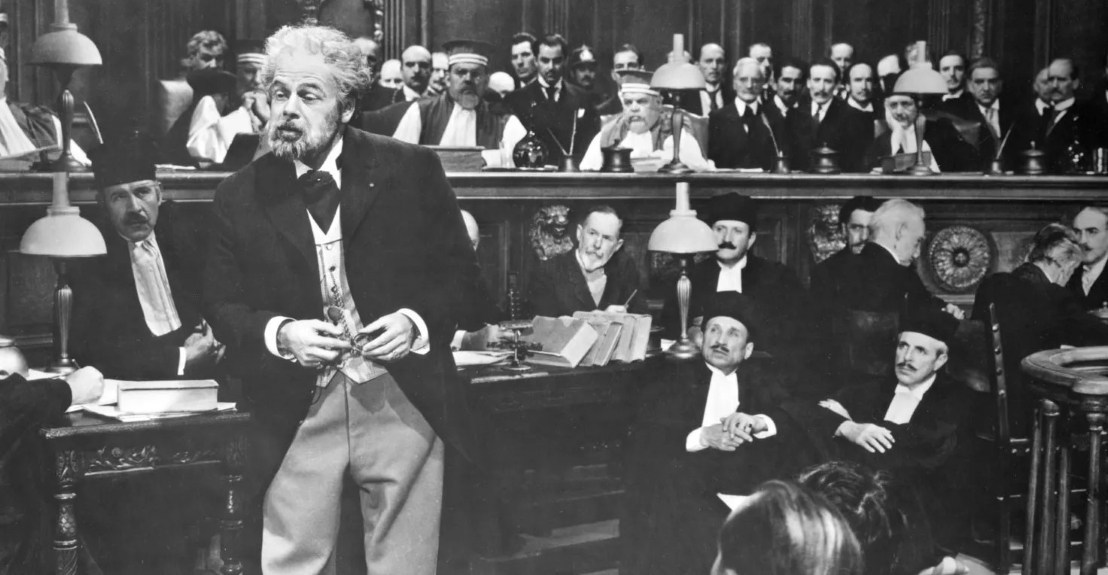
Dieterle’s movie is also one of the first courtroom dramas. A large chunk of the final third is given over to Zola’s trial for libel (after his famous J’Accuse article, denouncing the army’s persecution of Dreyfus). In a crowded courtroom, the film carefully follows the intricacies of the court case, from calling to witnesses to final speeches (all fairly accurate, even if Zola is given a larger role with a final speech). As in the trial itself, the blatant unfairness (witnesses shouted down, defence questions vetoed, evidence withheld and even invented) is hammered home with shocking regularity. Donald Crisp does fine work as the liberal lawyer, hamstrung by a crooked system.

The Dreyfus affair element is really what makes the film come to life. The French army officers are almost to a man a group of corrupt bullies, who have pre-decided the outcome of their investigation and are determined that every single element of it should support that decision. By contrast Joseph Schildkraut (winning an Oscar that feels more for Dreyfus than him, delivering an effective if rather one-note performance) is the soul of decency and nobility as a Dreyfus who is at first bewildered then fighting a manful struggle against despair. Even better is Gale Sondergaard, who gets an ahistorical impassioned speech to win Zola to the cause and carries a core of quiet anger under her shock.

The Dreyfus Affair was the struggle of Zola’s life, the crusade that would win him a place in history, perhaps even more than his books. It’s also the sort of campaigning material that gives rich rewards to actors. Paul Muni seizes the opportunity. The film was shot in reverse so Muni would need to spend less and less time in make-up as shooting went on: the old-age make-up and wigs are very effective, matched by Muni’s physicality and voice which subtly changes as the character ages.

Muni is an actor who seized any chance for a bit of grandstanding. The film gives him its best one with a five-minute monologue closing the trial, during which Zola argues with passionate but quiet reasonableness that Dreyfus is an innocent victim. It’s even more effective since Dieterle has kept Muni silently off-centre for much of the court case. Muni sometimes carries the whiff of stagey ham, but in several moments he brings both a charming cheek and strong morality to Zola. It’s a very strong performance from one of the leading actors of the 1930s.

The film itself is also a good mixture of the twee and the compelling. Most of the Dreyfuss material falls into the latter category. It’s the early days of Zola that falls into twee: Zola scrippling ideas, bantering with Cezanne on the purpose of art, playfully mining prostitute Nana for the material he will make into a hit book. There is a nice foreshadowing through the film with Zola’s obsession with blocking draughts – an obsession that will later cost him his life to a misfunctioning heater.

It’s a well directed film. Dieterle mixes in nice touches of humour (a husband and wife using subterfuge to disguise from each other that they are both buying Nana) and also effective details that speak of Dreyfus’ isolation (the letter that has been redacated into nothingness, the effective transition of several years at Devil’s Island that stresses how little has changed, Dreyfus’ giddy joy when finally allowed to walk unheeded in and out of his prison cell).

The Life of Emile Zola looks today like a surprising winner of Best Picture. But the patterns for both courtroom drama and many biographical dramas were laid down here. By the end, as the survivors pay tribute to Zola with high-blown speeches, the audience should be convinced that this was a man deserving of being honoured by a whole movie. It’s setting of a template copied many times over can make it look a little twee today, but its’ still well done, with some powerful flashes of effective film-making and great acting.

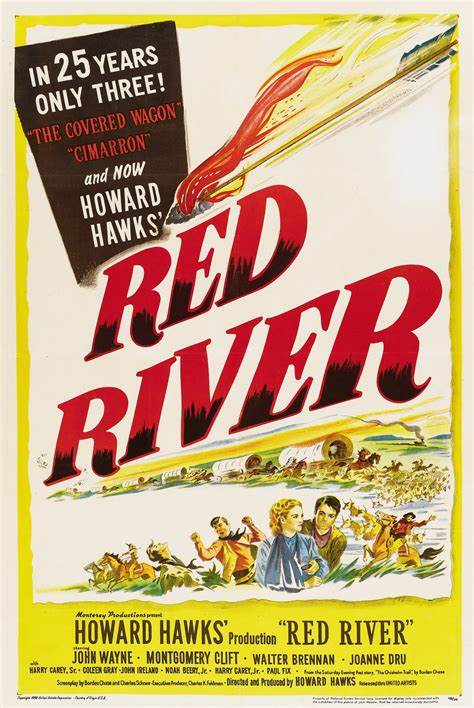
Red River (1948)

John Wayne and Montgomery Clift as duelling surrogate father and son in Red River

Director: Howard Hawks

Cast: John Wayne (Thomas Dunson), Montgomery Clift (Matt Garth), Joanna Dru (Tess Millay), Walter Brennan (Groot), Coleen Gray (Fen), Harry Carey (Melville), John Ireland (Cherry Valance), Noah Beery Jnr (Buster McGee), Harry Carey Jnr (Dan Latimer), Chief Yowlachie (Quo)

Some say Red River is, even more than Citizen Kane, the masterpiece in American film. That’s pushing it. But Red Rivercertainly is a prime slice of beefy entertainment. Hawks’ first Western (and how odd a director so associated with them didn’t turn his hand to them until late in his career – and then only made six), there is no greater compliment to make than to say you could mistake it for John Ford.

In fact, Ford was beyond impressed, famously observing of Wayne “I didn’t know the big son of a bitch could act”. Act he certainly does here as monolithic obsessive Thomas Dunson (surely a forerunner to the equally troubled – and troubling – Ethan Edwards in The Searchers). Dunson has spent almost two decades building his Texan cattle empire. Unfortunately, the Civil War means the bottom has dropped out of the Texas beef market. To make good his investment, Dunson needs to take the cattle (all 9,000 of them!) up north to Missouri (over a thousand miles) to sell at a good price. Along the way, Dunson’s ruthlessly focused ambition tips into tyranny, with Dunson (literally) judge, jury and executioner among his team. Can his more liberal adopted son, Matt Garth (Montgomery Clift), stop Dunson from destroying everything around him?

Red River covers the movement of cattle up the Chisholm Trail, a huge economic migration that saw millions of cattle moved from Texas to where their price was increased by a factor of ten. But the film has only a passing interest in the history – and the romantic, nostalgic look at it here, as a sort of boys-own adventure that goes wrong, is far more about the movies than social history. What the film is really focused on is the personal clash between two generations of men: one a relic of the first years of the new frontier, the other younger, more modern in his thinking, with a streak of humanity the other has beaten down.

Hawks’ film mixes this up with some terrific location footage. How did they wrangle all those cattle? The film is very strong in capturing the sense of excitement in the Frontier – the setting off on the trail, with its quick shot cacophony of horse-backed men whooping with joy, is full of a sense of adventure. The film is a triumph of quick-quick-slow story-telling. The 15 years of Dunson’s empire-building passes by with montage and Wayne voiceover which begins and ends with Wayne in the same position, but the actor considerably aged. Context is skilfully and swiftly given to us, but the tensions between Dunson and Matt are grow and develop naturally, simmering for a good hour-plus before erupting. Transition text between sequences bridges us from scene to scene, and is especially effective in charting Dunson’s descent into tyranny.

Tyranny is what it is all about. This is one of Wayne’s darkest – but also greatest – roles. Hawks taps into the despotic rigidity in this slab of Americana. Dunson is a man utterly and completely convinced not only of his invulnerability, but his rightness, embodying American manifest destiny. Claiming swathes of land as his own, Dunson is a man on the move, constantly striding forward (Hawks often shoots him in progressive, shark-like motion). He’ll leave behind him everything from the woman he loves (with a shocking toughness, as he looks back on the burning remains of the wagon train he left her in) to the land he claimed, to anyone who lets him down.

Dunson is also a ruthless embodiment of a time before law. No one seems to question the way he executes those who cross him. Practically the first thing he does on arrival in Texas is out-draw and kill the man sent to question his arrival. His farmstead has a full graveyard. A dark comic touch is added with his insistence in “reading the words” over graves of men he’s killed. On the trail he has those who back out, run away or question his leadership whipped or shot. Wayne’s certainty as an actor tips into a (literally) black-hatted despotism. His manly focus and ability to outdraw anyone turns him in the end into a nightmare avenger, a Western Terminator.

Opposite him is Clift (equally superb) as a more modern minded kid. Matt is the sort of man who knows that at times a bit of bend and a sympathetic ear gets better results than a beating. Hawks brilliantly builds the love-hate relationship between these two men who have very little in common, other than mutual affection. (Clift and Wayne themselves were polar opposites in acting style, social views and personalities.) There is a real love there – which makes it all the more inevitable Dunson will view Matt’s questioning of him as a betrayal nothing less than blood will redeem. The two of them, and their clash (like the clash between two sides of America) dominate the film, not letting too many other characters have a look-in.

Of the rest, Walter Brennan is a very good as Dunson’s loyal number 2, who may not always agree with the chief but largely (if reluctantly) sticks by him (for all he mutters to him “You’re wrong Mr Dunson”). John Ireland’s cocky gunslinger, who joins the trail because he admires Dunson’s no bullshit attitude, promises much at first but fails to deliver on much-hyped clashes. (Possibly because Ireland fell out with Hawks over a competition for the affections of his future wife Joanna Dru, his role later cut to ribbons in revenge.) There is however a strange, almost homoerotic, link between Clift and Ireland – mutual respect leading to an admiration love-in and much fondling of each other’s firearms during competitive rock shootings.

Red River’s ending has gained some criticism – largely because the film builds its sense of violence between the two leads so well that it feels a bit of a disappointment that they are effectively told to pull themselves together (by a woman of all things!). But, for all the film mines the clashes between two different outlooks, it never loses track of their very real affection. Sure Dunson may talk about killing Matt – but he certainly won’t in cold blood (even if he happily guns down anyone who gets in the way) and at the end of the day, he’s still the closest thing he’ll ever know as a son. Matt is emotionally mature enough to know Dunson is to-all-intents-and-purposes his father, even if he’s not above throwing a few punches at him. The clash is effectively a narrative dead-end – for all it would be exciting to see them take shots at each other, this is a family. And most families fight and make-up, not plug each other with bullets.

And it distracts from the grand entertainment of Red River, its excited love for the open country (the late act scenes inside are as disconcerting for us as they are the characters). This is a western of psychological depth successfully mixed with grand adventure. It’s hugely entertaining but also feels very true. It has two wonderful performances from Wayne and Clift. It’s not the Great American Film, but it’s directed by a superb understander of cinematic narrative and a hard film not to love.

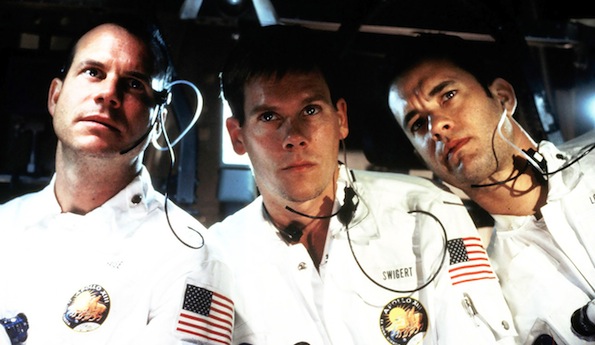
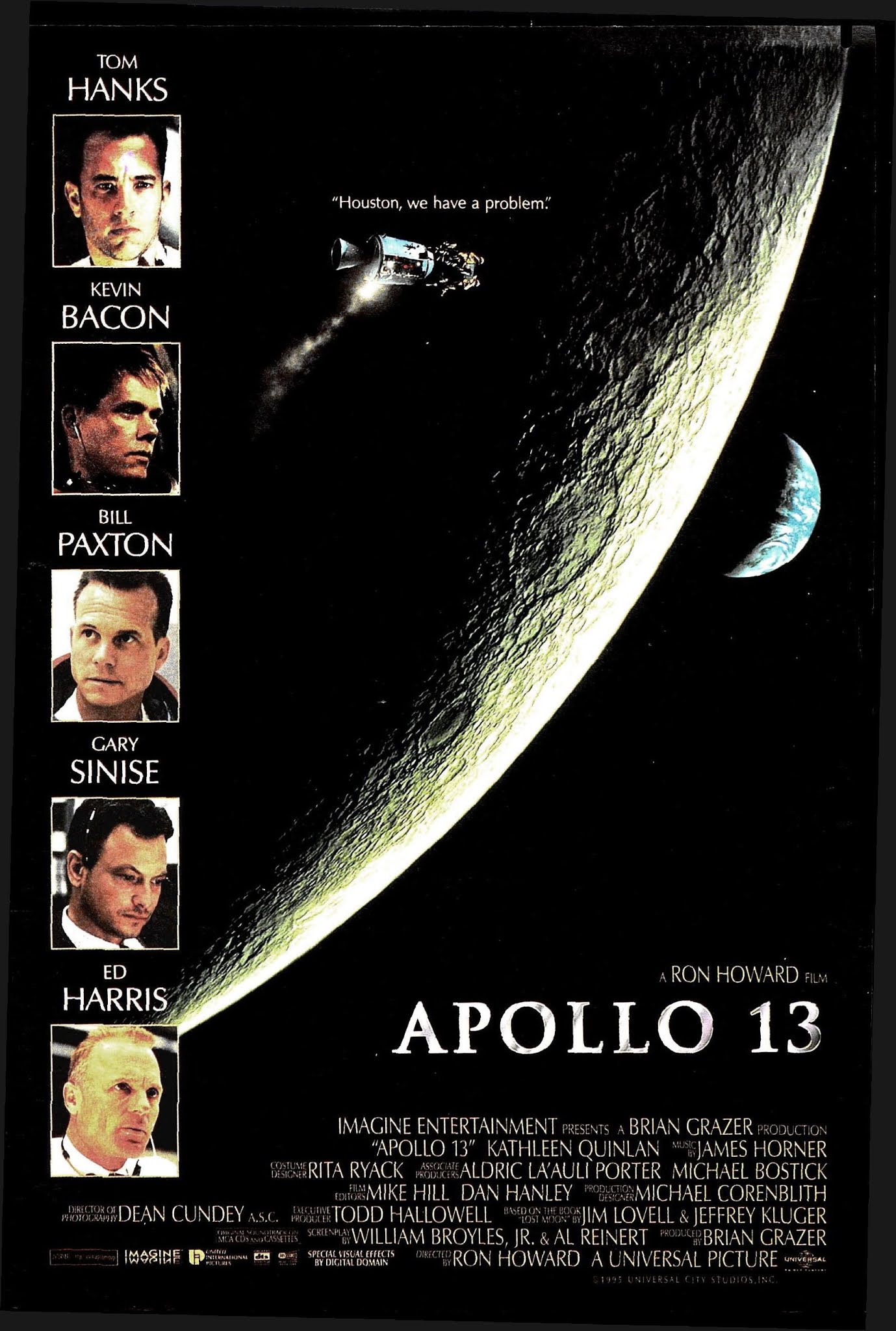
Apollo 13 (1995)

Bill Paxon, Kevin Bacon and Tom Hanks are stranded in space in Apollo 13

Director: Ron Howard

Cast: Tom Hanks (Jim Lovell), Kevin Bacon (Jack Swigert), Bill Paxton (Fred Haise), Gary Sinise (Ken Mattingly), Ed Harris (Gene Kranz), Kathleen Quinlan (Marilyn Lovell), Chris Ellis (Deke Slayton), Joe Spano (NASA Director) Xander Berkeley (Henry Hunt), Marc McClure (Glenn Lunney), Clint Howard (Sy Libergot), Ray McKinnon (Jerry Bostwick), David Andrews (Pete Conrad), Christian Clemenson (Dr Charles Berry), Brett Cullen (CAPCOM1)

“Houston we have a problem”. Those calmly spoken words coat an ocean of disaster in Ron Howard’s brilliant reconstruction of the disaster-that-very-nearly-was, Apollo 13. Without a shadow of a doubt Howard’s finest film, this is brilliantly tense and hugely engaging that builds an edge-of-the-seat tension around a true story. You can’t watch it without being filled with breathless admiration for the ingenuity of those in mission control and the courage of those in space as they worked together to bring the mission home. Truly “Failure is not an option”.

On a mission to the moon, Mission Commander Jim Lovell (Tom Hanks) and crew Fred Haize (Bill Paxton) and late replacement Jack Swigert (Kevin Bacon) are left desperately trying to salvage their ship after an accident strikes. Meanwhile back in Houston, Flight Director Gene Kranz (Ed Harris) and replaced crewman Ken Mattingley (Gary Sinise) lead a dedicated team juggling every inch of mathematical, scientific and practical knowledge they have to bring the ship home.

Apollo 13 is a masterpiece of reconstruction. Every inch of the NASA space programme is reassembled in perfect detail. Every nut and bolt, from procedures to the interplay between the astronauts and Ground Control. There isn’t a single false note, and every single element of the production, photography and editing is carefully placed to support this total immersion in period. Howard’s technical direction is brilliantly done, intercutting with a fabulous sense of pacing between the crew in space and Ground Control back here on Earth. It becomes one of the most engrossing and involving true-life stories you can imagine.

I love this film. I love every second of it. Every single time I see it – and I must have watched it at least once a year since 1996 – I get wrapped up in the tension and, perhaps even more than that, the inventiveness needed to solve problems in space. The film throws conundrums at us time and time again. The command module needs to be restarted to land the ship – but only has enough power to keep a coffee machine running for a few hours. A vital course correction, that a computer could calculate and perform, needs to be carried out by hand. The weight of moon rocks needs to be replicated in the landing module. And, most brilliant of all, the NASA boffins need to work out literallyhow to fit a round peg into a square hole in order to replace a CO2 filter – using nothing but the pile of equipment on the spaceship.

These problems all need to be solved by people low on sleep, high on stress and – in three obvious cases – stranded, cold and alone in space, and each one is carefully explained by the film’s very natural but highly detailed script and then relayed into nail-biting efforts to solve them. (James Horner’s score also works wonders here, communicating the awe of space and our vulnerability in that black void expertly.) In no other film can the tearing of a plastic bag have you gasping at the impact it could have on life or death.

Added to the impact of this, is the engrossing excitement of watching brilliantly trained professionals tackle the sort of situations that would reduce you or I to sweaty panic. Other than a brief moment of recrimination between Haise and Swigert (authoritatively quashed by Lovell’s “Gentlemen, we are not doing this”), everyone stays more cool, calm and collected than you could possibly expect. This also means that flashes of urgency or emotion carry huge impact in communicating stress: when Libergot stresses powering down the ship is the only way for the crew to survive or Lovell is caught on radio ranting he is “well aware of the Goddamn gimbels” while trying to pilot a ship leaking oxygen through a barrage of debris to a soundtrack of alarms, the pressures they are trying to cope with come thundering home to us.

The extraordinary work of the actors also goes a long way towards the film’s success. If any film cemented Tom Hanks’ everyman quality, it was this one. His Jim Lovell is calm, controlled and extremely grounded, a professional with a realistic outlet, a devoted family man and overwhelmingly ordinary for all the extraordinary things he’s done. Hanks brings the role a huge authority and acres of empathy and relatability. He seems both vulnerable, human and professionally assured. I’d trade both his Oscar-winning performances for this one.

The whole cast follows his lead. Bacon and Paxton are very good as the rest of the crew, juggling moments of fear, frustration and black humour. Ed Harris became a star character actor overnight with his brilliant performance as Kranz, another committed professional who refuses to countenance failure and guides the ground team through super-human efforts, while keeping his own emotions carefully under control. Kathleen Quinlan is impressive as Lovell’s wife, keeping the morale of those left behind as high as she can while barely controlling her own fear. Gary Sinise’s Ken Mattingley channels his resentment at being benched from the mission into a Herculean commitment to bringing them home.

It’s that commitment on the ground that Howard’s film so brilliantly understands. A lesser film would have focused overwhelmingly on the courage of the astronauts alone, and heightened their struggles to pilot the spacecraft and survive. Apollo 13 understands above all that this was a team effort – and the casting and scripting feeds brilliantly into this. No one is the “hero”, no one “saves the day”. Every character focuses on their own small piece of the puzzle and has to trust all the others worked out. The film gives huge amounts of time over to the boffins and geniuses of Mission Control – all brilliantly played by a host of character actors – and its respect for these unsung heroes is as great as it is for Lovell and his crew.

Howard also understands exactly when to up the music, editing and effects and when to slow the film down and let events quietly play out. Moments in space where the actors have to quietly reflect, or when we check in on the fears and concerns of the families back home, contrast perfectly (and carry even more impact) when they sit alongside the scenes of failures and rushes to save lives. As for that re-entry scene… is there any more tense scene in a true story film than that long, long wait to see if Apollo 13 will return from space? There are certainly fewer moments that will get those specks of dust irritating your eyes – I get a lump in my throat just thinking about it.

Everything in Apollo 13 is spot on. I would go further and say I’m not sure there is a single wrong beat in it. It’s Howard’s masterpiece – his infamous snubbing for an Oscar nomination is inexplicable, his direction here is vastly superior to winner Mel Gibson’s work on Braveheart. It turns a true-life story into an impossibly tense, deeply involving, hugely emotional story. The actors – some of whom shot for weeks in a “vomit comet” plane to replicate weightlessness, an effect that works superbly – are outstanding. Every single technical aspect of the film is spot on. Its emotional impact is as absolute as the admiration and respect you’ll feel for the real NASA crews that guided this mission home. Apollo 13 is a classic. I can’t imagine anyone not finding something in it to like – not many films you can say that about.

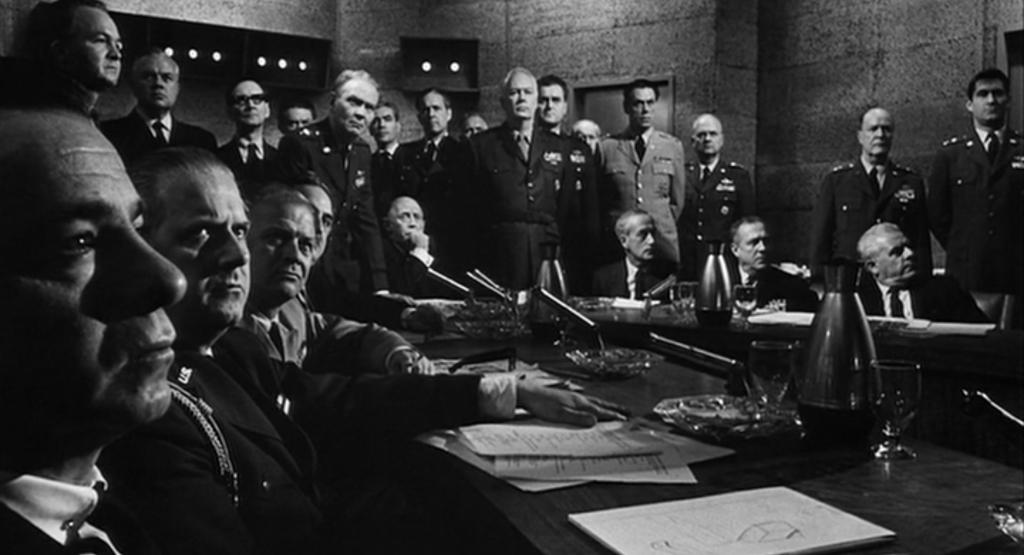
Fail Safe (1964)

Henry Fonda desperately tries to avert nuclear war in Fail Safe

Director: Sidney Lumet

Cast: Henry Fonda (The President), Dan O’Herlihy (Brigadier General Warren Black), Walter Matthau (Professor Groeteschele), Frank Overton (General Bogan), Fritz Weaver (Colonel Cascio), Edward Binns (Colonel Jack Grady), Larry Hagman (Buck), William Hansen (Defence Secretary Swenson)

In 1964 the classic film on nuclear conflict was released and became a landmark in Hollywood history. Also released was Fail Safe. Dr Strangelove has dragged Fail Safe through history like a sort of phantom limb. It’s reputation – if you’ve heard about it at all – is “Dr Strangelove but with no jokes”. That’s hugely harsh on a well-made, tense and fascinating film that sees nuclear war as less the blackly comedic theatre of MAD (Mutually Assured Destruction, the buzzword of the day), and more as a dark human tragedy where mistakes, suspicions and paranoia lead to disaster.

During a routine manoeuvre, a mechanical power surge at USAAF leads to a mistaken but correctly authenticated order being sent to a wing of bombers to drop their nukes on Moscow. Due to Russian jamming, USAAF has no idea this has happened until after the five minute recall window. After the five-minute window has passed, the pilots follow their training and ignore all subsequent orders no matter who gives them – even if it’s directly from the President (Henry Fonda) himself. Desperately the President works with the Soviet Union to stop the bombers (and prevent the inevitable full scale nuclear war they would provoke). Problem is national pride, mutual suspicion, subordinates who can’t stomach co-operation between enemies and those that an accidental first strike is the perfect way to start a nuclear war one side could win, keep getting in the way.

While Dr Strangelove saw the insanity of MAD – the willingness of the leaders of both sides to promote a type of war that could only lead to the destruction of all life on earth – as so darkly absurd it could only be a subject for jet-dark-satire, Fail Safe takes a more humane if equally chilling route. Shot mostly with a low-key documentary realism by Sidney Lumet, the action is restricted to no more than four main locations. Once the crisis starts we never go outside. We never even see the Russians, represented only by photos and their words given life by Presidential translator Larry Hagman. Bar from the odd piece of stock footage, we are in the bunkers with the characters. And we feel as powerless as they do, as events spin out of control.

The film could be seen as an attack on the replacement of humans from the system by machines. Sure, the strike is triggered by a faulty piece of equipment. But everything after that is the result of good old-fashioned human error. The US debate about shooting down the bombers that goes on for so long, the bombers get out of range. The Russian refusal to accept US help to shoot the bombers down, leading them to taking pot shots at radar ghosts. The attempted coups on both sides in the command room, as junior officers refuse to co-operate with the enemy. The mistrust between both sides that leads the Russians chasing a decoy attack run rather the real bombing plane, despite the pleading of the American General that it’s a decoy.

And above all, the crushing arrogant insanity of introducing a system like this in the first place. A system so regimented and drilled into its soldiers – removing any chance of independent logical thought – that the pilot of the bombers will even ignore his own wife pleading down the line that the first strike he believes he is retaliating against hasn’t even happened. A system where leading American advisors suggest that, because it’s so difficult to call back an attack like this, why not just launch everything else after it as well and claim victory. This system can destroy the world but has no leeway for human error and forbids any independent thought from anyone. Now that’s MAD.

It takes a while for the film to get going, laying its groundwork slowly. Much of the first half hour introduces the characters – such as the family life of anti-Nuclear but loyal soldier General Black (a very good Dan O’Herlihy) and the chilling pragmatism of war theorist Professor Groeteschele (Walter Matthau) to whom nuclear war is just a matter of working out what the acceptable casualty rates are (he would agree with Stalin that one death is a tragedy, a million is a statistic). We tour the USAAF base where level-headed General Brogan (an excellent Frank Overton) and his twitchy number two Colonel Cascio (a slightly too fidgety Fritz Weaver) demonstrate just how fool-proof their systems are to a couple of congressmen – just as those systems fail.

From there the film plays out almost in real time, as the planes fly the two-hour journey to drop their bombs. Two hours when everyone tries to desperately tell themselves that this disaster can be prevented (or in some cases, can be turned into victory). Lumet’s film captures wonderfully the claustrophobic intensity of this. The Russians – despite never being seen – are skilfully humanised with snatches of conversation and photographs. The pilots are brave, resourceful, brilliantly trained – making their rigid determination to destroy the world for no reason (because their training doesn’t allow them to consider any other alternative) all the more tragic.

It all culminates in an impossibly bleak ending, the President’s only alternative to all-out nuclear war is one of terrifying magnitude. The inevitable build to this sacrifice is also executed with a low-key intensity. Fonda is perfect in the lead role – his tortured gravitas and decency pushing him towards ever more distasteful and finally appallingly bleak decisions.

Lumet’s film isn’t perfect – an overly impressionistic opening of General Black’s recurring dream of a matador smacks of someone who has watched way too many Bunuel films – and its slow start probably takes five minutes too long. But with its chillingly cold glaze on the flaws in the nuclear deterrent and the people who operate it, it deserves to be remembered as something more than Dr Strangelove Without the Jokes.

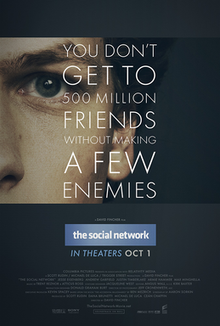
The Social Network (2010)

Andrew Garfield and Jesse Eisenberg bring the making of Facebook to life in Fincher’s modern American classic

Director: David Fincher

Cast: Jesse Eisenberg (Mark Zuckerberg), Andrew Garfield (Eduardo Saverin), Justin Timberlake (Sean Parker), Armie Hammer (Cameron Winklevoss/Tyler Winklevoss), Max Minghella (Divya Narendra), Brenda Song (Christy Lee), Rashida Jones (Marilyn Delpy), Joseph Mazzello (Dustin Moskovitz), Rooney Mara (Erica Albright), John Getz (Sy), David Selby (Gage)

Nothing has changed our interaction with the world faster than the internet. And nothing on the internet has changed how we interact as much as social media. As it drives changes in the way we relate to other people, it’s a brave film that tries to capture this zeitgeist and turn it into an effective movie. The Social Network is a brave movie – and also a brilliant one, a defiantly modern and far-sighted movie that avoids being the sanctimonious message movie it could have become, by concentrating on personal relationships, drama and, above all, a strong and compelling story.

Its October 2003 and a 19-year old Harvard student Mark Zuckerberg (Jesse Eisenberg) gets dumped by his girlfriend Erica (Rooney Mara). So, he responds like many people today would – but not in 2003 – by writing a series of rude and angry blogs about her. And at the same time, he does something you and I wouldn’t be able to do – he builds overnight a campus website called Facemash that allows users to rate the attractiveness of female students. It’s a sensation – and a scandal.

Off the back of it, Zuckerberg is approached by the Winklevoss brothers (in a skilled double performance by Armie Hammer) to see if he’d be interested in building an elite social network, Harvard Connection, for them. Zuckerberg agrees – but did he independently already have the idea for Thefacebook, an elite social network for Ivy League students? Either way, with funds from friend Eduardo Saverin (Andrew Garfield) he builds the platform which is to become Facebook. Does it all end well? Since the story is framed around Zuckerberg in 2009, sitting in depositions while being sued by both the Winkelvoss brothers (“the Winklevi”) and Saverin, you can guess not.

Fincher’s film reflects its central character in many ways – cool, efficient, tightly wound, juggling intellectualism with simmering tension. It’s vibrant, fresh, razor-sharp, perfectly paced and superbly dramatic. It turns what could have been a terrifically dull story of very clever people typing lines of code into a whipper-sharp story of jealousies, rivalries and suspicions. It also brilliantly veers away from being a polemic. It could easily have made points – as many films have – about the “evils and dangers of that creepy thing the internet” or constantly reminded us how morally superior film-makers are to social media kingpins. It does nothing of the sort. Instead it’s a brilliantly insightful look at the birth of a phenomenon that also makes subtle, intelligent points about some of the behaviours that phenomenon led to. All while keeping us gloriously entertained.

A big part of the film’s success is in Sorkin’s superb script. The material is perfect for him. The character’s intellectualism fits with his pithy turn of phrase, while their perceptions of themselves as victims or on a moral crusade fits with his ability to write morality with empathy. It also helps that he is the master of crackling dialogue. The idea to structure the film around the depositions is also a master-stroke. Not just a reminder of what’s to come, it adds an air of artificiality to everything we see (perfect as well for Sorkin’s smarter-than-life dialogue) – after all, each scene is based on the filtered remembrances of people in the depositions. And all of them remember a subtly different story.

Sorkin and Fincher also manage to avoid having villains in play. It would be easy to make Zuckerberg a villain: many films would have done. But Zuckerberg here isn’t bad – it’s more that he’s tunnel-visioned, selfish and socially inept. Erica (a marvellous turn by Rooney Mara as the first victim of social media bullying) has a point when she says she dumping him not because he’s a geek but because he’s not really a nice person. But Zuckerberg’s actions – his betrayals as some read them – come not from vindictiveness but a shark-like moving forward that leaves people behind him. And he’s also, as the film is keen to show repeatedly, lonely. He has one friend – whom he sacrifices on the altar of his creation – and is ruthless at cutting people out of his life when they fail to meet the standards he has set them.

The film channels the skills of Eisenberg – whose range is not huge – perfectly here, in a role he was surely born to play. Eisenberg crafts his physicality in something hunched, oppressed and sullen while his flat voice is perfect for a man who expresses himself through his creation not his personality. He gives Zuckerberg both a ruthlessness, but also a strange lack of knowledge – constantly surprised that his actions have consequences that leave him alone. He makes him a true lonely god of the internet – the man who invented the biggest social networking centre in the world, but who doesn’t have a friend himself.

But it also makes clear that Zuckerberg lacks the usual flaws of his kind: he’s not interested, it seems, in money, riches, fame or drugs. To him, the prize is to do not to be seen to do. He makes a rich contrast with Sean Parker (a brilliantly charismatic Justin Timberlake), the creator of Napster, who briefly influences him but is primarily interested in the flash and bang that the retiring Zuckerberg isn’t. What he does have is the drive and ruthlessness that his friend Eduardo Saverin (a wonderful performance from Andrew Garfield as a marvellously sweet, but clearly naïve and out-of-his-depth man completely lacking the vision a project like Facebook needs) doesn’t have – and which makes Saverin unsuitable for thinking in the global terms Zuckerberg is.

And the film has little time for the Winklevoss twins. Played with chutzpah in a double role by Armie Hammer (who skilfully distinguishes both of them), Zuckerberg is right when he describes them as rich kids who had everything they ever wanted in life – and seem outraged that they can’t be given the rights to Facebook as well. As he points out they intended to do nothing other than come up with a concept. These rowers – in a witty touch their boat is sponsored by that dinosaur Polaroid – also represent the old elite under siege from new media. The entitled rich, who can’t comprehend that the world is being handed to them on a plate.

The film also makes for an intriguing meta-commentary on the growth of social media. From the trolling of Erica, through the bitter feuds and arguments, the he-said-she-said fighting of the depositions, and the quick shifts between friendship and rivalry, it also manages to capture the world of social media in a nutshell. The atmosphere where actions can explode in people’s perception, where statements you made years ago come back to bite you, where judgement and criticism are constant and the ability to communicate more easily also makes fights easier to start, seem more and more prescient.

Fincher’s film does this marvellously, with a wit and sense of dramatic flair that reminds me of a more grounded Network. Sure the scene at Henley-on-Thames is hand-in-the-mouth agonising for any British person to watch (it is littered with major errors from turn-of-phrase to its understanding of life in Britain), but when every other scene in it is perfectly done it doesn’t matter. Like any victory, Facebook has many people claiming to be its father. You could say the film about this film: superbly directed, a brilliant script and perfectly cast, it’s a triumph.