Category: Directors

A Passage to India (1984)

A Passage to India (1984)

Lean’s final film is a visually sumptious, if not always completely successful, Forster adaptation

Director: David Lean

Cast: Victor Bannerjee (Dr Azizi), Judy Davis (Adela Quested), Peggy Ashcroft (Mrs Moore), James Fox (Richard Fielding), Alec Guinness (Professor Narayan Godbole), Nigel Havers (Ronny Heaslop), Richard Wilson (Collector Turton), Antonia Pemberton (Mrs Turton), Michael Culver (Major McBryde), Clive Swift (Major Callendar), Art Malik (Ali), Saeed Jaffrey (Hamidullah), Ann Firbank (Mrs Callendar), Roshan Seth (Amit Rao)

David Lean’s final film came after a 14 year hiatus after the overwhelmingly negative reaction to Ryan’s Daughter. (During a disastrous two-hour lunchtime with several prominent US film critics, Lean was asked outright how the director of Brief Encounter could have made “such a piece of bullshit” – the experience shattered his confidence for years). When he returned, it was with this handsome literary adaptation of EM Forster’s classic novel on the tensions in the British Raj. A Passage to India is a wonderful fusion between Lean’s later films that fill the largest canvas, and the carefully judged Dickensian adaptations of his early years.

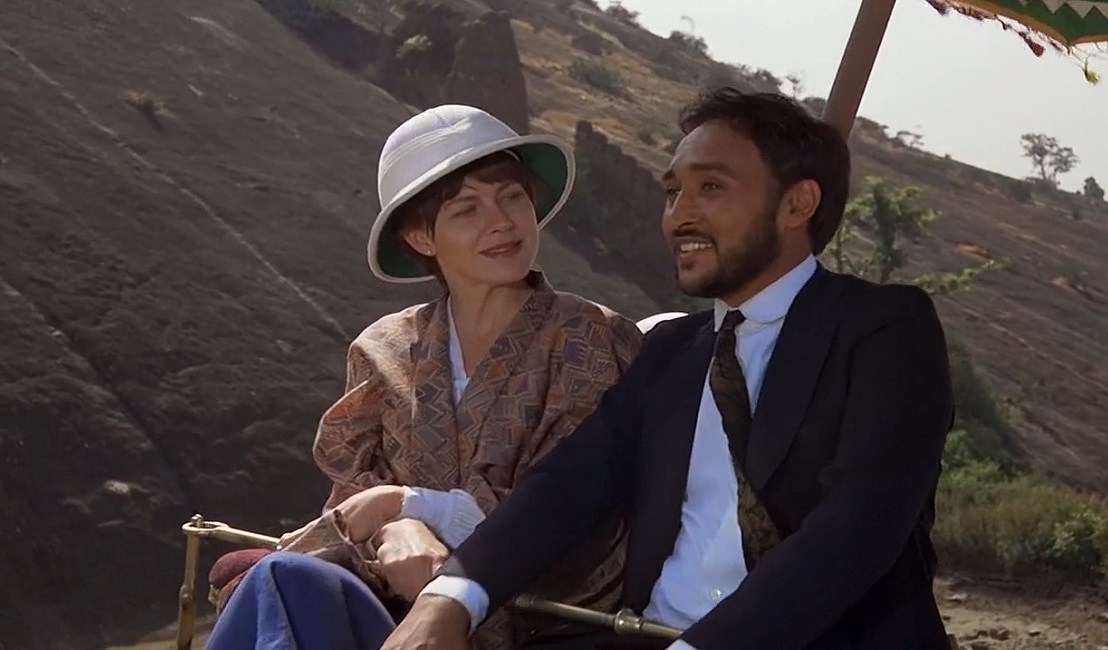
In 1920s Chandrapore, Adela Quested (Judy Davis) has arrived from England with her prospective mother-in-law Mrs Moore (Peggy Ashcroft) to marry the local magistrate Ronny Heaslop (Nigel Havers). The two women are fascinated by India and its culture – and quickly bored with the parts of it the ex-pat community will show them (basically a sort of little-England alcove). When they befriend local Muslim doctor Aziz (Victor Bannerjee) and liberal pro-Indian school superintendent Richard Fielding (James Fox), Aziz invites them on a trip to the local Marabar Caves. During the trip, Miss Quested flees and accuses Aziz of attempted rape. Aziz pleas his innocence – Fielding and Mrs Moore believe him, Miss Quested seems confused – but the case becomes a cause celebre that will explode the tensions between the rulers and the colonised.

Lean’s production of the book (as well as directing, he also wrote the screenplay and edited the film) is a delicate and handsome adaptation, carefully capturing the events of the book and making a manful effort to bring to life its textures and complexities. Forster had worked in India for several years as the secretary to a Maharajah and for many years was in love with an Indian called Masood. He had a unique perspective of Indian/English relations (much of it filtered into the character of Fielding) which he believed was underpinned not only by misunderstanding but also unpassable barriers that Empire throws up between East and West.
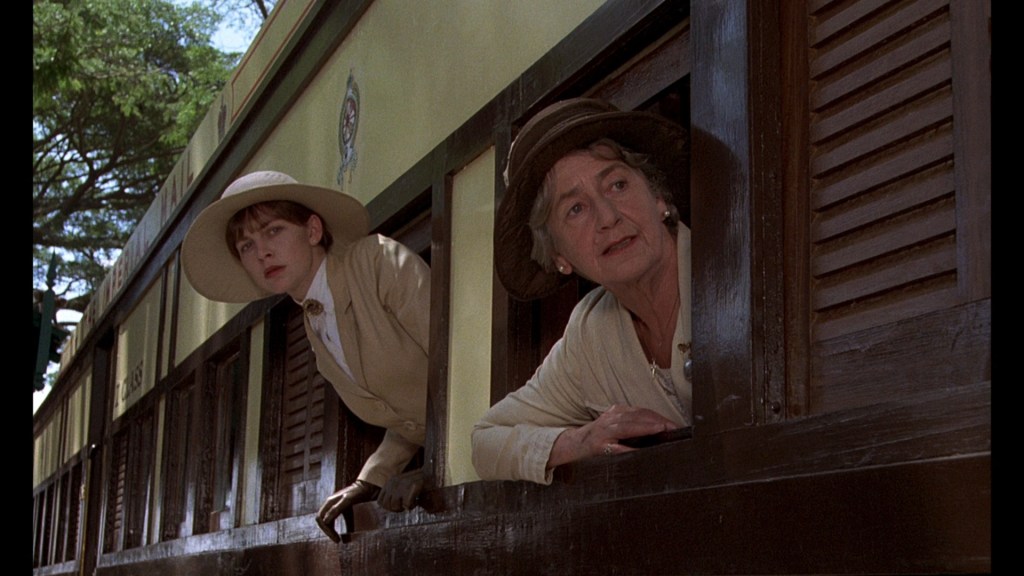
A Passage to India doesn’t always quite manage to capture this – perhaps largely because the book’s third act (which focuses in particular on the strains on the friendship between Aziz and Fielding) is truncated down to about 12 minutes of the film’s 2 and half hour run time. This does mean the film’s final impact feels rushed and unclear – and that the final parting of these characters doesn’t carry the impact it should. I can see why this has been done – that section of the book is less interesting, and also shows Aziz, at times, in a less sympathetic light – but it does mean the film misses something of the book’s engagement with moral and intellectual issues in favour of delivering the cold, hard plot of the Caves and the trial.

But these sections are well-judged, carefully structured and expertly executed. Lean’s film is very good on observing the kneejerk racism (some paternal, some outright unpleasant) from the British community. The incongruity of British clubs, garden parties and middle-class homes and lawns in a foreign land. How Indians are only welcome into these settings as silent servants or repurposed into British icons, such as brass bands. The total detachment of the rulers from the ruled: the tour of India arranged by Ronny features the British barracks, court-room and culminates in some ghastly amateur theatricals. Indians exist only to be told what to do and to applaud their rulers.

This is counterpointed with the rich, vibrant, dynamic culture of the Indians. If the film sometimes tips into displaying this as a sort of Oriental mysticism, that can be partly because our experience of it is often filtered through Adela and Mrs Moore who are bewitched and intrigued by a country of colours, emotions and passions unheard of in Britain.

Lean’s film never overlooks the Indians though. Our introduction to Aziz is to see him nearly mowed down on his bike by a speeding government car. His home is kept in good condition, but cannot compare to the wealth of the British. He and his friends talk passionately of the possibility for independence. There is a natural expectation of rudeness and dismissal from the British, that is taken in their stride.

Well played – if the role is a little passive – by Victor Bannerjee, Aziz is the victim we witness events through. Proud to befriend the British women, friendly and over-eager, Aziz is a highly unlikely would-be rapist. Put-upon and dismissed by his British superiors, he’s a lonely widower whose children are living hundreds of miles away, who suggests the trip in a moment of social awkwardness and goes to absurd ends to make the trip a success.

Sadly, its doomed. Leans film does a good job of maintaining much of the book’s mystery of what happens in the caves. Lean also finds a visual way of representing much that lies implied in the book. In an invented scene before  the trip, Adela cycles into the Indian countryside eventually finding a ruined temple filled with sexually explicit statues and hordes of monkeys in heat. Its clear the exposure to sexuality both shocks and unnerves her – but also fascinates her. Later she dreams of the statues she has seen. The same overwhelming feels seem to consume her in the caves – a heightened sense bought on by claustrophobia and a fear of a moment of personal intimacy between her and Aziz, perhaps spinning off into a temporary nervous collapse.

The film doesn’t state it for sure, but the implication is carefully put there. It leads perfectly into the well-staged trial scenes. Lean’s film focuses largely on delivering the plot of the novel, rather than the depths, but in delivering this crucial encounter he finds a marvellous way to use the language of film (music, editing and photography all interplay effectively in the sequences to add to their unsettling eeriness) to dramatise a literary sequence.

It’s not a perfect film. At times languid, it could no doubt have done with a bit more tightening and pace (it takes nearly half the film to reach the caves). While the film benefits from the build of the atmosphere and the tensions between both cultures, if Lean can do Great Expectations in less than two hours you feel he could have done this book more tightly. The unfortunate decision to cast a brown-face Alec Guinness as Brahmin scholar Professor Godbole looks more uncomfortable with each passing year – not least as all other Indian roles are played by Indian actors.
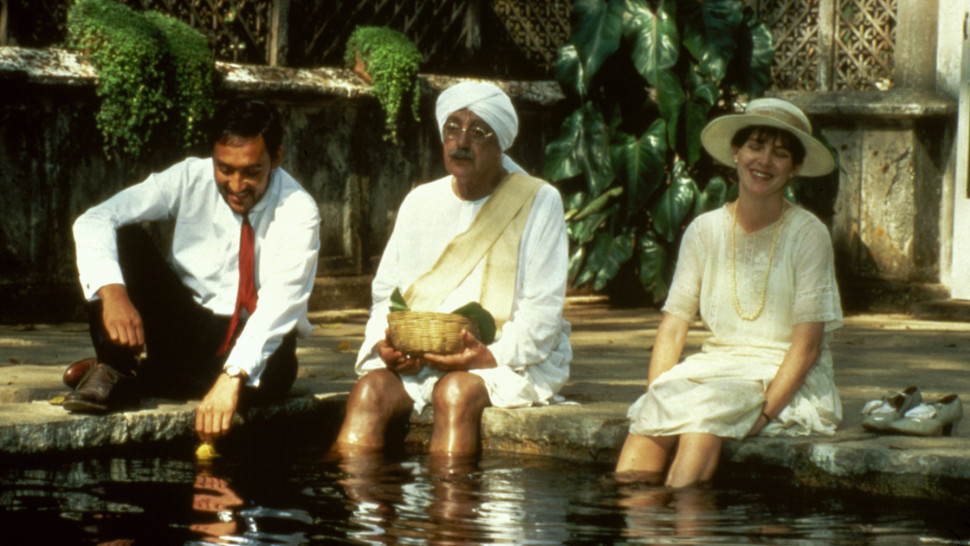
The film does however have a very strong cast. Judy Davis is both fragile, uncertain and at times even deeply frustrating (in the intended way!) as Miss Quested. Peggy Ashcroft won an Oscar (part of a late boom in her screen career – she also won a BAFTA the same year for The Jewel in the Crown) as the very grounded and worldly-wise Mrs Moore. James Fox gives his finest performance as the sympathetic Fielding caught between two worlds and eventually rejected by both.

A Passage to India has a lot of Lean’s visual mastery, but it’s less a sweeping pictorial epic and more of a careful and well-judged literary adaptation. While it does focus more on the plot and less on the meaning of the novel, and it overlong and at times lacking in energy, it also has some fine performances and brings many parts of the novel triumphantly to life. His final film does not disgrace his CV.
The Great Escape (1963)

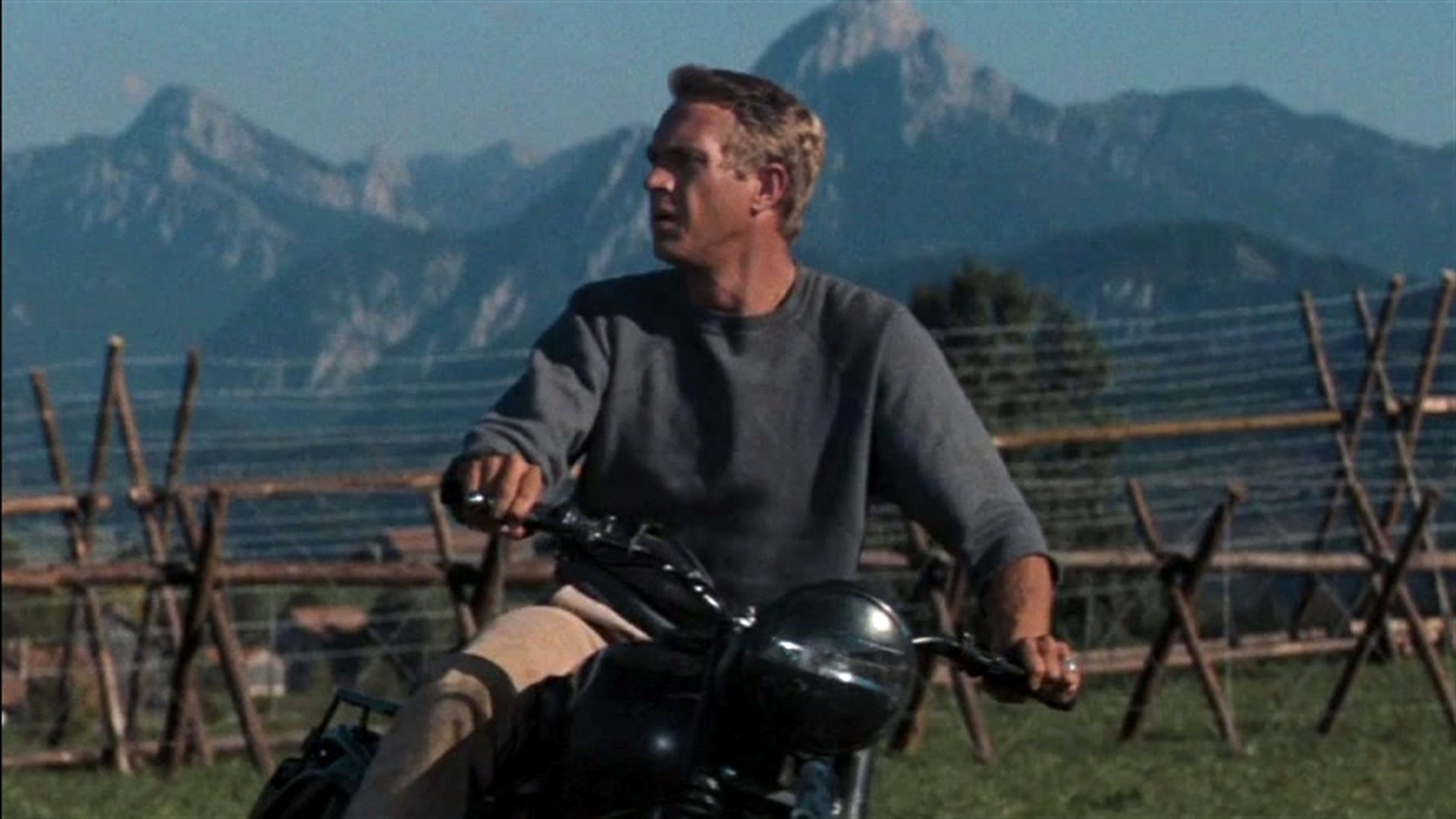
Steve McQueen is the Cooler King (King of Cool?) in The Great Escape

Director: John Sturges

Cast: Steve McQueen (Captain Virgil Hilts), James Garner (Flight Lt Bob Hendley), Richard Attenborough (Sqd Leader Roger Bartlett), James Donald (Group Captain Ramsey), Charles Bronson (Ft Lt Danny Welinski), Donald Pleasance (Flt Lt Colin Blythe), James Coburn (FO Sedgwick), Hannes Messemer (Oberst von Luger), David McCallum (Lt-Commander Eric Ashley-Pitt), Gordon Jackson (Ft Lt Andy MacDonald), John Leyton (Ft Lt Willie Dickes), Angus Lennie (FO Archie Ives), Nigel Stock (Ft Lt Dennis Cavendish), Robert Graf (Werner)

Is there a film in Britain more associated with holidays than The Great Escape? While I was growing up it felt like a day-off wasn’t complete unless the BBC screened it as part of their afternoon schedule. In Britain is has a status as a sort of cosy uncle, a part of the furniture of many people’s filmic lives. There is always something comforting and reassuring about The Great Escape. So much so, people forget it ends with a large bodycount and the majority of our heroes further away from freedom than when they started.

But it doesn’t really matter, because The Great Escape is one of the last hurrahs of effective, nostalgic war-films. The sort of hugely enjoyable caper that recognises the cost of war, but also celebrates the pluck, ingenuity and guts of Allied servicemen, running rings around those dastardly cheating Nazis. Where we would all like to look back and remember those days when men-were-men and worked together towards a common goal. Sturges has created a marvellous tapestry of a movie, that pulls together several striking scenes, characters and snippets of dialogue into a true ensemble piece that reflects the camaraderie and unity that exists between the prisoners as they work towards their escape.

In some ways, The Great Escape is such good fun, such well-packaged entertainment and telling such an exciting, uplifting and (in the end) moving story that it’s almost immune to criticism. You’d have to have a pretty hard heart not to enjoy it. And you’d have to be pretty cynical not to enjoy the way it presents a series of obstacles and then carefully demonstrates the fascinating and rewarding ways the prisoners resolve these. It’s also notable that, aside from the shadowy Gestapo types, the film doesn’t really have an antagonist. The enemy is that fence. Most of the Germans are just regular soldiers doing a job – it’s only the brutal final-act Gestapo who are aren’t playing this eccentric game. But this helps us sit back and enjoy the film as a caper – just as it makes the burst of machine-gun fire that (nearly) ends the film even more impactful and shocking.

Sturges’ gets the tone of the film spot-on, and also draws a series of perfectly balanced performances from his all-star cast. I think it’s fair to say a lot of the film’s success was connected to Steve McQueen’s casting in the crucial role of Hilts. McQueen channels a sense of 1960s anti-establishment cool into the film (unlike the rest of the POWs, he seems to be wearing basically his own clothes in t-shirt, chinos and bomber jacket). Iconically bouncing his ball against the wall in a cooler, a natural loner (who of course still does his bit), with a cocky sense of defiance and some exceptional motor-bike skills, Hilts is undeniably cool. He’s the face of the film – and the one you walk away wanting to be.

He also gets the film’s definitive claim to fame, with a series of daring motorbike stunts as he races across Germany to escape. Mostly performed by McQueen himself (although not the most famous fence jump, done by a stuntman) this last act chase is a gripping, action counter-point to the more cagey, paranoid runs of the other escapees. It’s so exciting and feel-good, it’s a surprise to remember that Hilts actually gets caught. But then, if he hadn’t, we’d have lost McQueen’s cool, wry shrug of acceptance as he and his mitt were sent back to the cooler in the camp for another 20 days.

The film tees up plenty of sub-plots for the rest of the cast, with Sturges’ spreading the love very effectively. Charles Bronson gets perhaps the best plot as “tunnel king” Danny Welinski who holds back his crippling claustrophobia almost long enough. I think this might be Bronson’s finest hour, giving a real vulnerability to Danny, with genuinely quite affecting whimpers and fear at confronting the tunnel – making his struggle all the more moving. Bronson makes a wonderful double-act with John Leyton as fellow tunneller Willie Dickes, the two of them forging an affecting bond of loyalty.

A similar bond also forms between James Garner’s suave and playful scrounger Jack Hedley and Donald Pleasance’s professorial forger Colin Blythe (has there ever been a more “Colin” Colin on film than Pleasance?). The final moments between this pair carry perhaps the biggest gut-punch of a film that has a surprising large number of them. Pleasance’s sad attempts to hide and combat growing blindness are genuinely affecting, while Garner is a master at conveying depth beneath a light surface. Sturges’ film taps into the nostalgic memories most of us have (or have picked up) of this war being one where life-long friendships were formed against horror and adversity.

Attenborough does most of the thankless heavy-lifting as Big X, but the film uses his Blimpish authority well. Gordon Jackson has a memorial role as the number #2 famously caught out by his own vocal trap (the sort of irony films like this love). Fans of the TV show Colditz can enjoy seeing David McCallum in a very similar role as a daring young escapee. James Donald channels British reserve as the senior officer. The film’s single truly bizarre performance is from James Coburn, with an Australian accent from the Dick van-Dyke school of ineptitude, so terrible even Sturges surely noticed it when cutting the film.

The Great Escape marshals all these cards extremely well. Any combination of any of these actors produces fireworks. It’s one of the best boys own adventure you can imagine. It in fact gets the perfect balance: you can spend a large chunk of the film thinking that being locked up in a German POW camp looks like the best time ever – and then it chillingly reminds you with its sad coda of the terrible cost of war. But it’s that first hour and half and its celebration of grit, guts, determination and ingenuity that really works – and it’s so entertaining that it solves immediately any mystery as to why any public holiday you’re 10-1 to find this popping up on your afternoon TV listings.

Armageddon (1998)

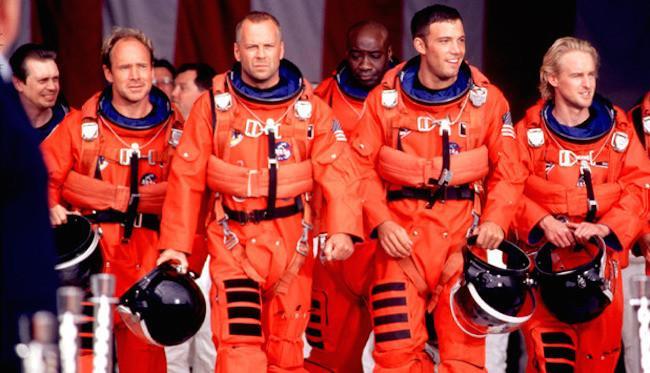
Bruce Willis leads a group of Big Damn Heroes in Michael Bay’s abysmal Armageddon

Director: Michael Bay

Cast: Bruce Willis (Harry Stamper), Billy Bob Thornton (Dan Truman), Ben Affleck (AJ Frost), Liv Tyler (Grace Stamper), Will Patton (Chick Chapple), Steve Buscemi (Rockhound), William Fichtner (Colonel Sharp), Owen Wilson (Oscar Choice), Michael Clarke Duncan (Bear), Peter Stormare (Lev Andropov)

In Michael Bay’s space, no-one can hear you scream. But that’s only because it’s so damn loud up there. It’s 1998’s other “asteroid is going to wipe out humanity” film, the one that came out after Deep Impact but grossed more. NASA recruits ace driller Harry Stamper (Bruce Willis) and his team (including Will Patton, Steve Buscemi, Michael Clarke Duncan and Owen Wilson) to fly up to an asteroid the size of Texas, drill a hole in it, drop a massive nuke in and blow it into two bits that will bypass the Earth. Will humanity be saved? And will the tensions ever be resolved between Harry, his protégé AJ (Ben Affleck), and Harry’s daughter Grace (Liv Tyler) who, much against her dad’s will, wants to marry AJ? Houston, we have a problem.

Armageddon is the ultimate expression of Michael Bay’s style. With the camera swooping and rotating wildly around characters on the move, the fast-editing, the assault on the ears, the green-yellow-blue hue, every shot and line of dialogue in Armageddon feels like it was made to be inserted into a trailer. It’s an overlong onslaught (nearly two and a half hours) which rarely goes ten minutes without a sequence that features explosions, furious shouting and frantic camera movements. Most of the action in Armageddon is incoherent and the film rather neatly replicates the experience of being actually hit by a meteor.

For many people this is a guilty pleasure. But there is very little pleasure to be had here. By trying so hard to top Deep Impact – a film he hadn’t even seen at this point – Bay dials everything beyond 11. So much so it becomes exhausting. Half the action sequences (of which there are many) are impossible to understand, such is the fast editing and the way all the dialogue is screamed by the actors at each other, all at once, drowned out by bangs and crashes. The only dialogue you can actually make out in the film is of the “The United States government asked us to save the world. Anybody wanna say no?” variety, built for slotting into a trailer before some more bangs.

In fact the whole film is basically a massive trailer for itself. It’s unrelenting and after a while not a lot of fun. I guess if you catch it in the right mood it might just work. Bay gives it everything he has in his arsenal. But even he can’t overcome performances from his actors that range from bored and unengaged (Willis and Buscemi both fall into this category) to over-played grasping at epic-status (Affleck and Tyler fall into this one). Billy Bob Thornton comes out best with a wry shrug, knowing the whole film is bonkers but going with the ride.

Anyway, it all charges about a great deal, even while it never knows when to stop. In every situation one crisis is never enough – it’s best to have three at once. Not only does someone need to stay behind, but the asteroid is breaking up and the shuttle won’t take off! What a to-do! The film is desperate to excite you, like a 7 year old who wants to share the BEST-THING-EVER with you and doesn’t draw breath while telling you every single detail.

Of course, scientifically the film is nonsense, but that hardly matters. How NASA can know the comet being blown in two will create two bits that will miss the Earth (rather than two impacts or a whole load of debris) is unclear. Timeline wise – particularly early on – the film makes no sense. But then who goes to Bay looking for a science lecture? It even opens with a ponderous Charlton Heston voiceover, all part of the straining for grandeur.

It’s not even the best Bay film (that would surely be the far more enjoyable but equally overblown The Rock closely followed by the first Transformers film, the only one that doesn’t make you feel soiled after watching it). Armageddon could be a guilty pleasure. But really it’s terrible. You should just feel guilty.

Great Expectations (1946)

Great Expectations (1946)

Lean’s masterful adaptation is still one of the finest examples of Dickens on screen

Director: David Lean

Cast: John Mills (Pip), Valerie Hobson (Estella), Bernard Miles (Joe Gargery), Francis L Sullivan (Jaggers), Finlay Currie (Abel Magwich), Martita Hunt (Miss Havisham), Alec Guinness (Herbert Pocket), Jean Simmons (Young Estella), Anthony Wagner (Young Pip), Ivor Barnard (Wemmick), Freda Jackson (Mrs Joe Gargery), Eileen Erskine (Biddy), Torin Thatcher (Bentley Drummle)

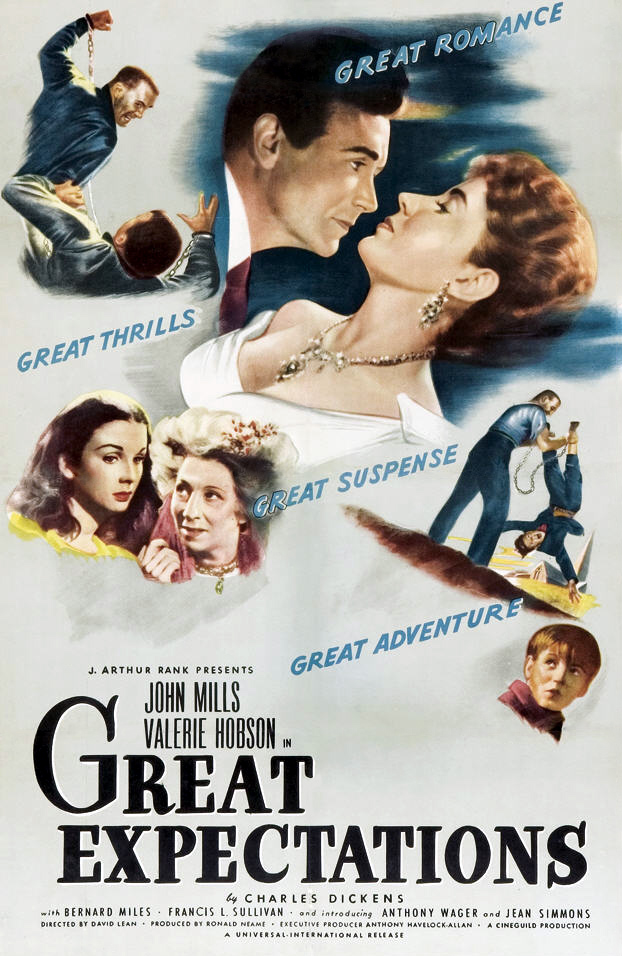
Of all Dicken’s books there is perhaps none so popular as Great Expectations – and no Dickens adaptations are more highly regarded than David Lean’s 1946 film. Of course, just under two hours is only time to tell a simplified version of Dicken’s original. But no-one’s taking the book away. What Lean’s film did triumphantly was turn Dicken’s prose into a clear cinematic language and style, without losing the uniqueness of the author’s voice. Lean’s visual mastery is perfectly matched with his experience as an editor of telling a story to produce an endlessly entertaining film.

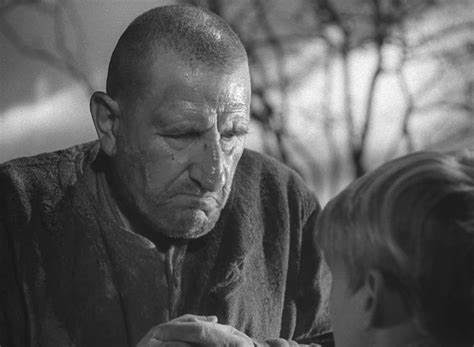
As a young boy Pip (Anthony Wagner) encounters an escaped convict (Finlay Currie) in a graveyard. Intimidated, Pip brings the convict food and tools to escape his chains – acts which the convict clears him of when he is caught later that day. Weeks later, Pip is invited to the home of rich spinster Miss Havisham (Martita Hunt) to provide her and her adopted daughter Estella (Jean Simmons) with company. The visits continue until Pip’s apprenticeship as a blacksmith to his brother-in-law Joe (Bernard Miles) begins. Imagine Pip’s (now John Mills) surprise six years later when he is informed by lawyer Jaggers (Francis L. Sullivan) that he has come into money – that he has become a gentlemen of “great expectations”. Assuming it is the work of Miss Havisham – and that he is destined to marry Estella (now Valerie Hobson) – he is horrified to discover his life is more complex than he believed.

The film repackages Great Expectations a bit more into a romance. While the relationship between Pip and Estella, and the bond between them, is clear in the novel – and a large part of its plot – its but one thread masterfully woven together into the final storyline. Here this thread is given prominence, at the cost of several others. It’s not a complaint as such, but it makes Great Expectations into a more traditional story: a feeling added to by the film’s more conventional “feel-good” ending (very different from the much more uncertain ending of the novel, that Dicken’s edited back and forth in different editions to increase or decrease its hopefulness). However, it works for creating a film story, even if it loses some of the depth of the novel.

Its also more than balanced by how much the film gets right. Lean brilliantly captures the novel’s atmosphere, its gothic sense of impending dread, the burden of the past and the paranoia of persecution. For decades the opening scenes of the film, with its masterfully shot and edited mist covered graveyard (simultaneously a place of peace and a place of unsettling unknowability ) bursting into life through the grasping hands of Magwich, were practically used as a textbook example of cinematic language. Lean’s work is intensely cinematic. The mis en scene of Expectations is masterful – everything from casting, to camera angles to score comes together to bring Dickens world to life. This is exactly his London as he wrote it. It’s a wonderful expression of a particular author’s style, told using a mastery of cinematic language – from camera angles to editing cuts.

The characters have that perfect sense of eccentricity laced with menace that Dickens invests them with. Francis L Sullivan’s Jaggers is an unknowable legal machine who is part man of business, part fearsome fixer. Alec Guinness (in his film debut) is good-natured kindness to a T as Pip’s faithful friend Herbert (in one lovely scene he politely and gently corrects Pip’s primitive table manners). Finlay Currie’s Magwich captures the sense of danger and threat in the book’s opening that will become a fatherly meekness in the story’s later acts.

Largest of all, Martita Hunt’s gothic Miss Havisham sits like a giant spider at the centre of a decaying web. The design of Satis House – with its rotting wedding cake, sprawling cobwebbed dinner service, the heavy curtains and lack of light – is just one of the many perfect touches in the film. Hunt herself is superb as this outwardly eccentric aunt, who in fact has been nursing a core of bile and hatred that ends up only hurting those closest to her. There is something hugely dreamlike about Miss Havisham’s home – you suspect Lean may have watched some Cocteau – with its strangely angled table and mix of intimate framing and wide-angle crane shots.

Perhaps because we only see, not read, Pip’s actions in this film it’s impossible not notice what an arrogant snob he becomes. John Mills does decent work in the part, but (much as in the book) Pip ends up feeling like a slightly colourless figure. The film doesn’t always explore in detail the negative sides of his character meaning moments like his patronising dismissal of the kindly Joe (a perfectly judged Bernard Miles), don’t do the character much favours. Mills does however make a larger impression than Valerie Hobson, left slightly adrift as Estella. She’s not helped by how outstanding Jean Simmons is as the young and preciously flirtatious Estella, the perfect picture of the little cruelties teenagers inflict on each other. (A braver film might have had her play the role throughout – but then Mills would look even older than he does!)

The film is very strong on the pain caused to these two characters – and that they cause for each other. More than any other version, we get a sense here of how Miss Havisham’s misguided aim to use Estella as a weapon of revenge on all men only manages to hurt Estella herself and Pip (her one true love as presented here). Just as a Pip’s snobbish dismissal of Joe stings. And Lean’s brilliant sense of pace and rhythm means that this plays hand-in-hand with Pip’s ever more desperate attempts in the second half to save Magwich from doom.

Many of the complexities of the plot (from Estella’s parents to Herbert’s marriage to several key characters) are cut out, but it’s striking how the film still manages to feel so faithful to the book. Lean’s understanding of Dickens mix of eccentricity and darkness is communicated in every frame. The major moments and characters from the book are beautifully bought to life, from that opening scene to Satis House. But also because small moments, like Wemmick’s “Aged P” remain in the film. Sure, the canvas has been reduced – and refocused into a love story of sorts – but the picture that emerges is still very much in the style of Dickens.

That’s what makes it one of the greatest adaptations of all time: it’s both an interpretation of the original and a beautifully judged capturing of its spirit and tone. An adaptation twice the length may have caught more plot, but would not have been such a fine movie. Because so much of this film’s imagery and drama sticks in the mind long after it is finished. Lean’s masterstroke here was to understand completely the heart of the book, and to focus the film on that. Brilliantly assembled, designed, shot and acted, it’s still one of the best literary adaptations ever made.

Inherit the Wind (1960)

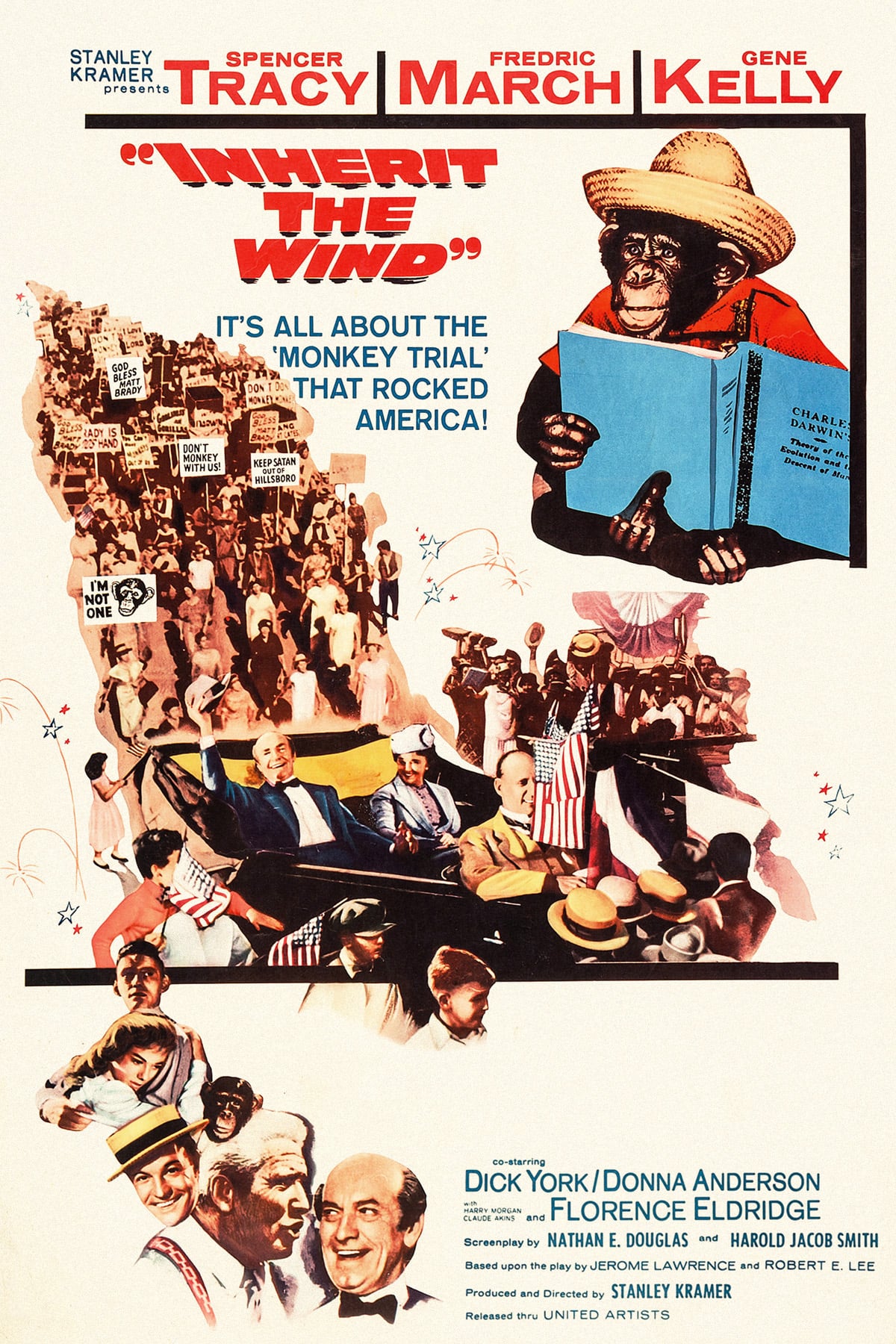
Spencer Tracy and Fredric March go toe-to-toe in Stanley Kramer’s liberalism-on-trial movie Inherit the Wind

Director: Stanley Kramer

Cast: Spencer Tracy (Henry Drummond), Fredric March (Matthew Harrison Brady), Gene Kelly (EK Hornbeck), Florence Eldridge (Sara Brady), Dick York (Bertram T Cates), Donna Anderson (Rachel Brown), Harry Morgan (Judge Merle Coffey), Claude Atkins (Reverend Jeremiah Brown), Elliott Reid (Prosecutor Tom Davenport), Paul Hartman (Deputy Horace Meeker)

In 1960, Inherit the Wind was a parable. The teaching of Darwinism being illegal in a small town that defined itself by its faith couldn’t really happen today could it? So, the film used the concept as an angle to criticise the restrictions placed on free speech during the McCarthy years. The wheel has come full circle now: it’s no longer unlikely at all to imagine something like this happening. Indeed, versions of it have already taken place in America this century. This change does actually help the film look increasingly more prescient as time goes by.

A fictionalised version of the famous Scopes monkey trial (with most of the names changed, but many of the court room events fundamentally the same) a local schoolteacher, Bertram Cates (Dick Young), in a small Southern town is placed on trial for teaching Darwinism in his school. Staunch Christian and former Presidential candidate Matthew Harrison Brady (Fredric March) volunteers to put the case for the prosecution. Cates’ defence will be handled by the renowned liberal lawyer Henry Drummond (Spencer Tracy). Sparks fly in a courtroom and around the town, where many people are instinctively opposed to anything that can be seen to draw doubt on intelligent design.

Kramer’s films are often both praised and criticised for their rather heavy-handed liberalism. Inherit the Wind is no different. You’d be hard pressed to miss the message here about the dangers of intrusive laws designed to govern what we think and believe. Kramer’s film edges away from making criticism of fundamentalism too overt. Sure, the local preacher (a lip-smacking Claude Atkins) is a tongue-frothing “burn ‘em all!” maniac, only happy when stirring up an outraged mob. But on the other hand, Drummond is revealed to be a man of (liberal) faith – and, in an agonisingly heavy-handed final note, the film ends with him literally weighing The Bible and On the Origin of the Species in his hands then clasping them both together. You see – science and faith can work together!

While it’s easy to smile at Inherit the Wind’s striving for inoffensive liberalism, it means well and actually produces some effective court-room set-pieces. While its overlong – the sections outside of the court could do with trimming down and a rather shoe-horned plot with Cates dating the local preacher’s daughter (not helped by the blandness of both actors) promises much but delivers very little. What the film really works at is a chance for two seasoned performers to go at each other hammer and tongs in the court. Chances they both seize.

Spencer Tracy sets a template of sensible, liberal reasonableness mixed with a well-defined sense of right and wrong that would serve him well in a further three collaborations with Kramer. He brings Drummond a rumbled worldliness, a shrewd intelligence and a patient forbearance but never once lets us forget his righteous fury that this case is even happening in the first place. His courtroom performance hinge on a winning reasonableness that can turn on a sixpence into ingenious traps for witnesses. He’s a rock of decency in a shifting world and Tracy effectively underplays several scenes, making Drummond seem even more humane.

It also means that Tracy makes a lovely performing contrast with Fredric March’s firey passion as Brady. Sweating in the heat of the court, March’s Brady is overflowing with moral certainty and fury. March’s performance is big, but the character himself has a court-personae that depends on him appearing like an embodiment of God’s fury. It works because March gives Brady a quiet air of sadness. This is a man raging against the dying of the light – this case is his last hurrah. Brady is becoming yesterday’s news, but can’t seem to consciously accept this. In quieter moments, he is clearly a man of reflection and reasonableness – but (in a surprisingly modern touch) is all to aware that a raging public personae is what “sells”.

Kramer’s film is at its strongest when it lets these two actors go toe-to-toe. These moments aren’t just in the fireworks for court. Private scenes between the two show a great deal of mutual respect and even admiration. The two men are old friends. Drummond is very fond of Brady’s wife Sara (played excellently by Fredric March’s real life wife Florence Eldridge), who also regards him as a man of decency. They can sit on a bench at night and reflect on the good times. Brady may be a type of demagogue but he’s not a rabble rouser like the Reverend Brown (who he publicly denounces) even while he enjoys the attention of crowds. Drummond isn’t adverse to whipping up a bit of popular support – or enjoying the attention. It’s a fine contrast of two men who both similar and very different.

Aside from this, Kramer sometimes trips too often into rather obvious and heavy-handed social commentary. Gene Kelly is on good form in an over-written part as a cynical journalist – he sort of cares about justice, but only if its a good story and has only scorn for anyone else who believes anything. The film closes with a rather heavy-handed denunciation of his lack in belief in anything, compared to Brady’s faith. The script is at times a little too weak – Tracy and March sell the hell out of a vital confrontation near the end, playing “gotcha” moments that the script largely fails to deliver – but there is still lots of meat in there. Some of the staging and performances – including the extended pro-religion protests that pad out the run time – are a little too obvious.

But at heart, there is a very true and increasingly more-and-more relevant message in this film – and when its acted as well as this, it’s hard not to enjoy it.

Forrest Gump (1994)

Tom Hanks unleashes some cloying charm in Forrest Gump

Director: Robert Zemeckis

Cast: Tom Hanks (Forrest Gump), Robin Wright (Jenny Curran), Gary Sinise (Lt Dan Taylor), Mykelti Williamson (“Bubba” Blue), Sally Field (Mrs Gump), Haley Joel Osmont (Forrest Gump Jnr)

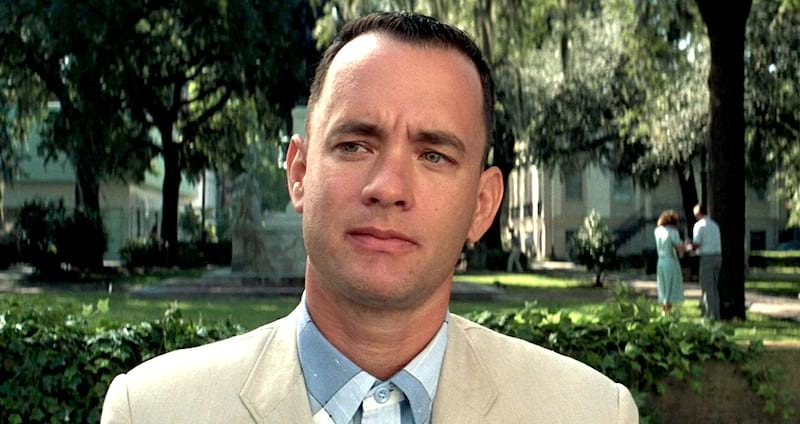
Oh dear God. It’s worse than I remembered. I hadn’t watched Forrest Gump since maybe 1995. I hadn’t liked it much then. But that might just have been my contrariness: sure I was going to find faults in the film that became a cultural phenomenon. Rewatching it today: actually no, I had good taste. This must be one of the worst films to ever win the Best Picture Oscar – and certainly one of the most unsettlingly twee, sentimental, conservative-minded pieces of feel-goodery to ever come out of Hollywood.

You surely know the plot. Forrest Gump (Tom Hanks, who to do him credit plays this one note character with real charm) is a good-hearted man with developmental difficulties (IQ below the 75 mark) who lives through some of the most turbulent times in American history. From racial violence in the 1950s, to Vietnam, the Cold War, the political turmoil of the 1970s, Forrest lives through it all. And largely lets it wash over him, never letting it intrude on his simple, folksy, homespun gentleness. Although that might mostly be because he also doesn’t really understand most of the things happening around him. He’s quite a contrast with the girl he’s loved since their childhood, Jenny (Robin Wright) who embraces everything the modern world brings (protest, politics, drugs) but of course finds her life much less rewarding and happy than Forrest’s “go-with-the-flow” acceptance.

Just writing it down I can feel my stomach turning again. At the time the filmmakers were very keen to promote the film as stridently apolitical. Yeah sure the film never praises, say Kennedy or Nixon, just as it goes out of its way not to state an opinion on either George Wallace or the Black Panthers. But the film is, at its heart, a large, beating, reassuring lump of rank conservatism.

It looks back at America’s past with rose-tinted glasses, portraying a world which would have all better if they had taken a leaf out of Forrest’s book. If we had all been just as uninvolved, decent, kind and stayed at home where we were happy rather than getting engaged in major social and political issues, everything would have been better. Forrest is a celebration of all-American virtues of honesty, bravery and loyalty – but the film is also an implicit criticism of other all-American virtues like curiosity, scepticism and challenging the status quo. Basically, the film celebrates the cosy attitudes conservatives adore and has nothing good to say about more liberal values. Sure, it doesn’t roll out a banner for Nixon – but you can also see this playing well at a Trump rally, with people saying we would be a happier country if we could all be a bit like Forrest.

That’s really tough on the film – and I imagine Zemeckis and co would be rightly horrified about that very idea – but it’s a film that doesn’t once challenge the audience at all. I was reminded throughout of Being There which took a similar concept: a man with low IQ finds himself at the centre of major events. But while that film was a satire – where the characters invest Chance’s gnomic utterings with profound wisdom – this film is a serious drama which encourages the audience to see a “deeper wisdom” in Forrest, to effectively treat him as a sort of prophet. There is a reason bland nonsense like “life is like a box of chocolates” caught on.

The original book was far more of a satire on the shallowness of modern culture. This instead plays like a sort of holy fool pilgrimage, with Forrest’s interaction with historical figures played for laughs. From showing Elvis how to dance, to (in the film’s most cringing moment) inspiring John Lennon with the lyrics of Imagine (another reason to hate Forrest), the film is crammed with gags like this. While the insertion of Tom Hanks into newsreel footage with Kennedy, Johnson and Nixon is impressive (although it has not aged quite so well), it’s not made with any point. This is because Forrest has no real appreciation of what’s happening around him. He’s merely moving from one event from the next – but this lack of engagement and understanding is held up as a virtue. And the very fact that it is, speaks to the film’s underlying conservatism and love for simple, small-town American ideals that shouldn’t be sacrificed to all that uncomfortable social and political change.

The film is particularly harsh on Jenny, decently played by Robin Wright, who is portrayed as someone succumbing to every trend and popular movement of the era. And whom the film consistently punishes for this by showing her emptiness, shallowness and unhappiness, until it finally consigns her to death from AIDS. Just in case we’ve missed the point, Forrest repeatedly urges her to come home – to stop engaging with the wider world and the problems in it and bury her head back into the sands of home, where everything is simple, safe and nothing changes.

The world of Forrest Gump is one where corruption and war mongering don’t matter because it happened a long time ago. A world where racial politics are too distasteful to mention (although since Forrest’s Granddaddy was a leading member of the KKK – a flashback played for laughs – that clearly wasn’t the case). Where the only black people Forrest encounters are the outsider soldier Bubba (who of course dies in ‘Nam – even in serious films, the Black Guy dies first) and his servile family whose names don’t even merit a mention, but who become the grateful beneficiaries of Forrest’s oblivious generosity. But there is no sense here of the dangers and violence of America (bar some nasty jocks at Forrest’s college) – which considering the film has a cameo from George Wallace of all people is really striking.

But then the problems of the world I guess don’t seem that bad if you just don’t think about them and instead go through life with a smile on your face, blissfully unaware of what’s happening around you. The closest the film gets to giving Forrest an opinion on something is when he is asked to speak at a rally against Vietnam – and even then the sound cuts out meaning we can’t hear him (though it seems to have been profound). A wittier film, like Being There, would have made this a moment for satire. Here it seems more like the magic of Forrest’s simplicity mustn’t be shattered for the audience by daring to suggest he actually has a view on something.

The film is a warm and comforting hug, that tells people the past wasn’t that bad and would have been better still if we’d just been nice to each other. That wanting to change the world is dangerous and greater rewards can come from going with the flow. For all Forrest is bereft by Jenny’s death, the film still rewards him with family, home and friends. It’s sentimental, empty, depressing crap. Well made, but simply dreadful. You may not know what’s in a box of chocolates, but you sure as shit will remember after you’ve vomited them all back up after watching this.

The Aviator (2004)

Leonardo DiCaprio excels as Howard Hughes in The Aviator

Director: Martin Scorsese

Cast: Leonardo DiCaprio (Howard Hughes), Cate Blanchett (Katharine Hepburn), John C Reilly (Noah Dietrich), Kate Beckinsale (Ava Gardner), Alec Baldwin (Juan Trippe), Alan Alda (Senator Owen Brewster), Ian Holm (Professor Fitz), Danny Huston (Jack Frye), Gwen Stefani (Jean Harlow), Jude Law (Errol Flynn), Willem Dafoe (Roland Sweet), Adam Scott (Johnny Meyer), Matt Ross (Glen Odekrik), Kevin O’Rourke (Spencer Tracy), Kelli Garner (Faith Domergue), Frances Conroy (Katharine Houghton), Brent Spiner (Robert E Gross), Edward Herrmann (Joseph Breen)

Howard Hughes grew up wanting to make the biggest movies in the world, fly the greatest plans and be the richest man in the world. He achieved all of this. He ended his life a wild-haired long-nailed recluse, terrified of stepping outside his controlled zone, a victim to crippling OCD. Martin Scorsese’s The Aviator is a triumphant, brilliantly engrossing, sumptuous exploration of Hughes’ years of triumph, where everything seemed to go right publicly – even while everything was beginning to go wrong internally.

It’s Scorsese’s second teaming with Leonardo DiCaprio – and while DiCaprio’s boyish good looks don’t really relate to what the real Hughes looked like, his charismatic enthusiasm, passion and determination brings Hughes triumphantly to life. It’s a brilliant performance, which dominates the movie. DiCaprio seems to completely understand power of driving ambition, who will mortgage everything he has time and time again to achieve his dream – and also the force of personality needed to turn those dreams into success. But obsession drives both success and eventual personal disaster. There is always something slightly fragile about DiCaprio – maybe its those boyish good looks – and here he brilliantly captures the tragedy of a man clinging to his sense of self, struggling with the demons within him.

Scorsese’s film gloriously balances the epic with the personal. It so brilliantly relates to the irrational but very convincing fears of those suffering from OCD, that scenes featuring Hughes obsessively plucking tissues from boxes, or stuck in restrooms scared of touching the door carry a real sense of threat. The grandness of much of the rest of the film – and the sense we get have how much more Hughes could have achieved – means the demons he carries are even more affecting. Imagine what he could have done, if he wasn’t terrified of even the smallest germ, or was able to put aside his destructive urge to control every inch of his environment and the people in it.

All this tragedy works because the grandness is so impressive. Scorsese’s film looks beautiful. The filming was inspired by replicating the visual and colour styles of contemporary Hollywood. The early 1930s-set section of the film apes the toned look of early-colour (green appears blue, most strikingly at a golf course) with full colour only appearing when the film hits the years of technicolour. The 1940s sequences are inspired by touches of film noir, leaning into the early days of epic technicolour by the end. It looks striking and also amazing. The production design is similarly breathtaking, while the film is shot and assembled with a wonderfully vibrant energy.

It’s also got plenty of wit. John Logan’s fast-paced script captures the sense of a fun of a man who was determined to turn his dreams into reality. John C Reilly is a lot of a fun as the weary number 2, constantly performing financial gymnastics to keep his bosses dreams afloat. Compulsion and obsession makes Hughes the sort of guy who will rebuild an aeroplane from scratch because of a minor flaw, or will reshoot a film because it will work better with sound. During the shooting of Hell’s Angels he keeps a private fleet of planes on the ground while waiting for clouds that will make the scene work. Frequently thousands of dollars a day are spent keeping projects ticking over, while Hughes waits for perfection. He’s not a man to compromise – and you can see why an artist like Scorsese would relate to that. While the film never lets you forget this obsessive perfectionism cuts both ways – and is as much a symptom of OCD as obsessive handwashing.

Scorsese’s passion for classic Hollywood clearly informs much of the first half of the film, that covers the shooting of Hell’s Angels and Hughes’ relationship with Katharine Hepburn. There are delightful cameos from Hollywood icons like Errol Flynn and Louis B Mayer. Playful references abound. The film’s emotional heart is the bond between the two larger-than-life ambitious figures Hughes and Hepburn. Cate Blanchett (Oscar-winning) is fantastic as Hepburn, a pitch-perfect impersonation that also captures her gsharp, uncompromising intelligence and no-nonsense energy. The chemistry between the two is spot-on.

The film’s second half covers more the aviation of the title, with Hughes’ struggle to break the near-monopoly of the skies owned by PanAm, with his own airline TWA. With Hughes starting to teeter on the edge of OCD collapse, even while energetically setting records in the air and fighting battles in the senate, its perhaps even stronger. It also introduces nemesis in Alec Baldwin’s smoothly manipulative Pan Am chairman Juan Trippe and, most delightfully, an Oscar-nominated Alan Alda as a hypocritically corrupt Senator Brewster. The dinner and senate clashes between Alda and DiCaprio provide glorious energy to power the film’s final act.

It also serves as a last hurrah for Hughes. It’s DiCaprio that really makes the film work as this star burns itself out, finally succumbing to the compulsions that we know will see him end his days locked into a room at the top of a Las Vegas hotel. Moments carry a suggestion of fantasy – is Hughes imagining some of the shady figures he sees at the edges of frames? Are oddly toned late meetings with Ava Gardner (an underpowered Kate Beckinsale) an illusion? It’s all part of the the powerful sense of tragedy of seeing him end, wild-haired, peeing into milk bottles and stuck into loops of repeating phrases over and over again. Scorsese’s film superbly captures the immense sense of lost opportunities.

The Aviator is undeniably grand and triumphant film-making, that looks a million dollars. But it also manages – in thanks to a superb performance from DiCaprio – to capture a tragic sense of a man who burnt himself out at the height of fame and success. It tells two parallel stories without us realising it: a man achieving his dreams, even while his nightmares consume him. With Scorsese’s perfectly judged direction and some wonderful performances, this is both a sprawling epic and a very personal story of loss. While it seems very different from the films we might expect from the master, I think it might be one of his finest works.

Pickup on South Street (1953)

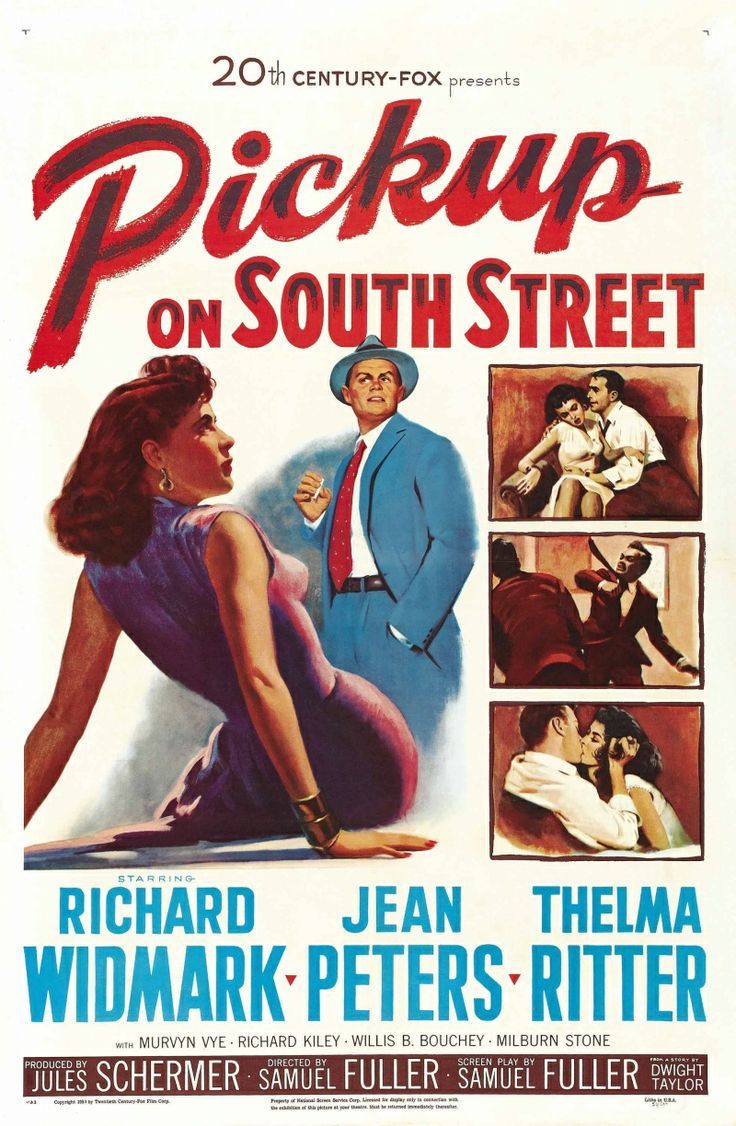
Richard Widmark and Jean Peters feel the heat from the cops, the commies and their own passion in Pickup on South Street

Director: Samuel Fuller

Cast: Richard Widmark (Skip McCoy), Jean Peters (Candy), Thelma Ritter (Moe), Murvyn Vye (Captain Tiger), Richard Kiley (Joey), Willis B Bouchey (Zara), Milburn Stone (Winoki), Henry Slate (MacGregor)

It’s 1950s, and the biggest bogeyman in America is the Commies. Candy (Jean Peters) is one of their unwitting couriers, funnelling top secret microfilm for her ex-boyfriend Joey (Richard Kiley) to pass to his Moscow superiors (poor Candy just thinks she engaged in helping Joey with some good-old All-American industrial espionage). Trouble is, while the Feds are trailing her, they watch her being pickpocketed by career thief Skip McCoy (Richard Widmark). Skip now has on his hands on some serious state secrets. Should he return the film to the police who want to lock him up? Or make a big score by blackmailing the Commies who want to kill him?

What makes Pickup on South Street so intriguing is it’s not necessarily as straight forward as you might think. Fuller’s film is an anti-communist film – the sort of “reds under the bed” scare that terrified millions in a country still reeling from Klaus Fuchs and the Rosenbergs. But this isn’t your standard Red Scare film. Because our heroes have about as much stake in the USA as they do in the USSR. They are the down-trodden, the under-class, the grifters. At the end of the day, I’m not sure Skip McCoy really cares who ends up with the MacGuffin. He’s motivated firstly by financial gain and secondly by personal revenge. No appeal to flag and country cuts any ice with him.

Making the hero this sort of anti-social career criminal was a master-touch as it not only enriches the entire perspective of the film – what has their country ever done for these people – but also adds an air of uncertainty over the whole thing. There would never be any doubt if the microfilm had fallen into the hands of a clean-cut Henry Fonda type. The fact that it’s Richard Widmark – who always looks like he’s torn between laughing in your face or punching it – means you never quite know what he’s going to do. If it works out best for him to hand that film over the Russkies, you can be sure he will.

That’s despite the heavy-handed entreaties of the cops and feds. Skip faces a barrage of hostile interrogations, vague promises, handcuffs and searches from law agents who are damn sure he has the film, but can’t prove it. Like many Fuller films, there is more than a hint of roughness and violence in every frame – and the law and order figures aren’t averse to this. Captain Tiger (what a name!) has already served a suspension for beating Skip in custody. An illegal search or two isn’t beyond them. You can see why the FBI was unhappy with this film – not least because it shows them constantly out-thought by a pickpocket.

The Commies though are a thoroughly bad lot. After all, it’s still an anti-Communist film. Richard Kiley’s snivelling coward Joey is no true believer, but the kind of low-breed opportunist tempted by a quick buck. The other communists we meet are corrupt, shady types, sitting in backrooms puffing pipes and casually handing out death sentences. Kiley’s weak-willed and increasingly desperate Joey becomes more and more despicable as the film goes on, desperation to save himself from the fury of his paymasters leading to ever lower and despicable crimes.

So the only people who really come out as truly decent – and playing by a very fixed moral code of their own – are the criminal underclass. In this world, everyone knows where they stand. Skip isn’t angry at stool-pigeon Moe, who carefully trades information with the police – everyone has to make a living he observes. Skip will pick pockets to earn his keep, and punch back when he’s attacked, but there is no sense that he has any taste for the crimes of the Communist agents. He’ll sell on the microfilm to them – but that’s only because his own government offer him nothing but hot air and empty promises. And, as the unspoken message of the film goes, what difference would it really make to Skip and his like anyway where the film ends up?

Instead Skip becomes motivated by personal feelings – specifically his feelings for Candy and Moe. There is a genuine sexual frisson between Skip and Candy from the start: Skip’s pickpocketing of Candy is shot like a sex scene, all sweaty brows, heavy breathing and close-ups (with Skip’s hands ‘penetrating’ Candy’s handbag with all the metaphorical energy of a train speeding into a tunnel). As events draw them closer together, the two maintain this electric sexual energy – whether arguing or fighting or lying to each other they seem unable to take their hands off each other – and the intimacy of close-ups and low angles Fuller uses for this brings a real sexual charge to their scenes. Widmark – superb as a heavy with a (hidden) heart – and Peters are also great, with Peters bringing a real roughened hinterland of disappointment to her role.

The other motivator for Skip becomes the stool-pigeon Moe, brilliantly played with an eccentric bag-lady energy by an Oscar-nominated Thelma Ritter. Moe is a grifter, selling ties by day and trading information on the side. She embodies the underdog nature of the criminal world, wanting nothing more than to earn enough to buy a decent funeral when she goes. Ritter has a marvellous speech on just how tied she feels from this constant scramble of scrapping by on the edge of society. A surrogate mother figure of a sort to Skip, Ritter’s performance is a classic piece of character acting.

Fuller’s scene is lean, short and fast-paced. Like many of his films there is a lot of violence – beatings, fights, shootings – all shot superbly with the camera pulling back to soak up the action. Sex and violence go hand in hand – Skip accidentally punches out Candy thinking she has broken in to kill him, and the two of them are in a passionate embrace moments later. Mixed in with touches of reality, that bring the tough urban world the characters live in, Pickup on South Street is a lean and mean film that manages to be more than just a straight anti-Communist film. It doesn’t just give us something to fight against: it also asks how we might give people something to fight for.

Shane (1953)

Alan Ladd as the mysterious gunslinger Shane

Director: George Stevens

Cast: Alan Ladd (Shane), Jean Arthur (Marian Starrett), Van Heflin (Joe Starrett), Brandon de Wilde (Joey Starrett), Jack Palance (Jack Wilson), Ben Johnson (Chris Calloway), Edgar Buchanan (Fred Lewis), Emile Meyer (Rufus Ryker), Elisha Cook Jnr (“Stonewall” Torrey), Douglas Spencer (“Swede” Shipstead), John Dierkes (Morgan Ryker), Ellen Corby (Liz Torrey)

On the surface Shane is pretty much the definitive “white-hat-black-hat” Western. Crikey, Jack Palance’s vicious gunslinger Wilson practically wears nothing but black. Alan Ladd’s heroic Shane does what needs to be done, and the kid loves him to bits. But Steven’s film is more complex and intriguing than that. Because Shane is in fact only a few degrees away from Wilson. When he rides into the homestead, he is already weighted down by the memory of all the people he’s killed. Shane is no saint. He’s a tired man whose shed too much of other people’s blood to ever feel anything but an outsider.

Shane arrives at the Starrett farm. Joey (Brandon de Wilde), the boy-of-the-house immediately hero-worships this mysterious stranger with the distinctive guns. Joe Starrett (Van Heflin) is at first hostile but takes Shane in as a farm worker and he and his wife Marian (Jean Arthur) – maybe particularly Marian – are drawn towards this reserved but good-natured man. Starrett and the other homesteaders are in the middle of a feud with local cattle rancher Rufus Ryker (Emile Meyer), who wants to drive them off the land so he can use it for his cattle. Violence seems inevitable – but how long can Shane keep his unspoken pact to himself to put down his guns and try a life of normality?

Shane is one of Steven’s finest films, beautifully filmed with Oscar-winning photography and told with a lavishly poetic sense. It works so well because it juggles both a simple story, with a deep poetic understanding of humanity. You can see why this is “a Western for those who don’t like Westerns”. It’s got a beautiful, understated sense of struggle to it – the homesteaders against the bullying of Ryker – beautifully mixed with a sense of the dangerous glamour of violence. Match that with some wonderfully hissable villains and the honesty and decency of the Starretts and Shane’s quiet dignity, and you’ve got a perfectly judged morality play.

But the film works because there is so much operating on multiple levels. Which brings us back to Shane himself. Sure, he’s a decent guy. We expect him to be the hero. He fulfils much of that function in the plot. He’s kind and loving with the kid. He holds his cool and never seems to get angry. But why is this? The film makes clear that Shane has a past. A past of gun-slinging violence. And if Shane is still standing at the end of a life like that, he must have been good. And ruthless.

What was it that made Shane so desperate for a change? To try a life of normality, chopping down stumps and putting up fences on a farm? I suspect Shane in his prime wasn’t that different from the calm, cool and ruthless Wilson. You can see the guilt in his eyes when he finally shoots his weapon (at a rock!) two thirds into the film. This is a man who knows that killing carries a terrible burden – and he clearly knows all too well after sending so many to their graves. At the end of the film, with his emotional pean to Joey (“There’s no living with killing”) he’s speaking from the heart. And only someone who has killed many, many people – who doesn’t look remotely worried when facing off with Wilson and Ryker – could really know that.

It’s an idea that you could miss in the film, but it’s there all the way through. The casting of Alan Ladd – who was never better – is crucial to the success of this. Imagine the strength and power a Wayne or Cooper or Stewart would have given Shane. They would never have felt so slight, or beaten down by a life of violence. But Ladd’s smallness, his sadness and his reluctance works for the part. Stevens continually shoots him as an outsider, on the edge of scenes or even isolated in crowds. He can fade into the background in the way other stars couldn’t have done. He feels like a man who knows he has been a moral failure, who isn’t redeemed by star quality.

Stevens plays with our expectations of Shane through the reactions of the Starretts. Joe is (tellingly) instinctively hostile to him at first, before Shane wins him over. Marian’s reaction is however fascinating. She is both slightly repelled by what she can see as Shane’s past violence, but also increasingly drawn towards him. Is this because Shane’s internal knowledge, his worldliness, his depths of sadness make him more of a thoughtful kindred spirit than her husband can be? Joe is a simple man, decent beyond words, but not a thinker. Shane is more – for all his danger – and Marian feels like a woman who has accepted her place but perhaps dreamed of more. She would never act on this, but Shane to her seems to represent a path not taken.

And Joey? Shane is everything a boy could dream of in a hero. The man with few words who appears over the horizon with nothing but a six shooter. Stevens camera cuts back again and again to Joey’s adoring, worshipping face – and it’s an excellent performance from (the Oscar-nominated) Brandon de Wilde, as a young boy on the edge of becoming a teenager who wants to be a man, but still looks with the eyes of a child. Stevens throughout places the audience on the same level with Joey. Like him we want to believe in Shane, to see him play the hero. It’s part of the films skilful construction that it finishes before it occurs to you that the character the audience most closely related to was the uncritical, unknowing child. On first viewing we stare at Shane with the same hero worship as Joey.

Shane wants a life of normality. Shane isn’t a million miles away from Eastwood’s revisionist Unforgiven. In fact, Munny’s life in that film is basically Shane’s, without Ladd’s humbleness. The brutal killer who wants to leave it all behind, but is dragged back in. Who finally faces off and guns down a horde of enemies in a saloon bar before riding off into legend. Sure, Shane will be remembed with more fondness by those he leaves behind – and he saves the homesteaders – but just like Munny he does it by leaving a trail of bodies behind him.

Steven’s beautiful film is both a compelling narrative of goodies and baddies, but also a profound, fascinating and challenging film. It’s wonderfully made and has a host of reliable actors at the top of their game. Ladd is superb, Jean Arthur brings great depth to Marian, Van Heflin’s Joe is a the sort of simple, decent, salt-of-the-Earth type the West was made of. Facing them, Jack Palance makes the most of limited screentime (and got an Oscar nomination) as the sneering, bad-to-the-bone Wilson. It’s a perfect mixture of small, intimate scale that seems to be taking place in an epic environment. It’s influence has been so profound it’s virtually an archetype. An American classic.

Lifeboat (1944)

The survivors face the weather, the sea and their own suspicions in Hitchcock’s Lifeboat

Director: Alfred Hitchcock

Cast: Tallulah Bankhead (Constance Porter), William Bendix (Gus Smith), Walter Slezak (Willi), Mary Anderson (Alice MacKenzie), John Hodiak (John Kovac), Henry Hull (Charles J Rittenhouse), Heather Angel (Mrs Higley), Hume Cronyn (“Sparks” Garrett), Canada Lee (Joe Spencer)

Spoilers: If you can spoil a film made 76 years ago… but the ending will be discussed

The middle of the Atlantic at wartime. A ship has been sunk by a German U-boat, which was itself sunk in the exchange. A single lifeboat picks up survivors, a mixture of passengers, crewmen – and a German sailor from the U-Boat. Low on food and water, with only a faint idea of where they are, can they survive long enough to find either land or another ship? That’s even before we can overcome questions of trust – or not.

Taken from a scenario written by John Steinbeck, Alfred Hitchcock was originally attracted to Lifeboat because he fancied the idea of directing a film that was set in only one location. And a tiny one at that! Needless to say, such is the imagination and skill the film has been made with that you will soon forgot that it all takes place effectively in one tiny room. Instead, as the camera skilfully cuts and moves through the boat, finding intriguing angles and never once let the pace slip, you’ll be sucked in this intriguing story of survival and morality.

Lifeboat was attacked at the time precisely because of these difficult questions of morality. Unlike many other war films of the time, it wasn’t just interested in propaganda. Instead the German here – later revealed to be the captain of the U-Boat – is not only the films most charming and engaging character, brilliantly played by Walter Slezak, he’s also the only one that has any real idea about how to survive. Need a sailor? He’s best qualified. A navigator? The only man with a clue. Need to lop a gangrenous leg off? Willie can do it with a pen knife. His resourcefulness needs to be weighed in the balance though with his lies, manipulations and hording of supplies.

But the fact the film presents us with a Falstaffianly rogueish German, rather than a monster – and also makes him the most effective of the survivors – was a problem at the time. Combined with the fact that the representatives of the allies are a mixed and divided back. A chippy socialist sailor. A decent but ineffective radio operator. A jobsworth nurse, possibly carrying someone else’s husband’s child. An ambitious gossip columnist. An industrialist who assumes he should call the shots. And a black steward who even needs to take a moment to think about before they decide to treat him as an equal, or even use his real name. A unified and decisive group of allies, this ain’t.

The events of the film then develop in a host of challenging ways. Sure, our heroes eventually come together – but its in a murderous fury that sees them lynch Willie, beat him to death and throw him overboard. Willie saves their lives – but he also hordes water and then persuades the delirious Gus (whose leg he amputated) to throw himself overboard when Gus spies his secret water stash.

This lynching scene is the heart of the film – indeed most of the action is a slow, tension-filled, build towards it. And, for all that Willie is a seemingly unrepentant Nazi (dropping broad hints about having spent some time in Paris) who we are told ordered the shooting of survivors in the water, its hard not to feel some sympathy for him as Hitchcock cuts to a close up of his horrified eyes as he realises what the passengers are about to do. Just as the passengers, waking to find Gus gone and Willie assuring them it was for the best, take a on a monstrous inhumanity as they murder him.

Hitchcock described them later as a pack of dogs. Of the passengers, alarmingly it’s the two most decent (Hume Cronyn’s gentle radio operator and Mary Anderson’s nurse) who turn the most savage in the onslaught. Only Joe – perhaps remembering other lynchings he may have witnessed? – keeps a horrified distance from the slaughter. In a traditional propaganda film, as many critics wanted at the time, this would be a moment of triumph. The allies coming together to vanquish their common foe.

Instead, it intentionally leads a queezy and unsettling taste in the mouth. Hitchcock seems to be challenging us to ask just how we feel about this. Willie has done terrible, greedy, awful things. He’s got a lot of blood on his hands. But do we feel its right for these guys to murder him – and as brutally as they do here? (Hitchcock shoots the lynching at a distance, the passengers descending on Willie like a mob, his bloodied face emerging at one point before being dragged back in). There is nothing really triumphant about this. And, after the deed, no one seems sure how to process it. Rittenhouse even suggests Willie deserved his fate for his ingratitude after they hauled him from the water.

As safety is finally found near the end, it’s not clear what anyone has learned. The whole ghastly cycle looks like it might be repeated when a young German sailor is hauled onboard after another supply ship is sunk. Some passengers are ready to butcher him immediately – the sailor fortunately is armed. Sanity just about prevails, but already the passengers are beginning to revert, right down to starting to address Joe by the common short-hand name for a black steward, George.

But then at the same time, it’s not as simple as that. After all, these German sailors sunk a ship killing hundreds of people. During the first night on the boat a baby dies in his mother’s arms – the mother then throws herself overboard the next night, despite the passengers attempt to restrain her. Those deaths are discussed again at the end when the passengers obliquely wonder if they did the right thing. The film won’t say for sure, but leave it to you to decide. And it’s that rich sense of unease that helps make this a rather overlooked masterpiece for Hitchcock. A lot more than just a technical triumph, it’s a searching and questioning film.