Category: Directors

28 Years Later (2025)

28 Years Later (2025)

Belated sequel successfully compliments gore with thoughtfulness and surprising sensitivity

Director: Danny Boyle

Cast: Alfie Williams (Spike), Jodie Comer (Isla), Aaron Taylor-Johnson (Jamie), Ralph Fiennes (Dr Kelson), Edvin Ryding (Erik), Chi Lewis-Parry (Samson), Christopher Fulford (Sam), Amy Cameron (Rose), Stella Gonet (Jenny), Jack O’Connell (Jimmy)

Following on not quite 28 years since the original (23 Years Later wouldn’t have had the same ring to it), 28 Years Later sees Danny Boyle return to the post-apocalyptic hell-scape that is a Britain over-run by rage-infected, super-fast, permanently-furious, adrenaline-filled humans (don’t call them zombies!). But those expecting a visceral, gut-punch of blood-soaked violence may be in for a surprise. 28 Years Later is a quieter, more thoughtful film, where the battlefield is for the sort of values to embrace in a world gone to hell.

After a viciously terrifying opening set on the day of the original outbreak – in which vicar’s son Jimmy flees, terrified, from his home after a gang of infected literally rip-apart or infect his family sand terrified telly-tubby-watching friends – we flash-forward decades. Britain is now quarantined and nature has reclaimed large chunks of the land. The few remaining survivors live in protected communities, like a group on Lindisfarne, protected by a causeway flooded at high tide. In the community, 12-year-old Spike (Alfie Williams), is taken to the mainland by his father Jamie (Aaron Taylor-Johnson) to claim his first infected kill, while his confused and ill mother Isla (Jodie Comer) sits at home. But Spike will learn things about himself and his father on the mainland – enough for him to decide to risk taking his mother to meet with the mysterious Dr Kelson (a magnetically eccentric and softly-spoken Ralph Fiennes, in a performance that defies all expectations), who lives in isolation and may just know how to cure her.

Boyle’s film is kinetic and vicious at points, but also has a magnetic beauty as his camera flows across a world in some-ways unchanged from 2002 and in others utterly alien. Scavenged supplies are full of technology from the earlier noughties. The remains of things like Happy Eater restaurants are everywhere, and (proving not everything is bad) the Sycamore Gap tree remains standing. Buildings and villages are overgrown with plant-life and trees. Colossal herds of deer – enough to shake the earth – roam the countryside. In many ways the future is once more the green and pleasant land, with the Lindisfarne community sharing supplies and relearning skills like farming and archery (echoing the days of Henry V, with Boyle calling back to this with a series of shots from OIivier’s film, it’s a compulsory skill as the safest way to kill infected).

There is no chance of salvation or change here. That’s made very clear to us, with the Act Two arrival of Edvin Ryding’s scared Swedish soldier who tells us plainly that being stranded on the island is a death sentence. The world has left Britian behind and they way Erik describes it, all iPhones and Amazon deliveries, is as familiar to us as it is utterly incomprehensible to young Spike. This is not a film about fixing, averting or liberating the island. It’s a film about existing in a permanent state where mankind is no longer the apex predator.

Boyle’s film, with an excellent and thoughtful script by Alex Garland, is therefore all about defying expectation. Spike’s journey with his father is less about a terrifying chase from hordes of infected (though there is plenty of that), or him hardening himself in a brutal world. Instead, it’s about Spike’s nagging doubts about his father being confirmed. Aaron Taylor-Johnson is a very good as a man who is brave and protective, but morally weak and desperate for approval. He’s the sort of man who harangues his son into executing restrained infected (even children) and takes every opportunity in between dutiful caring for his wife, to slip off to his girlfriend. A man who brags on their return as if his son was some sort of Hercules, when Spike knew he spent most of his time missing with his arrows and in a constant state of terror.

28 Years Later captures that sinking feeling children can have when they realise beyond doubt that their parents aren’t perfect. Alfie Williams is excellent as a caring boy, who doesn’t see sensitivity and humanity as weaknesses in the way you suspect his father does. Who sees through his father’s need to promote himself and is disgusted by it. And finds himself drawn closer to his sick mother (a carefully vulnerable performance from Jodie Comer) and finding he has more affinity for a world that still has a place in it for decency, where going back to help someone is not written off as foolishness.

It’s a film that raises fascinating questions about the infected themselves. While millions of infected passed away – their rage filled minds unable to carry out basic tasks like eating or drinking – the small percentage who survived, seemed to retain enough of themselves to maintain some sort of life. They move in herds – or, as some of the obese ground-crawlers do, in a bizarre family unit – and they even have leaders. ‘Alphas’ – those who the disease caused to grow to humongous proportions (in every organ) – direct their charges. And they have intelligence: our main Alpha ‘Samson’ enraged at the death of his comrades, holds back from an attack until the moment is right, mourns the loss of a female infected and maintains a relentless pursuit for reasons we’d recognise from thousands of movies.

28 Years Later uses this to force us to ask questions about ourselves and when human life ceases to matter. To Jamie, the infected have ceased to be human and killing them a duty. But Spike is forced to start to ask: what right do we have to decide there are less human than us, these people who were like us perhaps moments before? Beyond self-defence, is killing them as noble as all that? 28 Days and Weeks Later featured the instant slaughter of anyone with even a suspicion of infection. Years questions this like never before. Everyone on this island is a victim, and the infected deserve just as much memoralizing as victims as the uninfected.

It makes for a surprisingly quiet and meditative drama – even if it is punctuated by moments of shocking blood and gore, from heads and spinal cords being ripped out to a blood-spatted TellyTubbies screening in a vicarage – and one that demands you think almost more than it demands you be thrilled. With exceptional performances, especially from Alfie Williams, it’s a different but mature sequel that redefines aspects of the series. And, based on its jaw-droppingly bizarre ending, its sequel will only take this thinking further.

2001: A Space Odyssey (1968)

2001: A Space Odyssey (1968)

Kubrick’s enigmatic masterpiece will open your mind in the same way as its mysterious monoliths

Director: Stanley Kubrick

Cast: Keir Dullea (Dr. Dave Bowman), Gary Lockwood (Dr. Frank Poole), William Sylvester (Dr. Floyd Heywod), Douglas Rain (HAL 900), Daniel Richter (Moon-Watcher), Leonard Rossiter (Dr. Andrei Smyslov), Margaret Tyzack (Elena), Robert Beatty (Dr. Ralph Halvorsen), Sean Sullivan (Dr. Bill Michaels)

When I first sat down to watch 2001: A Space Odyssey I was a teenager. It quickly became clear I had no idea what I was getting into. Somewhere in my mind I pictured an experience a bit like Star Wars. What I wasn’t ready for was the enigma wrapped in a mystery Kubrick actually made. Watching it was rather like a teenager chugging back a fine red wine as their first drink: I spat it out and reached for a can of Fosters. Appreciation for that sort of stuff has to grow with age. Today, for all Kubrick can be self-important, this is visionary, individualistic, ground-breaking film-making. A truly unique piece of film artistry and a masterclass in sound and vision, presenting something unanswerably different. No wonder its impact has stretched through film, like the monolith’s on mankind.

2001 could arguably be about everything and nothing. It was developed by Kubrick and Arthur C Clarke, working in tandem to produce both script and Clarke’s novel. But Kubrick flew in a radically different direction. While he and Clarke populated the novel treatment with greater context, Kubrick felt (as the film reached its conclusion) that explanations weakened the film. Its power lay in maintain the mystery. Kubrick cut a voiceover, trimmed out characters, sliced out dialogue and removed all references to aliens behind events: he left the film itself as a mysterious artifact, the viewer could touch it and experience their own unique odyssey into the unknown.

Split into four chapters, we are taken from the dawn of our civilisation to (perhaps) the dawn of our next civilisation. A prologue shows the arrival of a mysterious monolith on prehistoric Earth, where a group of ape-like humanoids encounter it and learn to use tools (namely to hunt and kill). Millions of years later, mankind’s early colonisation of space discovers another mysterious monolith, buried millions of years earlier. A mission is sent to Jupiter years to find out more about its origins. On that mission, all the crew bar Dr Dave Bowman (Kier Dullea) are killed when on-board computer HAL seems to malfunction. Bowman is left alone to encounter a monolith circling Jupiter which takes him into the infinite, a whole lifetime lived in minutes in a dream-like French drawing room, before his rebirth into a giant space baby.

What’s extraordinary about all this, is that Kubrick does nothing to place any of this into an understandable context. 2001 is a sort of Last Year at Marienbad in Space, a journey into a series of questions with no answers – but yet somehow never feels unsatisfying. It’s also fascinating as a work that feels profoundly philosophical, but with very little actual philosophy or insight in it. Instead, what the film supplies is a sort of raw, elemental power that makes you tremble to your very bones. You can feel it worming inside you, its unfathomable imagery, haunting audioscape and sometimes impenetrable logic making it even more engrossing.

It’s often been said the only character in 2001 Kubrick related to was HAL, the emotionless but sinister computer. In fact, I’d say the character Kubrick most relates to is the Monolith. For, essentially, what is it but a film director: a master manipulator holding all the cards, knowing all the answers and choosing what to share with us? We understand nothing in a film without the director’s guiding hand. Like the Monolith, 2001 has such overwhelming awe and majesty that people are drawn to it while barely understanding it. That’s a Godlike power I feel Kubrick relates to.

2001 is a master-class of the director’s art. The visionary beauty of its imagery is breath-taking. From its sweepingly empty vistas of the barren rocks of pre-historic Earth to the serene majesty of space, this is a film filled with indelible images. There is a true power in the geometrical perfect, bottomlessly black Monoliths that make them something you instantly can’t look away from. And don’t forget that 2001 has one of the two greatest jump cuts in history (the other, of course, being in Lawrence of Arabia), as an ape celebrates victory by flinging a bone into the air that cuts suddenly into a similarly shaped space craft as it falls.

Kubrick’s imagery of planets in mysterious line-ups, or the sun emerging over the top of the Moon have helped define how we think of space. His vision of mankind’s future, full of pristine surfaces, corridors that curve and rotate to create gravity has a power behind the simplicity of its design. So mind-bending is Kubrick’s vision of entering the Monolith – a kaleidoscope of colours hurtling towards the camera – that only the knowledge of his control freak self would let you believe that he (unlike many of the film’s viewers) never once dropped acid.

But the real genius Kubrick used was to match the stately, patient beauty of his images – and you can’t deny that 2001 is a film that frequently takes its time – with striking, perfectly selected classical music. You can argue what Kubrick does here is piggy-back emotional and spiritual effect from the work of others. But his choice of musical score is unfailingly, undeniably perfect: there is no chance Alex North’s rejected score could have had the same power. The deep rumblings of Richard Strauss’ Also sprach Zarathustra so perfectly captures the endlessly, unknowable power of space, time and the Monolith itself that it’s now become a landmark piece. The scenes of the ships in space are given a balletic beauty by being perfectly cut to Johan Strauss’ The Blue Danube. Could the Monolith have had both the power and unsettling sense of the unknowable without the sound of Ligeti’s Reqiuem? There is not a single decision to combine sound and visuals in 2001 that isn’t perfect.

And it only adds to the mysterious power of a film that can be deeply unsettling. If there is a transparent philosophical idea in 2001, it’s that mankind uses tools for conquest; the Monolith at first inspires a progression from the empty posturing of rival ape-tribes, into head-smashing violence. And, millions of years later, mankind is still two tribes (East and West), with weapons that could blow each other out of existence. But, whether that was the aim of the Monolith we never know. Just as we never really know what’s going on with Bowman’s fast track life through his neoclassical hotel (though I find something terrifying at Bowman encountering increasingly older versions of himself in silent trepidation).

Is 2001 optimistic or pessimistic about the future? I think Kubrick is aiming for letting us make up our in mind – after all this is our own private communion with his monolith. It matches his own natural inclination for distance. The humans in 2001 are almost impossibly stoic: space travel is no more exciting to them than a plane trip to a frequent flyer (the curved space station is basically an airport, which the character’s treat with the same time-killing blaseness as we do at a terminal). Messages from family members are twice watched by different figures with impassiveness. HAL’s control of the ship is so total, you wonder what the crew is for. Has the Monolith-inspired technology stunted mankind – now we are so dependent on machine that we just cogs in their workings, has progress stalled? 2001 could really be about mankind’s rebirth for a new life.

The HAL sequence – a precursor in many ways to The Shining in its unsettlingly invasive atmosphere – sticks in the mind as it has easily the most dialogue, plot and overt drama. HAL is a brilliant creation – Douglas Rain’s emotionless voice subtly shifting from strangely sweet to terrifyingly relentless to surprisingly sympathetic when he meets his end – and the sheer terror of these technological marvels turning against us (a space probe that shifts into a sort of monster, followed by a jump cut to HAL’s glowing red eye is just breathtakingly brilliant).

But if 2001 is short of narrative drive, surely that was Kubrick’s point? To keep 2001 as a mysterious encounter with no real answers. It opens and closes with two thirty-minute sequences devoid of any dialogue (the last word we here is “mystery”) and gives us such a blast of the senses that it feels more like being flung into a void of unanswerable questions. I was certainly not ready for that when I first watched it. But now, I just have to bow before Kubrick’s mastery. This inspired so many, its power is felt in thousands of works of art since. And it does this because it balances awe, wonder and mystery in a masterful way few other films can. You learn nothing in 2001. It has no real message, argument, or philosophical points, But yet it leaves you utterly satisfied, bursting at the seams with the power of your own imagination. That’s masterful film-making.

Sergeant York (1941)

Sergeant York (1941)

Patriotic flag-waver with a great performance from Cooper and plenty of genuine heart

Director: Howard Hawks

Cast: Gary Cooper (Alvin C. York), Walter Brennan (Pastor Rosier Pile), Joan Leslie (Gracie Williams), George Tobias (“Pusher” Ross), Stanley Ridges (Major Buxton), Margaret Wycherly (Mother York), Ward Bond (Ike Botkin), Noah Beery Jr. (Buck Lipscomb), June Lockhart (Rosie York), Dickie Moore (George York), Clem Bevans (Zeke), Howard Da Silva (Lem), Charles Trowbridge (Cordell Hull)

In 1941, after Japanese bombs landed on Pearl Harbor, America needed patriotic big-screen heroes. Few stood out more than Alvin York. A young man (over ten years younger than Gary Cooper) who had lived a youth of drunken rough-and-tumble before he found the light. When America joined the First World War, the 30-year-old York was called up. A gifted sharp-shooter, York was perfect for soldiering – but had to wrestle with his conviction to stick to the Commandments from the Good Book. Finding a solution to his moral quandary, York fought in France where his sharp-shooting instincts saw him almost single handedly capture a German machine gun embankment and 132 Germans (it’s an achievement that sounds pure Hollywood, but is in fact entirely true).

It’s an inspiring hero story that Warner Brothers bought to the screen at the perfect time, it’s release seeing tales of streams of young men walking from the cinema straight to the enlistment office. Producer Jesse L Lasky spent no less than twenty-two years attempting to persuade the notoriously publicity-shy and modest York (just as in the film, the real York couldn’t wait to leave the glitz and glamour of his triumphant homecoming behind and return to his fiancé, farm and work with the Church) to grant him the film rights to his life. York agreed only with the advance of Hitler, a hefty payment to his Church and a promise that no-less than Gary Cooper would play.

Cooper was reluctant – pointing out he was far too old to play this national hero – but really no other actor could have done it. Cooper won his first Oscar for the role, and it’s his understated sincerity and decency that really sells the film. He turns what could otherwise by a potentially cloyingly perfect man into someone utterly sympathetic and endearing. There is an aw shucks quality to Cooper, as he captures York’s modesty, his shrugging off his accomplishments as no more than his duty, his palpable discomfort with attention (be it from congressmen or his fellow Tennessee farmers commending his shooting) and a deep-rooted genuineness in his love for his beau Gracie (Joan Leslie giving a commendable performance of endearing brightness that helps you overlook she was 24 years younger than Cooper – thankfully she doesn’t look it).

Cooper’s performance powers a sprightly, very enjoyable film by Howard Hawks (who picked up his only Oscar nomination for this) that manages to transcend the danger of being an overbearing flag-waver. (Don’t get me wrong though – this film waves the flag so much, you can practically feel the strain in its arms). Hawks produces a film that in many ways owes as much to The Adventures of Robin Hood as an heroic All Quiet on the Western Front. Despite the patriotic focus being the final few Acts, as York carries out his act of astonishing heroism, the film’s real heart is in the opening half and the conversion of a man who is never-too-naughty into one who casts aside the demon drink, works hard to earn what he has, and puts his faith and the good of others before his own concerns.

Hawks shoots this part of the film with a palpable energy and a rough-and-tumble sense of humour. It’s there from the film’s opening as Walter Brennan (in a role he invests with all his wheezy, twinkly dignity) finds his sermon constantly interrupted by the gunplay of the drunken York and his buddies. There is a light humour when Margaret Wycherly – a little too ethereal for my taste as York’s saintly mum (although her casting does make York and White Heat’s Cody Jarrett siblings) – archly observes that, even when drunk, her son’s accuracy with a shooter is second to none. That’s the skill of Sergeant York there: in it’s end is it’s beginning, York is already deeply skilled and as his slightly embarrassed reaction shows when he sobers up, reformation is not a long journey.

A large part of the success is making York one of us. Striving to save the money he needs to buy the farmland of his dreams, Hawks provides a sweet montage of York undertaking no end of backbreaking, thankless work and returning home to tick off his slowly accumulating dollars under the smiling approval of Ma. When, after all his work, he finds the land has nevertheless been sold (because the owner never believed this previously idle lush could hold on to his hard-earned pennies), his outrage at the breaking of another man’s word is a clarion call to all of us who have played by the rules and been shafted. When his conversion comes, it’s not as out-of-the-blue as it could seem, but a logical conclusion for a journey we’ve watched him go on.

It’s undercut with scenes that drip with Hawksian skill. A marksmanship competition is crammed with a playful Robin Hoodesque skill. A bar-fight that the drunken York gets wrapped up in is so full of comedic tumbles and prat falls it’s hilarious. York’s constantly being fetched for various tasks by his kid brother is expertly played for subtle laughs. Alongside this, the romance between York and Gracie (and the off-screen slapping he hands out to a rival who treats her with disrespect) is beautifully handled.

The only real Hawksian touch missing is that little slice of cynicism, that ability to look under the skin of a legend (like with Wayne in Red River) and see a more flawed person. York basically is perfect, and in a film dripping with patriotism there can’t be any fault with either the army or the moral question of whether gunning down your fellow humans is alright in the service of your country. There is a version of Sergeant York where his commanding officer’s invitation that he take some time and read his way through the history of America (a replacement good book) was an act of naked manipulation of a guileless man. Or where we see the sort of guilt at his taking of life that the real York felt, play out across Cooper’s face. There’s none of that here.

In fact, after the vibrant, playful, heartfelt first few acts, you feel Hawks felt less interested in the war itself. There is a functionality about the final acts of Sergeant York as York aces his shooting tests on the range (although the flabbergasted reaction of his training officer and York’s apologetic manner at his failure to only manage five dead-on bulls-eyes on his first time using an army-issue rifle are funny). Hawks spices it up with York’s turkey-shoot metaphor, and a warm supporting turn from George Tobias (as a New Yorker soldier) and York’s gobble-gobbles to distract his German opponents. But, for all the realism of the trenches, there is an air of duty about this sequence.

But then Sergeant York works not because of the deed, but the man. And the film’s success in investing us in a man who could very easily have been all-too-perfect, in a playful and energetic first half works wonders. With a very fine, perfectly judged performance by Gary Cooper, this may not be Hawks most characterful work – but as the sort of film to showcase a man who inspires you to achieve acts of heroism, it hits the target perfectly.

Mickey 17 (2025)

Mickey 17 (2025)

Indulgent, over-long satire that mixes painfully obvious political targets with on-the-nose comedy

Director: Bong Joon-Ho

Cast: Robert Pattinson (Mickey 17/Mickey 18), Naomi Ackie (Nasha Barridge), Steven Yeun (Timo), Toni Collette (Ylfa Marshall), Mark Ruffalo (Kenneth Marshall), Patsy Ferran (Dorothy), Cameron Britton (Arkady), Daniel Henshall (Preston), Stephen Park (Agent Zeke), Anamaria Vartolomei (Kai Katz), Holliday Grainger (Red Haired recruiter)

In 2050, everyone on the colony ship to the planet Niflheim has a job. Even a washed-up loser like Mickey (Robert Pattinson). His job is the most loserish of all: he’s an ‘expendable’, hired to die repeatedly in all forms of dangerous mission or twisted scientific and medical experiments, with a new body containing all his backed-up memories rolling out of the human body printer. The one rule is there can never be more than one Mickey at a time – so it’s a problem when 17 is thought dead and the more assertive 18 is printed: especially as they are flung into a clash between the colonisers and Niflheim’s giant grub-resembling lifeforms ‘Creepers’. Can Mickey(s) prevent a war that the colony’s leader, a failed politician and TV-star Kenneth Marshall (Mark Ruffalo) and his socialite wife Ylfa (Toni Collette), want to provoke?

It’s all thrown together in Bong Joon-Ho’s follow-up to Parasite which trades that film’s sharp, dark social satire and insidious sense of danger for something more-like a brash, loud, obvious joke in the vein of (but grossly inferior to) his Snowpiercer. Mickey 17 is awash in potentially interesting ideas, nearly all of which feel underexplored and poorly exploited over the film’s whoppingly indulgent runtime of nearly two-and-a-half hours, and Bong lines up political targets so thuddingly obvious that you couldn’t miss these fish-in-a-barrel with a half-power pea-shooter.

Mickey 17 actually has more of a feel of a director cutting-lose for a crowd-pleaser, after some intense work. Mickey 17 is almost a knock-about farce, helped a lot by Robert Pattinson’s winning performance as the weakly obliging Mickey 17 who grows both a spine and sense of self-worth. A sense of self-worth that has, not surprisingly, been crushed after a lifetime of failure on Earth leads him to series of blackly-comic deaths (the film’s most successful sequence) that has seen him irradiated and mutilated in space, gassed with a noxious chemical, crushed, incinerated and several other fates.

Not surprisingly, there is a bit of social commentary here: Mickey is essentially a zero-hours contract worker, treated as sub-human by the businessmen and scientists who run this corporate-space-trip. It’s an idea you wish the film had run with more: the darkly comic idea of people so desperate to find a new life that they willingly agree to have that life ended over-and-over again as the price. It’s not something Mickey 17 really explores though: right down to having Mickey sign on due to his lack of attention to contract detail (how interesting would it have been to see a wave of migrant workers actively pushing for the job as their only hope of landing some sort of green card?).

Mickey 17 similarly shirks ideas around the nature of life and death. Questions of how ‘real’ Mickey is – like the Ship of Theseus, if all his parts are replaced is he still the ship? – don’t trouble the film. Neither does it explore an interesting idea that each clone is subtly different: we’ve already got a clear difference between the more ‘Mickey’ like 17 and his assertively defiant 18, and 17 references that other clones have been more biddable, anxious or decisive. Again, it’s a throwaway comment the film doesn’t grasp. Neither, despite the many references to Mickey’s unique experience of death (and the many times he is asked about it) do questions of mortality come into shape: perhaps because Mickey is simply not articulate or imaginative enough to answer them.

Either way, it feels like a series of missed opportunities to say something truly interesting among the knock-about farce of Mickey copies flopping to the floor out of the printer, or resignedly accepting his (many) fates. Especially since what the film does dedicate time to, is a painfully (almost unwatchably so) on-the-nose attack on a certain US leader with Mark Ruffalo’s performance so transparent, they might as well have named the character Tonald Drump. Ruffalo’s performance is the worst kind-of satire: smug, superior and treats it’s target like an idiot, who only morons could support. It’s a large cartoony performance of buck-teeth, preening dialogue matched only by Toni Collette’s equally overblown, ludicrous performance as his cuisine-obsessed wife.

Endless scenes are given to these two, for the film to sneer at them (and, by extension, the millions of people who voted Trump). Now I don’t care for Trump at all, but this sort of clumsy, lazy, arrogant satire essentially only does him a favour by reminding us all how smugly superior Hollywood types can be. So RuffaTrump fakes devout evangelical views, obsesses about being the centre of attention, dreams of his place in the history books while his wife is horrified about shooting Mickey because blood will get on her Persian carpet. It’s the most obvious of obvious targets.

It’s made worse that the film’s corporate satire is as compromised and fake as the conclusion of Minority Report. It’s a film where a colonialist corporate elite defers to a preening autocrat, keeps its colonists on rationed food and sex and sacrifices workers left-and-right for profit. But guess which body eventually emerges to save the day? Yup, those very corporate committee once they learn ‘the truth’. Mickey 17 essentially settles down into the sort of predictably safe Hollywood ending, with all corporate malfeasance rotten apples punished. For a film that starts with big anti-corporate swings, it ends safely certain those in charge will always do the right thing when given the chance.

Much of the rest of Mickey 17 is crammed with ideas that usually pad out a semi-decent 45 minute episode of Doctor Who. Of course, the deadly, giant insect-like aliens are going to turn out to be decent, humanitarian souls – just as inevitable as the mankind bosses being the baddies. It’s as obvious, as the film’s continual divide of its cast list into goodies and baddies.

Mickey 17’s overlong, slow pacing doesn’t help. An elongated sequence with Anamaria Vartolomei’s security guard who has the hots for Mickey 17 (every female in the film, except maybe Collette, fancies him proving even losers get girls if they look like Robert Pattinson) could (and should) have been cut – especially as that would also involve losing an interminable dinner-party scene with Ruffalo and Collette. The final sequence aims for anti-populist messaging and action – but is really just a long series of characters saying obvious things to each other. Despite Pattinson’s fine performance – and some good work from Ackie – Mickey 17 is a huge let-down which, despite flashes of Bong’s skill, feels like a great director cruising on self-indulgent autopilot, taking every opportunity for gags over depth or heart. Not a success.

Alexander the Great (1956)

Alexander the Great (1956)

An odd epic, which both loathes its subject and also presents him as a golden-boy

Director: Robert Rossen

Cast: Richard Burton (Alexander the Great), Fredric March (Philip II), Claire Bloom (Barsine), Danielle Darrieux (Olympias), Barry Jones (Aristotle), Harry Andrews (Darius), Stanley Baker (Attalus), Niall MacGinnis (Parmenion), Peter Cushing (Memnon), Michael Hordern (Demosthenes), Marisa de Leza (Eurydice), Gustavo Rojo (Cleitus the Black), Peter Wyngarde (Pausanias), William Squire (Aeschenes)

No one in history achieved so much, so young as Alexander the Great. He conquered most of the known world before he was thirty and left a legend that generations of would-be emperors found almost impossible to live up to. He did all this, while remaining a fascinatingly enigmatic figure: either a visionary nation-builder or a drunken man of violence, depending on who you talk to. Alexander the Great, in its truncated two hours and twenty minutes (sliced down from Robert Rossen’s original three-hour plus) can only scratch the surface of his story and that’s all it does.

As the great man, Richard Burton flexes his mighty voice in a film that splits its focus roughly equally between the early days of Alexander and his troubled relationship with both his father Philip II (Fredric March) and his mother Olympias (Danielle Darrieux) and his own kingship and conquest of the known world until his early death. Surprisingly, perhaps because the world is so vast, it’s the first half of the film that’s the most interesting – perhaps because showing up the internecine dynastic squabbles between petulant royals are more up director and writer Rossen’s alley than global dominance.

Perhaps as well because it feels pretty clear Rossen doesn’t particularly seem to like Alexander. Over the course of the film, the pouting monarch will prove to have a monstrous ego (even as a teenager fighting Philip’s wars, he cockily re-names a sacked city after himself), ruthlessly slaughters opponents after battles, is prone to fits of rage, informs his followers with wild-eyes that he’s God himself, leads his army into the dried out hell of the deserts of the Middle East and turns (at best) a blind eye to his mother’s plans to assassinate his father and then murder his father’s second wife and baby son.

The film culminates in a shamed Alexander kicking the bucket more concerned with maintaining his legend for future generations than assuring any kind of future for his kingdom. But the sense of hubris destroying the great man is never quite captured. This is partly because the grand figure we are watching lacks any personal feelings or fear. He can’t seem to experience loss or grief and only understands negative events in terms of their impact on his reputation. And he never seems to truly learn from this – even when he harms friends, his regrets are based around the impact such action will have on how those around him see him. At the same time, Rossen can’t quite follow his heart and make a real iconoclastic epic meaning he instead leaves titbits here and there for the cinema-goer to hopefully pick up among the spectacle.

As such, Alexander is still pretty persistently framed as we expect a hero to be, with a rousing score backdropping Burton’s speeches and poses, even while the film seems deeply divided about whether this guy who conquered most of the known world and lay waste to Babylon was a good or bad thing. While acting half the time like a egomaniac tyrant, the film still carefully partially shifts blame for his character flaws onto his mother’s Lady Macbethesque influence (Darrieux does a good line in whispering insinuation) or Philip’s bombastic egotism (March, growling with impressive vigour).

Rossen has far more admiration for people like the fiercely principled Memnon (a fine Peter Cushing) who refuses to compromise only to be rewarded by a post-battle one-sided butchering from Alexander after his offer to surrender and spare the lives of his men is turned down. Even Michael Hordern’s Demosthenes comes across as a man of principle, certainly when compared to Alexander’s Athenian-of-choice Aristotle, interpretated here as a pompous windbag cheer-leader for dictators. Oddly even Harry Andrews (possibly, along with Niall MacGinnis’ wily Parmenion, the films finest performance) as Darius comes across as a man of surprising human doubt under his regal exterior. But, perhaps because of choppy-editing cutting down a complex story into just over two hours, Alexander the Great can’t resist framing its hero as a sun-kissed golden-boy, towering above everyone else in the film.

Watching Alexander the Great you get the feeling the film has effectively entombed him as a marble statue, so devoid is he of fundamental humanity. Perhaps this was Rossen’s solution to shooting a film about someone he seemed so devoid of human interest and sympathy for. There is a reason why Charlton Heston – the first choice for the role (can you imagine!) – called Alexander the Great “the easiest kind of picture to make badly”. Frequently Alexander the Great tips into a sort of sword-and-sandles camp made worse by how highly serious it takes itself. Not helped by Burton’s all-too-clear boredom with the part and contempt for the material, Alexander strikes poses and delivers speeches as if he’s been ripped straight out of Plutarch or a bust display in a museum.

Apart from rare moments – usually in the first half as he processes his complex feelings of love and loathing for his overbearing father – he is almost never allowed to be human. His friends – most notably his famed best-friend (and lover) Hephaestion – are reduced to a gang of largely wordless extras and only Claire Bloom’s Barsine is given any scope to talk to him as if he’s a man rather than just a myth. It gets a bit wearing after a while as you long for something human about the man you can cling onto.

It’s also a shame that Rossen seems uncomfortable with shooting the battle sequences. The battles of Granicus and a combined Issus-Gaugamela look rather like damp scuffles over shallow streams than some of the mightiest clashes of the Ancient world. Rossen communicates no visual sense of either strategy or scale (despite the bumper budget). Similarly, the grand sets look too theatrical and never quite as impressive as they should do, despite some fine painterly compositions. Rossen can never quite find a way to make his hundreds of extra seem like thousands and he falls back in the second half to communicating Alexander’s success through a tired combination of map montages, voiceover and repeated shots of men marching left to right and burning cities.

Alexander the Great is a deeply flawed epic. It’s neither swashbuckling fun that bowls you along, or a breath-taking piece of historical spectacle. Nor is it psychologically adept or insightful enough to show you something truly different about its hero. Instead, it tries to straddle both ways of thinking and ends up collapsing in the middle. If only Rossen had found his own Alexanderian solution to cutting this Gordian knot. Instead, the film just ends up a cut-about mess that fades from memory all too soon.

Moonstruck (1987)

Moonstruck (1987)

Charmingly romantic comedy with little touches of Shakespeare in its celebration of family love

Director: Norman Jewison

Cast: Cher (Loretta Castorini), Nicolas Cage (Ronny Cammareri), Olympia Dukakis (Rose Castorini), Vincent Gardenia (Cosmo Castorini), Danny Aiello (Johnny Cammareri), Julie Bovasso (Rita Cappomagi), Louis Goss (Raymond Cappomagi), John Mahoney (Perry), Feodor Chaliapin (Old man), Antia Gilette (Mona)

People do strange things all the time. We don’t always understand why, so why not say it’s a midsummer madness caused by the moon. Moonstruck seizes that old superstition of blaming the position of our nearest celestial neighbour for sending us all a bit barmy, and weaves it into a film that’s both a playfully eccentric romantic comedy and a sweet tribute to the power of a family’s loving bonds. John Patrick Shanley’s (Oscar-winning) script pulls these strings together so well, it’s not a surprise it’s the sort of a film that frequently ends up on people’s ‘favourite film’ lists.

Loretta Castorini (Cher) is an Italian-American widow, living with her parents, who is starting to wonder if she is cursed with spinsterhood. As the moon reaches its bright zenith, she agrees to marry her terminally dull, utterly unromantic boyfriend Johnny (Danny Aiello), because anything’s better than nothing (despite the fact he seems to see her as much a substitute for his mother as a romantic partner). She agrees to mend the bad blood between him and his younger brother Ronny (Nicolas Cage). Ronny is a picture-postcard of an eccentric, a one-handed baker (blaming his brother for that) prone to melodramatic fits of rage and outbursts of Operatic passion. Loretta and Ronny – blame that moon – are instantly smitten with each other. Who is going to sort that out?

It all pulls together into a sort of modern fairy tale, where everything has an air of gently heightened reality. It’s also the sort of thing that wouldn’t seem out-of-place in Shakespeare’s lightest comedies: people fall in love on a sixpence, feuds are fixed in minutes, cheating spouses instantly return to their wives and jilted suitors smile and join in the celebratory drinks. In this world of theatrical, fairy-tale comedy, it’s quite easy to buy that an exceptionally bright moon is sending everyone a little bit crazy (like Shakespeare’s Dream lovers in the forests outside Athens, going through one crazy doped-up night before settling suddenly into two loving couples) and eventually you just run with it in Jewison’s charming film.

With a script full of witty lines and theatrical bits of bombast (which Cage in particular, inevitably, rips through), Moonstruck is also one of those endlessly charming, relaxing and pleasant films where fundamentally everyone is at-heart decent. Sure, mistakes are made throughout; harsh words and truths are spoken, but within a film where everyone cares for each other. Ronny may (rather unjustly) blame his brother for briefly distracting him at work into losing his hand, but deep down he’s just waiting for an excuse to forgive his brother. Loretta may have a prickly relationship with her mother, but it’s roots are really firm and based around both protecting the other from knowledge of the knee-jerk philandering of her father. It takes the influence of the moon to suddenly spark these people into a few days of crazy behavior that changes their lives and leads them to re-address their relationships with each other.

It also makes Loretta, in an Oscar-winning comedic turn from Cher, face up to the fears about where her life is going. In a performance that is remarkably unglamourous – Cher plays every inch of the reliable window settling into spinsterhood and the film never falsely ‘transforms’ her – Cher invests Loretta with a deep fear and resignation below her surface of reliability and unflappability. Loretta is so used to being practical and dependable, organising the lives of everyone (even patiently instructing the confused Johnny on how to propose marriage), part of her romantic relief with Ronny is being able to let rip a more sensual and vulnerable part of herself. Cher lets the mask slip, as if having had love potion dripped into her eyes, letting her express her deeper feelings.

It makes sense then that she should fall in love with someone as self-willed and resistant to being mothered as Ronny. In an early role that straight away captures Nicolas Cage’s willingness to rip into a scene (what other actor would feel like such a natural fit for a lovably blow-hard, one-handed, baker melodramatically prone to threatening no end of harm on himself?), Ronny has all the sort of wildness and uncontrolled energy and excitement the rest of Loretta’s life doesn’t have. And he doesn’t want her to fill a surrogate role for another family member – he wants her to be part of an equal relationship on her own terms with him.

It’s probably the sort of relationship Loretta’s parents had at one point. Before her mother Rose (another Oscar-winner, Olympia Dukakis) become cynical and shut-off from her husband Cosmo (Vincent Gardenia). Cosmo has let his decency get squashed under a fear of growing old, clinging to a younger girlfriend (Anita Gillette) who he conducts an affair more out of habit more anything. No wonder Rose considers flirting with John Mahoney’s constantly-jilted professor (in a touch that hasn’t aged well, he keeps trying to date his students), but not going the whole hog, while Cosmo tries to feel young again by doubling-down on his quietly dying affair.

What’s surprising then is that Moonstruck bubbles all this romantic back-and-forth into a warm celebration of familial love. While romantic bonds are firey, they are transient – the bonds of family last. Moonstruck culminates in the family putting the sort of romantic divisions that have kept them apart aside to come together in a warm celebration: like Shakespeare’s lovers they have woken up and found out everything is in fact fine. There’s something really reassuring and hopeful about this – that our feuds and divisions can bring us together as much as they can tear us apart.

It’s another reason as well why this is a popular film. It’s helped of course by John Patrick Shanley’s well-crafted script, and the terrific playing of the actors. Cher and Cage both have great chemistry and get the tone of the eccentric but touchingly tender unlikely romance just right. Dukakis and Gardenia are both funny and sweet as their parents, Aiello gives a very generous performance as a dutiful-boy-who-never-grew-up and there’s a scene-stealing cameo from Feodor Chalipin as Loretta’s eccentric grandfather. Above all, Moonstruck is a playful, feel-good film that doesn’t take itself too seriously and lives you feeling hopeful that everything can work itself out – even when the magic of the moon sends us a little crazy.

Cabaret (1972)

Cabaret (1972)

Fosse’s influential adaptation reinvents the musical into a superb exploration of sexuality and wilful blindness

Director: Bob Fosse

Cast: Liza Minnelli (Sally Bowles), Michael York (Brian Roberts), Helmut Griem (Baron Maximilian von Heune), Joel Grey (MC), Fritz Wepper (Fritz Wendel), Marisa Berenson (Natalia Landauer), Elisabeth Neumann-Viertel (Fräulein Schneider)

Some say Life is a Cabaret (old chum) – but they may well be closing their eyes to what’s really going on around them. Much harder to do that in Cabaret, a dark study of Weimar Germany, the quintessential time-period where everyone was so wrapped up in having a good time they failed to notice the world was beginning to burn down around them. Fosse’s version is a musical, but song and dance fills just over a quarter of the runtime. At its heart, it’s a character study of two young people in a particular time and place with very different perceptions of the dangers around them. It makes for a dark, inventive re-working of the Broadway original with Fosse stretching his wings into the sort of complex work culminating in the forensic self-examination of All That Jazz – and make Cabaret one of the most unique and exceptional of musicals.

Our Babes in 1931 Weimar Berlin are Sally Bowles (Liza Minnelli) and Brian Roberts (Michael York). Sally is a would-be superstar, plying her trade singing and dancing at the Kit Kat Klub. The host of erotic and blackly comic numbers there is the unsettling MC (Joel Grey). Brian is an academic, a reserved and very English young man with a preference for other men. Housemates in the same boarding house, the two become very close – and both very close indeed to happy-go-lucky Baron Maximilian von Heune (Helmet Griem). Sexual, romantic and emotional feelings ebb and flow while in the background the Nazis march relentlessly towards power along a path of violence.

Fosse was desperate to direct Cabaret, a film he felt certain would be a hit– and producer Cy Feuer was keen to bring his raunchy, dynamic choreography to the seamy world of the Kit Kat Klub. But Fosse also wanted to do something very different to the original musical. He wanted to return more to it literary roots, the semi-autobiographical works of Christopher Isherwood. He also felt, based on his experience directing Sweet Charity, that realism and bursting into song didn’t work. So the original script was jettisoned in favour of a new story junking most of the musicals plot (and several key characters), change its male lead from a straight American back to a queer Brit and cut all but one song not inside the Kit Kat Klub, making them a commentary on the action.

It’s a master-stroke, making Cabaret both a compellingly staged musical, but also a dark social issues piece and exploration of sexuality. In fact, you could watch Cabaret and wonder if Fosse didn’t really want to direct a musical at all. His heart, I feel, lies in the increasingly sexually charged and fluidic relationship between the three lovers at its heart: Sally’s vivacious enthusiasm, Brian’s careful guardedness and Maximilian’s shallow glee. It’scaptured beautifully in a late-night drinking scene in Maximilian’s palatial house, with the camera sensually close as the three dance together, their lips inches away from each other, the desire bubbling between them.

There’s a striking comfort with sexual freedom in Cabaret. Brian’s homosexuality – or bisexuality after he and Sally together discover his previous disastrous liaisons were clearly with “the wrong three girls” – is treated unremarkably by all: after all the Kit Kat Klub has its share of drag queens (one of them sharing a telling look with Brian after they surprise each other at the urinal). It’s all part of a wider bohemian lifestyle, exemplified by Sally who is always dreaming that a big break is just around the corner. This is the decent, brave and accepting side of Weimar Germany.

But Cabaret is also about the danger all around the characters, which too many of them ignore. Brian is the most conscious and politically aware, for all his English reserve. But Sally’s major flaw is that she chooses to pretend it’s not happening. Minnelli’s gorgeous rendition of ‘Cabaret’ at the end is so often seen as a triumphant embracing of life on her own terms, that its overlooked Sally performs it having decided to turn her back on broadening her own life outside her comfort zone and is singing to a room increasingly full of Nazis who will stamp out the very life she’s dreaming about.

Sally is bought to life in a superb, Oscar-winning performance by Liza Minnelli. Minnelli’s singing is of course extraordinary – her rendition of ‘Maybe This Time’ is one for the ages – but she’s also superb at bringing to life Sally’s bubbly naivety and kindness while also suggesting the fragility and desperation to be liked under the surface. There’s something very innocent about her, for all her hedonism: her attempted seduction of Brian has the clumsy brashness of an over-eager virgin, and while instinctively keen to help others she’s clueless at dealing with real emotional problems (there’s a wonderful moment when Minnelli looks sideways in panic as Maria Berenson pours her heart out to her, as if trying to find a way to escape). It’s a gorgeous, endearingly sweet performance – and perfectly counterpointed by Michael York’s career-best turn as the sharp, gentle, thoroughly decent Brian, with his own unique moral code.

Around them, Fosse uses the musical numbers to darkly comment on the action, helped by the demonic feel of Joel Grey’s sinister MC (the first real shot of the film is Grey’s face looming up from below to flash a Lucifer grin), whose manner becomes increasingly cruel, Fosse cutting to brief shots of him knowingly grinning as the dangers of Nazism become increasingly hard to avoid. Grey (who originated the part on stage) has a look of Joseph Goebbels about him, and it’s hard not to feel he’s some sort of manic sprite given even more life and energy as the world fills with horrors around him.

The musical numbers are extraordinary, brilliantly assembled by Fosse and full of seedy glamour – there is a gorgeous shot in ‘Willkommen’ when the camera whips around the high-kicking chorus line that’s like a shot of adrenaline. They mix between the darkly funny – the troubling romantic longing of ‘If You Could See Her’ – and the gorgeously inventive, with the tightly choreographed movements of ‘Money, Money’. Grey is a crucial part of this, his charismatic singing and dancing burning through the celluloid – who can forget his cruel glee under the comic interplay of ‘Two Ladies’ – and the use of him as a cryptic chorus who never speaks except on stage is a master stroke.

From its early scenes, we are left in no doubt of the violence many are choosing to ignore. From a street lined with ripped up election posters which Sally and Brian stroll down, to cut aways to stormtroopers brutally beating opponents, we can’t escape the inevitable death of this happy-go-lucky world. It’s also Fosse’s masterstroke to make the only musical ‘number’ outside the Klub not only goose-bumpingly powerful but also a skin-crawling piece of Riefenstahl-framed Nazi triumphalism.

Cabaret superbly captures in this one moment the seductive power of Nazism. As an Aryan boy sings ‘Tomorrow Belongs to Me’ (a slow camera pan reveals his SA uniform) at a beer garden, gradually the crowd joins in. The song builds into a resounding crescendo, people’s faces beaming with pride, full of fixed fanaticism, all of them sharing a special, powerful moment of belonging. Fosse’s unbelievable nerve is to present this utterly straight (someone with no knowledge of Nazism would be deeply moved watching it), making its seductive power even more chilling: because you can’t watch without also feeling a nausea inducing feeling of goose-bumps.

Hard not to agree with Brian when he wryly asks the smug Max whether he’s still sure the Nazis can be controlled. (Max parrots the upper class view that the Nazis are useful tools for getting rid of the socialists). It’s much easier for us to understand why Fritz Webber’s scruffy charmer Fritz (hiding his scuffed shirt cuffs) is scared of revealingly his Jewish heritage, even if it’s all he needs to do to win the love of Marisa Berenson’s shopping mall heiress. You don’t want to pop your head over the parapet in this world.

What’s clear in this superb film, is we can applaud the characters only so far: after all they decide to avoid the obvious that hedonism must be put aside to see the world for what it really is. There is a tragedy, in Sally in particular, that she can’t or won’t do this. As beautiful as her optimism is, it eventually becomes wilful blindness. This is part of what makes Fosse’s extraordinary film one that transcends its source material to become something truly unique. It’s a calling-card of a great director.

Sinners (2025)

Sinners (2025)

Coogler’s mix of political statement and horror flick is overlong but very effective

Director: Ryan Coogler

Cast: Michael B Jordan (Elijah “Smoke” Moore/Elias “Stack” Moore), Hailee Steinfeld (Mary), Miles Caton (Sammie “Preacher Boy” Moore), Jack O’Connell (Remmick), Wunmi Mosaku (Annie), Jayme Lawson (Pearline), Omar Miller (Cornbread), Delroy Lindo (Delta Slim), Li Jun Li (Grace Chow), Yao (Bo Chow), Buddy Guy (Old Samme)

In 1932 twin brothers Smoke and Stack (Michael B Jordan, pulling double duty) return to the racist South of Mississippi after years of war service followed by time spent working for the gangs of Chicago. They dream of setting up a juke joint for the Black community, flying in the face the racism of local Mississippi. But the dangers of the KKK pale slightly, when their opening night coincides with the arrival of vampire Remmick (Jack O’Connell) who dreams of forming a new family of the dead – and wants to recruit Mississippi’s Black community, with promises of equality in his world they could never have in their own. Holed up in their juke joint, can the brothers and their families and friends survive a night long siege until dawn?

The basic set-up of Sinners is, to be honest, familiar. It delights in hueing close to Vampire mythology – garlic, wooden stakes, silver and sunlight are the key weapons here and the vampires are powerless to cross a threshold until they are invited – and the ‘base under siege’ that occupies the film’s final act is essentially taken direct from the sort of set-up John Carpenter excelled at in his heyday. What makes Sinners really stand-out is the richness of its character relationships and its social context.

That social context is, of course, the Jim Crow South. Sinners is a film steeped in the racial injustice of a particular time-and-place. In 1932, Black workers still pick cotton on plantations in exchange for wooden nickels. Families live in shanty towns and use different shops than the white folk (local goods dealers the Chow’s run two convenience stores, on opposite sides of the street, to serve their two clienteles). The danger of lynchings are everyday threats (Delroy Lindo has a haunting monologue, beautifully delivered, as Slim recounts the lynching of a former band partner, who unwisely produced his stuffed wallet at a train station). Virtually the only white people we see (other than Rennick) are KKK members.

In this world of radical injustice, it’s fascinating that Coogler suggests, in some ways, the afterlife of a Vampire is more just and fair than actual life. Rennick, himself the relic of a long-oppressed pagan Irish community, makes solid points about Smoke and Stack facing a losing battle trying to play by the white man’s game as entrepreneurs and would-be local businessmen. He even, genuinely, states he would be happy to kill the entire KKK just to wipe their hatred from the Earth. There is a certain truth in the fact that, in the legions of the undead, all are equal and race means nothing. That getting bit could be a doorway to a new world, free of racial oppression – even if it also seems to mean living in the sort of community Rennick alone crafts.

It becomes a fascinating idea, joined with the fact that Rennick also points out Christianity is a spirituality forced on the Black community. Unlike the blues music, that gifted young cousin to the brothers, Sammie (a lyrical performance in every sense from Miles Caton) plays so well it can cross the bounds of space and time joining Black souls together, the enslaved people didn’t bring Christianity with them across the water. It was forced on them, as much as the labour in the fields. Sinners isn’t quite brave enough to explicitly denounce the Church as just another wing of enslavement (even if Sammie’s preacher father uses trauma to hammer conversion on people, rather than offering comfort). But it does make clear that Sammie’s ‘coming-of-age’ is whether he will choose the culture of his ancestors or the culture of his oppressors.

This is thought-provoking stuff – and Coogler does a superb job of threading it through the blood-spurting, neck-biting, stake-hammering action that fills up a large portion of the film’s conclusion. Sinners is dripping in Blues music, which artfully and beautifully wraps itself around the film to perfectly capture its tone and pitch. The sequence where Sammi’s music fills the juke joint, is transcendent in more ways than one, powerful and transporting in its musicality and passion (Ludwig Göransson’s score, created in partnership with several Blues artists and the actors is exceptional). Coogler matches it with one his trademark, virtuoso, one-take shots, the camera seamlessly weaving in and around the juke joint as our 1930s characters dance alongside modern club dancers and musicians as well as tribal African musicians of the distant past.

It also rewards more as Coogler takes his time throughout the film’s long opening act to really establish the characters and their relationships. You can argue that Sinners is over-indulgent in the sometimes overlong (well over an hour) long ‘recruitment’ sequence as Smoke and Stack assemble family and friends for their opening night. But this careful exploration of the closeness and warmth between these people – their loving sense of family, loyalty and sometimes painful shared history – pays off in spades when they begin one-by-one to turn to Rennick and then on each other. Coogler then makes these corruptions of the living into the hungry undead really sting, just as we feel the pain of those left among the living who must stake their nearest and dearest.

That carries further impact from the strength of the acting. Jordan, one of the most charismatic actors out there, gives a superb double-performance as the two twins, expertly sketching out their contrasting personalities and their deep love for each other. He makes Stack charismatic, gregarious and fun, and Smoke gruff, reserved but endlessly loyal and protective. They are too sharply humane turns, with Jordan so naturally playing off himself you forget both are played by the same actor.

Equally fine are the rest of the cast. Miles Caton is youthful idealism being shaken by traumatic events on the greatest night of his life. Wunmi Mosaku gives Smoke’s wife Annie a moral authority and deep sense of lingering grief. Hailee Steinfeld is vivacious but similarly burdened by disappointment and pain at chances lost as Stack’s one-time girlfriend that prejudice thwarted. Delroy Lindo’s soulful skill invests Slim with a real grace under the drunkenness. Even O’Connell, at times transformed into an Orlock-like nightmare, has a lonely humanity behind his ruthless, never-ending desire to build a new community (which he controls) around him.

There are powerful subtexts throughout here, even if parts of Sinners could at times benefit from a little tightening. Coogler effectively gives a rich hinterland to some familiar genre settings: and he surprises us with two codas, one rich in satisfying revenge violence the other with a rhapsodic melancholy which feel like natural ends for both their characters. Sinners mixes its Spike Lee influences with its John Carpenter ones with excellent effect, and is another firm reminder of the visual flair and piercing individualism of Coogler as director.

Lost Horizon (1937)

Lost Horizon (1937)

Capra’s well-made Utopian dream lacks any of self-awareness of the flaws in its vision

Director: Frank Capra

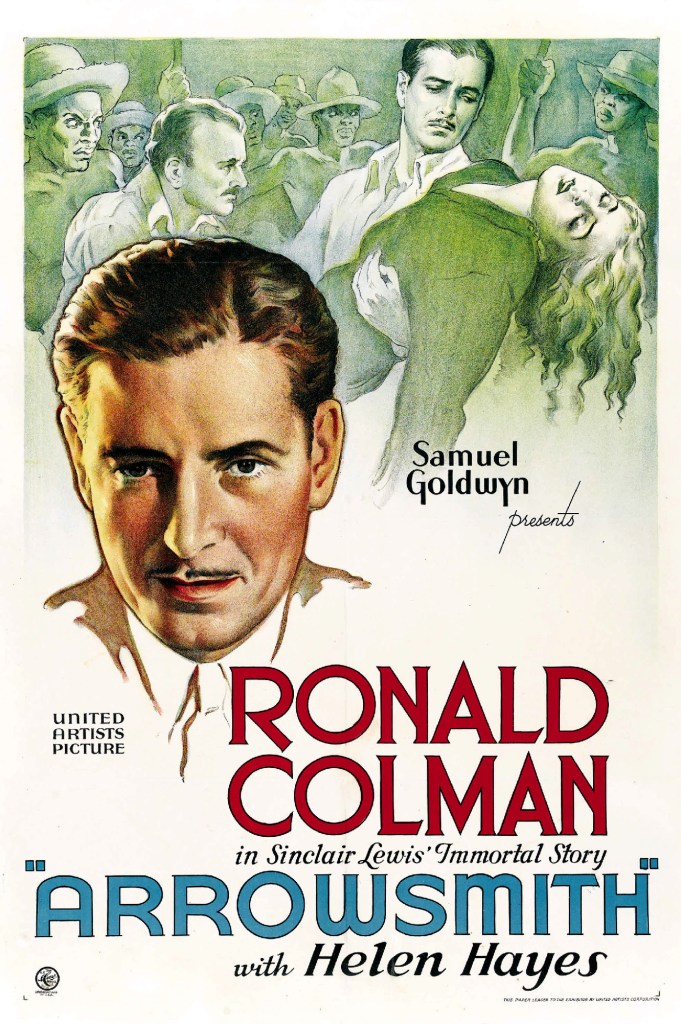
Cast: Ronald Colman (Robert Conway), Jane Wyatt (Sondra), Edward Everett Horton (Alexander Lovett), John Howard (George Conway), Thomas Mitchell (Henry Barnard), Margo (Maria), Isabel Jewell (Gloria Stone), HB Warner (Chang), Sam Jaffe (High Lama)

Life can be such a never-ending rat race, the idea of chucking in that relentless pursuit of fortune and glory can be really tempting. Fortunately, it turns out there is a place you can do that: Shangri-La, a halcyon Utopian community buried deep in the Himalayas. There the mountains give it a gloriously perfect climate and preserves its residents youth for potentially hundreds of years. It’s a paradise for legendary diplomat Robert Conway (Ronald Colman), one of a group of Westerners whose plane crashes near-by, all of them invited to make their lives there.

It’s easy to see why this appealed to Frank Capra – even if his real idea of Shangri-La was Small Town America – and he poured years (and millions of dollars) into this dream project (it also took years to make back the investment). Conway is part of a group of mostly British Westerners escaping revolution in China. In Shangri-La, he’s deeply drawn to the peaceful ideology outlined by their host Chang (HB Warner) and Shangri-La’s spiritual leader, the Great Lama (Sam Jaffe). Not to mention the charms of resident Sondra (Jane Wyatt). Problem is, his brother George (John Howard) is desperate to return home. What will Robert choose?

Lost Horizon has a lot to admire about it, in among the incredibly earnest force of its telling, devoid of any drop of cynicism or irony. This is like a 101 of what to expect from Capra? It’s a celebration of the glories of living a simple, pure life without ruthless ambition and realpolitik. It’s filmed on a highly impressive scale by Capra – the gargantuan sets certainly show where the money went. Striking sequences, like a seemingly never-ending torch-lit parade of the people of Shangri-La marching towards Chang’s opulent estate, are breathtaking.

It hosts a fine parade of actors: Colman is perfect as the debonair, world-weary Conway, Horton and Mitchell make their supporting comic double-act genuinely funny (Horton, in particular, litters the film with wonderful bits of comic business using everything from mirrors to jewellery boxes), HB Warner makes a series of infodump ideological sermons more engaging than they deserve and Isabel Jewell creates a great deal of charm in the blousy Gloria. Interestingly, perhaps the most compelling sequence of Lost Horizon occurs before they even arrive, as these characters feud and panic on a hijacked plane taking them in totally the wrong direction.

But there is often something a little too pure about Lost Horizon. Even as the film-making beautifully unspools, it’s hard not to notice that for a huge chunk of this long film very little really happens beyond slightly sanctimonious speechifying comparing ‘our’ civilisation with the peaceful life of Shangri-La. In fact, it’s easy (particularly in our more cynical age) to start feeling a bit twitchy. So earnestly perfect is everything there, with a simplistic and unchallenging view of kindness and brotherly love, it starts to feel like being continually slapped by a SparkNotes copy of Thomas More. Capra uses John Howard’s blowhard George, to put a counter-view – but fills him with such ambition and desire that we are of course never in danger of taking him seriously.

Graham Greene wrote of the film “nothing reveals men’s characters more than their Utopias” before observing the design of Shangri-La resembled nothing more or less than a luxurious Beverly Hills Estate. Rarely has a truer word been spoken: this mountainous paradise, with its carefully designed gardens, well-stocked libraries, grand ballrooms and lush woodland perfect for riding feels like a slice of affluent middle-class Western civilisation in the middle Tibet. It makes for an interesting window into the film today.

Because it’s hard not to see Shangri-La as less of a land of beautiful contentment, and more as a sort of colonialist wet dream. Scratch the surface and it’s a very hierarchical community. Literally at the top of the hill, living in upper-class harmony surrounded by art, books, comfy armchairs and fine dining are the elite (all bar one of them Westerners). At the bottom, in their huts, live the Tibetan natives happily continuing their traditional way of life, happy to live and work (unlike the Chinese revolutionaries who Conway and co flee in the film’s opening) in the shadow of their betters. A smarter film than Lost Horizon might have pointed out the irony that Shangi-La is just a colony where the natives haven’t yet embraced political self-determination – but I’m not sure if such an idea occurred to Capra.

As soon as this crossed my mind, I couldn’t help picking holes in the calamitous internal logic of the film. Shangri-La’s only contact with the outside world is via a group of Tibetan sherpas who trek up and down the mountain once a month bringing supplies from the outside world – presumably its them who have trooped up thousands of books (including the complete works of Robert Conway!), hundreds of mediocre paintings and roomfuls of rococo furniture. The kindly inhabitants of Shangi-La’s palace never considered overseeing the construction of basic plumbing and power generation for the natives living in the valley below them (though they somehow recruited contractors to supply those things to their house on the hill).

In fact, the whole of Shangri-La’s world is set up on maintaining a strict two-tier system that keeps people content by making sure they never think for themselves. (What passes for education, is a series of patronising missionary-style sing-alongs). Even more chilling, the Grand Lama (a softly spoken Sam Jaffe, under mountains of make-up) has dreams of Shangri-La rebuilding global civilisation after its inevitable destruction, the whole world adopting his simplistic ideology. He means well, but I couldn’t help be reminded of Dr Strangelove orgasmically rising from his chair at the thought of creating a fascist Utopia of sexual bliss under an Earth poisoned by nuclear radiation.

None of these ideas enter into Lost Horizon’s simplistic world-view. It sticks with saying what the world needs is to be crafted into a sort of country estate, a sort of Tibetan Downton Abbey, with everyone happy with their assigned place in the chain. Lost Horizon gets as close as it can to any form of social criticism when Conway bemoans 90 ‘whites’ were saved from that opening Chinese revolution while thousands of natives were left to die. But aside from that, is exactly what it says on the tin: there are no flaws in Shangi-La.

And maybe I’m being impossibly cynical. Lost Horizon is a lovely film to bathe in for a while – after all Capra, at his peak, couldn’t make a clanger if he tried. But there is a more complex story on the edges here. If Lost Horizon had showed us more of Conway’s Gulliver-Like return to civilisation, lost in a series of spinning newspaper headlines, it could have given us more of that. But Capra is no Thomas More or Jonathan Swift. The satirical and suppressive elements under a hierarchical Utopia are alien to his mindset. Lost Horizon is a reassuring promise founded on shaky ground indeed.

The Exterminating Angel (1962)

The Exterminating Angel (1962)

Buñuel’s unique party-gone-wrong is a fascinating mix of comedy, surrealism and satire

Director: Luis Buñuel

Cast: Silvia Pinal (Leticia, “The Valkyrie”), Jacqueline Andere (Alicia de Roc), José Baviera (Leandro Gomez), Augusto Benedico (Dr. Carlos Conde), Enrique Rambal (Edmundo Nóbile), Luis Beristáin (Cristián Ugalde), Antonio Bravo (Sergio Russell), Claudio Brook (Julio), César del Campo (Colonel Alvaro Aranda), Rosa Elena Durgel (Silvia), Lucy Gallardo (Lucía de Nóbile), Enrique García Álvarez (Alberto Roc)

Imagine a party so good, you couldn’t bear to leave. Sounds great, right? Now imagine a party that wasn’t even that good, but you couldn’t leave anyway. A dinner party with the hoi polloi that locks you into a seemingly never-ending parade of days (or weeks) where you and everyone else were physically incapable of stepping over the threshold of the room you’re in. All of you forced to live in a tiny space, on top of each other, none of you having a clue why you can’t leave or why this is all happening. Imagine that, and you’ve got Buñuel’s The Exterminating Angel, a surrealist-tinged, open-ended mystery of a film that presents its situation and leaves you to make of it what you will.

Returning to Mexico after comprehensively incinerating his nascent re-alignment with Spanish cinema with Viridiana (a film made in Catholic Fascist Spain that mocked both the fascists and the Church), Buñuel creates a haunting elliptical masterpiece by harnessing an idea so compelling it’s been recycled, reframed and reexplored by countless films after.  It’s an idea that has soaked into horror, of being trapped by some unknown force in a single place, unable to break free. It’s also sparked satire with its depiction of the thin veil of smug self-satisfaction over the bourgeoisie that collapses under the strain of covering primitive, violent instincts.

The Exterminating Angel tips us off from the start that we won’t be settling down to watch any old dinner party. As the guests assemble, the staff at the grand town house are practically falling over themselves to flee, as if subconsciously aware there is something wrong in the house. Buñuel throws the viewer off from the start by deliberately repeating scenes – a repetition so on-the-nose, that when watching I actually doubted myself about whether I had just seen what I thought I saw. We see the guests arrive – and make a forlorn call for their coats to be taken – twice in quick succession. It’s so blatant, even Buñuel’s editor gave him a panicked phone call about the ‘error’ just before the film’s opening!

Later the micro-repetitions of scenes, interactions and lines will pile up (it’s a film that rewards constant reviewing) making the whole set-up even more disconcerting. Two characters introduce themselves to each other three times, each time with a different emotional mood (from friendly to outright hostile). The same dinner toast will be greeted with rapture then complete indifference. Two couples will echo the same conversation. Oblique points about freemasonry and current affairs will be made over and over. Is Buñuel suggesting the whole whirligig of the social situation is just a slightly pointless merry-go-round where the same old bullshit happens over-and-over again and essentially means nothing? Sure, the characters notice they are literally trapped in the same room, but really aren’t they just metaphorically trapped in the same old rooms all the time?

Nevertheless, as the dinner party winds down, everyone is far too polite (or far too concerned with appearances) to openly say they feel like its physically impossible for them to cross the threshold and leave. Instead, the hosts quietly grumble that no-one seems to know when to go as the clock ticks into the wee small hours and the middle-class types here settle down in armchairs, on sofas or even on the floor to sleep. Come the next morning, polite embarrassment prevents anyone from saying exactly why they are still here. In fact, everyone promptly makes politely meaningless excuses about why they aren’t quite ready to leave yet: they’ve not had breakfast, nanny will look after their children, they don’t need to be anywhere quite yet.

In fact, I’m not sure anyone openly says they ever feel trapped. It’s like social faux pas everyone is horrified of pointing out. Not a surprise really as everyone here is from the height of professional society: doctors, conductors, army officers, businessmen, society grande dames. None of them wants to stand out like some panicked rube thrown by odd sensations. Instead, everyone slowly settles down into working around this bizarre situation no one wants to talk about. A cupboard is tacitly turned into a toilet. The food is carefully rationed. A water pipe is tapped into so everyone can drink. Sleeping areas are claimed. No one tries to solve the problem, because even acknowledging the problem feels like a cheeky liberty.

It leads into an increasingly fascinating blend of horror, dark satire and surrealist black comedy that Buñuel skilfully builds. A few shots show us the threshold of the room from the next room (a lush ballroom), and there are cuts to a crowd of rubber-neckers outside the house) who also cant enter. But otherwise, it’s all in this one room and as time – and the guests lose all track of that – drags on, the bonds of society both loosen under the polite instincts. Tempers fray, but there remains a formality even as the ravenous guests rip apart (off camera) and cook a sheep that wanders into the room. Some guests take advantage of the proximity to indulge in voyeuristic perversions, but when arguments erupt they are resolved with a Victorian duel mind-set. Only towards the end, as the world really fragments, does the danger of real violence (a suggested lynching of those judged responsible) flare up.

Buñuel would criticise himself later for not going far enough (if you want an idea of relatively tame he later thought it was, he argued cannibalism was one of the things he should have explored). But the fact that much of the behaviour remains grounded, recognisably stuck in a rut of upper-class restraint makes the film more effective. (Or as restrained as a party, where the cancelled ’entertainment’ at the original dinner was an unspecified event involving a tame-ish bear and three sheep, can be). Somehow, if the guests had regressed into the most animalistic behaviour possible, the film might have lost some of its enigmatic quality. As it happens, the fact the guests can never quite escape the trappings of their social rules makes it even more unsettling. It means that threats – such as the ferocity behind the ‘I’ll kill you’ response to a joke about someone being pushed out of the room – carries even more of a shock.

Buñuel throws in the odd surrealistic touch – after all he always claimed a dream sequence was in there when he had run out of ideas. We get two, one revolving about a nightmare of a disembodied hand moving freely around the house (it must be some sort of joke from Buñuel that the hand itself is the least convincing rubbery affair you can imagine) and later a sequence of disconnected images superimposed over a cloud filled sky. The film’s conclusion suggests a deadly, ever-expanding loop, based around the fact the characters suffer but learn nothing from it.

You can argue that The Discreet Charms of the Bourgeoisie, by allowing more physical freedom to its characters, allowed even more surreal, fascinating and intriguing exploration of the repressions, lies and hypocrisies of bourgeoisie life. But The Exterminating Angel has a claustrophobic horror to it, and the pressure cooker bubbling just below the surface of these trapped characters exposes class tensions in superbly unnerving ways. It makes for an expertly executed, shrewdly vicious social satire that lifts a lid on the many petty behaviours that govern so much of our lives. And it’s a mark of genius that you cannot imagine anyone other than Buñuel making it.