Category: Directors

Erin Brockovich (2000)

Albert Finney and Julia Roberts battle for justice in the caperish Erin Brockovich

Director: Steven Soderbergh

Cast: Julia Roberts (Erin Brockovich), Albert Finney (Edward L Masry), Aaron Eckhart (George), Marg Helgenberger (Donna Jensen), Tracey Walter (Charles Embry), Peter Coyote (Kurt Potter), Cherry Jones (Pamela Duncan), Scarlett Pomers (Shanna Jensen), Conchata Ferrell (Brenda), Michael Harney (Pete Jensen)

When Steven Soderbergh was being celebrated as the Great White Hope of arty American movie making back in the late 80s, it would probably have amazed his fans if you’d told them that 10 years later he would be directing a Julia Roberts star vehicle. But that’s what he pulled off to great effect in Erin Brockovich

Telling the true story of Erin Brockovich (Julia Roberts), the film follows her life from 1993 when she is struggling to make ends meet while bringing up three small children. After losing a court case – largely due to her brassy foul-mouthedness – she pressures her lawyer Ed Masry (Albert Finney) to give her a clerical job at his law firm. There she finds herself engaged with a simple real estate case involving PG&E, a major gas and electric company. Discovering the company has been polluting the water of the town of Hinkley in California – and left many residents with crippling health problems – Brockovich works to uncover the truth and to gets Masry to agree to build a legal case. She also finds her mouthy down-to-earthness allows her to connect with the people of Hinkley, and she soon becomes determined to get them justice.

The big thing that Erin Brockovich was about when it was released was Julia Roberts. In 2000, it was hard for heads not to be turned by seeing America’s Sweetheart wearing clothing so revealing and provocative it made her Pretty Woman character look reserved. And she swears! Frequently! The film was a triumph for Roberts, turning her from a romantic comedy queen into a serious actress. Roberts won every single Best Actress award going, up to and including the Oscar. And Roberts is very good indeed in the role. Few films have used her effervescence and warmth as a performer so well. You can’t help but side with Julia Roberts when she is firing on all cylinders, no matter what the situation – whether she is a brassy, chippy working mother, a Hollywood actress or a New York City prostitute, you find yourself on her side. 

But, looking back at the film now, this role essentially plays to all of Robert’s strengths. While it looks on the surface like a radical departure for Roberts, the film is basically very much in her wheelhouse. In fact, the whole film is almost a writ-large version of that shop scene in Pretty Woman (still one of the best scenes of modern cinema) stretched over the course of a whole movie. Julia Roberts is treated badly by snobby people, she doesn’t let it get her down, and then she returns with a triumphant flourish that puts the snobs in their place. 

That’s the whole game from Roberts: this is very much the type of performance she gave in Pretty Woman, Notting Hill and My Best Friend’s Wedding repackaged and given a novel appearance by being placed in a drama rather than a comedy. But all the little acting touches that would be familiar to you from those movies are there. There is nothing wrong with any of this, but the film in fact reinforces rather than refutes the idea that Julia Roberts (like Cary Grant) is largely a personality actor. She has a very skilful and impressive collection of acting touches, but they are pretty consistently the same across films. She performs with brilliant, luminous presence here – and commits fully to the part – but it’s more like the ultimate expression of the roles she played in the 1990s. It’s not a surprise looking back that she’s not had a hit like it since.

The rest of the film is an enjoyable mix of comedy and touches of tragic sadness. Soderbergh packages the film as a very safe entertainment, and its’ entertaining. The real Erin Brockovich claims the film is 98% accurate to what happened to her – which perhaps just makes you think that the clichés of film hew closer to real life than you might expect. Soderbergh doesn’t really have much to say here beyond big corporations and snobbery being bad and to never judge books by their cover. But it doesn’t really matter as the whole thing is presented with a confident, brassy buzz as if it is channelling Brockovich straight into celluloid.

It works all the time because you care about Erin, and you enjoy her company. It touches on some issues around sexism in the work place – although Erin is looked down as much for her working class roots as her sex – but there are elements there showing she is clearly judged by her appearance, and even the big firm lawyer brought in help fund the case can’t resist saying when he sees her “I see what you mean about a secret weapon”. Not that Erin herself isn’t ashamed to use her assets – when Ed asks how she can get people to allow her access to such confidential papers, she deadpans “they’re called boobs, Ed”.

That gives you an idea of the general comedic tone of the movie. It’s matched with a fairly predictable domestic plot-line. I suspect Soderbergh was probably making a bit of a point by turning Aaron Eckhart’s (very good in a nothing role) gentle biker, next-door neighbour, childcare provider and boyfriend into the sort of pleading “Honey please come home for dinner” non-entity that the woman often plays in films like this while her husband crusades. The film does manage to mine a bit of quiet sexual agenda from its otherwise fairly bubbly surface. It also draws attention to the way the film basically sets up Erin’s primary romantic relationship being not with a boyfriend, but with herself as she discovers the sort of person she has the potential to be.

There’s that Pretty Woman parallel again. The film is basically a dreamy re-invention saga, presented with a cool flourish. Roberts is excellent in a role that has become a calling card. She’s also got quite the double act with Albert Finney, who is brilliant as the put-upon, slightly haggard, slightly twinkly Masry who finds his own passion for justice reignited. Finney tends to get overlooked in this film, but he is superb and gives the best pure performance in the film. Soderbergh directs with a professional glossiness, and supplies plenty of heart-tugging victims (Helgenberger is very good as the main victim we see) mixed with punch-in-the-air, she’s proving herself better than them moments from Julia Roberts. It’s a very fun film, and genuinely entertaining. But like Roberts’ performance, it’s presenting old tricks in a new way, not reinventing the show.

The Motorcycle Diaries (2004)

Gael Garcia Bernal and Rodrigo de le Serna go on a road trip in Che Guevera biopic The Motorcycle Diaries

Director: Walter Salles

Cast: Gael Garcia Bernal (Che Guevera), Rodrigo de le Serna (Alberto Granado), Mia Maestro (Chichina), Mercedes Moran (Celia de la Serna), Jean Pierre Noher (Ernesto Guevara Lynch), Facunda Espinosa (Tomas Granado), Lucas Oro (Roberto Guevera), Marina Glezer (Celita Guevara)

In 1952, Che Guevara – posters of whose face are as synonymous with students as baked beans and debt – is a young man in his early 20s, heading out for one final adventure with his friend Alberto Granado. They intend to motorbike the entire length of South America, from Buenos Aires to a leper colony in Peru. The journey will solidify Che’s views on socialism and help to shape him into the legendary idealist socialist revolutionary he will become. That’s the story of Salles’ film, the sort of film that will have a never-ending appeal to anyone who ever had a romantic interest in revolution history.

Sadly I don’t have that sort of passion, so I found it hard to be swept up in the romance of Guevara’s views, and Salles’ ambling, largely plotless film struggles to give you a real reason to care if you haven’t got a pre-existing admiration for its subject. Which isn’t to say this is a bad film – it’s certainly not – but it’s the sort of film that requires the viewer to have an investment from the start. It’s certainly a lot better – and gives a much better sense of Guevara’s character – than Steven Soderbergh’s thuddingly average Che double bill, but it’s still a rather drifting road movie.

The nature of all road movies is of course that they go from location to location, with each one throwing up a different collection of characters. I’ve got to be honest, none of these characters are particularly engaging or interesting, falling as they do into three categories: duped middle classes, attractive women who are duped or charmed by our two heroes, or sickly, poor or dying working classes whose suffering helps shape Che. It’s decent enough, but once you’ve seen it repeated a couple of times you don’t really engage in it much further.

It doesn’t help that the two leads don’t really change that much themselves over the course of the movie. I suppose that is at least a reflection of real life – and it does avoid the film cliché of “one life-changing journey”, but it also has a tendency to suck drama from the film. The real changes you see are that both characters’ pre-existing political views are both solidified – the difference being that for Guevara this will become his life’s work, whereas for Granado it will become a driver for his decision about where to take his work.

All this is no comment on the twin lead performances by Bernal and de la Serna, both of which are excellent. Bernal is wrapped in charisma and youthful idealism, humane concern and empathy in every pore of his character, mixed with a genuine warmth and enthusiasm as well as an excellent sense of humour. You can see why the latter attributes have drawn Granado to Che – and de la Serna is equally wonderful as a charming bon vivant with a heart and conscience. 

Salles’ film is told with sweep and beauty, crammed with excellent camerawork. The road trip looks beautiful, and the film is extremely well cut and paced. While Salles does not quite extend the journey into a real interior exploration of his lead character, it does really capture the romantic poetry both of idealistic socialism and this On the Road type journey. Salles also mixes the tone extremely well of a film that turns from moment to moment from a social issue drama to a near knock-around comedy.

What he does slightly less well is to open the drama up to the unconverted. The moments used to demonstrate the poor and downtrodden essentially boil down to sad scenes where the sick and dying talk through their pain with Che. At several moments, the actors portraying the poor gather in monochrome line-ups to stare soulfully down the lens of the camera. It’s hardly a real search for the reasons or causes of poverty in South America, or an insight into the reasons for the differences between the working classes and the middle classes. It’s not a film that is trying to develop a political understanding, which is ironic considering it explores (or claims to) the life of one of the most political figures of the twentieth century.

Saying that, The Motorcycle Diaries has many, many strengths – even if I didn’t bond with it as much as I imagine many others will do. It’s an extremely well-made, dressed up, road movie that is full of events and a certain level of character insights – but doesn’t scratch down far below the surface to help you really understand the man or the times. It’s beautifully made and wonderfully performed – and it has real moments of youthful joy – but I just didn’t feel as strongly about it as I felt I should.

The Favourite (2018)

Olivia Colman is at the centre of a complex rivalry in The Favourite

Director: Yorgos Lanthimos

Cast: Olivia Colman (Queen Anne), Emma Stone (Abigail Hill), Rachel Weisz (Sarah Churchill, Duchess of Marlborough), Nicholas Hoult (Lord Robert Harley), Joe Alwyn (Colonel Lord Masham), Mark Gatiss (Lord Marlborough), James Smith (Lord Godolphin)

Looking around the cinema, I couldn’t help but wonder how many of the audience were expecting The Favourite to be a Sunday night-style costume drama about Queen Anne. Goodness only knows what they made of this skittishly filmed, acidic, sharp-tongued, very rude drama about squabbles in the court of Queen Anne. The Crown it ain’t.

In 1708, the court of Queen Anne (Olivia Colman) is dominated completely by her head of household, chief advisor, secret lover and domineering best friend Sarah Churchill, Duchess of Marlborough (Rachel Weisz). But Sarah’s control over Queen Anne is set to be challenged by the arrival in court of seemingly charming, but in fact ruthlessly ambitious, cousin Abigail Hill (Emma Stone), a former aristocrat who has fallen on hard times. Soon Sarah and Abigail find themselves in the middle of a bitter, ruthless clash for control over Anne – who, seemingly weak-willed and disinterested in government, in fact takes an eager pleasure from the rivalry of the two women.

The Favourite is a brilliant, acerbic, very dark comedy that treats its period setting with a hilarious lack of reverence. It’s a frequently laugh-out loud comedy, with its often foul-mouthed dialogue just on the edge of being anachronistic (a trait that also comes into the hilarious non-period dancing). It takes a moment to tune up, but leans just enough on the fourth wall to work. Lanthimos’ film doubles down on the insane pressure bowl of Anne’s courts, turning the court of the 1700s into a bizarre, semi-surreal state where you have no idea what insanity you might see around the corner – from racing ducks, to rabbits roaming free, to a naked man being pelted with oranges. 

But then this is the sort of bizarreness that stems from the top, and Olivia Colman’s Queen Anne is a domineering eccentric. In a film-career-making performance from Colman, her Queen Anne is part infantalised puppet, part needy insecure lover, part bitter control freak. Anne will change from scene to scene from a furious, knee-jerk rage to a weeping vulnerability. Her interest in actually ruling the kingdom has been largely beaten out of her, but she still needs to feel that she holds the power. With her body raddled with gout, Anne alternates between demanding independence and being wheeled from place to place. Colman’s performance bravely skits between temper tantrums and a desperate, panicked loneliness and sadness – it’s a terrific performance.

A woman as uncertain and unhappy in herself as Anne is basically pretty ripe for control and manipulation. History has not been kind to Sarah Churchill, who is often seen as a ruthless, power-hungry manipulator only out for what she can get, obsessed with the power her role brings her. This film takes a different, more interesting slant, thanks in part to Rachel Weisz’s superb performance. Weisz plays Churchill as a strong-minded, hard to like woman, who has a genuine bond with Anne, but honestly believes she is better suited to execute the powers of royalty than her lover. But that doesn’t stop her having feelings for her – or priding herself on refusing to lie to Anne about anything (from her appearance to her behaviour). But this doesn’t stop Sarah from ruthlessly bullying Anne or threatening her – though she’s equally happy to climb into bed with her when required.

But Sarah Churchill here is doing the things she is doing because she honestly believes that it is what is best for the kingdom and (by extension) Anne, and the moments of shared remembrance between Anne and Sarah have a genuine warmth and feeling to them. Which makes her totally different from the ruthless Abigail, played with a stunning brilliance by Emma Stone. Abigail doesn’t give a damn about anything or anyone but herself: something the rest of the servants in the household seem to recognise instinctively as soon as she arrives, but a danger Sarah doesn’t detect until too late. Abigail’s every action is to promote her own wealth and prestige, and she’ll do whatever it takes to do that, from crawling through the mud for herbs to crawling between the sheets to pleasure Anne at night. Stone’s Abigail is ruthless, self-obsessed, uncaring and on the make in another terrific performance.

The film focuses in large part on the see-sawing fortunes of these two rivals for the role of favourite – with Anne as the fulcrum in the middle. The film is split into eight chapters, each of which is opened by a quirky quote from the chapter itself. It neatly structures the film, and also gives it a slight off-the-wall quality. The film is packed with electric scenes, as the women wear the trousers in the court (often literally, in Sarah Churchill’s case), riding and shooting in their spare time and slapping down the assorted politicians and lords desperately trying to promote their interests on the edge of the court. This battle of wits and wills is a fabulous, increasingly no-holds barred, rivalry that motors the film brilliantly.

Lanthimos loves every moment of scheming and double crossing the film supplies. He shoots the film with a selection of low-angle and fisheye lenses, which make the palace settings seem as imposing, large and domineering as possible – and also distorts the world just as the feud between the two women is doing. The film looks fabulous, with its intricate design and it’s candle lit lighting. Lanthimos’ court always looks gloomy and secretive, with only a few spots of orange warmth.

Lanthimos also understands that there is very little room for sentiment or feeling here, and the flashes of it we get are never allowed time to really grow. That’s not a negative of course, as this sharp comic drama is also an arch commentary on some of the selfishness and distortion of events that lies under politics (sound familiar?), with the interests of the ordinary people of the realm raising very little interest from any side on the political divide. And Anne is such a bizarre character, so pulled between pillar and post, so desperately unhappy so much of the time, so utterly spoilt the rest, that you understand how she has become such a chew toy for court faction, and why she is happy to tacitly encourage this world where her every whim is played to for advantage.

I laughed out loud several times during The Favourite. It’s obvious to say that it feels like a film for the #metoo era – but it certainly has three fabulous, brilliant, hilarious and strangely heartfelt performances from its three female leads, three of the best actresses in the business. Wonderfully directed, beautifully written and fabulously designed, this is properly fantastic cinema.

The Hurt Locker (2009)

Danger awaits round every corner in the shocking The Hurt Locker

Director: Kathryn Bigelow

Cast: Jeremy Renner (Sgt William James), Anthony Mackie (Sgt JT Sanborn), Brian Geraghty (Specialist Owen Eldridge), Guy Pearce (Staff Sgt Matthew Thompson), Christian Camargo (Lt Colonel John Cambridge), David Morse (Colonel Reed), Ralph Fiennes (British Mercenary), Evangeline Lilly (Connie James), Sam Spruell (Contractor Charlie)

There have been few wars in history as controversial as the Iraq war. Despite this, it’s hard to think of a film that really has nailed the complex social, political and military causes behind the war – or managed to engage with the deep unease much of the Western world feels for the campaign. While there have been great films about Vietnam, that other opinion-dividing conflict of the last 50 years, there hasn’t been one about Iraq yet – perhaps because the wound is still so fresh. The Hurt Locker gets closest by far – largely because it is a film that makes war its subject, not Iraq; it could just as easily be set in the fields of France as the streets of Baghdad.

After the death of their Staff Sergeant (Guy Pearce) while defusing an IED in Baghdad, Explosive Ordnance Disposal (EOD) unit members Sgt Sanborn (Anthony Mackie) and Specialist Eldridge (Brian Geraghty) are joined by a new team leader Sgt William James (Jeremy Renner). However, they both – particularly the by-the-book Sanborn – grow increasingly concerned about James’ maverick methods and willingness to take personal risks to defuse bombs. Slowly, tensions rise in the team.

The Hurt Locker makes no comment whatsoever on the controversy behind the decision to intervene in Iraq. Instead, its focus is entirely on the psychology of those who go to war, and the sorts of personalities it can attract, from those with a keen desire to do their duty to others who get a certain “buzz” from risk and conflict that they cannot find elsewhere in their lives. As the film’s opening words say, “War is a Drug”. And there are few characters more afflicted by an addiction to that drug than Sgt William James.

Not that James is a villain. One of the film’s many strengths is that he is far from a lunatic. Played with a career-defining charisma and intensity by a then almost-unknown Jeremy Renner, James takes personal risks (defusing bombs without the huge rubber safety suits, turning off his comms to concentrate, returning to bombsites to collect trophies or lost items) but he also shows concern and empathy for his fellow soldiers and (largely) avoids putting them in danger. With the team pinned down by snipers in the desert, he calmly reassures Eldridge and talks Sanborn quietly through taking down the snipers. He develops bonds with people and later in the film shows great compassion and willingness to put himself in danger to save a man unwillingly attached to a suicide vest.

James’ struggles are to deal with the modern world and its shallow obsessions compared to the thrill of putting your life on the line (as the film brilliantly illustrates with a final vignette of James back home at the end of rotation, staring blankly at a wall of cereal boxes in a supermarket). On campaign, he talks dismissively of his child and claims to not know or understand his relationship with his wife. But this is a front – it’s clear his family life is far more settled than he suggests – and is actually more connected to his guilt at enjoying his time on military posting more than he does the neutered warmth of family life. Renner excels at all this complex psychology, crafting a man who is aware of his addiction, can’t combat it but feels a deep guilt for it.

The Hurt Locker is about how this rush of war can be more compelling and life-affirming than hearth and home. It’s also perhaps a commentary on how we ourselves get a rush from watching action and war films – that it’s only a few steps from enjoying watching the excitement of conflict, to enjoying being in the middle of that kind of action. Is James really that bad? Defusing bombs is a difficult and demanding job – and James knows (rightly) that he is one of the best at doing it. And shouldn’t a man enjoy his job? Renner’s glee at a job well done is balanced by guilty awareness that he shouldn’t be enjoying himself as much as this.

Kathryn Bigelow is in her element directing this burst of male testosterone, assembling a film that is gripping, tense and hugely exciting. It’s essentially constructed around a series of set-pieces, each of them more unsettling than the one before. Bigelow’s direction is impeccable, as each of these sequences is both unique in tone and utterly compelling. Bigelow became the first woman to win Best Director at the Oscars – and her acute understanding of men enamoured with the buzz of adrenalin is what gives the film much of its narrative force.

It also helps that the film she has assembled here is a technical marvel, brilliantly shot by Barry Ackroyd with a scintillating display of hand-held cameras, cleverly focused details and immersive story telling. The Hurt Locker is a film both drenched in sun and darkness, with burning yellows and oppressive greys. It’s a film that captures the incredibly alien, heat-stoked insanity of Iraq, and the journalistic style and camerawork make everything we watch feel even more immediate.

In the middle of this, the psychological drama between the maverick James and the cautious, procedure-led Sanborn (played by an equally impressive Anthony Mackie, whose every moment buzzes with frustration and anger at the dangers he sees James inflict on them) plays out wonderfully. Bigelow has an immediate understanding of how the adrenalin and testosterone of combat quickly bubble up into violence and aggression off the battlefield, with these two men often becoming like rutting stags, struggling to place their own supremacy on the team – with Brian Geraghty’s weaker Eldridge the pawn between the two.

The Hurt Locker does what it does so well that it’s easy to overlook its flaws. Its narrative is so pure that you regret it gives barely a second to addressing the issues in Iraq or how the behaviour and attitude of the soldiers there (mostly angry and abusive towards the local population) may be contributing to the problems. It also struggles to add much narrative originality to the story, beyond its set-pieces – in particular James’ friendship with a young Iraqi boy seems like the forced stuff of movie convention in a film that prides itself on reality. When dialogue takes over from action, many of the psychological points it raises have been seen in countless films past. You could argue that the film is largely at its weakest when it tackles any questions of plot at all, and that what Bigelow has really done here is make one of the finest boots-on-the-ground immersions you are going to see.

And if The Hurt Locker is just that then, you know what, that’s fine too. Because when it does this it’s one of the best in the game. Brilliantly assembled, shot and edited (those many Oscars were well deserved) it’s a gripping war film that relies a little too much on some of the conventions of war and combat films, while also focusing very intently on how war affects the psychology of the men at the sharp end. It gives a truly unique perspective of the dangers (in every sense) and is brought to life by a series of fine performances, with Renner and Mackie outstanding. Wonderfully directed, and smashingly tense, it’s a worthy contender in the upper echelons of any list made of great war films.

My Fair Lady (1964)

Audrey Hepburn and Rex Harrison cover how to speak proper in My Fair Lady

Director: George Cukor

Cast: Audrey Hepburn (Eliza Doolittle), Rex Harrison (Professor Henry Higgins), Stanley Holloway (Alfred P Doolittle), Wilfrid Hyde-White (Colonel Hugh Pickering), Gladys Cooper (Mrs Higgins), Jeremy Brett (Freddy Eynsford-Hill), Theodore Bikel (Zoltan Karpathy), Mona Washbourne (Mrs Pearce), Isobel Elsom (Mrs Eynsford-Hill), Henry Daniell (British Ambassador)

My Fair Lady is possibly one of the most popular musicals of all time. A singing-and-dancing adaptation of George Bernard Shaw’s most popular play, a satire on self-improvement and sexual politics, the original Broadway production ran for over six years and 2,717 performances, while the original cast-recording album was a smash hit bestseller. It was a question of when rather than if a film version would be made. When it finally happened, the film was garlanded with Oscars aplenty, not least Best Picture, Best Director and Best Actor.

The musical follows the story of Eliza Doolittle (Audrey Hepburn), a cockney flower girl in Victorian London, whose life is changed after a chance encounter with linguistics genius Professor Henry Higgins (Rex Harrison). Higgins has a bet with his colleague Colonel Pickering (Wilfrid Hyde-White) – he can change Eliza’s accent and manners so much that the shrill cockney girl will pass for a society belle. The bet will not only change their lives, but also those of Eliza’s father, sage-like binman Alfred (Stanley Holloway), and lovestruck romantic young gentleman Freddy Eynsford-Hill (Jeremy Brett). 

From the start, producer Jack L Warner wanted to develop a new verison of the film, fresh and different from the stage production. George Cukor, the esteemed director from Hollywood’s Golden Years, was brought on board as a safe pair of hands – but it was clear Warner was calling the shots. How to put your own stamp on a massive hit musical? Well you start by getting a fresh cast in. Julie Andrews had made the role her own in the original production, so Hollywood was stunned when she was overlooked for the part. Instead Audrey Hepburn was hired – while Julie Andrews got the consolation price of being able to accept Disney’s offer of the role of Mary Poppins. Warner knew who he wanted for Higgins – and Cary Grant was swiftly courted for the role. But Grant refused, allegedly responding that he wouldn’t even see the film unless Rex Harrison was retained in his signature role.

So Harrison owes him a drink or two, because the film allowed him to leave a permanent record of a stage role he had played over 1,000 times on Broadway and in the West End. Harrison had taken a revolutionary approach to musicals, by basically not singing. Instead he sort of spoke the songs rhythmically – an approach that every other performer of the role has stuck to. The film is a brilliant capture of this unique and authoritative performance, and while Harrison is not exactly fresh he’s certainly charismatic, delivering every scene with confidence and well-rehearsed bombast.

Harrison’s steely lack of willingness to compromise also lead indirectly to a revolution in sound recording in the movies. Harrison refused to obey the custom at the time to lip-sync on set to a pre-recorded soundtrack. Harrison insisted that his performance was subtly different every time so he could never lip-sync accurately. Instead the technicians were forced to invent a sort of wireless microphone that could be disguised in the over-sized neck ties Harrison wears. This also means that at least one musical number has the bizarre situation of Harrison singing live, Hyde-White lip-syncing and Audrey Hepburn being dubbed.

Ah yes Hepburn. If there is one thing everyone remembers about Hepburn’s performance in this film, it is that she doesn’t sing a single note of the final film. Her actual singing was quickly considered by Warner to be not up to snuff, and so she is replaced by voice-double-to-the-stars Marnie Nixon. It’s always a mark against Hepburn, whose performance is often rather shrill, stagy and (whisper it) even a little bit irritating. In fact, she’s pretty much miscast as the cockney flower girl, never convincing as a bit of rough from the streets, and is so horrendously misstyled throughout that she also jarringly looks like a 1960s fashion icon floated into a period film.

Having hired the male star of the Broadway production – not to mention Stanley Holloway also being retained from the original cast after James Cagney refused to be drawn out from retirement – the film quickly settles down into being a straight Broadway musical captured as faithfully as possible on the big-screen. My Fair Lady is a film crushed under the pressure of its design, and watching it today it looks unbearably studio-bound and flat. In every scene you can never forget you are watching the action take place on enormous sets, with the camera pulled back to try and get as much of the expensive soundstage work in frame as possible.

As a dance musical, it’s pretty flat – Holloway’s numbers in particular are strikingly lifeless in their dancing, which makes you regret even more that Cagney couldn’t be lured to star in it – and much of the singing feels forced or over-performed. Even Harrison’s numbers feel pretty by-the-numbers from Harrison’s constant repetition of them. Even the more impressive scenes – such as the race track sequence – feel artificial and over-designed, the money chucked at the careful period detail and over-elaborate costumes and set (designs courtesy of Cecil Beaton, who allegedly drew the designs and then disappeared to leave them to be interpreted by others) seeming more and more dated as the years pass by.

But then this was a film that probably felt dated at the time it was made – it beat Dr Strangelove for best picture, and in five years’ time Midnight Cowboy was lifting the Oscar – never more so than in Cukor’s direction. One wonders at times what Cukor really did: Warner cast the film and led on the design and staging. Harrison and Holloway had played their roles literally thousands of times already. The camera work is as conservative and unimaginative as you can expect, with the film dryly set up to give you the perfect view from the stalls. Several touches – such as the staging (complete with blurry focus edges) of Eliza’s fantasies of the domineering Higgins being punished by firing squad – are clumsy and obvious. It’s a film made with no real independent personality whatsoever.

Not to mention the fact that it completely fails to draw any chemistry from the Higgins/Doolittle relationship whatsoever. It’s an odd one, as the musical takes on a romantic ending of the two characters together – an ending, by the way, that Shaw famously hated when a suggestion of it was added to the original Pygmalion production. Here, this comes from nowhere, and feels unbelievably forced and artificial as Harrison has demonstrated no interest at all (other than irritation) for Hepburn, and she in turn offers little back. When they come back together it’s hard to care.

But they cared back then as this was a huge box office smash. It’s very odd to imagine it now – because this isn’t a great film, it’s a decently done one that carries some charm but never finds an identity for itself as film away from its musical roots and never brings anything unique and imaginative to the table. It’s extraordinarily flat as a piece of film-making and seems increasingly more and more dated in its performances, its atmosphere and its staging. It’s got some charm, but I’m not sure if it’s got enough.

Mary Poppins Returns (2018)

Emily Blunt is practically perfect in every way in Mary Poppins Returns

Director: Rob Marshall

Cast: Emily Blunt (Mary Poppins), Lin-Manuel Miranda (Jack), Ben Whishaw (Michael Banks), Emily Mortimer (Jane Banks), Pixie Davies (Annabel Banks), Nathanael Saleh (John Banks), Joel Dawson (Georgie Banks), Julie Walters (Ellen), Colin Firth (William Weatherall Wilkins), Meryl Streep (Topsy), Dick van Dyke (Mr Dawes Jnr), David Warner (Admiral Boom), Jim Norton (Mr Binnacle), Jeremy Swift (Hamilton Gooding), Kobna Holdbrook-Smith (Templeton Frye), Noma Dumezweni (Miss Penny Farthing)

Some sequels go into production even before the first film hits the cinemas. Others give you a good long wait – and Mary Poppins has had you waiting 54 years. Of course, part of that was down to her creator, PL Travers. Travers so hated the Disney original (I mean, she really hated it) she outright banned all other adaptations of her work – but her estate were far more open to the prospect (and let’s be honest, probably also to the money) that Disney could finally go ahead with a sequel.

And thank goodness for that, since this delightful film is practically perfect in every way. It’s 25 years since the events of the first film, and Michael Banks (Ben Whishaw) is now a widower with three children, whose home is about to be repossessed by the bank for non-payment of loans. His sister Jane (Emily Mortimer) is trying to help, but the pressure and sadness are showing on Michael and are forcing his children Annabel, John and Georgie (Pixie Davies, Nathanael Saleh and Joel Dawson) to grow up fast. The Banks family is in trouble – so it’s the perfect time for the arrival of Mary Poppins (Emily Blunt) to save the day – with a little bit of help from gas-lighter Jack (Lin-Manuel Miranda).

Mary Poppins Returns is a triumphant mix of nostalgia and originality, that walks a very difficult tightrope between being a loving pastiche and tribute to the original film while also managing to bring its own original charm and magic touch. That’s a difficult trick to pull off – but it basically takes a slight remix of the original film’s story and adds a heft of emotional impact to create something that feels modern and fresh while also being very close tonally to the original.

This is never clearer than in Emily Blunt’s sublime performance as Mary Poppins. If there is anyone who had a more difficult job in this film than Blunt I can’t think of them. She had to take on the most iconic character of an iconic actress – and does so brilliantly, but creates a character who feels an equal mix of both Andrews and Blunt. This is clearly the same character as before, but Blunt mixes in a wonderful heart-warming care and concern under the pristine English exterior that melts the heart. She has a glowing twinkle to her, an almost bottomless charm with an endearing delight for the wonder and silliness that is part of Poppins world. And boy can she sing and dance? She carries the film with effortless grace – to such endearing effect that, just like with Julie Andrews, you miss her as she becomes less prominent in the final act.

And of course she is matched by a superb company of actors. Lin-Manuel Miranda makes the transition to the big-screen like a duck to water, hugely loveable, wonderfully charming and superb (as you would expect) at the musical sequences. The three children give exemplary performances, with never a hint of sickly sentimentalism. Emily Mortimer is radiantly giddy as Jane, while Ben Whishaw will bring a lump to the throat as a Michael who is struggling under a huge amount of grief.  That’s not the mention wonderful turns from the whole of the cast, especially from Holdbrook-Smith as a kindly lawyer.

All these actors are “marshalled” brilliantly by director Rob Marshall. With his experience of musicals – both on screen and stage – Marshall knows his stuff and brings all his experience to bear here to create a sequel that will be seen (I’m sure) as a worthy companion to the original. Marshall’s direction of the musical sequences is faultless. He knows exactly how and where to place the camera for maximum effect, and gets just the right tone and mood from these scenes. He’s also, let’s not forget, a brilliant choreographer and has put together some exquisite sequences, not least the lamplighter song Trip the Light Fantastic, a whirligig showstopper of a number that if you saw it in the West End would have the whole crowd on their feet.

The songs make for easy criticism (reviewers seem duty-bound to say they are not as good as the original) – but to these ears Marc Shaiman and Scott Whitman’s songs and scores are both catchy and engaging. Give them time and I’m sure you’ll find them as replete with impact as the Sherman brothers’ tunes from 1964. Saying that, there might be one musical number too many – but that’s a very minor criticism. 

Because this is a film that gets so much else right. The storyline is certain to leave a lump in the throat, with its delicate handling of grief and the sadness both of growing up and also children being forced to leave their childhoods behind in impossible circumstances. These are universal themes – and they certainly impacted on me, and on a cinema packed with families all of whom were engrossed. That’s part of the magic of what Marshall has achieved here – heck, even the final Big Ben set-piece starts pushing you towards the edge of your seat in tension. I also loved the bravery of the colour-blind casting. It’s a film that stands on its own feet so well, it almost takes you out of the film when Dick van Dyke appears at the end – it doesn’t need the cameo, this film is its own beast.

Mary Poppins Returns will leave a smile on your face and a glow in your heart. It’s totally lovely from start to finish. Emily Blunt is superb (with wonderful support from all) and Rob Marshall triumphs as director and choreographer in this, surely his finest movie ever. It’s got something for all ages, and a truly heart-warming story. It takes everything that works so well in the first film and builds on it. It’s a wonderful mixture of homage and originality, that you will enjoy time and time and again. Practically perfect!

Bunny Lake is Missing (1965)

Carol Lynley’s daughter ‘Bunny’ goes missing – but is the girl real or not? Classic noir mystery Bunny Lake is Missing

Director: Otto Preminger

Cast: Laurence Olivier (Superintendent Newhouse), Carol Lynley (Ann Lake), Kier Dullea (Steven Lake), Martita Hunt (Ada Ford), Anna Massey (Elvira Smollett), Clive Revill (Sergeant Andrews), Finlay Currie (The Doll Maker), Lucia Mannheim (The Cook), Noël Coward (Horatio Wilson)

Otto Preminger’s career was an interesting mixture of high-brow, noirish thrillers and pulpish adaptations. Bunny Lake Is Missing is a mixture of these, a restructuring of a hit novel. Transplanting the novel from New York to London, the film covers a single day and the investigation into a missing child ‘Bunny’ Lake. Her American mother Ann Lake (Carol Lynley) drops her at her new school, and returns at the end of the day to find no one has seen her daughter or any record of her existence. While her protective brother Steven (Kier Dullea) rants and rages, Superintendent Newhouse (Laurence Olivier) leads the investigation. As Newhouse fails to find any evidence for the child’s existence at all, the question is asked: is she a figment of Ann’s fragile imagination?

Preminger plays this delicate game of “guess who” with the audience for a skilled and enjoyable 90 minutes before giving us any form of answer. The film throws us straight into the mystery of whether Bunny is real or not from the off, as our first shot of Ann is her alone in the school after dropping her daughter off. We see as little evidence of Bunny’s existence as the cast does. From there it’s a careful balance between giving us enough reasons to both trust Ann’s conviction her daughter is real and also give us enough reasons to suspect that Ann may be as unbalanced as Newhouse is concerned she might be. 

It’s quite the game the film plays, and Preminger does it very well, the film never tipping the hand too much one way or the other. Shot in luscious black and white, it’s a film of noirish shadows and imposing blackness where everything feels a little bit out of kilter and untrustworthy. Preminger throws us into Ann’s perspective by using a number of clever tracking shots that allow us to follow her through the events of each scenes. These shots are sustained, subtle and also give us a further subconscious reason to trust her – we are effectively seeing the events of the film side-by-side with her. It makes for a rather empathetic film, and one you find yourself investing into.

Not least because it completely understands the twin horrors of both losing a child and not being believed by anyone no matter how desperate you plead that you are telling the truth (no matter how generous people are while doing so). Preminger acutely understands we all deep down worry that we are going to be let down by those we need to believe in – and this feeling of concern, mixed with frustration and pity for Ann is what draws us to her. Even while we think there is more behind Bunny’s existence than meets the eye.

The screenplay by John and Penelope Mortimer also throws plenty of potential suspects at us. These are largely a series of delicious cameos for vintage British actors. These extreme odd-balls also make the two Americans in London (Ann in particular) seem even more like fishes out of water. Martita Hunt is excellent value as a retired school headmistress, seemingly confined to a bedroom in the attic of the school (!) whose hobby is recording children talking about their nightmares. Anna Massey is equally good as a harassed matron more concerned about the negative impact on the school’s reputation than child’s safety. Pick of the bunch of this rogues gallery is Noël Coward (having a whale of a time) as Ann’s drunken landlord, a faded actor and sexually ambiguous seductress who in one priceless scene gleefully shows a group of police detectives some of his favourite whips (“I find the sensation [of being whipped] rather titillating…[this was] reputed to belong to the great one himself. The Marquis de Sade”) from his collection of bizarre sex toys.

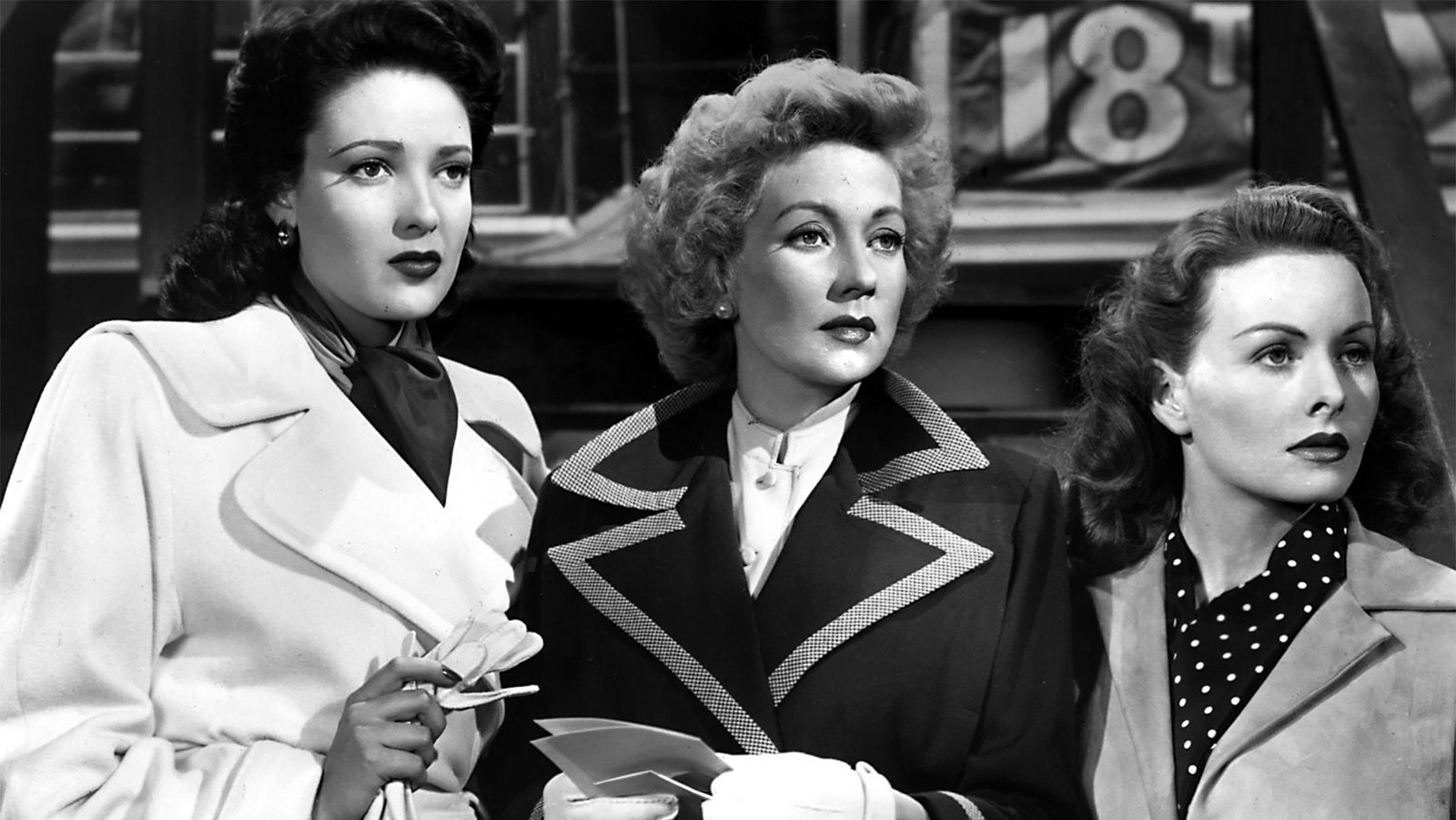
These perverts, oddballs and weirdos are all investigated with a cool professionalism by Laurence Olivier’s Superintendent Newhouse. Olivier gives possibly one of his most humane, restrained and engaging performances: he’s the epitome of caring, dedicated professionalism and a superbly humane detective. Carrying much of the burden of conveying the films narrative, Olivier is superb here – and he manages to make Newhouse exactly the sort of man you would long to investigate your child’s disappearance, even as he starts to doubt the child even exists. Olivier is in fact so strong, that the parts of the film where he disappears suffer noticeably from his absence – no one else among the principles can match him for presence.

Saying that, Carol Lynley does an excellent job as a character we invest in and sympathise with, but can never quite bring ourselves to be sure is reliable. It’s a difficult line she walks between being believably distraught and simultaneously slightly off kilter, enough to make you worry that she be (knowingly or not) making the whole thing up. The feeling may be more than helped by the exceptionally weird relationship between herself and her brother, one of an incestuously unsettling intensity (their relationship as brother and sister isn’t divulged until almost 15 minutes into the film and it’s as much a surprise to the audience as it is to the characters).

Kier Dullea as her brother gives a decent, if rather strained performance, as Steven. Dullea’s slight emptiness in the role can perhaps be partly attributed to his terrible relationship with Preminger, later claiming making the film was the worst experience of his life. (Olivier was also unimpressed calling Preminger a bully). 

It’s a shame as Dullea is crucial to the final sections of the film. I won’t give away the reveal and solution, but Preminger overplays his hand here, stretching the final sequence of the film out to a full 15 minutes which rather overstays its welcome. Maybe the sort of psychological complexity it’s aiming for is a bit more familiar to use today, than it was in 1965, but it certainly feels like a scene overstretched. But that’s a blemish on a very solid mystery before then that brings more than enough pulpish pleasure, fine performances and interesting film making to reward rewatching.

Roma (2018)

Alfonso Cuarón’s beautifully filmed semi-auto-biography

Director: Alfonso Cuarón

Cast: Yalitza Aparicio (Cleo), Marina de Tavira (Sofia), Fernando Grediaga (Antonio), Jorge Antonio Guerrero (Fermín), Marco Graf (Pepe), Daniela Demesa (Sofi), Diego Cortina Autrey (Toño), Carlos Peralta (Paco), Nancy García (Adela), Verónica García (Teresa), José Manuel Guerrero Mendoza (Ramón)

All great artists come from somewhere. Experiences fashioned and moulded them. And great storytellers often feel an urge to dramatise and explore their own backgrounds, to bring these events that formed them as artists to life for a wider audience. It’s what Alfonso Cuarón does here with his semi-autobiographical Roma, a Federico Fellini-inspired meditation on events from his own childhood and upbringing, filmed with magnificent, patient lushness.

Despite its semi-autobiographical nature, Roma actually revolves not around the young version of Cuarón (he in fact is hard to identify in the film, but is probably the imaginative younger son Pepe) but Cleo, the family’s live-in maid. Set in 1970-1, the household comprises a middle-class Mexican family (husband a doctor, wife a chemist) and three live-in servants. The film follows a year or so in the life of the family and Cleo, including her surprise pregnancy and the repercussions of that on Cleo, as well as the impact of troubles in the marriage of the parents Antonio and Sofia. 

Cuarón’s debt to Fellini’s semi-autobiographical films, which turned his own childhood and career into a sort of filmmaker’s fable, is clear – heck even the title itself is a clear nod to Fellini’s own childhood story also titled Roma. It’s a poetic presenting of a version of events that may have happened to the filmmaker, and it feels personal and filled with meaning.

This Roma is a lusciously filmed, gorgeously meditative, visual treat. Shot in crisp and clear black and white, the camerawork is sublime – slow and gentle, carefully following events. Several shots use a slow dolly shot in an arc, to give the feeling of your head turning to take in scenes and the events within them. Cuarón presents a string of arresting and beautiful images, and the film’s lyrical observational tone – like a gentle Mexican Mike Leigh fable – lets the action soak over the viewer and lure you into caring for the characters and the events. 

I say that, because actually very little happens for large chunks of this film, other than following the lives of the family and the everyday events they deal with, from cleaning up dog’s mess from the drive, to trips to the cinema. It’s this air of ordinariness, this lack of event, that gives the themes bubbling under the surface a lot of their strength – namely the shock pregnancy of Cleo and the clear marriage break-up taking place between the two parents. These darker themes – as well as the potential political radicalism of one minor character – are dangerous undercurrents that threaten, but don’t overwhelm, the normality of many of the events. Cuarón lets them play as subtext, while keeping the event and drama to a minimum – this helps make the drama feel extremely real.

However, it also means that when these themes start to pay off into more traditionally dramatic events in the final quarter of the film, it carries a surprising and sudden emotional force that caught me off guard. Somehow, from just living in and among this extended family, and essentially observing their day-to-day life, it set me up to invest even more in the turmoil that threatens their happiness, as those darker currents that had been kept under the family’s (and the film’s) radar burst up onto the surface. So suddenly, at the end of the film, I found myself actually choking back a few tears at the genuine and real emotion that the film suddenly gives us.

This is helped by the naturalistic performances of the cast of non-professional actors. I often feel that the reality of performances like this, this neo-realism approach of encouraging people to play versions of themselves, a la Bicycle Thieves, is as much to a tribute to the patient, gentle and subtle direction of the film-makers as it is to the actors. Cuarón certainly worked with his cast here – shooting the film sequentially to help the actors develop their performances as the film’s story itself develops. Saying that, Yalitza Aparicio is intriguing as the dedicated maid and I was extremely taken by the strength of Marina de Tavira as the mother holding her family together.

What I found less successful about the film was the fact that this story is meant to be about Cleo, but I’m not sure what we really learn about her. Cuarón partly covers her lack of experience by reducing her dialogue to a minimum and letting her eyes convey her story. It’s just I’m not sure what story there really is. Events happen to her – and clearly take an emotional toll – but it never feels (to me) that we get an insight into her character, to her real inner life. We get glimpses but she remains a slight cipher for events that happen to her: what impact do they have on her? How does she change? What does she learn? Crude as “learning” can be in drama, Cleo feels basically the same at the end of the film as she does at the beginning. 

In fact if this film was in English, or set in England, I can imagine it being savaged for its presentation of the servant as a woman who seems to define nearly all her life by her dedication and service to her employers. There is a certain sweetness at Cleo being treated like one of the family, and covered in warmth and affection, but she still gets ordered to clear dog shit off the drive. If Downton Abbey is often criticised for the paternalistic view the employers have of the lower classes (sweet as it is to see the care and concern Sofia treats Cleo with), surely this film is guilty of it as well? The film also flips this with those same lower classes integrating their own contentment with those of their masters. At times Roma feels like a man paying tribute to his nanny by saying “she went through terrible things, but the important thing was she was always there for us”. Which somehow points exactly at how much he really knew about this person, even if the film seems to show the warts and all of her life. 

Roma is a beautiful and poetic exploration of a childhood – but it feels like it has the understanding of a child. It doesn’t really scratch below the surface to give us the adult perspective, to interpret what the adults are thinking and feeling. It treats the audience like the children – we see things, but we don’t get down into the emotional depths of its characters’ stories. Don’t get me wrong – there are scenes laced with emotional force – but it’s because scenes such as tragic childbirth or danger to children are going to carry emotional force regardless. It doesn’t feel like the depth is connected to the characters. For all the time we spend with Cleo, I couldn’t describe at all what she is like or who she really is (except maybe “long suffering”, “dedicated” or “kind”). For all the film’s beauty, charm, poetry and joy it’s somehow, ever so slightly, empty.

Gumshoe (1971)

Fulton Mackay and Albert Finney in charming Liverpool set Chandler spoof Gumshoe

Director: Stephen Frears

Cast: Albert Finney (Eddie Ginley), Billie Whitelaw (Ellen Ginley), Frank Finlay (William Ginley), Janice Rule (Mrs Blankerscoon), Carolyn Seymour (Alison), Fulton Mackay (Straker), George Innes (De Fries), Billy Dean (Tommy), Wendy Richard (Anne Scott), Maureen Lipman (Naomi)

Film noir is a genre beloved by many, and – with its many conventions and, in particular, its hard-boiled Chanderlesque style – it’s also ripe for parody. That’s what Gumshoe does here, transplanting the rough, grimy mysteries of Philip Marlowe and Sam Spade to Liverpool in the 1970s. In doing so, it allows Albert Finney to let rip with the sort of hugely enjoyable personality performance that plays to his strengths.

Finney plays Eddie Ginley, a would-be comedian and entertainer in his thirties, obsessed with Chandler and Hammett. Placing an advert in the paper offering his services for private investigations in the spirit of a lark, he finds himself hired to look into a decidedly complex affair concerning a female lecturer, a fat South African, an occult bookshop, an unhappy South African political refugee and quite possibly his brother William (Frank Finlay) and his old flame and now sister-in-law Ellen (Billie Whitelaw).

Gumshoe is a an enjoyable, small-scale, cine-literate drama, with a playful script by Neville Smith that has a wonderful ear both for the style of Hollywood detective drama, and the streets of Liverpool – and knows how to mix them together. Shot simply by Stephen Frears (who rather sweetly claims on the blu-ray documentary to not have had a clue what he was doing), the film rattles along with a few good jokes, some decent set-ups and an actually rather good mystery. It largely falls just the right side of parody – not too smarmy, affectionate enough but never taking itself too seriously. It’s a very well judged pastiche – and it’s also a pretty damn good mystery itself.

The film was somewhat of a passion project for Albert Finney (his production company put up much of the funding).  And you can see why, as Finney is excellent – relaxed, smart and funny. Eddie Ginley is part dreamer, part realist trying not to see the truth around him. He knows this world of detecting is partly a game, partly dangerous, partly a fantasy – but he wants to enjoy while it he can. Finney also clearly enjoys the sort of Marlowesque dialogue, just as he gives real emotional depth to a man who has always been looked down on by his brother, and jilted by his girlfriend for said brother. It’s one of his best performances, he’s outstanding – a charming, playful, warm and also super-smart and cunning performance.

The rest of the film gives playful highlight moments for a number of performers, wrapped up in the enjoyment of the material. Finlay does a decent job as a stuffed-shirt straight man, Billie Whitelaw enjoys a sly parody of any number of femme fatales from 1940s movies, and Janice Rule is intimidating as a very different type of suspicious female. The best supporting performance however comes from Fulton Mackay as a brusque but wry Scottish hitman, tailing Ginley throughout the film to reclaim money he feels is owed to him. 

It’s a shame that a fun, playful and engaging film has in some places dated so badly. Not least in its language aimed at a black heavy Ginley gets into a scrap with. Intimidated and off-guard, Ginley falls back onto banter aimed to put the heavy off balance – but which listened to today is basically a string of vile racial slurs using words like jungle, bananas, trees etc. etc. etc. And the attitudes are repeated time and again in the film, with the character constantly referred to in the most derogatory and racialist terms. Mind you at least Oscar James as the butt of this gets a neat dig at Ginley hardly being “the Great White Hope” after a brief bout of fisitcuffs.

It’s an interesting sign of how dated the film is that the villains are racist apartheid South Africans, Finney was at the time a leading campaigner against Apartheid, but neither he nor the film clearly  put calling a black man a monkey into the same bracket as that bigoted system. No one involved really is a racist, not even the characters – it just wasn’t deemed a problem to say those things in the 1970s. (Even the booklet in Indicator’s excellent blu-ray dwells on this uncomfortable dated material).

But, bench that from your mind, and you’ve got a charming, fun pastiche that pokes a lot of fun at Bogart and Chandler. The make-believe fun of Eddie’s Marlowesque hard-boiled dialogue is constantly punctured by him having to explain what he’s trying to say. The film has a lot of fun with the details of a mystery, but still keeps that smart sense of tongue-in-cheek. It’s packed with some excellent lines and some sharp performances. Finney is superb. It’s a pastiche and an affectionate homage of a whole genre – and, although it is old-fashioned and feels a bit dated, it will I think stand up to re-watching.

Terminator 2: Judgment Day (1991)

Terminator 2: Judgment Day (1991)

Cameron’s action masterpiece, a film Arnie possibly owes his whole life too

Director: James Cameron

Cast: Arnold Schwarzenegger (T-800), Edward Furlong (John Connor), Linda Hamilton (Sarah Connor), Robert Patrick (T-1000), Joe Morton (Miles Bennett Dyson). Earl Boen (Dr Silberman), S Epatha Merkerson (Tarissa Dyson), Jenette Goldstein (Janelle Voight), Xander Berkeley (Todd Voight)

Schwarzenegger always said he’d be back. And if there’s one film that perhaps explains the, otherwise fairly inexplicable, success of this former body-builder who can’t really act as one of the greatest film stars of the early 1990s, it’s Terminator 2. And this film makes quite the calling card, as it can make a strong claim to being one of the greatest action films and one of the greatest science fiction films of all time. Its influence permeated Western culture – quotes from it are recognised all over the world – and its brilliant mixture of Armageddon-tinged high-brow time thinking with truck chases and lots of shooting has led to increasingly feeble attempts to recapture the magic with innumerable crappy sequels.

After the events of the first film, John Connor (Edward Furlong) is now a tearaway teenager while his mother Sarah (Linda Hamilton) is in an institution. So: perfect time for Skynet to send back another Terminator to take out the future leader of the resistance. The resistance sends back its own champion. But, handy-dandy, which is which? Is Arnie playing the baddie once more? Or is Robert Patrick’s unnaturally still non-descript looking fella really an evil Terminator? The answer is only a shock to anyone who has been living under a rock since 1991 (even the film’s original publicity gave the answer away). Soon Arnie’s reprogrammed good Terminator and the two Connors are on the run from Patrick’s liquid metal shape-shifter – and hatching a plan to prevent original Skynet inventor Miles Dyson (Joe Morton) from finishing his life’s work.

Terminator 2 hasn’t dated a bit. It’s still one of the very best rip-roaring, balls to the wall, action films ever made. It is essentially set piece after set piece – but with the set pieces strung together with intelligently written scenes that juggle interesting themes with sharply drawn, realistic characters. Cameron’s direction is, I might almost say, faultless. The film balances bangs and shoot-outs with such impressive zeal and imagination that you will wear out the edge of your seat. But the main reason these sequences work so well is because you care so deeply for the characters in the film, you invest so much in the story of the movie.

I think it’s possible no one does this sort of thing better than James Cameron. Certainly no-one ever gets more out of Schwarzenegger than his directing Svengali. Perhaps because only someone as dementedly determined as Cameron would never feel intimidated by an ego as large as Arnie’s. Cameron gets here, hands down, Arnie’s greatest ever performance. No wonder Arnie has tried to re-launch the franchise so many times, he’s never been able to recapture the magic from this film. Gifted with the ability to learn, here the Terminator becomes (within its robotic programming, perfect for the stiffness of Arnie’s skill with dialogue) a surrogate father figure for John, a creature increasingly capable of caring for and emulating human behaviour. And Cameron draws out of Schwarzenegger a performance striking for its growing mellowness and gentleness, its slowly developing emotional openness and humanity. 

It should, by rights, be corny as hell – the saga of a drifting boy given some shape and purpose in life by a father figure who showers him with love and attention. But it really works. Cameron understands perfectly when to throttle back on any possible schmaltz, and instead keep the characters strikingly real. Connor is a surly teenager, but also someone looking for love. The Terminator understands humanity more and more, but is still a machine. The barriers make the moments when emotions force their way through genuinely moving. And it also means that you deeply invest in this rag tag group of people staying together and saving each other.

And the stakes are against them when they are up against an opponent as fearsome as Robert Patrick’s shape shifting T-1000. Cameron’s initial concept for the Terminators – before the studio suits pushed the fortunate casting of Schwarzenegger on him – had been for them to be non-descript looking, average types. Patrick, with all due respect, fits that exactly – and has the additional dark sting of being disguised as a cop almost throughout. He gives the part a cold, mechanical chill, a total lack of empathy or any emotion that contrasts with the growth of those abilities in our hero Terminator.

The special effects used to create the liquid, shape shifting T-1000 were ground breaking at the time (and contributed to this being the most expensive film ever made) and they are still bloody impressive today. The T-1000 effortlessly shifts between states and skilfully reforms its body to become new people. When under attack, it convincingly has holes blasted into it from shot guns, becoming strange Thing-like abominations before restoring its original shape. It looks extraordinary – helped as well by the steel-like chill of the film’s cinematography that covers every shot in the cities and much of the film’s second half in an icy blue.

Cameron’s film has that icy feel to it, as we never allowed to lose the dread of the future apocalypse. In fact, Sarah Connor is herself a constant physical reminder of it. Played by Linda Hamilton with the sort of fire and determination that turned her into a cult figure, Sarah Connor has pumped herself up to the Nth degree for the wars to come. However, she is a damaged, tragic figure, lost in grief, whose every dream is haunted by visions of dreadful nuclear Armageddon. How could you forget what is at stake, when it’s in every shot of Linda Hamilton’s eyes?

That’s even before the high-stakes action Cameron throws at the screen. The film is built structurally around four, equally different, action sequences and, while each of them has dim echoes of events we saw in the previous Terminator film, they are delivered with such panache and aplomb that it doesn’t really matter. Cameron of course manifestly understands that these sort of sequences mean nothing at all anyway unless we care about the characters involved, so the narrative focus of the film is tightly concentrated on no more than five characters, each of whom we see learn, grow and develop as the film progresses (even the evil T-1000 excels himself by becoming more smarmy, vile and even sadistic as the film progresses).

Because, much as you might want to mock some of the comedic buddy play between John and the Terminator, it adds an emotional heart and heft to the film. It’s two characters who have no real emotional connections at the start of the film, learning over the course of the film to love each other. Yes it allows for some wonky, dorky comedy from Schwarzenegger – a well the series would drain dry in future films – but it works an absolute treat here. Throw in Linda Hamilton as the archetypal cold warrior (wisely she passed on most of the future sequels that were to follow) and you had a pretty much perfect family unit to invest in.

Cameron also manages to give the film a gloomy but not domineering sense of dread, but punctures it with hope. It’s a film that is all about the future impacting the past – but also keen for us to understand that the future is not written, that our fates are not set, that both can be what we make of them. The film’s conclusion (changed from the original ending) of an empty road, heading we know not where, is a neat visual metaphor for our unknown futures. It may be a dark, forbidding, road – but we don’t know where it’s going for sure.

Terminator 2 is one of those cast iron classics that never gets old. It’s also the last Terminator film you ever need to see. All other entries are little more than superfluous retreads after this. It’s a pitch perfect balance of action and emotion and it’s always a treat and never a chore to watch it.