Category: Tom Hooper

Les Misérables (2012)

Hugh Jackman runs for years in Tom Hooper’s controversial Les Misérables adaptation

Director: Tom Hooper

Cast: Hugh Jackman (Jean Valjean), Russell Crowe (Inspector Javert), Anne Hathaway (Fantine), Amanda Seyfried (Cosette), Eddie Redmayne (Marius), Helena Bonham Carter (Madame Thenadier), Sacha Baron Cohen (Thenardier), Samantha Barks (Eponine), Aaron Tveit (Enjolras), Daniel Huttlestone (Gavroche)
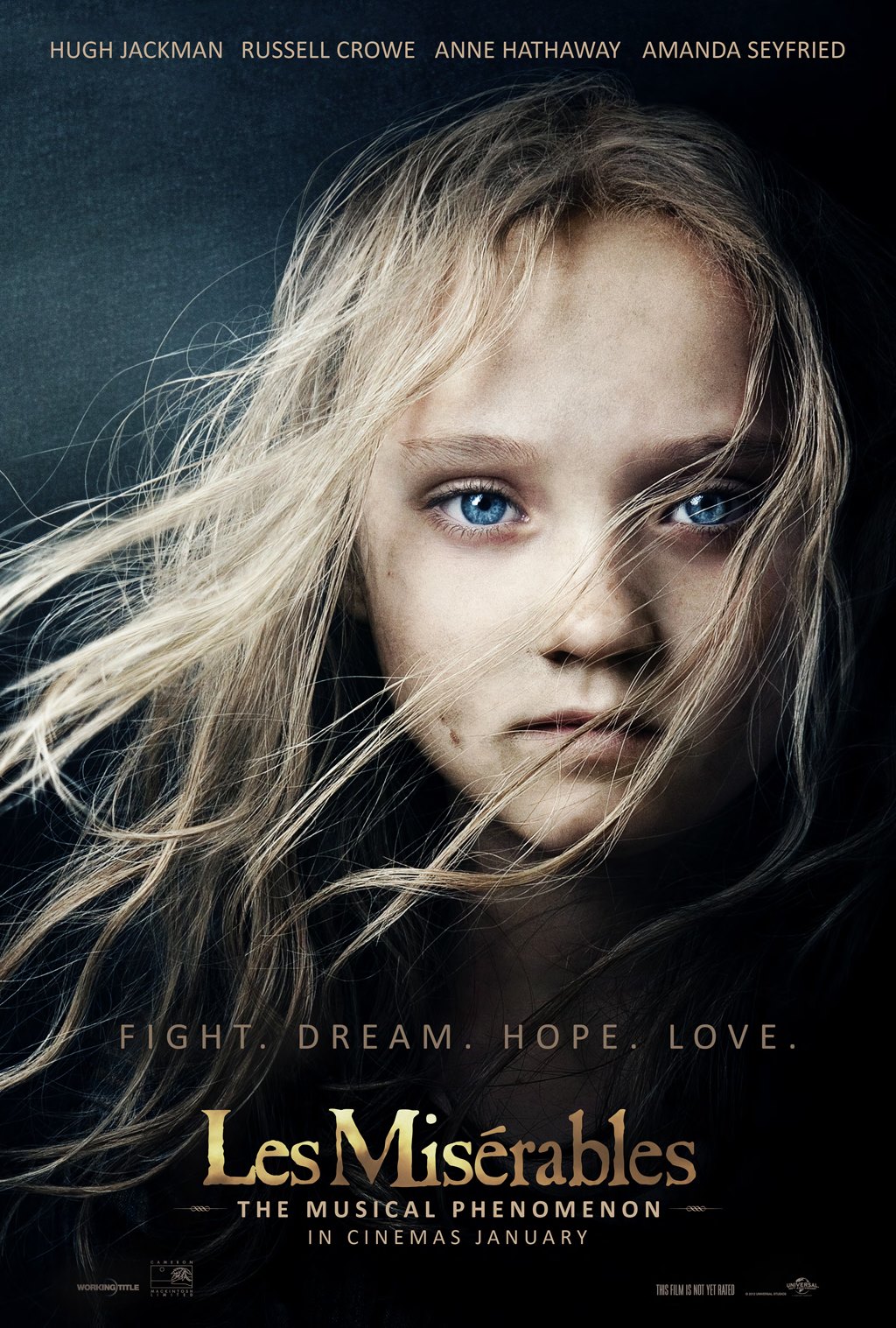
Of all the behemoth musicals of the 1980s, Les Misérables may just be the best. An entirely sung adaptation of Victor Hugo’s door-stop novel, it’s been thrilling sold-out global audiences ever since 1985. It ran on Broadway for 16 years and never stopped playing in the West End. Plans to turn it into a film have took decades, with its scale always the problem (not least since musicals spent a large chunk of the 1990s as far from sure bets at the Box Office). Finally, it came to the screen, with an Oscar-winning director who supplied the ‘fresh new vision’ a show that had been staged literally thousands of times needed. That vision has its merits, but it’s also divisive.

The story follows Jean Valjean (Hugh Jackman), a convict imprisoned for nineteen-years for stealing a loaf of bread. He is persecuted by his nemesis Javert (Russell Crowe), a rigid policeman who believes a man can never change. On parole, Valjean is an outcast but his life is changed forever after encountering a Bishop (played by original West End Valjean, Colm Wilkinson) who claims he had gifted the silverware Valjean had in fact tried to steal. The Bishop charges Valjean to live his life for the good of others. Eight years later he has become a respected mayor of a small town. But his past starts to catch up with him as Javert arrives as the new chief of police. Will helping Fantine (Anne Hathaway), the mother of illegitimate child Cosette (growing up to become Amanda Seyfried), lead to his secret being revealed?

Tom Hooper has a difficult challenge taking on Les Misérables. There can be few people around who haven’t heard at least some of the songs – and no musicals fan who probably hasn’t at a minimum watched a concert version, if not the show itself. How do you even begin to make one of the most famous musicals of all time fresh? Hooper chose a new approach that would up the intimacy and drama, fore-fronting emotion over scale. It also allowed him to fuse his unconventional framing with the raw, hand-held camera work of John Adams, his hit HBO miniseries.

So, Les Misérables, unlike many other musicals was to be all-sung live by the actors, rather than separately recorded and lip-synched on set. The camera would fly into their faces and almost interrogate the actors as they performed, capturing every emotion passing across their face. It would be up-close and intimate. What in the theatre works as a series of powerful, theatre-filling, ballads would be repackaged into something very personal. At times it works extremely effectively.

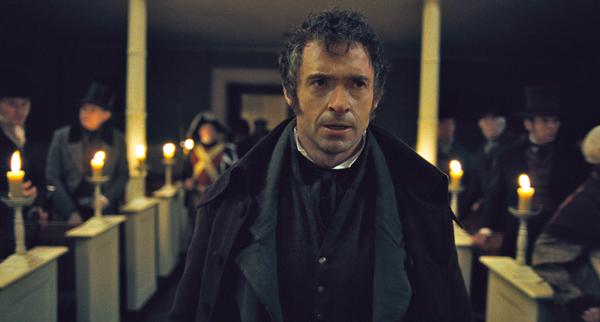
Having the actors sing live, means all the power of the performances they gave in the moment are captured. Emotions are dialled up, with songs often delivered through cracking voices or snot-filled nose sniffs. This has a particularly huge benefit for Anne Hathaway, whose deeply heartfelt, devastating rendition of I Dreamed a Dream is delivered in a single shot close-up that turns the song into a powerfully raw song about trauma (this sequence alone probably ensured Hathaway won every major gong going). It’s the same with Jackman: Valjean’s Soliloquy in particular plays off the raw guilt, shame and self-disgust Jackman lets play across his face while later Who Am I gains even more impact from the fear, hesitation, regret and moral determination Jackman injects into it, cracked voice and all. Perhaps not a surprise the two most confident performers benefit the most.

The downside is that, repeating the same visual technique for every single song, does make the film at times rather visually oppressive and repetitive. Even the large group numbers sees the camera drill into the faces of the individual singers, rather than offer us any wide shots. In fact, the wide shots in the film are so few you can almost count them on one hand. While Hooper’s approach uses the close-up to present the songs in ways theatre never could (good), it does mean he sacrifices the scale and beauty cinema can bring (less good).

You actually begin to think perhaps Hooper doesn’t really like musicals that much. His vision here is to turn Les Misérables into more of an indie film than an adaptation of West End musical. Choreography isn’t, to be fair, a major part of the stage production, but theatrical spectacle is, and that’s almost completely missing. Some of the most powerful, hairs-on-the-back of the neck power of the big numbers has been sacrificed for grinding the emotion out (Jackman at points speaks some of the lines rather than singing them). Musically, Samantha Barks’ marvellous rendition of On My Own is the only song in the film I would listen to out of context. It makes the show different – but more variety and more willingness to embrace the spectacle of the show – mixed with the intimacy of the solo numbers might have added more.

Les Misérables is still however very entertaining: after all it can’t not be when it has some of the best songs in the business. The acting is extremely strong. Jackman is perfectly cast: he not only has the vocal range and strength, but also the acting chops to bring to life a character who goes from red-eyed fugitive to caring and dutiful surrogate father. Hathaway is hugely affecting as Fantine, vulnerable but also with a deep resentment. Redmayne is hugely engaging and charismatic as Marius. Barks is excellent, Seyfried gives a lot of sensitivity to Cosette and Carter and Cohen are fun as the Thenadiers. The only mis-step is Crowe, who has the presence for the role but notably lacks the vocal strength for a notoriously difficult role.

They all provide some of the most intimate renditions of these songs you’ll ever see and the film unarguably offers a take you will have never seen before, even if you had sat through every single one of the thousands of stagings. It works better for solos than group numbers (which, with their kaleidoscope of voices all in different locations are hard to replicate on screen anyway), and it’s a well the film dips into far too often, but when it works, it really does. Les Misérables divides some – and on repeated viewings its repetitive visuals make it feel longer, with the second half in particular flagging – but Hooper does something a West End show can’t do. It might well have been better if it has used more of the things cinema cando (scale, sets, mise-en-scene – it’s hard to picture an actual image from the film that isn’t a close-up) but a film with actors as good as this and songs as affected as these will always work, no matter what.

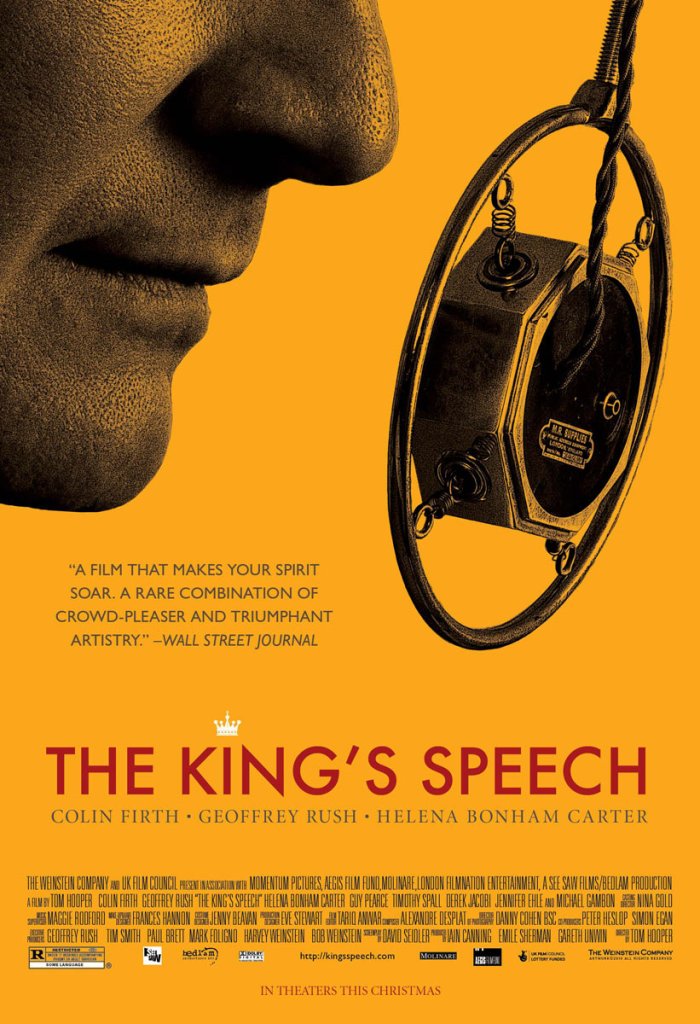
The King's Speech (2010)

The King's Speech (2010)

A King struggles to speak in this Oscar-winning heart-warmer that really works

Director: Tom Hooper

Cast: Colin Firth (King George VI), Geoffrey Rush (Lionel Logue), Helena Bonham Carter (Queen Elizabeth), Guy Pearce (King Edward VIII), Timothy Spall (Winston Churchill), Derek Jacobi (Archbishop Cosmo Lang), Jennifer Ehle (Myrtle Logue), Michael Gambon (King George V), Freya Wilson (Princess Elizabeth), Ramona Marquez (Princess Margaret), Anthony Andrews (Stanley Baldwin), Eve Best (Wallis Simpson)

It can be very hard to imagine the fear and pressure of not being able to trust your own voice. In a world where communication is valued so highly, what terror can it bring if you can’t easily express the thoughts in your own head? It’s a fear perfectly captured in the Oscar-winning The King’s Speech. Because in a constitutional monarchy, what purpose does the King have, but to be a voice for his people? And if the King can’t speak, how can he hope to fulfil his duty? The King’s Speech uses its empathy for those struggling with a condition many find easy to mock and belittle, to create an emotionally compelling and deeply moving story that is a triumph not of overcoming an affliction, but learning how it can be managed and lived with.

In the 1930’s Prince Albert, Duke of York (Colin Firth) is second-in-line for the throne. But unlike his charismatic brother David (Guy Pearce), he’s a tense man uncomfortable in the spotlight, whose life has been blighted by his stammer. As pressure grows from his father George V (Michael Gambon) to take on a more public role, he and his wife Elizabeth (Helena Bonham Carter) begin the process of consulting doctors for “a cure”. But the answer might lie with a former actor turned speech therapist Lionel Logue (Geoffrey Rush), whose techniques are as much psychological as they are practical. As he and the future George VI begin to work together, a tentative friendship forms as the taciturn king begins to open up about his feelings and find real friendship for the first time in his life.

The King’s Speech delivers a well-paced, beautifully written (an Oscar winning script from David Seidler) moving story of two unlikely outsiders who find themselves as unlikely kindred spirits. While it’s easy to see its Oscar win for Best Picture as a triumph of the academy’s conservatism (and there is a case to make, with the film’s heritage style and rather conventional structure and story-telling), but that would be to overlook the emotional impact it carries. I’ve seen the film several times now, and each time I find a lump forming in my throat as it sensitively and intelligently tackles themes of depression, isolation and fear and builds towards the heart-warming achievement of a man who learns his afflictions don’t have to define him.

Hooper (who scooped the Oscar for Best Director) draws superb performances from his actors, as well as bringing his own distinctive style to the film. He had already shown with his TV miniseries John Adams that he could shoot period material with all the immediacy and energy of more modern subjects, and it’s what he does here. His unique framing – with the actor’s often at the edges of the frame, in front of strikingly character-filled surfaces – not only grounds the drama in reality, but also captures a sense of the characters own personal isolation, helped by the frequent intimately-close shots. It helps the film avoid throughout from falling into the “heritage” trap, and instead feel (for all its royal family trappings) like a personal, intimate and real story.

And the intimacy is what makes it work so well – especially since so many of the scenes are made up of two characters sitting and talking, gently but with a slowly peeling honesty, about their own thoughts and feelings. The film is hugely successful in building up our empathy for the often over-looked struggles those who stammer go through. The terror that everyday events can bring. The burden of not mastering your own voice. The anger not being able to express yourself can bring. The resentment of how others can perceive your condition as anything from an irritation to a joke to something that with just a bit of help and effort you could brush aside like a sore toe.

The film has drawn praise for its depiction of stammering – although I am reliably told by an friend with an expertise in such things that the film’s connection of stammering with psychological trauma is old-fashioned and far from proven. But it realistically shows the burdens both it, and a troubled childhood, can bring and draws attention and sympathy to the condition in the best possible way.

A lot of this is helped by Colin Firth’s outstanding, Oscar-winning, performance in the lead role. From first seeing him, his George VI is a buttoned-up man with tension pouring out of every pore, who has chosen taciturn aggression as a defensive alternative to actually having to speak. Firth’s observance of mechanics of stammering is spot on (I wonder if he consulted Jacobi, who has had more than his own experience acting a stammer!), but above all he captures the deep pain, frustration and fear it can bring to a person. Firth’s King is a man who has lived a life feeling coldly shunned by most of his family – an upbringing he is clearly working hard to correct with his sweetly loving relationship with his own children. He’s bitter and angry – not only struggling to understand and express these emotions, but allowing them to crowd out his natural warmth, kindness and generosity which emerge as he opens up to Logue, and experiences genuine friendship for the first time.

Firth sparks beautifully with Geoffrey Rush who is at his playful and eccentric best as Logue. A warm, witty and caring man with a sharp antipodean wit and playful lack of regard for authority (the film mines a lot of fun from Logue’s playful teasing of the stuffed shirt nature of monarchy and the British class system), Rush’s performance is excellent. Just as the King has been dismissed by others for his stammer, so Logue has been dismissed as an actor for his Aussie accent and is scorned by his colleagues for his unconventional methods and lack of qualifications. But, by simply listening to a man who has been lectured to his whole life, who is frightened of himself and his situations, he helps him find a voice (in, of course more ways than one). Rush’s performance is essential to the success of the film, both as the audience surrogate and also a character with his own burdens to overcome.

Backing these two is a superbly judged performance of emotional honesty, matched with that take-no-prisoners bluntness we grew to know in the Queen Mother, from Helena Bonham Carter. The rest of the cast is equally strong. Pearce offers a neat cameo as a bullyingly selfish Edward VIII. Jacobi is overbearingly pompous as the face of the establishment. Jennifer Ehle is wonderfully playful as Logue’s put-upon wife. Andrews contributes a neat little turn as Stanley Baldwin.

Historically the film telescopes events for dramatic purposes. In fact, the future King’s therapy had started almost a decade earlier. Timothy Spall’s Winston Churchill – a rather cliched performance – is converted here into an early supporter of George VI during the abdication crisis (in fact Churchill’s outspoken support for Edward VIII nearly destroyed his career). Baldwin has been partly combined with Chamberlain. Other events are simplified. But it doesn’t really matter too much. Because the emotional heart of the story is true – and the relationship between these two men, and the positive impact they had on each other’s life is what make the film so moving.

Culminating in a near real-time reconstruction of the King’s speech announcing the outbreak of the Second World War – a brilliantly handled, marvellously edited and shot sequence with masterful performances from Firth and Rush – the film is an emotional triumph. Sure, it hardly re-events the wheel, with its struggle to overcome adversity story line and tale of royalty bonding with commoner – but it hardly matters when the rewards are as rich as this. With superb performances all round, in particular from Firth, Rush and Carter and sharp direction of a very good script, this is a treat.

The Danish Girl (2015)

Eddie Redmayne and Alicia Vikander struggle with questions of identity in the overly sentimental The Danish Girl

Director: Tom Hooper

Cast: Eddie Redmayne (Einar Wegener/Lili Elbe), Alicia Vikander (Gerda Wegener), Matthias Schoenaerts (Hans Axgil), Ben Whishaw (Henrik Sandahl), Amber Heard (Ulla Paulson), Sebastian Koch (Dr Kurt Warnekros), Pip Torrens (Dr Jens Hexler), Nicholas Woodeson (Dr Buson), Emerald Fennell (Elsa), Adrian Schiller (Rasmussen)

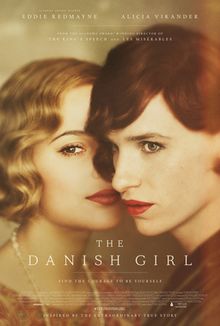
Working out who you are can be a lifetime’s struggle for some people. Finding out that who you are is someone outside the bounds of what society considers normal or acceptable often calls for a special kind of bravery. That’s the kind of bravery that Einar Wegener had when he realised that he felt he was a woman, not a man. Einar became one of the first ever recipients of sex reassignment surgery, becoming Lili Elbe. It’s an inspiring true-life story, fudged in Tom Hooper’s syrupy, sentimental film.

Eddie Redmayne plays Einar/Lili, slowly realising his fascination with women’s clothing is actually part of a far larger realisation, that she identifies as woman rather than a man. Her wife, Gerda (Alicia Vikander), helps Lili explore her identity, herself journeying through pain at losing her husband to final acceptance and support as Lili begins surgery to complete her transition.

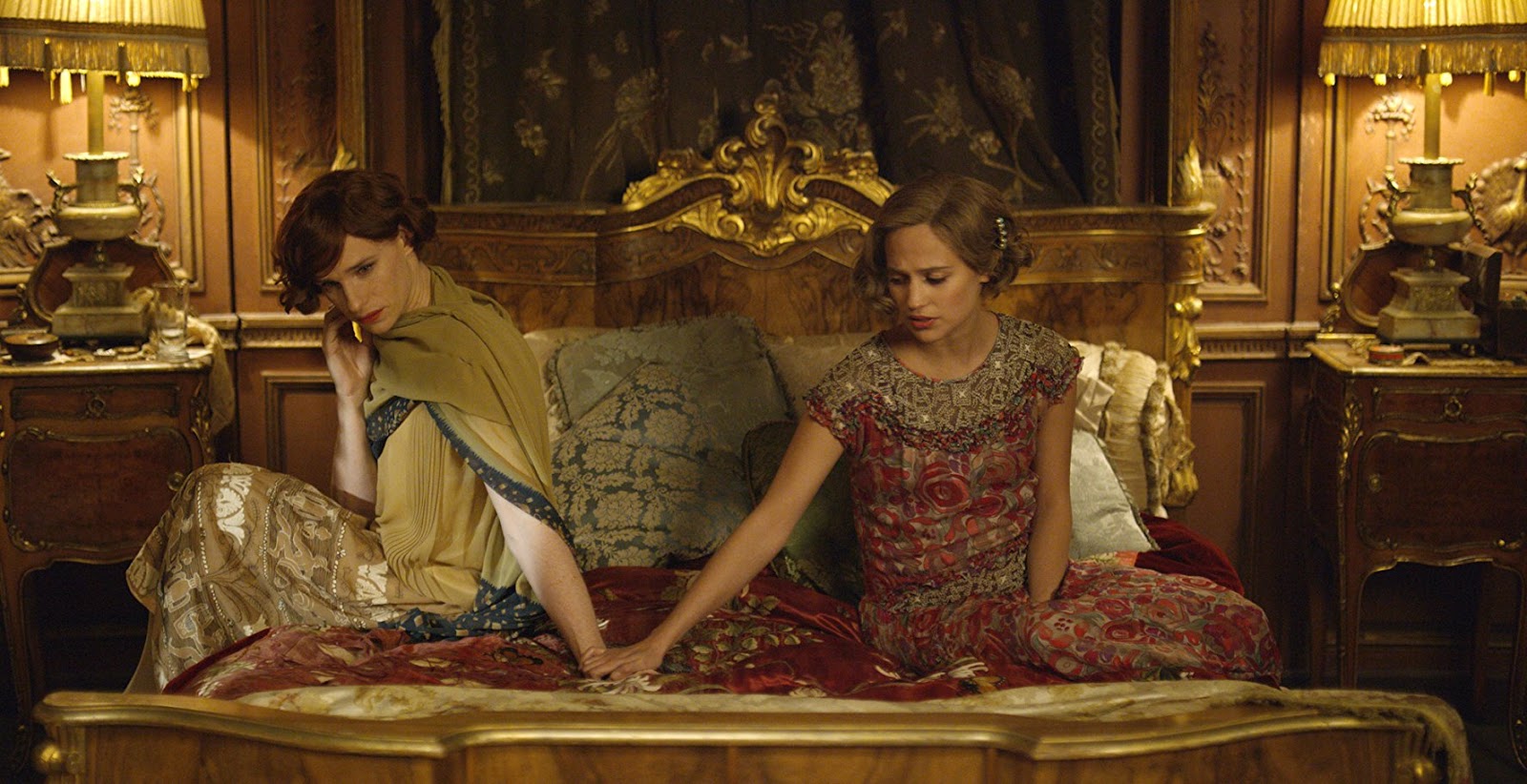
Tom Hooper’s film is shot and framed with the magnificence you expect from his previous films. Hooper’s mastery of framing not only presents people in striking contexts (he has a particular eye for positioning people artfully in a frame with fascinating walls behind them), but also uses the camera to drill into its protagonists (throwing backgrounds into soft focus) to help you begin to empathise with them. It’s a great way to build a connection with the lead characters. But the film never quite adds enough depth and real understanding to its beautiful visuals. I’m not sure it really gets inside the mind of Lili and gets a real understanding of her.

For starters, the structure of the film is confused. The main problem is that the dramatic thrust of the film is Lili realising she is a woman. The character’s emotional and psychological conflict is all bound up in struggling to accept this: the journey of the film is Lili’s internal journey to know and accept herself. Once this realisation is made the drama drains out of the film. Try as it might, it can’t make a series of operations to make complete Lili’s transition dramatically interesting. It also fails to really get inside the psychology of Lili at this point, making her feel more like an exotic, occasionally selfish, passenger through a series of treatments, rather than someone who feels like she has real dramatic thrust.

This is partly because the film splits the perspective more or less equally between Lili and Gerda. While the film follows the passage of Lili realising who she is, if anything more of its empathy and understanding (and interest) is invested in how Gerda reacts to this change. You can see the logic of some complaints that the story of this leading LGBT figure is filtered through the perceptions of their heterosexual wife. Gerda’s emotional journey – pain, anger, rejection, sorrow, despair, acceptance and support – is what really drives the film, far more really than Lili’s realisations. 

But this slightly skewed perception is all part of a film that never quite feels true. I appreciate that Lili moved in some bohemian circles, but surely more people would have been more outraged in the 1920s and 30s by this change. The only people in the film we see reacting in any way negatively are two doctors and a pair of thugs in Paris. Other than that, far from a struggle for acceptance, people seem to fall over themselves to tell Lili how wonderful her new identity is.

The most supportive figure of all is Lili’s childhood friend, Hans Axgil (played very well by Mattias Schoenaerts) – who’s the centrepiece of another major issue with the film. This wonderfully warm and kind man befriends and supports both Lili and Gerda. I left the film wanting to find out what happened in real life to this man who seemed too good to be true. Guess what: he was literally too good to be true. He didn’t exist. In fact no one in the film existed other than Lili and Gerda. Furthermore the timeline (and many of the events) of the film have been changed, as have some of the facts around their relationship. For a film pushing itself as an inspiring “true story” this feels more than a little bit like a cop out.

This is part of the film simply trying too hard. From lingering shots of Einar longingly fingering women’s clothing early in the film, to the syrupy music sore that hammers home as many of the emotional beats of the film as possible, it’s a film that wants to do things as obviously as possible for the audience. It wears its “importance” very heavily: you can tell all involved believed that the project they were working on was going to have an impact on viewers across the world.

Not that we should detract at all from two lead performances. Redmayne immerses himself utterly in the role and performs with sensitivity, giving Lili an early sense of fear that develops into an increasingly relaxed and confident determination. Vikander is equally good, running the full gamut of emotions: she probably is the movie’s heart (making her supporting actress Oscar feel even more like character fraud). Two fabulous performances – and plenty of striking visuals, well directed – but it’s a film that really never quite feels like it gets into the heart of its lead, and always feels like it’s pushing you into feeling an emotional reaction, straining for you to shed tears, rather than letting them come naturally.