Category: Disney film

Ratatouille (2007)

Ratatouille (2007)

Delightful and heart-warming cooking comedy with added rats – a Pixar gem

Director: Brad Bird

Cast: Patton Oswalt (Remy), Lou Romano (Alfredo Linguini), Ian Holm (Skinner), Brian Dennehy (Django), Peter Sohn (Émile), Peter O’Toole (Anton Ego), Brad Garrett (Auguste Gusteau), Janeane Garofalo (Colette Tatou), Will Arnett (Horst), Julius Callahan (Lalo), James Remar (Larousse), John Ratzenberger (Mustafa), Teddy Newton (Talon Labarthe)

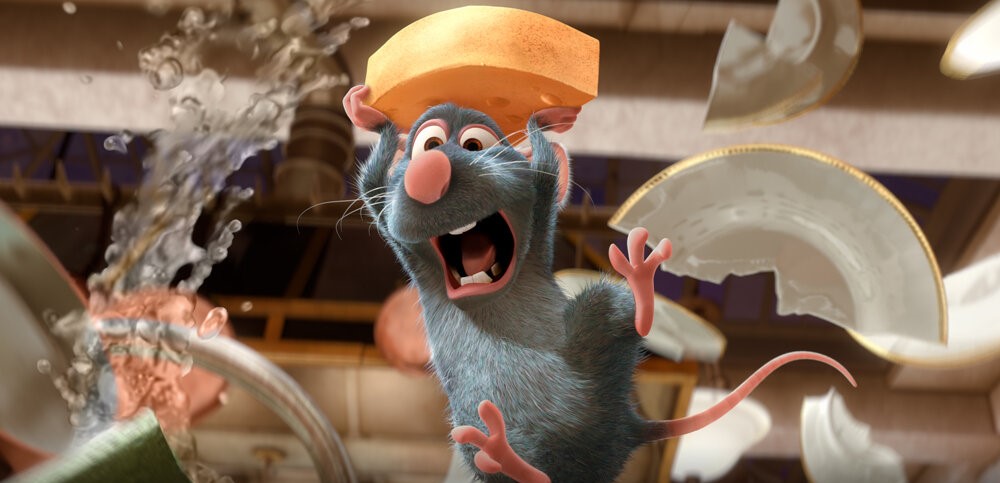
They say anyone can cook – but surely they don’t mean a rat can cook? But in Ratatouille that’s what we get: the greatest chef in Paris is a rat. Remy (Patton Oswalt) has a sense of taste and smell that’s light years ahead of his fellow rats. While they happily munch on rotten food, Remy longs for food that’s actually good. Separated from his family, Remy finds himself in the Parisian restaurant of legendary late chef Auguste Gusteau (Brad Garrett). There Remy’s natural instincts make him the secret brains behind the growing success of young Alfredo Linguini (Lou Romano), who overnight moves from dish cleaner to chef. His secret? Remy of course. Can they keep their secret in the face of the suspicion of head chef Skinner (Ian Holm), Linguini’s growing romance with fellow chef Colette (Janeane Garofalo), and the threat of a damning review by feared critic Anton Ego (Peter O’Toole)?

All this comes together in Brad Bird’s delightful confection, a superb dish where every flavour is perfectly balanced and all ingredients are seasoned to perfection. (I promise this won’t all be full of cooking puns.) It’s absolutely wonderful good fun and on top of that, it’s a real heart-string tugging treat. Ratatouille takes a fantastical set-up (a cooking rat manipulates a talentless chef’s body through precise hair pulling) and then throws in ounces of carefully judged comedy with real emotional pathos. Ratatouille never fails to make you laugh but then hit you with tear-inducing sincerity. The film is a total delight.

What Ratatouille is really about is truth. Being true to yourself, embracing the things you love, and the struggle to find acceptance for that, be it from family or the world around you. It’s the subtext behind Gusteau’s message that anyone can cook. This is not about anyone being able to crack an egg into a pan: it’s about good food coming from a person loving what they do and wanting to share that love with someone else. Remy – an utterly delightful voice performance by Patton Oswalt – wants to experience good food, but as a rat the home of good food is always the place he’s most likely to find himself skewered by a trap.  

Remy loves food in a way that the rest of his rat family – lead by his tough-as-nails father Django (Brian Dennehy) – can’t even begin to understand. They see food as just fuel. Who cares which flavours complement each other or even if its fresh? To them Remy’s extraordinary sense of smell is only useful for his ability to detect poison before it hits their mouths. And they can’t even begin to understand Remy might want more. But the very idea of heading to a kitchen – or interacting with humans who, to the other rats, get their kicks from slaughtering rats in their thousands – they can’t even begin to get their head round. Why can’t Remy be happy snuffling in the gutter?

Linguini (a very sweet, nervy Lou Romano) also has burdens of expectations that he can make a career in the kitchen. Anyone can cook – except for Linguini, who has no interest in (let alone flair for) flavours. The relationship between man and rat is beautifully done– even though neither can speak the other’s language. (In a neat touch, while we hear the rats talk – every human in the film just hears them squeak.) To Linguini, it doesn’t matter that Remy is squeaky vermin, what matters to him is that Remy is a master at what he does. But, Ratatouille gently asks: can hiding your true self make you happy in the long term?

Linguini’s success shows another side of being true: as fame goes to Linguini’s head, he starts to forget he’s the muscle not the brains of the operation. What will eventually alienate his growing relationship with fellow chef Colette (a wonderful Janene Garofalo) is not that he’s working with vermin to make the food, but that he’s lied to her about his skills. Something particularly tough since, like Remy, she has had to fight tooth and nail to live her dream in a male-dominated industry.

Accepting your true self and being happy in your own skin are themes our two villains also juggle with. Head chef Skinner (hilariously voiced with impotent rage by Ian Holm) has lost any love he once had for cooking, marketing his former mentor Gusteau as the face of a brand of cheap ready-meals (“with dignity” he absent-mindedly requests, as Gusteau is drawn as a burrito for the latest packaging) and his interest is only in turning a profit. The face of mass-produced, soulless fare, he’s the perfect antagonist of a film that praises lovingly crafted individualism.

And our other villain? Played with a beautifully plummy relish by Peter O’Toole, Anton Ego – drawn with a grey-faced, sepulchral chill – despairs that any food can meet his standards and seems to have forgotten somewhere along the line that excellence comes from love. Unlike Skinner though, Ego is (at heart) an idealist who may no longer quite remember what he is searching for – but will embrace it when he finds it at last. Ratatouille’s finest moment – always brings a tear to my eye for sure – is Ego’s being reminded at last what made him fall in love with his passion in the first place, perhaps one of the finest moments in Pixar’s long history.

Ratatouille’s emotional content and its themes of truth and acceptance are at the heart of its success, complemented always by the superb score from Michael Giacchini, crammed with Parisian inspiration. There is more life in this animated marvel than in hundreds of live-action films. And the animation is breath-taking: from the kitchen a marvel of pristine, gold and steel surfaces, via the sewers bringing back memories of The Third Man, to the visual imagination of Ego’s coffin-shaped office or the cobbled together rat colony (made from various bits of rubbish). Brad Bird’s flair (and Ratatouille is a wonderfully directed film) also carries across to his electric chase scenes through the streets and rivers of Paris, and the undeniable tension of watching Remy maneuverer his way around a kitchen without being detected.

Bird’s film though really succeeds because it has a warm-hearted love for all its characters and a heartfelt and appealing message for us to be the people we want to be, not what those around expect us to be. And who can’t relate to that? Throw in the sort of unexplained comic magic of watching a naïve young man having his body moved about by a cuddly rat sitting under his chef’s hat and with Ratatouille you onto an absolute winner. Bon appetit!
The Lion King (2019)

The Lion King (2019)

Soulless, heartless remake designed to make Disney as much money as possible

Director: Jon Favreau

Cast: Donald Glover (Simba), Beyoncé Knowles-Carter (Nala), Seth Rogan (Pumbaa), Chiwetel Ejiofor (Scar), James Earl Jones (Mufasa), Alfre Woodard (Sarabi), Billy Eichnor (Timon), John Kani (Rafiki), John Oliver (Zazu), Florence Kasumba (Shenzi), Keegan-Michael Key (Kamari), Eric André (Azizi)

We all like to pretend Disney is the custodian of our childhood dreams – that they exist on to give us even more gorgeous memories to treasure. Bollocks. It’s a corporate enterprise existing solely to create more money for shareholders. If you were in any doubt, cast your eyes across The Lion King, a bottomless collection bucket for the God of Mammon. There is literally no reason for this film’s existence, other than to lure people into the cinema for the express purpose of removing their pennies from their pockets and dropping them into Disney’s McDuck vault for the next time the shareholders want to take a dip.

Seen the original? Then you know the plot. At least Disney’s previous nakedly commercial “live-action” remakes of Beauty and the Beast and Aladdin had the decency to introduce a few new plot elements so there was at least a little bit of surprise content. Even if it was tedious stuff like the Beast’s Tardis mirror to the past or the Genie’s love interest. Here the extra 15 minutes is made up solely of padding, dreadful unfunny comic and utterly unnecessary extra characters who make literally no impression (Timon and Pumbaa now run a sort of hippie commune).

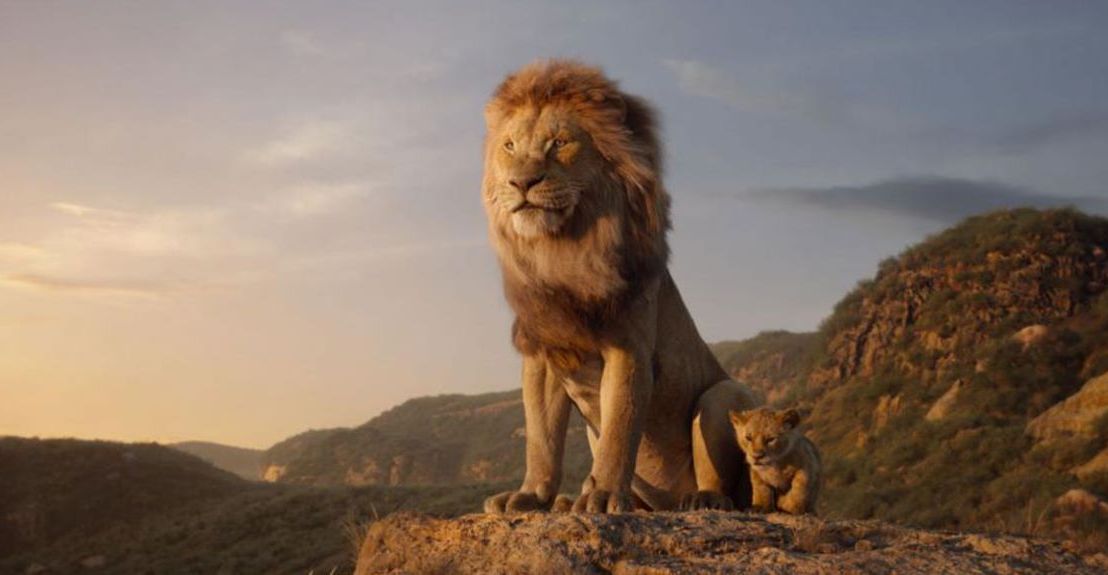
Disney made huge play out of the fact this is a “live action” Lion King. That’s the selling point. So proud of this were they, that they were hilariously pissed off when the Golden Globes nominated the film for Best Animated Film. But nothing in this film is real, or live action – except, as Favreau later bragged, the first shot of the film showing the sunrise. Everything you see here is created in a computer: from the tufts of Mufasa’s mane to the grass that dances in the breeze. Far from watching a live-action film, this is an orgy of CGI wizardry that constantly pats itself on its back for the hard work and detail that went into its creation. Who cares if the result has no heart?

Because that’s the case. The Lion King is a soulless cultural abomination. It is almost entirely a shot-by-shot remake, with the only changes being the occasional introduction of new (less good) dialogue. The characters have the same conversations, with less snap, laughs and emotion. It’s the sort of film-making karaoke some people like to call affectionate homage, but instead feels like pandering and no-one having the guts to change even the slightest moment from the original. How hard would it have been to match the plot, but find new ways to film it? This however matches shots, camera moves, angles, edits – the whole damn thing. If you had a choice between seeing the Mona Lisa or watching a computer do a Mona Lisa paint-by-numbers, which would you choose?

It also feels like no one stopped for a second during their self-congratulatory film-making to ask one or two obvious questions. Firstly, I don’t think its racist to say this, but to my eyes most lions look the same. No real effort has been made to distinguish any of them from each other (with the obvious exception of Scar) – this particularly effects the lionesses who all essentially look the same. Secondly, one of the first things you’ll notice about most animals is that they have inexpressive faces that do not display emotion and that they have mouths that have not been designed for talking.

With an animated lion you can get round this. You can draw a look of fear on Mufasa’s face because you aren’t limited to only using the facial movements that a real lion can. Their faces can shift and change to match the emotions of a real person – they can look happy or sad, cynical or sarcastic, joyful or mournful. You can’t do this with a real animal, because animals don’t have expressive faces. The whole cast of The Lion King have stiff, stationary faces that never react to the emotional events around them. They often can’t even move their mouths to properly replicate speech (Favreau starts to get round this by having as much of the dialogue delivered off camera as possible).

What you end up with is a series of robotically cold shots of animals not emoting, mechanically going through the emotions to replicate a masterpiece. Mind you, perhaps it’s a good thing that the film tries to rip-off the original as much as possible because whenever it does its own thing it thuds face-first into a pile of animal dung. Pumbaa is given a hideously on-the-nose line about “I can’t stand bullies” (to replace his “they call me Mr Pig!” battle cry). Eichhorn, Oliver and Rogen litter the film with unfunny fourth-wall-leaning references which stink of over-indulged recording booth improv. A few songs are butchered (most noticeably Be Prepared) and several musical cues are reworked in a way that dramatically reduces their impact. Even the obligatory new song is lacklustre and weirdly tonally wrong for the moment it’s used.

The cast struggle, never quite sure how they should approach the content. Spare a little sympathy for Ejiofor, stuck trying to follow one of the greatest vocal performances of all time – but his response to this is to bend himself into all sorts of shapes to be as different from Jeremy Irons as possible. The result is an underwhelming Scar, who lacks presence, menace, or the glorious manipulativeness of the original. Other actors are flat-out fails, most particularly Eichhorn who turns Timon an unlikeable bitchey whiner. Only John Kani really does something that feels like a good mix of homage and original work as Raffiki – he’s one of the few genuinely African voices in a film that loudly “prided” itself on its mostly African-American cast, but still has all the lions speaking in reassuringly American accents – and casts white actors into almost every non-lion role.  

But that’s a side note. The Lion King is a ruthlessly, exploitative attempt to make money. Which it managed to do to an enormous degree. So, I guess it hardly matters that surely no-one will be watching it in five years’ time. Or that its CGI created lions are expression-free automatons existing in a shiny world of non-reality. Or that the entire enterprise is a heartless, soulless, nakedly commercial stare deep into the belly of a conglomerate that sees people as nothing more than ATM machines. The Lion King is an abomination and will take pride of place in Hell’s multiplex for all time.

Frozen 2 (2019)

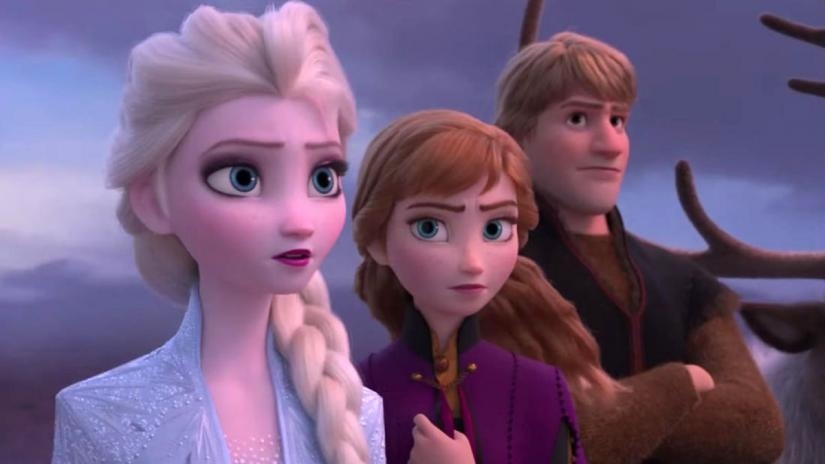
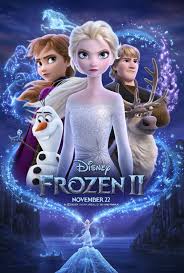
The gang are all back together in Frozen 2

Director: Jennifer Lee, Chris Buck

Cast: Kristen Bell (Anna), Idina Menzel (Elsa), Josh Gad (Olaf), Jonathan Groff (Kristoff), Sterling K Brown (Mattias), Evan Rachel Wood (Iduna), Alfred Molina (Agnarr), Martha Plimpton (Yelena), Jason Ritter (Ryder), Ciaran Hinds (Pabbie), Jeremy Sisto (King Runead), Rachel Matthews (Honeymaren)

Frozen was a phenomenon, a film that seemed to come out of nowhere and seized the imagination (and the passions) of audiences. Why did it work so well? It’s got a great bunch of characters, a focus on sibling affection that is very easy to relate to (and very different from most romance-based Disney films), a well-rounded bunch of characters (so easy to relate to, they inspired a number of fan in-jokes in a way that only characters in films you really care about can) and of course that song. Frozen II works very hard to double down as much as possible on the things that worked, and to give you the chance to spend more time with these characters. If it fails to match the magic of the first film, it still makes for an entertaining trip to the cinema.

Elsa (Idina Menzel) and Anna (Kristen Bell) are now living together in the kingdom of Arendelle, and all is peace and contentment. Until one day a siren call that Elsa keeps hearing from across the water occurs at the same time as a series of elemental events in the kingdom, each harnessing earth, fire, air and water. The sisters quickly work out that this must be connected in some way with the stories their parents told them of the Enchanted Forest, a magical land near to Arendelle that  disappeared after a mysterious feud between the two kingdoms. Accompanied by living snowman Olaf (Josh Gad), Anna’s boyfriend Kristoff (Jonathan Groff) and his reindeer Sven, the sisters head off to find the cause of the disturbances, solve the mystery of the enchanted forest and save Arendelle. Phew!

Frozen 2 is engaging, fun and has some very good jokes. Its main problem is a plot that feels both sprawling and epic and also muddled and confusing. As the film hits its final act, you may well feel more than a little confused about why events are unfolding like this, what the motivations of certain characters are, why some things happen to characters etc. What the film seems to lack is a compelling unfolding of the plot, and a clear structure of how these events link together to form the overall arc.

As such, we seem to head to several locations and constantly encounter a series of magical creatures, but never really get a firm grasp of how they link together. The film has a series of flashbacks and expands the backstory of the series, but then never really pulls together clearly how the events of the past shaped the present. The moment where this is explained feels rushed and murky, and seems to revolve around a sort of “anti-magic” attitude from a key character in the past that has no context with the rest of the film and never feels really clear. 

The plot may not be the strongest, but where the film really does work is in its sense of humour and its fun script, and the engaging riffs Lee and Buck make on the previous film. Fan humour from the first film – not least the close relationship between Kristoff and Sven – is doubled down on in this film with a series of knowing sight gags. Olaf – far more engaging here than in the first film – has a series of excellent fan gags, peaking in a hilarious showpiece moment where he essentially acts out the entire plot of Frozen for the people of the Enchanted forest (all of whom respond like the fans). It’s a hilarious show piece, and a real sign of the film’s strengths, which are often when it is riffing on the first film.

The film also carries across the other things that worked from the first film. The close relationship between the two sisters is central to most of the film’s development (although it also means that Anna seems to have to protest her devotion in virtually every scene). The sense of outsider and isolation in Elsa is also explored further, with her confusion over being happy where she is but still yearning for something more. The film also threads in a charming B-plot of Kristoff’s attempts to propose to Anna, which provides both charm and several moments of comic gold.

The film does struggle to find a replacement song for Let It Go, although Into the Unknown comes close, another inspiring, story-packed, ballad for Idina Menzel to bring to inspired life again. The song also plays well with the several fans who have seen Elsa become a gay icon, with most of the lyrics leaning on the idea of heading out from the safety of knowing where you are to finding your true self in the “unknown”, answering the siren call of your own desires. Also of course, it’s a belting song which you can enjoy on its own merits!

Saving Mr Banks (2013)

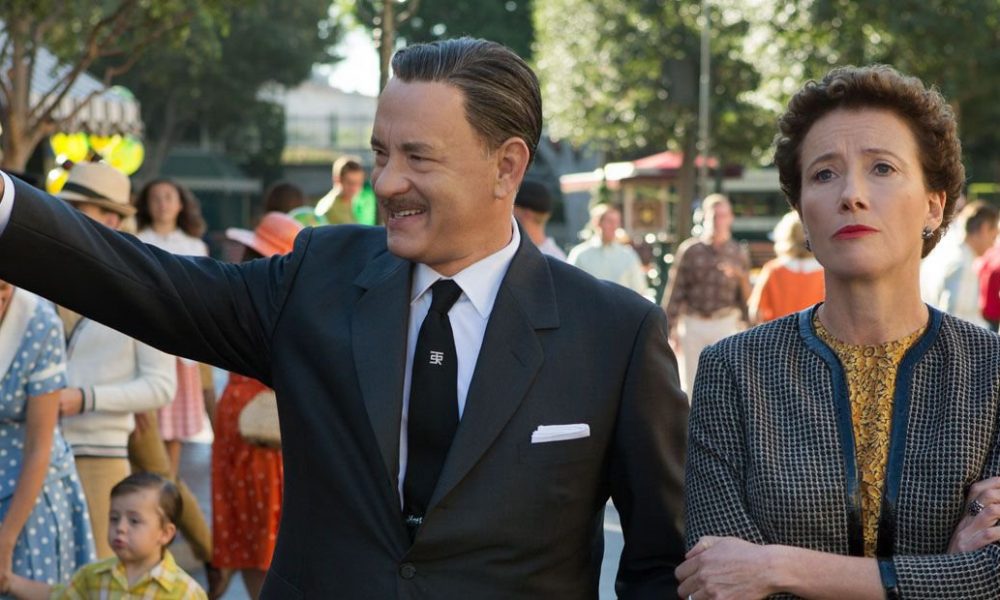
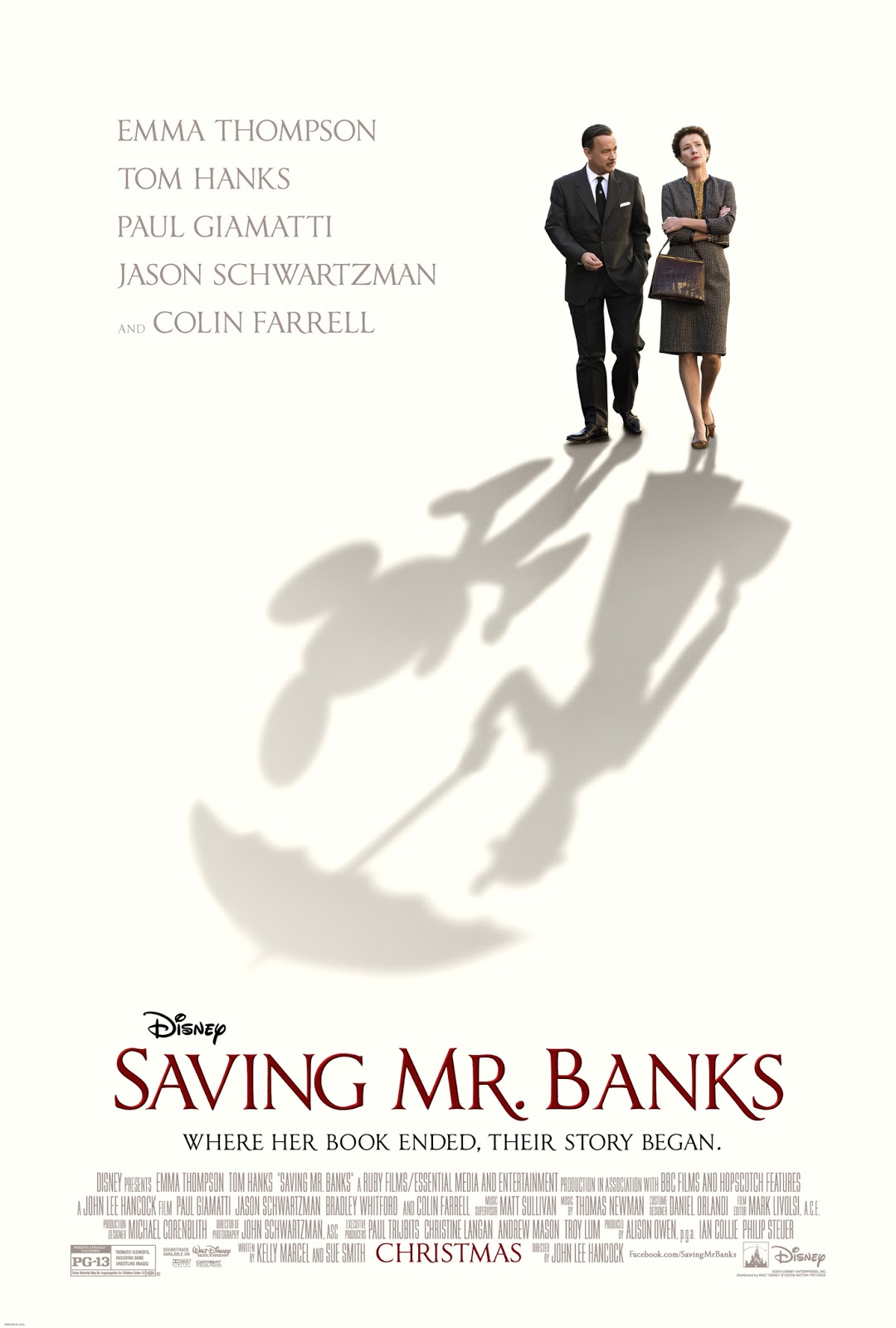
Tom Hanks and Emma Thompson clash on the making of Mary Poppins in Saving Mr Banks

Director: John Lee Hancock

Cast: Emma Thompson (Pamela Travers), Tom Hanks (Walt Disney), Colin Farrell (Travers Robert Goff), Ruth Wilson (Margaret Goff), Paul Giamatti (Ralph), Bradley Whitford (Don DaGradi), Jason Schwartzman (Richard M Sherman), BJ Novak (Robert B Sherman), Kathy Baker (Tommie), Melanie Paxson (Dolly), Rachel Griffiths (Ellie), Ronan Vibert (Diarmuid Russell)

Walt Disney was a man used to getting what he wanted. And what he wanted more than anything was the rights to PL Travers’ Mary Poppins series. It was his kids favourite books, and he had promised them he would make the movie. It took decades – and Disney had to wait until Travers needed the money – but finally a deal was struck, with Travers having full script approval. So the hyper-English Travers is flown across the Atlantic to Los Angeles where she reacts with a brittle horror to every single suggestion from the Mary Poppins creative team, and distaste at the commercialisation of Disney’s enterprise. Based on the actual recordings (which Travers insisted on) from the script meetings, Emma Thompson is the imperious PL Travers and Tom Hanks the avuncular Walt Disney.

John Lee Hancock’s film is a solid crowd pleaser that, if it feels like it hardly delivers a completely true picture of the making of Mary Poppins, does put together an entertaining and interesting idea of the difficult process of creation and the tensions when writers (who don’t want to change a thing!) clash with film production companies. These problems being made worse by the clashing worlds of the loose, casualness and breezy friendliness of Los Angeles, and the intensely cold, buttoned-up Edwardianism of Travers, hostile to all shows of affection and any touches of sentimentality.

The film gets more than a lot of comic mileage out of these mixed worlds, with Travers’ every look of aghast, repressed, British reserve (“Poor AA Milne” she mutters while manhandingly a stuffed Winnie-the-Pooh toy out of her way, followed by “You can stay there until you learn the art of subtlety” as she dumps a massive Mickey Mouse cuddily toy against the wall of her bedroom) bound to raise sniggers at both her blunt hostility and cut-glass wit. Against this the American characters – all of them forced to dance to her tune – meet wave after wave of hostility with a practised American friendliness and warmth. It works a treat.

The film walks a fine line with its portrayal of Disney who is both a charming uncle figure and also a savvy and even ruthless businessman. Tom Hanks is spot-on with showing both sides of this man, making it clear how he managed to make so much damn money but also from how he managed to inspire such loyalty from many of his staff. Yes the film soft-peddles on many of Disney’s negatives – from refusing to show a single second of Disney smoking, to no mention of his active union-busting activities – but this is a film focused on Disney the impresario and negotiator. 

And what a person to negotiate with! That the film works is almost exclusively down to Emma Thompson’s imperious performance in the lead role. Thompson has a very difficult job here of turning someone so consistently rude, aggressive, arrogant and unpleasant as Travers (and over half of the film goes by before she says something nice to anyone) into a character we genuinely invest in, care about and laugh with as much as gasp at her rudeness. It’s a real trick from Thompson, adding a great deal if inner pain and vulnerability just below the surface, but only allowing a few beats of letting these feelings out for all the world to see. It makes for a performance that is superbly funny, hugely rude but also someone we end up caring about.

A lot of that spins from the careful recreation of Travers’ past in flashback, particularly her relationship with her father, Travers Goff (played with charm by Colin Farrell), an alcoholic bank manager in Australia when Travers was a child, who lived a life of irresponsibility mixed with bursts of playful, imaginative games with his daughter. It’s the realisation, by the elderly Travers, that her father was feckless and irresponsible that motivates her writing of Mary Poppins, the super-Nanny who flies in and saves not just the whole family, but specifically the father. Equally good in these sequences is Ruth Wilson as the despairing Mrs Goff.

It adds a sadness to the backstory of Travers – and an understanding of why she behaves the way she does – and the film also brings it round to a neat mutual meeting ground between her and Disney, who himself had problems with a father who drove him hard to achieve. It also explains Travers’ growing warmth to her chauffer, played by Paul Giamatti as a loving dad, the one person she demonstrates some affection to within the film.

It’s a film that wants to have its cake and eat it though, and it can’t resist adding a “happy ending” to the story of Travers finally accepting (even if she denies it) that she enjoys the Mary Poppins film and is moved by the saving of Mr Banks that it contains. In reality of course, Travers hated the film (though claimed some of it was passable) and refused Disney all permission to ever make any sequel. But that hardly matters here, to this fairy tale of saved souls which wants to see Travers saved – even if the truth was far more complex.

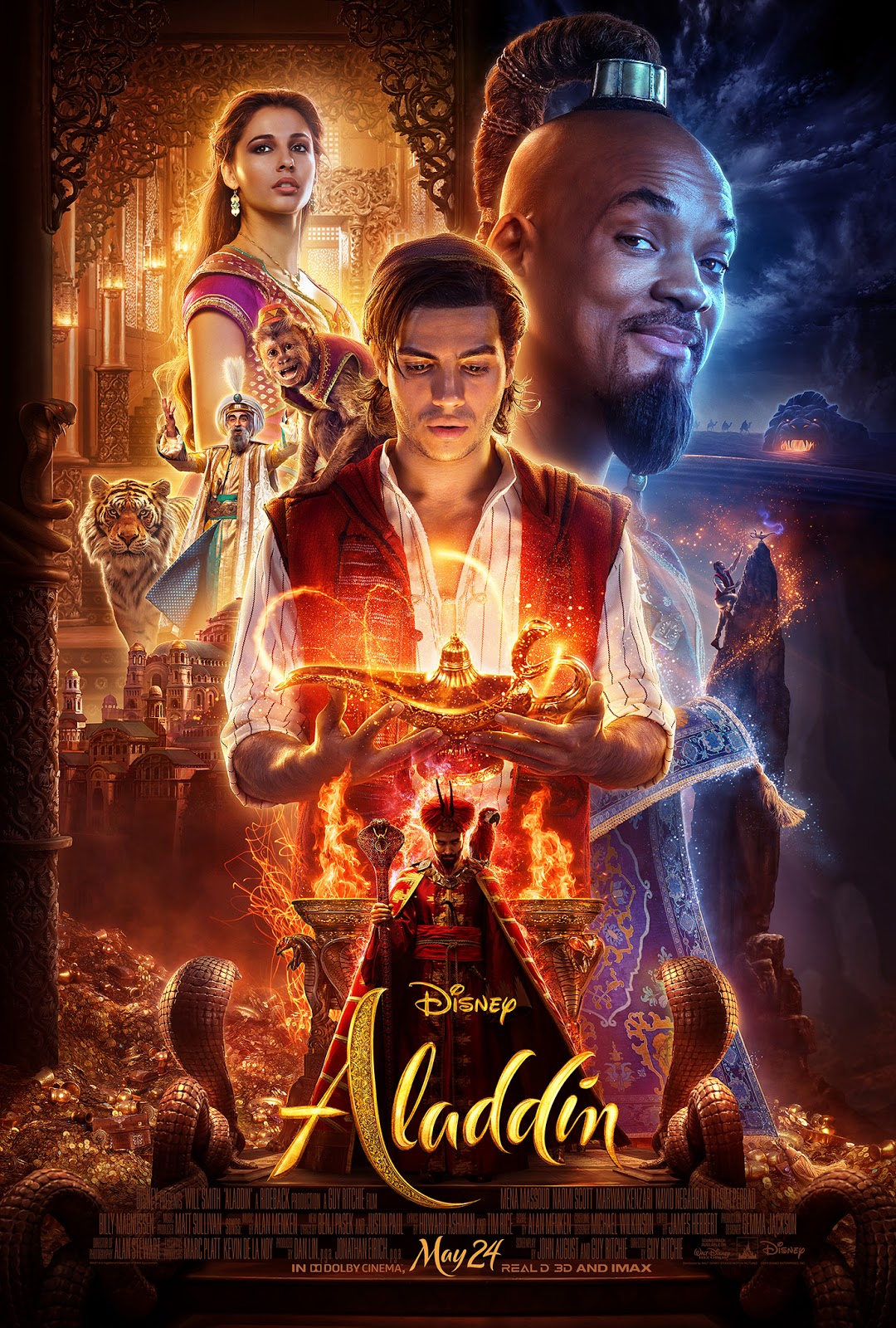
Aladdin (2019)

Will Smith and Mena Massoud restage Disney’s Aladdin beat for beat. Why?

Director: Guy Ritchie

Cast: Will Smith (Genie), Mena Massoud (Aladdin), Naomi Scott (Princess Jasmine), Marwan Kenzari (Jafar), Navid Negahban (The Sultan), Nasim Pedrad (Dalia), Billy Magnussen (Prince Anders), Numan Acar (Hakim), Alan Tudyk (Iago)

Disney’s passion for converting their vast animation back catalogue into life-action cash registers continues with Aladdin. And it won’t stop after this film blockbustered its way to a huge international cash haul. Why did it do so well? Probably because it reassuringly offers you exactly the same film as the animated original, bar a few extra sub plots to beef up the runtime. I mean this. This is the same film almost completely as the first one, but without Robin Williams. Which is a bit like saying it’s a Shakespeare remake without the language.

Anyway, everyone knows the story. Evil Jafar (Marwan Kenzari) wants the powerful lamp, it’s trapped in the Cave of Wonders and only “a diamond in the rough” can get it out. Aladdin (Mena Massoud) is that diamond, and wouldn’t you know he’s in prison after sneaking into the palace to meet Princess Jasmine (Naomi Scott) with whom he has unknowingly fallen in love during her visit incognito onto the streets of Agrabah. Aladdin gets the lamp, but events mean he’s the guy who rubs it and gets the three wishes (and the friendship) of the Genie (Will Smith, using every inch of his personality to replace Robin Williams). 

Do people only see these films because they know exactly what they are going to get? Do the directors only make these films under tight instruction to deviate as little as possible from the animated original? What is there creatively in this sort of karaoke, where the biggest praise seems to be “it’s just like the cartoon”? I mean why not just watch the cartoon? As is invariably the case, it’s got far more wit, invention and energy. And it’s half an hour shorter.

This is one of the biggest photocopies I think they’ve done so far. I sat in the cinema genuinely puzzled and dumbfounded as to why this film exists. For much of the first hour, all the lines, the beats, the songs, some of the shots, much of the physical business – it was all the same. All of it.

It does have some new bits and pieces. Jasmine has been given a decent plotline about her dream of becoming the new Sultan being constantly restricted by her father not being able to imagine a girl ruling (she even gets a couple of new songs, which are decent in themselves but so tonally different to the rest of the film they feel crow-barred in). Jasmine also has a new handmaid who can serve as a love interest of the Genie. Iago the parrot has much of his scheming moved over to Jafar (who is made an expert pickpocket), while the film walks a confusing line between making Iago more sentient than a normal parrot, but less so than a human being. The ending has been tweaked into a chase around the streets of Agrabah to grab the lamp. But otherwise it’s basically all the same.

Guy Ritchie stamps no personality on it at all, but then that’s not what he’s been hired for. Instead he mounts the whole thing with a brash Broadway confidence. In fact that’s what the whole film feels like, a massive Broadway extravaganza that plays off the nostalgia felt towards the original by parents of the kids seeing this film. Perhaps that’s why so much is shot-for-shot the same, but at least I guess you can commend his attention to detail.

Casting wise, Naomi Scott is good as Jasmine (given by far and away the most new stuff to do compared to anyone else) and Mena Massoud does a decent job as Aladdin, although the character is as much of a bland pretty boy as he was in the original. Nasim Pedred has some very entertaining moments as the handmaid who attracts the Genie’s eye and supplies some good additional comic relief.

The real thing you want to know though is whether Will Smith is any good as the Genie. The part has been remixed for Will Smith’s skills and style as an actor (the songs have a notable different beat to them), and Smith plays it with a sense of comfy street cool, the fresh prince of the lamp. He does his absolute best here, and his charm and comic timing work as well as ever. But you watch him carefully recreate moments from the original that were flashes of Robin Williams improvisational brilliance, and your heart sinks. He never escapes from the shadow of that master of improvisation. And little moments here and there don’t stop you thinking “I bet if they could have digitally recreated Robin Williams they would have put him in here as well”. 

That’s the whole film though. Never quite enough to justify its existence. Its big, it’s pretty, it’s got some lovely song and dance bits in it, it’s all jolly good fun, there is nothing wrong with it – but it’s never, ever, ever anything more than a straight remake of a tighter, funnier, smarter film. Why does it exist? To make Disney money. And on that score it’s a huge success. And it means this is never, ever, ever going to stop.

Mary Poppins Returns (2018)

Emily Blunt is practically perfect in every way in Mary Poppins Returns

Director: Rob Marshall

Cast: Emily Blunt (Mary Poppins), Lin-Manuel Miranda (Jack), Ben Whishaw (Michael Banks), Emily Mortimer (Jane Banks), Pixie Davies (Annabel Banks), Nathanael Saleh (John Banks), Joel Dawson (Georgie Banks), Julie Walters (Ellen), Colin Firth (William Weatherall Wilkins), Meryl Streep (Topsy), Dick van Dyke (Mr Dawes Jnr), David Warner (Admiral Boom), Jim Norton (Mr Binnacle), Jeremy Swift (Hamilton Gooding), Kobna Holdbrook-Smith (Templeton Frye), Noma Dumezweni (Miss Penny Farthing)

Some sequels go into production even before the first film hits the cinemas. Others give you a good long wait – and Mary Poppins has had you waiting 54 years. Of course, part of that was down to her creator, PL Travers. Travers so hated the Disney original (I mean, she really hated it) she outright banned all other adaptations of her work – but her estate were far more open to the prospect (and let’s be honest, probably also to the money) that Disney could finally go ahead with a sequel.

And thank goodness for that, since this delightful film is practically perfect in every way. It’s 25 years since the events of the first film, and Michael Banks (Ben Whishaw) is now a widower with three children, whose home is about to be repossessed by the bank for non-payment of loans. His sister Jane (Emily Mortimer) is trying to help, but the pressure and sadness are showing on Michael and are forcing his children Annabel, John and Georgie (Pixie Davies, Nathanael Saleh and Joel Dawson) to grow up fast. The Banks family is in trouble – so it’s the perfect time for the arrival of Mary Poppins (Emily Blunt) to save the day – with a little bit of help from gas-lighter Jack (Lin-Manuel Miranda).

Mary Poppins Returns is a triumphant mix of nostalgia and originality, that walks a very difficult tightrope between being a loving pastiche and tribute to the original film while also managing to bring its own original charm and magic touch. That’s a difficult trick to pull off – but it basically takes a slight remix of the original film’s story and adds a heft of emotional impact to create something that feels modern and fresh while also being very close tonally to the original.

This is never clearer than in Emily Blunt’s sublime performance as Mary Poppins. If there is anyone who had a more difficult job in this film than Blunt I can’t think of them. She had to take on the most iconic character of an iconic actress – and does so brilliantly, but creates a character who feels an equal mix of both Andrews and Blunt. This is clearly the same character as before, but Blunt mixes in a wonderful heart-warming care and concern under the pristine English exterior that melts the heart. She has a glowing twinkle to her, an almost bottomless charm with an endearing delight for the wonder and silliness that is part of Poppins world. And boy can she sing and dance? She carries the film with effortless grace – to such endearing effect that, just like with Julie Andrews, you miss her as she becomes less prominent in the final act.

And of course she is matched by a superb company of actors. Lin-Manuel Miranda makes the transition to the big-screen like a duck to water, hugely loveable, wonderfully charming and superb (as you would expect) at the musical sequences. The three children give exemplary performances, with never a hint of sickly sentimentalism. Emily Mortimer is radiantly giddy as Jane, while Ben Whishaw will bring a lump to the throat as a Michael who is struggling under a huge amount of grief.  That’s not the mention wonderful turns from the whole of the cast, especially from Holdbrook-Smith as a kindly lawyer.

All these actors are “marshalled” brilliantly by director Rob Marshall. With his experience of musicals – both on screen and stage – Marshall knows his stuff and brings all his experience to bear here to create a sequel that will be seen (I’m sure) as a worthy companion to the original. Marshall’s direction of the musical sequences is faultless. He knows exactly how and where to place the camera for maximum effect, and gets just the right tone and mood from these scenes. He’s also, let’s not forget, a brilliant choreographer and has put together some exquisite sequences, not least the lamplighter song Trip the Light Fantastic, a whirligig showstopper of a number that if you saw it in the West End would have the whole crowd on their feet.

The songs make for easy criticism (reviewers seem duty-bound to say they are not as good as the original) – but to these ears Marc Shaiman and Scott Whitman’s songs and scores are both catchy and engaging. Give them time and I’m sure you’ll find them as replete with impact as the Sherman brothers’ tunes from 1964. Saying that, there might be one musical number too many – but that’s a very minor criticism. 

Because this is a film that gets so much else right. The storyline is certain to leave a lump in the throat, with its delicate handling of grief and the sadness both of growing up and also children being forced to leave their childhoods behind in impossible circumstances. These are universal themes – and they certainly impacted on me, and on a cinema packed with families all of whom were engrossed. That’s part of the magic of what Marshall has achieved here – heck, even the final Big Ben set-piece starts pushing you towards the edge of your seat in tension. I also loved the bravery of the colour-blind casting. It’s a film that stands on its own feet so well, it almost takes you out of the film when Dick van Dyke appears at the end – it doesn’t need the cameo, this film is its own beast.

Mary Poppins Returns will leave a smile on your face and a glow in your heart. It’s totally lovely from start to finish. Emily Blunt is superb (with wonderful support from all) and Rob Marshall triumphs as director and choreographer in this, surely his finest movie ever. It’s got something for all ages, and a truly heart-warming story. It takes everything that works so well in the first film and builds on it. It’s a wonderful mixture of homage and originality, that you will enjoy time and time and again. Practically perfect!

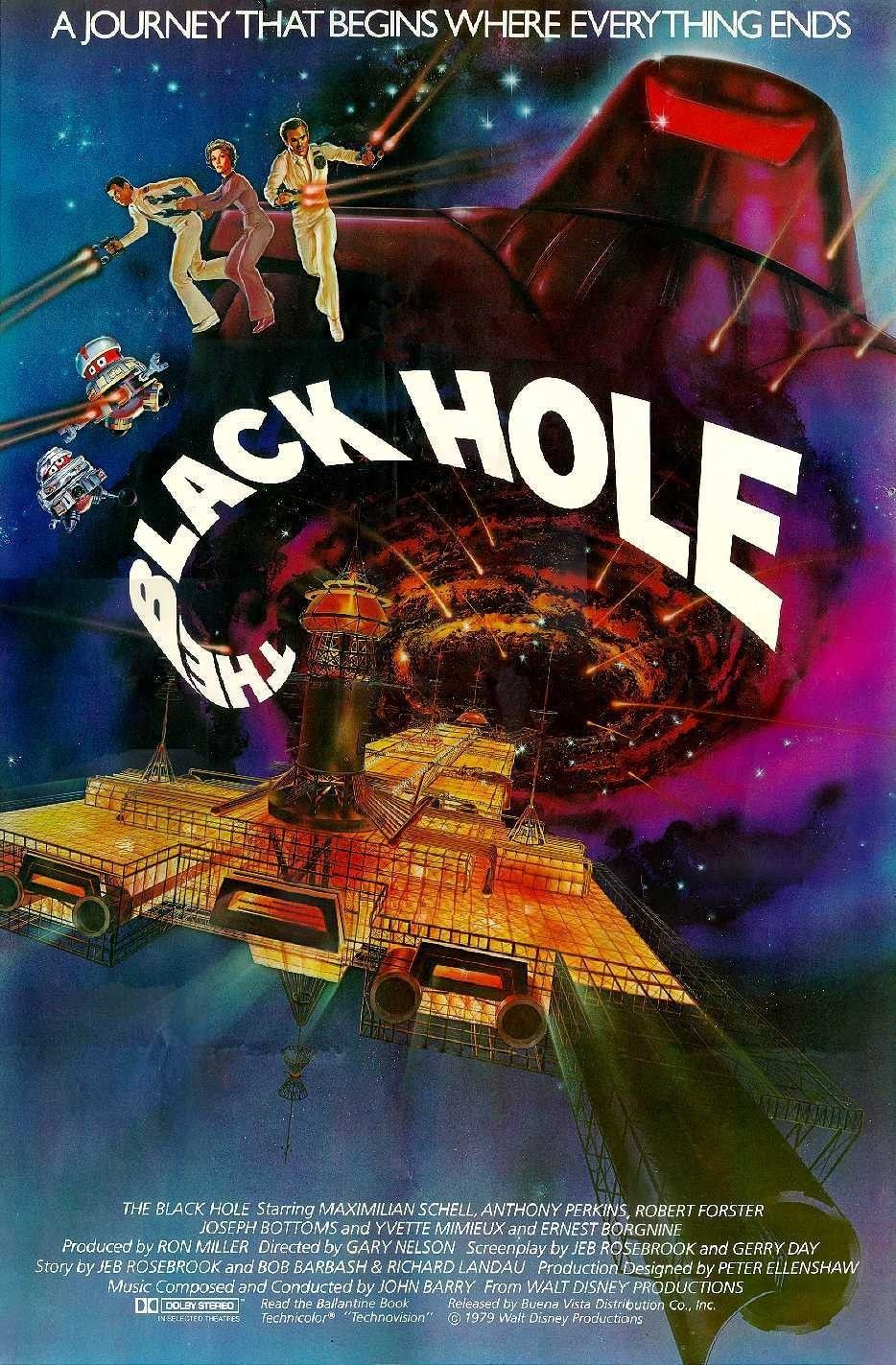
The Black Hole (1979)

Maximilian Schell in one of his quieter moment, planning a journey into The Black Hole

Director: Gary Nelson

Cast: Maximilian Schell (Dr Hans Reinhardt), Anthony Perkins (Dr Alex Durant), Robert Forster (Captain Dan Holland), Joseph Bottoms (Lt Charle Pizer), Yvette Mimieux (Dr Kate McCrae), Ernest Borgnine (Harry Booth), Roddy McDowell (VINCENT), Slim Pickens (BOB)

When Star Wars became a massive smash hit, every single studio assumed all they needed to do was to search out any damn space-set saga it could find, dress it up with a few Star Wars-feeling elements (usually shooting and funny robots) and, Bob’s Your Uncle, you would have a box-office smash of your very own. Well that turned out not to be the case – and Disney’s The Black Hole was a case in point.

At the end of a long mission, the crew of the USS Palomino is on the way back to Earth, when they discover a black hole with a spaceship hovering around it. The ship is the long-lost USS Cygnus, commanded by legendary genius Dr Max Reinhardt (Maximilian Schell). The crew are at first welcomed by the Cygnus – but is there a dangerous secret on board? You bet there is.

The Black Hole feels like several different types of story all very unsuccessfully stapled together.  There are elements in there of a 2001-style intellectual, “what does life mean” science fiction saga. But every time we start to get near those tones, up jumps a funny robot, or a bit of shooting, or an odd “haunted-house-in-space” sequence, or a mad scientist ranting. None of these stories, by the way, are particularly good or unique. They are all rather clumsily assembled. The tone of the film is also all over the place – so we get a comedy robot with funny bug eyes getting up to hi-jinks, closely followed by Anthony Perkins being ruthlessly killed by a drill (even if it is mostly offscreen blood and guts). Who is this film for? Too dark and grim for kids, too stupid and childish for their parents.

Robert Forster and Anthony Perkins look barely interested in the events around them (Perkins must have been wondering by this point in his life where it had all gone wrong). Ernest Borgnine plays the sort of blow-hard he could do standing on his head. Perhaps aware that most of the rest of the performers weren’t really engaged in it, Maximilian Schell acts for everyone. Never one to be afraid of going overboard, Schell’s wild-eyed enthusiasm leaves no scenery unchewed. It’s the sort of performance that seems to capture the wildly uneven tone of the film: so one minute Schell is a sort of space Byron, the next minute he’s literally slapping his head over the incompetence of his minions like some sort of Space Skeletor.

There really isn’t any actual plot in The Black Hole – it takes no more than about 40 minutes to hit the final “we gotta get off this ship” run around. There are some vague ideas bandied around about the spiritual meaning of touching the edge of God’s creation – but these barely get any air time. The last 30 minutes are a hurried dash through the ship, before we finally fly through the wormhole. This wormhole flight is left obliquely unclear (it’s crammed with odd imagery inspired by Dante), and I suspect there were more ideas in the original script that were cut when they basically decided to make this a kids’ film.

But then that’s like the whole film. It’s a 2001 wannabe that has been retrofitted into something as Star Warsy as possible. VINCENT and BOB are a low-rent R2-D2 and C3P0 (they even have basically the same personalities) and Dr Reinhardt’s robot followers are nothing more than imitation storm troopers with the Cygnus like some sort of Death Star. That’s not even mentioning odd touches, such as the ESP powers given to Kate McCrae. None of these elements fit well together at all. The special effects have dated very badly (surely they can’t have looked too impressive back then either?).

It’s also of course possibly one of the least scientifically accurate films ever made. Most of the black hole physics are errant nonsense (at least so I’m told, I’m not qualified to comment). But I know enough about science to know that if anyone ever spent as much time in the cold vacuum of space as most of these characters do, they would all be frozen and dead. Most of the last chase sequence sees the crew moving through the Cygnus as parts of the ship break off, with holes to space all over the place. One character even drifts out into space only to be dragged back in absolutely fine. I guess it’s for kids but it still immediately stands out as odd. 

And then there is that ending. As our heroes head down into the wormhole, the film makes a play for some sort of cult classic status. Angles distort and bend. Bizarre imagery is thrown at us. Reinhardt merges with his robot Maximilian and seems to go to hell. Angels fly across the screen. Lights and whizzbangs. What is going on? I don’t think the film knows: its the sort of cult classic stuff where it’s left open to the viewer to give it more meaning than it probably has. The final emergence from the black hole is a total let down – hard not to have a “what was all that about?” feeling…

The Black Hole is just, to be honest, a little too rubbish. I mean there are elements in there I don’t mind: some people hate VINCENT, but I find him probably the most engaging hero (that’s probably a pretty damning statement). Schell’s scenery chewing (“MAXIMILIAN!!!!!”) is reasonably entertaining. Some of the chasing around is fun. Villainous robot Maximilian is very well designed and looks creepy. But it’s not enough. There is too much damn nonsense everywhere. It’s a film with no spiritual or intellectual depth, which means when it does try to leave questions answered it merely frustrates rather than making you think.

The Incredibles 2 (2018)

The family are back together, in belated but brilliant sequel The Incredibles 2

Director: Brad Bird

Cast: Craig T Nelson (Bob Parr/Mr Incredible), Holly Hunter (Helen Parr/Elastigirl), Sarah Vowell (Violet Parr), Huck Milner (Dash Parr), Samuel L Jackson (Lucius Best/Frozone), Bob Odenkirk (Winston Deavor), Catherine Keener (Evelyn Deavor), Brad Bird (Edna Moda), Sophia Bush (Voyd)

Fourteen years? In Hollywood that is nearly an eternity. Can you even imagine a film released today getting its first sequel over a dozen years later? But that is how long we’ve had to wait for a sequel to The Incredibles

Picking up immediately after the first film finished, the efforts of the Parrs, Bob/Mr Incredible (Craig T Nelson), Helen/Elastigirl (Holly Hunter), their children Violet (Sarah Vowell) and Huck (Dash Parr) and their friend Frozone (Samuel L Jackson) to stop the Underminer only lead to destruction. Superheroes are once again anathema to the authorities, but tech millionaire Winston Deavor (Bob Odenkirk) and his inventor sister Evelyn (Catherine Keener) are determined to change their reputation. Their plan? Use Elastigirl as the new “face” of responsible superhero-ing. Elastigirl takes on a new threat: the villainous Screenslaver who uses screens to hypnotise people and control them. Meanwhile, Bob has to cope with the pressures of being a stay-at-home dad, dealing with with teenage crushes, homework challenges and controlling super-powered baby Jack-Jack, who can barely control his never-ending series of powers.

And the world of Hollywood has changed so much since the first Incredibles film came out. Back then, comic book films were only just starting to come into fashion, and the Marvel Cinematic Universe didn’t even exist. So can The Incredibles forge its way in a cinematic landscape now overstuffed with superhero derring-do?  Well yes it does, because the film hasn’t lost the sense of what was so enjoyable about the first film. We still get all the action-packed excitement of some damn fine adventure sequences, choreographed with skill and wit. Playing alongside that we get all the homespun domestic turmoil of modern family life, right down to a dad struggling to help his son with his homework (“How can they change math?!”) and trying not to mess up his kids’ lives. 

The film resets the table to get us back to the situation of the first film – superheroes are illegal and unwanted and anything the Parrs do is going to have to be under the wire. And then it spins out a twist on the first film – this time it’s the super-competent and intelligent Elastigirl who will be the hero, while the more old-school Mr Incredible stays at home and looks after the kids. This combination works perfectly – Elastigirl is a brilliantly conceived character, cool, calm, collected, super smart, ultra-determined and ridiculously good at what she does. Holly Hunter’s southern tones are smoothly perfect for this part, investing it with just the right level of humanitarianism.

Really I should be annoyed about the end of the last movie being so completely reset in the opening minutes of this one, but truthfully the idea of superheroes struggling to balance everyday problems with illegal super-heroing is such a totally brilliant idea you are really happy to see it play out again, this time adding the dilemmas of Mr Incredible suddenly being thrown into a situation he can’t handle – having to be a regular dad – and collapsing in an unshaven, exhausted mess. 

Seeing someone struggle with such everyday problems is hilarious enough, but the film has a USP in the challenges of looking after cute little ball-of-trouble baby Jack-Jack: a sweet, blubbering little kid with a regular smorgasbord of powers, none of which he is able to control. Bob’s struggles to deal with this explosion of wildness (everything from laser rays to moving in the fourth dimension) throw up endless hilarious moments and sight gags that had me laughing out loud (probably too loud) in the cinema.

Sitting alongside this, Brad Bird hasn’t forgotten how to shoot and cut an action sequence – whether it’s animated or not. A chase where Elastigirl has to stop an out-of-control train is not only hugely exciting, but also tense and witty. Elastigirl is also such a relatable character that she adds huge amounts of human interest to every one of these action bits, and her determination to save lives – even of her enemies in exploding buildings – is really rather touching. The final action sequence doesn’t quite match the highlights of the first film, but it does excellent work.

Of course the villain is in fact using these strengths against her. If the film has one weak point, it’s that the identity of the villain is really rather obvious from the start. I pretty much guessed immediately who the villain was going to be. I can’t see anyone of any age being fooled, and the motivations of this villain seem a lot more rushed and less interesting than those of Syndrome in the first film. 

But that feels like a minor blemish on what is an excellent sequel, a real gem in the Pixar cannon. It’s still got the brilliantly retro-cool design that mixes the modern world with the 1950s and 60s. Michael Giacchino’s soundtrack is cracking. Brad Bird brings himself back as scene-stealing superhero costume designer Edna Mode. What’s not to like? I wouldn’t mind waiting another 14 years if they produce a third film as good as this one.

The Incredibles (2004)


The Incredibles swing into action in this brilliant superhero-action-comedy

Director: Brad Bird

Cast: Craig T. Nelson (Bob Parr/Mr Incredible), Holly Hunter (Helen Parr/Elastigirl), Sarah Vowell (Violet Parr), Spencer Fox (Dash Parr), Samuel L Jackson (Lucius Best/Frozone), Jason Lee (Buddy Pine/Syndrome), Brad Bird (Eda Mode), Elizabeth Pena (Mirage), Wallace Shawn (Gilbert Huph)

In a world awash with superheroes, what if they were suddenly found legally responsible for all the destruction and chaos that surrounds their battles to save the world? If it suddenly became illegal to be a superhero? That’s exactly the world that spins out in The Incredibles: one where secret identities aren’t just a matter of choice, they are legally enforced by a government?

After all superheroes are banned, because clearing up the legal after-effects of the heroics is just too damn expensive, they retire into “ordinary life”. Fifteen years later, Bob Parr aka Mr Incredible (Craig T Nelson), is working in a dead-end job for a tight-fisted insurance company, whose values are the antithesis of his own, and moonlights, doing small superhero acts where he can. Meanwhile his wife Helen aka Elastigirl (Holly Hunter) raises their children, who have their own super-powers. One day Bob is contacted by a secret government agency to re-start his superhero work, and he jumps at the chance – but quickly finds he’s in over his head.

The Incredibles is pretty much a perfect film. I think it might just be one of the finest films Pixar has produced (and that is saying a lot). It’s not just a brilliant family comedy, it’s also a superb action adventure. In fact, its super-hero action is so well done, it trumps nearly any live-action film you can think of. Brad Bird pulls it together with aplomb and gives the film its own brilliantly distinctive visual style, a jazzy 1960s look with cool angles and heightened reality backgrounds. It’s terrific. And it’s really, really funny.

Just the very idea of superheroes being sued is funny. A series of newspaper headlines early in the film covers everything from train crash survivors suing for trauma, to a hero with x-ray vision being accused of being a peeping tom. From there the film has huge fun with superhero tropes –it’s just inherently funny to see these god-like heroes going through the tedious 9-to-5 and school runs the rest of us need to put up with. Throw in plenty of hilarious sight gags, plus some brilliant comic diversions (not least a brilliant monologue on cape-based disasters, that really pays off at the film’s end) and you’ll not stop laughing even after umpteen viewings.

It also balances all the humour and super-heroics with very real-world problems. It’s an animated family comedy that looks at the impact of a male mid-life crisis on family dynamics, and the impact that a distant, disengaged father can have on his children. Not the usual Disney content is it? Bob Parr is a frustrated, bored man, who feels trapped by missing the excitement and drama of his youth. He wants to recapture his glory days, but is overwhelmingly worried about whether, frankly, he’s up to it any more. He’s overweight, out of shape and past his best.

It’s also funny that Bob’s midlife crisis expresses itself in listening to police scanners, and roping best friend Lucius (a put-upon Samuel L Jackson) into carrying out acts of derring-do on the sly. “Just for once, can’t we just go bowling” Lucius complains. Not that it stops Lucius from throwing down later on in the action (after a brilliant “Where’s my super suit?” argument with his wife).

Poor Bob. Compared to Helen’s intelligent resolve and strength of mind, he’s also emotionally under-developed and unable to articulate his feelings. If you’d like to criticise the film you could say that it falls very much into the standard clichéd family structure (father is the breadwinner who feels trapped, mother is at home being a domestic hero), but the film gets past it because it always pulls itself up when it feels like its heading that way – even if it needs someone like Edna Mode to literally slap Elastigirl around the face and tell her to pull herself together.

And you have to give a pass to a film that has such empathy for its characters, not least the two kids. A cripplingly shy, moody teenage girl whose power to become invisible – no wonder she’s too shy to talk to boys. A hyperactive boy, whose power expresses itself in raw speed. These two kids feel really real, and the relationship (and loving rivalry with each other) really works. It’s clear the family bonds between the four are very strong.

Those battles are quite something by the way. Helped a great deal by Michael Giacciano’s terrific score – inspired by half a dozen 1960s and 70s spy and action franchises – these scenes are dynamic and electric. Brad Bird shoots the film like a real action film, and packs it with some brilliant humour. This is easily the most thrilling children’s animated film you’ll never see. Its action is a mixture of pure Bond and superhero thrills. And while some scenes are just plain grippingly cool to watch – is it a surpise that Syndrome geeks out? – others are a perfect balance between drama and action. A sequence with Helen piloting a jet, targeted by missiles, demanding Violet create a forcefield around the jet, and then desperately making a shield around the children using her own body is both stirring and moving (who can’t empathise with a child who feels they have let their parent down?). 

The film also has an imaginative and fun spin on the standard super-villain in Syndrome and a decent mystery thriller that unfolds especially well over the film. Throw in plenty of small moments – many of them supplied by Brad Bird’s brilliantly voiced cameo as costume designer Enda Mode (a wonderful pastiche of Edith Head) – and you’ve got a gem for all ages. The entire cast is excellent – Craig T Nelson and Holly Hunter in particular are superb. The Incredibles ticks so many boxes I hardly know where to begin. Want a brilliant animation? Check. Want a hilarious superhero parody? Check. Want a family comedy? Check. Want a thrilling action film? Check. This film delivers on so many levels it should have a PhD. It’s simply sublime film making and story-telling. It’s hard to beat.

Beauty and the Beast (1991)


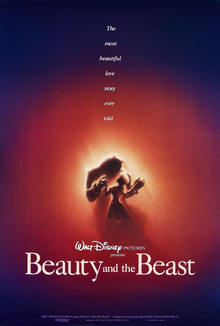
The original and the best: Disney’s animated classic Beauty and the Beast

Directors: Gary Trousdale, Kirk Wise

Cast: Paige O’Hara (Belle), Robby Benson (The Beast), Richard White (Gaston), Jerry Orbach (Lumière), David Ogden Stiers (Cogsworth), Angela Lansbury (Mrs Potts), Bradley Pierce (Chip), Rex Everhart (Maurice), Jesse Conti (Le Fou)

After decades of average or forgettable films, in the early 90s Disney had a sudden renaissance. From 1989 to 1998, the studio was a veritable hit factory, with films from The Little Mermaid to Mulan, via classics like The Lion King and new ideas like Hercules all being lapped up by audiences. Perhaps the most widely loved (and maybe even the best!) of this era was Beauty and the Beast.

Like all the best Disney films, the story is traditional with a modern twist. Belle (wonderfully voiced by Paige O’Hara) is a young woman in a small provincial town who wants so much more than spending her time dodging the unwanted attentions of handsome local hero Gaston. When her eccentric father Maurice is imprisoned in a mystical castle by a terrifying Beast (Robby Benson, who combines sensitivity and ferocity), she agrees to take his place, while the Beast (and his enchanted servants) all hope she might break the spell placed on them by falling in love with him.

This was the first animated film to ever be nominated for Best Picture, back in the days of only five nominees and it was hard to sneak onto the list if you weren’t a heavy-going “important” piece of film-making. If that’s not a testament to its greatness, I’m not sure what is. It’s one of the best mixes of Disney magic: charming, delightful, sweet, funny and exciting. It has a heroine who feels real, independent and relatable and a hero you empathise with, even while he behaves badly. It’s got a villain who first seems an arrogant blow-hard before his real brutishness is revealed. All this in a very romantic, engrossing storyline, with a host of supporting characters it’s impossible not to like.

So why does this work so well? It’s sweepingly, lusciously drawn and it drips romance and humanity. Everything stems from those central characters, and the amount of empathy we feel for them. Like all great films, this knows without characters we invest in, nothing else works – no matter how many great numbers and funny lines there are (and there are plenty of both!).

Belle could have easily been either a flighty romantic or an aloof autodidact, but the film crafts her into a grounded romantic, dreaming of more but knuckling down and dealing with the hand life has dealt her. Facing a life of captivity she resolves to do what she can to make her life bearable. She’s determined and independent and exhibits genuine intellectual curiosity alongside her empathy. She feels real, and you invest in her reactions to things because those reactions feel normal.

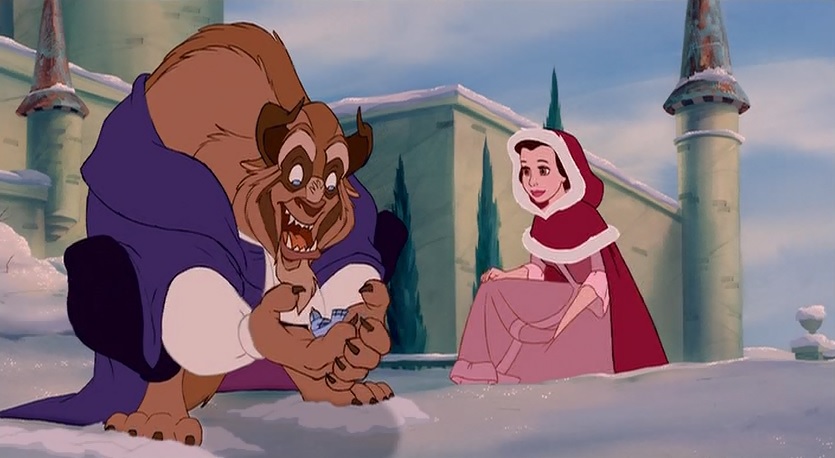
An even bigger challenge is the Beast, but it’s triumphant in the handling of this tricky character. He is ferocious, but the film quickly and efficiently makes clear his anger is based in pain and vulnerability, and intense isolation. Careful shots establish his self-loathing – his slashing of a painting of his pre-transformation face couldn’t be much clearer. Even at his most furious, we gets quiet moments of vulnerability. The animation of the Beast is perfect – his face is fierce, but his eyes are wonderfully expressive. His facial features at key moments relax and fold in to show someone far more gentle. He’s like everyone on a first date, scared to express his deeper feelings. The animators marvellously capture both his power and surprising delicacy. His boyish enthusiasm is infectious – his excitement in gifting Belle the library is heartwarming. In fact he’s so endearing and engaging a character, I think everyone feels a twinge of disappointment when he is replaced by a human being in the final scenes!

Revolving around these two is a wonderful cast of engaging characters. The primary servants in the plot – Lumière, Cogsworth and Mrs Potts – are all strong, unique and three-dimensional characters with more than enough depth to eschew their basic character traits (Cogsworth’s name even rhymes with jobsworth, Lumière is a charming rogue and Mrs Potts a motherly matron) to become characters we end up caring deeply for, that feel real.

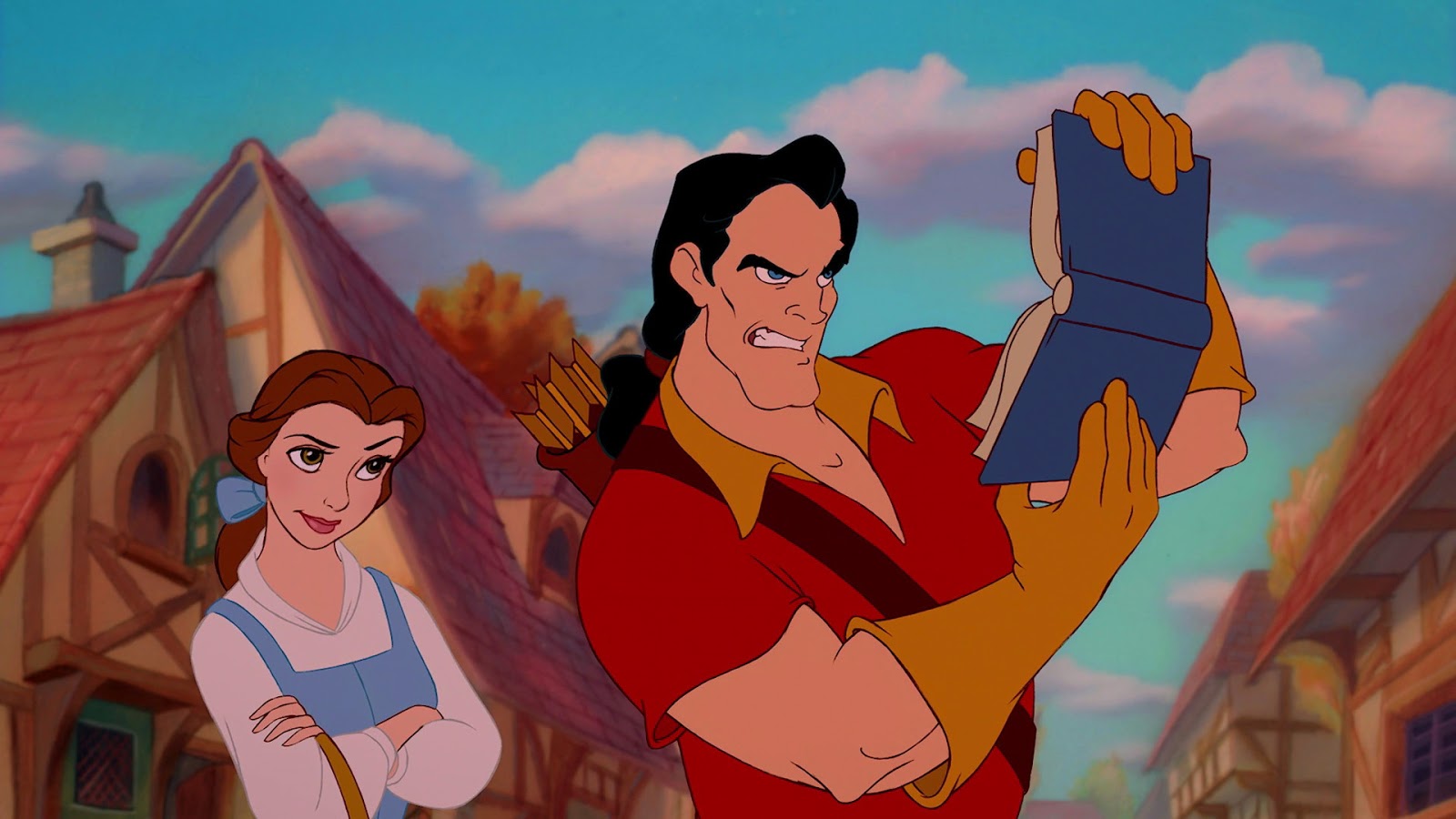
The film also borrows from Jean Cocteau’s La Belle et la Bete to create the character of Gaston, possibly one of the most interesting villains in Disney. Drawn with a certain conventional handsomeness (although he looks smug enough for you know he’s a wrong ‘un from the start), Gaston is a character who questions many of the assumptions made linking popularity and handsomeness with goodness. He’s also a character who grows measurably darker through the film due to his own choices, rather than being inherently villainous from the start.

It’s all part of the richness of the world the film creates – everything feels natural and all the characters real and understandable. Maybe that’s partly why it works so well – it’s a film that is animated, rather than a cartoon. With a tight plot, good pacing and a clear focus, it’s focus is on emotion and characterisation, and it avoids cheap laughs, with comedy growing organically. Because the characters themselves are so compelling, the events carry huge dramatic force – when Belle is threatened by wolves, we genuinely fear for her; when the heartbroken Beast can barely rouse himself to fight Gaston we are overwhelmed with pity and concern.

Warmth and humanity in the drawing of the characters, makes their stories so affecting

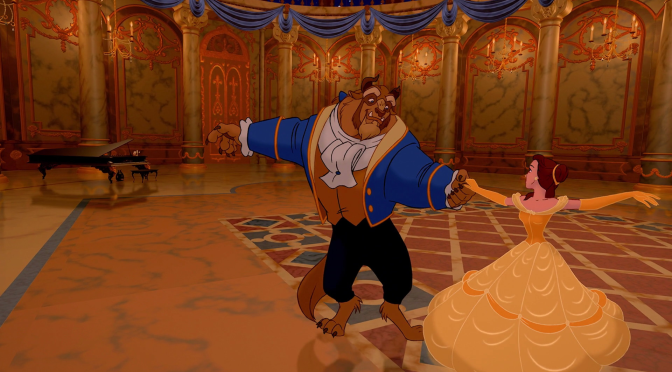
Of course it is also a cartoon, and much of the triumph of it is based in the animators’ successes. The imagery is gorgeous, the detail in each frame is wonderful, the design of the castle is fantastic (we’ve already talked about the influences of Cocteau’s film, but it’s clear again here). The famous ballroom scene is wonderful – the “camera work” marvellous, the creation of the ballroom awe inspiring (genuinely we all thought it was real at the time!). Time and again the filmmakers use inspired framing and composition that conveys the emotion. The performances they draw from their characters is exceptional – the expressiveness given to all of the characters, from Belle and the Beast to the faceless tankards in the castle, is brilliant. You can freeze-frame any single scene from the movie and be able to instantly identify how every character feels.

The famous ballroom, a sweeping series of camera shots and a landmark in computer illustration

This is the true Disney magic: this world is real, because everyone in it feels so alive. It captures your heart, from its marvellous stained-glass opening telling the backstory, to the triumphant swelling score that meets the ending. I’ve barely mentioned the songs, but each one is brilliant, an instantly recognisable, pleasurable earworm – in fact, this film may have the best songs of any Disney film in the canon. Beauty and the Beast is so good that, never mind being nominated for best picture, it arguably would have won in many years (it lost to The Silence of the Lambs: it’s hard to imagine a film more tonally different!). Endlessly enchanting, charming, warm, funny, moving and exciting, this is a masterpiece and a landmark in Disney animation.