Category: Dystopia film

Children of Men (2006)

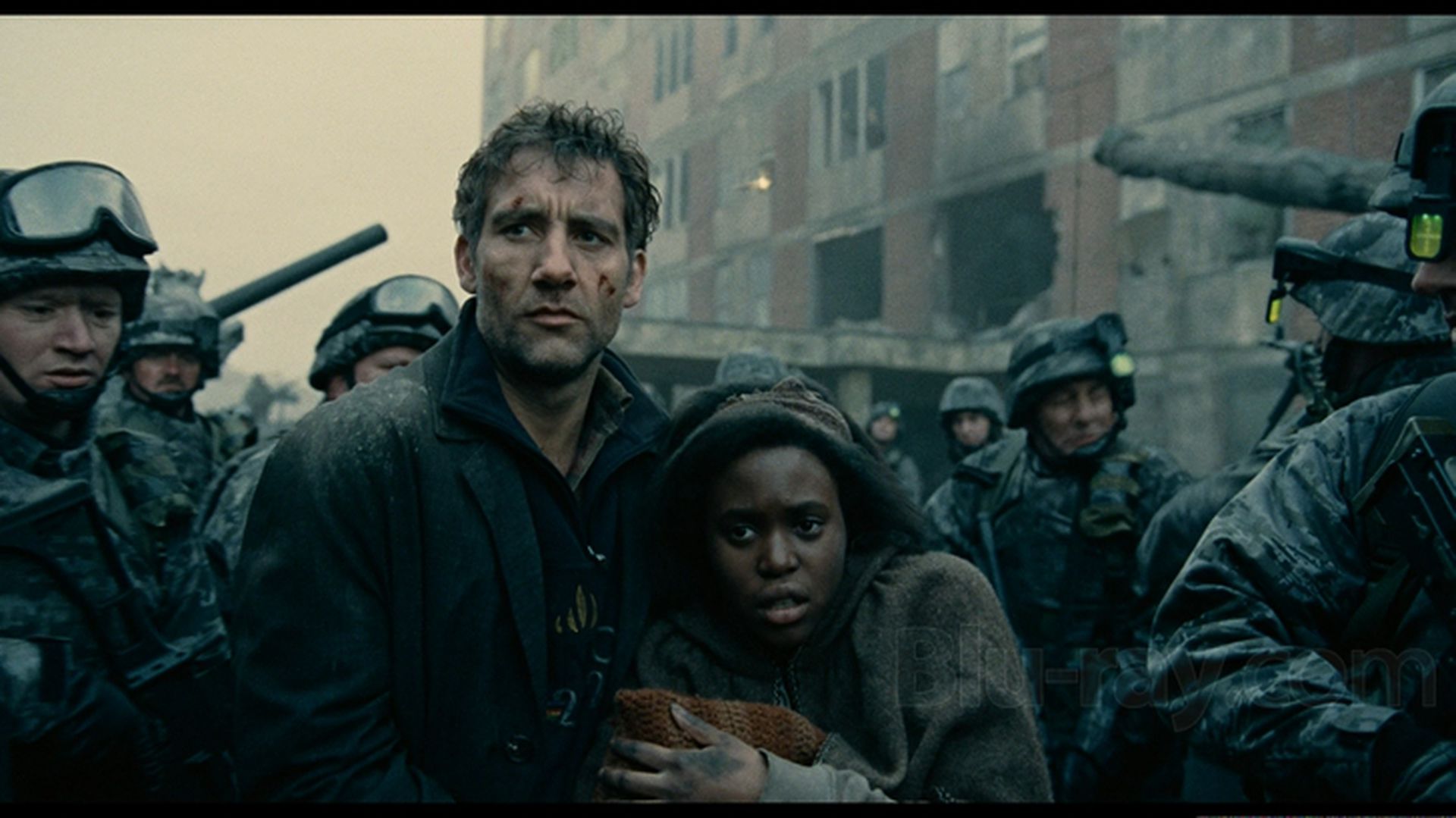
Clive Owen and Claire-Hope Ashitey could be the last hope for mankind in the masterful Children of Men

Director: Alfonso Cuarón

Cast: Clive Owen (Theo Faron), Julianne Moore (Julian Taylor), Claire-Hope Ashitey (Kee), Michael Caine (Jasper Palmer), Chiwetel Ejiofor (Luke), Charlie Hunnam (Patric), Pam Ferris (Miriam), Peter Mullan (Syd), Danny Huston (Nigel)

Children of Men was overlooked on release. But the more it ages, the more it clearly hasn’t aged it at all. Criminally ignored at the major awards, this might well be the finest film of 2006 and certainly one of the best movies of the noughties. Rich in thought-provoking content and cinematic skill, this is truly great-film-making from Alfonso Cuarón. Dark, grim, edgy but also laced with hope, faith and kindness, Children of Men grows in statue with each viewing, rewarding you more and more.

It’s 2027 and the world has gone to hell. Mysteriously mankind became infertile 18 years ago, and faced with the despair that the extinction of the human race is inevitable, society has collapsed. Cities lie in ruins and war has torn countries apart: Britain “stands alone”, one of the few with a functioning government – even though that government is a totalitarian, nationalist police state. Aggressive campaigns are waged against refugees from around the world, who are herded into hellish concentration camps. In this chaos, Theo (Clive Owen) is a disaffected civil rights activist, now plodding through a dead-end job and smoking weed with his friend, ex-newspaper cartoonist Jasper (Michael Owen). All this changes when he is entrusted by his activist/’terrorist’ estranged wife Julian (Julianne Moore) to protect Kee (Claire-Hope Ashitey) who carries inside her something that could change the whole of humanity: an unborn child.

Today Children of Men seems alarmingly prescient. In a world of migrant crises, Brexit, Trump and coronavirus (the film even refers to a flu pandemic of 2008!) the vision of the future it presents seems only a few degrees away from our reality. Rather than a hellish view, it seems more and more like something that could happen. Everything is worn out and grubby. Streets are lined with rubbish, buildings coated with graffiti. Televisions and advertising screens alternate between demands to report immigrants with promotions for “Quietus”, a suicide pill. Fences, armed police, barbed wire and crowds of filthy, terrified and brutalised people are common. Humanity has given-up: there is no hope in the world.

It’s that collapse of any sense of hope and optimism that has driven this collapse of society in Cuarón’s vision. In a world where the extinction of mankind is inevitable, what’s the point contributing to society or worrying about your legacy or the future? Why preserve anything when no-one will be around to see it in a hundred years? By such fragile threads, does society hold itself together. The crushing depression of knowing you live in the final days of humanity is everywhere. There is not a single person alive in their teens: a fact hammered home by the characters visiting a deserted and derelict school. Everyone has lost any sense of purpose, with life a grim daily grind.

Perhaps that’s also why physically the world hasn’t changed much. Unlike most “future set” dramas, this view of 2027 could be 2006, just dirtier and with a few more electronic screens (in fact this has helped hugely in not dating the film). It’s like all life has stagnated. And liberals like Theo have turned into apathetic drunks, drifting blithely through life not bothering to engage or change anything about the shit show all around them

All this makes the film sound impossibly grim – and Cuarón is superb in building this world (including the genius stroke of never explaining, even in the smallest detail, what has caused this pandemic of infertility – the film is refreshingly free of any clumsy scene setting) – but it works because it’s a film laced with hope and a belief in the fundamental goodness of people. The story has overtones of a religious fable: Theo and Kee as a sort of Joseph and Mary travelling to protect an unborn child whose birth could save the world. Specially composed choral music, rife with religious overtones, underplays key moments and scenes subtly leaning into this spiritual journey.

And the goodness that people find in themselves is inspiring. Theo, brilliantly played by Clive Owen who has just the right dissolute cynicism hiding crusading courage, may have given up but actually he’s a deeply empathetic and caring man. Animals instinctively love him. He’s a natural protector, who shows concern in all sorts of ways for people him, who puts himself at risk to protect people and refuses to ever accept defeat. But he’s a million miles away from a super-man, getting increasingly dishevelled, bashed and brutalised, while his struggles with footwear (he carries out action sequences  wearing just socks, then flip-flops and finally barefoot) is both a neat little gag and also a sign of how vulnerable he is in this dangerous world.
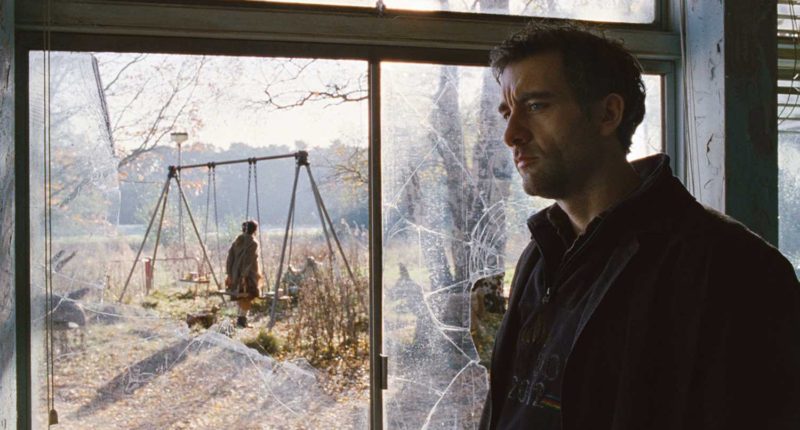
Cuarón’s film builds brilliantly on his empathy to carefully and beautifully build the growing understanding and trust between Theo and Kee (equally well played by Claire-Hope Ashitey). Again, it stems first from his protectiveness (Theo also works hard to protect people around him from disturbing sights, twice urging Kee not to look back and that whoever has been left behind is fine), but also from her instinctive trust in him as a good man and above the only one who seems to have her interests at heart (everyone else is concerned only with what Kee can symbolise – Ejiofor’s vigilante Luke can’t even get the sex of the baby right). Kee is vulnerable, but strong and determined, someone trying to carry the burden of being the hope of mankind.

She’s also brilliantly a member of the very migrant community that the government is trying to destroy. Cuarón’s film wants us all to remember that we are all the same deep down, that what happens to one affects us all. The horrors of what the British government are doing in the war-torn slums of migrant prisons (all of Bexhill has become a lawless hell hole, where executions and riots are daily occurrences) reek of everything from Auschwitz to Guantanamo. But amongst these migrants come the only strangers who seek to help Theo and Kee out of simple goodness and humanity. Strangers put themselves at huge risk, and in many cases sacrifice their lives, to help them. It makes a stark contrast with the revolutionaries who claim to fight for the migrants (but show no compunction in shooting them when needed), but really are only interested in their own selfish battles with no understanding of the bigger picture.

This bigger picture is very much like the thematic richness of the film that was missed on its released. It’s almost a victim of its own technical brilliance, which attracted much more attention at the time. Cuarón constructs several sequences to appear as single-takes, and the stunning camera work really helps establish this grimy, brutal world. It’s a wonderfully immersive film, a technical marvel. Every single part of the photography and design is pitch-perfect, and the key sequences are stomach-churningly tense, inspired by everything from The Battle of Algiers to A Clockwork Orange.

But the film works because it is underpinned by faith and trust in the human spirit. Mankind is being challenged like never before, but Cuarón shows us that the human spirit can survive. That simple acts of kindness can still happen. That there is a chance of hope. The final conclusion of the film is both sad but also upliftingly hopeful. Cuarón’s direction is just-about perfect, as are the performers (not just Owen and Ashitey but also an almost unrecognisible Caine as an ageing Hippie). With its acute and brilliant analysis of humanity – both in its grimness and capacity for goodness and selflessness – and with its prescient look at how easily our world could collapse, Children of Men is vibrant, brilliant, essential film-making.
A Quiet Place (2018)

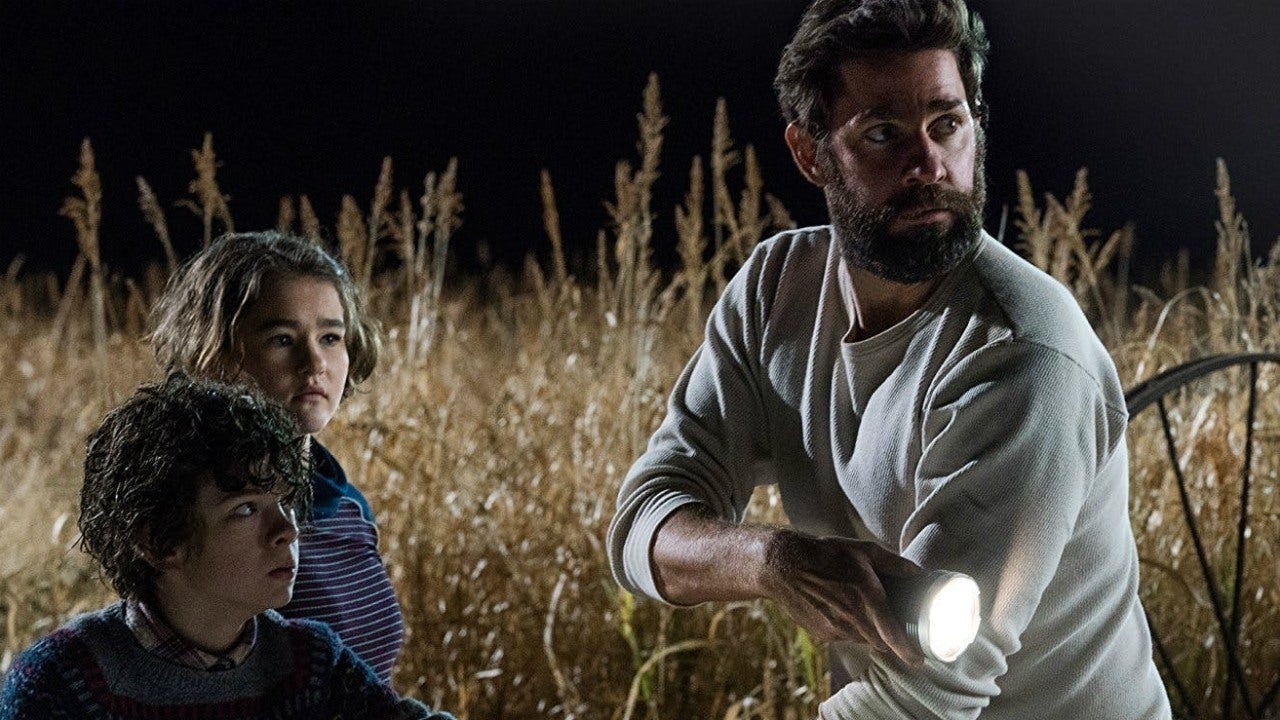
John Krasinski needs absolute silence in A Quiet Place

Director: John Krasinski

Cast: John Krasinski (Lee Abbott), Emily Blunt (Evelyn Abbott), Millicent Simmonds (Regan Abbott), Noah Jupe (Marcus Abbott), Cade Woodward (Beau Abbott)

I think we can all agree that 2020 has not been a good year. But it could have been worse: in A Quiet Place, by 2020 mankind has been almost completely wiped out by blind extra-terrestrial alien predators who use their super-sensitive hearing to hunt down survivors. Even Covid-19 doesn’t sound quite as bad as that. To survive demands absolute silence as even the slightest noise could lead to a pack of the ruthless, seemingly invulnerable, aliens descending.

The few survivors include the Abbott family, on an isolated farm somewhere in the American countryside. Father Lee (John Krasinski) has painstakingly converted the house as much as possible into a silent place, with sand on every walking surface outside, sound proofed rooms, batteries out of everything that could make a noise, light and camera warning systems and strict rules on no shoes and no talking – nearly all communication is done in sign language, which the family is fluent in because daughter Regan (Millicent Simmonds) is deaf. But there are troubles on the horizon – not least because Lee’s wife Evelyn (Emily Blunt) is heavily pregnant, and the chances of childbirth – and a new-born baby – happening in silence is dangerously low.

A Quiet Place takes a fresh and ingenious concept and lays it on top of a story that otherwise hits a fair number of expected tropes. But that doesn’t matter too much when the story is told with such freshness and confidence by Krasinski and the idea at its heart genuinely feels like something we’ve never seen before. This is a film where just the very prospect of sound is tense, and noise is the principle villain. And for anyone who’s ever tried sneaking past anything silently, you’ll know how hard it is to say absolutely silent.

The concept means that even the sight of things we know could cause sound builds tension. A nail sticking out of a step to the basement causes huge worry (because we know standing on that barefoot is really going to hurt). The running through a field of wheat suddenly feels like a terrible risk. Just a glass falling off a table could lead to death for everyone. As for the tension you feel at the possibility Evelyn could go into labour and need to deliver a baby in total silence…

It’s the skilful use of everyday concepts like this that gives the film a special sense of dread. This is added to by putting a very clear family unit at the heart of this drama. At root, this is a film about the lengths that parents will go to in order to protect their children and to try and build a safe world for them. Lee is determined to pass on as many of his survival skills to his son, while Evelyn struggles to keep some form of normality going in their home. The family is also coping with deep-rooted grief and unspoken tensions, falling out from the tragic loss of one of their members early in the invasion.

This adds a further generational tension, with the father struggling (on some level) with feelings of guilt at his own failure to protect his family and shamefully feeling some blame towards his daughter for partially causing the events that led to this death. The daughter in turn fears she has lost her father’s love, and can never be forgiven by anyone (including herself) for her mistakes. While there is nothing earth-shatteringly original about this, it helps us to invest solidly in the family and to care deeply about what happens with them.

Krasinski’s direction is sharply acute and brilliantly detailed and his own performance extremely humane and engaging. He also gets an equally fine performance of tenderness and determination from (his real-life wife) Emily Blunt, while the work from Simmonds and Jupe as their children is equally well-judged and excellent. This work is particularly impressive since most of the film takes place in near silence – there isn’t a clearly spoken word of dialogue until almost 45 minutes in and no verbal conversation until nearly the hour mark.

This involving family drama sits very comfortably in the middle of a horror concept. So well in fact that it doesn’t matter that much of it pretty unoriginal or even a little predictable. After a first reel shock, the film settles into more expected rhythms. There are certain gaps that raise questions – I had to wonder how Lee and his family managed to build so much in this collection of theme houses while making no sound at all? While the weakness of the creatures seems so obvious, I’m amazed that it was never stumbled upon while governments and the military fought against them.

But that doesn’t matter too much when A Quiet Place is largely an involving thrill ride with emotive characters whom you care deeply about. And on that score, Krasinski has made a fine horror thriller with a concept that will make it stand out in the memory from other genre pics.

Zardoz (1974)

Yes Sean Connery actually wears this in Zardoz

Director: John Boorman

Cast: Sean Connery (Zed), Charlotte Rampling (Consuella), Sara Kestelman (May), Niall Buggy (Arthur Frayn/Zardoz), John Alderton (Friend), Sally Anne Newton (Avalow), Bosco Hogan (George Saden)

Be warned. When a director is given the money to make any film he wants – with total creative control and no interference from anyone else – you’ve got a 50/50 chance of either getting a work of genius or a piece of pap. In the case of John Boorman’s Zardoz you definitely get the latter. Zardoz is possibly one of the most bizarre, misguided, surreal and finally plain bad films you’ll see, like a walking advert for the most pretentious and terrible outreaches of science fiction. 

It’s the year 2293, and the world is a post-apocalyptic wasteland. The “Brutes” live in the wastelands, growing food for the “Eternals” – immortal figures, leading a luxurious but empty, pointless existence on a series of country estates protected from the outside world by forcefields, their lives governed by a super computer. In the middle are the “Exterminators”, who control (i.e. kill and enslave) the Brutes and worship “Zardoz”, a giant flying head sent by the Eternals. Until, one day, Exterminator Zed (Sean Connery) sneaks his way into Zardoz and finds himself in the world of the Eternals and starts to lead them to question the point of their interminable immortality.

Zardoz looks overwhelmingly silly, and is often filmed and edited with such high-flown, empty surrealness, that it’s almost impossible to take seriously from the start. It looks so bizarre – with its terrible costumes, camp playing and overly designed look and feel – that it’s hard not to suppress a snigger. This is made worse by the shallow, pretentious and obvious social satire forced upon on once you start to concentrate on the dialogue.

It’s also one of those films that mistakes an incoherent, poorly explained plot – in which characters frequently change sides, motivations and aims at the drop of a hat – for a sort of mystical profoundity. The influence of The Prisoner is very strongly felt, from its commune-like setting to our “hero” being trapped in a stylised world where he is trying to work out the rules. But while The Prisoner manages, more or less, to suggest some sort of deeper meaning behind all the stylistic self-indulgence and pleased-with-itself babble, Zardoz just manages to be unengaging and heavily self-indulgent. 

You don’t need a philosophy major to work out the social commentary being made in a world where the richest exploit the rest of the population to live a life of ease and content. Nor is it a surprise to find that this sort of life without challenges, continuing forever, has led to stagnated and lazy lives where everything (even, to the film’s shock, sex – although of course the muscular Connery fixes that) has lost all meaning. Frankly this world takes off-cuts of several, far better and smarter films, and remixes them together into a turgid mess.

And it looks so silly. The entire design of the film constantly shoots it in the foot. How could you take Sean Connery seriously in that costume? The Eternals wear the sort of Greek-influenced hedonistic costumes that you would expect to see on a second-rate episode of Star Trek. The film frequently uses stylistic decisions that look absurd – and try too hard – from the hand gestures used to show the Eternals’ mind control (looking like a partial lift from the Macarena) to the bizarre sequences where Zed’s memory is searched using an projector, frequently using surrealist images mixed with physical theatre that frankly looks more than a little bit silly.

Sean Connery goes at this all with a respectful commitment, even if the character isn’t particularly engaging, and is hard to relate to since most of his memories seem to revolve around rape and murder. As if recognising this, there is a late plot turn where we find out that Zed is far more than he appears. But rather than making this intriguing, it makes virtually all his actions earlier in the film incoherent. But then it’s not as if that’s a problem: Charlotte Ramping, Sara Kestelman and John Alderton as the leading Eternals swop views, sides and opinions virtually scene to scene. Rampling in particular goes between plotting Zed’s death to becoming his acolyte in one conversation. For some this might be a sort of poetry. But really it’s crap.

In amongst all the nonsense, the film has a seedy, porny view of women. The Eternals seem to walk around – perhaps because they are so indifferent to sex – virtually in the buff. Connery has sex (eventually) with most of the female cast, as well as groping several others. Boobs frequently appear in shot. In one moment so bizarre it must be a joke, Zed’s sexual drive (so alien to the Eternals) is even explored by showing him some pornographic images (including some naked women mud wrestling) to see if it gets his rocks off (sadly for them, he shows much more – visible – interest in Rampling than the images they are showing). 

It all finally comes to an end in an orgy of violence intercut with images that comment on rebirth in a way that is supposed to be (no doubt) an intellectual comment on the balance between love and death – but actually is just another clumsy, empty excuse for a bit more sex and violence (and plenty of nudity). But then since the film has long since stopped making any sense (with scenes including Connery dressed as a bride, chasing himself through a hall of mirrors and briefly gaining the power to turn back time and protect others from violence with “his aura”) that it hardly seems to matter. The film had a seriously damaging impact on the careers of both Boorman (who makes a good job of the opening scene and then sees the whole film slide down a silly, indulgent and pointless mess) and Connery. Not a surprise. It’s terrible.

Back to the Future Part II (1989)

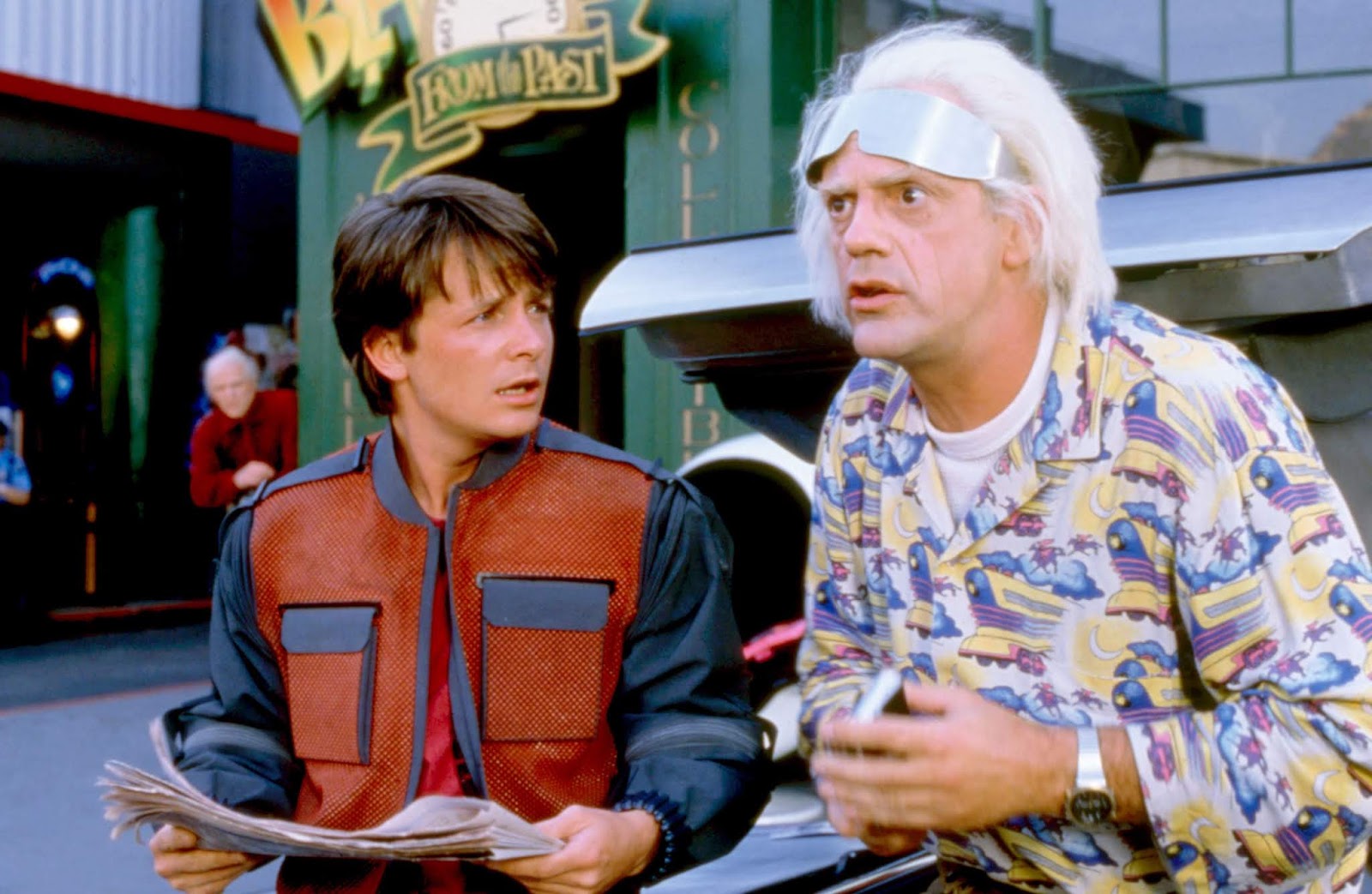
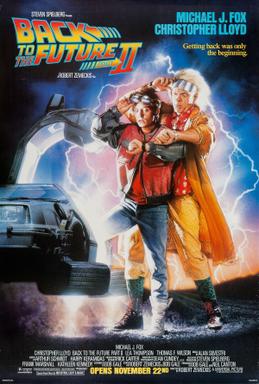
Marty and Doc head to the Future at last – alas – in the weak middle chapter Back to the Future II

Director: Robert Zemeckis

Cast: Michael J Fox (Marty McFly/Marty McFly Jnr/Marlene McFly), Christopher Lloyd (Emmett Brown), Lea Thompson (Lorraine McFly), Thomas F. Wilson (Biff Tannen/Griff Tannen), Elisabeth Shue (Jennifer Parker), James Tolkan (Strickland), Jeffrey Weissman (George McFly), Flea (Needles)

After the smash hit of Back to the Future a sequel was inevitable – particularly with that hook ending with our heroes zooming off into the future to fix Marty and Jennifer’s kids. Back to the Future Part II is often fondly remembered for its journey into 2015, a typically 1980s view of what the future might be like, but this is journey is mostly a slightly embarrassing mess that the film has to spend quite a bit of time getting over before the plot can start in full.

The journey into the future is largely a narrative cul-de-sac, which is mostly there to introduce a Sports Almanac covering 1950-2000 which Marty (Michael J Fox) picks up in an antiques store with an eye on placing some bets in the future. He’s firmly told by Doc (Christopher Lloyd) not to mess with the timeline, but that’s never here nor there to Old Biff (Thomas F. Wilson), who pinches both Almanac and DeLorean to head back in time to 1955 and handover the Almanac to his younger self. Which means when Marty and Doc return to 1985 from 2015, having not noticed the theft and return of the time machine, they find 1985 has been transformed into a nightmare dystopian world where Los Angeles is ruled by multi-billionaire Griff. So it’s back to 1955 to repair the timeline again – and this time dodge round their younger selves who are still going through the events of the first film. 

Zemeckis and Gale, it’s pretty clear, actually wrote themselves into a bit of a corner with their visit to the future. Firstly, the problem with the kids turns out to be fairly quick and easy to solve. Secondly, they are stuck with Jennifer (Elizabeth Shue replacing the unavailable Claudia Wells) who is instantly unceremoniously knocked out not once but twice in order for her not to be a third wheel on the boys adventures. Thirdly, the real interest and delight of these time travel films is seeing the past through the perspective of the present, and we lose that completely in a silly painfully of its time vision of the future. Gale himself had ruled out visiting the future in the first film, because all visions of the future date quickly on film – so it’s a shame he didn’t listen to himself.

The future sequence of the film is honestly pretty awful, in the midst of a film that takes a long time to get going and then relies very, very heavily on recreating the first film either spiritually (several set pieces in the future echo the first film, from feuds in a diner to the skateboard chase here done with a hoverboard) or literally (the third act of the film is a point-by-point recreation of the first film from different angles). The future sequence lacks any real point or drive, other than to establish two plot points: the sporting almanac and how Marty’s character flaw of pride leads him to take stupid, self-destructive risks. 

Other than that it’s an increasingly embarrassing look at what a 1980s person thinks the future might be like – flying cars, hovering skateboards, strange futuristic clothes, cybernetic implants, loud, bright colours – it’s all there. Sure there are some things correctly predicted – principally the idea of something approaching the internet and video calls – but the attempts at presenting a humourous view of the 2010s falls flat. This isn’t helped by the desperate mugging of several of the actors – none worse than Fox sadly, who plays his whiny Grandson, a latex covered middle aged version of Marty and (worst of all) his granddaughter – straining for laughs, but missing completely. It’s a cheesy, awkward sequence that says more about the hang-ups of the 1980s than anything else.

The film only starts to pick-up when we head back to the hellish Mad Max version of 1985 caused by Biff’s meddling. Sure it’s also an excuse for retreading some other elements of the previous film – and conveniently means that George McFly can be killed off, resolving the problem of working around a second recasting after the difficult to work with Crispin Glover turned down the film – but at least it kicks a bit of a plot going, away from the more feeble moments and overacting in the future section.

Which it brings us to the final act as the film reworks, reimagines and represents the events of the first film once again. I’m split on this between it being a fun, fresh idea of looking again at a beloved film (as well as opening up some comedy opportunities to play on the viewer’s expectations) or a sign of the well running dry. Either way it works a lot better than the future sections of the film, even if again the narrative structure is an almost exact re-tread of the first film, once again showing Marty trying to juggle events to get the outcome he needs and a race against time ending that culminates in a bolt of lightning and a cliffhanger.

There are some fun moments in the film, but Back to the Future II generally falls between two stools, trying to tell a new story while also setting up Part III. I appreciated more watching it again the way it carefully sets up themes and ideas for Part III – from Eastwood avoiding death in a shootout on a TV screen (the same way as Marty will) to establishing Marty’s character flaws that the third film shows him struggling to overcome. But it’s a slightly cheesy, slapdash film – short as well, as the opening 5 minutes are a reshoot of the first film and the last five are a trailer for Part III and the credits. It feels like Gale and Zemeckis felt forced to deliver the future against their will, and then spend the rest of the film course correcting to bring us back to the Past.

A Clockwork Orange (1971)

Malcolm McDowell burns up the screen in Kubrick’s masterful but cold A Clockwork Orange

Director: Stanley Kubrick

Cast: Malcolm McDowell (Alex DeLarge), Patrick Magee (Mr Frank Alexander), Michael Bates (Chief Guard Barnes), Warren Clarke (Dim), Adrienne Corri (Mrs Mary Alexander), Carl Duering (Dr Brodky), Paul Farrell (Tramp), Clive Francis (Joe the Lodger), Michael Gover (Prison Governor), Miriam Karlin (Catlady), James Marcus (Georgie), Aubrey Morris (PR Deltoid), Godfrey Quigley (Prison Chaplain), Sheila Raynor (Mum), Madge Ryan (Dr Branom), Anthony Sharp (Minister), Philip Stone (Dad)

For decades, A Clockwork Orange was unseen in Britain. After a number of copycat crimes led to a backlash, Kubrick – who had complete control over the rights of the film in the UK, his adopted country – essentially refused to let the film be shown anywhere in the country during his lifetime. This gave Clockwork Orange a sort of mystique for UK audiences that it has only slowly worn off, the air of the banned product, impossible to see other than through a dodgy knock-off or by travelling to another country. Released from the vaults this century, the film still carries a chilling pull, even if it’s a compelling but still muddled piece of intellectualism.

Adapted faithfully from Anthony Burgess’ novel, the film follows the life of violent young man Alex DeLarge (Malcolm McDowell), leader of a gang of street thugs who delight in evenings of “ultra violence”, with a bit of “the old in-out” thrown in for good measure. Which, in the invented Ingsoc style dialogue Burgess came up with, basically means Alex is essentially a psychotic rapist, albeit one with a huge degree of anti-authoritarian charm and cheek. Alex’s crimes eventually catch up with him however, whereupon he is imprisoned and volunteers for what he assumes is an easy option: an experimental psychiatric aversion treatment, designed to make him incapable of taking parts in acts of violence and sex. Released back into the world, Alex finds it and himself unchanged – the only difference being that violence makes him feel sick, which is poor defence as he encounters all his victims yet again, all bent on revenge.

Did something about the film scare Kubrick? Was part of his later mixed feelings about the film based around the fact the film is seduced by Alex, that it indulges his awfulness and utter lack of morality and makes points comparing the authoritarian government with the murderer they are trying to deal with. Yes, Kubrick makes clear that Alex feels nothing but pleasure about his awful acts, and the distorted fish-eyed lens he uses to capture much of this really hammers home the awfulness of his actions. But it’s also a film that takes a giddy delight in Alex’s charm and larger-than-life persona, and makes it easier for us to find him an attractive figure.

Of course part of this is through the way Kubrick seizes upon a once-in-a-lifetime performance from Malcolm McDowell, who roars through the film with such giddy power, such perverse force of nature electricity that he never captured it again. McDowell’s impish delight is what powers the film, and Kubrick’s clear admiration for the actor’s improvisation, his pushing of boundaries (the film’s most famous sequence, Alex singing Singin’ in the Rain while assaulting and – off camera – raping a woman, was McDowell’s own improvisation). McDowell’s performance is a magnet, his sneering contempt for authority and his sexy confidence and cultured intelligence makes Alex a character far more attractive than he should be.

And quite possibly to Kubrick as well. The film’s moral force loses some of its direction from the novel, by its skill in presenting in such a bravura way Alex’s horrors and because McDowell charges through the film. Kubrick was always the ultimate technician of film, so it’s not a surprise that A Clockwork Orange is a triumph of style and design; perhaps that is at the heart of its enduring power and impact. Kubrick’s design pushes the film a few degrees into the future from 1971, with a grimy, rundown look at Britain mixed with primary colours and garish 70s design. The look of Alex and Droogs is inspired, the sort of cos-play triumph that was way ahead of its time.

The film wants to make points about morality and free will, but these ideas get lost in the mastery of the film-making and the technical triumph of Kubrick (and John Alcott’s) camerawork. The film makes extensive use of fish-eyed, wide angle lenses that distort the world around Alex, hammering home the ultra-realism of the film. At several points Kubrick uses slow pan outs that go from tight shots to reveal more and more of the world of the film, granting an epic status to this squalid world (and increasing the status of Alex all the more). It’s sublimely made, but this is part of the problem.

The main problem is that Kubrick as a director is all technocrat genius, and no heart at all. He loses himself in what he can do, and forgets what he should do. It’s a film where it’s easy to sympathise with the anti-hero, as no voice is really given to the victims. Kubrick seems able to overlook the horror of the events, in his admiration for the actor and the technique. It muddies as well the questions of morality around the mind-altering control of the state – and these ideas are less thought-provoking than Kubrick might have thought anyway. It wants us to ask if a repressive state that prevents someone from committing violent acts – but does nothing to change their basic personality or desire to change, only forces them to do so – can really take the moral high ground? The film argues not – and the Kubrick’s general misanthropy is focused as much on how violence from one naturally begets violence in others – but this is pretty basic stuff.

Perhaps if Kubrick had invested more time in the reality of moments, to off-set the ultra-realism of Alex’s violence and the epic grandeur of McDowell, the film might have been able to explore this further. We see all of Alex’s victims respond with anger and fury and violence when given their chance for revenge in the second half of the film, but we don’t get a sense of the internal journey that takes them there. What we get is the look of horror (and later the near panicked reaction when he realises he has given shelter to his wife’s rapist) from Patrick Magee’s Mr Alexander, but that’s it. Otherwise, the focus places the victims on the outside of the drama and zooms in on the perpetrator and the government trying to control him.

It makes for a misbalanced film, which fails to make the points you wish it could make. Kubrick’s film is an electric piece of filmmaking, dynamic and skilled behind the camera, but the film lacks the heart it needs to counterbalance its coldness and slightly smug satire. It grips and envelops you when watching it – not least due to McDowell’s genius in the lead role – but it’s not a film that works as well as it should. You admire it and then realise its lack of soul.

Stalker (1979)

What’s it all about? Who knows in Tarkovsky’s Stalker

Director: Andrei Tarkovsky

Cast: Alexander Kaidanovsky (Stalker), Anatoly Solonitsyn (Writer), Nikolai Grinko (Professor), Alisa Freindlich (Stalker’s Wife)

Three men stand outside a room in what looks like a rain soaked, post-industrial wasteland. They debate at great length morality, optimism, fate and destiny. They all decide not to go into the room. There really isn’t any other director like Tarkovsy is there? Perhaps that’s a good thing.

Set in an indeterminate future, Stalker takes its name from the title for guides who – through some sort of sixth sense – are able to guide travellers through “the Zone”, a fenced off area, guarded by the military, that is the site of some sort of extra-terrestrial encounter (a meterorite possibly, who knows?) that gave the Zone magical power. In the centre of the Zone is a room which will grant the innermost desires of all those who enter. Travelling with our Stalker (Alexander Kaidanovsky) are a writer (Anatoly Solonitsyn) and a professor (Nikolai Grinko). Along the journey, ideas around everything from existence to the inner soul is discussed by the three men, each of them approaching from radically different perspectives.

Tarkovsky’s style was a sort of fusing of expressionism and stately filmmaking, mixed in with his own love of extended shots. In a world of cinema where the average shot in a film lasts a few seconds, in Stalker’s 162 minutes there are only 142 shots in total. Tarkovsky’s camera pans and tracks (often slowly) through the wasteland of the Zone, finding moments of great beauty and power in the industrial mess and debris, making fabulous use of the consuming power of water as it washes over and covers everything, invading every space. Tarkovsky’s painterly structure of the film is further aided by his switching between sepia (for most of the scenes outside the Zone) and muted colours (largely for those in the Zone, with a few exceptions). 

However, Stalker is also a long, slow, rather turgid film, immersive in the sense that you will feel you have lived every minute of the never-ending journey that the heroes go on. Which comes to the central problem I have with the film – and with Tarkovsky himself. The director, without a doubt, is an intellectual, straining at the leash with thoughts and ideas that he wishes to throw up into film. But Stalker is a film that suggests intellectualism, and carries all the trappings of deep thought, but in fact seems to throw ideas haphazardly at the screen with very little thought for how these hang together, or what the overall message might be (if any).

Instead we are subjected to a number of – beautifully filmed, with real artistic grace – rambling monologues that positively drip with self-importance and intellectual snobbery. Tarkovsky’s long takes and deliberate refusal to include much in the way of story, drama or character seem designed to make the film feel as much as possible like some kind of allegory. What this is an allegory of it feels Tarkovsky would consider crude to describe. Instead the film is difficult to watch and engage with, precisely because that is (it seems) what makes Great Art in the eyes of its director. When challenged by the Moscow authorities that the film was dull and slow, Tarkovsky argued it should be both duller and slower, to make those who were not of the intellectual level to engage with it leave earlier.

Perhaps he was right, as Stalkerhas become more and more of a critical darling, the further time gets from its first release. Now it seems almost blasphemy to look at the film and wonder if it is about anything at all. Almost a crime to suggest that Tarkovsky’s film is short on answers and easy meanings perhaps because the director himself seems to have little clue on what it is about. Perhaps to say that for all its slowness, length and rambling speeches, at the end of the day the film is making fairly safe and obvious points about the dangers of free will, the dreams for a better world and the terror that could ensue in a world where we can get exactly what we want with no cost. Stalker could be about any of this at all, or could be about nothing. Either way it doesn’t make for compelling viewing.

This is all why Tarkovsky for me remains an acquired taste – and not one I’ve really managed to acquire. There are moments in all his films of haunting beauty, of profound depth. But all of it is undermined by the director’s own self-importance, his pomposity, his delusions of being some sort of Plato. Above all, I find, by his own po-faced lack of humour. Is there anything amounting to a joke in any Tarkovksy film? There certainly isn’t one here, and the earnest self-importance, the frowning condescension you feel behind the camera for the unworthy viewer, strangles the life out of the film and kills any feelings of fondness you might have towards it.

And there are things to admire in here. For all his pretensions at intellectualism, and the cold sense of superiority he delivers them with, it’s impossible to argue that Stalker is not a beautifully made film. The camerawork is sublime, the slow onset of water (both visually and the drips on the soundtrack) gradually dominates the action – what this is suggestive of, of course, isn’t clear but it feels like something to do with both the destructive and cleansing power of water. The film is nominally a science fiction, and moments of thoughtfulness or haunting ideas play at the edges of the film – in particular the influence the Zone may have had on the daughter of the Stalker. 

Tarkovsky’s films though remain cold and deliberately hard watches, and I’m not sure there is as much reward in investing the time in them as many would have you think. Many of the points of Stalker can be grasped very quickly, and while part of the point is that they are delivered at such absurd length and languid pace, I’m not sure that is a recommendation. It’s not a film for actors either, with most of the performances largely comprising delivering slabs of poetry or cod-philosophical speeches to the camera, with scarcely a characterisation in sight.

Stalker is a puzzle deliberately written without an answer, that asks questions that should feel profound but perhaps are less revelatory than the film thinks, all within an extremely long runtime. In a cruel coda, the long time spent shooting Stalker in a pair of abandoned chemical plants would eventually lead to many of those involved – including Tarkovsky, his wife and two of the lead actors – dying of cancer within a few years of the film’s completion.

Tarkovsky is a cold intellectual, who talks of images producing feelings, but frequently produces films that feel like watching elaborate slide shows while being lectured at by a boring philosophy student. He is a master of form, but perhaps is the “Great Director” it’s easiest to disregard – or to feel like watching one of their films is more than enough. Stalker is something both unique in its execution, and painfully familiar in its Arthouse pomposity.

Noah (2014)

Russell Crowe is getting ready for action as the rains come to Noah

Director: Darren Aronofsky

Cast: Russell Crowe (Noah), Jennifer Connelly (Naameh), Emma Watson (Ila), Ray Winstone (Tubal-Cain), Logan Lerman (Ham), Douglas Booth (Shem), Anthony Hopkins (Methuselah), Marton Csorkas (Lamech), Nick Nolte (Samyaza), Frank Langella (Og)

Everyone kind of understands what they are going to get when watching a Biblical epic right? A lot of “thous” and “thees”, sandals and swords, priests with long beards, sweeping musical scores and an actor like Charlton Heston (ideally just Charlton Heston) at the centre, standing tall with the word of God behind him. Obviously Darren Aronofsky must have been unfamiliar with this formula as he put together Noah, without a shadow of a doubt the weirdest Biblical epic you are ever going to see.

Set at a time that could be thousands of years either in the future or the past (with a steam-punk aesthetic and timeless mix of ancient and medieval technology with hints at modern ruins), God has had enough of man wrecking the world. He sends a cryptic vision to Noah (Russell Crowe), last descendent of Abel, telling him that a flood will take out the world. Noah will build an ark to protect the animals – but Noah also becomes convinced that God’s will is that mankind will not survive the flood. After Noah and his children die that’s it. This fanaticism is met with concern by his family, but also with fury from the rest of mankind led by descendant of Cain, Tubal-Cain (Ray Winstone). 

And that’s only scratching the surface of the film’s trippy eccentricity. The story of the ark is familiar to generations of children, and the image of Noah as a jolly bearded fella saving the animals like some sort of nautical Doctor Doolittle is one we all share. Aronofsky remixes this into a more adult mood by reminding us that this bloke was also happy to stand by and watch the rest of mankind drown, and followed the word of God with a fanatical monomania. Noah is, for large chunks of this film, not a nice bloke. As he tells son Shem “He chose me because he knew I would finish the job”. No hugs on this boat.

It makes sense that Noah is embodied by Russell Crowe at his most gritty. Going through a series of haircuts that reflect his journey from nature lover to chosen man of God to fanatical cult leader through to reborn family man, Crowe gives the role a blunt determination and earthiness ­– so much so you half expect him to address everyone as “mate”. But it’s essential for Aronofsky’s reimagining of the role as part environmentalist part cult leader. Noah is uncompromising, unshakeable and totally certain that all his decisions come direct from God, ergo they are unquestionable. As he shows time and time again in the film, he is willing to commit actions that are at best morally questionable, at worst down right bad, to do what needs to be done.

He’s the man who is willing to watch his crapsack world burn (or rather drown) and feel that, yes, it is good. Aronofsky’s vision of this wasteland of a world fits this perfectly. Resources are low, mankind has turned (it is heavily implied) partly cannibal, industry has destroyed nature, the law of man has become the law of the strong. There is a clear modern parallel here with environmentalism, and Noah himself is strongly reimagined as a man with a deep respect for nature – and the balance mankind must make with it; and the danger of us burning through our resources with no regard for the future is a major theme throughout the film. 

Evil mankind is represented by Ray Winstone as Tubal-Cain. Greedy, selfish, ambitious and a demagogue, Winstone is at his most physically imposing and dangerous here, a fitting obstacle for this reimagined muscular Noah. Aronofsky does however acknowledge that, for all his faults – and his unashamed embracing of violence – Tubal-Cain does have a point: it’s not fair for all of mankind to be sentenced to oblivion with no chance to save itself, regardless of their personal morality.

This uncomfortable darkness behind the story of Noah – and the destruction of mankind by their creator – is one of many things that made some Christians uncomfortable with the film. The Creator (as he is referred to throughout the film) is noticeable by his silence, speaking only to Noah through dreams and everyone else, not at all. Noah’s hardline interpretation of God’s plans (extinction) is enforced by him with all the obsession of a fanatic (a large chunk of the second half of the film is given over to the danger of an expectant mother sharing a boat with a man who has stated his intention to end the race with his immediate family). Of course the film shows Noah eventually changing his mind (and getting royally pissed in self-disgust at his lack of will), but it’s a way darker tone to take for a story more familiar to people through children’s playsets.

Aronofsky places this film at a hinge point of what sort of race are we. It’s expressed in several scenes that mankind is still fighting the struggle between Cain and Abel. Is it violence and strength that wins out? Or are there better qualities in man that can end the cycle of destruction? What sort of world has man built – and what sort of world does Noah believe could emerge from the floods? Striking imagery accompanies this musing throughout, not least a flashback to Cain killing Abel in silhouette against a blue dappled starry night sky – an image that shifts and changes at one point to replace the brothers with antagonists from our entire history of warfare.

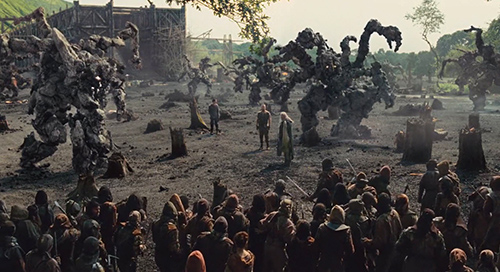
There are miracles and divine power in this film, but its actions seem to be based around inspiring fear and obedience rather than devotion. Forests spring from the ground for Noah to build from. Geysers of water take out mankind. Fires take out armies. There are moments of gentleness – a woman given back her ability to have children, rainbows etc. – but the Creator is a hard taskmaster. Noah is assisted by a gang of fallen angels – the Watchers – who, as punishment for siding with mankind when Adam and Eve were expelled from Eden, were thrown to the ground and encased in stone, turning them into freakish, gangly, giant rock monsters. Despite this, they retain their devotion to their creator – and their assistance is essential for the construction of the ark.

The inclusion of Giant Rock Monsters shows you again how far off the Biblical beaten track Aronofsky goes. This same embracing of unconventional oddness is seen throughout the film’s aesthetic – dirty clothes that have been cobbled together from several different eras, hints of metalwork and industrial ruins throughout Tubal-Cain’s kingdom, blasted wastelands – it’s miles away from The Ten Commandments. But it all sort of works because, regardless of his eccentricity, Aronofsky is a unique and intelligent director of visuals and his work is full of striking images and staging that draws inspirations from all over the shop, from old films to classical children’s story book images from Biblical tales.

Noah ain’t perfect. It’s overlong and its genre defying oddness occasionally feels a little too much. It suffers from the fact that the visuals and themes are so overwhelming that they crush most of the characters: Jennifer Connolly has little to do as Noah’s wife, while Emma Watson et al playing various Noah family members are left with just crusts to chew on. But embrace its bizarreness and the points it wants to make and you are left with a film that is quite unlike anything else you are likely to see. Aronofsky has made a Biblical epic unlike any that has ever, or will ever, be made. And that at least is worth some praise.

Oblivion (2013)

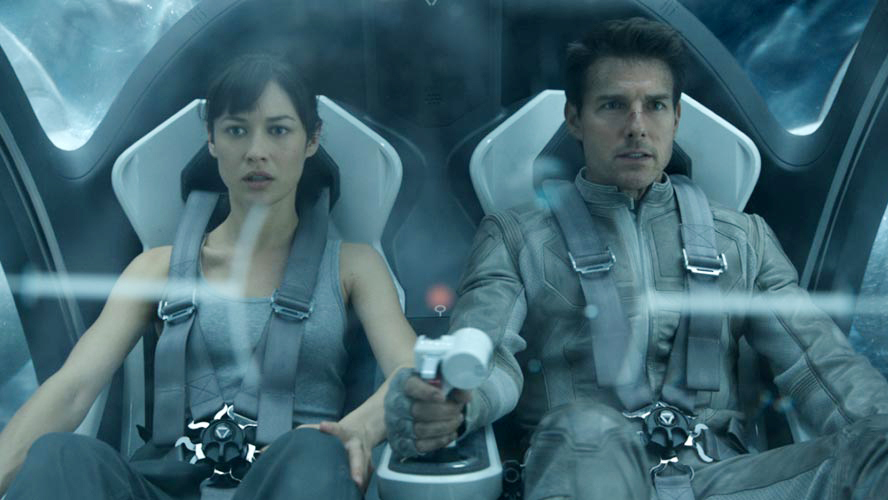
Tom Cruise goes all Top Gun (Olga Kurylenko is along for the ride, pretty much all she does in the movie) in would-be intellectual sci-fi thriller Oblivion

Director: Joseph Kosinski

Cast: Tom Cruise (Jack Harper), Morgan Freeman (Malcolm Beech), Olga Kurylenko (Julia Rusakova), Andrea Riseborough (Victoria Olsen), Nikolaj Coster-Waldau (Sykes), Melissa Leo (Sally)

Spoilers: I’m going to discuss the entire content of the plot from the third paragraph. You’ve been warned!

It’s 60 years after an alien attack. The world has been destroyed, cities lie in ruins, and mankind has fled to Jupiter’s moon Titan. Earth is being drained of its last few resources to power the new civilisation on Titan by massive machines. Drones fly around the planet, protecting the machines from the last surviving alien forces still on Earth. The drones are tended by Jack Harper (Tom Cruise) and Vika Wilson (Andrea Riseborough), whose memories have been wiped for security reasons and who are dedicated to keeping the drones functioning. 

Or is this all a lie?

Well it won’t be a huge surprise to hear that it is, of course. And there are some decent ideas in Kosinski’s film: the twist reveal that the organisation Harper and Wilson are working so hard to preserve is in fact the very alien invaders they so hate, or that the strange figures on the planet they are helping the drones to kill are actually the last surviving remnants of mankind. Harper and Wilson are clones of NASA astronauts captured 60 years ago and replicated over and over again in order to serve the robots. The “Tet” in space that they believe is their HQ is the alien mothership. These are all decent twists. So why do they combine together to have so little real impact?

I think it’s because Kosinski rushes the film. He’s so pleased with the narrative rug pulls that he seems to want to reveal many of them one after the other. Additionally, the biggest twist – Tom Cruise is actually working for the baddies! – immediately makes most of the rest easy to predict. Not least the constant references to Base 49 where he and Vika work – sure enough it’s a clone number, so the planet is filled with clones of this pair. The only thing stopping them bumping into each other is that they have been told everything outside of their “patrol zone” is irradiated and they must never enter it. 

All of this world building – and the film does take its time establishing it a piece at a time early on – is interesting stuff. But it loses its way once the film surrenders itself to a string of reveals that overwhelm it. By the time we are watching super-man Jack shooting down drones from his helicopter, the film seems to have lost the more meditative start. With Jack at first we get a sense of a guy longing to find more depth to live with. But the film loses this sense, with Jack become steadily less interesting the more we find out about him.

Then once you accept the idea of Cruise and Riseborough being endlessly cloned, the logic gap starts to click into place. It’s never explained why the aliens are so reliant on human engineers for their drones – if they have conquered loads of planets before without them, why do they need them here? Furthermore, we are told the first wave of Jacks were mindless soldiers who killed everyone on the planet – why then are these engineer Jacks and Vikas given so much independent thought? Why not just make them automatons? Why clone them and then lie to them about who they are working for – why not just program them to obey the robots?

Then after a slow build of questions and revelations about Jack’s world, we get a standard Independence Day style mission up into space to “blow up the mother ship”. Of course this is a mission that only your man Tom can do. And do it he does, because Tom Gotta Do What Tom Gotta Do. It’s all a rather disappointing resolution to a film that toys around with being something a bit more complex and interesting earlier on.

Ah, Tom Cruise. To be honest he’s probably miscast here. There is something so incredibly, movie-star strong about Cruise that he somehow overpowers the shocks and make them seem silly. On top of which, the part is another ego-stroke. Jack is the ultimate man’s man – he fixes things, he loves sports, he builds a cabin in the woods, he’s clearly dynamite in the sack; but he’s also sensitive and caring and in touch with his feelings. On top of which both female characters in the film – Riseborough’s sadly besotted Vika and Kurylenko’s mysterious astronaut who lands on Earth and awakens strange memories in Jack – are both pathetic ciphers who need Tom’s help for everything, while of course also being way, way, way too young for the Cruiser.

But the film still looks good, and still has some very interesting twists. The design and visuals are faultless – in fact they seem to become the main focus, all those long shots of deserted, sand consumed parts of New York. Its main problem is that it’s low on themes – I guess it’s trying to make a case that humanity can’t be bashed out of us, no matter how many times we try and clone it out of someone – but it gets lost a bit in plot mechanics and the delight the director has in executing them. For a film that only really has four characters in it, I still felt they were hazy and undefined. A lot is left to the viewer’s own suppositions, so the film gets pretty reliant on your adding the depth it needs. If you are inclined to do so, this works. But the essential dramatic thrust of the film itself isn’t compelling enough to make you willing to make the effort the film needs.

Oblivion wants to be the next big, thoughtful, twist-filled, sci-fi epic. But it just doesn’t have enough interest and complexity to really engage the viewer. Instead it all becomes a bit forgettable – not because it’s bad but because, at the end of the day, it’s nothing special.

If… (1968)

Malcolm McDowell as contemptuous bitter student Mick Travis in counter-culture classic If…

Director: Lindsay Anderson

Cast: Malcolm McDowell (Mick Travis), Richard Warwick (Wallace), David Wood (Johnny), Christine Noonan (The Girl), Robert Swann (Rowntree), Peter Jeffrey (Headmaster), Arthur Lowe (Mr Kemp), Mona Washbourne (Matron), Ben Aris (John Thomas), Robin Askwith (Keating), Robin Davis (Machin), Rupert Webster (Bobby Phillips), Geoffrey Chater (Chaplain), Anthony Nicholls (General Denson), Graham Crowden (History Master)

Lindsay Anderson’s If…emerged in the late 1960s, at a time of furious counter-culture reaction to the establishment. Only a few months before its release, Paris had been torn by student riots against everything from the government to class discrimination, which had sparked over a month of protests and strikes that consumed every part of society. If… was released in the midst of the aftermath to this event – and managed to capture the mood of Europe with an astonishing prescience.

In an unnamed English public school, “College House” is run by the senior prefects (“Whips”) who impose a harsh discipline upon the rest of the students. The head of house (Arthur Lowe) is an easily manipulated weakling, the school headmaster (Peter Jeffrey) is a well-meaning but distant figure, most of the staff are either bizarre, creepy, disinterested or all three. Mick Travis (Malcolm McDowell) and his friends Wallace (Richard Warwick) and Johnny (David Wood) are three persecuted lower sixth formers, who (particularly Mick) have a burning resentment for the structures and traditions for the school: a resentment that slowly builds towards outright rebellion.

Lindsay Anderson’s background was Cheltenham College followed by Oxford. Only someone so thoroughly grounded in the background of private education as that could surely have produced a public school film as furious as this one. The entire film is like a kick in the teeth. Anderson understands the cruel traditions and oppressive rules of public schools completely, and the entire film is awash with moments like this that govern school life. There is not a single, solitary moment where there appear to be any positives at all in the life at the school, or any educational benefits (the school is proudly focused on turning out “gentlemen”). 

Anderson shoots all this with a careful eye for the surreal and flights of fancy. Much has been made about the black and white sequences that pepper the film. The natural light in the chapel caused the colour stock to be over-exposed, forcing Anderson to shoot the scenes there in black and white. However, Anderson loved the effect, and filled the film with scenes shot in monochrome to unsettle the audience and make them question the nature of what they are seeing. And that’s something you need to do with If…, as the film walks a fine tightrope between what is real and what is imagination.

While the film starts off grounded in a reality of cruelty and traditions, as it progresses it develops into something unusual and perverse. An extended sequence where Travis and Johnny skip school and head into town, steal a motorbike, drive to a country café and Travis seduces a Girl (Christine Noonan) becomes ever-more hyper real. Is the Girl even real? The speed of her seduction certainly seems to owe more to the boys’ adolescent fantasies of attractive women than any reality. In fact, the use of Noonan’s character (as sex object) is both a dated moment and an expression of the boys’ immaturity and fantastical longings.

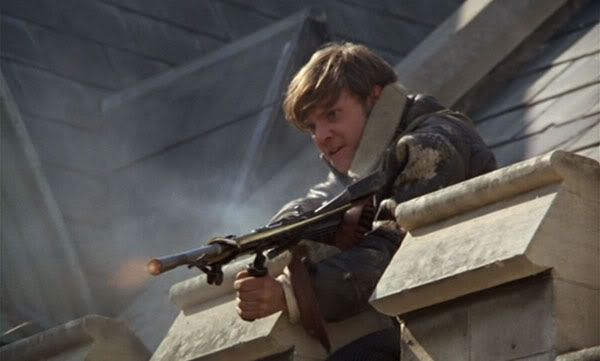
The film is building of course towards the final act of rebellion: a firearms-laden shoot-out after the rebel boys discover a secret cache of automatic weapons on campus (this is in itself unlikely) and then proceed to machine gun visiting dignitaries and their oppressors from the roof of the school, who in turn return fire with their own machine guns. How much of this is real and how much is a flight of fancy from the students and from the film makers? It’s unclear – there is no consistency in the filming of this sequence. When does reality in the film start to cross over to fantasy? There are plenty of moments where this could be happening.

It comes down to the title of the film. If – is this Kiplingesque title suggesting the possibility of such things happening, or such things coming to pass in certain situations, rather than an actual reality? Anderson’s fury at the ghastliness of the class system in this country, and the institutions that promote it (the army, politicians and the church get the same short shrift) suggest a fantasy of bringing the whole system down in a violent outburst. It’s a fantasy, initially grounded in reality, that suggests a poetic realism with lashings of the surreal (most famously the reveal of the schools bullying and vile chaplain as living in a large drawer of a desk in the Headmaster’s office).

The film’s fury and counter-culture joy has the perfect lead actor in Malcolm McDowell, whose simmering, edgy anger as an actor, and chippy rage with a sneering sense of defiance, are perfect for Travis. I’m not sure if McDowell ever topped this first performance, one where he burns through every frame and brilliantly seems to embody every single cog in the system that wanted to thumb its nose at the boss (to mix some metaphors). Anderson and McDowell are clearly working in perfect sync in this film (they collaborated three more times on spiritual sequels). It’s a beautiful performance of simmering resentment and fury at the hypocrisy around him.

The film’s exploration of the injustice of the school doesn’t feel outdated at all. The brutality of fagging and caning plays is like a darkly twisted version of Tom Brown’s Schooldays. Robert Swann is particularly good as leading Whip Rowntree, a hypocritical patrician, and memorable sequences capture the eccentric inadequacy of the teaching, the drilling of school rules into new students (brainwashing them into continuing the pattern in the future) and the arbitrary cruelty of the Whips. Peter Jeffrey’s liberal but distant and ineffective Headmaster is a perfect Thomas Arnold parody, a man with grand ideas but no knowledge of the actual school he is running, who claims to understand the boys but knows nothing about them.

However, interestingly, it’s the rebellion itself that seems rather dated today. In the 1960s, it was easier to whole-heartedly invest our sympathies in the counter-culture rebellion of Mick and his friends – but it’s harder today, with our climate of school shootings in America (there was one the day before I watched this film), to root for our heroes carrying out an indiscriminate shooting, for all the vileness of the institutions Travis is taking on. Of course this sequence is shot with a surreal eye (and I’m not sure any of it is meant to be an expression of something that is literally true, just spiritually true), but it’s a little uncomfortable today.

But at the time, this gut punch of a picture by Anderson wouldn’t have been troubled by these doubts. It’s a brilliantly directed film, that burns with a genuine fury against the institutions it is addressing. There is virtually nothing sentimental or kind about the film – it’s entirely about kicking against the tracks. Nothing in the school is redeemable or decent, everything is corrupt and twisted. It’s a sneering, burning, angry shout of a movie that manages to avoid preaching to the audience and instead presents its hellish vision of class in this country with a witty grace. If… is a film that perfectly captures the mood of the time and understands the “small world” culture of public schools like few others: it’s an essential classic.

1984 (1984)


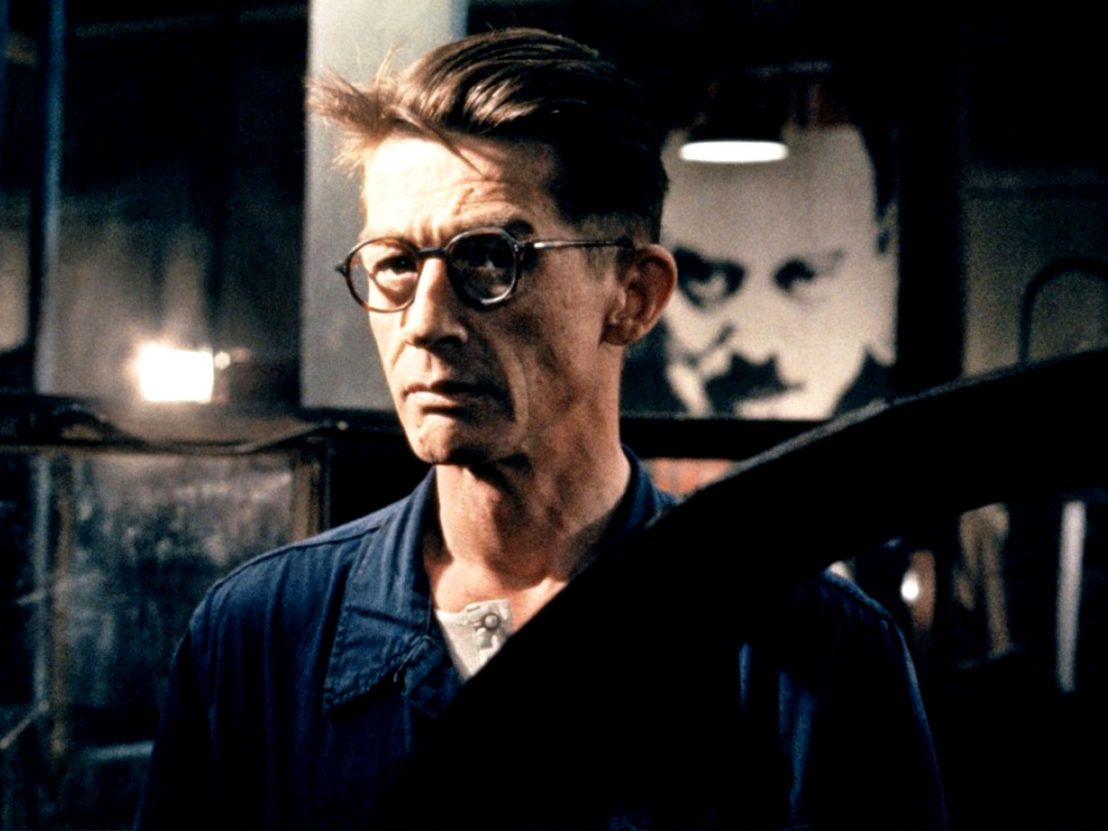
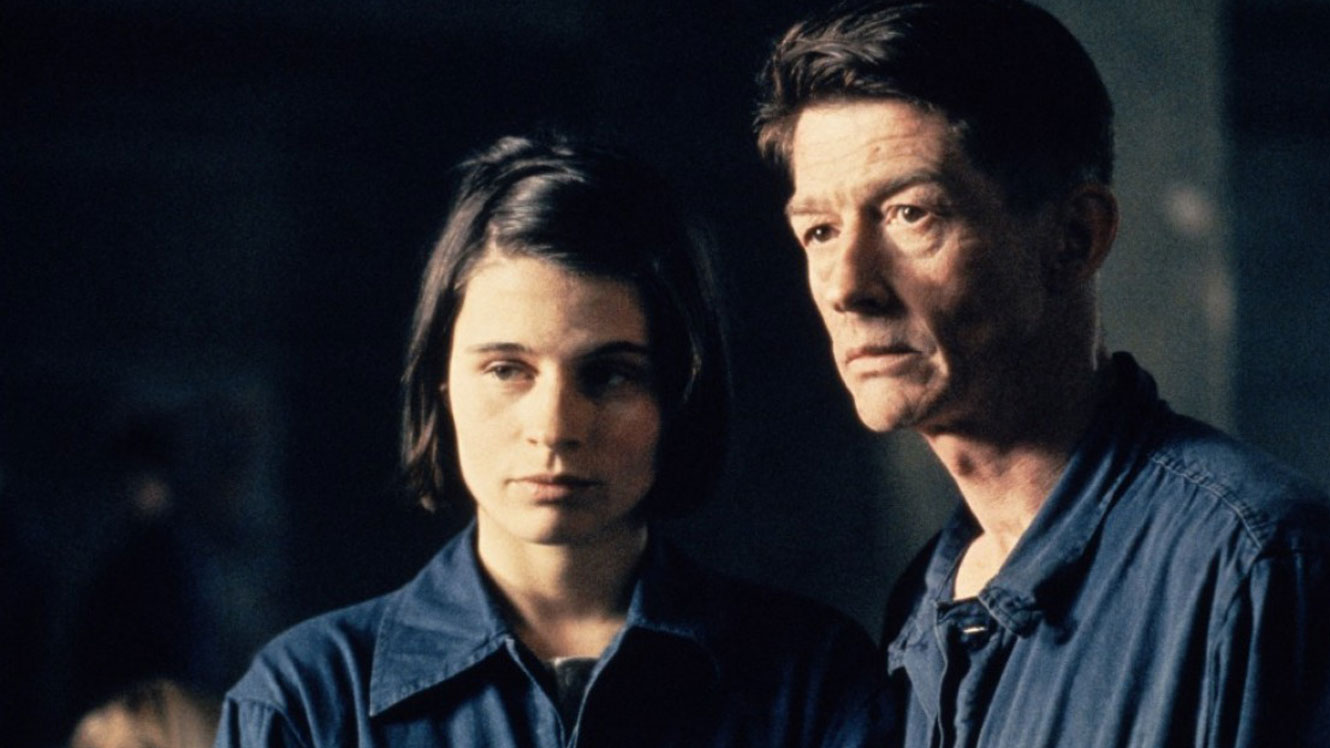
John Hurt is simply perfect as Winston Smith, in Michael Radford’s faithful Orwell adaptation 1984

Director: Michael Radford

Cast: John Hurt (Winston Smith), Richard Burton (O’Brien), Suzanna Hamilton (Julia), Cyril Cusack (Mr Charrington), Gregor Fisher (Parsons), James Walker (Syme), Andrew Wilde (Tillotson), Phyllis Logan (Announcer)

Few novels of the 20th century have had such a far-ranging impact as George Orwell’s 1984. Its concepts and ideas have dominated the popular language around topics from politics to reality television. Orwell’s idea of a dystopia, ruled by a controlling government, has inspired virtually every other story in a similar setting since. Hell, Orwellian is now an actual word.

Michael Radford had dreamed for years of bringing a film version of Orwell’s last masterpiece to the screen. This film is the end-result, shot (as it proudly announces at the end) in the exact times and locations the original novel was set in. Radford has created a hugely faithful adaptation that strains at the leash to cover all the complex political, philosophical and personal questions Orwell’s novel explores. From the opening sequence, expertly recreating the books “Two-minute-hate”, it’s immediately clear that Radford knows (and loves) this book.

Winston Smith (John Hurt) is a party worker in Oceania (a sort of super country consisting of North America, Britain and Ireland), whose role is to edit and adjust the historical records to ensure that everything the ruling Party has ever said was always accurate and correct. Unpeople are removed from old newspaper cuttings, economic targets are edited to match the final results. In his heart he has sincere doubts about the system and yearns for freedom – but it is not until a chance meeting with Julia (Suzanna Hamilton) that he finds a way to express his individuality through their love affair. But what does Inner Party member O’Brien (Richard Burton) have planned for him?

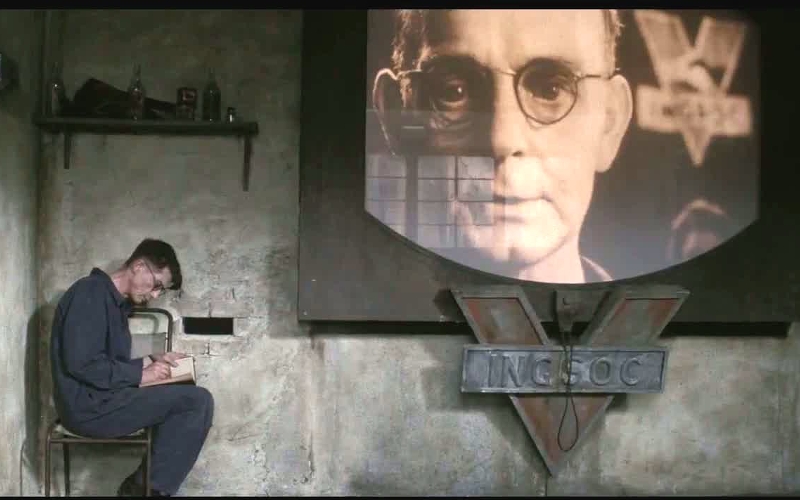
Radford’s film is a marvel of design. Its look and feel could have been ripped from the pages of Orwell. Today we’d call it almost steam-punk – every piece of technology is made of antiquated and repurposed pieces of equipment (such as phone dials or computer screens) that have a rusty, poorly maintained feeling that immediately communicates the run-down crapsack world the film is set in. Every building seems to be crumbling, collapsing, poorly made, unpleasant, dirty – every street is littered with wreckage. Who on earth would want to live anywhere like this?

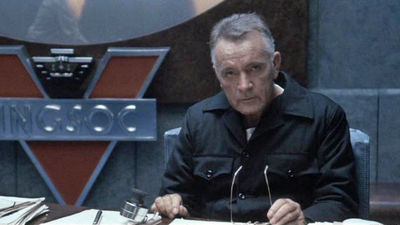
The oppression of the design – all dark blues, greys, blacks and crumbling stone and rusty metal – is contrasted at key points. The (relative) opulence of O’Brien’s apartment – with actual comfortable chairs, plastered and painted walls and decent furniture – really stands out (as does Burton’s well-tailored boiler suit compared to the uncomfortable rags of the others). Roger Deakin’s photography also really mixes up the grime of London with the sweeping vistas of the countryside, the only place we see greens or brighter blues. 

Radford’s adaptation of the novel manages to hit every beat from the original. I’m not sure if it is quite accessible to someone who hasn’t read the novel: there is a lot of information only briefly communicated here, and the film makes no real effort to set up or establish the situation in Oceania. Some moments work a lot better if you know the book – the nature of Winston’s job most especially. However, Radford really captures the spirit of the original – and he really understands the contrasts in the book between its gloom and oppression and the free spirit of Julia, and what their love affair represents to Winston. 

The film contains a lot of nudity in these scenes (Suzanna Hamilton does full frontal several times –John Hurt’s bottom similarly appears a fair bit) – but it’s kind of vital. The characters are literally (and figuratively) laying themselves bare. It’s a clear visual sign of how they are rejecting the rules, systems and crushing control of the state itself. Alone they can shed the burden of being controlled and truly be themselves. It’s one of the few films where extensive nudity actually feels completely essential to the plot – and vital to communicating the character’s desire for openness.

Radford also draws some neat (inferred) visual parallels from the material of the book, most notably around Winston’s fear of rats. In the book, this visceral fear is never fully explored, but here in the film Radford has Winston plagued with dreams and flashbacks of stealing chocolate as a child from his starving mother – and returning to an empty room full of rats. Rats are linked in Winston’s mind with betrayal and inhumanity, the very qualities he most fears in the real world – and the impact of these animals psychologically on Winston seems all the more clear.

The film is further helped by the casting of John Hurt as Winston Smith. If ever an actor was born to play this role, it was John Hurt. Not only does Hunt’s gaunt face, emaciated frame and pale cragginess fit perfectly (he also looks a lot like Orwell), but Hurt’s gift as an actor was his empathy for suffering. His finest parts were people who undergo great loss and torment, so Winston Smith was perfect. He gives the role a great deal of damaged humanity, a naïve dream-like yearning, a desire for something he can barely understand. There’s a real gentleness to him, a vulnerability – and it makes Winston Smith hugely moving.

Suzanna Hamilton (in a break-out role) is a great contrast, as a confident, controlled, brave Julia – again there is something tomboyish about her that really works for the part. She’s both certain about what she is doing, but also unwise and naïve. It’s a shame her performance often gets overlooked behind Hurt and Richard Burton. This was Burton’s final film – and while he clearly looks frail, he gives O’Brien all the imposing authority of the melodious voice: you could believe Burton as both a secret rebel and as the face of the state. He’s really good here, hugely menacing and sinister.

1984 is perhaps one of the most faithful and lovingly assembled tributes to its source material you can imagine. In fact that’s the root of its two biggest flaws. Radford had an electronic score by the Eurythmics imposed upon the film (the band was unaware that Dominic Muldowney had spent almost a year working on a score rejected by the producers). This electronic, slightly popish soundtrack feels completely out of whack with the tone and style of the rest of the film. It’s very 1980s electronic tone doesn’t match the novel and it looks even worse today. That’s the danger when your passion project can only get finance from a record company!

The other problem is the film is very much an adaptation: wonderfully done, brilliantly designed and acted, but it exists best as a companion piece. In fact the full enjoyment of the film pretty much relies on having read the book – and it has virtually no appeal to someone who didn’t already know the book (even the 2-minute hate that opens the film isn’t explained). Historically I think the film is very easy to overlook as it came out at a very similar time to Terry Gilliam’s Brazil. Brazil doesn’t adapt the plot of Orwell’s book – but in all other senses it’s an adaptation of the heart of that novel, told with greater artistry and imagination than here. It’s a thematic adaptation that is its own beast not just a page-to-screen version. That’s what 1984 is and, however well done, it will always be in the shadow of the original.

Radford’s labour of love is still a very good film. Somehow what was pretty bleak on the page is even more traumatising on screen. A lot of this is due to Radford’s balance between oppression and freedom, and the film’s perfect adaptation of the book’s themes. But a lot of it is due to Hurt’s heartfelt, sympathetic and perfect performance in the lead role. Literally no-one else could have played this role: and from the opening shots of him at a party rally, through scenes of love, torture and traumatised aftermath, he’s simply wonderful. Read the book: but once you do enjoy (if you can!) the film.