Category: Family drama

Magnolia (1999)

Family dramas come together in Paul Thomas Anderson’s beloved Magnolia

Director: Paul Thomas Anderson

Cast: Jeremy Blackman (Stanley Spector), Tom Cruise (Frank TJ Mackey), Melinda Dillon (Rose Gator), April Grace (Gwenovier), Luiz Guzman (Luiz), Philip Baker Hall (Jimmy Gator), Philip Seymour Hoffman (Phil Parma), Ricky Jay (Burt Ramsey), William H Macy (“Quiz Kid” Donnie Smith), Alfred Molina (Solomon Solomon), Julianne Moore (Linda Partridge), Michael Murphy (Alan Kligman), John C. Reilly (Officer Jim Kurring), Jason Robards (Earl Patridge), Melora Walters (Claudia Wilson Gator), Felicity Huffman (Cynthia), Eileen Ryan (Mary), Michael Bowen (Rick Spector)
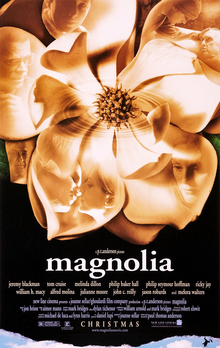
After the success of Boogie Nights, Paul Thomas Anderson landed a terrific deal: he could make what he wanted, about anything at all, at any length he liked. “I was in a position I will never ever be in again” is how Anderson remembers it. And thus was born Magnolia, a beautifully assembled labour of love, an imaginative remix of Robert Altman’s Short Cuts with biblical imagery. A sprawling collection of short stories, which leans into high tragedy and melodrama, Anderson’s Magnolia is the sort of film that is always going to find a special place on a film buff’s list of favourite films.

The film follows the lives of several people over a single day in LA. Legendary host of long running quiz show What Do Kids Know? Jimmy Gator (Philip Baker Hall) is dying of cancer and desperate to reconcile with his traumatised daughter Claudia (Melora Walters). Claudia is tentatively starting a relationship with devout and kindly police officer Jim Kurring (John C Reilly). Former champion of Gator’s show, “Quiz Kid” Donnie Smith’s (William H Macy) life is a disaster after his parents stole his winnings, and he’s struggling to hold down even the most basic of jobs. Former producer of the show Earl Partridge (Jason Robards) is also dying  of cancer, cared for by his dedicated nurse Phil (Philip Seymour Hoffman). Earl’s wife Linda (Julianne Moore) is wracked with guilt, while Earl himself is desperate to reconcile with his estranged son Frank Mackey (Tom Cruise), now a self-help guru who coaches men on how to pick up women. 

If you can’t see the links between the works of Robert Altman here, then you clearly need to look again. But it’s well worth it, as Anderson is a worthy successor to the master. He directs with a fluid confidence that comes from a director making a picture to please himself. Magnolia is frequently self-indulgent in its style and quirks, but it doesn’t matter when the effect of watching the film is so rewarding. From long takes to having the characters (all of them in different locations) sing along with Aimee Mann’s “Wise Up” at a key moment in the film, there are flourishes here that will annoy some but will be precisely what others fall in love with the film for.

And that love is deserved as this is a thoughtful and intelligent film about the impact the past (and specifically our parents) can have on us. As the man said, “they fuck you up, your Mum and Dad”. Certainly the case here. From “Quiz Kid” Donnie Smith to Claudia Gator, the film is crammed at every level with children (young and old) who have had their lives negatively affected by their upbringings. The past is a heavy burden, and it’s near impossible to shake-off – and in the cases of Donnie and Claudia brings with it a heavy dose of self-loathing. 

But what’s striking is that problems with the past don’t result in the same outcomes for people. Who would have thought that seemingly misogynistic motivational speaker Mackey’s beef with his dad is that Earl walked out on him and his dying mother when Mackey was a teenager? Part of the fascinating psychology of the film is how a son who loved and cared for his mother grew up to encourage men to treat women just as his father treated his mother. Is this some sort of perverse way to feel closer to the father who abandoned him? Perhaps Mackey has defined his life around hatred for his father, along with a deep longing for love – and perhaps his inability to deal with these feelings led to a professional career espousing the exact opposite? One of the neat things about Anderson’s film is that it largely avoids pat answers to this sort of thing. It’s left up to us to decide for ourselves – and perhaps reflect on how every person is an unanswerable riddle.

Whatever the answers are, it’s clear that parental problems are being paid-forward. The new Quiz Kid champion Stanley Spencer is a precocious child genius, being treated as an ATM by his father, who brags about his son while passive-aggressively demanding Stanley keep winning to continue funding his failing acting career. Stanley is a desperately unhappy child, more than smart enough to realise he is a performing monkey but unable to escape. And how can you get out of knots like that? After all, the film shows us one possible future for Stanley with Donnie – but walks a deft tightrope on whether the same life of loneliness and disappointment is inevitable for Stanley or not.

These familial clashes are introduced in the first hour and then simmer with exquisite timing during the film’s second hour. Anderson’s brilliant decision to build the film around a live recording of Gator’s quiz show means we are constantly reminded (as the show plays in the background throughout other scenes) that everything we are seeing is happening at the same time. The second hour of the film is a superbly deft cross-cutting from storyline to storyline, each building in tension. The desperation and entrapment in each scene beautifully spark off and contrast with each other. The sequence is at times marginally undermined by a slightly oppressive music score, but it’s beautifully assembled and shot and carries a real power – a superb balancing act of almost real time action that plays out for a nearly the whole of the second act. 

And Anderson knows skilfully to balance the gloom with real sparks of humanity and decency. Two characters in the film – Reilly’s cop and Hoffman’s nurse – are decent, kind and generous souls who have an overwhelmingly positive impact on every character they encounter. Both characters – and both actors are superb in these roles – are quiet, low-key but humane people who offer a quiet absolution to a host of characters, and opportunities to move on from the burdens of the past. Hoffman’s Phil is a genuinely kind person, who puts others before himself while Reilly’s Jim (surely the best performance of the actor’s career) is such a sweet, well-meaning, honest guy, that you understand why so many people feel bound to unburden themselves to him.

There is a lot to unburden in this film, and some of these moments tip over into melodrama at points. There are tear stained deathbed confessions, and angry, tearful moments of resentment and guilt bursting to the surface. At times, Magnolia is a little in love with these big moments, and indulges them too much, but it offers so many moments of quiet pain that you forgive it.

Not that the film is perfect. Today, even Anderson says it’s too long – and it really is. Unlike Altman, Anderson is less deft at pulling together all the threads in an overlapping story. This is effectively a series of short films intercut into one – the plot lines don’t overlap nearly as much as you might expect, with only Jim moving clearly from one plotline to another. It’s also a film that is driven largely by men. Of the few female characters, all are defined by their relationship to a man (and an older dying man at that), and not one of the female characters isn’t some form of victim. 

Anderson’s failure to really wrap the stories together means you can imagine unpicking the threads and reducing the runtime. Julianne Moore’s role as Earl’s guilty, unfaithful trophy wife (is she unaware of Earl’s own past of infidelity?) could have been easily shed from the film. Moore, much as I like her, gives a rather hysterical, mannered performance that feels out of touch with some of the more naturalistic work happening elsewhere in the film. The most melodramatic of the plots (every scene features Moore shouting, weeping, shrieking or all three), it also ends with the most contrived pat “hopeful ending”. It’s a weaker story that lags whenever it appears on screen.

Magnolia starts with a discussion of coincidence, but it’s not really about that – and the coincidence of all these people seems largely in the film to be reduced to the fact that they are all living in the same city with similar problems. It’s a slightly odd note to hit, as if Anderson slightly shifted the focus away from lives moving into and out of each other, in favour of a series of more self-contained linear stories. (That opening montage discussion of three (fictional) moments of fate and chance, while beautifully done, could also easily be trimmed from the film).
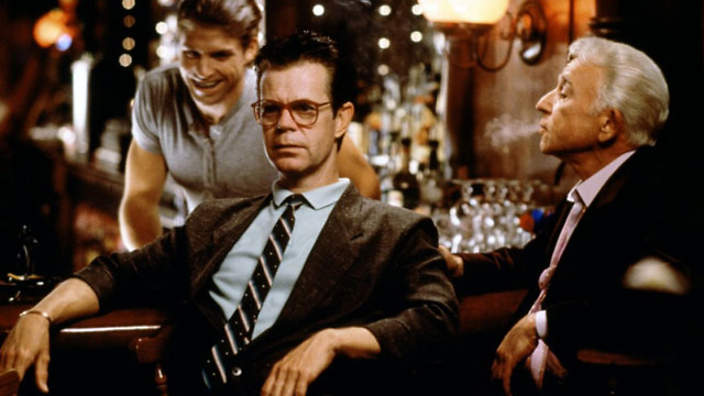
But then, these tweaks wouldn’t change the fact that Magnolia is a superbly made film, or that Anderson is a great filmmaker, even if he doesn’t quite manage to create the sprawling, interweaving, state of the nation piece he’s aiming for here. But as a collection of beautifully done short stories, it’s great. And the acting is superb. Tom Cruise drew most of the plaudits for an electric performance of egotism and triumphalism hiding pain and vulnerability near the surface, Anderson using Cruise’s physicality and intelligence as a performer better than perhaps any other director. Among the rest of the cast, Hall is superb as the guilt ridden Gator, Macy very moving as the desperate Donnie and Melora Walters heartrending as the film’s emotional centre, who ends the film breaking the fourth wall with a tender smile, that is perhaps one of the most beautiful final shots of modern cinema.

All this and it rains frogs at the end as well. But that introduction of biblical bizarreness is both strangely profound and fitting for Anderson’s stirring and inspiring film.

The Blind Side (2009)

Sandra Bullock sets her own rules, campaigning for a better life for a young black man in The Blind Side

Director: John Lee Hancock

Cast: Sandra Bullock (Leigh Anne Tuohy), Tim McGraw (Sean Tuohy), Quinton Aaron (Michael Oher Tuohy), Jae Head (SJ Tuohy), Lily Collins (Collins Tuohy), Ray McKinnon (Coach Cotton), Kathy Bates (Miss Sue), Kim Dickens (Mrs Boswell)

Sandra Bullock won an Oscar for this sweet but unchallenging film, the sort of thing you could have expected to see on TV in the 1990s as a “movie of the week”. She plays Leigh Anne Tuohy, a determined and driven woman who adopts and mentors Michael Oher (Quinton Aaaron), a gentle giant of a teenager who has grown up in foster care and who struggles with shyness. Michael has been accepted by his school for his potential skill, but the school can’t cater for his requirements for a less traditional teaching model (he struggles with reading and confidence). All that changes as Leigh Anne pushes for Michael to get the support he needs and encourages him to excel as a footballer.

This is the sort of naked crowd pleaser that will leave a smile on your face – and probably escape your mind after a few days. It’s devoid of challenge and ticks every single box you would expect this kind of rags-to-riches story to cover – the initial struggle, the growth in confidence, the setback, the rebound, the happy ending. It’s all there – and packaged very well by Hancock (heck the film won a surprise nomination for Best Picture).

It’s powered above all by a forceful, larger-than-life performance by Bullock, the sort of “personality” part that the actor has always excelled at (there is no doubt she’s a hugely engaging performer and always has been). Bullock grips the film by the horns and rips through the expected scenes. She’s a glamourous rich woman who isn’t afraid to go toe-to-toe with the local gangsters! She’s wealthy but she’s still in touch with her roots! She’s beautiful but she wears the trousers in the household! It’s everything you would probably expect, and Bullock can more or less play it standing on her head. She brings all her expert comic timing and exuberance to bear and mixes it with an emotional concern and empathy rarely called for in the romcoms that have made up much of her career. In a weak year (Carey Mulligan in An Education was her only plausible rival for the little gold man) she took the prize.

It’s probably the only thing that The Blind Side will be remembered for, however much most people will enjoy it when watching it. Its story of good triumphant and a disadvantaged young man getting the chance to come to peace with himself and turn his life around, are bound to put a smile on most faces. There are lots of funny lines, and Leigh Anne is such a powerhouse she makes a chalk-and-cheese partnership with anyone she shares a scene with. But it’s basically not got a lot more to it than just showing you a rags-to-riches tale, with a few slight notes of racial tension thrown in (and then barely even explored in any depth). A more interesting film might have taken more note of the differences between the Tuohy’s background and the poverty of Michael’s childhood neighbourhood and the fate of the rest of the people who grew up (none of whom had his advantages). But this is more interested in presenting an unlikely, balsy, champion of the underdog promote his life.

I suppose you could say that this film tells the story of the troubled background and eventual success of a young black man and not only filters all this through the experience of a family of wealthy white people, but also suggests that the chances of a black man achieving this without the support of a white family was practically impossible. But, then this isn’t a film with a political agenda. It’s just trying to tell a charming, uplifting story. Take it on those terms and it’s enjoyable. Try to delve into it any deeper and it will puff up and disappear in a burst of feelgood warmth. But the only reason it will be remembered – the only reason why it even remotely stands out – is as the film Sandra Bullock won an Oscar for.

The Reckless Moment (1949)

James Mason and Joan Bennett feel Reckless Moment pulls them toward temptation

Director: Max Ophüls

Cast: James Mason (Martin Donnelly), Joan Bennett (Lucia Harper), Geraldine Brooks (Bea Harper), Henry O’Neill (Tom Harper), Shepperd Strudwick (Ted Darby), David Bair (David Harper), Roy Roberts (Nagel), Frances E Williams (Sybil)

It’s a situation anyone could find themselves in: your daughter is infatuated with someone totally unsuitable, and despite all your efforts you can’t get her to shake him off. What’s perhaps more unusual is when the man turns up dead after an accident – but in such a way it looks like your daughter has bumped him off. What lengths will you go to, to save her from prison? That’s the problem faced by Lucia Harper (Joan Bennett) – and it’s made even more complex by the fact that the truth is out there and she’s being blackmailed by surprisingly sensitive small-time crook Martin Donnelly (James Mason), who finds himself developing feelings for Lucia.

Max Ophüls’ The Reckless Moment is an enjoyable enough noir-thriller, that mixes a wonderful sense of its locations with a perverted romanticism that first expresses itself through the daughter’s infatuation with a pathetic bent art dealer and then through the love blackmailer Martin Donnelly feels for his victim (and she for him). But it’s also a film about women, and how alone they can be when dealing with problems. Lucia’s husband is a never-seen presence on the end of a phone (busy building a bridge in Germany), her father-in-law is charming but useless and the two other men are criminals intruding into her life.

In fact this is quite ahead of its time with its thinking around women. Far from the usual tropes of a femme fatale, instead Mason takes on that role, while the mother turns out to be practical, brave and dedicated to keeping her family safe – while still more than a little open to illicit feelings of attraction. Lucia still has to balance all this with putting up a front of domestic business-as-usual with her family, not letting them see even a trace of the problems (including her daughter who is blissfully unaware of the situation she has landed her mother in). 

Ophüls’ directs this with a moody intensity, with a wonderful use of the LA backgrounds, particularly of the boat landing where much of the crucial action takes place. His camera placement is impeccable, and he finds a number of interesting and striking angles to throw events into a sharp relief. It’s a beautifully shot film, with wonderful use of black and white, and hints of Ophüls’ background in German expressionist cinema. His camera constantly manages to put us in the shoes of Lucia with tracking shots (another Ophüls’ trademark) loyally following her actions and placing the viewers into her perspective of events to help build out bonds with her. 

It’s a bond that obviously Donnelly ends up feeling very strongly tied to. James Mason enters the picture surprisingly late, and the film’s short length (less than 80 minutes) means many of the developments around the blackmail end up feeling rather rushed. Perhaps the plot didn’t even need the blackmail angle – there could have been more than enough tension of Lucia dodging the police case that surely should have built around her. Instead, the blackmail plot often feels rather forced, not least due to the build of a romantic subplot between the two characters.

It’s a romance that never quite rings true, partly because we never get the time for it to breathe. It seems forced and bolted onto the film because it is expected, rather than something that grows organically. It leads to sudden plot leaps, with Donnelly moving swiftly from business like to buying gifts and even offering to pay part of the blackmail for her to his shady boss. I’m not sure that the film ever earns this leap with its rushed runtime. It never pulls together into a romance that we can really believe in – and Lucia is such a carefully restrained and standoffish character that we don’t always get a sense of the emotions that she is carrying below the surface. 

Despite this Joan Bennett does a decent job as the heroine, an intriguing and rather admirable character who gets caught up in wild and crazy events but never lets them overwhelm her. Indeed, Ophüls’ stresses her calmness and practicality at several points, never shaken by demands of events and responding with ingenuity and calm to a range of circumstances. Bennett might not be the most charismatic actress, but she does a very good job here. James Mason struggles slightly with his slightly incoherent character arc, but as a reluctant heavy he does a marvellous job here, while mastering the sense of ruffled, shabby charm Donnelly has. It does help believe that he might contribute to a reckless moment of attraction from Lucia.

The Reckless Moment is a well-made B movie, that Ophüls’ adds a great deal to with his empathy for Lucia and stylishly smooth film-making. It makes for a very polished film, which on its actual character and plot beats doesn’t really always make a great deal of sense – rushing us into relationships and feelings that it doesn’t always feel the film justifies. But despite that there is just enough style here, even if this is always a film destined for the second tier of classics.

Wild Rose (2019)

Jessie Buckley sings up a storm in kitchen sink drama disguised as uplifting fable Wild Rose

Director: Tom Harper

Cast: Jessie Buckley (Rose-Lynn Harlan), Julie Walters (Marion Harlan), Sophie Okonedo (Susannah), Jamie Sives (Sam), Craig Parkinson (Bar singer), James Harkness (Elliot), Janey Goodley (Barmaid)

How do we find a balance between our dreams and the cold realities of our responsibilities? What do you do when your dream, what feels like the one thing you’ve been put on earth to do, never seems to come any nearer? And at what point does fixating on these dreams stop being naively exciting and start becoming selfish, as you ignore your children and others depending on you?

Rose-Lynn (Jessie Buckley) is released from prison back into her home in Glasgow. An immature screw-up, with a total lack of application but blessed with a blunt charm, Rose-Lynn has made a disaster of everything she has touched and has an almost non-existent relationship with her two young children who have effectively been raised by their grandmother Marion (Julie Walters). Rose-Lynn lands a job as a domestic cleaner thanks to a family friend, but her dream remains to go to Nashville and become a country singer. Her singing on the job is overheard by her wealthy employer Susannah (Sophie Okonedo) who decides to support her dream – but the temptation of her dream starts to sabotage her commitment to the relationship she is starting to build with her children.

Wild Rose on the surface (and in the marketing material) looks like an uplifting film about a young woman chasing her dream in the face of overwhelming odds. But it’s actually more like a 60s kitchen sink drama, spliced with country music. Rose-Lynn is a working-class single mother who had her two kids before the age of 18, who dreams of a better life but refuses to engage with her responsibilities in the real world. She basically is a dumb teenager who has never grown up, and has never given up on her fantasy of becoming a star. Like a sulky teenager, she rejects anything that feels like too much hard work – from learning a musical instrument to writing her own songs – and seems to believe just rocking up in Nashville with no plan and no contacts will magically land her a music career.

In actuality, Rose-Lynn is a rather selfish dreamer, with a self-destructive streak powered by laziness and a chippy resentment that cause her to frequently do her best to wreck opportunities. Pushing to get her security tag removed, she still heads out drinking until the last possible minutes of her curfew. Getting an opportunity to visit the BBC Radio studios, she prepares by getting drunk on the train. She miraculously escapes being fired the first day on her cleaning job, despite drinking from her employer’s drinks cabinet and dancing around her house not working the instant she is left alone. On top of which, she persistently lies or tells half-truths to everyone around her, and continually fails to deliver on commitments.

Your reaction to the film will be totally governed by your reaction to this character. So just as well she is played with such radiance and joie-de-vive by Jessie Buckley. A bombshell of a talent, Buckley manages to keep this character just the right side of charming. Her failures come not from cruelty or even conscious selfishness, but from a lack of maturity and just plain not growing up. She’s not ready to be a mother and not ready to deal with responsibility. But she’s still charming, she’s enthusiastic, she loves life and she wins friends easily. It just makes it all the more frustrating that she is such a screw-up.

You can see why her mother (a marvellous performance of caring but long-suffering frustration by Julie Walters) still loves her, even while she is beyond disappointed about the mess Rose-Lynn seems determined to make of her life. Her two children – adorable little moppets – are frequently shunted to one side, and the film walks a fine line between Rose-Lynn’s obvious love for them and also her (unspoken) resentment that their very existence acts as an anchor on her following her dream (the dream she is manifestly unprepared for).

Into all this turmoil steps Sophie Okonedo as her middle-class wannabe bohemian employer Susannah. This is surely the oddest character seen in films for a while, a sort of middle-class saviour who offers a world of opportunity to Rose-Lynn (who has withheld the truth about everything from her background to her family). Rather than doing what a real person would do and fire Rose-Lynn on her first day, Susannah not only encourages her singing but milks her upper-middle-class uni contacts to land an Rose-Lynn an interview with BBC Radio 2 legend Bob Harris (making a bizarre cameo as himself) and then goes further by offering to throw a fundraiser for Rose-Lynn to go to Nashville. Why does she do all this? Who knows, it’s all required for the plot in order to artificially bring to head the clashes in Rose-Lynn’s life between her dream and her family.

But then that’s the nature of the film, which hinges on narrative contrivances and clichés delivered with a solid level of commitment from the cast. In truth, this clash between what we should do and what we want to do is something we’ve seen many times before. The film seems determined to have its cake and eat it by reaching a conclusion that both these things are equally important and that (I guess) we need to find a balance between them. It makes for a slightly odd ending, or series of endings – just when we think it’s going to wrap up, another scene follows giving us another coda.

But then I guess it’s not clean, just as life isn’t. The real focus anyway is less Rose-Lynn’s dream and more about whether she can grow up enough to look after her children and stop being such a screw-up. In that sense it’s a hopeful film – as you would expect of course – but it feels like the film should pick a side, not least in saying that sometimes your dreams of being a professional footballer, or actor, or singer might be something you need to put aside at some point when it’s clear they are never going to happen. But then who really wants to think that?

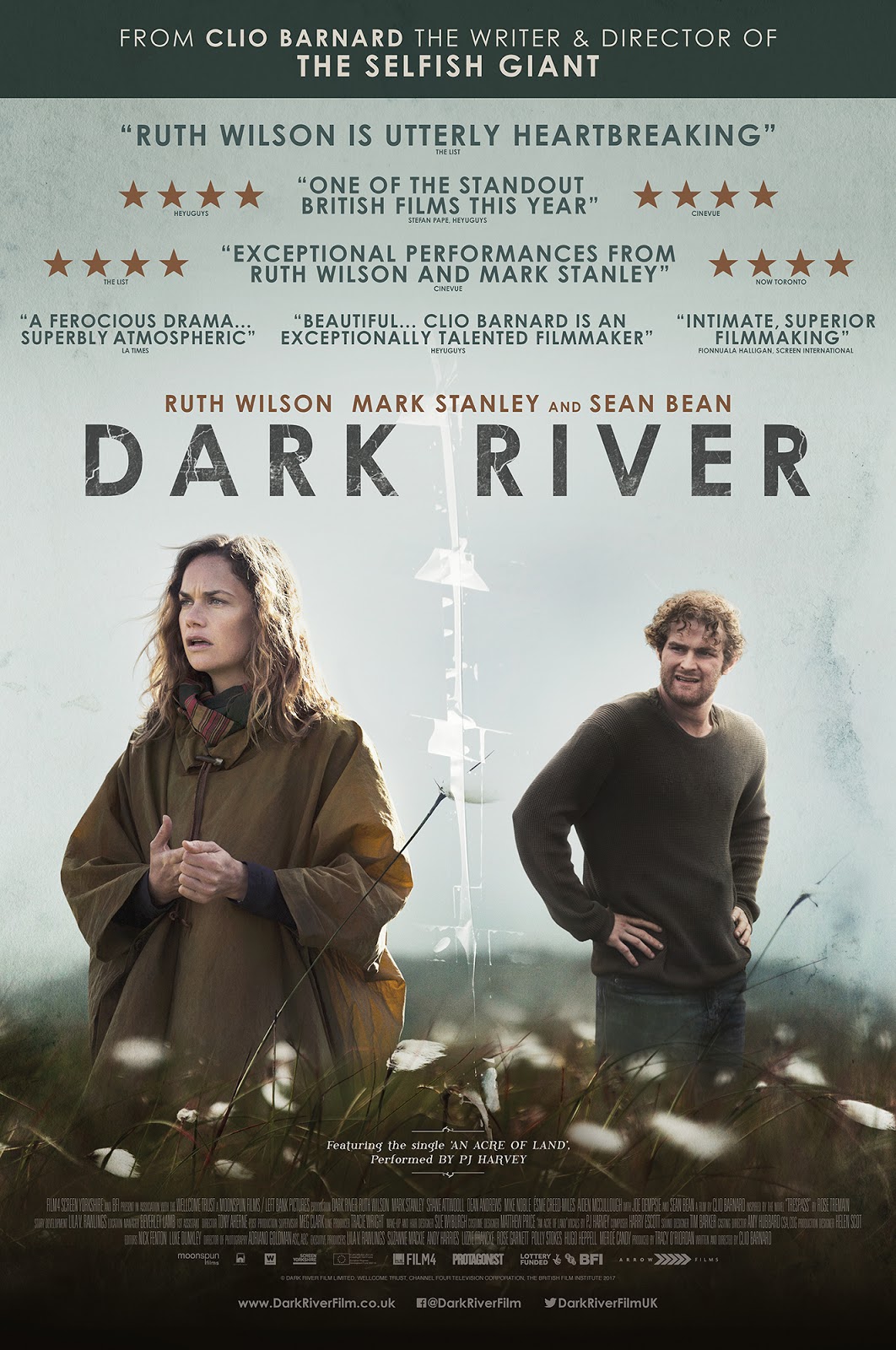
Dark River (2017)

Ruth Wilson and Mark Stanley make for one unhappy family in Dark River

Director: Clio Barnard

Cast: Ruth Wilson (Alice Bell), Mark Stanley (Joe Bell), Sean Bean (Father), Joe Dempsie (David), Esme Creed-Miles (Young Alice), Dean Andrews (Matty)

British Independent film can be a grim place. Clio Barnard is undoubtedly a gifted film-maker and visual stylist, and infuses her work with a striking poetic lyricism – but blimey Dark River is hard going. And not just because it’s a grim film about grim subject matter – it’s a film that feels likes it’s trying way too hard at almost every point. 

Alice Bell (Ruth Wilson) returns to her family’s farm after 15 years, on the death of her father (Sean Bean). A victim of her father’s continued sexual abuse, Alice finds the farm still haunted by memories – and feels threatened by her violent, depressed brother Joe (Mark Stanley) who resents being left to care for the farm and their dying father alone. Both siblings make legal claims for ownership of the farm – and the dispute and tensions swiftly escalate.

Dark River makes no secret of its historic child abuse plotline. But this narrative development seems to have become so common in grounded, grim dramas like this that it’s hard not to view almost everything you see as a walking cliché. Appalling as Alice’s experience has been, this film doesn’t show us anything that we haven’t seen hundreds of times before in a storyline like this. All the expressions of trauma, the style of shooting, the silent dread – it’s all been done before. It already feels tired here and lacking any form of originality.

It doesn’t help that the film is slow-paced, and determined to create an arty atmosphere. For all the beauty of the gloomy Yorkshire dales and rain-drenched sheep, you can’t help but feel the film is wallowing in all its Bronte inspired poetic grimness. Every second of the film seems to be designed to hammer home the “grim up north” feeling, in an attempt to add an amount of poetic weight to a story that feels slight, predictable and all-too-familiar.

Meanwhile, the central conflict of Alice’s determination to turn the farm around and claim ownership of it never seems to ring true. Every second on the farm she feels uncomfortable and haunted by memories: her brother even says she can’t step foot inside the farm house. Why does she want to stay here? Why does she fight so hard to claim possession of it? It never really makes sense.

The struggle between the siblings feels equally forced, remarkable as the film’s understanding of Joe’s drunken inarticulacy and ill-expressed emotional turmoil can be. The true emotional reasons behind their fury never click, as we never get a sense of any real relationship between them either past or present. For all the haunting, ghost-like presence of Sean Bean as the dead father (who appears as a constant vision or half-memory) that sense of the past, and the unspoken tensions don’t quite click into place, leaving the film reliant on the language of cliché.

The film’s main asset is the extraordinary performances of the lead cast. For all the clichéd and familiar scenes and story structure they encounter, Ruth Wilson and Mark Stanley are both exceptional. Wilson’s Alice is a heartbroken, vulnerable and confused figure only just able to understand the emotional trauma her father has left her with. Mark Stanley matches her as an angry young man, furious at the world, prone to dangerous outbursts, an inarticulate mountain of rage with no direction. The scenes between these two throb with an emotional strength and truth that the rest of the film can hardly match.

Dark River is very well made and striking in its visual language with some very strong performances. But it’s also overly familiar and trying too hard to be both important and artistic. You’ll quickly find yourself drifting away from it as it goes on, admiring it but never truly engaging with it.

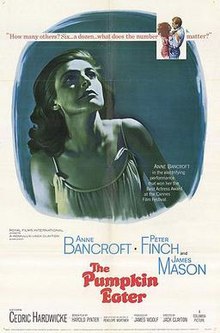
The Pumpkin Eater (1964)

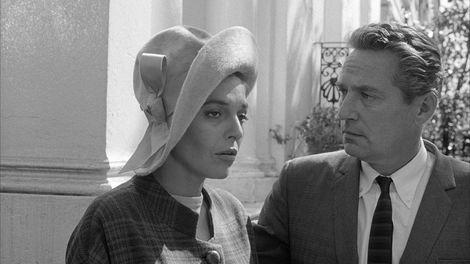
Anne Bancroft and Peter Finch in an unhappy marriage in the overlooked The Pumpkin Eater

Director: Jack Clayton

Cast: Anne Bancroft (Jo Armitage), Peter Finch (Jake Armitage), James Mason (Bob Conway), Cedric Hardwicke (Mr James), Richard Johnson (Giles), Eric Porter (Psychiatrist), Rosalind Atkinson (Mrs James), Frances White (Older Dinah), Alan Webb (Mr Armitage), Cyril Luckham (Doctor), Yootha Joyce (Woman at Hairdressers), Maggie Smith (Philpot)

Released in 1964, The Pumpkin Eater was rather unfairly seen as too strongly aping the new-wave of European film-making, in particular Michelangelo Antonioni and Ingmar Bergman. It’s a strange trend in British culture to ruthlessly lambast anything seen to be too good or too well made, as if trying too hard is vulgar and flies in the face of our love for the amateur. This is supremely unfair for The Pumpkin Eater (which I will say is weighed down by a pretty terrible title – Scenes From a Marriage would have been better, but that one got nabbed by Bergman) which is a little classic of a film.

Based on a semi-autobiographical novel by Penelope Mortimer about her marriage to lawyer-turned-writer John Mortimer (creator of Rumpole), Anne Bancroft (with an impeccable British accent) plays Jo Armitage: an intelligent woman, suffering from depression, with a huge number of children from three marriages. Her new husband, Jake (Peter Finch), is a charming man, a hard working screenwriter, an excellent father to all the children – and, alas, a selfish serial adulterer. The film charts the ups and downs of their marriage, often in a non-linear way, including Jo’s battle with depression and the fallout from Jake’s affair with the wife of a film producer Bob Conway (James Mason).

Shot in sumptuous black-and-white, The Pumpkin Eater is so well made by Jack Clayton it became almost a stick to beat it with. One contemporary review even mentioned it was “irritatingly without flaws” in its film-making, as if this was a bad thing! Clayton’s direction is detailed, precise and beautifully done and throws a host of fascinating images at the screen, as well as drawing out some simply superb performances from the cast. Clayton chooses interesting angles and visual mirrors – events from scenes are reflected and repeated, in different contexts, in later scenes. The camera takes up unusual positions, not least a zoom in on James Mason’s mouth as his character spits out vile insinuations.

Clayton’s direction also captures a superb sense of empathy with his characters. His depiction of depression and ennui in Jo Armitage captures the sense of drift beautifully. Early in the film, she is captured in shot aimlessly standing in the shade of a car port. At her lowest she seems to get almost stuck in the frame. The film’s most famous moment features Jo breaking down in despair in Harrods – a wonderful sequence that uses a combination of POV, overhead shots, a camera attached to Anne Bancroft as she works, and a crashing close up on Bancroft’s face (also repeated later in the film) that all serve to stress her isolation, her despair and the mixed to hostile reaction to her tears from the shoppers around her. 

But the film doesn’t solely take Jo’s side. It’s interesting how many contemporary reviewers – men and women – found Jo a tiresome and selfish woman (she’s not, just an unhappy one). That’s partly due to the film’s success in making Jake a fully rounded character. Sure he’s charming and fun, but he’s also clearly a great dad and genuinely cares for Jo – it’s just that he can’t help himself doing things that end up hurting her. The film is also careful to suggest that, deplorable as some of his actions are, he has a point about the pressure of adding another child to a family which already has about seven (two of them at least have been farmed off to boarding schools, and it’s clear in one late sad scene that Jo now hardly knows them). How are they meant to cope? How are they going to be able to support another baby?

The film works as well because both Bancroft and Finch give extraordinary, fully rounded performances in the lead roles. Bancroft had just won the Oscar for Best Actress, and it’s quite something to think that committing to this British picture was her next gig. But she immerses herself in the character, and sells every single one of the complex emotional ups and downs Jo goes through. She’s perfect at drawing us deeply into Jo’s sorrow and uncertainty, but also her brittleness and anger. She’s not afraid to acknowledge that sometimes depressed people are immensely difficult and frustrating – or that they are also intensely vulnerable and fragile. Peter Finch is equally good as a hail-fellow-well-met, whose selfishness doesn’t quite fit into his self-image as a good guy but who is overflowing with good intentions and small moments of kindness.

Both actors are helped immeasurably by a very strong script by Harold Pinter. Pinter’s structure intelligently draws out great depths from the material, as well as playing smart games with structure and timeline that provoke thought. He is the master of the stand-out scene, and the film is crammed with smaller moments that stand out in the memory. Maggie Smith has a brilliant cameo as a shallow, gossipy house guest who may or may not be having an affair with Jake. In one extraordinary sequence, Jo is accosted at a hairdressers by a total stranger (played by Yootha Grace) who recognises her from a magazine article about Jake, who oscillates between wanting to be her friend and vicious bitterness that she isn’t. 

It’s a sign of the gift parts that this film gives to actors. Stand-out amongst the remaining cameos is the great James Mason, whose cuckolded husband at first seems to be a decent, if overly bombastic life-of-the-party type, who reveals himself to have unending reserves of bitterness and poison and delights in pouring anger and suspicion into Jo’s ears.

Clayton and Pinter’s work dovetails perfectly here into a sharply intelligent, haunting film which throws you into a marriage that refuses to paint either side as either completely wrong or completely right (Clayton was even concerned the film may have gone too far in making Jake sympathetic to the detriment of Jo). A compelling storyline, in a beautifully made film crammed with intelligent lines and wonderful moments, The Pumpkin Eater can rightly claim to be an overlooked classic of British cinema.

A Letter to Three Wives (1949)

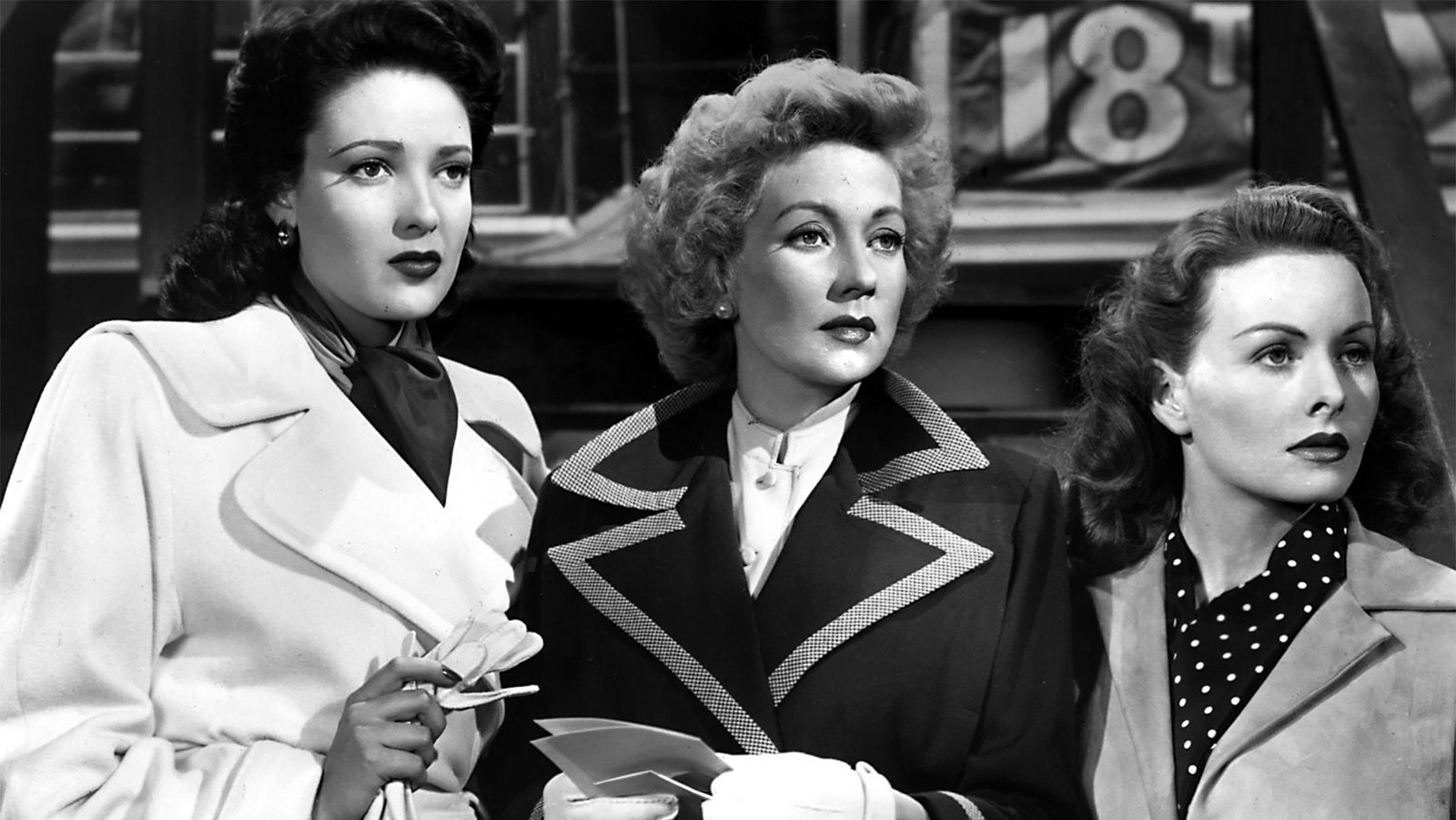
Linda Darnell, Ann Sothern and Jeanne Crain read over the eponymous Letter to Three Wives

Director: Joseph L. Mankiewicz

Cast: Jeanne Crain (Deborah Bishop), Linda Darnell (Lora Mae Hollingsway), Ann Sothern (Rita Phipps), Jeffrey Lynn (Brad Bishop), Paul Douglas (Porter Hollingsway), Kirk Douglas (George Phipps), Thelma Ritter (Sadie), Barbara Lawrence (Babe Finney), Connie Gilchrist (Ruby Finney), Florence Bates (Mrs Manleigh), Hobart Cavanaugh (Mr Manleigh), Celeste Holm (voice of Addie Ross)

It’s strange to think that, back in 1949, this slight story of three women one of whose husbands might have run off with another woman (the film’s narrator, the omnipresent Addie Ross, coolly voiced by Celeste Holm) was garlanded with multiple Oscars. It’s the sort of material you half expect would make an episode of Desperate Housewives– although of course today the whole thing would have been sorted out in a few minutes with mobile phones (A WhatsApp to Three Wives?). What makes it work so well is Mankiewicz’s dialogue, which lifts this slight melodrama of suburban couples into something that feels like it has more weight and intelligence than it really does.

Anyway, our wives are a mixed bag living in a commuter town “just outside the city”, all from middle-class or lower upper-class backgrounds. Seconds before taking some underprivileged children for a boat trip and picnic, insecure Deborah Bishop (Jeanne Crain), blowsy Lora Mae Hollingsway (Linda Darnell) and ambitious Rita Phipps (Ann Sothern) receive a goodbye letter from their “friend” Addie Ross, who announces she has left town with one of their husbands. But which one? Is it Addie’s ex-boyfriend, privileged Brad Bishop (Jeffrey Lynn), her school-yard sweetheart, academic George (Kirk Douglas), or her admirer, businessman Porter Hollingsway (Paul Douglas)? As the poster says, “While they wondered, one of them wandered”!

If that sounds to you like a rather small-scale storm in a teacup – well you’d probably be right. To be honest, it’s pretty hard to care which of these husbands might have headed into the sunset with the arch Addie Ross, since most of the characters seem at first rather smug, self-centred or tiresome. It takes time to warm up to these guys, but eventually Mankiewicz’s sparkling dialogue starts to work some magic and you invest in a clichéd little story (based, bizarrely, on a glassy magazine short story).

At one point the film was entitled A Letter to Four Wives – until studio executives decided that was one too many (bad news for Anne Baxter who had been cast as the final wife). That speaks to the episodic nature of the film. It has a clear five act structure – the set up, an act establishing the backgrounds of each of the marriages, and a final act that reveals who went where and wrapping the plot up. It’s a simple structure, and today it’s hard to see what all the fuss was about.

Mankiewicz’s framing device for his flashbacks may be a bit contrived, but he puts it together with skill. Each flashback is cleverly introduced with an intriguing device where various mechanical items near the women slowly take on a voice of their own, echoing their inner dread back to them. It sounds a bit odd – and it is at first – but it sort of works as an unsettling reflection of the unease of the central characters.

Once we get into the flashbacks themselves they are a mixed bag. The weakest by far is the first, focusing on Jeannie Crain’s Deborah Bishop. Rather plodding and dated – and forced to also introduce all the characters – it’s a shapeless section of reflection in which Deborah comes across unengaging, sulky, insecure and tiresome. Mind you that’s as nothing compared to her husband Brad, played with utter forgettability by Jeffrey Lynn, who is nothing more than a self-important idiot. Frankly, you end up thinking Deborah might be better off without him. The sequence focuses on the possibility that Brad might think Deborah is a little beneath him – compared to his old love Addie – but basically serves as a teaser for the next two flashbacks and an intro to the more interesting couples we are going to spend time with.

Our second sequence offers several comic highlights as it follows Ann Southern and Kirk Douglas (both very good) as the Phipps, middle-class intellectuals. George is an academic, Rita a writer for radio soaps, and the flashback revolves around their dinner party for Rita’s bosses, two radio-and-advert obsessed moneybags who demand the meal is interrupted so they can listen to episodes of assorted radio shows (accompanied by a long discussion of their advertising slots). Plenty of comic mileage comes out of George’s irritation at their vulgarity, but also serves to demonstrate the tensions in the Phipps marriage – George believes his wife is wasting her talent, Rita thinks her husband isn’t taking her career seriously. But underneath that is a nice little commentary on the insecurity of men returning from the war to find their wives have made professional lives of their own – and in this case, even become the main breadwinner in the household.

Our final flashback is probably the finest, around white-goods factory owner Porter Hollingsway (a bombastic Paul Douglas, with a touch of self-loathing) and his secretary turned wife Lora Mae (Linda Darnell, brassy self-confidence hiding vulnerability). Largely set in Lora Mae’s family home, a house on the wrong end of the tracks which hilariously has a train track running past its window (which at frequent occurrences leads to the whole house shaking, an action the family responds to with a casual familiarity). The drama here revolves around the couple’s feelings for each other – Porter can’t believe Lora Mae isn’t a gold digger, Lora Mae can’t believe her husband genuinely loves her for herself – but it’s told with a real sense of comic vibe laced with emotional truth. It’s the finest – and funniest – sequence and leads to a pay-off that really works.

A Letter to Three Wives maybe a little too soapy and frothy to be much more than an entertainment, but it is at least a very entertaining one. At all times this is due to Mankiewicz’s witty, sparkling and truthful dialogue that hums in every scene and gives all the actors some of the best opportunities of their career. Linda Darnell in particular is outstanding – warm, witty, fragile – but each wife has her moments, and Kirk Douglas is charm itself as George with Paul Douglas’ fragility under the surface eventually quite moving despite his bullying exterior. There is also fine support from Thelma Ritter among others. It’s a fine film, handsomely mounted and offers more than enough laugh-out-loud moments and moments of sweetness to make it really work.

Green Book (2018)

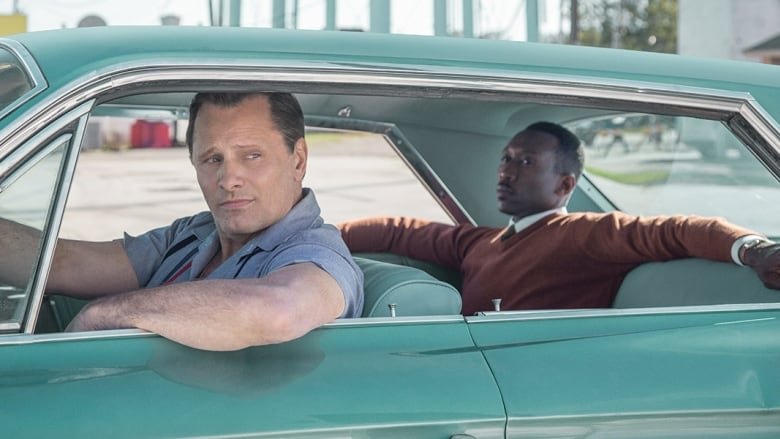
Viggo Mortensen and Mahershala Ali are Driving Dr Shirley in Green Book

Director: Peter Farrelly

Cast: Viggo Mortensen (Frank “Tony Lip” Vallelonga), Mahershala Ali (Don Shirley), Linda Cardellini (Dolores Vallelonga), Dimitar Marinov (Oleg), Mike Hatton (George), Iqbal Theba (Amit), Sebastian Maniscalco (Johnny Venere)

So here we are with a film that might as well be called Driving Dr Shirley. A gentle, ambling, Sunday-afternoon piece of film-making with a rudimentary message, a simplistic world-view and two very good performances at its heart doing all the lifting. Twenty years ago this would have swept the Oscars. As it is it had to settle for just three, including Best Picture, an award that already feels like a triumph of comfortable mediocrity, especially considering Spike Lee’s striking BlacKkKlansman takes such a profound and challenging view of the same issues.

Set in 1962, Green Book follows the “true-life” (heavily disputed by Shirley’s family) friendship between virtuoso classical pianist Don Shirley (Mahershala Ali) and the Italian American Copocabana bouncer Frank “Tony Lip” Vallelonga (Viggo Mortensen) he hires to be his driver for a tour around the deeply racist Deep South states. Can two such different people, over the course of a road trip, find they have more in common they think? You betcha.

Green Book is practically the definition of unchallenging viewing. It tells a lovely, gentle story about two lovely people who, while dealing with the problems of racism in 1960s America, basically have a lovely time bar a few scraps. The film coasts through with a Edward Hopperish nostalgia-tinged views of 60s America peppered with a dash of racist unpleasantness from the people they meet along the way. All this is told with an anecdotal casualness – you can totally tell that the film was inspired by Tony Lip’s son wanting to turn his Dad’s old stories into a film.

And he creates a film where Tony Lip is the hero, and the world of the racist South only truly comes into focus through this white man witnessing the prejudice his black friend must endure (with dignity). While it’s good to have an anti-racist film – however much this film largely focuses on the genteel, country club racism of the upper classes and never dares to go anywhere near the lynch mobs and murders of the Deep South – this is a film that never dives deep with anything and in the end wraps up the instinctive racism and suspicion of Tony’s family in a neat bow and a family dinner with the whole cast. To this film, progress is the name of the game and racism a problem that we are well on the way to solving (again the contrast between this and Spike Lee’s work is really, really striking).

Since the whole film is told from the perspective of Tony – and since the film makers never bothered to consult with Shirley’s family at all, basing all their research on only one side of the story – we never get a real feeling of knowing exactly how Don Shirley might have felt about the attitudes he dealt with, or the reasons behind why he chose to undertake a tour of the Deep South to deal with them, or what he hoped to gain from it. In what should be his own story, he’s a supporting character.

Worse than this, it’s Don who largely seems to need to learn lessons. A dignifed, rarified, dandyish, upper-middle-class near-snob, it’s Don who the film suggest doesn’t understand black culture. It falls to Tony to teach him about everything from black culture: Don’s never heard of Aretha Franklin or Little Richard, never eaten fried chicken, and is deeply uncomfortable around any other black person he meets (unlike Tony’s easy rapport with his fellow drivers, all black). There is a fascinating film to be made here about a man who was at multiple different junctions of minorities – an upper-class black man out of touch with his fellows, a gay man in 1960s America, a black man in the Deep South – but the film doesn’t want to tell that story. I’m also going to leave it out there that only very short shrift is given to black culture (defined by 3-4 things) or Don’s argument that not all black people ipso-facto should like the same things.

Tony on the other hand doesn’t really need to learn anything. An opening scene has him uncomfortably throwing away two glasses used by black-handymen working in his home. But this is literally the last racist action or thought he has in the film – and seems like something that comes completely out of left field. He has no objection to working for Shirley, gets on fine with black people, reacts with increasing anger to racially tinged threats and insults etc. I can understand a son writing a script about his father not wanting to show anything unsympathetic, but the glass scene clumsily sets up an obstacle in Tony’s character that never needs to be overcome.

Instead Tony’s real problems with Shirley are based around class. He thinks he’s a snob. As soon as Shirley lightens up a bit, Tony treats him fine. He even happily accepts his homosexuality and playfully accepts some tutoring to improve his gentility. Tony is an overwhelming force for good who rarely says or does anything remotely unsympathetic.

Farrelly’s film is simple and forgettable in the extreme, but it’s enjoyable enough and passes the time. This is largely because of the two leads. Mortensen’s performance skirts around parody but has such larger than life joie de vivre you hardly mind. He’s very funny and also rather endearing and utterly convincing. Ali mixes in some genuine emotion and loneliness in amongst the more obvious class-based imperiousness. It’s enough that you wish we had got to see that slightly more interesting story under the surface. Green Book is utterly unchallenging and totally gentle. Nothing wrong with that, but it will fade from your memory as soon as the credits roll. Except with its bizarre Best Picture win it’s now a permanent piece of film history.

Erin Brockovich (2000)

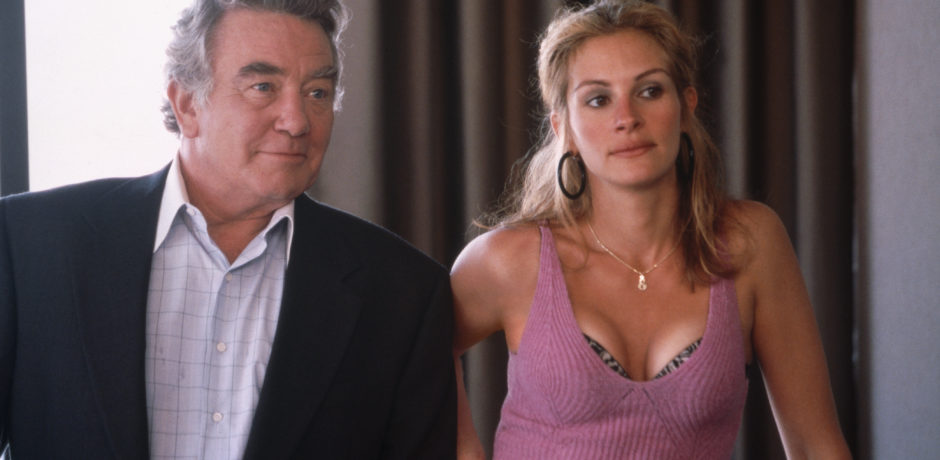
Albert Finney and Julia Roberts battle for justice in the caperish Erin Brockovich

Director: Steven Soderbergh

Cast: Julia Roberts (Erin Brockovich), Albert Finney (Edward L Masry), Aaron Eckhart (George), Marg Helgenberger (Donna Jensen), Tracey Walter (Charles Embry), Peter Coyote (Kurt Potter), Cherry Jones (Pamela Duncan), Scarlett Pomers (Shanna Jensen), Conchata Ferrell (Brenda), Michael Harney (Pete Jensen)

When Steven Soderbergh was being celebrated as the Great White Hope of arty American movie making back in the late 80s, it would probably have amazed his fans if you’d told them that 10 years later he would be directing a Julia Roberts star vehicle. But that’s what he pulled off to great effect in Erin Brockovich

Telling the true story of Erin Brockovich (Julia Roberts), the film follows her life from 1993 when she is struggling to make ends meet while bringing up three small children. After losing a court case – largely due to her brassy foul-mouthedness – she pressures her lawyer Ed Masry (Albert Finney) to give her a clerical job at his law firm. There she finds herself engaged with a simple real estate case involving PG&E, a major gas and electric company. Discovering the company has been polluting the water of the town of Hinkley in California – and left many residents with crippling health problems – Brockovich works to uncover the truth and to gets Masry to agree to build a legal case. She also finds her mouthy down-to-earthness allows her to connect with the people of Hinkley, and she soon becomes determined to get them justice.

The big thing that Erin Brockovich was about when it was released was Julia Roberts. In 2000, it was hard for heads not to be turned by seeing America’s Sweetheart wearing clothing so revealing and provocative it made her Pretty Woman character look reserved. And she swears! Frequently! The film was a triumph for Roberts, turning her from a romantic comedy queen into a serious actress. Roberts won every single Best Actress award going, up to and including the Oscar. And Roberts is very good indeed in the role. Few films have used her effervescence and warmth as a performer so well. You can’t help but side with Julia Roberts when she is firing on all cylinders, no matter what the situation – whether she is a brassy, chippy working mother, a Hollywood actress or a New York City prostitute, you find yourself on her side. 

But, looking back at the film now, this role essentially plays to all of Robert’s strengths. While it looks on the surface like a radical departure for Roberts, the film is basically very much in her wheelhouse. In fact, the whole film is almost a writ-large version of that shop scene in Pretty Woman (still one of the best scenes of modern cinema) stretched over the course of a whole movie. Julia Roberts is treated badly by snobby people, she doesn’t let it get her down, and then she returns with a triumphant flourish that puts the snobs in their place. 

That’s the whole game from Roberts: this is very much the type of performance she gave in Pretty Woman, Notting Hill and My Best Friend’s Wedding repackaged and given a novel appearance by being placed in a drama rather than a comedy. But all the little acting touches that would be familiar to you from those movies are there. There is nothing wrong with any of this, but the film in fact reinforces rather than refutes the idea that Julia Roberts (like Cary Grant) is largely a personality actor. She has a very skilful and impressive collection of acting touches, but they are pretty consistently the same across films. She performs with brilliant, luminous presence here – and commits fully to the part – but it’s more like the ultimate expression of the roles she played in the 1990s. It’s not a surprise looking back that she’s not had a hit like it since.

The rest of the film is an enjoyable mix of comedy and touches of tragic sadness. Soderbergh packages the film as a very safe entertainment, and its’ entertaining. The real Erin Brockovich claims the film is 98% accurate to what happened to her – which perhaps just makes you think that the clichés of film hew closer to real life than you might expect. Soderbergh doesn’t really have much to say here beyond big corporations and snobbery being bad and to never judge books by their cover. But it doesn’t really matter as the whole thing is presented with a confident, brassy buzz as if it is channelling Brockovich straight into celluloid.

It works all the time because you care about Erin, and you enjoy her company. It touches on some issues around sexism in the work place – although Erin is looked down as much for her working class roots as her sex – but there are elements there showing she is clearly judged by her appearance, and even the big firm lawyer brought in help fund the case can’t resist saying when he sees her “I see what you mean about a secret weapon”. Not that Erin herself isn’t ashamed to use her assets – when Ed asks how she can get people to allow her access to such confidential papers, she deadpans “they’re called boobs, Ed”.

That gives you an idea of the general comedic tone of the movie. It’s matched with a fairly predictable domestic plot-line. I suspect Soderbergh was probably making a bit of a point by turning Aaron Eckhart’s (very good in a nothing role) gentle biker, next-door neighbour, childcare provider and boyfriend into the sort of pleading “Honey please come home for dinner” non-entity that the woman often plays in films like this while her husband crusades. The film does manage to mine a bit of quiet sexual agenda from its otherwise fairly bubbly surface. It also draws attention to the way the film basically sets up Erin’s primary romantic relationship being not with a boyfriend, but with herself as she discovers the sort of person she has the potential to be.

There’s that Pretty Woman parallel again. The film is basically a dreamy re-invention saga, presented with a cool flourish. Roberts is excellent in a role that has become a calling card. She’s also got quite the double act with Albert Finney, who is brilliant as the put-upon, slightly haggard, slightly twinkly Masry who finds his own passion for justice reignited. Finney tends to get overlooked in this film, but he is superb and gives the best pure performance in the film. Soderbergh directs with a professional glossiness, and supplies plenty of heart-tugging victims (Helgenberger is very good as the main victim we see) mixed with punch-in-the-air, she’s proving herself better than them moments from Julia Roberts. It’s a very fun film, and genuinely entertaining. But like Roberts’ performance, it’s presenting old tricks in a new way, not reinventing the show.

Manchester By the Sea (2016)

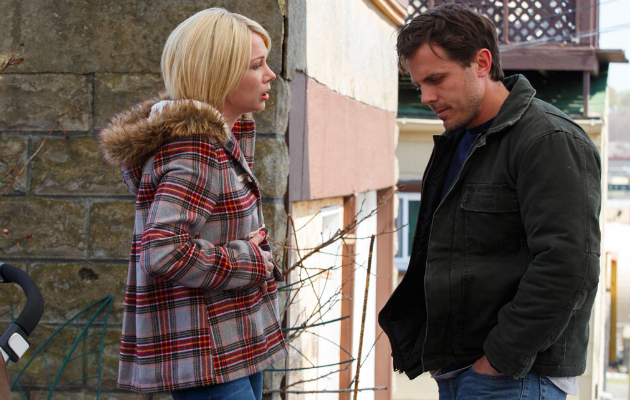
Michelle Williams and Casey Affleck deal with terrible burdens in Manchester By the Sea

Director: Kenneth Lonergan

Cast: Casey Affleck (Lee Chandler), Lucas Hedges (Patrick Chandler), Michelle Williams (Randi), Kyle Chandler (Joe Chandler), Gretchen Mol (Elisa Chandler), CJ Wilson (George), Tate Donovan (Hockey coach), Kara Hayward (Silvie), Anna Baryshnikov (Sandy), Heather Burns (Jill), Matthew Broderick (Jeffrey)

There are many films that front and centre the catharsis of overcoming grief. You know the sort of thing: the feel-good story of someone dealing with the impact of crushing events to emerge renewed and with a certain level of acceptance for the hand that life has dealt them. It’s rare to have a film that takes a very different approach – for it to tackle grief and the impact it has as a never-ending burden on your life, like a companion that will stay with you forever but which you must accept will colour every moment for the rest of your life.

Lee Chandler (Casey Affleck) is a quiet, inexpressive handyman in Boston who seems to be barely keeping under control a temper that explodes in the odd unprovoked barfight. Content to let his life drift away in a dead-end, poorly paid, job, Lee is summoned back to his family’s home in Manchester by the Sea, a coastal town in Massachusetts, after the death of his brother Joe (Kyle Chandler) from a heart condition. Much to his surprise, he discovers that Joe has named him as the guardian of Joe’s teenage son Patrick (Lucas Hedges). But Lee has no intention of remaining in this forced parental role – or of staying in Manchester by the Sea, his former home until he suffered an unbearably tragic loss for which he blames himself.

Manchester by the Sea seems ripe for setting up as a conventional tale of grief. All the ingredients are there: the man who is thrown together with a young teenager, the terrible tragic background event that he can never forget, the bottled up emotions that seem to be crying out for a big “cathartic” moment where all those emotions can be let out, a possible father-son relationship developing that can lead to Lee re-engaging fully with the world… It’s a testament the film’s courage that it avoids nearly all of these completely. Instead it offers a picture of life’s tragedy that feels human, studied, earned and above all real.

For starters, Lee is consumed with grief – and is unable to move on from it. This becomes much easier for the viewer to understand once we are introduced to the reason for his tragic mood halfway through – although hints have been dropped in flashbacks that are brilliantly woven (seemingly at random, but in fact with great thought and planning) throughout the film, where he has a wife and three young children. Saying that, the horror of what actually happened – and the gut wrenching sense of personal responsibility that Lee feels – are truly chilling. Is it any wonder with all of this that Lee can’t or won’t (or both) allow himself to move on?  That he clearly believes grief is his “sentence” for his “crime”, which has so shaped his entire life? No it really isn’t.

Lonergan’s film (and his brilliant script, one of the sharpest, tenderest and most humane modern film scripts you will read, with all the depth of a fabulous novel) explores wonderfully the contours of this human situation. There are no easy answers, no real relief and no simple emotional release. Instead this film shows that grief and guilt – certainly on this scale – never go away, that although you allow yourself moments of happiness, the shadow of the past never really leaves.

This makes the story sound incredibly bleak, when in fact it really isn’t. Among the many triumphs of Lonergan’s film is how funny this is. This humour is not always black (though it is tinged in places) but comes from Lonergan’s Mike Leigh or Alan Bennettish ability to neatly observe some of the absurdities of human interaction and everyday conversation. He understands that the mundanity of the everyday can carry huge emotional and comedic force for people, because it stems from situations we can all (to certain degrees) experience and understand. It’s those moments of recognition as Lee and Patrick struggle to get on, or when Lee is brought low by sudden memories that really speak to the viewer, which make this such a profound and often engaging viewing experience. Not to mention that Lee’s often blunt plain speaking frequently raises a chuckle, not least due to Patrick’s often exasperated plea as to why he can’t be “normal”.

But then Lee isn’t normal – he’s carefully suppressed his inner feelings as a protection measure to stop him from exploding in self-destructive guilt. It’s a performance from Casey Affleck that might just be one for the ages: a surly, buttoned-down man of low-key aggression and impatience which covers a deep and abiding sense of guilt and shame that he can’t seem to put behind him. He’s superb, and the performance is all the more admirable for the bravery of how Affleck does not fall back on actorly tricks and emoting. Instead his performance throbs with unspoken pain.

Affleck is one of several superb performances. Lucas Hedges is a revelation as a son who can’t articulate his feelings about his father’s death and his resentment and pain around it. Hedges and Affleck spark off each other with great effect, with scenes that alternate between hilarity and raw pain. Michelle Williams is also sublime in a carefully underused part as Lee’s ex-wife. Williams shares one particular beautiful scene with Affleck – one tinged with fabulous notes of sadness and regret – that is nearly worth the price of admission alone. But no one puts a foot wrong here.

Lonergan’s film is a beautiful, heartfelt, funny and intensely moving piece of cinema. Beautifully filmed, with a sublime score (part classics, part new compositions by Lesley Barber) it never lies to the audience, never sentimentalises, but leaves you moved and enthralled. It’s so rare to see a film that feels so very trueto the difficulties and complexities of real life. A great film.