Category: Family drama

Little Women (2019)

March Sisters: Assemble! For Greta Gerwig’s superlative adaptation of Little Women

Director: Greta Gerwig

Cast: Saoirse Ronan (Jo March), Emma Watson (Meg March), Florence Pugh (Amy March), Eliza Scanlen (Beth March), Laura Dern (Marmee March), Timothée Chalamet (Laurie), Meryl Streep (Aunt March), Tracy Letts (Mr Dashwood), Bob Odenkirk (Father March), James Norton (John Brooke), Louis Garrel (Professor Friedrich Bhaer), Chris Cooper (Mr Laurence)

Spoilers: Such as they are but discussion of the film’s ending (or rather Greta Gerwig’s interpretation of it) can be found herein…

There are few novels as well beloved as Louisa May Alcott’s Little Women. So much so – and so successful have been the numerable adaptations, not least Gillian Armstrong’s 1994 version – that it’s hard to see what a new adaptation could bring to the story that hasn’t been covered before. A new window on the story is triumphantly found though in Greta Gerwig’s fresh and vibrant adaptation, blessed with some terrific performances, and telling its own very distinctive version of the story.

Gerwig’s version crucially starts off in the sisters’ adult lives: Jo (Saoirse Ronan) in New York struggling to make it as a writer, while Meg (Emma Watson) nurses the ill Beth (Eliza Scanlon) back home with Marmee (Laura Dern), and Amy (Florence Pugh) encounters their childhood friend Laurie (Timothée Chalamet) in Paris. This is intercut with the story of their growing up in Massachusetts, with the past story line eventually catching up with the present day. 

If that sounds like it should make the story hard to follow, don’t worry – this is astonishingly confident work from Gerwig, wonderfully directed with zest, fire and imagination (making her exclusion from the Best Director list at the Oscars even more inexplicable – chalk that up I guess to sexism against pictures about “girls” and the fact it’s not as overtly flashy as the rest of this year’s nominees). This takes a familiar book, and fires it up with all the energy of independent, modern cinema, creating something that feels hugely fresh and dynamic. The cross cutting between the two timelines work beautifully – not only is it always perfectly clear, but it also makes for some wonderful contrasts between events in the past and present. None less than the recovery of Beth from TB being followed (with an almost shot-by-shot echo in its filming) by the reactions to Beth’s death. Inventions like this add even greater depth and meaning to the moments and hammer home some terrific emotional high points. 

Gerwig’s style throughout the film invests the story with a great energy, particularly in creating the warm bohemian attitude of the March family. This really feels like a family – conversations between them are fast, people talk relaxedly over each other, the chemistry is completely real, and the camera captures in its movement the warmth and energy of these characters who are completely comfortable in each other’s presence. It’s no surprise that Laurie is taken so quickly with this family, or wants to be part of it. Gerwig invests the family with a dynamic, excited sense of freedom and urgency. Helped by the warm glow that the childhood sections of the film are shot with, these scenes hum with a glorious sense of familial warmth and excitement. 

The camera often moves with careful, but perfectly planned, movement through scenes, mixed in with moments of fast movement – following Jo through streets, or the playful exuberance of Jo and Laurie’s first meeting (and dance) at a society ball. It’s a vibe that carries across to the performances, anchored by Saoirse Ronan’s fabulous performance as Jo. Fervent, intelligent, idealistic but also stubborn, prickly and difficult, Ronan’s Jo carries large chunks of the film, with the character skilfully mixed in with elements of Louisa May Alcott. Ronan most impressively suggests a warmth and familial love for Laurie at all times, that never (on her side) tips into a real romantic feeling. She also has superb chemistry in any case with the excellent Timothée Chalamet, who is just about perfect as a dreamy, but quietly conventional in his way, Laurie.

Gerwig’s primary rejig – and a reflection of the new structure she is chosen – is to allow more screen time to Amy, usually the least popular of the four sisters. She’s also helped by a sensational performance by the Oscar-nominated Florence Pugh as Amy, who not only plays a character perfectly from her mid-teens to her early twenties, but also invests the character with huge amounts of light and shade. The film gives a great deal of time to Amy’s time in Paris – her frustration with living in Jo’s shadow, her longing for her own artistic career (and recognition of her conventional talent – brilliantly established by a wordless glance Pugh gives an impressionist painting compared to her own literal effort) and her own romantic feelings and dreams. Cross cutting this with her past actions – her more temperamental and less sympathetic moments (burning Jo’s book!) that have pained generations – gives the audience far more sympathy and understanding for her. Pugh is also pretty much flawless in the film.

There are a host of superb performances though, with Watson capturing the duller sense of conventional duty in Meg, but spicing it with a sad regret for chances lost; Laura Dern is wonderfully warm as Marmee, but mixes in a loneliness and isolation below the surface; Chris Cooper and Meryl Streep sparkle in cameos. There is barely a false step in the case.

All the action eventually boils towards the ending – and Gerwig’s bravest and most unconventional decisions, in subtly adjusting the final conclusion of the story. At first it seems that the cross cutting of the story has short changed heavily the Bhaer-Jo relationship (Bhaer appears only in the first half an hour of the film and the end), as it cannot lean too heavily on romance when many in the audience will still be expecting a Jo-Laurie match up. 

But Gerwig actually uses this as a skilful deconstruction of the novel. Always feeling that Alcott desired Jo to be a single author – but inserted the marriage to Bhaer at the end to help sell the book – Gerwig effectively has Jo do the same thing. At a crucial moment in the final scenes, we cut to Jo negotiating with her publisher (a droll cameo by Tracey Letts), who insists on a happy ending. Cue a “movie style” chase to intercept a departing Bhaer (shot with the golden hue of the past, while Jo’s meeting with the publisher has the colder colours of the present). Our final shot shows Jo watching her book being printed, cross cut with a golden hued vision of “Jo’s” school with husband in tow. 

It’s a genius little touch, as it’s subtle enough to allow viewers to take the happy ending as it appears in the surface, but smart and clever enough to make the movie unique and different from the other versions (and that ending from the 1994 version is hard to top!). It may undermine the final relationship – and offend those who like the idea of Jo deciding she wants something different than she at first thought – but in its freshness it can’t be challenged. It also makes for a film from Gerwig that is both fresh and exciting and also bracingly and thrillingly in love with Alcott and her work.

Jojo Rabbit (2019)

Taika Waititi directs and is an imaginary Hitler in his coming-of-age/Nazi Germany satire Jojo Rabbit

Director: Taika Waititi

Cast: Roman Griffin Davis (Johannes “Jojo Rabbit” Betzler), Thomasin McKenzie (Elsa Korr), Scarlett Johansson (Rosie Betzler), Taika Waititi (Adolf Hitler), Sam Rockwell (Captain Klenzendorf), Rebel Wilson (Fraulain Rahm), Alfie Allen (Lt Finkel), Stephen Merchant (Deertz), Archie Yates (Yorki)

A comedy set in Nazi Germany? Well if there is one thing you need to get right, it’s the tone. Taika Waititi’s comedy about a boy with an imaginary friend who just happens to be a version of Adolf Hitler more or less does so – although I’d argue it’s less a comedy and more of a terrifying condemnation of the horrific powers of indoctrination. But that sells a lot less well in trailers doesn’t it?

Set in late 1944, the boy in question is Johannes (Roman Griffin Davis – a revelatory performance) a ten-year old who wants to be a passionate Nazi but is undone by his own underlying sweetness. Not that it stops him believing everything he’s told by the regime and its theories around Jews, re-enforced by his imaginary best friend, a childishly stroppy version of Adolf Hitler (played by Waititi himself). Nicknamed Jojo Rabbit after his failure to kill a rabbit on a Hitler Youth indoctrination camp, then later blowing himself with a grenade meaning he can no longer qualify for military service, Jojo sees his dreams of becoming the ultimate Aryan fading away. Things become even more conflicted when he discovers his secretly anti-Nazi mother Rosie (Scarlett Johansson) is hiding a teenage Jewish girl Elsa (Thomasin McKenzie) in the walls of his late sister’s bedroom.

Waititi’s film returns to his affectionate roots of coming-of-age stories but in an entirely different setting – here the child must grow up by learning to reject the vile ideologies that have been hammered into him by the system. Waititi shoots the entire film from the perspective of the child’s view of the world, meaning the horrors of the war are kept largely at a distance from us (until a sudden and terrible event brings them overwhelmingly into frame). The Nazi world around Jojo looks like some glorious Enid Blyton summer, the colour of which only gradually disappears from the film as event proceed. It’s a neat visual way of capturing the child’s innocence.

This also means many of the characters are seen from Jojo’s perspective. Most obviously Adolf Hitler (the imaginary one), played with gleeful comic gusto by Waititi, is far from the actual dictator but is a sort of ten-year-old’s idea of what he might be like, childish, oddly innocent in places, prone to strops – but also has enough darkness in him (which emerges more and more as the film goes on) to show that he is still part of the hateful ideology the real Hitler promoted. Similarly, Jojo’s first impression of Elsa is shot and framed like some sort of creepy horror film – matching the ideas that have been indoctrinated into him by the regime that the Jews are a near-Satanic threat.

That indoctrination is a big part of the film’s primary themes. An early sequence at a Hitler Youth camp is less funny – even if it does have moments of brash comedy and some good jokes – more horrifying for the mantra of violence, race hate and slaughter that the regime is preaching almost every second that its representatives appear on screen. It’s actually chilling seeing this group of impressionable kids succumbing so completely to the excitement of this relentless onslaught of propaganda. The passion that the Nazis inspire is wonderfully caught by Waititi in the credits, with Leni Reifenstahl footage beautifully recut to the Beatles singing in German – it’s hard to miss the parallels. (The film makes some neat use of modern music, with David Bowie also popping up).

Jojo however is still a sweet, kind, generous boy under the surface – however much he has swallowed the constant message from his government that he should aspire to being a cold eyed killer. Waititi’s message is that there is still hope in the roots of next generation, however much the current generation does it’s best to mess that up. It’s something that his mother – exquisitely played by an Oscar-nominated Scarlett Johansson with a wonderful sense of playfulness hiding an intense sadness – clings to desperately, knowing the sweet boy she loves is still largely there, however twisted he is by a cruel ideology.

It’s the relationship with Elsa that helps bring that out, with Thomasin McKenzie wonderful as an initially hostile young girl, determined to never be a victim, who softens and thaws as she senses the kindness in this boy. Her hiding is all part of Rosie’s own defiance of the regime and its oppression, the horrors of which – from random searches to executions – slowly begin to creep into the film. 

If there is a problem with the film, it is that the darker elements of this film – and there are many – often play a little awkwardly against the more comedic and even farcical elements. Waititi as an actor gets the tone right – but others, particularly Rebel Wilson as an oppressive Nazi – head too far into unfunny, tonally flat farce. Sam Rockwell does a decent job as a German army officer, even if his obvious bitterness for the war effort and contempt for Nazism makes him an unlikely candidate to be running an indoctrination camp, but even he veers sometimes too far onto the side of flat farce. Other than Waititi, only Stephen Merchant as an officious Nazi official – including a running joke of continuous Heil Hitler greetings – gets the balance right between comedy and darkness.

It’s a balance the film doesn’t always make very successfully – but it’s balanced by the warmth that it feels for Jojo, the excellence of Griffin Davis and McKenzie’s performances, and the moments of genuine shock and trauma that surprise the viewers and head the film openly into very darker territory. Less a comedy and more a plea to allow children to be children, not victims of the views and desires of adults, it’s a thought provoking film.

The Greatest Showman (2017)

Hugh Jackman excels in The Greatest Showman, like a Broadway show bought straight to film

Director: Michael Gracey

Cast: Hugh Jackman (PT Barnum), Michelle Williams (Charity Hallett-Barnum), Zac Efron (Philip Carlyle), Rebecca Ferguson (Jenny Lind), Zendaya (Anne Wheeler), Keala Settle (Lettie Lutz), Yahya Abdul-Mateen II (WD Wheeler), Natasha Liu Bordizzo (Deng Yan), Paul Sparks (James Gordon Bennett), Sam Humphrey (Charles Stratton)

In early 2018, the whole world seemed to go crazy for The Greatest Showman. A big old-fashioned film musical that wouldn’t look out of place with Gene Kelly in the lead, people went to the cinema again and again to see this escapist song-and-dance epic. Based loosely on the life of PT Barnum (Hugh Jackman), covering his marriage to childhood love Charity (Michelle Williams) and the creation of his Museum of Curiosities (funded through some chicanery with banks), he staffs the museum with “freaks” whom he encourages to embrace their nature and entertain the crowds. The “circus” is a huge success, but will Barnum be seduced by his desire for greater fame and acceptance in the cultural high circles that have no time for his mass entertainment? And how will his fascination with opera singer Jennie Lind (Rebecca Ferguson) affect his marriage?

If you get the idea from that plot summary that this is rather safe and unchallenging plot-wise, you would be right. Structurally this doesn’t offer anything more than hundreds of musicals before it – a hero aims for the stars, loses his roots on the way, only to triumphantly rediscover them and remember why he got into this business in the first place. Yup that’s your classic Hollywood plot here. And it doesn’t matter a damn.

Because The Greatest Showman, like the shows Barnum offered the crowds, knows exactly what it is: an old-fashioned Hollywood musical, shot like a classic piece of Broadway spectacle, crammed to the gills with hugely exciting and dynamic musicals performers ripping through a series of impressive songs and some stunningly choreographed numbers. Who gives a damn if you’ve seen the story before, when it’s so well done, the actors so engaging and the highlights on the way to brilliant to watch. Come to this with your mind set for the West End, and you’ll love it. Expect to see La La Land and you are in for a disappointment (or a pleasant surprise!)

Gracey’s film is unashamedly old-fashioned, and shot with a confident stillness that puts the actors, dancers and singers front-and-centre rather than the flourishes of a director. In contrast to some over-directed musical numbers, Gracey is happy to place the camera so we can see all the numbers perfectly. And why wouldn’t he when all the actors can dance as well as this? I want to see every step of the intricate choreography (that would have thrilled Kelly) from Jackman and Efron in The Other Side. I want to see every step of the thrilling group dance number From Now On. I want to marvel at Efron and Zendaya soaring through the skies on trapeze ropes in Rewrite the Stars.

It’s a musical that chose its cast carefully, requiring that they should all be capable of the sort of feats of physical and musical perfection that we all enjoy watching on Strictly every week. In all this, the snubs of the critics seems neither here nor there – hilariously the film always commentates on its own terrible reviews in advance (!) in the character of James Gordon Bennett, a humourless snobby theatre reviewer – it’s a film that is shot in the arm of pure entertainment. 

I mean you’d need to have a heart of pure cold not to feel some serious emotions during Jackman and Williams’ beautiful rooftop ballet during A Million Dreams. What I particularly liked about this was its unabashed, carefully designed artificiality – like a blast of 1950s Minnelli musicals, this uses painted backdrops and studio locations to beautiful effect to create a larger-than-life, theatrical world of hyper reality. It really helps you to get even more swept up by it all.

But then you also get swept up from having an actor as charismatic as Hugh Jackman in the lead. Oozing charm and grace from every pore, Jackman is riveting in the role, his grin a mile wide, his skills as a singer and (most especially) a dancer shown off to stunning effect. He turns moments that could have rogueish qualities into sweetness, he is impossible not to root for. Sure as an actor he’s not stretched with the conventional arc Barnum has, but does that matter when he is giving this all he has. It’s a hugely, overwhelmingly enjoyable performance of pure charisma that I can’t imagine any other actor in Hollywood having the chutzpah to pull off. It’s so skilled that he never overwhelms the film but you could move the whole performance into a 1,000-seater theatre and it would still work perfectly.

The rest of the cast all lift their considerable game to match the commitment and expertise of the lead. Williams showcases her own musical talents, while Efron and Zendaya have a truly affecting romance at the heart of the film (while also being considerably compelling musical performers). Rebecca Ferguson has the least rewarding role (and is also dubbed for the high soprano singing), but does a decent job as someone you could imagine turning Barnum’s head. The rest of the cast playing assorted circus performers create a truly family atmosphere, with Keala Settle and Sam Humphrey particularly fine.

You could argue that the film – with its message of acceptance and lack of judgement – flies a little bit in the face of the real Barnum (“there’s a sucker born every minute”) who probably was partly exploiting his acts for cash. The treatment of Jennie Lind as an increasingly scheming would-be-seductress is a sad slur on a woman who gave most of her earnings to charity. In fact you wish allthe names had been changed to distance us from reality.

But the film gets away with it because it is basically a heartfelt and genuine piece of work that, most of all, like a huge Broadway musical just wants to entertain the audience. And on that score it works – you’ll get invested in the characters and their story and you’ll find yourself humming the songs afterwards and trying (failing) to dance those steps. Go into it in the right mindset, and you’ll find a delight.

Boyhood (2014)

Ellar Coltrane grows up before our eyes in Richard Linklater’s 12-years-in-the-making Boyhood

Director: Richard Linklater

Cast: Ellar Coltrane (Mason Evans Jr), Patricia Arquette (Olivia), Ethan Hawke (Mason Evans), Lorelei Linklater (Samantha Evans), Libby Villari (Catherine), Marco Perella (Bill Welbrock), Brad Hawkins (Jim), Zoe Graham (Sheena)

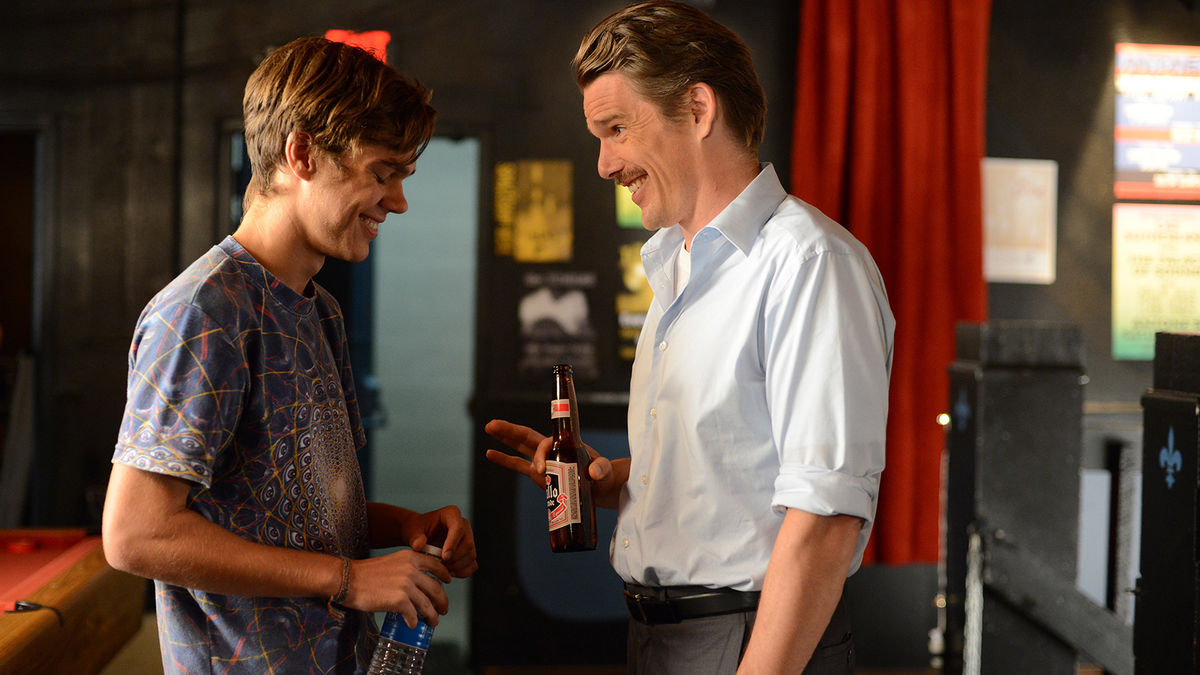
If there is one thing we can all relate to, it’s the trials and tribulations of growing up, that shift from being a child to an adult. It’s the subject of Richard Linklater’s film Boyhood, which follows the growing up of Mason Evans (Ellar Coltrane) from the age of 6 to 18 and his relationship with his divorced parents Olivia (Patricia Arquette) and Mason (Ethan Hawke) and his sister Samantha (Lorelei Linklater). What is however most striking about Linklater’s film is that it was shot over a staggering period of time, 12 years in fact, meaning that Ellar Coltrane and Lorelei Linklater literally grow up on screen before our eyes.

It makes for an almost unrepeatable power over any other film dealing with the same subject, by letting all the actors naturally grow older over the length of the film. Suddenly it becomes not just a film dealing with an idea, but instead a real life dramatisation of the process of ageing, becoming some sort of emotional scrap-book or album, a type of film version of the trick of making a drawing move by quickly flicking the pages of a notebook. It adds an air of depth and reality to the whole film that gives it a universal strength and appeal. It’s an actual slice of real life, it’s unrepeatable and profoundly well done and immersive.

Linklater was given near creative freedom to shoot the film – with the small yearly budget for shooting the film being squirrelled away into various studio accounts. Linklater creates a film with a lack of actual drama that makes it feel even more like a part of life. There are precious few “narrative points” or dramatic tools in the overall film, with the exception maybe of Olivia’s hard drinking second husband Marco (Bill Welbrock). Instead, the issues that Mason (and Samantha) deal with have a universal relevance. These are the sort of events – the sort of conversations – that any child could have growing up. Far from making the film dull, this serves to increase its power.

Linklater based each year’s filming script on the events and feelings that were going on in the life of Ellar Coltrane at the time (although he had a clear idea of the final scene and shot), which perhaps also helped to draw such a series of deeply felt and real performances from Coltrane. The intimacy of the story also brilliantly makes each scene feel engrossingly real, precisely because everything is grounded in reality and nothing in some sort of overarching film narrative.

It’s a film entirely about capturing the rhythms and beats of real life and Linklater’s style allows moments of spontaneity, of naturalness and reality. Nothing in the film ever feels forced. You could argue that it also leads to a film that is almost restrainingly unambitious – it’s about as grounded as you can get, and barely has a structure as such at all beyond time passing. But that would be to miss the point – and the very fact that the film ignores virtually all the clichés of filmmaking narrative and storytelling is something to be praised than to be criticised. 

The film works so well due to the commitment of all involved, not least Arquette and Hawke as the parents. Arquette won nearly every award going (including the Oscar) as the mother, and her performance is a testament to the film’s strengths. It totally eschews the loud moments of acting, the look-at-me Oscar bait that the role could have had, to instead focus on a quiet, sad dignity – but also warmth and loving regard for her children. There is no studied pretence to the role at all, but instead Arquette seems to play instead the moments of joy, tinged with disappointment at moments and chances lost from early motherhood, that you can imagine everyone feeling. It’s a bravely real performance, stuffed with moments of searing, heartfelt emotional truth.

Hawke is just as good as the father, a man who slowly comes to terms with his own responsibilities and adulthood over the course of the film. Starting as still something of a would-be beatnik and playboy, we see him slowly – especially after a second marriage – grow up and accept the role of an adult and a parent, while still clinging to the idea of dispensing fatherly/brotherly wisdom to his son.

If Linklater’s film does have a flaw it’s on this focus of father-son. There really was nothing to stop this from being Childhood rather than Boyhood, but instead it’s the story of the son (and with a particular stress on his bond with his absent father) that is at the heart of the film. It’s perhaps reflecting the angle that Linklater himself bought to the story, but its shame the film doesn’t try and be more even handed by allowing us to get a greater sense of how time and childhood affected both Mason and Samantha, rather than filtering Samantha’s experience through Mason’s perspective. It also means that Mason’s relationship with his mother is downplayed in favour of the bond between father and son, a general preoccupation with male relationships that runs through the film.

It’s a minor flaw I suppose, more of a missed opportunity – and less tasteless than a clumsy sequence where Oliva inadvertently motivates a Mexican immigrant to change his life, something he is profoundly grateful for years later but which she seems uncomfortably unaware of – but then this is a film that gets so much else right. Linklater’s live-action time-lapse film is a work of art that is probably unrepeatable, and is so low-key and normal that it carries a force and relevance few other films can.

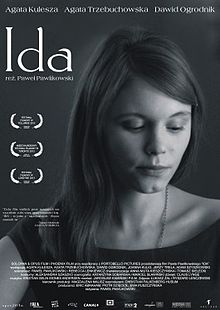
Ida (2014)

Agata Kulesza as a young Nun facing a crisis in engrossing Polish film Ida

Director: Paweł Pawlikowski

Cast: Agata Kulesza (Wanda Gruz), Agata Trzebuchowska (Anna/Ida Lebenstein), Dawid Ogrodnik (Lis), Adam Szyszkowski (Feliks Skiba), Jerzy Trela (Szymon Skiba), Joanna Kulig (Singer)

We are lucky. Growing up in a Western country, free of conquest and suppression, we don’t have the past weighing on every breath and step of our lives. But travel to other parts of Europe and you will find that the past is as unspokenly present in every moment as the present is, and that the two practically coexist side-by-side. Poland in the 1960s was such a country – a land so weighed down by the horrors it had seen throughout the century that there is no need for them to be given a name.

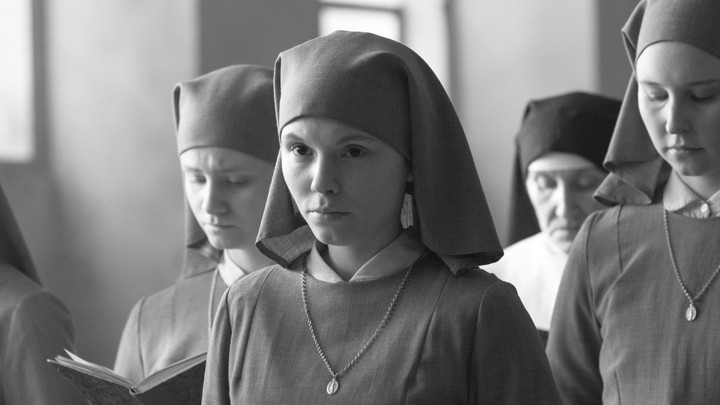
Anna (Agata Trzebuchowska) is a young novice nun told by her prioress that before she can take her vows she must meet with her aunt, Wanda Gruz (Agata Kulesza), a last surviving relative she had never even heard of until that day. Visiting Wanda, Anna is shocked to discover that Anna’s real name is Ida and that she is the daughter of Jewish parents murdered during the Second World War. Wanda, a resistance fighter during the war, later became a feared State Prosecutor but is now a judge struggling with unspoken guilt and succumbing frequently to alcoholism and one-night stands. Together Wanda and Ida travel to try and trace what exactly happened to Ida’s parents – discovering profound truths about themselves and their country as they travel.

Pawlikowski, a Polish director who grew up in London, directs his first Polish language film – and I think it’s fair to say he has produced a small-scale masterpiece here. Shot in beautiful black-and-white – a sublime choice for the chilling weight of the past that hangs over every shot of this film – Pawlikowski’s film is a lean, trim, perfectly weighted 78 minutes that covers more thematic depth and richness than films three times its length. It’s done with a beautifully low-key, quiet power that gives you plenty to richly mull over.

Its genius is capturing the weight of the past and the impact that it has at both a personal and a national level. So traumatic is the past of Poland that words like Holocaust and Stalinism need not be mentioned – over the course of a decade, millions of Poles (many of them Jews) were killed by Nazis, Soviet police and other Poles. This is a country lying deep in a post-traumatic haze, guilt, fear and sorrow the base below many social interactions. Pawlikowski captures all this beautifully, the oppressive gloom of sadness lying across every single frame. 

There is no demand for retribution and apology – and the one moment of guilty confession is beautifully underplayed and affecting for its relative lack of reaction from the witnesses – and the past is not expressed as an evil secret. Rather, people – good and bad – are shown as just people, many of them acting out of fear, or for what they felt was best, or ignorance. There is no easy viciousness and evil in the past, just the sad facts of life. The film’s atmosphere is coated in the horrors of the past, but lives roundly in the present. There are few – if any – dramatic moments of tears, recriminations and accusations. Instead the pressure of the past is met with sad, reflective shame and weary acceptance of the impossibility of going back.

Every shot is carefully chosen to reflect this theme. Pawlikowski frequently shoots Ida and Wanda just off centre of the frame, or even low down in the frame, allowing much of the shot to frequently be filled with the architecture and nature of Poland – much of both, rundown, crumbling, cold and bleak. The old “academy” ratio of 4:3 works perfectly for this look, old-fashioned but also boxed in. Not a single shot is wasted or overlong, and each of them serves a perfect purpose. Pawlikowski uses the structure of the road movie to serve itself as a semi-voyage into the past of Poland, as well as brilliantly allowing for the emotional expansion of its lead characters.

Both these leads are beautifully played by the two leads. Agata Trzebuchowska, a non-actor (now a journalist and film director herself) was plucked from almost nowhere in the Polish film industry to play Ida (she accepted due to her love for Pawlikowski’s film My Summer of Love) and she is perfectly suited to the role, investing Ida with a certainty from the start that slowly adapts and adjusts as she learns more and more about both her own past and her country’s. 

Agata Kulesza is extraordinarily good as Wanda, whose intense feelings of guilt at the many mistakes she feels were made in her past consume every thought, but who presents to the world a bullish confidence and freedom of expression. Her underlying vulnerability is what allows Ida in – and what will fundamentally change her outlook on the world, and both give expression to and dominate her melancholy.

Both these characters are shifted and changed forever by their joint exploration of the seemingly simple facts of their background – and the idea of continuing life in a world after this seems impossible. But Pawlikowski’s film doesn’t seem without hope. There is another generation coming to Poland – represented by a jazz band, led by Lis (Dawid Ogrodnik), a hitchhiker they pick up – and for these, the past seems just that. It’s not an everyday presence that haunts their decisions, or hangs over their life, and for this generation coming “life as usual” seems not a burden but an accepted fact. Is this a good or a bad thing? Maybe both, but it at least shows that that the country has some hope of moving on and forging a future even while the scars of the past remain.

The Theory of Everything (2014)

Felicity Jones and  Eddie Redmayne bring to the screen the life of Stephen Hawking

Director: James Marsh

Cast: Eddie Redmayne (Stephen Hawking), Felicity Jones (Jane Hawking), Charlie Cox (Jonathan Jones), David Thewlis (Dennis Sciama), Simon McBurney (Frank Hawking), Emily Watson (Beryl Wilde), Maxine Peake (Elaine Mason), Harry Lloyd (Brian), Guy Oliver-Watts (George Wilde), Abigail Cruttenden (Isobel Hawking), Christian McKay (Roger Penrose), Enzo Cilenti (Kip Thorne)

If you want a story of a triumph over adversity, there are few where adversity was faced off so successfully and publicly than the life of Stephen Hawking. Diagnosed with motor-neurone disease while still a postgraduate, Hawing defied the diagnosis that gave him little more than a few years to live, to shape a life and career that would have a profound impact on the world and make him probably the most famous scientist alive. Not bad for a man who spent a large part of his life confined to a wheelchair, only able to communicate through a synthesised computer voice.

But his life was not just a story where he was the only character. Many of his accomplishments came about because of the unflagging support of his wife Jane. This film takes as its source the book Jane wrote about their life together. And while it arguably sugar-coats or plays down some of the more uncomfortable or divisive elements of their marriage (a marriage that was eventually to end in divorce and several years where they did not speak), it also serves as a warm tribute to the many years they spent together where their support for each other was total and offered with no agenda or demands.

Here in James Marsh’s inventive and well-made film, which manages to more-or-less transcend its “movie of the week” roots, Hawking and Jane are played by Eddie Redmayne and Felicity Jones in performances that scooped an Oscar and a nomination respectively. Both are deserved, as these are rich, dedicated and empathetic performances, crammed with admiration for their subjects. It all fits perfectly well in Marsh’s moving if (at times) rather conventional film, which he directs with a lack of flash and plenty of heart. 

It’s a film that sometimes avoids delving too deeply into the emotional heartlands of its lead characters, and the frequently messy situations that life throws you into (the end of this relationship comes with a remarkably calm sadness, which contrasts heavily with the furious argument Jane describes in her book). It’s also a film that has a very clear agenda of framing Jane as a near saint in her devotion and patience, and Stephen as a brave soul with a superhuman perseverance and regard for his wife. So the introduction of choir leader Jonathan Jones (played with a sweet charm by Charlie Cox) into their domestic life as a surrogate father to the Hawking children and friend to Jane (very definitely not a lover, the film is eager to make clear) is very much something accepted by both without a hint of doubt or recrimination. Similarly, Hawking’s later divorce of Jane is set in a context of “setting her free” rather than the more (allegedly) definitive break it was in real life.

Real life, you suspect, was messier than this. The film does mine some excellent emotional honesty from Jane’s decision to marry Stephen being, at least partly, based on her belief that this man she loves only has a few years to live. From the start she doesn’t anticipate signing up for a lifetime of providing care and abandoning her own aspirations to support Stephen’s (the film makes no real mention of her own dreams of becoming a translator) – but Jane does so with a decided willingness and sense of duty. Similarly, Stephen does not anticipate a life essentially trapped in a wheelchair – finally speechless – and the film allows beats of frustration from him, alongside the determination to not let these problems prevent him from achieving his potential.

The film revolves around Eddie Redmayne’s performance as Hawking. Needless to say it’s a technical marvel, a stunning accomplishment not only in its physical mastery (especially as it was all shot out of sequence, so in each scene Redmayne needed to carefully map how far the symptoms had progressed) and commitment, but also in its searing emotionality. Hawking’s brightness, his bashful playfulness, his intelligence and sense of cheeky charm are all there – and they’re later married with a pained, just-controlled bitterness mixed with stern mouthed resentment and gutsy determination to deal with the hand he has been given. Redmayne’s performance is a superb capturing of the all-consuming feelings of being betrayed by your own body, of no longer being the master of your own frame and being forced to adjust your plans and expectations to meet the limits nature has put on you.

Felicity Jones is equally good in a superbly heartfelt performance as Jane, a woman who gifts Stephen the determination and will to see past the limits the disease places on him. But it’s also a performance that acknowledges the draining burden of having to support someone this ill, of having to constantly be the strong member of the marriage, the one who must always be as ready to save her husband from choking at dinner as she must be to drop everything and fly across Europe to take life-saving medical decisions about him. Jones’ performance never slips into self-pity, but mines a rich vein of willing sacrifice powered by love.

Marsh’s film is largely unflinching around the everyday miseries and sorrow of the terminally ill and restrictingly disabled. We are confronted in every scene with the limits that Hawking’s body places upon him, from deteriorating handwriting and clumsiness to the loss of all speech and movement. This progression is presented with a detail uncoloured by maudlin sentimentality. Doctors are sympathetic but bluntly clear about the dangers and risks of treatment, each adversity is met with a quiet determination to carry on.

The Theory of Everything is a heart-warming watch – and features two superb performances. The portrait of a marriage that works, for the most part of their lives together, despite all obstacles is inspiring. While the film glosses over well-publicised issues over the end of the relationship – and perhaps downplays the emotional strains on both towards its end – it still succeeds in making a largely unsentimental picture of a genius who overcame all, and the brave woman who gave him the dedication he needed to do it.

Lady Bird (2017)

Saoirse Ronan and Laurie Metcalfe are mother and daughter with more in common than they think in Lady Bird

Director: Greta Gerwig

Cast: Saoirse Ronan (Christine “Lady Bird” McPherson), Laurie Metcalfe (Marion McPherson), Tracy Letts (Larry McPherson), Lucas Hedges (Danny O’Neill), Timothée Chalamet (Kyle Scheible), Beanie Feldstein (Julie Steffans), Lois Smith (Sister Sarah Joan), Stephen McKinley Henderson (Father Leviatch)

In Sacramento, California, in 2002 Christine “Lady Bird” McPherson (Saoirse Ronan) is a self-consciously assured teenager, constantly pushing to define herself as new and original, down to giving herself a new name (“Lady Bird”) and playfully enjoys pushing against the limits of what is acceptable at her Catholic school. She however butts heads with her mother Marion (Laurie Metcalfe), a hard-working nurse, supporting the family as her husband Larry (Tracy Letts) is unemployed and out-of-step skills-wise with the jobs market. Mother and daughter though are strikingly similar people, independent minded but with a streak of loving kindness.

It’s the relationship between these two characters that is the heart of Gerwig’s gently made coming-of-age (of a sort) drama. The key scenes that power the film are both the clashes and moments of fun between these two. There are feuds and angry words – but they often sit-by-side with a loving regard and a shared world perspective. Gerwig gets superb performances from both actors, with Ronan every inch the difficult teenager, full of promise but overwhelming with arrogance and mistakes that constantly hurt those around her. Metcalf is equally good as a woman weighed down with cares, who constantly makes time for others – and therefore finds her daughter’s lapses into selfishness all the more infuriating as they fly in the face of everything she values in life.

The film opens with a fight between these two that just seems to capture the moment. After a long drive to a perspective college, they finish an audiobook of The Grapes of Wrath both overcome with emotion from the stories end. Seconds after it finishes, Lady Bird goes to turn the radio on, her mother asks for a moment of reflection – and we are off from a shared emotional experience into a mother-daughter row. Setting the tone of how many of these will go – and the characters they display in the film – Lady Bird impulsively throws herself out of the car when she feels she is unable to come up with a decent comeback to a point. It’s a plaster cast she will wear for a large part of the film – and an example of the impulsive addiction to terrible decisions that seems to be constantly on the edge of ruining her friendships and chances.

A lot of this material is, to be honest, pretty standard stuff for movies of this genre. And Lady Bird herself is at times a rather irritating and even annoying lead character, one who seems to be constantly hurting people around her with very little regard for their feelings and seems to be continually forgiven regardless. Her treatment of her best friend Julie (a fine performance of endearing sweetness by Beanie Feldstein) sees her drop her and then pick her back up again with a suddenness that feels like it has missed the hurt and pain she has caused.

But then other parts work so well because the script approaches them with a quirky eye for a good joke and a sharp line. There are some very fine jokes among the script, a high point being a PE teacher turned drama director who directs his plays in the exact way he would plan out a football game. Little moments of character observation and behavioural ticks often strike home and frequently raise a smile.

But it also carries across the same observational honesty to less savoury attitudes of being a teenager. The selfishness, the feuding. Lady Bird’s sexual awakening of course happens with a self-obsessed arrogant would-be-poet aiming at a higher plane of intelligence (played with an assured arrogance by Timothée Chalamet). Lady Bird’s striving to constantly to be more or have more than she has always feels very teenager – life can’t just be what she has, she must need or be destined for greater things, or to improve in some way, to make it to the college she wants, to find some deeper meaning, to live a life that expands beyond her horizons and make her stand out.

But, the film suggests, she actually seems destined to become someone more like her mother –decent, kind, gentle, perhaps with a greater artistic calling, but fundamentally a thoughtful person. One early boyfriend – very well played by Lucas Hedges – who is revealed as unsuitable in a way not-at-all surprising when you consider he is the lead actor of the school drama group – is someone she accepts and comforts with a complete emotional openness. Her father’s travails in the job market is something she feels great empathy for. When returning to the company of her friend Julie, she is warm, caring and full of energetic affection.

It makes for a gentle and engaging film – perhaps nothing you haven’t really seen before, but presented with a lot of assurance and freshness by Gerwig, who is a director with an eye for the moving moment (a scene where Tracy Lett’s father sees his son go-up for the same job as him – a job for which the son is more qualified – is unmatched in its sad mix of acceptance and pride) and more than a taste for the eccentric comedy that brings spark to the drama. Powered by two excellent performances by Ronan and Metcalfe, Lady Bird may, like many teenagers, be difficult to like sometimes but has lots of promise.

The Descendants (2011)

George Clooney is a family man dealing with difficulty from The Descendants

Director: Alexander Payne

Cast: George Clooney (Matt King), Shailene Woodley (Alex King), Amara Miller (Scottie King), Nick Krause (Sid), Beau Bridges (Hugh), Judy Greer (Julie Speer), Matthew Lillard (Brian Speer), Robert Forster (Scott), Patricia Hastie (Elizabeth King)

Anyone expecting a straight comedy hasn’t been familiar enough with Alexander Payne’s career. Payne’s movies are triumphant, slightly quirky, explorations of crisis in the lives and emotions of middle-aged, middle-class men. Few directors do it as well, bringing both a lightness of touch and a profound understanding of the tragedy that can underpin ordinary lives. He has an astute understanding of the pain of opportunities lost. And The Descendants is full of these, just as it is full of the hope you can gain from seizing new opportunities in the future.

Matt King (George Clooney) is a Honolulu attorney who is the last trustee representative in his vast family for a site of 25,000 pristine acres on Kauai. With the trust due to end, Matt is under pressure from his family to sell the land for hundreds of millions and gain them all their financial security. In the middle of this, his wife suffers a boat accident that leaves her in an unrecoverable coma. Matt has to rebuild the relationship with his two daughters Alex (Shailene Woodley) and Scottie (Amara Miller) as well as deal with the reveal this his wife was planning to leave him for her lover, a married estate agent Brian Speer (Matthew Lillard).

Payne’s film is heartfelt, low-key and a marvellous showcase for George Clooney who has probably never been better as the grieving and shocked Matt, struggling to come to terms with revelations about his own life that come completely out of the blue. In particular, his own realisation that he has left far too much of his family life to his wife, and his wife has in any case a less than perfect relationship with their two troubled children. Alex (Shailene Woodley) has a history of substance abuse and hell-raising while her sister Scottie (Amara Miller) is using bullying as a way of acting out. King, its clear, has let his connection with his family drift away with his consumption in his work, a character flaw that leaves him with a serious of painful revelations about his own failures.

These revelations are expertly acted by Clooney, who gives the part a rawness and edge beneath his natural charm that becomes deeply involving. He makes Matt both desperate, bewildered and confused as well as kind, decent and forgiving. Payne’s films never present easy solutions to problems, and frequently hold up their leading characters as being the root of their own troubles. It’s the case here as well, as King must learn to realise that many of the problems he is discovering in his family life come out from his own mistakes and lack of focus. How should he respond to his discovery of his wife’s infidelity? How should he decide to react when he discovers his wife’s lover had his own family? 

It’s never the easy choice, and it’s never a clean and easy solution that wraps everything up neatly. The problems we encounter will eventually require us to make intelligent, emotional decisions and accept there are no clean answers. When we meet Brian Speer, he’s not a bad guy just a bit weak. It’s the same throughout. Every character has depth and hinterland. Robert Forster as Matt’s father-in-law may seem foreboding and harsh – but then he is perhaps right to blame Matt for his daughter’s unhappiness, even while he never holds it too harshly against him. Alex’s spaced out boyfriend Sid (Nick Krause) suddenly surprises Matt with his emotional insight into family dynamics.

And of course, his daughters who seem tearaways are in fact far more mature and supportive than might have been expected. Shailene Woodley is excellent as Alex, a young woman who doesn’t blame but demands to be part of solutions, and supports her father to make the tough calls. And the moral problems keep coming, mixed with surrealist comic touches. It’s the sort of film where Matt can make a shocking realisation about his wife, and then return to his table in his restaurant to be assailed by a garish traditional music band.

Despite all this Payne’s film captures a sense of affection and warmth without succumbing to sentimentality or easy solutions. The sort of satisfying outbursts of pain and cathartic anger are largely avoided for far more mature and realistic feelings of joint responsibility for problems and an acceptance that what our lives become are what we make of them as well as other people. It’s a sort of complex avoidance of black-and-white solutions that help to make the film feel truly real and grounded. While not many of us need to worry about the pressures of making decisions that will make us millionaires, all of us have had to deal with our own mistakes leading to others making mistakes and the emotional fallout that this can bring. 

In the centre of Payne’s emotionally intelligent film are these excellent performances, with George Clooney hugely unlucky to miss out on an Oscar for his emotionally intelligent and rich performance here. Payne’s film takes the male mid-life and family crisis and subtly analyses from a host of positions and angles, not just the man itself. We can feel sorry for a bloke who has suffered blows but also see his own decisions have contributed to his position. It makes for a delightful and heartfelt film, which is beautifully made by Payne and superb showcase for intelligent, grown up film making.

Ad Astra (2019)

Brad Pitt goes out to the stars in Ad Astra

Director: James Gray

Cast: Brad Pitt (Roy McBride), Tommy Lee Jones (H. Clifford McBride), Ruth Negga (Helen Lantos), Liv Tyler (Eve McBride), Donald Sutherland (Colonel Pruitt), John Ortiz (Lt General Rivas

Man has looked up at the stars for as long as we can remember and imagined what lies out there. From Gods to other intelligent life form, every culture has been drawn to imagine beyond the bounds of Earth and dream of finding what is out there. It’s a dream that powers the life of leading US Astronaut H. Clifford McBride (Tommy Lee Jones), who in “the near future” led “The Lima Project” to Neptune to try and find intelligent life beyond the Solar System. Now missing 17 years, Clifford’s son Roy (Brad Pitt) has become a leading astronaut, tasked with leading efforts to find his father after a series of devastating power surges damaging the planet and killing thousands are traced back to the Lima. So Roy embarks on an epic voyage, from Earth to mankind’s bases on the Moon and Mars to Neptune in quest of his father.

James Gray’s artfully made film yearns for a moral and thematic depth that it doesn’t quite manage to achieve. Its structure is heavily inspired by Hearts of Darkness, with Marlow and Kurtz twisted into a Son-Father dynamic and many of the stop offs on the way McBride encounters eerily reminiscent of the adventures of Marlow. Is there a longer trek down the river than crossing the Solar System? 

Within this framework, Gray throws in an earnest meditation on the nature of mankind’s yearnings and how our instincts collide between our dreams for an unattainable unknown and the world around us. All of this accompanied by Pitt’s Conradesque voiceover, as McBride muses over his own internal struggles, doubts, inadequacies, frustrations and sorry all bubbling beneath his calmly controlled exterior.

Its Pitt’s film and Ad Astra is a reminder that he is an actor who looks to push himself to his absolute limits. Here he carries the whole film, for long stretches alone, his eyes conveying the cool professionalism and self-control of McBride, along with his own far-more-fragile-than-appears psyche. Carrying burdens of loss and regret, McBride seems to see crises that he encounters in space as relief from his own internal struggles. Whenever the shit hits the fan, McBride is the coolest man in the room (his commanding officers admiringly state his pulse rate never seems to go above about 80 in even the most life-threatening situations) and from tumbling from the outer atmosphere, evading pirates in a moon buggy in space or manually landing a spacecraft, he never fails at his professional duty. Only when confronted with the emotions of his own life is he left with his composure fractured.

Pitt conveys the isolation and pain of McBride extremely well, with acting and expressions so subtle they carry all the more emotional force. It’s a controlled and perfectly judged performance that powers the entire film, and bears a lot of the thematic weight of Gray’s invention. 

Gray’s direction is powered by clear memories of 2001 and Solaris (although I also felt echoes of Danny Boyle’s space horror Sunshine in its fascination with the dread and danger of the vastness of space not to mention Christopher Nolan’s Interstellar). It looks fantastic with a wonderful score, ambitiously grasping for importance.

Episodic as it moves from location to location, Gray’s film creates a convincing world of the future, where mankind has disputed colonies on the moon (space pirates roam between bases, taking hostages like Somalian pirates), space travel is commercialised (by Virgin of course) and people live and die on a far-flung underground base on Mars. While I did briefly think about the enormous cost of all this space travel with its huge fuel consumption and debris of discarded rocket sections (how on earth is this commercially viable?), not to mention the trouble that would be involved in erecting giant neon cowboys on the Moon, it’s convincing.

Gray’s film wants to delve into the mysteries of humanity, and McBride Snr’s entire life has been dedicated to the quest for finding out that we are part of something larger than ourselves, that we are not alone. Gray wonders perhaps if this shark-like desire we have for moving forward, the ruthlessness we display in leaving the past behind in quest for the future, perhaps mars us as a species, prevents us from finding contentment around us and leads to us damaging this world we have been given in our search to make it larger.

But the more Gray’s film closes its grip, the more themes seem to slip through its fingers. The journey is compelling in its creation of a series of worlds, Brad Pitt’s dedicated performance, and the sense of danger and the array of questions that the film throws up. But while 2001 in many ways manages to feel like it is about everything and nothing, so wonderfully engrained is the magical poetry in its soul, here it feels like the film gets less and less engaging the further the journey goes. The destination sadly cannot match the voyage, however beautifully filmed that voyage is.

Instead when the film arrives, we find it becoming more and more bogged down in father-son issues that feel just cheaper and less interesting than the more spiritual and enigmatic concerns the film has for much of the rest of its running time. Not helped by a disengaged performance from Tommy Lee Jones, the more the film heads into this territory the more it seems to lose the depth it aimed for earlier. Late attempts to restore the enigma, mystery and universality don’t succeed to completely restore the feeling that this is classic science-fiction poetry. It’s a shame as Gray’s film as many wonderful moments, beautiful craft in its making and a wonderful performance by Pitt – but it feels in the end as about much less than it could have been. But for all this, there is a magic unknowingness about it that could have it hailed as a classic in years to come.

Silver Linings Playbook (2012)

Bradley Cooper and Jennifer Lawrence in an unusual love story Silver Linings Playbook

Director: David O. Russell

Cast: Bradley Cooper (Pat Solitano Jnr), Jennifer Lawrence (Tiffany Maxwell), Robert De Niro (Pat Solitano Snr), Jacki Weaver (Dolores Solitano), Anupam Kher (Dr Cliff Patel), Chris Tucker (Danny McDaniels), Julia Stiles (Veronica), Shea Whigham (Jake Solitano), John Ortiz (Ronnie)

David O. Russell is a director it’s easier to admire than fall in love with. I can see why actors come back to work with him time and again – he’s clearly an actors’ director who crafts stories that give them chances to shine. But his films often have an archness about them, while I find too many of them settle for a sort of middle-of-the-road quirky cool. I’ve never really, truly, loved any of them – even if I have enjoyed them while watching them. The closest I think I’ve got is Silver Linings Playbook.

Pat Solitano (Bradley Cooper) is released from psychiatric hospital, after being confined for assaulting his ex-wife’s lover, into the care of his parents Pat Snr (Robert De Niro), unemployed now making a living as an underground bookmaker, and Dolores (Jacki Weaver). Suffering from a host of compulsions connected to his bipolar disorder, Pat is fixated on winning back his wife. To do so, he enlists the help of Tiffany (Jennifer Lawrence), the widow of a policeman who died in a road traffic accident, who has her own borderline personality disorder and has been dealing with her grief through a parade of casual sexual encounters. Together they enter a dance competition – Tiffany because she always wanted to, Pat because Tiffany has offered to take Pat’s letters to his wife if he says yes and because Pat wants to prove to his wife that he has changed. But is there more than mutual convenience between the two?

Silver Linings Playbook is an unusual romance, that also explores themes of mental health and compulsions and how thin the lines can be between what we consider healthy and not healthy. When does obsession tip over into something that should be treated? Pat is the sort of guy who wakes his parents up to furiously denounce the Hemingway book he has just finished reading in one sitting (a scene played exuberantly for laughs – including Pat smashing a window by throwing the book out of it) but it quickly tips into danger when in a similar mania he awakens the entire neighbourhood at 3am tearing the house apart for his wedding video, accidentally hits his mother, and ends in a tear filled scuffle with his dad. Similarly, Tiffany’s tendencies towards aggression and self-destruction frequently put her in situations both funny and dreadfully damaging.

But just as close to this, we have Pat Snr’s addiction not only to gambling, but also to a raft of superstitions designed to better his chances of winning (and which dominate large parts of his life). Dolores seems obsessed with maintaining peace and order in the family. Pat’s brother has an almost savant tendency to speak his mind, causing more harm than good. Every character in this seems to have their own psychological hang-ups, with resulting problems.

But the film marries this up with an actually quite sweet romantic story between two damaged souls, both very well played by Cooper and Lawrence. This was the film where Cooper repositioned himself as a major actor of note. His performance here is a perfect mixture of charm, pain, confusion, frustration, insight and self-destructive monomania. He’s both funny and deeply moving, sweet and also slappable, gentle but with a capacity for unpredictability. He’s a terrific performance, deeply affecting. It also helps he has fabulous chemistry with an Oscar-winning Jennifer Lawrence. Lawrence’s Tiffany is a vulnerable soul, desperate to appear as tough and impossible to harm as possible and not caring about any of the collateral damage. She’s as brittle as she seems rigid, and as desperate for affection as she pretends to be uncaring about it.

The film throws these two together with an obvious spark from the start, and brilliantly uses their preparation for a dancing contest to show them growing closer together physically and emotionally, as well as adding a purpose to their lives and giving them a common goal to work towards. There is a rather nice gentleness, amongst all the chaos of this film, that something as simple as taking up a new hobby can help to ground two people.

The film builds the romance gently, carefully showing it developing organically and leaving us to guess at what point the bond between these two enrichens and deepens from an instant connection to something more profound. It’s sure got a lot to overcome, with Pat’s obsessive focus on his wife and Tiffany’s compulsion for meaningless sex and her own desire to destroy promising relationships (she almost immediately alienates the surprisingly gentlemanly Pat with an offer of casual sex on their first meeting). With a gentle slow-burn, the film builds towards something that ends up being rather moving.

Russell’s adaptation of the original novel is well-structured and entertaining and his unfussy, stylish direction brilliantly creates an enjoyable mode. De Niro (in what many people called a joyous return to form) and Weaver are both very good as the parents (both were Oscar nominated – this is one of the few films to be nominated in each acting category) and there is hardly a weak beat in the cast. After several quirky, indie-cool, rather distant films, this is possibly the most fun and the most heart-warming Russell has ever been. It’s a career high. Heck even Chris Tucker is really good. And I’d never thought I’d say that.