Category: Family drama

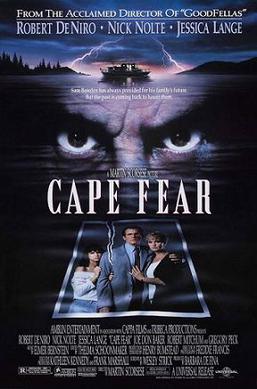
Cape Fear (1991)

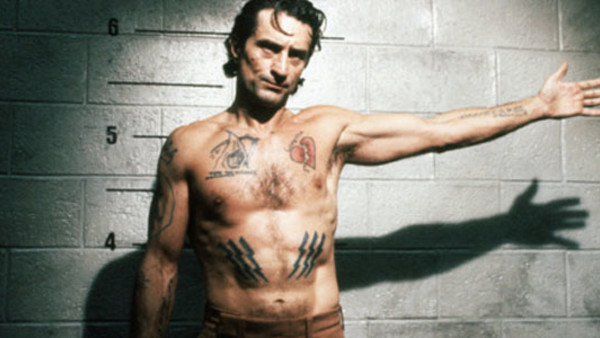
Robert De Niro terrorises his lawyer’s family in Cape Fear

Director: Martin Scorsese

Cast: Robert De Niro (Max Cady), Nick Nolte (Sam Bowden), Jessica Lange (Leigh Bowden), Juliette Lewis (Danielle Bowden), Joe Don Baker (Claude Kersek), Robert Mitchum (Lt Elgart), Gregory Peck (Lee Heller), Illeana Douglas (Lori Davis), Fred Dalton Thompson (Tom Broadbent), Martin Balsam (Judge)

Max Cady (Robert De Niro) is out of prison after 14 years. He went in as an ill-educated psychotic bum, sent down for the rape and assault of a young woman after his appalled lawyer Sam Bowden (Nick Nolte) buried evidence on her sexual history that might have lightened his sentence. He comes out as a self-educated, articulate and psychotic force of nature, not sorry for one minute and intent on making Sam and his wife Leigh (Jessica Lange) and daughter Danielle (Juliette Lewis) pay. 

Scorsese’s remake of J. Lee-Thompson’s deliberately Hitchcock-esque thriller sees the great director go one better by trying to channel Hitchcock’s style as closely as possible. Framing and editing decisions echo Hitchcock, its design apes as much as possible cinematographer Robert Burk’s lensing, Elmer Bernstein remixes the original film’s Bernard Herrmann score into something even more Hitchcockesque than the original. Scorsese throws in several of the master’s favourite themes, with sexual obsession and frustrated, working men forced to defend themselves in extreme situations. Combined with the sort of lavish violence and extreme imagery Hitchcock couldn’t use, we end up with something like an odd film-school experiment, by film students who have watched too many slashers. It’s grim, tasteless, overlong and troubling – and not in a good way.

The film adjusts Nolte’s character from a lawyer and witness against Cady into his corrupt lawyer (no matter that his corruption in this case was well intentioned). The film has a slightly unpleasant concern with modern worries about masculinity, with Bowden now concerned he is not “man enough” to defend his home – the film constantly passes subtle judgement against Bowden’s lack of physical prowess. It also readjusts Bowden into a weasel, corrupt at work and having an affair with a young attorney (whom Cady then beats and rapes later in the film, with a slightly queasy air that she is at least partly culpable by allowing Cady to pick her up in a bar beforehand). To be honest Bowden is hard to sympathise with, and his quest to assert his masculinity rather than rely on the law or hiring others to do his dirty work not really that pleasant. Frankly Nolte was never the actor to engage sympathies in the way original choice Harrison Ford (he wanted to play Cady) would do.

Cady himself is played by Robert De Niro, channelling heavily the original’s star Robert Mitchum (with lashings of The Night of the Hunter) as the sort of articulate psychopath so beloved by film. It’s fun to watch De Niro grandstanding as this sort of violent Tyrannosaur, weaving both psychological and shockingly violent games to unnerve and panic Bowden and his family. The film doesn’t give much scope to make Cady much more than a sort of comic-book monster, but De Niro does at least have moments of reflection in amongst his insanity. And there is a sort of admirable emotional intelligence in Cady’s knack of detecting the underlying tensions in the Bowden’s marriage and family life and exploiting these to torment the family.

The film’s most effective moments are the quieter ones, none more so than Cady’s quiet befriending/seduction of Bowden’s daughter Danielle behind her parents’ back. This culminates in a deeply unsettlingly seduction scene in Danielle’s school hall, where Juliette Lewis (extremely good) fascinatingly and bashfully becomes entranced with Cady’s interest in her teenage reading list and problems with her parents. The sexuality of the scene is possibly even more unnerving today and a highlight of the film – not least, ending as it does, with Danielle sucking Cady’s thumb before kissing him and leaving with the giddy, confused excitement of someone both scared and fascinated. Few other things in the film match this moment for psychological complexity – or the unsettling exploration of teenage sexuality overlapping with rebellion against domineering parents. 

Least of all the film’s overblown and final confrontation between the Bowden family and Cady, in which Cady rises from death no  less than three times and which stretches on forever, jettisoning all the small stock of goodwill the film had built up in its quieter moments. But then this is just part of a film that chooses the graphic and the overblown over calculated and chilling, every chance it gets. It’s a shame as there is a more chilling, psychological terror film – with Cady as a demonically clever opponent – struggling to come out here, but which keeps tripping into slasher territory with Cady as an invulnerable Michael Myers.

Perhaps Scorsese just thought of the whole thing as a sort of cineaste’s private joke? All the Hitchcock references, the careful apeing of styles, even the casting of the original’s leads in small roles (a joke further amplified by casting Mitchum as the police officer, while ultimate straight arrow Gregory Peck plays a lawyer even more corrupt than Bowden). But jokes like this don’t really make for long-term entertaining films, and Cape Fear is so full of basically horrible people doing horrible things to each other (in an increasingly Grand Guignol fashion) that after a while you more than cease caring about it. You start getting actively annoyed by it.

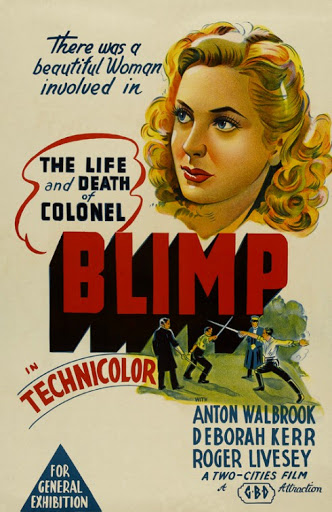
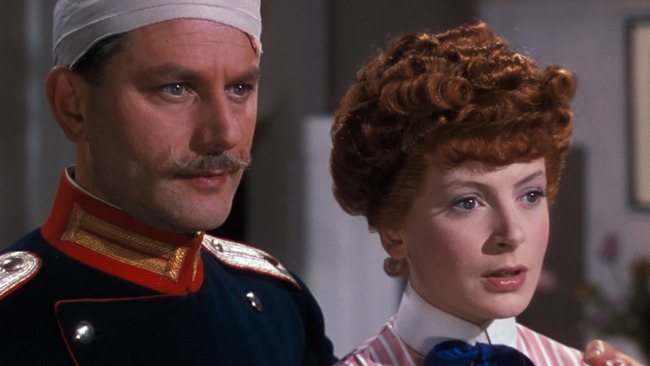
The Life and Death of Colonel Blimp (1943)

Roger Livesey and Anton Walbrook are friends who war cannot divide in The Life and Death of Colonel Blimp

Director: Michael Powell, Emeric Pressburger

Cast: Roger Livesey (Clive Candy), Deborah Kerr (Edith Hunter/Barbara Wynne/Angela “Johnny” Cannon), Anton Walbrook (Theo Kretschmar-Schuldorff), Ursula Jeans (Frau von Kalteneck), James McKechnie (Lt “Spud” Wilson), David Hutcheson (Hoppy), Frith Banbury (David “Baby Face” Fitzroy), Muriel Aked (Aunt Margaret), John Laurie (Murdoch), Roland Culver (Colonel Betteridge)

Is there a film that has better captured the curious state of being British than The Life and Death of Colonel Blimp? Could any other film makers than Powell and Pressburger take a doltish buffoon from newspaper comic strip, and turn him into a tragi-comic figure worth of Hamlet? Could any other film make a wartime propaganda film that features the most sympathetic depiction of the Germans anyone would see for decades to come? Winston Churchill was so scathing of the film that its US release was delayed for two years – and even then it was cut to ribbons. But then, I guess we knew already the guy wasn’t right about everything.

During the Blitz, Clive Candy (Roger Livesey) is a retired Major-General and now a senior commander in the Home Guard. Ambushed in a Turkish bath on the eve of a training exercise (by young officers keen to follow the German example of effective pre-emptive strikes), Candy rages at their dismissal of him as a relic from yesteryear. In flashback, we see Candy’s entire life over the course of the rest of the film. The film charts his military cross, from the Boer War to World War One and his life-long friendship with German officer Theo Kretschar-Schuldorff (Anton Walbrook), after both men are hospitalised after a 1902 duel over insults to the German military. Both men fall in love with the same woman, Edith Hunter (Deborah Kerr) although Clive realises it far too late – and their friendship ebbs and flows over the next forty years.

Powell and Pressburger’s film is, of course, quite beautifully made. The film has that distinctively radiant technicolour look of their most successful works, but it works so well because Powell assembles the whole so wonderfully. Powell knows when to hold a shot and when to look away and his judgement is never wrong. In the duel where Clive and Theo meet (Theo has been randomly selected to fight), the camera at first covers the detail of the prep, then moves to an over-the-head shot as it begins, before pulling out of the gymnasium and away, gliding into a long shot with Berlin sprinkled with snow. Because after all, the actual fight is immaterial to the sense of this being one event in the tapestry of life – and the moment of real importance being the friendship that came from it.

Then, much later, Powell does the exact opposite, holding a shot with powerful, emotional, simplicity. It’s 1939 and Theo is trying to remain in England – his wife having passed away, his sons being lost to Nazism and this adopted country being far closer to his old Prussian ideals of duty and fairplay. In a heartbreakingly low-key, simple speech – just exquisitely delivered by Anton Walbrook – Powell lets the entire speech play out in a single take, giving the moment room to breathe and magnifying its impact enormously – not least by the background extra who switches from shuffling his papers to listening intently to this heartfelt appeal.

It’s this mastery of technique that makes the impact of the film so wonderful – and helps it to masterfully capture the changing of an entire nation. Other the film’s forty years the entire world changes utterly, from one of simple truths where right is right and evils are punished, to the morally complex world of World War Two, where bending the rules and playing dirty might be just what is needed to defeat enemies with no principles. 

Candy is a man of unshakeable morals and ideals, who does not believe ends justify means and is determined that fighting honourably for defeat is far better than victory at all costs. It’s an idea the film affectionately praises, at the same time it sadly shakes its head and admits that such ideals were for the last century not this one. These are ideas Theo has captured far sooner than Candy – and Candy’s tragedy, among his many virtues, is that he always fails until it is almost too late to understand the truth of the world around him (be that politically or romantically).

It doesn’t matter really though, because we always know Candy’s heart is in the right place. In a sublime performance by Roger Livesey, this is a man with an upper-class bombast and a paternalistic regard for his duty and for others. His country and the ideals of that country come first and foremost – but it’s not about pushing those home. He will console honourable foes – as he does with Theo after World War One – and when the battle is over will be the first to say by-gones are by-gones. The film he is in a way a somewhat ridiculously old-fashioned character – but he’s always well-meaning, decent and honourable.

Candy also has the tragedy tinged sadness of not knowing what he wants until it’s too late. He doesn’t realise his affections for Edith Hunter, until she and Theo are telling him of their engagement (although we the audience are already well aware that Edith had feelings for him), and the look of realisation of a deep and lasting love that will last his whole life, is fabulously conveyed by Livesey in a perfect reaction shot. Candy will eventually marry Edith’s near doppelganger, but this unspoken love will last his whole life – and form another bond between him and Theo. Which in itself is what we like to think is a quality the British have at their best.

Along with that British fair-play that is so important to him, it also settles in the friendship between Theo and Clive. A friendship unaffected by tragedy or war (or at least not for long) and which, despite years apart, Clive frequently returns to with all the warmth and openness they first shared. These are bonds of loyalty forged on the playing fields, that operate on unspoken feelings (for a portion of their friendship Theo can’t even speak English). 

These are also the ideas and principles that Clive keeps alive in himself, even while the world becomes ever more bleak around him. He’s a character that never loses his essential positivity and kindness. Deaths or disappointed love are met with regret and then losing yourself in sport (whole years are hilariously shown to pass by montages showing Clive’s hunting trophies appear on walls). But always that British idea of (as Churchill put it) “keep buggering on”, and not letting infinite sadnesses and disappointments undermine or define you.

Powell and Pressburger use all this to make Candy not a joke – as the Lieutenant in the film’s prologue sees him – but as a deeply sympathetic and real man. It’s a film also about our disregard for the old, our failure to ever imagine that they were young. The flashback structure fills in this story beautifully. All this, and it’s not even to mention Deborah Kerr’s superb performance as all three of the women in this story, each subtle commentaries on the other and her return throughout somehow representing the perfect ideals that Clive and Theo are living to. The Life and Death of Colonel Blimp is about understanding how the “rules” of British behaviour are underpinned by a deeper sadness it’s almost a duty to hide – and it understands that better than almost any other film.

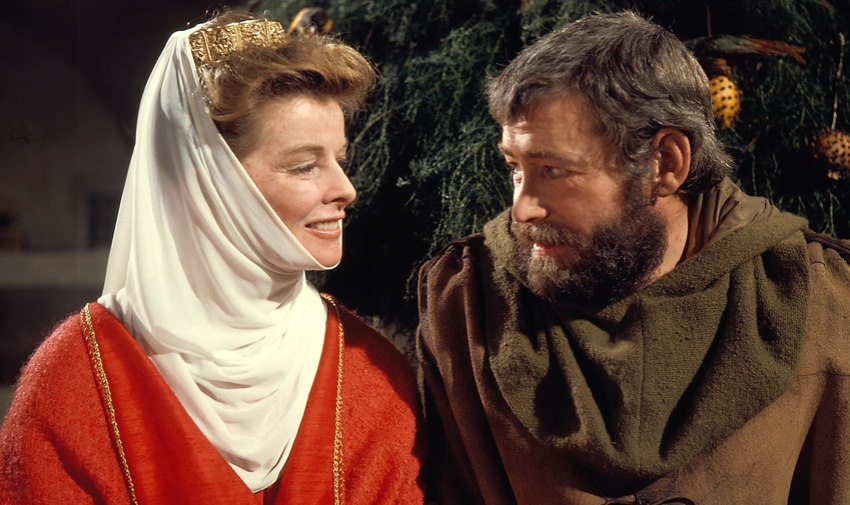
The Lion in Winter (1968)

Katharine Hepburn and Peter O’Toole are the feuding royals in The Lion in Winter

Director: Anthony Harvey

Cast: Peter O’Toole (Henry II), Katharine Hepburn (Eleanor of Aquitaine), Anthony Hopkins (Richard the Lionhard), John Castle (Prince Geoffrey), Nigel Terry (Prince John), Timothy Dalton (Philip II), Jane Merrow (Alais), Nigel Stock (Captain William Marshall)

James Goldman’s play The Lion in Winter did solid but not spectacular business on Broadway. But when it came to film, it surfed a wave of popularity for stories about British history and became one of the most financially successful films of its year, winning three Oscars (including for Goldman). Even more than that, it went on to be West Wing President Jed Bartlett’s favourite movie of all time. I think we know which prize is the most treasured.

Christmas 1183 (including an ahistorical Christmas tree and gift wrapped presents and all) and Henry II (Peter O’Toole), king of England and huge chunks of France, wants nothing more than family around him to mark the occasion. Problem is, this is possibly the more dysfunctional family ever. His Queen Eleanor of Aquitaine (Katharine Hepburn) has been under “home arrest” for ten years in her castle, and his children Richard (Anthony Hopkins), Geoffrey (John Castle) and John (Nigel Terry) seem to take it in turns to conspire against their father, their allegiances shifting faster than even they can sometimes follow. For added complexity, Henry is living with his late eldest son’s intended Alais (Jane Merrow) as husband and wife and her half-brother the new King of France Philip II (Timothy Dalton) is joining the family for Christmas. Over one night, this family will fight, feud and change pacts and allegiances until hardly anyone knows where the games end and the hate begins.

Anthony Harvey’s film is a stately, often wordy, faithful reconstruction of Goldman’s script that gives front-and-centre to the often scintillating dialogue between the family members, that leans just the right side of ahistorical (sample line: “Hush dear, Mummy’s fighting”) but frequently allows it’s top-of-the-line cast to let rip on some glorious speeches and dialogue duets crammed with ideas, wordplay, character and wit. Harvey therefore basically decides to sit back as much as possible and allow the actors do the work, using a mixture of medium shots and close-ups to bring the focus as much as possible to the Broadway-style staging or into the actor’s faces. He also uses the strength of the performers to allow for a series of long takes as they burn through pages of Goldman’s dialogue. The fact that there is hardly an interesting shot in the film, and its visual language never matches it’s verbal fire is a shame, but a price the film thinks worth paying.

And it matters little when Harvey is able to work as well with actors as he does here. All the performers are at the top of their game. Katharine Hepburn (winning her fourth Oscar, in a tie with Barbra Streisand in Funny Girl) has the perfect level of acute intelligence and imperious arrogance for Eleanor. But Harvey encourages from her a softness at crucial moments, that in-between the barn-storming speeches and verbal putdowns, Hepburn finds moments of quiet sadness and loneliness – a sense that sometimes ten years of imprisonment means she has had enough of all this – that are some of her most affecting work on screen. She’s hilarious but deeply moving – and totally believable as one of the most powerful women of the middle ages. 

She also is matched perfectly with O’Toole. Playing a 50-year old King at 35, O’Toole brings all the fire and charisma of his personality to the part, in a film where he perfectly balances the larger-than-life gusto of Henry II with his own personal disappointments, guilt and sorrow. O’Toole had already triumphed once as the charismatically brilliant king in Becket (for which he was also Oscar nominated, as he was here), but this performance is even better. Not only is his facility with the dialogue faultless, he also utterly convinces as the sort of awe-inspiring figure who dominates every room he’s in not just with force of character but the acuity and sharpness of his intellect. This might be his finest screen performance – and the one where he was most cheated of the Oscar (losing to a highly active campaign, criticised at the time, from Cliff Robertson in Charly).

To fill the cast out around these pros at the top of their game, Harvey raided British theatre to pluck some promising gems from British Theatre, more or less all of them here in their film debut. Anthony Hopkins is marvellously proud, forceful but just a few beats behind most of the others as a Richard who says what he means and sticks to it. Timothy Dalton is his polar opposite (and equally brilliant) as a Philip II who never says what he means and manipulates with a playful ease everyone he meets. John Castle (an actor who never had the career he should have had) is smugly unlikeable and coldly superior as the unliked middle-brother Geoffrey, while Nigel Terry is a snivelling punching bag as two-faced coward John. Jane Merrow is heartfelt and earnest as Alais, the only unquestionably kind and good person in this bunch.

These characters rotate sides and allegiances over the course of one evening, raging at each other like a medieval Who’s Afraid of Virginia Woolf? The brilliance of the dialogue never stops entertaining – although towards the end the film loses a bit of energy (it probably peaks with Henry’s loud double bluff of dragging the family in the middle of the night to a wedding he has no intention of seeing performed), perhaps partly because the film itself never really comes to flight as something cinematic. This is despite the decision to downplay the glamour – costumes are simple and look lived in (the cast wore them for hours off set to make them look lived in) and sets are far from pristine. It perhaps contributes to the slightly mundane feel of the filmmaking.

But the tricks are all in the dialogue and perhaps the film works best with an interval and a chance to take stock. There are several marvellous scenes, even if the constant feuding and side changing does wear you out after a while. But it’s a treat for the acting. Hepburn and O’Toole are simply at the top of their game, and the rest of the cast more than keep up with them. With an excellently imposing score from John Barry (also Oscar-winning), it’s a shame the film itself is a little too flatly and uninspiringly filmed with a murky lack of visual interest, but there are more than enough qualities for you to issue a pardon.

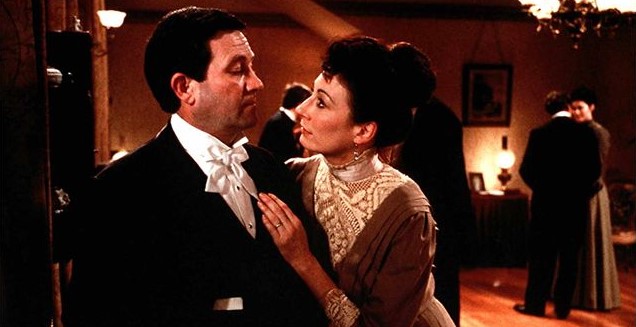
The Dead (1987)

Donal McCann and Anjelica Huston in a marriage with a past in The Dead

Director: John Huston

Cast: Anjelica Huston (Gretta Conroy), Donal McCann (Gabriel Conroy), Cathleen Delany (Julia Morkan), Helena Carroll (Kate Morkan), Rachael Dowling (Lily), Ingrid Craigie (Mary Jane), Dan O’Herlihy (Dan Browne), Marie Kean (Mrs. Malins), Donal Donnelly (“Freddy” Malins), Sean McClory (Mr. Grace), Frank Patterson (Bartell D’Arcy), Colm Meaney (Raymond Bergin)

John Huston’s final film was a long-standing passion project, anfaithful adaptation of James Joyce’ short story from The Dubliners. Huston had only a few months to live when shooting the film – he was hooked up to an oxygen supply for the course of its film-making and confined to a wheelchair. His children Anjelica and Tony (who wrote the screenplay) helped to nurse him through this final project. The final film makes for a beautiful wistful, heartfelt and tragically toned story that’s small in scale but carries great emotional force.  It’s a beautiful adaptation.

The film is set at a Christmas house party for family and friends, a regular thrown by two spinster sisters, Julia (Catheen Delany) and Kate (Helena Carroll) Morkan. The soiree – with recitals, dancing and wonderful meal – is an annual treat, with a regular guest list of family and old friends. The Morkan’s nephew Gabriel (Donal McCann) frequently serves as unofficial master of ceremonies – this year nervously checking and rechecking his after-dinner speech. However, at this year’s dinner Gabriel’s wife Gretta (Anjelica Huston) is caught-off-guard by a moving song, that brings back to her a flood of memories from her younger days of a late first love – a revelation of a past life that in their bedroom after the party, stuns Gabriel and causes him to reassess everything he thought he knew about his wife’s past and how his own life has been bereft of the sort of passion she has displayed over a memory.

The summary above essentially captures the entire story of this James Joyce tale that is short on events but deeply long on emotional meaning. Critics have sometimes said it can only be a shadow of the original – but it’s an adaptation not a replacement. Huston’s film is a gentle, unhurried, carefully presented chronicle of everyday lives and the emotional depth that’s can lie buried beneath them. The Dead is short on flash, but it has such warmth, love and respect for its characters, and vibrancy in its playing that it hardly matters that for almost an hour nothing (as such) actually happens. Instead, Huston and his actors so completely understand and communicate the warm bonds between its characters – from decades of knowing each other – and the entire party has such an air of truth to it you can genuinely just enjoy watching the characters enjoy it.

It’s full of perfectly observed moments that ring true – and all straight from Joyce. The younger men who attend the party, and duck out of a gorgeous piano recital for a quick drink, to return and lead vigorous applause at its end. The awkwardness of small talk between two people that don’t really know each other, but are too polite to turn away. The affectionate indulgence of the drunken son of an old friend (“sure, he’s not as bad as he was last year”) who is quietly not passed the port and leads a praise for Julia’s slightly-off-note singing that is so lavish it manages to be as touchingly well-meant as it is grin-inducingly embarrassing. Huston had a long-held regard for the warmth and generosity of Irish hospitality and feeling and this seeps into every pore of the film.

But the film is stuffed full of moments of simple, real-world pleasure crafted by a director who understood that the impact of the stories late emotional revelations depended on the everyday low-key presentation of the film’s first hour. And there is no end of delight be had from the Morkan sister’s tearful pleasure and pride at Gabriel’s sincere speech of gratitude at the dinner’s end (even if it is overladen with classical parables). Or in the quietly supportive way Gabriel goes about organising events for them in the house, from shepherding the tipsy Freddy to a bathroom to sober up to ending events by gently wakening Protestant Dan Browne at the party’s end from his drunken doze in the cloakroom. Around all these events is the conversation of people who have known each other for years and are comfortable to sink back into the patter of familiar themes.

All of which is then perfectly counter-pointed by Gretta’s quiet revelation of a past of passion and deeply held first love that she has never spoken of before – and causes Gabriel to certainly look anew at everything in his life. It’s a sad and delicate Proustian revelation of how the slightest nudges to our memory (in this case the soulful rendition of an old Irish song) can unlock sudden wells of feeling, making events from years ago suddenly seem as painfully recent as yesterday. 

For suddenly Gabriel moves from initial jealousy into a deep and abiding sadness at how nothing in his own life could ever have motivated such depth of feeling from himself – that frankly he has nothing in his experience to match the grief and unforced emotion his wife has displayed. It’s a very Joycian revelation in which the present and the future is readdressed in light of the past. Suddenly Gabriel must reflect that his life has been one of competent and forgetful mediocrity and that he himself will die – and that fate awaits us all, with the snow falling on us all living or dead, and that Gabriel will forever lack the emotional depth and poetry to express it.

The film’s elegiac qualities match perfectly with the end of Huston’s career – and maybe the sad regret of Gabriel is Huston judging whether he made an impact either. The film however is beautiful, recreating Ireland perfectly in California with a superb cast of Irish theatre stalwarts specially imported. Donal McCann is wonderful as Gabriel, Anjelica Huston quietly moving as his wife while the rest of the cast are faultless: from Cathleen Delany and Helena Carroll’s carefully judged spinsterish generosity to Donal Donnelly’s garrulously friendly drunkenness (perhaps motivated by the impossibility of living up to his mother’s – an imperious Marie Kean – high standards). The Dead may not capture all the depth and beauty of Joyce’s writing (what can?) but it captures more than enough to be a beautifully judged film.

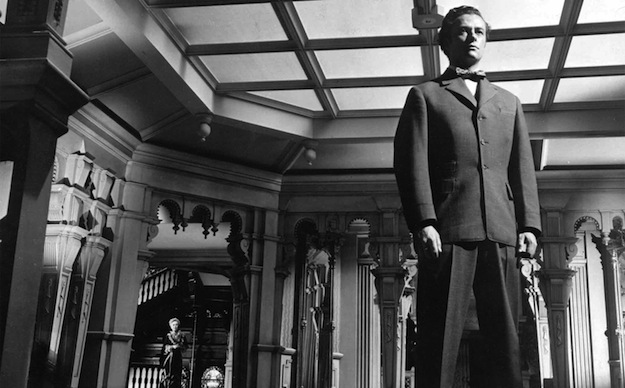
The Magnificent Ambersons (1942)

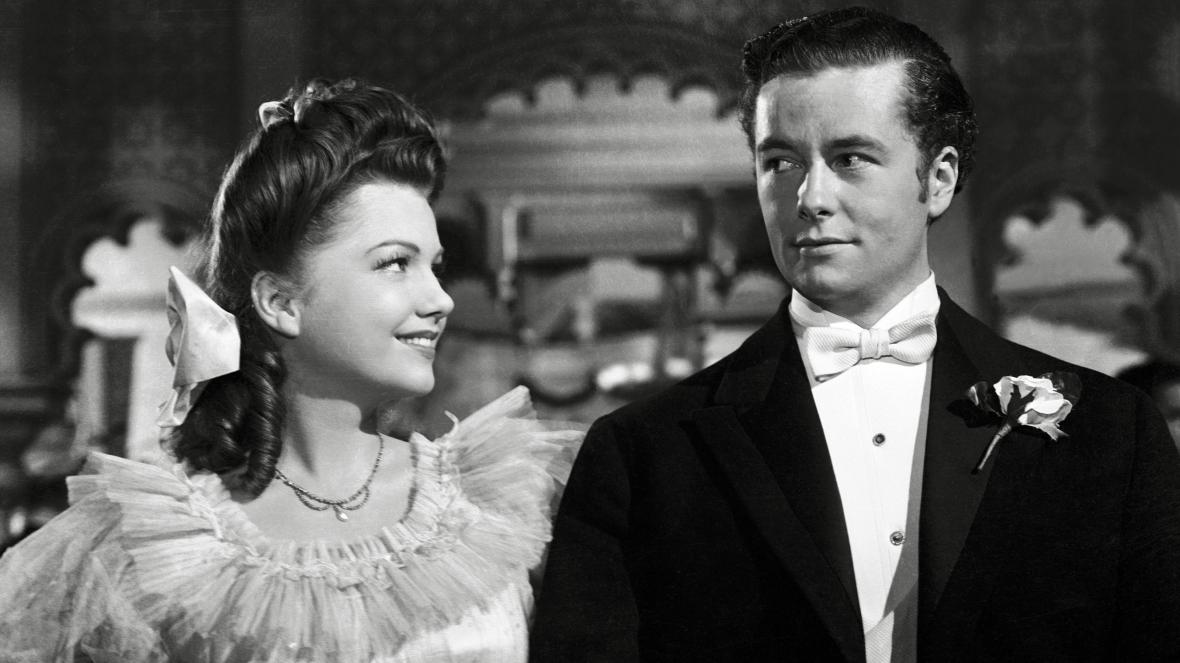
Tim Holt can’t understand how the world is changing in The Magnificent Ambersons

Director: Orson Welles

Cast: Joseph Cotton (Eugene Morgan), Dolores Costello (Isabel Amberson Minafer), Anne Baxter (Lucy Morgan), Tim Holt (George Amberson Minafer), Agnes Moorehead (Fanny Minafer), Ray Collins (Jack Amberson), Erskine Sanford (Roger Bronson), Richard Bennett (Major Amberson), Don Dillaway (Wilbur Minafor), Orson Welles (Narrator)

In early 1940s, Orson Welles was given the sort of contract by RKO directors normally only dream of. The freedom to write, direct and star in films of his choice and, most of all, the power of “Final Cut” – the dream of all his contemporaries. All this for a 25-year-old who had never made a film. It was unheard of – and it was never heard of again. The reaction to Citizen Kane had been full of praise from the critics but that hadn’t saved it from box office disappointment – nor the savages of the Hearst press or the jealousy of his peers. The chickens would well and truly come home to roost on The Magnificent Ambersons, the second picture in Welles’ deal.

The film itself is an adaptation of Booth Tarkington’s Pulitzer prize-winning novel. The Ambersons are a powerful and rich Midwestern family at the turn of the century – but the film charts their decline and fall as the modern age (represented by the motor car) slowly leads their world of genteel wealth and entitlement to a close. It’s a particularly challenging concept for the youngest member of the clan, George Amberson Minafer (Tim Holt) to come to term with, the spoilt young son of Isabel (Dolores Costello), who has grown up expecting his every whim to be met without question. His hostility focuses on Eugene Morgan (Joseph Cotton), his mother’s rejected suitor (now renewing his interest with her widowhood) and inventor who has patented a new form of motorcar. Things are complicated by George’s own love for Eugene’s daughter Lucy (Anne Baxter), a young woman who expects George to want more from life than just to live off his family’s wealth.

It’s impossible to discuss The Magnificent Ambersons without mentioning its status as perhaps the greatest “lost film” ever. Welles’ original cut of the film was a little over two hours long. He completed the cut and then flew to Brazil to begin collecting footage for his next project, It’s All True a part-documentary, part-fiction film (which in the end was abandoned). While he was out of the country, the film was roundly rubbished at a test screening. RKO panicked and demanded cuts. Welles had foolishly surrounded his right to final cut for the film and sent back a list of suggested changes (some have argued the list was deliberately bad to force the studio to make no changes), but refused to fly back to supervise things. 

So his editor Robert Wise (later a two-time Academy award winning director) cut the film down to just over an hour and twenty minutes. Cotton and Moorehead were corralled into filming some new scenes to hurriedly wrap the story up and give it the studio mandated “happy ending”. Welles wasn’t happy, but still wouldn’t come back to fight his corner. His notes were destroyed and eventually the remaining negative of the deleted scenes were burnt. So the truncated shadow is all we have.

I call it a shadow, because that is what the film feels like – an afterimage of a true masterpiece, like a dream you can almost completely remember. In some ways it’s an even more confident and controlled piece of film-making than Kane, a wonderfully assured and graceful piece of film-making that mixes luscious long-takes with a triumph of techniques and little details (both of performance and technical work). Welles captures this all within a triumphantly impressive set, an elephantine house of at least three stories with a winding grand staircase, that allows him to film from different, heights and angles as well as indulge a series of graceful tracking shots that all proceed and accompany the actors through the house.

Welles matches this with a storyline that captures a sense of a country in a state of change – a tipping point of modern America as the Henry Jamesian Old Americans, with their wealth and inherited English-class system, gave way to industrialist new money. These two worlds sit awkwardly against each other, constantly compared and contrasted – Eugene’s car factory is a noisy, piston filled Ford-ist church, a world away from the formal gentility of the Amberson home. 

Welles also captures this in a series of wonderful vignettes, not least an early scene featuring Morgan driving Isabel and her siblings through the snow bound countryside in his prototype motor car, at first passed by an arrogant George with Lucy in a horse and sleigh, then having to bail George out when the sleigh turns leaving him and Lucy stranded. George is reduced to pushing the car to getting it started – getting a face full of fumes for good measure – a humiliation that hardens his stance against the modern world (and Eugene) all the more.

Because for George – superbly played with a fragile ego and utter lack of self-awareness by a preeningly weak Tim Holt – the world has a certain order that places Ambersons at the top and the rest of the world at various levels on the way down. And anything that might threaten to change that is rejected at all costs. George expects the world to march to his tune without him putting in the faintest effort – and when it doesn’t, his whole life is a desperate raging of petty attempts to assert his control.

This focuses above all on exerting a bullying moral force on his mother, a woman who loves her son but also wants to explore the romantic feelings she has for Eugene (and by extension her understanding that the world is changing). George makes this choice stark – him or Eugene – a choice no mother can be expected to make. Dolores Costello is superb as a woman who has spent her life shutting her eyes to her son’s selfish nature until it’s too late to change, who sacrifices her own desires for the good of her family.

The whole film is a feast of sublime acting, a reminder of how Welles could get the best out of actors (all regular collaborators of his). Joseph Cotton’s earnestness is perfect for the upright and decent Eugene, too proud to let his resentment and anger show. Ray Collins is wonderfully sweet and endearing as Jack, George’s generous and open-minded uncle. Anne Baxter has a radiant honesty that hides a determined spine of moral certainty as Eugene’s daughter Lucy. Perhaps finest of all is Agnes Moorehead (Oscar nominated) as Aunt Fanny, George’s spinster aunt, who has worn a mask of contentment over her own frustrations and resentments for so long she only slowly begins to work out what she actually feels about anything at all. Moorehead’s performance walks a brilliant line between careful underplaying and explosive dynamics – she has at least three striking emotional breakdown scenes of such brittle honesty that it’s enough to move you to tears.

All of this comes together into a superb package of sublime film-making and intelligent story telling. The problem is it’s too short. The later scenes really bear the brunt, with Wise’s cutting trimming much of the connecting meat between the key scenes. Events towards the end seem to happen with no build up – characters suddenly die, fortunes are swiftly lost, years disappear from one scene to the next. As the film accelerates through its final half hour, narratively it begins to make less and less sense. Then the studio caps on a functionally filmed happy ending (Wise does at least ape Welles’ tracking shot techniques – he was a very capable director) which rings utterly untrue with the sadly elegiac story we’ve been watching (superbly narrated by the way by Welles).

It makes The Magnificent Ambersons a wonderful, incomplete masterpiece. It’s the filmic equivalent to those parts cut off from The Night Watch or Ucello’s Battle of San Romano. What we are left with is still awe inspiring. But it could have been even more.

Mildred Pierce (1945)

Joan Crawford sacrifices everything for a daughter who doesn’t deserve it in Mildred Pierce

Director: Michael Curtiz

Cast: Joan Crawford (Mildred Pierce), Jack Carson (Wally Fay), Zachary Scott (Monte Beragon), Eve Arden (Ida Corwin), Ann Blyth (Veda Pierce), Bruce Bennett (Bert Pierce), Butterfly McQueen (Lottie), Lee Patrick (Mrs Maggie Biederhoff), Moroni Olsen (Inspector Peterson)

There are few things that classic Hollywood did quite as well as a melodrama. Adapted loosely from a James M Cain novel – its murder plot line is a flourish solely for the screen – this is a triumphantly entertaining picture that mixes themes of sex and class with good old-fashioned family drama. It’s got psychology and it’s also got the high-concept family feuding around the building of a restaurant business that you could find in Dynasty. Put simply, Mildred Pierce is a prime slice of entertainment.

After her second husband Monte (Zachary Scott) is shot dead, Mildred Pierce (Joan Crawford) is brought in by the police for questioning. After the collapse of her first marriage to Bert (Bruce Bennett), Mildred has expanded her home-baking business into a full restaurant chain, with the support of Bert’s old business partner Wally Fay (Jack Carson). Mildred’s goal is to provide for all the needs of her eldest child Veda (Ann Blyth), a selfish snob who despises her mother for having to work for a living. The tensions between self-sacrificing mother and demanding, unloving daughter, lead Mildred to take a series of disastrous personal and business decisions, culminating in her wastrel, upper-class, Veda-approved, second husband Monte going down in a hail of bullets. But who pulled the trigger?

The murder mystery plotline adds effective spice to this very well directed (Michael Curtiz is at the top of his game) melodrama. Full of domestic thrills and spills, it races along like a combination page-turner and soap, perfectly matching a deeply sympathetic, self-sacrificing heroine with a host of deeply unsympathetic wasters, chancers and bullies. It’s capped by giving our heroine possibly the least sympathetic child in film history, the deliberately selfish and greedy Veda. 

Sure you could argue that its psychology is either pretty lightly developed, or thrown in only for effect. It’s never clear when or why exactly Veda and Mildred’s relationship went south so completely, or where Veda’s deep resentment and ideas above her station come from. It also avoids looking at how Mildred’s complete devotion has probably completely spoiled a child who clearly needed to be told “no” a lot more, a lot sooner. But it doesn’t really matter as the film follows the logic of an event-filled plot-boiler, throwing revelations and cliff-hangers at you left, right and centre.

In the lead, Joan Crawford took on a role that many had turned down before her – stars at the time were not keen to be seen playing roles that suggested they were old enough to have mothered children as old as Ann Blyth. The decision to push for the role paid off as she netted an Oscar and it’s the finest performance of her career. A somewhat haughty actress, Crawford here demonstrates depths of vulnerability and tenderness as a much-put upon woman who, despite everything, will stop at nothing to give her daughter what she wants. Crawford dominates the film, her air of self-sacrifice never once tipping over into self-pity, even as the character so desperately seeks for the sort of love and affection that is denied her from those around her. 

Around her most of the cast – with the exception of Eve Arden’s entertaining, wise-cracking best friend (Oscar nominated) – are basically a bunch of sharks. None sharper than Ann Blyth’s (also Oscar nominated) sweet-faced but dead-inside daughter. Rarely has a display of more naked grasping, snobbish disdain ever been captured on film, matched with unapologetic greed. Veda has no compunction about the moral consequences of her actions and, like Zachary Taylor’s archly lazy Monte, is as interested in spending Mildred’s money as she is contemptuous of its source. 

Curtiz’s film constantly however plays with our judgements and expectations of people. Veda has more than her share of moments of pain and vulnerability as she shares some of the more painful travails of her mother. Similarly, Wally Fay (very well played by a roguish Jack Carson) oscillates between being a trusted confidante of Mildred, and a lascivious greedy creep. First husband Bert (a somewhat dry Bruce Bennett) starts as a love rat but may have more decency about him than anyone else (except Mildred).

The film is wonderfully shot in luscious black-and-white by Ernest Haller, in a dynamic noirish style. Water reflections lap across ceilings. Smoke from fires and cigarettes rises up and seems to dance and swirl in the light. There are some beautiful shots of faces – the camera work in particular perfectly locates a vulnerability in Crawford’s superior features – and there is a beautiful shot late on when two people caught in an illicit kiss roll their heads back from the shadows to emerge into the light. The entire design of the film is spot-on, and it looks and sounds fabulous today.

Mildred’s struggles make this a brilliant example of the stereotypical “women’s picture”, a tale of a woman struggling against all the odds to make her way in the world, with the twist that the daughter she is straining to support is a monster and the men she chases are feckless wasters. Mildred makes chronically terrible decisions throughout but for the best of motives – and part of the film’s appeal is that you are so invested in her fundamental decency you are willing her not to make the same mistakes again and again.

Curtiz’s melodrama is brilliantly enjoyable and never lets up. It’s also a feminist icon of a sort – Mildred is never punished for having a career, indeed she’s celebrated for it (and is far more savvy about it than nearly all the men). She leaves her husband, runs her own household, pushes for her own divorce all while protecting and providing for her child (not her fault the child ain’t worth it). Mildred Pierce is ahead of its time, and still a fabulously entertaining film.

Back to the Future (1985)

Michael J Fox and Christopher Lloyd head to the past and back in the ever beloved Back to the Future

Director: Robert Zemeckis

Cast: Michael J Fox (Marty McFly), Christopher Lloyd (Dr Emmett “Doc” Brown), Lea Thompson (Lorraine Baines-McFly), Crispin Glover (George McFly), Thomas F. Wilson (Biff Tannen), Claudia Wells (Jennifer Parker), James Tolkan (Gerard Strickland)

In the tentpole 1980s film icons, few films are as beloved as Back to the Future. With the highest of high-concepts, it could easily have alienated people – or felt a little bit silly – but instead it’s a perfectly structured entertainment, a wonderfully assured combination of light comedy, drama, science fiction, farce and adventure. It’s one of those rare films that doesn’t have a wrong beat in it.

Set in 1985, Marty McFly (Michael J Fox) is a your typical teenager, cool, loves rock music, has a great girlfriend Jennifer (Claudia Wells) – and is worried he’s going to turn out like his parents, his weak father George (Crispin Glover) bullied by his supervisor Biff (Thomas F. Wilson) who never amounted to anything and his depressed mother Lorraine (Lea Thompson). His friend, eccentric scientist Emmett “Doc” Brown (Christopher Lloyd) ropes Marty into tests of his latest invention – a time travel machine built into a DeLorean car. When the first test is interrupted by angry Libyan terrorists – furious that Doc used their investment and stolen plutonium to build a time machine rather than a bomb – Doc is killed and Marty escapes in the DeLorean, accelerating to 88mph and accidentally throwing himself thirty years into the past. There he meets his parents, disrupts their first meeting and finds his mother falling in love with him and his father a weakling who he has to teach how to become a man and win his mother’s love – all while finding the help of the younger Doc to return him to 1985. 

Back to the Future has a tricky concept but a remarkably simple story which revolves around completely relatable ideas and questions. Who hasn’t wondered what your parents were like when they were young? Would you get on with them? How different would they be from the adults you know? These ideas are all caught – and told with maximum comic and dramatic impact – in Robert Zemeckis and Bob Gale’s superbly constructed script.

The secret really is in the cooking of that script – nearly five years in the making – where every single scene serves a clear purpose, and all the plot points sprinkled through the first twenty or so minutes or brilliantly pulled into effect in the rest of the film. With skilfully swift and economic story telling us all the information we need to know about Marty, his interests and skills, his parents – not to mention all the hundred and one other things happening in the film – so that as each careful plot point sprinkled through the film comes into effect it’s instantly satisfying and convincing. As director Zemeckis also gets a perfect conveying of the film’s tone of light comedy, even more surprising since it frequently touches on darker themes (murder, incest and rape for starters!) but never once feels like it’s tone is falling all over the place.

The film has a brilliant Frank Capraesque film of the strength of how one person can make a difference – both for good and bad. By arriving in the past – and with his confidence, bravery and shy decency – Marty at first ruins his parents meeting and then (almost without realising it) builds up both of them to head-off the mistakes they will make in their lives. Most obviously in his coaching of the timid and frightened George into someone who will have the confidence to make his own choices and go after the things he wants. The grooming of luckless loser George into someone who will stand up (eventually) against the brutality of Biff (a swaggeringly vile Thomas F Wilson) is particularly affecting, Crispin Glover to be commended for making a character who is wimpish and frustrating but not unlikeable. Lea Thompson also does great work as a sweet young girl, who’s more daring than she appears.

The film’s real success though is tied directly into the casting of Michael J Fox in the lead. Fox was born to play this role, the film effectively a showcase for his timing, ability to throw just enough shade and emotion onto scenes to keep them real, and above all his almost unparalleled skills as a light comedian. Originally unable to play the role due to a scheduling clash with his sitcom Family Ties, Fox was only bought on board after three weeks when backup choice Eric Stoltz proved unsuitable for the role (by his own admission). The entire film was shot either at night or the weekend to allow Fox to shoot after this 9-5 commitment to Family Ties was finished. And thank goodness because Fox makes the film.

He also has superb chemistry with Christopher Lloyd (graciously stooping for the whole film so he could fit in the same frame as the famously diminutive Fox). Lloyd, another great comedian with the instincts of a natural actor, channelled Einstein and conductor Leopold Stokowski as Brown, making him a larger than life eccentric who still feels like a real person. These two actors spark off each perfectly, adding a huge amount of comic and dramatic force to their rat-a-tat dialogue. Fox’s skill in understanding the light drama tone – and making what was already a very strong script comedy gold – as well as his ability to be immediately relatable to viewers is what makes the film an eternal success. 

That and it’s simple themes. The joke of travelling back in time and having your mum accidentally fall in love with you is perfectly judged, being just the right amount of icky (Fox’s horrified discomfort is hilarious) without being unsettlingly disturbing. The reconstruction of the tone and vibe of the 1950s is perfect – with Marty’s more hip 1980s style juddering up against the picket fence Americana of the past. There is plenty of humour from watching Marty “invent” everything from the skateboard (in a hilarious but gripping chase sequence) to rock and roll music. But it all works because the film is very heartfelt and genuine and very sweet.

Not only that but when it wants to be it’s also exciting and dramatic. The final resolution of George’s rise to manhood carries a real sense of threat as well as a cathartic moment of violence. The film’s final sequence as Doc and Marty race against time to channel a lightning strike to get the Delorean back to 1985 is truly exciting, helped as well by Alan Silvestre’s perfectly judged musical score (and thank goodness for executive meddling that nixed Zemeckis original idea of a Nevada test site and the time machine being built into a fridge). It all works as such an entertaining package you don’t even think about the fact that, as Marty returns to a radically altered family life in 1985, he won’t share any memories with his parents and siblings.

With a star actor taking on the role he was born for – and Fox was never better again, perfectly charming, endearingly sweet, cocksure and cool – Back to the Future has been entertaining audiences for almost 35 years – and it will carry on entertaining them the more we head into the future.

Who’s Afraid of Virginia Woolf? (1966)

Burton and Taylor play a feuding couple in Who’s Afraid of Virginia Woolf?

Director: Mike Nichols

Cast: Elizabeth Taylor (Martha), Richard Burton (George), George Segal (Nick), Sandy Dennis (Honey)

In 1966, Hollywood was only just emerging from the strict rules of the Hays Code. These governed everything from the themes a film could explore to the language you could use while doing it. But in the permissive 60s, it was finally beginning to crack – and Who’s Afraid of Virginia Woolf? was one of the first films to really push it over the edge. This film helped usher in 70s Hollywood, where filmmakers finally felt empowered to explore darker themes and to do so with sex, violence and bad language. Five years after this film came out, something like A Clockwork Orange could become a box-office smash and a Best Picture nominee. Talk about the changing of the guard.

Mike Nichols’ film debut is a faithful adaptation of Edward Albee’s Broadway smash, which had been controversial enough on stage for its full and frank exploration of a marriage consumed with bitterness, feuding and pain. Not to mention its open acknowledgement of extra marital sex, abortion and alcoholism all delivered with a literal “screw you!”. Elizabeth Taylor is Martha, daughter of the president of a small New England college, whose husband George (Richard Burton) is a failed associate history professor. The couple are locked into a dysfunctional marriage that mixes recrimination and a perverse, shared sense of humour. Drunkenly returning home after a party, they welcome a new professor (George Segal) and his wife (Sandy Dennis) to their home for a nightcap. There they quickly rope the couple into a series of increasingly personal “games” with an edge of cruelty and lashings of verbal abuse.

Today, Who’s Afraid of Virginia Woolf? has not always aged well, coming across at times as rather forced and overbearing, as is often the way with films that pushed the boundaries so effectively back in the day. Nichols has the confidence to avoid “opening up” the play too much – its single setting on stage is augmented here only with a brief drunken excursion out to a late night bar – and instead focuses on drawing out four superb performances from its actors (all Oscar nominated) and letting the camera move intricately around the confined rooms where the action takes place.

What Nichols really draws superbly from this film is the control of the film’s continual pattern of simmer, tension and release. The play is effectively a series of psychological games that George and Martha play between themselves. The film is like a drunken, truly mean-spirited version of Noel Coward’s Hay Fever, where the self-absorbed hosts similarly play elaborate ”games” with their confused guests. Most games involves Martha and George turning on each other, viciously attacking the other for everything from failure to drunkenness, with their guests used as the jury, mixed with “get the guests” interludes as the couple turn on the sexual and marital issues in their guests’ lives.

It makes for a series of compellingly delivered sequences – even if the constant thrum of tension and heightened half-mock, half-real fury Martha and George keep up for most of the film finally starts to bear down on the viewer. The film starts banging its points with a transgressive pride, which looks like increasingly like a lot of sound and fury over quite minor issues. But then that’s always the way with convention defying films – so many following films have buried these conventions, that the attention grabbing way this film does it looks quite tired and overworked today.

As Martha and George, Nichols was able to cast the most famous married couple on the planet at the time, in Elizabeth Taylor and Richard Burton. With these titanic personalities working – for perhaps the only time – with a director who had the skill and authority to tame them, the two of them delivered probably their finest performances on film. It also adds to the illicit sense for the audience – like Nick and Honey – that we are trapped into seeing a series of personal and intense conversations and arguments. 

Finally accepting the sort of intense and challenging material he often overlooked for well-paid gigs, Burton is superb as George: a mass of passive aggression, condescending to everyone around him, capable of great cruelty but also a crushed, disappointed and vulnerable man, desperate for affection.

Elizabeth Taylor was similarly sensational – and Oscar-winning: puffy faced, blowsy and domineering as Martha, who similarly has buried her pain and loneliness under a never ending onslaught of aggression, mockery, tartiness and loudness. Brassy and bold, Martha at first seems the controlling, even abusive force in the relationship, but she is also isolated, scared and overwhelmed with pain. 

What’s brilliant about the relationship between the couple is at first it seems like George and Martha are a deeply unhappy couple, fuelled by hate. However, it becomes clear their feuding and contempt for each other is in fact part of a relationship grounded on mutual love and need (the final shot is their hands joined together), revolving around their mutual shared pain on their failure to have children. The couple’s primary “game” is a private one – a fictional child, invented to compensate for their mutual infertility – discussion of whom early on by Martha opens the door to the fury that follows. But it gives an insight into their relationship, actually kept fresh by their feuding.

By contrast, it’s the seemingly happier young couple who have serious problems. Nick, very well played by George Segal, is a dashing young buck who is actually selfish and, with a dream of sleeping his way to the top (despite his possible impotence), whose lack of depth is routinely savaged by both Martha and George. Despite this, Nick doesn’t seem to realise that this he’s in the middle of a series of games. He’s married his wife out of obligation for her pregnancy. Honey – an Oscar-winning turn by Sandy Dennis – on the other hand seems to be aware she’s out of his depth here, and reverts into an almost childish passiveness, mixed with awkward horror which slowly peels away to reveal her misery and depression. Slowly we realise Nick and Honey have nothing in common.

It’s a complex and intriguing play, brilliantly bought to the screen by Nichols whose camera (in stark black and white) bobs and weaves through the action, involving each actor in every scene (the camera often focuses on reactions as much as dialogue delivery). All four of the actors are great, but Burton and Taylor are nothing less than sensational (ironically their careers never seemed to recover from the amount they put out there, with more than a few speculating that their own marriage was but a few degrees different from George and Martha) and the film itself, while overbearing, is also still compelling in its complexity and stark insight into human relationships.

Marriage Story (2019)

Scarlett Johansson and Adam Driver are an estranged couple in Marriage Story

Director: Noah Baumbach

Cast: Scarlett Johansson (Nicole Barber), Adam Driver (Charlie Barber), Laura Dern (Nora Fanshaw), Alan Alda (Bert Spitz), Ray Liotta (Jay Moratta), Azhy Robertson (Henry Barber), Julie Hagerty (Sanda), Merritt Wever (Cassie), Wallace Shawn (Frank), Martha Kelly (Nancy Katz)

It’s a scenario that more and more marriages in our modern world head towards – divorce. And it’s never easy to separate from something that has dominated your life for years, and the more that bonds two people together, the harder to pull them apart. As the film says, “it’s not as simple as not being in love any more” – and the complex emotional bonds that form between people, and the inability we have to switch these on and off like lights, are what drive Noah Baumbach’s film, heavily influenced by his own real-life divorce from Jennifer Jason Leigh.

Nicole Barber (Scarlett Johansson) is a former child-star who has built a career as a respected theatre actor in tandem with her husband Charlie Barber (Adam Driver), an acclaimed and visionary theatre director. Living in New York with their young son Henry (Azhy Robertson), their marriage is dissolving with Nicole frustrated at Charlie’s selfishness, just as Charlie is angered by what he sees as her refusal to take full responsibility for her career choices. As mediation fails, Nicole returns to LA for a role in a TV series, taking Henry with her. With divorce papers filed in LA, the couple engage in a cross-state legal battle for custody and finances, with their positions increasingly weaponised into hostile encounters by their respective legal teams. No one is coming out of this one unscathed.

Baumbach’s film is tender, sympathetic and offers a fine line of arch comedy and even farce (at points), that works over time to be as even-handed as it possibly can. The film’s sympathies are aimed not solely at husband or wife, but at the couple themselves wrapped up in the hostile, money-spinning world of divorce where, it’s strongly implied, the only real winners are the lawyers making thousands of dollars spinning out clashes as long (and as aggressively) as possible in order to cement their positions and keep their industry going.

The film is a solid denunciation of the entire industry that has grown up around divorce, where it’s seemingly impossible to find any arrangement alone without lawyers giving it a legal force, or to come out without that process consuming most of the wealth of the couple. Even worse in this case, the main battle-ground becomes the rights of each parent to access to their son, Henry’s college fund disappearing into a legal battle and the child becoming the centre of both fraught attentions and an unseemly competition for affection between both parents, effectively offering bribes for preferential responses from their son. All in order to prove that their link to him is the stronger.

The tragedy of all this – the way the system seems designed to turn personal relationships poisonous and bitter – becomes Baumbach’s focus. Brilliantly the film starts with a voiceover from both Nicole and Charlie in turn, over a montage, stressing the wide list of things they loved about their partner in the first place: part, it is revealed, of a mediation session that ends in disaster and Nicole’s walkout. But the closeness, the bond, the intimacy of these two people is revisited time and time again in the film. Legal dispute scenes and lawyer confrontations are followed by perfectly friendly home visits and regretful conversations. Legal meetings are bizarrely punctuated by coffee with conversation from the lawyers suddenly turning light and breezy. Then, as events hit a courtroom, moments like Charlie’s failure to properly install a car seat are spun out by lawyers as evidence of his risky disregard of his child’s safety while Nicole’s glass of wine after work becomes incipient alcoholism. 

For a film about divorce, it’s striking that it’s the process of divorce that turns the couple’s relationship increasingly toxic (culminating in a brutal scene where each throws increasingly personal and cruel abuse at each other for other five minutes). Sure there are resentments and anger at the front, but these are kept under reserve and still allow the couple to chat and negotiate amicably when they’re by themselves. As soon as the lawyers are involved, the mood steadily turns worse and worse. 

This is part of the film’s attempt to present the couple even-handedly. I’d say it only partially succeeds at this – with a 55/45 split in favour of Charlie, who is presented as the most “victimised” by the system, as the New York man having to prove he has a link to his now-LA-based-son. While Nicole does get a fantastic monologue (brilliantly performed by Johansson, full of regret, apology, anger and confusion) where she outlines Charlie’s selfishness, distance and probable (later confirmed) affair to her lawyer, the focus soon shifts to Charlie’s travails in the system. It’s him hit by a blizzard of demands from court and lawyer. It’s him who is separated from his son. It’s him who pays the biggest financial burden. It’s him who takes the biggest blows and has to bend his whole life to try and claim a residency in LA. It’s not a surprise Baumbach marginally favours his surrogate, but it does leave you wanting a few more scenes – especially in the latter half of the film – for the impact on Nicole.

However you keep on side with both halves of the couple thanks to the superb performances from Johansson and Driver. Johansson is both fragile and acidly combative, a woman who feels she has led someone else’s life for far too long. Driver is a bewildered gentle giant, but carrying a long streak of self-justifying self-obsession, clearly believing himself the only victim, but deeply hurt by the situation he finds himself in.

Supporting him are three very different lawyers. Laura Dern is on Oscar-winning form as Nicole’s brash, confident, ruthless defender with a smile so practised it’s hard to tell when it’s false or when it’s true. Alan Alda is endearing – but also gently out of his depth – as Charlie’s more conciliatory first lawyer (in one brilliant moment, Charlie interrupts a lengthy joke from Alda’s Bert during a sidebar with the frustrated put down “sorry Bert am I paying for this joke?”) while Ray Liotta channels De Niro roughness as his fiercely competitive second lawyer.

Marriage Story is a bittersweet, superbly made, moving but occasionally strangely funny story of a couple falling out of love and trying to find the way of converting that into a functioning co-parenting friendship. Throughout it’s not the couple, but the system making money from their dysfunction, that’s to blame in this marvellously written and superbly played drama.

White Heat (1949)

Top of the World Ma! Cagney excels in his final and greatest Gangster role White Heat

Director: Raoul Walsh

Cast: James Cagney (Cody Jarrett), Virginia Mayo (Verna Jarrett), Edmond O’Brien (Hank Fallon/Vic Prado), Margaret Wycherly (Ma Jarrett), Steve Cochan (“Big Ed” Somers), John Archer (Philip Evans), Wally Cassell (“Cotton” Valletti), Fred Clark (Daniel “The Trader” Winston)

After winning an Oscar for Yankee Doodle Dandy, Cagney left Warner Brothers to form his own production company. When that folded, he swallowed his pride and re-entered the Warners’ fold. Money was driving the relationship: and it was the pay cheque that got Cagney to return one last time to the role of a psychotic gangster in White Heat. And if he had to go back, why not make that gangster the most psychotic of the lot? After all who else could make it to “the top of the world”?

Cody Jarrett (James Cagney) is the leader of a gang of criminals, to whom no act of larceny, violence or murder is taboo. A botched train hijack – during which Jarrett shoots two unarmed train drivers – attracts the full attention of the law, but Jarrett dodges justice by having himself sent down for a minor crime that happened at the same time as the train hijack. Not fooled, the Feds send an undercover operative, Hank (Edmond O’Brien), into the prison as Cody’s cellmate “Vic Prado”, tasked with getting the details of the train job and locating the mysterious fixer who set up the job. But such schemes didn’t take into account Jarrett’s psychological disturbance – powered above all by his obsessive, overwhelming love for his mother (Margaret Wycherly), the one dominant influence over his life.

Raoul Walsh’s film is a brutally efficient gangster flick which may be a little too long (the mechanisms of tracing and tracking a car are covered in far too great a depth…), but ticks all the boxes of the genre with exceptional skill and dexterity. It’s shoot-from-the-hip (literally) melodrama, and has all the internal logic of a schoolground game of cops and robbers, but Walsh’s direction is pin-point perfect, and the film is based around a series of stunning and effective set-pieces and crammed with a sort of deep (even disturbing) psychological insight that puts it miles ahead of many of films of the genre. Walsh also throws in some of the finest stylistic touches of film noir, with Virginia Mayo’s femme fatale, darkened frames, dubious morals among even our heroes (one of whom is a practised deceiver and liar) and a whirlwind monster at the centre.

But the film soars and flies because of Cagney, and the no-holds barred sharpness of Jarrett. The film revolves above all around the deep emotional emptiness and need in Jarrett, which sees him lean on O’Brien’s Falon (“like my kid brother!”) and, most famously, fixate like a toddler on his mother. Freud would have had a field day with Jarrett’s obsessive love for his mother, with Cagney turning him into the little boy lost. Consumed with headaches, he literally climbs into her lap so she can comfort him. The slightest criticism of her leads to instant reaction (not least knocking his wife off her chair – how can the poor woman compete with this beatified mother figure?)

This culminates in one of the film’s most famous sequences, as Jarrett digests in prison the news that his mother has died. Sitting in a crowded dining room, he passes word down to a new inmate for an update on his mother. Slowly the question is passed down the line of prisoners – and with trepidation the news of her death is passed back. And here is the Cagney magic. He seems too stunned at first to take it in then a series of low moans explodes into a titanic screaming fit, matched only by the violence he takes out on all who stand in his way. Walsh and Cagney kept the response secret from the entire room of 300 extras, all of whom seem as stunned as us by Jarrett’s total lack of control, his complete consumption in grief.

Cagney’s performance is just about perfect, a simmering mummy’s boy who is also a charismatic leader of men. A dangerous psycho who seems aware that he is not quite normal. A lonely man desperate for love. And Cagney has so many beautiful touches that could only be him – the quip as he plugs with bullets a car boot with a luckless gang member in it, the sly kick away at Virginia Mayo, that screaming sequence. It’s a performance of complete power and charisma, the gangster psychoanalysed and reduced to his bare essentials for a personality barely functional and obsessed with his mother.

Margaret Wycherly is similarly excellent as that mother, as sly and self-confident as her son and clearly as accomplished at leading a gang as him (I love the smug half smile she gives herself after evading the FBI tail she picks up). Edmond O’Brien does sterling work in the “straight man” role of the undercover cop, walking a line between judging and even perhaps sorta liking Jarrett a bit (even if he does get saddled with the mandatory “that’s the moral of the story” final line). Virginia Mayo is a wonderful mix of sex appeal and needling cheapness as Jarrett’s two-faced wife.

The film culminates in one of the most famous endings of all time – one you’ll know even if you haven’t seen the film – as the law catches up with Jarrett at last in a shoot-out at a gas plant. Finally driven mad by betrayal and abandonment – although lord Cagney’s performance makes clear that only a tenuous grip on sanity has been present in Jarrett from the start, fractured beyond repair by the loss of his mother – Jarrett insanely shoots at the police from atop a burning gas plant, before immolating himself (and most of the factory) with the cry “Made it Ma! Top of the world!”. As Jarrett heads down to a firey hell, so Cagney signed off on the gangster flick with perhaps the most dangerous, disturbed and also intriguing gangster on film. It’s such a mighty performance that the Hays-Code mandated final line of tutting disapproval at the criminal life from O’Brien feels even more forced and unnecessary than ever.