Category: Family drama

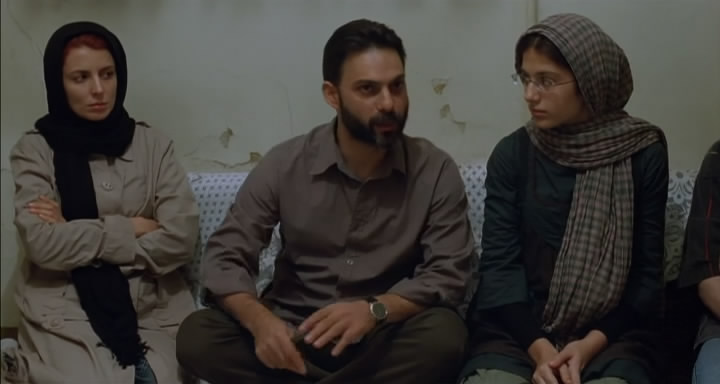
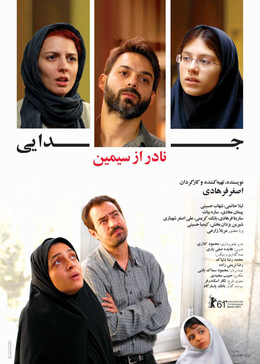
A Separation (2011)

A Separation (2011)

Compelling drama of a family under pressure, in Farhadi’s brilliant film

Director: Asghar Farhadi

Cast: Payman Maadi (Nader), Leila Natami (Simin), Sareh Bayet (Razieh), Shahab Hosseini (Hodjat), Sarina Farhadi (Termeh), Merila Zare’I (Miss Ghahraii), Ali-Ashgar Shahbazi (Nader’s father), Babrl Karimi (Judge), Kimia Hosseini (Somayeh), Shirin Yazdanbakhsh (Simin’s mother)

It’s very easy today to imagine Iran as another world. A mysterious country, locked behind an oppressive regime that we are constantly told by our leaders is a frightening, distant place not to be trusted. But this prosperous country, with its rich historical background, isn’t some sort of Mars. It’s full of regular, normal people just trying to do their best for their families. It’s the strongest thing you’ll take out of Asghar Farhadi’s heartfelt, low-key, deeply moving masterpiece: deep down, we are all united by how circumstances push us into desperate situations with few good options.

Married couple Nader (Payman Maadi) and Simin (Leila Natami) have petitioned for divorce. Secular Muslims, they want to emigrate to find better opportunities for their teenage daughter Termeh (Sarina Farhadi). Simin wants to leave now – but Nader won’t leave while his aged father (Ali-Ashgar Shahbazi), suffering from Alzheimer’s, is alive. Their only option, under Iranian law, is divorce. However, separation makes it impossible for Nader to care during the day for his father. He hires Razieh (Sareh Bayet), a devout Muslim – but the position causes her a host of problems, from concerns about touching another man (she calls her Imam to ask if she can change the old man’s trousers after an accident), to her worries about what will happen if her husband Hodjat (Shahab Hosseini), a feckless man in and out of prison, finds out she is working for a single man. After Razieh ties  Nader’s father to a bed to keep him safe, she and Nader argue, during which he forces her out of his flat. Razieh then has a miscarriage that night. Did Nader know she was pregnant? If so, he could face prison for murder. Both families find themselves in desperate straits.

A Separation is a superb piece of film-making, deceptively simple in its assembly and shooting, but carrying a huge emotional force as we become invested in the lives of the people it follows. Farhadi never passes moral judgement over his characters. All of them have strong reasons for doing what they are doing, rooted in what’s best for the family. Everyone acts in the way they feel will best protect their loved ones. Arguments become profoundly personal and damaging – but they don’t start out that way. It’s simply a question of things slipping out of control.

That’s not helped by the laws of the Iranian state. Farhadi’s film is very careful to never pass explicit comment on Iran’s laws. But the nature of the regime – and the mood it encourages – is at the heart of all the problems. Tensions are perhaps inevitable between the middle-class and secular Nadar and Simin, and the more working-class and traditional Razieh and Hodjat. This is class and religion in one cocktail, both sides carrying impressions that are nearly impossible to shake off.

But it’s the laws of the state that amplify this: where a man and a wife must go through a demanding pantomime for divorce or a man can be sentenced for murder for the lightest push on the shoulder of a woman who then miscarries. The judge hearing the pre-trial arguments (a very gentle and dignified performance from Babrl Karimi) may be the very soul of reasonableness, but it doesn’t change the fact that the laws he must rigidly uphold continually inflame the situation.

The story is brilliantly constructed, a tightly plotted melodrama that frequently presents new information that forces us to reinterpret what we have seen and heard. It mixes superbly domestic drama and crime procedural, and frequently only the audience has the complete picture of everything that has happened. Key arguments – the loss of money, Razieh’s unexplained absence from her duties, the difficulties of keeping Nadar’s father safe – are shown to us from every angle. But still, we understand the very natural – and human – reactions that people who do not have all the facts, as we have, make. Perhaps it’s the constant stress of simply living – magnified in a crowded and difficult city like Tehran – that seem to put every character on a knife-edge, terrified that a wrong step could land them in a host of trouble.

But that’s the power of Farhadi’s film-making – he invests every shot with sympathy and empathy. He wants us to understand everyone. It would be easy to make Hodjat exactly the sort of chippy, argumentative, working-class figure Nadar clearly thinks he is – but we also see his desperation, poverty, shame at not being able to provide for his family. Simin is easy to see as a woman trying to escape to live her own life – but she is also willing to cause collateral damage to the rest of her family. Nadar is the picture of a more liberal Iranian – but he also refuses to listen to people and is selfish in equating what he wants with what everyone else should want. There are no easy moral choices here – and no clear “heroes and baddies” for us to invest in.

The film reminds us that on every side of a dispute there are real people, with real concerns. And that the collateral damage can be just as bad. Nadar’s father is left even more catatonic than he was at the film’s start. Nadar and Simin’s daughter Termeh becomes consumed with guilt and disillusionment over the moral compromises her parents are forced to make. Her distress plays constantly at the edges of scenes – and even her morals eventually end up compromised – only coming fully into focus with Farhadi’s heartbreakingly open-ended conclusion.

The acting is superb. Payman Maadi is harassed and desperate under a veneer of controlled reason. Leila Natami plays a modern career woman, compromising herself every day, with great power and intensity. Sareh Bayet’s vulnerability is matched only with her profound sense that she cannot compromise her morals, in a performance that brilliantly mixes fear, resentment, warmth and anger. Shahab Hosseini superbly brings to a life a loud, brash man who is secretly profoundly weak, scared and trapped. There isn’t a wrong note in the entire cast, and Farhadi’s patient and intimate direction and shooting allows each of them to bring their characters superbly to life. This is a brilliant film which shows an intriguing – but sensitive – insight into life in Iran. But it most strongly demonstrates how human we all are. Everyone in the film is doing what they feel is best for their family – be that trying to hold them together, forcing the issue of emigration, earning money from work, or suing for compensation for the loss of a child. It’s a glorious reminder of how our lives can be altered by circumstances, and our intentions drastically different from their impact.

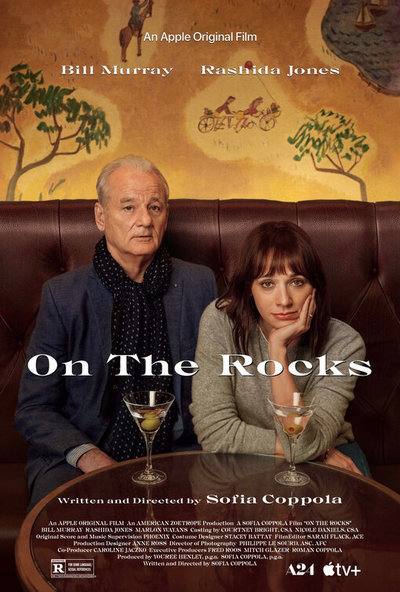
On the Rocks (2020)

Rashida Jones and Bill Murray deal with family problems in On the Rocks

Director: Sofia Coppola

Cast: Rashida Jones (Laura), Bill Murray (Felix), Marlon Wayans (Dean), Jessica Henwick (Fiona), Jenny Slate (Vanessa), Barbara Bain (Gran)

There is often a special bond between fathers and daughters. And it’s one that can be challenged if the father is “replaced” by a husband. After all, nobody wants to go from being the main man to second best. But how complex can this become when the father himself has a track record of selfishness and philandering? And is that the best person for the daughter to turn to when she starts to have doubts about her own husband? In Sofia Coppola’s gentle, light-weight film, Laura (Rashida Jones) reconnects with her roguish millionaire father Felix (Bill Murray), a successful retired art dealer, as she becomes increasingly worried that her husband Dean (Marlon Wayans) is having an affair with his attractive younger colleague Fiona (Jessica Henwick).

Coppola’s new film is an entertaining, low-key family and relationship drama that’s as light as a puff of air. Recycling many familiar ideas from her previous films – in particular the idea of women who seemingly “have it all” but are feeling discontented and trapped in their lives – it spins off into a fairly gentle parable of how doubts and insecurities can take over our lives, which mainly serves as a lovely little showpiece for two very engaging actors to entertainingly do their thing.

Rashida Jones balances the trickier part as a woman who’s half endearingly fond of her fun-loving dad, half infuriated and damaged by the way he wrecked his marriage to her mother and ruined her childhood (it seems her sister and mother are no longer on speaking terms with him). At the same time, she’s keen to hold onto her successful writing career and family life – while also facing an existential crisis as she feels herself becoming more and more stuck in a rut. There are distant echoes of the lack of focus Scarlett Johansson’s character felt in Lost in Translation, the many lonely women running the house in The Beguiled, or the rich girls cut adrift in The Bling Ring or Marie Antoinette.

Into all this drops the bombshell of her husband’s possible infidelity. Coppola gently uses this as a subtle investigation of human nature. Is infidelity and betrayal something all people have as common possibilities? Or does a history of infidelity in our families make us more ready to see it everywhere? Gentle is the word, as the film doesn’t really labour any of these points – perhaps worried that to do so would take it into deeper waters than it has the nerves to handle – and prefers to keep the mood light and frothy. This does mean that when – eventually – emotional moments come, they come rather from nothing, and a braver film would have balanced better the lightness of father and daughter chasing after a (possibly) cheating husband, with tension between that same father and daughter over his appalling past behaviour.

But then, the film perhaps falls rather in love with Bill Murray – and genuinely it’s pretty hard not to. Sofia Coppola again provides Murray with a part designed to match all his strengths. A charming performer, it’s very hard (near impossible) not to like Murray and as he coasts through the film with relaxed cool, arching an eyebrow there, a touch of glib lightness here, investing certain lines with a saggy sadness, others with a playful childishness, you’ll enjoy every moment. Murray makes perfect sense as the ageing rouéand cad, who has lived his life entirely for his own pleasure, and now is conducted by chauffeur from hotel to hotel, flirting with any woman who crosses his path.

It’s a delightful performance, with several scene stealing moments – not least when Felix is pulled over by the cops and charms his way out of a ticket with confidence, a bottomless contact book and charm. The cops even push-start his showy old sports car. Of course it’s the ultimate display of white privilege: I’m interested if Dean would have had similar success if it was him. The film shies away from any commentary on race at all, which feels like a missed opportunity. Does Dean put so many hours into work because he needs to prove himself in the ways people like Felix never had to? A different film might have wondered if sub-consciously Felix was even more jealous and concerned about losing his daughter to a black man. But these are areas the film chooses not to go into.

Instead it largely settles for being a charming meander, centred around Murray’s character, that doesn’t want you to look to closely and realise what a selfish cad he really is. Of course the film is really about Felix’s regrets about not having the relationship he would like to have with his children (and Murray more than gets this across with his skilful suggestion of sadness behind the eyes), but even this is a beat the film very lightly taps. What you end up with is a very light, almost whimsical film that moves through a series of events that wind up feeling rather inconsequential. A puff of air you feel would blow the film apart.

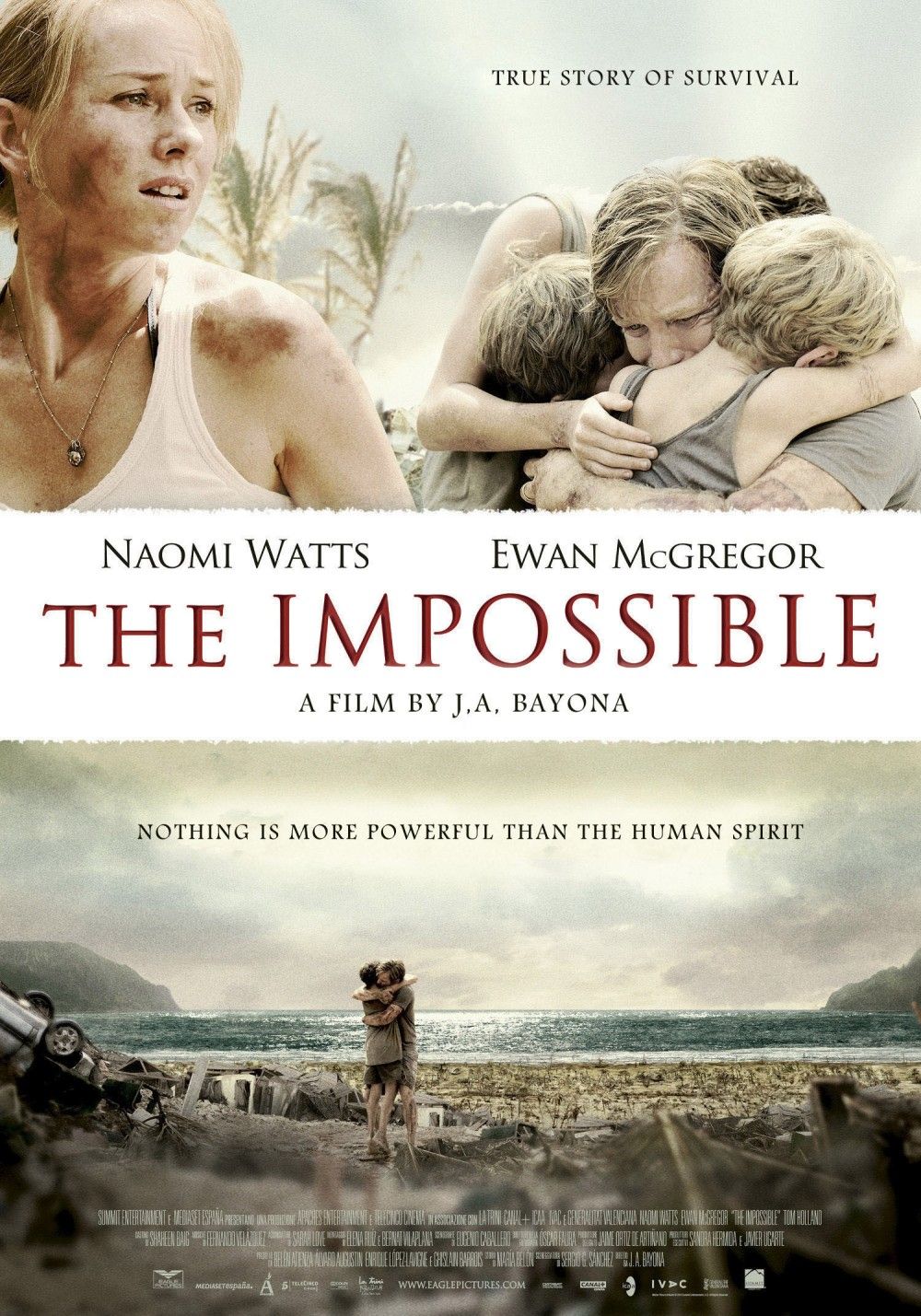
The Impossible (2013)

Naomi Watts and Tom Holland survive extreme circumstances in The Impossible

Director: JA Bayona

Cast: Naomi Watts (Maria), Ewan McGregor (Henry), Tom Holland (Lucas), Samuel Joslin (Thomas), Oaklee Pendergast (Simon), Marta Etura (Simone), Sönke Möhring (Karl), Geraldine Chaplin (Old Woman)

In 2004 the Boxing Day tsunami hit the Indian ocean. The resulting tidal waves devastated communities in several countries, with almost a quarter of a million casualties. The impact left rich and poor alike in a desperate struggle to survive. These terrible events form the basis of this emotionally powerful, if sometimes manipulative, film that recreates the remarkable story of a Spanish family, separated in the tsunami, who all miraculously survived.

Here the family is re-imagined as British (presumably to sell the film around the world a little easier, as they now all speak English). Maria (Naomi Watts) is a doctor who for the last few years has been a stay-at-home mum for her three sons Lucas (Tom Holland), on the cusp of becoming a teenager, Thomas (Samuel Joslin) and Simon (Oaklee Pendegast), both younger. Her husband is businessman Henry (Ewan McGregor). Staying in Thailand for a Christmas vacation, the family are separated when the tsunami hits their resort. Maria (badly injured) and Lucas make their way to a hospital, where Lucas struggles to get the life-saving treatment his mum needs. Henry is trapped in the resort with their other two sons, desperately trying to find his missing wife and child. Around them swirl an entire country of refugees and affected people, all of them trying to find family members.

The Impossible gets an awful lot right. The recreation of the tsunami is faultless. You’ll feel every moment of terror as the water rips through the family’s high-end vacation spot. As Maria and Lucas are swept far away by a deep swell of fast-flowing water (stuffed with mud, filth and debris) you’ll feel every blow to bodies as debris hammers into them, and feel like you’ve lived through every moment of desperation as the two fight against the current to reach each other. The sense of powerlessness and fear – a mother trying to be brave for her son, a son frightened and desperate for reassurance, ashamed at being scared – are powerful, deeply affecting and hugely immersive. Bayona’s experience of directing horror comes wonderfully into play here, as he knows exactly how to push our buttons and make us feel the emotion, fear and anxiety of the situation.

This tone continues through most of the film’s first hour which largely follows Maria and Lucas as they attempt to reach the hospital. Running on adrenalin, Maria only slowly begins to succumb to exhaustion as her grievous wounds (smashed ribs, a horrifically graphic leg injury) sap her strength, even while she tries to maintain an air of calm for her son. What is intriguing in this sequence is that, like a set of scales, as the mother becomes weaker the son becomes stronger – Lucas suddenly propelled into become an adult. Lucas increasingly takes decisions on how best to survive, argues at times for hard calls and becomes, in many ways, the adult in the situation.

This sequence is helped hugely by the performances of the two actors. The physical commitment of every actor isn’t to be doubted (Holland and Watts spent hellish weeks in water tanks filming – although this is only relative compared to the horror of the actual tsunami). Watts (Oscar-nominated) brings power to a mother who believes she is the only thing her son has left in the world, and must survive at all costs for him. Her buttoning down of her terror for as long as she can is deeply moving, and she brings the part significant heart. Tom Holland is simply a revelation as Lucas. He develops an authority well beyond his years, the complexity of the emotions he deals with – from fear to anger and defiance, determination, anxiety, relief and despair – would have challenged an actor three times his age. Holland never loses trace of the central kindness in Lucas – no matter how desperate the situation – and he is the undoubted star of the film, his portrayal of a child forced to grow up scarily quickly is deeply affecting.

Ewan McGregor offers similarly excellent work. Left searching through the rubble of his holiday home, McGregor brilliantly captures a sense of a father trying to deny that his control over events has disappeared. He excels in an extremely moving breakdown scene – after finally contacting his wife’s parents in the UK, he collapses in desperate, uncontrollable sobs of guilt and fear, apologising for not knowing what to do. It’s some of the actor’s best work, brilliantly tapping into his natural warmth for excellent effect.

Where the film struggles more is in its focus. While it is a story of one – affluent – Western family, so naturally its focus will be there, it does turn the rest of the cast into little more than extras. Some focus is given to the Thai people: a group of poor local people is crucial in saving Maria and Lucas’ lives and getting them to a hospital, their immediate humanity and generosity reducing Maria (and the audience) to tears of gratitude, but that’s the only real look we get at them. The hospital where a large part of the story is set is full of Westerners, bar the staff. All the victims we spend significant time with are white and Western (all are presented sympathetically, bar a pair of Americans for whom the tsunami is a holiday inconvenience).

But you could watch the film and not realise that so many of the people who died were part of the indigenous population – and while thousands of Westerners also perished, the survivors did at least return to their homes, whereas those living in affected countries lost everything.

The film’s other flaw is the manipulative tone it moves into late on, in particular a series of prolonged “missed moments” as the separated family walk around the hospital, just missing each other. This may well have actually happened, but is so contrived that it feels like a narrative flourish. The plot slows down in the second half as the characters search for each other. The film’s final title cards were a perfect opportunity to bring more focus to other victims – and to mention the death toll and impact on the countries – but avoids all of this to simply confirm it’s based on a true story.

The Impossible has lots of powerful moments. Its moments of emotion are raw and affecting and, manipulative as it is, you do celebrate when the family is reunited. But it’s also a film that loses its way a bit – which captures a superb survivalist story but then becomes too sentimental towards its end. And by not doing more to acknowledge the impact on the Thai people, among others, you can’t help but feel it turns this tsunami into something that affected rich, white, Westerners – which is harder to forgive.

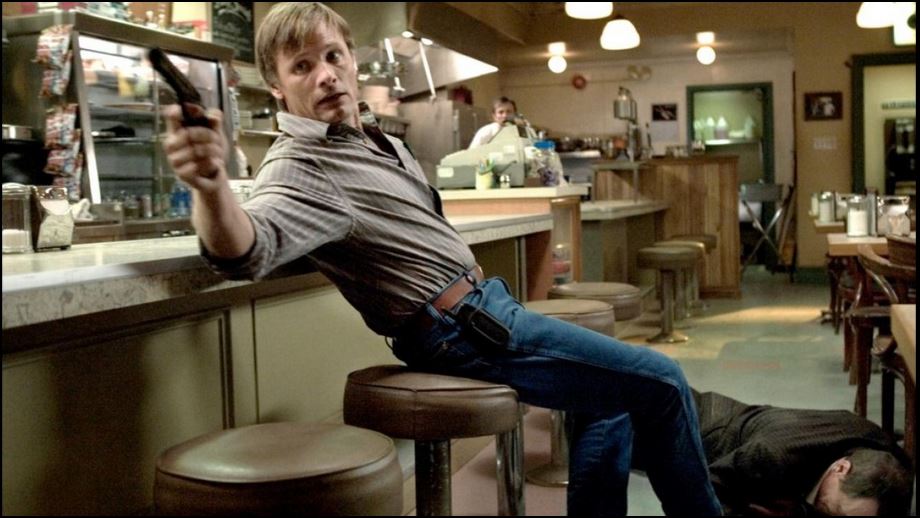
A History of Violence (2005)

Viggo Mortensen: Hero or Villain? A History of Violence

Director: David Cronenberg

Cast: Viggo Mortensen (Tom Stall), Maria Bello (Edie Stall), Ed Harris (Carl Fogarty), William Hurt (Richie Cusack), Ashton Holmes (Jack Stall), Peter MacNeill (Sheriff Sam Carney), Stephen McHattie (Leland Jones), Greg Bryk (Billy Orser), Heidi Hayes (Sarah Stall)

Cronenberg’s films redefined ideas around body horror. And one of his most accessible – and perhaps one of his richest and finest – films takes these ideas to another level by looking at the lasting – and damaging – impact of violence. That’s not just the immediate, visceral impact either – and lord knows Cronenberg doesn’t shirk on that here – but also the intense, long-term psychological impact and how it shapes entire lives. A History of Violence is a brilliantly told and superb piece of film-making that mixes thought-provoking content with a gripping, Western-tinged plot. It’s got a claim to being one of the best American films of the Noughties.

Tom Stall (Viggo Mortensen) is a regular Joe in a very small town in rural America. Running a small café, he lives a blissfully happy life of Americana with his wife Edie (Maria Bello), a lawyer, and their two children Jack (Ashton Holmes) and Sarah (Heidi Hayes). Their world changes forever though when Tom’s diner is held up late at night by two ruthless killers (Stephen McHattie and Billy Orser) and – with an instinctive ruthlessness – Tom ruthlessly dispatches the killers and saves the lives of his co-workers and patrons. His heroism makes him a local hero and brings plenty of excited press attention – but why does Tom seem so uncomfortable with this? Could it be linked to the swift arrival in the town of big-city criminal Carl Fogarty (Ed Harris) who claims Tom is none-other than Joey Cusack, psychopathic hoodlum from Philadelphia who gouged out Fogarty’s eye? Are Tom and Joey one and the same? And how will the doubts affect Tom’s family?

Cronenberg’s film brings brilliant tension to this question of identity, setting it in a very modern-feeling Frontier town, which has more than a sense of a classic John Ford western town, complete with disturbance from murderous figures from outside, shattering the peace. But the film adds that distinct Cronenberg touch by suggesting that, behind the quiet diners and picket fences, the real danger may already be at the heart of the town. Is Tom who he claims to be? Or is he a malignant dark force at the centre of the town (and his family) bringing destruction to everything? What other dark truths, you can’t help but think, might be hiding behind those shutters?

But then that’s what you get with violence. It taints and ruins everything it touches. Innocent lives are shattered. Families and loved ones are left mourning. But it also twists and shapes the personalities of its perpetrators. It marks them and changes them, washing out positive qualities and leaving those who use it the most drained, empty and uncaring. The film opens with a chilling long shot as McHattie and Orser check out of a motel. Cronenberg keeps the camera still and holds the camera still to study the casual body language and chilling lack of engagement of its killers (“Why the delay?” “I had a little trouble with the maid”). The scene continues for an agonising length, making us dread the reveal of what these clearly dangerous, amoral men have done in this motel – the reveal eventually shown with a clinical precision, which serves as an entrée to even greater horrors.

The final killing in the motel is the last time the film will shy away from the immediate horrors of violence. Even Tom’s heroic slaughter of the killers to save lives doesn’t shirk from showing us the impact on the bodies of the killers as Tom dispatches them – bodies torn apart by bullets, with McHattie’s killer left with most of his lower jaw destroyed beyond recognition. Later we’ll see the impact not only of bullets, but also the jerking death spasms of those who have had their noses smashed into their faces, necks snapped or bullets pass through their heads. Never is this glorified – and never are we allowed to simply categorise some killings as good or bad. No matter who it is, the human body will still suffer staggering trauma.

But violence’s impact isn’t only physical. As Tom’s increasing comfort with using his natural propensity for brutal killing (“Have you never asked, why is he so good at killing people?” Fogarty asks an Edie still in denial) grows, so violence takes over his family and starts to shape the actions and decisions of those around him. Arguments become more regular and more visceral. Tom’s gentle son brutally beats his bully at school. The loving father Tom suddenly slaps him across the face. Edie and Tom’s blissful life – we see them playfully making love on a date night – degenerates into conflict, distrust, flashes of violence and finally an angry, intense and passionate sex scene on the stairs that is an exact mirror image of their earlier love scene.

Edie is, for all her horror at Tom, partly excited by finding her husband has such a capacity for danger and brutality. That’s the dark attraction of violence in this film: it reveals secrets about ourselves. Tom seems to subtly shift within conversations from the gentle Tom into the chillingly distant Joey. Worst of all, the more that muscle is stretched the more Tom seems to take comfort and enjoyment in it. Taking what we want, with no regards for the consequences, is liberating and makes us feel strong. No wonder it’s so attractive. And no wonder violence has so shaped and defined humanity’s history. It tends to get people what they want and it can feel good. And it looks cool. Because despite the horrors of the impact of the violence, Cronenberg is also honest enough to admit that it’s exciting.

At the film’s centre is a superb performance of cryptic unknowability from Viggo Mortensen, in possibly his finest role. Mortensen uses micro expressions, small beats and body language that moves between casual and chillingly precise to show two personalities in one body. And Mortensen also demonstrates the struggle between these – between the man he wants to be and the man he might well be. He’s equally matched by Bello, wonderful as a woman who finds her whole life destroyed but can’t shake an unnerving attraction to this man of danger who has suddenly emerged.

The entire cast are pretty much faultless. Ed Harris gets a decent role of gruff menace, but the film is almost lifted in a final act cameo by William Hurt. Oscar nominated for (what amounts to) less than five minutes of screen time, Hurt is simply a force of nature as a Philadelphia crime boss kingpin, purring out his lines with all the fury of a caged lion, mixing a readiness for violence with a darkly comic menace. It relaunched Hurt’s career as a leading character actor – and arguably he should have nabbed the Oscar for it.

Cronenberg’s film engages with ideas of identity throughout. What defines us? The things we’ve done? The choices we’ve made? How many years need to pass before we can say that we’ve changed? What makes us better? And can we decide the sort of people we want to be? It’s impossible to say for sure. If your whole family life is founded on a lie, how do you know what about yourself is true or not? These are fascinating questions and the film offers no easy answers at all. Can Tom return to the life before a violent history shook everything up – perhaps he can, perhaps he can’t. But one thing’s for sure (and Cronenberg makes clear) it won’t be a simple overnight fix and a Hollywood ending. For all the hoodlums Tom dispatches, the real damage is on the workings of his family and the real casualty is the life his family thought they had. And those wounds don’t heal.

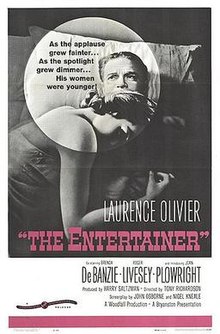
The Entertainer (1960)

Laurence Olivier excels as a faded music hall star in The Entertainer

Director: Tony Richardson

Cast: Laurence Olivier (Archie Rice), Brenda de Banzie (Phoebe Rice), Roger Livesey (Billy Rice), Joan Plowright (Jean Rice), Alan Bates (Frank Rice), Daniel Massey (Graham), Shirley Anne Field (Tina Lapford), Thora Hird (Mrs Lapford), Albert Finney (Mick Rice)

In the late 1950s Laurence Olivier was worried about his career. While he was still doing Shakespeare and Coward comedies (intermixed with the odd film), the world of acting and theatre was moving on. Not least as John Osborne’s Look Back in Anger was taking the West End by storm. Olivier seemed the polar opposite of the “Angry Young Men” of British theatre, a dusty relic. So Olivier changed gears – and his entire life – by asking to be cast in the lead role of Osborne’s next play The Entertainer. Olivier’s sensational stage performance – captured here on film – radically changed the path of both his career and his life, with his long-troubled marriage to Vivien Leigh broking down during it. But he also cemented himself as the leading British actor.

Olivier plays Archie Rice, a failing never-has-been end-of-pier comedy performer at an unnamed Seaside town in 1956. Rice’s routines are old-and-tired, his comedy tinged with desperation and he’s all but broke. Archie’s audiences are tired, bored and unamused. His home life, with his faded former beauty champ wife (Brenda de Banzie) is on the ropes due to his constant infidelity. His father (Roger Livesey) – a music hall celebrity with real talent – loves him but thinks he’s a disasater waiting to happen. His son Frank (Alan Bates) adores him but his daughter Jean (Joan Plowright) is more realistic. Archie through continues to peddle the idea of a success being round the corner, trying to put together a hit revue starring his latest mistress (Shirley Anne Field) and funded by her parents. Things will not end well.

The Entertainer’s main claim to historical note is that it captures that sensational stage performance of Laurence Olivier in the lead role. Olivier had always liked to claim that, with a few zigs and zags in his career, he would have become a third-rate comedian. His performance – with its ingratiating patter, it’s seedy sexually ambivalent campness, his selfishness and self-obsession and greed – is brilliant. Archie’s entire life is a desperate struggle to get himself the career he wants – while trying to shut his eyes to his own lack of talent (of which he is painfully aware). Olivier captures superbly not only the front of a man bent on self-promotion, but also the dead-eyed horror of a man who is aware all the time that he is dying inside.

Olivier’s eyes are drill-holes of death, and his life is an exhibition of selfish patter, with a constant sense of performance in every inch of Archie’s life. He’s a run-down, finished and disillusioned man trying to pluck what few moments of pleasure he can from a life he is only going through the motions in. All of it covered with a coating of self-delusion that quickly crumbles into sweaty desperation. While the film can only give a taste of the Olivier stage performance, it re-enforces Olivier’s energy, creativity and bravery. Olivier’s both bravura and tragically tired music hall performances alone are worth the price of admission.

Away from Olivier’s exceptional capturing of the washed up patter of the sleazy loser, it’s easy to overlook most of the rest of the film. But it’s directed with a kitchen-sink freshness by Tony Richardson, who brilliantly captures the faded grandeur and grubby failure of a failing seaside resort. Osborne’s play used the decline of music hall as a metaphor for the decline of the British Empire and while the film (for all its Suez references) doesn’t quite convey this, favouring instead domestic tragedy, it still perfectly captures the crumbling world of Rice and his ilk. Rice’s father – Roger Livesey, excellent and about a year older than Olivier – is a relic of the success of this era, and still carries some of its glamour, but still lives as a virtual tenant in the Rice home, eating spare cake where he can.

While the film is dominated by Olivier, this presentation of the play as a domestic tragedy works rather well. Brenda de Banzie (also reprising her role from stage) is very good as an ex-glamour puss (and former mistress of Archie) now turned into a faded, depressed matron, drunkenly bitter about what her life has (not) led to. Joan Plowright is excellent as the knowing daughter, alternately sympathetic and appalled at her father. Shirley Anne Field’s naïve lover is suitably naïve, under the control of her battleaxe mother, well played by Thora Hird. The cast is rounded out with Alan Bates and Albert Finney (both in debuts) as Archie’s sons.

While the film feels a little overlong at times, and is perhaps too much in thrall to Olivier, it offers a neat kitchen-sink view of failure and corruption in British life of the 1950s. There is, of course, no hope and no second chances here. Only the long, wearying decline and rotting as Archie’s life disintegrates under pressure and his own incompetent self-delusion. 

8½ (1963)

Marcello Mastroianni plays a version of the director in Fellini’s inspiring

Director: Federico Fellini

Cast: Marcello Mastroianni (Guido Anselmi), Anouk Aimée (Luisa Anselmi), Rossella Falk (Rossella), Sandro Milo (Carla), Claudia Cardinale (Herself), Guido Alberti (Pace – Producer), Jean Rougeul (Carini Daumier), Mario Pisu (Mario Messabotta), Barbara Steele (Gloria Morin), Madeline Lebeau (Herself), Eddra Gale (La Saraghina), Ian Dallas (Maurice, clairvoyant’s assistant)

If there is a single director associated with self-reflecting films its Federico Fellini. Frequently recognised as one of the greatest and most influential directors of all time, many of his films use baroque imagery and a masterful interplay of reality and fantasy to delve deep into both its director’s own subconscious and the swirling pressures and internal conflicts that make us the people we are. is, perhaps, the greatest expression of this style of film-making, a giddy sensory delight that demands investment and wisdom to unpeel its layers and give you a chance of finding its meaning.

Frequent Fellini collaborator Marcello Mastroianni plays Guido, a thinly veiled portrait of Fellini himself. Like Fellini, Guido is a successful and visionary director, facing pressure to come up with his ‘next masterpiece’ after the glorious success of his previous film (in Fellini’s case La Dolce Vita). Like Fellini, Guido is struggling to work out exactly what statement he wants to make next, instead allowing himself to become distracted by personal issues and day-dreaming flights of fancy (literally so in the film’s opening, where Guido imagines himself flying through the sky before being tethered and pulled to earth by his producer). Most of all these distractions revolve around women, from his wife Luisa (Anouk Aimée), his mistress Carla (Sandro Milo) and recurring daydreams of Claudia Cardinale (playing herself) who could just be the muse he is looking for. 

To me one of the things that can make a film great, is when the ideas in it are not obvious and tired, but when they defy obvious characterisation but throw themselves open to further thought and different interpretation depending on your mood. definitely meets this criteria, combined with the fact that it’s beautifully made and very entertaining.

Fellini’s deep dive into his own subconscious is deeply involving and intriguing. The film dances from beat to beat between reality, memory and fantasy – often leaving the lines blurred about which of these we are watching at any one time. That’s part of Fellini’s idea, that our minds are complex enough to exist on all three plains at the same time, to juggle within ourselves what’s real, what we remember, what we imagined or wished could happen and how we create our own versions of all these. 

In the build-up to the film, Fellini famously struggled to identify what he wished to make and what it should be about. But while you could say that Fellini turned this creative block into a film – that, when unsure about what to make a film about, he made a film about a director who didn’t know what to make a film about – that’s to suggest a vagueness in its execution that isn’t the case. Fellini knows exactly what he’s doing here: every scene serves its purpose to explore the ennui and feelings of entrapment that an artist feels, both in his life and his craft. Far from being ambling, the film is carefully constructed and brilliantly focused.

Guido is hounded at every corner by people wanting something from him. Be it producers demanding progress, extras looking for roles in his film, actors demanding insight for their characters to his mistress looking for his attention or his wife demanding more focus from him on their marriage. The film is Guido attempting to identity among all these demands what he needs and wants from his own life – and how to build on that. It’s telling that most of Guido’s fantasies that litter the film revolve around his demands for other people to service him – be that romantically, literally or spiritually. Is part of the point of the film that we are all selfish to some extent? 

It’s the film’s exploration of day-dreaming fantasy that gives it some of its most extraordinary work, coupled with Fellini’s superb and striking visuals. The opening sequences of Guido imaging literally flying out of a traffic jam (and away from the stares of the other drivers) into the freedom of the sky – before being literally pulled back down to Earth – shows how these flights of fancy give us windows into our own desires. Guido’s a confused man looking for focus and something to believe in – his constant fantasies of Claudia Cardinale seem in part longing for her to solve his creative problems, part sexual, part almost motherly, as if she can take some decisions away from him.

Other fantasies – such as an imagined conversation with a priest for spiritual guidance – lean on finding the sort of structure his life seems to be missing. (And also, in a fantasy confession of his ennui to the same priest, perhaps a need again to be told what to do.) Most of his fantasies though revolve around romance. He imagines his wife and mistress sharing anecdotes before dancing away arm-in-arm. Most famously, an extended sequence shows Guido imagining a harem containing all the woman in his life, where he is the centre of attention – and women who age beyond his interest are politely banished upstairs “to be well looked after”. The women range from long-standing crushes and mistresses, to half-glimpsed dancers and an air hostess with a sexy voice. 

There is a striking honesty about Fellini putting something like this on film – and then use the fantasy he is displaying to both comment on and criticise his own internal fantasies. In the fantasy, unlike real life, his wife is an almost maternal figure (Guido has already jumped at one point in his reverie earlier in his film, to remember his mother only for her to turn into his wife), the women address Guido with harsh truths about everything from his character to his sexual performance, a revolt breaks out in the fantasy harem at Guido’s banishing of early crushes as they age (one which Guido stamps out). The harem is further set within his childhood home, adding a whole other layer of odd sexuality to it, as part of the women’s duties are to bath and wash him exactly as his grandmother did as a boy. It’s a sequence that lays itself open to multiple interpretations, but never feels exploitative or sleazy.

Large chunks of the rest of the film take place in a hard-to-define space between dream, memory and reality. Frequently scenes shift in nature half way through – Guido is followed throughout the film by a critic-turned-screenwriter, full of criticism of the intellectual shallowness of his work who, mid-rant, he imagines taken away for execution by some toughs. Gentle tracking shots around the retreat Guido is staying at – scored with a mixture of classical music and Nina Rota’s wonderful score – trip a line between real and imaginary in the sights we see. Conversations are intercut with imagined moments or might simply be happening in a pretence rather than a reality.

If it sounds like a difficult view, it’s not. Because for all the intelligent analysis of the ennui that can come from a creative block and the internalised struggle to find a balance between all the impulses that pull on us, it’s also a hugely entertaining film. Funny, wise and superbly acted. Mastroianni is brilliant as Guido, in turns giddy and world-weary, confused and resigned then ambitious and dreamlike. The rest of the cast are also excellent, with Anouk Aimée delightful as his long-suffering wife and Sandro Milo hugely entertaining as a needy but largely ignored mistress.

Fellini’s dives into memory also add both a richness and an emotional heft to the film. There are some beautifully nostalgic sequences that head back into the past. Guido’s childhood is explored with a series of wonderful vignettes. From his childhood in a wine distillery with his grandmother and aunts, full of playful energy, to the first stirring of a sexual awakening watching a prostitute dance on the beach (a quite extraordinary scene of playful flirtation, but still rather oddly innocent in its way). These scenes have captured the imagination of directors across the globe, with their power and ability to capture both the nostalgia of recollection, but also a distant magic of memory and the impact these still have on us in the present. But no body does this better than Fellini.

The best thing that can be said about is that I can imagine watching it hundreds of times, and each time seeing something fresh and new about it. And it works because its ideas are profound without being pretentious and easy enough to engage with, while never shallow. It brings depth and richness to complex internal struggles and repackages these into a rich experience that enlightens both memory and creativity. A great movie.

A Quiet Place (2018)

John Krasinski needs absolute silence in A Quiet Place

Director: John Krasinski

Cast: John Krasinski (Lee Abbott), Emily Blunt (Evelyn Abbott), Millicent Simmonds (Regan Abbott), Noah Jupe (Marcus Abbott), Cade Woodward (Beau Abbott)

I think we can all agree that 2020 has not been a good year. But it could have been worse: in A Quiet Place, by 2020 mankind has been almost completely wiped out by blind extra-terrestrial alien predators who use their super-sensitive hearing to hunt down survivors. Even Covid-19 doesn’t sound quite as bad as that. To survive demands absolute silence as even the slightest noise could lead to a pack of the ruthless, seemingly invulnerable, aliens descending.

The few survivors include the Abbott family, on an isolated farm somewhere in the American countryside. Father Lee (John Krasinski) has painstakingly converted the house as much as possible into a silent place, with sand on every walking surface outside, sound proofed rooms, batteries out of everything that could make a noise, light and camera warning systems and strict rules on no shoes and no talking – nearly all communication is done in sign language, which the family is fluent in because daughter Regan (Millicent Simmonds) is deaf. But there are troubles on the horizon – not least because Lee’s wife Evelyn (Emily Blunt) is heavily pregnant, and the chances of childbirth – and a new-born baby – happening in silence is dangerously low.

A Quiet Place takes a fresh and ingenious concept and lays it on top of a story that otherwise hits a fair number of expected tropes. But that doesn’t matter too much when the story is told with such freshness and confidence by Krasinski and the idea at its heart genuinely feels like something we’ve never seen before. This is a film where just the very prospect of sound is tense, and noise is the principle villain. And for anyone who’s ever tried sneaking past anything silently, you’ll know how hard it is to say absolutely silent.

The concept means that even the sight of things we know could cause sound builds tension. A nail sticking out of a step to the basement causes huge worry (because we know standing on that barefoot is really going to hurt). The running through a field of wheat suddenly feels like a terrible risk. Just a glass falling off a table could lead to death for everyone. As for the tension you feel at the possibility Evelyn could go into labour and need to deliver a baby in total silence…

It’s the skilful use of everyday concepts like this that gives the film a special sense of dread. This is added to by putting a very clear family unit at the heart of this drama. At root, this is a film about the lengths that parents will go to in order to protect their children and to try and build a safe world for them. Lee is determined to pass on as many of his survival skills to his son, while Evelyn struggles to keep some form of normality going in their home. The family is also coping with deep-rooted grief and unspoken tensions, falling out from the tragic loss of one of their members early in the invasion.

This adds a further generational tension, with the father struggling (on some level) with feelings of guilt at his own failure to protect his family and shamefully feeling some blame towards his daughter for partially causing the events that led to this death. The daughter in turn fears she has lost her father’s love, and can never be forgiven by anyone (including herself) for her mistakes. While there is nothing earth-shatteringly original about this, it helps us to invest solidly in the family and to care deeply about what happens with them.

Krasinski’s direction is sharply acute and brilliantly detailed and his own performance extremely humane and engaging. He also gets an equally fine performance of tenderness and determination from (his real-life wife) Emily Blunt, while the work from Simmonds and Jupe as their children is equally well-judged and excellent. This work is particularly impressive since most of the film takes place in near silence – there isn’t a clearly spoken word of dialogue until almost 45 minutes in and no verbal conversation until nearly the hour mark.

This involving family drama sits very comfortably in the middle of a horror concept. So well in fact that it doesn’t matter that much of it pretty unoriginal or even a little predictable. After a first reel shock, the film settles into more expected rhythms. There are certain gaps that raise questions – I had to wonder how Lee and his family managed to build so much in this collection of theme houses while making no sound at all? While the weakness of the creatures seems so obvious, I’m amazed that it was never stumbled upon while governments and the military fought against them.

But that doesn’t matter too much when A Quiet Place is largely an involving thrill ride with emotive characters whom you care deeply about. And on that score, Krasinski has made a fine horror thriller with a concept that will make it stand out in the memory from other genre pics.

Life is Beautiful (1998)

Roberto Benigni uses humour to hide the horrors of the Holocaust from his son in Life is Beautiful

Director: Roberto Benigni

Cast: Roberto Benigni (Guido Orefice), Nicoletta Braschi (Dora Orefice), Giorgio Cantarini (Giosue Orefice), Giustino Durano (Uncle Eliseo), Horst Buchhoolz (Dr Lessing), Marisa Paredes (Dora’s mother), Sergio Bustric (Ferruccio)

How can we confront the dark facts of our past? It’s a question that perhaps feels more relevant with each passing day. History is full of horrors and terrible deeds. And it’s easy to think of those who lived through terrible events as merely victims, a single homogenous mass of the suffering. Life is Beautiful however tries to look at perhaps the most terrible of events, the Holocaust, with an eye that acknowledges the terror but also suggests that love and hope can exist alongside the worst parts of humanity.

In Tuscany in 1939, Guido Orefice (Roberto Benigni) is a sharp-witted, if accident-prone, waiter who dreams of setting himself up as a bookshop owner. He falls in love with Dora (Nicoletta Braschi) and, after a courtship involving “accidental” meetings, comic interludes and finally Dora leaving her engagement party (where she is due to marry a brutish bully), they marry. A few years later they have a son, Giosue (Giogio Cantarini). But the war has gone against Italy, and now Guido and Giosue, as Jews, are arrested and sent to a concentration camp. There Guido does everything he can to try and protect his son from the horrors around him, by pretending the camp is an elaborate game to win a tank, with points won if he can hide from the guards and not cry. Guido spins his own forced labour, and danger of execution, to Giosue as part of the same game.

Directed by and starring Roberto Benigni, Life is Beautiful was Benigni’s statement that events as terrible as the Holocaust cannot drive hope and love from a father’s heart, and that both tears and laughter can come from the same beautiful place in the human spirit. It’s been called a comedy about the Holocaust, but that’s unfair. Guido may use comedy and try to turn everything that happens to them into a camp an elaborate game for his son – but that’s to stop a 5-year-old child from being traumatised. For us watching, we know the terrible place Guido and his son are in – and we know the appalling things that are happening around them.

Life is Beautiful is really two films, and only one of them is a comedy. The first half is a Chaplain-esque love story, a clumsy but good-hearted and comic scruff-pot winning the heart of a decent and loving woman. It’s full of the sort of slapstick and comic routines you could expect from the masters of classic American silent comedy. It hits every expected beat, from our hero being the sort of wily but honest and kind little guy we can root for, to all his opponents being sharp-suited bullies while his love is charming and tender. For the first half of the film there is little that, really, stands this film out from the ordinary. Benigni is a charming performer – with just the right mix of bashfulness and bombast – but it’s nothing you’ve not seen before.

But then that half of the film exists to give the second half of the film its power. As soon as the time-jump happens, it’s like watching the Little Tramp wander into a horrific tragedy. From the moment Guido closes the shutters on his shop – to reveal the words “Jewish Store” graffitied across it – the sunny Tuscan world around our heroes grows darker and darker. 

Benigni deliberately avoided a sense of realism to his Holocaust imagery – he felt only documentary could really do it justice, so avoided making his death camp look or feel anything like a real camp – but the audience is more than capable of filling in the blanks. The second half of the film, with Guido and his son in the camp, is not funny at all. But that doesn’t stop Guido busting a gut to entertain his son at every moment – or prevent us building a deep emotional connection with a father who is suppressing his own pain and fear in order to try and protect his son. The father who knows the business of this camp is death, who knows that Dora has also been arrested and placed in the women’s camp. Who knows their only hope is to pray the war ends before they die. It’s bleak stuff, and the fact that Guido keeps up a front of humour doesn’t make the film a comedy.

It’s why it the second half of the film carries such impact. Not only have we invested in the comedic warmth of these characters in the first half, but seeing them trying to keep hope alive in their own way in the bleakest of situations is completely moving. Sure there are funny moments – the most notable being Guido’s improvised interpretation of the guard’s explanation of the camp rules into an explanation of the rules of the game he is trying to get his son to believe in – but really it’s not a comedy because we know too well the dangers that surround them.

Sure the film is sentimental and in many ways manipulative. It would be hard pressed to not create emotional moments from such material, and from the sacrifices of Benigni’s character. But it still works and the film has a few shrewd moments of personal insight, not least from the introduction of Horst Buchholz’s German doctor. Dr Lessing knows Guido from his days as a waiter in Tuscany – but encountering him in the camp waiting tables at the officers’ mess, it doesn’t even begin to occur to him that Guido’s position has changed or his family’s lives are in mortal danger. The dehumanising of this extermination system doesn’t just turn people into murderers, it turns decent people into thoughtless observers.

Life is Beautiful does carry a real emotion wallop towards its end. It was famous as “the Holocaust comedy”, but it uses comedy and the conventions of Hollywood romance to build our empathy for characters who then find themselves in a Holocaust movie. And it treats the Holocaust itself with a deep reverence and respect, never making the deaths of millions anything like a joke. Sure, you could argue that it still downplays the terrors of the Holocaust – but then we know the background so well, do we need the gaps all filled in? And while you might say hope from such a terrible setting is not the message that should come out, sometimes it feels like the message we need.

Tokyo Story (1953)

Family life is troubled in post-war Japan in Yasujiro Ozu’s masterpiece Tokyo Story

Director: Yasujirō Ozu

Cast: Chishū Ryū (Shūkichi Hirayama), Chieko Higashiyama (Tomi Hirayama), Setsuko Hara (Noriko Hirayama), Haruko Sugimura (Shige Kaneko), So Yamamura (Kōichi Hirayama), Kuniko Miyake (Fumiko Hirayama), Kyōko Kagawa (Kyōko Hirayama), Eijirō Tōno (Sanpei Numata), Nobuo Nakamura (Kurazō Kaneko), Shirō Ōsaka (Keizō Hirayama)

When you think about Japanese cinema, many people’s minds turn to the work of Kurosawa, or high tempo manga animations. But there is another side to Japanese cinema – a more careful, meditative, almost lyrical side – and few directors express that better than Yasujirō Ozu. Tokyo Story is his masterpiece, a film so masterfully put together – but also so restrained and simple in its telling – its reputation has grown until it is considered a contender for the greatest film ever made. 

Ozu’s trick with Tokyo Story is to tell a story that is focused on a very particular time and place, but also brings with it a universal relevance. Elderly married couple Shūkichi (Chishū Ryū) and Tomi (Chieko Higashiyama) travel to Tokyo to visit their grown-up children, doctor Kōichi (So Yamamura) and hairdresser Shige (Haruko Sugimura). But their children now have their own work and life pressures – living in small, crowded homes in Tokyo that double as business places – and they just don’t have the space or time to spend with their parents. The only person who makes their time for them is their daughter-in-law Noriko (Setsuko Hara), the probable-widow of their son who went missing during the war and has not been seen in over eight years. 

Ozu’s film is about a transition in Japanese culture, as the country modernises in the post-war environment and the natural deference and familial links that had previously powered much of its way of life began to fade in importance. Families are now distant, patience and respect between the generations is fading, and many in the elderly generation struggle to understand their children. In the same way, the younger generation forge their own lives and see their priorities change from those of their parents. This is an acute issue at this post-war era of Japan – but who hasn’t experienced some level of this inter-generational confusion?

That’s perhaps why Tokyo Story carries as much impact as it does. A quiet, reflective and gently paced film, it’s striking that it doesn’t place blame or cast characters as heroes or villains. Instead, everyone is, by-and-large, trying their best, struggling with pressures of their own. While it’s easy to see the children as uncaring – it’s also clear that their own lives are hugely busy, with demanding workloads and the homes they live in are small, cramped and difficult for them to live in. Shige and her husband effectively sleep on the floor of their hairdressing parlour. Kōichi struggles to fit himself, his wife, two children and a doctor’s surgery into what looks like a pretty simple two-up-two-down home. While the children are frequently thoughtless – or quick to persuade themselves that what’s easy for them is also easy for the parents – the film makes clear that there are reasons for this.

Nevertheless our sympathies are clearly meant to lie more with the parents rather than their children. Polite, quiet and determined to think the best of their children, the parents are reserved, dutiful relics of a very different Japan. They fall over themselves to thank their children for any time or patience shared with them, and feign enjoyment of the spa (packed full of young party people) their children send them to as a treat (it takes one night of no sleep for them to decide, quietly, to leave). These are people determined not to rock the boat, resolved that everyone is acting for the best. 

However, it is clear the emotional impact of these events is greater than they might expect. Shūkichi, it emerges, has a history of too much drinking – and a few days in Tokyo is enough for him to hook-up with some old drinking buddies and stumble into Shige’s home late at night, drunk as a skunk. But the emotional impact is also clear in their growing closeness and regard for their daughter-in-law Noriko, the only person in Tokyo who seems to make an effort to spend time with them, rather than their own children.

Superbly played by Setsuko Hara, with a gentleness, slight timidity and genuine sense of kindness that makes her the warmest character in the film, Noriko thinks the best of everyone and desires all to be happy. For her adopted parents, however, her good treatment slowly awakens to them to the way Noriko has put her own life on hold since the disappearance of their son. His photo still hangs like a shrine in her home, and she shows no interest in moving her life on. Warm and kind as she is, she is as lonely as the parents. Tomi in particular becomes overwhelmingly concerned for this vulnerable person – perhaps a child that needs her protection in a way her own children no longer do. Staying the night at Noriko’s, their conversation touches – in a very reserved way – on deep emotional trouble. Tomi stresses her desire for Noriko to be happy – and as they go to sleep seems to be overcome with tears and emotion. But she won’t speak openly of her worries for Noriko.

It takes later events, and Tomi’s later illness, for Shūkichi to broach the subject openly, kindly telling Noriko that both of them worry about her future happiness and her waiting for a man who will never come back from the war.  They urge her to restart her life – a suggestion Noriko meets with an emotional out-pouring of tears, but also perhaps a sense of being given permission to re-start her life.

This emotional content plays out with all the more power due to Ozu’s restrained and quiet shooting style. A huge majority of the film is shot in mid-shot, with the camera positioned at the height of someone kneeling on a tatami mat (Ozu called them his “tatami shots”). This has the impact of making events play out gently in front of the viewer, a bit like a play, but giving things a strangely intimate stillness. The sort of cinema language we are used to – cross-cutting and over-the-shoulder shots for conversation – is completely absent. Ozu rarely cuts, keeps the camera more-or-less stationary and only occasionally throws in shots where the characters deliver dialogue effectively straight at the camera. This effect in particular adds to the intimacy, making us part of the scene with the characters expressing their thoughts or concerns directly to us.

In addition, Ozu beautifully allows scenes to both gradually play in and out. The cutting of most scenes allows an establishing shot of a location, followed by a prolonged series of tatami shots that start before the scene proper begins and then frequently continues for a few moments after the scenes finish. Again this makes the film all the more personal, as the characters expand and live beyond the confines of the requirements of the scenes. Watching characters silently continue to pack – or quietly sitting having run out of things to say – in some way carries as much power as dialogue, and really immerses you in the world of the film.This quiet, meditative effect becomes increasingly engrossing, as Ozu’s slow-paced, gentle filming style lets this small-scale story play out very effectively. Although not much really happens in the story, this story of miscommunication between the generations gains a universal strength the more you let yourself get lost in it. The acting is excellent, with Chishū Ryū (playing a character twenty years older than him) and, in particular, Chieko Higashiyama extremely moving and heartbreakingly real as the parents. But what really gives the film its heart – and its sense of hope – is the beauty of Setsuko Hara’s Noriko. It’s this character that provides the hope for a warmer, stronger, more understanding future for all. As Noriko returns to Tokyo at the film’s end – cradling a gift – we hope that a cross-generational understanding is in our grasp. 

Ozu’s final shot features the sounds of traditional children’s singing being drowned out by a train. It’s a sign of how progress has changed our society – but the film carries enough hope for us to promise ourselves that things will get better.

Chinatown (1974)

Jack Nicholson struggles against the system – and loses – in Chinatown

Director: Roman Polanski

Cast: Jack Nicholson (JJ Gittes), Faye Dunaway (Evelyn Cross Mulwray), John Huston (Noah Cross), Perry Lopez (Lt Lou Escobar), John Hillerman (Russ Yelburton), Darrell Zwerling (Hollis Mulwray), Diane Ladd (Ida Sessions), Roy Jenson (Claude Mulvihill), Roman Polanski (Man with Knife), Joe Mantell (Lawrence Walsh), Burt Young (Curly), James Hong (Kahn)

“Of course I’m respectable. I’m old. Politicians, ugly buildings and whores all get respectable if they last long enough.” So says Noah Cross in the superlative Chinatown, the sort of the film you’ll want to start watching again the second it ends. Cross is of course a respectable businessman and an absolute monster. And his mantra applies just as much to Los Angeles as envisioned by Polanski and writer Robert Towne. It’s a corrupt, dirty place where terrible, appalling things are regularly allowed to happen but everyone pretends the place is fabulous. It’s such a sublime film, while also so bleakly, despairingly dark that you are surprised you fall in love with its excellence.

In 1937 private detective JJ “Jake” Gittes (Jack Nicholson) is hired – or so he thinks – by the wife of Water Board director Hollis Mulwray (Darrell Zwerling) to investigate his infidelity. When he does seem to uncover it, he founds not only was his client not Evelyn Mulwray (Faye Dunaway), but that shortly after his pictures appeared in the press (without his knowledge), Hollis himself winds up dead, having drowned in a dry river bed. What does this all mean? And how does Evelyn’s father (and Hollis’ business partner) Noah Cross (John Huston) play into this all? Gittes investigates further, to uncover shady schemes to manipulate the cities water supply for profit, under-handed business deals and unspeakable family crimes that leave lives shattered.

Polanski’s film has such a timeless wonder about it, perhaps because it was filmed with such careful and beautifully designed classicism that it has never dated. Seen at the time as a film told in the style of the classic film noirs (although it is of course full of blazing LA sunshine), but crammed with a darkness and corruption classic Hollywood shied away from it now seems to take its place as the most masterful of Hollywood mysteries. It’s recreation of 1930s detail is perfect, while its film making is restrained, controlled, unflashy but creates an atmosphere of simmering mystery and tension behind every frame. It’s a masterfully restrained piece of film-making that deals with matters of shocking horror.

And tension there should be as this explores the darkest underbelly of America. With Jerry Goldsmith’s sublime music score under every beat – riffing on classic Hollywood tunes, but with a haunting faded grandeur that suggests a whole melancholic world going to the wall – the film looks like classic, beautiful America but uses that to counter-frame terrible, heartless acts. LA is corrupt from top to bottom. Businessmen are asset stripping the city and its surroundings to line their own pockets. Wealth brings total immunity from all sorts of crimes, regardless of how foul they are. Even family ties are polluted by terrible lusts and greed. And for Gittes, Chinatown is representative of this – a one word reference to his career as a cop, where his ability to do any good at all was forever compromised by corruption.

Jack Nicholson’s performance as Gittes is central to the film’s success. He’s in every scene and the story is told entirely from his point-of-view – so much so that when he is knocked out, Polanski slowly fades out sound and picture. Nicholson is best known for his flamboyance, but here he brilliantly underplays too present a complex picture of an idealist disguised as a cynic. Gittes tries his best to coolly accept the world is what it is, and even that he is just trying to get what he can out of it. But he’s in fact a decent and honourable man with a deep-rooted sense of morality, who struggles in the world because it’s ill-suited for a guy who just wants to do the right thing. He has a sort of outdated charm and nobility about him, an almost courtly gentleness at times, and only lashes out in anger when he feels is either being lied to or his sense of honour impugned. He has a natural sympathy for the little guy and for all he may try to spin the sort of cynical Marlowesque dialogue, you don’t feel his heart is really in it. He is a dreamer who wants to believe.

And he’s totally ill-suited to this world he ends up with. Gittes uncovers every inch of the mystery – but nothing he does has any positive impact. He completely fails to protect anyone, his attempts to ensure happy endings end in disaster, he’s regularly beaten to a pulp (most famously having his nose slit by a cameoing Polanski as a weasily little hoodlum) and he’s at sea when dealing with most of the characters of the film. Even his carefully built emotional armour breaks down, leaving him vulnerable to making even more mistakes. There are perhaps few characters so ineffective – and again it’s a credit to Jack Nicholson’s charisma that he makes this character feel like such a proactive figure.

Gittes senses at all times that there is some dark secret underpinning all these events he encounters. But he’s too innocent to begin to suspect the horrors that Evelyn has put up with at the hands of her abusive father. Faye Dunaway brings a marvellous fragility and vulnerability to a character who transcends the traditional femme fatale. (Dunaway famously hated both Polanski and working on the movie). At first seeming imperious and even suspicious, the film slowly breaks her character down into a wounded and vulnerable woman putting on a front, determined to try and protect herself but doomed to forever be the victim.

And Noah Cross is the dark heart of this. Played with a sensational sense of gentility masking supreme corruption and greed by John Huston, Cross is genteel and polite while being ruthless and grasping. He also reveals himself capable of huge, destructive acts, indifferent to the pain this causes and utterly implacable in his vileness. Huston’s performance – he’s only in three scenes – embodies the terrible dark heart of America, where money and power it seems can let you get away with anything you want, no matter who knows. (And I love the way he persistently mispronounces Gittes name, turning it into a growling Anglo-saxon “Gits”.)

Robert Towne’s superb screenplay is perfectly paced and pieces together an intricate and fascinating plot where every small detail mounts together into a devastating whole. It’s a film that demands careful watching, and that revels in small details and character beats that gain greater impact the more you see the film. Brilliantly, the macguffin here is water – the control of a substance that should be a right for every man, becoming a superb metaphor for the theft from ordinary Americans of justice and their country. 

The film culminates – as you feel it must when watching it – in a nihilistic ending where evil triumphs and good loses out. “Forget it Jake – it’s Chinatown”, goes the famous closing line. It works so superbly, because in Towne’s and Polanski’s vision of America here, there is no chance of the right thing winning out if the powers that be would have otherwise. With Jake’s Chinatown career in the police force becoming emblematic of everything that’s wrong in American justice, sure it makes sense that his return there as a private eye would see the same outcome. Towne pushed for a more upbeat ending, but Polanski knew – correctly – that only the shock of murder could end this tale, especially a murder that would have no repercussions.

Polanski’s direction is faultless, cool, calm, wonderfully observant with a superb sense of the 1930s – the film looks beautiful – and using the sunlight and brightness of LA to stress that just because we can see clearly, doesn’t mean we understand what we are looking at. With one of the greatest scripts ever – and a superb performance by Jack Nicholson in one of his finest roles – this is one of the best mysteries in Hollywood history, a timeless classic.