Category: Family drama

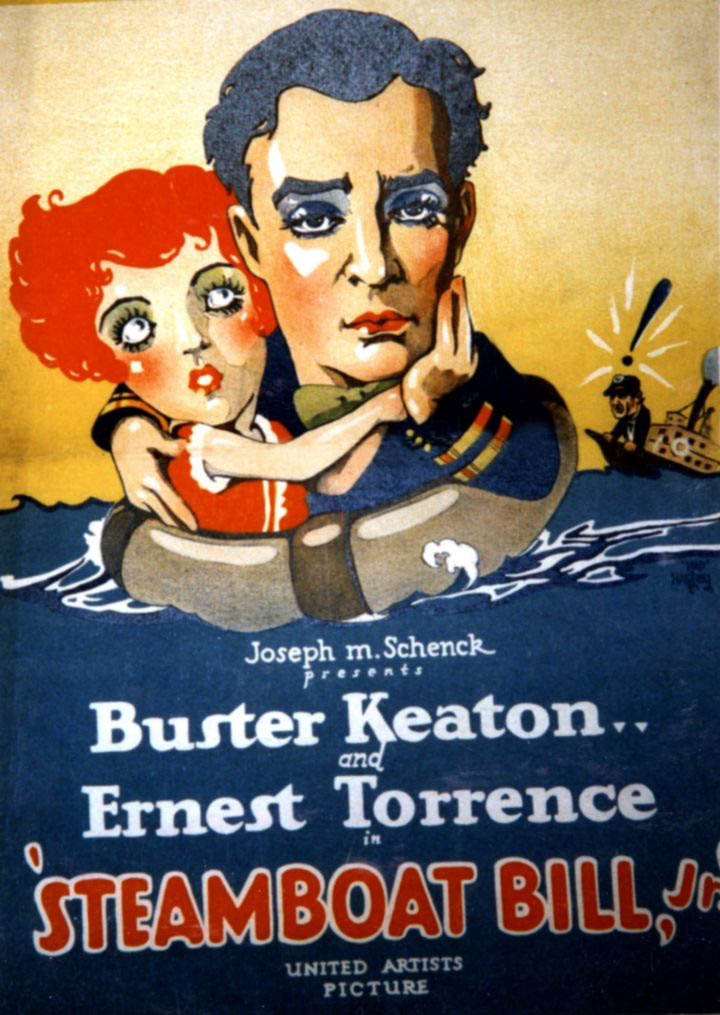
Steamboat Bill Jnr (1928)

Steamboat Bill Jnr (1928)

Keaton struggles to win his father’s approval in this brilliantly fast-paced farce

Director: Charles Reisner (& Buster Keaton)

Cast: Buster Keaton (William Canfield Jnr), Ernest Torrance (William Canfield Snr), Marion Byron (Kitty King), Tom McGuire (John James King), Tom Lewis (Tom Carter), Joe Keaton (Barber)

Steamboat Bill Jnr was meant to be a return to glory after the box-office disappointment of The General. Unfortunately for Keaton it shared all the traits of his previous film. An artistic triumph, today seen as one of the great silent comedies: but at the time an expensive misfire that hammered the final nail into Keaton’s filmmaking independence. Before he was swallowed by the MGM machine, Steamboat Bill Jnr was the last pure Keaton film, the last display of the master’s gravity defying stuntwork and all-in physical gag commitment.

Keaton is the forgotten son of paddle steamer operator William “Steamboat Bill” Canfield (Ernest Torrance) whose craft, the Stonewall Jackson, is being put out of business by the cutting-edge steamer The King named after its wealthy owner JJ King (Tom McGuire). William Jnr is a disappointment to his manly father: he’s clumsy, polite, decent has a pencil moustache (but not for long) and plays the ukelele. What kind of son is that? Worst of all, he falls in love with Kitty King (Marion Bryon), daughter of Steamboat Bill’s love rival. Can his son prove his worth when disaster piles on disaster and a cyclone hits the town?

Steamboat Bill Jnr is Keaton at his best. Although it has a romance plotline, this wisely plays second fiddle to the sort of role Keaton was born to play: slightly naïve and foolish sons, who are disappointments to their father. With his sad sack, impassive face and earnest, try-hard determination, Keaton was guaranteed to win the sympathies of the masses and Steamboat Bill Jnr is the fine-tuned ultimate expression of this classic Keaton role. He’s horrendously unlucky – he seems destined to trip over and activate vital levers or if he opens a door it will inevitable send someone tumbling off the boat – and at every turn well-meaning attempts to win his father’s favour backfire. It’s a superb exploration of a key theme in Keaton’s life and work – the struggle to win the regard of a domineering father in his own line of work, something Keaton had faced in his own life.

But despite that, like all the best Keaton heroes, he never, ever gives up. Adversity is milk-and-drink to him and, despite everything, his ingenuity and determination always wins out. He may look like a clueless, slightly ridiculous college kid adrift on a boat, walking around in his over-elaborate uniform: but the final reel, which shows him hooking up the boats systems via ropes and pulleys so he can control it singlehandedly proves it certainly wasn’t lack of attention that lay behind his mishaps.

And what’s really wrong with being a clearly middle-class kid who hasn’t spent much time on boats? It’s not like he’s a dandy or a layabout – he just doesn’t fit the mould his father expects – that of a flat-capped, oil-stained, tobacco chewer (and who knows not to swallow it!) never happier than when getting his hands dirty. Ernest Torrance is very good as this exasperated working-man, whose ideas of what counts as “manly” are very narrow (barely extending beyond the mirror) and sees any deviation in his son as highly suspicious metropolitan laxness.

Perhaps he feels his son looks too much like his puffed-up, slightly dandyish rival JJ King (an effective Tom McGuire). There is more than a touch of class warfare between these two, as well as a romantism that values the run-down-but-reliable Stonewall Jackson (right down to its Civil War era name) and the overly-polished-can’t-trust-it King. There are echoes (and not just in the names) in the generational family feud of Our Hospitality­ – not least in the fact that marriage seems destined to eventually bring the two families together in something approaching love and harmony.

Marion Byron gives a decent performance as Kitty – even if the film has little interest in her beyond love-interest device, including the inevitable moment where she becomes convinced Keaton’s character has let her down and decides to snub him. This snubbing takes place in a very funny scene of missed meetings and attempted evasions on the street; although this scene is itself a shadow of father and son meeting at the station, the son writing he will be recognisable by his white carnation, a flower everyone arriving at the train seems to be wearing (not helped by Keaton losing his).

Eventually matters proceed to blows and the arrest of Canfield Snr (and an attempted break-out foiled by the son’s inability to get his father to trust him) before the town is blown away in one of the great Keaton set-pieces. Rain and bad weather peppers the final thirty minutes of the film – including an exquisite sight gag when Keaton steps into a puddle and disappears up to his waist – and erupts into a cyclone that rips buildings apart, blows others across fields and raises the waters to wreck the paddleboats and wash other buildings out to sea.

And this storm is the centrepiece of another peerless display of Keaton’s physical determination and courage in the name of comedy. He gets trapped in a hospital bed blowing through the streets (after the building rips away to reveal him, a stunning in camera trick). He walks at almost 45 degrees against the wind. And, most famously, he stands in the perfect spot for the window of the façade of a house to save him when it falls on top of him. For this final stunt – insanely dangerous by any standards – even Keaton would later reflect on the suicidal risks he took. Either way, it’s a brilliantly elaborate set-piece (a riff on another set-piece from an earlier short) and a clear sign no-one did better than Keaton.

And no-one did. Watching Keaton bound like a squirrel up and down a paddle boat and dive into the flooded river, you know you are watching someone who really understand both the beauty of visual imagery and the peerless excitement of reality on film. Steamboat Bill Jnr combines this with a strong story, full of characters to root for and stuffed with sight gags (from a parade of hats stuffed on Keaton’s head, to a shaving from his father Joe) that make you laugh time and again. It’s a tragedy that this, one of his finest comedies, would also be his last where he had creative control.

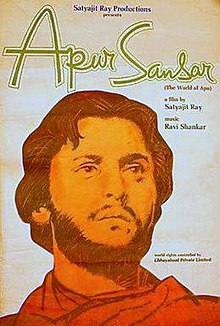
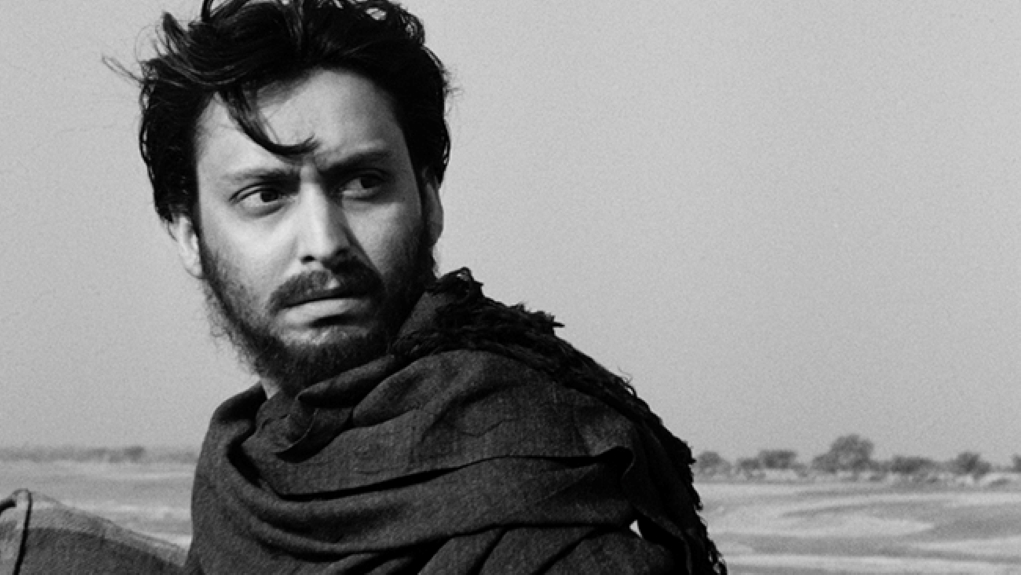
Aparajito (1956)

Aparajito (1956)

Generational clashes lie at the heart of Ray’s heartbreaking second entry in his Apu trilogy

Director: Satyajit Ray

Cast: Kanu Banerjee (Harihar), Karuna Banerjee (Sarbajaya), Smaran Ghosal (Adolescent Apu), Pinaki Sengupta (Young Apu), Ramani Sengupta (Uncle Bhabataran), Charuprakash Ghosh (Nanda-babu), Subodh Ganguli (Headmaster), Moni Srimani (School inspector), Ajay Mitra (Shibnath), Kalicharan Roy (Akhil)

Satyajit Ray initially saw Pather Panchali as a one-off, a story from the works of Bibhutibhushan Bandyopadhyay, not the start of a multi-film fable on the life of its young protagonist. But, such was the impact of Ray’s debut, it almost demanded a continuation of the story. Ray then adapted parts of two Bandyopadhyay novels, re-shaping them into a tale of Apu’s late childhood and adolescence, that difficult crossing point between childhood and adulthood. In doing so, he created a film full of life but also profoundly moving and quietly devastating. Rich, confident and powerful, Aparajito may just be even more affecting than its forbear.

Beginning a few years after the conclusion of Pather Panchali Apu (played as child by Pinaki Sengupta and later as an adolescent by Smaran Ghosal) lives in the holy city of Varanasi with his dreaming father Harihar (Kanu Banerjee) and tireless mother Sarbajaya (Karuna Banerjee). Apu is still the same inquisitive, observant, fascinated child he ever was and when his father’s death leads to mother and son returning to the country, he excels at the local school. Winning a scholarship to college at Calcutta, Apu he finds Sarbajaya’s love for him smothering, just as she is heart-broken by his growing distance and reluctance to write or return to visit her.

This universal story of children struggling to outgrow their parents and their parents longing to help them grow but desire to keep them close, a situation causing pain on both sides, that gives Aparajito it’s huge emotional force. We can totally understand why Apu, swept up in the excitement of Calcutta and forging of his own life (one that has the promise of being so much more dynamic than his parents), begins to feel the ties of duty to his mother (almost alone in the world without him) constraining. At the same time, having witnessed the never-ending sacrifice, patience and quiet devotion of Sarbajaya to her son, we want to slap him for his selfishness and lack of thought.

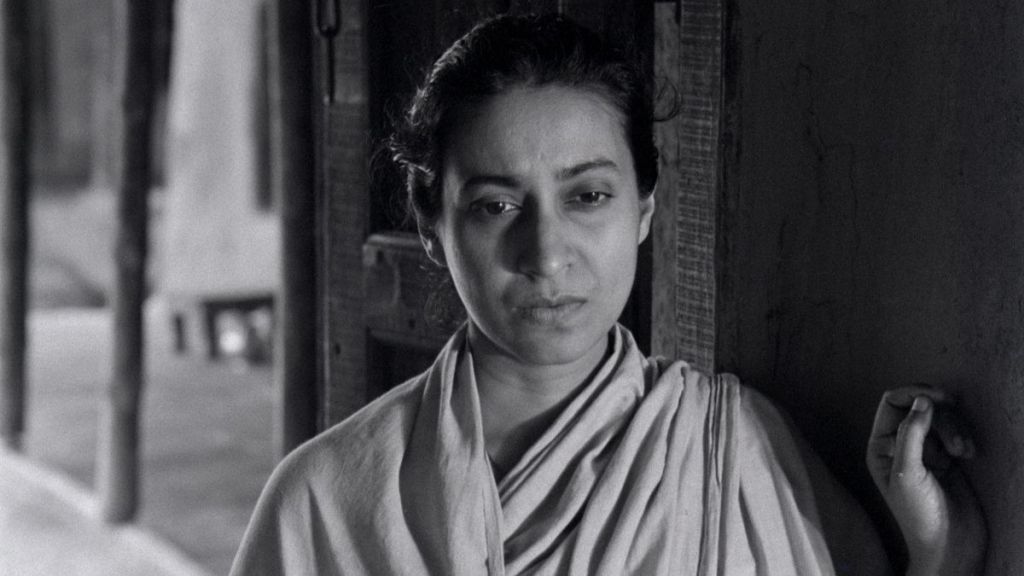
Ray’s film is superb at making us understand the impossible burdens Sarbajaya has taken on herself to raise her son. Ray constantly frames Sarbajaya in the act of waiting: in Varanasi we never see her outside of the courtyard of their shared tenement block, constantly preoccupied with household tasks. Ray frames Sarbajaya frequently in doorways, visually presenting her as someone constantly waiting on the outskirts, shadows cast across her – someone vital for ensuring order, but easy to forget on the outskirts of rooms. It also serves to make her look constantly trapped and overburdened with duty, shadows constantly cast across her.

These burdens magnify for Sarbajaya after the death of Harihar. Apu’s decent father is still a dreamer who lacks the dedication and drive to make something of himself. Do memories of his father’s desire to become a writer ending in a fever in a tenement block, subconsciously drive Apu later? Harihar collapses near the holy river, ill from the damp of the city that he trudges through barefoot night and day, hitting the ground in a shadow lit passageway – much like his wife, as if the city has crushed him with its burdens.

The city seems very different to the young Apu. Ray’s camerawork is gentle, full of leisurely sideways pans, which serve to make the city appear to us as it does to Apu: a never-ending stream of visual wonders. Pans across the riverbanks of the Ganges, full of beautiful temples and river vistas look as magical to us as they do to the young boy. Similarly, the Dickensian hustle and bustle of the city itself, full of streets and alleyways that Apu and his friends rundown with glee feel like treasure-troves of adventure, rather than the never-ending streets trudge they look like when we see them from Harihar’s perspective.

Ray’s camera frequently brings us back to the searching, questioning, fascinated eyes of young Apu, always expanding his horizons. Education and the wonders that books bring him, far beyond the horizons of his mother who can only think about how to bring about tomorrow, offer a similar excitement. Young Apu excels at school and delights in trying to share the wonders he has learned – about science, astronomy and geography – with his mother. Ray shows a mastery of simple montage as years fly by in minutes as we see each of Apu’s passions before a masterful transition with a slow zoom in and out on a lit candle carries across years from Apu as a child to an adolescent.

An adolescent who feels the pull of a world away from what he increasingly sees as the smothering pull of his mother. It is, of course, impossible to watch this without feeling how unfair – but also how natural – this is. Your heart breaks as Apu heads off to Calcutta with only a single cursory glance back to his devoted mother. The mother who still packs his bag, gives him her savings – and asks him to come home as often as he can. You can understand why a young man finds this constraining, even as you want to tell him how sharp his regrets will be as Sarbajaya’s health begins to fail (naturally, the boy falls asleep as his mother timidly confesses her fear of old age and sickness to him).

Apu loves his mother, there is no doubt about that. One vacation, arriving at the train station to return to Calcutta, he decides to turn back (claiming he missed the train) to spend one more day with his mother. He still relies on her wisdom and unreserved love and he thinks often of her in the city. But he’s a teenager and wants his freedom. Sarbajaya even understands this, just as her heart breaks for the loss of and loneliness his departure brings. Is there a sadder shot in the movies as Ray focuses on Sarbajaya slowly sinking down as Apu walks away to his future?

The impact is only increased by the gloriously moving, hollow-eyed performance of Karuna Banerjee, exhausted but untiring in her work to protect family and home. It’s a performance of quiet, bubbling grief and loss tightly packed under optimism and support for her son – a grief that only the audience sees. Smaran Ghosal is also very fine as the adolescent Apu, a boy we can never dislike for very naturally wanting to forge his own path, in a performance that feels extraordinarily real.

The humanity shines out again in Ray’s follow-up to his debut. Moving confidently from location to location, in a novelistic structure translated perfectly to the screen, Aparajito is rich, beautifully told and carries real, unbearable emotional punch for anyone who has ever been a parent or child. Another masterwork in a mighty trilogy.

Pather Panchali (1955)

Pather Panchali (1955)

Satyajit Ray’s first film in his glorious Apu trilogy is one of the finest neo-realist films about childhood ever made

Director: Satyajit Ray

Cast: Kanu Banerjee (Harihar), Karuna Banerjee (Sarbajaya), Subir Banerjeee (Apu), Uma Das Gupta (Durga), Chunibala Devi (“Auntie” Indir Thakrun), Shampa Banerjee (Young Durga), Reba Devi (Sejo Thakrun), Aparna Devi (Nilmoni’s wife), Tulsi Chakraborty (Schoolteacher), Binoy Mukherjee (Baidyanath Majumdar)

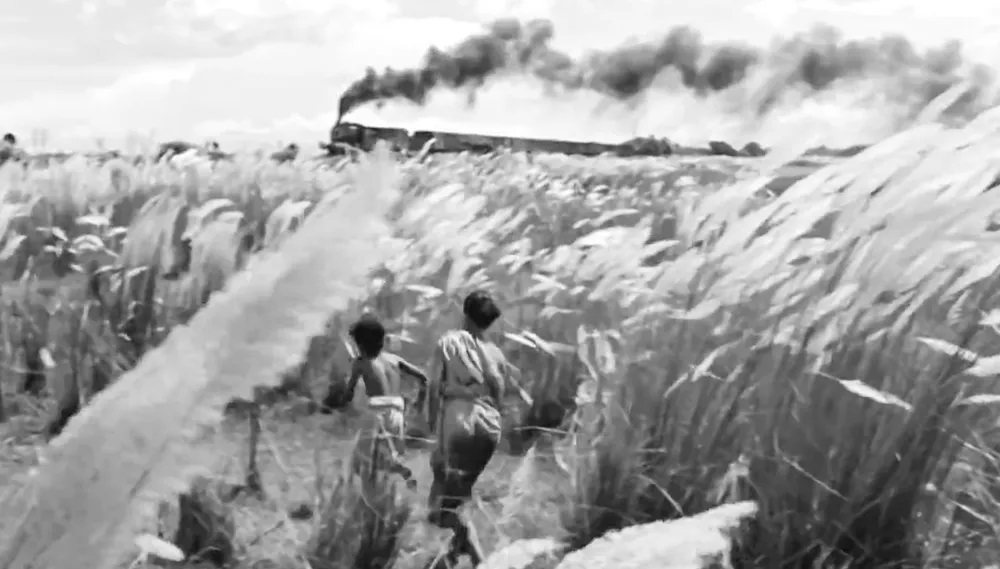
The filming of Panther Panchali is almost as famous as the film itself. Ray set up on the first day of shooting having never made a film before, working with a cinematographer who had never shot a roll of film before and two inexperienced child actors he had not auditioned. He shot the sequence of quiet, observant young Apu (Subir Banerjeee) and his rebellious older sister Durga (Uma Das Gupta) walk in awed wonder through a field to discover a train whooshing by. Ray later wrote he learned more that day “than from a hundred books”. You can tell: so majestical, magical and mesmerising is the sequence (admittedly the one we see in the film was a reshoot) you can’t believe it was made by a novice. It was the centre-piece of Ray scrapping together funding for the rest.

Pather Panchali was adapted from the novel Bibhutibhushan Bandyopadhyay – in a stunning act of loyalty, Bandyopadhyay’s widow turned down a large sum from a production company for the rights because she had promised them to Ray. Ray turned it into a masterful slice of life, that expressed everything he had worshipped from the neo-realism of Rossellini and De Sica (The Bicycle Thieves, which Ray adored, is surely Pather Panchali’s father) and the detailed, masterful camerawork of Jean Renior (who Ray and photographer Subrata Mitra had witnessed at work on The River). It became Ray’s calling card, and a pivotal moment in Indian cinema, a masterpiece that helped redefine the artistic boundaries of the country’s film industry as well as an award-winning international hit.

It’s a sedate, gentle, un-bombastic but quietly moving and engrossing drama focused on the nitty-gritty of life. Set in a small Indian village in the 1910s, we follow the lives of pre-teen Apu, a dreamer who takes after his Micawberish father Harihar (Kanu Banerjee) and his close relationship with his sister Durga, whose penchant for rebellion and stealing causes no end of strive with their harassed mother Sarbajaya (Karuna Banerjee). The family lives in poverty and Sarbajaya carries the burden, driven to quiet, repressed despair at the stress of constantly making ends meet and increasingly resentful of Harihar’s elderly relative “Auntie” Indir (Chunibala Devi) who she sees as taking but offering nothing. Despite, this we follow the childish delight Apu and Durga see in the world around them, a world in which darkness eventually (inevitably) intrudes.

Some have argued Ray’s film – and the subsequent films that followed in this landmark trilogy – had such international impact because it fit naturally into international perceptions of India as a rural, poverty-stricken nation. But that’s to do a disservice to the emotional humanism of Ray’s work and the universal themes of childhood, family and the fears of not being able to provide for it.

Pather Panchali, for all the lyrical beauty which Ray shoots it with, is cold-eyed and serious about poverty. There is nothing noble and sentimental about having no money to afford food. The strain of it is carving lines into the face of Sarbajaya, reduced to quietly pawning what possessions they have and frustratingly berating the dreaming Harihar who believes a career as a writer is just round the corner. The shame of poverty is a major theme: Sarbajaya cares nothing if Harihar’s employers are made aware of the family’s desperate need to for the money they owe him, but she will not countenance the shame of accepting charity from neighbours. Debts are repaid as a priority, at several points a relative’s offering of a few rupees is adamantly refused and Sarbajaya is appalled and shocked by Durga’s habit of stealing fruit from a local orchard owned by the village elders.

That orchard was once the property of Harihar – and its more than implied he was conned out of it by the villagers over imaginary debts. Its where we first encounter the young Durga, a delightful, playful and inquisitive child, running free and unashamedly stealing fruit and bringing it home for herself and “Auntie”. Its just another reason for Sarbajaya to resent the presence of this old woman in her household, as well as the close bond “Auntie” has with both her children, with Sarbajaya constantly playing the role of harsh authority figure.

The constant refrain of the train whistle at crucial points from the distant train tracks serves as a reminder of the possibility of change and escape. But it also means to the children a wider world of excitement and opportunity. Pather Panchali is about a child’s eye view of the world – we are literally introduced to the child Apu with a close-up shot of his eye has Durga wakes him for school. Ray’s film carefully follows their experiences and innocence, where every day presents the possibility of adventure and wonder. The struggles of the adults are unknown for them.

Pather Panchali is a great film about childhood. Apu and Durga run through fields, play and fight, share a deep and caring bond. They follow sweet sellers, wonder at the arrival of theatre troupes and brass bands, stare in awe at projected images of Indian landmarks. The entire village and its countryside is a wonderland to them, and the problems of life are something that they don’t need to concern themselves with. Ray shoots the film with a realism tinged with a pre-Tarvoksky love for the beauty of nature: lingering shots follow raindrops on lakes, the willowy blowing of plants in the fields and the movements of nature.

Through it all he draws superb performances from the children, frequently cutting to reaction shots that ground us in a children’s-eye-view of the world. It’s all there in the magic of that pursuit of the train. The freedom of the fields, the joy of running, the mystery of distant sounds and then the impactful glory of the train itself. Alongside this, there is a beautifully judged score by Ravi Shankar that captures both the mood of this humble village life, but also the exurberance of childhood.

It can’t last though. Mortality and tragedy intrude on this life. And just as Ray shot joy with a simplicity that carried a magical pull, so he calmly and unobtrusively observes pain and suffering in a way that will tear your heart out. The film’s episodic look at life becomes darker and more painful, rewarding the patient viewer (and you do need patience for Ray’s leisurely pace) with a powerful connection with the characters – and a final shot that leaves you longing to know what will happen to them.

Beautifully paced, atmospheric and immersed in a world that feels very real, Pather Panchali feels like the work of a master, not the plucky work of debutante. Perhaps that was a result of the nearly two years Ray took to make the film (he couldn’t believe his luck that the children did not noticeably age), allowed him the time few film-makers have to find every single moment of beauty in his story. Or perhaps he was simply that good to begin with. Either way, it became a landmark film – and led to a swiftly answered call for the story of Apu to be continued.

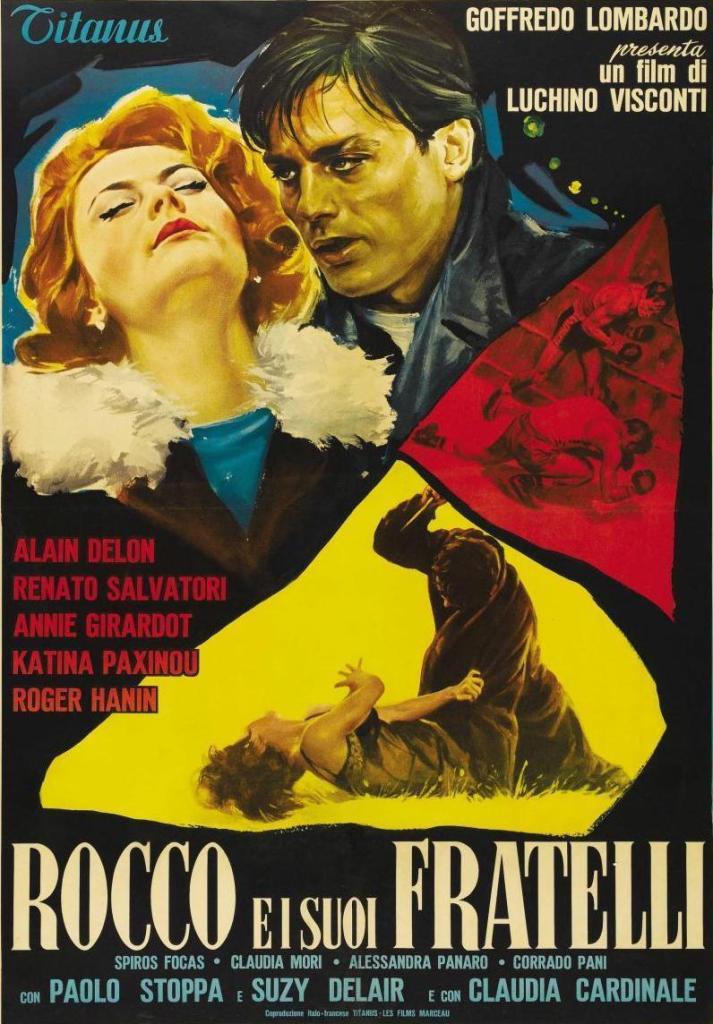
Rocco and His Brothers (1960)

Rocco and His Brothers (1960)

Visconti’s realistic family epic simmers with the dangers of split loyalties, but is mixed on gender politics

Director: Luchino Visconti

Cast: Alain Delon (Rocco Parondi), Annie Girardot (Nadia), Renato Salvatori (Simone Parondi), Katina Paxinou (Rosaria Parondi), Roger Hanin (Duilio Morini), Spiros Focas (Vincenzo Parondi), Claudia Cardinale (Ginetta), Paolo Stoppa (Tonino Cerri), Max Cartier (Ciro Parondi), Rocco Vidolazzi (Luca Parondi, Alessandro Panaro (Franca), Suzy Delair (Luisa), Claudia Mori (Raddaella)

Visconti was born into a noble Milanese family: perhaps this left him with a foot in two camps. He could understand the progress and achievement of northern Italy in the post-war years, those booming industry towns which placed a premium on hard work, opportunity and social improvement. But he also felt great affinity with more traditional Italian bonds: loyalty to family, the self-sacrificing interdependency of those links, and the idea that any outsider is always a secondary consideration, no matter what. It’s those split loyalties that power Rocco and His Brothers.

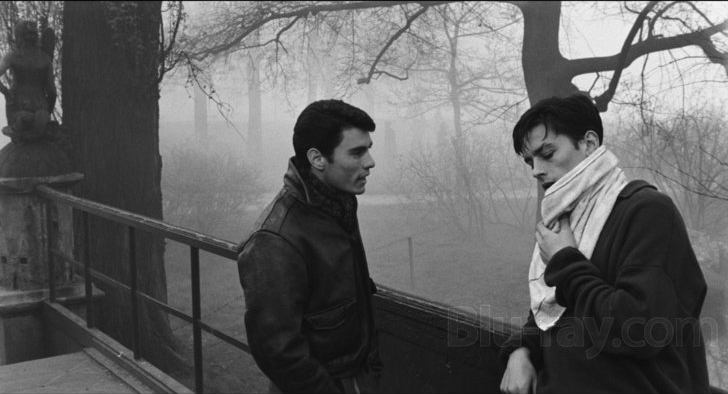
Rocco (Alain Delon) is one of five brothers, arriving in Milan from the foot of Italy looking for work with his mother Rosaria (Katina Paxinou). The hope of the family is second brother Simone (Renato Salvatori), a sparky pugilist destined for a career as a boxing great. But Simone can’t settle in Milan, too tempted by the opportunities he finds for larceny and alcohol. He falls in love with a prostitute, Nadia (Annie Girardot), until she rejects him and then he drifts ever downwards. Rocco, always putting family first, inherits his place first as a boxer than as Nadia’s lover. Problem is, Simone is not happy at being replaced, and the three head into a clash that will see Nadia become a victim in the twisted, oppressive, family-dominated loyalty between the two brothers.

Rocco and His Brothers is a further extension of Visconti’s love of realism – but mixed with the sort of classical themes and literary influences that dominated his later period pieces, themselves in their stunning detail a continuation of his obsession with in-camera realism. Filmed in the streets of Milan, where you can feel the dirt and grit of the roads as much as the sweat and testosterone in the gym, it’s set in a series of run-down, overcrowded apartment blocks and dreary boxing gyms that you could in no way call romantic.

This ties in nicely with Visconti’s theme. Rocco and His Brothers is about the grinding momentum of historical change – and how it leaves people behind. In this case, it’s left Rocco and Simone as men-out-of-time. Both are used to a hierarchical family life, where your own needs are sacrificed to the good of the family and every woman is always second best to Momma. While their brother Ciro knuckles down and gains a diploma so he can get a good job in a factory, Simone drifts and Rocco bends over backwards to clean up the mess his brother leaves behind. Naturally, Simone and Rocco are the flawless apples of their mother’s eye, Ciro an overlooked nobody.

The film focuses heavily on the drama of these two. And if Visconti seems split on how he feels about the terrible, destructive mistakes they make, there is no doubting the relish of the drama he sees in how it plays out. Rocco, by making every effort to make right each of the mistakes his brother makes, essentially facilitates Simone’s collapse into alcoholism, criminality and prostitution. Simone flunks a boxing contract? Rocco will strap on the gloves and fulfil the debt. Simone steals from a shop? Rocco will leave his personal guarantee. Simone steals from a John? Rocco will pay for the damage.

Caught in the middle is Nadia, a woman who starts the film drawn to the masculine Simone but falls for the romantic, calm, soulful Rocco. Wonderfully embodied by Annie Girardot, for me Nadia is the real tragic figure at the heart of this story. Whether that is the case for Visconti I am not sure – I suspect Visconti feels a certain sympathy (maybe too much) for the lost soul of Simone. But Nadia is a good-time girl who wants more from life. Settling down to a decent job with Rocco would be perfect and he talks to her and treats her like no man her before. Attentive, caring, polite. He might be everything she’s dreaming off, after the rough, sexually demanding Simone.

Problem is Nadia is only ever going to be an after-thought for Rocco, if his brother is in trouble. Alain Delon’s Rocco is intense, decent, romantic – and wrong about almost everything. He has the soul of a poet, but the self-sacrificing zeal of a martyr. He clings, in a way that increasingly feels a desperate, terrible mistake, to a code of conduct and honour that died years ago – and certainly never travelled north with them to the Big City. When Simone lashes out at Nadia with an appalling cruelty and violence, making Rocco watch as he assaults her with his thuggish friends, Rocco’s conclusion is simple: Simone is so hurt he must need Nadia more than Rocco does. And it doesn’t matter what Nadia wants: bros literally trump hoes.

Rocco does what he has done all his life. He wants to live in the south, but the family needs him in the north. He wants to be a poet, but his brother needs him to be a boxer. He loves Nadia but convinces himself she will stabilise his brother (resentful but trapped, she won’t even try, with tragic consequences). All of Rocco’s efforts to keep his brother on the straight-and-narrow fail with devastating results. Naturally, his mother blames all Simone’s failures on Nadia, the woman forced into trying to build a home with this self-destructive bully. Rocco’s loyalty – he sends every penny of his earnings on military service home to his mother – is in some ways admirable, but in so many others destructive, out-dated indulgence.

And it does nothing for Simone. Superbly played by Renato Salvatori, he’s a hulk of flesh, surly, bitter but also vulnerable and self-loathing, perfectly charming when he wants to be – but increasingly doesn’t want to. His behaviour gets worse as he knows his brother is there as a safety net. It culminates in an act of violence that breaks the family apart: not least because Simone crosses a line that Ciro (the actual decent son, who Visconti gives precious little interest to) for one cannot cross and reports him to the police.

That final crime is filmed with a shocking, chilling naturalism by Visconti, horrific in its simplicity and intensity. But I find it troubling that Visconti’s core loyalties still seem to be with the out-of-place man who perpetrates this crime and his brother who protects him, rather than female victim. Rocco and His Brothers could do and say more to point up the appalling treatment of Nadia, or at least make clearer the morally unforgiveable treatment she receives from both brothers (she’d have done better disappearing from Milan after Simone’s attack and never coming back, not playing along with Rocco’s offensive belief that Simone’s assault was a sort of twisted act of love).

Saying that, this is a film of its time – perhaps too much so, as it sometimes feels dated, so bubbling over is it with a semi-Marxist view of history as a destructive force. But it’s shot with huge vigour – the boxing scenes are marvellous and their influence can be felt in Raging Bull – and it ends on a note of optimism. The film may have disregarded Ciro, but there he is at the end – happy in his choices, settled, making a success of his life. Rocco and Visconti may see the drama as being exclusively with the old-fashioned brothers, making their counterpoint a paper tiger, but it ends with him – and (I hope) a reflection that Ciro’s path may be duller and safer, but also nobler and right.

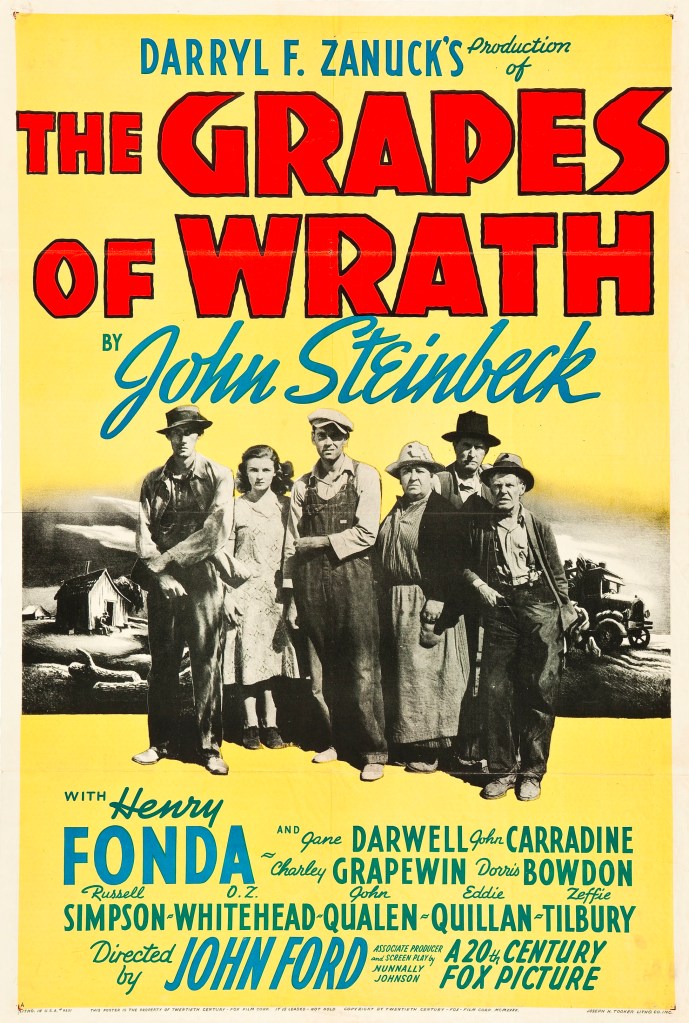
The Grapes of Wrath (1940)

The Grapes of Wrath (1940)

Steinbeck’s masterpiece is transformed into a richly humanitarian and heartfelt film

Director: John Ford

Cast: Henry Fonda (Tom Joad), Jane Darwell (Ma Joad), John Carradine (Jim Casy), Charley Grapewin (Grandpa Joad), Dorris Bowdon (“Rosasharn” Joad), Russell Simpson (Pa Joad), OZ Whitehead (Al Joad), John Qualen (Muley Graves), Eddie Quillan (Connie Rivers), Zeffie Tilbury (Grandma Joad), Frank Sully (Noah Joad), Frank Darien (Uncle John), Darryl Hickman (Winfield Joad)

If you can be certain of one thing, it’s that times of economic hardship rise and fall like waves on the shore. John Steinbeck’s novel The Grapes of Wrath was a searing, powerful exploration of the impact of the Dust Bowl, the Great Depression and new farming technologies on Oklahoma tenant farmers. It was almost immediately cemented as a Great American Novel. Just as Ford’s moody, heartfelt, humanitarian film of it was immediately hailed as a Great American Film.

In Oklahoma, Tom Joad (Henry Fonda) is released from prison (after killing a man in a bar fight) to find his farming community has been devastated. The Depression has shattered the market and the landowners now farm their land with tractors rather than people. Tom and his family have no choice but to load up a beaten-up van and migrate to California where they have hopes of work picking fruit for meagre wages. What they find on the way, among small acts of kindness, is exploitation, brutal policing determined to crush any protest from migrants and migrant camps in terrible conditions. Misery, death and the endless grind of fading hopes seems to be all they have to look forward to.

The Grapes of Wrath moved to the screen faster than almost any other novel in history. Published in April 1939, in months Nunnally Johnson had completed a script and shooting began in October for release in 1940. The unprecedented speed spoke to the book’s enormous impact, which has remained eternally relevant in its depiction of the hostility faced by migrants. Producer Darryl F Zanuck, despite his passion for the novel, worried it would be seen as pro-Communist propaganda – thankfully basic research showed Steinbeck had, if anything, played down the labour conditions. Zanuck was convinced he could defend any accusation of anti-Americanism – perhaps, as well, he decided recruiting the film poet of romantic Americana, John Ford, as director would lay any change The Grapes of Wrath could be seen as an attack on the US to rest.

Ford was in fact a near perfect choice as director. A man who held his Irish migrant roots close to his heart, he felt a powerful bond with these victims of changed circumstances. As a man with a romantic view of America’s Golden Age, he was equally critical of sharp technology changes (he shoots the tractors who plough through the Oklahoma farmland as monstrous tanks, crushing hope below their ominous caterpillar tracks). Working closely with cinematographer Gregg Toland, he shot a film with one foot in realism, the other in low-lit, moody impressionistic shadow, a rich visual treat that marries both methods to enforce the appalling economic situation it depicts.

From its opening shot, which frames Tom Joad walking across Oklahoma desert land framed with telegraph poles, the idea of ordinary people left behind by technological change rings out. Tom’s farmstead Tom is derelict with one tenant recounting his eviction in a cramped room lit by a single candle. The Joad’s leave for California in a truck so beat up, it only just starts and appears to be partially made of wood. The California shanty town they are herded into is contrasted with the sleek automobile of the landowner offering work for a pittance. In the government run camp, we see running taps and modern bathrooms that seem space-age compared to the squalor we’ve seen.

The Grapes of Wrath doesn’t shirk in its anger at the ill-treatment of these sons of the soil. In California, the bosses are cruel, uncaring and greedy. The flyers the Joad family clutch hoping for work, is one of thousands recruiting for only hundreds of jobs. Salaries are constantly undercut – at their second camp, the Joads work exhaustingly for just about enough to feed them for the day. The sheriffs are little more than heavies for the bosses, breaking up protests at pay, arresting and beating ‘trouble makers’ and turning a blind eye to any threats or danger to the migrants.

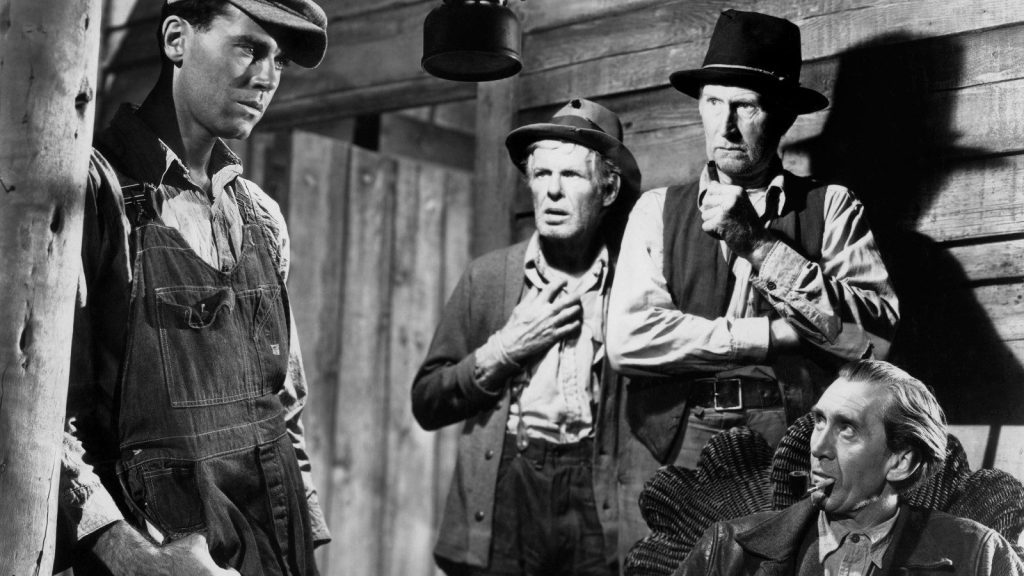
The injustice of it is captured in a superb speech by John Carradine’s Jim Casy, a former preacher whose faith has been replaced by a burning passion to protect the rights of the little guy. Shot by Toland in a shadow-drenched, candle-lit tent, Carradine delivers with impassioned brilliance an inarticulate but moving speech on the need for the workers to stick together to combat exploitation. He follows in the footsteps of an earlier ‘rabble rouser’, whose denunciation of a fat-cat businessman is met with gunfire from a sheriff (a woman being near-fatally shot in the aimless fire).

It’s feelings that will inspire Henry Fonda’s Tom Joad. Fonda is marvellous as this plain-speaking man with a streak of self-destruction, who learns to focus his anger aware from his own needs to fighting for others. With his father – well-played by Russell Simpson – increasingly ineffective, Tom transforms himself slowly into a leader. His lolloping stance doesn’t detract from his everyman nobility. Fonda even manages to make some heavy-handed, speechifying really work as a profound statement of human rights.

He’s joined in this with the film’s third stand-out, the Oscar-winning Jane Darwell as the indefatigable “Ma”. Darwell becomes the family lodestone and an epitome of resilient spirit, her pained but patient face returned to again and again. Darwell as at the heart of many of the most moving moments, perhaps the most one of its simplest: Ma quietly, with sad smiles, burning old mementoes and holding up a pair of earrings to study her reflection in the flickering candlelight. Ma holds the family together, from cradling the dying Grandma on the floor of the truck to desperately hiding Tom from the vindictiveness of the police. Ford closes the film with a powerful speech of hope and resilience from Ma, again wonderfully delivered by Darwell in simple, unflashy close-up.

Despite that delivery though, the end film’s final act doesn’t ring true with what has gone before. The film reshuffles the novel’s plot. That culminated in a bleak miscarriage in a windswept hut. The well-built government-run migrant town is a stopping off point, a moment of hope, in a grim journey towards desolation. Here it is the final destination – and the community dances, organised by benevolent caretakers, feels like a cheat of reality. Perhaps Zanuck felt a relatively hopeful ending was needed to balance those fears of Anti-Americanism. Either way, it never feels like a ‘real’ ending: this economic catastrophe didn’t end like this for many, so it shouldn’t for our everymen.

It is perhaps, though, the only major flaw in Ford’s superb film. It’s a film sprinkled with as many small moments of peace and hope as it is injustice. The Joads enjoying a swim in the lake, or the kindly garage staff who let Pa buy bread and sweets for the kids at a price far below their value warms the heart. The shanty towns are given a real sense of community by Ford. It makes the stark cruelty of those in charge stand-out all the more.

The film doesn’t shirk on the grim surroundings. The detail of the squalor is magnificently delivered, while the foreboding, shadow filled lighting of Toland’s photography is exceptional. With a host of excellent performances, Grapes of Wrath is the finest statement of Ford’s overlooked humanitarianism. He was a director with a warm regard for the common man, who believed in their righteousness and right to just treatment. This streak runs strong throughout The Grapes of Wrath and makes a film that is never sentimental, but arouses huge sentiment in anyone who watches it.

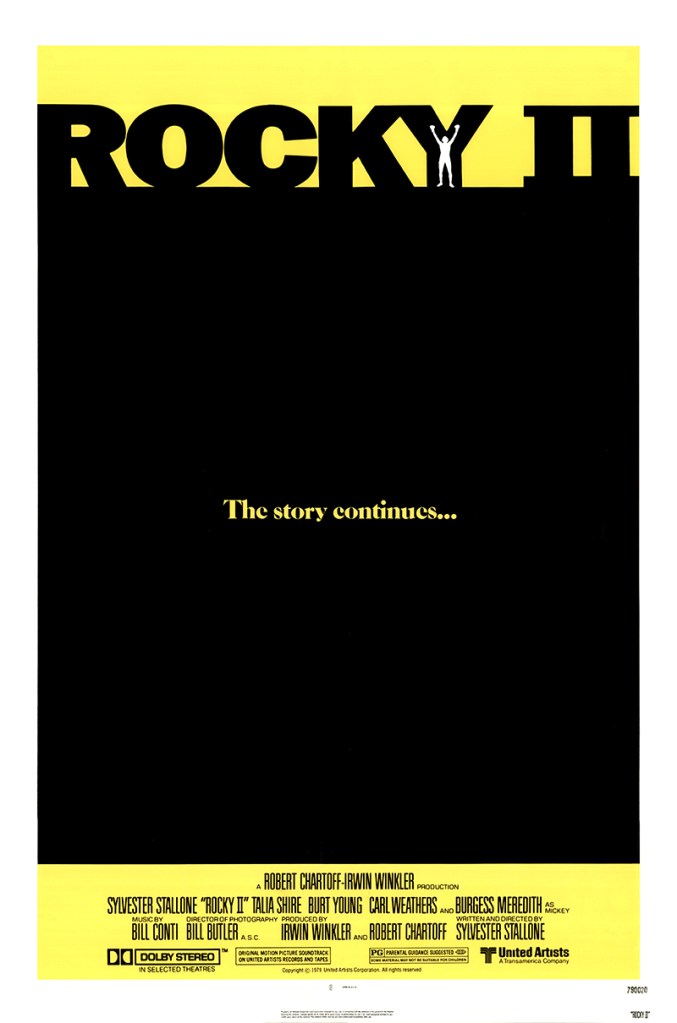
Rocky II (1979)

Rocky II (1979)

Rocky Balboa rides again, in Stallone’s enjoyable virtual remake of the first film

Director: Sylvester Stallone

Cast: Sylvester Stallone (Rocky Balboa), Talia Shire (Adrian Balboa), Burt Young (Paulie Pennino), Carl Weathers (Apollo Creed), Burgess Meredith (Mickey Goldmill), Tony Burton (‘Duke’ Evers), Sylvia Meals (Mary Anne Creed), Joe Spinell (Tony Gazzo)

It’s minutes after the end of that shock title fight won (just) by Apollo Creed (Carl Weathers – very good here as a curled ball of frustration), but already the champ is smarting since the moral victory was won by plucky challenger Rocky Balboa (Sylvester Stallone). Now Apollo wants a rematch. It’s the last thing Rocky – or his soon-to-be-wife Adrian (Talia Shire) want: Rocky’s eyesight is shot and he wants to retire to a well-earned career of cashing in on his fame. But when his money dries up, Rocky has no choice but to saddle up once again – only this time he and trainer Mickey (Burgess Meredith) are “gonna eat lightnin’ and crap thunder” till Rocky wins the bout outright.

I like to think of Rocky II as being, just like Rocky semi-autobiographical. If the first Rocky was about plucky small-timer Sylvester Stallone getting a shot at the big-time, Rocky II is about the hero returning to the scene of his success, but only on his own terms. Stallone had followed up Rocky with a film he wrote and starred in about union politics (F*I*S*T) and a would-be epic on an Italian-American family Paradise Alley which he wrote, directed and starred in that flopped. I’m guessing part of him didn’t want to be (at that time) just the guy who did Rocky. He wanted more.

That’s the vibe I get in a film where Rocky spends the first hour telling anyone who’ll listen he doesn’t want to fight no more. If he can’t make a career in advertising – and Rocky’s stumbling inarticulacy and border-line illiteracy quickly show that a filming career ain’t a goer – he wants a job in an office. Like Stallone pushing higher-brow passion projects, Rocky wants a new chapter. And, just like (I assume) Stallone was met by executives saying “just make another Rocky” so Rocky meets a (admittedly sympathetic) office manager who basically politely asks him “why don’t you just go back to fighting”

Just as Rocky fights Creed on his own terms, because it’s his decision, Stallone made Rocky II on his own terms: he would direct. The film we end up with is decent, but honestly little more than a retread. This is designed for people who saw and loved the first film – and at that time might not even have seen it since the cinema. It’s a nostalgia vehicle after only three years!

The basic structure is the same. Rocky shuffles around, bashful and quiet. He tries to be something he’s not and does his best to fit in (buying a home, car and posh new coat) but he never loses track of his fundamental decency. He still has a sweet relationship with Adrian – their ice rink date is basically restaged here with a zoo-set proposal (a neat joke since Rocky said in the previous film he couldn’t imagine a date to a zoo). Just as they had a brief will-they-won’t-they, so the couple have a crisis as Adrian struggles to support Rocky’s decision to go back into the ring and falls into a brief coma after a painful delivery of their son.

The training is all pretty much the same – as it would be in almost every film to come – including a call back to Rocky’s epic run up those steps, this time as the culmination of a run around seemingly the whole of Philadelphia, with half the cities kids running behind him cheering. Then he takes to the ring for another 15-round, mano-a-mano face-off with Apollo, sweat, blood and fists flying, Rocky switching to right-hand from southpaw.

Rocky II is entertaining – but it’s a diet coke rehash of Rocky, with all the same tricks but an ever-so-slightly diminished reward. Probably because nothing about it surprises you one little bit. It’s a film that’s looking to recapture that warm glow from 1976 and doesn’t aspire to anything more. It even ends with our hero bellowing “Adrian!” at the end. You’d have a decent quiz if you cut the two films up and threw random scenes at people and asked them to guess which Rocky film they were from.

Saying that, the franchise pretty much exhausted its kitchen-sink roots here. By the time we get too Rocky III there was no way the film was going to remember that Rocky’s eyesight was going or that he was a plucky underdog fighter. From here, Rocky would turn into a chiselled slab of marble and Rocky would fight Hulk Hogan, hire a robot butler and bring down communism. Compared to the nonsense that would follow in films 3 and 4, Rocky II really does look like the last time we had a Rocky film that might just have been directed by Ken Loach.

Meet Me in St Louis (1944)

Meet Me in St Louis (1944)

Technicolour musical delight in this unashamedly nostalgic and feel-good Minnelli musicial

Director: Vincente Minnelli

Cast: Judy Garland (Esther Smith), Margaret O’Brien (“Tootie” Smith), Mary Astor (Mrs Anna Smith), Lucille Bremer (Rose Smith), Leon Ames (Mr Alonzo Smith), Tom Drake (John Truett), Marjorie Main (Katie), Harry Davenport (Grandpa), June Lockhart (Lucille Ballard), Henry H Daniels Jnr (Lon Smith Jnr), Joan Carroll (Agnes Smith), Hugh Marlowe (Colonel Darly), Robert Sully (Warren Sheffield), Chil Wills (Mr Neely)

“There’s no place like home” is the message lying behind two of Judy Garland’s most iconic films. While it might be at the heart of Wizard of Oz, that longing may be even stronger in Meet Me in St Louis. From the Arthur Freed production stable, this technicolour delight is relentlessly gentle and optimistic. It went down a delight in a year when so many Americans dreamed of the end of a war that had separated families and kept soldiers from their home and remains a delightful paean to a lost America (that perhaps never even was).

Set, of course, in St Louis in 1904 during the build-up to the World’s Fair (the gleam of the electric lights turning at the exhibition are the film’s final shot), Meet Me in St Louis follows the lives and loves of the Smith family. Patriarch Alonzo Smith (Leon Ames) is a lawyer (or something, the film doesn’t trouble itself too much), his wife Anna (Mary Astor) a devoted home maker. They have four daughters: Rose (Lucille Bremer) hopes for a proposal from Warren Sheffield (Robert Sully), youngest children Agnes (Joan Carroll) and especially “Tootie” (Margaret O’Brien) are perpetually in trouble and Esther (Judy Garland) is just starting to make eyes at next door neighbour John Truett (Tom Drake). But their contented life could all turn upside down when father announces they will be moving to New York. Surely, they can’t leave St Louis behind?

In many ways Meet Me in St Louis is an inverse The Magnificent Ambersons. While Welles’ film brilliantly charted the decline of a family of wealthy snobs (the Ambersons would certainly recognise the Smiths as equals) with technology an intruder, upending everything they understand about the world, Meet Me in St Louis is a gloriously entertaining celebration of nostalgia with new technology either a source of jokes (scrambled long-distance calls, jolly cable-car songs) or wonder (that closing light-show). Both have stylistic comparisons: from their use of title cards to their fluid camera showcasing sumptuous sets and costumes. But only one of them is about cheering you up.

Meet Me in St Louis only barely has a plot, so concentrated is it on charm and whimsy (father’s announcement, which introduces the real drama, arrives over half-way through). Adapted from a series of short stories by Sally Benson, it’s an episodic film built around events – parties, cable-car rides, a Halloween adventure and a Christmas Eve ball – with a few threaded plotlines of flirtation, principally between Esther and John. Freed sprinkles in a series of songs from his collected rights holdings (including the title song) with a few additional tunes from writers Hugh Martin and Ralph Blane, the most notable being The Trolley Song (a ludicrously catchy-number you can’t get out of your head) and the iconic Have Yourself a Merry Little Christmas (although their original far more depressing lyrics were hurriedly re-written).

These last two are performed with astonishing bravura by Judy Garland in possibly her finest hour (until A Star is Born). Garland’s singing is almost effortlessly graceful and beautiful, and she matches it with a very warm, feisty and engaging performance. Esther lands perfectly between two stools: she can be rebellious, impatient and judgemental but also caring, sensible and forgiving. Garland is reassuringly collected, funny and luminous through-out – so much so it’s striking to read what a nightmare the shoot was, with the star frequently absent as she succumbed to the mental and physical ailments that would plague the rest of her life.

Part of the success of her performance was the closeness that developed between her and Minnelli – the first director to really treat her as an adult and collaborator (they started an affair during the film). Minnelli, in only his third film and first in colour, directs with the assurance and visual beauty of an accomplished pro. Meet Me in St Louis was his first Freed musical and it might just be his best. The sumptuousness of the visuals and design were to a large part due to him – you can see the influence this had on the later work of Visconti among others, particularly the ballroom scene – and Minnelli worked labouriously with the actors to build a sense of family between them.

This pays off in spades throughout the film, where the close chemistry between the actors only helps create a nostalgic glow for happy days gone by. Ames and Astor have a relaxed ease of a long-married couples, while the four sisters interact with each other with an easy, unstudied naturalness – sharing chairs, food from their plates and time together with an unfussy ease. In particular Minnelli helped guide Margaret O’Brien to the one of the most delightful child performances on screen: the Halloween sequence, where “Tootie” confronts a scary neighbour is a masterclass of childish excitement and fear, matched later by O’Brien’s affecting distraught tears at the prospect of leaving St Louis.

Minnelli shoots the film with a technical confidence and imagination that quickly makes you forget it’s simple plot. That Halloween sequence is an eerie wonder, shot with a low-angled, tracking shot unease that leaves a haunting impression. He and cinematographer George J Folsey deigned a gorgeous gaslight dimming sequence as Esther and John go through her house dimming the lights, the camera moving in a single, complex, take up-and-around them while Folsey adjusts the set light in sync. Later there is a brilliant shot that seems to pass through a window to lead us straight into the ball, which seems years ahead of its time in its technical accomplishment. The ‘Trolley Song’s sequence uses framing and costumes perfectly to turn a cable car into something that feels as large as a small theatre. It’s an exceptionally well-made film.

You could argue certainly that it is a conservative and unchallenging film. It’s a celebration of small-time life, an argument for staying where you are and embracing the status quo. It never crosses its mind to consider that it’s a lot easier to do that if you have a huge house and servants. Not a moment of anger or serious disagreement is allowed to enter the picture. Everyone is unendingly nice all the time. But does that matter? Sometimes you need a film like a warm hug. And, when you do, don’t you want it also to be a masterclass in filmmaking with a star like Garland at the top of her game? Of course you do.

The Russians are Coming, the Russians are Coming (1966)

The Russians are Coming, the Russians are Coming (1966)

Ealingesque farce meets Cold War moralising in this not-quite funny enough farce

Director: Norman Jewison

Cast: Carl Reiner (Walt Whittaker), Eva Marie Saint (Elspeth Whittaker), Alan Arkin (Rozanov), Brian Keith (Link Mattocks), Theodore Bikel (Captain), Jonathan Winters (Norman Jones), Tessie O’Shea (Alice Foss), John Philip Law (Alexei Kolchin), Ben Blue (Luther Grilk), Andrea Dromm (Alison Palmer), Paul Ford (Fendall Hawkins)

Off the coast of a New England island, a Russian captain (Theodore Bikel) wants to take a quick peek at the US of A. Bad idea. When his sub runs aground, they are forced to send a party ashore led by political officer Rozanov (Alan Arkin) to find a motor launch to get the sub back out to sea. They run into the Whittakers – playwright Walt (Carl Reiner), wife Elspeth (Eva Marie Saint) and their kids – take them hostage, steal their car, cut the telephone lines and try to save themselves. The town quickly hears news of the possible arrival of Russians, and the hysteria grows – just as Walt starts to feel his sympathies grow for the terrified Russian sailors. Can peace be reached across the divide?

The Russians are Coming, the Russians are Coming is basically an Ealing-esque comedy – written by Ealing veteran William Rose – translated not entirely successfully to America. Directed with an epic, widescreen sweep by Norman Jewison that sometimes crushes the life out of a comedy of confusion and coincidence, The Russians are Coming wants to be both a broad farce and carry an earnest message about the Cold War. It’s quite sweet that the film, made four years after Cuba nearly turned the world into an ash pile, wants to focus on what unites as humans rather than divides us, but the message is at times crow-barred in a little too forcibly.

It’s very hard not to see the Ealing influence on every single scene – and I suspect the film would have worked better as 4:3 black-and-white film full of harassed people in offices and homes, rather than the grand panoramas of the town and large crowd scenes. The Ealing influence can be seen in the townsfolk, who become a farcical panicked crowd of have-a-go heroes, making sweeping decisions based on no information at all, led by puffed up self-important, self-elected leaders determined to seize their moments of heroism. Misunderstandings abound, as tiny pieces of evidence balloon the “threat” into a full-blown invasion: the crowd are almost disappointed when they arrive at an airfield to find not a smouldering ruin but an operator blissfully unaware anything is going on.

Similarly, the Russians themselves fit nicely into the Ealing model of ordinary, decent, underdogs up against the system (in this case the townsfolk). In a brave touch, the Russian in the film is never translated – Theodore Bikel doesn’t have a line in English – meaning we only gradually learn what is going on and why, as Arkin’s character explains things to Whittaker in stumbling half-English. Arkin is, by the way, the film’s prize asset, demonstrating excellent comic timing and delivering his dialogue in a parade of Russian and fumbling English (there is a great sequence where he earnestly tutors his men on how to pass as officials clearing the street, teaching them phrases just a few degrees incorrect that will make them stick out like sore thumbs as soon as they open their mouths).

The film is never quite funny enough though and Jewison’s direction neither tight nor taut enough to keep the farcical pace up. There are one too many wrong turns taken by the Russians, one too many narrative cul-de-sacs as townsfolk barrel up and down the streets. The whole film plays out like this, many of its effective comic performers among the townsfolk lost among a sea of people and faces. Arkin and Reiner get the most impact, because their scenes tend to make place in individual rooms in set-ups that let us clearly see their faces and appreciate their comic skills.

The Russians are Coming largely struggles to keep the pace up – the best of the Ealing comedies told their farce-tinged struggles between the little-guy and the system, or confusion between two fundamentally sympathetic groups, in about 90 minutes, and this feels heavily over-stretched at a little over two hours. That’s partly because of the political statements which the film dresses up as a sub-plots. A romance between John Philip Law’s Russian sailor and the Whittakers’ babysitter Tessie O’Shea is all too obviously a plea for using love as bridge-building. The final alliance between the Russians and the townspeople, forged in their joint rescuing of an endangered child, bangs the “we are all the same” drum a little too persistently.

It makes the film today feel a little too much like it’s trying to have its cake and eat it: to be both a farce where Reiner’s playwright gets tied up to a librarian and the two struggle to free themselves in a series of pratfalls, and also a political statement about the bonds that can be built if we just let the Cold War melt a little bit. I won’t deny this must have had more impact in the 1960s, but today it makes for a film that is a little too grandiose where it should be nimble, and a little too lightweight when it should be important.

The Leopard (1963)

The Leopard (1963)

Possibly the most luscious film ever-made, Visconti’s epic is a beautiful film of rage against the dying of the light

Director: Luchino Visconti

Cast: Burt Lancaster (Don Fabrizio Corbera), Alain Delon (Prince Tancredi Falconeri), Claudia Cardinale (Angelica Sedara), Paolo Stoppa (Don Calogero Sedara), Rina Morelli (Princess Maria Stella of Salina), Romolo Valli (Father Pirrone), Terence Hill (Count Cavriaghi), Serge Reggiani (Don “Ciccio” Tumeo), Leslie French (Cavalier Chevalley), Pierre Clémenti (Francesco Paolo Corbera), Lucilla Morlacchi (Concetta Corbera), Ida Galli (Carolina Corbera), Ottavia Piccolo Caterina Corbera)

There might not be a more visually ravishing film than Visconti’s The Leopard. Every detail of costume and set design is perfect in this gloriously stately, carefully crafted adaptation of Giuseppe Tomasi di Lampedusa’s only novel. It’s a perfect match for the autumnal melancholy of Visconti’s elaborate work, as an ageing prince in the Risorgimento rages quietly against the dying of the light. The Leopard is a delicate and carefully-paced film that carries a sweeping romanticism.

It’s 1860 and if the Sicilian aristocracy “want things to stay as they are, things will have to change”. Italy is forming itself into a nation and Sicily is in a state of civil war. On one side, the forces of the revolutionary republican Garibaldi – on the other, the old-guard of Francis II of the Two Sicilies, clinging to keep Sicily part of the Bourbon empire. Watching all this, Don Fabrizio Corbera, Prince of Salina (Burt Lancaster), scion of a noble family, watching the inevitability of change but clinging to tradition. His nephew Tancredi (Alain Delon) embraces first the fervour of Garibaldi, then Angelica (Claudia Cardinale) the radiant daughter of nouveau riche Don Sedara (Paolo Stoppa). But is there a place for the prince in this new world of democracy and the power of the middle classes?

The Leopard hails from the same wistful remembrance of things past that powers Brideshead Revisited in the English language. In Visconti, son of Milanese nobility, it found its perfect director. Visconti didn’t just know the world behind the declining place for the nobility: he’d lived it. He brings every inch of that to the luscious beauty of The Leopard, a mournful final hurrah of a generation and way of living that has no place in the present and is only an echo of the past.

The Leopard is crammed with simply stunning period detail. Visconti shoots this with a calm, controlled, observant camera, that moves and pans slowly through sets, carefully following its players. It’s set in a world of elaborate drawing rooms and stunning vistas. Costumes are intricate in their period detail. Dinners are grand celebrations of the opulence of this bygone era. Every detail in the set is perfect to the minutest detail – you feel a drawer could be pulled open and only period-appropriate props would be contained inside.

Visconti though never makes the film a slave to its period trappings. The careful details of the prince’s life serve to stress how bygone and dying these days are. It’s a film full of moments of small but telling undercutting that stress how this world is crumbling. In church, wind blows dust across the gathered Corbera family, coating them in dirt. They mock the newly empowered Don Sedara – and the pompous chap’s ineffectiveness is hammered home when a band keeps interrupting his attempt to declare the results of a rigged unification plebiscite – but Fabrizio is desperate to secure a marriage alliance with him and it’s clear Sedara is very much in the political ascendancy.

Could Fabrizio have done more to preserve his way of life if he wasn’t so clearly entering the twilight of his years? He’s virile enough, dashing from the family home (priest in tow) to spend a night in town with his mistress. He can climb the hills and hunt with the best of them. He half considers that it’s not outside the realm of possibility for him to have a crack at Angelica himself. But this is truly the Lion in Winter. He’s powerless to defend the traditional position that guarantees his influence and lacks the drive and youth Tancredi has to fashion himself a new one. For all his wry wit and handsome features, he becomes a sweaty, mournful figure at a celebration ball watching the young people dance all night and musing on where his own vitality went.

That long ballroom sequence – a near 45-minute extended scene that ends the film – is one of the triumphant tour-de-forces of cinema. A gorgeous culmination of the beauty of the entire piece, Visconti also manages to present it as a final hurrah of a whole way of life. This celebration is crammed with military figures who call the shots and filled as much with older people struggling to keep the pace as it is young ones with an eye on something far more modern than the pleasures that thrilled their parents. At the heart of this, Visconti’s camera carefully follows the prince as he moves from room to room, a quiet, lonely observer, tears in his eyes at moments, reflecting on his mortality and rousing his youthful fire only for a single dance with Angelica.

As this rusting monument to the old ways, Visconti was gifted with a Hollywood star. To be honest, at first he was far from happy when he received Burt Lancaster. But – once you get over the oddness of Lancaster being dubbed by a plummy Italian accent – it’s a near perfect marriage of actor and role. Always a graceful and elegant actor, Lancaster becomes Italian – there is more than a foreshadow of the Godfather to him – and his genteel, noble face is perfect for this bastion, just as his expressive eyes are perfect for the part’s delicacy and sadness. It should be a bizarre miscasting, but it lands perfectly and much of the success of the final ball sequence is his ability to communicate so much from such small moments.

Visconti places him at the heart of this languid, precise film and contrasts the prince’s gentle moving out-of-step with the future with the dynamism and openness to compromise of his nephew. Tancredi – a youthful and passionate Alain Delon – is energetic and with a casual ease switches passions personal and political. Starting the film as a red-shirted revolutionary, he ends it as a uniform-clad member of the elite. Professing his love for the prince’s daughter, he ditches her on a sixpence for Angelica. Not that anyone can blame him: Claudia Cardinale is gorgeous but also shows the elemental charisma that Leone was to use to such great effect in Once Upon a Time in the West. Cardinale also feels like someone between two eras: attracted to the casual and flexible Tancredi but perhaps more drawn to the elegant grandeur of the prince.

The Leopard works as extraordinarily well as it does because it is so well paced. This is a film that requires an inordinate length, lingering shots and scenes, and for action to be happening elsewhere. Our single burst of action is to see Garibaldi’s forces fight in the streets of Palermo: other than this, momentous events happen elsewhere off-screen. The camera moves instead to study the scenery or the passing of normal people on the streets. We are always given the sense of this family and its world being cut off and left behind by real events. Tancredi starts the film explaining his conversion to Garibaldi in detail: later he will barely mention why he’s changed uniforms or feel the need to say why he is accepting positions the revolutionaries reject.

It’s not a surprise that a cut-down version of The Leopard was a major bomb when released in America. The three-hour run time is needed to truly understand the drift and ennui Visconti’s film is exploring. It does it in a film dripping with gorgeous period detail and full of scenes awash with interest, but the point is this is a film of slow, deceptive but finally overwhelming impact. The quiet, controlled, predictable life that generations of the prince’s family has known, dies with the same polite, grand silence as it largely lived. The Leopard is a stunning tribute to the passing of an era.

A Tree Grows in Brooklyn (1945)

A Tree Grows in Brooklyn (1945)

Easy-going father-daughter sentimentality in Kazan’s debut, which softens up an already gentle novel

Director: Elia Kazan

Cast: Peggy Ann Garner (Francie Nolan), Dorothy McGuire (Katie Nolan), Joan Blondell (Aunt Sissy), James Dunn (Johnny Nolan), Lloyd Nolan (Officer McShane), Ted Donaldson (Neeley Nolan), Ruth Nelson (Miss McDonough), John Alexander (Steve Edwards)

In 1912 an Irish-American family, the Nolans, struggle to make ends meet in Brooklyn. Mother Katie (Dorothy McGuire) keeps a close eye on the purse strings to ensure she can keep a roof over the head of her children: 13-year-old Francie (Peggy Ann Garner) and young Neeley (Ted Donaldson). Problem is, Katie also has a third child: her husband Johnny (James Dunn), a happy-go-lucky dreamer and “singing waiter” who is also a hopeless drunk. Johnny, with his “live-your-dreams” outlook on life, natural charm and instinctive understanding of people, is Francie’s idol. With another child on the way, and the Nolan cash reserves at breaking point, can the family hold together?

A Tree Grows in Brooklyn drips with sentimental, old-fashioned, easy-watching charm. Adapted from a best-selling novel by Betty Smith, it strips out most of the plot (which covers nearly 17 years rather than the single one featured here) and considerably waters down the original’s content. (It also, hilariously, avoids any appearance at all of the eponymous tree at the centre of the Nolan tenement block, which is cursorily referenced only twice.) Smith’s book was a semi-auto-biographical chronicle of a life of struggle survived by a daughter who flourishes, but the film is more of an optimistic fable of the triumph of family love.

It feels strange that this is the first film of Elia Kazan, who would become better known for hard-hitting, location-shot, method-tinged dramas rather than the tear-jerking charm here. Kazan was later sceptical about the film – highly critical of what he considered his overly theatrical staging, particularly of the scenes set in the Nolan home – and even at the time stated he was so unsure about what he was doing that the film was effectively co-directed by cinematographer Leon Shamroy. But Kazan’s skill with actors shines through and he invests it with a great deal of pace and emotional truth.

His main benefit is the very strong performances from Garner and Dunn in the film’s most important relationship. Both actors won Oscars (Garner the juvenile Oscar, Dunn for Best Supporting Actor) and it’s the loving meeting of hearts and minds between father and daughter that lies at the film’s heart. Francie is a young girl dedicated to education – slavishly, but obsessively, reading through the local library in alphabetical order, regardless of suitability of the books – who dreams of going to a better school and bettering her life. It’s a dream that her mother struggles to grasp – largely unable to see beyond the immediate needs of putting food on the table – but which her father understands and is desperate to support.

This bond is partly what leads to Francie’s idolising her doting dad. And Johnny is doting. He’ll do things her mother won’t dream of doing – including weaving an elaborate fantasy to win her a place at that better school. He’ll joke and laugh, sing songs and entertain her while indulging her artistic leanings. Unfortunately, he’ll also make promises to reform he won’t keep, stumble home late at night or be found, drunk in the street, having boozed away every penny he’s earned.

Dunn poured a lot of himself into this self-destructive dreamer. A vaudeville comedian who had a successful run of films with Shirley Temple in the 1930s, he had blown most of his fortune in bad investments. By the 1940s was struggling to find work with his drink problem widely known. But he was also charming, decent and kind, but seen to lack the drive to build a successful career. In effect, Johnny was a version of his own life, and Dunn not only nails Johnny’s charm but also laces the performance with a rich vein of sadness, guilt and shame, but still loved by all.

While Johnny jokes and laughs with the neighbours, Katie cleans the hallway of their tenement block to earn extra bucks and moves the family to a smaller room to save what money she can. Played with a fine line in drudgery and put-upon stress by Dorothy McGuire (in a role as thankless as Katie’s life is), Katie remains unappreciated by her daughter (who sees her as a moaner who won’t cut her father a break) and by her husband as being too obsessed with the purse-strings.

The major flaw, for me, of A Tree Grows in Brooklyn is that the film falls almost as uncritically in love with Johnny as Francie. Getting older it’s hard not to see Johnny as essentially irresponsible and selfish, a well-meaning but destructive force on the family, the cause of the poverty which has made Katie crushed, dowdy and increasingly stressed and bitter. She essentially suffers everything – skipping meals, slaving over multiple jobs, saying no to every desire Francie has – while Johnny flies in, cracks jokes, says yes to everything and disappears when its time to work out how to deliver.

A Tree Grows in Brooklyn, however, wants to tell a sentimental story of a father-daughter bond and hasn’t got too much time for Katie – or for making Francie really face the flaws in her father and the virtues of her mother (for all the film gives mother and daughter a late reconciliation). There is something fake about this (tellingly the book gives a sharper realisation for Francie and subtly changes Johnny’s fate to make it less idealised). But all edges are shaved off here and the family divisions are bridged as easily as poverty is eventually solved. (There is also considerable watering down of the liberated lifestyle of Katie’s sister, engagingly played by Joan Blondell).

It makes for a film that’s warm, comforting and essentially light and even a little forgettable. It’s all too easy to drop off in front of it on a Sunday afternoon. Try as you might, you can’t say that about other Kazan films. A little more grit to this would have increased its impact considerably.