Category: Family film

Star Wars Episode II: Attack of the Clones (2002)

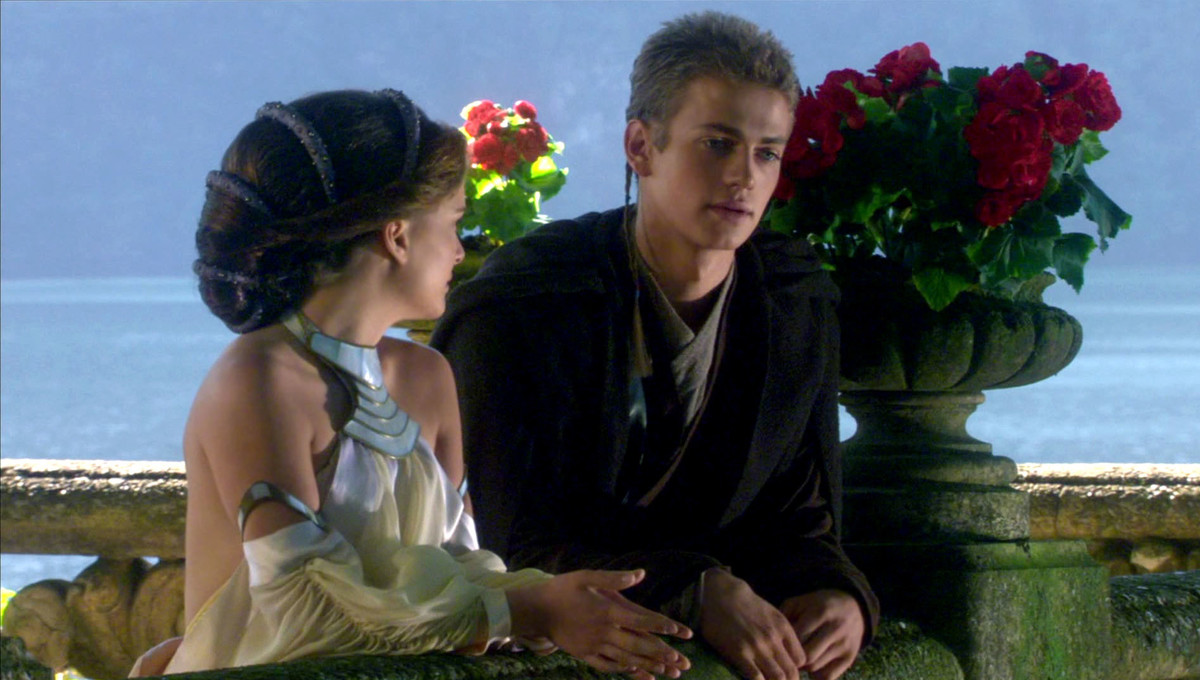
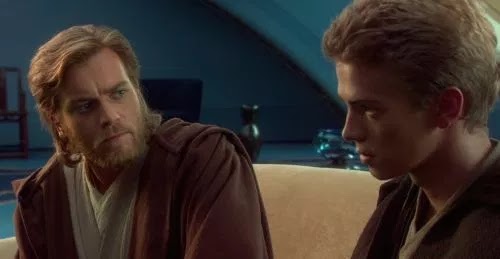
He hates sand you know. Anakin puts the moves on Padmé in Attack of the Clones

Director: George Lucas

Cast: Ewan McGregor (Obi-Wan Kenobi), Hayden Christensen (Anakin Skywalker), Natalie Portman (Senator Padmé Amidala), Ian McDiarmid (Chancellor Palpatine), Christopher Lee (Count Dooku), Samuel L. Jackson (Mace Windu), Temuera Morrison (Jango Fett), Frank Oz (Yoda), Anthony Daniels (C-3PO), Kenny Baker (R2 D2), Jimmy Smits (Bail Organa), Ahmed Best (Jar Jar Binks), Pernilla August (Shmi Skywalker), Joel Edgerton (Owen Lars), Silas Carson (Nute Gunray/Ki-Adi-Mundi)

Nothing could be as bad as The Phantom Menace. Surely? Well, umm, Attack of the Clones is pretty bad, but it’s not quite as stodgy and racist as the first one. It really isn’t. But don’t get me wrong, it’s still tone death, poorly written, crappily directed, poorly assembled, textbook bad film-making disguised under a lot of money.

Anyway, ten years have crawled by since Phantom Menace. Padmé (Natalie Portman) is now a senator campaigning against a revolutionary Separatist movement in the Republic, led by mysterious former Jedi Count Dooku (Christopher Lee). After a failed assassination attempt, Jedi Knight Obi-Wan Kenobi (Ewan McGregor) and his Padewan pupil Anakin Skywalker (Hayden Christiansen) are assigned to protect her. After another assassination attempt throws up a strange link to a mysterious planet of industrial cloners, Obi-Wan investigates leaving Padmé in Anakin’s care: but the two of them are falling in love, strictly against the rules of the Jedi order.

Sigh. Attack of the Clones is once again a mess, overly computer engineered, badly directed by a director with no knack for visual storytelling other than throwing special effects at the screen. It has a densely disinteresting plot about shady dealings around a mysterious Clone army that eventually the film doesn’t bother to resolve. Lucas shoots the entire film in a shiny, sterile, entirely computer generated environment that looks worse and worse the older the film gets. It builds towards a series of clashes at the end that have impressive spectacle on first viewing, but are hugely empty viewing experiences the more you come back to them. But all this isn’t even the film’s main problem.

First and foremost, the most egregious problem with this film is the romance at its heart. This romance, whose impact is meant to be felt through every film is to come, is as clumsy and unconvincing as anything you are likely to see. Not for one second are you convinced that this couple could ever actually be a thing. For starters Anakin is a whiny, preening, chippy rather dull man who over the course of the film murders a village full of people. Hardly the sort of character to make women swoon. On top of this, his romantic banter and tendency of staring blankly and possessively at Padmé has all the charm of a would-be stalker, mentally planning out the dimensions of the basement he’ll imprison his love in. 

Padmé is hardly much more engaging. Her way of handling this love-struck young man, who she claims she doesn’t want to encourage? To flirt with him in a series of increasingly revealing costumes, while constantly telling him “no we can’t do anything” – for unspecified reasons. But then as she says “you’ll always be that 12 year old boy to me” (Oh yuck George!). Portman looks she can barely raise any interest in holding Anakin’s hand, let alone conceiving future generations of Skywalkers. The desperate attempt to create a sense of “love across the divide” falls flat, flat, flat with all the sweep of a Casualty romance of the week. Put it frankly, we are never ever given any reason at all for us to think that they have any reason to be in love.
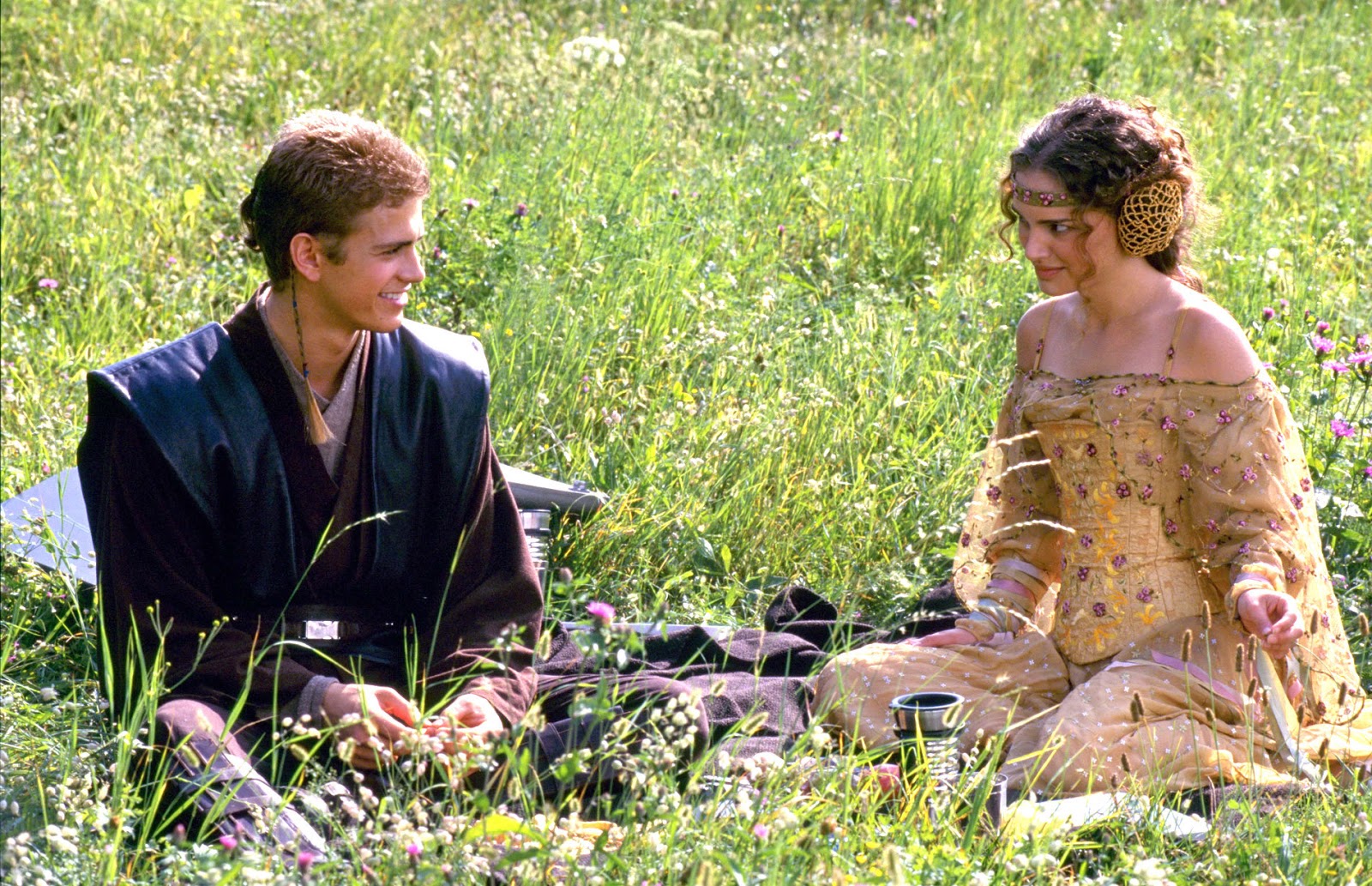
Despite all this the film desperately tries to throw them together into a series of clichéd romantic encounters, from candle-lit meals to gondola cruises around the lakes of Naboo. Jesus the film even throws in a flirtatious picnic (in which, true to form, Anakin espouses the benefits of totalitarianism, hardly the sort of thing to get a young girl’s heart fluttering!) followed by a roll around in the long grass after a bit of horseplay. To be honest it’s sickening and all the fancy dressing in the world never disguises the utter lack of chemistry between either characters or actors. And you’ll suffer with the actors who are trawling through the appalling “romantic” dialogue. The infamous “I don’t like sand. It’s coarse and rough and irritating and it gets everywhere. Not like here. Here everything is soft and smooth” sums it up – especially as Anakin ends it with stroking Amidala’s exposed shoulder possessively. Late in the film Padmé says “I’ve been dying inside since you came back into my life” – I know how she fuckin’ feels.

But then to be honest nothing really works in this simply terrible film. Of course a lot of the blame rests with Lucas whose overwhelming ineptitude as a writer and director is exposed in scene after scene. Most of the dialogue lacks any wit or lightness at all, constantly straining for a grandeur it can’t deliver and reads like George simply knocked out the first draft and left it at that. As for his directing: the camera positioning lacks any imagination what-so-ever. Most scenes that don’t have lightsabers feature characters sitting talking at each other to fill in plot details (I’m not joking here, there are so many different designs of chairs in this film it’s like strolling around IKEA). Sometimes George spices it up by having characters work slowly and aimlessly from A to B telling each other the plot (I’m failing to resist saying this is a pretty decent metaphor from the film).

The film shakes this up with a few action sequences which either tediously ape things we’ve seen before, but not-as-good (a chase through an asteroid field smacks of Empire Strikes Back) or having a computer game realism to them that never involves you. A prolonged sequence in a battle droid factory literally looks like a computer game from its hideously shiny lack of realism, to its logic, to the way George shoots it with the conveyor belt moving relentlessly forward visually like a dated platform game.

In fact computer game is a pretty good way of thinking about this film. When making this film, Lucas was convinced this would be the start of a new age: that only dull, traditional directors would be building sets and that all the cool kids would make everything in computers. Watching this film today in hi-def blu-ray does it no favours. Lucas’ computer generated sets (in most shots everything except the actors and their costumes are not real) look ridiculously shiny and unrealistic. There is no weight and reality to anything. Instead it all looks like some sort of bizarre, wonky computer visuals. How can you invest in anything in this film when even the goddamn sofa they are sitting on is a visual effect? How can anything have any weight or meaning? Compared to the lived in appearance of the Millennium Falcon, nothing looks realistic or carries any weight at all.

George Lucas isn’t really a director of action either. It’s hard not to compare the epic battles here with the style and substance of the (equally effects filled world) of Lord of the Rings being released at the same time. There, the battle scenes not only carry real emotional weight and peril but also have at least some sense of tactics and story-telling. This is just a collection of special effects being thrown at each other, like an exploding fart in a special effects lab. This makes for events that look impressive when you first see them, but carry no lasting impact: when you revisit the film, nothing feels important or dangerous or coherent – instead it’s just a lot of stuff happening, loudly.

This goes for the famous Yoda-Dooku light saber duel. Sure when I first saw this, seeing a computer generated muppet take on a stunt double with an octogenarian’s face super-imposed on his felt really exciting. But again, on repeated viewings, it’s just a load of wham and bang that kind of leaves you cold (not least because the fight is a showy bore-draw). It’s as ridiculously over-made and over stuffed as half a dozen other fights in the film. It’s almost representative of how crude these prequels are: a character always defined by his intellect and patience in Yoda reduced to a bouncy special effect for a moment of cheap “wow” for the fans. I’ll also throw in the lousy fan service of turning Boba Fett (a character who has a fascination for a lot of fans for no real reason) into an integral part of the Star Wars backstory – as if George intended this character at any point to be so popular, until he released the merchandising opportunities…

Lucas’ direction fails time and time and time again. Even small scenes fall with a splat or feature moments that get the wrong type of chuckles. The moment where Anakin embraces his dying mother? Forever ruined by the snigger worthy collapse of Pernilla August’s Shmi in his arms, looking like a primary school child miming playing dead (tongue out and all) in a school play. Obi-Wan and Anakin’s chase through the skies of Coruscant packed with “jokey” attempted buddy cop lines that never ring true. The film has even more skin crawlingly embarrassing scenes than Phantom Menace, from a sickeningly cutesy room of “younglings” learning Jedi skills to Obi-Wan’s bizarre encounter with a greasy alien in some sort of American diner. There is precisely one moment of wit in the film (Obi-Wan using the force to tell a drug dealer to “You want to go home and rethink your life”). Other than that – nope, it’s poorly made, poorly written, poorly assembled rubbish.

None of the actors emerge with credit. Pity poor old Hayden Christiansen, left to his own devices by Lucas’s inept, direction free, direction. But he is absolutely, drop-down, unreedemably awful in this film. In fact Anakin, far from being a jumping off point, was the death-knell of his career. Was there really no other young actor with charisma who could have stepped in to take this role instead? Portman fairs a tiny bit better, while at least McGregor, Jackson and Lee have enough experience to take care of themselves. But there is no sense of relationship between any of these characters. The two most important relationships Anakin has in the film contain no chemistry: he and Padme and he and Obi-Wan (neither of whom seem to particularly like each other).
Attack of the Clones could never be as disappointing as Phantom Menace (what could?) but it’s far, far, far away from being a good film. It’s got a simply terrible script, is directed with a dull flatness that all the CGI flair and shouting can’t distract you from. There is nothing in there for you to invest emotionally in. It’s built around a relationship that quite frankly doesn’t work at all on any levels. It builds to a random ending that feels like George ran out of ideas rather than because it meets any thematic reason. How could it all have gone so wrong?
Star Wars Episode 1: The Phantom Menace (1999)

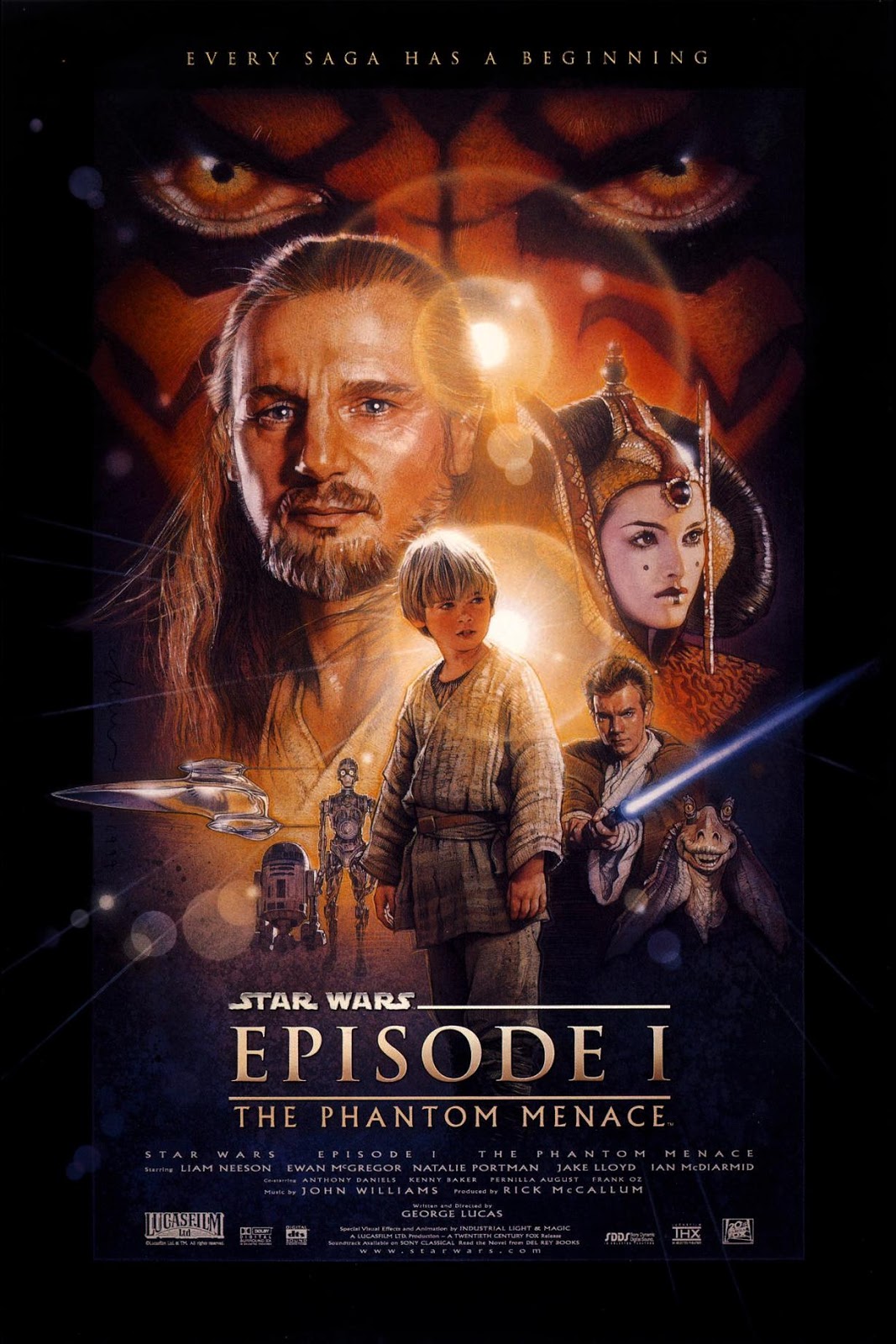
Jedi vs Sith – where did it all go wrong in The Phantom Menace?

Director: George Lucas

Cast: Liam Neeson (Qui-Gon Jinn), Ewan McGregor (Obi-Wan Kenobi), Natalie Portman (Queen Padmé Amidala), Jake Lloyd (Anakin Skywalker), Ian McDiarmid (Senator Palpatine), Anthony Daniels (C-3PO), Kenny Baker (R2 D2), Pernilla August (Shmi Skywalker), Frank Oz (Yoda), Ahmed Best (Jar Jar Binks), Oliver Ford Davies (Sio Bibble), Hugh Quashie (Captain Panaka), Samuel L Jackson (Mace Windu), Ray Park (Darth Maul), Terence Stamp (Chancellor Valorum), Kiera Knightley (Sabé), Silas Carson (Nute Gunray/Ki-Adi-Mundi), Brian Blessed (Boss Nass), Ralph Brown (Ric Olié)

Has there ever been a more disappointing film than The Phantom Menace? I don’t think any film has ever opened to so much hype and fan expectation. The Second Coming could have trouble competing with the expectations piled onto this first Star Wars prequel. Everyone thought it would be the film of the year. Until they saw it. No one thought it would be the film of the year after that.

Of course you should have sensed a disturbance in the force the second you read the opening crawl. The first sentence “Turmoil has engulfed the Galactic Republic” sounds promising right? Well let that expectation die as we hit the second sentence “The taxation of trade routes to outlying star systems is in dispute”. Not exactly a flight for the Empire with the Death Star plans is it? Perhaps only a multi-millionaire like George Lucas could have expected a storyline based around a tax dispute would get the pulses racing. 

But then this is a jumping off point for a seriously shambolic film experience. Phantom Menace is a total mess, an incoherent, poorly scripted, farce of a film, a terrible stumble through a dashed off storyline that makes no sense. Anyway, Naboo is a planet under siege from the Trade Federation. Jedi knights Qui-Gon Jinn (Liam Neeson) and Obi-Wan Kenobi (Ewan McGregor) are sent to negotiate but things quickly turn to violence and they need to flee the planet with its 14 year old (?) elected (??) Queen (???) Padmé Amidala (Natalie Portman). On the planet of Tatooine they encounter a 9 year old slave Anakin Skywalker (Jake Lloyd) with a natural instinct for the force. Qui-Gon wants to train him, while the Galactic Republic tries to resolve the siege of Naboo.

That’s sort of the story – but even writing it down seems episodic and vague. But then that’s everything in the film. Nothing is really clearly explained, and we are never properly introduced to who all the sides are in this film and what they might want. There is a complete lack of any real narrative sense at all. The antagonists and protagonists of the film are hard to define. In fact they are frequently a pile of two dimensional yawns. It’s pretty hard to care about any of them. I guess you feel a bond with Obi-Wan, but that’s based on old films – watch this and Obi-Wan is a do-nothing whiner. 

But all the characters are infected by this. George Lucas is completely unable to bring any characterisations to these people, his lines constantly falling flatly or crappily to the ground, while the actors themselves struggle to find anything to engage it. Harrison Ford famously told Lucas on the first film that “you can type this shit but you can’t say it” – and that’s pretty much nailed on for this film. There is not one single vaguely memorable line in this film. Rather you are struck every second with feeble lines that sound like they might have had depth (“There’s always a bigger fish!”) but when analysed for a second make no sense whatsoever. It’s no wonder Neeson seriously considered quitting acting after this film.

Yes these two characters will get it on in the next film. Yuck.

There isn’t a single character in the film to really invest in. There is no equivalent to your Han Solo, the witty outsider to puncture some of the grandaeur. Instead every character is a flat, po-faced, non-personality who spend all their time in the film very seriously going about their business, never explaining anything. The Jedi are particularly affected by this, written as serious stick-in-the-muds constantly lecturing and ticking off other characters. Qui-Gon Jinn makes a tedious lead character, who constantly gets in the way of the relationship building we need to see between Obi-Wan and Anakin. Because we know where the film series is going, spending time on Qui-Gon feels like wasted time. The backstory is to see the relationship build between Obi-Wan and Anakin – instead they hardly speak in the film, and we instead spend ages on Qui-Gon. It’s poor story-telling and wastes a film showing us unimportant back story rather than spending time on the core stuff. It’s bad enough that we have to waste one third of the prequel series on Anakin Skywalker: The Wesley Crusher Years (seriously has anyone, even a child, ever loved a film where a brattish, super kid is the hero? You won’t be shouting Yiipppeeee…)

Lucas isn’t a director of actors, he’d say the same. But he is supposed to be a master of visuals and special effects. This is a film where everything you could possibly imagine has been thrown at the screen. Each frame is full of complex business, every single section crammed with special effects. There is a lot going on visually all the time, but all of it comes across like an explosion in a colouring book. Unlike the effects of the original trilogy, nothing really feels real or carries any real weight. Instead you see every special effects shot in the film and see frames filled with clutter and shiny, computer generated weightless nonsense. Worst offender is the hideously overextended pod race sequence, like a particularly dull Formula One race, which carries no real stakes (as we all know the result) and, for all the high speed camera work and editing feels not one iota as thrilling as the speeder chase in Return of the Jedi.

On top of this, most of the interventions into the Star Wars backstory makes the original trilogy worse. This is the film that gave us midichlorians, some sort of magic alien thing that lives in blood and gives the Jedi the ability to use the force. The reaction to this midichlorian nonsense, undermining the mystique of the force into something that could measured like a top trump was so negative that it was mentioned at most once in the two sequels. Other areas got similarly scathed, not least turning Anakin Skywalker into the worst form of “gifted child”. I’m not even going to touch on the icky fore-knowledge we have about the fact that Anakin and Padme are going to get it on in the future, something that is hideous to think about.

The most hated character in film history?

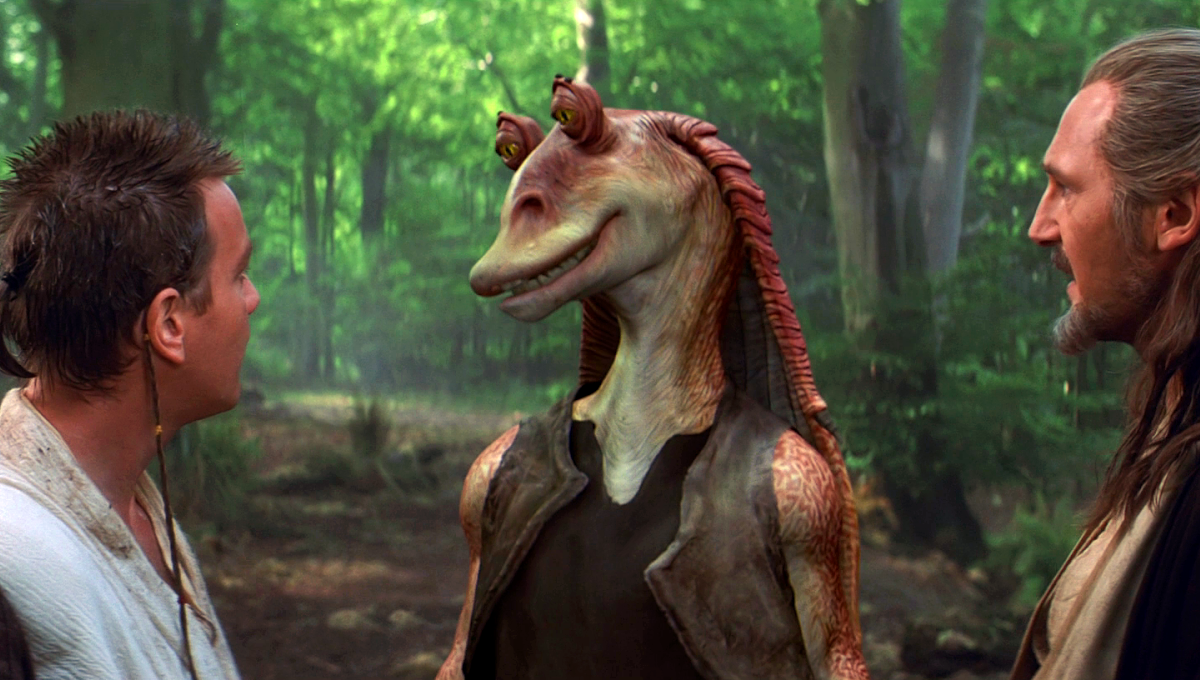
Lucas also fudged the new stuff he introduced in the film. The worst element: of course it’s poor old Jar-Jar Binks. I genuinely feel sorry for Ahmed Best, an actor whose career never recovered, who is just doing here what he was told to do. But Binks is the most irritating character possibly ever conceived for a hit blockbuster. An idiotic, comic creation designed for the kids who falls over, trips up, says stupid things and steps in shit he does nothing useful for the whole course of the film and tries to entertain kids who were way more interested in Darth Maul. Binks is almost irredeemable, every sentence enough to send everyone’s teeth on edge. 

Lucas trumpeted how much Binks was setting the trend of being the first major computer generated character. Lucas was incapable of guiding the actors to respond (or even look at) the correct spaces where Binks was standing. And Lucas was so pleased with it, he never stopped to think. Binks makes no sense. Like the rest of the Gungans he’s a joke. There is literally no reason at all for the Jedi to take him anywhere with them, particularly as he constantly gets in the way, causes trouble and offends people. Even in the “desperate” final battle, Binks prats about – compare him to the moments of tragedy and sacrifice given to the Ewoks in Jedi and you’ll see how bad this is.

Yes Watto loves Money. What? What’s the problem?

And of course he and the Gungans are shocking racist caricatures in their Jamaican accent. If you had any doubts that Lucas had no one saying no to him on anything, this film is stuffed with pretty shocking racist characters. Binks is terrible, but the villains of this place are the money obsessed Trade Federation, all with Japanese accents. On Tatooine, Anakin is kept by a greasy, fly ridden, money obsessed, big nosed, fly-covered alien Watto who looks, sounds and acts like a children’s version of The Eternal Jew. Did no one watching the film take a second and say “hang on this looks a bit dodgy…”

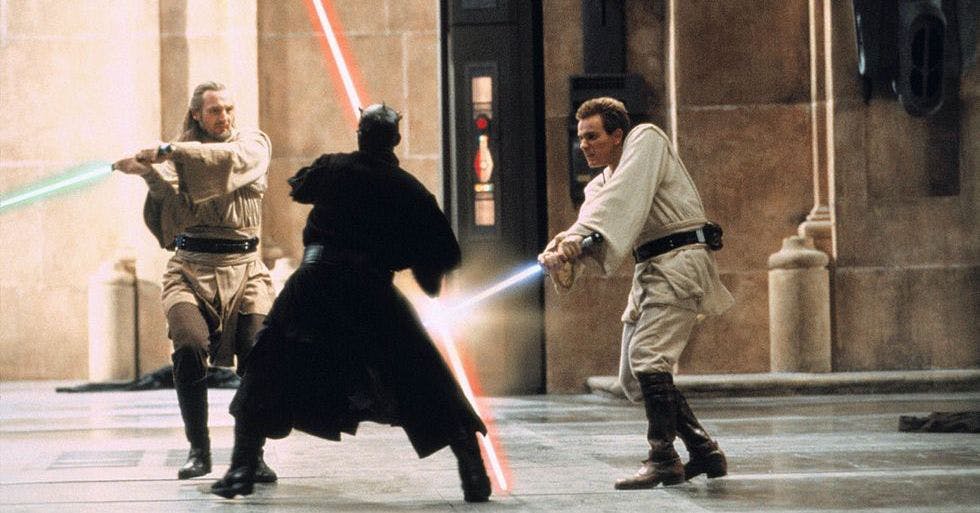
All of this nonsense finally comes together in a grand final battle which sums the whole film up, in a sequence where the tone shifts and changes all the time with no sense of a single person doing so intentionally. We have the Gungans comically fighting the droids in a series of awful little vignettes. We have the Queen chasing through the palace in a poorly explained subplot. We have a 9 year old child accidentally flying a ship into space and accidentally blowing up the baseship (Anakin saves the day without even realising it, the one thing that could make the child even more irritating than he already is). And we have the Jedi fighting Darth Maul in a battle that looks impressive at first but is in fact overly busy and overly choreographed. 

The Phantom Menace has few reasons to like it at all. You get bored with the story. You don’t invest in the characters. You don’t engage with the events. You don’t feel your pulse racing. The plot drifts from planet to planet with very little logic at all. The dialogue is terrible. The story telling is abysmal. The direction is flat. The film throws in moments that crap over the original trilogy. Lucas made is wait for decades – but then seems to have produced a film that he didn’t really want to do. It’s a truly dire film.

The Empire Strikes Back (1980)

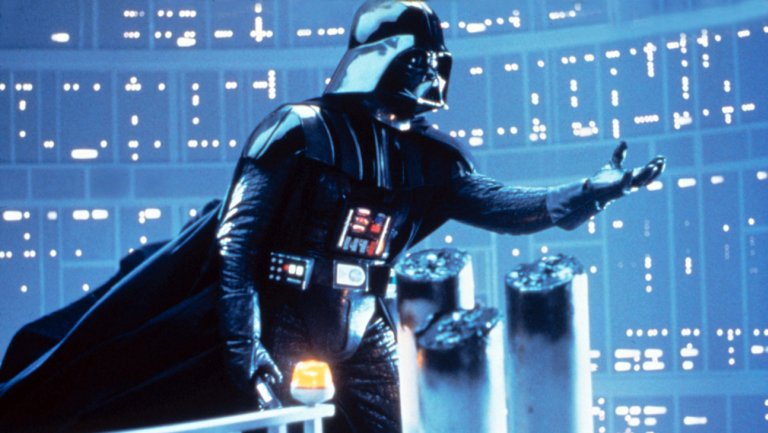
Darth Vader in the film that really made him an icon: the flawless The Empire Strikes Back

Director: Irvin Kershner

Cast: Mark Hamill (Luke Skywalker), Harrison Ford (Han Solo), Carrie Fisher (Leia Organa), Billy Dee Williams (Lando Calrissian), Anthony Daniels (C-3PO), David Prowse & James Earl Jones (Darth Vader), Peter Mayhew (Chewbacca), Kenny Baker (R2-D2), Frank Oz (Yoda), Alec Guinness (Obi-Wan Kenobi), Denis Lawson (Wedge Antilles), Kenneth Colley (Admiral Piett), Michael Sheard (Admiral Ozzel), Jeremy Bulloch (Boba Fett), Ian McDiarmid (Emperor)

As Star Wars sprawls into a massive Disney money-spinning franchise, for both fans and producers alike the original trilogy is increasingly becoming like Holy Texts, the events and characters of which must guide all future films. And of all these, none of them is holier than The Empire Strikes Back. It’s odd to think that the initial reaction to this sequel was a bit mixed at the time, since this is not only the very finest of all the Star Wars films, but also one of the best genre films ever made, one of the greatest sequels ever made – in fact one of the best, most consistently rewarding films you are ever going to see. It’s going to be loved forever, any critical view is almost superfluous. And the reason for that is surely linked to the fact that I’ve seen it hundreds of times and I still love every frame of it.

Anyway, nearly everyone must know the story. Some time has passed since the rebels successfully took out that Death Star. Now they are secure in a new base on the ice planet Hoth, being hunted by the empire in an operation commanded by the feared Darth Vader. When the Empire locates the base, our heroes are separated in the ensuing escape: Luke (Mark Hamill) is guided by the force and the ghost of his mentor Obi-Wan (Alec Guinness) to seek out the legendary trainer of Jedi Yoda (Frank Oz). Meanwhile, Han (Harrison Ford) and Leia (Carrie Fisher) are on the run in a malfunctioning Millennium Falcon, dodging Star Destroyers and eventually taking refuge in the Cloud City of Bespin, run by an old friend of Han’s, Lando Calrissian (Billy Dee Williams). But is this a safe refuge? And what is the secret reason why Vader is so determined to hunt down Luke?

So what is it that makes The Empire Strikes Back so damn good? Well it takes everything from the first film and deepens and enriches all the characters and themes that that film explored. While you could say Star Warsis the quintessential romantic space opera – part Western, part fairy tale legend – it’s also a feel-good fun ride. Empireis a rich, complex and endlessly rewarding film that takes all its characters and turns them into fully rounded and intriguing personalities. When you think about the turmoil and struggles each of them goes through in this film – from Luke, through Vader even down to C-3PO – it’s not hard to see why these characters have worked their way into the hearts of every viewer. We see them all go through huge amounts and we learn and discover things about them in every frame. It’s fascinatingly well done storytelling and brilliantly structured character building.

In fact the whole film is a triumph of investment. Even more than the first one, we get a real sense of the mighty ruthlessness of the Empire (staffed exclusively it seems by British character actors from 1970s TV), of its resources, its willingness to do anything. Even more than in the first film, the odds seem piled against the rebellion, with the limited ship, tiny fire power, the fact that our heroes spend virtually the entire film either running, hiding or captured – how can you not feel the pull of wanting to take up this romantic cause eh? 

Perhaps it works so well as Lucas handed over much of the on-the-ground-floor creativity over to other people (you only have the watch The Phantom Menace to see what happened when he took all these reins back up again). The witty, energetic, fun script – packed full of lines that trip off the tongue, and character moments that feel real and human – is by Lawrence Kasdan. Directing meanwhile is handled by Irvin Kershner, a middle-of-the-road director who taught Lucas at film school but here seems to transcend his abilities to deliver a true masterpiece, with all the thrill of a teenager finally given the keys to the big car. 

Kershner can handle all the spectacle, but like no other movie in the series Empire works because it’s rooted in the small-scale, in the reaction shot, in the camera soaking up the actors. There are so many shots of actors looking at things in this movie (I think they all have significant moments of this) while we see their thoughts and emotions play across their faces. Kershner never forgets that this is a story about people not about bangs and whizzes in space. In doing that, in making this a brilliant character drama, he really turned Star Wars into not just an adventure but a series where we invested heavily in these people. There is a reason why the modern films come back time and time to the characters from this film: Empire really made us care about them, turned them into family members, people we’d seen through highs and lows. We see them in a modern film and it’s like greeting long lost friends.

And it helps that the stars give their best work here. Harrison Ford may never have been so cocksure, so cool but also strangely vulnerable and lovable. While in Star Wars he was used to puncture the grandeur, here he’s got a put-upon vulnerability to him, a bravado in his courtship with Leia that hides his touchiness. Not to mention we are constantly reminded he’s a wanted man. Ford also gets massive comic mileage from his exasperation with the constantly malfunctioning Falcon. All this and he never looks flustered: “Never tell me the odds!” indeed! And he gets possibly the best loved line in the whole series with “I know”.

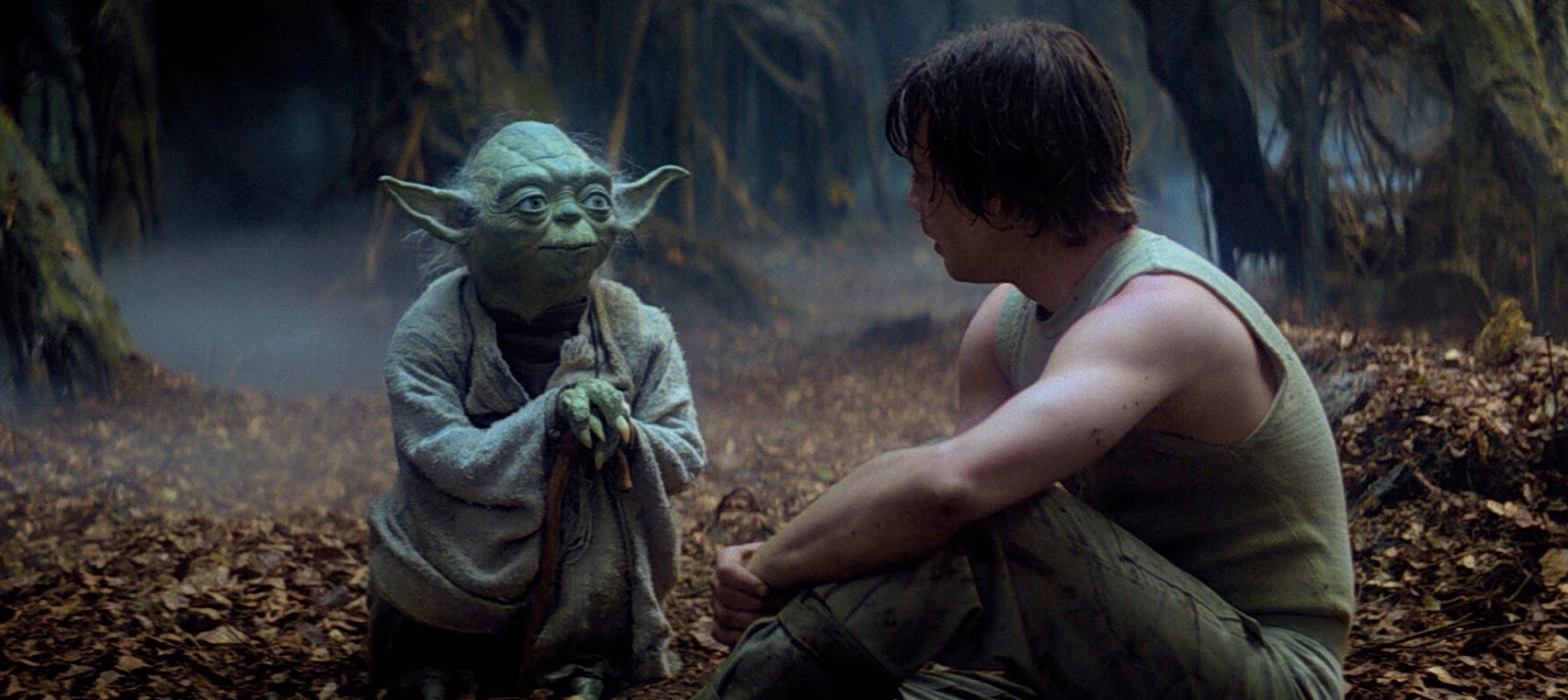
Fisher is equally good as a prickly Leia, who is afraid to let down the imperious commanding cool to let any hint of feeling and emotion show. Mark Hamill does a very easy to overlook job of emotional commitment as Luke Skywalker – particularly as he spends a large chunk of the film interacting only with a robot prop and a puppet. He sells the conflict Luke is feeling, the clash between doing action that feels right now and having the patience to build his skills. And of course, he sells the anguish of finding out that twist.

Ah yes the twist. Empire was perhaps one of the first films to impose such strict pre-production secrecy onto its key plot development. On set, only Irvin Kershner and Mark Hamill knew that Vader was Luke’s father (no spoiler warning – I think Lucasfilm have well and truly spoilt that one themselves). Dave Prowse, who was not trusted to keep it to himself, to was given a line around Obi-Wan killing Luke’s father (he must have been slightly surprised at Hamill’s reaction, which does seem a bit OTT to that news). But this moment again really, really, really works because it is both a surprise AND something that makes total sense. It doesn’t feel like hints have been dropped through the whole film in advance, but when you hear it you spot them all over the place. It’s also such a brilliant narrative rug pull it has also effectively powered the creation of the prequels and is still central to the new trilogy.

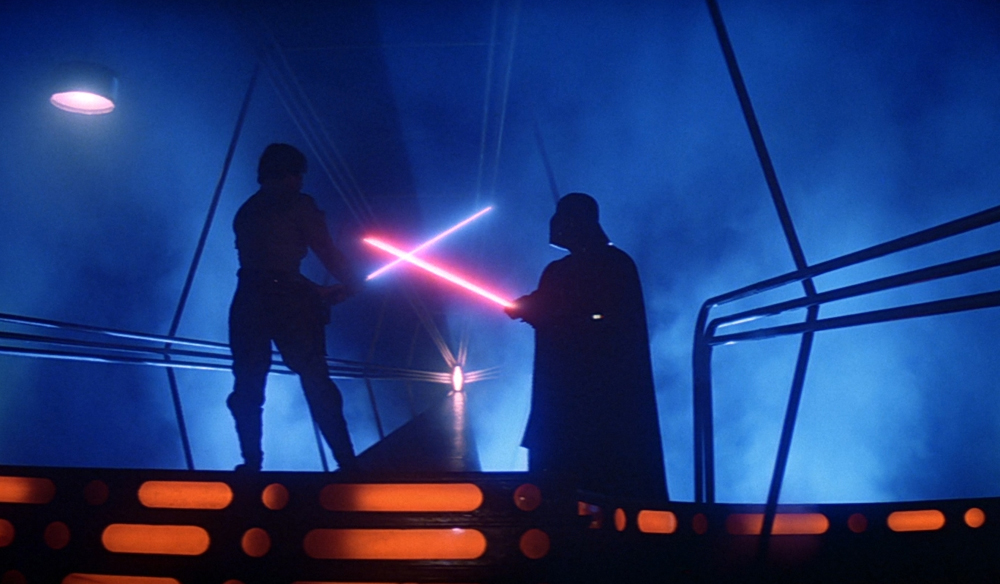
Away from all this, the film is also a masterpiece in pacing and action sequences. It took a lot of guts to put the major space battle at the start of the film, but it works an absolute treat – while also being something completely different from anything in the first film. It looks and feels really cool. And it contrasts perfectly with the smaller scale, more intimate desperation of the escape from Besbin that ends the film, matched with Luke’s battle with a never-more-imposing Vader. I’ll also mention as well that John Williams’ score for all these sequences is practically perfect in every way, adding no end of tension, emotion and excitement to all these sequences.

And it’s the fact that you get all this, mixed with a real, genuine investment in all the characters (good and bad), that really makes the film work in a way that no other Star Wars film has quite managed since, and that makes this the crown jewel in the franchise. It’s one of those serendipity projects where everything fell into place, everyone brought their best to it, and the stars aligned. It’s lightening in a bottle, and the franchise has used it ever since as its setter for everything from tone to plot developments. You will rarely find anything as fun, or widely loved, as this film.

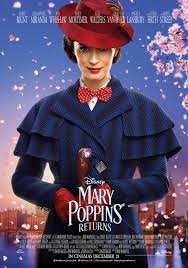
Mary Poppins Returns (2018)

Emily Blunt is practically perfect in every way in Mary Poppins Returns

Director: Rob Marshall

Cast: Emily Blunt (Mary Poppins), Lin-Manuel Miranda (Jack), Ben Whishaw (Michael Banks), Emily Mortimer (Jane Banks), Pixie Davies (Annabel Banks), Nathanael Saleh (John Banks), Joel Dawson (Georgie Banks), Julie Walters (Ellen), Colin Firth (William Weatherall Wilkins), Meryl Streep (Topsy), Dick van Dyke (Mr Dawes Jnr), David Warner (Admiral Boom), Jim Norton (Mr Binnacle), Jeremy Swift (Hamilton Gooding), Kobna Holdbrook-Smith (Templeton Frye), Noma Dumezweni (Miss Penny Farthing)

Some sequels go into production even before the first film hits the cinemas. Others give you a good long wait – and Mary Poppins has had you waiting 54 years. Of course, part of that was down to her creator, PL Travers. Travers so hated the Disney original (I mean, she really hated it) she outright banned all other adaptations of her work – but her estate were far more open to the prospect (and let’s be honest, probably also to the money) that Disney could finally go ahead with a sequel.

And thank goodness for that, since this delightful film is practically perfect in every way. It’s 25 years since the events of the first film, and Michael Banks (Ben Whishaw) is now a widower with three children, whose home is about to be repossessed by the bank for non-payment of loans. His sister Jane (Emily Mortimer) is trying to help, but the pressure and sadness are showing on Michael and are forcing his children Annabel, John and Georgie (Pixie Davies, Nathanael Saleh and Joel Dawson) to grow up fast. The Banks family is in trouble – so it’s the perfect time for the arrival of Mary Poppins (Emily Blunt) to save the day – with a little bit of help from gas-lighter Jack (Lin-Manuel Miranda).

Mary Poppins Returns is a triumphant mix of nostalgia and originality, that walks a very difficult tightrope between being a loving pastiche and tribute to the original film while also managing to bring its own original charm and magic touch. That’s a difficult trick to pull off – but it basically takes a slight remix of the original film’s story and adds a heft of emotional impact to create something that feels modern and fresh while also being very close tonally to the original.

This is never clearer than in Emily Blunt’s sublime performance as Mary Poppins. If there is anyone who had a more difficult job in this film than Blunt I can’t think of them. She had to take on the most iconic character of an iconic actress – and does so brilliantly, but creates a character who feels an equal mix of both Andrews and Blunt. This is clearly the same character as before, but Blunt mixes in a wonderful heart-warming care and concern under the pristine English exterior that melts the heart. She has a glowing twinkle to her, an almost bottomless charm with an endearing delight for the wonder and silliness that is part of Poppins world. And boy can she sing and dance? She carries the film with effortless grace – to such endearing effect that, just like with Julie Andrews, you miss her as she becomes less prominent in the final act.

And of course she is matched by a superb company of actors. Lin-Manuel Miranda makes the transition to the big-screen like a duck to water, hugely loveable, wonderfully charming and superb (as you would expect) at the musical sequences. The three children give exemplary performances, with never a hint of sickly sentimentalism. Emily Mortimer is radiantly giddy as Jane, while Ben Whishaw will bring a lump to the throat as a Michael who is struggling under a huge amount of grief.  That’s not the mention wonderful turns from the whole of the cast, especially from Holdbrook-Smith as a kindly lawyer.

All these actors are “marshalled” brilliantly by director Rob Marshall. With his experience of musicals – both on screen and stage – Marshall knows his stuff and brings all his experience to bear here to create a sequel that will be seen (I’m sure) as a worthy companion to the original. Marshall’s direction of the musical sequences is faultless. He knows exactly how and where to place the camera for maximum effect, and gets just the right tone and mood from these scenes. He’s also, let’s not forget, a brilliant choreographer and has put together some exquisite sequences, not least the lamplighter song Trip the Light Fantastic, a whirligig showstopper of a number that if you saw it in the West End would have the whole crowd on their feet.

The songs make for easy criticism (reviewers seem duty-bound to say they are not as good as the original) – but to these ears Marc Shaiman and Scott Whitman’s songs and scores are both catchy and engaging. Give them time and I’m sure you’ll find them as replete with impact as the Sherman brothers’ tunes from 1964. Saying that, there might be one musical number too many – but that’s a very minor criticism. 

Because this is a film that gets so much else right. The storyline is certain to leave a lump in the throat, with its delicate handling of grief and the sadness both of growing up and also children being forced to leave their childhoods behind in impossible circumstances. These are universal themes – and they certainly impacted on me, and on a cinema packed with families all of whom were engrossed. That’s part of the magic of what Marshall has achieved here – heck, even the final Big Ben set-piece starts pushing you towards the edge of your seat in tension. I also loved the bravery of the colour-blind casting. It’s a film that stands on its own feet so well, it almost takes you out of the film when Dick van Dyke appears at the end – it doesn’t need the cameo, this film is its own beast.

Mary Poppins Returns will leave a smile on your face and a glow in your heart. It’s totally lovely from start to finish. Emily Blunt is superb (with wonderful support from all) and Rob Marshall triumphs as director and choreographer in this, surely his finest movie ever. It’s got something for all ages, and a truly heart-warming story. It takes everything that works so well in the first film and builds on it. It’s a wonderful mixture of homage and originality, that you will enjoy time and time and again. Practically perfect!

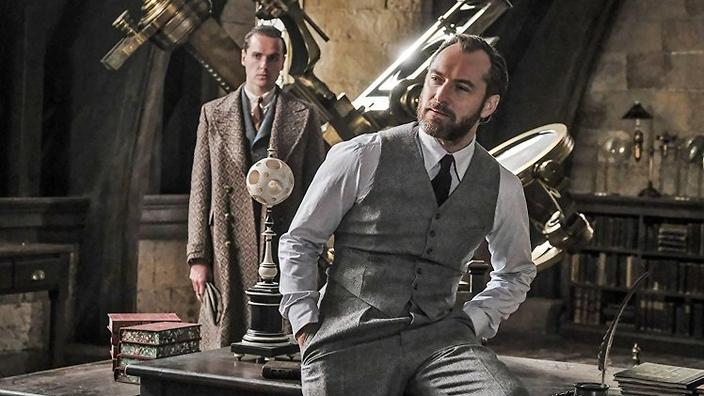
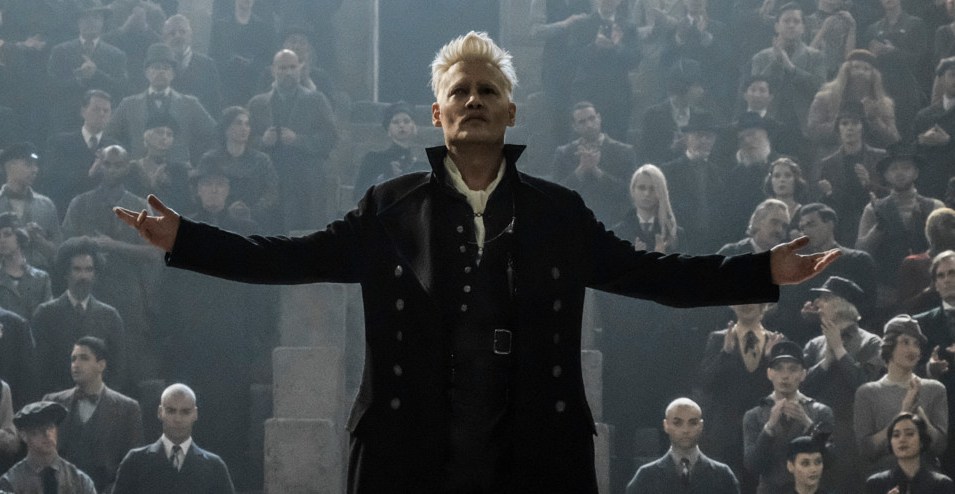
Fantastic Beasts: The Crimes of Grindelwald (2018)

Eddie Redmaynes wades his way through the murky Crimes of Grindelwald

Director: David Yates

Cast: Eddie Redmayne (Newt Scamander), Katherine Waterston (Tina Goldstein), Dan Fogler (Jacob Kowalski), Alison Sudol (Queenie Goldstein), Jude Law (Albus Dumbledore), Johnny Depp (Gellert Grindelwald), Ezra Miller (Credence Barebone), Zoë Kravitz (Leta Lestrange), Callum Turner (Theseus Scamander), Carmen Ejogo (Seraphina Picquery), Claudia Kim (Nagini), William Nadylum (Yusuf Kama), Kevin Guthrie (Abernathy), Brontis Jodorowsky (Nicolas Flamel), Derek Riddell (Torquil Travers)

What were the Crimes of Grindelwald? Well the main one is this film. Grindelwald does what we thought might have been impossible – he features prominently in the first flat-out bad Harry Potter film. Fantastic Beasts: The Crimes of Grindelwald is a near incomprehensible mess of clumsy set-up for future plots, tedious side-plots, poorly executed drama and a vast array of not particularly interesting characters struggling through not particularly interesting events with low stakes. I feel asleep twice for a few moments in the film. There is very little in it to recommend.

Dark wizard Grindelwald (Johnny Depp) opens the film by escaping from captivity and flees to Paris. There he plans to – well to be honest I’m not terribly sure what he is planning to do at all. I think it involves something about world domination. Also it involves locating and winning to his side mysterious young wizard Credence (Ezra Miller) from the first film. Meanwhile Grindelwald’s old friend (or was it more? The film ain’t saying) Albus Dumbledore (Jude Law) sends Newt Scamander (Eddie Redmayne) to Paris to find Credence first. Lots of things sort of happen after that, but most of them are building up to the next three (three!) films.

Three films? Seriously? Was that something they had in mind from the start? It feels a lot more likely it’s an idea that came out of the financial success of the first film, rather than any artistic decision. It’s certainly very hard indeed to see many narrative, tonal or thematic links from the first film carrying across to this one. This one feels like it comes from a completely different type of story. More than anything, the film-makers seemed to desperately want to forget the whole “fantastic beasts” angle we started this damn thing with. The odd beast is thrown in every so often to keep ticking the title box, but this flies off (or tries to) into such different, would-be darker, stakes that the beasts never feel a natural link. This is a film that wants – with its muted palette, murders, darkness and (in one supremely misjudged moment) a Holocaust reference – to set us on a dark path to future misery and war. Whatever happened to chasing beasts around to catch them in a suitcase?

Instead the film doubles down on Potter-lore.  You virtually need a PhD in the Potterverse to keep on top of what’s going on. Spells, objects, phrases, charms and incantations are thrown in all over the place, with very little explanation for the audience. Now I can roll with this a certain amount, hell we’ve all read the books and seen the films, but there are at least a few things in here that could desperately do with some reminders for the audience (what is an obscurus again?) so that we can understand their contextual importance. Instead the film barrels along, throwing plot points all over the place and ramming information into our ears.

In fact, most of the film is like an epic info-dump of material designed to set up stuff for later films. Again, you can’t help but feel that they suddenly realised after completing the first film that if they were going to spin this out into another multi-volume series, there were lots and lots and lots of plot threads they hadn’t even attempted to introduce at the start. Instead of taking a bit of time to build these things in and make us care about them, this film throws them into the mix as quickly as possible to make up for lost time.

In all this mass pile of information thrown at us, the film could really do with less going on. There is a massive, red-herring- filled plot about a character’s family history that takes up loads of screen time and eventually turns out to mean absolutely nothing at all. This is a misdirection that could work well in a book – but in a film as crammed and packed as this one, it makes you tear your hair out. How long did we spend on this and it means naff all at the end!

In fact, you can’t help but feel that Rowling as tried to write a book here rather than a film. These sprawling bits of wizarding lore, universe building, red herrings and other plots would have worked really well if she had 500 pages of prose to explore and build them in. But she’s not experienced enough a screenwriter to make them work well here. If another scriptwriter had adapted her ideas into something that works as a screenplay – the sort of focused work that changed the sprawling Order of the Phoenix into a tightly focused couple of hours – the film would be far better.

But instead, the film feels like everyone has got far too used to producing these epics, to a certain style of making the films. There is a lack of fresh ideas here, with a lack of independent or new eyes to see the whole and suggest how an outsider could see it. This also extends to David Yates’ direction which, while competent and well managed as ever, now feels like he has run out of ideas of how to film this wizarding stuff in a new way, which is fair enough after five films. It’s a film that desperately needs fresh new blood in it, and a universe that needs the sort of creative kick-up-the-backside that Alfonso Cuaron gave in The Prisoner of Azkaban.

You feel sorry for some of the actors carried across from the first film. Dan Fogler has so little to do that he would have been better off not being in the film. His absence (for instance, if his memory wipe from the previous film had stuck) would at least have been motivation for the actions of Queenie in this film, who gets a rushed and nonsensical character arc that seems to completely change the character we got to know in the first film. Katherine Waterston is saddled with virtually nothing as Tina.

Instead, far more time is given over to Johnny Depp. Depp’s casting was controversial to say the least – and not worth it. Depp gives one of his truly lazy, eccentric performances – aiming possibly for brooding intensity, he instead lands out dull and underwhelming, a charisma vacuum. It’s hard to see him leading hundreds of followers in a revolution. Jude Law does far better as a twinkly Dumbledore (even if his performance bears little resemblance to Gambon or Harris), and his scenes are the highlights of the film. The film, by the way, shies cowardly away from any real depiction at all at the alleged love affair (which Rowling talks about) between Dumbledore and Grindelwald, presumably because it would make the film a harder sell in China.

And what of our hero? Well Eddie Redmayne is still charming, but his character feels out of step with the increasingly darker tone the film aims for. He’s also saddled with a supremely dull and unengaging sort of love-triangle with his brother (a forgettable Callum Turner) and ex-girlfriend and brother’s fiancée Leta Lestrange (an out of her depth Zoë Kravitz). The film talks a bit about the troubled relationship of the Scaramander brothers – but is so rushed it never has time to really show us any of this, so instead has to tell us about it, even though everything we see basically shows their relationship as being reserved but loving.

But then that’s just par for the course of this underwhelming and deeply uninvolving film. The stakes should feel really high, but they never do because to be honest you are never really sure what they are. The film ends with the expected fire filled wizarding special effects stuff – but honest to God I had no idea what was going on, why it was happening, what was the danger or where it came from. It just felt like the film needed to end with a bang. There are moments of this film that should have had some emotional force but they don’t because it’s so crammed to the margins with plots, superfluous characters (many of whom are introduced with fanfare and then barely appear in the film) and pointless digressions that when things happen to characters we care about from the first film, it doesn’t carry the force it should. Five films of this? I’m not sure on the basis of this I’d want to see another five minutes. A major, major, major misfire.

The Prince of Egypt (1998)

Animated DeMille epics in the rather brilliant The Prince of Egypt

Director: Brenda Chapman, Steve Hickner, Simon Wells

Cast: Val Kilmer (Moses), Ralph Fiennes (Ramesses II), Michelle Pfeiffer (Tzipporah), Sandra Bullock (Miriam), Jeff Goldblum (Aaron), Danny Glover (Jethro), Patrick Stewart (Pharaoh Seti), Helen Mirren (Queen Tuya), Steve Martin (Hotep), Martin Short (Huy), Ofra Haza (Yocheved)

When Dreamworks Studio was put together by three Hollywood mega hotshots (Katzenberg, Spielberg and David Geffen), Jeffrey Katzenberg, former head of Disney, finally got the chance to make his animated version of The Ten Commandments. The Prince of Egypt was the first project under the Dreamworks animation label – and it was intended to beat Disney at its own game. It succeeded – so well that many people think it actually is a Disney film. Is that a good thing?

Anyway, the story should be familiar. In Ancient Egypt, Moses (Val Kilmer), the child of Jewish slaves, is adopted by Pharaoh (Patrick Stewart) as a baby after being found in the bulrushes. Moses grows up as brother to Ramesses (Ralph Fiennes) the future Pharaoh – until the shock of finding out his heritage leads him to flee Egypt. But an encounter with the burning bush (voiced again by Kilmer) gives him a new mission – back to Egypt to demand of Ramesses “Let My People Go”. Will he succeed? Well: There Can Be Miracles (When You Believe).

It helps you to believe in miracles when a film looks as gorgeous as this one does. The animation is amazing, not just because of its quality and richness, but the imagination of its images. From the framing of Pharaoh and later Rameses around the Egyptian architecture around them, to an extraordinary dynamic shot of Moses throwing his sandals from the room when encountering the burning bush, to the haunting interpretation of the killing of the firstborn, it’s brilliant. 

It doesn’t stop there either, with the final parting of the Red Sea awe-inspiring in its scale. But the film does equally beautiful work with the smaller, more intimate moments: each character feels real and lived in, and the film perfectly captures smaller moments of affection, love and hurt with genuine emotional force. It’s a terrifically well-made film.

And of course it has a classic story – it’s literally stood the test of time. So imaginative are the visuals – and so impressive is its scope and scale – that it almost dwarfs the DeMille style it’s quietly apeing. In fact, I’d worry whether it is a film that will have greater appeal to movie-lovers and parents than perhaps it does to children. There isn’t much in the way of humour – even the film’s nominal comic characters, a pair of cynical Egyptian priests (and near con artists) voiced by Steve Martin and Martin Short, are on the side of the oppressive baddies. There are a few decent songs in there – I rather like the Les Miserables style oomph of “Deliver Us” – and the film makes great use of the beautiful voice of the late Israeli singer Ofra Haza. But there is no getting around that this is a serious piece of film-making, with nary a comic camel in sight.

But this is no bad thing at all, and I think it stands The Prince of Egypt in good stead as it’s a film you’ll like more the older and more mature you are watching it. Not least the wonderfully complex relationship it explores between Moses and Ramesses – these two wild young men start as carefree kids (the first thing we see them do is smash up a temple building site in the film’s most cartoonish sequence, a sort of Wacky Races chariot drag race), and each become dramatically changed by responsibilities. Moses ascends to a higher plane of responsibility and humanity – but Ramesses finds himself forced into defending to the death a system of government he seemed at best disinterested in as a young man.

The film actually carries a great deal of sympathy for Ramesses. It’s in many ways a tragedy of the brother relationship between these two princes of Egypt getting shattered by events. But Ramesses is a lonely, almost needy figure, who needs Moses’ affection and respect. Ralph Fiennes mines a lot of vulnerability for this man struggling to fill his father’s shoes, who just wants Moses to chuck this whole prophet business in and go back to being his only friend. Ramesses becomes a complex, vulnerable and rather sad man – unable to deal with the pressure of his role and desperate to revitalise a lost connection with Moses, the hatred he eventually feels for his former brother born almost exclusively from rejection. 

Moses isn’t quite as interesting a character – he’s more of a waster who becomes a stand-up guy – but the film successfully builds an aura about him. It struggles a bit more with those Old Testament morals: we are meant to condemn Pharaoh’s slaughter of the Jewish firstborn that opens the film, but God’s massacring of the the Egyptian firstborn (for all Moses’ discomfort with it) is presented as being primarily the fault of the Egyptians’ stubbornness.

But then that steers us into theological territory, which no animated epic for kids can really manage to set new ground with. Instead, let’s focus on the many things the film does right. First and foremost that striking visual imagery and beautiful animation, and the depth and shading it gives to the characters. The all-star cast do extremely well – even Jeff Goldblum is fairly restrained – and it’s got some great songs. It deserves to be shown as often as The Ten Commandments on the television.

Into the Woods (2014)

James Corden and Meryl Streep in the strangely flat Into the Woods

Director: Rob Marshall

Cast: Meryl Streep (The Witch), Emily Blunt (The Baker’s Wife), James Corden (The Baker), Anna Kendrick (Cinderella), Chris Pine (Cinderella’s Prince), Tracey Ullman (Jack’s Mother), Christine Baranski (Cinderella’s Mother), Johnny Depp (The Big Bad Wolf), Lilla Crawford (Little Red Riding Hood), Daniel Huttlestone (Jack), Mackenzie Mauzy (Rapunzel), Billy Magnussen (Rapunzel’s Prince), Tammy Blanchard (Florinda), Lucy Punch (Lucinda), Frances de la Tour (Giant’s Wife), Simon Russell Beale (Baker’s Father)

Musicals are big box office. Everyone has a side of themselves that enjoys the razzmatazz of song and dance numbers. In the world of the musical, Stephen Sondheim is often seen as the pinnacle of musical master craftsmen – and for years, studios had tried to bring Into the Woods, his musical reimagining of fairy tales, to the big screen. Was it worth it? Um, possibly not.

A baker (James Corden) and his wife (Emily Blunt) are desperate to have a child. A witch (Meryl Streep) claims she has cursed them after the baker’s father (Simon Russell Beale) stole magic beans from her garden. She will lift the curse in return for four items she can use to lift a curse on her – a milk white cow, a red coat, a glass slipper and some golden hair. Well if you know anything about fairy tales it won’t take you long to figure out which tales we are going to be heading into with that list – and sure enough Jack (Daniel Huttlestone), Red Riding Hood (Lilla Crawford), Cinderella (Anna Kendrick) and Rapunzel (Mackenzie Mauzy) all make appearances. But here the happy ending comes half way through the story – how will the characters deal with the impact of their choices when they have to face the consequences of their actions?

Okay I’m going to be honest, Into the Woods left me a little cold as just a musical. I didn’t really get into any of the numbers as they were playing, and the basic storyline is an odd combo: half satire, half social commentary on the dangers of getting what you want at all costs. I mean that’s clever stuff, and some big themes, but the movie certainly seems to wear them very heavily. And the movie also fails to make the musical sections engaging or inspiring – instead they are rather leadenly staged with very little real vibrancy or joy.

What’s already a rather disengaging musical isn’t helped by Rob Marshall’s leaden direction, which positions each scene with a flatness where the actors get lost in the wide screen and murky set design. Into the Woods is an astonishingly boring film to look at, murky and dimly lit, mistaking lighting (or lack of it) for mood. Every single scene is dingy and poorly framed, with events occurring in front of the viewer but never really getting engaging or interesting. Nothing strikes you interest.

It becomes a film that really isn’t that interesting to watch. This is despite some very strong efforts from nearly all the cast. Meryl Streep inevitably captured most of the praise as the Witch, and she is good, but there is something a little too artificial about her performance for my taste, something not quite heartfelt. But Emily Blunt is very good (and an excellent singer as well – who knew!) as the Baker’s wife, full of humanity and warmth. Chris Pine brings some excellent comic timing to the impossibly vain and preening Prince. There are plenty of other good moments as well, as most of the cast throw themselves into it. 

But these moments keep getting lost in sequences that just aren’t interesting. For every amusing sing-off between the two princes on a waterfall, or moment of genuine warmth and charm between the baker and his wife, we get sequences of unbearable smugness (principally Johnny Depp’s appalling look-at-me cameo as the Big Bad Wolf). British character actors abound all over the place, but most have virtually nothing to do. In addition, the violence and horror elements of the original musical – as the cast deal with the terrible consequences of their actions and turn on each other – are toned down considerably.

In fact, as leading characters start dying left, right and centre, it’s not really shocking enough (as the darkness of their fates is skirted around), as Marshall’s camera meekly turns away  from anything that might cause a fraction of upset. Wasn’t the whole point of fairy tales – and I suppose the original musical – to deal with both the darkness and the light? Why make such a dark musical and then try and force it into being a 12A rating? Why make a movie that tackles dark themes and then shy away from them as often as possible?

It’s part of the slightly incoherent mood of Into the Woods – it never really clicks. It doesn’t really offer much to enjoy: the musical numbers (after the opening title number) are pretty unengaging, and they are filmed with a dull unimaginativeness. Despite the money spent on it, the film looks really cheap. While there are a couple of good performances, others – like Anna Kendrick – are trying a little too hard. It’s a story that is supposed to be about the dark heart of fairy tales, and how reality after a happy ending often isn’t as jolly as we think it is – instead it’s a story that never really feels like it’s about anything.

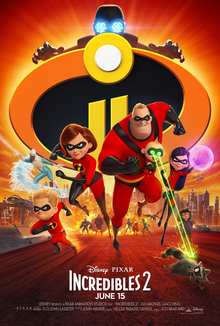
The Incredibles 2 (2018)

The family are back together, in belated but brilliant sequel The Incredibles 2

Director: Brad Bird

Cast: Craig T Nelson (Bob Parr/Mr Incredible), Holly Hunter (Helen Parr/Elastigirl), Sarah Vowell (Violet Parr), Huck Milner (Dash Parr), Samuel L Jackson (Lucius Best/Frozone), Bob Odenkirk (Winston Deavor), Catherine Keener (Evelyn Deavor), Brad Bird (Edna Moda), Sophia Bush (Voyd)

Fourteen years? In Hollywood that is nearly an eternity. Can you even imagine a film released today getting its first sequel over a dozen years later? But that is how long we’ve had to wait for a sequel to The Incredibles

Picking up immediately after the first film finished, the efforts of the Parrs, Bob/Mr Incredible (Craig T Nelson), Helen/Elastigirl (Holly Hunter), their children Violet (Sarah Vowell) and Huck (Dash Parr) and their friend Frozone (Samuel L Jackson) to stop the Underminer only lead to destruction. Superheroes are once again anathema to the authorities, but tech millionaire Winston Deavor (Bob Odenkirk) and his inventor sister Evelyn (Catherine Keener) are determined to change their reputation. Their plan? Use Elastigirl as the new “face” of responsible superhero-ing. Elastigirl takes on a new threat: the villainous Screenslaver who uses screens to hypnotise people and control them. Meanwhile, Bob has to cope with the pressures of being a stay-at-home dad, dealing with with teenage crushes, homework challenges and controlling super-powered baby Jack-Jack, who can barely control his never-ending series of powers.

And the world of Hollywood has changed so much since the first Incredibles film came out. Back then, comic book films were only just starting to come into fashion, and the Marvel Cinematic Universe didn’t even exist. So can The Incredibles forge its way in a cinematic landscape now overstuffed with superhero derring-do?  Well yes it does, because the film hasn’t lost the sense of what was so enjoyable about the first film. We still get all the action-packed excitement of some damn fine adventure sequences, choreographed with skill and wit. Playing alongside that we get all the homespun domestic turmoil of modern family life, right down to a dad struggling to help his son with his homework (“How can they change math?!”) and trying not to mess up his kids’ lives. 

The film resets the table to get us back to the situation of the first film – superheroes are illegal and unwanted and anything the Parrs do is going to have to be under the wire. And then it spins out a twist on the first film – this time it’s the super-competent and intelligent Elastigirl who will be the hero, while the more old-school Mr Incredible stays at home and looks after the kids. This combination works perfectly – Elastigirl is a brilliantly conceived character, cool, calm, collected, super smart, ultra-determined and ridiculously good at what she does. Holly Hunter’s southern tones are smoothly perfect for this part, investing it with just the right level of humanitarianism.

Really I should be annoyed about the end of the last movie being so completely reset in the opening minutes of this one, but truthfully the idea of superheroes struggling to balance everyday problems with illegal super-heroing is such a totally brilliant idea you are really happy to see it play out again, this time adding the dilemmas of Mr Incredible suddenly being thrown into a situation he can’t handle – having to be a regular dad – and collapsing in an unshaven, exhausted mess. 

Seeing someone struggle with such everyday problems is hilarious enough, but the film has a USP in the challenges of looking after cute little ball-of-trouble baby Jack-Jack: a sweet, blubbering little kid with a regular smorgasbord of powers, none of which he is able to control. Bob’s struggles to deal with this explosion of wildness (everything from laser rays to moving in the fourth dimension) throw up endless hilarious moments and sight gags that had me laughing out loud (probably too loud) in the cinema.

Sitting alongside this, Brad Bird hasn’t forgotten how to shoot and cut an action sequence – whether it’s animated or not. A chase where Elastigirl has to stop an out-of-control train is not only hugely exciting, but also tense and witty. Elastigirl is also such a relatable character that she adds huge amounts of human interest to every one of these action bits, and her determination to save lives – even of her enemies in exploding buildings – is really rather touching. The final action sequence doesn’t quite match the highlights of the first film, but it does excellent work.

Of course the villain is in fact using these strengths against her. If the film has one weak point, it’s that the identity of the villain is really rather obvious from the start. I pretty much guessed immediately who the villain was going to be. I can’t see anyone of any age being fooled, and the motivations of this villain seem a lot more rushed and less interesting than those of Syndrome in the first film. 

But that feels like a minor blemish on what is an excellent sequel, a real gem in the Pixar cannon. It’s still got the brilliantly retro-cool design that mixes the modern world with the 1950s and 60s. Michael Giacchino’s soundtrack is cracking. Brad Bird brings himself back as scene-stealing superhero costume designer Edna Mode. What’s not to like? I wouldn’t mind waiting another 14 years if they produce a third film as good as this one.

Parenthood (1989)

Steve Martin struggles with the demands of fatherhood, in the rather sweet Parenthood

Director: Ron Howard

Cast: Steve Martin (Gil Buckman), Tom Hulce (Larry Buckman), Harley Kozak (Susan Huffner), Jason Robards (Frank Buckman), Rick Moranis (Nathan Huffner), Martha Plimpton (Julie Buckman), Keanu Reeves (Tod Higgins), Eileen Ryan (Marilyn Buckman), Helen Shaw (Grandma), Mary Steenburgen (Karen Buckman), Dianne Wiest (Helen Buckman), Joaquin Phoenix (Garry Buckman-Lampkin)

If there is one thing everyone knows, it’s that families can be complex. That’s why good films about family life resonate so well – everyone (and I mean everyone) can find something in it that echoes with their own experiences. Parenthood is very good at this sort of thing, an entertaining but also tender and rather sweet comedy-drama about an expansive family and their many triumphs and problems.

Frank Buckman (Jason Robards) is the patriarch, a distant father with four children all now raising families of their own. Gil (Steve Martin), married to Karen (Mary Steenburgen), desperately wants to be the perfect dad he feels his own never was, but is struggling with the increasingly apparent emotional problems in his oldest son, 12-year-old Kevin. Helen (Dianne Wiest) is divorced, her ex-husband wants nothing to do with their children. Her son Garry (Joaquin Phoenix) is a socially withdrawn teenager, while her elder daughter Julie (Martha Plimpton) isn’t interested in education only in her relationship with gentle but useless Tod (Keanu Reeves). Susan (Harley Kozak) is married to Nathan (Rick Moranis) who is obsessed with turning their young daughter into a child prodigy. Frank’s favourite son is the feckless Larry (Tom Hulce), a wastrel sponger who turns up after years with an unexpected young son, Cool, in tow, in whom he shows little interest.

You can see just in that quick summary you’ve got a huge array of issues for the film to tackle, all of which it manages to do with sweetness, humour and also a certain amount of emotional truth. The film manages the ups and downs, the flat-out comedy and the heartbreak with real confidence, meaning you are moved smoothly from broad laughs to genuine “ahs” of sweetness. 

With the exception of the shallow and selfish Larry (every family has that black sheep), each of the characters has moments to demonstrate their depth and truth, showing sides of themselves you wouldn’t expect. In a large-cast film that delivers in a tight, well-structured two hours, that’s quite an accomplishment to be honest.

Ron Howard directs all this with fabulous control, a reminder that he’s actually quite a skilled director of comedy, with a good sense of timing and pacing. He’s also a superb director of actors, and there isn’t a weak link in the whole cast, from the youngest child actor to the most experienced Broadway veteran. 

Steve Martin is fabulous as the centre of the family saga, the dad desperate to be the best dad he can be, but who overly worries and obsesses about every detail to try and be as perfect as possible. Martin is ace at this sort of stuff, this gentle comedy grounded in reality, and totally understands how to make a character feel real and grounded. Combine that with his natural comic chops and willingness to embrace the absurd at moments – showcased here in a sequence where he desperately has to cover for a missing entertainer at his son’s birthday party – and he supplies many of the film’s stand out moments. 

Dianne Wiest (Oscar nominated) also manages a difficult balancing act in perhaps the film’s most interesting set of plotlines. Helen’s family covers the full range of teenage trauma, from a loving son who seems to turn overnight into a monosyllabic stranger to a daughter who rejects all her mother’s hopes for the future in order to spend time with a boy she doesn’t approve of. Wiest is not only extremely funny in some of her responses to these problems, but also heartrendingly real in her pain, confusion and frustration at not being able to help her children (or herself) as much as she wants, as well as the clear feeling that her life is somehow a failure compared to her two elder siblings. 

What’s also beautiful about the film is that none of these events or storylines work themselves out quite as you might expect. Young Garry (played excellently by an impossibly young Joaquin Phoenix, here billed as Leaf) has clear reasons for his feelings and is dealing with complete lack of interest his father shows in his life. Julie (Martha Plimpton, very good) isn’t the layabout teen you might expect, and has genuine feelings for Tod – who, under Keanu Reeves’ sweet, slacker style, is a man of far greater emotional depth than might be expected.

The other plotlines of the film are secondary to these, but are still wonderfully played and put together. The Moranis/Kozak plotline of “I’m an ignored wife who wants another baby” v “I’m trying to turn our daughter into a genius” is a bit more played for laughs, but the two actors know their stuff and deliver. Tom Hulce channels Mozart as the irredeemable Larry, but works very well with Jason Robards, who expertly portrays a man aware he was not the perfect dad. Again these scenes develop in ways you might not expect – particularly as regards Robard’s character.

The final sequence of the film, showing how the events and lessons of the film have changed the family but brought them together in different ways, and how they have changed and learned, should feel manipulative and pat, but because the whole film is done with generosity and warmth it actually brings a small tear to the eye with its sweetness and warmth. Parenthood isn’t perhaps remembered quite as well as it should be – but it’s a film that never fails to deliver and always leaves you feeling better about yourself. And you can’t ask more than that.

Fantastic Beasts and Where to Find Them (2016)

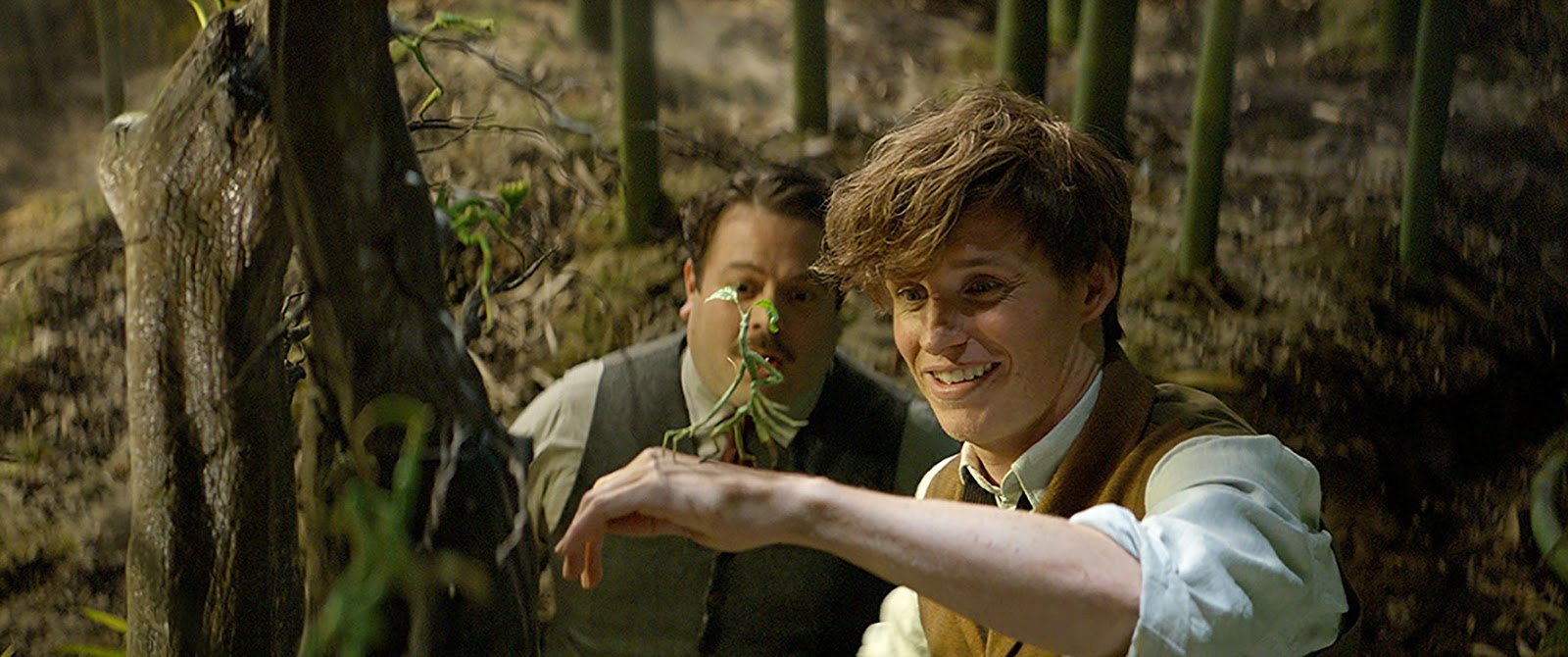
Eddie Redmayne and Dan Fogler uncover some Fantastic Beasts

Director: David Yates

Cast: Eddie Redmayne (Newt Scamander), Katherine Waterston (Tina Goldstein), Dan Fogler (Jacob Kowalski), Alison Sudol (Queenie Goldstein), Colin Farrell (Percival Graves), Ezra Miller (Credence Barebone), Samantha Morton (Mary Lou Barebone), Jon Voight (Henry Shaw Snr), Carmen Ejogo (President Seraphona Picquery), Ron Perlman (Gnarlack), Ronan Raftery (Langdon Shaw), Josh Cowdery (Henry Shaw Jnr), Johnny Depp (Gellert Grindelwald)

Eventually the gravy train had to come to an end. The Harry Potter franchise laid golden eggs for over a decade, until Rowling’s books came to an end. Just as well then that the incomparable JK Rowling had tonnes of invention left up her sleeve, and was keen to look at other elements of the Potterverse. So we got the creation of this sideways prequel, set in the rich backstory of the Harry Potter novels. And it is a bit of a treat.

In the 1920s, Newt Scamander (Eddie Redmayne) arrives in New York with a suitcase full of fantastic beasts. He’s there to return one of them home – but after a mix-up at a bank his suitcase ends up in the hands of muggle (or as the Americans put it “No-Maj”) and would-be baker Jacob Kowalski (Dan Fogler). As the escaped beasts cause chaos, demoted Auror Tina Goldstein (Katherine Waterston) works with Newt and Jacob to try and recapture the creatures, with the aid of Tina’s mind-reading sister Queenie (Alison Sodel). But is all the destruction truly caused by Newt’s creatures? Or are there darker forces at work? 

Fantastic Beasts is a charming spin-off, sustained by some endearing performances, its warm heart and stylish design. Whether the plot is quite strong enough to reward constant viewing as much as many of the Harry Potter films do, I’m not sure (I didn’t find its story particularly gripping the second time around), but I think there are enough incidental pleasures there to keep you coming back for more. It’s actually a film which will be interesting to re-evaluate after the later sequels emerge – there are many suggested threads set up in this one for exploration later.

It’s not a surprise that the initial plot around chasing and collecting the beasts is fairly basic, since it’s based on a slim handbook (itself based on a reference from the original Harry Potter stories) that Rowling published as a Comic Relief fundraiser. Besides the chasing around to capture the animals, it’s only really the backdrop for sight-gags, cute animals and (most importantly) our window for getting to know our leads.

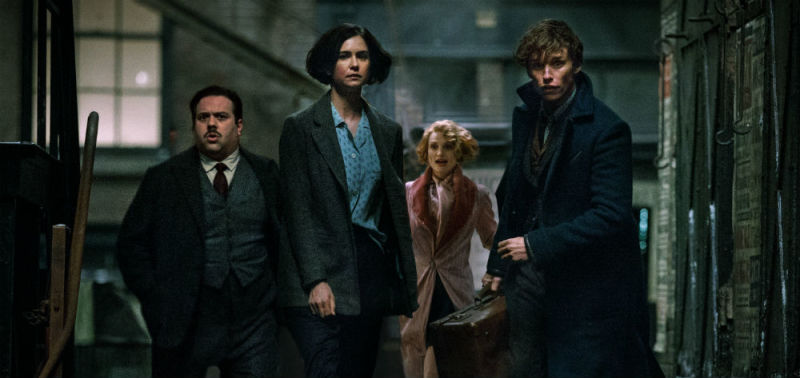
And these leads are certainly well worth getting to know, with a string of excellent performances from the four principals. Redmayne anchors the film very well as the slightly dotty, professorial, socially awkward Newt, whose coy, bashful charm really endears him to the viewer. Dan Fogler is possibly even better as our viewer surrogate, an average New Yorker thrown into a mad world of magic who somehow manages to take it all in his stride and whose growing excitement and embracing of this demented wizard world makes you fall in love with him. He’s helped by a sweet, gentle and touching romance with the effervescent but lonely Queenie (a magnetic Alison Sudol). Katherine Waterston gets the trickiest part as the earnest, try-hard, play-by-the-rules Tina – but her growing fondness for Newt and his creatures works very well.

The moments of the film that focus on the interaction between these four are the finest of the film – as are those that allow us a glimpse of Newt’s wonderful creatures. Housed in a Mary Poppins-ish suitcase of infinite TARDIS-like depth, these beasts are brilliantly designed and wonderfully individual, from a cute mole-like Niffler (naughtily stealing shiny things like a magpie), to a horny Erumpent (like a hippo and rhino mixed), to the majestic Thunderbird, a sort of Eagle-Phoenix, soaring through the plains in Newt’s suitcase. Even the small Bowtruckle Newt carries in his pocket gets to develop a sense of personality. (And yes I had to look all these names up).

These creatures are both individualistic but also used for very specific purposes in the film, from lock-picking to a sort of bizarre self-defence weapon. Despite their horrific appearances, the film treats them with as much understanding sweetness as Newt does – even the dangerous ones are only dangerous when riled or threatened, and Newt’s protective nature helps us to feel as fond of them as he does.

Away from the beasts, the film largely focuses on setting up threads (and threats) for future films. A major sub-plot revolves around an anti-Magical society run by a stern-faced Samantha Morton. The film heads into darker territories here, with its references to both cults and the ill-treatment of children. Ezra Miller does well as Morton’s awkward, ill-treated adopted son, unable to escape from his oppression or express his frustration. Someone in this family is a powerful magical being called an Obscurus, and the film plays a neat game of bluff and double bluff around this.

It continues this game as it fills out the political magical world around Carmen Ejogo’s regal magical President. What game is Colin Farrell’s authoritarian Perceval Graves playing? What of the film’s opening references to dark wizard Grindelwald, and the suggested war that is bubbling under the surface in the magical world? All this darker stuff sits around the edges and margins of Newt’s beast-collecting storyline, occasionally seeping in (let’s not forget at one point Newt and Tina are literally sentenced to death for supposed crimes), but doesn’t overwhelm the lightness.

David Yates directs with a professionalism that comes from being hugely familiar with this world. His later sequences of Obscurus destruction are not always particularly different from other city-smashing scenes from other films. Not every plotline feels fully explored – Jon Voight playing a newspaper mogul and his two contrasting sons seems like a plot we could do without – but Yates does keep the film moving pacily forward, he gets the tone of light slapstick and family warmth and he still shoots the wonder of magic better than almost anyone.

Fantastic Beasts is a film that is perhaps a little too light and frothy to really be a classic – it juggles too many plots and doesn’t always bring them together well. It’s mixture of darkness and lightness is a little eclectic, and it sometimes feel very much like a film designed to set up future films effectively. But when it focuses on its four leads, it’s very strong indeed and all of them – particularly Fogler – are people you want to see more of. It even manages to end the film on both a genuine laugh and a heart-warming bit of romance, tinged with sadness. It’s a fine start to a new franchise.