Category: Fantasy film

The Fisher King (1991)

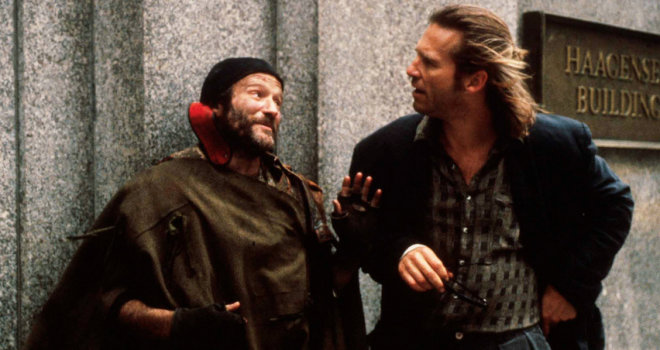
Robin Williams and Jeff Bridges go on a quest in Terry Gilliam’s decent but overlong The Fisher King

Director: Terry Gilliam

Cast: Robin Williams (Parry), Jeff Bridges (Jack Lucas), Mercedes Ruehl (Anne Napolitano), Amanda Plummer (Lydia Sinclair), Michael Jeter (Homeless Cabaret Singer), David Hyde Pierce (Lou Rosen), Lara Harris (Sondra), Harry Shearer (Sitcom actor), John de Lancie (TV Executive), Tom Waits (Veteran)

In 1991 Terry Gilliam was seriously worried he might be unemployable. After the famous feud with his producers over the editing of Brazil, his follow-up The Adventures of Baron Munchausen had flown over budget and bombed at the box-office. For Hollywood Gilliam was the worst kind of maverick – trouble with no record of financial success to give him the licence to do what he wanted. So he was thrilled to be offered the chance to direct The Fisher King, his first ever “for hire” job, a sentimental but surreal romantic buddy movie. It’s financial and critical success almost certainly saved his career.

Jack Lucas (Jeff Bridges) is a New York radio shock jock, whose show accidentally provokes a lonely and confused man to massacre the customers at a late night bar. Three years later and Jack’s career is over and he is working as a co-owner of a video rental star (and live-in lover) with Anne Napolitano (Mercedes Ruehl). One day – drunken and suicidal – he is saved from a gang of young thugs by eccentric homeless man Parry (Robin Williams). Jack discovers three years ago that Parry was a respected professor of English literature, whose life fell apart after his wife was killed in the same bar massacre that ruined Jack’s career. The two men are drawn together – but can they save each other?

The film is based on the myth of the Fisher King, the king charged with finding the Holy Grail but could not find it for years – only for a fool to present it to the king full of water to drink, revealing it was there in the King’s possession the whole time. The fool helps because he is “purer” than those more worldly around him. The idea that Richard LaGravenese’s screenplay is leaning on is that these two characters – Jack and Parry – alternate between them the roles of Fisher King and Fool, both slowly doing things for each other that change their personalities and allow them to adjust back into the world and become comfortable with the people they are.

Reading that it should become clear that this is a sentimental film – and it certainly is. It’s also hellishly overlong for such a slight story of tragedy leading to overcoming personal crisis. We know watching the film from the start that Jack Lucas is a bad guy – and Gilliam shoots his opening scenes of Radio presenting with great skill, using high angles, extreme close-ups and shots that prevent us getting any real sight of Jack, making him as impersonal and contemptable as possible in his shallowness, pride and thoughtless cruelty. It’s not a mystery to expect that we are due to watch a triumph of the human spirit film, in which Jack becomes a better man. The film takes a very long time making this simplistic point.

The catalyst is Robin Williams, in a role tailor made for him as a hyper-active, manic personality mixed with tragedy and depression. To be honest Williams is frequently over indulged in the role – despite his Oscar nomination – heading over the top too often, and often over-egging the pudding both in Parry’s energetic enthusiasm and also in his moments of tragic depression. Parry is given a romantic sub plot with Amanda Plummer’s nervous office worker (a character who is little more than a collection of quirks than a personality, and it’s a shame it’s led to Plummer being typecast in such eccentric roles) that is almost insultingly slight and one-sided (he comes across a bit like a stalker) and lacks any of the charm needed for the story to work.

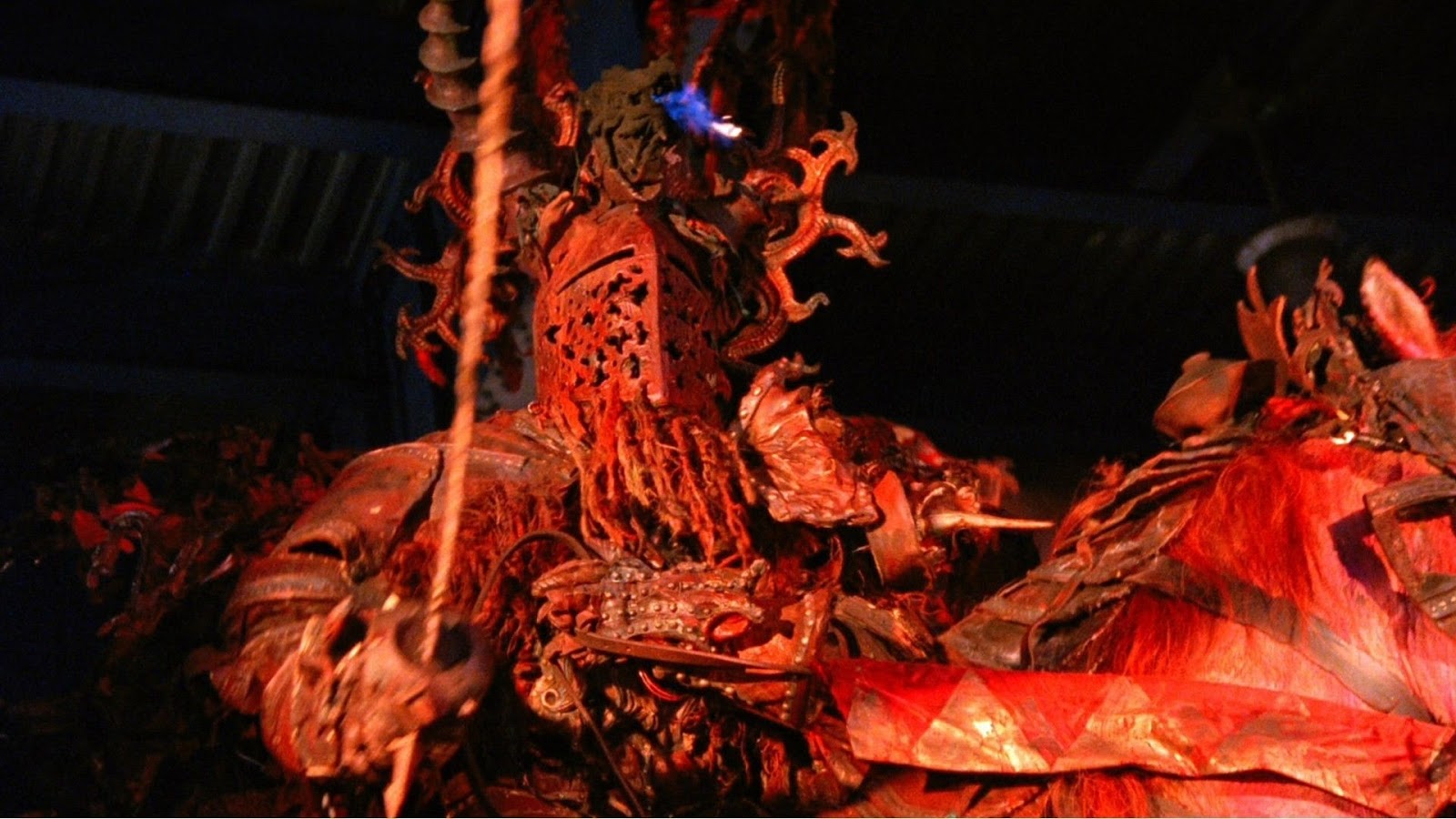
Parry is used to tie the film into further Arthurian flourishes with his obsessions with the legend. Parry visualises a sinister Red Knight – a mental expression of his grief and horror at his wife’s death, which takes the form of the appearance of his wife’s blood splattered face – which chases him through the city. Parry is also obsessed with the discovery of the Holy Grail, which he claims can be found in a millionaire’s faux medieval castle in the centre of Manhattan. This Arthurian stuff is often rather crow-barred in, but holds more interest than traditional plot-lines of people rediscovering their humanity and capability of bonding with others.

Jeff Bridges actually takes on the far harder role as Jack Lucas, a character who has to go on a firm development from start to finish. While Parry is a deliberately eccentric figure, Jack is the one who must journey from arrogance and pride to selflessness and humanity. Bridges does it very well, with a neat line in under playing and an ability to suggest the warmth, shame and self-disgust that Jack works hard to cover up. He’s also blessed to share scenes with Mercedes Ruehl who is outstanding (and Oscar winning) as his girlfriend, the most humane, engaging and real character in the film, a woman who seems at first blowsy and cheap (Jack clearly believes she is beneath him) but reveals more and more depths and capacity for honesty, love and generosity.

Gilliam has a sharp eye for the huge gap between wealth in poverty in 90’s New York, and how the two worlds are geographically only a width of a piece of paper, despite being worlds apart. His direction uses many of his flourishes with great effect. Fish eyed lens POV shots, low angles, stylistic dream sequences, a dream sequence where Grand Central station is full of dancing travellers like a mighty ballroom – many of the sort of things you see in his films are here. To be honest, I found some of the flourishes a bit overwhelming in a story that is so slight and so grounded in just four people’s interactions and quests for salvations. But it works, and Gilliam gets some moments of romantic and platonic love that really work. But it’s still a slight film that goes on far too long, and it eventually loses the viewer in its time-consuming journey towards expected heart-warming moments.

Aladdin (2019)

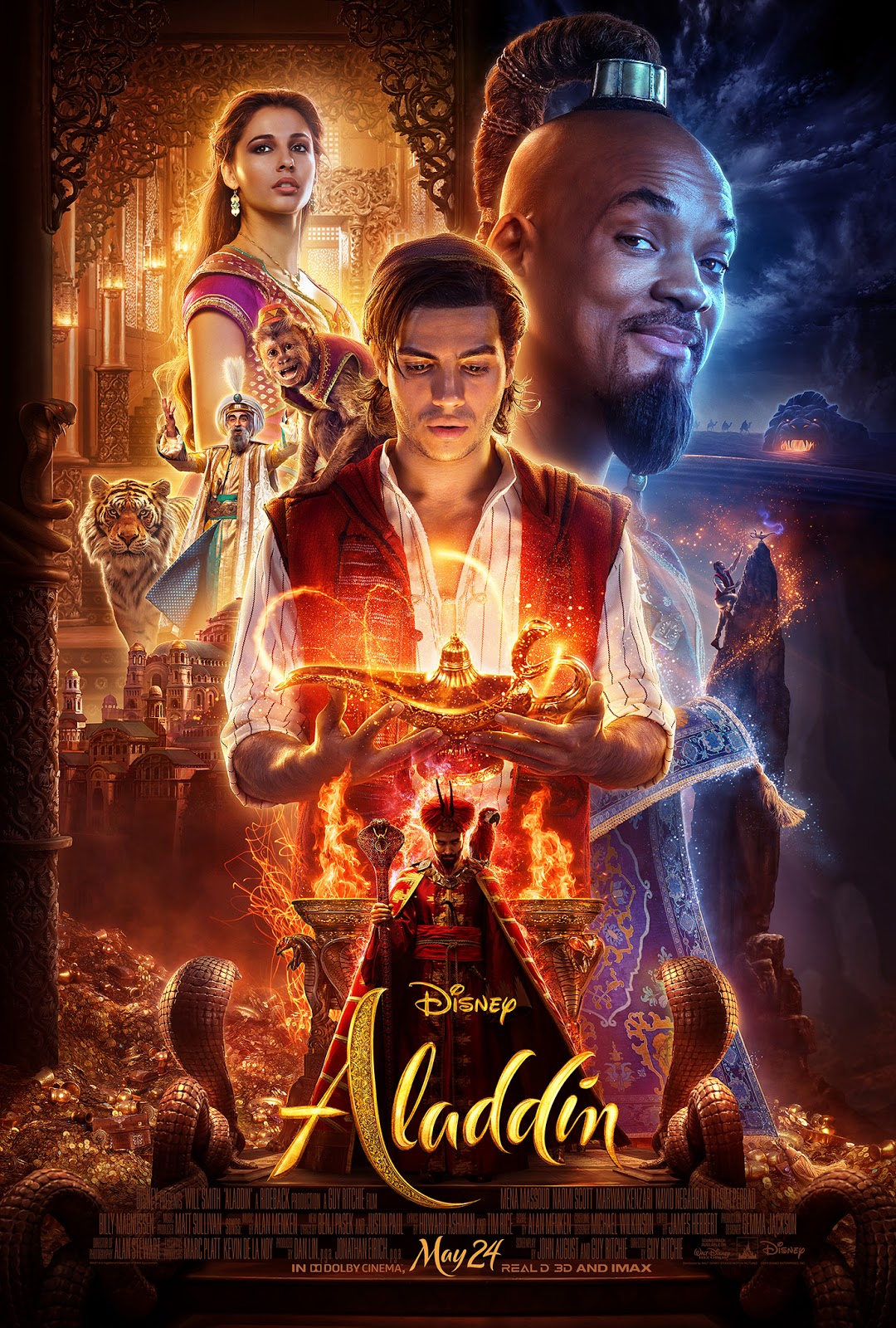
Will Smith and Mena Massoud restage Disney’s Aladdin beat for beat. Why?

Director: Guy Ritchie

Cast: Will Smith (Genie), Mena Massoud (Aladdin), Naomi Scott (Princess Jasmine), Marwan Kenzari (Jafar), Navid Negahban (The Sultan), Nasim Pedrad (Dalia), Billy Magnussen (Prince Anders), Numan Acar (Hakim), Alan Tudyk (Iago)

Disney’s passion for converting their vast animation back catalogue into life-action cash registers continues with Aladdin. And it won’t stop after this film blockbustered its way to a huge international cash haul. Why did it do so well? Probably because it reassuringly offers you exactly the same film as the animated original, bar a few extra sub plots to beef up the runtime. I mean this. This is the same film almost completely as the first one, but without Robin Williams. Which is a bit like saying it’s a Shakespeare remake without the language.

Anyway, everyone knows the story. Evil Jafar (Marwan Kenzari) wants the powerful lamp, it’s trapped in the Cave of Wonders and only “a diamond in the rough” can get it out. Aladdin (Mena Massoud) is that diamond, and wouldn’t you know he’s in prison after sneaking into the palace to meet Princess Jasmine (Naomi Scott) with whom he has unknowingly fallen in love during her visit incognito onto the streets of Agrabah. Aladdin gets the lamp, but events mean he’s the guy who rubs it and gets the three wishes (and the friendship) of the Genie (Will Smith, using every inch of his personality to replace Robin Williams). 

Do people only see these films because they know exactly what they are going to get? Do the directors only make these films under tight instruction to deviate as little as possible from the animated original? What is there creatively in this sort of karaoke, where the biggest praise seems to be “it’s just like the cartoon”? I mean why not just watch the cartoon? As is invariably the case, it’s got far more wit, invention and energy. And it’s half an hour shorter.

This is one of the biggest photocopies I think they’ve done so far. I sat in the cinema genuinely puzzled and dumbfounded as to why this film exists. For much of the first hour, all the lines, the beats, the songs, some of the shots, much of the physical business – it was all the same. All of it.

It does have some new bits and pieces. Jasmine has been given a decent plotline about her dream of becoming the new Sultan being constantly restricted by her father not being able to imagine a girl ruling (she even gets a couple of new songs, which are decent in themselves but so tonally different to the rest of the film they feel crow-barred in). Jasmine also has a new handmaid who can serve as a love interest of the Genie. Iago the parrot has much of his scheming moved over to Jafar (who is made an expert pickpocket), while the film walks a confusing line between making Iago more sentient than a normal parrot, but less so than a human being. The ending has been tweaked into a chase around the streets of Agrabah to grab the lamp. But otherwise it’s basically all the same.

Guy Ritchie stamps no personality on it at all, but then that’s not what he’s been hired for. Instead he mounts the whole thing with a brash Broadway confidence. In fact that’s what the whole film feels like, a massive Broadway extravaganza that plays off the nostalgia felt towards the original by parents of the kids seeing this film. Perhaps that’s why so much is shot-for-shot the same, but at least I guess you can commend his attention to detail.

Casting wise, Naomi Scott is good as Jasmine (given by far and away the most new stuff to do compared to anyone else) and Mena Massoud does a decent job as Aladdin, although the character is as much of a bland pretty boy as he was in the original. Nasim Pedred has some very entertaining moments as the handmaid who attracts the Genie’s eye and supplies some good additional comic relief.

The real thing you want to know though is whether Will Smith is any good as the Genie. The part has been remixed for Will Smith’s skills and style as an actor (the songs have a notable different beat to them), and Smith plays it with a sense of comfy street cool, the fresh prince of the lamp. He does his absolute best here, and his charm and comic timing work as well as ever. But you watch him carefully recreate moments from the original that were flashes of Robin Williams improvisational brilliance, and your heart sinks. He never escapes from the shadow of that master of improvisation. And little moments here and there don’t stop you thinking “I bet if they could have digitally recreated Robin Williams they would have put him in here as well”. 

That’s the whole film though. Never quite enough to justify its existence. Its big, it’s pretty, it’s got some lovely song and dance bits in it, it’s all jolly good fun, there is nothing wrong with it – but it’s never, ever, ever anything more than a straight remake of a tighter, funnier, smarter film. Why does it exist? To make Disney money. And on that score it’s a huge success. And it means this is never, ever, ever going to stop.

The BFG (2016)

Mark Rylance motion captures through this rather dull Spielberg kids film The BFG

Director: Steven Spielberg

Cast: Mark Rylance (BFG), Ruby Barnhill (Sophie), Penelope Wilton (Queen Elizabeth II), Jermaine Clement (Fleshlumpeater), Rebecca Hall (Mary), Rafe Spall (Tibbs), Bill Hader (Bloodbottler), Michael Adamthwaite (Butcher Boy), Adam Godley (Manhugger), Ólafur Darri Ólafsson (Maidmasher)

It should be a match made in heaven right? Spielberg, one of the finest connoisseurs of family entertainment in Hollywood, and Roald Dahl, one of the most popular children’s authors of all time. But somewhere along the line, The BFG falls terribly, terribly flat. It’s a film that never really comes to life, that never really entertains or engages the audience until it’s way too late, and is probably something that your regular kid these days is probably going to find (whisper it) a little bit boring. It’s less entertaining, exciting or arguably well-made than the 1980s cartoon version with David Jason voicing the BFG. It doesn’t work.

The story is pretty much unchanged from Dahl. In the early 1980s, Sophie (Ruby Barnhill) is an orphan in a horrible orphanage in London. One night she spots a giant walking the streets of London, Panicked, the giant snatches her and carries her back to Giant Country. There he reveals himself to be a friendly, peaceful, rather sweet fella – the Big Friendly Giant or BFG (Mark Rylance) – but that he lives near a horde of much larger, man-eating monster giants. The BFG spends his days catching dreams and mixing them together, and his nights walking the streets of London giving the happy dreams to children. He and Sophie quickly become firm friends, but she remains at permanent risk of being discovered by the other giants and eaten.

The BFG has a long first act in which not a lot really happens. The first hour of the film is a slow, whimsical, largely plot-free amble through giant country and dream catching that, frankly, stretches on way too long. There is simply no drive to the plot, no impetus. Rather like Hugo,it feels like a children’s film made by someone who doesn’t seem to know what children actually like. Dahl’s book mixed fairy tales, horrible giants and a number of fart gags. This story focuses more on a slow, contemplative bonding between two characters, which seems low on energy and interest.

In fact the whole film – not helped by its John Williams score – feels like an attempt to replicate Harry Potter, with its magic, its extended magic dream trapping sequences, its constant reveals of something wonderful to a wide-eyed child. The problem is that the BFG’s world just isn’t really expansive enough for this approach to work – there isn’t enough magic or stuff to discover to support a constant stream of reveals. Instead, the more the film tries to make of the world of the BFG, the smaller and less epic it feels. 

On top of which, there is no sense of drama and peril about it. There is no plot or objectives for either of the characters for the whole of the first half of the film. The threat of the other giants is hinted at, and appears in other places, but the giants never really seem like truly plausible or terrifying antagonists. They are, quite simply, stupid, easily tricked and don’t seem vicious enough. Compared to the dread that the giants in the animated version carried, these seem like cruel but silly buffoons.

It also doesn’t help that the character of Sophie doesn’t come across as hugely engaging. I don’t blame Ruby Barnhill, who does very well, but the character is written a little bit too hard, a bit too grating in her strident certainty and general bossiness. Somehow, she never really seems like a truly engaging child character, more of a bit of a know-it-all. Too many of her lines carry a strident insistence that makes her finally a little irritating as a character.

The film’s main bonus is Mark Rylance’s heartfelt and very sweet work as the BFG. The film’s motion capture of Rylance (and the other giants) is very impressive, but Rylance is more than just a bag of computer tricks. He makes the BFG a truly gentle giant, tender, witty, kind and thoughtful and most of the film’s effective emotional moments come from him.

It also certainly looks handsome, even if its style feels very reminiscent of the Harry Potter series. You can’t fault the technical work on the film. Similarly the second half of the film kicks more into life, with a plan to stop the other man-eating giants by recruiting Queen Elizabeth (Penelope Wilton) to order the military to stop them. This section of the film brings the best jokes as well as finally giving the narrative of the film a bit of a kick. However, for many it will be too little too late for this meandering film and they will have long since given up hope of it springing into life.

Star Wars Episode 1: The Phantom Menace (1999)

Jedi vs Sith – where did it all go wrong in The Phantom Menace?

Director: George Lucas

Cast: Liam Neeson (Qui-Gon Jinn), Ewan McGregor (Obi-Wan Kenobi), Natalie Portman (Queen Padmé Amidala), Jake Lloyd (Anakin Skywalker), Ian McDiarmid (Senator Palpatine), Anthony Daniels (C-3PO), Kenny Baker (R2 D2), Pernilla August (Shmi Skywalker), Frank Oz (Yoda), Ahmed Best (Jar Jar Binks), Oliver Ford Davies (Sio Bibble), Hugh Quashie (Captain Panaka), Samuel L Jackson (Mace Windu), Ray Park (Darth Maul), Terence Stamp (Chancellor Valorum), Kiera Knightley (Sabé), Silas Carson (Nute Gunray/Ki-Adi-Mundi), Brian Blessed (Boss Nass), Ralph Brown (Ric Olié)

Has there ever been a more disappointing film than The Phantom Menace? I don’t think any film has ever opened to so much hype and fan expectation. The Second Coming could have trouble competing with the expectations piled onto this first Star Wars prequel. Everyone thought it would be the film of the year. Until they saw it. No one thought it would be the film of the year after that.

Of course you should have sensed a disturbance in the force the second you read the opening crawl. The first sentence “Turmoil has engulfed the Galactic Republic” sounds promising right? Well let that expectation die as we hit the second sentence “The taxation of trade routes to outlying star systems is in dispute”. Not exactly a flight for the Empire with the Death Star plans is it? Perhaps only a multi-millionaire like George Lucas could have expected a storyline based around a tax dispute would get the pulses racing. 

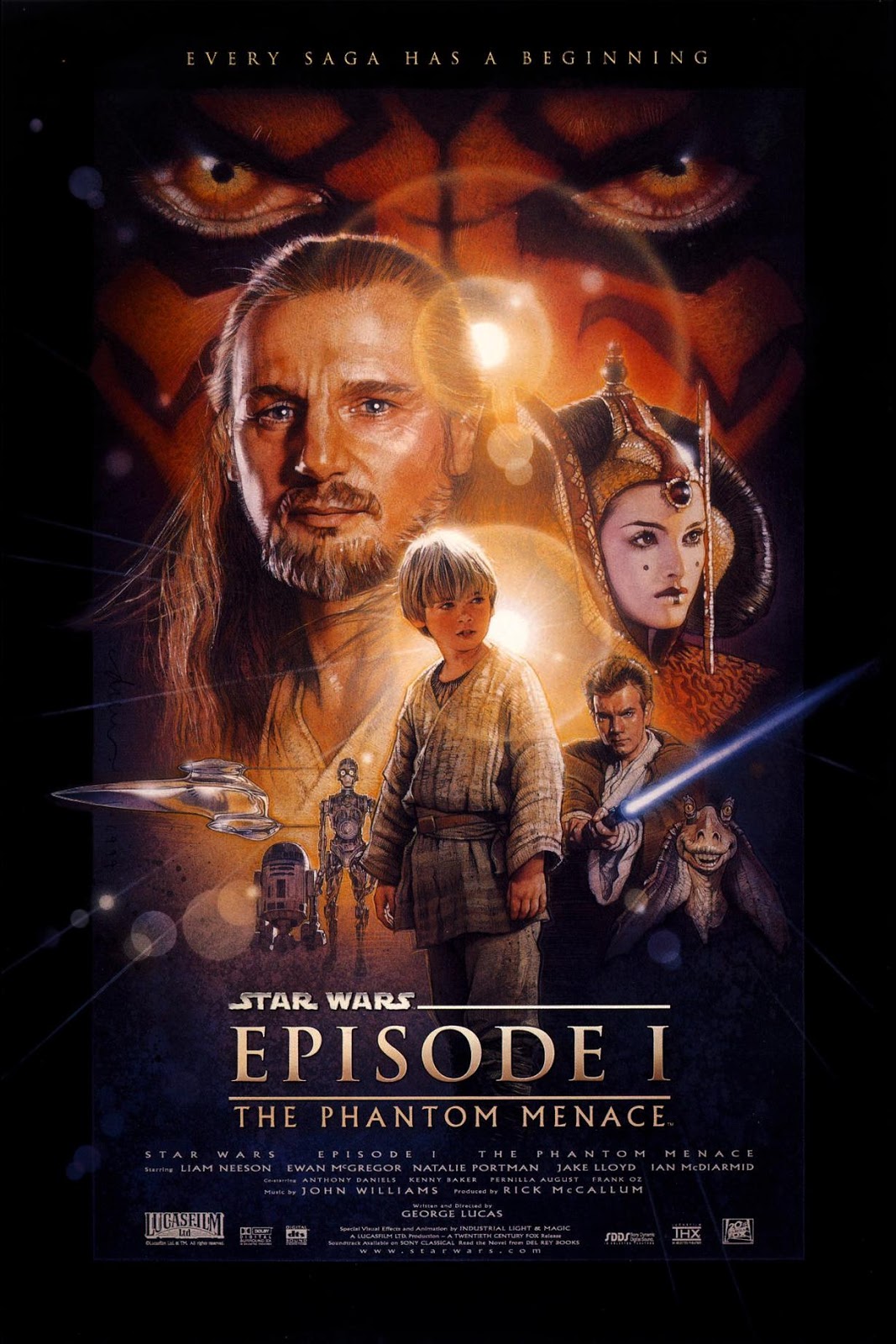
But then this is a jumping off point for a seriously shambolic film experience. Phantom Menace is a total mess, an incoherent, poorly scripted, farce of a film, a terrible stumble through a dashed off storyline that makes no sense. Anyway, Naboo is a planet under siege from the Trade Federation. Jedi knights Qui-Gon Jinn (Liam Neeson) and Obi-Wan Kenobi (Ewan McGregor) are sent to negotiate but things quickly turn to violence and they need to flee the planet with its 14 year old (?) elected (??) Queen (???) Padmé Amidala (Natalie Portman). On the planet of Tatooine they encounter a 9 year old slave Anakin Skywalker (Jake Lloyd) with a natural instinct for the force. Qui-Gon wants to train him, while the Galactic Republic tries to resolve the siege of Naboo.

That’s sort of the story – but even writing it down seems episodic and vague. But then that’s everything in the film. Nothing is really clearly explained, and we are never properly introduced to who all the sides are in this film and what they might want. There is a complete lack of any real narrative sense at all. The antagonists and protagonists of the film are hard to define. In fact they are frequently a pile of two dimensional yawns. It’s pretty hard to care about any of them. I guess you feel a bond with Obi-Wan, but that’s based on old films – watch this and Obi-Wan is a do-nothing whiner. 

But all the characters are infected by this. George Lucas is completely unable to bring any characterisations to these people, his lines constantly falling flatly or crappily to the ground, while the actors themselves struggle to find anything to engage it. Harrison Ford famously told Lucas on the first film that “you can type this shit but you can’t say it” – and that’s pretty much nailed on for this film. There is not one single vaguely memorable line in this film. Rather you are struck every second with feeble lines that sound like they might have had depth (“There’s always a bigger fish!”) but when analysed for a second make no sense whatsoever. It’s no wonder Neeson seriously considered quitting acting after this film.

Yes these two characters will get it on in the next film. Yuck.

There isn’t a single character in the film to really invest in. There is no equivalent to your Han Solo, the witty outsider to puncture some of the grandaeur. Instead every character is a flat, po-faced, non-personality who spend all their time in the film very seriously going about their business, never explaining anything. The Jedi are particularly affected by this, written as serious stick-in-the-muds constantly lecturing and ticking off other characters. Qui-Gon Jinn makes a tedious lead character, who constantly gets in the way of the relationship building we need to see between Obi-Wan and Anakin. Because we know where the film series is going, spending time on Qui-Gon feels like wasted time. The backstory is to see the relationship build between Obi-Wan and Anakin – instead they hardly speak in the film, and we instead spend ages on Qui-Gon. It’s poor story-telling and wastes a film showing us unimportant back story rather than spending time on the core stuff. It’s bad enough that we have to waste one third of the prequel series on Anakin Skywalker: The Wesley Crusher Years (seriously has anyone, even a child, ever loved a film where a brattish, super kid is the hero? You won’t be shouting Yiipppeeee…)

Lucas isn’t a director of actors, he’d say the same. But he is supposed to be a master of visuals and special effects. This is a film where everything you could possibly imagine has been thrown at the screen. Each frame is full of complex business, every single section crammed with special effects. There is a lot going on visually all the time, but all of it comes across like an explosion in a colouring book. Unlike the effects of the original trilogy, nothing really feels real or carries any real weight. Instead you see every special effects shot in the film and see frames filled with clutter and shiny, computer generated weightless nonsense. Worst offender is the hideously overextended pod race sequence, like a particularly dull Formula One race, which carries no real stakes (as we all know the result) and, for all the high speed camera work and editing feels not one iota as thrilling as the speeder chase in Return of the Jedi.

On top of this, most of the interventions into the Star Wars backstory makes the original trilogy worse. This is the film that gave us midichlorians, some sort of magic alien thing that lives in blood and gives the Jedi the ability to use the force. The reaction to this midichlorian nonsense, undermining the mystique of the force into something that could measured like a top trump was so negative that it was mentioned at most once in the two sequels. Other areas got similarly scathed, not least turning Anakin Skywalker into the worst form of “gifted child”. I’m not even going to touch on the icky fore-knowledge we have about the fact that Anakin and Padme are going to get it on in the future, something that is hideous to think about.

The most hated character in film history?

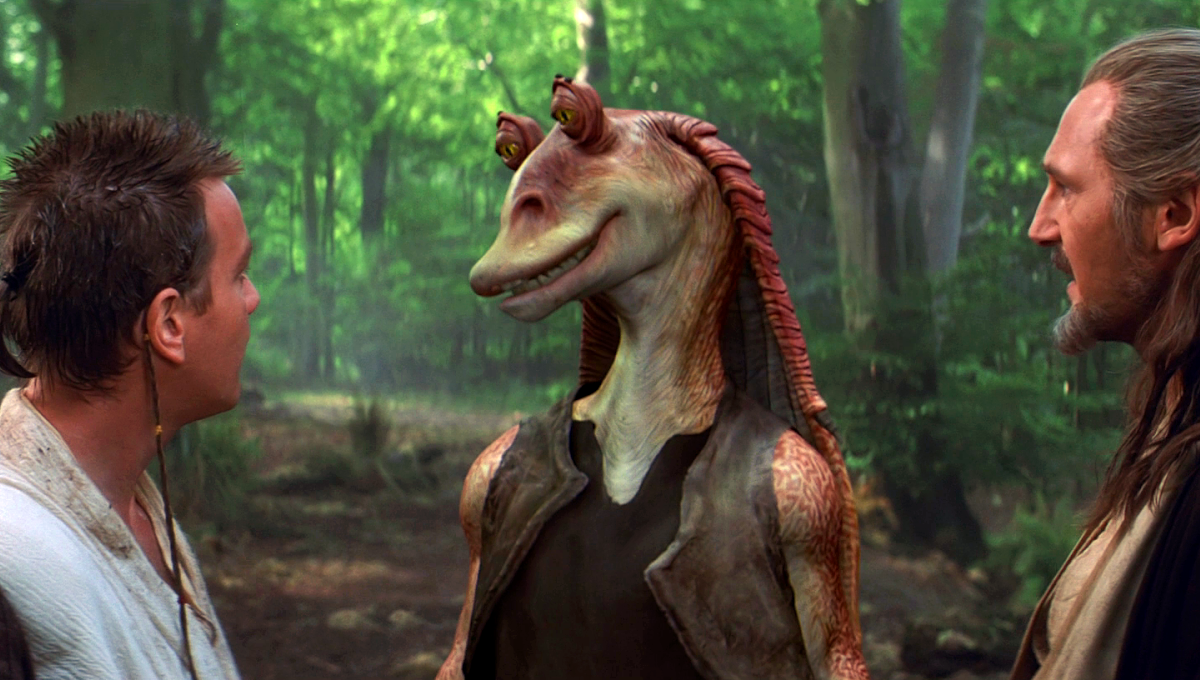
Lucas also fudged the new stuff he introduced in the film. The worst element: of course it’s poor old Jar-Jar Binks. I genuinely feel sorry for Ahmed Best, an actor whose career never recovered, who is just doing here what he was told to do. But Binks is the most irritating character possibly ever conceived for a hit blockbuster. An idiotic, comic creation designed for the kids who falls over, trips up, says stupid things and steps in shit he does nothing useful for the whole course of the film and tries to entertain kids who were way more interested in Darth Maul. Binks is almost irredeemable, every sentence enough to send everyone’s teeth on edge. 

Lucas trumpeted how much Binks was setting the trend of being the first major computer generated character. Lucas was incapable of guiding the actors to respond (or even look at) the correct spaces where Binks was standing. And Lucas was so pleased with it, he never stopped to think. Binks makes no sense. Like the rest of the Gungans he’s a joke. There is literally no reason at all for the Jedi to take him anywhere with them, particularly as he constantly gets in the way, causes trouble and offends people. Even in the “desperate” final battle, Binks prats about – compare him to the moments of tragedy and sacrifice given to the Ewoks in Jedi and you’ll see how bad this is.

Yes Watto loves Money. What? What’s the problem?

And of course he and the Gungans are shocking racist caricatures in their Jamaican accent. If you had any doubts that Lucas had no one saying no to him on anything, this film is stuffed with pretty shocking racist characters. Binks is terrible, but the villains of this place are the money obsessed Trade Federation, all with Japanese accents. On Tatooine, Anakin is kept by a greasy, fly ridden, money obsessed, big nosed, fly-covered alien Watto who looks, sounds and acts like a children’s version of The Eternal Jew. Did no one watching the film take a second and say “hang on this looks a bit dodgy…”

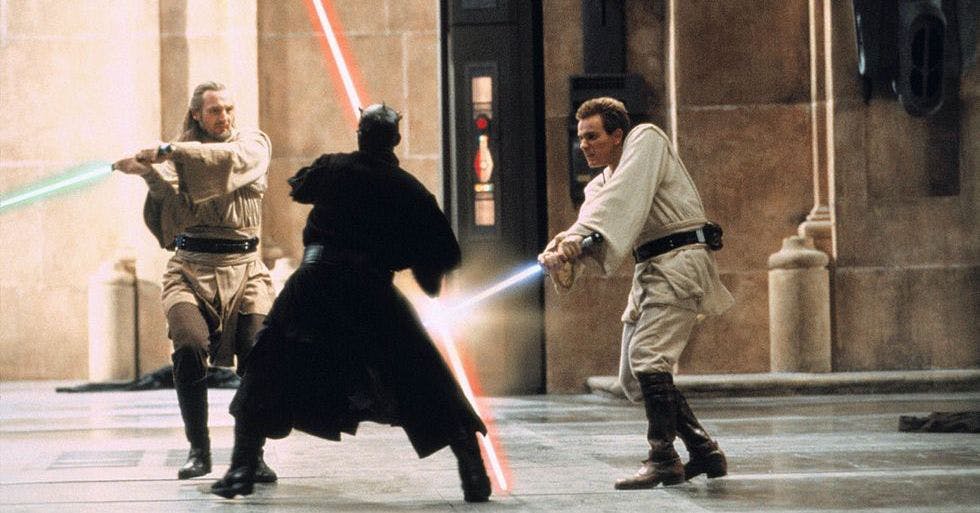
All of this nonsense finally comes together in a grand final battle which sums the whole film up, in a sequence where the tone shifts and changes all the time with no sense of a single person doing so intentionally. We have the Gungans comically fighting the droids in a series of awful little vignettes. We have the Queen chasing through the palace in a poorly explained subplot. We have a 9 year old child accidentally flying a ship into space and accidentally blowing up the baseship (Anakin saves the day without even realising it, the one thing that could make the child even more irritating than he already is). And we have the Jedi fighting Darth Maul in a battle that looks impressive at first but is in fact overly busy and overly choreographed. 

The Phantom Menace has few reasons to like it at all. You get bored with the story. You don’t invest in the characters. You don’t engage with the events. You don’t feel your pulse racing. The plot drifts from planet to planet with very little logic at all. The dialogue is terrible. The story telling is abysmal. The direction is flat. The film throws in moments that crap over the original trilogy. Lucas made is wait for decades – but then seems to have produced a film that he didn’t really want to do. It’s a truly dire film.

The Empire Strikes Back (1980)

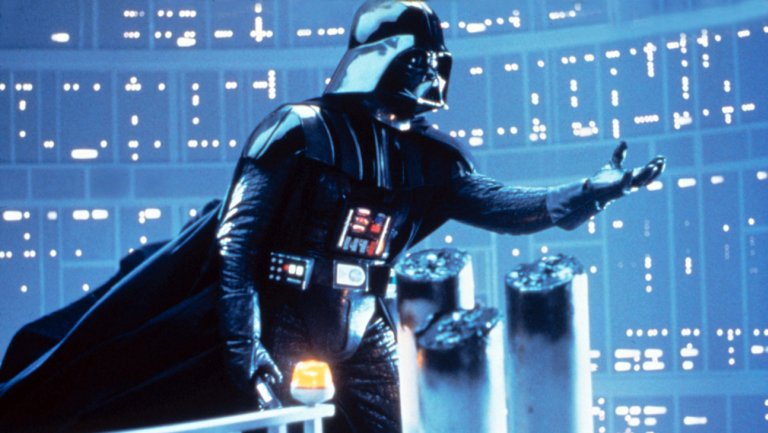
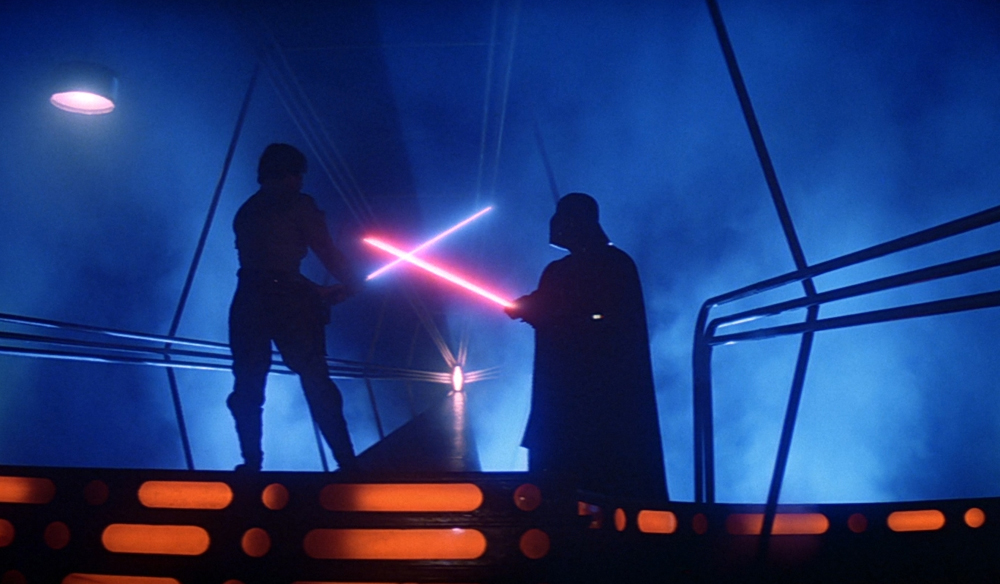
Darth Vader in the film that really made him an icon: the flawless The Empire Strikes Back

Director: Irvin Kershner

Cast: Mark Hamill (Luke Skywalker), Harrison Ford (Han Solo), Carrie Fisher (Leia Organa), Billy Dee Williams (Lando Calrissian), Anthony Daniels (C-3PO), David Prowse & James Earl Jones (Darth Vader), Peter Mayhew (Chewbacca), Kenny Baker (R2-D2), Frank Oz (Yoda), Alec Guinness (Obi-Wan Kenobi), Denis Lawson (Wedge Antilles), Kenneth Colley (Admiral Piett), Michael Sheard (Admiral Ozzel), Jeremy Bulloch (Boba Fett), Ian McDiarmid (Emperor)

As Star Wars sprawls into a massive Disney money-spinning franchise, for both fans and producers alike the original trilogy is increasingly becoming like Holy Texts, the events and characters of which must guide all future films. And of all these, none of them is holier than The Empire Strikes Back. It’s odd to think that the initial reaction to this sequel was a bit mixed at the time, since this is not only the very finest of all the Star Wars films, but also one of the best genre films ever made, one of the greatest sequels ever made – in fact one of the best, most consistently rewarding films you are ever going to see. It’s going to be loved forever, any critical view is almost superfluous. And the reason for that is surely linked to the fact that I’ve seen it hundreds of times and I still love every frame of it.

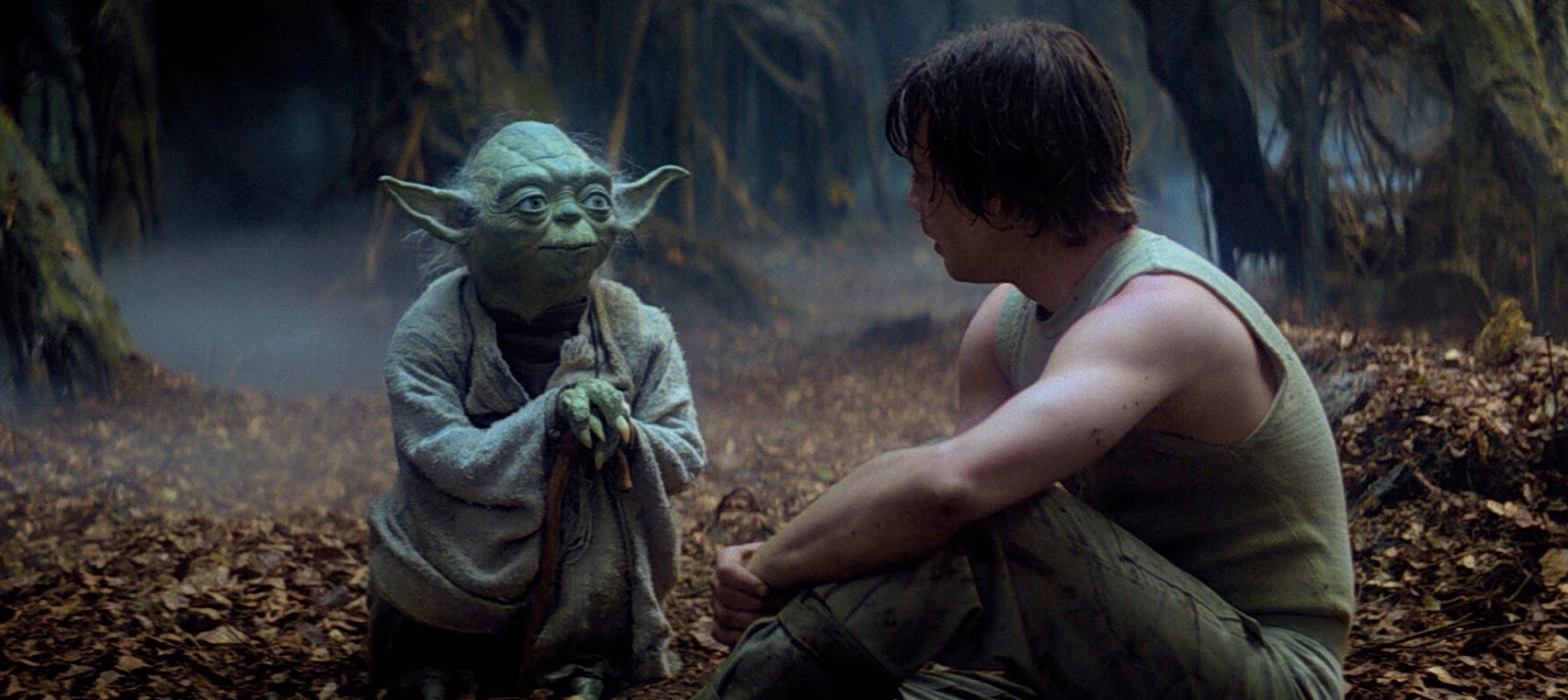
Anyway, nearly everyone must know the story. Some time has passed since the rebels successfully took out that Death Star. Now they are secure in a new base on the ice planet Hoth, being hunted by the empire in an operation commanded by the feared Darth Vader. When the Empire locates the base, our heroes are separated in the ensuing escape: Luke (Mark Hamill) is guided by the force and the ghost of his mentor Obi-Wan (Alec Guinness) to seek out the legendary trainer of Jedi Yoda (Frank Oz). Meanwhile, Han (Harrison Ford) and Leia (Carrie Fisher) are on the run in a malfunctioning Millennium Falcon, dodging Star Destroyers and eventually taking refuge in the Cloud City of Bespin, run by an old friend of Han’s, Lando Calrissian (Billy Dee Williams). But is this a safe refuge? And what is the secret reason why Vader is so determined to hunt down Luke?

So what is it that makes The Empire Strikes Back so damn good? Well it takes everything from the first film and deepens and enriches all the characters and themes that that film explored. While you could say Star Warsis the quintessential romantic space opera – part Western, part fairy tale legend – it’s also a feel-good fun ride. Empireis a rich, complex and endlessly rewarding film that takes all its characters and turns them into fully rounded and intriguing personalities. When you think about the turmoil and struggles each of them goes through in this film – from Luke, through Vader even down to C-3PO – it’s not hard to see why these characters have worked their way into the hearts of every viewer. We see them all go through huge amounts and we learn and discover things about them in every frame. It’s fascinatingly well done storytelling and brilliantly structured character building.

In fact the whole film is a triumph of investment. Even more than the first one, we get a real sense of the mighty ruthlessness of the Empire (staffed exclusively it seems by British character actors from 1970s TV), of its resources, its willingness to do anything. Even more than in the first film, the odds seem piled against the rebellion, with the limited ship, tiny fire power, the fact that our heroes spend virtually the entire film either running, hiding or captured – how can you not feel the pull of wanting to take up this romantic cause eh? 

Perhaps it works so well as Lucas handed over much of the on-the-ground-floor creativity over to other people (you only have the watch The Phantom Menace to see what happened when he took all these reins back up again). The witty, energetic, fun script – packed full of lines that trip off the tongue, and character moments that feel real and human – is by Lawrence Kasdan. Directing meanwhile is handled by Irvin Kershner, a middle-of-the-road director who taught Lucas at film school but here seems to transcend his abilities to deliver a true masterpiece, with all the thrill of a teenager finally given the keys to the big car. 

Kershner can handle all the spectacle, but like no other movie in the series Empire works because it’s rooted in the small-scale, in the reaction shot, in the camera soaking up the actors. There are so many shots of actors looking at things in this movie (I think they all have significant moments of this) while we see their thoughts and emotions play across their faces. Kershner never forgets that this is a story about people not about bangs and whizzes in space. In doing that, in making this a brilliant character drama, he really turned Star Wars into not just an adventure but a series where we invested heavily in these people. There is a reason why the modern films come back time and time to the characters from this film: Empire really made us care about them, turned them into family members, people we’d seen through highs and lows. We see them in a modern film and it’s like greeting long lost friends.

And it helps that the stars give their best work here. Harrison Ford may never have been so cocksure, so cool but also strangely vulnerable and lovable. While in Star Wars he was used to puncture the grandeur, here he’s got a put-upon vulnerability to him, a bravado in his courtship with Leia that hides his touchiness. Not to mention we are constantly reminded he’s a wanted man. Ford also gets massive comic mileage from his exasperation with the constantly malfunctioning Falcon. All this and he never looks flustered: “Never tell me the odds!” indeed! And he gets possibly the best loved line in the whole series with “I know”.

Fisher is equally good as a prickly Leia, who is afraid to let down the imperious commanding cool to let any hint of feeling and emotion show. Mark Hamill does a very easy to overlook job of emotional commitment as Luke Skywalker – particularly as he spends a large chunk of the film interacting only with a robot prop and a puppet. He sells the conflict Luke is feeling, the clash between doing action that feels right now and having the patience to build his skills. And of course, he sells the anguish of finding out that twist.

Ah yes the twist. Empire was perhaps one of the first films to impose such strict pre-production secrecy onto its key plot development. On set, only Irvin Kershner and Mark Hamill knew that Vader was Luke’s father (no spoiler warning – I think Lucasfilm have well and truly spoilt that one themselves). Dave Prowse, who was not trusted to keep it to himself, to was given a line around Obi-Wan killing Luke’s father (he must have been slightly surprised at Hamill’s reaction, which does seem a bit OTT to that news). But this moment again really, really, really works because it is both a surprise AND something that makes total sense. It doesn’t feel like hints have been dropped through the whole film in advance, but when you hear it you spot them all over the place. It’s also such a brilliant narrative rug pull it has also effectively powered the creation of the prequels and is still central to the new trilogy.

Away from all this, the film is also a masterpiece in pacing and action sequences. It took a lot of guts to put the major space battle at the start of the film, but it works an absolute treat – while also being something completely different from anything in the first film. It looks and feels really cool. And it contrasts perfectly with the smaller scale, more intimate desperation of the escape from Besbin that ends the film, matched with Luke’s battle with a never-more-imposing Vader. I’ll also mention as well that John Williams’ score for all these sequences is practically perfect in every way, adding no end of tension, emotion and excitement to all these sequences.

And it’s the fact that you get all this, mixed with a real, genuine investment in all the characters (good and bad), that really makes the film work in a way that no other Star Wars film has quite managed since, and that makes this the crown jewel in the franchise. It’s one of those serendipity projects where everything fell into place, everyone brought their best to it, and the stars aligned. It’s lightening in a bottle, and the franchise has used it ever since as its setter for everything from tone to plot developments. You will rarely find anything as fun, or widely loved, as this film.

Fantastic Beasts: The Crimes of Grindelwald (2018)

Eddie Redmaynes wades his way through the murky Crimes of Grindelwald

Director: David Yates

Cast: Eddie Redmayne (Newt Scamander), Katherine Waterston (Tina Goldstein), Dan Fogler (Jacob Kowalski), Alison Sudol (Queenie Goldstein), Jude Law (Albus Dumbledore), Johnny Depp (Gellert Grindelwald), Ezra Miller (Credence Barebone), Zoë Kravitz (Leta Lestrange), Callum Turner (Theseus Scamander), Carmen Ejogo (Seraphina Picquery), Claudia Kim (Nagini), William Nadylum (Yusuf Kama), Kevin Guthrie (Abernathy), Brontis Jodorowsky (Nicolas Flamel), Derek Riddell (Torquil Travers)

What were the Crimes of Grindelwald? Well the main one is this film. Grindelwald does what we thought might have been impossible – he features prominently in the first flat-out bad Harry Potter film. Fantastic Beasts: The Crimes of Grindelwald is a near incomprehensible mess of clumsy set-up for future plots, tedious side-plots, poorly executed drama and a vast array of not particularly interesting characters struggling through not particularly interesting events with low stakes. I feel asleep twice for a few moments in the film. There is very little in it to recommend.

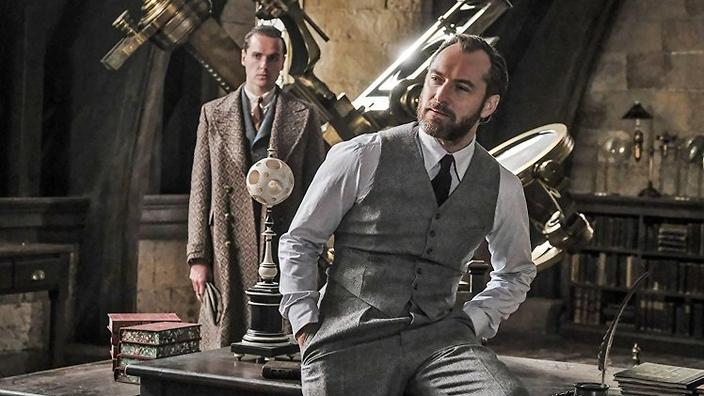
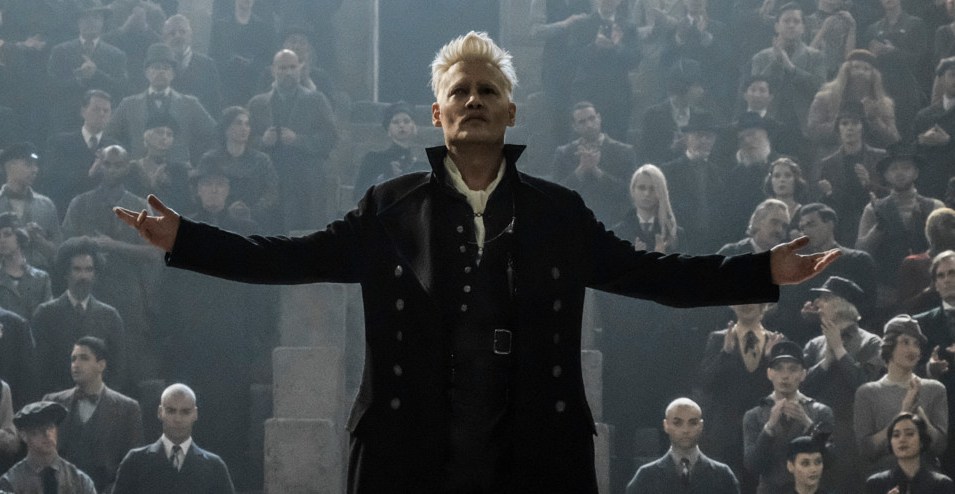
Dark wizard Grindelwald (Johnny Depp) opens the film by escaping from captivity and flees to Paris. There he plans to – well to be honest I’m not terribly sure what he is planning to do at all. I think it involves something about world domination. Also it involves locating and winning to his side mysterious young wizard Credence (Ezra Miller) from the first film. Meanwhile Grindelwald’s old friend (or was it more? The film ain’t saying) Albus Dumbledore (Jude Law) sends Newt Scamander (Eddie Redmayne) to Paris to find Credence first. Lots of things sort of happen after that, but most of them are building up to the next three (three!) films.

Three films? Seriously? Was that something they had in mind from the start? It feels a lot more likely it’s an idea that came out of the financial success of the first film, rather than any artistic decision. It’s certainly very hard indeed to see many narrative, tonal or thematic links from the first film carrying across to this one. This one feels like it comes from a completely different type of story. More than anything, the film-makers seemed to desperately want to forget the whole “fantastic beasts” angle we started this damn thing with. The odd beast is thrown in every so often to keep ticking the title box, but this flies off (or tries to) into such different, would-be darker, stakes that the beasts never feel a natural link. This is a film that wants – with its muted palette, murders, darkness and (in one supremely misjudged moment) a Holocaust reference – to set us on a dark path to future misery and war. Whatever happened to chasing beasts around to catch them in a suitcase?

Instead the film doubles down on Potter-lore.  You virtually need a PhD in the Potterverse to keep on top of what’s going on. Spells, objects, phrases, charms and incantations are thrown in all over the place, with very little explanation for the audience. Now I can roll with this a certain amount, hell we’ve all read the books and seen the films, but there are at least a few things in here that could desperately do with some reminders for the audience (what is an obscurus again?) so that we can understand their contextual importance. Instead the film barrels along, throwing plot points all over the place and ramming information into our ears.

In fact, most of the film is like an epic info-dump of material designed to set up stuff for later films. Again, you can’t help but feel that they suddenly realised after completing the first film that if they were going to spin this out into another multi-volume series, there were lots and lots and lots of plot threads they hadn’t even attempted to introduce at the start. Instead of taking a bit of time to build these things in and make us care about them, this film throws them into the mix as quickly as possible to make up for lost time.

In all this mass pile of information thrown at us, the film could really do with less going on. There is a massive, red-herring- filled plot about a character’s family history that takes up loads of screen time and eventually turns out to mean absolutely nothing at all. This is a misdirection that could work well in a book – but in a film as crammed and packed as this one, it makes you tear your hair out. How long did we spend on this and it means naff all at the end!

In fact, you can’t help but feel that Rowling as tried to write a book here rather than a film. These sprawling bits of wizarding lore, universe building, red herrings and other plots would have worked really well if she had 500 pages of prose to explore and build them in. But she’s not experienced enough a screenwriter to make them work well here. If another scriptwriter had adapted her ideas into something that works as a screenplay – the sort of focused work that changed the sprawling Order of the Phoenix into a tightly focused couple of hours – the film would be far better.

But instead, the film feels like everyone has got far too used to producing these epics, to a certain style of making the films. There is a lack of fresh ideas here, with a lack of independent or new eyes to see the whole and suggest how an outsider could see it. This also extends to David Yates’ direction which, while competent and well managed as ever, now feels like he has run out of ideas of how to film this wizarding stuff in a new way, which is fair enough after five films. It’s a film that desperately needs fresh new blood in it, and a universe that needs the sort of creative kick-up-the-backside that Alfonso Cuaron gave in The Prisoner of Azkaban.

You feel sorry for some of the actors carried across from the first film. Dan Fogler has so little to do that he would have been better off not being in the film. His absence (for instance, if his memory wipe from the previous film had stuck) would at least have been motivation for the actions of Queenie in this film, who gets a rushed and nonsensical character arc that seems to completely change the character we got to know in the first film. Katherine Waterston is saddled with virtually nothing as Tina.

Instead, far more time is given over to Johnny Depp. Depp’s casting was controversial to say the least – and not worth it. Depp gives one of his truly lazy, eccentric performances – aiming possibly for brooding intensity, he instead lands out dull and underwhelming, a charisma vacuum. It’s hard to see him leading hundreds of followers in a revolution. Jude Law does far better as a twinkly Dumbledore (even if his performance bears little resemblance to Gambon or Harris), and his scenes are the highlights of the film. The film, by the way, shies cowardly away from any real depiction at all at the alleged love affair (which Rowling talks about) between Dumbledore and Grindelwald, presumably because it would make the film a harder sell in China.

And what of our hero? Well Eddie Redmayne is still charming, but his character feels out of step with the increasingly darker tone the film aims for. He’s also saddled with a supremely dull and unengaging sort of love-triangle with his brother (a forgettable Callum Turner) and ex-girlfriend and brother’s fiancée Leta Lestrange (an out of her depth Zoë Kravitz). The film talks a bit about the troubled relationship of the Scaramander brothers – but is so rushed it never has time to really show us any of this, so instead has to tell us about it, even though everything we see basically shows their relationship as being reserved but loving.

But then that’s just par for the course of this underwhelming and deeply uninvolving film. The stakes should feel really high, but they never do because to be honest you are never really sure what they are. The film ends with the expected fire filled wizarding special effects stuff – but honest to God I had no idea what was going on, why it was happening, what was the danger or where it came from. It just felt like the film needed to end with a bang. There are moments of this film that should have had some emotional force but they don’t because it’s so crammed to the margins with plots, superfluous characters (many of whom are introduced with fanfare and then barely appear in the film) and pointless digressions that when things happen to characters we care about from the first film, it doesn’t carry the force it should. Five films of this? I’m not sure on the basis of this I’d want to see another five minutes. A major, major, major misfire.

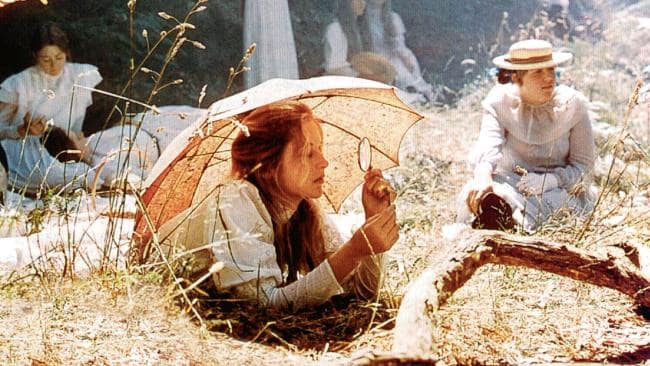
Picnic at Hanging Rock (1975)

Three girls go up a rock and are never seen again in Peter Weir’s masterpiece Picnic at Hanging Rock

Director: Peter Weir

Cast: Rachel Roberts (Mrs Appleyard), Anne-Louise Lambert (Miranda St Clair), Dominic Guard (Michael Fitzhubert), Helen Morse (Mlle de Poitiers), Margaret Nelson (Sara Waybourne), John Jarratt (Albert Crundall), Wyn Roberts (Sgt Bumpher), Karen Robson (Irma Leopold), Christine Schuler (Edith Horton), Jane Vallis (Marion Quade), Vivean Gray (Miss McGraw), Martin Vaughan (Ben Hussey), Kirsty Child (Miss Lumley), Jacki Weaver (Minnie)

Is there any film as haunting and elliptical as Picnic at Hanging Rock? An impenetrable puzzle shrouded in mystery and wrapped in an enigma, it’s the ultimate “mood” film, where everything you understand in the film has be teased out from its sidelines and the unspoken motivations. It’s not going to be for everyone: Peter Weir tells a story on the feature-length Blu-ray documentary (longer than the film) of the response of one US distributor when he saw the film: “[He] threw his coffee cup at the screen at the end of it because he had wasted two hours of his life – a mystery without a goddamn solution!” That’s a fair comment – but accept that this mesmeric film is somewhere between mystery, hynoptic trick and ghost story and you’ll find treasure in it.

Based on Joan Livesey’s novel (which many believed to be true – a fate that also faced the film when it was released), on St Valentine’s Day 1900, a group of girls from a finishing school head to the Hanging Rock in Victoria for a picnic. Three of them (and one of their teachers) walk up to the rock and simply seem to disappear. The subsequent search by the authorities is baffling – and the impact on those left behind is brutal. 

There is barely any real plot in Picnic at Hanging Rock but it’s not a film about that. It’s all about the mood, the creeping sense of menace, and the general uneasy dream nature of the story. Everything follows a woozy dream-like logic – and the atmosphere is built upon by the use of panpipe music and skilful use of classical music. Weir’s film is a masterpiece of ghostly, unsettling spookiness with the rock itself as some unknown mystical source at its centre – the first shot of the film shows it slowly appearing in the mist, as if it has somehow been transported there from some fantasia land outside of the normal.

Weir’s film became the most influential film of Australian cinema, and its tone set many of the key thematic points followed by later films of what became known as the “Australian New Wave”. It explores uneasy balances in Australia between the wildness of the country – and indigenous people’s beliefs and culture – and the social structures from the British residents who had claimed the land. Picnic also explores the beginnings of a split between long-standing Australian residents and those clinging to the upper class Brit lifestyle of the motherland. Weir’s film – with its brilliant photography – lingers on the nature surrounding the rock. Not only the rock itself, with its odd formations and strange structure, but also the animals and the environment about it. There is something unknowable, wild and untamed about these surroundings – something mankind can’t control or understand.

Weir shoots the film with a lush impressionism – everything has a hazy unreality about it – and the dreamy nature of the film is built on with the dark hints of sexual feeling bubbling under the surface. The girls are all on the cusp of discovering their own sexuality – and there are plenty of open suggestions of same-sex crushes, of growing awareness of their sexual natures among the girls. It doesn’t stop with them either – the adults are equally drawn towards unspoken desires (left very much open to interpretation). Weir gets some perfect visual representations of the stonking repression forced on top of all these feelings, not least a wonderful shot which shows several of the girls standing in a line tightly doing up each other’s corsets.

And that perhaps, it’s hinted, is what happens on the rock when the girls disappear. Trance-like, they walk towards a gap in the rock and seem to disappear. What drew them there? Lead girl Marian (a perfect performance of ethereal other-worldliness from Anne-Louise Lambert) even seems dimly aware in the opening scenes that she is bring drawn towards something. The only girl who isn’t drawn towards the mystic is more repressed, dumpy Edith – whatever the force is that calls the other girls, it leaves her panicking and screaming. What’s going on? Something dark, sinister – and you can’t help but think sexual.

And what does that mean for those left behind? A mess. Rachel Roberts (a late casting replacement for Vivien Merchant, and famously awkward around the girls on set) is very good as the distant, draconian headmistress of Appleyard Academy (basically a sort of finishing school for posh girls). The regime she runs at the school is a mixture of oppressive and discriminate, with punishments handed out according to Mrs Appleyard’s personal feelings about the students rather than any reflection of their own behaviour. Part of the film’s story is the fracturing of her own personality that happens as response to the disappearance – her collapse slowly into a sort of paranoid insanity, powered by drink. What dark secrets is she hiding? (The film hints that she has more knowledge than she should have of at least some of the darker events of the story, but never reveals how much or indeed why.) 

But then the whole cast are dealing with problems they scarcely seem to understand. There is a curious – perhaps homosexual bond – between Dominic Guard’s repressed English teen and John Jarrott’s earthy, ultra-Aussie outbacker (a very good performance from Jarrott in a character that could easily have fallen into stereotype). Perhaps that’s why Guard’s character is drawn constantly back to the rock – and also why he too seems to have such an overwhelmed reaction to it.

The sole character in the film who feels most capable of expressing their emotions is the school’s French teacher Mlle de Poitiers. Played exquisitely by Helen Morse – she gives the warmest, most engaging performance in the film – she is the only character who seems able to get in touch with her emotions, unfiltered by too much repression. Perhaps it is no coincidence that as a “double foreigner” (French among the Brits in Australia) she is less affected by the rules around her. Either way, she becomes a perfect audience surrogate, as slowly horrified and confused by the actions she sees around her in the college as the viewer is. Morse is fabulous in these scenes, from a burst of emotion when reunited with a character she thought lost, to quietly watching Mrs Appleyard’s disintegration late in the film.

But the real star is Weir’s masterful direction of the mood of this film. Like that distributor said, there isn’t any plot as such – vital events happen off screen, and there is the distinct feeling that you are only being told half the story – but despite that, the film is compelling. So much is conveyed in the mood, the tensions, the style of the film that you are invited to bring your own interpretation to events. That makes it a continually rewarding piece of cinema – it invites you to make your own answers. 

This juggling of atmosphere to make something so enigmatic is so crucial to the film’s success that the recent mini-series remake effectively continued the trick (with a few extra insights into Mrs Appleyard), and contained arguably even fewer answers over its 5 hours than this did in 2. But Weir’s brilliantly made, beautifully shot, eerily unforgettable film rightly takes its place as (perhaps) the greatest Australian film ever made: it’s a film that is about Australia, and about the tensions, confusions and mysteries of that country. Brilliant.

Into the Woods (2014)

James Corden and Meryl Streep in the strangely flat Into the Woods

Director: Rob Marshall

Cast: Meryl Streep (The Witch), Emily Blunt (The Baker’s Wife), James Corden (The Baker), Anna Kendrick (Cinderella), Chris Pine (Cinderella’s Prince), Tracey Ullman (Jack’s Mother), Christine Baranski (Cinderella’s Mother), Johnny Depp (The Big Bad Wolf), Lilla Crawford (Little Red Riding Hood), Daniel Huttlestone (Jack), Mackenzie Mauzy (Rapunzel), Billy Magnussen (Rapunzel’s Prince), Tammy Blanchard (Florinda), Lucy Punch (Lucinda), Frances de la Tour (Giant’s Wife), Simon Russell Beale (Baker’s Father)

Musicals are big box office. Everyone has a side of themselves that enjoys the razzmatazz of song and dance numbers. In the world of the musical, Stephen Sondheim is often seen as the pinnacle of musical master craftsmen – and for years, studios had tried to bring Into the Woods, his musical reimagining of fairy tales, to the big screen. Was it worth it? Um, possibly not.

A baker (James Corden) and his wife (Emily Blunt) are desperate to have a child. A witch (Meryl Streep) claims she has cursed them after the baker’s father (Simon Russell Beale) stole magic beans from her garden. She will lift the curse in return for four items she can use to lift a curse on her – a milk white cow, a red coat, a glass slipper and some golden hair. Well if you know anything about fairy tales it won’t take you long to figure out which tales we are going to be heading into with that list – and sure enough Jack (Daniel Huttlestone), Red Riding Hood (Lilla Crawford), Cinderella (Anna Kendrick) and Rapunzel (Mackenzie Mauzy) all make appearances. But here the happy ending comes half way through the story – how will the characters deal with the impact of their choices when they have to face the consequences of their actions?

Okay I’m going to be honest, Into the Woods left me a little cold as just a musical. I didn’t really get into any of the numbers as they were playing, and the basic storyline is an odd combo: half satire, half social commentary on the dangers of getting what you want at all costs. I mean that’s clever stuff, and some big themes, but the movie certainly seems to wear them very heavily. And the movie also fails to make the musical sections engaging or inspiring – instead they are rather leadenly staged with very little real vibrancy or joy.

What’s already a rather disengaging musical isn’t helped by Rob Marshall’s leaden direction, which positions each scene with a flatness where the actors get lost in the wide screen and murky set design. Into the Woods is an astonishingly boring film to look at, murky and dimly lit, mistaking lighting (or lack of it) for mood. Every single scene is dingy and poorly framed, with events occurring in front of the viewer but never really getting engaging or interesting. Nothing strikes you interest.

It becomes a film that really isn’t that interesting to watch. This is despite some very strong efforts from nearly all the cast. Meryl Streep inevitably captured most of the praise as the Witch, and she is good, but there is something a little too artificial about her performance for my taste, something not quite heartfelt. But Emily Blunt is very good (and an excellent singer as well – who knew!) as the Baker’s wife, full of humanity and warmth. Chris Pine brings some excellent comic timing to the impossibly vain and preening Prince. There are plenty of other good moments as well, as most of the cast throw themselves into it. 

But these moments keep getting lost in sequences that just aren’t interesting. For every amusing sing-off between the two princes on a waterfall, or moment of genuine warmth and charm between the baker and his wife, we get sequences of unbearable smugness (principally Johnny Depp’s appalling look-at-me cameo as the Big Bad Wolf). British character actors abound all over the place, but most have virtually nothing to do. In addition, the violence and horror elements of the original musical – as the cast deal with the terrible consequences of their actions and turn on each other – are toned down considerably.

In fact, as leading characters start dying left, right and centre, it’s not really shocking enough (as the darkness of their fates is skirted around), as Marshall’s camera meekly turns away  from anything that might cause a fraction of upset. Wasn’t the whole point of fairy tales – and I suppose the original musical – to deal with both the darkness and the light? Why make such a dark musical and then try and force it into being a 12A rating? Why make a movie that tackles dark themes and then shy away from them as often as possible?

It’s part of the slightly incoherent mood of Into the Woods – it never really clicks. It doesn’t really offer much to enjoy: the musical numbers (after the opening title number) are pretty unengaging, and they are filmed with a dull unimaginativeness. Despite the money spent on it, the film looks really cheap. While there are a couple of good performances, others – like Anna Kendrick – are trying a little too hard. It’s a story that is supposed to be about the dark heart of fairy tales, and how reality after a happy ending often isn’t as jolly as we think it is – instead it’s a story that never really feels like it’s about anything.

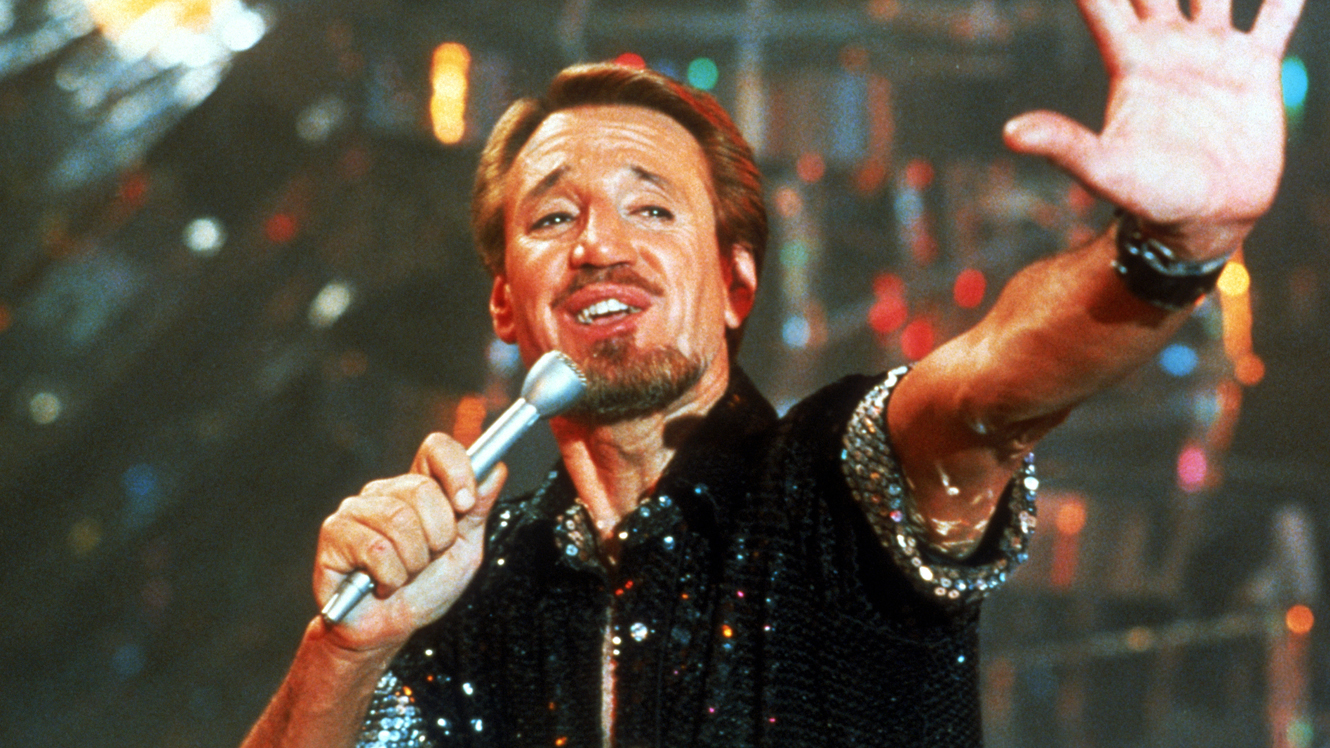
All That Jazz (1979)

Roy Scheider plays the director Bob Fosse in a barely-veiled-at-all autobiographical film All That Jazz

Director: Bob Fosse

Cast: Roy Scheider (Joe Gideon), Jessica Lange (Angelique), Leland Palmer (Audrey Paris), Ann Reinking (Katie Jagger), Cliff Gorman (Davis Newman), Ben Vereen (O’Connor Flood), Erzsebet Foldi (Michelle Gideon), David Marguiles (Larry Goldie), Michael Tolan (Dr Ballinger), Max Wright (Joshua Penn), William LeMassena (Jonesy Hecht), Deborah Geffner (Victoria Porter), John Lithgow (Lucas Sergeant)

It’s revealing when a director makes an autobiographical film. There are insights to be found about the sort of person they are – and the sort of person they want to present themselves as to the world. And All That Jazz is possibly the most striking autobiographical film ever made. You have to have a towering amount of ego to make a film showing yourself as a deliriously talented polymath, generally liked by everyone. And then you have to have a giddy self-awareness to give your semi-fictional doppelganger all your titanic faults, selfishness, cruelty and flaws. Let’s not even get into the psychology of turning your own death into a musical number, eight years before it happened.

Just like Bob Fosse, Joe Gideon (Roy Scheider) is a hugely influential choreographer and director who has changed the face of Broadway musicals before going on to become the Oscar-winning director of a string of critically acclaimed films. He is also a workaholic, addicted to a string of prescription drugs, a never-ending smoker, with a strong of failed marriages and affairs behind him. Just like Bob Fosse, in 1975 Gideon is staging his ground-breaking original production of a musical (Fosse was directing Chicago which clearly inspired the unnamed musical here), starring his ex-wife (and mother of his daughter) Audrey Paris (Leland Palmer, a frequent Fosse collaborator), living with his girlfriend Kate Jagger (played by Ann Reinking, who was Fosse’s real life girlfriend at the time). At nights and weekends he is editing The Stand-Up (a version of Fosse’s film about stand-up Lenny Bruce titled Lenny starring Dustin Hoffman). When he has a near fatal heart attack part way through this, Gideon starts to sink. Fosse on the other hand used the experience to write this movie. 

All That Jazz is an electric piece of film-making, full of Fosse’s dynamism. It’s not only crammed with fabulous song and dance numbers (some of the best Fosse work you’ll see) but it’s beautifully edited and paced. Fosse holds it all together so brilliantly you never feel the thing teeter on the tightrope like Gideon does (the first image of the film is appropriately Gideon walking a tightrope). It perfectly captures the high intensity, killer pressure of maintaining this constant state of activity, and suggests how much Fosse (clearly) believed his own life was a performance, every moment constructed and staged for maximum impact. 

And that’s what you wonder about the film. Does Fosse hate himself, love himself or some combination of both? It’s something the film just teases, with Gideon indulged in a series of fantasy-tinged cryptic conversations with Jessica Lange (another Fosse conquest allegedly) as some sort of angel dressed in white. Here Gideon of course flirts and charms as only he can, while answering with ambiguous amounts of truthfulness a series of questions about love, his background, his wishes and dreams. But even when he says these things, there is the half smile that suggests it’s only part of the story. Or maybe Gideon himself doesn’t even know where life ends and the story begins.

Fosse’s film is just about perfectly structured. Repeatedly we see Gideon going through the same daily ritual when he wakes up: Vivaldi, shower, cocktail of prescription drugs, eye drops, slap hands, “It’s a show time!” (with an ever increasing struggle to keep the energy up). As the tempo of this repeated introduction changes through the film, you get a perfect idea of the state of Gideon’s mind and mood – and his relentless attempt to turn his own life into a perfect performance.

In among all this, perhaps no film has ever showed a better understanding of the pressures of creating a Broadway musical. The opening sequence follows a series of exhausting auditions from literally hundreds of dancers desperate for a role in Gideon’s show, slowly being whittled down to the chosen few. The rehearsals are a punishing series of deconstructions as the dancers strive to match Gideon’s perfectionism. Rehearsal rooms are crammed, sweaty and uncomfortable. The money men hover over every scene, with an eye on protecting their investment. And then, we see the results suddenly of Gideon’s work with a Chicago-ish dance routine so sexually charged it is positively indecent. It’s genius on at least three levels.

The film revolves around Gideon, and the amount of time squeezed out of his personal life by his never-ending, passionate work commitments. Leland Palmer is excellent as his loving but deeply frustrated wife, supportive but all too aware of Gideon’s selfishness. The bond between them feels strong, real and above conventional marriage. Ann Reinking is equally marvellous as his lover, protégé, partner and you name it. Between these three characters there is a hugely warm performance from Erzsebet Foldi as Gideon’s shrewd but loving daughter. Fosse isn’t afraid to sprinkle real moments of family warmth in, as if trying to show Gideon all the things he is missing out on – one particularly outstanding moment is a song-and-dance routine Reinking and Foldi perform for Gideon after the premiere of his film The Stand-Up, as entertaining as it is charming.

But the film’s secondary motor, after Fosse’s directing brilliance (seriously, there are few Hollywood directors so undervalued, the man is a genius) is Roy Scheider as Gideon. I can’t really imagine a more bizarre sounding bit of casting: Jaws Chief Brody as a song-and-dance man, the world’s greatest (even slightly camp) choreographer. But Scheider is simply sublime in this role. It’s a towering, landmark performance of total commitment. He’s achingly human, supremely sad but also overflowing with warmth, humanity and humour while also being repeatedly selfish, difficult and demanding. It’s a performance of total absorption.

By time of the finale number (a truly bizarre version of Bye Bye Love, renamed Bye Bye Life, in which Gideon lives his final moments in a fantasy world, singing and dancing his way towards death in front of an audience of faces from past and present) the whole thing is so wonderfully overblown it doesn’t really matter. The film’s passage into the surreal and fantasy as Gideon gets increasingly ill (while showing less and less regard for his own health) will be a bit much for some, but I was honestly so into it that I didn’t care. 

Because the film is about this acute piece of self-analysis from the director, a Fellini-inspired sort of musical , in which the understanding (or lack thereof) we get of Gideon, and which he gains about himself, is most important. His conversations with Lange’s angel of death are intriguing and as informative about the man he really is as the man he wants to be. 

Fosse’s film is simply supremely well directed (Kubrick called it one of the best films he ever saw). Fosse’s editor (playing himself in the film as the editor of The Stand-Up) said if Fosse had actually died during the making of the film, he would have made sure his death was filmed and edited into the movie. I can believe it. The only musical you’ll ever see which doubles as a confession and a condemnation, which turns death and surgical procedures into wham bam musical numbers, and which never becomes maudlin or sentimental about the self-inflicted disaster the director is putting on himself – it’s brilliant.

Hellboy II: The Golden Army (2008)

Ron Perlman faces larger problems than ever in Hellboy II: The Golden Army

Director: Guillermo del Toro

Cast: Ron Perlman (Hellboy), Selma Blair (Liz Sherman), Doug Jones (Abe Sapien/Angel of Death/Chamberlain), Seth MacFarlane (Johann Krauss), Luke Goss (Prince Nuada), Anna Walton (Princess Nuala), Jeffrey Tambor (Tom Manning), John Hurt (Professor Trevor Bruttenholm), Roy Dotrice (King Balor)

There is something quite sweet about the Guillermo del Toro taking all the chips won for directing Pan’s Labyrinth and cashed them in for this comic book sequel. There you have the distillation of the man’s career right there: one for the artist and then one for the teenage boy he used to be. But Hellboy II is a marvellous creation, a gorgeous to look at, magical, rather funny comic book film crammed with amazing images, ingenious creatures and sparkling moments of action and adventure.

Thousands of years ago, the magical creatures of the world, led by the elves, fought a war against mankind. To win a desperate victory, goblins created the dreaded Golden Army, an indestructible mechanical army. Horrified at the slaughter, Elven King Balor (Roy Dotrice) offered a truce. His son Prince Nuala (Luke Goss) disagreed. In the present day, Nuala goes about to collect the three pieces of the crown needed to control the Golden Army – and only Hellboy (Ron Perlman) and his friends from the BPRD can stop him. 

Hellboy II is immensely imaginative and wonderful to look at. Perhaps inspired by Pan’s Labyrinth, the film plays like a cross between the most brain-twisting magic depths of that film and a traditional comic book. So we get dozens of creatures, each pulled from the pages of some sort of acid tripped Tolkien novel: with extended hands, distorted heads and steam-punkish extremities, the creatures on show are masterpieces of design and character. The juxtaposition between this ethereal, magical world of elves and goblins and mankind’s expansion brings home the danger this world is in: the Elven King’s palace in the modern day is in a sort of converted sewer, while Nuala’s base is an abandoned underground line. With some performers (often del Toro’s muse Doug Jones) under layers of make-up and prosthetics, it’s extraordinary the amount of personality each of these creatures gets. When the film takes a turn down a Diagon Alley-style market, you regret Del Toro never got to make a Harry Potter film.

Hellboy looks both part of this world and also like a muscular bull in a china shop. Ron Perlman continues to be perfect in the part, and captures the wry, cynical, slightly teenagerish humour of the part. Del Toro does a wonderful job of showing the sense of family between Hellboy, his lover pyrokinetic Liz (a decent performance by Selma Blair, although she is too often relegated to the “woman” role), and his surrogate brother, amphibious empath Abe (Doug Jones getting to provide the voice as well this time, and getting a fine display of growing emotional expression). The quiet character moments between the action really ring true – a very funny sequence sees Hellboy and Abe bemoan their romantic entanglements by getting drunk while singing Can’t Smile Without You.

It’s scenes like that which add the heart alongside the throbbing action and colourful character weirdness of del Toro’s vision. It’s also part of the distinctiveness of the whole vision of the film. Everything is seen with as fresh an eye as possible, and makes for some really striking images and scenes. The steam-punk aesthetic of the Golden Army seems to fit together perfectly with the more organic world of the Elves. There’s a sense at all times that the design and pacing of the film have been carefully thought through so everything fits logically together. Starting the film with a wonderfully animated Golden Army backstory (voiced by a briefly returning John Hurt for maximum impact) is just another reflection of the artistry at work here.

There is a nice vein of humour running through the film – there are some funny sight gags as characters walk nonchalantly through bizarre goings-on in BDRP HQ – and the more gory moments of the action are shot with a certain black comedy. The film also gets a decent few points in about how humanity rejects things that are different, which are not surprising but still hit home.

Hellboy II does start to become a bit more generic as it heads towards its final denouement. Most of the events of the final few scenes are pretty predictable from the outset, and offer little in the way of surprises. For all the chemistry she has with Perlman, Blair is more or less relegated to the sidelines for large chunks of the film (usually the action). But for most of the run time, it’s inventive, imaginative fun with a director bringing a distinctive vision to the genre while also kicking back his heels and having fun. And fun is what it wants the viewer to have as well – don’t try too hard, sit back, relax and enjoy yourself.