Category: Female led film

Mrs Miniver (1942)

Greer Garson and Walter Pidgeon hold the homefront together in Mrs Miniver

Director: William Wyler

Cast: Greer Garson (Kay Miniver), Walter Pidgeon (Clem Miniver), Teresa Wright (Carol Beldon), Dame May Whitty (Lady Beldon), Reginald Owen (Foley), Henry Travers (Mr Ballard), Richard Ney (Vin Miniver), Henry Wilcoxon (Vicar), Christopher Severen (Toby Miniver), Brenda Forbes (Gladys), Clare Sanders (Judy Miniver), Helmut Dantine (German pilot)

Mrs Miniver was made when history was in flux: conceived at the height of the Blitz, shot and then parts re-shot either side of Pearl Harbor and released in 1942 after America had entered the war. A patriotic flag-waver, designed to build American sympathy for a Britain standing alone, it was a huge hit, won Best Picture and had a profound impact on Allied morale (Churchill called it more help to the War effort than a flotilla of battleships). It still carries an inspiring, cockle-warming charm and a hefty emotional punch, made even more affecting by the stoic determination (rather than hand-wringing emotion) every setback is met with.

In a small village just outside London, lives the Miniver family. Kay Miniver (Greer Garson) cares for her family in a large country house. She has three children with architect husband Clem (Walter Pidgeon). Their life is contented – and then war breaks out. Oldest son Vin (Richard Ney) joins the RAF – after falling in love with Carol (Teresa Wright), niece of the local grandee Lady Beldon (May Whitty). Clem joins the ships travelling to Dunkirk. Kay holds the domestic fort, protecting her family from air raids, facing down a German pilot and helping shepherd her small village through the trauma of air raids to something approaching a normal life.

Mrs Miniver is all about that stoic, British stiff-upper-lip attitude, of doing your duty uncomplainingly and quietly. As they said “Britain Can Take It”, and the film is a celebration of the nobility of perseverance. It’s designed to inspire and it does: it’s melodrama played with a low-key reserve, which is genuine and heart-felt. There is a reason Goebbels (and he would know) called this a “refined powerful propagandistic [tool]” – it makes you completely emphasise and relate to its characters. We share their moments of joy just as much as the profound tragedy of their losses.

And there is a lot of loss in Mrs Miniver – way more than you might expect, with the film’s final act throwing at least two painful gut punches you don’t expect. Tragedy touches all of us and war carries away the innocent and undeserving with as much eagerness as it does the militaristic. There seems to be no reason or justice to it – but instead the difficult acceptance of fate and the necessity of being part of a struggle larger than ourselves.

In a powerful speech that concludes the film, the vicar stands in the bombed-out ruins of his local church. It mirrors a scene near the beginning, as he regretfully but with quiet reserve announces the outbreak of war. Now he gives a rousing speech that this is war of all the people, against the tyranny that threatens us, where the dead our mourned but not forgotten. It’s a powerful speech (brilliantly delivered by Henry Wilcoxon), of the painful necessity of duty at the time of war that still stirs (it was distributed nationally by Roosevelt’s insistence).

The stoic, good-natured, supportive community, who protect each other and desperately try to maintain hope and nobility when death could strike at any time, contrasts firmly with the only German we see. A wounded pilot who gains entrance to Kay’s home at gunpoint. Kay calmly disarms him, feeds him and tends to his wounds (after all he is the same age as Vin) – he responds with a vicious speech of violent hate, bragging at the deaths the Luftwaffe have inflicted on Europe. It’s the only time her reserve really breaks, as she slaps him – and even for a moment seems to consider dispatching him. Her delayed shock is clear later when she casually smokes one of Clem’s cigarettes – a mixture of restrained shock, relief, horror and confusion across her face. It’s the closest direct danger comes – and the closest she comes to openly expressing rage and anger at the hand the world has dealt her.

The film revolves around Greer Garson’s (Oscar-winning) performance. Though it’s easy to see Kay as a sort of saint, that’s underestimating the huge burden Garson had: she effectively embodies an entire Homefront of scared people doing their duty. It’s a performance of stiff-upper-lipped warmth, her desperation, fear and protective nature clear in every beat. You can see it in her mix of distracted fear and pride when Vin announces he has joined the RAF, and the front of “everything will be alright” she puts on for the children during an air raid that tears her house apart.

Of course, that disaster is met with a “I always wanted to redo that dining room” fortitude by her husband, Clem. Pidgeon and Garson forged a partnership that would run through several movies here, and spark off each other wonderfully. Pidgeon gives a solid grounding to Garson, while she helps find warmth and humanity in an otherwise distant actor (Pidgeon lacks Peck’s – who he resembles in many ways – ability to convey warmth under reserved dignity). Pidgeon’s stirring sense of duty excels, not least during the Dunkirk sequence.

That sequence is very well executed, a small series of boats gradually growing in size until they fill the Thames. When duty calls, people respond with gusto and pride. Alongside this, normal life continues as much as possible: not even the war will stop the flower show. This remains a heart-warming centre piece – pinched for an episode of Downton Abbey – as Lady Beldon overrules the sycophantic judges and gives the prize to the deserving winner, local station manager Mr Ballard (Henry Travers, sweet but receiving a generous Oscar nomination).

The acting is pretty much spot on. Teresa Wright (Oscar winning) is endearingly genuine and vibrant as Vin’s wife to be (and Lady Beldon’s niece) Carol. May Whitty, channelling those grande-old-dames-with-hearts-of-gold, gets every beat right, from comedy to tragedy, Wilcoxon is marvellous. It’s all so heartfelt and earnest you can overlook the fact most of the (largely American and Canadian) cast go for cod-Brit accents or cliched working class vowels – just as you do the fact that neither the towns or countryside in the film looks particularly British (an opening sequence in London looks plain wrong in every sense).

And you can’t fail be stirred by its celebration of quiet determination and unshowy self-sacrifice. You can certainly argue that it’s not a work of art, like other films nominated that year for Best Picture. But, none of them would have (or continue to have) the emotional impact this has. Sure, it feeds off an American nostalgia for English-country-village life – but it does so with a noble cause. Well-acted, very well directed, it still inspires and continues to provoke pride today.

Sense and Sensibility (1995)

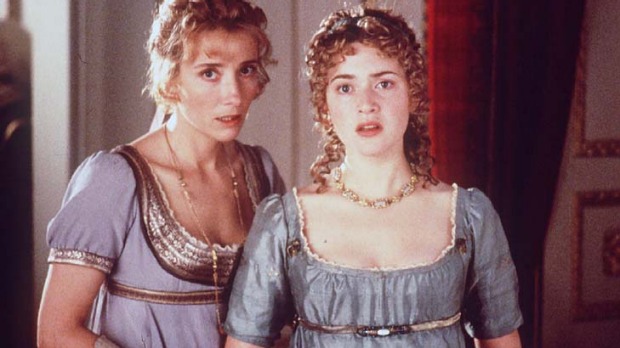
Emma Thompson and Kate Winslet are superb in probably the greatest Austen adaptation on film, Sense and Sensibility

Director: Ang Lee

Cast: Emma Thompson (Elinor Dashwood), Kate Winslet (Marianne Dashwood), Alan Rickman (Colonel Brandon), Hugh Grant (Edward Ferrars), Greg Wise (John Willoughby), Gemma Jones (Mrs Dashwood), Harriet Walter (Fanny Dashwood), James Fleet (John Dashwood), Robert Hardy (Sir John Middleton), Elizabeth Spriggs (Mrs Jennings), Imogen Stubbs (Lucy Steele), Hugh Laurie (Mr Palmer), Imelda Staunton (Mrs Palmer), Emilie Francoise (Margaret Dashwood), Tom Wilkinson (Mr Dashwood)

The world of Austen adaptations stands on two pillars – and both of them date from 1995. One is the BBC Pride and Prejudice, the other this luminous adaptation of Austen’s first novel, written by and starring Emma Thompson. It’s hard to pull together a review when a film pretty much plays its hand perfectly: and that’s exactly what Sense and Sensibility does. The film is a complete delight, in which Thompson takes surprisingly large liberties with many of the details of the novel, but brings to the screen a version that never once loses the spirit and heart of Austen’s work. It’s an immensely impressive achievement, and one of the finest literary adaptations ever made.

After the death of Mr Dashwood (Tom Wilkinson), the Dashwood estate passes into the hands of his son John (James Fleet) and John’s ambitious wife Fanny (Harriet Walter), leaving his second wife (Gemma Jones) and their daughters sensible Elinor (Emma Thompson), passionate Marianne (Kate Winslet) and giddy schoolgirl Margaret (Emilie Francoise) suddenly homeless. However, this does bring Fanny’s gentle and kind brother Edward Ferrars (Hugh Grant) into Elinor’s life, and an unspoken romance builds between the pair. There is passion in the air for Marianne at their new home, when she is rescued from a fall in the rain by the dashing Willoughby (Greg Wise). But are there secrets in the pasts of both men that could threaten the sisters’ happiness? And how did Willoughby’s life intersect with the reserved Colonel Brandon (Alan Rickman)?

Thompson’s superbly written script is a faultless adaptation that makes not a single poor choice, and expands and enriches several characters (in particular the three men) to great effect. Thompson not only brings much of the humour and wit in Austen to the fore – the film is frequently very funny – she also understands here truth and tenderness. Which is why the film is so beloved: it’s a film overflowing with empathy and heart for its characters which builds the emotional investment as skilfully as it does the comedy. It culminates in a proposal scene which I don’t think has ever not placed a lump in my throat.

To list all the excellent adaptation ideas would take forever so I’ll use one example. The film wisely expands much of the early character interactions, in particular deepening and exploring the early meeting between Elinor and Edward. A section that takes up barely one of the book’s (very short) chapters here fills the first 20 minutes of the film. It’s vital as it superbly establishes the natural warmth and intimacy between these two, and their perfectly complementing personalities.

It also allows Grant – in one of his most romantically winning performances – to display some deeply endearing light comedy, as well as establishing Edward as a thoughtful, sympathetic and decent man, who forms bonds quickly with all the family (especially young Margaret) through his genuineness. It also keeps us rooting for a relationship – and for a character – who the film often has to leave off screen for vast stretches, and leaves us in no doubt that his (later revealed) engagement to Lucy Steele (a woman he does not love, and who is interested in him solely for his position) comes from the same motives of decency, duty and the desire to do the right thing.

If that’s an example of one of Thompson’s most successful changes in her adaptation, she also unerringly identifies the things it’s most important to keep. Just like the novel, the film places the warmth of the sisters’ relationship at its heart. Helped by the natural chemistry and ease between Thompson and Winslet, the film carefully contrasts the personalities of these two sisters (one sensible and reserved, the other spontaneous and passionate) but takes no sides and also shows the sisters themselves are united by their love for each other. The film frequently features scenes of confidence and intimacy between the two, and continually brings us back to each other as the key relationship in their lives. It also shows how both need to meet in the middle ground: Elinor needs some of Marianne’s sensibility, just as Marianne needs to take on some of Elinor’s sense.

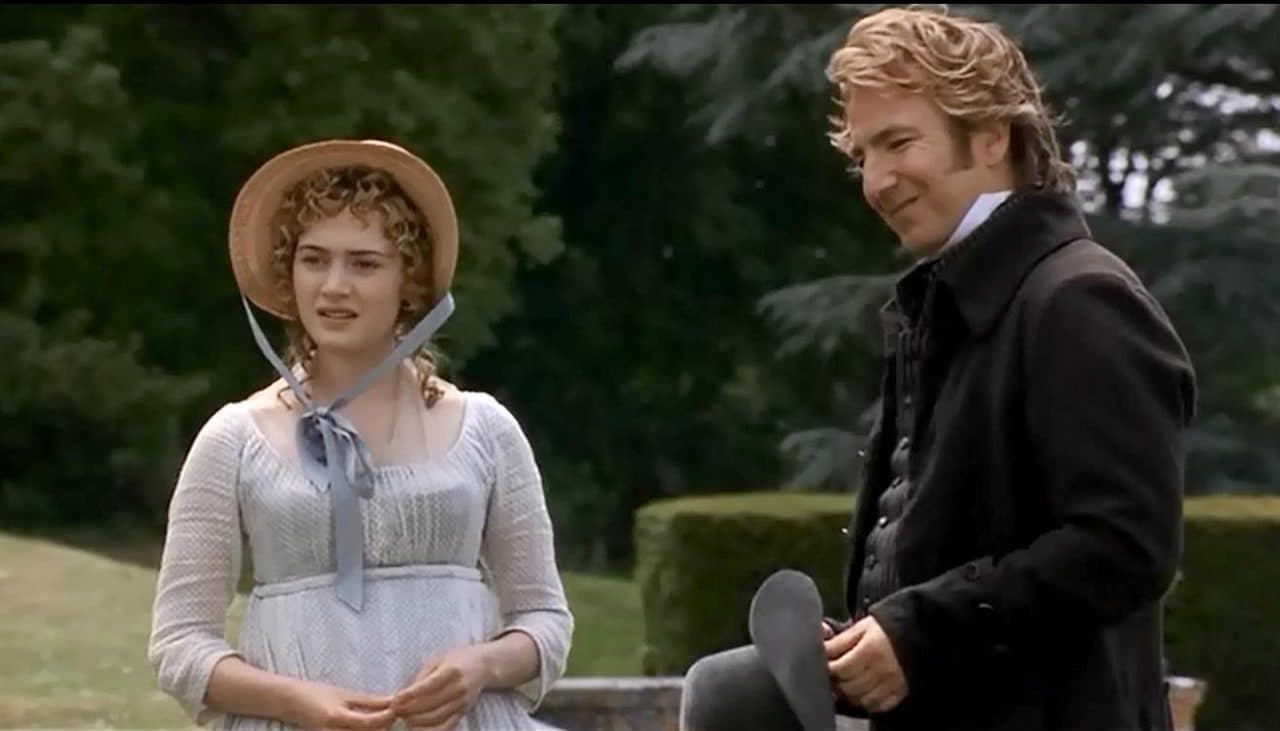
Although sense would not have necessarily helped Marianne uncover the dangerous selfishness of Willoughby. Perhaps the only wrong call in the BBC Pride and Prejudice (like most adaptations of that novel), is that it makes the rogueish Wickham insufficiently handsome and too blatantly smarmy from the start, tipping the audience the wink that this man can’t be trusted. Not so here, with Greg Wise giving Willoughby so much charm, regency handsomeness, dash and warmth that you would not imagine for a moment he could be anything but what he seems. He makes a clear contrast with Marianne’s other suitor, the older, more distant Brandon – superbly played by Alan Rickman – whose qualities of kindness and decency are hidden behind his coolness and lack of flash (Rickman is, again, wonderful here as a man hoping against hope for  a second chance at love).

But then the film is filled with perfectly cast actors. Thompson is a brilliant and natural fit for Elinor (even if she is too old for the part, something she acknowledged herself) giving her acres of emotional torment under an exterior she must keep calm and controlled for the sake of her family. Winslet became a star for her enchantingly free-spirited performance, grounded by a warmth and desire for the best for others that keeps the character from ever becoming irritating or overbearing.

Among the rest, there isn’t a bum note. Walter is hilarious as the washpish Fanny, Hardy full of bonhomie as Sir John. Elizabeth Spriggs is perfect as a gossipy old maid who is a pillar of strength when her friends are ill-treated. Hugh Laurie is hilarious in a gift of a part as the dry, cynical Mr Palmer whose nearly every line is laugh-out-loud funny, but who also proves his nobility in a crisis. Staunton is equally good as his flighty, mismatched wife. Imogen Stubbs brings out the simpering manipulative scheming of Lucy Steele perfectly.

The whole is bought together expertly by wonderfully paced and constructed directing by Ang Lee, whom it’s surprisingly easy to over-look. Lee was a considered an odd choice for the film – he barely spoke English at the time and was a stranger to Austen. But the film is an inspired match for him, tapping into his sensitivity, the warm eye he brings to families and their dramas, and also the observer’s wit he brings to social comedy and dynamics. Lee also brings an outsider’s eye to England – it’s a film that looks wonderful, but not simply romantic, with Lee not afraid of a stormy sky or a muddy street. Interiors are shot with a candlelit beauty, and there is a sense throughout of all this taking place in a real world. Patrick Doyle’s perfectly judged score also works wonders to help create the mood.

Sense and Sensibility is a masterful film and a, perfect adaptation of Austen. It’s hard to imagine that it will be bettered for some time. Indeed, like the BBC Pride and Prejudice, it feels like it has made all other adaptations of the book redundant. With a brilliant adaptation, superb acting, sensitive and insightful direction and a true understanding of the spirit and heart of Austen, this is one of the greatest adaptations ever made.

The Assistant (2020)

Julia Garner is a silent witness to monstrous goings-on in a Hollywood studio in The Assistant

Director: Kitty Green

Cast: Julia Garner (Jane), Matthew Macfadyen (Wilcock), Makenzie Leigh (Ruby), Kristine Froseth (Sienna), Alexander Chaplin (Max), Juliana Canfield (Sasha), Dagmara Domińczyk (Ellen), Bregje Heinen (Tatiana), Jon Orsini (Assistant), Noah Robbins (Assistant)

Jane (Julia Garner) is a low-level assistant in a Hollywood production company, run by an unseen movie mogul (but there’s no doubt that it’s Miramax and Harvey Weinstein). First in and last out every night, Jane is silent, downtrodden and treated as little more than a piece of furniture by the rest of the staff. Following her over one working day, from scrubbing semen stains out of her boss’ sofa and ending with her leaving the office as he takes advantage of another aspiring actress, The Assistant doesn’t have a plot as such. Instead it’s an experience film – a glimpse into an industry where abuse of your position is so common-place that it permeates every inch of a company, that is set-up to completely service the greed of its president.

Kitty Green’s film is very good at getting across the grinding, depressing, overbearing misery of entry level jobs. Jane slaves for hours at thankless, menial tasks. Coats are thrown at her, cups dunked down in front of her to clean, she is never addressed by name and barely has eye contact with another member of staff. Her contact with her boss is enraged phone calls after non-existent errors (for which she has to write grovelling email apologies) or tiny moments of praise communicated by third parties. Jane is still clinging to the dream of one day becoming a producer herself – but her day-to-day life is a never-ending stream of insults, misery and exploitation.

The film is also very good at showing how someone like Weinstein got away with it for so long. It’s because everyone knows – so much so that it’s become normalised, a part of everyday life, something that no longer seems outrageous or disgusting but just a part of how the business operates. People joke about not sitting on his sofa. Everyone knows what “private screening” is code for. People book late night flights so their boss can have time for his evening exploitation of young actresses. His erectile dysfunction medicine is delivered to the office. Headshots of actresses are printed off and piled on his desk, like a hardcopy of Tinder. The HR department goes out of its way to cover up his crimes.

Jane’s encounter with Matthew MacFadyen’s slimey HR manager is the film’s highlight. Concerned about a naïve young waitress who has clearly been plucked out of a country diner for the bosses perverse entertainment, Jane tries to raise her concerns with HR. She is promptly told complaints will destroy her career, be seen as her own envy – and that she doesn’t need to worry as she is not “his type”. MacFadyen oozes corrupt indifference.

It’s the film’s highlight, as it’s the closest it gets to a giving Jane a character arc. It’s the only time we see her pushing against her working environment – and then making a conscious decision to do nothing about it. While the film’s idea to cover a single day in Jane’s career, after she has spent weeks at the company, is successful in getting across the grinding monotony and everyday sexism and culture of abuse, it does mean the film effectively makes its point in the first fifteen minutes and then repeats it endlessly for the next 70. It also means that, while Julia Garner is very good her character largely hits the same note of downtrodden concealed pain and anger continually.

A more interesting film – if more conventional – could have charted several weeks, allowing us to see how the optimism and excitement Jane seemed to start with in her career was beaten out of her by her appalling abusive workplace. It would still have allowed us to grasp all the monstrous normality of the boss’ abuse, but we could have had a richer exploration of the impact on her.

As it is, The Assistant instead gives a brilliant sense of how horrible an industry can be when the greedy, destructive, vileness of its head permeates every inch of it. But that’s kind of all it says or tells us. It gives us a wonderful sense of what this workplace might be like – but its lack of event, plot or character dynamics means it doesn’t always make for rewarding drama.

Vita and Virginia (2018)

Gemma Arterton and Elizabeth Debicki struggle to bring a love story to life in Vita and Virginia

Director: Chanya Button

Cast: Gemma Arterton (Vita Sackville-West), Elizabeth Debicki (Virginia Woolf), Isabella Rossellini (Lady Sackville), Rupert Penry-Jones (Harold Nicholson), Peter Ferdinando (Leonard Woolf), Gethin Anthony (Clive Bell), Emerald Fennell (Vanessa Bell), Adam Gillen (Duncan Grant), Karla Crome (Dorothy Wellesley)

The love affair between Bloomsbury group writers Vita Sackville-West (Gemma Arterton) and Virginia Woolf (Elizabeth Debicki) inspired a successful epistolatory play by Eileen Atkins. It’s got all the elements you need for a love story: sadly none of those make their way into this limp, lethargic, languid film which drains any trace of passion from its material.

Where did it all go so wrong? The film expands the plays concept (two actors performing the various letters between the two lovers) into a series of conversations and throws in as characters the other members of the Bloomsbury circle. Sadly, what it fails to do is convey a sense of joi d’vive to any of this. The Bloomsbury crowd not only come across as pompous bores, but they never even really seem to be enjoying themselves. They certainly find it hard to get passionately worked up about any of these marvellous artistic ideas we keep being told they are having. The only thing we really see them talk about is sex, probably because it’s easier to put that on screen than writing.

The failure of the film is increased by the sadly misjudged performances by the two actors at its heart. It’s already a struggle to get any sense of chemistry between these two – I can’t put my finger on why this is, but there isn’t the undefinable ‘spark’ between them. Perhaps it’s partly because they both choose such wildly diverse acting styles, that their scenes never quite click together.

Debicki goes for a stately fragility, mixed with an emo waviness and seems to be playing every scene as if she subconsciously stating “my character committed suicide you know”. Arterton seems to try and compensate for Debicki’s overstated lip wobbling, by going for a jolly hockey-sticks brashness. Neither performance compliments the other and the effect is feeling like two very good actresses feeling constrained in different ways by the material.

It’s not helped by the flatness of much of the filming. I’ve seen Chanya Button’s work elsewhere (notably on television with some great work on WW2 drama World on Fire), but here she seems uncertain how to bring visual interest to this story. Too many scenes are shot with a murky lack of visual interest. Moments of letter reading are presented as the actors addressing the camera. Stylistic flourishes – such as Virginia’s visions of swiftly growing vines at moments of emotion – seem to come out of nowhere and jar with much of the rest of the traditionalism of the rest of the filming.

So instead, two fascinating intellectuals end up coming across as slightly self-absorbed bores in a relationship that never catches fire. Most of the rest of the cast fail to make an impact: Rupert Penry-Jones gets closest as Vita’s husband who oscillates between embracing their open marriage and demanding a wife who will fulfil a more traditional role. But for the rest, it’s hard to get any sense of their personalities with some performances – especially Adam Gillen – tipping too far into gurning comedy.

The general lifelessness of the film is made somehow even worse by the bizarrely left-field score. It’s a strikingly anachronistic slow-paced drum-and-base inspired sound that wouldn’t seem out of place in the late hours of a nightclub. Here it not only feels horrendously out of place – not least because it’s the only anachronistic touch either in the film-making of the performances, which are otherwise scrupulously correct – but it’s incessant throbbing beat actually helps make the film even slower, as if you were watching it in a slightly intoxicated haze.

Vita and Virginia should really have crackled with the vibrancy of the real-life characters and the passion of their love for each other and their shared ideas. Instead it’s a tedious bore that never sparks into life.

Shanghai Express (1932)

Marlene Dietrich is on a train full of mystery and danger in Shanghai Express

Director: Josef von Sternberg

Cast: Marlene Dietrich (Shanghai Lily/Madeline), Clive Brook (Captain Donald Harvey), Anna May Wong (Hui Fei), Warner Orland (Henry Chang), Lawrence Grant (Reverend Carmichael), Eugene Pallette (Sam Salt), Gustav von Seyffertitz (Eric Baum), Louise Closser Hale (Mrs Haggerty), Emile Chautard (Major Leonard)

The fourth collaboration between von Sternberg and Dietrich, completed when they were in the middle of – was it an affair, an infatuation or something half-way between obsession and resentment? Who knows. Either way, Shanghai Express is one of the their finest collaborations, a triumph of von Sternberg’s mastery of style and Dietrich’s charisma and appeal, brilliantly shot with some iconic images. The biggest hit of 1932, it’s also a loopy part-thriller, part-romance but with a sort of eerie dream-like logic and that mixes peril and jaunt. It’s a fascinating picture.

Its 1931 and China is in the middle of a civil war. Boarding a train bound for – you guessed it – Shanghai, is a veritable smorgasbord of ex-pats and mysterious travellers. First among them – and reviled by all but one of the other passengers – is infamous “coaster” ‘Shanghai Lily’ (Marlene Dietrich), a woman who (as she says) needed to go through more than one man to get that nickname. The only person in first class who can stand her is Chinese “coaster” Hui Fri (Anna May Wong). The man who has the most cause to resent her though is army physician Captain Donald Harvey (Clive Brook). The two of them were deeply in love, but misunderstandings came between them and he’s nursed a grudge ever since. The rest of the train carry their own petty prejudices – but all these are put in perspective when the train is hijacked by rebel leader General Chang (Warner Orland), who holds Donald hostage to get the release of his right-hand man from the Chinese. What will Shanghai Lili aka Madeline do to save the life of the love of her life?

Clocking in at a slim and efficient 82 minutes, Shanghai Express still manages to have a languid, patient pace to it, taking its time to establish places, relationships and stakes. Part of that also comes from the film being set in a sort of imaginarium idea of China, born entirely out of von Sternberg’s brain. With his long-standing disinterest in realism, von Sternberg’s film is a sort of fever-dream image of China. So it’s kind of fitting the film plays out like a dream, right down to its own pace. At times it rushes swiftly on, at others the stakes hardly seem to matter as the characters move freely around while in supposed captivity and barely consider their lives at risk. At the end of the film, the train arrives (despite the violence en route, the fact its late gets the most comment) and the characters simply get on with their lives.

Perhaps its all part of von Sternberg’s deconstruction of these Europeans and Yanks, whose only engagement with this foreign country is that it should be made as much like the West as possible. Most of the characters on board – with the exception of the women – are selfish, pompous, lecherous, prejudiced, greedy or some combination of all of the above. While they wear an air of respectability, it doesn’t take long to shake them from it. And their judgement of others is swift and irreversible. Even Donald, our nominal hero, fits this bill – he frequently rushes to judgement and pig-headedly sticks there, regardless of logic and experience.

In among this, it’s the women who emerge as the only characters who demonstrate pluck, loyalty, empathy and decency. Anna May Wong’s looked-down-on courtesan goes through a torrid time – demeaned on the train then assaulted by the lecherous Chang not once but twice (the second time an off-screen rape that none of the Western characters ever feel the need to comment on). Despite this, she’s one of the few who acts to defend someone other than herself, and her actions are (eventually) what brings liberation for the passengers (again not that they, or anyone else from the West, thanks her for it). It’s a neatly reserved performance from Wong (perhaps the best in the film), her eyes conveying an only thinly concealed contempt for those around her.

The closest thing she has to a confidante is of course Shanghai Lily herself. This is the perfect role for Marlene Dietrich, a woman who is both imperious and fragile, proud but willing to debase herself to save the man she loves, cold and knowing but also strangely naïve and romantic. As with much of her best work, what she does so brilliantly here is to bring together a host of contradictions that really shouldn’t make sense (except perhaps as some sort of sexual fantasy of von Sternberg’s?) and make it the most charismatic and arresting part of the film. Dietrich is not the most accomplished of actors – but she is an accomplished presence and undeniably charismatic.

Lily proves that she may be a hard-nosed player of the game, but that she’s more than capable of loyalty and faith to those she loves. She has no hesitation when asked to put herself in the way of danger for them. It’s a shame Dietrich doesn’t have a more charismatic scene partner than the rather bland Clive Brook (who ends up looking very forced as a romantic lead – you end up wondering what on earth this woman sees in him). But Dietrich’s movie-star magnetism holds much of the plot of the film together and provides much of its emotion.

She’s also of course beautifully filmed by von Sternberg – one late shot (with lighting pointing upwards in almost a spotlight triangle, creating a truly striking and erotic image of her smoking against a train door) has rightly become iconic, but the film is packed with them. Von Sternberg, working closely with photographer Lee Garmes (Oscar-winning) perfectly uses light and shadow to frame Dietrich with an alluring exoticism that compels the focus.

It’s all part of the film’s beauty and the skills behind its shooting. It starts with a series of flourishing tracking shots through busy train stations (something it returns to later on). Scenes that coat the film in smoke, with just backlighting, while soldiers and passengers move in front like a lantern show are extraordinary. The images make superb use of ultra-dark blacks to introduce frequently gorgeous images. With von Sternberg’s setting that only just touches realism in the faintest way possible, it makes for a wonderfully framed exotic fever dream – just as the film itself oscillates between action and languid romance in its pacing.

Shanghai Express is almost impossible to categorise. A romance with thrills in the middle, an action film where urgency is often off the table, a mystery that travels with an almost pre-ordained certainty towards its goal, it truly has a dream-like logic. And I guess if it’s all von Sternberg’s dream, it makes sense that it’s most striking scenes see Dietrich, perfectly lit, with smoke stroking itself around her. After all her charisma is at the film’s heart.

Elizabeth: The Golden Age (2007)

Elizabeth the golden age
Cate Blanchett returns as Elizabeth I in the slightly underwhelming Elizabeth: The Golden Age

Director: Shekhar Kapur

Cast: Cate Blanchett (Elizabeth I), Geoffrey Rush (Sir Francis Walsingham), Clive Owen (Sir Walter Raleigh), Abbie Cornish (Bess Throckmorton), Samantha Morton (Mary Queen of Scots), Jordi Molla (King Philip II), Susan Lynch (Annette Fleming), Rhys Ifans (Robert Reston), Eddie Redmayne (Anthony Babington), Tom Hollander (Amias Paulet), David Threlfall (John Dee), Steven Robertson (Sir Francis Throckmorton), Adam Godley (William Walsingham), Laurence Fox (Sir Christopher Hatton), William Houston (Guerae de Espes)

Its 1585 and the reign of Elizabeth I (Cate Blanchett) has seen England enter a Golden Age. But tensions are rising with the Spanish and their king Philip II (Jordi Molla). The Spanish plot to replace the protestant Elizabeth on the throne with the catholic Mary Queen of Scots (Samantha Morton), sending their agents (including the likes of Rhys Ifans and Eddie Redmayne) to England to ferment rebellion. Can Elizabeth’s trusted advisor Sir Francis Walsingham (Geoffrey Rush) root out this potential rebellion? Or could this be a trap to lure England into a naval war with Spain and its chilling armada of ships?

Elizabeth: The Golden Age is a late sequel to the more influential Elizabeth, which mixed in the ruthlessness of The Godfather, with a sprinkling of sex in a darkly tinged Elizabeth England which seemed to drip conspiracy (setting the tone for costume dramas for the next ten years at least). Compared to its original, Elizabeth: The Golden Age seems a much more traditional piece of filmmaking. It’s luscious and handsomely filmed, with the darkness and oppression of the original replaced with golden hued lighting, sumptuous (Oscar-winning) costumes and some very impressive set-designs, all of which help to point up the glamour of the past in a way that seems much more similar to a 1970s epic than the more inventive work of the original.

It’s a part of the film’s idea of the country now enjoying the glory Elizabeth’s reign has bought, with the dark corridors replaced by the bright lights of peace and opulence. The film’s reimagining of Tudor history does still present some interesting perspectives, not least in the character of Elizabeth. Now firmly in middle-age – and committed to a life of celibate singledom – Cate Blanchett’s regally imperious Elizabeth is still emotionally vulnerable with a deep sense of longing in her. Unable to live the life of romantic freedom she could in her youth, she now lives an emotional life vicariously through her ladies in waiting, particularly Abbie Cornish’s sharp and knowing Bess Throckmorton.

This focuses on Elizabeth alternating between encouraging and discouraging (due to her own half-realised romantic longing) a romance between Bess and famed explorer Walter Raleigh. Played by Clive Owen at his most buccaneering (with an accent that playfully lies between Norfolk and New England, suggesting the American accent came from Raleigh), Raleigh bewitches the Queen with exciting tales of abroad – but with her unable to flirt with him fully as she wishes, Bess is encouraged to dance intimately with him among other romantic gestures. The most important thing throughout for Elizabeth is that it is she controls and dictates the relationship – and when the couple start to make their own decisions, it leads to disaster.

It’s all part of Michael Hirst’s (here sharing script writing duties with William Nicholson) imaginative reinvention of Tudor history (remixed into an exciting version of what could have happened). This also comes together very nicely in an interesting conspiracy thriller take on the Babington plot and the goals of the Spanish to use it to manipulate both Elizabeth and Mary Queen of Scots. The film is at its strongest when playing with historical expectations.

However, too often it plays into the sort of “Britain Triumphant” nonsense that made Michael Gove on release (and you imagine Laurence Fox today – here popping up as Christopher Hatton) thrilled. The British characters – Elizabeth, Raleigh, Walsingham – are brave, charismatic, ingenious and attractive. The villainous Spanish are thick-lipped, spittle flecked, bad-haired meanies with Philip II literally a sinister limping hunchback. No scene in Spain is complete without dark lighting, chanting monks, massive crucifixes and a general air of oppression. When ships sink, the camera doesn’t miss the chance to capture a crucifix sinking to the bottom of the briny. The Babington conspirators plot out of a dyers shop, where blood red dye drips all around them. The plot culminates in a “just missed her” point blank gun confrontation (the film’s most silly flourish). Subtle it ain’t.

And also it feels more Little Englander than its predecessor. Whereas the first film saw as much darkness and dirty dealing among the British as it did Europe, this film feels like a “Britain Stands Alone” against treacherous, lecherous, sanctimonious (or all three) Europeans. Sure the Armada was a terrific win for Britain – here with much of the credit reassigned to Raleigh who steers fire ships into the path of the Spanish ships (Drake is reimagined as a lumpen bureaucrat dazzled by Raleigh’s pizzazz) – but it owed as much (as even the Tudors themselves admitted) to the weather and luck as it did bravery and skill. Unlike the first film, Elizabeth: The Golden Age seems determined to define European and Catholic as suspiciously “other”. It makes for a less rewarding film.

And a less interesting one. For all its playing with psychology, this is a very much more traditional costume drama, celebrating Merrie Olde Englande where the original film challenged us to question our expectations. Kapur and Hirst settle for spectacle and style, over drama and truth. Blanchett is impressive as always – and the rest of the cast very sound – but this is a sequel that only lives as a counterpoint for the original.

Morocco (1930)

Morocco header
Marlene Dietrich and Gary Cooper romance in the heat of Morocco

Director: Josef von Sternberg

Cast: Gary Cooper (Legionnaire Tom Brown), Marlene Dietrich (Mademoiselle Amy Jolly), Adolphe Menjou (La Bessiere), Ulrich Haupt (Adjutant Caesar), Eve Southern (Madame Caesar), Francis McDonald (Sergeant), Paul Porcasi (Lo Tinto)

Josef von Sternberg was one of the greatest directors of early cinema – and Marlene Dietrich was his muse. Or was he her Svengali? Either way, they first worked together on German film The Blue Angel and such was the impression made by Dietrich, Hollywood was desperate to get her and von Sternberg together for a new picture that would channel her star power into ticket sales. Morocco is the picture they come up with, a romance tinged with heartbreak set in French occupied-Morocco around a Foreign Legion troop passing through town.

Dietrich was Amy Jolly, a woman of uncertain and shady past, new in town and making a living as a night club singer. There here routine encompasses everything from erotic singing in top hat and tails (complete with a bisexual vibe – you can tell this is pre-Code Hollywood?) to an apple selling singing routine. She’s loved by La Bessiere (a rather bland Adolphe Menjou), a stuffed shirt rich guy. But her heart belongs to man’s-man legionnaire Tom Brown (Gary Cooper), a toughened old soldier with a girl in every barracks town. Who will Amy end up with? Will she follow her heart or her head? Can she bear to live the life of a soldier’s mistress amongst the camp followers?

Writing it all down, there are probably few mysteries about the resolution you get from Morocco, which even at its 90 minute run time feels like an impossibly slim piece of fluff. But that hardly really matters when von Sternberg shoots the film with a romantic flourish and with Dietrich and Cooper as such compelling leads. It’s odd to think, looking at it now, that Morocco was acclaimed as one of the greatest films ever made on release (it’s not even the best or most lasting Dietrich/von Sternberg Hollywood collaboration of which there were five more to come).

But it lasts in history because it introduced Dietrich to the wider world. Von Sternberg took control over every aspect of her image to best present her to the world – including a torturous 45 takes of her first line (because after all the first line was the one that will make the first impression on an audience). Von Sternberg and cinematographer Lee Garmes choose lighting methods and angles that would enhance her features, and shot huge parts of the film to favour her (much to the annoyance of Gary Cooper, who resented von Sternberg’s shunting of him to the sidelines).

Von Sternberg was determined that Dietrich would make an impression: and she certainly did with her cabaret act, still probably the film’s highlight. Dressed in a striking male garb, her rendition of When Love Dies is sold on her confidence, sexual allure and tinge of bisexuality (viewers were scandalised and titalated that the routine ended with Dietrich playfully kissing a woman in the audience) to make a lasting impact. Von Sternberg lets the tension build as well by holding the camera calmly on Dietrich (in drag) while the audience at first boo before silencing and then being swept up in her performances. This is the approach taken for the rest of the film – and its rather weak plot – focusing on the a magnetic quality, the indefinable star quality some people have to just make you watch them.

It’s recognised by von Sternberg, who builds the film around her. It’s tempting to see Adolphe Menjou – the jilted would-be husband, in awe of the star – as a von Sternberg self-portrait, dressed as he is to resemble the director. But von Sternberg felt so confident over his control of Dietrich and her career, I suspect there is actually far more of him in lothario Tom Brown, the sort of man who may love a woman but also very much likes her to submit her will to his own. Brown may have his moments of decency – he wants Amy to have the best chance in life, which is clearly with La Bessiere rather than him – but he’s also an at times ruthless opportunist and adventurer, with a string of broken hearts behind him. Interestingly, considering their later films and her reputation, Dietrich’s Jolly is actually a fairly passive figure throughout the film, to whom events happen and who never feels in charge of her destiny. Perhaps more than a little of life drippling through to the screen?

Saying that the film has some bite in it, with the dialogue from Jules Furthman often rich, rough and ready, creating characters who speak at times bluntly but with a sort of urban poetry. Sadly, the dialogue scenes are often frequently the dullest in the film. Von Sternberg was still at the time a natural director of silent film, not the talkies. Hollywood itself had still not really learned how to do record dialogue and do camera movements at the same time, so most of the dialogue scenes are visually flat and rather forced (not helped by the storyline itself being often less then enthralling).

Where Morocco really comes into its own is when it falls back on visuals. As a director of pictures, von Sternberg is outstanding. The camera perfectly captures the bustle of the Moroccan market town. There is a beautiful sequence where Amy raises through a seemingly never-ending row of soldiers to try and find Tom. The Morocco in this film may bear almost no resemblance to the real Morocco – it’s clearly a Hollywood fantasy land – but it also looks at no time like it was shot on a Hollywood backlot. Tom Brown’s slow and sad browse through Amy’s dressing room, before deciding he should leave for her own good is hauntingly well done in near total silence, matched with beautifully empathetic camera moves. The final imagery, as our heroes head out into the sands of Morocco, is marvellous, a perfect collection of shots and reactions leading to an image for the ages.

And Morocco is a film of images strung together with a rather dull plot and a very stilted scenes of dialogue. Marlene Dietrich is at the centre of many of these images. This was her only Oscar nomination – but it’s not her finest performance. She’s still learning her craft and – above all you feel – still very much an elaborate prop for von Sternberg. The more they became something like equals the stronger the pictures would become. Gary Cooper was unhappy on the film – but actually his performance is remarkably strong and assured, dripping sexuality (von Sternberg also works a lovely little scene that pokes fun at Cooper’s height).

Morocco seems like a landmark of cinema that is of greater academic interest at times than it is dramatic. But when the dialogue fades away and the film is able to relax into the series of arresting images that make up most of it, it’s still a marvellous and intriguing work.

The Lady Eve (1941)

Henry Fonda is bamboozled by Barbara Stanwyck in the delightful The Lady Eve

Director: Preston Sturges

Cast: Barbara Stanwyck (Jean Harrington), Henry Fonda (Charles Poncefort Pike), Charles Coburn (“Colonel” Harrington), Eugene Pallette (Horace Pike), William Demarest (Muggsy), Eric Blore (Sir Alfred McGlennan Keith), Melville Cooper (Gerald), Janet Beecher (Janet Pike)

In the 1940s, Preston Sturges hit a rich vein of form that led to him making some of the finest comedies in Hollywood history. Perhaps the greatest of that run of hits was the hilariously heartfelt The Lady Eve, a comedy that is as much a rich, twisted romance as it is a fast-paced screwball comedy of long cons and deception. Played to the hilt by a perfectly selected cast, Sturges’ dialogue zings in every scene, making this timeless entertainment.

Charles Poncefort Pike (Henry Fonda) is the young heir to a brewery fortune (the most famous brand being “The Ale That Won for Yale”). Naïve and shy, Charles is a passionate ophiologist (that’s snake-expert to you and me) who is just returning from a year-long expedition in the Amazon. On the cruise ship taking him back home, Charles is the target of every single woman on the boat – and also for a pair of expert con artists, Jean (Barbara Stanwyck) and her father “Colonel” Harrington (Charles Coburn). At first it’s his money they want, but Jean surprises herself by falling hard for Charles on the voyage – only to be stung when Charles coldly rejects her after learning the truth about her. So Jean decides on revenge, disguising herself as ex-pat aristocrat “Lady Eve” and proceeding to win over Charles’ upper-class New York family, and seduce Charles all over again.

Not a single opportunity for comedy is missed in Sturges fast-paced, beautifully done film. As well as some truly wonderful word-play and verbal comedy, the film is crammed with vintage sight gags (Charles’ struggles with an overly affectionate horse is a hilarious highlight) and keeps up a series of perfectly judged running gags (one of the best of which falls to William Demarest’s befuddled bruiser-turned-valet Muggsy). But the comedy works because it’s invested in characters who feel real – despite all the absurdity – and demonstrate real emotions alongside all the comic invention. It has a story that you care deeply about it, all while you are laughing your head off.

Because deep down this is a romance between two very unlikely people. Barbara Stanwyck radiates wit, intelligence and incredible sex appeal as Jean, a role that seems all surface but actually contains a huge amount of depth and shade. She may well be a sort of con-woman with a heart, but the creeping onset of love surprises (and almost confuses) her as much as it might throw off an audience. Not that that ever stops her from being (usually) two steps ahead of everyone around her, a nature that suits perfectly for her revenge act in the second half, where she aims to teach Charles a little humility. Stanwyck’s comic timing is perfect, but it’s the human heart she gives the character that works, and makes us warm to her.

It also makes a superb contrast with Henry Fonda as Charles. Riffing on his screen-image for upright purity (he’s Honest Abe for goodness sake!), Fonda creates a man who is sweet, honest, naïve – but also has an inverted sense of snobbery that comes from being convinced you are usually right. For all his innocence, Charles is surprisingly abrupt when he dismisses his romance from Jean, and his slightly priggish self-satisfaction is evident when he proudly presents his (feeble) card tricks to the card sharps he finds himself on board with. Fonda also proves himself a surprisingly deft physical comedian, a key running gag being Charles’ continual prat falls (a neat metaphor for him both figuratively and literally falling in love with Jean).

Together these two power a lightening-fast series of comic masterpiece scenes from Sturges. But the director is also confident enough to throw in other beats: a stationary single shot of Jean cradling Charles for several minutes (after a semi-pretend shock at discovering his pet snake) sizzles with sexuality. Later Stanwyck delivers Jean’s joy at finding love a heartfelt wonder, which she neatly inverts to heartbreak on her rejection. Her father, played with a delightful wryness by Charles Coburn, has no problem with fleecing people (although of course “Let us be crooked, but never common”) and delights in his ingenuity (cheating) with the cards, but he also has the humanity to warn his daughter about the sometimes unforgiving purity of decent folk.

And those decent folk are quite snobby. The second half of the film gets a gleeful energy from throwing the knowing Jean in amongst a group of upper-class rich snobs, who will believe anything that comes out of someone’s mouth with a British accent. It’s certainly been working for years for “Sir Alfred”, a conman sponger played with twinkling glee by Eric Blore. Jean’s almost deliberately ludicrous story (arrival on a submarine and a hilariously convoluted backstory) gets lapped up – and of course seduces Charles all over again. No wonder he keeps falling over.

The final act – with a deliciously funny final line that deserves to be more famous than it is – makes for a superb cap to what is a marvellously sparkling comedy. It also manages to avoid sentimentality or mawkishness – not a sudden surprise, considering it’s stuffed with people pretending to be what they are not. Sturges’ direction is sharp – even if visually he isn’t the most imaginative director in the world – but the main thing that gives this such zip is the dialogue and the acting. Stanwyck is simply sensational, Fonda just about perfect, and the whole thing is a delight. Surely one of the greatest classic Hollywood comedies of all time.

Alien (1979)

Sigourney Weaver is last woman standing in Alien

Director: Ridley Scott

Cast: Tom Skerritt (Dallas), Sigourney Weaver (Ripley), John Hurt (Kane), Ian Holm (Ash), Yaphet Kotto (Parker), Harry Dean Stanton (Brett), Veronica Cartwright (Lambert)

For decades, space was seen as a place of wonder. But Alien reminded us it was also a place where no one can hear you scream. We dream the vast void out there contains life: but what if the life we found was a relentless killing machine, a seemingly invulnerable monster literally having humanity for breakfast? Ridley Scott’s Alien took science fiction and ran it through the blender of horror, turning its space ship into a terrifying haunted house with an alien straight out of slasher films. It’s still a landmark today.

In deep space, the Nostromo’s crew is pulled out of hypersleep early – long before arriving back in our solar system. A strange distress call from an unidentified vessel needs to be investigated, on standing orders from “the company”. The seven-strong crew lands their ship and a party heads out – only to return with third officer Kane (John Hurt) with a strange alien creature attached to his face. The creature can’t be removed until it detaches itself of its own accord. All seems well until an unfortunate dinner party – at which point the crew finds itself being hunted one-by-one by a relentless alien monster.

Scott’s film is so famous today it’s very hard not to forget your foreknowledge of what’s going to happen and to experience it as its original viewers did. But it still works brilliantly – even if almost everyone watching knows only Ripley is getting out of this alive. The film is a masterpiece of slow-burn tension punctuated by moments of shocking horror. The final Alien itself doesn’t appear until almost an hour into the picture – but before then we’ve had our nerves more than jangled by the unsettling disquiet of the film’s mood. From the Nostromo, to the storm-laden planet they land on, and the vast alien ship – now a tomb of dismembered corpses with an unsettling organic look, like a giant carcass – everything in the film is designed to put us ill-at-ease. You can’t watch this film and expect anything to turn out for the best.

The camera prowls around the dank, grimy and run-down ship – space travel has rarely looked this unglamorous – like the predator that will hunt the crew. It’s slow, stately lingering on the crew, their faces, the eerily unsettling sounds and score, all serve to act like an advance funeral. Every single beat of the film stresses claustrophobia and dirt. It looks like a horrible trap already, and the film embraces a sense of grim inevitability. The observational style of the editing and shooting as we follow the characters, overhearing their bickering and functional work-based conversations, also helps add to this mounting sense of unease. It’s a surprisingly quiet film for much of its opening act, ambient noise and unsettingly lingering music dominating.

There is a poetical eeriness about the whole film. This is also partly from the sense of the ship being a society in microcosm. Much of the bickering is around bonus pay shares, the working-class engineers of the ship (one of whom is also black) bemoaning their smaller shares. The officers sit at the top, a mixture of entitled, distant, officious and daring. They have their own feuds over status, professional boundaries and personal rivalries. The captain is a laissez-faire professional, who offers only a general guidance and could really be just another member of the crew. The ship is like a giant oil-rig in space, with the crew basically a group of “truckers”. The film is as much about interpersonal tensions as it is about an alien monster who hunts people down.

But it is mainly about an alien monster that tears people apart. After almost an hour of deeply unsettling and unnerving build-up, when the monster (literally) rears its head, it’s a terrifying sight. We usually only see it briefly for small shots, but what we see is pure nightmare fuel. The creature is terrifying in its violence and power. It is partly human but also completely revolting. Covered in slime, it looks like a bizarre mix of a man, a giant penis and a vagina (its designer, HR Giger, reasoned nothing would be more unsettling and disturbing to us than seeing a beast that’s partly inspired by our own sexual organs). It creeps in corners, embraces the many shadows of Scott’s set and its capacity for violence seems unstoppable. Sharp editing and suggestion elaborates the visceral horror of its extending jaws punching through bone and flesh. It moves like an interpretative dancer and leaves a trail of blood. It’s unstoppable and infinitely cunning. It looks like your worst nightmare.

It’s all washed down with body horror. An alien that smothers its victims and shoves an egg down their throat which hatches through their chest becoming a slaughtering beast. There is an uneasy sexuality about this, right down to the “birth” of the creature being a grotesque parody of childbirth. The “birthing scene” is a masterpiece, the first moment in the film when the tension between the crew has eased – and the film itself seems to have relaxed for a moment from the knot of tension – that turns into one of the most memorable moments of body horror ever. The actors were allegedly told what would happen – but not how graphic it would be – and their horror-struck disgust (Veronica Cartwright was nearly knocked over by a powerful jetstream of mock blood and guts) and and shock gives the film a priceless realism.

Watching the film, it’s striking to me how much John Hurt’s Kane is shot as the hero early in the film. It’s he who wakes first from hypersleep. It’s Kane we follow the most for the early part of the film – he’s the one piloting the ship, volunteering to answer the distress call, urging his crew mates on as they investigate the alien vessel – it’s Kane who seems to be the hero. Making his brutal demise even more of a subconscious shock. On the other hand, Ripley is introduced as an officious, unpopular, by-the-book officer who it seems few other members of the crew like (Sigourney Weaver’s praetorian attitude helps a lot with this) – if you had to bet on someone to bite it early on, you’d pick her. The film continues to defy expectations. Characters who seem like they might be invulnerable are slaughtered early. Those who looked vulnerable survive until late on.

It’s a very strong cast. Weaver magnificently grows in authority as the film progresses, turning her abrasiveness into strength of character and moral determination. Hurt is very good as the unknowing victim-in-waiting. Kotto, chippy and defiant, is another stand-out. The finest performance through might well come from Ian Holm as science-officer Ash. Precise, cold, distant – but always hiding his own secret agenda – it’s an unsettlingly controlled performance that leads to a pay-off reveal that still works brilliantly today (and the character would have one of the most memorable death scenes in film, if he wasn’t in the same film as the most memorable death scene).

Scott’s filmmaking is brilliantly controlled, and the film is a horrifying masterpiece of tension and terror. The monster is skilfully shown at its worst (you’d never even guess in actuality it’s little more than a Doctor Who man-in-a-rubber-suit) and its design is faultless perfection. It’s not completely perfect – its build up might be ten minutes too long, and a late sequence that sees Weaver wearing little more than her undies looks hideously dated today – but it’s pretty close. Science fiction has never been scarier than it is here – hell the movies have rarely been scarer. In space no-one really can hear you scream.

Thelma and Louise (1991)

Susan Sarandon and Geena Davis hit the road in Thelma and Louise

Director: Ridley Scott

Cast: Susan Sarandon (Louise Sawyer), Geena Davis (Thelma Dickinson), Harvey Keitel (Detective Hal Slocumb), Michael Madsen (Jimmy Lennox), Christopher McDonald (Darryl Dickinson), Stephen Tobolowsky (Max), Brad Pitt (JD), Timothy Carhart (Harlan Puckett)

Two people on the run, dodging the police and doing what they can to survive. It’s a well Hollywood has gone back to time and time again. But in most cases the people were either two men, or maybe a man and a woman (romantically involved naturally). It was unheard of to make that most masculine of genres, the outlaw road movie, into one led by women. But that’s what we get here, in a movie that has become iconic in more ways than one, Thelma and Louise.

Louise Sawyer (Susan Sarandon) is a tough, independent-minded waitress. Thelma Dickinson (Geena Davis) is a shy housewife, whose husband Darryl (Christopher McDonald) is a jerk. With Darryl away for the weekend, Thelma and Louise head off for a weekend away together, to let their hair down and feel a bit of freedom. Unfortunately, disaster happens when Thelma flirts with a sleazy guy in a Texas bar (Harlan Puckett), who tries to rape her in the car park. Louise saves her – but guns the guy down. The two women now find themselves on the run from the law, terrified that no one will believe their side of the story. But as the women find themselves on the road, the experience changes them, with Thelma flourishing in an environment where she can make her own choices and Louise becoming more able to open herself up emotionally. But can they stay ahead of the law?

With a terrific (Oscar-winning) script from first-time writer Callie Khouri, Thelma and Louise offers a dynamic and daring twist on the Hollywood road movie. By placing women at the centre of a story like this, a fascinating new light is shed not only on the law, but also on the culture of the American South. It also gives what would otherwise be familiar situations, a fascinating new light as two underestimated people are forced to prove time-and-time again how ahead of the game they are.

Ridley Scott directs the film with a beautiful, confident flourish. The John Fordian iconography of the West is a gift for a painterly director like Scott, and this film hums with the sort of eye for American iconography that only the outsider can really bring. The film brilliantly captures the dusty wildness of the West as well as the neon-lit grubbiness of working class American bars. It looks beautiful, but also vividly, sometimes terrifyingly real. Scott then, with a great deal of empathy, builds a very humane story around this, with two characters it’s nearly impossible not to root for.

He’s helped immensely by two stunning performances from the women in the lead roles. Susan Sarandon’s is perfect for the brash and gutsy Louise, not least because she’s an actor brilliantly able to suggest a great emotional depth and rawness below the surface. Louise is a women juggling deeper traumas – past experiences (its implied a historic rape) that leave her in no doubt that the justice system will not be interested in hearing about a woman’s suffering. It’s the hard to puncture toughness that softens over the course of the film, as Louise becomes more willing to explore her emotions and allow her vulnerability to show.

Particularly so as the lead between the two is slowly taken over by Geena Davis’ Thelma. This is certainly Davis’ finest work, her Thelma starting as a beaten down housewife, just trying to let her hair down in a bar, into a scared victim, a horny teenager lusting over Brad Pitt’s hunky JD then finally into a road warrior who discovers unimagined determination and resources inside herself, toting guns and robbing stores. It’s the sort of once-in-a-lifetime part Davis seizes upon. She’s sensational and totally believable at every turn.

Placing these two women at the centre of a story like this puts the feminine perspective front-of-centre – and it’s alarming to think how little some things have changed. Can we imagine today that there wouldn’t be policemen and lawyers willing to blame Thelma – or claim she asked for it – for her near rape in a bar? Or that there wouldn’t be a fair crack of the whip in the system for Louise for gunning down an unarmed rapist? On top of that, the majority of the police tracking the two women (with the exception of Harvey Keitel’s decent cop – Keitel is very good in this) find it hard to take “these girls” seriously, finding it hard to imagine them being anything other than a joke.

Mind you the attitudes of men are laid bare at every turn. Thelma’s husband Darryl (a very good performance of selfish patheticness by Christopher McDonald) is a waste of skin, a man who can’t imagine a world where Thelma could be his equal. Timothy Carhart is all charm until Thelma denies him the sex he believes he was due for in exchange for a night if flirting and drunks, and promptly turns extremely nasty. The cops – gun totting with itchy trigger-finger – just seem to be waiting for an excuse to throw the ladies down. Even JD (a star marking early performance by a deeply attractive and charismatic Brad Pitt), who seems so charming – and proves the sort of generous and skilled lover Thelma has never experienced in her life – has no qualms about robbing the ladies of their life savings, leaving them hung out-to-dry.

Many men at the time complained (pathetically) about the presentation of men in this film (as if men haven’t had any films where they were sympathetically placed front and centre), but I think it’s a pretty clear judgement that women are not held to the same standards. Khouri’s script shows time and time again the casual sexism (and sexualisation) the women encounter – to the extent that when they finally confront (and pull guns) on the sexist, aggressive truck driver who has been following them for most of the film, you cheer along with them when they shoot out first his tyres, then his oil tanker. We’ve even had a warm-up with Thelma turning a tough intimidating cop into quivering jelly by taking control of the situation.

But that’s what this film is about – the unexpected taking control. Because this isn’t just a feminist statement because it puts women into a male genre. It does so by showing how few choices these women have in their lives before they take into the road and how liberating it is to be able to make their own choices. Because these characters have had all their choices made by men, from Thelma’s smothering marriage to Louise’s undefined past as a victim. And their futures are as much out of the control, likely to find themselves on death row for shooting a rapist. On top of all that, men continue to see them both as sex objects.

How could you not be moved by this? It’s why the films iconic ending carries such impact. These are women discovering they have the power to make their own choices and their own mistakes. It has an undeniable power to it. It’s a power that runs through the entire film, perfectly shepherded by Scott’s astute and sharp direction, with Davis and Sarandon superb. It will still give you shocking insights today into what life is like for women in a world still dominated by men.

More recently its writer and stars pointed out that the film actually ended up changing very little for women in Hollywood. There was no new wave of daringly different female-led movies, with “women’s drama” still mostly restricted afterwards to family drama and romances. There are still few exciting opportunities for female filmmakers. (And it’s a sign of the times back then that the very idea of a woman directing this feminist film was never even raised as a possibility.) Perhaps that’s why Thelma and Louise remains such an icon, because it’s still such a one-off. Either way, it’s a film that hasn’t aged a day since it was released.