Category: Film about friendship

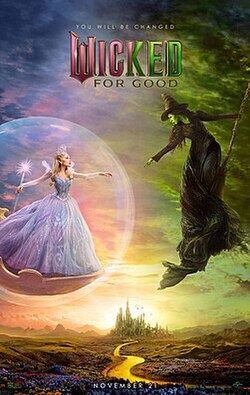
Wicked: For Good (2025)

Wicked: For Good (2025)

Part 2 doesn’t match Part 1 for entertainment or depth, but has enough moments to work

Director: Jon M. Chu

Cast: Cynthia Erivo (Elphaba Thropp), Ariana Grande-Butera (Glinda Upland), Jonathan Bailey (Fiyero Tigelaar), Michelle Yeoh (Madame Morrible), Jeff Goldblum (The Wizard of Oz), Ethan Slater (Boq Woodsman), Marissa Bode (Nessarose Thropp), Bowen Yang (Pfannee), Bronwyn James (ShenShen), Colman Domingo (Cowardly Lion)

Act Two comes to the screen in Wicked: For Good, putting the finishing touches to a five-hour journey through a single stage musical. While there are literally hundreds of millions of reasons for splitting the film in two, you can’t doubt the passion and love for the source material from everyone involved. However, Wicked: For Good, while shorter than the first film, feels longer: more padded but also more aimless, exposing more of the flaws of the musical less apparent when Act Two breezes past in about an hour. It’s still an entertaining watch, but it lacks the explosive, glorious impact of the first film.

Elphaba (Cynthia Erivo) has been firmly branded public enemy number one as the Wicked Witch of the West. Meanwhile, her old friend Glinda (Ariana Grande-Butera) is the universally beloved face of the regime, showmanship and trickery hiding her complete lack of magic. Elphaba is fighting a losing battle for hearts and minds, failint at her attempts to expose the Wizard’s (Jeff Goldblum) lies and to protect the animals of Oz from persecution. Attempts at good deeds constantly go wrong and the arrival of a young girl from Kansas brings chaos. Will Elphaba and Glinda heal their relationship and will Oz be saved?

Wicked: For Good suffers for covering the weaker second act. Most of the best songs were in the first film. The first act also has more interplay between the two leads (whose relationship is the heart of the story) and had a clearer coming-of-age arc with Elphaba’s eyes being opened to the nature of Oz. Wicked: For Good tries to tackle an awful lot (Good and Evil! Animal rights! The Wizard’s oppression and guilt! Propaganda and manipulation! Backstory for every character in The Wizard of Oz! Elphaba and Glinda’s relationships with Fiyero!) But it often ends up under-cooking, hand-waving and fudging many of them. It chops and changes its focus so often, that developments seem sudden or under-explained.

This is where the extended run-time doesn’t help. The logic leaps that can be done in a few minutes of dialogue between songs in an hour of stage-time, make less sense when stretched over two hours plus. One of Elphaba’s main motivations is protecting the animal’s rights, with these creatures literally losing their voice. Despite opening with her trying to free slave-worker animals from building the Yellow Brick Road, eventually this plot-line feels lost in the shuffle. The motivations and mechanisms of the persecution are unclear, and then confusingly bunched in with racist laws against Munchkins. Similarly, Jeff Goldblum’s Wizard switches from a sociopathic arch-manipulator, into a drink-dependent man coated in guilt, without this journey being amply explained.

Wicked: For Good also awkwardly shoe-horns in events from The Wizard of Oz (there is a lot of Dorothy and her companions on the margins) and comes up with not-always-well-developed reasons why Elphaba and Glinda do the things-they-do as required by Wizard of Oz, without contradicting the more complex, interesting characters they are here. Again, these are flaws revealed by the extended run-time which gives more depth to the leads, but little of its added hour to giving more depth and context to the plot and themes the film is trying to handle, making them feel under-powered.

That’s not to say there are not plenty of positives. Wicked: For Good really understands its core strength is the relationship between its leads, and the chemistry between Erivo and Grande is still dynamite. It’s made very clear they are taking opposite approaches in interpreting ‘what’s best for Oz’ (for Elphaba it’s ending the lies, for Glinda it’s keeping people happy – very on brand for both). Their scenes are the film’s emotional heart, whether laughing or crying together, or even (in one laugh-out-loud moment) literally fighting. Just as in the first film, Wicked: For Good demonstrates the different perception an outsider and an insider brings to a situation and how this informs their loyalties and actions.

Erivo’s wonderfully draws on deep loneliness and growing frustration at her inability to change things, capturing the sense of someone certain she’s in the wrong, but who utterly lacks the ability to persuade (be that animals to stay and fight, or Ozians to take another look at the Wizard). Her deep need for friendship (and romance with Jonathan Bailey’s effortlessly charismatic Fiyero – rather short-changed by screen time here) is clear, even if her transition to embracing elements of ‘the villain’ seems rather forced. Her singing remains breathtakingly good with ‘No Good Deed’ an extraordinary show-stopper.

However, the film might just belong to Ariana Grande. If Wicked was Elphaba’s coming-of-age, this is Glinda’s. Grande brilliantly shows how fragile the bubble of happiness Glinda has built is. Glinda’s realisation that from an early age (an excellent childhood flashback scene helps here) she hid her feelings with an immaculate smile is very well explored – as is her realisation that she is universally beloved, but has no real friends. Grande finds a desperation, fragility and sense of pain that only just peak out – feelings covered well in the best of the film’s two new songs ‘The Girl in the Bubble’, with Chu using reflections to stress Glinda’s realisation of the lies she has told herself.

Of the many themes the film tries to cover in a broad sweep, this one comes out best while others fall by the wayside. Propaganda and dictatorship in Oz sort of sits there as a presence without getting real focus. The oppression of the animals (and imagery of them working in whips and chains) makes a big emotional swing the film isn’t willing to commit to. The other new song, ‘No Place Like Home’, is an unforgettable ballad that awkwardly stages Elphaba begging animal users of an Underground Railroad to stay and hope for the best (imagine telling that to real-life Railroad users). There are darker elements I liked (Marissa Boda’s Nessarose and Ethan Slater’s Boq explore jealousy, possessiveness and rage in a surprisingly daring way, told with an effective economy I wish Chu could have found more often).

When Wicked: For Good works, it works. The impressive visual design from the first film is still in place. Chu directs with energy and vibrancy and gets real emotion from the moments between the leads. But I miss the large choreographed numbers here (perhaps expected from a darker Act Two) and its plot is often unfocused, forced and manages to use double the time to barely extend (or make more interesting) the level of thematic exploration the original musical does. I didn’t enjoy it as much as the first one and becomes a little too trapped by fitting into Wizard of Oz but it’s still an entertaining ride.

San Francisco (1936)

San Francisco (1936)

Charismatic stars and a well-oiled Hollywood plot lead into an highly effective disaster movie

Director: W.S. Van Dyke

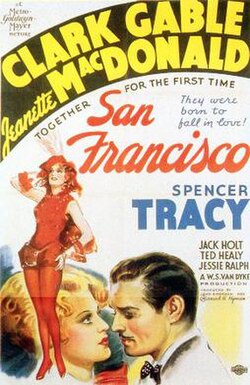
Cast: Clark Gable (“Blackie” Norton) Jeanette MacDonald (Mary Blake), Spencer Tracy (Father Tim Mullin), Jack Holt (Jack Burley), Jessie Ralph (Mrs Burley), Ted Healy (Mat), Shirley Ross (Trixie), Margaret Irving (Della Bailey), Harold Huber (Babe)

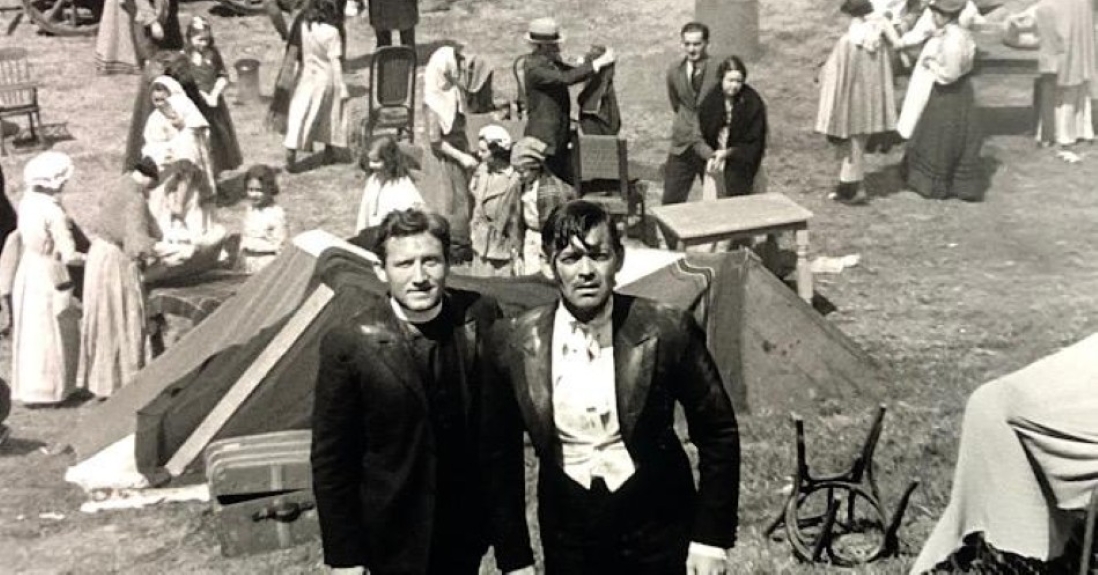
With San Francisco, Hollywood stumbled on a formula that was a sure-fire success: a romantic triangle comes to head in the face of a natural disaster with buildings tumbling. Love and disasters – who doesn’t love that? San Francisco is set in the build up to the 1906 earthquake that left over two thirds of the city in ruins and over 3,000 people dead. How’s that for focusing minds onto what really matters: who you really love and, of course, faith in a higher power.

“Blackie” Norton (Clark Gable) is a lovable rogue, a saloon owner on San Francisco’s rough-and-ready Barbary Coast. His love for a good time doesn’t stop him being best friends with Father Tim Mullin (Spencer Tracy), a man’s man whose heart is with the Church. Blackie hires knock-out soprano singer Mary Blake (Jeanette MacDonald) for his saloon, but can’t wrap his head around the fact that she’s meant for classier things (like San Francisco’s opera house) than a life singing for his rowdy crowds. Of course they fall in love. Blackie is holding Mary back (without fully realising it) and she finds a new patron (and suitor) in stuffed-shirt rich-man Jack Burley (Jack Holt). All these romantic problems are suddenly dwarfed by that earthquake.

Like all disaster films, San Francisco starts with a high-blown melodrama before becoming a special effects laden epic. Much of the first 90 minutes revolves around an engagingly played familiar pair of formulas. We have a story of two old rough-and-tumble childhood friends – inevitably one who chose a life of the cloth, the other of rowdy pleasure – whose friendship struggles under the weight of conflicting principles. And we also get a love triangle where a woman is torn between two suitors – one a rogueish chancer who doesn’t understand her dreams, the other a selfish dull rich guy who offers her those dreams at a price. This is classic Hollywood stuff.

To deliver it, three popular stars go through their paces to audience pleasing effect. Clark Gable brings his customary suave charm and naughty grin to make Blackie (who in other hands could come across as a myopic, selfish sleazeball) into someone fairly endearing. Of course, it’s helped that the plot makes clear Blackie may appear to be a boozy saloon owner, but actually he has a heart of pure gold: he buys an organ for the local church, gives money to orphans and is running for office to improve the city’s fire safety. He’s easily the most polite, decent and upstanding bad boy you’ll see – and he’s even completely faithful to the woman he loves. He may say God is for ‘suckers’, but it’s not going to be a long journey to reform him into someone worthy of a good woman.

And he’s also honest in his love for Jeanette MacDonald’s Mary, trying to give her what he thinks she wants. Blinded by his three ‘Chicken Ball’ trophies for ‘artistic achievement’, he genuinely can’t see the difference between Mary performing Faust and dressing her up in the shortest skirt imaginable (as he tells her, good legs sell) to sing for hundreds of drunken punters. Poor Mary feels obliged to give up her dream to return for this nonsense, until good old Father Tim points out Blackie is accidentally behaving like a cad. Enter Jack Burley as alternative: just to make sure we know it’s the wrong choice, he’s played as un-charismatically as possible by Jack Holt and uses his money to get everyone to follow his orders, exactly the sort of ‘Nob Hill’ crook Blackie rails against.

With Jeanette MacDonald – who is perhaps a little too coy and bashful for today’s taste – we also get an awful lot of singing, from opera to hymns to several renditions of ‘San Francisco’. This went down like a storm at the time, but is probably a bit too much to take now. MacDonald actually has the duller, less engaging role, constantly changing her mind between her various career and romantic options, although she does a nice line in awkward uncomfortableness when accommodating herself to Blackie’s wishes rather than her own (not least in her body language when dressed up in that slutty showgirl costume that Blackie thinks is a compliment).

Surprisingly Spencer Tracy then landed an Oscar nomination (the shortest ever leading performance nominated), but he nails the muscular Christianity of Tim, the boxing priest. Tracy’s main role is dispensing advice and guidance to Gable and MacDonald, full of shrewd wisdom mixed with firm stares of moral judgement. Tracy plays the role very lightly, never making Tim priggish even at his most righteous. A confrontation which sees a frustrated Gable smack him in the mouth, is a classic Tracy moment: a steely eyed glare dripping with disappointment, but still he refuses to react (the film throws in an early boxing scene between the two, where Tracy easily bests Gable, to confirm he certainly ain’t scared of his co-lead!)

The various smoothly handled formula leads perfectly into the earthquake. You can’t deny this is hugely impressive sequence. The scale, using super-imposition and enormous sets, is truly stunning: buildings topple in flames, fires rip through houses, crowds run in panic through debris-packed streets. A ballroom crumbles before our eyes: the roof cracking, the wall falling down (Gable is nearly crushed by a wall), a staircase balcony collapsing.

Clearly someone on the MGM lot spent a bit of time watching Battleship Potemkin. The first wave takes Soviet cinematic montage inspiration to the max. Tight reaction cuts to horrified faces are intermixed with tumbling walls and buildings. A statue is seen, seemingly starring down in horror, before a cut to it cracking and then a shot of the head roiling downwards on the floor. A carriage wheel spins in the streets in close-up as debris falls around it. This sequence feels visceral and intense, a real stand-out moment. A second wave picks up the baton with a street literally tearing itself in two, flames licking up from a burst gas main. Buildings are dynamited as fire breaks. And through the aftermath, Gable stumbles blooded and torn and genuinely looking lost and afraid, terrified that he has lost the woman he loves in the conflagration.

It brings a real energy and punch to an entertaining plot-boiler relying on the chemistry and charisma of its stars. San Francisco ends with a tribute to the endurance of the American Spirit (not to mention, of course, Gable completing his reformation into a man of God), as all races and creeds are bought together with the ‘Battle Hymn of the Republic’ as they march towards a city reborn in superimposed imagery. With all that is it any wonder it was a box office smash?

Captains Courageous (1937)

Captains Courageous (1937)

Well-made, coming-of-age story with two very fine leads and a heart-tugging ending

Director: Victor Fleming

Cast: Freddie Bartholomew (Harvey Cheyne), Spencer Tracy (Manuel Fidello), Lionel Barrymore (Captain Disko Troop), Melvyn Douglas (Frank Burton Cheyne), Charley Grapewin (Uncle Salters), Mickey Rooney (Dan Troop), John Carradine (‘Uncle Jack’), Oscar O’Shea (Captain Walt Cushman)

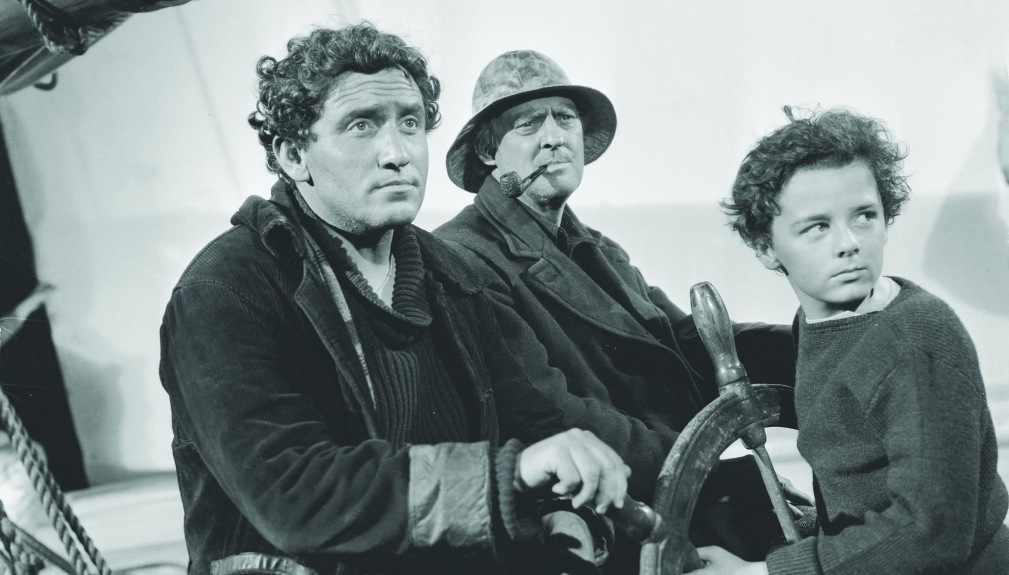
Harvey Cheyne (Freddie Bartholomew) is a hard kid to like. Scion of Henry Ford-like American tycoon Frank Burton Cheyne (Melvyn Douglas) he’s an arrogant, entitled snob who believes he is deserves anything he wants because Daddy has never-empty pockets. The servants in his father’s estate can’t stand him, his prep school classmates only pretend to like him and even his teachers think he needs to be taken down a peg or two. Suspended from school, his father (upset at what his son has become) hopes a trip to Europe will help Harvey grow-up. But, en route, Harvey is lost at sea and picked up by the fishing boat We’re Here. Despite his objections, they have no interest in cutting short fishing season by three months to take him straight back and slowly Harvey finds himself rather enjoying fishing life, helped by his growing bond with salt-of-the-Earth Portuguese fisherman Manuel (Spencer Tracy).

Adapted from a Rudyard Kipling novel – despite what you might think, Harvey and his father are also American in the original – Captains Courageous is a surprisingly sweet coming-of-age tale, mixed with a surrogate-father-son relationship, well-directed by Victor Fleming and strongly played by the cast. The cast spent months bobbing up-and-down in a giant water tank to bring the film to the screen, and it’s a tribute to Fleming’s direction and Harold Rossen’s sharp camerawork that it often genuinely feels like a film pulled in from the seas like Manuel’s fishes.

It also has some wonderful chemistry between its two leads. Freddie Bartholomew, one of the biggest (and most skilled) child stars of the 30s, had a hard task here: appearing in virtually every scene, he has to turn a character who most viewers would love to give a cuff around the ear too, into a kid we end up admiring. Captains Courageous doesn’t shirk at stressing Harvey’s arrogant, self-absorbed unpleasantness: he treats the servants like talking furniture, brags about his editorship of the school magazine (a position bought for him by his father’s purchasing of their printing press) which he feels with dull articles (essentially ‘what I did on my holidays’) and shamelessly uses his father’s money to bribe people (including his schoolmaster, who he loans $50 to then casually mentions it would be great if the history test could be made easier).

He is, in short, a total brat and that only starts to change on We’re Here. Bartholomew’s trick is to do just enough to suggest a decent kid buried under the surface here, even when he’s demanding the ship turn round to take him home or assuming his ship-mates will settle into playing servants for him. He and the film slowly reveal his childish enthusiasm waiting for an outlet. With a distant father, you get the feeling Harvey felt acting like the pampered, entitled wealthy man was the only way to impress him. Captains Courageous is rather endearing in showing how he flourishes when faced with pushback by someone (Manuel) who gives him genuine attention, teaches him things and won’t take his nonsense (in the way nearly every other employee in his life does).

Bartholomew’s thoughtfulness, vulnerability and eager-to-impress energy makes for a great combination with Spencer Tracy’s jovial warmth as Manuel. Tracy – who won an Oscar – was later rather self-critical of his curly-haired ‘liddle feesh’ accented-fisherman, generously claiming his success was partly due to Bartholomew. But Tracy’s work here is endearing, funny and unforced, making Manuel a mix of big brother and father, full of energy and joi d’vivre, with exactly the sort of easy-going happiness in small things (catching a big fish, playing music, even swabbing a deck) that Harvey never has. Tracy also brings out Manuel’s strong morals and his respect for others – it’s no surprise that he has no truck with Harvey’s cheating in a fishing competition.

In fact, Manuel’s response to this (deep disappointment, throwing the competition and firmly telling Harvey he’s no fisherman) is exactly the sort of firm-but-fair parenting, with a moral education, that Harvey needs. But Manuel is also a fierce defender of him when he admits his mistakes and also offers the sort of direct, in-person support and regard for Harvey that his own father failed to do. (There is a lovely reaction shot from Tracy – one of the best reactors in movies – of warm pride when Harvey admits blame). The two actors have a natural, easy bond which is genuinely endearing. Manuel even becomes as keen for the boy’s good opinion (bashfully clamming up when Harvey reacts with shock to his talk of ladies). Captains Courageous allows Tracy to be as playful, loose and fun as he ever has.

The staging and design of the fishing boat is marvellously done, the actors having clearly (and impressively) done their homework around the tying of knots, casting of lines and rowing of oars. Lionel Barrymore gives a fine salty sea-dog (with a hidden heart of gold) as the captain, with Mickey Rooney echoing him as his eager son and John Carradine scowling as Manuel’s rival fisherman. There is a genuine sense of energy and vibrancy in all the fishing and sailing scenes (despite some, at times, less than convincing back projection), with Captains Courageous more than holding its own with epics of the sea.

Of course, you are not perhaps surprised that the film is also heading towards a tragic end, as so many coming-of-age tales do. But it’s extremely well-done and, thanks to the playing of the cast carries real emotional impact, not least through Bartholomew’s and Tracy’s poignant performances. There is also a mature and tender coda to Captains Courageous about the nature (and difficulties) of fatherhood, adding further depth to a character study of a young boy that genuinely sees him grow and develop in a way that feels neither sickly sweet nor forced – and has a real warmth and joy to it. Full of impressive staging and with a wonderfully played relationship between Bartholomew and Tracy, it’s a fine, heart-warmer turned tear-jerker.

Of Mice and Men (1939)

Of Mice and Men (1939)

Well-made version of a story that has since become almost excessively familiar

Director: Lewis Milestone

Cast: Burgess Meredith (George), Lon Chaney Jnr (Lennie), Betty Field (Mae), Charles Bickford (Slim), Roman Bohnen (Candy), Bob Steele (Curley), Noah Beery Jnr (Whit), Oscar O’Shea (Jackson), Granville Bates (Carlson), Leigh Whipper (Crooks), Helen Lynd (Susie)

I suspect John Steinbecks’s powerful parable has been rather defanged for many people, after extensive over-exposure in schools across the world. Who hasn’t spent hours in an English class pouring over the struggles and dreams of permanently unlucky Depression-era drifters, scrawny George and muscular-but-childlike Lenny? It’s hard to not feel Of Mice and Men is very familiar the second the credits roll on Milestone’s film – or fail to notice some of its on-the-nose musings (sometimes the kindest thing you can do is kill a frightened, vulnerable dog, rather than let it suffer – I wonder what development plot is being alluded too here…) and while familiarity has stripped Of Mice and Men of some of its power, this is an effective, well-made, version.

George (Burgess Meredith) is the brains of a partnership with childlike muscle man Lenny (Lon Chaney Jnr) as they drift from job-to-job out West, constantly hired on the back of Lenny’s muscle, then escaping from the troubles his lack of understanding of the world causes, through George’s survivalist cunning. They dream of having their own place – and they get a shot at it when aged, one-handed farmhand Candy (Roman Bohnen) offers to chuck his accident-payout dollars into their pot. But Lenny’s inability to cope with the world keeps leading to danger: from his accidental rousing of the ire of small-of-statue rancher’s son Curley (Bob Steele) to his fascination with Curley’s pretty wife Mae (Betty Field). Some dreams are doomed.

Of Mice and Men stays very faithful to Steinbeck, playing out this smalltown tragedy under the low-key, persuasive eye of Milestone who avoids either overplaying the tear-jerking or smothering the story with flashy film-making (there is one dramatic pull-back after disaster strikes, and George flees a barn, the camera heading into a sudden wide-angle, but other than that this is restrained film-making). Instead, the focus is very much placed on the relationship between two very different men who, without even quite understanding it, are mutually dependent halves of a whole.

At first it seems George and Lenny are effectively in a marriage of convenience. The wirey George would struggle to be hired without the loaded-cart lifting Lenny as a sweetener, while Lenny can barely tie his own shoelaces without George’s guidance. Meredith’s snipy, wheedling George feels at first like he can only just master his frustration with Chaney Jnr’s lumberingly sweet Lenny. But Meredith gives full life to a character who, we slowly realise, has a brotherly protective regard for Lenny – and needs the purpose Lenny gives his life, just as much as they both need the reassurance of George’s constantly spun story of their dream farm. This mantra – with Lenny echoing lines like a child’s bedtime story – of the buildings and animals they’ll care for is delivered by Meredith with a careful repetition that constantly flowers into earnest true-belief. We realise George is as much a lost soul as Lenny, adrift and barely able to cope with the world.

Because Depression-era America is a place where dreams go to die. Curley, clutching a few hundred dollars hush money after a farming accident cost him his hand, knows his life is just a countdown until he is kicked off the farm for being unable to work. He’s facing a future not too dissimilar from his euthanised dog, eyed up by the other men as a feeble old-timer who’d be better off snuffing it. No wonder both he and the simple Lenny, living on the bottom rung of life’s ladder, find a companionship with segregated Black farmhand Crooks (a very sensitive performance from Leigh Whipper, a character treated respectfully by Milestone’s film).

George’s natural alliance is with these little guys. Meredith’s George is naïve in his own way, slightly off-the-pace in social situations, tolerated by others, a deep vein of anxiety and worry just under his skin that he is all-too-happy to repress while he focuses on being father-figure and big-brother to Lenny. Meredith makes him chippy but not quite as worldly as he thinks, shrewd but vulnerable and, for all his carefully performance self-confidence, insecure and intimidated by events. He’s a passenger in life who likes to kid himself he’s a driver.

Authority lies elsewhere. Curley, played with a little-man anger and stunted swagger by Bob Steele, makes up for his own (many) insecurities – about everything from his height to what his flirtatious wife gets up to – by treating everyone below him in the farm’s pecking order with contempt. Curley needs to proof his masculinity by beating Lenny – who has all the physical gifts he longs for but none of the gumption to use them. He can only dream of having the relaxed, natural authority of Charles Bickford’s Slim, a man completely confident about himself and his standing in life – this easy assurance stands out in a film full of the jittery, frightened and insecure.

Of Mice and Men’s weakness, as with the book (as even Steinbeck later acknowledged) is Curley’s wife. Betty – played with a shrill energy by Betty Field in a performance she’s not quite strong enough to pull off – is only faintly crafted into a vaguely three-dimensional figure from the sexually charged, selfish flirt she is in the book. Here she has moments of self-reflection – and Milestone’s film briefly explores the isolation of this girl who dreamed of Hollywood but ended up married to an inadequate, angry man on a crappy farm – but remains, at heart, a brassy, selfish woman who precipitates disaster through her actions. It’s a singular lack of empathy in a film that prides itself on its humanitarianism.

Disaster is the inevitable outcome of a Steinbeck Depression-era drama. Milestone’s film finds quiet emotional power – aided a great deal by both Meredith and Chaney Jnr effectively under-playing – in the film’s final moments. You can imagine if this was your first exposure to a very familiar story, being impressed by the effectiveness of so much here. This is particularly so in the film’s powerful ending, directed with admirable restraint and played with a highly effective (and underplayed) emotion by Meredith. If other parts of the film are more well-assembled than really inspired, delivering Steinbeck pretty much as it is on the tin, that still makes for a fine version of a now familiar tale.

One Battle After Another (2025)

One Battle After Another (2025)

Fabulously made film, a brilliant merging of half-a-dozen genres is one Andersons’s finest

Director: Paul Thomas Anderson

Cast: Leonardo DiCaprio (Pat Calhoun/Bob Ferguson), Sean Penn (Colonel Steven J Lockjaw), Benicio del Toro (Sergio St Carlos), Regina Hall (Deandra), Teyana Taylor (Perfidia Beverly Hills), Chase Infiniti (Willa Ferguson), Wood Harris (Laredo), Alan Haima (Mae West), Paul Grimstad (Howard Sommerville), Shayna McHayle (Junglepussy), Tony Goldwyn (Virgil Throckmorton), John Hoogenakker (Tim Smith)

What is revolution – changing the world or just the relentless grind of One Battle After Another? It’s as hard to define as it is to define Paul Thomas Anderson’s incredibly striking Thomas Pynchon adaptation. Look at it one angle, and it’s a sharp political commentary on America; from another it’s a satire on the insular, self-defeating rules of secret societies; from a third it’s a pulpy chase-thriller; from a fourth a touching coming-of-age story of a daughter growing closer to her dad. Anderson’s skill here is that it’s basically all these and more at the same time, an electric, frequently laugh-out loud funny, hugely eccentric film that defies all categorisation.

Pynchon’s novel Vineland saw the radicals of the 1960s pulled, clumsily, back to life in the 90s. Anderson keeps the time skip, but moves the start to the late 00s and the destination to today. Pat (Leonardo DiCaprio) is a dishevelled, but true-believing, junior member of The French 75, a radical Atifa-style organisation on a wave of armed anti-government action. He’s in love with Perfidia (Teyana Taylor), an adrenalin-fuelled militant whose radicalism is often secondary to the rush she gets from guns and bombs. She’s the source of perverted sexual obsession for bottled-up, socially-striving US army officer Stephen Lockjaw (Sean Penn). After Perfidia makes a terrible choice, 16-years later the disillusioned, frequently doped-out, Pat (now living under the alias of Bob Ferguson) is raising their teenage daughter Willa (Chase Infiniti) when Lockjaw explodes back into their life, desperate to clean up his past indiscretions in case they imperil his acceptance into a secretive Neo-Nazi organisation of wealthy American, ‘the Christmas Adventures Club’. Cue a wild and crazy chase.

Anderson’s film bowls along with a whipper-cracker pace, over-flowing with confidence that it doesn’t need to spoon-feed us timelines, details or locations but trusts us to go with narrative flow. Which I for one really did. It’s a film that throws you straight into the mix – a French 75 raid on an immigration detainment facility – and barely lets up from there. Within the first half an hour we’ve seen a wave of direct action events from blowing up campaign offices (after warning phone calls) to sabotaging a city’s electricity supply – alongside Pat and Perfidia overcome with giddy, sexual thrills at thumbing their nose at the system. It’s a great way of grasping what an addictive rush fighting the man can be, something that’s all too-clear in the excited whooping, cheering and bombastic speechifying of many of its members.

These good times can’t last, but Perfidia wants to enjoy them as long as she can. In a blistering, force-of-nature performance from Teyana Taylor, Perfidia acts completely on impulse, thrilled with her life of action, pulling the naïve Bob in her slipstream. Danger of all sorts is addictive, from bombs to risky liaisons. She’ll spontaneously attempt to sexually humiliate Lockjaw on their first encounter (essentially ordering him to ‘stand to attention’ for her), then throw herself into an off-the-books sexual relationship with him (after he obsessively tracks her down for more humiliation) seemingly for kicks. She embodies the risky, thrilling excitement of the revolutionary world.

She’s also what leads to its destruction (her fellow revolutionaries are reduced to frightened shadows of themselves when, during a bank raid. Perfidia actually uses the lethal force everyone else has just talked about). Anderson’s film, after its propulsive start (assembled like an extended montage across an entire act), jumps to a very different future, where the thrills and spills of the underworld are subtly undermined, firstly by the hilarious dark comedy of all communication being managed through obsessive codeword rules and then by comparison with a far more quiet, but far more effective, underground railroad for migrants run by Benecio del Toro’s (underplaying brilliantly, his natural charisma flowing off the screen) Latin community leader and Taekwondo-sensei.

It’s also clear how hard it is to keep the revolutionary fire-burning. One Battle After Another superbly exploits the vulnerability and anxiety that underpins many of DiCaprio’s best performances. For all his involvement with radical violence, Pat/Bob is a sensitive, true believer starry-eyed, but with an appreciation for every-day duties that his fellow revolutionaries lack. It’s him who believes family and their daughter should come first (Perfidia, in the midst of post-natal depression, even admits she’s jealous of her daughter for absorbing so much of Pat’s love and attention).

DiCaprio brilliantly finds in Bob a good heart, whose desire to do the right thing is undermined by his own incompetence. In disappointment, he’s become a paranoid grouch, grumbling about pronouns, like any other middle-aged man adrift in the modern world. DiCaprio burns through the desperate energy of the part, but mixes it with a rich vein of black comedy at Bob’s frequent inability to cope with his situation. It’s a perfectly judged performance of loyalty and love, mixed with exasperation, panic and frequent well-meaning poor judgement.

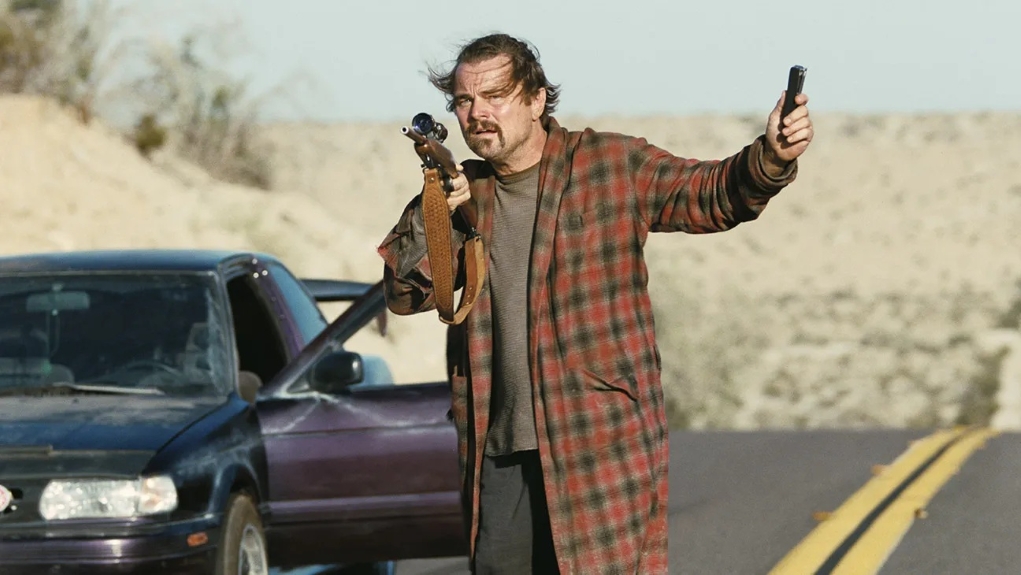
The second-act leans into the satirical comedy of these middle-aged revolutionaries, bought crashingly to life. In a neat comic touch, Bob spends most of the film on the run, desperately trying to find Willa, while dressed, Arthur Dent-style, in the same scuzzy dressing-gown he was wearing before Lockjaw’s raid. Time-and-time again, he’s reduced to swearing impotently down a phone-line like any other middle-aged consumer fed-up with unhelpful customer service, as he repeatedly fails to dredge vital codewords up from his stoned memory. During his escape, he’ll fall off a roof while evading the law, blanch at jumping from a moving car and spectacularly bungle a shoot-out. But what never waivers is his determination to help his daughter. One Battle After Another plays at times like a version of Taken where Neeson’s character had let himself get out of shape but still threw himself into the chase.

Anderson has fun with the bombastic self-importance of revolutionaries and the intricate insularity of their world. But he also has respect for their underlying desire to change the world for the better, even if the film suggests that the carefully, unflashy work being carried out by del Toro’s railroad is a better approach. Among the revolutionaries, there is a genuine warmth and feeling, embodied by Regina Hall’s loyal and humane Deandra (another superb performance in a film packed with them). There is a loyalty and protectiveness among the revolutionaries that bonds them together. And Sergio – del Toro outstanding as a never-fazed Sensei, a performance bubbling with dry wit – has built a community founded on mutual respect and looking out for each other.

And One Battle After Another has no respect at all for the alternative. The Christmas Adventures Club, the bizarre neo-Nazi group Lockjaw dreams of joining, shares the ridiculous language of secret knocks, handshakes and codewords. But it’s repellent in its instinctive racism and treats its members not as allies to be protected, but assets to be exploited and disposed of as needed. And their insidious extremism of its powerful white guys, with their hands on the gears of power, poses a far more dangerous threat.

Lockjaw is superbly played by Sean Penn as a ball of righteous, inadequate anger – from his ludicrous hair (which he frequently combs into an aggressive thrust), his tight t-shirts to accentuate his muscles to the lifts in his shoes to make him taller. Lockjaw is desperate to be a somebody, after a lifetime of social insecurity. Lacking any sense of imagination, with the emotional maturity of a disgruntled teen, Penn makes Lockjaw the embodiment of angry male entitlement trying to grab what power they can.

Anderson fuses all these elements into a film that takes us through several propulsive acts, from it’s French 75 prologue, to Bob’s desperate attempt to evade Lockjaw’s troops to a dusty road-chase that superbly carries an air of Mad Max. But Anderson does this, while never letting the film’s focus slip from the twisted family relationships at its centre: from Bob’s genuine, protective fatherly love, to Lockjaw’s incel jealousy and their twisted struggle for Willa (beautifully played by Chase Infiniti, in a star-making turn, as young woman finding a strength and idealism within herself that surprises her). It finds space for a genuinely moving series of personal relationships, just as it also skilfully shows Willa’s self-belief and social imagination flourishing under insane circumstances.

It’s part of a compelling, exciting, blackly comic and compelling film, which is not afraid to go to extreme, satirical lengths one moment and then pull you up with a scene that is gentle, earnest and heartfelt the next. It also avoids the trap of too directly preaching about America today, while asking several searching (and uncomfortable questions) about where we are now. Superbly acted across the board, it again shows Anderson is one of the finest directors working.

Battleground (1949)

Battleground (1949)

Marvellously realistic, grunt’s-eye view of war, very well made and still carrying impact

Director: William A Wellman

Cast: Van Johnson (PFC Holley), John Hodiak (Pvt Jarvess), Ricardo Montalbán (Pvt Roderigues), George Murphy (Pvt “Pop” Stazak), Marshall Thompson (Pvt Layton), Jerome Courtland Pvt Abner Spudler), Don Taylor (Cpl Standiferd), Bruce Cowling (Sgt Wolowicz), James Whitmore (Staff Sgt Kinnie), Douglas Fowley (Pvt “Kipp” Kippton), Leon Ames (Chaplain), Herbert Anderson (Pvt Hansan), Denise Darcel (Denise), Richard Jaeckel (Pvt Bettis)

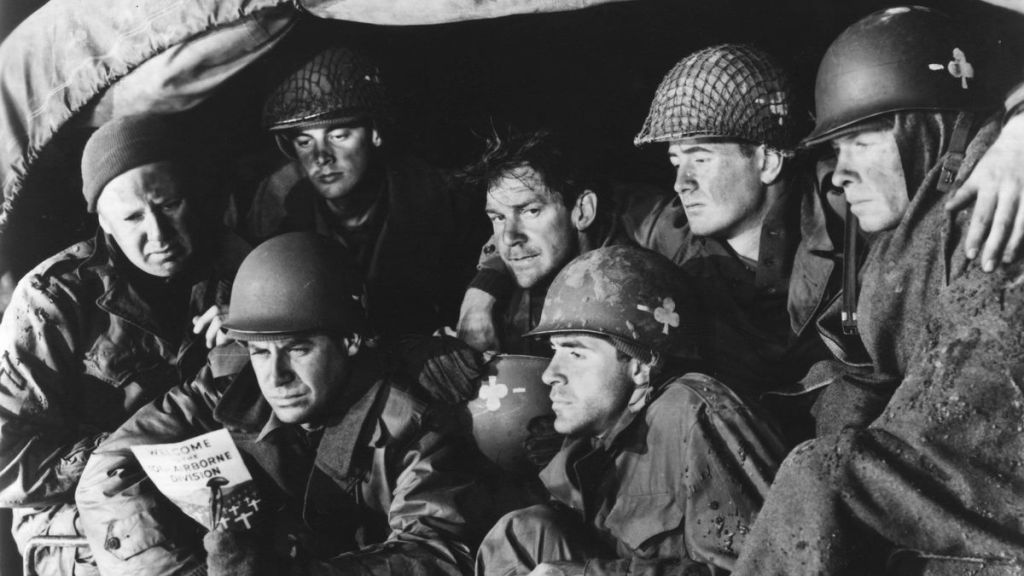
Apparently, the Hays Code would let bad language slide, if it was being used about War Heroes. Not many 40s film start with a credit crawl proudly calling its cast a bunch of bastards (in this case “the Bastards of Boulogne”). That’s our Battleground, the Battle of the Bulge, based on the experiences of screenwriter Robert Pirosh (who won an Oscar). Reflecting Pirosh’s experience, this is the Battle from the Grunt-eye-view, following a platoon of privates and sergeants pushed up from the rear to Bastogne, filling in the time between terrifying shelling and German advances, with grouching about everything from the food, to the lack of leave to the rotten army life.

As such, it’s not a surprise that Battleground proved a huge, multi-Oscar nominated hit (including Best Picture). Many in the audience surely saw their own war experiences reflected back at them: crappy rations, freezing cold fox-holes and the horrifying prospect of sudden death from the sky, that many American GIs knew from the war. Louis B Mayer believed the country was sick of war but producer Dore Schary persisted and was proved absolutely right.

It’s a film soaking in authenticity, that genuinely feels like it’s been filmed in the mist and snow covered chill of Boulogne rather than the sunny uplands of California (it’s cinematography won a deserved Oscar for Paul C Vogel). Director, William A Wellman, a decorated veteran from World War One, not only knew how soldiers thought, he was also grimly familiar with the mix of machismo, grit and terror on the front. Most of the cast were veterans, some only just out of uniform: and Battleground was the first film that put its cast through boot-camp to get them bonding like a company.

It’s a film rooted in the detail of army banter, with the same topics coming up time-and-again, in the distinctive language of the trenches. There is the insular togetherness of men who have seen a great deal of suffering and survived. Where a fellow soldier may get on your nerves but you’ll defend him to the death. The suspicion and dismissive attitude to replacement recruits until they have earned their chops. The delight in small moments of humanity also ring true: the Californian private thrilled at seeing snow for the first time, the protective way Van Johnson’s Private Holly guards and protects the eggs he’s dying to eat, the eager joy (and suppressed disappointment) when mail arrives (or fails to). These little touches make the characters feel real, their bonds feel lived in – and makes their moments of fear and panic all the more real.

And Battleground is perhaps unique in 40s war films for not judging soldiers when they show fear (in fact, when new recruit Layton confesses to being scared out of his wits, grizzled cynic Jarvess supportively congratulates him on joining a club everyone is a member of). When the men re-encounter Bettis, a man who ran at the first shelling, there is no judgement or condemnation towards him. After all, so many of them nearly did it themselves. All of them fear becoming a bleeding heap, sobbing for their mamas (as we see one of them do in a quietly affecting moment). Private Holly, our closest thing to a hero, twice nearly cuts-and-runs but both times circumstances and self-reproach see him disguise this with acts of bravery. Others may suspect the truth, but it’s what a man does that matters not why he does it.

Battleground gives a focus most war film never give. There are no generals, no sense of tactics or scale and precious little of the enemy. The Battle of the Bulge is a slog, sitting in a snow-filled pit trying not to die. Paranoia and fear is constant: news of German’s disguised as GIs lead to several awkward encounters, including a darkly funny scene of patrols demanding each other to name various pieces of American trivia to prove their bona fidas (even a senior officer). When they sit down to read the GI news, the men are mystified not only about who they are fighting (“Who is von Rundstedt?”) but even the name the press give the battle (“What’s the Bulge?”). Half of them have no idea where they are (opinion seems divided on Belgium or Luxembourg), few speak French and there is a sense that what the war is about matters less than surviving it.

Perhaps to combat this, in a potentially sentimental moment that Wellman and Pirosh manage to make feel uplifting, an army chaplin (well played by Leon Ames) assures the men ‘why they fight’ really does matter – and that if, later, people question the point of sending young Americans thousands of miles to die for strangers, then they know not of what they speak. In Battleground this sense of pride and honour, that what they are doing matters, is an essential battery recharge after weeks of freezing struggle: and it still carries real impact now, reflecting on what so many did for a cause larger than themselves.

Battleground’s cast is largely made up of MGM contract players seizing the opportunity to embody the sort of gritty, earthy parts so rarely available to actors serving in second-string roles or uninteresting leads in B-movies. Van Johnson’s Holly masks his fear with rumbunctious enthusiasm and exaggerated moaning. George Murphy gives a career-best turn as a determined veteran, ready to go home. John Hodiak’s Jarvess is a pillar of wisdom, Ricardo Montalbán’s Roderigues a burst of exuberant life. James Whitmore (Oscar-nominated) as Sergeant Kinnie practically defines Hollywood’s view of the grizzled, grouchy sergeant who secretly loves his men.

It all comes together very well and if Battleground feels overlong and even a bit repetitive at times, that’s to be expected considering it’s reflecting the experience of its characters. But there can be few 40s films as clear-eyed, realistic and unjudgmental about the pressures ordinary soldiers felt under extraordinary circumstances. That focused on the grim slog of surviving, over the glamour of conventional heroism in battle. And perhaps that’s why Battleground spoke to so many and feels so different.

An Autumn Afternoon (1962)

An Autumn Afternoon (1962)

Ozu’s final film feels like a perfect summation of the rich sense of ordinary life in his work

Director: Yasujirō Ozu

Cast: Chishū Ryū (Shuhei Hirayama), Shima Iwashita (Michiko Hirayama), Keiji Sada (Koichi Hirayama), Mariko Okada (Akiko Hirayama), Teruo Yoshida (Yutaka Miura), Noriko Maki (Fusako Taguchi), Shinichiro Mikami (Kazuo Hirayama), Nobuo Nakamura (Shuzo Kawai), Eijirō Tōno (The Gourd), Kuniko Miyake (Nobuko Kawai), Ryuji Kita (Professor Horie)

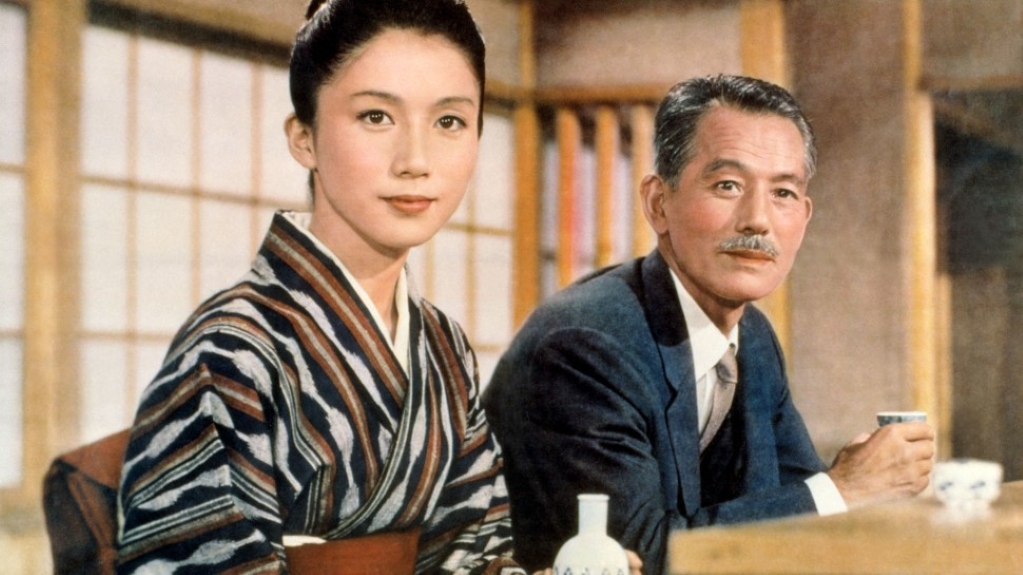
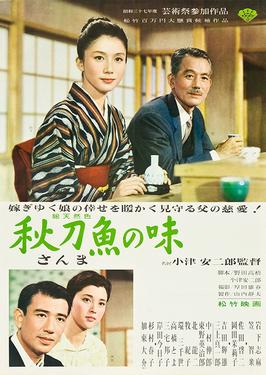
Ozu’s final film feels like a luscious, beautifully filmed summation of a life’s work. Deceptively quiet, simple and gently paced, like the best of Ozu’s work it throbs with a deep understanding of the quiet joys, regrets and pains in ordinary life, where the march of time can relentlessly change and mould your world. An Autumn Afternoon returns to themes familiar from Ozu past work – you see it as almost a remake of Late Spring (with Chishū Ryū, effectively, in the same role) –with his subtly effective recognition of how each generation echoes and reimagines the one before. It’s a deeply humane film from a director who understood everyday life better than almost any other.

Once again, a man feels pressured to marry off a daughter. Shuhei Hirayama (Chishū Ryū) is a middle-ranking factory manager, whose home is tended to by 24-year-old daughter Michiko (Shima Iwashita). Hirayama’s old school-friend and colleague Kawai (Nobuo Nakamura) suggests an arranged marriage for her. Hirayama quietly lets the subject drift, little motived to shake up his home. His opinions slowly shift as he re-encounters his former teacher The Gourd (Eijirō Tōno), now a down-at-heel noodle restaurant owner, who lives with an unhappy spinster daughter. Does Hirayama sees parallels between himself, Michiko and this pair? Is Michiko bothered either way?

It’s a classic Ozu set-up: the different views and perceptions of the generations, contrasted against each other. In many ways, very little happens in An Autumn Afternoon, but in other ways a whole life-time plays out. Skilfully, with an observing, restrained (Ozu’s final film is stiller than ever) camera, Ozu observes people in the Spring, Summer, Autumn and Winter of their lives. In doing so, he captures a particular moment of Japanese history, where pre-War, war and post-war generations confront the world with subtly different outlooks.

In the first darkening of the Autumn of his life, Hirayama is a quiet man with a rich vein of humour. He’s from a generation which sees itself on being more liberal than those before. He meets regularly with a bunch of former school friends, who pride themselves on holding their drink and frequently prank each other in dead-pan comic exchanges. There is a delighted ragging of their friend Professor Horie’s barely concealed sexual glee at his new (younger) wife. They have traditional values (Hirayama assumes marriage will lead to immediate resignation for his young secretary) but enjoy the post-war flourishing of Japan.

Hirayama is comfortable with Americanised Japanese culture, from bottled beers and baseball to American bars and their stools. He drinks too much, make generous offers to others and indulges his children. He’s perfectly happy with the way things are: perhaps because he already fears what his life may be like when his two youngest children flee the nest. It’s a beautifully judged performance from Ryu, genuine, relatable, quietly content but with a subtle sense of sadness and anxiety at change.

There is a sense Ryu’s Hirayama doesn’t want the world shaken, as he has already lived through enough shaking to last a lifetime. He’s a former career Naval officer, who captained a ship in the War. His late wife, it’s implied, died in the American bombing of Tokyo. (Of his children, only two can really remember her, talking about her only wearing trousers during air raids). Bumping into one of his former petty officers, the two men indulge in reminiscences and reflections of what life might have been like in victory (in an American themed bar of all places). Hirayama is drawn to return to the bar again and again, as the barmaid reminds him of his late wife (this small detail would be the entire plot of another film) – although Ryu’s quietly sombreness suggests the memory is to painful to dive into.

But this man contrasts sharply with his children. Hirayama never re-married, and his children have filled the companionship gap in his life. While Michiko matches neatly the traditional view of a Japanese woman as dutiful and guarding of the home (she wears a kimono more than any other female character), his youngest son Kazuo dresses like an American teenager and isn’t afraid to criticise his father. And even Michiko too wants to make her own choices about her life, regardless of the views of others.

The most intriguing contrast though is the marriage between his oldest son Koichi (Keiji Sada) and Akiko (Mariko Okada). Here power dynamics are strikingly different. Both partners work – indeed at one point, Akiko arrives home to find Koichi cleaning and cooking. Decisions are made between them, with Akiko frequently calling the shots. A dispute about Koichi’s plan to spend the excess of a loan from Hirayama on a second-hand set of golf clubs, sees Akiko take firm control of finances (Koichi seems to have inherited his father’s quiet desire not to rock the boat) and has the final say. It echoes, in a way, Professor Horie’s second marriage, where his wife has a level of control over his comings-and-goings that surprises Hirayama and Kawai.

Hirayama may also be quietly disturbed by a vision of what the winter of his life might be like, from ‘The Gourd’, a respected teacher of his childhood, played with a superb desperation and forced good humour by Eijirō Tōno. This once-respected man now works for customers who barely look at him and is totally reliant on a daughter miserable at her life (Ozu quietly watches her break down in tears dealing with her drunken father) and gets embarrassingly pissed at the slightest opportunity when someone else is paying. Considering Hirayama is also a heavy drinker (both men are prone to slumping forward, or swaying on the spot when under the influence) there is a lot that suggests his Winter might not be wildly dissimilar from the Gourd’s.

All of these multi-generational issues are superbly explored by Ozu, all without forced commentary, in a film that is a triumph of his distinctive style of low-angle static cameras, transitions that ground us in location, made even more striking by the film’s gorgeous use of colour (especially its reds). And the film leaves it all open to us to interpret. Because there is no right-or-wrong in Hirayama’s situation: should he let his daughter remain or help her move on and embrace her life?

An Autumn Afternoon concludes with one of the most quietly heart-breaking moments in Ozu’s cinema – under-played to utter perfection by Ryu – as Hirayama sits alone, drink swishing around his guts, singing songs of a martial Japan and facing an unknown future that might see him forced to confront the loneliness he has avoided since his wife died. As the final shots complete of Ozu’s final work – a series of cuts to parts of Hirayama’s home – it feels like a perfect final statement from an artist who looked at the small tragedies of life like no other.

Me and Orson Welles (2008)

Me and Orson Welles (2008)

A star-turn from McKay and a brilliant theatrical reconstruction makes a charming comedy

Director: Richard Linklater

Cast: Zac Efron (Richard Samuels), Claire Danes (Sonja Jones), Christian McKay (Orson Welles), Ben Chaplin (George Coulouris), James Tupper (Joseph Cotton), Eddie Marsan (John Houseman), Leo Bill (Norman Lloyd), Kelly Reilly (Muriel Brassler), Patrick Kennedy (Grover Burgess), Travis Oliver (John Hoyt), Zoe Kazan (Gretta Adler)

In the 1930s Orson Welles was the Great Man of American theatre, a genius blessed with Midas’ skill to turn everything he touched to Gold. He had conquered the stage and his success on radio transmitted his fame into households across America. All this and he was not even thirty. On top of his boundless charisma, creativity and magnetic leadership qualities, he was also vain, selfish, boundlessly ambitious and self-obsessed, seeing other people as little more than extras in his drama. It’s an exploration of the man central to Linklater’s Me and Orson Welles, combined with the film’s wonderfully fond exploration of that magical world behind the curtain in the theatre.

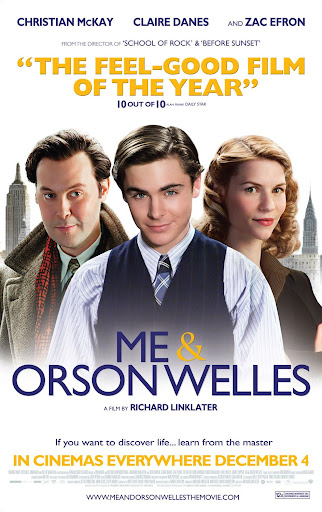
Me and Orson Welles charts Welles’ landmark Broadway production of Julius Caesar: a modern-dress marvel (‘the fascist Caesar’) that reimagined a sharply cut, pacey production set in a world of jackboots, black shirts and Nuremberg-esque beams of light. Welles (Christian McKay) was, of course, front-and-centre as Brutus with his Mercury theatre players (nearly all of whom followed him to Hollywood for Citizen Kane) all around him. Newest to the cast is 17-year-old Richard Samuels (Zac Efron), away from school, dreaming of being an actor and falling in love with older production manager Sonja Jones (Claire Danes). As the production stumbles towards the stage under Welles’ mercurial hand, Richard worships Welles and loves Sonja – but will his hero-worship survive sustained contact with Welles?

Linklater’s film is set in a gorgeous recreation of 1930s Broadway theatre, full of love for the greasepaint, backstage gossip and theatrical tricks that create a world on stage. It also features an astonishingly accurate recreation of this seminal production, staged and lit to perfection, which gets as close as we can to capturing some sense of the astonishing experience the first night audience had watching the sort of Shakespeare production they had never seen before (Dick Pope, harnessing his experience of recreation Gilbert and Sullivan in Topsy-Turvy deserves major credit for his cinematography here, perfectly capturing Welles’ pioneering use of light).

Welles’ flaws are slowly discovered by Richard Samuels – a charming, deceptively light and winning performance by Zac Efron. Samuels is at first bowled over by Welles charisma – and Welles enjoys the ego-trip of taking a star-struck young man under his wing, who he can tutor and mould (who, after all, doesn’t love having a disciple). What Me and Orson Welles interestingly does is to have its young lead slowly work out that Welles may be a genius – but he’s also a fundamentally, principle-free shit who never means what he says, doesn’t think twice about dropping people when they have served their purpose and largely sees conversation as a one-way street where Welles monologues and the other person listens (and certainly never, ever, contradicts – Welles never forgives correction).

But Welles dominates the film, like he dominated life. He’s brilliantly portrayed by Christian McKay in his first major film role. McKay, an unknown, was selected after Linklater was wowed by his one-man show about the Great Man. (Linklater refused calls from the producers to replace him with a more famous actor). McKay dominates the film in what is not only a superb capturing of Welles vocal and physical mannerisms, but also a capturing of his mix of utter charisma, God-given talent and overwhelmingly selfish egotism. McKay roars through every scene with the same force-of-character you imagine Welles had, bowling over everyone around him and shaping the world into what he wishes it to be. Problems of money, timing and people are waved away (or left to be fixed by Eddie Marsan’s put-upon version of John Houseman) and McKay’s Welles uses sheer force of will to turn every event, outcome and single moment into an intended triumph (whether it is or not). Me and Orson Welles brilliantly captures Welles ability to shape his world.

We see the way he overwhelms the personalities of those around him. People like Joseph Cotton (a superbly captured performance by James Tupper) both love him and know that’s he’s a selfish, arrogant git who doesn’t seem to care about anyone but himself. Others, like Ben Chaplin’s tortured George Coulouris, allow themselves to be mothered by Welles, even though they know his motivations are more for the show itself (and the glory that shall be Welles’). Welles is the guy who gives the same heartfelt pep-talk to multiple actors, and writes identical jovial thank-you cards to all on opening night. The guy who uses nicknames for those around him because it’s a way to subtly assert control. Linklater’s film recognises his genius, makes him overwhelmingly attractive in his gung-ho confidence, but – and this is the brilliant thing about McKay’s stunning performance – also exposes his deep character flaws.

It superbly captures his vanity, selfishness and self-occupation. Welles cares little for anyone, assuming he can brow-beat or overwhelm them to fulfil his wishes. That could be a set designer, furious at Welles hogging credit for his work in the programme (Welles promises this will be amended, forgets about it and then later – when it’s too late to do anything about it – bluntly says he has no intention of not taking credit). It could be the radio show he turns up to record, clearly having not read the script, walking in seconds before live broadcast and promptly improvising a superb monologue (based on The Magnificent Ambersons) which at first puzzles, frustrates and then stuns into fawning admiration his fellow actors. What’s clear is that this is the sort of behaviour you can only get away with when you are flying high and all is perfect – Welles after all would self-destruct like few others in the next few years, never again able to yield such charismatic power again.

Me and Orson Welles uses a familiar structure – a love triangle of sorts – to bring this to life. Claire Danes gives a marvellously winning performance as an ambitious and super-confident woman, trying to make her way in a male world, perhaps drawn towards young Richard because he’s more thoughtful than the rest of the men around her. (Me and Orson Welles makes clear we live in a world where the actors of the company feel comfortable taking bets on who can bed Sonja, while she is also accepts that Welles can use the women of the company like a room-service menu). Both she and Richard are perhaps the forerunners of those who will finally be pushed too far by Welles, that would leave him a perpetual outsider.

This is a fun musing on the personality of one of the greatest film-makers of all time, brilliantly set in a luxurious recreation of classic Broadway. Directed with pace and wit by Linklater, with a fine cast giving it their all (and a career-defining turn from McKay), Me and Orson Welles is light, frothy but fascinating work.

Cabaret (1972)

Cabaret (1972)

Fosse’s influential adaptation reinvents the musical into a superb exploration of sexuality and wilful blindness

Director: Bob Fosse

Cast: Liza Minnelli (Sally Bowles), Michael York (Brian Roberts), Helmut Griem (Baron Maximilian von Heune), Joel Grey (MC), Fritz Wepper (Fritz Wendel), Marisa Berenson (Natalia Landauer), Elisabeth Neumann-Viertel (Fräulein Schneider)

Some say Life is a Cabaret (old chum) – but they may well be closing their eyes to what’s really going on around them. Much harder to do that in Cabaret, a dark study of Weimar Germany, the quintessential time-period where everyone was so wrapped up in having a good time they failed to notice the world was beginning to burn down around them. Fosse’s version is a musical, but song and dance fills just over a quarter of the runtime. At its heart, it’s a character study of two young people in a particular time and place with very different perceptions of the dangers around them. It makes for a dark, inventive re-working of the Broadway original with Fosse stretching his wings into the sort of complex work culminating in the forensic self-examination of All That Jazz – and make Cabaret one of the most unique and exceptional of musicals.

Our Babes in 1931 Weimar Berlin are Sally Bowles (Liza Minnelli) and Brian Roberts (Michael York). Sally is a would-be superstar, plying her trade singing and dancing at the Kit Kat Klub. The host of erotic and blackly comic numbers there is the unsettling MC (Joel Grey). Brian is an academic, a reserved and very English young man with a preference for other men. Housemates in the same boarding house, the two become very close – and both very close indeed to happy-go-lucky Baron Maximilian von Heune (Helmet Griem). Sexual, romantic and emotional feelings ebb and flow while in the background the Nazis march relentlessly towards power along a path of violence.

Fosse was desperate to direct Cabaret, a film he felt certain would be a hit– and producer Cy Feuer was keen to bring his raunchy, dynamic choreography to the seamy world of the Kit Kat Klub. But Fosse also wanted to do something very different to the original musical. He wanted to return more to it literary roots, the semi-autobiographical works of Christopher Isherwood. He also felt, based on his experience directing Sweet Charity, that realism and bursting into song didn’t work. So the original script was jettisoned in favour of a new story junking most of the musicals plot (and several key characters), change its male lead from a straight American back to a queer Brit and cut all but one song not inside the Kit Kat Klub, making them a commentary on the action.

It’s a master-stroke, making Cabaret both a compellingly staged musical, but also a dark social issues piece and exploration of sexuality. In fact, you could watch Cabaret and wonder if Fosse didn’t really want to direct a musical at all. His heart, I feel, lies in the increasingly sexually charged and fluidic relationship between the three lovers at its heart: Sally’s vivacious enthusiasm, Brian’s careful guardedness and Maximilian’s shallow glee. It’scaptured beautifully in a late-night drinking scene in Maximilian’s palatial house, with the camera sensually close as the three dance together, their lips inches away from each other, the desire bubbling between them.

There’s a striking comfort with sexual freedom in Cabaret. Brian’s homosexuality – or bisexuality after he and Sally together discover his previous disastrous liaisons were clearly with “the wrong three girls” – is treated unremarkably by all: after all the Kit Kat Klub has its share of drag queens (one of them sharing a telling look with Brian after they surprise each other at the urinal). It’s all part of a wider bohemian lifestyle, exemplified by Sally who is always dreaming that a big break is just around the corner. This is the decent, brave and accepting side of Weimar Germany.

But Cabaret is also about the danger all around the characters, which too many of them ignore. Brian is the most conscious and politically aware, for all his English reserve. But Sally’s major flaw is that she chooses to pretend it’s not happening. Minnelli’s gorgeous rendition of ‘Cabaret’ at the end is so often seen as a triumphant embracing of life on her own terms, that its overlooked Sally performs it having decided to turn her back on broadening her own life outside her comfort zone and is singing to a room increasingly full of Nazis who will stamp out the very life she’s dreaming about.

Sally is bought to life in a superb, Oscar-winning performance by Liza Minnelli. Minnelli’s singing is of course extraordinary – her rendition of ‘Maybe This Time’ is one for the ages – but she’s also superb at bringing to life Sally’s bubbly naivety and kindness while also suggesting the fragility and desperation to be liked under the surface. There’s something very innocent about her, for all her hedonism: her attempted seduction of Brian has the clumsy brashness of an over-eager virgin, and while instinctively keen to help others she’s clueless at dealing with real emotional problems (there’s a wonderful moment when Minnelli looks sideways in panic as Maria Berenson pours her heart out to her, as if trying to find a way to escape). It’s a gorgeous, endearingly sweet performance – and perfectly counterpointed by Michael York’s career-best turn as the sharp, gentle, thoroughly decent Brian, with his own unique moral code.

Around them, Fosse uses the musical numbers to darkly comment on the action, helped by the demonic feel of Joel Grey’s sinister MC (the first real shot of the film is Grey’s face looming up from below to flash a Lucifer grin), whose manner becomes increasingly cruel, Fosse cutting to brief shots of him knowingly grinning as the dangers of Nazism become increasingly hard to avoid. Grey (who originated the part on stage) has a look of Joseph Goebbels about him, and it’s hard not to feel he’s some sort of manic sprite given even more life and energy as the world fills with horrors around him.

The musical numbers are extraordinary, brilliantly assembled by Fosse and full of seedy glamour – there is a gorgeous shot in ‘Willkommen’ when the camera whips around the high-kicking chorus line that’s like a shot of adrenaline. They mix between the darkly funny – the troubling romantic longing of ‘If You Could See Her’ – and the gorgeously inventive, with the tightly choreographed movements of ‘Money, Money’. Grey is a crucial part of this, his charismatic singing and dancing burning through the celluloid – who can forget his cruel glee under the comic interplay of ‘Two Ladies’ – and the use of him as a cryptic chorus who never speaks except on stage is a master stroke.

From its early scenes, we are left in no doubt of the violence many are choosing to ignore. From a street lined with ripped up election posters which Sally and Brian stroll down, to cut aways to stormtroopers brutally beating opponents, we can’t escape the inevitable death of this happy-go-lucky world. It’s also Fosse’s masterstroke to make the only musical ‘number’ outside the Klub not only goose-bumpingly powerful but also a skin-crawling piece of Riefenstahl-framed Nazi triumphalism.

Cabaret superbly captures in this one moment the seductive power of Nazism. As an Aryan boy sings ‘Tomorrow Belongs to Me’ (a slow camera pan reveals his SA uniform) at a beer garden, gradually the crowd joins in. The song builds into a resounding crescendo, people’s faces beaming with pride, full of fixed fanaticism, all of them sharing a special, powerful moment of belonging. Fosse’s unbelievable nerve is to present this utterly straight (someone with no knowledge of Nazism would be deeply moved watching it), making its seductive power even more chilling: because you can’t watch without also feeling a nausea inducing feeling of goose-bumps.

Hard not to agree with Brian when he wryly asks the smug Max whether he’s still sure the Nazis can be controlled. (Max parrots the upper class view that the Nazis are useful tools for getting rid of the socialists). It’s much easier for us to understand why Fritz Webber’s scruffy charmer Fritz (hiding his scuffed shirt cuffs) is scared of revealingly his Jewish heritage, even if it’s all he needs to do to win the love of Marisa Berenson’s shopping mall heiress. You don’t want to pop your head over the parapet in this world.

What’s clear in this superb film, is we can applaud the characters only so far: after all they decide to avoid the obvious that hedonism must be put aside to see the world for what it really is. There is a tragedy, in Sally in particular, that she can’t or won’t do this. As beautiful as her optimism is, it eventually becomes wilful blindness. This is part of what makes Fosse’s extraordinary film one that transcends its source material to become something truly unique. It’s a calling-card of a great director.

The Talk of the Town (1942)

The Talk of the Town (1942)

Overlooked but delightful comedy with three star actors at the absolutely charming top of their game

Director: George Cukor

Cast: Cary Grant (Leopold Dilg), Jean Arthur (Nora Shelley), Ronald Colman (Professor Michael Lightcap), Edgar Buchanan (Sam Yates), Glenda Farrell (Regina Bush), Charles Dingle (Andrew Holmes), Clyde Fillmore (Senator Boyd), Emma Dunn (Mrs Shelley), Rex Ingram (Tilney), Leonid Kinskey (Jan Pulaski)

Leopold Dilg (Cary Grant) is in a heck of a fix. A passionate campaigner for worker rights, all fingers point straight at him when a local factory burns down leaving an unpopular foreman dead. Dilg rather than wait in the slammer for an inevitably (fatal) sentence, he escapes and find refuge in the country cottage of former schoolmate Nora Shelley (Jean Arthur). Problem is Nora has sublet her cottage to straight-as-a-die legal professor Michael Lightbody (Ronald Colman), in the running for the Supreme Court. With Dilg passing himself off as a gardener, can he and Nora convince the ultra-serious Lightbody there has been a miscarriage of justice?

The Talk of the Town is a hugely enjoyable comedy with more than a pinch of social commentary, that gives three charismatic stars tailor-made roles under the assured hand of a skilled director. It’s a great mix of genres: it opens like a dark thriller, segues into an odd-couple-house-share comedy via a romantic-love-triangle, transforms again into a slightly zany detecting comedy with road-trip vibes and wraps up as courtroom drama with a Capraesque speech and happy ending. The fact all this hangs masterfully together makes The Talk of the Town stand out as a consistently surprising and enjoyable comedy, full of zip and smart, funny lines.

Stevens choreographs the film superbly, specifically in its initial set-up where the three lead characters weave in and out of each other’s lives in the house. Initially Grant hides in the attic – signalling from a window his desire for food (an excellent running gag is the amount Grant’s character enthusiastically eats), with Arthur going to acrobatic lengths to hide his presence from Colman. You can imagine other films getting an entire hour out of this: The Talk of the Town is brave enough to shake-up this set-up within twenty minutes, as Grant nonchalantly wanders downstairs to introduce himself, quick thinkingly introduced as a gardener by an as-surprised-as-us Arthur.

It’s a surprise, but a perfect one – after all it would be hard easy to consider Colman’s character a head-in-the-clouds dullard if he had been fooled for long by Arthur’s increasingly unusual behaviour. And The Talk of the Town needs us to like and respect all three of these characters, to root for all of them. What better way, but to get them rooting for each other?

The odd houseshare comedy that takes over Talk of the Town is all about its principles effectively falling in love with each other (there is a thruple version of Talk of the Town waiting to be made). Grant learns to respect Colman’s self-effacing, shy wit. Colman learns to enjoy Grant’s instinctive intelligence. Both of them find deeper feelings growing for Arthur’s feisty Nora, just as she finds herself drawn to the charm, good nature and honesty of the other two. Talk of the Town becomes delightful as we watch the three of them eat meals together, play chess and chat about the law late into the night. Few films have shown as skilfully friendships organically growing.

The tension that takes over is whether outside forces will tear this friendship apart. Namely, if Colman finds out Grant’s identity will he swop from buying Borscht for his friend (sweetly, Colman remembers a throwaway comment about exactly how much he likes it) to being duty bound to shopping him to the cops? Grant and Arthur are aware of the danger: they’ve been drop-feeding references to the unsound accusations against Grant throughout, all while desperately making sure he never sees Grant’s mugshot photo in the papers (right up to pouring eggs over the front page) – the way Colman eventually finds this out is a beautifully done reveal.

All of this entirely relies on three actors at the top of their game. Grant seems, at first, an odd choice for a worker’s rights campaigner, but this is one of his lightest, most overlooked performances: wry, knowing and playful. Arthur is excellent as the electric centre of this love triangle, energetically torn between two very different men and terrifically determined under the occasionally scatty surface. Colman is dapper, upper-class charm to a T, but full of egalitarian charm and surprisingly willing to begin to question his own views in conversation with others.

Colman’s initial rigidity is represented – in a plot point that’s slightly on-the-nose (literally) – by his goatee, which he wears as a metaphorical shield between him and the world (it’s also another neat running gag, as it garners endless unflattering comments). When Colman inevitably shaves it off (a moment so overplayed, his trusted valet breaks down in tears at the sight) it’s a sign that he has accepted there is more to the law than just its letter. It plays into the film’s final shift, as Colman fills the final act with a passionate speech to silence a crowded courtroom ready for a judicial lynching (hilariously littered with direct quotes from his Grant’s character).

Much to my surprise, the social commentary and democratic praise never outweighs the comedy. The film gives space to earnest debate, but still has time for a madcap chase that ends with Colman hiding up a tree from police dogs. Stevens successfully mixes styles, from Fritz Lang thriller to Preston Sturges comedy to a mix of Hitchcock and Capra. Stevens fuses all these together perfectly, making a film funny, exciting when it needs to be, but always engaging with characters you really root for.

The Talk of the Town is overlooked but a very well-made treat and an exceptional showcase to three charismatic, hugely engaging actors. It marries comedy and social commentary extremely well (it even has a Black character in Rex Ingram’s wise valet whose race is incidental to his personality, quite a thing in the 40s) and bowls along with a huge sense of fun. It’s definitely worth seeking out.