Category: Film about greed

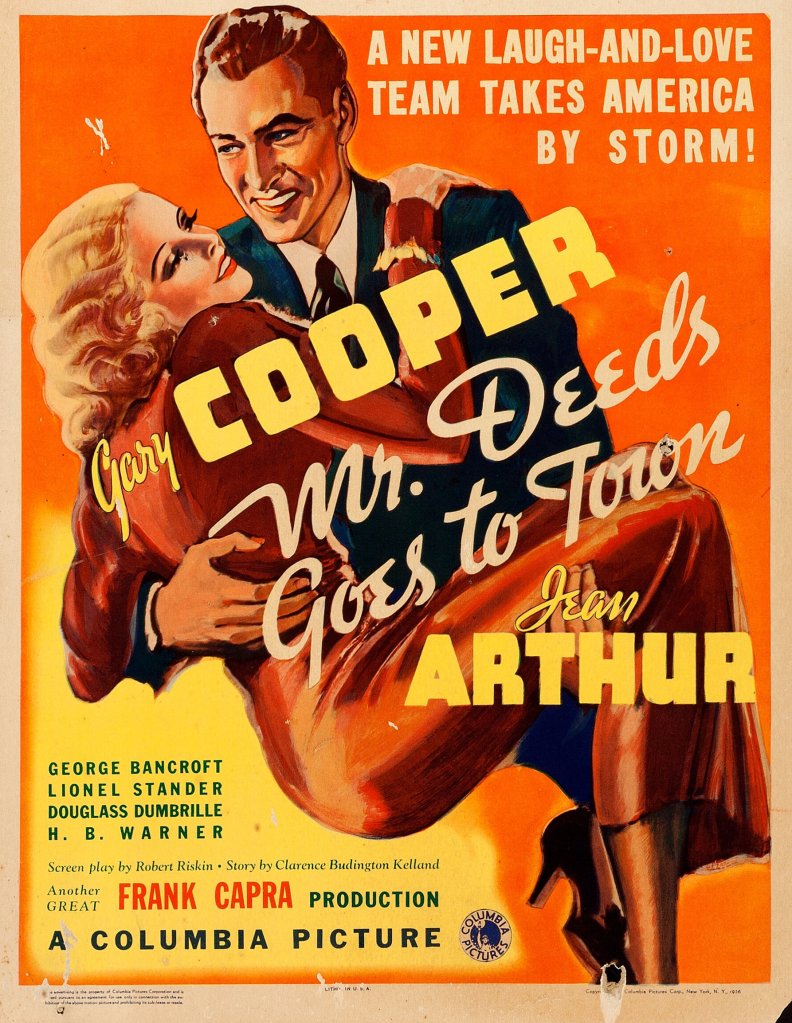
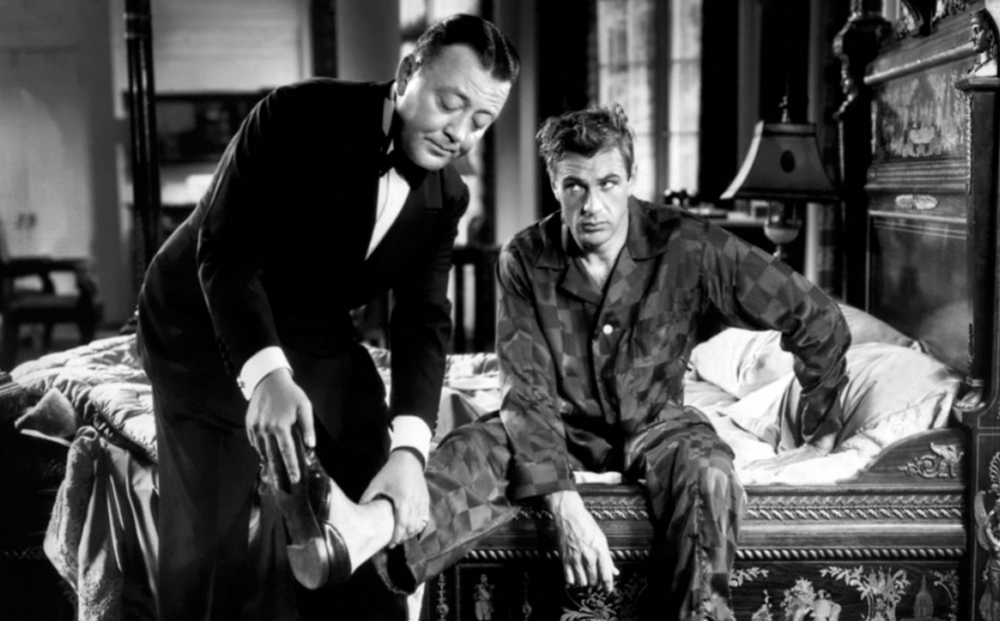
Mr Deeds Goes to Town (1936)

Mr Deeds Goes to Town (1936)

Capra’s brilliant comedy lays out his world version – and is extremely entertaining to boot

Director: Frank Capra

Cast: Gary Cooper (Longfellow Deeds), Jean Arthur (Babe Bennett), George Bancroft (McWade), Lionel Stander (Cornelius Cobb), Douglass Dumbrille (John Cedar), Raymond Walburn (Walter), HB Warner (Judge May), Ruth Donnelly (Mabel Dawson), Walter Catlett (Morrow), John Wray (Farmer)

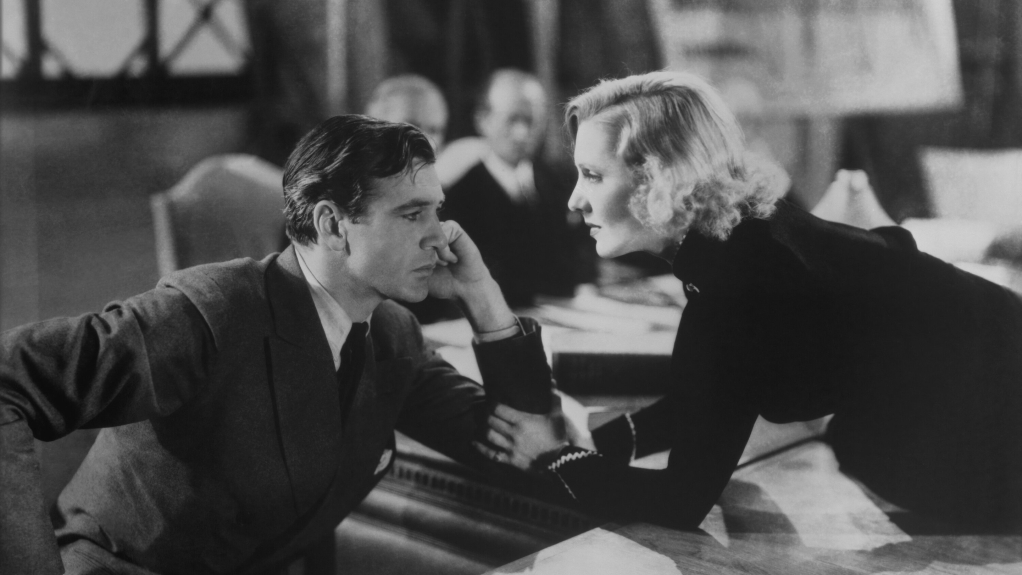
If any film first set out what we think of today as ‘Capraesque’ it might well be Mr Deeds Goes to Town. This was the film where so many of the elements we associate Capra – the honest little guy and his small-town, homespun American values against the selfish, two-faced, disingenuousness of the elites – really came into focus. Mr Deeds Goes to Town develops these ideas with a crisp, sharp comic wit, with Capra’s reassuringly liberal-conservative message delivered to perfect, audience-winning effect. It led to the even-better Mr Smith Goes to Washington and the template for every film which celebrates the little guy asking ‘why’ things have to be done this way.

Longfellow Deeds (Gary Cooper) is just your-average-Joe from small-town Mandrake Falls in Vermont who suddenly finds that he has inherited the unheard-of sum of $20million from a recently deceased uncle. His uncle’s assorted lawyers, led by suavely corrupt John Cedar (Douglass Drumbille) expect the naïve Deeds will happily allow them to continue riding the gravy train they’ve enjoyed for years. However, Deeds proves to have a mind of his own, refusing to kowtow to opportunists.

However, Deeds has an Achilles heel: he’s fallen hard for Babe Bennett (Jean Arthur), who he believes to be an out-of-work office girl but is in fact a star reporter, spinning the stories she picks up from their dates into articles about Deed that make him a laughing stock (the ‘Cinderella Man’). When Deeds discovers the truth – and is simultaneously threatened by Cedar with institutionalisation over his plans to give away his fortune to help the poor – he’s flung into a desperate court case to establish his sanity. Will a heart-broken Deeds defend himself?

Mr Deeds, with a sparkling script from Riskin, captures Capra’s idea of true American values. Deeds is a softly-spoken, unfailingly honest, no-nonsense type who won’t waste a minute on flattery and forlock-tugging and respects hard-work and plain, simple decency. He’s an independent spirit: be that playing the tuba, sliding down the banisters of his grand home, jumping on board fire trucks to help out or sweetly scribbling limericks, he’s as endearingly enthusiastic as he is lacking in patience for pretension.

He also proves an honest man is no fool, but a shrewd judge of character – expertly recognising a lawyer who turns up pushing for his uncle’s ‘common law wife’ to take a share of his fortune is an ambulance-chasing crook – and he’s no push-over or empty suit (made the chair of his uncle’s Opera board, he shocks the rest by actually proceeding to chair the meeting and make decisions). He’s the sort of humble-stock, common-roots, middle-class hero without any sense of snobbery or self-importance, just like his hero President Grant, judging people on their merits not their finery.

It is, in short, a near perfect role for Gary Cooper, at the absolute top-of-his game here: funny, charming and hugely endearing. Cooper can also convincingly back-up Deeds’ affability with a (literal) fist when pushed too far. Cooper is an expert at preventing an otherwise almost-too-good-to-be-true character from becoming grating or irritating. He’s also extremely touching when called upon – his giddy, bed-rolling phone call to Jean Arthur’s Babe is as sweet as his broken edge-of-tears sadness when he discovers she’s been lying to him (I can think of very few 30s actors who would have been comfortable looking as emotionally vulnerable as Cooper does here).

But Capra’s world view was always more complex though than we think. It’s easy to see Mr Deeds as arguing we should re-direct our efforts to helping the poor and needy, and the greed and hypocrisy of the rich (the sort of snobs who mock Deeds to his face at the dinner table). That might be closer to screenwriter Robert Riskin’s views: but actually, Capra’s vision has more of an Edwardian paternalism to it. He sees Deeds’s destiny – once he renounces the wild living of suddenly being loaded – not be a Tony Benn style-radical but the sort of paternalistic benefactor of the deserving poor you might see in a cosy Downton Abbey-style costume-drama.

Because the people Deeds ends up helping share his view of the world, as one where hard-work and having the right attitude should lead to rewards (with the implicit message, that if you can’t succeed then, it’s your fault). Deeds is tugged out of his slowly forming playboy lifestyle by John Wray’s desperate farmer. Wray is at the heart of a genuinely affecting sequence, determined to cause Deeds harm (believing stories of him frittering away money on eccentric trifles) and ending it in shameful tears, accepting Deeds unasked-for help. Like this man, those Deeds helps have lost farms and land due to the depression, screwed by the games of the financial elites.

But Mr Deeds Goes to Town never once tries to suggest there is anything fundamentally wrong with this system – only some of the people who have risen to the top. And even then, it’s their personal greed and inverted snobbery that’s their crime, not the fundamentally unbalanced financial system. The main strawman for elite’s financial frippery is the Opera house committee Deeds chairs for: he can’t see the point of taking a loss on an art institution, essentially arguing it should focus more on commerce to earn its way – the sort of art view that it’s only good if loads of people pay for it (on that basis Avengers Endgame is the greatest film ever made).

It’s part of a criticism of snobbery that the homely, common-man, Deeds can’t abide: captured in the idea that enjoying the plays and books ordinary people don’t want to read is somehow proof of an elitist coldness that doesnt value ordinary people. There’s an inverted Conservative snobbery here.

Now, don’t get me wrong: there’s still a decent world-view in Capra at valuing hard working people who want to help themselves. In the big city where life is a “crazy competition for nothing”, it’s refreshing to have someone who doesn’t care about societies ins and outs society, but does care that hungry farmers have a sandwich to eat. But it’s also a more conservative, and safe message than people remember.

Saying all that, Mr Deeds is a hugely entertaining film. The romance between Cooper and Jean Arthur (absolutely in her element as the screwball femme fatale with a heart-of-gold) expertly mixes genuine sweetness with spark. The film’s Act Five trial scene is perfectly executed, a brilliant parade of snobs and slander leading to an inevitable final reel rebuttal from Cooper that the actor knocks out of the park. (It works so well, the whole structure would be largely repeated in Mr Smith with the twist that here Deeds doesn’t speak at all) There are a host of superb performances: Stander is perfect as the cynical hack who finds himself surprised at his own conscience, perfectly balanced by Drumbrille as the suave lawyer who has no conscience at all.

All of these elements come together to sublime effect in a film that is rich, entertaining and genuinely sweet – with a possibly career-best performance from Cooper (Again, it’s refreshing to see an alpha-male actor so willing to be vulnerable). Capra’s direction is sublime: dynamic, witty and providing constant visual and emotional interest. Its politics are more conservative and simplistic than at first appears, but as a setting-out of Capra’s mission statement for warmer, kinder, small-town American values of simplicity, plainness, honesty and decency it entertainingly puts forward as brilliant a case as Deeds does.

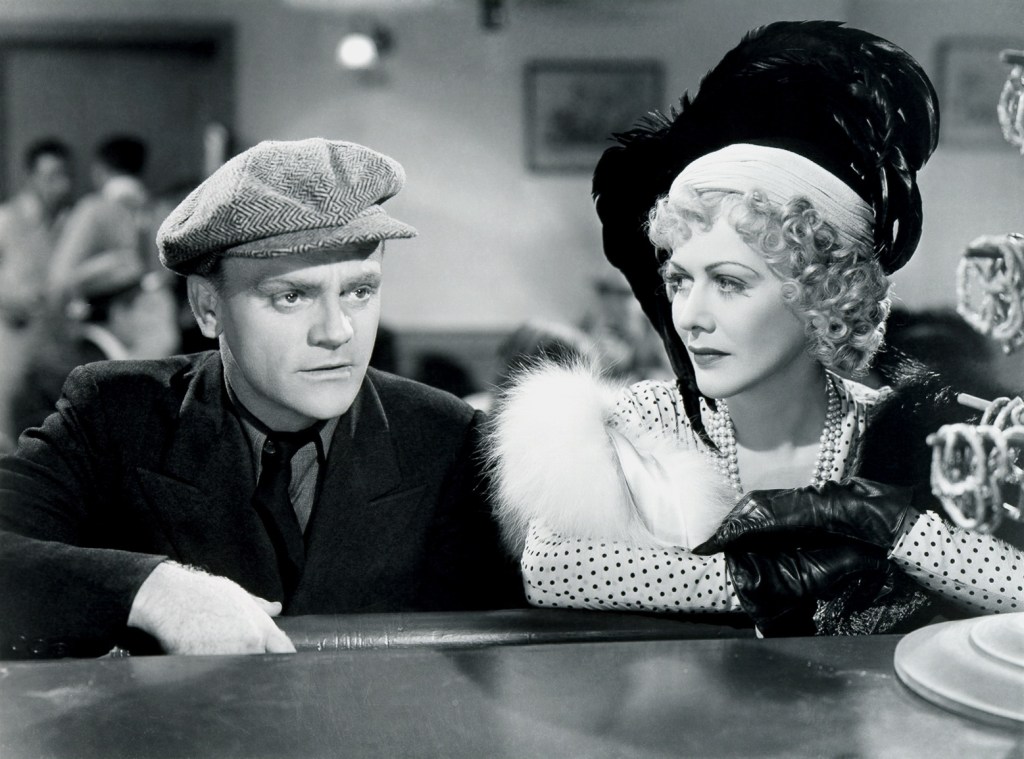
The Roaring Twenties (1939)

The Roaring Twenties (1939)

Superb gangster film, that sums up a whole era of film-making with a fast-paced grit

Director: Raoul Walsh

Cast: James Cagney (Eddie Bartlett), Priscilla Lane (Jean Sherman), Humphrey Bogart (George Hally), Gladys George (Panama Smith), Jeffrey Lynn (Lloyd Hart), Frank McHugh (Danny Green), George Meeker (Harold Masters), Paul Kelly (Nick Brown), Elizabeth Risdon (Mrs Sherman), Joseph Sawyer (Sgt Pete Jones)

Three guys fall in a foxhole, might sound like the beginning of an odd wartime joke but it’s the encounter that begins The Roaring Twenties. Framed as both a period piece, looking back to a time already a decade away from the contemporary audience, and a sort of memorial piece to a whole cycle of bootlegger gangster films. It’s also a film far too regularly overlooked when discussing that cycle: in my opinion it’s one of the finest and possibly Cagney’s most complex gangster role (with apologies to White Heat). It’s a fast-paced, hugely entertaining slice of crime drama, with fascinating, multi-faceted characters and an intriguing level of social depth.

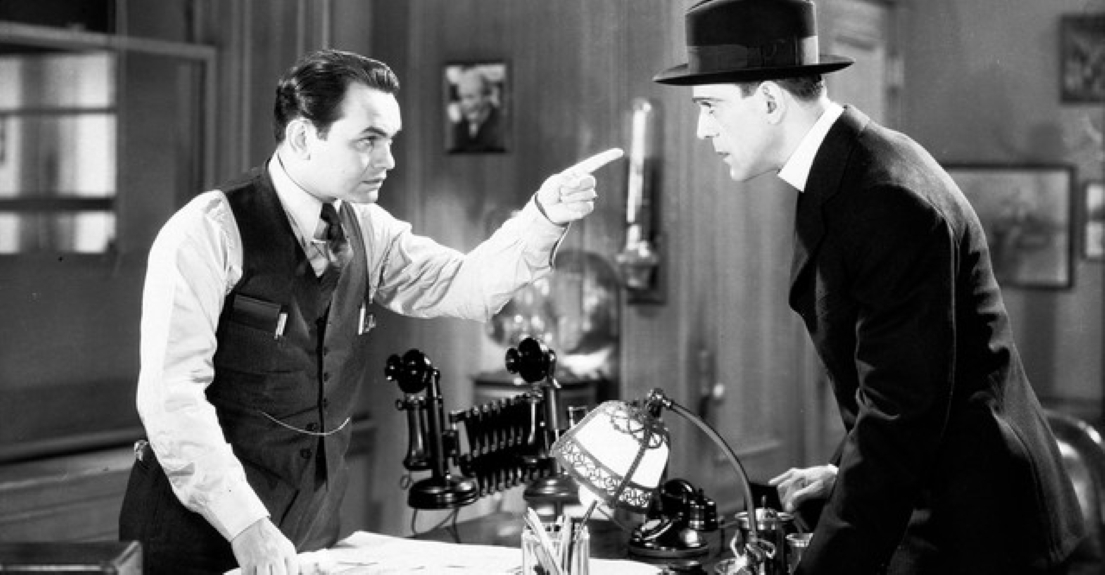
Those three foxhole guys are Eddie Bennett (James Cagney), destined to run a bootlegging empire in Chicago; George Hally (Humphrey Bogart), destined to become his sociopathic ruthless partner; and Lloyd Hart (Jeffrey Lynn), destined to become a lawyer walking an awkward line. Returning from World War One, Eddie finds little welcome for returning servicemen, but his pluck and sense of personal loyalty eventually see him stumble into, and then embrace, the bootlegging business with glamourous hostess Panama Smith (Gladys George). Problem is danger abounds in the crime-ridden city and its impossible to work in this business without getting your hands dirty. Throw-in Eddie’s candle-holding love for the quietly uninterested Jean Sherman (Priscilla Lane) and you have a recipe for long-term disaster.

The Roaring Twenties is a punchy, well-cut, overlooked gem. From its opening montage that rolls back over newsreel from 1940 to the trenches of World War One to its closing tracking shot that culminates in Eddie’s fatal tumble on the steps of a church (as always in the gangster film, no-one escape death’s moral judgement no matter how psychologically complex they are) it’s a feast of fast-moving entertainment. Along the way Walsh throws in everything, from gun battles to musical numbers, by way of comedy, obsessive love and social commentary. The Roaring Twenties is arguably a nostalgic cocktail with a dim view of its decade: one of crime, hedonism and hypocrisy.

And it’s corrupted Eddie. This is Cagney firing on all cylinders: and it’s remarkable how skilfully he creates a complex, sympathetic character out of similar material to his despicable hood in Public Enemy or the flat-out psychopath he forged in White Heat. Eddie is in many ways a decent man who finds all the dreams he’s been clinging too are fantasies. He can’t land the mechanic job he dreamed of, his uniform is the subject of mockery, the woman he’s been corresponding with turns out to be a teenager (Cagney’s disappointment, discomfort and faint attraction when he first meets Jean Sherman’s skipping late-teens Priscilla is beautifully done). Eddie is left bumming around town desperate for any opportunity.

Cagney’s performance really works, because Eddie – even with an angry streak that means he can knock out two chucking goons with one punch – is fundamentally a decent bloke, corrupted by circumstances. He sees the liquor-brewing game as a short-term fast buck, which he stumbles into because he’s too chivalrous to allow Panama to take the wrap for a bootlegging delivery he’s made. He’s loyal to his friends and tries to solve problems amicably. He’s got a charming, barrow-boy entrepreneurship to him, brewing booze in his bath and selling it as a high-quality import. Cagney shows how desperately Eddie clings to his self-image that crime isn’t a lifestyle choice, but a short-term necessity he’ll jack in one day for the peace and quiet of running a taxi company.

But Cagney never stops letting us see the corruption soaking in: Eddie is learning to heartlessly take what he can get, to forget the consequences of his actions and when violence comes he’ll shrug off deaths as ‘not his fault’ or respond with an increasing ease viciousness (in a nice call back, he even shoves a cigar into a goons face, an echo of his famous grapefruit scene from Public Enemy). When he faces news, he doesn’t like, or is denied the things he wants, lashing out is his first option – and once he starts necking his own product, his downfall is only a matter of time as he falls prey to the sort of ‘World is Yours!’ attitude that doomed Scarface.

From grasping ever more business opportunities to grooming (in more ways that one) the now adult Priscilla into his ideal girl (he can’t watch her perform without grasping the pained hand of Panama, his eyes locked in monomania desire that he’s clearly convincing himself is a sort of pure, brotherly concern). Eddie clearly sees her as his ‘reward’ for his hardwork, a fantasy that doesn’t have any place for her liking him but not loving him. But there is a neat touch throughout The Roaring Twenties – a momentum packed film that races through years in minutes – that Eddie fundamentally isn’t ruthless enough for this game.

Certainly not compared to Humphrey Bogart’s study in shallow, selfish cruelty. Shown early on grinningly shooting a fifteen-year old German soldier in the dying minutes of the war (“He won’t be 16!”), George Hally is the monster Eddie can’t be. A guy who doesn’t care for anyone, who betrays and kills at the drop of a hat, who doesn’t stop for any sense of form and decency. For all Eddie tells George that time has moved on and people like them don’t have a place in the Thirties, Bogart’s cold-eyed George feels like the sort of man who would flourish in the era to come.

Compared to him, Eddie and Panama are romantics. Gladys George gives a fascinating performance as Panama, one of the most complex gangster dames of all. George brilliantly walks a narrow line, clearly loving Eddie but accepting he doesn’t feel the same way – and (reading between the censor lines) entering a relationship with him anyway. Panama is half-partner, half-mother to Eddie giving him a sort of matronly support and tenderness and, when his fortunes drop off a cliff in the thirties, looking after the slubby, drunken figure Eddie becomes (Cagney looks more bashed up, scruffy and pathetic in the final act than almost any other star would dare).

Fascinating character relationships like this underpin a film that feels like a summation of years of Warner Bros gangster films. Walsh’s direction is pin-point sharp, from his montage construction (including a surprisingly surreal Wall Street Crash sequence with melting buildings), through the shoot-outs. The Roaring Twenties script – by Robert Rossen and Jerry Wald among others – offers characters who are complex, flawed and don’t quite seem to realise at times how terrible their world is.

When the end comes, and Eddie’s body slumps on the steps – after an inspired, sustained tracking shot that follows his teetering bullet-ridden body, the sort of athleticism Cagney was a natural at – it seems fitting the famous closing words are “He used to be a big shot”. That sums up not only the character, but an entire era of film-making being confined (temporarily) to the dustbin of history. It’s a melancholic note to end an extraordinarily good film, one of the great gangster films, in which Cagney, Bogart and George bring life to fascinatingly complex characters.

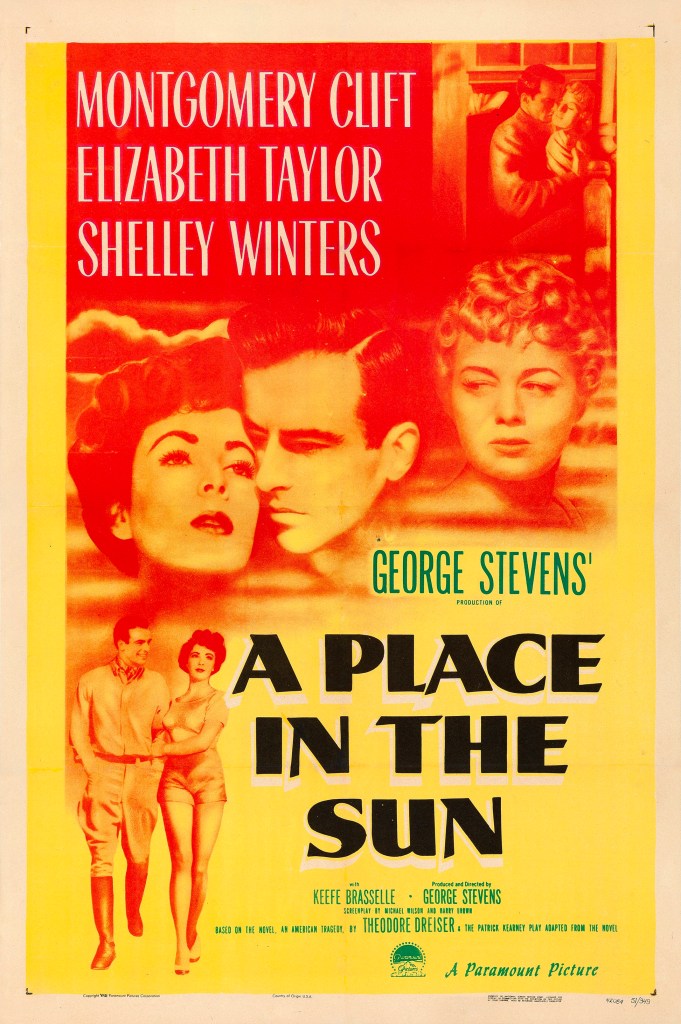
A Place in the Sun (1951)

A Place in the Sun (1951)

A great Hollywood romance obscures darker, more sinister implications that its makers seem unaware of

Director: George Stevens

Cast: Montgomery Clift (George Eastman), Elizabeth Taylor (Angela Vickers), Shelley Winters (Alice Tripp), Anne Revere (Hannah Eastman), Keefe Brasselle (Earl Eastman), Fred Clark (Bellows), Raymond Burr (DA Frank Marlowe), Herbert Hayes (Charles Eastman), Shepperd Strudwick (Tony Vickers), Frieda Inescort (Ann Vickers)

It’s based on Theodore Dreiser’s An American Tragedy, but in some ways it feels like very British. After all, few American films are more aware of class than A Place in the Sun and there is something very British about a working-class man pressing his nose up against the window of the wealthy and wishing he could have a bit of that. In some ways, A Place in the Sun’s George Eastman is a more desperate version of Kind Heart’s and Coronets Louis desperate to be a D’Ascoynes or a murderous version of Room at the Top’s Joe Lampton not wanting his girlfriend to get in the way of wooing a better prospect. The most American thing about A Place in the Sun it is that what would be a black comedy or a bitter drama in Britain, becomes a tragic romance in George Steven’s hands.

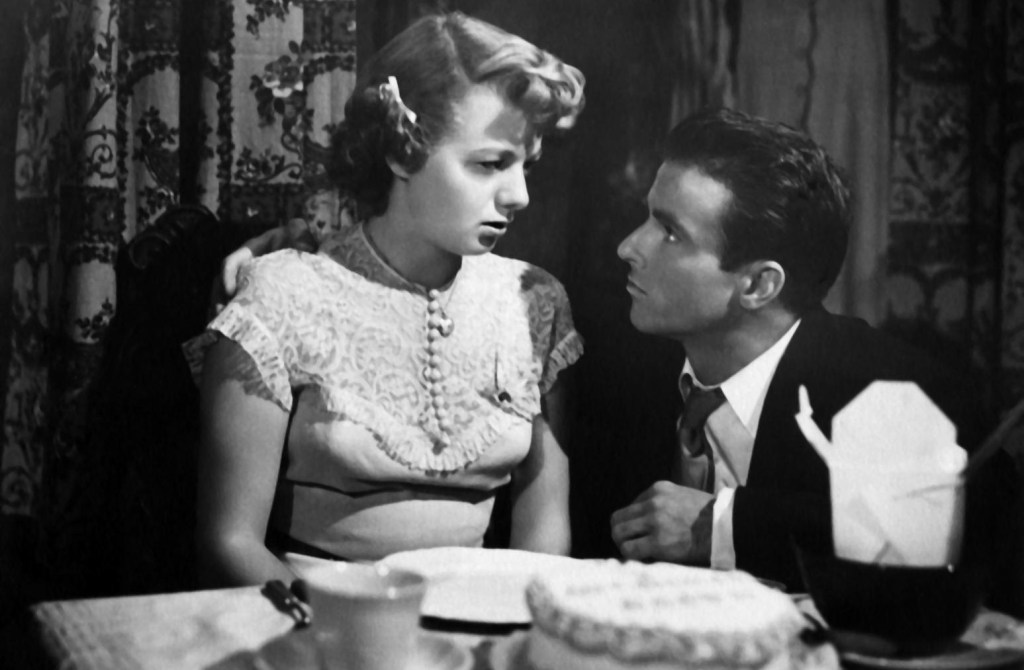
George Eastman (Montgomery Clift) is from the black sheep working-class side of the Eastman clan, rather than the factory-owning elite side who live among the city’s hoi polloi. George is gifted an entry-level grunt job in the factory but works hard for progression. He absent-mindedly dates production line co-worker Alice (Shelley Winters), who thinks he’s the bee’s knees. Unfortunately for her, George meets Angela Vickers (Elizabeth Taylor), daughter of the wealthy Vickers family, and they fall passionately in love. Just as Alice announces she’s pregnant and asks when George will do the decent thing. Can George thread this needle, rid himself of Alice and marry the willing Angela? Perhaps with the help of the Eastman’s lake side house and Alice’s inability to swim?

You can see the roots of a cynical tale of opportunism and ambition there, but A Place in the Sun wants to become a luscious romance. It is shot with radiant beauty by William C. Mellor, bringing us sensually up-close with Clift and Taylor whose chemistry pours off the screen. It’s soundtracked by a passionately seductive score by Franx Waxman. As we watch these two fall into each other’s arms, the film tricks us (and, I think, itself) into thinking these two lovers deserve to be together. And, by extension, everyone would be much better off if Shelley Winter’s gratingly needy Alice, who can’t hold a candle to Elizabeth Taylor’s grace, charm and beauty, just disappeared. Before we realise it, we and the film are silently rooting for a man with fatal plans to rid himself of this encumbrance.

What’s striking reading about A Place in the Sun is that Clift felt Eastman, far from a sympathetic romantic, was an ambitious social-climber (much like his role in The Heiress) too feckless, weak and cowardly to face up to his responsibilities. Clift’s performance captures this perfectly: at the height of his method-acting loyalty, Clift is sweaty, shifty and increasingly guilt-ridden with Alice, awkwardly mumbling platitudes rather than talking (or taking) action. It’s actually a superb performance of people-pleasing weakness from Clift. Eastman always says what those around him want to hear, whether it overlaps with what he believes or not. He can say sweet nothings to Alice and romantic longings to Angela. This is a great performance of an actor being, in many ways, more clear-eyed than the film about what the story is really about: a man who decides the best way to deal with the inconvenience of a pregnant girlfriend is to drown her.

What Clift didn’t anticipate is how much the power of photography and editing (not to mention the radiance of his and Taylor’s handsomeness) would mean many viewers would end up rooting for the selfish romantic dreams of this weak-willed heel. Steven’s film turns the Clift-Taylor romance into a golden-age Hollywood dream. Taylor, at her most radiant, makes Angela possibly the nicest, kindest, most egalitarian rich girl you can imagine. Their undeniable click is there from their first real encounter (Angela watching George absent-mindedly sink a cool trick shot at an abandoned pool table – how many takes did that take?). The sequences of these two together play out like a classic idyll, from slow-dancing at glamourous parties to lakeside smooching. Everything about what we are seeing is programming us to root for them – and I’m not sure Stevens realises the implications.

If we are being encouraged to relate to Clift and Taylor, everything in Shelley Winter’s Alice is designed to make us see her not want to be her. Winters lobbied for the part, desperate for a role to take her away from shallow romantic parts – ironically her success pigeon-holed her to dowdy, needy second-choice women, deluded wives and desperate spinsters. But she’s superb here, making Alice just engaging enough for us to imagine George would take a break from his self-improvement books, but also so fragile and needy we can believe she’d become both increasingly desperate and annoying. Angela, dancing radiantly at parties, is who we want to be: Alice, sitting up late in her cramped flat with a try-hard birthday dinner and carefully chosen gift waiting for the arrival of an indifferent George, is who we fear we are. If movies are an escape, we don’t choose her.

Steven’s film makes Alice’s pregnancy more and more a trap. (The film carefully skirts the much discussed but never named abortion option). When on the phone together, the camera tracks slowly into George as he huddles against a wall mumbling, the film’s world shrinking with his. In one of the film’s many beautifully chosen Murnau-inspired super-impositions, Alice appears like a ghost over George and Angela at the river. Alice’s increasingly fractious demands that George do his duty and marry her, with increasingly wild threats of social disgrace interspersed with her grating, desperate neediness makes us cringe with him. Possibly because we worry we’d be like her.

A Place in the Sun makes us root for a man plotting murder and guilty, at the very least, of manslaughter. That could make it the most subversive romance of all time – if it wasn’t for the fact that, even in the end, George is presented as the real victim. Even a priest gives him only a few words of criticism, while George is not even punished by losing the love of the faithful and trusting Angela. Even if George didn’t push Alice in, he also didn’t lift a finger to save her life. In the trial, Raymond Burr’s showboating DA helps us pity George as he presents a version of that fateful boat trip that we know isn’t true but is only a few degrees more horrible than what George actually did. Even his guards feel sorry for him, and Steven’s clunkily intercuts between George’s dutifully honest working-class family and the wealth of his rich uncle’s circuit to hammer home the tragedy.

Did Stevens realise all of this as he made the film? I’d argue possible not: that he was as much sucked into the romance as the viewing audience. But some American movies embrace optimism – and an American tragedy in that world is lovers kept apart. A British tragedy is an ambitious man destroying himself and others. There is a smarter, more ruthless film to be made from the material of A Place in the Sun. One where Clift’s George is a truly heartless go-getter and both Alice and Angela are different types of victim. And that would be American to: it would be one which consciously shows us how our longing for fairy tales and the American Dream can lead to perverse, outrageous outcomes. That film would be a masterpiece, rather than the unsettling work A Place in the Sun actually is.

All That Money Can Buy (1941)

All That Money Can Buy (1941)

The Devil sure knows how to tempt a man in this beautifully filmed morality tale

Director: William Dieterle

Cast: Walter Huston (Mr Scratch), Edward Arnold (Daniel Webster), James Craig (Jabez Stone), Anne Shirley (Mary Stone), Jane Darwell (Ma Stone), Simone Simon (Belle), Gene Lockhart (Squire Slossum), John Qualen (Miser Stevens), HB Warner (Judge Hawthorne)

Sometimes life can be a real struggle. With debts, failed crops and animals getting sick, what’s a guy to do? That’s the problem New Hampshire farmer Jabez Stone (James Craig) has in 1840. What he wouldn’t give to find a bundle of buried gold that could solve all his problems. Fortunately, charming old rogue Mr Scratch (Walter Huston) knows exactly where to find one – all he wants in return is for Jabez to sign away his soul seven years from now (signed in blood of course). Jabez gets fortune, prestige, the son he always wanted – but when ‘Mr Scratch’ comes to collect, can Jabez’s friend, famed orator, lawyer and congressmen Daniel Webster (Edward Arnold) save his soul?

All That Money Can Buy is a richly atmospheric piece of film-making from William Dieterle, adapted from Stephen Vincent Benet’s short story and full of gorgeously filmed light-and-shadow with a haunting score by Bernard Herrmann. (The story was originally titled The Devil and Daniel Webster, also the film’s original title before RKO changed it to avoid confusion with their more successful Jean Arthur comedy The Devil and Miss Jones.) It’s a neat morality tale, full of dark delight at the devilish ingenuity of Mr Scratch, with lots of dark enjoyment at seeing a weak-but-decent man corrupted into being exactly the type of greedy, cheating cad to whom he was deeply in debt to from the beginning.

It’s nominally about James Craig’s Jabez Stone, but Jabez is a shallow, easily manipulated passenger in his own life, pushed and pulled towards and away from sin depending on who he’s talking to. Stone’s fall is swift: moments after meeting Scratch, he’s digging hungrily into a meal while his wife and mother say grace, hugging his newfound bag of gold. As his wealth goes, he drifts from his pure wife (Anne Shirley, effective in a dull part) becoming easy prey for demonic (literally) temptress Belle (a wonderfully seductive Simone Simon). By the time the seven years are up, he’s skipping church for illicit card games and crushing the farms of his neighbours to fund his dreamhouse-on-a-hill.

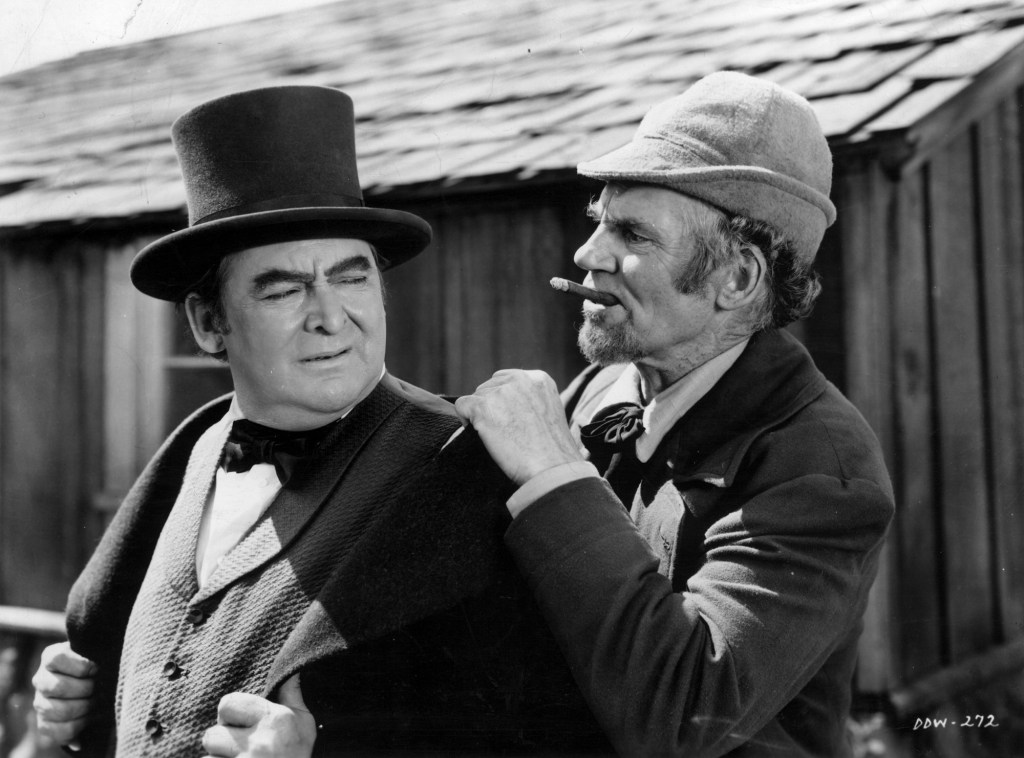
Stone is really the Macguffin here. The real focus is the big-name rivals: The Devil and Daniel Webster. It’s implied these two have fought a long-running battle for years: our introduction to Webster sees him scribbling literally in the shadow of Mr Scratch, who whispers to him tempting offers of high office. Later Webster is unflustered when Scratch suddenly appears to place a coat on his shoulders, treating him as familiar rival. You could argue Scratch is only prowling the streets of New Hampshire because he’s looking for a way to nail the soul of his real target, Daniel Webster.

As Mr Scratch, the film has a delightful (Oscar-nominated) performance from Walter Huston. With his scruffy clothes and twirling his cane, Scratch pops up everywhere with Huston’s devilish smile. It’s a masterclass in insinuating, playful malevolence, with Huston playing this larger-than-life character in a surprisingly low-key way that nevertheless sees him overflowing with delight at his own wickedness. Huston has the trick of making Scratch sound like someone trying to sound sincere, while never leaving us in doubt that everything he says is a trap or lie, only showing his arrogance and cruelty when victory is in his grasp. It’s a fabulous performance, charismatic and wicked.

Edward Arnold makes Daniel Webster both a grand man of principle and a consummate politician, proud of his reputation and all the more open to temptation for it. He also has the absolute assurance of a man used to getting his own way, and the arrogance of seeing himself as an equal to the Devil rather than a target. These two form the ends of a push-me-pull-me rivalry.

The rivalry culminates in its famous ‘courtroom’ scene, as Webster – a little the worse for drink –argues for Jabez’s soul in front of a ghostly court of American sinners from the bowels of hell (lead among them Benedict Arnold). Its shot in atmospheric smoke, with the double exposure creating a ghostly effect for jury and judge. It’s another excellent touch in a film full of inventive use of effects and camerawork, Dieterle at the height of his German influences. The artificial New Hampshire scenery is shot with a sun-kissed beauty that bears Murnau’s mark. Striking lighting and smoke-play abounds in Joseph H August’s camerawork, not least Belle’s introduction backlit with an extraordinarily bright fire. Early scenes of Stone’s misfortune interrupted by a brief frames of a photo-negative Scratch laughing, quite the chillingly surrealist effect.

Politically, All That Money Can Buy backs away from any overt criticism of Webster’s support for the Missouri Compromise (this key piece of slavery protection legislation is so key to Webster’s view of American strength he’s even named a horse after it). But it’s quite brave for 1941 in allowing the Devil legitimate criticism of America’s ‘original sins’ saying he was there driving on the seizing of the land from the Native Americans and up on deck on the first slave ship from the Congo. (Especially as Webster can’t defend these actions). It’s also interesting that the film praises collectivism for the farmers over rugged individualism, a conclusion it’s hard to imagine being praised a few years later.

All That Money Can Buy is also filled with impressive practical effects, not least Scatch’s impossible catching of an axe thrown towards him, bursting it into frame. Both Scratch and Bell reduce papers to flaming ashes with a flick of the wrist. Horribly woozy soft-focus camera work accompanies Jabez’s nightmare visions of the damned. It’s tightly and skilfully edited, superbly paced, with montages used effectively for transitions (a field of corn growing is particularly striking) and wildly unnerving sequences, like Scratch’s fast-paced barn-dance with its whirligig of movement and repeated shots. It’s all brilliantly scored by Herrmann, from the pastoral beats of New Hampshire to the discordant sounds (some created from telephone wires) that accompany Scratch.

All That Money Can Buy concludes with a stand-out speech from Webster that perhaps settles matters a little too easily – and brushes away any of the film’s mild criticism of America’s past with a relentlessly upbeat patriotic message. But the journey there – and the performances from a superb Huston and excellent Arnold – is masterfully assembled by a crack production team working under a director at the height of his powers. A flop at the time, few films deserve rediscovery more.

Conclave (2024)

Conclave (2024)

Papal boardroom politics combine with detective mystery in this engaging mix of high- and low-brow

Director: Edward Berger

Cast: Ralph Fiennes (Cardinal Thomas Lawrence), Stanley Tucci (Cardinal Aldo Bellini), John Lithgow (Cardinal Joseph Tremblay), Sergio Castellitto (Cardinal Goffredo Tedesco), Isabella Rossellini (Sister Agnes), Lucian Msamati (Cardinal Joshua Adeyemi), Carlos Diehz (Cardinal Vincent Benitez), Brian F. O’Byrne (Monsignor Raymond O’Malley), Jacek Koman (Archbishop Janusz Wozniak)

Few things have changed as little over 500 years than the election of a pope. Sure, they didn’t need to take away the phones of the Borgias and Medicis, but the idea of locking away the Princes of the Church in the Sistine Chapel until the Holy Spirit guides them towards choosing the next Heir to the Throne of St Peter hasn’t changed. But then neither (probably) has the ruthless politicking and barely concealed ambition of the cardinals (after all some were Borgias and Medicis!), many having dreamt their whole lives of moulding the Church into the shape they believe He wants it to be.

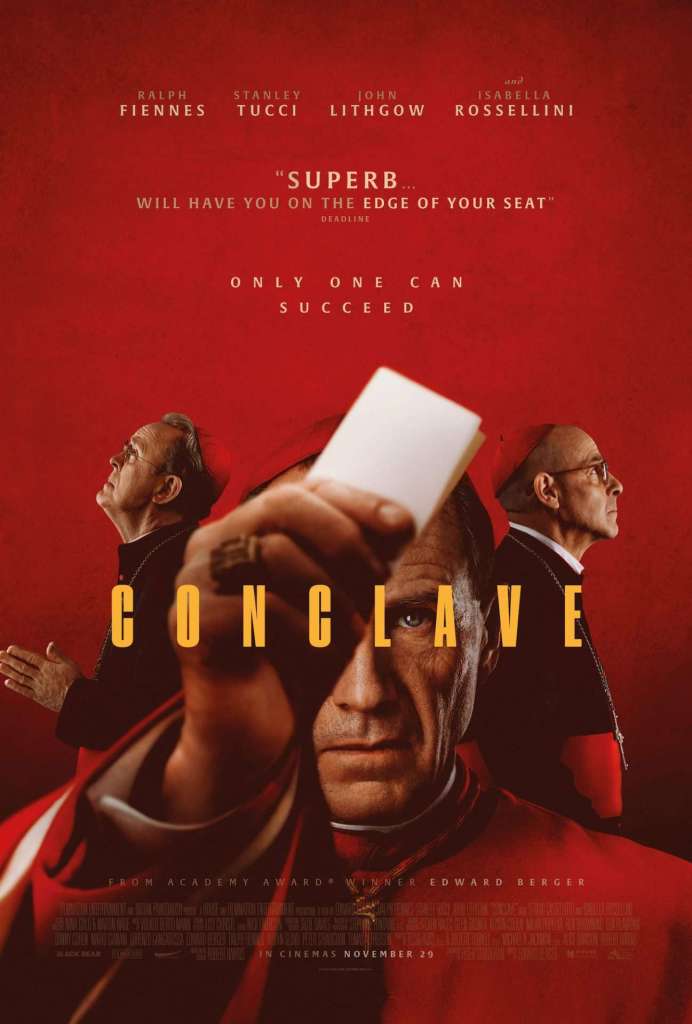
Politicking and spiritual and moral struggles with the temptations of ambition are at the heart of this excellent adaptation of Robert Harris’ novel. After the pope dies, Cardinal Thomas Lawrence (Ralph Fiennes), Dean of the College of Cardinals, is responsible for organising the new Papal Conclave. Lawrence, struggling with doubts whose request to resign was recently rejected by the Pope, is part of the moderate wing and a supporter of Cardinal Aldo Bellini (Stanley Tucci). The other major candidates are conservative Canadian Cardinal Tremblay (John Lithgow) and ultra-traditionalists Italian Cardinal Tedesco (Sergio Castellitto) and Nigerian Cardinal Adeyemi (Lucian Msamati). Lawrence slowly discovers severe reasons to doubt the suitability of all these candidates – while the number of cardinals suggesting he himself might be a suitable candidate grows.

Conclave is a very enjoyable dive into the mysterious world of papal politics. Part of its appeal is seeing that, under the mystery of centuries-old practices, elaborate robes and beautiful artworks, the struggle to elect a pope is a highly political business. Things ain’t changed that much since the Borgias, as various sexual, financial and other scandals crop up to scupper the chances of one candidate after another. As per 15th-century papal tradition, take away those flowing robes and lapses into Latin, and this is a cut-throat boardroom succession struggle that leaves more than a few reputations in ruins (and it ain’t going to be easy – even the late pope’s signet ring only comes off his finger after a rough-handed struggle).

In fact, Conclave works as well as it does because it’s a sort of Succession meets Father Brown, a brilliantly paced and staged merging of high-brow settings with pulpy page-turner thrills. At its heart is a superb performance by Ralph Fiennes as Cardinal Lawrence. Softly-spoken, Lawrence is dutiful, decent and diligent – and plagued with doubts about everything from his faith to his ambition, with permanently sad eyes, full of world-weary resignation. At one point Lawrence stares up at The Last Judgement, his eyes catching a man twisting in torment: he knows how he’s feeling. Unlike all the other cardinals, dripping with certainty, he’d rather be anywhere but there.

Lawrence becomes Father Brown, the quiet, level-headed priest going the extra mile to sniff out wrong-doing. As his concerns about many of his fellow cardinals emerge, he goes to rule-bending lengths to confirm these suspicions – and part of the delight of Conclave is how entertainingly it plays out murder mystery conventions alongside its papal shenanigans. Lawrence carries out his dogged investigation with an earnest sense of duty but what’s great about Fiennes’ performance is that he also manages to suggest the possibly of guilty ambition underneath. After all, Lawrence is a cardinal too, right? Why can’t he have a crack at being the Holy Father?

Lawrence has moments of temptation when the Holy See is dangled before him. Part of Conclave’s argument is that power is best suited to those most reluctant to carry it. Lawrence is one of the most reluctant among the papal players – but even he isn’t immune to guilty temptation. When he opens the concave with an off-the-cuff speech on moral conduct, is it subconsciously to establish his leadership? When he very publicly exposes one candidate’s misdeeds, is a side benefit demonstrating his own virtue? Conclave tracks Lawrence’s vote every time – and when he is tempted to vote for himself, an act of seemingly divine intervention takes place to almost tick him off.

It’s said at one point all cardinals have thought about their papal name. Lawrence shrugs this off, but later unhesitatingly gives an answer. Perhaps the only cardinal who hasn’t really thought about it is Cardinal Benitez (Carlos Diehz, wonderfully serene), secretly appointed Cardinal of Kabul by the late pope, a man almost alone in thinking this is a quest to find the holiest. The rest? They could probably tell their regnal names without thinking. And unlike Lawrence, they are certain about everything: from their own suitability to how pleased God will be when they land it.

Peter Straughan’s sharp and intelligent script gives an array of opportunities for excellent character actors (Conclave would make a good play). Sergio Castellitto’s scene-stealingly bombastic Tedesco, forever vaping when not growling about how chucking the Latin Mass was the end-of-days, can’t imagine he won’t win. It’s a trait he shares with Lucien Msamati’s Adeyemi, although Msamati finds a vulnerable humility that makes Adeyemi’s eventual downfall surprisingly affecting. Lithgow’s imperious Tremblay drips with arrogance (his eventual comeuppance sees Lithgow brilliantly deflate like a pricked balloon). Stanley Tucci is brilliant as the charming, morally upright Bellini who then surprises even himself with how fiercely ambitious he is.

Berger sets all this in a brilliantly oppressive setting, for all the beauty on the walls around them. Berger superbly conveys the isolation of the conclave, lit almost entirely artificially in heartless hotel rooms (that feel like monastic jails) and a fluorescent-lit canteen. The sound design is a massive part of this, the rooms devoid of ambient sound, just a crushingly deadened stillness. Frequently Lawrence’s breathing fills the soundtrack, giving the film a confessional feeling. It all means the late on surprise sound of a gust of wind carries the same impact for us as it does the cardinals.

Male voices dominate in the Vatican, so it’s telling Conclave deliberately undercuts this by giving one of its standout moments to Isabella Rossellini’s primly professional Sister Agnes. Like the other nuns staffing the conclave, she barely speaks – meaning when she does, it seizes the viewer’s attention as much as she does the crowd of cardinals. The flaws of this world return in the film’s final (slightly forced) twist, which helps question how much the alpha-male clashes between these papal academics may have shaped the atmosphere of the Church, and not for the better.

Conclave is tightly directed film, and a great adaptation of a page-turning novel with a faultless cast brilliantly led by Ralph Fiennes. It mixes pomp and ceremony with a fascinatingly tense struggle for power, made all the more gripping that in the parade of languages we hear (and all the cardinals can switch easily from English to Latin to Italian to Spanish) the language of power and ambition is constant but unspoken – and when it is explicitly stated, it has a devastating impact on those who use it. It’s a great touch in an entertaining and engaging film.

The Night of the Hunter (1955)

The Night of the Hunter (1955)

Laughton’s only masterpiece is a fairy-tale, stuffed with beautiful images and dreamlike logic

Director: Charles Laughton

Cast: Robert Mitchum (Harry Powell), Shelley Winters (Willa Harper), Lillian Gish (Miss Rachel Cooper), James Gleason (Uncle Birdie), Evelyn Varden (Icey Spoon), Don Beddoe (Walt Spoon), Billy Chapin (John Harper), Sally Jane Bruce (Pearl Harper), Gloria Castilo (Ruby), Peter Graves (Ben Harper)

Few films have had their critical reputation change quite as much as The Night of the Hunter. When released, its reception from film critics and audiences was so negative that the crushing disappointment saw director Charles Laughton decide his debut would also be his last film. Flash forward seventy years and it’s now hailed as one of the great American films, a pictorial masterpiece. The Night of the Hunter sits alongside Citizen Kane as the classic film unappreciated in its day.

Adapted from Davis Grubb’s best-selling novel, it follows the nightmareish experiences of young John Harper (Billy Chapin) and his sister Pearl (Sally Jane Bruce). These kids witness their father Ben (Peter Graves) dragged away by the cops to imprisonment and execution – but not before he’s hidden $10,000 in Pearl’s doll and sworn them both to secrecy. Word about the money gets out: it’s why sinister ‘Preacher’ Harry Powell (Robert Mitchum) arrives and starts a-courting their mother Willa (Shelley Winters). After swiftly disposing of Willa, Powell turns his attentions to the kids – who flee down river, eventually coming under the protective wing of kindly widower Rachel Cooper (Lilian Gish) and her brood of young waifs and strays. Is it far enough though to escape Powell’s clutches?

The Night of the Hunter plays out like a fairy tale. Its images are full of the magic of the countryside and mysticism of nature. It frequently, deliberately, uses artificial sets and locations to create a dream-like state. It’s got a classic monster its heart, with Powell a demonic force-of-nature. It follows a pair of children on a journey reminiscent of Hansel and Gretel. There is a kindly old woman and a moral message of the importance of love, family, faith and loyalty. Everything in it feels, to various degrees, heightened. This is Southern drama via Hans Christian Anderson.

I wonder if that’s what threw people off on release. I’d agree that the film’s opening – Lilian Gish’s face superimposed over a starry night sky (followed by a cut of five kids heads superimposed over the same sky raptly listening) – might tee us up for the film’s mood, but looks and feels kitsch. The moments where Laughton deliberately aims at heightened, almost cartoonish, reality push the envelope of what you can accept – why does Powell, at one point, chase the kids up a flight of stairs, hands stretched out before him like he’s in a live action Tom & Jerry cartoon? Stumble onto The Night of the Hunter unwarned about its fantastical grounding and melodrama and it must look and feel odd, bizarre and even a bit laughable.

But it’s these same qualities that have made the film last. Laughton created a film of magical force and power, crammed with striking, imaginative images and beautiful sequences that tip between dream and reality. Its real heart lies in the children’s escape down the river, a remarkable sequence as the camera follows the boat drifting down an obviously artificial river, the children asleep as it glides past spider’s webs, frogs and other wildlife. From a film that opens with the aggressive arrest of the Harper’s dad, this burst of Where the Wild Things Are mysticism intentionally feels like we are crossing into a completely different world, let alone movie. But it’s also part of the film’s striking originality and quirky memorability. Few things look conventionally ‘real’ – in fact, like the farmhouse the kids stop at overnight in their long drift down river it feels even intentionally artificial – but it also gives the film a timeless, poetic feeling.

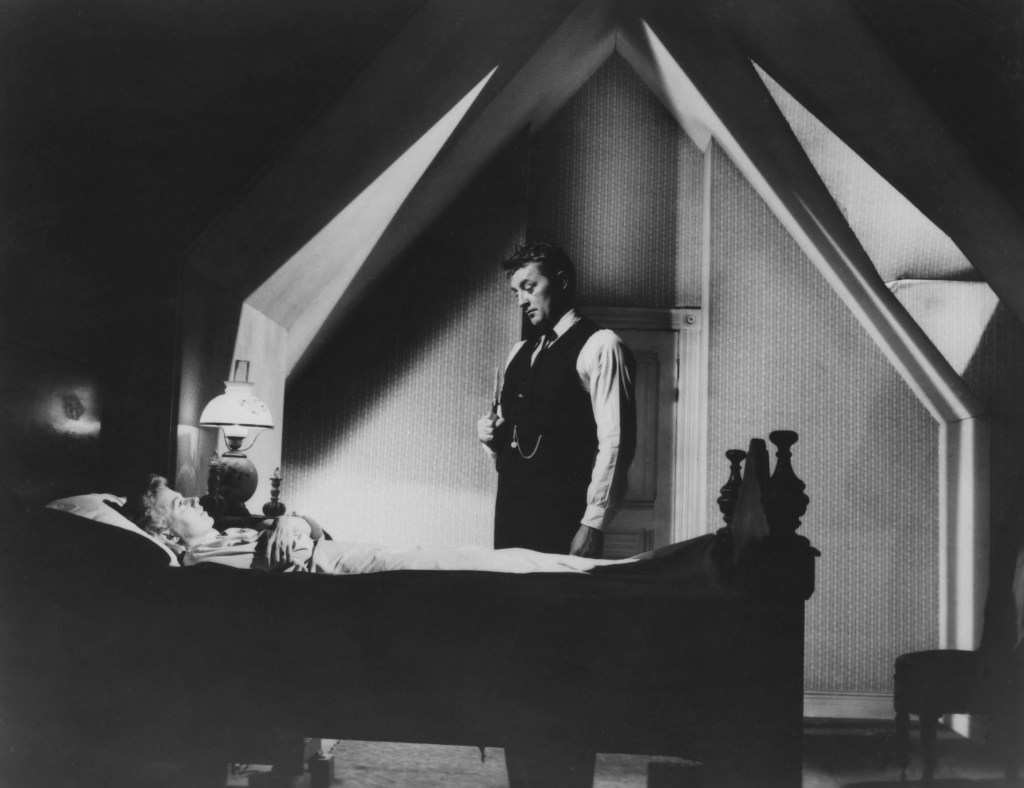
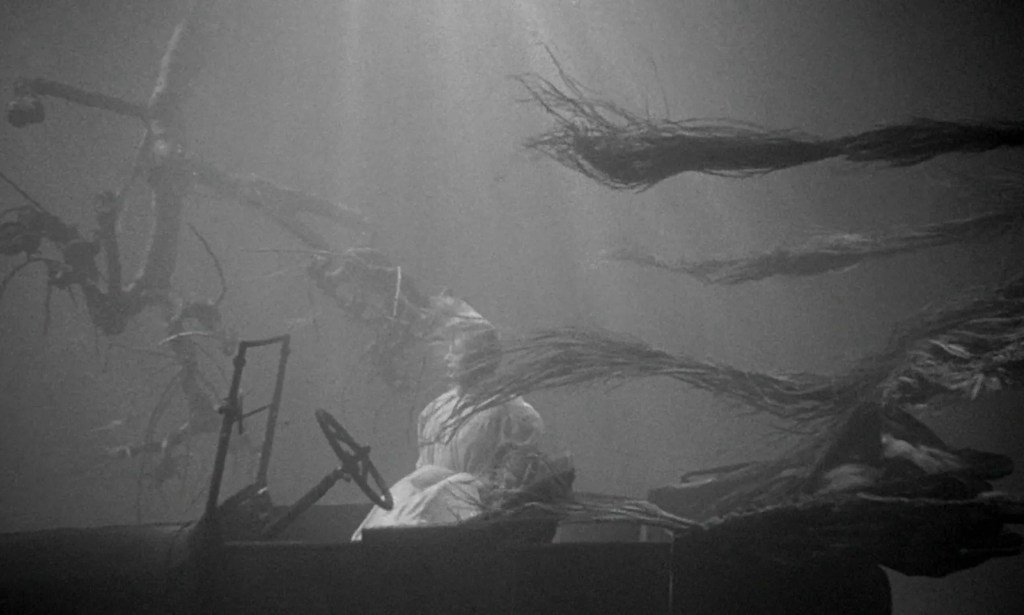
It’s a beautiful sequence in a film stuffed with them. Laughton worked closely with cinematographer Stanley Cortez and several sequences are awash with poetic visual flourishes inspired by some of the great German silent cinema of the 1920s. Who can forget the visually stunning shot of Willa’s body in a car at the bottom of the river, her hair flowing in matching waves with the weeds around her (possibly the most beautiful image of death in the movies)?  From the countryside shots that bring back memories of Murnau’s Sunrise to striking sets that seem to have emerged from The Cabinet of Dr Caligari. Most striking is the high-ceiling, Church-like set that is Powell and Willa’s bedroom, a shadow-laden expressionist nightmare. The scene is played with the same carefully choreographed expressionist force, from Mitchum’s vivid gestures to Winter’s corpse-like resting.

Death comes from Mitchum’s Preacher, one of the great monsters in cinema. With those famous ‘Love’ and ‘Hate’ tattoos, Mitchum makes the role truly terrifying. Mitchum kept up a studied public contempt for acting, but he immerses himself in Preacher in a way he did with few other roles. He makes him horrifyingly charming (he wins adult confidences easily) and his smooth gravel-voice and masculine bearing are both imposing and intimidating. But Mitchum also embraced the weirdness, the psychopathy of a man who murders without a second thought while keeping up a private conversation with the Lord. Preacher is an animalistic demon wrapped up in human skin – he lets out the most bizarre, piercing screams when foiled or injured – twisting his body into unsettling shapes before his misdeeds or letting his eyes boil with anger and disgust (most particularly at sex, something he seems to find repulsive and fascinating).

It’s an extraordinary, terrifying, monstrous performance unlike almost everything else in Mitchum’s career in its willingness to go to such twisted, eccentric, unnatural extremes. Mitchum credited Laughton as his finest director – and Laughton’s skill with actors is clear from all the performances. Shelley Winters’ has rarely been better in a role she skilfully downplays, as an unhappy woman, desperate for redemption, forced to feel ashamed of her desires. The two children are very good, in particular Chapin’s frequently raw panic and trauma and determination. The rest of the cast is stuffed with striking, Dickensian pen portraits, performances of striking eccentricity.

These performances fit within the magical realism of the film in a film that is as stylised as this. Again, I can’t imagine that audiences at the time – used to blockbusters, shot on gloriously realistic locations – were ready for something that aped so strongly the artistic flourishes of silent cinema. But it works spectacularly for a film about a children’s semi-magical quest into the wilderness. It’s hard to think of another film that leans so completely into such an aesthetic unreality as this one – even the town the kids eventually escape to feels like it’s a movie set rather than a real place.

The film’s final act in the home of Miss Rose Cooper is not as strong as those before. There is something rather po-faced and self-satisfied about the slightly clumsy moral message of finding faith and goodness which feels rather twee and disappointing considering the gothic film we’ve just watched. The film’s final sequence, on a peaceful Christmas day, belongs in a more conventional film (even though you could argue it’s also a conventional fairy tale ending). Much as I enjoy several moments of Lillian Gish’s performance as a tough old woman – like a shot-gun wielding Whistler’s Mother – the shift of focus away from Preacher’s demonic schemes feels like a loss.

The Night of the Hunter, for me, isn’t the complete masterpiece it’s sometimes hailed as – there are clumsy moments (I would agree the Tom & Jerry Preacher chase feels tonally out of place, and neither the opening or closing is strong), but it’s also filled with moments of pure cinematic magic – and has a performance from Mitchum that is one for the ages. Its imagery is beautiful, it’s tone mostly perfect and its imagination limitless. The greatest sadness about watching it is that Laughton never directed again – based on this, imagine how good his next film might have been?

Anora (2024)

Anora (2024)

Superb mix of tragedy, farce and social commentary laugh-out-loud-funny then suddenly deeply moving

Director: Sean Baker

Cast: Mikey Madison (Anora “Ani” Mikheeva), Mark Eydelshteyn (Ivan “Vanya” Zakharov), Yura Borisov (Igor), Karren Karagulian (Toros), Vache Tovmasyan (Garnick), Aleksei Serebryakov (Nikolai Zakharov), Darya Ekamasova (Galina Zakharova), Lindsey Normington (Diamond), Ivy Wolk (Crystal)

Who doesn’t love a Cinderella story? A plucky young woman comes from nothing to find a life of love and riches she never dreamed of is at the heart of dozens of fairy tales. And films for that matter: it’s impossible to not think about Pretty Woman when watching Anora. In fact, you could argue the at-times surprisingly charming, laugh-out-loud funny but cold-eyed realism of Anora is a Pretty Woman corrective, as if Richard Gere woke up a few days later, introduced Julia Roberts to his friends and family and immediately wondered what the hell he had done.

Not just that but Mikey Madison’s beautifully performed force-of-life Ani (real name Anora, but she doesn’t like it) feels far more like a high-end-stripper-and-occasional-sex-worker than Julia Roberts. She’s 24-years-old, living in Brighton Beach and working in a glossy Manhattan strip club. One night the manager asks her to entertain Ivan (Mark Eydelshteyn), the dissolute, immature son of an extraordinarily wealthy Russian oligarch, because she can speak Russian. Ivan is taken with Ani, paying her $15,000 for a week as his girlfriend that peaks (after a hedonistic stay in Las Vegas) in a marriage proposal. Eloping, Ani returns home believing her life has changed forever. That illusion is shattered when Ani’s godfather Toros (Karren Karagulian), and heavies Garnik (Vache Tovmasyan) and hired muscle Igor (Yura Borisov) turn up at their home (really, of course, Ivan’s parent’s home) under strict instructions that the marriage must come to end. Over a long 24 hours of exasperation, farce and slow realisations our Cinderella story collapses.

Anora is a brilliant film, superbly directed by Sean Baker. You’d expect a film of cold-eyed social realism – and there are elements of this in Anora – but it’s also a hugely loveable, charming, surprisingly hilarious and deeply felt film, perfectly paced as its story develops across a series of events that beautifully lead into each other. A lot of its success comes from Mikey Madison’s extraordinary performance, one of those star-making force-of-nature roles where you start off liking her and end up loving her. Madison is warm but prickly and spikey, vulnerable but determined, worldly but naïve, someone who fights her corner to the end but can’t see any change at forming her own future. Madison embodies all this perfectly, switching from wide-eyed naïve delight at her luck, to spitting, incandescent fury when defending her rights, to an increasingly desperate disillusionment mingled with self-disgust as her dreams collapse around her.

Similar to his previous films, Baker presents the world of sex work with understanding and compassion. There is nothing leering about the lens of Anora, even as it opens with a pan (sound tracked to a disco remix of Take That’s Greatest Day) along a row of dancer. Baker understands the professional drudgery of exotic dancing, the hard work and effort needed to give each client the best experience. Ani is a master of ‘put the client first’ patter, her sing-song Brooklyn accent filled with awe at their dull lives, helping her clients believe they are special. What’s striking about Anora is this a world Ani needs to be ‘saved’ from as such – she’s comfortable with her profession, is good at it and understands it’s limits – but it one where she has subconsciously learned her value as a person is directly related to her body and what she is willing to do with it, complex feelings that return at the film’s conclusion with shattering impact.

What she doesn’t truly understand perhaps is people in the long-term. So swept up and impressed with Ivan’s ostentatious wealth, she misses all the clues to his true character. Anyone who still moves around his apartment by letting his feet slide across the floor, who doesn’t know where the water in the house is kept, plays video games obsessively and hurls himself into sex with the rabbit-like intensity of a horny teenager is about a million miles away from the app developer she first imagines he is. Ivan – very well played by Mark Eydelshteyn – might be sweet, excitable and full of joie de vivre, but he’s also staggeringly immature, extremely selfish and barely thinks about anyone other than himself. Or maybe Ani does notice, but she’s so used to being part of a perverse service industry, she assumes this is normal. Ivan may profess to love Ani, but he is the grasping, self-obsession of a spoilt teenager who no-one has ever said no to.

Baker’s care and regard for his characters is beautifully done – in fact what’s striking about Anora is how characters who at first feel peripheral and marginal are organically grow, emerging over time as crucial figures. In fact, what’s striking about it is that it becomes very much a film about class: about the have and have-nots and how all of us – from put-upon fixer to stripper – have more in common with each other than with the super-rich, to whom everyone else are nothing but staff, there to meet their needs. There is only a small degree of difference between the cleaner Ivan teases while she cleans his floors and Ani who he teases while she allows him to get his end away in bed.

This become clear when the film enters it’s hilarious second act, as Ivan’s godfather Toros (a side-splitting performance by Karren Karagulian as man on the verge of a nervous breakdown) can barely hide his resentment at being Ivan’s dogsbody – while still terrified at how his super-powerful parents could ruin Toros’ life in seconds (and clearly wouldn’t think twice about it). Such is their power, Toros leaves his own child’s christening to clean up Ivan’s mess – and its clear he’s been doing this his whole life (his first appearance is easy to miss, ordering Ivan’s drunken friends to get off the sofa at the debauched New Year’s party he throws). Equally good is Vache Tovmasyan as the increasingly bemused Garvik, medicine addled and slowly losing his composure over one never-ending night.

What these characters have in common – along with Yuro Borisov’s Igor, hired muscle like Ani valued only for his physicality – is that to their employers they are less people and more items of furniture or household utensils. Ivan is no different from his tyrannical parents, who may deplore their son’s selfish wastefulness but have never done anything to stop it. Anora’s tragedy (among the comedy) is watching (and Mikey Madison does this beautiful in a series of micro reactions) Ani release only the thinnest slither of affection makes her any different from Ivan’s cleaner. To Ivan, she’s a status symbol – an attractive woman, great in bed who his hangers-on can be impressed by, a tool for rebellion, marrying her the ideal fuck an immature teenager can imagine for the parents he fears and resents.

Baker’s film unfolds all this with astonishing skill, but also an overwhelming energy and joy – and I have to stress again, that Anora’s middle section is hilariously funny, much more so than many conventional comedies – but also an empathy that eventually lands with a devastating and surprising force. Mikey Madison’s extraordinary performance deeply invests in Ani, understanding how her spiky exterior hides a vulnerable interior she rarely exposes. Every performance is outstanding – kudos also to Yuri Borisov who so subtly draws Igor’s quiet decency under his thuggish exterior, that his growing prominence in the film feels completely natural.

Anora is a film that deconstructs the reality of Cinderella stories. But it’s also a film that feels very much about the world today, where all of us have our lives directed and influenced by the super-wealthy in ways we have become so used to, we don’t even notice it anymore. It’s more obvious with strippers, cleaners, fixers and hired muscle. But if Ivan’s parents sank a business, how many families would be drowned in the waves? Under the heartfelt characters, the superbly paced drama, the farce and the emotional moments, Anora captures a universal truth about our modern age that all of us, like Ani, have tried to close our eyes against.

Elmer Gantry (1960)

Elmer Gantry (1960)

Burt Lancaster gives a magnetic, Oscar-winning, performance in this entertaining plot-boiler

irector: Richard Brooks

Cast: Burt Lancaster (Elmer Gantry), Jean Simmons (Sister Sharon Falconer), Arthur Kennedy (Jim Lefferts), Dean Jagger (William L. Morgan), Shirley Jones (Lulu Bains), Patti Page (Sister Rachel), Edward Andrews (George F Babbitt), John McIntire (Rev John Pengilly), Hugh Marlowe (Rev Philip Garrison), Joe Maross (Pete)

Elmer Gantry (Burt Lancaster) has the patter down perfectly. He can charm, wheedle and turn a phrase to set the whole room alight with laughter. He wants success but the big break never comes, perhaps because he’s selling two-bit vacuum cleaners rather than something people really want. Elmer is smart and works out, when everyone is afraid of dying, it’s a captive market for salvation. With his seminary background, he’s a natural preacher and inveigles himself into the revivalist roadshow of Sister Sharon Falconer (Jean Simmons) which his force of personality shifts into a fire-and-brimstone exhibition of frenzied religious passion – just the sort of thing that gets the punters back into the church. But when the roadshow moves to the big city, will Gantry’s young affair with priest’s-daughter-turned-prostitute Lulu Baines (Shirley Jones) come back to bite him?

Elmer Gantry was seen as controversial and even outlandish at the time of its release – so much so a lengthy pre-credits opening crawl distances it from all those decent servants of the Lord who were worried it was tarring them with the same brush. But with TV evangelists raking in the cash and travelling preachers whipping crowds up into wild-eyed ecstasy, Elmer Gantry doesn’t seem so outlandish these days. Richard Brooks film adapts the middle-act only of Sinclair Lewis’ sharply satirical novel, and while it does smooth down the rough edges and offer touches of redemption for its charismatically selfish hero, it’s still a very entertaining plot-boiler with a well-delivered message and subtle character development.

Above all though it’s a defining star-vehicle for a perfectly cast, Oscar-winning, Burt Lancaster. Elmer Gantry plays to all his strengths: charismatic, larger-than-life and charming, overflowing with boundless energy and nimble, physical grace. Lancaster’s intense eyes and excitable grin burns through the screen and he’s totally believable as the sort of rogue everyone knows is a rogue but give him a pass because he’s so likeable. And he nails the magnetic charisma of fire-and-brimstone preaching, full of self-aggrandising comments about his own holy conversion from salesman to man of God. It helps that Lancaster’s physical prowess (at one point he does a body slide down the full length of the aisle mid-sermon) really helps build Gantry’s magnetic presence.

Elmer Gantry superpower isn’t that he’s shameless – he looks suitably guilty when calling his mother on Christmas day to explain, once again, he isn’t coming home – but that he can compartmentalise and forget shame so quickly. He manipulates and uses people with such charm they either don’t notice or don’t care – from charming clients on Christmas Eve with dirty stories to plugging Sister Sharon’s naïve assistant Sister Ruth (Patti Page) for details on Sharon’s life that he will then use to get his foot in the door of her roadshow. Even cynical journalist Jim Lefferts (Arthur Kennedy, warming up for effectively the same role in Lawrence of Arabia), who knows he’s a complete bastard, still finds him a great guy to hang out with.

But the truth is Gantry corrupts everything he touches. It happens by degrees, pushed along with winning arguments and eager ‘I’m just trying to help’ excitability, but its inevitable. Before he arrives, Sister Sharon’s roadshow is a dry but heartfelt and earnest mission focused on winning converts. Under Gantry’s influence it becomes religious entertainment. Because Gantry knows people need to have their passions stirred to really invest in something, and mesmerising patter is a huge part of that. Lancaster’s delivery of these showpiece sermons drip with eye-catching, inspiring passion – even when we know he’s a hypocritical bullshit artist who probably doesn’t truly believe word he’s saying, but sure does believe it in the moment. When even we feel stirred by it, is it a surprise his audiences start to get whipped into a frenzy, barking at devils and clawing across the floor to be saved by Gantry’s touch?

Sister Sharon’s manager and sponsor William Morgan (Dean Jagger skilfully playing a character who is far more susceptible to manipulation than he thinks) might have his doubts, but it works. Elmer Gantry takes a satirical swing at the Church as the reverends of the town of Zenith swiftly put aside any doubts (other than straight-shooter Garrison, inevitably played by Hugh Marlowe) and bring Sister Sharon’s Gantry-inspired roadshow into the big city to help drag more punters (and it’s quite clear that they see congregations as customers for religion) into their church. Elmer Gantry gets some subtle blows in on the commercialisation of the Church, even if it is careful to largely distance it as a whole from the tactics of Gantry.

Gantry’s corruption also touches Sister Sharon herself. Well-played by Jean Simmons, Sharon is earnest but surprisingly steely but as she lets a little of Gantry’s shallowness into her roadshow, so she starts to compromise on the very qualities that made her stand-out. From entering into a ‘good-cop-bad-cop’ performance for sinners to opening her heart to Gantry’s persistent seduction, Sharon becomes a portrait of corruption by degrees. Brooks’ film also implies in its dark finale that she has allowed herself to absorb Gantry’s spin that she could be a vessel of holy power, which puts her life at deadly risk.

Elmer Gantry is overlong and perhaps relies a little too much on Lancaster’s charisma – it fair to say when he is off-screen it’s energy lags. Its satiric edge is sometimes blunted by focusing on Gantry as the disease rather than a symptom of a church struggling to survive in a secular age. The introduction of Lulu Baines – an Oscar-winning Shirley Jones, playing against type as a bitter floozy – is a little late in-the-day and while her performance is solid enough, the character is more of a cipher in a plot-required final act conundrum than a fully-formed character.

But when the film focuses on Gantry, it’s a fascinating character study. How much does he believe in the things he says? Does he feel shame? How ambitious is he? When he says he loves Sharon, does he? Or does he feel everything he says in the moment, but it never sticks? Either way, it’s at the heart of Burt Lancaster’s compelling, charismatic performance which juggles a mountain of contradictions but never loses the sense of the shallow selfishness that lies behind the charm.

The Producers (1968)

The Producers (1968)

A funny gag sits at the heart of a film that’s more cheeky than really funny or clever

Director: Mel Brooks

Cast: Zero Mostel (Max Bialystock), Gene Wilder (Leo Bloom), Dick Shawn (Lorenzo St. DuBois (L.S.D.), Estelle Winwood (“Hold Me! Touch Me!”), Christopher Hewett (Roger De Bris), Kenneth Mars (Franz Liebkind), Lee Meredith (Ulla), Renée Taylor (Eva Braun), Andreas Voutsinas (Carmen Ghia)

“Don’t be silly, be a smartie/Come and join the Nazi Party!” The cheek of a knockabout musical Hitler musical is the sort of stroke of genius only Mel Brooks might have come up with (and got away with). It’s the saving grace of The Producers, an otherwise rather pleased with itself, slight film whose cheeky gags look like they are taking a pop at sacred shibboleths but actually conform rather neatly with common (at the time) perceptions of women, homosexuals and randy old people. So much so, the film looks more braver and cheekier today when its relatively innocent sexism and homophobia comes across as cheeky tasteless fun rather than pretty much being par-for-the-course.

Max Bialystock (Zero Mostel) is the least successful producer on Broadway. But perhaps he can turn that to his advantage when neurotic accountant Leo Bloom (Gene Wilder) points out that overselling shares of a guaranteed flop can make way more money than a hit. They just need a play that will definitely bomb: what better choice than Springtime For Hitler, a ludicrous musical tribute to Hitler written by dim Nazi Franz Liebkind (Kenneth Mars). Just to make sure they get the bomb they need, the duo hire talentless camp director Roger de Bris (Christopher Hewett) and stoned hippie lead (Dick Shawn). What could possibly go wrong? Or, rather, right?

There is a wild comic zaniness to The Producers epitomised by Zero Mostel’s manic energy as Max, a sleazy, sweaty mass of greed and self-obsessed vanity, totally devoid of any sense of shame. The Producers gets away with a lot because, like Max, its utterly shameless and frankly doesn’t give a damn what you think. Whether you find it hilarious or not depends on how much you are taken by provocative humour and scattergun cheekiness. There is an end-of-the-pier quality at the heart of The Producers (in the UK it would have been Carry On Up Broadway). Brooks doesn’t miss an opportunity for smutty postcard humour. It’s all so naughty he gets away with the ridiculousness of a Hitler musical.

A Hitler musical that wisely satirises the Nazi’s Riefenstahl showmanship via ludicrous Broadway choreography (including tap dancing stormtroopers forming themselves into dancing swastikas). Of course, Brooks is clever enough to keep the actual content of the musical purely on a surface level (no talk about what the Nazis actually did beyond aggressive militarism) – combined with Hitler portrayed as a bumbling Hippie full of the streetwise slang of pony-tailed sixties counter-culture. At heart, Springtime For Hitler doesn’t really do anything really more shocking or provocative than put blackshirts into 42nd Street. It also carefully distances itself from the antisemitic elephant-in-the-room by having Bialystock and Bloom rip off the swastika armbands they agreed to wear while wooing Liebkind, throwing them in a bin and spitting on them. It’s a neat balance that allows the film to get away with as much as it does, while never touching the nightmareish darkness of the regime.

Of course, it helps that Brooks is one of Hollywood’s most famous Jews – and that Mostel and Wilder delight in leaning into a very Jewish comedy about a couple of shmucks enjoying being rogues. Wilder in particular is fantastic. While Mostel is at times be a bit much, Wilder’s hilarious snivelling childish timidity (he’s obsessed with a comfort blanket, the loss of which turns him into a mass of bleating despair) ‘blooms’ into the delight of an eternal good-boy finally allowed to be naughty. Wilder gets the balance just right between something larger-than-life and something real and when he talks about Bialystock being his first and only friend, it’s strangely moving.

Wilder, alongside the scenes taken from Springtime For Hitler, provides most of the humour. I’ll be brutally honest – I’ve never found much of the rest of The Producers funny. Nearly every other joke in the film relies on smut and cheek. Bialystock makes what money he does from pimping himself to randy octogenarians (never men obviously, that would be too risqué), and The Producers buys heavily into the idea that the sex lives of anyone over the age 60 is hilarious. It’s a cheap and rather repetitive joke, made over-and-over that Zero Mostel just about manages to sell because he embraces Bialystock’s utter lack of restraint. But it’s a one-note joke that outstays its welcome.

The Producers similarly makes rather obvious, one-note, jokes about all its female and gay characters. (Again, at the time much of this would not have been out-of-the-ordinary, so it actually looks more bizarrely more boundary pushing today). Ulla, Bialystock’s Swedish secretary, is a blonde sex-bomb whose recurring joke is her oblivious sexiness and willingness to burst into erotic dancing at the drop of a hat. She’s explicitly hired by Bialystock as a glamourous piece of eye candy ‘toy’ as a reward for his self-pimping and it’s not particularly funny. Also not particularly funny is the play’s director, a cross-dressing, mincing figure of camp satire played by Christopher Hewett, the main joke being he is a ridiculously overblown queer who wears a dress. Kenneth Mars’ Franz Liebkind – a ridiculous relic of the Reich, incompetent at pretty much everything he attempts – is slightly more amusing, if only because he’s utterly oblivious to his complete uselessness.

Brooks’ film is, you suddenly realise, rather slight. At around 80 minutes, it’s heavily reliant on its show-stopping glimpses of the Nazi musical (and even in that Dick Shawn’s Hipster swagger isn’t as funny as the Broadway parody) and aside from that relies on predictable farce, cheek and smut. Only Gene Wilder really transcends the material with a perfectly timed, strangely touching performance. Other than that, it feels like a film trying very, very hard to be a little bit-naughty, like an over-extended student revue sketch. But “Don’t be silly be a smartie/Come and join the Nazi party”? That is funny.

Champion (1949)

Champion (1949)

Kirk Douglas is a boxing heel in this noirish melodrama full of excellent moments

Director: Mark Robson

Cast: Kirk Douglas (Midge Kelly), Marilyn Maxwell (Grace), Arthur Kennedy (Connie Kelly), Paul Stewart (Tommy Haley), Ruth Roman (Emma), Lola Albright (Palmer), Luis van Rooten (Harris), Harry Shannon (Lew), John Day (Dunne), Ralph Sanford (Hammond), Esther Howard (Mrs Kelly)

What does it take to get to the top? Skill, luck, ambition, determination – and sometimes just being a ruthless bastard. Midge Kelly (Kirk Douglas) as all five of those skills in spades, flying from bum to champ in just a few short years, burning every single bridge along the way. Champion tells the ruthless story of how Kelly alienated his devoted lame brother Connie (Arthur Kennedy), dropped the trainer (Paul Stewart) who discovered him in a heartbeat and used and tossed aside a host of women: dutiful wife Emma (Ruth Roman), would-be femme fatale Grace (Marilyn Maxwell), artistic, sensitive Palmer (Lola Albright) wife to his new manager. As he enters the ring to defend his title against old rival Johnny Dunne (John Day), will all these chickens come home to roost?

Champion is deliciously shot by Franz Planer with a real film noir beauty, in particular the vast pools of overhead light that fill spots of the backstage areas of the various venues Midge fights in. Its boxing is skilfully (and Oscar-winningly) edited into bouts of frenetic, enthusiastic energy – although you can tell immediately that no one in this would last more than 90 seconds in a real ring – and it manages to throw just enough twists and turns into its familiar morality tale set-up to keep you on your toes and entertained. In fact Champion is a gloriously entertaining fists-and-villainy film, full of well-structured melodrama and decently drawn moral lessons. It’s the sort of high-level B-movie Studio Hollywood excelled at making.

For a large part it works because Douglas commits himself so whole-heartedly to playing such an absolute heel, the kind of guy who knows he’s a selfish rat but just doesn’t give a damn. Douglas was given a choice of a big budget studio pic or playing the lead in this low-budget affair, chose Champion – and his choice was proof he knew where his strengths lay as an actor. Midge Kelly is the first in a parade of charismatic, ruthless exploiters that Douglas would play from Ace in the Hole to The Bad and the Beautiful. Kelly is all grinning good nature until the second things don’t go his own way: and then you immediately see the surly aggression in him.

Its why boxing is a good fit for him. He doesn’t quit a fight – pride won’t let him. It’s the quality that Tommy sees in him, after Midge is literally pulled in off the street to pad up the under-card at a challenger’s fight night. Clueless as he is about boxing technique, he refuses to stay down and picks a fight with the promoter on the way out when cheated out of his fee. Champion shows how, for resentful people like Kelly, pugilism is a great way of getting your own back when you feel life has screwed you in some way. Perhaps that’s why he goes for his opponents with such vicious, relentless energy and why he takes such a cocky delight in beating the hell out of them. In fact, Champion could really be a satire on the ruthless, put-yourself-first nature of much of Hollywood, with both Connie and Tommy commenting that the fists-and-showbiz world is a cutthroat one.

What Champion makes clear though is that Kelly isn’t corrupted by fame. For all Douglas’ charming smile, there is a cold-eyed sociopathy in him from the start. Kelly performs loyalty, but it’s always a one-way street. He’ll assaults those who call his weak-willed, more cynical, crutch-carrying brother Connie ‘a gimp’, but he has no real sense of loyalty. He doesn’t even pause for a second when seducing Emma (daughter of the diner the brothers end up working at on arriving in LA) for a quick fumble despite knowing Connie’s feelings for her. Later, criticised by Connie, he’ll just as angrily lash out at Connie, mocking his disabilities, the second his brother starts to make decisions of his own.

Kelly’s ruthlessness towards women is also clearly something innate. He’ll whine like a mule when forced (virtually at gunpoint) to marry Emma, who he’ll immediately leave behind with no interest of hearing from again (until she finally develops some feelings for Connie of course, at which case he seduces her as a point of pride). His sexual fascination for the manipulative Grace – a purring Marilyn Maxwell – quickly burns out, again not pausing for a second in chucking her aside, all but flinging dollar bills on a table as he goes. Even more heartlessly, after showing some flashes of genuine courtliness in his romantic interest in Palmer (a very sweet Lola Albright), he happily takes a cheque from her husband (right in front of her) to never see her again. None of this comes from fame: it’s the sort of guy Kelly is.

And, as Douglas’ smart, self-absorbed performance makes clear, it’s because deep down Kelly always thinks he is the victim and the world owes him a living. There is a strong streak of self-pity in Douglas’ performance, bubbling just below the surface combined with a narcissistic need to be loved by strangers even while he’s reviled by everyone who knows him. There is an escape from inadequacy for Midge in fighting: something he keeps coming back to time-and-again in complaints about the unjust treatment the world has given him in the past, used to justify any number of lousy actions.

Champion unfolds as an interesting study of a deeply flawed, increasingly unsympathetic character with a huge drive to destroy other people, either by words or fists. An excellent performance by Douglas is counter-poised by a host of other strong turns, especially from Arthur Kennedy, whose Connie effectively trapped in an abusive relationship and Paul Stewart’s unromantically realistic trainer who knows the score long before anyone else. Handsomely shot and directed with a melodramatic flair by Mark Robson, it can enter the ring with any number of other boxing films.