Category: Films about disease

Arrowsmith (1931)

Arrowsmith (1931)

An uninspired prestige drama suddenly turns at the end into an intriguingly subversive drama

Director: John Ford

Cast: Ronald Colman (Dr Martin Arrowsmith), Helen Hayes (Leora Arrowsmith), Richard Bennett (Gustav Sondelius), A.E. Anson (Professor Max Gottlieb), Clarence Brooks (Dr Oliver Marchand), Alec B Francis (Twyford), Claude King (Dr Tubbs), Bert Roach (Bert Tozer), Myrna Loy (Mrs Joyce Lanyon), Russell Hopton (Terry Wickett), Lumsden Hare (Sir Robert Fairland)
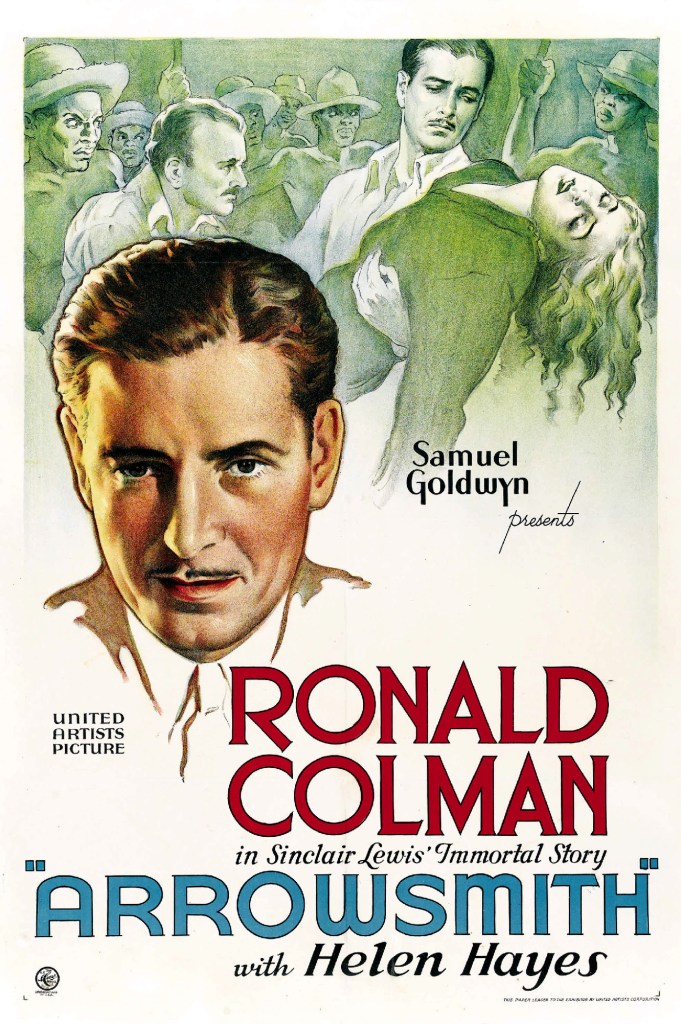
A neat trivia question: what was the first John Ford film nominated for Best Picture? Not many people remember Arrowsmith today – although, since Ford was ordered by producer Samuel Goldwyn to not touch a drop of the sauce while making it, we can be pretty sure he did. Adapted from a hulking Pulitzer-prize winning novel by Sinclair Lewis, it was the epitome of prestige Hollywood filmmaking. It’s a far from a perfect film, but it contains flashes of real beauty and genius – and presents one of the most surprising, subversive visions of infidelity you’ll see in 30’s Hollywood.

Martin Arrowsmith (Ronald Colman) is desperate to be a high-flyer. A scientist and doctor, he’s wants to make his mark – and his mentors such as noted bacteriologist Professor Gottlieb (A.E. Anson) and Swedish scientist Gustav Sondelius (Richard Bennett) think he can. But Arrowsmith postpones his dreams for a spontaneous marriage to Leora (Helen Hayes), before re-embracing science. When plague breaks out in the West Indies, the Arrowsmiths travel there, ordered to test a possible cure on the natives: half will receive the cure, the other a placebo. But temptation and tragedy will be Arrowsmith’s constant companion there.

Arrowsmith is very much a film of two halves (or, in terms of its run-time, two-thirds, one-third). To be honest, much of its first hour is frequently rushed, ponderous and dull, flatly filmed with the air of uninspiring prestige production. Watching it play, it’s hard to connect a film as flat, perfunctory and serviceable as this with Ford’s energy and flair. It’s not helped by the accelerated storytelling. Stuffing in as much of Lewis’s door-stop best-seller as it can (the first fifteen minutes cover as many events as whole movies often content themselves with), the plot barrels along so fast it can leave your head spinning. Scenes either feel like sketches from a larger whole or like narrative cul-de-sacs included to tick a box from the novel.

Arrowsmith feels like a compromised film. I suspect Goldwyn’s aim was to cover the book. But I feel Ford’s interest – if he had one in the film’s opening hour – was the Arrowsmith marriage. On the surface this is your standard loving-husband-supportive-wife pairing. But, underneath, there is a lot more going on here. Everything about their courtship and registry office marriage feels perfunctory. Arrowsmith treats his wife with a fondness that never tips into passion. When she suffers a miscarriage (which prevents her having children), he is sad but moves on remarkably quickly. At one point, Leona discusses the idea of leaving her preoccupied, distant husband who disappears for days on end (you feel she’s only half joking). Arrowsmith calls her ‘old girl’, which feels rather complacent and smug.

You suspect Ford might be hinting that, frankly, Arrowsmith is a self-important shit with grandiose ideas. It’s an idea the film can’t quite push – Ronald Colman’s undoubted charm smooths off Arrowsmith’s rough edges, even while he makes him self-righteous and pompous. But as Leona (Hayes is excellent in subtly suggesting this woman is much more lonely than she admits) watches her house jerry-rigged into a Frankenstein-laboratory (his atrociously poor safety measures will come back to haunt him later) or is left for days alone at home, it’s hard not to feel this is a more complex, strained relationship than the film can openly say.

These half-stated implications lead us into the film’s final act in the West Indies, which almost redeems the slightly confused mish-mash it proceeds. From the opening shot of this sequence – focused on Clarence Brooks’ doctor (notable for treating a Black character as an assured professional) with his patients sitting on a balcony, excluded from the conversation about their health going on down below – it’s impossible not to see Ford’s sympathy more openly lying with the West Indian villagers, whose health is of little interest to the white population and who even our nominal hero (reluctantly) uses as guinea pigs for his cure. This powers us through a half-hour sequence that is by far-and-away the most focused and interesting of the entire film.

This tragedy-laden sequence not only buzzes with an indignation of the unfairness of this system – in which our hero is a semi-reluctant participant – but unleashes the most beautiful, shadow-filled, expressionistic lighting in the film. Ford signposts moments of high emotion by casting people’s bodies in shadow. This mesmerising effect is used brilliantly, combined with shots deliberately echoing each other (most strikingly two contrasting shots of the Arrowsmith home, both framed at low angles with foreground chairs – the second laced with tragedy). Visual imagery reflects, not least the cutting between two cigarettes smoked by the Arrowsmith’s. There is a host of heart-rendering, inventive ideas in visual storytelling: at one point, Arrowsmith’s phone call with a sweating colleague goes dead – we cut to see a shot of the empty phone on the other end bathed in shadow, enough to tell us his interlocutor has literally died mid-call.

This shadow-filled sequence also powers the film’s most subtle moment: possibly the most under-the-wire depiction of infidelity seen in the movies. The original novel made clear Arrowsmith was serially unfaithful. Here, he meets Myrna Loy’s wealthy heiress, to whom he admits an immediate kinship. At night, wordlessly, Ford cuts back and forth between Loy preparing for bed and Colman sitting (bathed in shadow) smoking and possibly waiting. Wordlessly the cuts go back and forth – and then fades to black as we see a shadow approach the door of Colman’s bedroom. You can miss it entirely: but its clear they sleep together. (A late scene with Colman and Loy, with a lingering handhold, feels like proof positive). A late scene of Colman filled with manic energy, in this context feels powered more by guilt and shame.

It’s subtle because we know that in scenes of open emotion and dramatic import we’ve seen faces thrown into shadow. When its repeated here, in an otherwise inconsequential scene, we’re having visually communicated to us something the film can’t openly tell us: Arrowsmith is cheating on his wife. It’s the highlight of a compelling final act, full of drama, tragedy and beautiful filmmaking. When the film leaves the West Indies for its lab-set coda, it returns to flat film-making and sudden, jarring plot developments. But for this half-hour section, it’s a fascinating, oblique, challenging and rewarding film: one of the best short films buried in a large one you’ll see. Arrowsmith may not be a classic, but’s it’s a fascinating film.

Awakenings (1990)

Awakenings (1990)

Decent performances from the leads can’t save a shamelessly manipulative, saccharine movie

Director: Penny Marshall

Cast: Robert De Niro (Leonard Lowe), Robin Williams (Dr Malcolm Sayer), Julie Kavner (Eleanor Costello), John Heard (Dr Kaufman), Penelope Ann Miller (Paula), Max von Sydow (Dr Peter Ingham), Ruth Nelson (Mrs Lowe), Alice Drummond (Lucy), Judith Malina (Rose), George Martin (Frank), Dexter Gordon (Rolando), Keith Diamond (Anthony), Anna Meare (Miriam), Mary Alice (Margaret)

There can be few things more terrifying than being trapped inside your own body, unable to engage with the world, but to be in a sort of waking coma for years. Imagine how wonderful – and how terrible – it might be if you briefly woke to normality, only to return to your catatonic shell? This actually happened to patients of Dr Oliver Sacks – here re-imagined as Dr Malcolm Sayer (Robin Williams) – in a Bronx hospital in 1969. Looking after catatonic survivors of the encephalitis lethargica epidemic of 1919-30, Sayer discovered they responded to certain stimuli: their name, music, catching balls etc. With an experimental drug he discovers he can restore the patients to ‘life’ – foremost among them Leonard Lowe (Robert De Niro), just a boy when afflicted – only to discover the effects won’t last and they are doomed to return to their coma-like state.

It’s such a terrible thing to think about that it even gives genuine emotional force to Awakenings an otherwise hopelessly manipulative, sentimental film that plays like a TV-Movie weepie. It certainly didn’t need the naked emotional manipulation that washes over the whole thing like a wave, with Randy Newman’s sentimental, tear-jerking score swells with every single heart-string tucking moment. Awakenings is so determined to make you feel every single moment it eventually starts to make the story less affecting than it really is. A simpler, less strenuous film would have been more moving rather than this film almost genetically engineered into ‘life-affirming’.

Everything in Awakenings feels like it is always trying too hard. Every moment is laid on for maximum emotional impact. Adapted from Oliver Sacks’ book chronicling individual cases, it presents a stereotypical Hollywood ‘feelings’ film, with lessons for all. Worse, there is a tedious ‘seize the day’ message that keeps ringing out of the film. The awakening is, of course, not only literal but metaphorical – the patients (and their doctors) ‘awoke’ to appreciate life and living more. It’s hard not to think at times there is something rather patronising about partially using Leonard’s brief experience as a lesson for Dr Sayer to stop being so damn timid and ask a nurse out on a date. As traumatic as it is for Leonard to return to his coma, at least Dr Sayer learned to live a little!

It’s a very fake attempt at a hopeful ending to an otherwise down beat true-story. Dr Sayer is a retro-fitted version of Oliver Sacks, sharing many of his characteristics – but not his sexuality or decades long celibacy – and the film presents him, as Hollywood loves to with geniuses, as a shy, awkward type who no-one of course could expect anything of. He combines this with quiet maverick tendencies, putting the patients first against the ‘numbers-first-risk-free’ obstructionist bureaucrats (represented, of course, by John Heard, though he does thaw a little) who run the hospital and poo-poo his ideas.

Awakenings is full of sickly moments of heavy-handed sentimentality – its opening shot of Leonard as a boy carving his name in a bench under the Brooklyn Bridge tells you immediately one of the first places he’ll go as an adult for a wistful smile – that keep trying to do the work for you. (Of course, all the nurses and cleaning staff offer up cheques to help pay for the patients drugs!) The story doesn’t need it. Just seeing the facts of these vibrant adults emerge for a brief time in the sun is moving enough. Leonard quietly, but with dignity, asking the hospital board for permission to go outside alone is more moving than watching him forcibly dragged from the door by porters or seeing him rant on the mental ward he’s been consigned to as a punishment. We don’t need Sayer to literally tell us some things are too sad for him to film, when we can see it on Williams’ face.

The leads are not always immune to the try hard nature of the film, but they do some decent work. De Niro (Oscar-nominated) brings a touching sweetness to Leonard, essentially a boy who wakes in the body of an adult. There is a genuine wonder in his eyes at the world around him – wonder that transforms into frustration at the continued restrictions placed on his freedom. There is something slightly studied about the physical effects (especially in the film’s final act) but De Niro understands that underplaying and quiet honesty is more moving than when the film pushes him towards grandstanding.

Williams is also very good – if at times a little mannered – as the quiet, awkward Sayer. With the less flashy – but potentially more complex role – he again shows how close humour is to pathos. It’s a performance with several little eccentric comic touches, but wrapped up in a humanitarian shell of earnestness that is quite affecting. It’s a shame that the film constantly undermines his restraint by using every conceivable trick of framing, scoring and composition to wring sentiment from him.

But then that’s Awakenings all over. You can imagine the script covered with annotations along the lines of ‘make them cry here’. And it worked with a great many people, the mechanical nature of the film working overtime to tickle the tear ducts. But the film’s utterly unnatural sense of artifice constantly prevents you from really feeling it. You are always aware of Marshall nudging you to remind you of the unbearable emotion and the tragedy of lives not lived. All easily washed down in a narrative structure as old as the hills – Sayer is an outsider who proves himself, he and Leonard fall out then come back together stronger than ever etc. etc. – that continually reminds you of its functional, manipulative nature.

Cries and Whispers (1972)

Cries and Whispers (1972)

Bergman’s heart-rendering, challenging and compelling family drama: a slice of raw pain

Director: Ingmar Bergman

Cast: Harriet Andersson (Agnes), Ingrid Thulin (Karin), Liv Ullmann (Maria), Kari Sylwan (Anna), Anders Ek (Isak, the priest), Inga Gill (Aunt Olga), Erland Josephson (David), Henning Moritzen (Joakim), Georg Årlin (Fredrik)

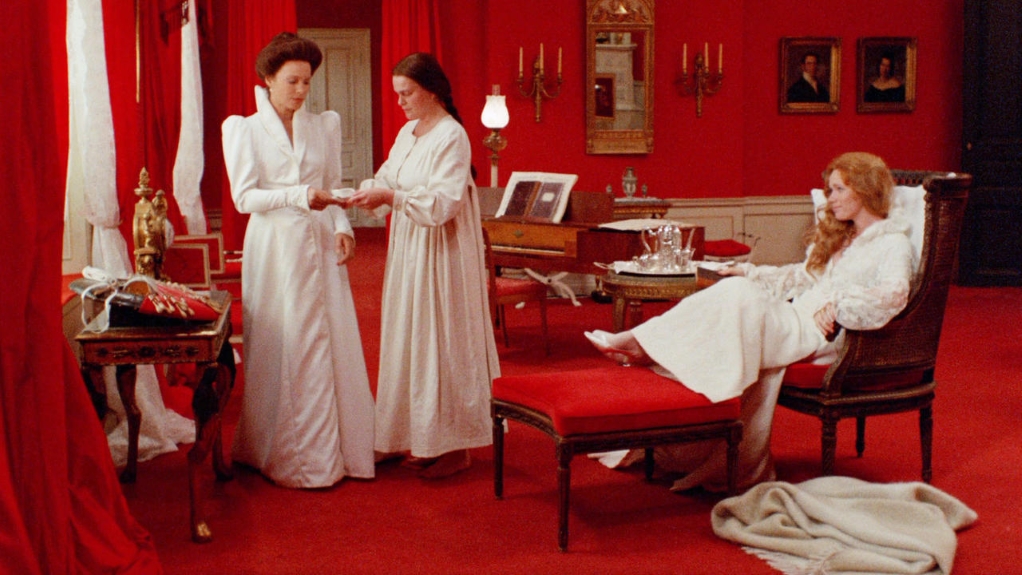
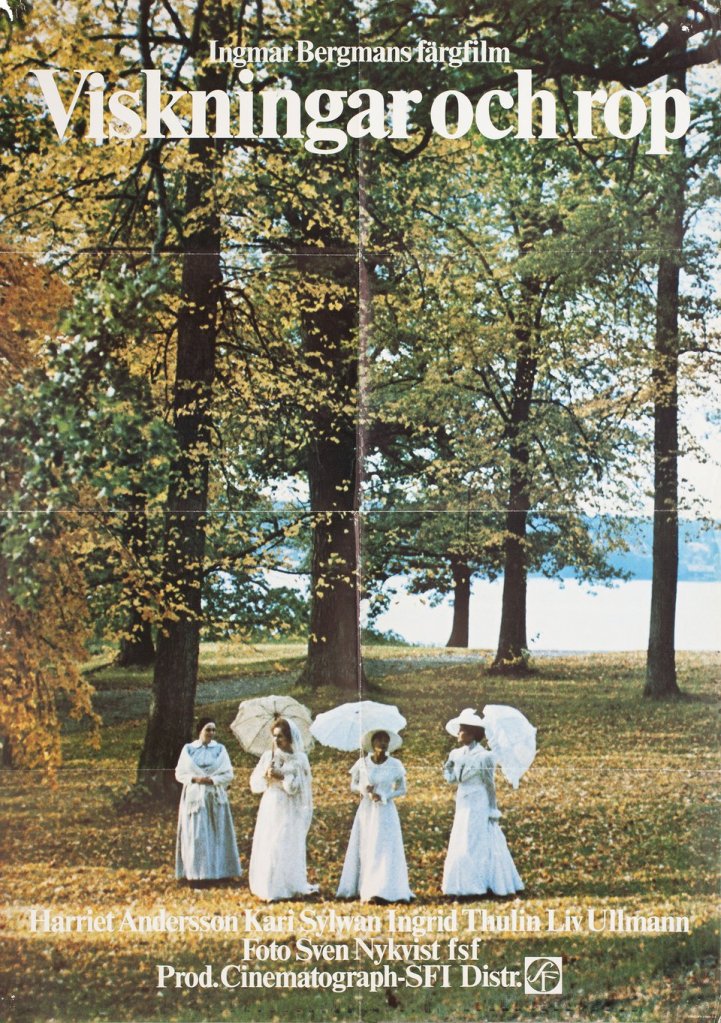
It came to Bergman in a dream: a red-lined room, where four women dressed in white whisper intimate secrets to each other. It became one of his most elliptical, horrifying and haunting films, a cryptic puzzle about life and death, faith and despair, love and hate, sex and violence and almost every human experience in between, all filmed within an imposing (and beautifully shot) red-walled house that turns more-and-more into a nightmareish Satre-style trap. Cries and Whispers sits alongside Persona as one of Bergman’s most successful reaches for the sublimely unknown and if it doesn’t quite touch Persona’s astonishing mastery, it’s remarkable by every measure.

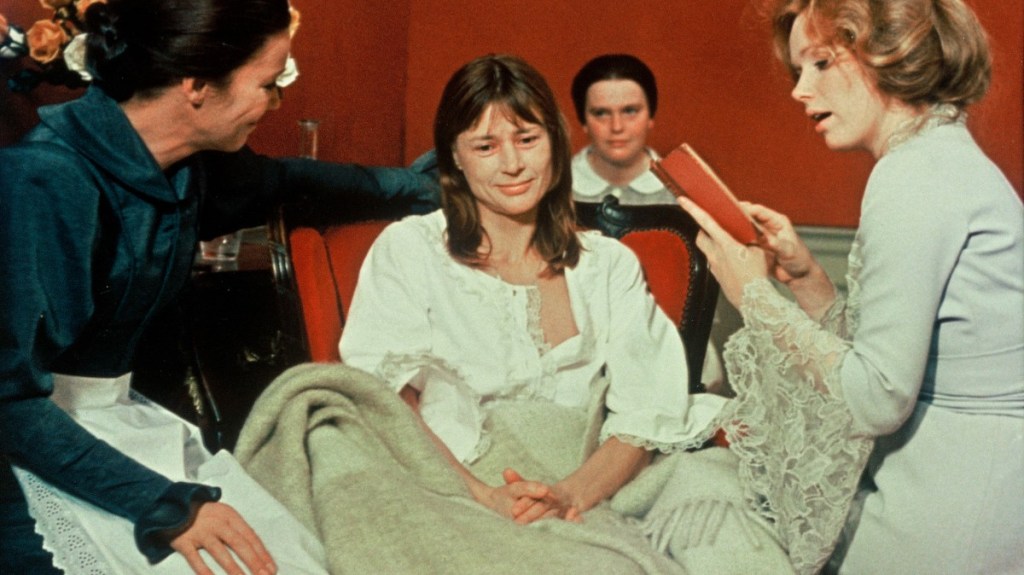
Two sisters gather to nurse a third as she goes through the final days of a long, painful illness. Karin (Ingrid Thulin), the oldest, is professional, distant and repressed; Maria (Liv Ullman) the youngest is sensual, flighty and slightly selfish. The dying Agnes (Harriet Andersson) yearns for love and affection, but is a natural outsider. Agnes is most devotedly cared for by the maid Anna (Kari Sylwan), a young woman who lost a child a few years ago. As Agnes’ final days approach, all four mull on life, their decisions and choices, each trying to grasp some understanding about the great mystery of life.

Cries and Whispers feels like a savage slash of raw pain. Perhaps no other film in Bergman hits like such a punch to the gut. In this red-lined house, everyone is silently screaming behind the whispers (literally so in Agnes’ case, the film opening with Harriet Andersson writhing in wordless agony on her bed for an almost unbearable shot held for almost four minutes). All four of these characters are carrying mountains of disappointment, despair and disillusionments on their shoulders, none of them able to see a way out of the constant grind of simply struggling through existence. You could argue that Agnes has the easiest path in death.

The overbearing red walls – not to mention the fades to ‘red-out’ that seem to drown out the faces of the four women as each stares into the camera before their own memory or dream is staged by Bergman – begins to feel increasingly like a trap. The lack of natural light adds even more to the sense that this is taking place in some sort of prison or oppressive womb, cooking up traumas. There doesn’t seem to be any escape from this pressure-cooker atmosphere (rather like the claustrophobic trappings of The Silence and Persona), with reality starting to fracture and dissolve.

It becomes clear there are decades of unspoken tensions between the three sisters. Karin and Maria seem to be tending for their system more out of duty than love: Maria sleeps through her watch, while Karin feels like a dutiful professional rather than a loving sister. There is precious little sense of intimacy between them. So much so, that both sisters will utterly reject (in a late dream sequence that topples into a nightmare) even the hint of tenderness or contact with the deceased Agnes (Maria will run, screaming, at the very idea). It’s the same between Maria and Karin, who seemingly have nothing except blood in common.

But then they could hardly be two more contrasting women. Liv Ullman is superbly multi-layered as a woman who feels at first flirtatious and light-hearted but emerges as manipulative and selfish with a rich vein of self-loathing, compensated by a malicious pleasure in hurting other people. Her sexual fascination with Erland Josephson’s aloof doctor is based less on his qualities and more on his frank deconstruction of her physical flaws, accentuated by the deep pain and distress the affair causes her husband. Similarly with Karin, she alternates between reaching out to in shared sisterly closeness, then denying she ever felt or said such things a day later.

Like other Bergman films there is dark implication of incest in the relationship between Maria and Karin. In their moments of reconciliation, their physicality (all stroking and kissing) stinks of sexuality, their unheard whispers incredibly suggestive. Is this a foul secret what that has made Karin so deeply disgusted by physical intimacy? This is after all a woman who (in a flourish where I feel Bergman goes too far) cuts her vagina with a piece of glass and defiantly smears the blood over her face in front of her husband to prevent him from claiming his conjugal rights.

Ingrid Thulin is extraordinary as Karin, a deeply repressed woman utterly bereft in the world, who secretly yearns for closeness and contact. She seems though to have a very little idea how to build emotional bridges with people, her manner reserved and cold, unable to even treat the dying Agnes as anything other than a duty. If Maria quietly delights in making people feel bad and is disturbed by feelings of warmth, Karin is unable to even begin to arouse feelings of any sort from other people. She lives in an isolation that has left her deeply unhappy.

Strangely, Agnes herself might even be the happiest – and she’s dying. Agnes is the only person Bergman allows to narrate her own flashbacks (the other three are all introduced in voiceover by Bergman himself). Beautifully played by Harriet Anderson as a woman full of hope, despite the appalling pain of her illness, she is a strange beacon of contentment. The priest at her wake (a beautifully delivered monologue from Anders Ek) even confesses he cannot help but question the strength of his own faith compared to the spirituality of Agnes. What sign is there of God in this world when he punishes with such excruciating pain the purest person in the film?

Harriet Andersson’s performance is not only almost unbearably in its raw physical commitment to pain, but also a quietly moving in its emotion. Agnes is a woman longing to be closer to her sisters – envying Maria’s closeness to their mother as a child (the mother is also played by Liv Ullman) – feeling closer to her mother only when observing her in solitary moments of pain. Her happiest memory is of the three sisters as adults, contently laughing together on a swing. This willingness to embrace love – always a matter of key importance to Bergman – singles her out from the two-faced Maria or the repressed Karin.

It also explains the link to Anna, played with a quiet observance by Kari Sylwan. Frequently silently, moving through the frame or performing duties, Anna is the only person in the house who categorically loves and respects Agnes. It’s she who cares for her, who tends her, nurses her through her pain and most readily responds to her desire for closeness. There is, in fact, a hint of sexual familiarity between the two – it’s very possible to imagine them as lovers. Do Agnes’ family recognise – and envy – that breach of distance, that leads them to offer only the smallest reward for her service and a curt dismissal after Agnes’ death?

Or are Anna’s motives as clear cut and noble as they appear? Grieving the (clearly relatively recent) death of a child, perhaps Anna uses Agnes to fill emotional holes in her own life. Her dream-like fantasy of Agnes’ after death rotates around Anna taking almost complete possession of her deceased mistress, dismissing the sisters and cradling the dying Anna in a pieta like grasp that resembles a mother and child rather than lovers. Is Anna desperately using this moment of death, just as Karin and Maria do, to fulfil longings in herself?

All these ideas are superbly explored in Bergman’s beautifully paced and powerful work, like the best of his films a hauntingly intriguing and challenging work that lingers long in the mind after it finishes. With four very different, but extraordinary performances, at its heart it may at times be a little too intellectual and Bergman may at times go a little too far, but for its extraordinary exploration of raw, vicious pain it can be hard to beat. A challenging but extremely necessary film.

The Whale (2022)

The Whale (2022)

Manipulative and sentimental, Aronofsky’s tear-jerker is dishonest and disingenuous

Director: Darren Aronofsky

Cast: Brendan Fraser (Charlie), Sadie Sink (Ellie Sarsfield), Hong Chau (Liz), Ty Simpkins (Thomas), Samantha Morton (Mary), Sathya Sridharan (Dan)

The Whale is the sort of film that is either going to bring you out in tears or hives. Me? Let’s just say I felt incredibly itchy as I sat through this naïve, sentimental and manipulative film. I hated its dishonesty and its disingenuousness. The only thing I felt move was my stomach.

Charlie (Brendan Fraser) is a morbidly obese, reclusive English professor who teaches online courses with the camera turned off. Nursed by Liz (Hong Chau), the sister of his deceased partner, Charlie has never processed his depression and guilt at his partner’s suicide. Now, facing death from congestive heart failure, his last wish is to finally bond with his daughter Ellie (Sadie Sink) whom he has not seen in the eight years since he left her and her mother (Samantha Morton). Ellie is now an angry, high-school drop-out teenager. But Charlie is sure he can see the good in her.

So much has been made about the morbid obesity of the film’s lead. The prosthetics coating Fraser in layers of fat are impressive. An opening montage shows Charlie struggling to move around the house. Picking something up off the floor is impossible and he has to lever himself out of the bed or into the shower. But the film is hugely pleased with itself that it dares to see a fat person as “one of us”. Aronofsky initially films him like a freak show monster – already patting himself on the back about how “humanising” it will be when we learn that obese people are just as capable of being at the heart of maudlin, self-pitying films as thin ones.

The Whale is adapted from a stage play. Not only does it really feel like it (it’s all set within Charlie’s apartment, with characters announcing their arrival in a neat four-act structure), it also sounds like it. The dialogue is forced, artificial and clumsy, making on-the-nose emotional points. Characters feel like narrative constructs. Sadie Sink’s Ellie is the sort of precocious-but-angry tear-away genius brat you never find in real life. Ty Simpkins’ hipster-turned-missionary is more a collection of quirks than a person. The script leans heavily on clumsy metaphors – a walk on the beach, bible quotes, Ellie’s childhood essay on Moby Dick – milked for all they are worth.

Worst of all, a film that prides itself on being about the power of honesty feels like a big, walloping lie. It lies about its characters and it lies about the real issues that drive them. Firstly, it never once touches on issues of mental health and addiction that have led Charlie to this state. Sure, we get a scene of him compulsively eating. But Liz, his “caring” nurse, brings him medicine and huge piles of food (a massive bucket of fried chicken, enormous sub sandwiches…). It’s like caring for an alcoholic by bringing him chicken soup and a huge bottle of whisky. How is this helping someone recognise and deal with an addiction? Which is what this level of over-eating is.

Worst of all the film treats this as a “charming friendship between two eccentrics”. It eventually touches on the fact they are both hurting from the suicide of Charlie’s partner Alan. But never once is the film brave enough to link their behaviour now to this act. Charlie failed to get Alan help, keeping him away from the world and others, believing that the isolated love of a single person would solve his depression. Liz repeats the same mistakes. She isolates Charlie, encourages him to eat, never challenges him to seek help or process his grief, and creates a safe environment for him to destroy himself. If he was a drug addict, what would we say about a carer who draws the curtains and encourages him to shoot up? We’d be calling her the villain of the piece.

That’s before we even dive into the film’s lack of honesty about Charlie. It’s sad to think of a character being so depressed he’s eaten himself to death. That’s awful – even if the film never wants to reflect on the emotional and psychological reasons for this (because that would be depressing in a film as desperate to be upbeat as this one). But by showing us Charlie at the end, full of regret and self-pity, the film white-washes his mistakes and selfishness. There are clear flaws in Charlie that contributed to this state – however much the film wants to present it as a terrible accident.

Charlie abandoned his family and made no contact with his daughter for years (he complains it was too difficult and tries to blame her mother), leaving her traumatised. The film loves its sentimental device of Charlie reading to himself Ellie’s childhood essay (which he knows by heart). But this is, basically, a selfish fantasy: an idea for Charlie to cling to that he was a good Dad and Ellie a kid with a future, radically different from the actual reality. Just like he never addresses why guilt and depression drove him to destroy himself, so he refuses to deal with the issues Ellie is facing now by simply not acknowledging that she has changed from his idealised version of her as the sweet, sensitive girl who knew Moby Dick was really about Melville’s unhappiness.

Instead, the film suggests her mother is the one who really failed. Charlie – who has spent about an hour in her company in eight years – would have donebetter. Just like Liz passing him chicken buckets, Charlie’s solution to solving his daughter’s problems is to smother her with love rather than get her to ask herself why she does and says the cruel things she does. How can the film not see he is repeating the same ghastly cycle again, encouraging a depressed, vulnerable person to stick her head in the sand and hope for the best? Well, he’s wrong. And the fact that the film doesn’t see this means it’s lying to itself as much as he is.

By the end you’ll be stuffed by sentiment, greased by the insistent score. Every single frame is like being walloped over the head while Aronofsky shouts “cry damn you”. The dreadful script is well acted, even if no-one ever makes these device-like characters feel like real people (except maybe Morton). Fraser is committed, a lovely chap and I’m very pleased he’s having “a moment”. But this is a simplistic character, that requires little of him other than to wear a fat suit and cry. He never once really delves into any complexity. It’s also true of Hong Chau, a collection of quirk and tears.

The Whale is a dreadful film, manipulative, artificial and full of naïve and dishonest emotions that avoids dealing with any complex or meaningful issues. Instead, it thinks it’s achieved something by making you see a fat person as a real person. There is almost nothing I can recommend about it.

12 Monkeys (1995)

12 Monkeys (1995)

A world-ending-virus can only be cured through the power of time-travel in Gilliam’s twisty, paradox time loop

Director: Terry Gilliam

Cast: Bruce Willis (James Cole), Madeleine Stowe (Dr Kathryn Railly), Brad Pitt (Jeffrey Goines), Christopher Plummer (Dr Leland Goines), David Morse (Dr Peters), Jon Seda (Jose), Christopher Meloni (Lt Halperin), Frank Gorshin (Dr Fletcher), Bob Adrian (Geologist), Simon Jones (Zoologist), Carol Florence (Astrophysicist), Bill Raymon (Microbiologist)

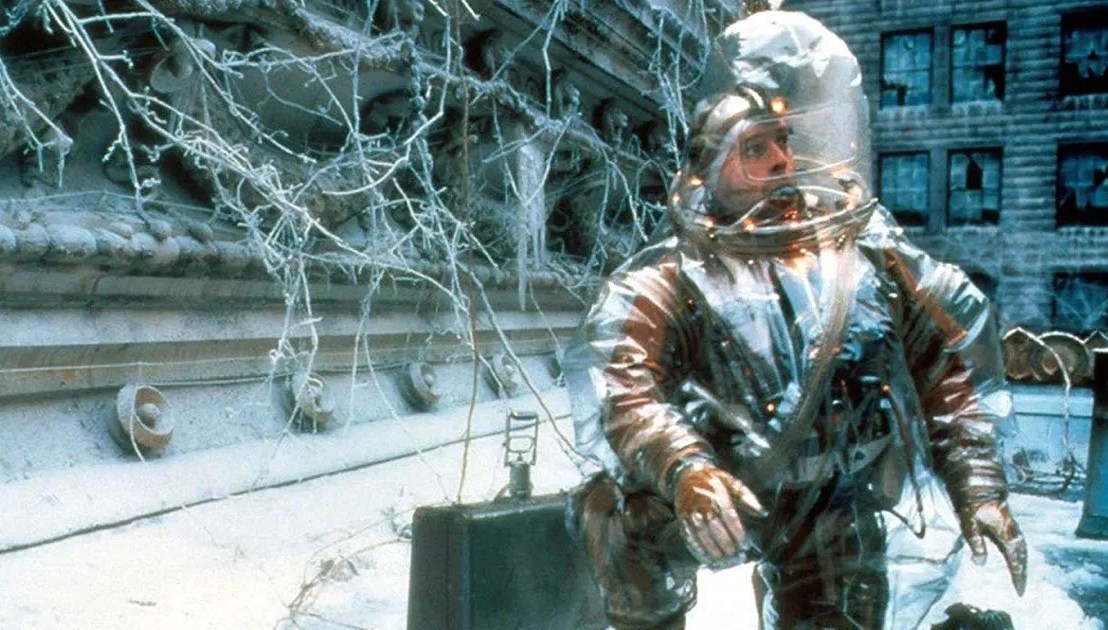
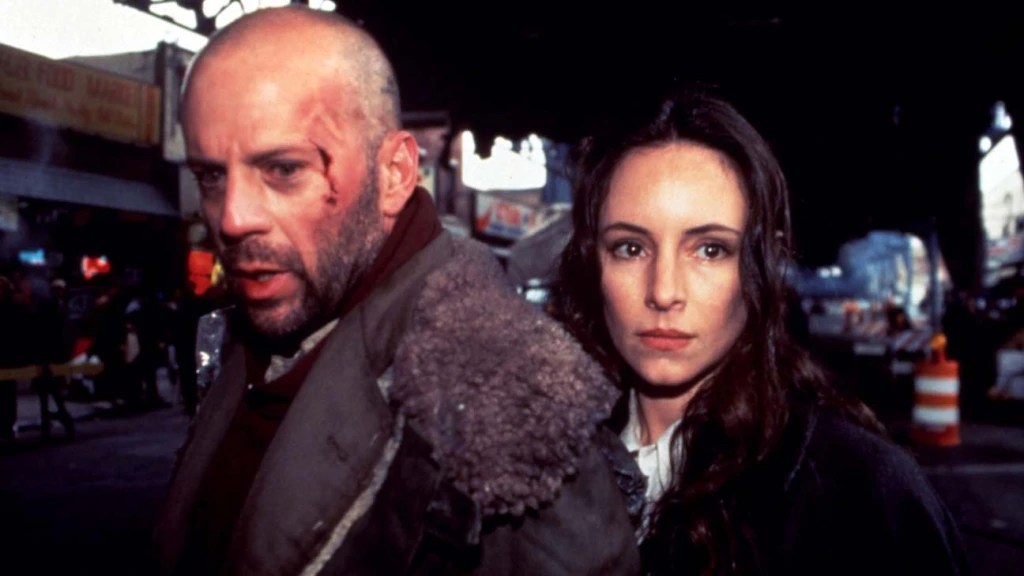
2035 and the world is a plastic-coated hell, where what remains of mankind huddle below the Earth in rudimentary, environmentally controlled, airtight refuges. The surface is a dream, now home to a deadly virus that wiped out 99% of the population. That virus was unleashed in Philadelphia in 1996: nothing can stop that. But time travel can help the scientists of 2035 gain a sample of the original pre-mutation virus. They believe it was unleashed by an organisation called “The 12 Monkeys”. Track the organisation in the past and find an original sample of the virus. Easy right?

Wrong. Time travel messes with your mind, making it hard to tell what’s real and what’s not. The travellers are penal “volunteers”. James Cole (Bruce Willis) is selected as he has a photographic memory and a strong memory from 1996 of witnessing a Philadelphia airport shooting, that will help send him back. However, he’s flung back to 1990 and thrown into an asylum, treated by Dr Kathryn Railly (Madeleine Stowe) and sharing a room with environmentalist Jeffrey Goines (Brad Pitt). Rescued and correctly sent to 1996, can Cole convince Railly he’s telling the truth and track Goines who has become the leader of the 12 Monkeys?

12 Monkeys is one of the most intriguing time-travel films ever made – and its future, ripped apart with plague, seems chillingly closer today. It puts a vulnerable, scared person at its centre – and makes him a dangerous, inarticulate Cassandra who reacts with violence when no-one listens him (which they never do). It repeatedly tells us things cannot end well, but still gets us hoping they might anyway. It presents puzzles that provoke debate and stretch the imagination.

Gilliam’s most main-stream film is an eccentric, unsettling, tricksy film that juggles time travel and paradoxes, as well as mental health and the nature of reality. Shot with a Dutch-angle infused oddness – reflecting its hero’s mental unbalance – and scored with a French-inflected whirly-gig musical theme that is reminiscent of the demented street people that pepper the film (and may, or may not, be other unbalanced time travellers), it constantly puts you on edge and unsettles.

This extends to its casting, which takes two Hollywood superstars – Willis and Pitt – and deglamorises them to a shocking degree. As Cole, Willis is shambling, vulnerable, scared and struggling to distinguish between reality and fantasy. An 8-year-old boy when the virus destroyed the world, in a way he’s never grown up. He looks around the world of the past with a wide-eyed wonder (he adores the sun and the feel of the soil beneath his feet) but has the stroppy impulsiveness of a maladjusted teenager. He’s so twitchy and insecure, you start wondering if he is the mentally disturbed man who imagines he’s from the future, that his doctors think he is. It’s Willis’ least-Willis performance ever and one of his finest.

Similarly, Pitt pushes himself as the disturbed, aggressive Goines. Prone to obsessive rambling, that stretches Pitt’s languorous vocal register (he trained for months to improve his vocal range), Pitt’s performance is wide-eyed, unpredictable and unsettlingly dangerous. With a single eye swollen and askew, it’s a performance that plays with being OTT but manages to work because he mostly avoids actorly showing off. Madeline Stowe, by contrast, has the most difficult role as the ‘normal person’, a sceptical psychiatrist becoming more and more convinced Cole is telling the truth.

Of course, despite the film’s efforts to play with reality, the audience are always pretty certain he isn’t wrong about the future. But, with the sight of fellow deranged time travellers, not to mention Willis’ vulnerable performance, that Cole could still be crazy. Even if you are right, doesn’t mean you are sane.

Gilliam’s surrealist future helps with this. Every time Cole is pulled back to 2035, the world becomes ever more deranged. Is his grip on reality eroding, as he is feared it is. Design wise the future is a triumph – but it also seems eerily similar to the 1990 asylum Cole is in. Has the building, and the things in it, been repurposed in 2035? Or, as the scientists of 2035 become ever more surreal (including serenading Cole at one point in a Dennis-Potteresque fantasy), questioning Cole via a circular floating series of TV screens while he sits in a suspended chair, is Cole’s grip on reality gone?

It keeps the tension up in the ‘past’ plotline, even as the things Cole has seen in the future – strange messages on walls, photos, voicemail messages – accumulate. 12 Monkeys is a fascinating time-travel movie, that establishes from the very first moment it is impossible to change the past (something the audience, like the characters, get sucked into forgetting). After all, if the plague was stopped, then time travel would never be invented in the first place. All Cole, and the other travellers, can do is collect information.

But that doesn’t stop the future influencing the past. Goines decides to form the 12 Monkeys based on a conversation with Cole in 1990. Dr Railly becomes fascinated with apocalyptic predictions – writing a book that will influence the man planning viral annihilation in 1996 – only because she meets Cole. And, above all, 2035 Cole’s presence in 1996 leads to that strong childhood memory happening in the first placce. The final reveal of the meaning behind Cole’s recurring memory-dream is the perfect example of a time-loop closing (so much so the scientists in the future bend over backwards, giving Cole a doomed mission, to ensure it happens).

It also explains why he is drawn towards Stowe’s Railly, who resembles (with the exception of her lack of Hitchcock Blonde hair) the woman in his dream. The relationship between Cole and Railly develops into a slightly forced romance (it feels like a script requirement, for all Gilliam’s taking the characters to watch Vertigo to hammer home the obvious contrasts). But when it focuses on two people drawn together for reasons they can’t quite understand (and there are hints of predestination) it just about works. That and the commitment of both actors to the roles.

12 Monkeys is about 15 minutes too long (it’s 1990 section outstays its welcome), especially as the audience is never in doubt that the plague is real (after all this is a movie). But Gilliam keeps us on our toes with how confident we feel in Cole: we’re repeatedly shown he’s violent, inarticulate and impulsive. The final half of the film, where the origins behind events we have been shown or heard in the first half, is fascinating. The tragic turns of the film’s paradoxical temporal loop is brilliantly executed and haunting. Gilliam’s film is quirky, unsettling and a design triumph: but it also tells a fascinating story. It’s his most accessible and crowd-pleasing film.

Spencer (2021)

Kristen Stewart channels the People’s Princess in Spencer

Director: Pablo Larrain

Cast: Kristen Stewart (Diana, Princess of Wales), Timothy Spall (Major Alistair Gregory), Jack Farthing (Prince Charles), Sean Harris (Chef Darren McGrady), Sally Hawkins (Maggie), Jack Nielsen (Prince William), Freddie Spry (Prince Harry), Stella Gonet (Queen Elizabeth II), Amy Manson (Anne Boleyn)

There is no more famous fairy-tale-gone-wrong in history than Prince Charles and Diana. It’s been explored in countless books, memoirs and films. It’s the meat of Netflix’s The Crown. Interest in it has been rekindled again after Prince Harry’s royal resignation. It’s a fable (also what this film claims to be, based, it claims, on “a true tragedy”) that will only become more of a legend. At its centre is Diana, a figure idealised and enshrined by a tragic early death, who had all the warmth, lovability and public humanity the more reserved Charles lacked. Diana’s romanticism has always helped her be remembered as the hero of this tragedy, with Charles the villain. You’ll see no difference in opinion here. Spencer is a fantastia on Diana that feels like it has been squeezed out of the pages of a host of sentimental pro-Diana memoirs from the likes of Paul Burrell.

Set over a three-day Christmas holiday at Sandringham, around 1991, the film follows a disastrous holiday of psychological depression, despair and isolated crisis for Diana (Kristen Stewart) as her marriage to Charles (Jack Farthing) finally, irretrievably, collapses. Over those days, Diana hides in her room, throws up meals, is treated with stony silence from the Royal family and quietly bullied by Sandringham equerry Major Gregory (Timothy Spall). Her only friends are besotted loyal dresser Maggie (Sally Hawkins) and avuncular chef Darren (Sean Harris) and her only moments of happiness are with her two young sons, giving her the only taste she has of a normal life.

If there is one thing Spencer does very well, it is giving an insight into how overbearing and crushing depression can be. Diana is erratic, frequently tearful, prone to fantasies and suffers through prolonged periods of self-loathing, exhibiting as chronic vomiting after every meal and possible self-harm. Stress makes her sharp and waspish with those she doesn’t trust and almost overwhelmingly needy with those she does. Larrain visualises this with muted pallets and drained colours, showing this world in the same oppressive, depressing light as Diana see it, while Johnny Greenwood’s excellent score makes superb use of a series of unsettling chords to constantly put us ill at ease.

The downside is, the film so completely consumes the Diana-side only, that it feels like being crushed to death by a collapsing mountain of “People’s Princess” bargain-bucket memoirs. Diana is always the victim and never at fault. The film takes an idealised view of her as “one-of-us” chewed up and spat out by an uncaring system, with the Windsors as monstrous gargoyles. (A bit rich considering she’s the daughter of an Earl). Charles is cast firmly as a cold-fish and villain, heartlessly openly carrying on an affair, gifting the same pearls to Camilla as he does Diana. Where Diana is warm and playful with the children, Charles is cold and authoritative, angrily tutting at William’s failures at shooting. Where she has a natural touch with people, Charles is cold and dictatorial.

It is, basically a one-sided vision of this story. That would be fine if the film had suggested that what we are seeing is Diana’s depression-filtered perception of the world – her perception told her surroundings were like, cold, cruel and oppressive. But there is no suggestion that we are seeing this, no extenuating circumstances or slight doubts raised to suggest that there may be different interpretations of these events or that there were two people in this marriage, both in different ways at fault.

It’s something The Crown has carefully – and skilfully – done, by demonstrating these are two people never in love with each other in the first place, with no common interests and outlooks. Spencer could have delved more into helping us understand how this situation came about. It isn’t interested in doing this: as far as the film is concerned, Charles is an unfaithful bastard (Jack Farthing’s channels his Warleggen from Poldark, playing every scene with a razor-blade growl) intent on gaslighting his wife. It doesn’t seem fair.

And lord knows, I’m sorry for Diana who should never have agreed to marry a man she was unsuited to and in love with another woman from day one. There is a film to be made (eventually) about Diana which explores the fascinating puzzles in her identity. The woman who loathed the press but also was an expert manipulator of public opinion, who yearned for privacy but loved public and private devotion. Spencer doesn’t explore any of this, instead presenting a simplified, romantic vision of a woman exactly as you would expect to see from a cliched TV movie. At heart, in fact, that’s what Spencer is – a slushy made-for-TV-movie shot like an arthouse film.

That’s perhaps why its full of such ridiculous flourishes. We’ve obviously talked about the stone-cold Royals. We get cod psychology – “Where the fuck am I?” are Diana’s opening lines, hammering home for us (in case we are about to miss it) that her tortured psychology is the heart of the film. As the Royal Court arrives at Sandringham, their cars drive over the dead body of a pheasant – symbolism you see! Diana reads a book about Anne Boleyn – and sure enough she is soon literally communing with a ghost of the beheaded Queen, both of them claiming themselves as victims of a cruel king who loved someone else. Everything in the film is heavy-handed and designed to push Diana as the faultless victim and the Royals as scowling monsters.

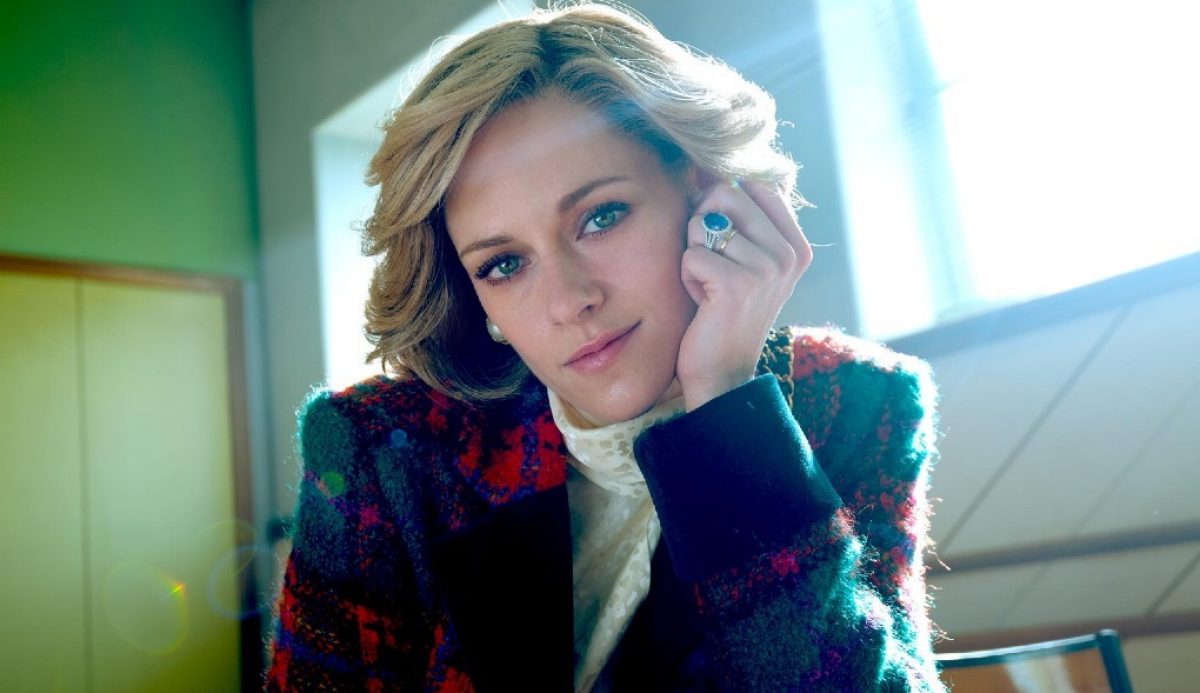
Kirsten Stewart gives a decent impersonation of Diana – vocally she’s spot-on – but for me she struggles in the shadow of Emma Corrin’s extraordinarily transformative work in The Crown – a show that also gained a lot more emotional insight into this story than the film even begins to achieve. It’s shot with a real arthouse style, but at heart it’s a silly and shallow film that never tries to understand either Diana’s inner life or how her marriage became what it was.

Children of Men (2006)

Clive Owen and Claire-Hope Ashitey could be the last hope for mankind in the masterful Children of Men

Director: Alfonso Cuarón

Cast: Clive Owen (Theo Faron), Julianne Moore (Julian Taylor), Claire-Hope Ashitey (Kee), Michael Caine (Jasper Palmer), Chiwetel Ejiofor (Luke), Charlie Hunnam (Patric), Pam Ferris (Miriam), Peter Mullan (Syd), Danny Huston (Nigel)

Children of Men was overlooked on release. But the more it ages, the more it clearly hasn’t aged it at all. Criminally ignored at the major awards, this might well be the finest film of 2006 and certainly one of the best movies of the noughties. Rich in thought-provoking content and cinematic skill, this is truly great-film-making from Alfonso Cuarón. Dark, grim, edgy but also laced with hope, faith and kindness, Children of Men grows in statue with each viewing, rewarding you more and more.

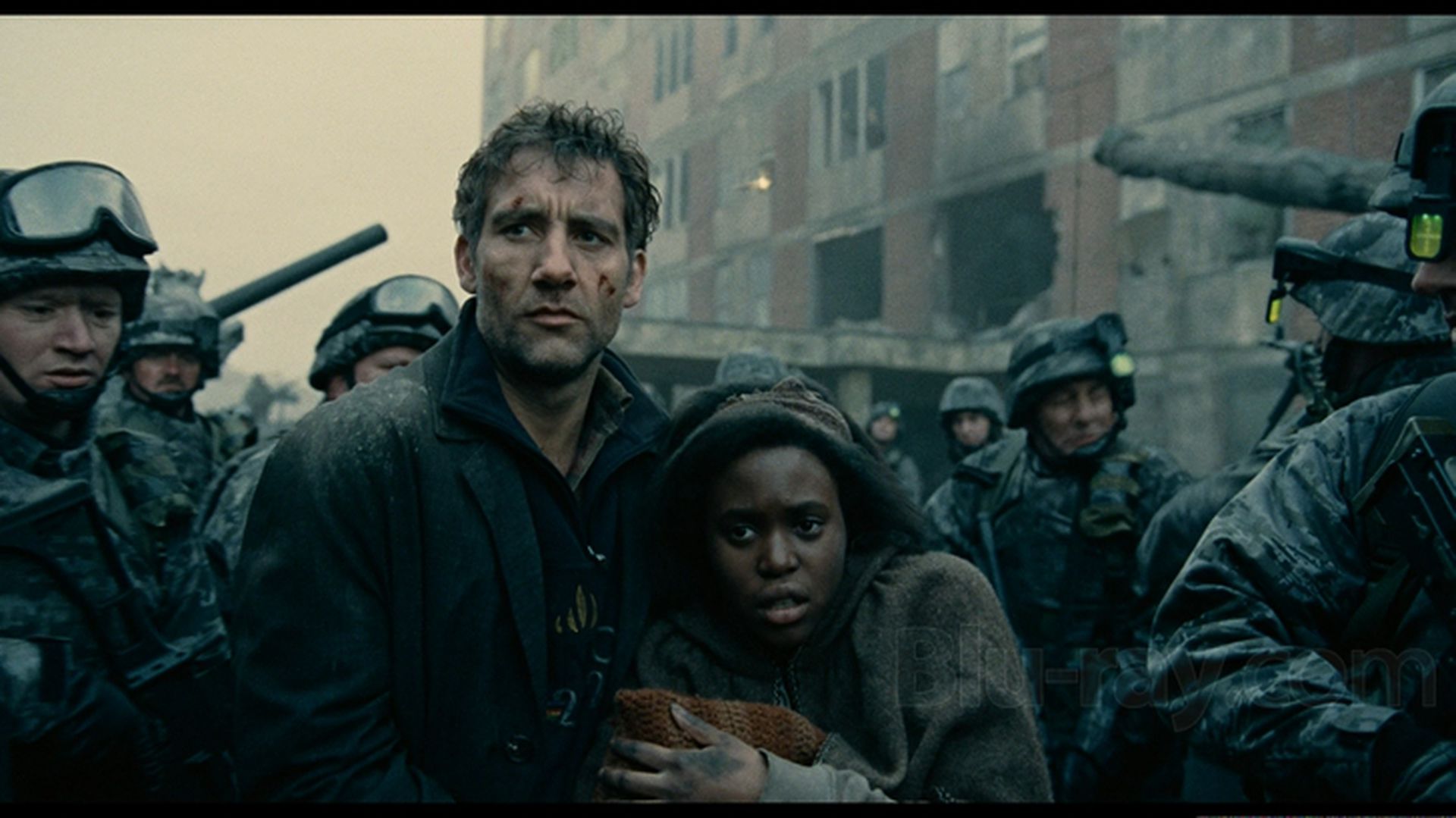
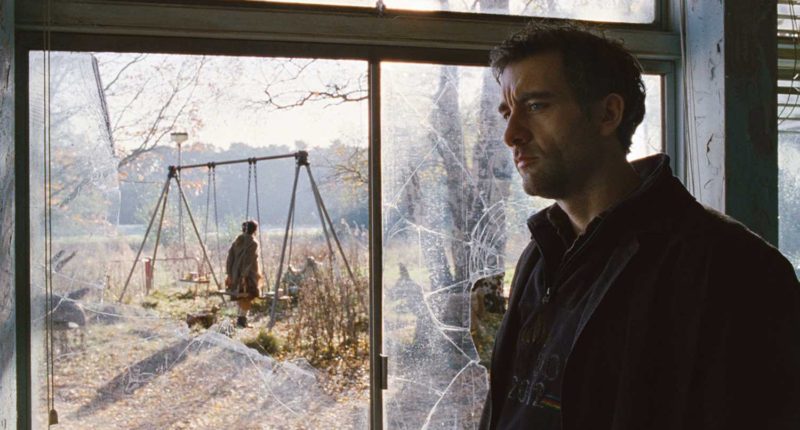
It’s 2027 and the world has gone to hell. Mysteriously mankind became infertile 18 years ago, and faced with the despair that the extinction of the human race is inevitable, society has collapsed. Cities lie in ruins and war has torn countries apart: Britain “stands alone”, one of the few with a functioning government – even though that government is a totalitarian, nationalist police state. Aggressive campaigns are waged against refugees from around the world, who are herded into hellish concentration camps. In this chaos, Theo (Clive Owen) is a disaffected civil rights activist, now plodding through a dead-end job and smoking weed with his friend, ex-newspaper cartoonist Jasper (Michael Owen). All this changes when he is entrusted by his activist/’terrorist’ estranged wife Julian (Julianne Moore) to protect Kee (Claire-Hope Ashitey) who carries inside her something that could change the whole of humanity: an unborn child.

Today Children of Men seems alarmingly prescient. In a world of migrant crises, Brexit, Trump and coronavirus (the film even refers to a flu pandemic of 2008!) the vision of the future it presents seems only a few degrees away from our reality. Rather than a hellish view, it seems more and more like something that could happen. Everything is worn out and grubby. Streets are lined with rubbish, buildings coated with graffiti. Televisions and advertising screens alternate between demands to report immigrants with promotions for “Quietus”, a suicide pill. Fences, armed police, barbed wire and crowds of filthy, terrified and brutalised people are common. Humanity has given-up: there is no hope in the world.

It’s that collapse of any sense of hope and optimism that has driven this collapse of society in Cuarón’s vision. In a world where the extinction of mankind is inevitable, what’s the point contributing to society or worrying about your legacy or the future? Why preserve anything when no-one will be around to see it in a hundred years? By such fragile threads, does society hold itself together. The crushing depression of knowing you live in the final days of humanity is everywhere. There is not a single person alive in their teens: a fact hammered home by the characters visiting a deserted and derelict school. Everyone has lost any sense of purpose, with life a grim daily grind.

Perhaps that’s also why physically the world hasn’t changed much. Unlike most “future set” dramas, this view of 2027 could be 2006, just dirtier and with a few more electronic screens (in fact this has helped hugely in not dating the film). It’s like all life has stagnated. And liberals like Theo have turned into apathetic drunks, drifting blithely through life not bothering to engage or change anything about the shit show all around them

All this makes the film sound impossibly grim – and Cuarón is superb in building this world (including the genius stroke of never explaining, even in the smallest detail, what has caused this pandemic of infertility – the film is refreshingly free of any clumsy scene setting) – but it works because it’s a film laced with hope and a belief in the fundamental goodness of people. The story has overtones of a religious fable: Theo and Kee as a sort of Joseph and Mary travelling to protect an unborn child whose birth could save the world. Specially composed choral music, rife with religious overtones, underplays key moments and scenes subtly leaning into this spiritual journey.

And the goodness that people find in themselves is inspiring. Theo, brilliantly played by Clive Owen who has just the right dissolute cynicism hiding crusading courage, may have given up but actually he’s a deeply empathetic and caring man. Animals instinctively love him. He’s a natural protector, who shows concern in all sorts of ways for people him, who puts himself at risk to protect people and refuses to ever accept defeat. But he’s a million miles away from a super-man, getting increasingly dishevelled, bashed and brutalised, while his struggles with footwear (he carries out action sequences  wearing just socks, then flip-flops and finally barefoot) is both a neat little gag and also a sign of how vulnerable he is in this dangerous world.

Cuarón’s film builds brilliantly on his empathy to carefully and beautifully build the growing understanding and trust between Theo and Kee (equally well played by Claire-Hope Ashitey). Again, it stems first from his protectiveness (Theo also works hard to protect people around him from disturbing sights, twice urging Kee not to look back and that whoever has been left behind is fine), but also from her instinctive trust in him as a good man and above the only one who seems to have her interests at heart (everyone else is concerned only with what Kee can symbolise – Ejiofor’s vigilante Luke can’t even get the sex of the baby right). Kee is vulnerable, but strong and determined, someone trying to carry the burden of being the hope of mankind.

She’s also brilliantly a member of the very migrant community that the government is trying to destroy. Cuarón’s film wants us all to remember that we are all the same deep down, that what happens to one affects us all. The horrors of what the British government are doing in the war-torn slums of migrant prisons (all of Bexhill has become a lawless hell hole, where executions and riots are daily occurrences) reek of everything from Auschwitz to Guantanamo. But amongst these migrants come the only strangers who seek to help Theo and Kee out of simple goodness and humanity. Strangers put themselves at huge risk, and in many cases sacrifice their lives, to help them. It makes a stark contrast with the revolutionaries who claim to fight for the migrants (but show no compunction in shooting them when needed), but really are only interested in their own selfish battles with no understanding of the bigger picture.

This bigger picture is very much like the thematic richness of the film that was missed on its released. It’s almost a victim of its own technical brilliance, which attracted much more attention at the time. Cuarón constructs several sequences to appear as single-takes, and the stunning camera work really helps establish this grimy, brutal world. It’s a wonderfully immersive film, a technical marvel. Every single part of the photography and design is pitch-perfect, and the key sequences are stomach-churningly tense, inspired by everything from The Battle of Algiers to A Clockwork Orange.

But the film works because it is underpinned by faith and trust in the human spirit. Mankind is being challenged like never before, but Cuarón shows us that the human spirit can survive. That simple acts of kindness can still happen. That there is a chance of hope. The final conclusion of the film is both sad but also upliftingly hopeful. Cuarón’s direction is just-about perfect, as are the performers (not just Owen and Ashitey but also an almost unrecognisible Caine as an ageing Hippie). With its acute and brilliant analysis of humanity – both in its grimness and capacity for goodness and selflessness – and with its prescient look at how easily our world could collapse, Children of Men is vibrant, brilliant, essential film-making.

Stalker (1979)

What’s it all about? Who knows in Tarkovsky’s Stalker

Director: Andrei Tarkovsky

Cast: Alexander Kaidanovsky (Stalker), Anatoly Solonitsyn (Writer), Nikolai Grinko (Professor), Alisa Freindlich (Stalker’s Wife)

Three men stand outside a room in what looks like a rain soaked, post-industrial wasteland. They debate at great length morality, optimism, fate and destiny. They all decide not to go into the room. There really isn’t any other director like Tarkovsy is there? Perhaps that’s a good thing.

Set in an indeterminate future, Stalker takes its name from the title for guides who – through some sort of sixth sense – are able to guide travellers through “the Zone”, a fenced off area, guarded by the military, that is the site of some sort of extra-terrestrial encounter (a meterorite possibly, who knows?) that gave the Zone magical power. In the centre of the Zone is a room which will grant the innermost desires of all those who enter. Travelling with our Stalker (Alexander Kaidanovsky) are a writer (Anatoly Solonitsyn) and a professor (Nikolai Grinko). Along the journey, ideas around everything from existence to the inner soul is discussed by the three men, each of them approaching from radically different perspectives.

Tarkovsky’s style was a sort of fusing of expressionism and stately filmmaking, mixed in with his own love of extended shots. In a world of cinema where the average shot in a film lasts a few seconds, in Stalker’s 162 minutes there are only 142 shots in total. Tarkovsky’s camera pans and tracks (often slowly) through the wasteland of the Zone, finding moments of great beauty and power in the industrial mess and debris, making fabulous use of the consuming power of water as it washes over and covers everything, invading every space. Tarkovsky’s painterly structure of the film is further aided by his switching between sepia (for most of the scenes outside the Zone) and muted colours (largely for those in the Zone, with a few exceptions). 

However, Stalker is also a long, slow, rather turgid film, immersive in the sense that you will feel you have lived every minute of the never-ending journey that the heroes go on. Which comes to the central problem I have with the film – and with Tarkovsky himself. The director, without a doubt, is an intellectual, straining at the leash with thoughts and ideas that he wishes to throw up into film. But Stalker is a film that suggests intellectualism, and carries all the trappings of deep thought, but in fact seems to throw ideas haphazardly at the screen with very little thought for how these hang together, or what the overall message might be (if any).

Instead we are subjected to a number of – beautifully filmed, with real artistic grace – rambling monologues that positively drip with self-importance and intellectual snobbery. Tarkovsky’s long takes and deliberate refusal to include much in the way of story, drama or character seem designed to make the film feel as much as possible like some kind of allegory. What this is an allegory of it feels Tarkovsky would consider crude to describe. Instead the film is difficult to watch and engage with, precisely because that is (it seems) what makes Great Art in the eyes of its director. When challenged by the Moscow authorities that the film was dull and slow, Tarkovsky argued it should be both duller and slower, to make those who were not of the intellectual level to engage with it leave earlier.

Perhaps he was right, as Stalkerhas become more and more of a critical darling, the further time gets from its first release. Now it seems almost blasphemy to look at the film and wonder if it is about anything at all. Almost a crime to suggest that Tarkovsky’s film is short on answers and easy meanings perhaps because the director himself seems to have little clue on what it is about. Perhaps to say that for all its slowness, length and rambling speeches, at the end of the day the film is making fairly safe and obvious points about the dangers of free will, the dreams for a better world and the terror that could ensue in a world where we can get exactly what we want with no cost. Stalker could be about any of this at all, or could be about nothing. Either way it doesn’t make for compelling viewing.

This is all why Tarkovsky for me remains an acquired taste – and not one I’ve really managed to acquire. There are moments in all his films of haunting beauty, of profound depth. But all of it is undermined by the director’s own self-importance, his pomposity, his delusions of being some sort of Plato. Above all, I find, by his own po-faced lack of humour. Is there anything amounting to a joke in any Tarkovksy film? There certainly isn’t one here, and the earnest self-importance, the frowning condescension you feel behind the camera for the unworthy viewer, strangles the life out of the film and kills any feelings of fondness you might have towards it.

And there are things to admire in here. For all his pretensions at intellectualism, and the cold sense of superiority he delivers them with, it’s impossible to argue that Stalker is not a beautifully made film. The camerawork is sublime, the slow onset of water (both visually and the drips on the soundtrack) gradually dominates the action – what this is suggestive of, of course, isn’t clear but it feels like something to do with both the destructive and cleansing power of water. The film is nominally a science fiction, and moments of thoughtfulness or haunting ideas play at the edges of the film – in particular the influence the Zone may have had on the daughter of the Stalker. 

Tarkovsky’s films though remain cold and deliberately hard watches, and I’m not sure there is as much reward in investing the time in them as many would have you think. Many of the points of Stalker can be grasped very quickly, and while part of the point is that they are delivered at such absurd length and languid pace, I’m not sure that is a recommendation. It’s not a film for actors either, with most of the performances largely comprising delivering slabs of poetry or cod-philosophical speeches to the camera, with scarcely a characterisation in sight.

Stalker is a puzzle deliberately written without an answer, that asks questions that should feel profound but perhaps are less revelatory than the film thinks, all within an extremely long runtime. In a cruel coda, the long time spent shooting Stalker in a pair of abandoned chemical plants would eventually lead to many of those involved – including Tarkovsky, his wife and two of the lead actors – dying of cancer within a few years of the film’s completion.

Tarkovsky is a cold intellectual, who talks of images producing feelings, but frequently produces films that feel like watching elaborate slide shows while being lectured at by a boring philosophy student. He is a master of form, but perhaps is the “Great Director” it’s easiest to disregard – or to feel like watching one of their films is more than enough. Stalker is something both unique in its execution, and painfully familiar in its Arthouse pomposity.

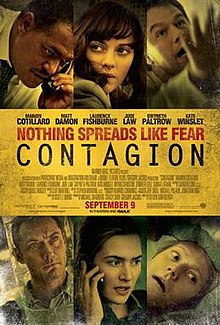
Contagion (2011)

Laurence Fishburne leads the drive to fight a pandemic in Soderbergh’s outbreak thriller Contagion

Director: Steven Soderbergh

Cast: Marion Cotillard (Dr Leonara Orantes), Matt Damon (Mitch Emhoff), Laurence Fishburne (Dr Ellis Cheever), Jude Law (Alan Krumwiede), Gwyneth Paltrow (Beth Emhoff), Kate Winslet (Dr Erin Mears), Jennifer Ehle (Dr Ally Hextall), Elliott Gould (Dr Ian Sussman), Chin Han (Sun Feng), Bryan Cranston (Rear Admiral Lyle Haggerty), John Hawkes (Roger), Enrico Colantoni (Dennis French)

It’s a fear that has gripped the world several times this century: the pandemic that will wipe us all out. It’s the theme of Steven Soderbergh’s impressively mounted epidemic drama, which mixes in an astute commentary on how the modern world is likely to respond to an event that could herald the end of times.

Beth Emhoff (Gwyneth Paltrow) is a businesswoman flying back to Minneapolis from Hong Kong (with a stopover in Chicago for a bit of rumpy-pumpy with an ex-boyfriend) who becomes Patient Zero for an outbreak of a virulent strain of swine and bat flu that proves near fatal for the immune system. While her stunned husband Mitch (Matt Damon) is immune, most of the population aren’t. Across the world, health organisations swing to action – from Dr Ellis Cheever (Laurence Fishburne) and Dr Ally Hextall (Jennifer Ehle) at the CDC, to Dr Erin Mears (Kate Winslet) running things on the ground in Minneapolis to Dr Leonara Orantes (Marion Cotillard) investigating for the WHO in Switzerland and Hong Kong. As populations panic, conspiracy-theorist blogger Alan Krumwiede (Jude Law) sees this as an opportunity for personal promotion and enrichment.

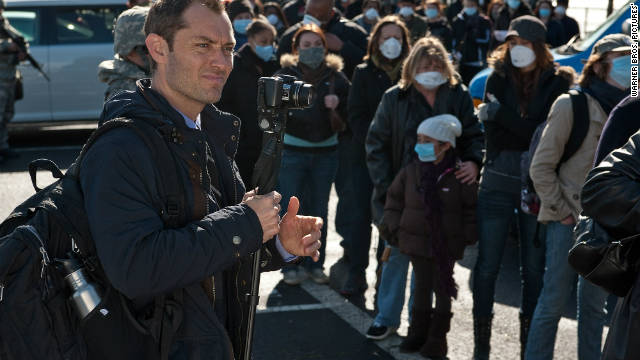
Soderbergh’s clinical filming approach makes for a chillingly realistic piece of cinema realitie, possibly one of the director’s finest films in his oddly-uneven career. Soderbergh presents events as they are, laying out the film like a giant Pandemic board. Captions regularly tell us what day we are on from initial outbreak, as well as the populations of the various cities the plot lands us in. The film is shot with a documentary lack of fussiness, and largely avoids either sensationalism or the sort of Hollywood virus clichés of films like Outbreak. It also succeeds in largely avoiding heroes or villains (even the usual baddies for this sort of film, Big Phama companies, are shown as part of a potential solution not the problem) – even the outbreak is largely an act of chance, prompted by mankind’s actions, but there is no reveal that shady suits or military types are behind it all.

Watching the film today in the light of Brexit and Trump it actually appears strikingly profound and prescient in its depiction of the knee-jerk paranoia and wilful blindness of internet and media pundits who believe every opinion is equal and valid regardless of expertise. Alan Krumwiede (a slightly pantomime performance from Jude Law, complete with bad hair, bad teeth and an Aussie accent perhaps intended to echo Julian Assange) all but denounces the views of experts as “fake news”, claims his opinions on the causes and treatment of the disease are as valid as the expert professionals (all but saying “I think we have had enough of so-called experts”), uses his unique hit count as evidence for the validity of his (bogus) conspiracy theories and makes a fortune peddling a snake-oil natural cure which he claims saved his life (and leads to millions of people ignoring the proper precautions and treatments recommended by the WHO and CDC). 

Soderbergh shows that this sort of crap is as much a dangerous pandemic as the disease itself, encouraging an atmosphere of fear and hostility. At the time it just seemed a bit snide to say “a blog is not writing, it’s graffiti with punctuation”, but today, as websites spout up presenting all sorts of horseshit as legitimate fact, this film looks more and more ahead of the curve in its analysis of a public disillusioned and untrusting of authorities can turn their attention and trust to a venal liar who claims to be a tribune of the people, but is interested only in lining his own pocket. 

But then that’s one of this film’s interesting psychological points. If there is an antagonist in this film, it’s human nature itself. The “wisdom of crowds” is continuously a dangerous thing, as areas devolve into rioting and looting. The bureaucracy of local and international governments causes as many problems as the disease: even as bodies pile up in Minneapolis, Kate Winslet’s on-site CDC crisis manager must bat away furious lackeys of the State Governor, demanding to know if the federal government will cover the extra medical precautions. Announcements of public danger are pushed back until after Thanksgiving, so as not to have a negative impact on the holiday. The decent Dr Cheever, who unwisely leaks news of a lockdown of Chicago to his fiancée, is thrown to the dogs by the government who need some sort of scapegoat they can blame the whole mess on.

If our enemies are red tape and the selfish rumour-mongering of the unqualified and the self-important, acts of heroism here are generally rogue moments of rule-benders. A scientist at a private pharmaceutical company continues his work after being ordered to destroy his samples (and then shares his crucial findings about the disease with the world, free of charge). CDC scientist Ally Hextall tests a crucial antibody on herself because there simply isn’t time to go through the lengthy trials needed (needless to say Krumwiede uses this as further evidence that the outbreak is a government stitch-up). 

Alongside all this, Soderbergh’s detailed direction and editing chillingly chart the spread of the disease. Having explained carefully how it can be spread by touch, the camera details every move of infected people, carefully lingering for half a second on every touched item, with the implication clear that everyone else who will touch these objects soon (such as door handles) will themselves become infected. The film pulls no punches in showing the grim effects of the disease (poor Gwyneth Paltrow!) and the resulting chaos as the pandemic progresses, with social structure breaking down, chaos only held in check by mobilising army forces and imposing curfews and a national lottery for cure distribution, with areas off-limits for those not carrying a wristband barcode identifying them as inoculated.

Soderbergh assembles a fine cast for this drama, helping to put human faces to characters who often have to spout reams of scientific and medicinal dialogue. Fishburne is particularly good as a noble and reasonable head of the CDC, who succumbs only once to putting his loved ones first. Matt Damon is the face of “regular joes” as a father going to any lengths to protect his last surviving child. As one reviewer said the “undercard” of the cast is particularly strong, with Jennifer Ehle perhaps the outstanding performer as the eccentrically driven CDC research scientist. Cranston, Gould, Han, Hawkes and Colantoni are also equally fine.

Soderbergh’s film was a bit overlooked at the time, but rewatching it again, the more I think it might be strikingly intelligent analysis of our modern world, ahead of its time in understanding how new media and human nature can interact with government and society, and how this can lead to a spiralling in times of crisis. One of his best.

Panic in the Streets (1950)

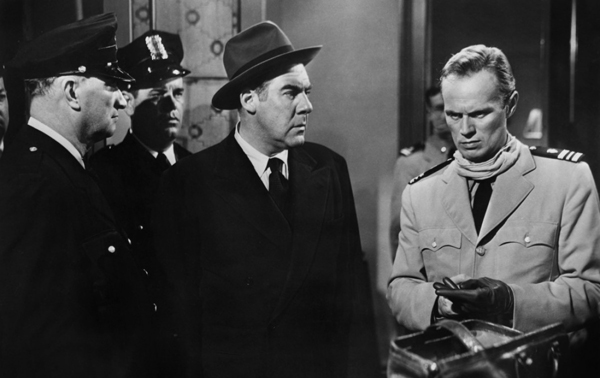
Paul Douglas and Richard Widmark race against time to prevent plague in Panic in the Streets

Director: Elia Kazan

Cast: Richard Widmark (Lt Commander Clint Reed), Paul Douglas (Captain Tom Warren), Barbara Bel Geddes (Nancy Reed), Jack Palance (Blackie), Zero Mostel (Raymond Fitch), Alexis Minotis (John Mefaris), Dan Riss (Jeff), Guy Thonajan (Poldi), Tommy Cooke (Vince Poldi)

It feels like a very modern nightmare: a plague of catastrophic proportions breaking out in a major city and threatening to wipe out thousands of people. This feeling helps to make Panic in the Streets feel more like a film from today rather than the 1950s. The only thing missing is a terrorist angle – everything else could have been pulled from the nightmare fuel of our modern age.

In New Orleans, a murdered man is found near the docks. The emergency button is pressed when the coroner detects a deadly infection. Naval doctor (and emergency co-ordinator) Lt Commander Clint Reed (Richard Widmark) quickly takes command and determines that the victim carried pneumonic plague before being shot. Tracking down the men who killed him, and who may also be carrying the disease, becomes urgent, before the infection spreads. The authorities don’t want panic, so Reed and Captain Tom Warren (Paul Douglas) – initially of course reluctant partners – must work together to quietly track down the killers. The killers meanwhile, Blackie (Jack Palance) and his crew, continue regardless with their small-town crime empire building.

Panic in the Streets was one of the first films to shoot extensively on location – and it’s a brilliant choice, as Elia Kazan’s use of real life, grimy, New Orleans locations, from back streets to the docks, is pivotal for the sense of urgency and realism that runs through the entire film. Kazan’s camera work is brilliant throughout, and it adds a real gritty sense of danger to the entire film. It’s also brilliant that he selects possibly the least attractive parts of New Orleans for his locations – Blackie’s world of run-down buildings and dives just feels perfect for the film.

Kazan keeps the focus tight and avoids too many distractions from the film’s narrative – except maybe some tiresome insights into Reed’s slightly troubled domestic life (with Barbara Bel Geddes in a particularly thankless role as his wife, who alternates between supportive and the inevitable just wanting him at home more). Other than that, the film follows Reed’s search in forensic detail, from questioning suspects to working out the radius of possible infection. There is more tension here in a meeting with the city mayor to try and wrestle the authority Reed needs to carry out his job than in dozens of car chases.

The script is tightly written, and focused on plot over character, but still allows moments for character beats that good actors can seize upon. Widmark makes Reed a driven professional, who still has enough personal insight to register that his flaws include arrogance and impatience. In many ways an interesting piece of counter-casting, Widmark’s slightly menacing air is inverted really well as a doctor frustrated by the lack of understanding he encounters from those he is trying to save from a potentially deadly infection. He’s the perfect actor for a character who is a hard-bitten professional with a ruthless streak, and who’s a little hard to like.

He has a great foil in Paul Douglas as a professional, down-to-earth, but skilful and whip-smart police detective. One of the film’s pleasures is the bond that slowly grows between this odd couple – it’s not unexpected if you’ve ever seen a movie before, but it is very well done. The film, however, is almost stolen by Jack Palance as the villainous heavy, intent on empire building and oblivious to the fact that he is probably carrying a deadly plague that could wipe out half the population. Equally good is Zero Mostel as his weaselly, sweaty side-kick.

It’s odd watching it now that the authorities aren’t more terrified by the prospect of such a deadly infection – but that is a sign of how things have changed since the film was released. It’s sometimes a rather cold film, fascinated by slimmed down procedure – from the procedures of tracking people down, to the inoculations Reed administers right, left and centre to those who may be exposed. Despite this general mood, Kazan still gets the tone just right for the later shoot out that tops off the film.

Panic in the Streets does have a few too many slower moments. The scenes showing Reed’s home life are particularly drab – although we do get a marvellous scene with his wife where Reed acknowledges that his attitude to Captain Warren has been arrogant and condescending. The politics of lowlife New Orleans criminals are completely dependent on the charisma of the actors – remove Palance and Mostel’s performances and they would be exposed as dull and irrelevant. But the rest of the time, the film has a genuine feeling of grimy reality and keeps the pace up a treat. It’s a little B movie gem that feels ripe for discovery in our terror-obsessed modern world.